
SCIENCE
Our opinion on the Govee Star Light Projector 2 Pro


We continue to review the ever-growing list of the best star projectors that are entering the market, and we get especially excited when brands we rate release new models.
In September, Govee released two new models to its star projector portfolio, joining the now year-old Govee Star Light Projector (Nebula), which we reviewed earlier this year.
Specifications
Size: 9.37 x 6.41 x 5.82 inches
Weight: 4.4 pounds (2.01 kilograms)
Laser: Yes, Class 1
Control: On-body, app, voice
Rotation: Yes
Sleep timer: Yes
Speaker: Yes
Projection surface: 90° wide projection covering 301 sqft
The first, Govee Star Light Projector (Ocean Wave), is only slightly different from the aforementioned model, offering dynamic water-inspired patterns as opposed to Nebula-inspired ones.
The other, which we are reviewing, is the model H609D, a disk-based projector. It projects an 8K ultra-high-definition image from the supplied disks. It still includes a built-in speaker, white noise effects and laser ‘stars’. But does it stand up against the stiff competition in the disk-based star-projector world? Let’s find out.
Govee Star Light Projector review
Govee Galaxy Light Projector 2 Pro: Design
★★★★

The Govee Star Light Projector is fairly large and weighty, but it feels like a premium product. (Image credit: Tantse Walter)
- Nicely designed packaging
- Fairly large footprint
- Quality-looking unit
As with the Govee Star Light Projector (Nebula), the packaging of the Govee is nicely designed and stylish. It is a large rectangular box made from high-quality materials and the unit is packed securely inside with polyethylene foam. It would be wonderful to give or receive as a gift.
Image 1 of 1
 The packaging is lovely and protects the unit well.(Image credit: Tantse Walter)
Unlike some units we’ve reviewed, the spelling and grammar are correct (we often find them as a result of poor translations), which can instantly reduce the perceived integrity of the product.

The on-body buttons control the basic functionality. Unfortunately, they still don’t glow in the dark, making them quite difficult to see in the dark. (Image credit: Tantse Walter)
This relatively large projector comes with a separate rubberized stand. The purpose is not entirely clear, except to give the user the freedom to adjust the projection angle from ceiling to wall, although other models have incorporated this functionality into their main stands. It is not a drawback, just an observation.
The unit adopts a modern capsule-style design, moving away from the American football shape seen in previous Govee models. Its interface is straightforward, with the projector lens and lasers positioned on one side and a disk tray with four control buttons on the top. It is a sleek, unobtrusive device that would blend comfortably into most interiors.
The eight supplied disks are packaged in a compact booklet, which we prefer to the individual plastic cases often used for single disks. The book format is far more practical for storing small, thin slides.
Govee Galaxy Light Projector 2 Pro: Performance
★★★★
- Fast smart home connection using “Matter”
- Bright enough for use in dark rooms and on dark walls
- Noisy motor
As with the previous version of the Govee projector, “Matter” connectivity means we were up and running in seconds, unlocking all functionality in the Govee app and linking it to our Google Home account. You can also integrate it with Alexa, which we expect is just as easy a process.

The projector and stand are two separate objects. We appreciated the rubberized casing around the stand. (Image credit: Tantse Walter)
As this is a disk-based projector, there is limited customization in terms of colors and patterns, as it does not offer this functionality. The stars either ‘diffuse’ or ‘gather’, head from the outside edge in, or the inside edge out. That said, there are still several ‘scene’ modes displayed on the app, that tweak things like the rotation speed, the arrangement and movement style of the lasers and add ‘white noise’.
The Class 1 lasers are very bright, even in a brightly lit room; however, the disk-based projection requires a dark room, even when it’s at full brightness.
The lasers are the most dynamic we have seen. They don’t simply rotate in a circle; the different scene selections activate some lasers, turn others off, make some bright and some dull, and some move quickly, while others move slowly. You get the idea. They are more like dancing fireflies than predictable laser dots. This was our favorite thing about the device.

In a dark room, the projections are bright with vivid colors. (Image credit: Tantse Walter)
The disk-based projections are attractive, but there is no indication of what each disk is meant to depict. Unless you are already familiar with nebulae or space imagery, you are essentially looking at something pretty without knowing what it represents. Disks from previous models are not compatible with this unit; the new disks use a square format, and we have not yet found anywhere to purchase additional ones.
We also noticed that most of the detail in each projection sits around the outer edge of the disk. A more even distribution would have avoided the effect of a colorful ring with a largely empty centre. Naturally, the further the projector is from the wall or ceiling, the larger that circle becomes. It is also worth mentioning that a few Amazon reviewers report that the disk images fade quickly. We have not used the unit long enough to confirm this ourselves, but it is concerning, given that we still do not know where replacement disks can be sourced.
We were hopeful that the motor noise present in the Govee Nebula we reviewed earlier this year would be addressed. The unit is pleasantly quiet at first, at least until the cooling fan activates. The fan is obviously necessary to prevent overheating, but it is fairly loud and typically switches on after 20–30 minutes of use. On several occasions, we used the projector to fall asleep, only to be woken by the fan’s whirr. It is something to keep in mind if you plan to use it as a sleep aid without white noise or music to mask the sound. If you are using the projector while watching a film, gaming or hosting a party, the noise is unlikely to be an issue.
Govee Galaxy Light Projector 2 Pro: Functionality
★★★★

The projector is fairly large compared with other models we’ve tested like the Pococo and Orzorz projectors. (Image credit: Tantse Walter)
- Smart integration is great
- Requires mains power
- Good Bluetooth Speaker
Although you can use the on-body buttons for basic controls, the Govee app unlocks all of the star projector’s advanced features.
Setup through the dedicated Govee app is seamless — no error messages, no frustrating reboots or restarts. It just works.
20 scene modes adjust the speed, brightness, white noise track (if enabled) and laser direction. The variations between modes are subtle, but distinct enough to have standouts — our favorites being Cosmic Waves and Interstellar Travel.
Within the app, you can control the sleep timer and the wake-up timer. The unit is set to turn off automatically after 120 minutes. This is apparently designed to help increase the disks’ lifespans. We’d have preferred it to be a little longer, to account for watching alongside long movies or an evening gaming stint, but it’s easy enough to turn the unit off and on again to restart the timer.
As well as being able to pair the star projector with another Bluetooth device (like your phone) to play music, it also comes with 50 ‘white noise’ sounds — though ‘ambient noise’ would be a better description. There is themed music and sound effects, but funnily enough, no actual ‘white noise’.
The speaker is good enough for a pleasant listening experience. Lacking large amounts of bass, like most Bluetooth speakers do, but good enough for background music, podcasts, audiobooks and spa music.
This is a mains-powered unit and, unfortunately, isn’t rechargeable. In reality, you’re likely to find a good spot for your projector and leave it there rather than moving it around too often, so this isn’t a deal breaker for us.
Should I buy the Govee Galaxy Light Projector 2 Pro?
Buy it if:
✅ You are looking for a disk-based projector that you don’t need to move too often: This is a mains-powered unit, best for keeping in situ.
✅ You like buying from reputable manufacturers: Govee is a trusted manufacturer of ambient lighting solutions, not a distributor of mass-produced ‘cheap’ units.
Don’t buy it if:
❌ You want something with a small footprint: If space is limited, you’ll want something that occupies less of it.
❌ You don’t want a disk-based projector: For that, try the previous model, the Govee Star Light Projector, which allows you to customize a plethora of lights and patterns to your liking.
This isn’t a budget-friendly star projector; in fact, it sits at the pricier end of the spectrum (unless we’re talking about the truly expensive ones). At the time of writing, it’s currently retailing for $149.99, which we do think is pretty steep, especially when much cheaper models are available and probably do just as good a job. For example, the Orzorz Galaxy Lite disk-based projector is one of the best models we have reviewed for image vividness and brightness; however, it lacks a built-in speaker.
For a good ‘lights and patterns’ style projector, the Cadrim, which we reviewed earlier this year, is a very affordable option that operates quietly and only takes up a tiny amount of space. It is controlled by a supplied remote control rather than an app, so it’s great for keeping children off their screens, too. The Cadrim would be a good option to give as a gift, whereas this Govee model would be better as an indulgent ‘me to me’ holiday purchase.
If a disk-based projector without a speaker is definitely what you are after, the Sega Toys Homestar Matataki is our top choice for a plug-in device, and the Pococo Galaxy Star Projector is the best rechargeable option. For a disk-based option with a speaker, this is the best we’ve come across to date.










SCIENCE
Enough fresh water is lost from continents each year to meet the needs of 280 million people. Here’s how we can combat that.


Earth’s continents are drying up at an alarming rate. Now, a new report has painted the most detailed picture yet of where and why fresh water is disappearing — and outlined precisely how countries can address the problem.
Continental drying is a long-term decline in fresh water availability across large land masses. It is caused by accelerated snow and ice melt, permafrost thaw, water evaporation and groundwater extraction. (The report’s definition excludes meltwater from Greenland and Antarctica, the authors noted.)
You may like
Continents have now surpassed ice sheets as the biggest contributor to global sea level rise, because regardless of its origin, the lost fresh water eventually ends up in the ocean. The new report found this contribution is roughly 11.4 trillion cubic feet (324 billion cubic meters) of water each year — enough to meet the annual water needs of 280 million people.
Continental Drying: Charting a Path to Water Security – YouTube
Far-reaching impacts
The report was published Nov. 4 by the World Bank. Its results are based on 22 years of data from NASA’s GRACE mission, which measures small changes in Earth’s gravity resulting from shifting water. The authors also compiled two decades’ worth of economic and land use data, which they fed into a hydrological model and a crop-growth model.
The average amount of fresh water lost from continents each year is equivalent to 3% of the world’s annual net “income” from precipitation, the report found. This loss jumps to 10% in arid and semi-arid regions, meaning that continental drying hits dry areas such as South Asia the hardest, Zhang said.
This is a growing problem. In a study published earlier this year, Zhang, Famiglietti and their colleagues showed that separate dry areas are rapidly merging into “mega-drying” regions.
“The impact is already being felt,” Zhang said. Regions where agriculture is the biggest economic sector and employs the most people, such as sub-Saharan Africa and South Asia, are especially vulnerable. “In sub-Saharan Africa, dry shocks reduce the number of jobs by 600,000 to 900,000 a year. If you look at who are the people being affected, those most hard hit are the most vulnerable groups, like landless farmers.”
Countries that don’t have a large agricultural sector are also indirectly affected, because most of them import food and goods from drying regions.
You may like
The consequences for ecosystems are dramatic, too. Continental drying increases the likelihood and severity of wildfires, and this is especially true in biodiversity hotspots, the report found. At least 17 of the 36 globally recognized biodiversity hotspots — including Madagascar and parts of Southeast Asia and Brazil — show a trend of declining freshwater availability and have a heightened risk of wildfires.
“The implications are so profound,” Famiglietti told Live Science.
The biggest culprit
Currently, the biggest cause of continental drying is groundwater extraction. Groundwater is poorly protected and undermanaged in most parts of the world, meaning the past decades have been a pumping “free-for-all,” Famiglietti said. And the warmer and drier the world gets due to climate change, the more groundwater will likely be extracted, because soil moisture and glacial water sources will start to dwindle.
However, better regulations and incentives could reduce groundwater overpumping. According to the report, agriculture is responsible for 98% of the global water footprint, so “if agriculture water use efficiency is improved to a certain benchmark, the total amount of the water that can be saved is huge,” Zhang said.
Globally, if water use efficiency for 35 key crops, such as wheat and rice, improved to median levels, enough water would be saved to meet the annual needs of 118 million people, the researchers found. There are many ways to improve water use efficiency in agriculture; for example, countries could change where they grow certain crops to match freshwater availability in different regions, or adopt technologies like artificial intelligence to optimize the timing and amount of irrigation.
Countries can also set groundwater extraction limits, incentivize farmers through subsidies and raise the price of water for agriculture. Additionally, the report showed that countries with higher energy prices had slower drying rates because it costs more to pump groundwater, which boosts water use efficiency.
Overall, water management at the national scale works well, according to the report. Countries with good water management plans depleted their freshwater resources two to three times more slowly than countries with poor water management.
Virtual water trade
On the global scale, virtual water trade is one of the best solutions to conserve water if it is done right, Zhang said. Virtual water trade occurs when countries exchange fresh water in the form of agricultural products and other water-intensive goods.
Global water use increased by 25% between 2000 and 2019. One-third of that increase occurred in regions that were already drying out — including Central America, northern China, Eastern Europe and the U.S. Southwest — and a big share of the water was used to irrigate water-intensive crops with inefficient methods, according to the report.
There has also been a global shift toward more water-intensive crops, including wheat, rice, cotton, maize and sugar-cane. Out of 101 drying countries, 37 have increased cultivation of these crops.
Virtual water trade can save huge amounts of water by relocating some of these crops to countries that aren’t drying out. For example, between 1996 and 2005, Jordan saved 250 billion cubic feet (7 billion cubic meters) of water by importing wheat from the U.S. and maize from Argentina, among other products.
Globally, from 2000 to 2019 virtual water trade saved 16.8 trillion cubic feet (475 billion cubic meters) of water each year, or about 9% of the water used to grow the world’s 35 most important crops.
“When water-scarce countries import water-intensive products, they are actually importing water, and that helps them to preserve their own water supply,” Zhang said.
However, virtual water trade isn’t always so straightforward. It might benefit one water-scarce country but severely deplete the resources of another country. One example is the production of alfalfa, a water-intensive legume used in livestock feed, in dry regions of the U.S. for export to Saudi Arabia, Famiglietti said. Saudi Arabia benefits from this exchange because the country isn’t using its water to grow alfalfa, but aquifers in Arizona are being sucked dry, he said.
Reasons for optimism
The solutions identified in the report fall into three broad categories: manage water demand, expand water supply through recycling and desalination, and ensure fair and effective water allocation.
If we can make those changes, sustainable fresh water use is “definitely possible,” Zhang said. “We do have reason to be optimistic.”
Famiglietti agreed that small changes could go a long way.
“It’s complicated, because the population is growing and we’re going to need to grow more food,” he said. “I don’t know that we’re going to ‘tech’ our way out of it, but when we start thinking on decadal time scales, changes in policy, changes in financial innovations, changes in technology — I think there is some reason for optimism. And in those decades we can keep thinking about how to improve our lot.”
Some of the views expressed in this article are not included in the World Bank report. They should not be interpreted as having been endorsed by the World Bank or by its representatives.
SCIENCE
Astronaut Amanda Nguyen says backlash from Blue Origin flight left her depressed | Blue Origin


Amanda Nguyen, the Vietnamese-American astronaut who was part of the all-female Blue Origin spaceflight, has opened up about her depression after she experienced a “tsunami of harassment” after the trip, in which she became the first Vietnamese woman to go to space.
Nguyen, 34, was part of April’s historic 11-minute flight, whose crew included pop star Katy Perry, broadcast journalist Gayle King, and journalist and wife of Blue Origin founder Jeff Bezos, Lauren Sánchez. The flight was heavily criticized for its environmental impact and critics questioned its purpose and use of resources.
For Nguyen, who is a civil rights activist for sexual assault survivors as well as a bioastronautics research scientist, she said the backlash to flight saw her professional achievements and dreams “buried under an avalanche of misogyny”.
In a lengthy statement shared on Instagram on Tuesday, she said that when King called to check on her days after the flight, “I told her my depression might last for years.”
She said the volume of news coverage and social media reaction to the trip was so “unprecedented” that even a “small fraction of negativity becomes staggering”. “It amounted to billions of hostile impressions,” she said, “an onslaught no human brain has evolved to endure”.
“I did not leave Texas for a week, unable to get out of bed. A month later, when a senior staff at Blue [Origin] called me, I had to hang up on him because I could not speak through my tears,” she wrote.
In an interview with the Guardian in March, Nguyen said she had put her lifelong ambition of becoming an astronaut on hold after another student raped her at university and she pursued a years-long fight for justice, which she described as “all-consuming”. In 2019, her activism for sexual assault survivors led to Nguyen being nominated for the Nobel peace prize and in 2022, she was one of Time magazine’s women of the year.
The onslaught after the spaceflight made her feel like “collateral damage”, Nguyen said: “my moment of justice mutilated.”
“In my moments of deep grief this year, I reached back out to a familiar place, to her – my survivor self – who found the strength to fight. How horrible that I needed to deploy that skill once again,” she said.
Now, eight months on from realising her dream of going to space, Nguyen said the “fog of grief has started to lift”, and thanked those who have supported her and sent her well wishes. “Vietnam saved me … You all saved me,” she wrote.
Nguyen, whose parents arrived in the US as refugees after fleeing Vietnam after the fall of Saigon, went on: “When Neil Armstrong stepped on the moon, bombs rained down on Vietnam. This year, when my boat refugee family looked at the sky, instead of bombs they saw the first Vietnamese woman in space.
“We came on boats, and now we’re on spaceships,” she said.
Despite the backlash, she said there had been “overwhelming good that has come out of [the flight],” including the media attention brought to her women’s health research and opportunities to meet world leaders in relation to her advocacy for rape survivors.
“It is the greatest gift this holiday season that I can feel the fog lifting,” Nguyen wrote. “I can tell Gayle it’s not going to take years.”
She ended her post with a photo of herself as a young student at Harvard, captioned: “For her.”

NASA’s first crewed mission toward the moon in more than half a century moved closer to liftoff recently, as the Artemis 2 astronauts completed a full launch day dress rehearsal in Florida.
The four astronauts set to fly around the moon on the Artemis 2 mission participated in the launch day dress rehearsal on Dec. 20 at NASA’s Kennedy Space Center (KSC) in Florida. The test marked a milestone in final preparations for NASA astronauts Victor Glover, Reid Wiseman and Christina Koch and Canadian Space Agency astronaut Jeremy Hansen for their journey around our nearest celestial neighbor in early 2026.
You may like
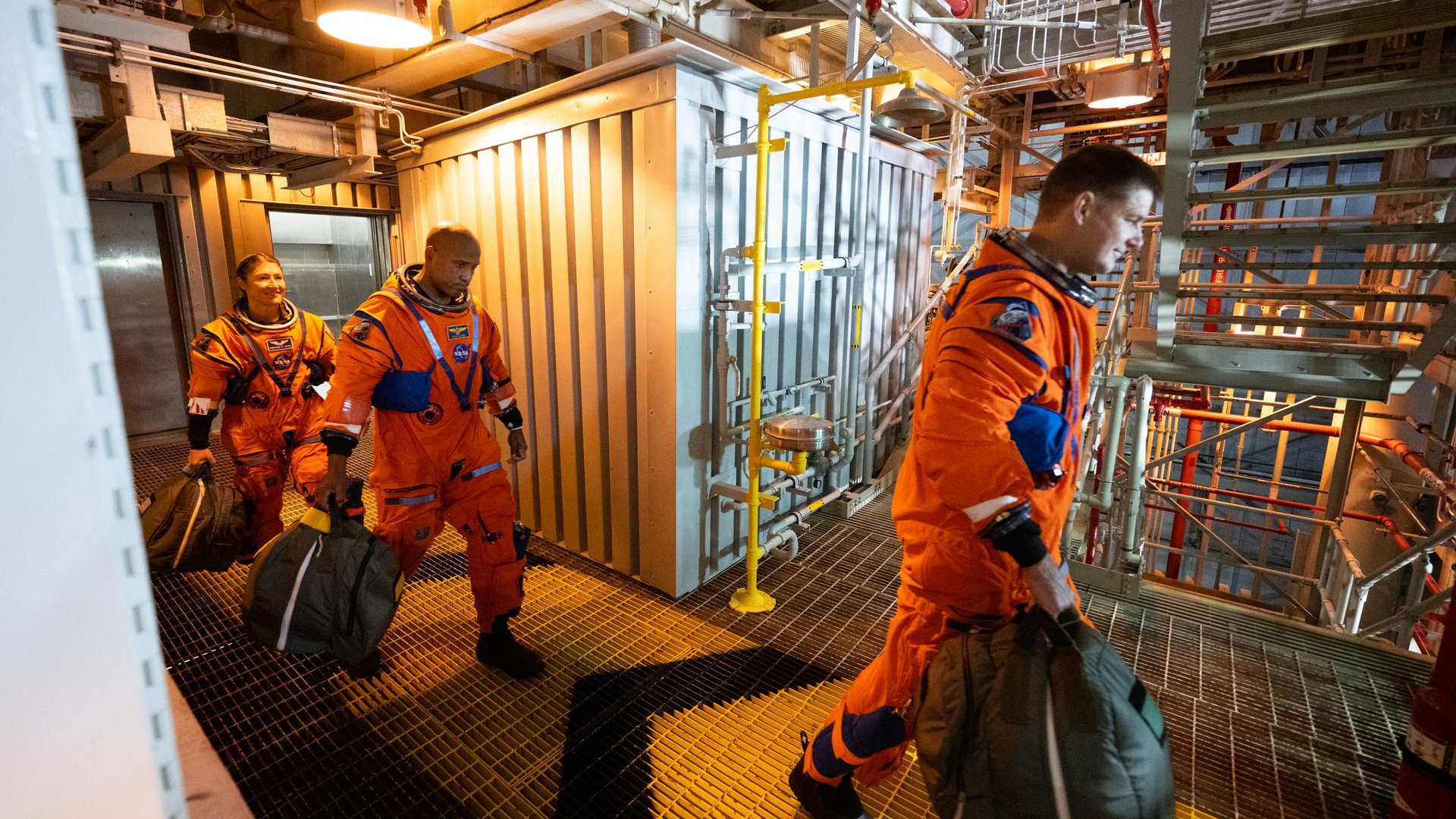
Canadian Space Agency astronaut Jeremy Hansen (right) and NASA’s Victor Glover and Christina Koch exit the elevator at the 275-foot level of the mobile launcher as they walk toward the crew access arm and prepare to board their Orion spacecraft atop NASA’s Space Launch System rocket during the Artemis 2 countdown demonstration test on Dec. 20, 2025, inside the Vehicle Assembly Building at NASA’s Kennedy Space Center in Florida. (Image credit: NASA/Joel Kowsky)
The action took place at the Vehicle Assembly Building (VAB) at KSC, where Orion and its European Service Module and the gigantic Space Launch System (SLS) rocket are being prepared and tested ahead of rollout and launch.
Artemis 2 is currently slated to launch from KSC no earlier than Feb. 5, 2026. The mission will mark the first time astronauts will journey to the vicinity of the moon since Apollo 17 in December 1972.
A day before the rehearsal, newly confirmed NASA Administrator Jared Isaacman posted on the social media platform X that “Artemis 2 is America’s return to the moon, and the start of something much bigger.”
The following mission, Artemis 3, will attempt to land astronauts on the surface of the moon. The mission is officially scheduled for 2027, but reports suggest that it will not launch until 2028 at the earliest.

Over the last three decades, Yellowstone National Park has undergone an ecological cascade. As elk numbers fell, aspen and willow trees thrived. This, in turn, allowed beaver numbers to increase, creating new habitats for fish and birds.
The shift has largely been attributed to the reintroduction of wolves to the park — as predators, they helped control the elk numbers. But their return may not have reshaped the entire ecosystem in the way that scientists thought, and has sparked a fierce debate among scientists over exactly why and how Yellowstone has rebounded.
According to a study published in January, the reintroduction of gray wolves (Canis lupus) in the 1990s created a trophic cascade — a chain reaction in the food web — that benefitted the entire ecosystem. The study linked wolves in the area to a reduction in the elk population, which in turn reduced browsing and allowed willow trees to grow. Between 2001 and 2020, this led to a 1,500% increase in crown volume, the total space filled by upper branches of the willows.
You may like
Large predators were targeted in Yellowstone from the end of the 1800s. By the 1920s, wolves were largely extinct from the park. Their disappearance created an ecological imbalance — the elk population exploded, which decimated plant populations and in turn threatened beavers, among other impacts. This is known as a trophic cascade, where the removal of one species causes ripples throughout the food web.
You may like
The debate about Yellowstone wolves and the impact of their reintroduction goes beyond this study and the latest response. While scientists widely agree that there is a trophic cascade in Yellowstone, its strength — and which predators are most responsible for it — form the center of the disagreement, MacNulty said.
To establish a clear trophic cascade from Yellowstone wolf reintroduction to willows, researchers would need to account for other predators and herbivores, said MacNulty. The ideal study would then analyze how much more total willow biomass there is now compared with before wolf introduction, to identify the strength of the effect; then calculate how much of that increase can be attributed solely to wolves, to identify its cause.
Ripple and his research team are now preparing a detailed reply, which explains that criticisms of the original study come from misunderstandings of what they did, Ripple said. “The basic scientific logic of the paper is solid,” Ripple said.
Conservation priorities might be fueling the controversy over large carnivores’ beneficial effects on ecosystems, said Goheen, adding that even if wolves are not definitively causing a trophic cascade to willows, they are still important to conserve.

Earth’s orbital environment is becoming increasingly crowded. Thousands of satellites—many of them inactive, damaged, or out of fuel—now circle the planet alongside fragments of debris from past collisions.
As more and more satellites enter orbit, one of the biggest questions becomes: how can these satellites approach and maneuver around each other safely? To answer that question, Luxembourg-based companies LMO and ClearSpace carried out a carefully designed simulation using the European Space Agency’s Guidance, Navigation and Control Rendezvous, Approach and Landing Simulator (GRALS).
What is it?
GRALS is part of ESA’s Guidance, Navigation and Control Test Facilities and is built to recreate close-proximity operations in space with remarkable realism. The satellite model shown in this image was developed by ClearSpace to replicate the geometry, materials, and visual complexity of real satellites.
You may like
Its crinkled gold thermal insulation, metallic structures, and the cup-shaped reflective thruster are not just aesthetic details but critical features that influence how light behaves in space and how cameras perceive an object during a rendezvous.
To ensure reliability, engineers combine computer-generated imagery used to train AI systems with physical testing on increasingly realistic models. Smaller models simulate long-range approaches, while larger, high-fidelity replicas like the one shown are used to test the most delicate, close-range phases of a rendezvous.
Where is it?
This photo was taken at the ESA’s technical center, ESTEC, in the Netherlands.
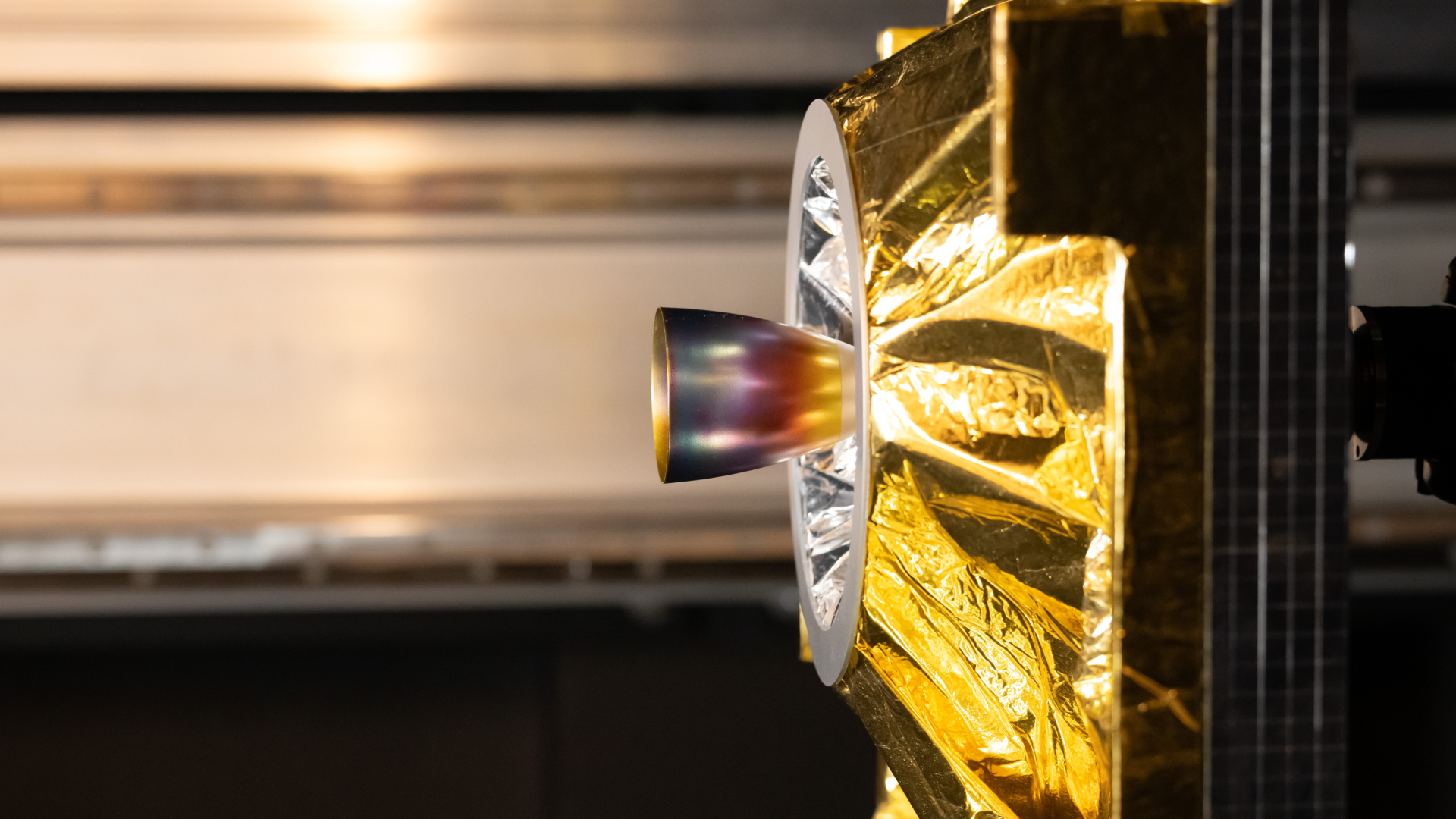
Using both models and AI, engineers can work to maneuver satellites as safely as possible. (Image credit: ESA-SJM Photography)
Why is it amazing?
The thousands of satellites orbiting Earth pose growing risks to operational spacecraft and to the long-term sustainability of space activities. Before a spacecraft can refuel, repair, or safely deorbit another satellite, it must be able to see, identify, and approach its target with exceptional accuracy. Vision-Based Navigation systems are key to making this possible. Much like self-driving cars rely on cameras and AI to interpret their surroundings, VBN-equipped spacecraft must interpret light, shadow, reflections, and rapidly changing viewpoints in the harsh environment of space.
Facilities like GRALS play a critical role in bridging the gap between theory and reality. By testing real hardware against realistic satellite models under space-like lighting conditions, engineers can expose weaknesses, validate AI training, and build confidence that autonomous systems will behave safely once deployed in orbit.
Want to learn more?
You can learn more about satellite crowding and space junk.
SCIENCE
‘Nobody knew why this was happening’: Scientists race to understand baffling behavior of ‘clumping clouds’

Caroline Muller looks at clouds differently than most people. Where others may see puffy marshmallows, wispy cotton candy or thunderous gray objects storming overhead, Muller sees fluids flowing through the sky. She visualizes how air rises and falls, warms and cools, and spirals and swirls to form clouds and create storms.
But the urgency with which Muller, a climate scientist at the Institute of Science and Technology Austria in Klosterneuburg, considers such atmospheric puzzles has surged in recent years. As our planet swelters with global warming, storms are becoming more intense, sometimes dumping two or even three times more rain than expected. Such was the case in Bahía Blanca, Argentina, in March 2025: Almost half the city’s yearly average rainfall fell in less than 12 hours, causing deadly floods.
Atmospheric scientists have long used computer simulations to track how the dynamics of air and moisture might produce varieties of storms. But existing models hadn’t fully explained the emergence of these fiercer storms. A roughly 200-year-old theory describes how warmer air holds more moisture than cooler air: an extra 7 percent for every degree Celsius of warming. But in models and weather observations, climate scientists have seen rainfall events far exceeding this expected increase. And those storms can lead to severe flooding when heavy rain falls on already saturated soils or follows humid heatwaves.
You may like
Clouds, and the way that they cluster, could help explain what’s going on.
A growing body of research, set in motion by Muller over a decade ago, is revealing several small-scale processes that climate models had previously overlooked. These processes influence how clouds form, congregate and persist in ways that may amplify heavy downpours and fuel larger, long-lasting storms. Clouds have an “internal life,” Muller says, “that can strengthen them or may help them stay alive longer.”
Other scientists need more convincing, because the computer simulations researchers use to study clouds reduce planet Earth to its simplest and smoothest form, retaining its essential physics but otherwise barely resembling the real world.
Now, though, a deeper understanding beckons. Higher-resolution global climate models can finally simulate clouds and the destructive storms they form on a planetary scale — giving scientists a more realistic picture. By better understanding clouds, researchers hope to improve their predictions of extreme rainfall, especially in the tropics where some of the most ferocious thunderstorms hit and where future rainfall projections are the most uncertain.
First clues to clumping clouds
All clouds form in moist, rising air. A mountain can propel air upwards; so, too, can a cold front. Clouds can also form through a process known as convection: the overturning of air in the atmosphere that starts when sunlight, warm land or balmy water heats air from below. As warm air rises, it cools, condensing the water vapor it carried upwards into raindrops. This condensation process also releases heat, which fuels churning storms.
But clouds remain one of the weakest links in climate models. That’s because the global climate models scientists use to simulate scenarios of future warming are far too coarse to capture the updrafts that give rise to clouds or to describe how they swirl in a storm — let alone to explain the microphysical processes controlling how much rain falls from them to Earth.
To try to resolve this problem, Muller and other like-minded scientists turned to simpler simulations of Earth’s climate that are able to model convection. In these artificial worlds, each the shape of a shallow box typically a few hundred kilometers across and tens of kilometers deep, the researchers tinkered with replica atmospheres to see if they could figure out how clouds behaved under different conditions.
You may like
Intriguingly, when researchers ran these models, the clouds spontaneously clumped together, even though the models had none of the features that usually push clouds together — no mountains, no wind, no Earthly spin or seasonal variations in sunlight. “Nobody knew why this was happening,” says Daniel Hernández Deckers, an atmospheric scientist at the National University of Colombia in Bogotá.
In 2012, Muller discovered a first clue: a process known as radiative cooling. The Sun’s heat that bounces off Earth’s surface radiates back into space, and where there are few clouds, more of that radiation escapes — cooling the air. The cool spots set up atmospheric flows that drive air toward cloudier regions — trapping more heat and forming more clouds. A follow-up study in 2018 showed that in these simulations, radiative cooling accelerated the formation of tropical cyclones. “That made us realize that to understand clouds, you have to look at the neighborhood as well — outside clouds,” Muller says.
Once scientists started looking not just outside clouds, but also underneath them and at their edges, they found other small-scale processes that help to explain why clouds flock together. The various processes, described by Muller and colleagues in the Annual Review of Fluid Mechanics, all bring or hold together pockets of warm, moist air so more clouds form in already-cloudy regions. These small-scale processes hadn’t been understood much before because they are often obscured by larger weather patterns.
Hernández Deckers has been studying one of the processes, called entrainment — the turbulent mixing of air at the edges of clouds. Most climate models represent clouds as a steady plume of rising air, but in reality “clouds are like a cauliflower,” he says. “You have a lot of turbulence, and you have these bubbles [of air] inside the clouds.” This mixing at the edges affects how clouds evolve and thunderstorms develop; it can weaken or strengthen storms in various ways, but, like radiative cooling, it encourages more clouds to form as a clump in regions that are already moist.
Such processes are likely to be most important in storms in Earth’s tropical regions, where there’s the most uncertainty about future rainfall. (That’s why Hernández Deckers, Muller and others tend to focus their studies there.) The tropics lack the cold fronts, jet streams and spiraling high- and low-pressure systems that dominate air flows at higher latitudes.
From the lower levels of the atmosphere to the higher regions known as the free troposphere, several phenomena help drive clouds to form and clump together. They include radiative cooling (1), in which solar heat bounces from Earth’s surface through clear skies back to space, causing cooling of parts of the atmosphere, as well as mixing (2) at clouds’ edges, which holds clouds together. Other processes (3 and 4) involve additional disturbances that can affect cloud behavior. (Image credit: Knowable Magazine)
Supercharging heavy rains
There are other microscopic processes happening inside clouds that affect extreme rainfall, especially on shorter timescales. Moisture matters: Condensed droplets falling through moist, cloudy air don’t evaporate as much on their descent, so more water falls to the ground. Temperature matters too: When clouds form in warmer atmospheres, they produce less snow and more rain. Since raindrops fall faster than snowflakes, they evaporate less on their descent — producing, once again, more rain.
These factors also help explain why more rain can get squeezed from a cloud than the 7 percent rise per degree of warming predicted by the 200-year-old theory. “Essentially you get an extra kick … in our simulations, it was almost a doubling,” says Martin Singh, a climate scientist at Monash University in Melbourne, Australia.
Cloud clustering adds to this effect by holding warm, moist air together, so more rain droplets fall. One study by Muller and her collaborators found that clumping clouds intensify short-duration rainfall extremes by 30 to 70 percent, largely because raindrops evaporate less inside sodden clouds.
Other research, including a study led by Jiawei Bao, a postdoctoral researcher in Muller’s group, has likewise found that the microphysical processes going on inside clouds have a strong influence over fast, heavy downpours. These sudden downpours are intensifying much faster with climate change than protracted deluges, and often cause flash flooding.
The future of extreme rainfall
Scientists who study the clumping of clouds want to know how that behavior will change as the planet heats up — and what that will mean for incidences of heavy rainfall and flooding.
Some models suggest that clouds (and the convection that gives rise to them) will clump together more with global warming — and produce more rainfall extremes that often far exceed what theory predicts. But other simulations suggest that clouds will congregate less. “There seems to be still possibly a range of answers,” says Allison Wing, a climate scientist at Florida State University in Tallahassee who has compared various models.
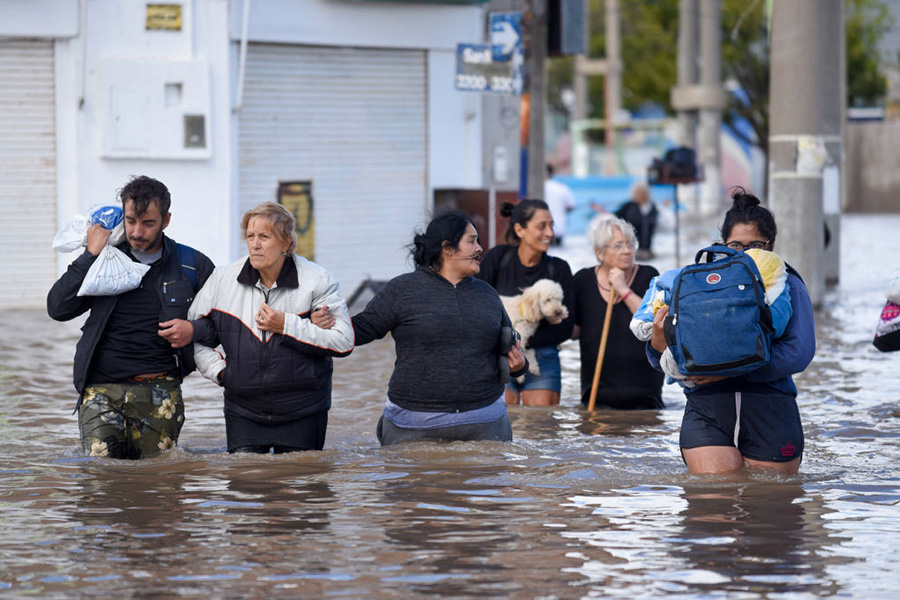
Torrential rains in March 2025 flooded the city of Bahía Blanca, Argentina. Extreme precipitation like this is expected to become more common as the planet continues to warm, but predicting rainfall extremes in tropical regions is proving challenging. (Image credit: Photo by PABLO PRESTI/AFP via Getty Images)
Scientists are beginning to try to reconcile some of these inconsistencies using powerful types of computer simulations called global storm-resolving models. These can capture the fine structures of clouds, thunderstorms and cyclones while also simulating the global climate. They bring a 50-fold leap in realism beyond the global climate models scientists generally use — but demand 30,000 times more computational power.
Using one such model in a paper published in 2024, Bao, Muller and their collaborators found that clouds in the tropics congregated more as temperatures increased — leading to less frequent storms but ones that were larger, lasted longer and, over the course of a day, dumped more rain than expected from theory.
But that work relied on just one model and simulated conditions from around one future timepoint — the year 2070. Scientists need to run longer simulations using more storm-resolving models, Bao says, but very few research teams can afford to run them. They are so computationally intensive that they are typically run at large centralized hubs, and scientists occasionally host “hackathons” to crunch through and share data.
Researchers also need more real-world observations to get at some of the biggest unknowns about clouds. Although a flurry of recent studies using satellite data linked the clustering of clouds to heavier rainfall in the tropics, there are large data gaps in many tropical regions. This weakens climate projections and leaves many countries ill-prepared. In June of 2025, floods and landslides in Venezuela and Colombia swept away buildings and killed at least a dozen people, but scientists don’t know what factors worsened these storms because the data are so paltry. “Nobody really knows, still, what triggered this,” Hernández Deckers says.
New, granular data are on their way. Wing is analyzing rainfall measurements from a German research vessel that traversed the tropical Atlantic Ocean for six weeks in 2024. The ship’s radar mapped clusters of convection associated with the storms it passed through, so the work should help researchers see how clouds organize over vast tracts of the ocean.
And an even more global view is on the horizon. The European Space Agency plans to launch two satellites in 2029 that will measure, among other things, near-surface winds that ruffle Earth’s oceans and skim mountaintops. Perhaps, scientists hope, the data these satellites beam back will finally provide a better grasp of clumping clouds and the heaviest rains that fall from them.
Research and interviews for this article were partly supported through a journalism residency funded by the Institute of Science & Technology Austria (ISTA). ISTA had no input into the story.
This article originally appeared in Knowable Magazine, a nonprofit publication dedicated to making scientific knowledge accessible to all. Sign up for Knowable Magazine’s newsletter.


What we throw away as food waste may hold the key to healthier crops, stronger ecosystems, and new medical compounds. Food waste is often seen as little more than compost material, but new research shows it can offer much more. Scientists are discovering valuable uses for discarded food, ranging from dried beet pulp to coconut […]
SOURCE PAGE

For an agency shooting for the moon and onward to Mars, NASA in 2025 has been on a roller coaster ride of proposed budget cuts, personnel layoffs, and potential elimination of science missions.
A key question: Have these various traumas changed NASA dramatically, and potentially permanently?
Battle lines are being drawn and now Congress has to spin up their views as to the space agency’s overall stability and, indeed, its future. As for what’s ahead, it’s all sausage making — political style. The outcome for NASA is literally a to-be-determined matter of time and space.
You may like
Corporate/agency history
“Clearly, things have changed,” said Henry Hertzfeld, a research professor of space policy and international affairs at George Washington University’s Elliott School of International Affairs, noting that his observations are from afar, not from within the space agency.
“A lot of very experienced people with a lot of ‘corporate/agency history’ are now gone from the agency. Some may have retired soon anyway, but that is not an excuse or explanation of the changes,” Hertzfeld told Space.com.
Since the whole policy office at NASA was eliminated, said Hertzfeld, many of those people and functions are gone. Whether, for example, economics and other policy offices will be missed or not is arguable, he said.
“But I do think not having them is a significant loss of talent and input into NASA programs and decisions,” Hertzfeld said.
Long-term loss
Like many suggest, if Congress doesn’t act with funding, the real loss is in the science area.
“There will be fewer new initiatives and many cuts in the work that now won’t be done across the board,” said Hertzfeld.
“The science part of NASA is relatively small but it is the one true research area that has produced significant learning and information over the years. And, it will be a long-term loss since the agency will likely face more difficulty in hiring and keeping highly trained and skilled scientists,” Hertzfeld said. “They will go elsewhere … and elsewhere is not the government.”
You may like
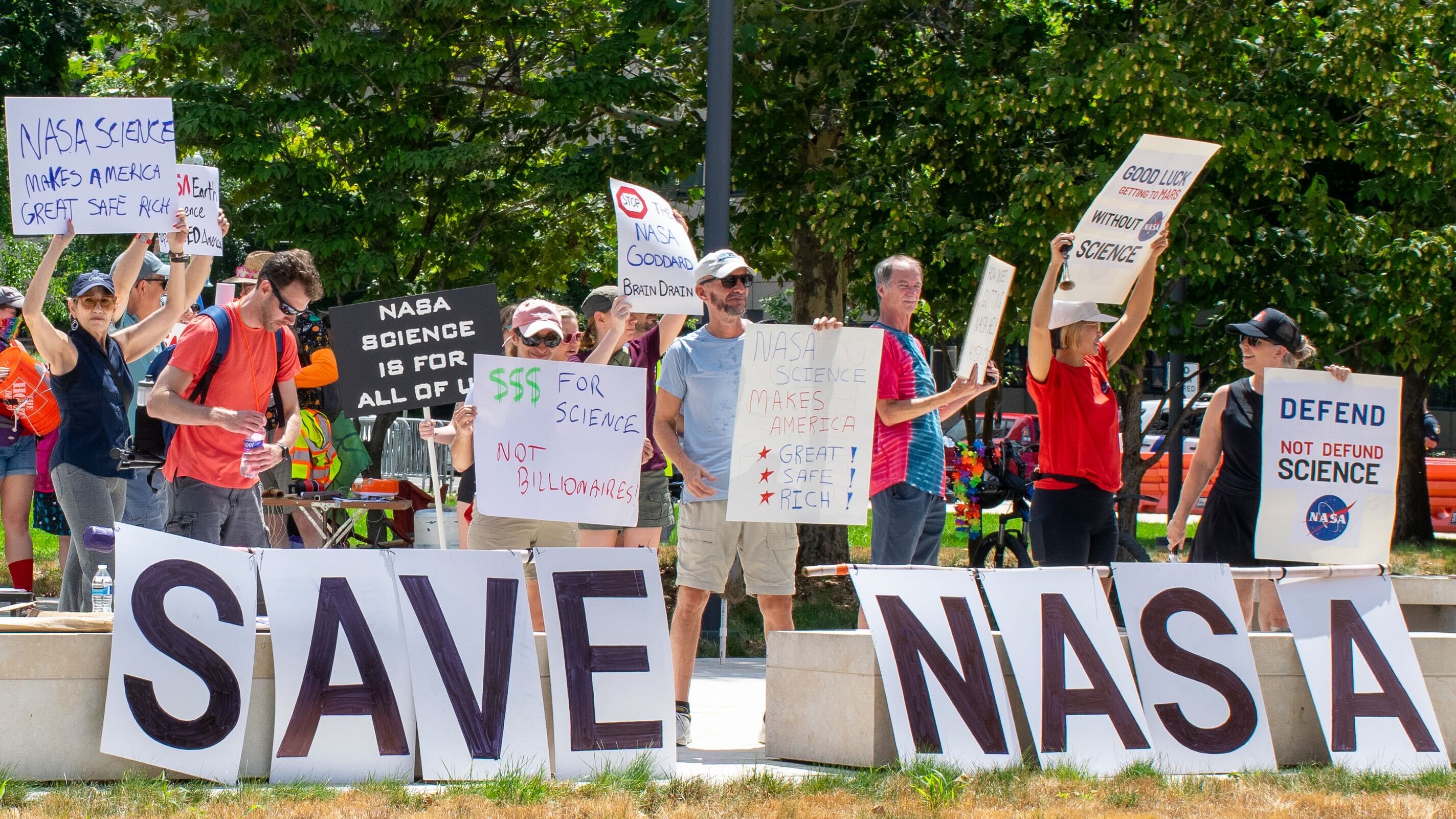
People hold signs outside on a sunny day in protest of NASA budget cuts, July 20, 2025. (Image credit: Space.com / Josh Dinner)
Investment dollars
Hertzfeld said that one less well understood impact is the rapid funding of various defense and security space efforts.
“We read about the significant increase in private sector investment activity oriented toward space. But what is really happening is that the Department of Defense spending on buying more from companies is the main driver of these investment dollars,” said Hertzfeld. “NASA programs and needs are no longer the main stimulus for ‘commercial’ space activity.”
The resulting innovation and products for new space activities, Hertzfeld added, will primarily benefit the security aspects and not so much the civil space programs. “Thus, the aggregate commercial and government space sector will benefit, but quite differently from what we experienced in history,” he said.
Heightening concerns
Keith Cowing is founder of the private NASA overseer website, NASA Watch. He is passionate about the space agency’s revered history and its future.
“While every NASA field center saw workforce reductions of around 20%, perhaps no center was more drastically affected by budget cuts than NASA’s Goddard Space Flight Center,” pointed out Cowing.
There was a long term plan in place that would have morphed Goddard over the course of nearly a decade to better adapt it to future NASA needs, Cowing told Space.com. That plan was co-opted by Administration personnel in place at NASA Headquarters, he said, to accelerate and expand Goddard facility closures that will result in half of the center’s buildings and laboratories being mothballed, he said.
“These cuts are a standout when compared to changes elsewhere at NASA,” Cowing said, “so much so that the House Oversight and House Science, Space and Technology committees sent repeated inquiries to NASA asking for an explanation.”
The result is that “NASA has been slow to respond, thus heightening concerns about the overall impact on NASA science programs as presented by the White House in its FY 2026 budget request,” Cowing said.
Tremendous challenge
Marcia Smith is founder and editor of the informative SpacePolicyOnline.com
NASA is not “crippled,” Smith said, but time will tell the effects of the loss of personnel.
“I certainly don’t know the names and positions of all the 4,000 or so people who left, but of the people I personally know, they were the best of the best,” Smith advised. “Now, surely, a lot of terrific people are still there, but how they’re going to manage to execute whatever programs remain with so many excellent colleagues gone will be a tremendous challenge.”
Both what’s happening at the NASA Goddard field center and given layoffs of Jet Propulsion Laboratory (JPL) talent, “is extremely worrisome to American leadership in space science,” said Smith.
Smith observed that it may well be the effect on morale is the most dramatic effect.
“People who have spent their lives keeping America as the world leader in civil space science and technology basically being told their work is valueless and can be erased with the wave of a ‘DOGE wand.’ That’s tough,” Smith said.
DOGE stands for the Department of Government Efficiency, a special commission put in place by President Donald Trump, established to slash federal spending.
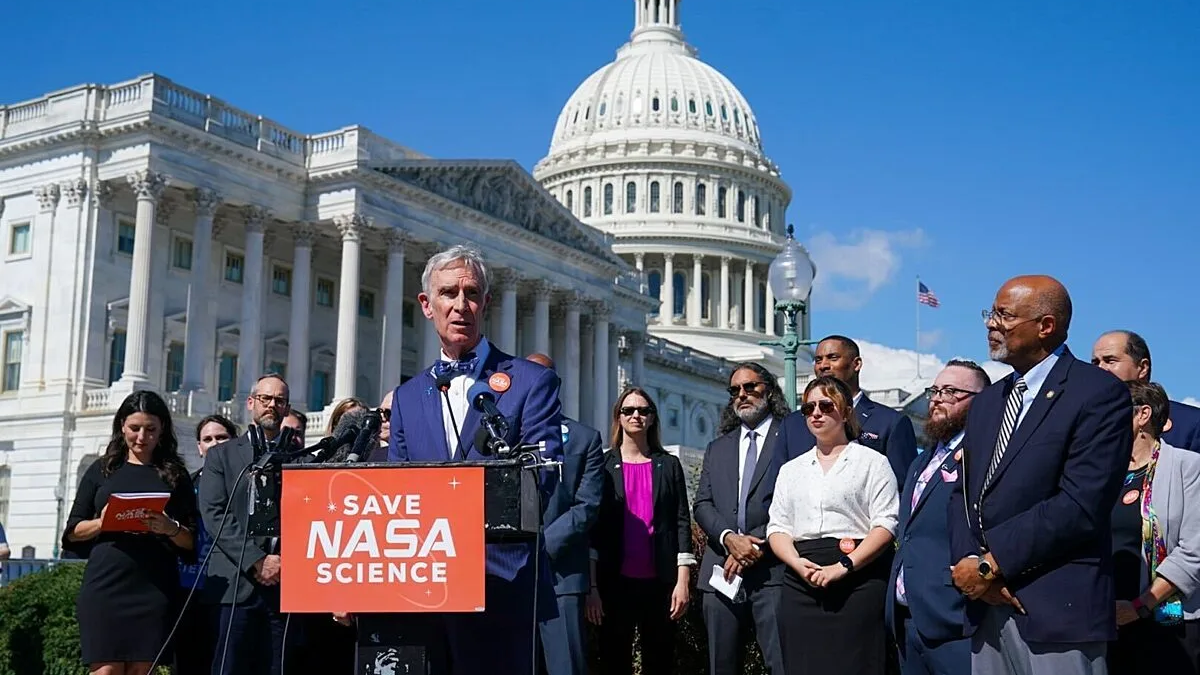
Planetary Society CEO Bill Nye addresses press and supporters on Capitol Hill on Oct. 5, 2025. (Image credit: Planetary Society)
Years to rebuild
NASA does what no other organization — public or private — can do, said Jack Kiraly, director of government relations for the Planetary Society, a member-funded nonprofit organization based in Pasadena, California that’s dedicated to advancing space science and exploration.
“The agency has led the world in the exploration of space, redefining our understanding of the universe, and inspiring countless innovations in science and technology,” Kiraly told Space.com.
Kiraly sees the events of 2025 as a profound shock to NASA and the space community.
“The agency will begin the new year with a civil servant workforce smaller than what it had at the dawn of human spaceflight in 1961. Nearly 4,000 scientists, engineers and space professionals have left the agency through pressured resignation and layoffs amid rapid reorganizations and funding uncertainty,” said Kiraly.
That action represents a loss of specialized expertise and institutional knowledge that will take years to rebuild, added Kiraly.
Pivotal moment
Beyond the immediate impacts, said Kiraly, the termination of NASA awards valued at more than $315 million and the reduction of future research opportunities have disrupted the science, technology, engineering, and mathematics (STEM) pipeline that trains the next generation of scientists, engineers, and innovators.
Because NASA’s activities involve every state and more than 75% of congressional districts, these effects will be felt nationwide, Kiraly said.
“The damage is real, but it doesn’t have to be permanent,” Kiraly said. “Congress has, in a bipartisan way, signaled to the White House and the public that they intend to fully fund NASA in 2026, rejecting the worst of the cuts proposed earlier this year.”
And given the confirmation of Jared Isaacman to be NASA’s Administrator “brings new leadership and momentum at a pivotal moment for the agency,” Kiraly concluded.
SCIENCE
Scientists are developing a ‘self-driving’ device that helps patients recover from heart attacks

Hospitals may soon be able to rely on a “self-driving” machine to help patients recover from heart attacks. This machine would deliver treatments to the patient, collect data on how their body responds, and then adjust their medications to stabilize the patient within parameters preset by their doctor.
This is the vision for the Autonomous Closed-Loop Intervention System (ACIS), a device being developed by scientists at NTT Research, an arm of global technology company NTT. The device has been tested in animal experiments but not in human patients yet.
The researchers’ eventual goal is to allow the heart to rest and minimize its oxygen use in that critical recovery window after a patient experiences a cardiac emergency. The jobs that would be handled by ACIS are usually done by medical providers — but the idea is that the device could standardize and optimize the process to deliver better outcomes while relieving strain on doctors’ already-limited resources.
You may like
“We think that this system will outperform the standard of care,” said Dr. Joe Alexander, director of NTT Research’s Medical and Health Informatics (MEI) lab.
ACIS stemmed from a larger effort spearheaded by the MEI Lab known as the Bio Digital Twin program. Its aim is to construct advanced virtual models of organ systems that can be personalized with an individual patient’s data, providing a detailed and dynamic representation of their medical status and a testable model for developing treatment plans.
Live Science spoke with Alexander about Digital Twins, ACIS and his vision for how they might transform health care.
Nicoletta Lanese: When we’re talking about a Bio Digital Twin, is it fair to say it’s a virtual copy of the patient?
Dr. Joe Alexander: Probably the layperson would think of a Bio Digital Twin as a copy of the person. But actually, it’s just a system of equations, modeling and simulation to represent a person to the extent that is relevant for the disease. It’s a very specific application, so there’s no single Bio Digital Twin representing the [whole] person.
In our case, although we set out to build a family of Bio Digital Twins to represent different organ systems for different types of important diseases, we’re starting with the cardiovascular system. So when I talk about a Cardiovascular Bio Digital Twin, I’m not talking about even a copy of the heart; I’m talking about a mathematical representation of all of the systems necessary for looking at the cardiovascular system in a particular patient.
In the case of ACIS, we’re looking at acute heart failure and acute myocardial infarction [colloquially known as a heart attack].
You may like
Dr. Joe Alexander predicts ACIS could someday “outperform the standard of care.” (Image credit: Courtesy of NTT Research, Inc.)
NL: Could you talk about what kind of data goes into the model?
JA: This Cardiovascular Bio Digital Twin is representing pressures and flows throughout the cardiovascular system, including pressures and flows generated by all four chambers of the heart. … We are able to represent the cardiovascular system dynamics in pressures, flows and volumes.
NL: And how do you make that actionable for an individual patient?
JA: We’re in the early stages of it, but we have a road map for how to do it. Basically, we first go after representing the “normal” cardiovascular system for patients. So, if we can get data around “normal,” then that’s very good. [Editor’s note: The MEI Lab is working with partners such as the National Cerebral and Cardiovascular Center in Japan to get access to this kind of data.]
But probably what’s most important is finding populations that are relevant to the particular patient — so, in this case, patients with cardiovascular disease or patients with heart failure. So we go after that population-level data; let’s say for heart failure. Then, from that data, we can estimate parameters for our cardiovascular model that represent the general population of patients with heart failure.
Within that population, as you know, there’s a lot of variability. So are there other characteristics specific to our patient that we can use? Maybe results from echocardiogram [EKG]; maybe age; maybe comorbidities [other medical conditions]; sex, male or female; or environment. And if there is genetic information available, then we can find a subpopulation that’s even more relevant to the patient.
Now, with ACIS, we [would] actually hook up a patient to the “first guess” of our Cardiovascular Bio Digital Twin for what would match that patient based on population-level data. Since it’s a feedback control system, the feedback will automatically adjust the parameter values to deliver the necessary drugs or device therapies that that particular patient needs for some prespecified cardiac output. In that way, we can further fine-tune the Digital Twin for that patient.
NL: Can you describe how ACIS and its feedback loop work?
JA: The idea is that it’s a “self-driving” therapeutic, just like a self-driving car. But in this case, “self-driving” is delivering the appropriate drugs or, in severe cases, medical-device therapies that a patient may need.
We have a system where we specify — just type in the keyboard — the desired cardiac output, heart rate, left atrial pressure, arterial pressure that we want the patient to achieve. Then, syringes that are filled with the appropriate drugs to create those changes are driven by our model, or “best guess” for that particular patient. This is all after a patient has had the primary lesion [like a blood vessel blockage] treated in the cath lab.
Let’s say they had a vessel that was occluded; it’s already been opened up or a stent has been placed, and they go to the ICU [intensive care unit] or CCU [coronary care unit] in order to recover. Recovery means that the heart needs an opportunity to rest. That means letting the heart work as little as possible to maintain the desired cardiac output.
We have a certain regimen of drugs that are given. Catecholamines improve the ability of the heart to contract. Nitrates reduce afterload of the heart so it doesn’t have to work against such a high load when it tries to inject into the arterial system. Diuretics decrease the circulating blood volume and remove blood from the lungs, which has built up due to the acute failure.
These drugs are typically given by a physician; they’ll give one drug and look at the response, give another drug, the response, and manage that patient over several days. When our system achieves proper function — and we’re almost there, I think — all those drugs can be given at once if we know how the system will respond. That saves us a lot of time in treating the patient.
The drugs are delivered by these autonomously controlled syringes; then the patient responds to them, and that response is fed back in this system. Those values are compared to the ones that we typed in the keyboard, and if there’s a difference, then feedback systems work to reduce that difference. It also gives information to our Digital Twin for that patient, so that in the future, we have better representations of those resistors and capacitors in the model.

The Cardiovascular Digital Twin represents the dynamics of the cardiovascular system through mathematical equations and simulations. (Image credit: Getty Images)
NL: What stage of development has ACIS reached at this point?
JA: So, in animal experiments in dogs, last year for the first time, we experimentally induced acute heart failure and we were able to let this autonomous system correct the cardiac output, arterial pressure autonomously, while minimizing myocardial [heart muscle] oxygen consumption.
Since that first successful experiment about a year ago, we’ve had several other successful [animal] experiments, all the while improving our feedback system to be more complex, making it so that it can operate based on intermittent data, so you don’t have to be continuously sampling. You can do it episodically.
We have several more years of work in optimizing this system, we think, in animal experimentation — probably about three years more. And then we’ll be ready for first-in-human studies where ACIS will be used but with a clinician in the loop [for the initial human tests]. What ACIS would do is tell the physician what doses of these various drugs to deliver, and the physician would then make a decision whether to do it or not, as a safety measure.
Now, what I’ve been describing so far has mostly been about drugs, but the same algorithms work for medical devices, such as left ventricular assist devices [LVAD, a type of mechanical pump] or extracorporeal membrane oxygenation devices [ECMO, which circulates the blood to let the heart and lungs rest]. This is all within the scope of what we expect to achieve in experimental animals within the next three years before going to first-in-human studies.
NL: What are the next steps toward getting ACIS approved? What might the trials look like?
JA: It would be kind of like [testing] an autonomous or self-driving vehicle — level 1 through 4 degrees, or stages, of autonomy.
In other words, allowing the system to have increasing responsibility and watching the performance until settling into acceptance of an autonomous system where then, still, probably a specialist would monitor it — like someone sitting in the seat of a self-driving car, ready to take over if things go wrong. I see that kind of progression, similar to the self-driving vehicle.
NL: And in the long run, would ACIS always have some kind of clinician supervision?
JA: I still hold to the concept of “autonomous,” but I suspect that there will be a cardiologist somewhere roaming around, monitoring, perhaps, a number of patients at once.
I’m very committed to the idea that the device that we conceive of can actually outperform the cardiologist. And I know that we’ll rub some cardiologists the wrong way. But we expect to demonstrate that point, or strongly suggest that that’s true, by doing experiments in animals where we compare the ACIS system to clinically trained cardiologists. We expect reduced infarct size [degree of heart tissue death] from ACIS compared to the standard of care from cardiologists.
NL: Assuming this device gets approved in the future, where do you see it having the most benefit?
JA: There’s the so-called Quintuple Aim of Health Care, which says to improve the patient experience, improve the physician experience, improve population health, reduce the cost of care, and improve health equity. These aims, I think, are all addressed by ACIS.
The patient would have more attention and minute-to-minute care — you wouldn’t have a resident trying to juggle many patients at once. You could have a less-specialized clinical caretaker who is watching the behavior of the device, and so that would improve not only the patient experience and quality of the patient’s care but also the health care provider’s experience. They wouldn’t have to be overworked to such an extent.
We think that this system will outperform the standard of care because [on paper] you more rapidly converge on the minimization of myocardial oxygen consumption and have better recovery during the hospital stay. So the patients have fewer readmissions and complications after being released. There’s always some injury to the heart [with these cardiac events], and maybe, there may be some infarction of the heart. So we think that this level of care could reduce infarct size, so you preserve more of the heart, during treatment.
NL: And when you eventually hand off ACIS for clinical testing, what would the next project be?
JA: For us, the natural progression within the next 10 years, probably within the next five years, would be chronic heart failure. In chronic heart failure, you have to deal with more complexity, such as [tissue] remodeling, where the ventricles get thicker or get dilated. That kind of remodeling changes the mechanics.
You also have to deal with data from patients who are not in the hospital. We plan on building registries of patients [with Digital Twins] who would have been acutely ill to have access to that data for treating them outside. But then we have to also rely on things like wearable technologies, and we’ve been working on that as well. We have collaborations with folks at the Technical University of Munich who are developing special biosensors and biomaterials and implantable sensors and so forth that could help provide the data that would be important to doing predictive health maintenance in patients with chronic heart failure.
And in chronic heart failure, we have to deal with comorbidities and complications like kidney failure … and anemia. The combination of fluid overload and anemia all due to renal failure really makes the heart suffer from a lack of oxygen and causes slow deterioration.
I’m sure that complexity alone will keep me busy for the rest of my life. We have a lot of work to do with chronic heart failure; that would be next for sure.
Editor’s note: This interview has been lightly edited for length and clarity.

A new study links climate stress to the disappearance of the early human species Homo floresiensis, known as the “hobbits” of Flores. An international group of researchers, including scientists from the University of Wollongong (UOW), has uncovered strong evidence linking climate change to the disappearance of the early human species Homo floresiensis, commonly called the […]
SOURCE PAGE

The sky served up no shortage of spectacle in 2025 —from lunar liaisons, solar prominences and fleeting meteor showers, to aurora and nebula scenes that unfold on a scale almost too massive for the human mind to comprehend.
And while we experience the cosmos first through the human eye, our vision has limits. We can’t zoom in on distant nebulas, see the faintest glows, or safely take in the brightest targets — and much of the electromagnetic spectrum is invisible to us entirely.
You may like
10 Incredible astrophotography highlights of 2025
1. Plasma twists above the solar surface
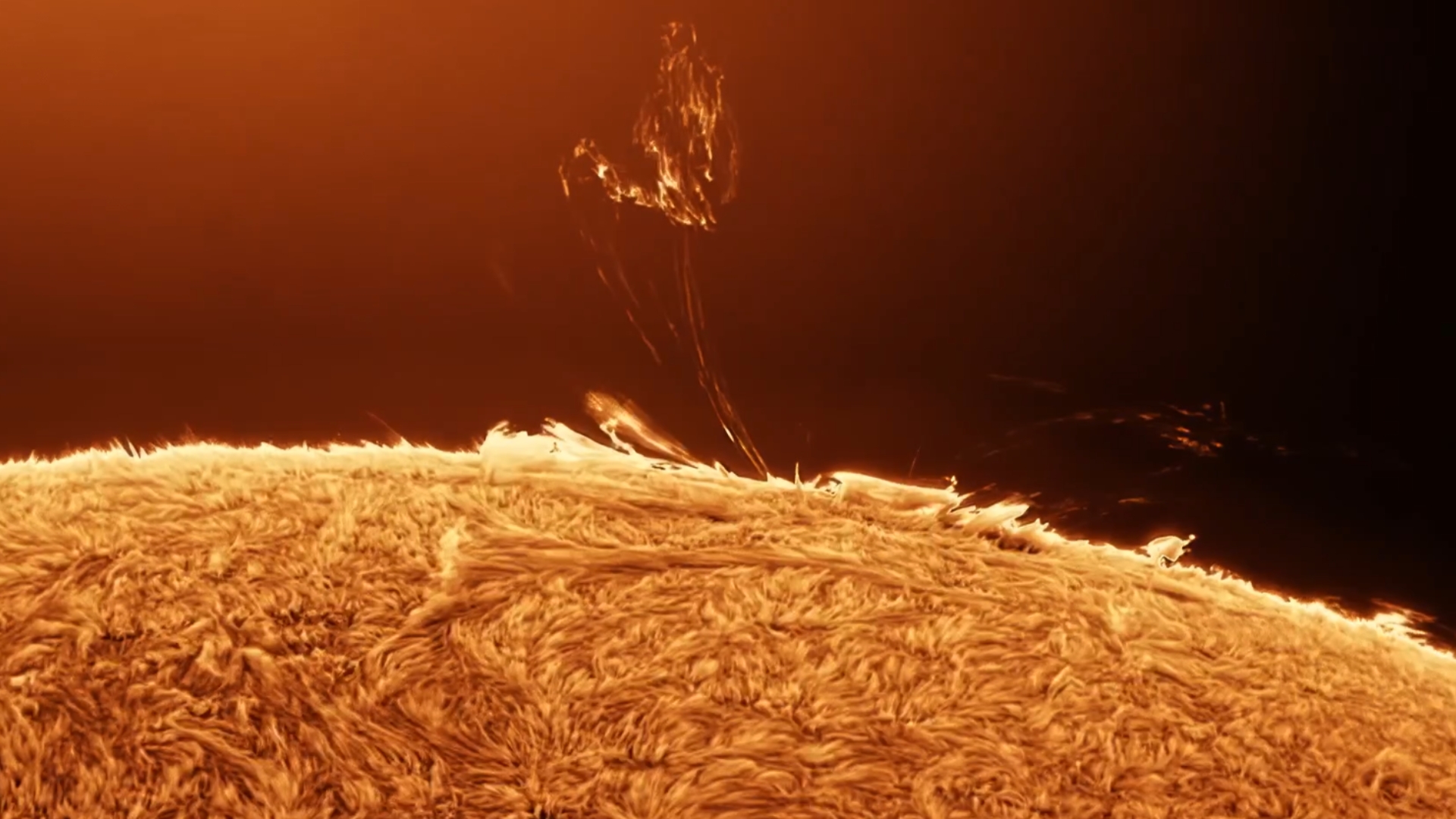
A solar prominence extends out from the sun (Image credit: Mark Johnston)
Astrophotographer Mark Johnston captured a jaw-droppingly detailed view of hydrogen plasma suspended in the powerful magnetic field above the sun on Oct. 20 from Willow Springs, Arizona, using a TEC160FL refractor telescope fitted with specialized filters.
2. A nebula shark is spied hunting through the depths of space

A cosmic shark hunts through deep space. (Image credit: Ronald Brecher)
Ronald Brecher, meanwhile, set his sights further afield, targeting a spectacular deep-space nebula vista in the constellation Cepheus, some 650 light-years from Earth, which happens to resemble a vast cosmic shark swimming through deep space.
3. The moon and sun meet over Stonehenge
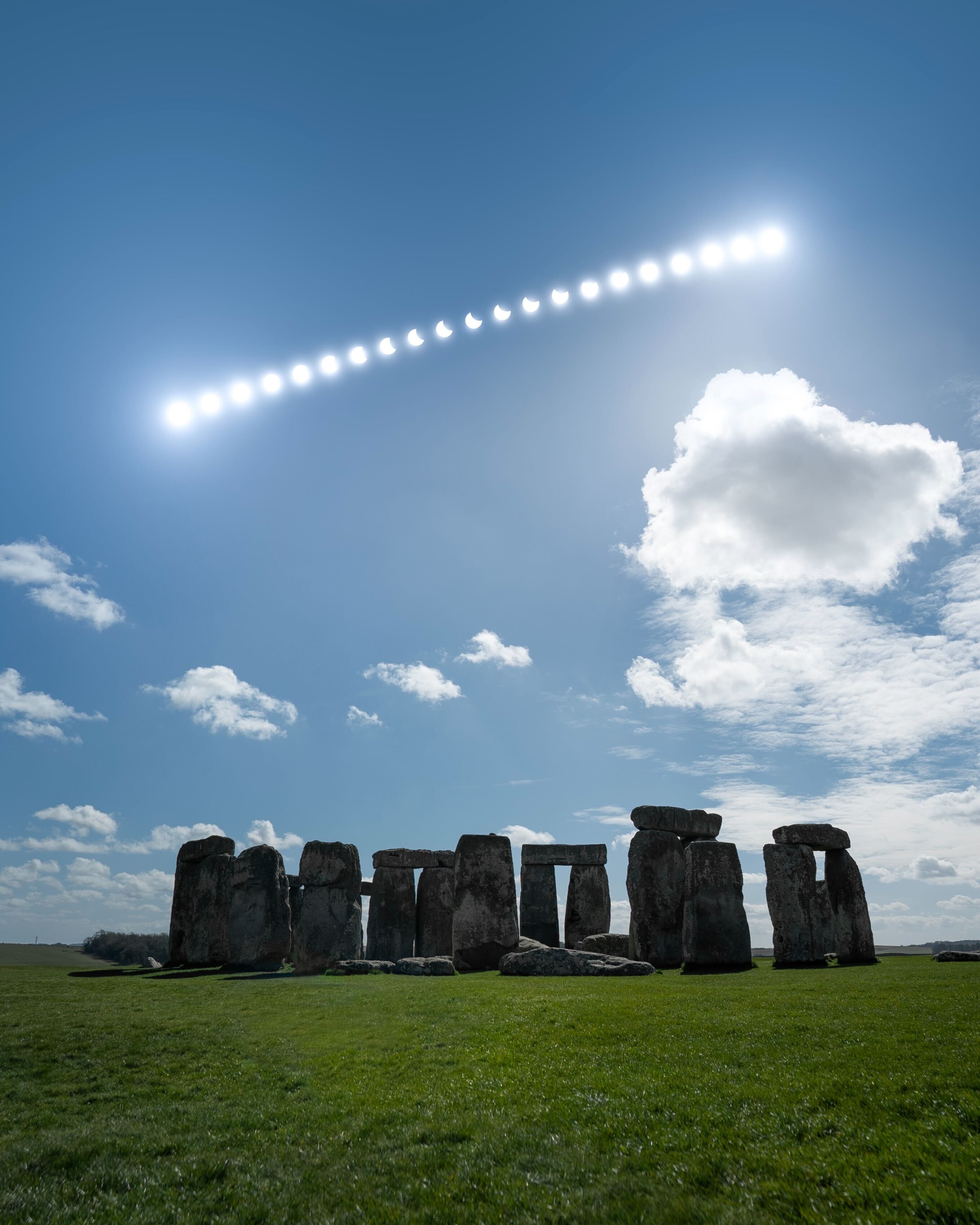
Partial solar eclipse sequence over Stonehenge, U.K. (Image credit: Josh Dury)
This gorgeous composite shot detailing the phases of a partial solar eclipse unfolding above the ancient monument of Stonehenge was captured by award-winning photographer Josh Dury as the moon slid between the sun and Earth on March 29.
4. Comet Lemmon twists in the solar wind

Astrophotographer Dan Bartlett captured this view of comet Lemmon (Image credit: Dan Bartlett)
In a year packed full of phenomenal cometary capers, astrophotographer Dan Bartlett captured a staggering image of comet C/2025 A6 (LEMMON) looking its best as it shone in the skies over June Lake, California, on Sept. 26, as its tail twisted in the relentless stream of the solar wind.
5. The northern lights from 36,000 feet
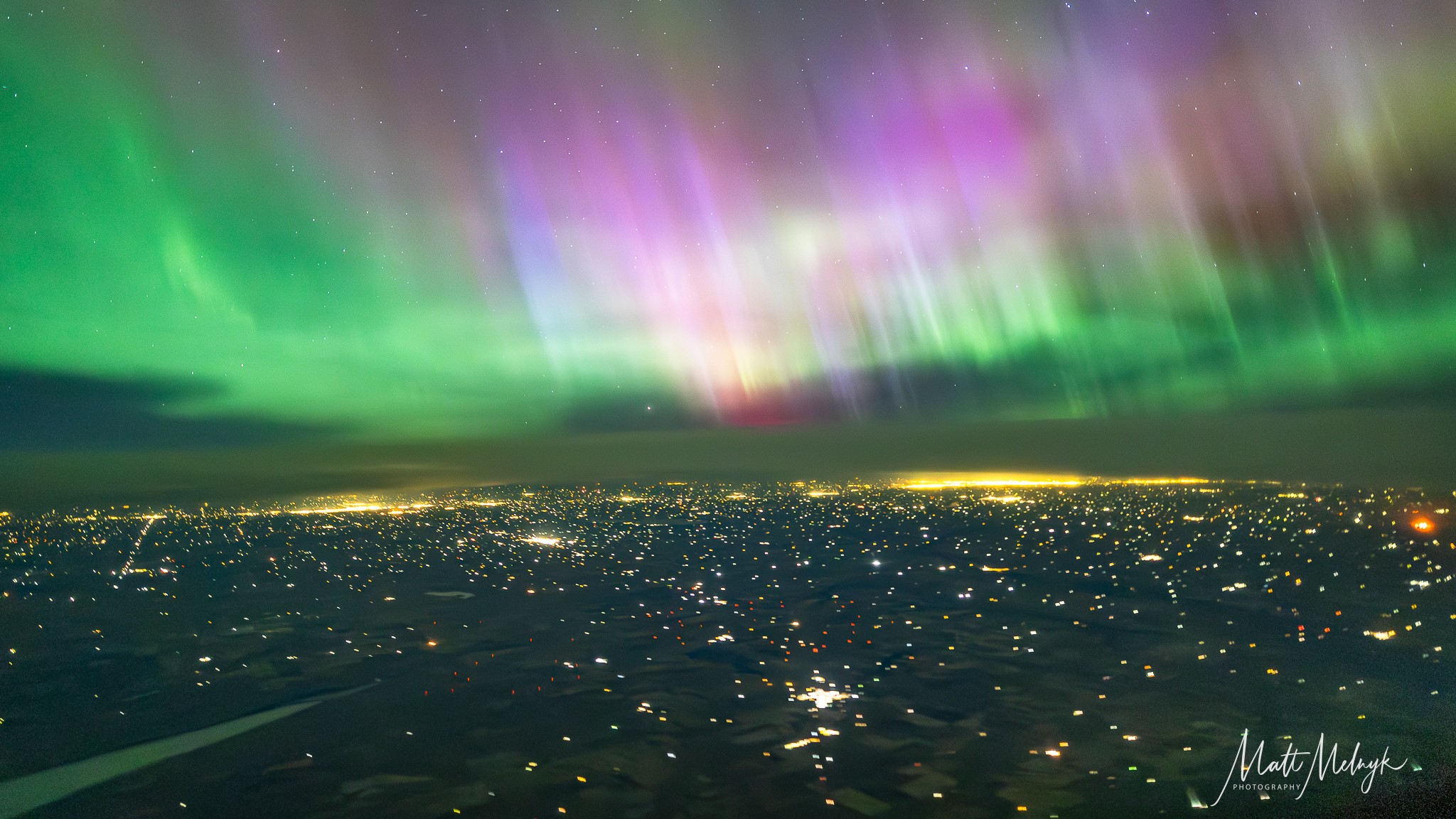
When a severe G4 geomagnetic storm hit, this Dreamliner pilot had the perfect front-row seat. (Image credit: Matt Melnyk)
Of course, not all of the best astrophotography subjects exist beyond Earth’s atmosphere. Airline pilot Matt Melnyk snapped an impressive view of the northern lights shining in the upper atmosphere from a height of 36,000 feet (11 kilometers), while shepherding a Boeing 787 from London to Calgary during a geomagnetic storm on Nov. 12.
6. A cosmic baboon rages light-years from Earth

The Raging Baboon Nebula, as captured by astrophotographer Greg Meyer in 2025. (Image credit: Greg Meyer)
Astrophotographer Greg Meyer captured light of a more ancient variety while imaging a nebula 500 light-years from Earth in the constellation Corona Australis, which takes on the shape of a mandrill with glowing blue eyes in long-exposure photography.
7. Perseid meteors race the Milky Way

Perseid meteors streak towards Durdle Door in this 2025 image from photographer Josh Dury. (Image credit: Josh Dury)
This stunning composite from Josh Dury shows shooting stars belonging to the annual Perseid meteor shower streaking towards the horizon alongside the glowing band of the Milky Way above the iconic Durdle Door rock formation in Dorset, United Kingdom.
You may like
8. An ‘Elve’ red halo flashes to life over the Italian Alps
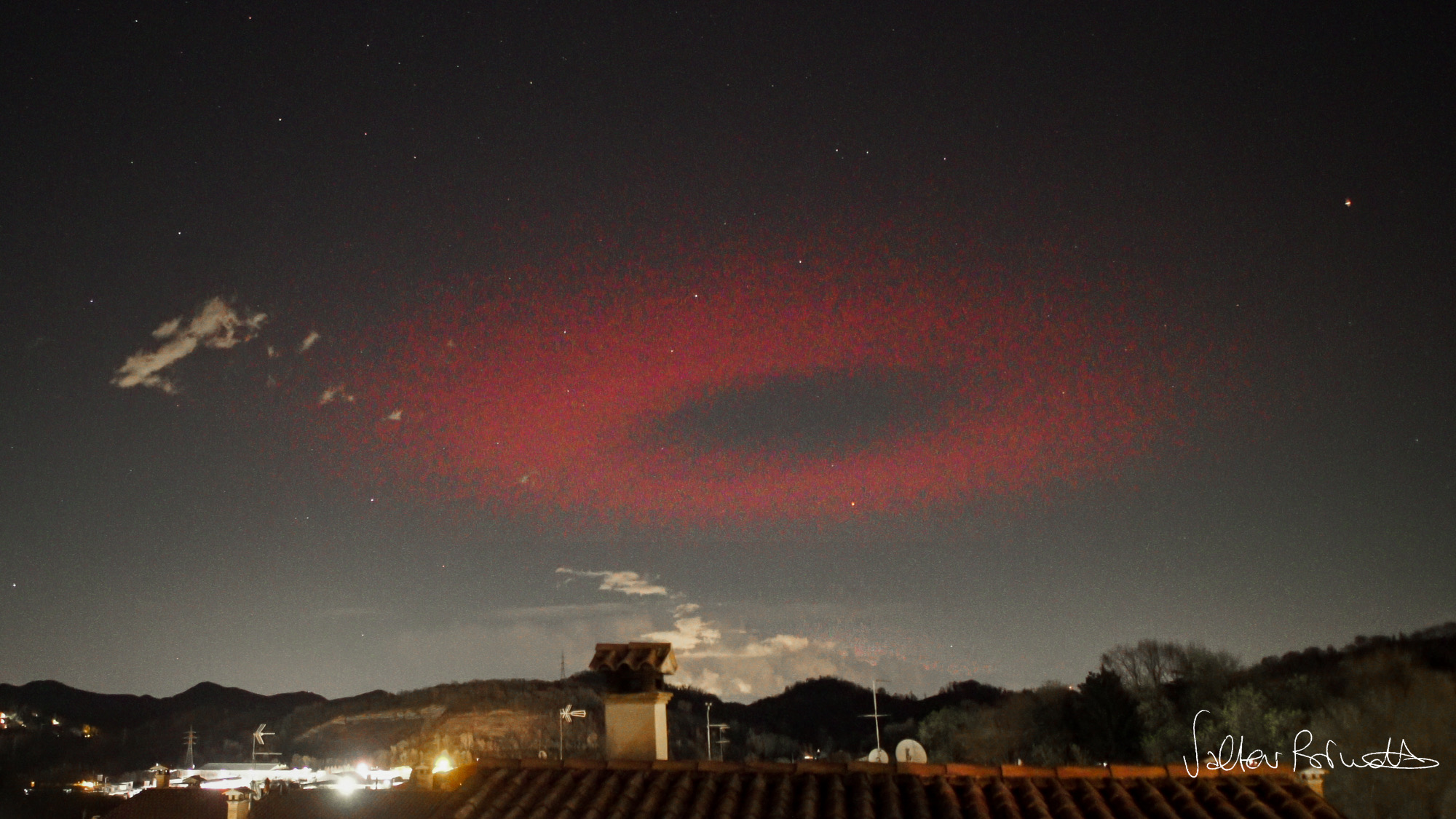
An “elve” lasts for less than a thousandth of a second. (Image credit: Valter Binotto)
Valter Binotto, meanwhile, was able to capture a split-second view of a red ring manifesting over the Italian Alps on Nov. 17. This strange phenomenon, known as an “elve”, is a super-rare form of lightning that occurs in the upper atmosphere, which lasts less than a thousandth of a second and can span up to 300 miles (480 km) in diameter, according to NOAA.
9. Comet C/2025 R2 (SWAN) crosses the Eagle Nebula

Comet C/2025 R2 (SWAN) glows alongside the Eagle Nebula. (Image credit: Daniele Gasparri)
Astronomer Daniele Gasparri seized the opportunity to image the glowing green coma and diffuse tail of comet C/2025 R2 (SWAN) as it passed in front of the Eagle Nebula in the constellation Serpens, the serpent on the night of Oct. 17. Look to the left of the comet to find the iconic Pillars of Creation — vast collections of dust and gas made famous by the Hubble Space Telescope — nestled beneath a population of stars close to the nebula’s glowing core.
10. A blood moon over Egypt
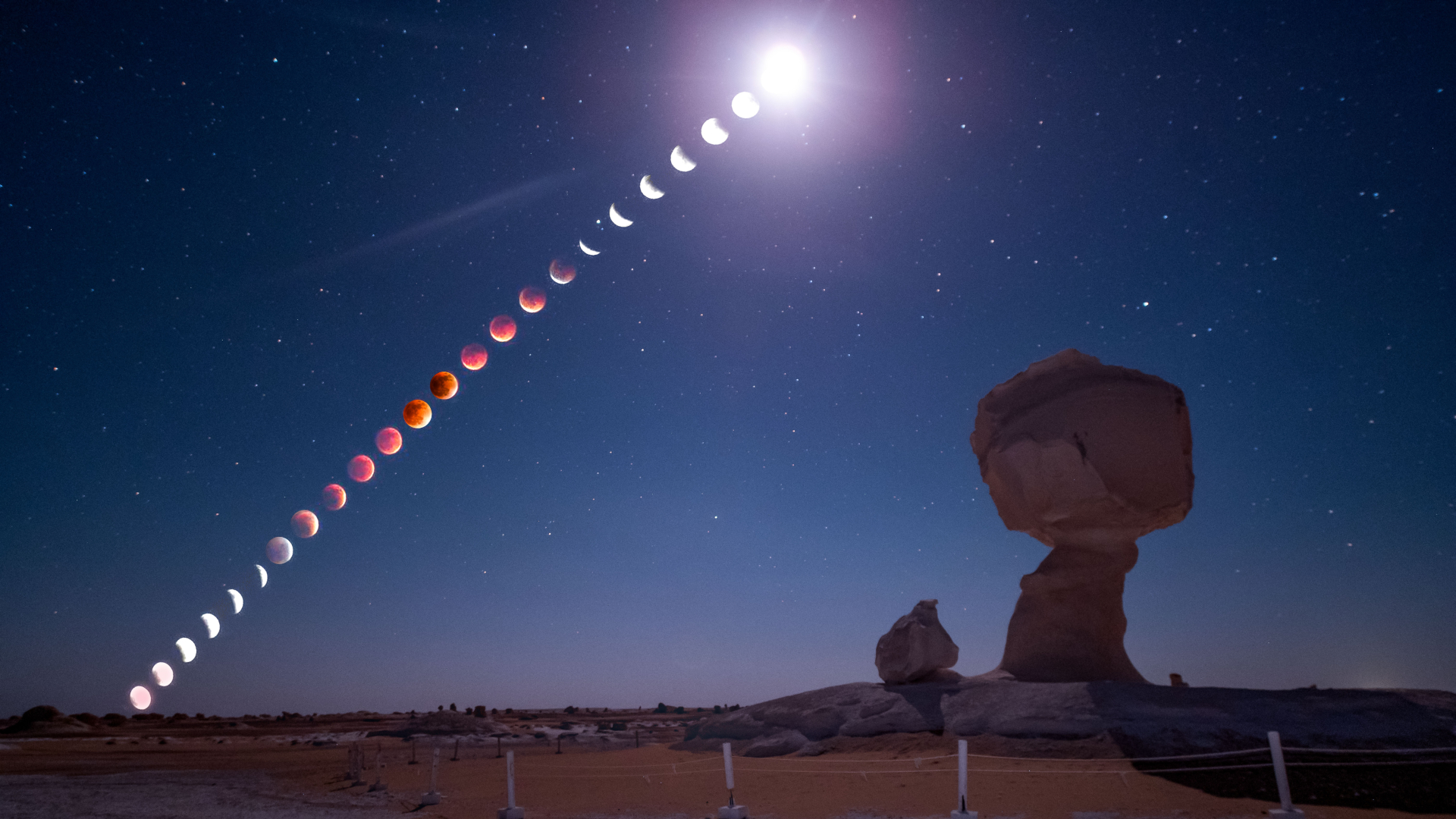
The phases of the Sept. 7 blood moon arrayed over the White Desert in Egypt. (Image credit: © Osama Fathi / Night Sky Watcher.)
Finally, photographer Osama Fathi captured a beautiful composite scene chronicling the rise of the Sept. 7 “Blood Moon” as it soared into the skies over the chalk formations in Egypt’s White Desert, while contending with the shifting light conditions and destabilizing gusts of wind.
Feeling inspired to take the first steps on your own astrophotography journey? Then why not check out our picks of the best cameras and lenses for imaging the night sky to ensure that you’re ready for 2026.
Editor’s Note: If you would like to share your astrophotography with Space.com’s readers, then please send your photo(s), comments, and your name and location to spacephotos@space.com.
SCIENCE
See the exact point where a glacier, a lake and a river ‘touch’ in Argentina — Earth from space

QUICK FACTS
Where is it? Los Glaciares National Park, Argentina [-50.469690266, -73.03391046]
What’s in the photo? The point where a non-retreating glacier, a turquoise lake and a murky river meet
Who took the photo? An unnamed astronaut onboard the International Space Station (ISS)
When was it taken? March 2, 2021
This incredible astronaut photo shows the unusual point where a hefty non-retreating glacier, a pristine turquoise lake and a murky green “river” perfectly converge at the intersection of three valleys in Argentina.
The trio of hydrological features — the Perito Moreno Glacier, Lago Argentino and Brazo Rico — lie at the heart of Los Glaciares National Park, which covers an area of around 2,300 square miles (6,000 square kilometers) in the Santa Cruz province of southern Argentina, near the country’s border with Chile.
The aerial photo doesn’t just show off these three aqueous entities in a single frame; if you look closely, it also reveals the point where the trio touch in a slim channel along the western edge of the Magallanes Peninsula — the rocky outcrop that lies between the lake and the river, according to NASA’s Earth Observatory.
You may like
In this photo, the waters of Lago Argentino and Brazo Rico are likely in direct contact with each other (as in the photo below). But their waters do not readily mix because they have different densities, due to their respective concentrations of suspended particulate matter, according to a 2022 study.
But every four to five years, the glacier’s tongue juts forward, colliding with the Magallanes Peninsula and temporarily damming the Brazo Rico. When this happens, the surface of the murky body of water rises by up to 100 feet (30 meters) until a pressure build-up causes the icy dam to spectacularly “rupture,” the Earth Observatory previously reported.
From the banks of the Magallanes Peninsula, tourists can clearly see the point where the glacier, lake and “river” meet. Every four to five years, the glacier juts forward, blocking the Brazo Rico (left) and causing it to rise by up to 100 feet. (Image credit: Fernando/Wikimedia)
Perito Moreno is the largest glacier in Patagonia, which includes parts of Argentina and Chile. It is approximately 19 miles (30 km) long with ice up to 200 feet (60 m) thick. In total, the glacier holds roughly the same amount of water as 360,000 Olympic swimming pools, according to back-of-the-envelope calculations.
The glacier is “non-retreating,” meaning that it is not shrinking despite rising atmospheric temperatures triggered by human-caused climate change. This is extremely rare nowadays, and Perito Moreno is frequently cited as one of the “world’s last major non-retreating glaciers.” However, a recent study hints that it may finally be starting to shrink.
Lago Argentino is the largest freshwater lake in Argentina, covering a total area of around 550 square miles (1,425 square km). The section visible in the astronaut photo is the lake’s southernmost arm. It contains glacial meltwater filled with rocky particles released by the glaciers’ constant movements, collectively known as “glacier milk,” which gives the water its striking turquoise color.
The lake’s northernmost arm also connects to the Upsala Glacier, which is currently in full retreat.

Another astronaut photo, taken in August 2012, shows the wider glacier, lake and “river” systems surrounding the point where all three meet. (Image credit: NASA/ISS program)
Brazo Rico, meaning “rich arm” in Spanish, is also technically part of Lago Argentino. However, it has become increasingly isolated from the rest of the lake due to repeated damming by the Perito Moreno glacier, making it behave more like a river than part of a lake.
The frequent icy obstruction is also responsible for Brazo Rico’s insipid color, which is the result of sediment dislodged by its movements. The continued rising and falling of the river’s surface has also carved out a border around its edges where no trees can grow.
Eagle-eyed viewers may have also spotted the narrow road winding across the Magallanes Peninsula and along the Brazo Rico’s northern edge (just above the tree line): One can only imagine the extraordinary views you’d get to experience driving along there.
For more incredible satellite photos and astronaut images, check out our Earth from space archives.

Scientists have discovered two new subtypes of multiple sclerosis with the aid of artificial intelligence, paving the way for personalised treatments and better outcomes for patients.
Millions of people have the disease globally – but treatments are mostly selected on the basis of symptoms, and may not be effective because they don’t target the underlying biology of the patient.
Now, scientists have detected two new biological strands of MS using AI, a simple blood test and MRI scans. Experts said the “exciting” breakthrough could revolutionise treatment of the disease worldwide.
In research involving 600 patients, led by University College London (UCL) and Queen Square Analytics, researchers looked at blood levels of a special protein called serum neurofilament light chain (sNfL). The protein can help indicate levels of nerve cell damage and signal how active the disease is.
The sNfL results and scans of the patients’ brains were interpreted by a machine learning model, called SuStaIn. The results, published in medical journal Brain, revealed two distinct types of MS: early sNfL and late sNfL.
In the first subtype, patients had high levels of sNfL early on in the disease, with visible damage in a part of the brain called the corpus callosum. They also developed brain lesions quickly. This type appears to be more aggressive and active, scientists said.
In the second subtype, patients showed brain shrinkage in areas like the limbic cortex and deep grey matter before sNfL levels went up. This type seems to be slower, with overt damage occurring later.
Researchers say the breakthrough will enable doctors to more precisely understand which patients are at higher risk of different complications, paving the way for more personalised care.
The lead author of the study, UCL’s Dr Arman Eshaghi, said: “MS is not one disease and current subtypes fail to describe the underlying tissue changes, which we need to know to treat it.
“By using an AI model combined with a highly available blood marker with MRI, we have been able to show two clear biological patterns of MS for the first time. This will help clinicians understand where a person sits on the disease pathway and who may need closer monitoring or earlier, targeted treatment.”
In the future, when the AI tool suggests a patient has early sNfL MS, they could become eligible for higher-efficacy treatments and be monitored more closely, Eshaghi said.
In contrast, those with late sNfL may be offered different types of treatments, such as personalised therapies to protect brain cells or neurons. “The novelties will therefore be twofold: to transform clinical and neurological examinations, which have not changed for centuries, with the aid of AI algorithms, and provide personalised treatments based on disease profile.”
Caitlin Astbury, senior research communications manager at the MS Society, a charity, said: “This is an exciting development in our understanding of MS.
“This study used machine learning to look at MRI and biomarker data from people with relapsing remitting and secondary progressive MS. By combining this data, they were able to identify two new biological subtypes of MS.
“Over recent years, we’ve developed a better understanding of the biology of the condition. But currently, definitions are based on the clinical symptoms a person experiences. MS is complex, and these categories often don’t accurately reflect what is going on in the body, which can make it difficult to treat effectively.”
There are about 20 treatment options for people with relapsing MS and some beginning to emerge for progressive MS, but for many there are no options, Astbury said. “The more we learn about the condition, the more likely we will be able to find treatments that can stop disease progression.
“This research adds to growing evidence supporting a move away from the existing descriptors of MS (like ‘relapsing’ and ‘progressive’) and towards terms that reflect the underlying biology of the condition. This could help identify people at an increased risk of progression – and allow people to be offered more personalised treatment.”

Texas-based Celestis Inc., the space burial remembrance company that has made a name for itself delivering cremated remains and DNA samples of friends, celebrities, and loved ones into near-space, Earth orbit, the moon and into deep space is expanding its horizons with the announcement of a new launch partner for a future Voyager flight.
After a comprehensive selection process, Celestis has chosen Stoke Space and its new Nova rocket as the launch provider for its next deep-space Voyager mission named “Infinite Flight,” traveling beyond our Earth-moon system and into a permanent heliocentric orbit up to 185 million miles away.
This mission is slated to lift off from Space Launch Complex 14 at Cape Canaveral sometime in late 2026 and represents only the second commercial odyssey of its, the first of which was 2024’s “Enterprise Flight” that carried remains of “Star Trek” luminaries, three former U.S. Presidents, and “2001: A Space Odyssey’s” Douglas Trumbull.
You may like

Promotional art from Celestis. (Image credit: Celestis)
“The ‘Infinite Flight’ continues what began nearly thirty years ago when we promised that remembrance could itself be an act of discovery,” said Charles M. Chafer, Celestis Co-Founder and CEO. “Our Voyager missions ensure that every story we carry into space helps extend humanity’s presence across the solar system. To fly aboard Nova, one of the most advanced reusable launch systems ever built, is both a technical and symbolic leap forward.”
Stoke Space’s Nova is a medium-lift, 100% reusable two-stage rocket built by the Kent, Washington-headquartered aerospace firm founded by former Blue Origin principles, Andy Lapsa and Tom Feldman. It’s schedule to lift off on its first orbital test flight in 2026.
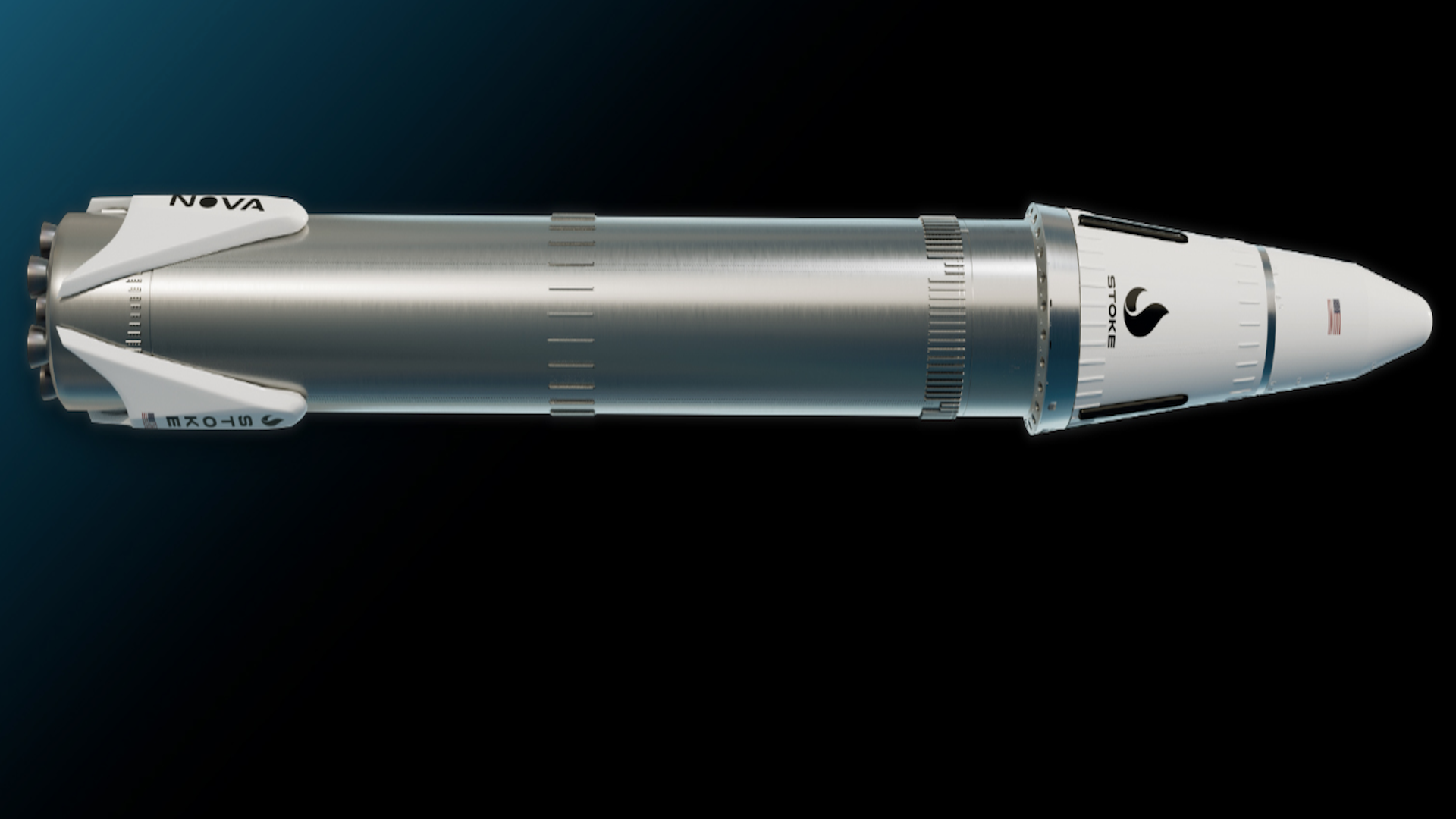
Stoke Space’s new Nova rocket will commence orbital testing in 2026. (Image credit: Stoke Space)
Last month, Charles Chafer revealed news that his company has opened reservations for its pioneering “Mars300” spaceflight that endeavors to send human DNA to orbit around the Red Planet as early as 2030 once a suitable launcher becomes available.
The Houston company has previously utilized the launch services of various aerospace firms using a variety of rockets, including United Launch Alliance’s new Vulcan Centaur. This past summer, European spacecraft manufacturer The Exploration Company (TEC) hosted a Celestis Memorial Spaceflight payload employing a Falcon 9 rocket blasting off from Vandenberg Space Force Base on SpaceX’s Transporter 14 rideshare mission. Unfortunately, TEC’s Nyx capsule carrying the remains of 166 people failed to deploy its parachute during reentry over the Pacific Ocean and Celestis’ “Earth Rise” cargo capsules were lost.
With mission management services being carried out by Ensemble, Celestis’ “Infinite Flight” hopes to launch on its long journey in Q4 2026.

Deaths of despair were climbing before opioids, and the decline of churchgoing may have helped set the stage. A new study suggests that falling involvement in organized religion among middle-aged white Americans with less education may have contributed to the rise in what are known as “deaths of despair.” These deaths include fatalities linked to […]
SOURCE PAGE