
TECHNOLOGY
The Amazon is shifting into a ‘hypertropical state’ not seen for MILLIONS of years, scientists warn

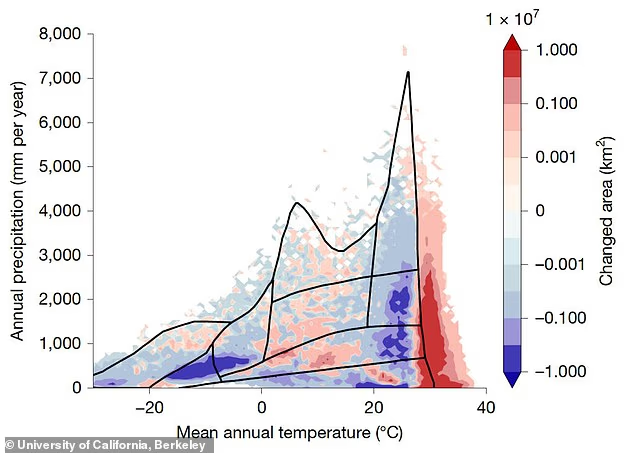
The Amazon rainforest is shifting into a ‘hypertropical state’ that has not been seen for tens of millions of years, scientists have warned.
This new, hotter climate could be commonplace by 2100, and will see the rainforest experience more frequent and intense droughts.
Worryingly, experts from the University of California, Berkeley, say this could lead to widespread tree die–off.
In turn, this will impair Earth’s ability to remove carbon dioxide in the atmosphere, since tropical rainforests absorb more carbon emissions than any other biome.
The only way to prevent the hypertropical state from occurring is to curb greenhouse gas emissions, according to Jeff Chambers, lead author of the study.
‘It all depends on what we do,’ he said.
‘It’s up to us to what extent we’re actually going to create this hypertropical climate.
‘If we’re just going to emit greenhouse gasses as much as we want, without any control, then we’re going to create this hypertropical climate sooner.’

The Amazon rainforest is shifting into a ‘hypertropical state’ that has not been seen for tens of millions of years, scientists have warned. This new, hotter climate could be commonplace by 2100, and will see the rainforest experience more frequent and intense droughts
Usually, the dry season in the Amazon lasts from July to September and brings hotter–than–normal conditions.
However, in hypertropical conditions, the dry season is extended – putting more stress on trees.
‘When these hot droughts occur, that’s the climate that we associate with a hypertropical forest, because it’s beyond the boundary of what we consider to be tropical forest now,’ explained Professor Chambers.
Worryingly, the study found that by 2100, hot drought conditions could occur as many as 150 days each year.
In turn, this could increase tree mortality by 0.55 per cent.
‘We showed that the fast–growing, low wood–density trees were more vulnerable, dying in greater numbers than high wood–density trees,’ Professor Chambers said.
‘That implies that secondary forests might be more vulnerable to drought–induced mortality, because secondary forests have a larger fraction of these types of trees.’
Since the annual tree mortality is slightly more than one per cent, an extra 0.55 per cent may not seem like much.

Usually, the dry season in the Amazon lasts from July to September and brings hotter–than–normal conditions. However, in hypertropical conditions, the dry season is extended – putting more stress on trees
However, Professor Chambers explained that it has a cumulative impact on the forest – meaning over time, it could be catastrophic.
What’s more, the researchers say that hypertropical conditions are also likely to appear outside the Amazon in rainforests in western Africa and across Southeast Asia.
As global temperatures continue to rise, extreme droughts will increasingly occur throughout the entire year, the researchers added.
‘Present–day hot droughts are harbingers of this emerging climate, providing windows of opportunity to better understand tropical forest responses to increasingly extreme future conditions,’ the authors wrote.
THE PARIS AGREEMENT: A GLOBAL ACCORD TO LIMIT TEMPERATURE RISES THROUGH CARBON EMISSION REDUCTION TARGETS
The Paris Agreement, which was first signed in 2015, is an international agreement to control and limit climate change.
It hopes to hold the increase in the global average temperature to below 2°C (3.6ºF) ‘and to pursue efforts to limit the temperature increase to 1.5°C (2.7°F)’.
It seems the more ambitious goal of restricting global warming to 1.5°C (2.7°F) may be more important than ever, according to previous research which claims 25 per cent of the world could see a significant increase in drier conditions.
The Paris Agreement on Climate Change has four main goals with regards to reducing emissions:
1) A long-term goal of keeping the increase in global average temperature to well below 2°C above pre-industrial levels
2) To aim to limit the increase to 1.5°C, since this would significantly reduce risks and the impacts of climate change
3) Governments agreed on the need for global emissions to peak as soon as possible, recognising that this will take longer for developing countries
4) To undertake rapid reductions thereafter in accordance with the best available science
Source: European Commission
Share or comment on this article:
The Amazon is shifting into a ‘hypertropical state’ not seen for MILLIONS of years, scientists warn









TECHNOLOGY
‘Data is control’: what we learned from a year investigating the Israeli military’s ties to big tech | Israel

In January this year, Harry Davies and Yuval Abraham first reported that Microsoft had deepened its ties to Israel alongside other major tech firms. Since then, the Guardian has published an award-winning series of investigations – in partnership with the Israeli-Palestinian publication +972 Magazine and the Hebrew-language outlet Local Call – that has revealed a symbiotic relationship between Silicon Valley and the Israeli military.
One investigation exposed an Israeli mass surveillance program scooping up virtually all Palestinian phone calls and storing them on Microsoft’s cloud services – setting off an inquiry that ultimately prompted the company to cut off Israel’s access to some of its technology. Another story revealed that the Israeli military created a ChatGPT-like tool to analyze data collected through the surveillance of Palestinians. Yet another revealed that Google and Amazon had agreed to extraordinary terms to clinch a lucrative contract with Israel.
I asked Davies and Abraham to discuss what they learned this year – about the role of these technologies in Israel’s assault on Gaza, whether these business ties are sustainable, and what the revelations tell us about how the wars of the future will be fought.
How did Israel’s relationships with these companies change after October 7?
Yuval Abraham: The Israeli military had been fetishizing artificial intelligence and big data for many years – a trend that is very much connected to Israel’s occupation of the Palestinians, because the occupation generates a lot of data. What changed after October 7 was the scope. The military was looking to bomb hundreds of targets every day in Gaza. Tens of thousands of people were recruited into reserve duty. That meant a huge spike in usage of technological systems. That’s where the big tech companies stepped in.
Harry Davies: There was a huge surge in demand – not just for the storage capacities of the tech companies, but also for the products that they offer to analyze the information used to prosecute a war. What’s valuable for the military is the way in which these services are able to provide what’s known as “blob storage”, which allows them to store and process infinite amounts of raw intelligence information.
What has made Israel such an appealing market for these companies?
Yuval Abraham: As we reported, the Israeli army has been collecting Palestinian phone calls for a long time. But when you want to collect the phone calls of an entire population every day, and you want to retain those phone calls for long periods of time, you need a lot of storage room and processing power.
If you remember the [Edward] Snowden revelations, many of them had to do with metadata, which doesn’t weigh a lot. But the Israeli military also wanted to store mass audio files, images or videos – and for that it felt it needed the assistance of companies like Microsoft. In the West Bank, sources have told us this information has been used to find dirt on people to blackmail them. In the Gaza Strip, we know that this massive trove of intercepted phone calls was also used in airstrikes that killed civilians.
So data is power and data is control. And these American cloud providers allow the Israeli military to store a lot of data and to sift through it very effectively. That has direct consequences for people on the ground.
Quick Guide
Contact Harry Davies and Yuval Abraham about this story
Show
If you have something to share about this story, you can contact Harry Davies and Yuval Abraham using one of the following methods.
Secure Messaging in the Guardian app
The Guardian app has a tool to send tips about stories. Messages are end to end encrypted and concealed within the routine activity that every Guardian mobile app performs. This prevents an observer from knowing that you are communicating with us at all, let alone what is being said.
If you don’t already have the Guardian app, download it (iOS/Android) and go to the menu. Select ‘Secure Messaging’.
To send a message to Harry and Yuval please choose the ‘UK Investigations’ team.
Signal Messenger
You can message Harry using the Signal Messenger app. Use the ‘find by username’ option and type hfd.90
Email (not secure)
If you don’t need a high level of security or confidentiality you can email harry.davies@theguardian.com
SecureDrop and other secure methods
If you can safely use the tor network without being observed or monitored you can send messages and documents to the Guardian via our SecureDrop platform.
Finally, our guide at theguardian.com/tips lists several ways to contact us securely, and discusses the pros and cons of each.
Illustration: Guardian Design / Rich Cousins
Thank you for your feedback.
Harry Davies: Yossi Sariel, the former head of [Israel’s elite spy agency] Unit 8200, wrote a book under a pseudonym that we revealed to have been published by him. In that book, he articulated what at the time was a bold and radical vision – as Yuval described, this fetishization of Silicon Valley technology. He recognized the possibilities that the likes of Google, Amazon and Microsoft could afford the Israeli military. Two years before October 7, he said that militaries and governments needed to forge relationships with these companies that are similar to the relationships they have with companies like Boeing and Lockheed Martin. So he was already thinking about these companies as instrumental to war and surveillance in the way that a defense contractor provides components for fighter jets or manufactures bombs and missiles.
Some of our reporting has looked at how elements of his vision have come true and have been put into effect, both before October 7 and afterwards, in both the West Bank and Gaza.
We know AI is central to Israel’s military operations – its army has developed its own AI capabilities, as you revealed, Yuval, and has also purchased AI tools for use from Microsoft. Why is AI so central to Israel’s broader war aims?
Yuval Abraham: What AI did was allow Israel to achieve the effective results of carpet bombing without losing the legitimacy of a data-driven assault with targets and objectives. In Gaza, one way in which the Israeli military used AI was to give a score to almost every person in Gaza who has a phone number, determining how likely it was that person was a member of Hamas or Islamic Jihad. This score was based on a machine-learning algorithm [developed by Israel] called Lavender. It was trained on a dataset of known Hamas members. AI allowed the Israeli military to generate and bomb tens of thousands of military targets, on a scale that without AI would not have been humanly possible. Many of the targets were not Hamas members, according to sources. And Israel for the most part bombed these people not while they were engaged in military activity, but when they stepped inside their families’ homes.
These AI systems had an error rate that the Israeli military knew about. But to me, the key thing about AI is not the mistakes that it makes. It’s the scale of destruction that it allows militaries to unleash, and it’s a discourse of legitimacy that it enables – a discourse of targets and collateral damage.
AI also seems to me to incentivize mass surveillance, right? Because it allows for the analysis of ever-growing reams of information.
Harry Davies: Signals intelligence agencies have long collected more information than they could humanly process. That served as a kind of restraint on their ability to conduct mass surveillance. I think we’re now seeing a shift where AI allows an intelligence agency like Unit 8200 to make sense of things that previously it struggled to make sense of.
Microsoft explicitly credited your reporting for changing its policies. Are you seeing any other signs of shifts within the tech industry?
Harry Davies: I think we’re seeing a lot of discomfort and dissent within these companies at both a junior and to some extent senior level. Many employees have been disturbed to find what the products and services that they’re working around the clock to build and market are actually contributing to. There have been protest groups which have emerged from current and former employees within these companies. That’s true across Silicon Valley. I think that played some role in the decision that Microsoft made as a result of our reporting. They were facing a lot of pressure internally.
Yuval Abraham: And there’s also a legal question for these companies: if the ICJ [international court of justice] ends up ruling that Israel has committed a genocide, then a follow-up question will be: who contributed to that genocide? Which companies helped maintain it and sustain it? For some people in these companies who are thinking ahead, that could also be a cause for concern.
It sounds like you think shifts in public support for Israel could actually affect these business relationships.
Yuval Abraham: Israel has developed a reliance on these companies for its Nimbus project, which is a huge contract signed between Israel and Google and Amazon back in 2021. It is moving the data of many of its government ministries, along with troves of information from the Ministry of Defense, onto these companies’ cloud servers.
These are US companies. They’re taking a certain gamble here that the US will stay loyal to Israel and won’t block, limit or sanction them.
Microsoft only blocked access to technology that was specifically enabling the mass surveillance of Palestinian phone calls – there are still many relationships between Microsoft and the Israeli military. But Microsoft’s action made many people in the Israeli system nervous. It was the first time we know of that a big tech company withdrew services from the Israeli military. It made some people ask whether Israel is making a mistake by giving these foreign companies so much leverage. That question is folded within a larger question of what the US will do, what will happen in 2028 if there’s a more progressive administration in the White House, at a time when so many Americans believe that Israel has committed a genocide in Gaza.
What’s your focus going to be in 2026?
Yuval Abraham: I think we only uncovered the tip of the iceberg.
Harry Davies: We’re both very conscious that, although we have spent a lot of time working on this, we still just have glimpses inside the system. We’re continuing to build a fuller picture of how this technology was and continues to be used in Gaza and in the West Bank as well.
There’s good reason to continue paying attention. Militaries pay attention to what other militaries are doing. There is great interest among other western militaries in how Israel prosecuted this war, in how it integrated these kind of technologies.
And there are other militaries whose combat systems and processes are already deeply integrated with Silicon Valley tech. Take the American military, for example. Look at what’s happening right now in the Caribbean. Are those operations somehow free of the involvement or reliance on systems and services provided by these companies? I suspect not. We don’t know for sure, but the Pentagon and the US military have very big contracts with all of these companies to provide cloud services. Post-Gaza, we have to look at these relationships and ask: what is the involvement of these companies and their technology in military decisions, in military operations and in warfare more broadly?
Yuval Abraham: Much of our reporting is based on whistleblowers, on individuals who are in proximity to power or hold positions of power.
Harry Davies: Our confidential sources have remained confidential and we are always interested in hearing from new people. Our door is always open.
Quick Guide
Contact Harry Davies and Yuval Abraham about this story
Show
If you have something to share about this story, you can contact Harry Davies and Yuval Abraham using one of the following methods.
Secure Messaging in the Guardian app
The Guardian app has a tool to send tips about stories. Messages are end to end encrypted and concealed within the routine activity that every Guardian mobile app performs. This prevents an observer from knowing that you are communicating with us at all, let alone what is being said.
If you don’t already have the Guardian app, download it (iOS/Android) and go to the menu. Select ‘Secure Messaging’.
To send a message to Harry and Yuval please choose the ‘UK Investigations’ team.
Signal Messenger
You can message Harry using the Signal Messenger app. Use the ‘find by username’ option and type hfd.90
Email (not secure)
If you don’t need a high level of security or confidentiality you can email harry.davies@theguardian.com
SecureDrop and other secure methods
If you can safely use the tor network without being observed or monitored you can send messages and documents to the Guardian via our SecureDrop platform.
Finally, our guide at theguardian.com/tips lists several ways to contact us securely, and discusses the pros and cons of each.
Illustration: Guardian Design / Rich Cousins
Thank you for your feedback.
TECHNOLOGY
Russia flaunts ‘unstoppable’ nuclear missile for first time in Belarus as WW3 fears escalate

Russia appears to have deployed its so-called ‘unstoppable’ nuclear-capable missiles, potentially bringing the threat of devastating strikes closer than ever.
On Tuesday, the Defense Ministry released a video claiming to show combat vehicles in an undisclosed location in Belarus carrying the Oreshnik missile system.
State news agency TASS said it was the first time the ministry had publicly shown the Oreshnik, which President Vladimir Putin has declared impossible to intercept, with speeds reportedly exceeding Mach 10.
The Belarusian Defense Ministry said that the Oreshnik has a range of up to 3,100 miles. Reports have suggested it could hit London in ‘eight minutes.’
TASS boasted that it would take the missile only 11 minutes to reach an air base in Poland and 17 minutes to reach NATO headquarters in Brussels.
While the Oreshnik is not an intercontinental missile capable of reaching the US mainland, its reported range puts American allies within striking distance, meaning any attack on them could draw the US directly into the conflict.
The announcement comes at a critical time for Russia-Ukraine peace talks. Trump hosted Ukrainian President Volodymyr Zelenskyy at his Florida resort on Sunday and insisted that Kyiv and Moscow were ‘closer than ever before’ to a peace settlement.
However, days before, Trump warned that the ongoing Russia-Ukraine war could spiral into a world war.
‘Things like this end up in a third world war,’ he told reporters on December 11. ‘Everybody keeps playing games like this, you’ll end up in a third world war, and we don’t want to see that happen.’

On Tuesday, the Defense Ministry released a video showing combat vehicles in an undisclosed location in Belarus carrying the Oreshnik missile system

A satellite image taken on November 16 shows where US researchers believe that Russia is likely stationing its new nuclear-capable Oreshnik hypersonic cruise missile at the disused airbase Krichev in eastern Belarus near Russia’s border
Russia’s Defense Ministry claims that the “Oreshnik” missile system has already entered combat duty in Belarus.
“Oreshnik” is an experimental Russian missile complex using ballistic missiles. It was first used in November 2024 during a strike on the city of Dnipro.
Its reported… pic.twitter.com/DKsjbLP8gS
— KyivPost (@KyivPost) December 30, 2025
Andrey Bogodel, the deputy chief of the General Staff department of the Military Academy of Belarus, told TASS that the deployment of Oreshnik was an anti-aggression warning to Western countries.
‘Today, any good deed must, of course, be done with fists. Unfortunately, the world can no longer be organized any other way,’ he said.
‘Here, the “Oreshnik” isn’t a weapon with which we want to attack, for example, Britain or Germany, but it’s a message that we, above all, will protect our peace in this way. A way that will allow us to say that it’s definitely better not to interfere with us.’
Bogodel added that Western nations had repeatedly crossed red lines during Russia’s so-called special military operation in Ukraine.
‘Literally, there are red lines associated specifically with the use of missile systems, even nuclear weapons. After all, remember the appearance of the missiles they launched on us – SCALP, Storm Shadow, then ATACMS,’ the expert continued.
‘They also used drones against our radiation early warning stations. As well as attacks against our bombers, and so on. This is all an attempt to see how high Russia’s nuclear threshold is.’
The missile system was first used on November 21, 2024, in a test that saw it strike a defense plant in Ukraine.
Once launched, the Oreshnik uses its rocket engines to accelerate rapidly until it reaches the upper atmosphere, where its first-stage boosters are discarded after fuel depletion, Matthew Powell, Teaching Fellow in Strategic and Air Power Studies, University of Portsmouth, wrote in The Conversation.

A Russian military unit can be seen putting netting over what is said to be the Oreshnik mobile ground-based missile system

The Belarusian Defense Ministry said that the Oreshnik has a range of up to 3,100 miles. Reports have suggested it could hit London in ‘eight minutes
The missile’s multiple independently targetable reentry vehicles (MIRVs) are then released, traveling through space toward their designated targets.
At this stage, the system is most vulnerable to interception, as it is moving more slowly than during earlier phases. Finally, onboard thrusters guide each MIRV to its target zone.
Putin has claimed that conventional Oreshnik missiles could incinerate targets with temperatures reaching 7,200°F, nearly as hot as the surface of the sun, though the weapon is also capable of carrying a nuclear warhead.
The Oreshnik is estimated to be 49 to 61 feet long with a diameter of roughly six feet.
While unconfirmed, experts have suggested the Oreshnik weighs between 66,000 and 88,000 pounds.
The system is also said to carry a warhead weighing up to 1.5 tons, approximately 3,300 pounds.
Putin said earlier this month that the Oreshnik would enter combat duty before the year’s end.
He made the statement at a meeting with top Russian military officers, where he warned that Moscow will seek to extend its gains in Ukraine if Kyiv and its Western allies reject the Kremlin’s demands in peace talks.
While Trump stated a peace settlement between Kyiv and Moscow could be on the horizon, he also admitted that monthslong US-led negotiations could still collapse.
Moscow and Kyiv remain deeply divided on key issues, including whose forces withdraw from where in Ukraine and the fate of Ukraine’s Russian-occupied Zaporizhzhia nuclear power plant, one of the 10 biggest in the world.


In some ways, 2025 was when AI dictation apps really took off. Dictation apps have been around for years, but in the past they’ve proved slow and inaccurate — unless you speak with particular accents and enunciate clearly.
But advances in large language models (LLMs) and speech-to-text models have helped improve the systems that can decipher speech better while retaining the context to format the text. And developers have built in features to automatically format text, remove filler words, and ignore fumbles to output text that would need fewer edits.
But with the soaring popularity of everything AI, there’s dozens of such apps on the market. So we’ve collated our pick of the best and most useful dictation apps his year.
Wispr Flow is a well-funded AI dictation app that lets you add custom words and instructions for dictation. It has native apps for MacOS, Windows and iOS, and an Android version is in the works.
The app lets you customize how its system transcribes your notes by letting you choose from “formal,” “casual,” and “very casual” styles for different kinds of writing, such as personal messaging, work, and email. And if you use it with vibe coding tools like Cursor, you can turn on a feature to automatically recognize variables or tag files in the chat.
The app lets you note down up to 2,000 words per month for free on any of the desktop versions, and 1,000 words per month on iOS. Its subscription plans offer unlimited transcription, and start at $15 per month.
Image Credits: Wispr FlowImage Credits:Wispr Flow
Willow advertises itself as a big time-saver for those who don’t like to type. Alongside common features like automatic editing and formatting, the app has a feature that taps large language models to generate a full chunk of text from just a few dictated words.
Willow also takes a more privacy-focused stab at AI-assisted note-taking by storing all transcripts locally on your device, and lets you opt out of model training as well. It also lets you add custom vocabulary to the app to help it adapt to your industry’s parlance, or your local dialect.
 Image Credits: WIllowImage Credits:Willow
Willow lets you dictate 2,000 words per month on its desktop app for free. Individual subscription plans start at $15 per month, giving you unlimited dictation and enabling the app to remember your writing style.
If you are focused on privacy, Monologue lets you download its model so you can run it on your device for transcriptions and avoid sending data to the cloud. What’s more, the app lets you customize its tone of voice according to the apps you use it with.
Monologue lets you jot down 1,000 words per month for free, and its subscription costs $10 per month, or $100 per year. And if you end up becoming one of the app’s top users, the company will also send you this funky Monokey to use with the app.
Keyboards are so 1983.
You only need one key—Monokey, the limited edition device that turns your voice into text in Monologue.
We’re giving away 10, along with a free annual subscription to Monologue. pic.twitter.com/nXuz1ll2LU
— Monologue (@usemonologue) November 18, 2025
Superwhisper is primarily a dictation app, but it can also transcribe from audio or video files. The app gives you the freedom to choose and download AI models, including its own models that have different speeds and accuracy, along with NVIDIA’s Parakeet speech recognition models.
The app also lets you write custom prompts to steer the output. You can easily see both processed and unprocessed transcripts that are integrated with the system keyboard.
The basic voice-to-text feature is free to use, and you get 15 minutes to test out Pro features such as translation and transcription. The paid tier lets you use your own AI API keys and plug in cloud and local models without any caps.
The monthly plan costs $8.49 per month, the annual plan costs $84.99 per month, or you can pay $249.99 for a lifetime subscription.
This app takes an offline-first, no-subscription approach, letting you use local models for transcription. There’s also a GitHub repository for those who want to host and run the open-source version themselves. VoiceTypr supports over 99 languages and works on both Mac and Windows.
VoiceTypr is available to try for three days for free, and after that it will allow you to buy a lifetime license. The app costs $35 for one device, $56 for two, and $98 for four devices.
Aqua is another Y-Combinator-backed voice typing client for Windows and MacOS that claims to be one of the fastest tools in the category in terms of latency.
Besides handling grammar and punctuation, Aqua also lets you autofill text by saying phrases — you can say “my address” and have Aqua type in your address, for example.
The app also offers its own speech-to-text API for other apps.
The free tier gets you 1,000 words per month. The paid plans start from $8 per month (annual billing), and unlock unlimited words and 800 custom dictionary values.
Handy is an open-source and free transcription tool that can run on Mac, Windows, and Linux. The application is pretty basic and doesn’t offer a lot of customization, but if you are trying to get started with using your voice more and don’t want to pay, it is a good option.
The app has a basic settings menu that lets you toggle push-to-talk, and change the hotkey to activate the transcription.
Typeless is another app in this category with a high free word count. The company claims that it doesn’t retain any data or use it to train models. Typeless also suggests a better version of the sentence if you might have fumbled a line.
The app lets you dictate up to 4,000 words per week (roughly 16,000 words per month) on its free tier. You can pay $12 per month (billed annually) to unlock unlimited words and get access to new features. Typeless is available for Windows and MacOS only.


Imagine that after a night of heavy drinking at a bar, you order a robotaxi because you’re inebriated—only to end up making a mess on the passenger seat and getting charged an extra fee for it.
That scenario may soon become reality for Tesla robotaxi passengers in Austin. According to a post by Tesla influencer Sawyer Merritt on X, the EV maker is reportedly introducing a cleaning fee for its robotaxi service.
How The Cleaning Fee Will Work
In a statement provided to Merritt, Tesla explained the rationale for the new charge, saying: “We prioritise maintaining a clean and comfortable environment for all riders and promoting responsible rider behaviour.”
The fee would be divided into two tiers: a $50 fee for “moderate messes,” such as food spills, significant dirt or minor stains, and a $150 fee for “severe messes,” including bio-waste or smoking in the vehicle.
Tesla initially marketed its robotaxis as fully autonomous vehicles. However, they still require human intervention for tasks such as cleaning and charging, which may be another reason for this additional fee.
Tesla further stated: “To address incidents where vehicles require additional cleaning after a trip, we will assess the type and severity of the mess and apply the appropriate fee. Once a fee is assessed, you’ll receive an email notifying you that additional cleaning was required for the vehicle after your trip. An updated ride receipt will also be available under the Ride History section of the Robotaxi app. If you believe a charge was made in error, call the Customer Support team and follow the prompts for option 7.”
NEWS: Tesla has introduced cleaning fees for their Robotaxis.
• $50: Charged for moderate messes, such as food spills, significant dirt and minor stains.
• $150: Charged for severe messes, such as biowaste or smoking in the vehicle.
Tesla: “We prioritize maintaining a clean… pic.twitter.com/t8BFCcNrrr
— Sawyer Merritt (@SawyerMerritt) December 23, 2025
Tesla Isn’t Alone In Charging Cleanup Fees
Tesla is not the first robotaxi operator to introduce this type of charge. Waymo already applies a similar cleaning fee. The difference is that Waymo charges a $50 fee if a passenger self-reports the mess, but a $100 first-time fee if they do not, with higher charges if the incident reoccurs. These violations can also affect a user’s Waymo account.
Beyond California, Waymo is planning to expand its services to other U.S. cities such as San Diego, Dallas, Denver, Detroit and Houston.
Waymo expands fully autonomous rides across California, mapping the future of robotaxis
Beyond California, the company is planning to extend its services to other U.S. cities like San Diego, Dallas, Denver, Detroit, Houston, e.t.c.
Fees like this could make passengers think twice before littering or leaving a mess behind. In the long run, that deterrence may be exactly what Tesla wants, helping it manage its robotaxi fleet more efficiently.

Cairn
Live your mountaineering fantasies and brave the elements in a wonderfully illustrated climbing game. You must carefully place climber Aava’s hands and feet to make your way up a forbidding mountain, camping on ledges and bandaging her fingers as you go. Like real climbing, it is challenging and somewhat brutal.
PC, PlayStation 5; 29 January
Onwards and upwards … Cairn. Photograph: The Game Bakers
Reanimal
A two-player animated horror game in the Tim Burton mode, minus all the whimsy. In a setup reminiscent of the famously discomfiting games Limbo and Inside, a brother and sister must escape a twisted mockery of their home town, finding their friends as they go. They are stalked by horrible spike-limbed monsters and grotesquely reanimated creatures. Genuinely frightening and artistically impressive.
Nintendo Switch 2, PC, PlayStation5, Xbox; 13 February
Resident Evil Requiem
Capcom’s horror series is very old, but it still comes up with new ways to make your skin crawl. In Requiem we play as bookish Grace, whom the game’s director calls “the biggest scaredy-cat in Resident Evil history”, and the confidently combat-proficient cop Leon S Kennedy, pursued by monsters through the iconic Raccoon City.
Nintendo Switch 2, PC, PlayStation 5, Xbox; 27 February
Pokémon Pokopia
How does your garden grow? Pokémon Pokopia. Photograph: Nintendo
Imagine dropping Pokémon into the world of Animal Crossing, with a hint of Minecraft’s blocky aesthetic. This family-friendly Nintendo game has you building and tending habitats for Nintendo’s beloved creatures. You play as a Ditto, the shape-shifting pink blob, which can helpfully transform into other Pokémon, using those other critters’ abilities to bring a barren landscape back to life and build a vibrant town.
Nintendo Switch 2, 5 March
007 First Light
The most anticipated James Bond game since the Nintendo 64’s GoldenEye 007. Made by IO Interactive, famous for Hitman, it stars a younger, twentysomething Bond who has not yet earned his 007 status, and hopes to blend the expected car chases, shootouts and gadgets with some genuine spycraft, as Bond infiltrates parties and digs for information.
Nintendo Switch 2, PC, PlayStation 5, Xbox; 27 May
Saros
Hostile aliens … Saros. Photograph: Sony Interactive Entertainment
From the Finnish developer behind Returnal, the exceptional, intelligent time-loop sci-fi shooter, this mysterious action game stars another stranded astronaut on a different hostile planet, one where a dying sun is sending its creatures and colonists mad. Long-time gamers will recognise the lineage of arcade bullet-hell shooters in this very modern action game.
PlayStation 5; 30 April
Grand Theft Auto VI
It has been in development for more than a decade and, despite several delays (GTA VI was on this very list last year), expectations have never been higher for the biggest game in the world. It’s a crime story and a love story, featuring the series’ first female protagonist, Lucia, and her boyfriend, Jason, and set in Rockstar’s fictional Floridian state of Leonida. There has been so much to satirise about contemporary America since 2013’s GTA V that Rockstar’s writers will surely have been spoilt for choice.
PlayStation 5, Xbox; 19 November
Marvel’s Wolverine
Marvel’s Wolverine gets his claws into new foes. Photograph: Insomniac Games/ Marvel
The modern Spider-Man games have gone down a storm, so it’s no surprise that developer Insomniac is now turning its attention to a different Marvel hero. This new game features an ensemble X-Men cast and a whole lot of gratuitous comic-book violence, as Wolverine sticks those adamantium claws through a succession of foes trying to chase him down.
PlayStation 5; date TBC
Witchbrook
Looking for an alternative to established wizarding-school fiction? Witchbrook is a charming pixel-art slice-of-life game about a witches’ college. In school you learn spells and broom flight; outside school you involve yourself in the life of the whimsical town outside. It supports four players at once, too.
PC, PlayStation 5, Xbox; TBC
Halo: Campaign Evolved
Controversial take: first-person shooter campaigns have never got better than the original Halo, with its eerie extraterrestrial setting and intelligent, chattering alien enemies. (Let’s conveniently forget about The Library, where we battle through endless waves of the significantly less interesting zombie-like Flood.) This prettied-up remake of 2001’s space-opera classic will, for the first time, be available on PlayStation.
PC, PlayStation 5, Xbox; TBC


The iPhone 17 Series is Apple’s latest flagship device in 2025, succeeding the iPhone 16 launched last year. With the series, Apple discontinued the Plus model and introduced the iPhone 17 Air, marketed as the thinnest iPhone.
Users get a 6.3-inch display on the base iPhone 17 and Pro, a 6.5-inch display on the Air, a 6.9-inch display on the Pro Max, and a 120Hz refresh rate across all devices. Each device in the series features a 48 MP rear camera that captures clear, well-detailed images.
The iPhone lineup was announced on September 9, 2025, and made available for purchase on September 19, 2025, ten days later.
iPhone 17 price in Nigeria
Buying iPhones in Nigeria is tricky because Apple doesn’t ship directly to Nigeria, so there’s no uniformprice in the country. There’s also a massive markup on the iPhone 17 in Nigeria, often due to outrageous customs duties and import levies.
The base iPhone 17, 256 GB, sells between ₦1,650,000.00 ($ 1,137.23) and ₦1,869,660.00 ($ 1,288.51). The 512 GB version price falls between ₦2,100,000.00 ($1447.26) and ₦2,337,660.00 ($1611.05). A price difference of over ₦500,000 ($344.59) reflects the additional cost of storage space.
The iPhone 17 Air model introduces a 1TB option. Current market rates are:
- 256 GB: ₦2,200,000.00 ($1516.17) – ₦2,337,600 ($1611)
- 512 GB: ₦2,500,000.00 ($1722.93) – ₦2,805,000.00 ($1933.12)
- 1TB: ₦2,900,000.00 ($1998.59) – ₦3,273,660.00 ($2256.11).
The iPhone 17 Pro shares the same storage tiers as the Air model. Users looking to buy the model would spend between:
- 256GB: ₦2,350,000.00 ($1619.55) – ₦2,700,000.00 ($1860.76)
- 512 GB: ₦2,800,000.00 ($1929.68) – ₦3,350,000.00 ($2308.72)
- 1TB: ₦3,300,000.00 ($2274.26) – ₦3,750,000.00 ($2584.39).
To get the 1TB option, users would be paying an additional fee of over ₦700,000.00 ($482.42).
Unlike other devices in the series, the iPhone 17 Pro Max added a 2 TB option. The iPhone 17 Pro Max in Nigeria costs between ₦2,600,000.00 ($1791.84) – ₦4,500,000.00 ($3101.27) and ₦3,150,000.00 ($2170.89) – ₦4,950,000.00 ($3411.39).
ModelStorage capacity Price range ₦Price range $iPhone 17256 GB
512 GB 1,650,000 – 1,869,660
2,100,00 – 2,337,6601,137.26 – 1,288.51
1,447.26 – 1,611.05iPhone 17 Air 256GB
512GB
1TB2,200,000 – 2,337,660
2,500,000 – 2,805,000
2,900,000 – 3,273,6601,516.17 – 1,611
1,722.93 – 1,933.12
1,998.59 – 2,256.11iPhone 17 Pro 256 GB
512GB
1TB2,350,000 – 2,700,000
2,800,000 – 3,350,000
3,300,000 – 3,750,0001,619.55 – 1,860.76
1,929.68 – 2,308.72
2,274.26 – 2,584.39iPhone 17 Pro Max 256 GB-2TB2,600,000 – 4,950,0002,170.89 – 3,411.39
The prices stated above are not standard or static; changes in the Nigerian Naira/US Dollar exchange rate also affect prices. Be sure to confirm prices with your local vendor before making a purchase.
iPhone 17 full specifications
The iPhone 17 series is a high-end smartphone designed to rival other smartphones in camera performance, battery life, and everyday performance. This is how the iPhone 17 models compare.
Features iPhone 17iPhone 17 Air iPhone 17 ProSize6.3-inch6.5-inch 6.3-inch6.9-inchDisplay LPTO OLEDLPTO Super Retina XDR OLEDLPTO Super Retina XDR OLEDLPTO Super Retina XDR OLEDChip A19A19A19A19CPU6-core6-core6-core6-coreGPU5-core5-core6-core6-coreRAM8 GB12 GB 12 GB 12 GBSafety rating IP68IP68IP68IP68Storage 256 GB, 512 GB256 GB, 512 GB, 1 TB 256 GB, 512 GB, 1 TB 256 GB, 512 GB, 1 TB, 2 TBCamera Rear: Dual 48 MP
Front: 18 MPRear: Single 48 MP
Front: 18 MPRear: Triple 48 MP
Front: 18 MP Rear: Triple 48 MP
Front: 18 MP Battery 3692 mAh 3149 mAh 4000-4252 mAh4823-5088 mAh Colour Black, white, mist blue, sage, lavender Space black, cloud white, light gold, sky blue Silver, cosmic orange, deep blue Silver, cosmic orange, deep blue
- Design and build
The base iPhone 17 measures 149.6 mm in height and 8 mm in thickness. It weighs 177 grams, making it comfortable to hold. The screen uses Ceramic Shield 2 for protection, and the body mixes an aluminium frame with a glass back. It has an IP68 rating, meaning it is dustproof and waterproof, with a 6-meter water immersion rating. You can pick it up in Black, White, Mist Blue, Sage, or Lavender.
For the iPhone 17 Air, the focus is on achieving exceptional thinness and lightness. It is just 5.6 mm thick and weighs only 165 grams. It features a premium Grade 5 titanium frame and a glass back. Like the base model, it is IP68 water-resistant. This model is available in colours such as Space Black, Cloud White, Light Gold, and Sky Blue.
The iPhone 17 Pro is heavier and sturdier, weighing 206 grams and measuring 8.8 mm in thickness. It features an aluminium-alloy frame and offers an aluminium or glass back. It keeps the same Ceramic Shield 2 front and IP68 rating. Colour options for this model include Silver, Cosmic Orange, and Deep Blue.
The iPhone 17 Pro Max is the largest of the series, measuring 163.4 mm in height and weighing 233 grams. It shares the solid aluminium alloy build, Ceramic Shield 2 protection, and IP68 rating found on the Pro. It is available in Silver, Cosmic Orange, and Deep Blue.
- Display
On the iPhone 17, you get a 6.3-inch LTPO OLED screen with a resolution of 1206 x 2622. The 120 Hz refresh rate makes animations look very smooth. Brightness reaches 1000 nits for everyday use, peaking at 3000 nits.
The iPhone 17 Air features a 6.5-inch display with a 1260 x 2736 resolution. The screen-to-body ratio is about 89.9%, with the same high brightness capabilities as the standard model.
The iPhone 17 Pro matches the base model’s 6.3-inch display and 1206 x 2622 resolution. However, it maintains the Pro standard with LTPO Super Retina XDR OLED technology. It supports Dolby Vision and HDR10, ensuring movies and photos look vibrant and sharp.
The iPhone 17 Pro Max features a 6.9-inch screen, the biggest in the lineup. It has a resolution of 1320 x 2868, a pixel density of 460 ppi, and features a LTPO Super Retina OLED similar to the Pro.
- Performance and software
The iPhone 17 is powered by the Apple A19 chipset, built on a 3 nm process. It features a 6-core CPU and a 5-core GPU that handle games and daily tasks smoothly. It ships with iOS 26 and supports new features and updates.
The iPhone 17 Air features the Apple A19 Pro chipset. While it also uses a 5-core GPU, the Pro chip is designed for speed. It runs iOS 26.
The same Apple A19 Pro chipset powers the iPhone 17 Pro, but it gets a boost in graphics with a 6-core GPU. This extra power makes it better for heavy gaming or editing videos. It is designed to handle demanding tasks quickly while running the latest iOS 26 software.
The iPhone 17 Pro Max also uses the A19 Pro chip with the powerful 6-core GPU. This setup gives you the maximum performance available in the series.
- Memory and storage
For the iPhone 17, you get 8 GB of RAM. Storage options are 256 GB or 512 GB. It uses fast NVMe storage, so apps load quickly.
The iPhone 17 Air increases its RAM to 12 GB. You can choose from 256 GB, 512 GB, or 1 TB of storage. This extra RAM helps keep more apps open in the background, making the phone feel snappier.
The iPhone 17 Pro also comes with 12 GB of RAM standard. Storage options mimic the Air, offering 256 GB, 512 GB, and 1 TB.
The iPhone 17 Pro Max offers the most flexibility. It has 12 GB of RAM and offers a massive 2 TB of storage, in addition to the standard 256 GB, 512 GB, and 1 TB options. If you need maximum space for photos and videos, this is the one to get.
- Camera
The rear system on the iPhone 17 features two 48-megapixel cameras: a wide-angle lens and an ultrawide lens. The front camera is 18 megapixels with an f/1.9 aperture, great for sharp selfies. Both front and rear cameras can record in 4K at 60 fps, and they include features like Cinematic mode and Dolby Vision.
The iPhone 17 Air takes a simpler approach with a single 48-megapixel rear camera. Despite having just one lens, it supports advanced processing. The front camera uses the same 18-megapixel sensor as the other models.
The iPhone 17 Pro features a triple camera system. You get a 48-megapixel primary camera, a 48-megapixel ultrawide, and a 48-megapixel telephoto lens with 4x optical zoom. It also includes a LiDAR scanner for better depth sensing. This setup allows for 3D spatial video recording.
The iPhone 17 Pro Max shares the same m triple 48-megapixel system as the Pro, including the periscope telephoto lens. It supports advanced video formats like ProRes and Apple Log 2.
- Battery and charging
The iPhone 17 is powered by a 3692 mAh battery. It supports fast wired charging, getting you to 50% in 20 minutes. You also get 25W MagSafe wireless charging, which is convenient for cable-free power-ups.
The iPhone 17 Air has a smaller 3149 mAh battery. Wired charging takes about 30 minutes to reach 50%. MagSafe wireless charging is slightly slower at 20W.
The iPhone 17 Pro has a larger battery, ranging from 4000 mAh to 4252 mAh, depending on the SIM model. It supports the same fast 25W MagSafe charging and quick wired charging.
The iPhone 17 Pro Max has the largest battery, ranging from 4823 mAh to 5088 mAh, depending on the SIM model. Wired charging to 50% takes 20 mins, while 25W MagSafe charging reaches 50% in 30 mins.
- Connectivity
The iPhone 17 gives you the latest ways to connect. It supports Wi-Fi 7 and Bluetooth 6.0 for fast wireless speeds and stable audio connections. You get a USB Type-C 2.0 port for charging and data transfer. It also includes the second-generation Ultra Wideband (UWB) chip, which helps you find lost items with “Find My” more precisely. For emergencies, it can connect to satellites to send messages or request help when you have no signal.
The iPhone 17 Air meets these modern standards while being thinner. It supports the same Wi-Fi 7 and Bluetooth 6.0. Like the base model, it uses a USB Type-C 2.0 port. It handles 5G connections efficiently to keep you online, and it includes the same satellite safety features when you are off the grid.
The iPhone 17 Pro steps things up with faster wired connections. While it shares the Wi-Fi 7 and Bluetooth 6.0 capabilities, it upgrades the port to USB Type-C 3.2 Gen 2. This means you can transfer large files, such as 4K videos, much faster than on cheaper models. It also has the advanced UWB chip and reliable satellite support for messaging and emergencies.
The iPhone 17 Pro Max offers the same level of connectivity. It features Wi-Fi 7, Bluetooth 6.0, and the high-speed USB Type-C 3.2 Gen 2 port. Its larger body houses powerful antennas to deliver the best possible 5G signal.
- Apple Intelligence
The iPhone 17 uses the A19 chip to power new Apple Intelligence features. You can use “Writing Tools” to automatically rewrite emails or summarise long notes. It also supports “Visual Intelligence,” which lets you point your camera at a restaurant or event flyer to instantly get details.
The iPhone 17 Air runs these features on the more powerful A19 Pro chip. This allows for even faster responses when you ask Siri to find specific photos or files. You can generate custom “Genmoji” images or remove distractions from your photos using the “Clean Up” tool. The chip ensures these AI tasks do not drain your battery too quickly.
The iPhone 17 Pro takes full advantage of its 12 GB of RAM to handle the most demanding AI tasks. It supports advanced real-time translation during calls and complex AI-powered video editing tools. The “Visual Intelligence” feature works incredibly fast here, making it a powerful tool.
The iPhone 17 Pro Max gives you the best canvas for Apple Intelligence. Its huge screen is perfect for using split-screen views while the AI summarises documents or edits images for you. With the A19 Pro chip and plenty of memory, it handles heavy multitasking and AI-generated graphics without any lag.
Comparison within the 17 series and predecessors
No doubt, the iPhone 17 series is one of the best smartphones released in 2025. However, how does it compare with previous generations? Especially with the inclusion of the new “Air” model to replace the more familiar “Plus” model.
iPhone 17 Air vs iPhone 16 Plus
No one anticipated Apple discontinuing the Plus model. So when the company introduced the iPhone Air, highlighting its skinny design, it immediately sparked speculation and debate over whether the new iPhone 17 Air could actually surpass the iPhone 16 Plus. Let’s see how both devices compare:
SpecificationiPhone 17 Air iPhone 16 Plus Design (height, thickness, weight)156.2 mm, 5.6 mm, 165 grams 160.9 mm, 7.8 mm, 199 grams Display 6.5-inch LTPO Super Retina XDR OLED 6.7-Inch Super Retina XDR OLEDChipsetA19 Pro A18 Storage 12 GB RAM and 256 GB, 512 GB, or 1TB storage 8 GB RAM and 128 GB, 256 GB, or 512 GBCamera 48-megapixel single rear camera, 18-megapixel selfie camera 48-megapixel double rear camera, 12-megapixel selfie camera Battery 3149 mAh 4674 mAh Connectivity 5G 5G
Aside from having a larger battery, the iPhone 16 Plus doesn’t really hold an advantage over the iPhone 17 Air. The 17 Air matches -or outperforms- the 16 Plus in most areas, while maintaining a lighter and more comfortable design.
iPhone 16
The iPhone 16 is the direct predecessor to the 17. It introduced the Action Button, Camera Control, and Apple Intelligence, setting the foundation for the new series. However, the iPhone 17 widens the gap by finally fixing the iPhone 16’s biggest weakness: the display. While the 16 is stuck with a 60 Hz screen, the 17 upgrades to 120 Hz ProMotion.
iPhone 15
The iPhone 15 was a design turning point, introducing the Dynamic Island and USB-C port to the standard lineup. But compared to 17, it shows its age internally. The base 15 lacks the 8 GB (or higher) RAM needed to run the full Apple Intelligence suite. It also misses out on the dedicated Camera Control button and the Action Button, making the 17 a much more capable tool for photography and productivity.
iPhone 14
The iPhone 14 represents the old standard. It uses the discontinued Lightning port and the classic “notch” design, both of which Apple has abandoned in the 17. With a 12 MP main camera and an older A15 chip, it delivers far less detail and slower performance. The gap between the two highlights just how the iPhone has evolved in display quality and camera power.
Frequently asked questions
These questions come from what buyers usually search for about the iPhone 17 series. Many of them focus on price, iOS, and release of other models.
- Is Apple going to release an iPhone 17e?
Yes, reports strongly suggest Apple will release the iPhone 17e in early 2026 (likely between February and May) as a budget-friendly follow-up to the main series. It is expected to serve as the entry-level option, potentially replacing the iPhone 16e. Leaks indicate it will feature the A19 chip to support Apple Intelligence features, a 6.1-inch OLED display, and possibly a switch to the Dynamic Island design, moving away from the older notch found on previous budget models.
- Is iPhone 17 XR an original iPhone?
No, the iPhone 17 XR is not an original Apple product. It is a converted device common in the Nigerian market, where vendors package the internal components of an old iPhone XR (released in 2018) into a custom housing that mimics the design of the new 17 series.
- What iOS does iPhone 17 run on?
The iPhone 17 series ships with iOS 26, Apple’s most advanced operating system designed specifically for the new A19 and A19 Pro chips.
- Should I upgrade to iPhone 17?
You should upgrade if you own an iPhone 15 or older, as the iPhone 17 finally introduces the smooth 120 Hz display and the A19 chip required for Apple Intelligence. However, if you already have an iPhone 15 Pro or 16 Pro, the performance difference is minimal, meaning an upgrade isn’t necessary.
TikTok, owned by the Chinese company ByteDance, has been at the center of controversy in the U.S. for four years now due to concerns about user data potentially being accessed by the Chinese government.
As a result, U.S. users have often found themselves caught in the middle of this tension. Earlier this year, the app experienced a temporary outage in the U.S. that left millions of users in suspense before it was quickly restored. TikTok returned to the App Store and Google Play Store in February.
A number of investors competed to purchase the app, and after Trump extended the TikTok ban deadline for the fourth time, the battle is finally over. As of last week, TikTok officially signed a deal to divest a portion of its U.S. entity to a group of American investors.
This comes nearly three months after President Donald Trump signed an executive order that approves the sale of TikTok’s U.S. operations to an American investor group.
A week prior, President Trump announced that President Xi Jinping of China had given his approval of a TikTok deal, which would allow a consortium of U.S. investors to control the platform. ByteDance stated publicly that it would ensure the platform remains available to American users.
Who owns TikTok in the U.S.?
Image Credits:Bryce Durbin / TechCrunch
According to a memo viewed by TechCrunch, the investor group consists of Oracle, private equity firm Silver Lake, and investment firm MGX. Collectively, they will hold 45% of the U.S. operation, with ByteDance keeping nearly a 20% stake. Axios first reported the news, citing sources who estimate TikTok U.S. is valued at approximately $14 billion—a figure also mentioned by Vice President JD Vance.
In September, a report indicated that a “framework” deal was established between the U.S. and China, with a consortium of investors— including Oracle, Silver Lake, and Andreessen Horowitz—overseeing TikTok’s U.S. operations. These investors were expected to hold an 80% stake, and the remaining shares would belong to Chinese stakeholders.
Techcrunch event
San Francisco
|
October 13-15, 2026
The newly formed “TikTok USDS Joint Venture LLC” will oversee the app’s operations, including data protection, algorithm security, content moderation, and software assurance.
Oracle will serve as the trusted security partner, responsible for auditing and ensuring compliance with National Security Terms, according to the memo. The company already provides cloud services for TikTok and manages user data in the U.S. Notably, Oracle previously made a bid for TikTok back in 2020.
A White House official previously said Oracle would replicate and secure a new U.S. version of the algorithm, and the U.S.-based TikTok owners could lease the algorithm from ByteDance, which Oracle will then retrain.
ByteDance will not have access to information about TikTok’s U.S. users or any influence over the U.S. algorithm.
The deal is scheduled to close on January 22, 2026.
What users in the U.S. should know
Reports from Bloomberg indicate that when the deal is finalized, the TikTok app will be discontinued in the U.S. and users will need to transition to a new platform. However, the specifics of this platform remain largely unclear, including its features and how it will differ from the original app.
How did we get here?
 Image Credits:Mandel Ngan (opens in a new window) / Getty Images
To fully understand this high-stakes drama, we’ll first revisit the timeline of TikTok’s tumultuous relationship with the U.S. government, which resulted in various legal battles and negotiations.
The drama first began in August 2020, when Trump signed an executive order to ban transactions with parent company ByteDance.
A month later, Trump’s administration sought to force a sale of TikTok’s U.S. operations to a U.S.-based company. The leading contenders included Microsoft, Oracle, and Walmart. However, a U.S. judge temporarily blocked Trump’s executive order, allowing TikTok to continue operating while the legal battle unfolded.
Things began to progress even more last year following the transition to the Biden administration. After the Senate passed the bill against TikTok, President Joe Biden signed it.
In response, TikTok sued the U.S. government, challenging the constitutionality of the ban and arguing the app and its American users were having their First Amendment rights violated. The company has consistently denied that it poses a security threat, asserting that its data stored in the U.S. complies with all local laws.
Fast-forward to today: Trump has had a change of heart since his first term and is trying to achieve a 50-50 ownership arrangement between ByteDance and a U.S. company.
There have been several contenders, including The People’s Bid for TikTok , a consortium organized by Project Liberty founder Frank McCourt. This group has the support of investment firm Guggenheim Securities and the law firm Kirkland & Ellis. Supporters include Reddit co-founder Alexis Ohanian, TV personality and investor Kevin O’Leary, inventor of the World Wide Web Tim Berners-Lee, and senior research scientist David Clark.
 Image Credits:Justin Sullivan / Getty Images
Another group, called the American Investor Consortium, is led by Employer.com founder Jesse Tinsley and includes Roblox co-founder David Baszucki, Anchorage Digital co-founder Nathan McCauley, and famous YouTuber MrBeast.
Others in the running included Amazon, AppLovin, Microsoft, Perplexity AI, Rumble, Walmart, Zoop, former Activision CEO Bobby Kotick, and former U.S. Treasury Secretary Steven Mnuchin.
The story has been updated after publication.
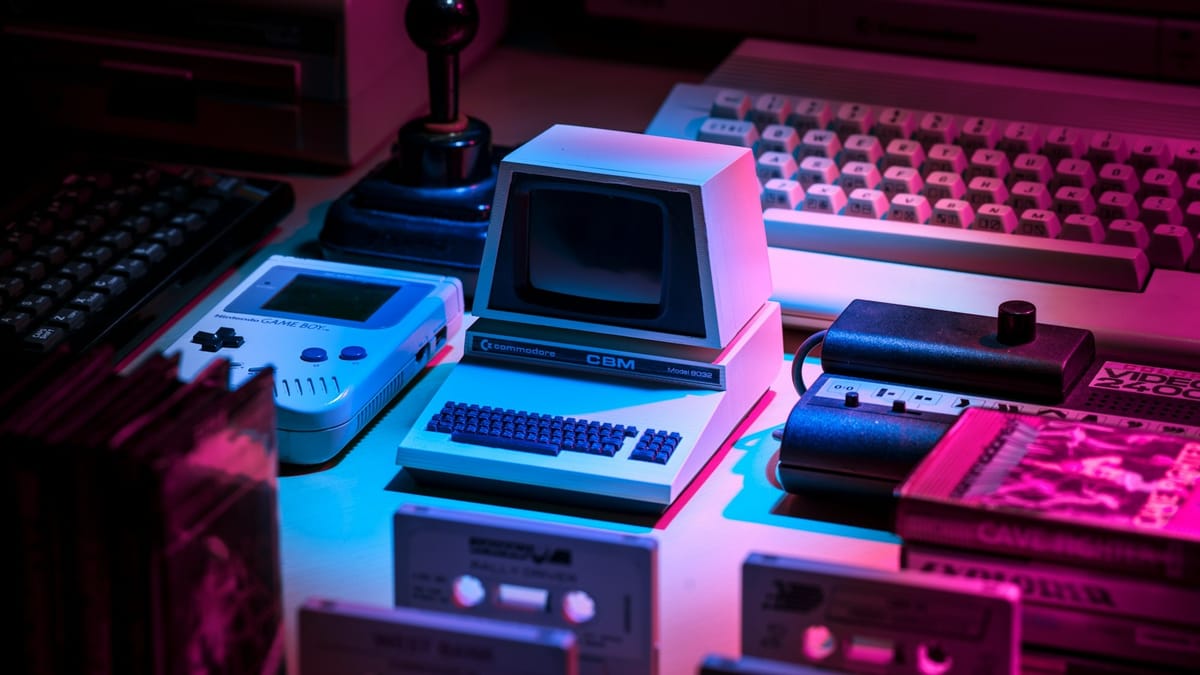
2025 has been one of those rare years when the tech industry didn’t just iterate—it swung for the fences. Every category saw something bold, strange, or downright impressive, from smartphones doubling down on design experimentation to XR headsets, finally breaking out of their niche. Even AI models and digital creators got their moment, reshaping conversations far beyond tech circles.
So, instead of another “top specs of the year” list, this roundup highlights the products that genuinely stood out, devices that sparked debates, pushed boundaries, or simply made us say, “Wait… they did what?”
Techloy Recap: The Biggest Tech Hardware Releases of 2025
Whether it was a radical Samsung foldable, or a next-gen gaming console, this year wasn’t just about incremental upgrades.
1 iPhone 17 Line-up
Many great phones were launched this year, but few stood out as much as the iPhone 17 line-up. This year felt like a massive upgrade across the board, with each model gaining at least one meaningful advantage over its predecessor.
Take the base iPhone 17, for example, Apple finally bumped the base storage to 256GB without raising the price. The Pro models got thicker, longer-lasting batteries and bold new colours. You genuinely can’t miss the bright orange Pro and Pro Max when they’re nearby.
On top of that, we got new features like the centre stage selfie camera with a square sensor. It automatically switches between portrait and landscape, widens the field of view for group shots with AI, and shoots ultra-stabilised 4K HDR video, all without rotating the phone. Selfies and video calls feel much more natural now.
If I didn’t know better, I’d say Apple was overcompensating for the hot mess that’s been Apple Intelligence this year. But what do I know?
2 iPhone Air
If you’ve been paying attention, you’ve probably noticed that every company has been chasing the “ultraslim phone” trend this year. But in the race to be the slimmest of them all, the iPhone Airits takes the crown.
It features an ultra-light titanium frame and a unique 6.5-inch display that sits between the standard and Pro Max sizes. Unlike the base model, it uses the more powerful A19 Pro chip and 12GB of RAM to handle intensive AI tasks better, while simplifying some hardware to keep the design thin.
The horizontal camera “plateau” on the back makes it stand out. It also debuted Apple’s custom C1X 5G modem, its latest in-house cellular chip. Apple also made it eSIM-only, with a single speaker, but the premium build with Ceramic Shield front and back makes up for it. And despite all this, it fits into a stunning 5.6mm body, the slimmest phone released this year.
3 Galaxy Z Trifold
The idea behind the Trifold is pretty simple: it’s a 6.5-inch phone that opens twice to become a 10-inch display. It’s a neat trick, and definitely a step up from the standard foldables we’re used to. Both screens use Samsung’s Dynamic LTPO AMOLED 2X panels with 120Hz and HDR support, easily among the best phone–tablet displays you’ll find. And it’s powered by the Snapdragon 8 Elite. It genuinely doesn’t get much more powerful than that.
It’s one of the most fascinating releases this year, especially after all the anticipation. And given Samsung’s dominance in foldables, its first trifold has been long overdue, finally giving the Huawei Mate XT some real competition.
The downside? Like the only other trifold on the market, it’s not exactly available everywhere. And whenever it eventually goes global, its extremely high price may make it a tough sell.
4 Galaxy XR Headset
Stepping away from phones, this was the year we finally saw what Android XR was capable of. Samsung unveiled the Galaxy XR headset, the first XR headset built on the Android XR platform.
It works like most XR headsets, letting you use it as a standalone computer for immersive content like movies and games. But the Galaxy XR goes further. Because it’s built on Android XR, it comes preloaded with Android apps like YouTube and lets you install apps directly from the Play Store. Out of the box, it already has more use cases than most other headsets.
What makes it feel truly next-gen, though, is the integration of Gemini AI throughout the interface. You’re almost compelled to use multimodal AI to control the device, making it feel less like a clunky piece of hardware strapped to your face and more like an extension of your digital life.
5 Nintendo Switch 2
After about eight years, we finally got the Nintendo Switch 2, and the upgrades were genuinely worth the wait.
It moves from a 720p handheld to a 1080p powerhouse with the ability to output 4K to your TV using NVIDIA’s DLSS upscaling. It packs 12GB of RAM and a modern Ampere-based chip that’s roughly six times more powerful than the original, finally allowing it to run demanding third-party games like Cyberpunk 2077 and Metroid Prime 4: Beyond.
You see all that power on a larger 7.9-inch 120Hz display, redesigned magnetic snap-on Joy-Cons, and a built-in microphone for Nintendo’s new GameChat platform. It offers partial backwards compatibility, includes 256GB of storage, and supports the faster MicroSD Express standard for huge next-gen titles.
Now, gamers were definitely annoyed by how aggressively Nintendo priced both the console and even the demo games this year, and I don’t disagree. But purely comparing specs, the Switch 2 is a massive step up from the original.
6 LG G5 OLED TV
 Image credit: LG
If you’re a “beautiful screen” enthusiast, the LG G5 OLED definitely didn’t pass you by. First shown at CES 2025, it immediately set a new bar for OLED panels.
It’s a 4K OLED display using LG’s “Perfect Colour” technology, delivering the inky blacks and vibrant colours OLED is known for. But what pushes it ahead is its performance: a 165Hz refresh rate and the Alpha 11 AI processor for real-time image tuning and clarity.
Whether you get the 55-inch or the massive 97-inch model, you’re getting premium gaming features like Nvidia G-Sync and AMD FreeSync Premium. It’s basically a high-end monitor disguised as a luxury TV.
7 HoverAir X1 ProMax
Once upon a time, drones were either huge, noisy machines or tiny toys that were basically injury hazards. Things have changed. This year, the HoverAir X1 ProMax combined the best of both worlds: ultra-portable and silent, yet surprisingly capable.
It shoots mind-blowing 8K video at 30fps, which is absurd for something that folds and fits into your jacket pocket. With its 1/1.3-inch CMOS sensor, it delivers detail and low-light quality normally reserved for much bigger rigs. For action shots, it switches to 4K at 120fps for buttery-smooth slow-motion.
Its smart flight modes are what make it perfect for vloggers. It has Rear Active Collision Detection, a 26 mph follow speed, and advanced modes like “Dolly Track” and “Bird’s Eye” that give you cinematic shots with zero effort. It’s basically a personal camera operator that fits in your hand.
8 Sony WH-1000XM6
For audiophiles, this was the most reliable upgrade of the year. Not groundbreaking, but refined in all the right ways.
Sony swapped in the new QN3 processor, said to be seven times faster, enabling a huge jump in noise cancellation. With 12 built-in microphones (up from 8), it does a much better job blocking out chatter and wind noise. It also adds Auracast support and a new Cinema Mode that upmixes standard stereo into a 360-degree spatial experience.
A fan-favourite change: Sony brought back the classic foldable design missing from the XM5, letting the earcups tuck inward into a smaller magnetic-latch case. And yes, you can finally listen while charging via USB-C.
9 DeepSeek R1

No product list is complete without at least one major AI model. DeepSeek has been around for a while, but its reasoning model, DeepSeek R1, truly shook the industry when it launched in January 2025.
Its appeal came from offering “thinking” capabilities, deliberate reasoning, and self-correction, on par with OpenAI’s o1, but at a tiny fraction of the cost. And because it launched open-source under the MIT licence, developers could inspect the model’s internal chain-of-thought and run advanced reasoning on consumer hardware. It democratised high-level AI in a way no one expected.
Of course, controversy followed. Researchers quickly found its safety guardrails easier to jailbreak, and geopolitical concerns about censorship and data privacy led U.S. agencies like NASA and the Pentagon to ban it from government devices. Still, R1 forced the AI industry to rethink efficiency vs scale, permanently shifting the competitive landscape.
10 Xania Monet, the AI-Generated Singer
This might not sound like a “product,” but it still fits. In case you missed it, who is Xania Monet?
She’s an “award-winning” digital persona who made history in 2025 as the first AI-generated artist to chart on Billboard’s Adult R&B Airplay. Created by American poet Telisha “Nikki” Jones, Xania uses the AI platform Suno to turn Jones’s poetry into soulful tracks like the viral “How Was I Supposed to Know?”
Her success sparked a label bidding war that ended with a $3 million deal from Hallwood Media. But it also triggered backlash from artists like Kehlani and SZA, who argue that AI-generated fame undermines human labour. Xania has become the centre of a heated debate about copyright, authenticity, cultural appropriation, and whether a machine can ever truly have “soul.”
But what do you think?
Honourable Mentions
These might not have been major standalone releases this year, but they definitely deserve a shoutout
- The iPhone Pocket: This wasn’t a tech product in the traditional sense, but rather a high-fashion collaboration between Apple and Issey Miyake. Released in November 2025, it’s a 3D-knitted textile sleeve that reimagines the “iPod Sock” for the modern era. While it doesn’t have a processor or a screen, it became a viral sensation for its “wearable textile” design that lets you glimpse your notifications through the fabric.
- Instagram on the iPad: After 15 years of waiting, Meta finally released a native Instagram app for iPad in September 2025. It finally ditched the “blown-up phone app” look for a multi-column layout that puts Reels and DMs side-by-side, taking full advantage of the tablet’s screen real estate.
- Sony’s Future Immersive Entertainment Concept: While technically not a properly released thing in 2025, the concept of it was unveiled at CES 2025, and this is Sony’s vision for “VR without the headset.” It’s a room-sized experience using Crystal LED walls, haptic floors, and even scent dispensers to drop you into games like The Last of Us. It’s not a product you can buy for your living room yet, but it’s a stunning look at where location-based entertainment is headed.
TECHNOLOGY
Why Dry January is a BAD idea: Expert warns the popular craze leads to a ‘binge or bust’ approach to drinking

After one too many drinks on Wednesday night, many will wake up and swear off alcohol for the month.
But Dry January is a bad idea as it promotes a ‘binge or bust’ approach to drinking, an expert has warned.
Julian Braithwaite, CEO of the International Alliance for Responsible Drinking, said the challenge is often taken up by people who have been drinking more heavily in the run–up to the New Year.
Many do report feeling better for it – from improved sleep to a lift in mental wellbeing.
‘But that may not translate into wider change’, he told the Daily Mail. ‘One major UK study found that although 25–27 per cent of drinkers tried to cut down during Dry January, there was no population–level reduction in alcohol consumption.’
Nearly one in three Brits – the equivalent of 17.5 million people – plan to take part in Dry January this year, polling figures suggest.
Yet alcohol is still causing thousands of deaths every year, with 7,673 alcohol–related deaths in England in 2024.
‘If you want to change your relationship with alcohol longer–term, a single month of abstinence is not necessarily the answer,’ Mr Braithwaite said.

Dry January is a bad idea as it promotes a ‘binge or bust’ approach to drinking, an expert has warned (file image)
He explained that, for many people, sharing a drink is part of how we celebrate and connect.
‘Rather than a binge–or–bust approach, we encourage moderate, sustainable habits that let adults enjoy the social benefits of drinking while managing health risks sensibly,’ he added.
His comments echo those made last year by Dr Niall Campbell, a consultant psychiatrist at the Priory and one of the UK’s leading alcohol withdrawal specialists.
‘If you use Dry January as an excuse to drink to excess in December and February, and the rest of the year, then you’re missing the point,’ he said. ‘Increasingly, that’s what we’re seeing.
‘Dry January is a fantastic initiative. It is very popular and the health benefits of completing it are significant.
‘But I worry that it has become a fashionable exercise for a lot of people. As a society, we need a wake–up call.’
Figures recently released by research company IWSR revealed monthlong abstinences – such as ‘Sober October’ and ‘Dry January’ – are becoming less popular among Gen Z, who were born between 1997 and 2012.
The number of Gen Z drinkers in the UK who reported abstaining from alcohol for a month or longer during the last six months dropped from 33 per cent in autumn last year to 24 per cent this year.

Alcohol is still causing thousands of deaths every year, with 7,673 alcohol–related deaths in England in 2024 (file image)
‘Temporary abstinence appears to be less central to moderation strategies than it once was,’ IWSR President Marten Lodewijks said.
‘This is especially the case among Gen Z drinkers, who have always been its most enthusiastic adopters.
‘Moderation is still an important trend across the entire beverage alcohol industry, but performative abstinence periods are less of the driving force they once were.
‘Instead, consumers moderate by drinking less often and, when they do drink, they tend to drink less.’
Experts now believe people are drinking more ‘mindfully’ by deciding which days they will drink or taking part in ‘Zebra striping’ – when alcoholic and non–alcoholic drinks are rotated.
The IWSR also said that consumers are seeking out more expensive drinks – such as fancy cocktails – while cutting back on how much alcohol they consume overall.
Dry January officially started as a public health campaign in 2013, when it was launched by Alcohol Change UK.
Short–term benefits can include marked reductions in liver fat, blood glucose and cholesterol along with improvements in sleep.
Findings from one study suggest that taking part in Dry January can lead to less drinking year–round.
The research, led by psychologist Dr Richard de Visser form the University of Sussex, included giving a questionnaire to 3,791 people who took part in Dry January in 2014.
A total of 71 per cent made it through the month without drinking.
Follow–up questionnaires, issued six months later, revealed statistically significant reductions in the quantity and frequency of alcohol consumption and hazardous drinking, and increased confidence about refusing alcohol.
These long–term benefits were seen in all the people who had signed up for Dry January, even if they did not manage to abstain for the full month, the research showed.
Dr Richard Piper, CEO at Alcohol Change UK, said the Dry January challenge was designed to help people cut down and get back to controlled, moderate, low-risk drinking over the long-term.
‘It’s the circuit breaker that many people need to reset their relationship with alcohol,’ he said. ‘Just trying to cut back, without first having a proper break of a month or more, is much harder.’
He said when it comes to unlocking maximum benefit and achieving lasting changes to drinking habits, there is a huge difference between those who attempt Dry January on their own or those who use the Try Dry app designed by experts at Alcohol Change.
‘If you find yourself drinking lots to compensate before the 1st Jan or counting down the days to the February, or find it hard to socialise, relax, sleep or have fun during the challenge, these are signs that you would benefit from changing your relationship with alcohol,’ he added.
WHAT IS ALCOHOLISM?
Alcoholism is the most severe form of alcohol abuse and involves the inability to manage drinking habits.
It is organized into three categories: mild, moderate and severe. Each category has various symptoms and can cause harmful side effects.
If left untreated, any type of alcohol abuse can spiral out of control.
Individuals struggling with alcoholism often feel as though they cannot function normally without alcohol.
This can lead to a wide range of issues and impact professional goals, personal matters, relationships and overall health.
Sometimes the warning signs of alcohol abuse are very noticeable. Other times, they can take longer to surface.
When alcohol addiction is discovered in its early stages, the chance for a successful recovery increases significantly.
Common signs of alcoholism include:
- Being unable to control alcohol consumption
- Craving alcohol when you’re not drinking
- Putting alcohol above personal responsibilities
- Feeling the need to keep drinking more
- Spending a substantial amount of money on alcohol
- Behaving differently after drinking
Short-term effects of alcohol abuse can be just as dangerous as long-term effects.
For instance, drinking can impact your reaction time, causing you to have slow reflexes and coordination.
That’s why drinking and driving is extremely dangerous. Getting behind the wheel of a car can alter your perception of speed and distance, putting yourself and others at risk.
Several short-term effects of alcohol abuse may produce:
- Slow reaction time
- Poor reflexes
- Reduce brain activity
- Lowered inhibitions
- Blurry vision
- Difficulty breathing
- Restlessness
Additionally, consuming too much alcohol can affect your long-term health. Some side effects may lay dormant for years before they surface.
Because of this, professional medical care is required for proper diagnosis and treatment.
Long-term health conditions caused by alcohol:
- Brain defects
- Liver disease
- Diabetes complications
- Heart problems
- Increased risk of cancer
- Vision damage
- Bone loss
Treatment for Alcoholism
There are different forms of treatment available based on frequency and severity of alcohol abuse.
Recovering from alcohol addiction is a process that continues long after rehab.
It takes commitment to practice and apply the techniques you learn in rehab, counseling, support groups and other types of therapy.
Although every individual will have their own recovery plan that’s tailored to their specific needs, treatment generally follows a structure.
Alcohol treatment is broken into three sections, consisting of:
Detoxification
The first stage in alcohol addiction recovery is detoxification. This phase should be completed with the help of medical professionals due to the potential for serious, uncomfortable withdrawal symptoms. Many times, individuals are given a medication to help alleviate the painful side effects of a withdrawal.
Rehabilitation
There are two types of rehabilitation that help treat alcoholism: inpatient rehab and outpatient rehab. Inpatient rehabs are intensive treatment programs that require you to check into a facility for a certain period of time, usually 30, 60 or 90 days. Outpatient rehab allows individuals to participate in a recovery program while continuing with their daily life. Talk with your doctor about treatment options to determine which form of recovery will best fit your needs.
Maintenance
The recovery process doesn’t end with the completion of rehab. Long-term sobriety requires ongoing therapy and may entail support groups, counseling and other recovery resources. These will make sure you maintain sobriety and continue on a happy, healthy path for months and years to come.
Source: Alcohol Rehab Guide

In September, NVIDIA agreed to purchase $5 billion worth of Intel shares. On Monday, the deal finally became official, with NVIDIA buying 214 million shares at $23.28 per share, giving it a 4.4% ownership stake in one of the most consequential companies in semiconductor history.
Since the initial agreement, the value of NVIDIA’s stake has already risen to $7.5 billion, as Intel shares closed at $36.68 on Monday. But focusing only on the immediate gains misses the bigger picture of why this deal matters right now.
On 18 December, the transaction cleared a major regulatory hurdle when the U.S. Federal Trade Commission approved the purchase after months of scrutiny over whether NVIDIA’s dominance in AI chips, combined with a stake in Intel, could raise antitrust concerns. The FTC ultimately ruled that the 4.4% stake was small enough to move forward.
What NVIDIA And Intel Are Actually Building Together
Beyond the financials, NVIDIA and Intel are planning to co-develop multiple generations of chips for data centres and computing platforms.
At the heart of this partnership is NVIDIA’s NVLink technology, which will connect Intel and NVIDIA chips at extremely high speeds. With bandwidth reaching 1.8 TB/s, NVLink enables far tighter CPU-GPU integration than traditional PCIe connections, removing the bottlenecks that increasingly slow down AI workloads.
NVIDIA founder and CEO Jensen Huang described the partnership as: “This historic collaboration tightly couples NVIDIA’s AI and accelerated computing stack with Intel’s CPUs and the vast x86 ecosystem — a fusion of two world-class platforms.”
Intel CEO Lip-Bu Tan echoed the sentiment, saying: “Intel’s x86 architecture has been foundational to modern computing for decades — and we are innovating across our portfolio to enable the workloads of the future.”
In practical terms, Intel will manufacture NVIDIA-custom x86 CPUs for data centres that integrate directly into NVIDIA’s AI architecture. For consumer and enterprise PCs, Intel plans to build system-on-chips that combine x86 CPUs with NVIDIA RTX GPU chiplets, blurring the traditional lines between processor roles.
A Lifeline For Intel
This deal comes at a critical moment for Intel. The company reported an $18.8 billion loss in 2024, its first annual loss since 1986, after years of strategic missteps, fierce competition, and heavy spending on manufacturing expansion.
NVIDIA’s investment will not fix those problems overnight, but it offers Intel something it urgently needs: time and credibility — a lifeline that could help stabilise the company while it attempts to reinvent itself.
NVIDIA’s Spending Spree Continues
For NVIDIA, the Intel stake is part of a much broader investment campaign that has already topped $120 billion, including its planned $100 billion investment in OpenAI and its recently announced $20 billion Groq deal.
Although NVIDIA officially labelled the Groq deal a non-exclusive licensing agreement rather than a full acquisition, it still underscores how aggressively the company is positioning itself across the AI value chain.
Nvidia’s $20 billion Groq Deal Opens a New Front in the Fight Over Faster AI
Officially, Nvidia had labelled this deal as a non-exclusive licensing agreement and not as an acquisition.
The Geopolitical Layer
The deal also fits neatly into a growing global AI race. In August, the U.S. government took a $10 billion stake in Intel, citing national security and supply-chain resilience.
NVIDIA’s move aligns with that strategy, reinforcing the US ambition to become a dominant AI chip production powerhouse, especially as competition with China intensifies.
Why This Matters
For NVIDIA, the upside is control and optionality. For Intel, it is a rare chance at reinvention. As demand for AI computing continues to surge, this partnership could help define who shapes the next era of semiconductors — and who struggles to survive it.
TECHNOLOGY
Behind The Scenes becomes first Nollywood movie to gross N100m+ each in 4 consecutive days


Behind The Scenes (BTS), a film by popular Nollywood Actress Funke Akindele, has set another milestone by grossing over N100 million each in four consecutive days. The development has seen the project become the first Nollywood film to reach that mark.
According to a breakdown released by the Nigeria Box Office (NBO) on Monday, Behind The Scenes capitalised on the festive period and its continued acceptance to set new records. While the movie grossed N103.6 million on Christmas Day, it recorded N130.1 million on Boxing Day, becoming the highest single-day gross of all time.
Behind The Scenes continued the fine run by grossing N105.4 million on 27 December and N121.6 million on 28 December, becoming the first Nollywood film to rake in over N100 million each in four consecutive days, and still counting.
Aside from these, Funke Akindele’s latest feature also set several records.
Behind the Scenes, with the accumulation of its daily returns since launch, has now surged past N1.1 billion to become the fastest film in West Africa to cross N1 billion within 19 days after its release. The figure also made Funke Akindele Nollywood’s highest-grossing producer of all time.

While confirming the new record, FilmOne Entertainment, the film’s distributor, said that Funke Akindele is now the only filmmaker to surpass N1 billion three separate times. In addition, she is also the first to rake in N1 billion+ in three consecutive projects within a single calendar year.
The distributor tagged the ongoing turnout at cinemas as “another history made,” and also acknowledged the audience for continuing to show up, filling cinemas and “carrying this story with love.” It had previously described Funke Akindele as the “Queen of Box Office for a reason” after the film set its first record two weeks ago.
Recall that earlier this month, Behind The Scenes became the first Nollywood film to hit the N200 million mark on its opening weekend in 2025. The film was described as a five-time box office opening weekend record holder and the biggest weekend admissions of 2025. It also recorded the biggest weekend admission (34,548) of 2025.
While the film continues to rake in revenue, the cost of production also attracts attention. Funke Akindele had earlier disclosed in a video that the production budget exceeded N1 billion, highlighting the scale of investment involved in the film production.
 Funke Akindele
Also Read: Behind The Scenes becomes first Nollywood movie to hit N200m on opening weekend in 2025.
About Behind The Scenes
Behind The Scenes features Scarlet Gomez in the lead role, alongside Iyabo Ojo, Funke Akindele, Destiny Etiko, and Tobi Bakre. Others are Uche Montana, Uzor Arukwe, Ini Dima-Okojie, Adebowale ‘Mr Macaroni’, Ibrahim Chatta, Kamo State, and reality TV stars Handi and Wanni Danbaki, among others.
The film is a comedy-drama that spotlights the chaos, ego clashes, and hidden struggles in Nollywood film production and focuses on themes of pressure, healing, and hidden truths. It lights up an ambitious young filmmaker navigating betrayal, ambition, and on-set drama.
In addition, Behind The Scenes touches on broader societal issues like ‘black tax’ and self-sacrifice through characters such as successful entrepreneur Aderonke “Ronky-Fella” Faniran.
TECHNOLOGY
Facebook slow to act on posts celebrating Bondi beach massacre, anti-hate group says | Facebook

Facebook hosted terrorist propaganda that celebrated the murder of Jews and praised Islamic State, a leading anti-hate group has alleged.
The posts included celebrations of the Bondi beach massacre that the Community Security Trust says Facebook has been too slow to take down. The posts were still on Facebook on 16 December, two days after the attack, and received shares and likes.
Some accounts are Britain-based and those have been reported to counter-terrorism police in the UK as a matter of urgency.
One post shows video of the aftermath of the Bondi beach attack, which was allegedly carried out by a father and son who were IS supporters, and says: “Allah is the greatest and praise to Allah.” It has clearly been viewed, with more than 100 likes, 27 comments and four shares recorded.
Fifteen people were killed as they celebrated the Jewish festival of Hanukah in Sydney on 14 December. One of the attackers also died.
Another post shows a photo of one of the Bondi beach gunmen and says: “The coming years of art and hell,” and contains praise for an IS leader. This had 12 shares and more than 300 likes.
Facebook said it was in the process of removing some of the posts after being contacted by the Guardian, and said some had already been spotted and removed.
Dave Rich, the director of policy for the CST, which works to keep Jewish people safe from attack, said: “The sheer volume of IS-supporting accounts promoting terrorist content on Facebook is deeply alarming, and the posts celebrating the Bondi terrorist attack are utterly nauseating.
“Yet again, social media companies are incapable of meeting even their most basic of responsibilities and are putting all of us in danger as a result. This simply should not be happening any more. We will be calling on Ofcom to urgently investigate Meta’s failings and to take strong action where possible.”
Ofcom, the media regulator, said: “If a post is reported to a platform now, the platform must decide whether the content is illegal under UK law, and take it down swiftly if it is. Our job is to make sure sites and apps have appropriate measures in place to comply with their duties.”
It said it had received “evidence that suggests terrorist content and illegal hate speech is persisting on some of the largest social media sites”.
A spokesperson for Meta, which owns Facebook, declined to answer a series of questions but said: “The content was removed for violating our policies around dangerous organisations and individuals.”
A Home Office spokesperson said: “Social media content promoting terrorism or violence against communities is absolutely unacceptable, and will not be tolerated. The law is clear: social media platforms must take action to prevent illegal content on their sites, including terrorist and violent material.”
The focus on pro-IS material on popular social media sites comes amid concern about an increase in terrorist efforts to target Jewish people across the west.
Two men were convicted on 22 December of a plot to get machine guns and shoot Jewish people around the north-west of England. In that plot and the Sydney massacre, both sets of terrorists’ approaches had a degree of sophistication.
Though neither was “directed” by IS, the Sydney attackers visited the Philippines and the north-west England machine-gun plotters had contact with an IS person overseas and were sophisticated enough to try to bypass Jewish community security and infiltrate a Facebook group, giving them details of potential Jewish targets.
Rich said of the English plot: “This is an even more serious plot than the attack on the synagogue in Heaton Park and indicates a much greater level of training and sophistication.”
Vicki Evans, the senior national coordinator for counter-terrorism policing, told the Guardian: “The terrorist threats we face do not stand still and we rarely confine them to history. Instead, they flex in intensity and risk over time – and so does our response.
“Recent attacks in Manchester and Australia are clear reminders of the range of threats we face, and we continue to ask the public to … report any concerns they see in their real-world or online communities.”

Cybersecurity breaches remained a persistent thorn in the side of African companies in 2025, but the major highlights from the year weren’t the headline attacks. Institutions lost the luxury of keeping breaches quiet as cyberattacks became harder to hide.
Several African countries tightened the breach-reporting guidelines for operators. Chief among them is Algeria, which mandated a 5-day window for companies to report breaches or pay heavy fines. Kenya and South Africa also made significant strides in forcing organisations to treat breaches as public events rather than private IT problems.
In Kenya, operators that discover a potential breach are now expected to alert data controllers within 48 hours, and controllers are pushed to file a preliminary report to the Office of the Data Protection Commissioner (ODPC) within 72 hours—even if the full facts are not yet in. Late notifications must be justified, and new guidance from the regulator ties weak security and poor reporting directly to fines, sanctions, and even the risk of losing the right to process data. For Kenyan firms, that means the old instinct to “wait until we know more” now carries regulatory risk of its own.
South Africa also overhauled its breach‑reporting process. While the Protection of Personal Information Act (POPIA) had long required organisations to notify both the regulator and affected people after a “security compromise,” in 2025, the Information Regulator tightened how that duty works in practice. In April, it mandated companies to log breaches through an online reporting portal using a form, forcing operators to spell out what happened, what data was involved, what they are doing to contain it, and what individuals should do to protect themselves.
According to South Africa’s Information Regulator, there were 2,374 reported breaches in the 2024/25 financial year, with 82% of them occurring after April 2025. The number pointed to an acceleration, but also hinted that disclosure was becoming unavoidable.
Elsewhere, Zambia chose to treat cybersecurity as a critical‑infrastructure issue rather than a back‑office concern. In April 2025, the country split its cyber law into two: a Cyber Security Act governing security service providers and critical information infrastructure, and a Cyber Crimes Act dealing with offences and penalties. Operators in sectors such as energy, banking and finance, health, transport, pensions and insurance, ICT, education, mining, and other designated public‑sector services can now be classified as controllers of “critical information” or “critical information infrastructure,” bringing them under a tighter supervisory net.
That designation comes with hard obligations: controllers must register with the new Zambia Cyber Security Agency, keep designated critical information hosted in Zambia unless expressly authorised to store it elsewhere, and promptly notify the agency of any perceived or actual cybersecurity incident affecting those systems or connected networks. They are also required to undergo annual audits, file cybersecurity situational-awareness reports, and participate in national cyber-exercises, with non-compliance punishable by fines of up to ZMW 1.2 million ($48,000) and, in serious cases, prison terms that can extend up to 10 years.
These regulatory shifts forced the disclosure of some of the most consequential breaches in 2025. At a new scale, they made visible how intrusions disrupt everyday customer services in very public ways.
Get The Best African Tech Newsletters In Your Inbox
Exposure as a strategy
If 2024 gave us the unfortunate breach at South Africa’s National Health Laboratory Service (NHLS), the biggest healthcare incident in 2025 was Kenya’s M-TIBA breach in October. Like a trophy showcase, hackers published the siphoned data on public Telegram channels, a pattern used to force organisations to comply with ransom demands. Organisations that hold sensitive customer data remained heavily targeted businesses in 2025.
Telecom firms, once assumed to be resilient by virtue of scale, became some of the most lucrative targets. Telecom Namibia, a state-owned provider, was quietly crippled by a ransomware attack in December 2024, with a public fallout that continued in January 2025. When the company refused to pay, attackers leaked sensitive billing data belonging to senior government officials in an attempt to force compliance.
On January 8, hackers hit mobile operator Cell C with a cybersecurity breach, with reports stating that perpetrators, RansomHouse, had “unlawfully disclosed the incident” and published stolen customer data on the dark web, exposing them to fraud and extortion.
In April, MTN Group disclosed a data breach affecting its South African subscribers. In Ghana, at least 5,700 MTN customers were directly affected in a breach reported on April 28. In South Africa, the breach escalated into a criminal investigation. The message to the industry was unmistakable: Telecoms had become identity vaults, and those vaults were being tested.
Hackers maintained their exhibitionist posture, and several other sensitive data organisations were hit. In January 2025, a cyberattack on the South African Weather Service (SAWS) knocked key systems offline, disrupting the delivery of aviation and marine forecasts and limiting access to critical weather information at home and across the region. In July, the municipal systems of Otjiwarongo, a quiet town in central Namibia, were knocked offline. Residents were blocked from accessing basic services as officials struggled to explain what had happened.
The year’s most consequential infrastructure breach involved South Africa’s Eskom, the state-owned power company, and it became a crowning moment of the exposure era—one that attached a clear financial cost to a cyber incident.
In December 2024, the power utility detailed how its Online Vending System (OVS)—the platform used to generate prepaid electricity tokens—had been breached the previous year, after a forensic investigation linked large “non-technical” losses to fraud on the system.
The breach itself occurred in 2024, but only surfaced publicly in December, when Eskom acknowledged that criminals had exploited weaknesses in its vending platform to generate large volumes of fraudulent yet technically valid tokens. MyBroadBand, a local media publication, reported in November 2025 that Eskom employees, either acting as colluders or as orchestrators of the scheme, took advantage of the compromised system to create and sell fake power tokens, allegedly stealing between R657 million and R1.1 billion ($39.5 million–$66 million) from the company.
By September 2025, Eskom reported that fraud linked to the OVS breach had been reduced to “very low levels of activity.” The incident did something damaging: it made internal failure, financial loss, and delayed disclosure visible at once, underscoring how difficult it had become for institutions to keep breaches quiet.
Espionage?
State‑linked groups such as Salt Typhoon, associated with China, have targeted telecommunications providers—including at least one in South Africa, according to researchers at Recorded Future—seeking access not to cause disruption but to observe. Metadata, call records, network access—the architecture of daily life—proved more valuable than any single database.
These attacks rarely produced headlines. They did not need to. Their success lay in remaining largely invisible.
In South Africa, allegations surfaced in September that the State Security Agency (SSA) had been breached by a suspected Chinese-linked group known as RedNovember. Officials denied the intrusion, saying they investigated the claims and found no evidence of such a breach. Yet the matter remains a public spectacle on how espionage could be the objective for RedNovember, a group notorious for targeting high-profile governments and intergovernmental organisations (IGOs). RedNovember did not issue any statement on the alleged SSA breach.
At the same time, ransomware groups turned toward infrastructure: ports, utilities, logistics systems. In South Africa alone, ransomware- and cybercrime-related losses were estimated at $120 million annually.
Elsewhere on the continent, Senegal’s tax authority was hit by ransomware that threatened to erase and leak sensitive fiscal records. On October 2, Senegal’s Directorate General of Taxes and Domains (DGID), a department of the Ministry of Economy, Finance, and Planning—responsible for tax and land policies and administration in the country—issued a statement denying the alleged attack, and framing it as a temporary technical glitch; with that move, the government opted for quiet containment and recovery. Yet the episode exposed the fragility of digital tax systems that underpin state revenue.
Similar pressures were visible across East Africa. Kenya’s national incident response team recorded over 842 million attempted cyber intrusions in Q3 2025, most targeting government login portals and internet service providers. In Ethiopia and several other countries in the region, repeated distributed denial of service (DDoS) attacks aimed at telecom infrastructure remained a persistent thorn. These attacks were stress tests on states digitising faster than they could defend.
Get The Best African Tech Newsletters In Your Inbox
The new confidence trick
In 2025, people also stopped trusting voices.
AI-driven social engineering matured quickly. The fear of finance managers receiving calls that sounded exactly like their CEOs or video meetings featuring faces that blinked and nodded with unsettling accuracy increased. Traditional warning signs—bad grammar, strange domains—no longer apply.
West Africa’s long-running role as a hub for Business Email Compromise (BEC) hardened into something more industrial. Crime syndicates like Black Axe ran operations that were transnational, disciplined, and lucrative. Reports of digital sextortion—often involving AI-generated images used to blackmail victims—also surged.
Nigeria illustrated how cybercrime blended with insider abuse. At Access Bank, the country’s biggest bank by assets, investigators alleged that staff colluded to divert ₦826 million ($569,345) through a fake internal revenue account. It was not a breach in the conventional sense, but it underscored another reality of 2025: the most damaging compromises also came from willing, and even unwitting insiders.
Arrests, laws, and the theatre of response
There were moments of resolve. In a coordinated operation, INTERPOL arrested 1,209 cybercriminals across 18 African countries. Regulators also began flexing their muscles. The Nigeria Data Protection Commission (NDPC), the country’s data privacy regulator, fined MultiChoice, the South African multinational media company, ₦766 million ($528,000) for failing to adequately protect consumer data. It signalled to African organisations that poor data stewardship would carry real financial consequences.
In North Africa, a wave of cyber incidents unfolded over several weeks in April. The sequence began when Moroccan-linked hackers allegedly compromised the X account of Algeria’s state news agency. TechCabal’s checks showed that the account was taken over in April and renamed to ‘Sahara Marocain,’ in what appeared to be a deliberate attempt to provoke.
On April 8, pro-Algerian group Jabaroot hit back. It reportedly hacked Morocco’s National Social Security Fund, directly framing it as retaliation. The disclosed breach exposed tens of thousands of files containing personal and financial information of nearly 2 million citizens.
While officials disputed some of the leaked material, large portions of the data reportedly appeared on public Telegram channels. Soon after, the hacktivist group Jabaroot defaced Morocco’s Ministry of Labour website, citing retaliation for online attacks against Algerian media. The escalating tit-for-tat of digital reprisals underscored how cyber operations have become weapons of digital skirmishes, leaving civilians’ data as collateral damage.
Get The Best African Tech Newsletters In Your Inbox
What 2025 left behind
Between 2019 and 2025, Africa lost more than $3 billion to cybercrime, according to INTERPOL. The figure only captures money and not lost confidence following such attacks. The agency also noted that detection and response capabilities across the continent remain limited, lagging behind the pace and scale of emerging threats, and signalling an investment gap.
According to INTERPOL’s Africa Cyberthreat Assessment report, 90% of African businesses operate without adequate cybersecurity protocols in place. The same report notes that only 30% of African countries have an incident reporting system, underscoring persistent underreporting and structural gaps in how cyber incidents are captured.
Across much of Africa, cybersecurity spending has tended to cluster around basic perimeter tools and compliance-driven controls, while more advanced capabilities—continuous monitoring, threat hunting, assessments, testing, and controls—remain underdeveloped in many sectors outside large banks and telecom operators.
A report by PwC, a global consulting firm, showed that only 28% of South African organisations are spending significantly more on proactive measures than reactive measures (such as incident response, fines, recovery). Globally, that figure is closer to 70%, yet most African organisations are not close to that mark.
Without stronger defences, the threats will spill over to 2026. Hackers are timing, striking when systems are already strained. Global blockchain startups are also discovering that smart contracts, accounting for $29 million in damages, fail just as human ones do. Information security analysts have become some of the most sought-after professionals on the continent.
As the year draws to a close, we learned that breaches are no longer the thing African institutions fear most. What they fear is being seen as unprepared, evasive, and ordinary in the face of a problem they once believed could be managed quietly.

At a time when everyday conversations about money are starting to feel heavier, rising prices, growing government debt, and questions about long-term stability, Bitcoin is again being pulled into the center of a much bigger debate. This time, the argument isn’t about replacing the U.S. dollar, but about whether Bitcoin can quietly make the system stronger. Coinbase CEO Brian Armstrong believes it can.
Speaking in December, Armstrong said Bitcoin acts as healthy competition for the U.S. dollar. Not as an enemy, and not as a substitute, but as an alternative that keeps policymakers on their toes. In his view, when people have a credible exit option, governments are forced to be more careful with how they manage money.
Armstrong explained that Bitcoin works more like a market signal than a political weapon. When inflation rises or government spending grows too fast, confidence in traditional money starts to weaken. People don’t wait for official reforms. They simply look for safer places to store value. Bitcoin, in that sense, reflects stress in the system rather than causing it.
He pointed out that moderate inflation can work if the economy grows at the same pace. The problem begins when inflation runs ahead of growth. Over time, that gap chips away at trust in the dollar, especially for global investors who rely on it as a store of value. Bitcoin’s existence, Armstrong argued, forces institutions like the Federal Reserve and lawmakers to think harder about the long-term impact of their decisions.
What $14B crypto forfeiture says about the U.S. bitcoin strategy
A massive Bitcoin seizure tied to a global scam could push America’s holdings past $36 billion and reveal how its approach to digital assets is changing.
Does Bitcoin actually weaken the U.S. dollar or hold it accountable?
This argument becomes more serious when viewed alongside America’s rising debt. The U.S. national debt has climbed to historic levels and continues to grow rapidly.
For Armstrong, Bitcoin introduces an unusual form of accountability. If confidence breaks down, people can move capital elsewhere. That possibility alone creates pressure. From this perspective, Bitcoin does not weaken the dollar. It quietly encourages better discipline to protect it.
Armstrong is not alone in framing Bitcoin this way. BlackRock CEO Larry Fink has previously described Bitcoin as a hedge against currency debasement, particularly for countries that struggle with fiscal control. Hedge fund manager Paul Tudor Jones has compared Bitcoin to digital gold, saying it serves as protection in an era of aggressive money printing. Even Federal Reserve officials have acknowledged that crypto reflects public concerns about inflation and trust, even if they disagree on its role.
Across these views, the comparison is consistent. Bitcoin is not positioned as a new national currency, but as a parallel system that highlights weaknesses in existing ones.
How Stablecoins Are Becoming a Global Macroeconomic Force
As stablecoin use explodes past $9 trillion in annual transactions, the question becomes how long before they reshape global finance.
What role do stablecoins play in the future of the U.S. dollar?
While Bitcoin often grabs headlines, Armstrong and others have noted that dollar-backed stablecoins may be doing more to extend U.S. influence globally. Stablecoins allow people around the world to use digital dollars for everyday payments, savings, and transfers, often without touching the traditional banking system.
When the U.S. economy shows strength, confidence tends to flow back into dollar-based assets. In those moments, Bitcoin does not always rise. Stablecoins, however, gain traction by making the dollar easier to use across borders. Some industry leaders argue that this quietly reinforces dollar dominance in the digital economy.
Taken together, Bitcoin and stablecoins play very different roles. Bitcoin applies pressure by offering an alternative during times of instability. Stablecoins extend the reach of the dollar when confidence is high. Armstrong’s core argument is that this balance ultimately benefits the U.S., not by eliminating the dollar, but by forcing it to remain credible.
In that sense, Bitcoin’s most important impact may not be its price or volatility, but the uncomfortable questions it keeps raising. And for policymakers, those questions are becoming harder to ignore.
How the GENIUS Act Impacts Stablecoins and Crypto Adoption
With this implementation, stablecoins gain legal clarity, greater institutional trust, and a clear path toward real-world adoption at scale.


Between the slash-and-burn US government reboot led by a dank meme fan and the relentless pushing of AI by venture capital-backed blowhards, 2025 has felt like peak obnoxious tech bro. Fittingly, jargon-spouting, self-regarding digital visionaries also became Hollywood’s go-to baddies this year in everything from blockbusters to slapstick spoofs. Spare a thought for the overworked props departments tasked with mocking up fake Forbes magazine covers heralding yet another smirking white guy as “Master of the Metaverse” or whatever.
With such market saturation, the risk is that all these delusional dudes blend into one smarmy morass. It felt reasonable to expect that Stanley Tucci might sprinkle a little prosciutto on The Electric State, Netflix’s no-expense-spared alt-history robot fantasia. As Ethan Skate – creator of the “neurocaster” technology that quashed an AI uprising then turned the general populace into listless virtual-reality addicts – Tucci certainly looked the part: bald and imperious in retro Bond villain wardrobe. But even the great cocktail-maker couldn’t squeeze much out of sour existential proclamations such as: “Our world is a tyre fire floating on an ocean of piss.”
Hall-of-mirrors feel … Nicholas Hoult as Lex Luthor in Superman. Photograph: Jessica Miglio/© 2025 Warner Bros. Ent. All Rights Reserved. TM & © DC
There was more baldness in Superman, where Nicholas Hoult’s Lex Luthor embodied the worst kind of wannabe paradigm-changer: one desperate to appear on talkshows. Incensed that the world seemed to be ignoring his genius in favour of a flying alien do-gooder, the LuthorCorp founder spent a fortune to rig social media, deploying an army of vivisected monkey cyborgs to swamp platforms with anti-Superman hashtags and memes. That the film itself was met with farmed outrage about perceived wokeness added a disconcerting hall-of-mirrors feel to what was essentially an overstuffed crowdpleaser. Hoult’s Lex was also a distractingly hot tech CEO, which pushed the film further into the realm of fantasy.
Is it more appealing when these self-regarding douchebags are funny? In the heightened world of killer doll action thriller M3gan 2.0, Jemaine Clement was sleazily overconfident as Alton Appleton, a high-functioning billionaire whose latest wheeze was pushing an unwanted neural implant on the masses. Seduced by an impassive fembot assassin, Alton was humiliated in his final moments, his signature Altwave tech effortlessly hacked, his weird prosthetic six-pack coming unstuck. It was pathetic but humanising. As the movie trundled on, you actually began to miss him.
If Clement nailed tech bro obliviousness, Danny Huston had to remain deadpan opposite Liam Neeson’s blathering Frank Drebin Jr in The Naked Gun reboot. Huston’s Richard Cane was a hybrid Jeff Bezos/Elon Musk-esque blowhard who used the galactic profits from his online retail and electric car empires to make a Primordial Law of Toughness device . His master plan was to zap the general public back to a prehistoric mindset, violently culling the herd and ushering in a new age for humankind (or at least his zillionaire class). Cane was obsessed with men’s sperm counts, building luxury bunkers for the super-rich and Black Eyed Peas. In other words: truly psychotic.
Truly psychotic … Danny Huston in The Naked Gun. Photograph: Paramount Pictures/AP
In the goopy, grungy world of The Toxic Avenger reboot, Kevin Bacon’s floppy-haired biotech baddie Bob Garbinger stood out simply because he looked so pale and pampered. While it’s not a great sign when a self-proclaimed “healthstyle” guru gets Sisyphus and syphilis mixed up, Garbinger’s habit of going shirtless while flogging “proprietary cutting-edge bio-boosters” in TV ads felt like a timely skewering of immortality-seeking biohackers such as Bryan Johnson.
In 2022, Evan Peters played the lead in Netflix’s ghoulish Monster: The Jeffrey Dahmer Story. Did that influence his casting as a second-generation nepo baby in Tron: Ares? To be fair, his Julian Dillinger – grandson of David Warner’s boardroom bully from the original 1982 Tron – seemed more neurotic than psychotic: a baby-faced tech huckster with crappy circuit board sleeve tattoos whose audacious move into 3D-printing wicked neon war machines and digital commandos was only slightly scuppered by the fact that they imploded within 30 minutes. A wildly expensive, resource-intensive, essentially useless product? Intentionally or not, it felt like an appropriate metaphor for the AI bubble.
Pale and pampered … Kevin Bacon in The Toxic Avenger
But why stop at just one douchey tech bro? Jesse Armstrong’s jagged satire Mountainhead took the bold step of making every single character the absolute worst of the “move fast, break stuff” billionaire mindset, isolating them – and the viewer – in a remote, repellently deluxe ski lodge while the spectre of possible Armageddon encroached. As the Musk-alike owner of a social media app spreading dangerous AI-augmented misinformation, Cory Michael Smith captured the glib, morality-agnostic tone of someone richer than God who views the world as their plaything.
As Venis (Smith), silverback investor Randall (Steve Carell), canny algorithm tamer Jeff (Ramy Youssef) and would-be wellness app supremo Souper (Jason Schwartzman) relentlessly needled each other, there was the illicit thrill of dialling into the combative quartet’s inside-baseball repartee of boasting, toasting and roasting. But as the globe lurched further into chaos, watching these four nominal thought leaders clumsily workshop how best to exploit the situation was depressing, not least because it seemed so plausible. We have all been forced to absorb the pathologies of our tech overlords due to their disproportionate influence in the real world. As a new cinema year looms, is it too much to ask that we don’t have to keep doing it at the movies too?