
NIGERIA NEWS
Condemnations as Nasarawa youths trek miles to display support for politicians


Ahead of the 2027 general elections, youths in Nasarawa State have taken to trekking long distances in solidarity with politicians just as campaign season approaches.
The practice, while intended to show support, has raised questions about the welfare of the young participants and the broader implications for the future of political engagement in the state.
Across several communities, images and videos of mostly young men walking for hours or days as the case may be, sometimes under intense heat, have become a familiar sight on social media.
Supporters describe the treks as acts of loyalty and sacrifice.
But for a growing number of observers, the trend is troubling, signalling deeper issues about youth priorities, economic desperation, and the evolving nature of political mobilisation.
Several residents, who spoke with DAILY POST, expressed concern that the development reinforces long-standing stereotypes about Nigerian youths.
A resident known as Ekka Egbi Phillip argued that the trend “only confirms what former President, late Muhammadu Buhari once said about Nigerian youths being lazy,” noting that energy expended on political treks could be channelled into skills acquisition, education, or entrepreneurship.
Another resident who preferred not to be mentioned offered a different perspective, describing the treks as a survival strategy in harsh economic times.

According to him, many participants are motivated by the expectation of material rewards.
“This is now one of the fastest ways young people make money,” he said.
“Some of them are given motorcycles, cash gifts, offered positions of aids when elected, or other incentives by politicians. For someone struggling to survive, that is hard to ignore.”
Beyond the immediate welfare concerns, political analysts warn of long-term consequences for democratic accountability.
Critics argue that when political support is transactional, it weakens citizens’ ability to demand good governance.
“Once votes are effectively paid for through gifts and handouts, it becomes difficult to question leaders or call them to order when they fail,” a civic advocate noted.
“Those who benefited from such inducements may feel morally restrained or silenced when performance falls short.”
Some other residents who spoke to DAILY POST expressed concern that public displays of trekking are now being elevated above structured political processes, particularly the role of party delegates.
According to one respondent, the focus on trekkers risks distorting internal democracy.

“It is now as if trekkers matter more than delegates,” he said.
“Instead of politicians engaging party structures and convincing delegates with ideas and plans, they now invest in spectacles that can be easily monetised,” he said.
He said this in reaction to a comment by one Aminu Mamuda Otaki who implied that Trekkers Matter More Than Delegates right now.
“The health and security implications may be debated, but any aspirant who cannot inspire people to trek for him has no business dreaming of winning the next gubernatorial election, especially in the ruling All Progressives Congress, APC.
“Trends don’t emerge by accident. That some people still fail to grasp its political value is frankly, shocking.
“For us in the business of election management, timing is everything. Trekking in solidarity is the moment. And right now, trekkers matter more than delegates,” Mamuda stated as seen on Nasarawa Mirrors page on Facebook.
Observers argue that this shift could undermine credible candidate selection, as popularity on the road begins to overshadow competence, track record, and policy depth.
There are also fears that such trends may open the door to vote-buying on a larger scale.
The debate gained renewed momentum following a widely shared video posted by a social commentator identified as Ramlat Al-Ameen, who delivered a reflective and emotional critique of the trend.

In the video, she questioned the message being passed on to younger generations.
“Today, I travelled from my town to my state for money, for a symbol, a handshake, a photo, a note. What lesson am I teaching those behind me?”
Ramlat expressed fear that such actions send the wrong signals about success and merit.
“That effort alone does not open doors? That sweat doesn’t speak unless power listens? I fear because I am showing them that hard work doesn’t pay, but proximity does,” she added.
Her comments struck a chord with many youths online, particularly her observation that political proximity now appears more rewarding than personal development.
“We trek to meet politicians, but we don’t trek to meet our potentials,” she said, lamenting that creativity, technical skills, and community service often go unrewarded.
Drawing a stark comparison, Ramlat noted: “This is Naija where trekking gets you a motorcycle, while technical skills get you ignored. No wonder brains are packing bags while legs are winning prizes.”
She concluded with a pointed message on national development: “If trekking gave us jobs, I should have trekked to every state capital by now. But the truth is, it is not legs we need to move forward. It is about minds, skills, and leadership.”
As Nigeria edges closer to another election cycle, observers in Nasarawa say the situation reflects a broader national challenge, how to transform youthful energy from symbolic political gestures into meaningful civic participation and productive engagement.
For many residents, the concern is no longer just about trekking, but about what it represents: a political culture that rewards visibility over value, loyalty over competence, and short-term gains over long-term empowerment.
Whether this trend deepens or is redirected may shape not only the 2026 elections, but the future role of youths in Nigeria’s democracy.








![Rivers United Open Five-Point Lead As Pillars Sink Nasarawa In NPFL Thriller [Matchday 19 Results]](https://informationhub.com.ng/wp-content/uploads/2025/12/Rivers-United-.webp-400x240.webp "Rivers United Open Five-Point Lead As Pillars Sink Nasarawa In NPFL Thriller [Matchday 19 Results]")
![Rivers United Open Five-Point Lead As Pillars Sink Nasarawa In NPFL Thriller [Matchday 19 Results]](https://informationhub.com.ng/wp-content/uploads/2025/12/Rivers-United-.webp-80x80.webp "Rivers United Open Five-Point Lead As Pillars Sink Nasarawa In NPFL Thriller [Matchday 19 Results]")


Suspected bandits have killed two persons, injured one and abducted a woman during an attack on Rimi Kamazo community in Chikun Local Government Area of Kaduna State.
Akelicious report that the incident occurred on Dec. 28 at about 11:50 a.m. when an unspecified number of armed bandits invaded the community, firing sporadically and causing panic among residents.
Victims of the attack were identified as Zainab Amos Bagoro, 55, and Aminu Amos Bagoro, 25, who were shot and fatally injured. Another victim, Gayus Amos Bagoro, sustained gunshot injuries and is currently receiving treatment.
The attackers also abducted Justina Abednego, 25, and took her to an unknown destination.
Sources said security operatives received information about the attack at about 2:00 a.m. on Dec. 29 and immediately mobilised to the area in collaboration with other security agencies.
The injured victims were rushed to hospital for medical attention, where the two critically injured persons were confirmed dead, while the surviving victim is receiving treatment at St. Gerald Hospital, Kakuri, Kaduna.
The corpses of the deceased were deposited at the hospital morgue for autopsy.
Security forces have intensified efforts to rescue the abducted woman and track down the perpetrators, while investigations into the incident have commenced.
Related

Another lone fatal motor accident has killed five people have been killed and two others sustained various degrees of injuries in Jigawa State.
Spokesman of the Jigawa State police command, SP. Lawan Shiisu Adam confirmed the incident to DAILY POST.
This is coming less than two hours after the accident that resulted in the death of eighteen people, including male, female and children at Danmasara village in Dutse local Government.
According to the statement: “On Tuesday, 30th December, at about 1300hrs, there was a lone fatal motor vehicle accident at Bandawa village, Ringim LGA, involving an ash Honda Accord with reg. no. ABJ 730 AX, driven by 27 year old Yunusa Hassan of Babura LGA, who was coming from Kano heading to Babura town, conveying a family of six (6) persons: five (5) women and two (2) males.”
SP. Shiisu said the incident happened when the driver was trying to dodge a goat crossing the road and lost control of the vehicle where he hit a tree beside the road.
He said the victims were rushed to the nearest hospital, where five (5) persons were confirmed dead by the medical doctor on call.
The police spokesman said the remaining two occupants sustained fractures and are receiving treatments.
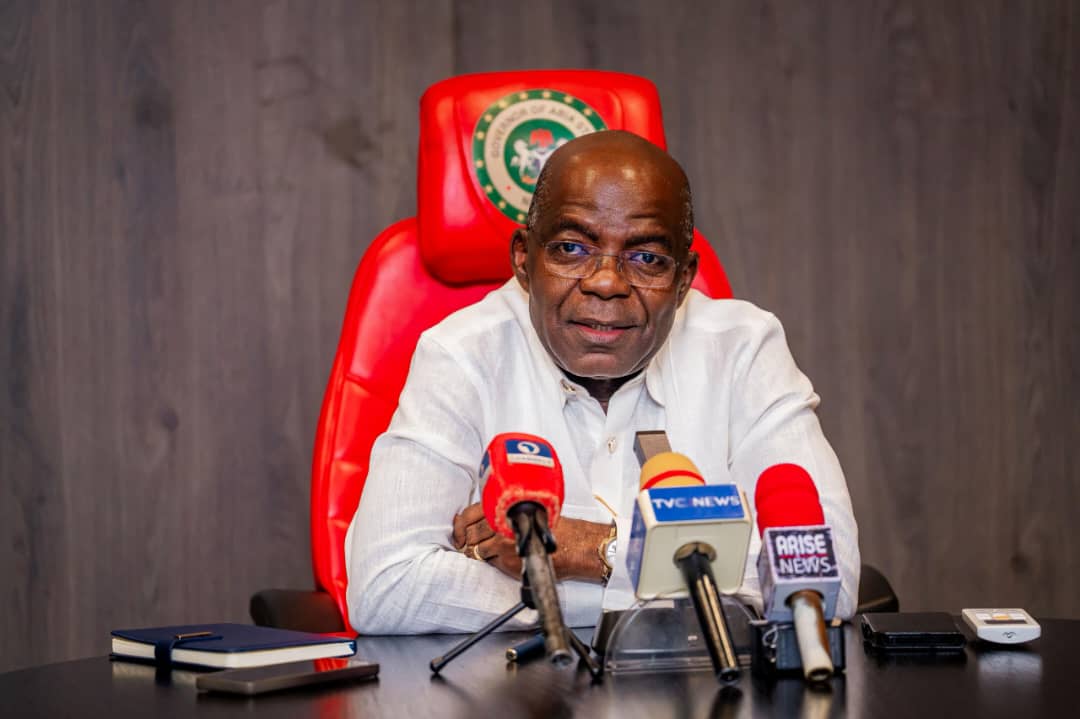
Governor Alex Otti of Abia State says he will not defect from the Labour Party despite plans by the party’s 2023 presidential candidate, Peter Obi, to leave the platform.
Otti made this declaration on Tuesday during his monthly media briefing in Umuahia, the Abia State capital, saying he had decided to remain in the Labour Party to help rebuild and reposition it.
He revealed that Obi had personally informed him of his intention to exit the party and that he had no objection to the decision, but emphasised that his own political path would be different.
“If you remember, I joined the Labour Party before Peter Obi, so I did not join the party with him. He has communicated to me that he is leaving the Labour Party. I gave him my blessings. But I will remain in the Labour Party, and I told him that I would continue the struggle to rescue the Labour Party,” Otti disclosed.
The governor also described the Labour Party as the platform that brought him to office, noting that his loyalty remained with the party for now.
“That is the party that brought me to power. If we fight and get to the end, and we are able to reposition the Labour Party, then we can discuss other options. Therefore, for now, I am not defecting to any party,” he added.
He equally reacted to recent calls by the Deputy Speaker of the House of Representatives, Benjamin Kalu, urging him to join the ruling All Progressives Congress (APC). Otti said he was not interested in being drawn into political distractions.
Otti acknowledged Kalu’s recent distribution of financial support to vulnerable people in the state, saying it aligned with his own appeal for assistance to the less privileged during the Christmas period.



By Chuks Oyema-Aziken
The National Environmental Standards and Regulations Enforcement Agency (NESREA) has sealed the Sunseed Oil facility in Zaria, Kaduna State, over repeated violations of national environmental regulations.
A press release by Mrs Amaka Ejiofor, Assistant Director, NESREA said the action followed confirmed reports of excessive air emissions from the facility, which caused persistent air pollution and posed significant risks to public health and the surrounding environment.
She said Investigations revealed that the company breached the National Environmental (Air Quality Control) Regulations by failing to install appropriate pollution-control equipment and implement cleaner production processes.
She said “The severity of the emissions, which posed an immediate threat to the surrounding ecosystem and the health of nearby residents led to the immediate closure of the facility.
“This enforcement action is in line with the commitment of NESREA to ensure industrial compliance and protection of public from the hazardous effects of unregulated industrial discharges(air pollutants and effluents).
“The Director General of NESREA, Prof. Innocent Barikor warns industrial operators to ensure full compliance with National Environmental Regulations and avoid actions that impact negatively on the health of the citizens and the environment.”

Efforts by the judiciary to earn respect and trust of the Nigerian citizens and even the international community continues to suffer setbacks with the delivery of some judgments that seems out of tune with justice, writes Alex Enumah.
Although, year 2025 was not an election year; where the courts are fast becoming the decider of political office holders rather than the electorates, the nation’s judiciary however, continues to receive the bashing from all quarters owing to some of its judgments delivered recently.
The Supreme Court of Nigeria, is not just the final court in the country, but a court whose judgments can shape policies and legal directions of both the executive and legislative arms of government.
Little wonder the judiciary prides itself not just as the “last hope of the common man”, but also the pillar of democracy. In a welcome at its official website, the Supreme Court claims that as the guardian of the Constitution and the final arbiter in all legal disputes in the country, it plays a pivotal role in upholding the rule of law, protecting fundamental rights, and ensuring justice for all.
However, some of the apex court’s decisions in 2025, especially political cases has left many Nigerians just as confused and hopeless us most election cases in the past. In 2024, the apex court was applauded when it ruled in favour of local government autonomy, given hope that development would begin to take place at the grassroots. But, few months later, in February 2025, the apex court set aside two judgments of the Court of Appeal, which had earlier nullified judgments ordering for the withholding of funds due to Rivers State as well as the stoppage of the conduct of local government elections in the state, over dispute between a faction of the Rivers State House of Assembly and the state executive.
At the heart of the Rivers dispute is the issue of defection by 27 members of the assembly said to be loyal to the Minister of the Federal Capital Territory (FCT), NyesomWike.
While the apex court is yet to decide whether the Martins Amaewhule-led faction actually defected from the People’s Democratic Party (PDP) that sponsored them to office and whether they can continue to remain in office after defecting, the silence of the apex court on this matter arguably is responsible for the current gale of defection both at the state and federal levels, as there seems to be no consequences for defecting. Kudos to the Supreme Court that Nigeria is fast becoming a one-party state.
Similarly, the decision of the apex court to affirm the seizure of monthly allocations due to Rivers State, also arguably laid the foundation for the creation of a ‘State of Emergency’ in March this year. Recall that President Tinubu in declaring the state of emergency had made reference to the judgment of the apex court in respect of breakdown of law and order in the state.
In invoking Section 305 of the Constitution, Tinubu went ahead to suspend the Governor, SiminalayiFubara, his deputy and the entire house of assembly for six months and appointed a sole administrator to run the state during the period.
The suspension of elected public officials sparked condemnation and was followed by a legal action at the apex court by governors of the PDP states. The judgment of the apex court besides turning out to be a mere academic exercise, as it was delivered over two months after the expiration of the emergency rule, created more confusion as it appeared to give backings to the president to suspend an elected state governor alongside the state assembly. Till date, most senior lawyers declined to comment on the judgment, waiting to see a certified true copy of the original judgment.
Besides the Rivers matters, the apex court’s judgment in the Osun State witheld local government funds and the PDP leadership issue were other verdicts which instead of growing the country’s democracy has further stunted its growth and continues to encourage impunity.
Osun State Government had through its Attorney-General (AG) and Commissioner for Justice, dragged the federal government to the apex court, challenging the decision of the Attorney General of the Federation (AGF) to withheld funds belonging to the state’s LGAs and directing same to be paid into a special account for the benefit of the alleged sacked chairmen and councillors of the All Progressives Congress (APC).
The plaintiff, in the suit marked: SC/CV/773, had sought for an order of the apex court directing the AGF to immediately release the statutory allocations to chairmen and councilors validly elected for the 30 Local Government Areas of the Osun State. Plaintiff had also sought for another order barring the AGF from further withholding, suspending or seizing monthly allocations and revenues standing to the credit of the constituents LGs, having democratically elected chairmen and councillors in place.
Delivering judgment early December, the apex court in a split decision of six-to-one dismissed the case of the plaintiff on grounds of jurisdiction. It however, came down heavily on the federal government for disobeying the apex court’s judgment on LG autonomy. In ruling in the preliminary objection brought by the federal government, the majority judgment observed that contrary to the claim of the federal government, the defendant’s “hands are not clean” because they have been soiled by the decision to unjustly withhold the funds of the state LGAs.
Although, the apex court struck out the suit for want of jurisdiction, Justice Mohammed Idris, who delivered the lead judgment took the opportunity to “issue a stern admonition to the federal government”, noting that the federal government erred by refusing to release to the 30 LGAs the funds belonging to them. Idris pointed out that it was imperative as the executive arm of government that the federal government put all machineries in place to ensure that funds due to the LGAs directly gets to them.
The apex court while reminding the federal government that it is bound to release in full all LG fund throughout the federation to all LGAs nationwide, held that failure to do so amounts to disobedience to rule of law.
The minority judgment delivered by Justice Emmanuel AkomayeAgim pointed out that allowing the federal government to withhold funds due to LGAs would not only crippled activities at the LGAs but, also cripple governance in the entire state.
“Refusal to release the funds is a clear misuse of power by the defendant and it is a clear disobedience to the court’s order that funds should be paid only to a democratically elected governments”, Agim said.
In the PDP leadership matter, the position of the apex court that leadership tussles are outside the jurisdiction of courts have continued to work adversely especially when the trial and appellate courts have assumed jurisdiction and taking decisions in one way or another; all to the detriment of PDP and democracy in Nigeria.
Recall that the apex court had in March, 2025, nullified the judgments of the Court of Appeal and Federal High Court, which sacked Senator Samuel Anyanwu as National Secretary of the People’s Democratic Party (PDP), on the grounds that the issue was an internal affair of the party of which the courts ought not to have entertained in the first place. This decision of the apex court arguably is responsible for the leadership crisis in the PDP, which is capable of denying not only the PDP the opportunity to field candidates in the off-circle and general elections but, limiting the choices available to the electorates. It should be pointed out that a similar position held by the apex court last year in the case of the Labour Party (LP) has also jeopardized the chances of the LP and choice of voters in coming elections.
Taking into consideration the enormous challenge facing her leadership of the judiciary, especially as Nigeria is approaching another election year, the Chief Justice of Nigeria, (CJN) Justice KudiratKekere-Ekun, challenged judges to handle election-related disputes with discipline, consistency, and strict adherence to constitutional and statutory timelines. Speaking at the opening of the 2025/2026 Legal Year of the Federal High Court, Nigeria and its 41st Annual Judges’ Conference, the CJN stated that Nigerians are looking to the courts for clarity and balance at such critical moments.
“This Court has a crucial role to play in pre-election dispute resolution. Conflicting interim orders, forum shopping, and the abuse of ex parte processes undermine the credibility of the entire justice system and weaken public confidence”, the CJN said.
She therefore urged Heads of Divisions of the Federal High Court to enforce procedural discipline firmly and fairly, adding that the judiciary “must never be perceived as a theatre for political gamesmanship” but, “must remain a sanctuary of constitutional order”.
The CJN who doubles as the chairman of the National Judicial Council (NJC) assured that the council would continue to strengthen oversight of case progression, not as a tool of intimidation, but to support institutional discipline and improve justice delivery.
While assuring that judicial welfare, security and wellbeing would continue to be critical priorities, Kekere-Ekun noted that a judiciary that is bold, independent and impartial must also be adequately protected and equipped. She said, “a judge who does not feel secure cannot dispense justice with confidence”.
Speaking on public perception, the CJN said it would be unrealistic to ignore the fragility of public confidence in judicial institutions, especially given the strategic and sensitive jurisdiction of the Federal High Court. “Restoring confidence is not achieved by rhetoric, but by reliability, professionalism and visible order in the administration of justice,” she said.
Speaking earlier in September this year, Kekere-Ekun disclosed that the judiciary under her watch is vigorously pursuing a more efficient, accessible, and just legal system, adding that the judiciary in the last one year have diligently worked to uphold the principles of the constitution and the rule of law as well as ensuring that justice is dispensed fairly and without fear or favour.
“Since the start of the last legal year, we have been making tremendous efforts to restore public confidence in the Nigerian Judiciary, adding that, “At the National Judicial Council (NJC), every pending petition against judicial officers was carefully reviewed, with appropriate sanctions imposed on those found wanting”.
Kekere-Ekun who noted that “cleansing the Augean stables” is a collective duty, stated that the leadership remains committed to the task. The chairman of the NJC also disclosed that members of the Bar who have been found wanting have been referred to the Legal Practitioners’ Disciplinary Committee (LPDC) for appropriate disciplinary action.
Recall that the NJC as part of efforts at instilling discipline and ridding the bench of corruption had in June this year placed 10 judges on compulsory retirement.
While nine of the affected judges were of the Imo State Judiciary, found guilty of altering “their dates of birth in their official records in order to confer on themselves the undue advantage of staying longer in service”, the remaining one, “Justice T. N. Nzeukwu was found to have made himself available to be sworn in as acting Chief Judge of Imo State High Court knowing fully well that he was number four in the hierarchy of Judges of the Imo State Judiciary and contrary to Section 271 (4) of the Constitution of the Federal Republic of Nigeria, as amended”.
Besides those recommended for retirement, the NJC in same June this year placed promotion ban on a Judge of the National Industrial Court, due to misconduct, and issued warning/caution to five other judges. But, Nigerians would be more interested in actions against judges who assume jurisdiction especially in matters that the apex court would not entertain because of lack of jurisdiction. Judges who also encouraged forum shopping or issue conflicting orders should not be spared.
Only few days ago, the Independent National Electoral Commission (INEC) came out to say it would not recognize the newly elected national executive of the PDP, based on a court order. Recall that while the Federal High Court, Abuja had in two separate decisions restrained INEC from monitoring, and or recognizing the outcome of the PDP convention which held in Ibadan last October, a High Court in Ibadan had ordered INEC to monitor and give recognition to the convention. The question now is what informed INEC’s decision to obey one decision of the court and disregard the order of another court. Until this issue of conflicting orders are resolved through the disciplining of erring judges, the court will continue to be in the negative books of most Nigerians.
Closely related to the issue of conflicting court orders is the issue of bias allegations against some judges, which the judiciary must demonstrate reasonable concerns as election approaches. Recall that the PDP had on November 19, written the Chief Judge of the Federal High Court, asking that cases involving the PDP should not be assigned to three judges at the Abuja division following alleged bias. Currently, there are 12 judges at the Abuja division and one can assume that the remaining nine justices are as competent as the ones being protested against.
In the area of appointments, the NJC in what was adjudged a ground breaking policy towards enhancing transparency and accountability, published the names of 80 persons recommended for appointment as judicial officers as well as two others for the position of Head of Court. The move according to the NJC was to solicit comments from the general public “regarding the integrity, reputation and suitability of the candidates as judicial officers”. The NJC added that by opening the process to public scrutiny it hoped to gather valuable insight that will inform its final decisions and ensure that only the most qualified and candidates with impeccable character are appointed to the bench.
This input no doubt led in the appointment of 21 candidates out of the 82 shortlisted, in June this year.
In the area of tackling delay, results are evident through the number of cases handled in the 2024/2025 legal year. According to the CJN, “the Supreme Court considered a total of 2,280 matters, including 560 appeals and 1,720 motions and delivered 369 judgments, up from 247 in the previous year, marking a 49 percent increase. This improvement is the outcome of deliberate measures including innovative case management and enhanced judicial capacity”.
Meanwhile, she attributed the success in the area of speedy trial to the computerization of court processes, adding that upon assumption of office as the Acting Chief Justice in August 2024, a Special Committee was constituted to recommend wide-ranging innovations to restructure and sanitize the Litigation Department of the Supreme Court and make court processes more accessible and less cumbersome.
“Let me use this opportunity to place it on record that the current practice in the Supreme Court is that dates for hearing of appeals are given during court proceedings, either in open court upon adjournment, or based on a motion filed by parties, which may, where necessary, be considered in chambers. This procedure eliminates third-party interference that previously facilitated sharp practices.
“A robust tracking system now monitors file movement, virtually eradicating file losses. Additional reforms include: Digitization of Receiving and Data Entry Units, and a reorganization of the Registry to promote transparency; digitization of Exhibits and Judgments Pasting Unit for the preservation of judicial records and enabling easy retrieval of past judgments; creation of a Disposal Unit to archive concluded cases and transfer them to the National Archives”, she added.
The CJN also noted that beyond technology and process reforms, her leadership have prioritized staff welfare with the introduction of various incentives to boost morale and reinforce commitment to institutional goals. According to her, salaries and allowances are paid promptly, and all existing welfare packages have been increased.
However, the nature and quality of judgments from the apex court, down to the trial court, would continue to be a dent on the judiciary’s image, and growth of democracy, until the court rids itself of corruption and begins to deliver judgments without fear or favour.

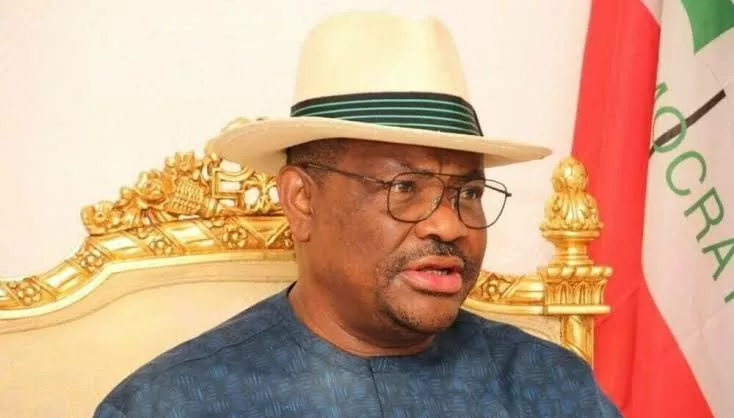
African Democratic Congress (ADC) has insisted that the minister of the Federal Capital Territory, Chief Nyesom Wike does not belong to any political party and therefore cannot speak on behalf of any party.
ADC spokesman in Rivers State, Chief Luckyman Egila, disclosed this yesterday in a chat with LEADERSHIP in Port Harcourt, while responding to recent comments by Wike disparaging the party in the state.
Egila said: “We don’t want to respond to Nyesom Wike because he does not have a political party. So, I wonder where he is speaking from. As you all know, ADC is the only party that the President is afraid of.
“For Wike to come out to say ADC does not have a place in Rivers State, he is not saying the truth. As a matter of fact, Wike does not belong to any political party.
For record purposes,
“Wike is a man that does not have any political party. I wonder where his allegiance lies. He should be responsible for the grounding of Rivers State as it is. I wonder where he is coming from.
“I believe that he is speaking out of frustration because the powers that be, as of today, Wike can longer control the governor of Rivers State, who he had been controlling remotely.
“The young man has woken up from his slumber and decided to join the All Progressives Congress.”


Abia State Governor, Alex Otti, has dismissed speculations about defecting from the Labour Party, insisting he will remain with the party despite plans by its 2023 presidential candidate, Peter Obi, to leave the platform.
Otti stated this on Tuesday during his monthly media briefing in Umuahia, the Abia State capital, explaining that his decision to stay in the Labour Party was driven by a commitment to help rebuild and reposition it.
The governor revealed that Obi had personally informed him of his intention to exit the party and that he had no objections to the move. However, he stressed that his own political journey would take a different direction.
Recalling that he joined the Labour Party before Obi, Otti said his membership was not tied to the former Anambra State governor. According to him, while he gave Obi his blessings to pursue his choice, he would continue to remain in the party and work towards its revival.
Otti described the Labour Party as the platform that brought him to power, noting that his loyalty, for now, remained with the party. He added that discussions about alternative political options could only arise after efforts to reposition the party had been exhausted.
Reacting to calls by the Deputy Speaker of the House of Representatives, Benjamin Kalu, urging him to join the ruling All Progressives Congress (APC), the governor said he was not interested in political distractions and preferred to stay focused on governance.
He acknowledged Kalu’s recent distribution of financial support to vulnerable residents in the state, saying it aligned with his own appeal for assistance to the less privileged during the Christmas period, and thanked him for the gesture.
Quoting former British Prime Minister Winston Churchill, Otti said his administration would not be sidetracked by political provocations, stressing that his focus remained firmly on delivering good governance to the people of Abia State.
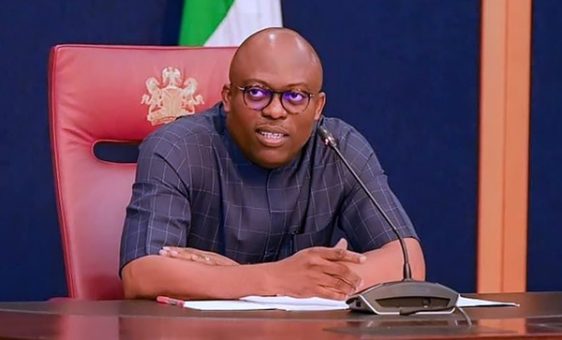
Members of the Rivers State House of Assembly have rejected the ₦100,000 Christmas bonus sent to them by Governor Siminalayi Fubara.
The lawmakers said the money was paid without approval and did not follow due process.
The Assembly said the cash gift was unsolicited. It added that the funds were returned to the state government account shortly after the alerts were received.
The lawmakers accused the governor of spending public funds without legislative backing.
In a statement released on Tuesday night, the House said the payments were made directly into the personal accounts of members.
The statement was signed by the Chairman of the House Committee on Information, Petitions and Complaints, Hon. Enemi Alabo George.
George said: “Today, the 30th day of December 2025, Honourable members of the 10th Rivers State House of Assembly received bank credit alerts of the sum of one hundred thousand naira (N100,000) each. The said unsolicited and unapproved amount was transferred on the instructions of the Governor of Rivers State, Sir Siminalaye Fubara GSSRS, to the personal accounts of members.
“Upon discovery of these unsolicited and unapproved transfers, Honourable Members of the House took immediate steps to formally return the said funds to the account of the Rivers State Government.”
He said the House would not be part of any action that violates the law. He stressed that the Assembly is guided by the Constitution and due process in all financial matters.
George said the governor had earlier approved a ₦100,000 festive bonus for civil servants and some public office holders in the state. He noted that lawmakers were not consulted before the payment was extended to them.
He also accused the governor of repeatedly withdrawing funds from the state’s Consolidated Revenue Account without approval since assuming office in 2023.
According to him, the House had warned against such actions on several occasions.
He said: “As an institution established by law and guided strictly by the Constitution of the Federal Republic of Nigeria, the Rivers State House of Assembly maintains that all public expenditures must follow due process, including legislative approval.
“The Governor, since assumption of office in 2023, has consistently drawn from the consolidated revenue accounts of Rivers State without legislative approval, despite repeated warnings from the House, judgment of the Supreme Court and in defiance of the Constitution and principles of separation of powers.
“Therefore, with the leave of Mr Speaker and the entire House, I cease this medium to once again draw the attention of all staff of the Rivers State Government who connive with the Governor and others to contravene the Constitution and laws of Rivers State to the fact that we have become aware of their unlawful conduct.”
The lawmakers warned public officers to avoid actions that could breach the law. They said accountability and transparency must guide all government spending.


Guaranty Trust Holding Company Plc (GTCO) has secured regulatory approvals from the Central Bank of Nigeria (CBN) and the Securities and Exchange Commission (SEC) to raise N10 billion through a private placement of its ordinary shares.
The approval is subject to the fulfilment of applicable conditions precedent and regulatory requirements.
The development was disclosed in a statement issued by GTCO’s Group General Counsel and Company Secretary, Erhi Obebeduo.
What GTCO is saying
GTCO said the capital raise is not driven by any shortfall at its banking subsidiary, Guaranty Trust Bank Limited, which has already exceeded the CBN’s minimum capital requirement for commercial banks with international authorisation.
The Company recalled that it announced on August 29, 2025, that GTBank had increased its capital base to N504,037,107,058.45, surpassing the regulatory threshold.
“This private placement in the sum of N10 billion is therefore only being raised pursuant to Section 7.1 of the Guidelines for Licensing and Regulation of Financial Holding Companies (FHCs) in Nigeria regarding the computation of the capital of FHCs,” the statement said.
Shareholders’ mandate for capital raising programme
The private placement is being undertaken pursuant to a shareholders’ resolution passed at the Company’s Annual General Meeting held on May 9, 2024.
At the meeting, shareholders authorised the Board to establish a capital-raising programme of up to $750 million (or its equivalent) through various instruments.
The mandate allows the issuance of “ordinary shares, preference shares, convertible and/or non-convertible bonds or any other instruments, whether by way of a public offering, private placement, rights issue, book building process or any other method or combination of methods,” in tranches and on terms determined by the Board.
Details of the private placement
Pursuant to this approval, the Board has authorised the Company to proceed with a private placement to raise N10 billion through the allotment of 125,000,000 ordinary shares of 50 kobo each.
Under the arrangement, the Company has entered into a best-efforts private placement to generate gross proceeds of up to N10 billion from the sale of the shares at N80 per share.
“The Offering is scheduled to close on December 31, 2025 (the ‘Closing Date’) and is subject to certain conditions, including, but not limited to, receipt of all necessary approvals,” the statement said.
Placement structure and professional parties
GTCO noted that the private placement is not underwritten.
According to the Company, the professional parties involved have agreed to “use their respective reasonable endeavours to procure a placee for the private placement shares.”
GTCO board composition
The Board of Guaranty Trust Holding Company Plc includes:
- A.Oyinlola– Chairman
- K.Agbaje– Group Chief Executive Officer
- N.Echeozo
- Barau
- H. Lee Bouygues (American)
- I.Adenisi– Executive Director
What you should know
In October, Guaranty Trust Holding Company Plc (“GTCO” or “the Group”) released its Unaudited Consolidated and Separate Financial Statements as of September 30, 2025, to the Nigerian Exchange Group (NGX) and London Stock Exchange (LSE).
- The Group posted profit before tax of N900.8billion on the back of strong performance on the core earnings lines of interest income and fee income, which grew y-o-y by 25.6% and 16.8% respectively.
- The strong core-earning performance continued to narrow the y-o-y dip in PBT to 26%, thereby cushioning the impact of the N523.2bn fair value gains recognised in Q3-2024, which did not recur in Q3-2025.
Group’s total assets and shareholders’ funds closed at N16.7trillion and N3.3trillion, respectively. Capital Adequacy Ratio (CAR) remained very robust and strong, closing at 36.5%. Likewise, asset quality improved as evidenced by IFRS 9 Stage 3 Loans, which closed at 3.3% and 4.4% % at the Bank and Group level in Q3-2025 (Bank 3.5%, Group 5.2% in December 2024).
Cost of Risk (COR) also improved to 2.2% from 4.9% in December 2024. In specific terms, the Group’s loan book (net) grew by 16.5% from N2.79trillion as of December 2024 to N3.24trillion in September 2025. Similarly, deposit liabilities grew by 16.0% from N10.40trillion to N12.06trillion during the same period.
Follow us for Breaking News and Market Intelligence.




SOURCE PAGE

Suspected bandits have attacked the Parish House of St. Rita Catholic Church in Unity Estate, Mararraba, Nasarawa State, leaving two Catholic priests injured.
The attack occurred around 2:30 a.m. on Tuesday when armed assailants stormed the parish residence. While two priests were assaulted and sustained serious injuries, the Parish Priest narrowly escaped the attack.
The victims were identified as Rev. Fr. Comas Baye, the resident priest and a Cadet of the Knights of St. John International (KSJI), and Rev. Fr. Chris Pever, a visiting priest and former Assistant Priest of the parish.
Following the attack, both priests were rushed to Nativity Catholic Hospital in Jikwoyi, Abuja, for emergency treatment. Fr. Baye reportedly suffered complications, including a partial stroke, while Fr. Pever sustained multiple injuries, notably a fracture to his left arm, for which he underwent a successful surgical implant procedure. Hospital sources confirmed that both priests are currently in stable condition and responding to treatment.
Reacting to the incident, the Abuja Grand Commandery of the Noble Order of the Knights of St. John International condemned the attack, describing it as a brutal assault on innocent clergy and a reflection of the growing insecurity in and around the Federal Capital Territory (FCT).
In a statement signed by its Grand President, Brigadier General Francis Ulonna Njoku, and Grand Secretary, Colonel Etta Peters, the Order said the attack was “heinous, barbaric, and reprehensible,” warning that it formed part of a disturbing pattern of violence against places of worship and religious leaders in the FCT and neighbouring States.
The Order called on security agencies to swiftly investigate the incident, arrest those responsible, and ensure they are prosecuted. It also urged governments at all levels to strengthen security around religious institutions and communities to prevent further attacks.
The Knights expressed solidarity with the Catholic Diocese of Lafia, the clergy, and parishioners of St. Rita Catholic Church, while offering prayers for the recovery of the injured priests and for lasting peace in the affected areas.

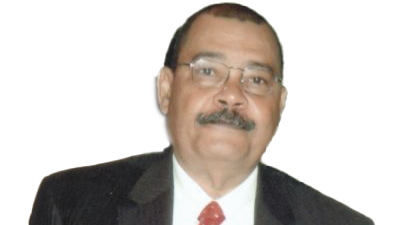
Tributes have continued to pour in for the late Dr Alexander Aristotelis Thomopulos, former Chief Operating Officer (COO) of The Guardian Newspapers, following the announcement of his passing by the family.
Lady Maiden Ibru, Chairman/Publisher of The Guardian and younger sister to Thomopulos, his cousin, Mr Toke Alex-Ibru, the CEO, Thomopulos’ daughter, friends and former associates mourn his passing and relive his life and times.
Thomopulous, 78, passed on Monday, December 22, 2025, at a Lagos private hospital, into which he had been admitted following an illness. A United States-trained technocrat and environmental scientist, he was the newspaper’s COO from April 2010 to June 2016, a period that witnessed a lot of structural consolidations in the post-founder Alex Ibru era.
Thomopulos, who joined The Guardian from Federal Palace Hotel, Victoria Island in Lagos, brought in remarkable administrative and visionary experience that turned the newspaper around and prepared it for digital and energy transformation.
Dr Alex Thomopulos was also a non-executive director on the board of Ikeja Hotels Plc. He was an astute corporate leader and environmental advocate who won awards at events for environmental crusaders. While in active service, Thomopulos maintained a high standard of philanthropy, a lot of which he demonstrated as part of the activities of the Rotary Club of Lagos, Palmgrove Estate, of which Thomopulos was a past president and a pillar behind free eye surgeries and other community projects, in collaboration with the Indo Eye Care Foundation.
In his later years, the late Thomopulos was active on the Editorial Board of The Guardian, meetings of which he attended religiously, even when he battled ill-health. Many members of the board have been paying tributes to him and condolences to his family.
In an ann-ouncement by The Guardian management, the newspaper noted that Dr Thomopulos served the company with dedication, integrity, and exceptional leadership and his contribution to the growth and success of the organisation was invaluable and will be remembered with profound respect and gratitude.
“Management extends its heartfelt condolences to the family, friends, and loved ones of the deceased during this difficult time. Our thoughts and prayers are with them. Further details regarding funeral arrangements will be communicated in due course.”
Chairman of the Editorial Board, Professor Wale Omole, expressed sadness at his death. He described his advent into The Guardian as “a God-given appointment which came at a difficult time, when the founder of the newspaper, Mr Alex Ibru, was abroad.” He observed that “Dr Thomopulos did his best, and he was consistent all through. We will surely miss him.”
Mr Kunle Sanyaolu, the Editorial Page Editor, observed that Dr Alex Thomopulos has joined his ancestors at the age of 78. “We fondly remember him for many things. He was a disciplinarian and an astute administrator with an eye for detail. This, he demonstrated when he was Chief Operating Officer (COO) of The Guardian, many years ago. He made it a duty to interact with associates no matter the level, and he would be remembered for personally giving a
Reporter money, as encouragement for using his phone to capture a news event published in the newspaper. He was a philanthropist with a great deal of humanness, and he was very witty; not one to miss a chance to put a smile or laughter on somebody at every opportunity.
“On this board, many of us will remember his interjections of the proceedings with short, concise comments that struck at the heart of the topic being discussed. And he was consistent on this even when he was obviously contending with serious health challenges. I do not doubt that his death marks the demise of an important part of The Guardian newspaper. He would also be remembered for introducing the word “Associate” to replace the common description “staffer” to describe workers at the newspaper. May Almighty God grant him eternal rest and strengthen Madam Chairman, his other siblings, daughter and all family members with the fortitude to bear his irreplaceable loss. RIP Dr. Thomopulos”
Former Minister of External Affairs, Prof Bolaji Akinyemi wrote: “Eternal Rest grant him O Lord and let Perpetual light shine upon him. He was a good man. A good companion whose company I came to appreciate.”
Former MD/Editor-in-Chief of The Guardian, Mr Martins Oloja, also sent a message: “Good Night, Dr Alex Thomopulos. May his soul rest in perfect peace. I would like to condole with the chief mourner, Madam Chairman and Publisher, Lady Maiden Alex-Ibru. When the history of The Guardian (Nigeria) in the first 40 years comes to be written, the name of the late Dr Thomopulos will not be forgotten. In Nigeria, it isn’t a mourning time. It is a celebration of life @78… Sleep well, Dr. AA.”
Dr Kabir Alabi Garba, Editor of the Weekend Guardian, wrote: “May his soul rest in peace. May the Almighty uphold the family, both the nucleus and the extended, including us in The Guardian. Adieu Dr. Thomopulos!
Mr Francis Onaiyekan, a member of the Editorial Board, expressed his condolences to both the Thomopulos and the Ibru families. “Dr. has moved on to a higher and a better place of bliss than here below”, he stated, wishing the families “strength and peace.”
Mr Alabi Williams also offered condolences and prayers for the families, while Mr Felix Kuye wrote: “May God grant him peaceful rest. Good night, good man.”
Mr Francis Abayomi similarly offered condolences and prayed that his soul rest in peace. Mr Sonnie Ekwowusi observed that Thomopulos’ death marks another depletion of the finest pearls on the (Editorial) Board. “You can say it again and again: he was simplicity personified. A very unassuming gentleman. One of his outstanding qualities on the Board is kindness and concern for others. I remember when Jacob Akindele was very sick, he took it upon himself to visit Jacob and even footed some of his medical bills before the Board officially visited. He would be missed on the Board with his sarcasm and great sense of humour. Condolences especially to the Publisher, the chief mourner on the Board, his family and all of us. We have indeed lost a gem.”
An associate who worked closely with Dr Thomopulos for 12 years described him as “an excellent manager”, strong in discipline and character, and who believed that Nigerians would rather take discipline for wickedness because they don’t want to change their character. He noted that while many people easily misunderstood Thomopulos for being too hard, he was actually humane in many respects
He recalled a gift of N100,000 in 2021 by Dr Thomopulos in aid of the associate’s wife, who was then ill. “He (Thomopulos) urged me to do my best to take care of her. This was a time I had already resigned from my job and had no connection with The Guardian. I also remember how helpless you felt when I resigned”, he recalled, wishing him peace in death.
He added: “Your sense of cleanliness, forthrightness, discipline and humour is unmatched.” Among others who sent condolences to the family are Prof. Ndubuisi Nwokoma and Prof. Sylvester Odion-Akhaine. They prayed for the repose of his soul.

Oyo State Police Command has confirmed the arrest of a 22-year-old man, Daniel Ajibola, in connection with the alleged rape of a 17-year-old girl in Ibadan.
The Commissioner of Police, Femi Haruna, disclosed this in a statement issued through the Police Public Relations Officer, Ayanlade Olayinka.
The victim’s identity has been withheld to protect her privacy.
According to the police, the incident was reported at the Alakia Adelubi Police Division on December 25, 2025, at about 7:00 p.m.
Preliminary investigations revealed that the suspect allegedly assaulted the minor after administering an intoxicating substance to her.
The statement noted that Ajibola was apprehended shortly after the report, while the victim was immediately taken to a medical facility for examination.
Police officers also visited the scene of the incident as part of the investigation.
The Commissioner of Police described the arrest as another demonstration of the Command’s resolve to protect residents, particularly women and minors, from violent crimes.
Due to the gravity of the offence, the CP has ordered the transfer of the case to the State Criminal Investigation Department for a thorough and discreet investigation.
Haruna warned that the Command would not tolerate sexual violence or any crime directed against women or vulnerable members of society, adding that the suspect would be charged to court once investigations are concluded.
He also reassured residents of the Command’s commitment to safeguarding lives and property, while encouraging the public to continue providing credible information to assist law enforcement.
The Commissioner also expressed appreciation to the Inspector-General of Police for his continued support, which he said has strengthened the Command’s efforts to maintain law and order across the state.
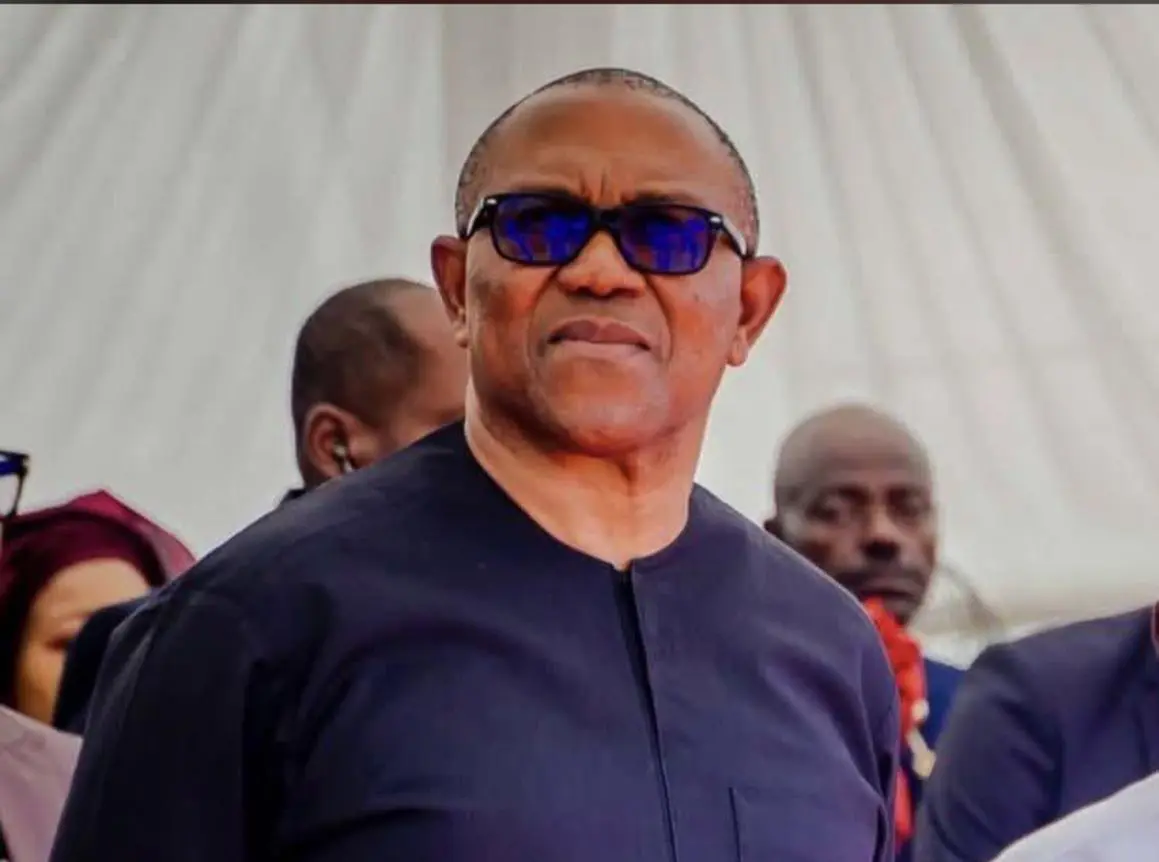
National Coordinator of the Obidient Movement, Yunusa Tanko, has said that former presidential candidate of the Labour Party, Peter Obi will soon announce the party he would contest through in the 2027 general elections.
Speaking during an interview on ‘Prime Time’, a programme on Arise Television monitored by DAILY POST, Tanko said Obi would take that decision by himself.
“A lot of people are waiting for Peter Obi to make a decision on which party he will be contesting through.
“That means he is wanted in Nigeria and even around the world. That is a valuable asset. So, we will let Obi let the cat out of the bag by himself.
“He has made it clear that he is working very closely with a coalition. Obi is a team player, and everyone will be happy with his decision.
“And like when he was on the media space, he made it clear that he has been part of a coalition, and that coalition has produced a political party. So he’s working very close with that coalition. He has been part of it. He has contributed to it.
“So, whenever he wants to make his own pronouncement, it is going to be something that everybody will be glad and be happy about, because he is a team player who believes that Nigeria must be free because we are suffering so much at the expense of people who do not have good intention toward this country.
“So His Excellency, Mr Peter Obi will make his pronouncement very soon,” he said.
The National Vice Chairman of the All Progressives Congress (APC) in the South South, Hon. Victor Giadom, has stated that Governor Siminalayi Fubara of Rivers State must go through the Minister of the Federal Capital Territory (FCT), Nyesom Wike, to win anything in the state.
Giadom stated this on Tuesday, during Wike’s thank-you visit to the people of Gokana Local Government Area in Rivers State.
Describing Wike as a “dependable leader” in Rivers State politics, Giadom assured the minister that there would be no political force in Gokana other than him (Wike).
“I guarantee, on behalf of my brothers, that the Gokana people are for Wike and Tinubu, and nobody will challenge Wike’s influence in Gokana.
“Gokana is a ‘no-go area’ for anybody, even Governor Fubara. For him to win anything in Gokana, he must pass through Wike,” he said.
Also, Magnus Abe, a former Senator who represented Rivers South East at the Senate, said that the people of Gokana have already chosen their friends – Wike and Tinubu.
“Wike is a leader who unites, and that is why we are united. If you follow Wike, you will not go home empty-handed.
“The Ogoni people are with you, and we will not go home empty-handed. Please tell Tinubu not to bother coming to Gokana to campaign. We are for him,” he said.
On his part, the Deputy Speaker of the Rivers Assembly, Dumle Maol, assured Wike that the people of Gokana would be with him every step of the way. “Anywhere you go, we will go,” he said.
Earlier, the Chairman of Gokana Local Council, Mr Confidence Deko, pledged total support to the minister, saying, “wherever you go, we will go”.
“This local government is for you because of what you have done for us. Please inform Tinubu that the people of Bokana appreciate him.
“The time for payback is near, and we will do the needful,” he said.
Responding, Wike explained that the visit was to express gratitude to the Gokana people for their good deeds and support over the years.
He commended the people for the display of unity of purpose for Tinubu, saying, “When you are united, good things will come”.
He asked the people to be patient and listen to their leaders for direction on where to go when the time comes.
The minister promised to continue to work with the people, adding that APC and the Peoples Democratic Party (PDP) in Rivers were working under the umbrella of Tinubu’s Renewed Hope Agenda. ‘That is why you see PDP and APC members here,” he said.
• President says ready to work with N’Assembly to resolve pending issues
•Apex bank sees inflation at 12.94%, growth to accelerate to 4.49%
• Forecasts 34.68% increase in public debt, deficit of N12.14 trillion
•Nigeria recorded $4.60bn surplus in Q3, diaspora remittances peaked at $5.24bn
• PDP alleges president prioritising money, not citizens in push for new tax start date
Deji Elumoye, Chuks Okocha, Emmanuel Addeh, James Emejo in Abuja and Nume Ekeghe, Funmi Ogundare in Lagos
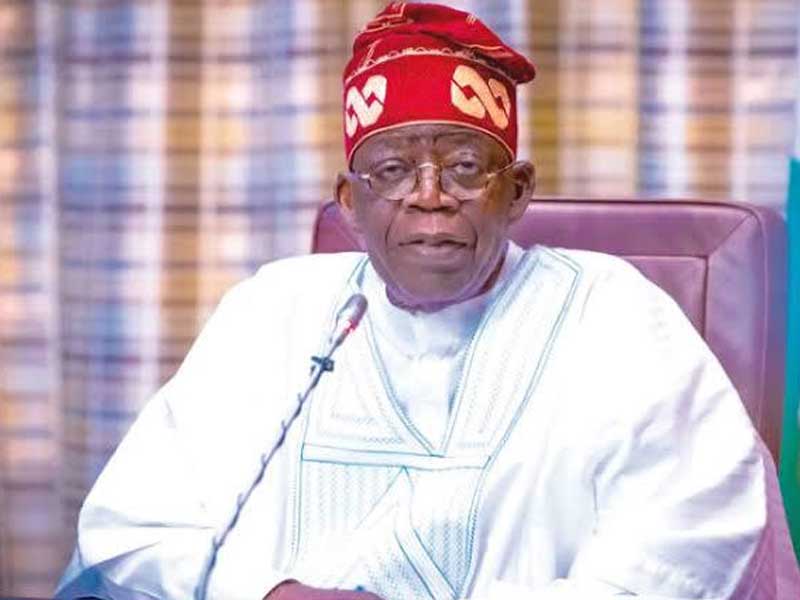
President Bola Tinubu, for the umpteenth time, disclosed yesterday that the new tax regulations would take effect as planned from January 1, 2026.
His declaration came despite criticism from opposition political parties and other concerned groups.
Also, the Central Bank of Nigeria (CBN) has projected a stronger macroeconomic outlook for the country, forecasting a significant growth in external reserves to $51.04 billion in the 2026 fiscal year.
Besides, the apex bank set the real Gross Domestic Product (GDP) growth at 4.49 per cent, and predicted a further moderation in inflation to an annual average of 12.94 per cent next year.
But reacting to the President’s remarks, the Peoples Democratic Party (PDP) reiterated its earlier call for the suspension of the commencement date of the Tax Act based on alleged discrepancies between the harmonised and gazetted versions of the new Tax Act.
The opposition party accused Tinubu of pushing ahead with the new laws’ implementation date primarily to boost government revenue, rather than protect the interests of ordinary Nigerians.
Also yesterday, the Chairman of the Presidential Fiscal Policy and Tax Reform Committee, Mr. Taiwo Oyedele, called on Nigerian universities to take a leading role in the successful implementation of the Tax Reform Act 2025.
However, Tinubu in a statement also gave an assurance that his administration will be willing to work with the National Assembly to quickly resolve all issues identified in the cause of implementing the new tax laws.
There were allegations that the reform documents signed by the President into law in June had been doctored and differed from what the National Assembly had passed.
But the President, in an eight-paragraph statement titled, “New Tax Laws Will Commence On January 1, 2026 As Planned”, stated, inter alia: “The new tax laws, including those that took effect on June 26, 2025, and the remaining acts scheduled to commence on January 1, 2026, will continue as planned.
“These reforms are a once-in-a-generation opportunity to build a fair, competitive, and robust fiscal foundation for our country.
“The tax laws are not designed to raise taxes, but rather to support a structural reset, drive harmonisation, and protect dignity while strengthening the social contract.
“I urge all stakeholders to support the implementation phase, which is now firmly in the delivery stage.
“Our administration is aware of the public discourse surrounding alleged changes to some provisions of the recently enacted tax laws.
“No substantial issue has been established that warrants a disruption of the reform process. Absolute trust is built over time through making the right decisions, not through premature, reactive measures.
“I emphasise our administration’s unwavering commitment to due process and the integrity of enacted laws. The Presidency pledges to work with the National Assembly to ensure the swift resolution of any issue identified.
“I assure all Nigerians that the Federal Government will continue to act in the overriding public interest to ensure a tax system that supports prosperity and shared responsibility.”
However, the PDP reiterated its earlier call for the suspension of the commencement date of the Tax Act, based on the alleged discrepancies between the harmonised and gazetted versions of the new Tax Act.
In a statement by the National Publicity Secretary, PDP, Ini Ememobong, the opposition party stated: ‘’Nigerians have demanded a thorough investigation of this anomaly and sought to know who carried out the illegal insertion and how it was done.”
According to Ememobong, ‘’Rather than address these issues comprehensively, the Presidency has consciously minimised them and instead vehemently insisted that the commencement date must stand, despite the discrepancies.
‘’This disposition clearly shows where the priority of the government lies-between Nigerians and money. This Tinubu Presidency has always prioritised finance over the welfare and well-being of Nigerians from its inception in 2023, as evidenced by the reckless way it announced and implemented the removal of subsidy, which immediately impacted the economy of the country and caused ordinary Nigerians to suffer irreparable economic damage.
‘’In this instance, the President should remember that he is an employee of the people and, therefore, should listen to his employers.
‘’He should also remember that he won with less than 40 percent of the votes in the elections that gave him the job, and should therefore recognise that listening to Nigerians must be a primary duty of his administration, rather than serving the narrow interests of people around him. Mr President is reminded that a responsible PDP administration in 2012 listened to the cries of Nigerians and civil society organisations (where he played a prominent role during the protests) against the removal of fuel subsidy, in deference to the voices of Nigerians.
‘’The interest of Nigerians must be uppermost in the mind of the President and the Federal Government,’’ the PDP stated.
Furthermore, the PDP stated: “We reiterate our earlier call for the suspension of the commencement date of the Tax Act, pending the conclusion of a thorough investigation. Obedience to laws in a democracy is directly linked to the belief that elected legislators have deliberated upon and approved them.
‘’A mere suspicion, let alone a confirmed fact, that unapproved sections have been smuggled into a law with the capacity to affect all Nigerians is sufficient reason to suspend its commencement. The President must act in favour of the people of this country; to do otherwise is a clear confirmation that money, not the people, is the priority.’’
In the meantime, Taiwo Oyedele has called on Nigerian universities to take a leading role in the successful implementation of the Tax Reform Act 2025.
He stated that academia was central to public understanding, compliance, and long-term sustainability of the reforms.
Oyedele made the call at a virtual one-day discussion on the ‘Nigerian Tax Law and You,’ organised by Babcock Business School, Ilisan-Remo, Ogun State, in collaboration with the Federal Government Fiscal Policy and Tax Reform Committee.
In his presentation titled, ‘Nigeria Tax Reforms 2025: Implications for the Academia and Small Businesses,’ he outlined the implications of the new tax regime for universities, academic staff, and the broader education sector.
He noted that the Tax Reform Act represents a structural reset of Nigeria’s tax system, which for decades had been weighed down by complexity, excessive discretion, weak alignment with global standards, and an unfair burden on low-income earners and small enterprises.
“These weaknesses eroded trust, discouraged compliance and limited the effectiveness of taxation as a tool for growth.
“The reforms are not about raising taxes but about fixing the architecture of the system to make it fairer, simpler, and more productive,” Oyedele said.
Focusing on academia, he said universities occupy a unique position as employers, centres of learning and drivers of thought leadership, adding that that the reforms would bring greater clarity to personal income tax obligations for academic and non-academic staff, potentially increasing disposable income, while exemptions and zero-rating of basic consumption items such as food, health and education would further improve quality of life.
Oyedele disclosed that the new tax framework provides additional tax reliefs for education and education providers, clearer rules distinguishing not-for-profit academic activities from commercial operations, and new incentives aimed at promoting research and development within universities and tertiary institutions.
Beyond compliance, the chairman stressed that universities have a broader responsibility to engage with the reforms intellectually and practically. In addition, he urged academic institutions to teach the new tax laws accurately, interrogate them critically, generate evidence-based feedback, and help train the next generation of tax professionals, administrators and policymakers.
“Tax reform that is not understood is not likely to succeed, and at the centre of this understanding is academia,” he stated.
He also advised university administrators to begin early preparation by reviewing internal governance structures, payroll systems, and the separation of exempt and commercial activities, noting that failure to do so could complicate compliance under the new framework.
Oyedele further encouraged academics and professionals to help translate policy into practice, support public understanding and hold the government accountable, describing tax reform as a collective responsibility rather than an adversarial process.
He concluded that the Tax Reform Act 2025 presents a rare opportunity to build a fair, competitive and resilient fiscal system for Nigeria, adding that its success would ultimately be judged by how well it is understood, implemented and the positive impact it has on the lives and wellbeing of Nigerians.
Earlier in his remarks, Vice-Chancellor of Babcock University, Prof. Afolarin Olatunde Ojewole, described Nigeria’s ongoing tax reforms as timely and necessary.
He argued that the restructuring of the tax system was critical to reducing the burden on vulnerable citizens while ensuring that the wealthy pay their fair share for national development.
Ojewole stated that the forum was the second in a series championed by the university, following an earlier physical session held in Lagos that attracted over 300 participants from across the country.
He noted that the tax reform debate had become a dominant national conversation, extending beyond policy circles into homes and boardrooms, underscoring its significance to Nigeria’s economic future.
According to the VC, the reforms are apt in a country that, despite its vast natural and human endowments, continues to struggle with revenue generation and relies heavily on domestic and external borrowing to finance annual budgets.
“Nigeria has remained poor while borrowing year after year, sometimes borrowing wisely and, at other times, borrowing unwisely. This reform seeks to progressively restructure our resources,” Ojewole said.
He explained that the proposed tax reforms are designed to reduce the tax burden on the vast majority of vulnerable Nigerians, while requiring greater contributions from the very rich and high-net-worth individuals who, according to him, have benefited disproportionately from the economy.
He described this approach as consistent with global best practices in progressive economies, where the wealthy are taxed more effectively to support national development and social equity.
He said Babcock University, through its business school, decided to partner with the federal government as part of its community service mandate by providing a platform for informed dialogue on the reforms. According to him, the university aims to bring together scholars, policymakers, and stakeholders to interrogate the laws, deepen public understanding, and address citizens’ concerns with evidence-based advice to the government.
Also speaking, the Head of School, Babcock Business School, Prof. Rufus Ishola Akintoye, reaffirmed the institution’s commitment to national development, describing its engagement with Nigeria’s tax reform process as part of a broader mandate to give back to society through informed policy dialogue.
He noted that the engagement reflects the institution’s vision of contributing meaningfully to Nigeria’s socio-economic transformation.
According to him, Babcock University was positioning itself for another era of greatness by deliberately aligning academic excellence with community development and national policy conversations.
“As part of our university commitment to community development, we are not just collaborating with the presidential fiscal policy and tax reform committee; we are fulfilling our institutional mandate to give back to our community and the nation,” he stated.
Akintoye commended Oyedele for his dedication to driving public understanding of the reforms, describing his nationwide engagements as a demonstration of selfless service to the country.
“We truly appreciate the good work you are doing for this nation. You have made yourself available at all times to address the many issues and concerns running through the minds of Nigerians,” he said.
The head of school noted that the tax reform conversation has generated widespread interest and concern across the country, making it imperative for academic institutions to provide platforms for clarity, enlightenment and constructive engagement.
Meanwhile, the Central Bank of Nigeria (CBN) has projected a stronger macroeconomic outlook for the country, forecasting a significant growth in external reserves to $51.04 billion in the 2026 fiscal year.
Besides, the apex bank set the real Gross Domestic Product (GDP) growth at 4.49 per cent, and predicted a further moderation in inflation to an annual average of 12.94 per cent next year.
The projections were contained in the CBN’s latest Macroeconomic Outlook for Nigeria, published on its official website yesterday, where it reiterated that recent policy reforms will begin to yield more durable macroeconomic stability.
In another development, Nigeria recorded an overall Balance of Payments (BOP) surplus of $4.60 billion in the third quarter of the year (Q3 2025), the CBN further disclosed.
The performance marked a turnaround from the deficit position in the preceding quarter, the bank added.
The improvement was supported by a sustained current account surplus of $3.42 billion, further aided by stronger trade performance, resilient remittance inflows, increased financial flows, and continued accretion to external reserves, according to a statement by CBN acting Director, Corporate Communications, Mrs. Hakama Sidi Ali.
However, according to the central bank outlook, headline inflation is expected to remain on a downward path after peaking in the previous year, supported by improving supply-side conditions and enhanced coordination between monetary and fiscal authorities.
THISDAY recalls that inflation, which climbed to 34.8 per cent in December last year, has since eased following a rebasing exercise, standing at 14.45 per cent in November, based on latest data from the National Bureau of Statistics (NBS).
In the report, the CBN said the inflation outlook was anchored on sustained stability in the foreign exchange and energy markets, alongside the lagged effects of earlier interest rate hikes, which are expected to continue dampening demand-side pressures.
On the external position, the outlook pointed to a gradual strengthening of Nigeria’s buffers, as inflows improve and pressure on the foreign exchange market eases.
“The external reserves is projected at $51.04 billion in 2026, compared with $45.01 billion in 2025. The external reserves is expected to be boosted by reduced pressure in the FX market based on the anticipated rise in oil earnings, sovereign bond issuance, and diaspora remittance inflow.
“Additionally, Dangote refinery’s expansion of its nameplate capacity to 700,000 bpd from 650,000 bpd in 2025 and eventually to 1.4 million bpd in the medium term would further support the growth in external reserves,” the outlook stated.
Commenting on the report the CBN Governor, Olayemi Cardoso, said the moderation in inflation would provide the foundation for a more rules-based monetary policy regime over the medium term.
“Inflation, though still elevated, is projected to moderate further to 12.94 per cent in 2026, reflecting the combined impact of easing food and energy prices, as well as the lagged effects of the bank’s monetary policy tightening cycle.
“The expected continuation of the disinflationary trend will provide a firm basis for the bank’s gradual transition to a full-fledged inflation-targeting framework. Likewise, the exchange rate is projected to remain broadly stable, supported by rising diaspora remittances, higher oil receipts, and strong investor confidence. The bank remains committed to discharging its mandate in a manner that balances the objectives of price stability and sustainable economic growth,” he said.
With improvements in external buffers and a more stable foreign exchange environment, factors the CBN considers critical for investor confidence, the bank said it expects economic growth to accelerate to 4.49 per cent in 2026, from an estimated 3.89 per cent in 2025.
Cardoso added that the growth outlook reflected expectations of broader-based expansion across the economy, particularly outside the oil sector.
“The domestic economy is projected to expand by 4.49 per cent in 2026, from an estimated 3.89 per cent in 2025. The outlook reflects expectations of continued expansion in key non-oil sectors, improved crude oil production, and sustained stability in the macroeconomic environment.
“These factors, supported by ongoing structural reforms and prudent policy management, are anticipated to strengthen productive capacity, enhance investor confidence, and consolidate the foundation for inclusive and resilient growth,” he added.
Beyond growth and inflation, the CBN also addressed fiscal sustainability concerns, projecting that Nigeria’s public debt burden would remain within manageable limits despite continued borrowing.
“The public debt is anticipated to remain on a sustainable path in 2026. It is projected at 34.68 per cent of GDP by end-2026 compared with 33.98 per cent at end-June 2025. The development is predicated on expected new borrowings, as discretionary fiscal policy actions remain a major driver of debt dynamics. The revaluation effect on public debt, which dominated debt dynamics in 2023–2025, is expected to narrow in 2026 owing to exchange rate stability,” the apex bank said.
Besides, the report projected average oil production of 1.71 million barrels per day, reflecting expectations of improved security around oil assets and better operational efficiency, an assumption that underpins both the growth and external balance outlook for 2026.
Themed: “Consolidating Macroeconomic Stability amid Global Uncertainty”, the CBN projected improved activity in the non-oil sector, although it noted that structural constraints persist.
The document stressed the need for harmonised fiscal and monetary policies, institutional reforms and tailored guidelines to sustain investor confidence and economic momentum, highlighting the importance of maintaining orthodox monetary policy and continued reforms in the foreign exchange market to ensure price and exchange rate stability.
According to the CBN, the fiscal space in Nigeria improved in 2025 due to ongoing reforms, stable crude oil prices and domestic production, as total public debt stood at 33.98 per cent of GDP at the end of June 2025, with domestic debt accounting for 52.86 per cent and external debt 47.14 per cent.
Besides, the external sector recorded a balance of payments surplus of an estimated $5.80 billion in 2025, it said, supported by higher reserves, which rose to about $45.01 billion from $40.19 billion in 2024.
The CBN said retained revenue and expenditure for 2026 are projected at N35.51 trillion and N47.64 trillion respectively, resulting in a provisional deficit of N12.14 trillion, equivalent to 3.01 per cent of GDP.
However, the report listed some likely risks, including possible resurgence in inflation if fiscal spending rises sharply or if global financial conditions deteriorate, triggering capital reversals and exchange rate volatility.
In the same vein, it cautioned that adverse weather conditions, disruptions to crude oil production, geopolitical tensions and renewed protectionist trade policies could weaken growth and external balances.
Furthermore, it noted that a significant rise in non-performing loans could weaken banks’ balance sheets, while concentration risks from recapitalisation could lead to investor fatigue and crowd out other issuers.
“Various downside risks could impact the economic outlook for 2026. For instance, if the projected deceleration in inflation is not attained, the monetary easing could be discontinued, thereby lowering growth prospects.
“While the ongoing reforms are expected to boost productivity, stimulate private sector activity, and support a more competitive and diversified economy, the realisation of these gains could be lower than expected, as high cost of doing business, poor infrastructure, and insecurity could undermine business operations. Cost-saving measures by businesses may heighten the risk of unemployment, further narrow the formal sector, and constrain growth.
“In the event of unfavourable climatic conditions, the ensuing shocks may lead to the destruction of crops, disruption of businesses and transportation services, thereby dampening growth prospects in 2026.
“In addition, negative shocks to crude oil production owing to force majeure and unanticipated security breaches around oil installations could reduce expected crude oil output, thereby constraining growth,” it added.
Meanwhile, the CBN acting director said the apex bank said the goods account remained in surplus at $4.94 billion, reflecting higher export earnings during the period.
Crude oil exports rose to $8.45 billion, while exports of refined petroleum products increased by 44 per cent to $2.29 billion, indicating further progress in domestic refining capacity and Nigeria’s gradual transition from a net importer to a net exporter of refined petroleum products.
Total goods exports stood at $15.24 billion, while imports of refined petroleum products declined by 12.7 per cent, resulting in an improved trade balance.
Workers’ remittances also remained strong, with the secondary income account recording a surplus of $5.50 billion, including $5.24 billion in remittance inflows from Nigerians in the diaspora.
According to CBN data, developments in the financial account further supported the overall BOP outcome, with the country posting a net lending position of $0.32 billion.
Foreign direct investment inflows rose to $0.72 billion, while portfolio investment inflows remained robust at $2.51 billion, reflecting improved investor sentiment and continued non-resident participation in domestic financial instruments.
The country’s external reserves increased to $42.77 billion at end-September 2025, up from $37.81 billion at end-June, thereby strengthening Nigeria’s external buffers, the statement added.
According to the CBN, the Q3 2025 BOP outcome underscored strengthening external sector fundamentals, firmer investor confidence, and the continued impact of reforms in the foreign exchange market, monetary policy implementation, and the domestic energy sector.