
NIGERIA NEWS
Nigerian Man Posts Rare Video of What Natasha Idibia Did at Public Event: “Searching for Enemies”


- A Nigerian man has shared a rare video on TikTok showing the behaviour of 2Baba Idibia’s second wife, Natasha
- In the video, the young woman was seen with her husband at an event, but her actions quickly caught people’s attention
- The way she looked around so cautiously, like someone sensing danger, made the video a hot topic of discussion online
A Nigerian man posted a video on TikTok that drew attention to Natasha, the wife of music star 2Baba Idibia.
The clip showed her beside her husband at a public gathering, but her unusual movements made many react.
 Man says Natasha Idibia was ‘searching for enemies’ at event.
Photo credit: @realtivboi/TikTok.
Source: TikTok
Natasha seen looking around cautiously
The video was uploaded by a user known as @realtivboi on TikTok, and it quickly circulated beyond its original audience.
Viewers focused less on the event itself and more on Natasha’s behaviour, which appeared safety-conscious and alert, as though danger was looming.
In the short clip, Natasha stood close to her husband while her eyes shifted repeatedly around the space.

Read also
Man shares video of Anthony Joshua’s coach and friend arriving in Nigeria days before car crash
This behaviour sparked intense conversation online, with many interpreting it in different ways.
“When you’re a lion, you’re always searching for your enemies,” the TikTok user captioned the video.
 Man posts rare video of 2Baba’s Natasha at public event.
Photo credit: @Natasha Osawaru.
Source: Instagram
Reactions trail video of ‘vigilant’ Natasha
TikTok users had different things to say in the comments section.
@herexcellency said:
“I stopped hating her when i learned she’s treating 2face well.”
@Phil Obi said:
“2mama always holding 2baba’s hand like he is gonna run away. See as she de scan everywhere.”
@King George said:
“I don’t know why the media is forcing people to hate on this woman. She was on her own jeje before 2baba approached her. This is actually bullyingg.”
@miracle reacted:
“I think she was tired of how this man treated Annie and she said let him come to me for a lesson. Natasha = Golden karma.”
@Goodness added:
“When nobody notice your present you start noticing we’re people around the connection isn’t just there.”
@Hossana Empire said:
“I wonder way some wonder like another woman husband so much this life it is well oh.”
Read also
“Davido, one photo for mama”: Adorable moment music star granted elderly woman’s selfie request trends
@Ms. Shanka reacted:
“I don’t understand why one would want to start all over again instead of praying n working on what he has already I mean what if you n the new one got to that same stage are you going to start again ?”
@DFk said:
“Abeg no time for long talk. Annie 2baba the police station for another country oh help ooo.”
@Sugar Gugu said:
“This Natasha is fine o,first time I’m @Su
@Cheli de Sovereign said:
“She speaks really well and sounds like someone that really stands on business.”
@Samuel Osadiaye added:
“I love you Big and I am proud of you honourable Natasha. it’s not easy to be where you are. please keep it up. Nor mind them!” her face well,and she sounds intelligent.”
@Cheli de Sovereign said:
“She speaks really well and sounds like someone that really stands on business.”
@Samuel Osadiaye added:
“I love you Big and I am proud of you honourable Natasha. it’s not easy to be where you are. please keep it up. Nor mind them!”
Read also
Oyibo lady finds last emotional post made by Anthony Joshua’s friend three days before car accident
See the post below:
Lady blasts Natasha Idibia
Meanwhile, Legit.ng previously reported that a young Nigerian lady shared a video on TikTok narrating her experience with 2Baba Idibia’s second wife, Natasha.
In a trending video, she dragged the new wife mercilessly as she recounted what the lady allegedly did to her at a club.
Source: Legit.ng









• President says ready to work with N’Assembly to resolve pending issues
•Apex bank sees inflation at 12.94%, growth to accelerate to 4.49%
• Forecasts 34.68% increase in public debt, deficit of N12.14 trillion
•Nigeria recorded $4.60bn surplus in Q3, diaspora remittances peaked at $5.24bn
• PDP alleges president prioritising money, not citizens in push for new tax start date
Deji Elumoye, Chuks Okocha, Emmanuel Addeh, James Emejo in Abuja and Nume Ekeghe, Funmi Ogundare in Lagos
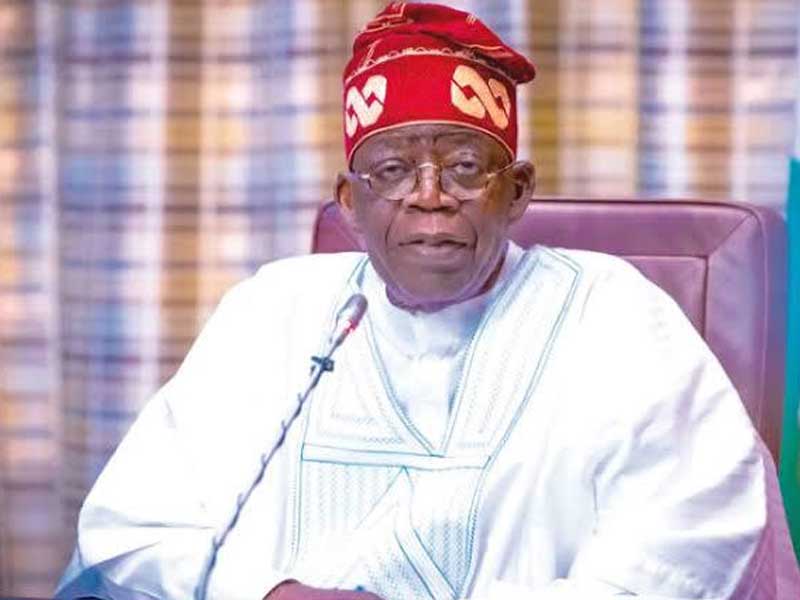
President Bola Tinubu, for the umpteenth time, disclosed yesterday that the new tax regulations would take effect as planned from January 1, 2026.
His declaration came despite criticism from opposition political parties and other concerned groups.
Also, the Central Bank of Nigeria (CBN) has projected a stronger macroeconomic outlook for the country, forecasting a significant growth in external reserves to $51.04 billion in the 2026 fiscal year.
Besides, the apex bank set the real Gross Domestic Product (GDP) growth at 4.49 per cent, and predicted a further moderation in inflation to an annual average of 12.94 per cent next year.
But reacting to the President’s remarks, the Peoples Democratic Party (PDP) reiterated its earlier call for the suspension of the commencement date of the Tax Act based on alleged discrepancies between the harmonised and gazetted versions of the new Tax Act.
The opposition party accused Tinubu of pushing ahead with the new laws’ implementation date primarily to boost government revenue, rather than protect the interests of ordinary Nigerians.
Also yesterday, the Chairman of the Presidential Fiscal Policy and Tax Reform Committee, Mr. Taiwo Oyedele, called on Nigerian universities to take a leading role in the successful implementation of the Tax Reform Act 2025.
However, Tinubu in a statement also gave an assurance that his administration will be willing to work with the National Assembly to quickly resolve all issues identified in the cause of implementing the new tax laws.
There were allegations that the reform documents signed by the President into law in June had been doctored and differed from what the National Assembly had passed.
But the President, in an eight-paragraph statement titled, “New Tax Laws Will Commence On January 1, 2026 As Planned”, stated, inter alia: “The new tax laws, including those that took effect on June 26, 2025, and the remaining acts scheduled to commence on January 1, 2026, will continue as planned.
“These reforms are a once-in-a-generation opportunity to build a fair, competitive, and robust fiscal foundation for our country.
“The tax laws are not designed to raise taxes, but rather to support a structural reset, drive harmonisation, and protect dignity while strengthening the social contract.
“I urge all stakeholders to support the implementation phase, which is now firmly in the delivery stage.
“Our administration is aware of the public discourse surrounding alleged changes to some provisions of the recently enacted tax laws.
“No substantial issue has been established that warrants a disruption of the reform process. Absolute trust is built over time through making the right decisions, not through premature, reactive measures.
“I emphasise our administration’s unwavering commitment to due process and the integrity of enacted laws. The Presidency pledges to work with the National Assembly to ensure the swift resolution of any issue identified.
“I assure all Nigerians that the Federal Government will continue to act in the overriding public interest to ensure a tax system that supports prosperity and shared responsibility.”
However, the PDP reiterated its earlier call for the suspension of the commencement date of the Tax Act, based on the alleged discrepancies between the harmonised and gazetted versions of the new Tax Act.
In a statement by the National Publicity Secretary, PDP, Ini Ememobong, the opposition party stated: ‘’Nigerians have demanded a thorough investigation of this anomaly and sought to know who carried out the illegal insertion and how it was done.”
According to Ememobong, ‘’Rather than address these issues comprehensively, the Presidency has consciously minimised them and instead vehemently insisted that the commencement date must stand, despite the discrepancies.
‘’This disposition clearly shows where the priority of the government lies-between Nigerians and money. This Tinubu Presidency has always prioritised finance over the welfare and well-being of Nigerians from its inception in 2023, as evidenced by the reckless way it announced and implemented the removal of subsidy, which immediately impacted the economy of the country and caused ordinary Nigerians to suffer irreparable economic damage.
‘’In this instance, the President should remember that he is an employee of the people and, therefore, should listen to his employers.
‘’He should also remember that he won with less than 40 percent of the votes in the elections that gave him the job, and should therefore recognise that listening to Nigerians must be a primary duty of his administration, rather than serving the narrow interests of people around him. Mr President is reminded that a responsible PDP administration in 2012 listened to the cries of Nigerians and civil society organisations (where he played a prominent role during the protests) against the removal of fuel subsidy, in deference to the voices of Nigerians.
‘’The interest of Nigerians must be uppermost in the mind of the President and the Federal Government,’’ the PDP stated.
Furthermore, the PDP stated: “We reiterate our earlier call for the suspension of the commencement date of the Tax Act, pending the conclusion of a thorough investigation. Obedience to laws in a democracy is directly linked to the belief that elected legislators have deliberated upon and approved them.
‘’A mere suspicion, let alone a confirmed fact, that unapproved sections have been smuggled into a law with the capacity to affect all Nigerians is sufficient reason to suspend its commencement. The President must act in favour of the people of this country; to do otherwise is a clear confirmation that money, not the people, is the priority.’’
In the meantime, Taiwo Oyedele has called on Nigerian universities to take a leading role in the successful implementation of the Tax Reform Act 2025.
He stated that academia was central to public understanding, compliance, and long-term sustainability of the reforms.
Oyedele made the call at a virtual one-day discussion on the ‘Nigerian Tax Law and You,’ organised by Babcock Business School, Ilisan-Remo, Ogun State, in collaboration with the Federal Government Fiscal Policy and Tax Reform Committee.
In his presentation titled, ‘Nigeria Tax Reforms 2025: Implications for the Academia and Small Businesses,’ he outlined the implications of the new tax regime for universities, academic staff, and the broader education sector.
He noted that the Tax Reform Act represents a structural reset of Nigeria’s tax system, which for decades had been weighed down by complexity, excessive discretion, weak alignment with global standards, and an unfair burden on low-income earners and small enterprises.
“These weaknesses eroded trust, discouraged compliance and limited the effectiveness of taxation as a tool for growth.
“The reforms are not about raising taxes but about fixing the architecture of the system to make it fairer, simpler, and more productive,” Oyedele said.
Focusing on academia, he said universities occupy a unique position as employers, centres of learning and drivers of thought leadership, adding that that the reforms would bring greater clarity to personal income tax obligations for academic and non-academic staff, potentially increasing disposable income, while exemptions and zero-rating of basic consumption items such as food, health and education would further improve quality of life.
Oyedele disclosed that the new tax framework provides additional tax reliefs for education and education providers, clearer rules distinguishing not-for-profit academic activities from commercial operations, and new incentives aimed at promoting research and development within universities and tertiary institutions.
Beyond compliance, the chairman stressed that universities have a broader responsibility to engage with the reforms intellectually and practically. In addition, he urged academic institutions to teach the new tax laws accurately, interrogate them critically, generate evidence-based feedback, and help train the next generation of tax professionals, administrators and policymakers.
“Tax reform that is not understood is not likely to succeed, and at the centre of this understanding is academia,” he stated.
He also advised university administrators to begin early preparation by reviewing internal governance structures, payroll systems, and the separation of exempt and commercial activities, noting that failure to do so could complicate compliance under the new framework.
Oyedele further encouraged academics and professionals to help translate policy into practice, support public understanding and hold the government accountable, describing tax reform as a collective responsibility rather than an adversarial process.
He concluded that the Tax Reform Act 2025 presents a rare opportunity to build a fair, competitive and resilient fiscal system for Nigeria, adding that its success would ultimately be judged by how well it is understood, implemented and the positive impact it has on the lives and wellbeing of Nigerians.
Earlier in his remarks, Vice-Chancellor of Babcock University, Prof. Afolarin Olatunde Ojewole, described Nigeria’s ongoing tax reforms as timely and necessary.
He argued that the restructuring of the tax system was critical to reducing the burden on vulnerable citizens while ensuring that the wealthy pay their fair share for national development.
Ojewole stated that the forum was the second in a series championed by the university, following an earlier physical session held in Lagos that attracted over 300 participants from across the country.
He noted that the tax reform debate had become a dominant national conversation, extending beyond policy circles into homes and boardrooms, underscoring its significance to Nigeria’s economic future.
According to the VC, the reforms are apt in a country that, despite its vast natural and human endowments, continues to struggle with revenue generation and relies heavily on domestic and external borrowing to finance annual budgets.
“Nigeria has remained poor while borrowing year after year, sometimes borrowing wisely and, at other times, borrowing unwisely. This reform seeks to progressively restructure our resources,” Ojewole said.
He explained that the proposed tax reforms are designed to reduce the tax burden on the vast majority of vulnerable Nigerians, while requiring greater contributions from the very rich and high-net-worth individuals who, according to him, have benefited disproportionately from the economy.
He described this approach as consistent with global best practices in progressive economies, where the wealthy are taxed more effectively to support national development and social equity.
He said Babcock University, through its business school, decided to partner with the federal government as part of its community service mandate by providing a platform for informed dialogue on the reforms. According to him, the university aims to bring together scholars, policymakers, and stakeholders to interrogate the laws, deepen public understanding, and address citizens’ concerns with evidence-based advice to the government.
Also speaking, the Head of School, Babcock Business School, Prof. Rufus Ishola Akintoye, reaffirmed the institution’s commitment to national development, describing its engagement with Nigeria’s tax reform process as part of a broader mandate to give back to society through informed policy dialogue.
He noted that the engagement reflects the institution’s vision of contributing meaningfully to Nigeria’s socio-economic transformation.
According to him, Babcock University was positioning itself for another era of greatness by deliberately aligning academic excellence with community development and national policy conversations.
“As part of our university commitment to community development, we are not just collaborating with the presidential fiscal policy and tax reform committee; we are fulfilling our institutional mandate to give back to our community and the nation,” he stated.
Akintoye commended Oyedele for his dedication to driving public understanding of the reforms, describing his nationwide engagements as a demonstration of selfless service to the country.
“We truly appreciate the good work you are doing for this nation. You have made yourself available at all times to address the many issues and concerns running through the minds of Nigerians,” he said.
The head of school noted that the tax reform conversation has generated widespread interest and concern across the country, making it imperative for academic institutions to provide platforms for clarity, enlightenment and constructive engagement.
Meanwhile, the Central Bank of Nigeria (CBN) has projected a stronger macroeconomic outlook for the country, forecasting a significant growth in external reserves to $51.04 billion in the 2026 fiscal year.
Besides, the apex bank set the real Gross Domestic Product (GDP) growth at 4.49 per cent, and predicted a further moderation in inflation to an annual average of 12.94 per cent next year.
The projections were contained in the CBN’s latest Macroeconomic Outlook for Nigeria, published on its official website yesterday, where it reiterated that recent policy reforms will begin to yield more durable macroeconomic stability.
In another development, Nigeria recorded an overall Balance of Payments (BOP) surplus of $4.60 billion in the third quarter of the year (Q3 2025), the CBN further disclosed.
The performance marked a turnaround from the deficit position in the preceding quarter, the bank added.
The improvement was supported by a sustained current account surplus of $3.42 billion, further aided by stronger trade performance, resilient remittance inflows, increased financial flows, and continued accretion to external reserves, according to a statement by CBN acting Director, Corporate Communications, Mrs. Hakama Sidi Ali.
However, according to the central bank outlook, headline inflation is expected to remain on a downward path after peaking in the previous year, supported by improving supply-side conditions and enhanced coordination between monetary and fiscal authorities.
THISDAY recalls that inflation, which climbed to 34.8 per cent in December last year, has since eased following a rebasing exercise, standing at 14.45 per cent in November, based on latest data from the National Bureau of Statistics (NBS).
In the report, the CBN said the inflation outlook was anchored on sustained stability in the foreign exchange and energy markets, alongside the lagged effects of earlier interest rate hikes, which are expected to continue dampening demand-side pressures.
On the external position, the outlook pointed to a gradual strengthening of Nigeria’s buffers, as inflows improve and pressure on the foreign exchange market eases.
“The external reserves is projected at $51.04 billion in 2026, compared with $45.01 billion in 2025. The external reserves is expected to be boosted by reduced pressure in the FX market based on the anticipated rise in oil earnings, sovereign bond issuance, and diaspora remittance inflow.
“Additionally, Dangote refinery’s expansion of its nameplate capacity to 700,000 bpd from 650,000 bpd in 2025 and eventually to 1.4 million bpd in the medium term would further support the growth in external reserves,” the outlook stated.
Commenting on the report the CBN Governor, Olayemi Cardoso, said the moderation in inflation would provide the foundation for a more rules-based monetary policy regime over the medium term.
“Inflation, though still elevated, is projected to moderate further to 12.94 per cent in 2026, reflecting the combined impact of easing food and energy prices, as well as the lagged effects of the bank’s monetary policy tightening cycle.
“The expected continuation of the disinflationary trend will provide a firm basis for the bank’s gradual transition to a full-fledged inflation-targeting framework. Likewise, the exchange rate is projected to remain broadly stable, supported by rising diaspora remittances, higher oil receipts, and strong investor confidence. The bank remains committed to discharging its mandate in a manner that balances the objectives of price stability and sustainable economic growth,” he said.
With improvements in external buffers and a more stable foreign exchange environment, factors the CBN considers critical for investor confidence, the bank said it expects economic growth to accelerate to 4.49 per cent in 2026, from an estimated 3.89 per cent in 2025.
Cardoso added that the growth outlook reflected expectations of broader-based expansion across the economy, particularly outside the oil sector.
“The domestic economy is projected to expand by 4.49 per cent in 2026, from an estimated 3.89 per cent in 2025. The outlook reflects expectations of continued expansion in key non-oil sectors, improved crude oil production, and sustained stability in the macroeconomic environment.
“These factors, supported by ongoing structural reforms and prudent policy management, are anticipated to strengthen productive capacity, enhance investor confidence, and consolidate the foundation for inclusive and resilient growth,” he added.
Beyond growth and inflation, the CBN also addressed fiscal sustainability concerns, projecting that Nigeria’s public debt burden would remain within manageable limits despite continued borrowing.
“The public debt is anticipated to remain on a sustainable path in 2026. It is projected at 34.68 per cent of GDP by end-2026 compared with 33.98 per cent at end-June 2025. The development is predicated on expected new borrowings, as discretionary fiscal policy actions remain a major driver of debt dynamics. The revaluation effect on public debt, which dominated debt dynamics in 2023–2025, is expected to narrow in 2026 owing to exchange rate stability,” the apex bank said.
Besides, the report projected average oil production of 1.71 million barrels per day, reflecting expectations of improved security around oil assets and better operational efficiency, an assumption that underpins both the growth and external balance outlook for 2026.
Themed: “Consolidating Macroeconomic Stability amid Global Uncertainty”, the CBN projected improved activity in the non-oil sector, although it noted that structural constraints persist.
The document stressed the need for harmonised fiscal and monetary policies, institutional reforms and tailored guidelines to sustain investor confidence and economic momentum, highlighting the importance of maintaining orthodox monetary policy and continued reforms in the foreign exchange market to ensure price and exchange rate stability.
According to the CBN, the fiscal space in Nigeria improved in 2025 due to ongoing reforms, stable crude oil prices and domestic production, as total public debt stood at 33.98 per cent of GDP at the end of June 2025, with domestic debt accounting for 52.86 per cent and external debt 47.14 per cent.
Besides, the external sector recorded a balance of payments surplus of an estimated $5.80 billion in 2025, it said, supported by higher reserves, which rose to about $45.01 billion from $40.19 billion in 2024.
The CBN said retained revenue and expenditure for 2026 are projected at N35.51 trillion and N47.64 trillion respectively, resulting in a provisional deficit of N12.14 trillion, equivalent to 3.01 per cent of GDP.
However, the report listed some likely risks, including possible resurgence in inflation if fiscal spending rises sharply or if global financial conditions deteriorate, triggering capital reversals and exchange rate volatility.
In the same vein, it cautioned that adverse weather conditions, disruptions to crude oil production, geopolitical tensions and renewed protectionist trade policies could weaken growth and external balances.
Furthermore, it noted that a significant rise in non-performing loans could weaken banks’ balance sheets, while concentration risks from recapitalisation could lead to investor fatigue and crowd out other issuers.
“Various downside risks could impact the economic outlook for 2026. For instance, if the projected deceleration in inflation is not attained, the monetary easing could be discontinued, thereby lowering growth prospects.
“While the ongoing reforms are expected to boost productivity, stimulate private sector activity, and support a more competitive and diversified economy, the realisation of these gains could be lower than expected, as high cost of doing business, poor infrastructure, and insecurity could undermine business operations. Cost-saving measures by businesses may heighten the risk of unemployment, further narrow the formal sector, and constrain growth.
“In the event of unfavourable climatic conditions, the ensuing shocks may lead to the destruction of crops, disruption of businesses and transportation services, thereby dampening growth prospects in 2026.
“In addition, negative shocks to crude oil production owing to force majeure and unanticipated security breaches around oil installations could reduce expected crude oil output, thereby constraining growth,” it added.
Meanwhile, the CBN acting director said the apex bank said the goods account remained in surplus at $4.94 billion, reflecting higher export earnings during the period.
Crude oil exports rose to $8.45 billion, while exports of refined petroleum products increased by 44 per cent to $2.29 billion, indicating further progress in domestic refining capacity and Nigeria’s gradual transition from a net importer to a net exporter of refined petroleum products.
Total goods exports stood at $15.24 billion, while imports of refined petroleum products declined by 12.7 per cent, resulting in an improved trade balance.
Workers’ remittances also remained strong, with the secondary income account recording a surplus of $5.50 billion, including $5.24 billion in remittance inflows from Nigerians in the diaspora.
According to CBN data, developments in the financial account further supported the overall BOP outcome, with the country posting a net lending position of $0.32 billion.
Foreign direct investment inflows rose to $0.72 billion, while portfolio investment inflows remained robust at $2.51 billion, reflecting improved investor sentiment and continued non-resident participation in domestic financial instruments.
The country’s external reserves increased to $42.77 billion at end-September 2025, up from $37.81 billion at end-June, thereby strengthening Nigeria’s external buffers, the statement added.
According to the CBN, the Q3 2025 BOP outcome underscored strengthening external sector fundamentals, firmer investor confidence, and the continued impact of reforms in the foreign exchange market, monetary policy implementation, and the domestic energy sector.

As scorpions continue to produce drops of liquid venom valued at around $39 million per gallon, they offer a compelling reminder that innovation often lies in overlooked places waiting to be unlocked. Medical experts say the venom can be used to treat many illnesses and could also contribute significantly to the economy. UDEH ONYEBUCHI reports.
A thin glass capillary fills slowly with a clear droplet.
Under laboratory light, it looks ordinary until its value is calculated.
Less than a millilitre of scorpion venom has just been extracted in a quiet laboratory in Isolo, Lagos.
On the global biomedical market, liquids like this rank among the most expensive substances on earth.
Industry estimates compiled by international toxin trade platforms and pharmaceutical procurement reports, including those cited by global digital news organisation Business Insider in an interview with Venomtech CEO Steve Trim, place purified scorpion venom at up to $39 million per gallon, depending on species and peptide concentration.
Behind the glass enclosure, the scorpion curls back into stillness, alive and unharmed. Around it, thousands more wait – biological assets in an industry Nigeria has barely begun to notice.
This is not a scene from science fiction. It is the daily reality inside one of the country’s most unconventional biomedical ventures, where fearsome creatures are quietly being transformed into export-grade research materials with implications far beyond a single laboratory.
At the centre of it all is Muhammad Usman, a retired Nigerian Air Force corporal turned pioneer of commercial scorpion farming—an enterprise sitting at the intersection of agriculture, medicine and global science markets.
From combat zones to controlled laboratories
Usman’s journey into venom science did not begin in a laboratory. It began in uniform.
He joined the Nigerian Air Force in 2013 and served during intense internal security operations across northern Nigeria, participating in missions such as Operation Safe Haven, Operation Harbin Kunama and Operation MESA.
The experience, he says, shaped both his discipline and patience, qualities that would later prove essential.
When he retired from active service in December 2014, few imagined that his next mission would involve breeding scorpions.
Yet the transition, while unexpected, was not accidental.
“The Air Force teaches structure, precision and emotional control. Those things stay with you,” he said.
The moment curiosity took hold
The “Scorpion Doctor,” as he is now known, explained that the idea emerged during a quiet moment on sentry duty.
Scrolling through his phone, Usman came across an article describing commercial scorpion farming in Morocco, where venom extraction had been systematised for pharmaceutical export.
“It immediately caught my attention, not because it was strange, but because it was structured,” he said.
Instead of dismissing it as impractical, Usman began researching obsessively, studying scorpion biology, venom chemistry, extraction techniques and international demand.
He started small, keeping fewer than ten scorpions at home to observe their behaviour and survival needs.
Those early experiments delivered a reality check: scorpion farming was slow, capital-intensive and unforgiving of mistakes.
Balancing military responsibilities with experimental farming soon became impossible.
Usman sought partners and investors, openly outlining the risks, long gestation period and delayed profitability.
“This is not quick money. You must understand the waiting,” he warned potential entrepreneurs.
Fear, myth and biological reality
In popular imagination, scorpions are symbols of danger. In Usman’s laboratory, they are treated with studied calm.
“Scorpions are defensive, not aggressive. They sting only when they feel threatened,” he explained.
Years of observation have allowed him to handle them with confidence, understanding stress triggers and environmental needs.
That knowledge is essential because stress directly affects venom quality.
Scorpion farming remains exceedingly rare in Nigeria.
According to Usman, his facility in Isolo is currently the only fully operational commercial scorpion farm in the country, although he also trains interested individuals under strict guidelines.
High capital, higher precision
The economics of scorpion farming quickly dispel any illusion of simplicity.
Usman noted that scorpions are sourced from forest hunters at an average cost of N5,000 each, and that the Isolo facility houses over 10,000 scorpions.
He said more than 600 transparent enclosures, costing about N3,000 each, are used to isolate and monitor individual animals.
He also explained that venom storage requires biomedical-grade freezers, some costing up to N6 million, to preserve peptide stability for export.
Recreating nature indoors
In the wild, Usman explained, scorpions can live up to eight years. But in captivity, their lifespan often drops unless conditions are carefully replicated.
He said each enclosure contains water sources, tree stems and textured surfaces designed to mimic forest habitats.
Even with these measures, Usman estimates a controlled lifespan of about five years.
Feeding presents another challenge
He emphasised that scorpions consume live prey, including cockroaches, snails and especially mealworms, which are difficult to source locally.
Substitutes such as black soldier fly larvae, he said, do not work.
“Mealworms are not widely farmed in Nigeria, and scorpions cannot survive on substitutes like black soldier fly larvae,” he said.
Usman believes this gap presents a new business opportunity within the agricultural value chain.
“If you go to Dubai, Malaysia and Pakistan, they have people into mealworm farming and cockroach breeding who earn a lot of money from the business,” he said.
Harvesting without killing
He also noted that venom extraction is neither frequent nor forceful.
Using low-voltage electrostimulation, tweezers and tongs, Usman and his team extract venom from roughly 1,000 scorpions per day, yielding only nine to ten millilitres in total.
Each scorpion is rested for seven to ten days between extractions to minimise stress.
Contrary to popular belief, he said the scorpions survive the process.
“Killing them would destroy the sustainability of the operation. There are methods to extract venom without causing harm. However, regular extraction places stress on them and can affect reproduction,” he said.
Explaining the method, he said that once stimulated, the scorpion releases venom naturally and is returned to its enclosure to recover.
Evolutionary biologist Dr. Arie van der Meijden of the CIBIO-InBIO Institute in Portugal confirmed this in comments to IFLScience, explaining that the extraction does not harm the animal and that scorpions resume normal activities, including feeding, almost immediately.
The venom is collected, sealed and immediately frozen for preservation before export under strict agreements to pharmaceutical firms and research institutions.
Why a clear liquid is worth millions
Usman explained that not all scorpions are equal.
Certain species, including the Emperor scorpion, are prized for their higher venom yield and peptide diversity.
Once purified, he noted, the venom becomes raw material for advanced biomedical research.
Usman said global demand continues to rise, with prices ranging from $7,000 to $9,000 per litre, while a gallon can cost as much as $39 million.
“The global market for scorpion venom is growing rapidly. This is not something you can just sell casually,” he said.
“Go online and you will see different sources showing that one gallon of scorpion venom can cost up to $39 million. When converted to naira, the worth is extraordinary.”
International toxin trade databases and pharmaceutical sourcing reports corroborate these figures, noting that premium species command even higher prices.
Dr. van der Meijden also explained that while venom can sell for hundreds of dollars per microgram, laboratories typically require only very small quantities for years of research.
“It’s very expensive to buy, and the venom has to be extremely high quality. Refining it to isolate specific components is even more costly,” she said.
Medicine, not myth
The President of the Association of Medical Laboratory Scientists of Nigeria (AMLSN), Dr. Casmir Ifeanyi, explained that scorpion venom is a complex mixture of bioactive peptides capable of interacting with human cells in highly specific ways.
“These peptides can distinguish cancer cells from normal cells,” he said, making them valuable for tumour imaging, targeted therapy and experimental drug development.
He added that international studies have already applied venom-derived compounds in brain tumour surgeries, helping surgeons identify tumour margins more precisely.
Other research explores applications in epilepsy, Parkinson’s disease, autoimmune disorders, cardiovascular conditions and drug-resistant infections.
Recent studies in Mexico and the United States have identified new antimicrobial compounds from scorpion venom with activity against tuberculosis and Staphylococcus.
According to a Stanford News report, scorpion venom expert Prof. Lourival Possani of the National Autonomous University of Mexico, who has spent 45 years collecting and analysing venom compounds, said some species are difficult to access.
“Venom from the eastern Mexican scorpion species Diplocentrus melici is hard to come by. During winter and dry seasons, the scorpion is buried. We can only find it in the rainy season,” he said.
Nigeria’s missed advantage
Dr. Ifeanyi emphasised that despite abundant scorpion species, Nigeria remains largely absent from the global venom-based research economy.
He lamented that most extraction efforts are private, small-scale and focused on exporting raw materials without value addition.
“We produce papers, not products. Research that does not translate into therapy or industry is wasted effort,” he said.
He called for government-backed applied research, stronger regulation and institutional support under the Ministry of Science and Innovation to develop a local biopharmaceutical pipeline.
Beyond economics, he warned of ecological consequences.
Scorpions, he said, play critical roles in soil aeration and pest control, and their decline, driven by herbicide use and habitat loss, disrupts local ecosystems.
Returning to the droplet
Back in the Isolo laboratory, the glass capillary is sealed and labelled. Another extraction cycle is complete.
The scorpion retreats into its enclosure. The droplet will travel first into cold storage, then across borders, and eventually into laboratories where it may help map tumours or fight resistant infections.
For Nigeria, questions linger: will this remain a curiosity driven by a handful of disciplined pioneers, or become a deliberate national industry?


Gombe State Governor, Muhammadu Inuwa Yahaya, CON, has approved the establishment of the Gombe State Electricity Regulatory Commission (GOSERC) and the Gombe State Information Technology and Digital Economy Commission (GIDTEC), in a move to strengthen regulation, drive innovation and deepen economic transformation in the state.
The Secretary to the State Government, Professor Ibrahim Abubakar Njodi, who conveyed the approval, explained that the development followed the Governor’s assent to the bills establishing the two commissions, thereby giving them full legal backing to operate.
Accordingly, Governor Inuwa Yahaya has approved the appointment of Dr. Usman Abba Arabi as Chairman of the Gombe State Electricity Regulatory Commission (GOSERC) and Al-Amin Umar Barambu, PhD, as Chairman of the Gombe State Information Technology and Digital Economy Commission (GIDTEC).
Both Arabi and Barambu are bringing vast and relevant expertise required to effectively drive the mandates of the newly established commissions.
The creation of GOSERC is in line with the Governor’s power sector reform agenda, particularly in leveraging the opportunities provided by the Electricity Act to strengthen electricity regulation, improve service delivery, attract investment and expand access to reliable power across Gombe State.
In the same vein, the creation of GIDTEC reflects Governor Inuwa Yahaya’s resolve to transform Gombe State into a technology-driven and digitally competitive economy, with strong emphasis on ICT growth, digital innovation, skills development, e-governance and youth employment.
Governor Inuwa Yahaya charged the newly appointed chairmen to bring to bear their track record of service, professionalism and integrity in building strong, responsive and results-oriented institutions that will accelerate development and deliver tangible benefits to the people of Gombe State.
Both appointments are with effect from 2nd January, 2026.


The Building Collapse Prevention Guild (BCPG) Lagos Island Cell has expressed concern over recurring high-rise fires in Lagos Island, most recently the fire incident at the Afriland Building and the inferno at the Great Nigeria Insurance (GNI) House.
These incidents, the group said, are not isolated accidents but clear indicators of systemic failures in fire safety compliance during the operational phase of buildings.
“Unlike one-time design flaws, operational lapses—such as unsafe conversion of offices into warehouses, poor enforcement of fire codes, and inadequate maintenance of fire protection systems—continue to turn Lagos Island’s towers into fire hazards. The GNI House, which has experienced two separate fires in its history, exemplifies how neglect of operational fire standards allows hazards to persist with devastating consequences,” the guild said.
The guild, which visited the GNI building at 47/57 Martins Street for a visual assessment, warned of the imminent danger of collapse of the razed structure.
According to the group, it is alarming that the building has been burning continuously since Christmas Eve, December 24, 2025, with the fire still not fully extinguished. As of 11:00 a.m. on December 27, 2025, additional fire engines and water tankers were still struggling to gain access to the site, causing chaos in surrounding areas, including Nnamdi Azikiwe Street, Martins Street, Gbajumo Street, Kosoko Street and Alli Balogun Street.
While the fire raged, explosive spalling of concrete sent burning fragments flying across the road, forcing bystanders to scamper for safety. Moments later, the high-rise building suffered a partial collapse, raising immediate concerns for public safety.
“Beyond this specific incident, Lagos Island has experienced a pattern of repeated fires affecting major structures. Buildings in the neighbourhood of GNI House have suffered damage from fire propagation, leaving them vulnerable,” it said.
BCPG extended condolences to those who lost family members, loved ones and property, and expressed sympathy with those injured in the tragic GNI building incident during the festive season.
The guild noted that a time meant for joy had been overshadowed by sorrow, adding that its thoughts remained with every affected household as they endure the painful loss.
The misuse of Lagos Island’s high-rise buildings, the guild said, is fuelling disaster risks, as many towers have been converted from their approved corporate use into shops and warehouses packed with combustible materials, creating conditions that heighten fire hazards. This pattern of unsafe remodelling, poor oversight and unregulated occupation has already forced organisations to relocate, leaving several buildings underutilised.
It called for urgent government action to regulate building usage, enforce safety standards and strengthen oversight to close the gaps. In a statement jointly signed by the Coordinator, Mubarak Gbaja-Biamila, and the Secretary, Femi Oyedele, the guild noted that the history of fire incidents on Lagos Island’s skyline is marked by repetition and neglect.
“In 2013, GNI House suffered its first major blaze, setting a troubling pattern. The following year, in 2014, the Financial Trust House was engulfed, underscoring that compliance lapses are not limited to a single building.
“By 2015, Bookshop House—a heritage landmark—was affected, and in 2016, UBA House at Marina was struck. The trend continued: Elephant House burned in 2017, Unity House in 2018, and Western House in 2019. Each incident further eroded public confidence in the safety of Lagos Island’s skyscrapers.”
In light of the recurring high-rise fires and the grave risks they pose to lives, property and Nigeria’s cultural heritage, the Building Collapse Prevention Guild (BCPG) has called on Governor Babajide Sanwo-Olu and all relevant state authorities to take decisive and immediate action.
The guild also proposed a comprehensive framework to strengthen governance, modernise firefighting capacity, enforce compliance and safeguard Lagos Island’s historic and commercial landmarks from further devastation.
It urged the Lagos State Government to commission, without delay, a comprehensive investigation into the GNI building fire and ensure that its findings are made public to promote transparency and accountability.
According to the guild, the knowledge gained from the inquiry must be applied to extract lessons from the current hazard situation involving high-rise structures on Lagos Island, Nigeria’s former capital.
The group further called for a comprehensive audit of all high-rise buildings on Lagos Island within 90 days to assess fire safety readiness and structural integrity.
It said a safety commission should be empowered to enforce compliance, publish yearly reports and sanction violators without political interference, with a specific mandate to address the operational phase of buildings—the critical stage long neglected in favour of pre-approval oversight.
It said: “Clear penalties should be defined and enforced for landlords, contractors and officials who neglect fire codes, ensuring accountability across both private and public actors.
“High-rise structures should be subject to annual public disclosure of their fire safety status, with inspection results made accessible to tenants, regulators and the public.
“The Lagos State Government should enforce the provisions of the Nigerian Insurance Industry Reform Act 2025 by mandating compulsory fire insurance for all high-rise and commercial buildings, ensuring that property owners and tenants maintain valid coverage as a condition for occupancy and continued operation.
“A dedicated Fire Safety Fund should be allocated, drawing from government budgets, insurance levies and public-private partnerships, to guarantee sustainable financing for infrastructure, training and enforcement.
“Whoever approved the remodelling of high-rise buildings should be prosecuted. Anyone who rents out such buildings without fire protection facilities should face the law.”
NIGERIA NEWS
Eminent Sons And Daughters Of Aniocha Oshimili Hold Landmark Summit In Asaba – THISDAYLIVE


Uzoma Mba
It was a rare gathering of eminent personalities of Aniocha Oshimili extraction on Monday 29th December, 2025 when no fewer than 18 traditional rulers, House of Representatives member, three Local Government Chairmen, three State Assembly members and 35 presidents general of communities, came together at Ogwa Ukwu, Ahaba to discuss issues of mutual interest.
The landmark event which remarkably was the maiden annual conference of Njiko Aniocha-Oshimili (a socio-cultural organization) centred on consensually creating economic and socio-political pathways leveraging on the primacy of unity, development and security.
The conference theme which centred on “Unity, Development and Security: Unifying Development and Securing the Vision,the Aspirations and Future of Aniocha-Oshimili People,” could not have come at a better time than now when the people of Aniocha Oshimili seem to be speaking differently particularly on issues of common interest.
Little wonder why the traditional and political leaders including those in the academia turned up in great numbers, including the 35 Presidents General of various towns’ Development Unions led by Dr. Ignatius Ezoemm. Other stakeholders and people from different walks of life were also in attendance.
The summit which held at the instance of Njiko Aniocha-Oshimili, discussed several issues verging on the unity, development, security, education and political future of the people of Aniocha-Oshimili.
The various sub-themes relating to the main theme of the conference were brilliantly discussed by the Vice Chancellor of Igbinedion University and Chairman Committee of Vice Chancellors of Nigerian Universities, Prof. Lawrence Ezemonye, an Hon. Member of Delta State House of Assembly, Hon. Bridget Anyafulu and a former Director, Department of State Services (DSS) Barr. Mike Ejiofor.
Meanwhile, the communique drawn at the end of the summit has suggested that the Association would henceforth hold political office holders and other service oriented persons accountable to the people.
As a fallout of the summit, the group has designed a roadmap for Town Hall meetings and subsequent summits where political office holders will have the opportunity to give their stewardship to the people.
The summit has in attendance, the Asagba of Asaba, HRM Asagba Prof. Epiphany Chigbogu Azinge who gave a heart-touching key note address that revealed the historical emergence of Njiko Aniocha-Oshimili, a few years ago.
The Obi of Ubulu-Uno and 2nd Vice Chairman of Delta State Council of Traditional Rulers, HRM Obi Henry Afamefune Kikachukwu were among traditional rulers present at the occasion.
Also in attendance were the member representing Aniocha/Oshimili Federal Constituency, Rt. Hon. Ngozi Okolie, Leader of Delta State House of Assembly, Hon. Engr. Emeka Nwaobi represented, Hon. Frank Esenwah, Oshimili North Council Chairman, Hon. Innocent Esewezie representing the other three Council Chairmen with the Vice Chairman of Oshimili South, Hon. Chinwe Usor Obobo present, the DG of Delta State Capital Territory Development Agency, Chief Patrick Ukah, and retired Air Commodore Gbemudu.
Those in attendance from the ivory towers included Prof. Andy Egwunyenga (former Vice Chancellor of Delta State University, Abraka), Prof. Emma Chuks Onwuka (Professor of Economics, Ambrose Alli University, Ekpoma), Prof. Anthony Iweka from the University of Lagos, Dr. Chris Uwaje (Digital Policy Guru), and a host of other stakeholders and dignitaries present.
Interestingly, three discussants who made critique of the papers presented were Dr. Chris Uwaje, Prof. Andy Egwunyenga and Prof. Emma Chuks Onwuka.
One of the highpoints of the annual conference was the recognition and award of honour to some illustrations sons and daughter of Aniocha-Oshimili for their outstanding contributions in their careers and Nigeria in general.
They included Barr. Mike Ejiofor (a security expert and former Director DSS), Chief (Prof) Mrs. Josephine Anene-Okeakwa (Provost, Federal College of Education, Technical, Asaba) Chief (Dr) Newton Jibunoh (Chairman, Nelson Mandela Garden and former Chairman, Costain West Africa Plc), Dr. Gabriel Ogbechie (Group Managing can Director, Rainoil Ltd) and Chief (Dr) Anthony Ikemefuna, SAN (Senior Partner, Punuks Attorneys and Solicitors).
Other dignitaries at the event included a former Deputy Comptroller General of Nigeria Immigration Service, Dr. Brasca Ifeadi, Chief Boniface Chizea, Hon. Lawrence Ejiofor, Chief (Mrs) Stella Egbuniwe, Engr. Igwe Enuoyibo, Dr. Peter Isidi and many others.

By Idowu Bankole
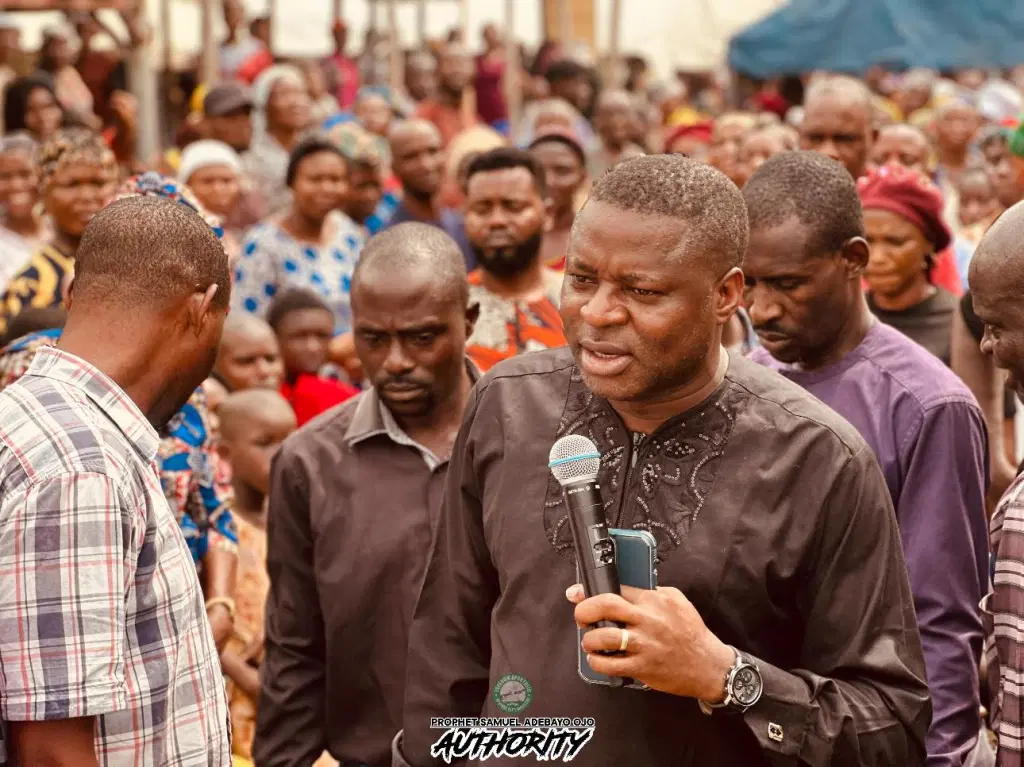
A special Prophetic Crossover Service aimed at addressing spiritual, personal and family challenges is holding this evening, with renowned cleric and founder of the Freedom Apostolic Revival International Ministry, FARIM, Prophet Sam Adebayo Ojo, popularly known as Baba Authority, ministering.
Organisers say the ongoing vigil has been divinely set aside as a moment of liberation, restoration and breakthrough for individuals seeking lasting solutions to longstanding challenges.
According to the announcement, the service is open to people experiencing a wide range of difficulties, including generational challenges, prolonged unanswered prayers, hard work without commensurate reward, lack of direction, delayed fruitfulness, and the loss of spiritual zeal.
Other issues expected to be addressed during the service include family-related challenges, unfulfilled dreams, personal setbacks and lives yet to reflect visible testimonies.
Participants have been encouraged to attend with faith and expectation, while also inviting others who may be facing similar challenges.
Organisers described the gathering as more than a routine religious meeting, noting that it is intended as a defining crossover moment marked by spiritual renewal, divine intervention and the realignment of destinies.
The Prophetic Crossover Service is expected to draw worshippers seeking spiritual upliftment and renewed hope as they prepare for a new season.
The post Prophet Sam Ojo leads prophetic Crossover Service for liberation, restoration appeared first on Vanguard News.

The Nigeria Police Force (NPF), Zone 2 Command, has called on Nigerians to promote oneness and peace across the country.The appeal was made during the command’s 2025 end-of-year celebration held at its headquarters in Onikan, Lagos State.
The programme, themed ‘Peace and Joy to the World’ featured performances by the Police Band and Choir, carol renditions, a word of exhortation by Pastor Godwin Adodo of Glorious Christian Ministries, Lagos, and the presentation of awards.
The event attracted service chiefs from sister security agencies, senior police officers from the Lagos State Command and other police formations within the state, as well as religious and traditional leaders, the coordinator and members of the Police Officers’ Wives Association (POWA) Zone 2, members of the Police Community Relations Committee (PCRC) and other dignitaries.
In his address, the Assistant Inspector General of Police in charge of Zone 2, Adegoke Fayoade, expressed gratitude to God for the successes recorded in 2025. He described Lagos and Ogun states as among the most peaceful in the country and assured residents that the command would not relent in its efforts to sustain security.
He said robust security measures had been put in place to forestall crime and criminal activities, while appealing for collective efforts from citizens to further reduce crime to the barest minimum.
Meanwhile, the Chairman of the Lagos State Taskforce, Chief Superintendent of Police Adetayo Akerele, urged young Nigerians, particularly security operatives, to remain morally guided and vigilant in the discharge of their duties so that citizens can “sleep with their two eyes closed”.
Akerele made the call after he was honoured with an Award of Excellence by Eagle NewsMedia for his outstanding leadership and contributions to Lagos State.
Speaking during the presentation, the Chief Executive Officer of Eagle NewsMedia, Camil Ezenwa, said the award recognised Akerele’s exemplary leadership, dedication and achievements since assuming office.
“Under his stewardship, the Lagos State Taskforce has recorded significant progress in strengthening public safety, restoring orderliness and fostering community trust across the metropolis. His sterling leadership qualities continue to propel the agency’s mandate, positioning him as a beacon of impactful public service,” he said.
Responding, Akerele remarked, “The reward for hard work is more work,” while reaffirming his commitment to excellence and service delivery. Also speaking, the Director of Press and Public Affairs of the Lagos State Task force, Gbadeyan Abdulraheem, described Akerele as “an astute manager of human and material resources, a seasoned mobiliser, strategic thinker and executor”.
“This recognition further underscores his unwavering dedication to Lagos State, as the Lagos State Task force remains resolute in its commitment to building a safe, orderly and vibrant environment for all Lagosians,” he said.


Ecomium as family, friends, benefactors and well-wishers of Dr Akpoebi Adesi, Registrar of the University of Africa, Tou-Orua, Sagbama, Bayelsa State, celebrated with him on his birthday, December 29.
The ceremony, which was celebrated at his residence at Yenagoa, recorded a series of positive testimonies showered on the man whom everyone described as a good one.
Speaking at the occasion, Julius Laye, former Chairman of the Association of Nigerian Authors (ANAN), Bayelsa State Chapter, described Dr Adesi as a man of many positive Phases.
As a former ANAN Chairman, Laye disclosed that Dr Adesi “pushed those of us who have not gone into putting our ideas into script to do that. He motivated us. He was a leader and very simple. You can call him anytime. He is not a leader that is arrogant.
“For me, he is a dependable ally and not only his encouragement, but when you have challenges, he will stand by you. I came to celebrate a man who is on a good footing and who has helped several people, especially within the Ijaw land and Bayelsa State, to become personalities.”
Also speaking, Philemon Orusiyia Amos, the Chief Security Officer of Isaac Jasper Boro College of Education, Sagbama, describing him “as an elder brother, kinsman and a boss”, called him a dependable ally.
He said that Dr Akpoebi Adesi always stands by the truth and wished him long life and prosperity.
Another benefactor of the registrar’s good heart, Madam Douye Williams, testified that Dr Adesi helped her to get a job that has transformed her life today.
“Today, I’m working. All thanks to him. My God will continue to bless and keep him alive for us.” She said.
In his remarks, the celebrant, Dr Akpoebi Adesi, thanked all who made the day a memorable one, maintaining that he was highly delighted with the kind of goodwill messages that were poured on him.
The celebrant, who said that he has formally entered the league of Senior Citizens in the state, explained that he wasn’t expecting any elaborate celebration because of an unforeseen circumstance that occurred on December 23, 2025, but added that “the chairman of what they termed beneficiaries came to me, so we have to do it.
“I’m also happy that next year, I’m rounding my tenure as the Registrar of UAT, and I hope that the future will be better.”
On launching into Politics, he said he wouldn’t know but accepted that the only thing he knows how to do is being in academia.
“But if it happens, no problems after all. Good luck, Jonathon was also in academia before Politics came along the line. If it be so, I will welcome it. Otherwise, I know that I belong to the academic.
“I will go and start from where I stopped and launch myself to becoming a Professor in the near future, and that is my desire.”
He advised that “it is always good to be hard working and determined to make progress in life regardless of daunting challenges.
Please follow and like us:

The Lagos State Government has ordered the immediate evacuation of residents and business operators around the burnt Great Nigeria Insurance (GNI) building, citing serious safety risks to lives and property.
The directive, issued by Governor Babajide Sanwo-Olu, followed an assessment by government-appointed structural engineers who warned that buildings within a 100-metre radius of the fire incident have been structurally compromised and are no longer safe.
The 25-storey GNI building was gutted by fire on December 24, causing extensive damage and raising fears of possible collapse or secondary incidents.
In a statement, the Commissioner for Information and Strategy, Mr. Gbenga Omotoso, expressed concern that despite repeated safety advisories, some occupants have continued to ignore government warnings, with reports that certain shop owners broke through safety barricades erected around the affected area.
He described such actions as dangerous and unacceptable, stressing that the barricaded zone remains a strictly enforced “no-movement area.”
Omotoso said the evacuation order is aimed at preventing avoidable tragedy and allowing emergency and safety professionals to carry out ongoing assessments and recovery operations without obstruction.
He urged all affected residents and business owners to comply fully with the directive in the interest of public safety.
Please follow and like us:

Following the discrepancies trailing the new tax law, the People’s Democratic Party (PDP) has accused the President Bola Tinubu-led administration of placing revenue considerations above the welfare of Nigerians.
This is as the opposition party calls for the suspension of the commencement date of the Tax Act, citing discrepancies between the harmonised and gazetted versions of the law.
In a statement signed by its spokesman, Comrade Ini Ememobong, on Tuesday, December 30, PDP said Nigerians across social strata have expressed displeasure over what it described as the smuggling of “Very dangerous provisions” that were earlier expunged by the National Assembly.
The party reiterated its call for the suspension of the take-off date, faulting the presidency for what it described as a deliberate attempt to downplay the controversy while insisting that the commencement date of the Act must stand despite the unresolved discrepancies.
It said the stance of the Federal Government revealed its true priority. “This disposition clearly shows where the priority of the government lies — between Nigerians and money,” the statement read.
It is alleged that the Tinubu administration has, since its inception in 2023, consistently prioritised fiscal considerations over the well-being of citizens.
The PDP recalled the manner in which the removal of the fuel subsidy was announced and implemented, arguing that the policy inflicted severe economic hardship on ordinary Nigerians and disrupted the economy.
It further reminded the President that he was elected to serve the people and, therefore, had a duty to listen to their concerns, especially in view of what it described as the narrow margin of his electoral victory.
The party also drew parallels with events in 2012, when a PDP-led Federal Government reviewed its decision on fuel subsidy removal following nationwide protests, noting that Tinubu, then in opposition, played a prominent role in the agitation.
According to the PDP, obedience to laws in a democracy is rooted in public confidence that such laws were duly debated and approved by elected representatives, stressing that even the suspicion that unapproved provisions were smuggled into a law affecting all Nigerians was sufficient grounds to suspend its implementation.
The party urged President Tinubu to act in the interest of Nigerians by halting the commencement of the Tax Act pending the conclusion of a comprehensive investigation, warning that failure to do so would reinforce the perception that “money, not the people, is the priority of this administration.”
Please follow and like us:
Bauchi State is historically known for its political volatility. The roots of it could be traced to the pre-independence era when Sa’adu Zungur, Abubakar Tafawa-Balewa and Aminu Kano formed one of the pioneer political organisations in the Northern region, the Bauchi General Improvement Union (BGIU), and the Bauchi Discussion Circle (BDC), to create political awareness especially as it related to freedom when the nation marched towards independence. Since then, Bauchi has remained not only visible on the nation’s political map but also strategic for the political voltage it generates and the impact it has on other states whenever there are elections.
Little wonder therefore, that pundits and indeed politicians follow political developments in the state at times like this when elections are around the corner. And interestingly, like in the past, given the political actors already in the trenches, the game promises to be tough in 2027. What is apparent is that three political parties are to be watched in the forthcoming elections. The ADC, APC and PDP. While the ADC is working on its structure across the state, the ruling PDP is searching for what Governor Bala Mohammed once described as a loyal party man to be given the party’s flag to fly in 2027.
For the APC, high wire politicking never ceased even after the 2023 elections outcome and the judicial contests that followed. With former education minister Adamu Adamu’s withdrawal from the limelight and the yet unofficial exit of the party’s flag bearer in the 2023 governorship election, Air Marshal Sadique Baba Abubakar, the permutations and variables in the APC’s equation have significantly varied. The contest is now mainly between Mohammed Ali Pate, Yusuf Tuggar, Shehu Buba and Bala Wunti.
Both Pate and Tuggar are members of the Tinubu cabinet. While the former holds sway in the health ministry, the latter is in the foreign affairs ministry. Tuggar was a former member of the house of representatives. A former special assistant to former governor Isa Yuguda, Shehu Buba is currently the senator representing Bauchi south.
Bala Wunti had an extensive career at the NNPCL and held key positions including the chief upstream investment officer, at different times MD of PPMC and NAPIMS and the Chief HSE Officer. He was noted to have made reforms in the oil and gas industry while also being a fellow of major energy institutes. After retirement, Wunti remains a significant figure in the global energy sector with focus on public service, technology and youth.
Many factors will determine the success or otherwise of these APC 2027 governorship ticket contenders in Bauchi State. A candidate’s ability to lobby party leaders in Abuja and Bauchi as well as convince delegates to get their votes is one major factor. Another factor is a candidate’s likelihood to win the general election. The primary election is only the first phase of the electoral process. Thus, winning the primary election without the electoral capital needed to win the general election is only an exercise in futility.
Therefore, both leaders and delegates of the APC must note that the buck stops with the electorate. At the polls, candidates of other parties will also be on the ballot paper for the electorate to decide who gets declared winner and returned elected. Of course, the electorate will only consider a party’s candidate who is most qualified with the experience needed to move Bauchi State to a higher level of development.
Mukhtar Jarmajo,
Misau, Bauchi State

Madhurii Sarkar-Amoda
Christmas holds a timeless significance across communities in Nigeria and throughout Africa. It is a season that calls people back to generosity, unity, and shared humanity. For children, it sparks unfiltered joy and possibility. For families, it deepens the bonds that anchor community life. And for organisations committed to responsible development, it offers a rare moment to demonstrate presence, gratitude, and genuine partnership.
This was the spirit that guided Segilola Resources Operating Limited (SROL) on 20 December 2025, when the company hosted a Christmas celebration for children across its host communities. What unfolded that day was more than a festive gathering; it became a vivid demonstration of what community partnership can look like in Nigeria’s modern mining sector.
Throughout 2025, SROL continued to embody a culture of giving, one that becomes even more meaningful during the festive season. The company has consistently implemented social responsibility initiatives that uplift its host communities and set a new benchmark for responsible mining. This steadfast commitment has earned Segilola industry-wide respect, reflected in its recent recognition at the 2025 SISA Awards as the Community Development Champion, alongside the Award of Excellence for Decent Work from Nigeria’s Federal Ministry of Labour and Employment.
SROL’s approach illustrates that responsible mining extends far beyond regulatory compliance, environmental stewardship, or economic contribution — areas where the company has clearly excelled. True responsibility also lies in building trust, nurturing connections, and sustaining the social fabric of the communities that welcome industry players into their lands.
Throughout the year, SROL has demonstrated this philosophy through a holistic set of initiatives: empowering over 200 women with business and digital skills for International Women’s Day; supporting youth innovation through a university competition; commissioning a new palace in Imogbara; enabling sustainable agriculture in Iperindo; upgrading infrastructure in Odo-Ijesha; hosting medical outreach for over 3,000 people; and launching SegunCare, a programme dedicated to supporting individuals with chronic conditions.
These are more than projects; they are investments in a shared and inclusive future. But the Christmas celebration revealed something just as important: the heart behind the work.
In a sector where success is often measured in metrics, it becomes easy to miss the value of moments that transcend measurement. Yet communities remember experiences long after numbers fade. They remember when a company was truly present, celebrating with them, and honouring the cultural rhythms that give life meaning.
This was the atmosphere on 20 December. Children gathered for a day filled with games, music, food, and unfiltered excitement. Every child was seen. Every child felt valued. And in those moments, Segilola once again communicated something profound: that mining can be human, empathetic, inclusive, and grounded in genuine care.
Beyond the celebration with children, Segilola’s end-of-year engagements extended into tangible gestures that touched households across its host communities. As part of the festive season, the company distributed end-of-year gifts to community members, reinforcing a culture of appreciation and shared joy. These gestures were not framed as handouts, but as symbols of solidarity, acknowledging the everyday partnership between SROL and the people whose livelihoods intersect with its operations.
The company’s commitment to cultural preservation and community identity was also evident in its role as one of the corporate sponsors of the Iwude Festival, a revered cultural celebration in Osun State. By supporting the festival, the company aligned itself with traditions that strengthen communal bonds and affirm shared heritage.
In the wider urban landscape, SROL further demonstrated its festive-season commitment by sponsoring the decoration and beautification of a prominent roundabout and flyover in Osogbo. The initiative contributed to a brighter, more welcoming city atmosphere during the holidays, offering residents and visitors a shared visual symbol of celebration and renewal.
For SROL, the Christmas celebration was not an isolated gesture. It was a natural extension of an operating philosophy that places people at the centre of progress. It reflected an understanding of the cultural heartbeat of the communities it serves, and a recognition that development is ultimately about lives, stories, aspirations, and shared experiences.
It was also a reminder that corporate social responsibility is not only about structured programmes or annual plans. It is equally about creating human moments — moments that break down barriers, build emotional equity, and lay the foundation for long-term trust in ways no infrastructure project alone ever could.
For the host communities, the significance ran even deeper. Celebrations like this affirm belonging. They tell children that they are valued, included, and part of the collective vision for a thriving future. They create memories that link joy with community — and with the company that has chosen to be with them.
By choosing to celebrate Christmas with its host communities, Segilola reaffirmed a simple but transformative truth: meaningful impact is built one genuine moment at a time. It is yet another gesture that enriched a festive season and further helped define a legacy, one that stands as a model for what responsible mining across Africa, and beyond, can truly become.
.Madhurii Sarkar-Amoda, is the Community Development and Stakeholder Manager at Segilola Resources Operating Limited
NIGERIA NEWS
Arsenal 4-1 Aston Villa: Gunners thump title rivals to end year five points clear at top of Premier League


Arsenal scored four goals in the second half as they thumped Aston Villa at Emirates Stadium to end the year five points clear at the top of the Premier League table.
Centre-back Gabriel Magalhaes, making his first start since recovering from injury in November, bundled the ball in from a trademark corner in the 48th minute to give Arsenal the lead, and despite appeals from the Villa players for a foul on their goalkeeper Emi Martinez, the goal stood.
The Gunners then doubled their lead when captain Martin Odegaard won the ball back in midfield before playing an excellent pass to Martin Zubimendi who poked the ball past Martinez.
Leandro Trossard added a third when he slammed a shot low into the net from the edge of the area, after a lengthy check for offside by the video assistant referee (VAR).
And substitute Gabriel Jesus ensured it was a memorable night for the Gunners when he curled in from the edge of the area before Ollie Watkins tapped in from close range in stoppage time to give Aston Villa a consolation goal.
Villa came into this game on an 11-match winning streak which included a 2-1 victory over the Gunners 24 days ago, but despite starting the game well and going close through Ollie Watkins could not find a way to go ahead.
Unai Emery’s side, who were without Matty Cash and Boubacar Kamara through suspension, came with a clear gameplan to slow the tempo of the match down and tried to frustrate Arsenal, but could not deny Mikel Arteta’s side an impressive win.
The victory ends an excellent year for the Gunners who have lost just twice in the league this season, and move five points clear before second-placed Manchester City’s match at Sunderland on New Year’s Day (20:00 GMT).
Arsenal’s thrashing of Aston Villa means the Gunners end the year five points clear of their rivals, with their supporters hoping this will be the season they end their 22-year wait for a Premier League title.
Aston Villa arrived at the Emirates with the chance of drawing level on points with the Gunners if they were able to beat Arteta’s side, but the hosts showed why they are many people’s favourites to win the league.
Throughout December Arsenal have not been at their best, but as is the mark of potential champions, they have found a way to win.
Injuries to key players have meant that Arteta has had to be creative at times with his selections – in this match he was without Declan Rice who was ruled out with a knock.
However, he could call on arguably Arsenal’s most important player in Gabriel, whose presence in defence brings calmness to the Gunners’ backline and his threat from set-pieces is a crucial weapon.
Gabriel was starting with William Saliba at centre-back in the Premier League for the first time since 8 November, and Arsenal have won all five league matches this season when both have played the full game.
Arsenal have finished second for three successive seasons, but with the experience they have from those title challenges and players returning from injury, 2026 could be a memorable year in north London.
BBC

…Tyre burst caused car accident — Police
By James Ogunnaike & John Alechenu
SAGAMU— FOLLOWING the road accident involving heavyweight boxing champion, Anthony Joshua, and three others, which claimed the lives of two of his associates, his family, yesterday, expressed deep shock and sadness over the incident.
Joshua was involved in the fatal crash, on Monday, along the Makun axis, before Danco Filling Station, near the Sagamu Interchange on the Lagos-Ibadan Expressway.
The accident, which occurred around midday, involved a Toyota Lexus SUV conveying Joshua and three other passengers.
Two of the occupants died and were identified as Ayodele Kelvin Olu, 36, a Nigerian-British citizen, and Gami Sina, 36, a British citizen.
Speaking with newsmen at the Joshua family residence in the Ijokun area of Sagamu, Ogun State, one of his uncles, Mr Adedamola Joshua, said the incident had plunged the family into deep sorrow.
According to him, he was informed of the accident by the Deputy Inspector-General of Police, DIG Soyanwo.
“When the accident happened, DIG Soyanwo called me and informed me. He asked who he could contact in the family, and I gave him the phone numbers of our family lawyer, Jumoke Coker, and Oye Joshua,” he said.
Adedamola added that the accident occurred less than six hours after Joshua and his friends arrived in Nigeria and that they were on their way to Sagamu to spend the festive period with family members.
“The incident shook our family deeply. Though our son, Anthony, is alive, two of his friends, who came to celebrate with us, lost their lives. This is a serious tragedy, not only for our family, but for Ogun State, Nigeria, and the world at large,” he said.
Although extended family members have not been allowed to see the boxer, who is receiving treatment at an undisclosed medical facility in Lagos, they said they are in contact with his parents, who are also in Nigeria, and have been assured that Joshua is responding well to treatment.
Mr Adedamola, who expressed gratitude to God for sparing the life of their son and the driver, said: “We are deeply saddened that two people very close to Anthony did not survive. Our hearts are with their families.”
He urged authorities to allow limited family access to see Joshua, noting that the family remains eager but respectful of security and medical protocols.
Also speaking, an elder brother to Joshua’s father, Mr David Joshua, confirmed that Anthony and his friends were travelling from Lagos to Sagamu when the accident occurred.
He said: “We have not been allowed to see him, but from information given by authorities, he is responding to treatment.”
No plan to fly him out — Source
Following insinuations that the boxer may be flown out of the country for further treatment, Vanguard gathered that such a plan was not in the offing.
A source, who confided in Vanguard, said the Lagos and Ogun state governments, as well as the British government, have ruled out the possibility of Joshua being flown out.
When Vanguard probed to know whether there are plans to fly Johsua out, the source said: “There is no plan to fly him out. We are satisfied with the treatment given to him here in Nigeria, and there is improvement.”
Tyre burst caused car accident — Police
The Police Command in Ogun State, yesterday, disclosed that a tyre burst caused the road accident involving Anthony Joshua.
Recall that the Federal Road Safety Corps, FRSC, had said its preliminary findings show that excessive speed and wrongful overtaking were the cause of the motor accident.
FRSC said Joshua’s SUV was “travelling beyond the legally prescribed speed limit on the corridor” and “lost control during an overtaking manoeuvre” leading to the accident.
“The primary causes of the crash, being excessive speed and wrongful overtaking, constitute serious traffic violations and remain among the leading causes of fatal road crashes on Nigerian highways,” the agency had said.
However, providing an update on the incident, the PPPRO for Ogun Command, Oluseyi Babaseyi, said the accident was caused by a tyre burst.
Babaseyi spoke on Tuesday in an interview with the Nigerian Television Authority, NTA.
British envoy, govs visit Joshua in hospital
Meanwhile, Governor Dapo Abiodun of Ogun State and his Lagos State counterpart, Babajide Sanwo-Olu, as well as the Deputy Head of Mission of the British High Commission, Simon Field, visited Joshua in the hospital on Monday.
The Special Adviser on Information and Strategy to Ogun State Governor, Mr Kayode Akinmade, in a statement, said that the two governors and Field met with Joshua in the hospital and also discussed with him.
Akinmade said: “The accident, which occurred around midday on Monday, involved a Toyota Lexus jeep conveying Joshua and three other passengers. Two passengers lost their lives in the incident. They were identified as Ayodele Kelvin Olu (36), a Nigerian/British citizen, and Gami Sina (36), a British citizen.
“Upon receiving information about the accident, Governor Dapo Abiodun visited the hospital where Joshua was receiving treatment.
“He was later joined by Governor Babajide Sanwo-Olu of Lagos State. Both governors remained at the hospital for several hours to oversee the situation and ensure that appropriate medical care was provided.
“The British High Commission was formally notified of the accident. Officials of the Mission are monitoring developments and remain in contact with the hospital and the Ogun State government.
“The Deputy Head of Mission, Mr Simon Field, visited the hospital and met with Anthony Joshua and the two governors. The families of the deceased have also been contacted through the High Commission.
“Joshua remains in a stable condition and is receiving appropriate medical attention.
“We are comfortable with the doctors and the quality of care at the hospital, and we appreciate the medical team for their professionalism.
“Authorities have ordered a full and diligent investigation into the circumstances surrounding the accident. Details of the investigation will be made public upon its conclusion.
“The Ogun State government said it would continue to provide updates on Joshua’s condition and other developments related to the incident as necessary.”
Senator Adeola sympathises with Joshua
Reacting to the accident, the lawmaker representing Ogun West Senatorial District, Senator Solomon Adeola, yesterday, expressed great sadness and sympathy for the boxing champion.
Senator Adeola, in a statement, his Special Adviser on Media, Kayode Odunaro, regretted the unfortunate tragedy at this season of Yuletide, stressing that the accident has cast an ugly shadow on an otherwise joyous holiday season for all Nigerians and boxing fans worldwide.
The Chairman of the Senate Committee on Appropriations said: “It was indeed a sad event involving a boxing legend from Ogun State that occurred in Makun. The loss of precious lives on holidays is heartbreaking.”
Senator Natasha sympathises, calls for highway safety reforms
Similarly, the lawmaker representing Kogi Central Senatorial district, Senator Natasha Akpoti-Uduaghan, described the incident as “heart-wrenching and unacceptable.”
She also lamented the persistent loss of lives on Nigerian highways due to poor safety enforcement and inadequate emergency response systems.
She said: “My heart goes out to Anthony Joshua at this very painful time. Losing two close friends in such a tragic manner is devastating.
“Nigerian highways have become corridors of sorrow. This tragedy once again reminds us that road safety in Nigeria is not optional; it is a matter of life and death.
“Rules without enforcement are meaningless. The Federal Road Safety Corps must be empowered and compelled to fully enforce road safety regulations across all highways in Nigeria, without fear or favour.”
The post We’re saddened by AJ’s road crash — Family appeared first on Vanguard News.

As external reserves rise to $42.77bn
Nigeria recorded an overall Balance of Payments (BOP) surplus of $4.60billion in the third quarter of 2025, marking a turnaround from the deficit position in the preceding quarter, according to data released by the Central Bank of Nigeria (CBN).
The improvement was supported by a sustained current account surplus of $3.42 billion, supported by stronger trade performance, resilient remittance inflows, increased financial flows, and continued accretion to external reserves.
The CBN reported that the goods account remained in surplus at $4.94 billion, reflecting higher export earnings during the period.
Crude oil exports rose to $8.45 billion, while exports of refined petroleum products increased by 44 per cent to $2.29 billion, indicating further progress in domestic refining capacity and Nigeria’s gradual transition from a net importer to a net exporter of refined petroleum products.
Total goods’ exports stood at $15.24 billion, while imports of refined petroleum products declined by 12.7 per cent, resulting in an improved trade balance.
Workers’ remittances also remained strong, with the secondary income account recording a surplus of $5.50 billion, including $5.24 billion in remittance inflows from Nigerians in the diaspora.
Developments in the financial account further supported the overall BOP outcome, with Nigeria posting a net lending position of $0.32 billion. Foreign direct investment (FDI) inflows rose to $0.72 billion, while portfolio investment inflows remained robust at $2.51 billion, reflecting improved investor sentiment and continued non-resident participation in domestic financial
instruments.
The country’s external reserves increased to $42.77 billion at the end of September 2025, up from $37.81 billion at end of June, thereby strengthening Nigeria’s external buffers.
According to the CBN, the Q3 2025 BOP outcome underscores strengthening external sector fundamentals, firmer investor confidence, and the continued impact of reforms in the foreign exchange market, monetary policy implementation, and the domestic energy sector.