
SCIENCE
The WHO learned to love ‘anti-obesity’ jabs in 2025. I don’t fully agree, but I get it | Devi Sridhar


If there has been a hot topic in health in 2025, it’s definitely been GLP-1s, colloquially referred to as “anti-obesity” jabs. These medications, taken weekly as an injection into the abdomen, result in significant weight loss and, despite being developed to manage type 2 diabetes in those with metabolic disorders, have become mainstream in many countries as a treatment for obesity. Clinicians rave about the health outcomes in patients taking the medication, with study after study emerging on the health benefits of the associated weight loss in those who are obese. Celebrity endorsements, online sales and off-label use have seen them widely used by people of all ages and sizes who want to drop weight.
For the public health community, it’s an odd moment. For years, we’ve advocated for government action on obesity – not through new drugs, but by taking nutrition and food systems seriously. We’ve highlighted the need for government action on making nutritious food affordable, regulating ultra-processed foods, bringing in sugar taxes and banning advertising of unhealthy products to young people, alongside encouraging an increase in physical activity. The solutions are simple: get people to eat more nutritious food and move. The challenge has been implementation, especially in deprived areas.
So when GLP-1 drugs such as semaglutide started to be used as a widespread weight-loss solution, resulting in massive profits for pharmaceutical companies, the first reaction in public health circles was something between horror and exasperation. Not because the drugs didn’t work, but because they symbolised a kind of surrender. After decades of fighting to change the food and physical activity culture, here came a pharmaceutical company offering a weekly jab as the answer to a problem created by the transnational food industry.
The irony isn’t lost on me. One set of companies profits by making populations obese; another now profits by promising to reverse it, at least for as long as people can keep paying and injecting. We still don’t know the long-term side effects of these drugs, especially in those within a healthy weight range and with normal metabolic function.
But in the past year, more and more countries have been moving towards rolling out GLP-1 drugs as the main treatment for obesity. In fact, the World Health Organization (WHO) recently recommended GLP-1 drugs as treatment for obesity in all countries. For decades, the WHO had resisted pharmaceutical solutions for obesity, insisting the crisis was environmental, structural and political. The agency is now saying something different: people are dying of obesity-related diseases across the world, and we have a tool that works.
For some, this is capitulation. Has 2025 been the year that global health finally gave up on fixing the social and commercial causes of obesity and talking about nutrition? Obesity rates are tightly linked to socioeconomic status. In fact, it’s been said that child obesity is a reflection of child poverty. GLP-1s were created to medically treat those with a metabolic disorder. Are we saying that the poorest 20% of people (who have higher obesity rates) have a metabolic disorder that the richest 20% don’t have? Surely not.
We know diet is linked to income, time, education and resources. If obesity is “treatable” with a jab, why take on the food industry? Why invest in affordable fruit and vegetables or healthy school lunches? GLP-1s have become a way for many politicians to appear to be doing something while avoiding dealing with the systematic food production and consumption issues that are making us sick.
But I can understand the WHO’s pivot, because obesity is not a theoretical problem that we have time to solve. It’s killing people and disabling them in daily life. Just ask any clinician about the impact of these drugs on people with heart disease, diabetes, fatty liver disease, joint failure … the list goes on. It’s all well and good talking about redesigning food systems, but right now, we have a drug that reliably reduces weight, improves metabolic markers and reduces cardiovascular risk. In that context, you can understand doctors seeing the health benefits in their patients and the WHO advocating for these drugs to be made affordable and accessible all across the world, including in low-income countries.
We still need to be careful about the reality of these drugs for individuals. They require a weekly injection, potentially creating lifelong dependency, given that studies have shown that weight rebounds when they’re stopped. They have side effects and can cause serious complications, especially for people who aren’t prescribed them by a doctor. They also don’t negate the need to eat a nutritious diet. Just like you can be overweight and malnourished, you can also be thin and malnourished.
Plus, losing weight alone doesn’t bring the health benefits of physical activity. Exercise strengthens the heart, builds muscle, protects the brain from depression, anxiety and dementia, and helps reduce chronic pain. Perhaps 2026 will bring an exercise pill, but so far, we don’t have any drug that can mimic its benefits. For all the promise of GLP-1s, the body still needs what it has always needed: affordable and accessible nutritious food and daily movement. Perhaps it’s a pipe dream, but I hope the coming year will bring societal changes to make that possible for all of us, without needing a weekly jab.
-
Prof Devi Sridhar is chair of global public health at the University of Edinburgh
-
Fit Forever: Wellness for midlife and beyond
On Wednesday 28 January 2026, join Annie Kelly, Devi Sridhar, Joel Snape and Mariella Frostrup, as they discuss how to enjoy longer and healthier lives, with expert advice and practical tips. Book tickets here or at guardian.live












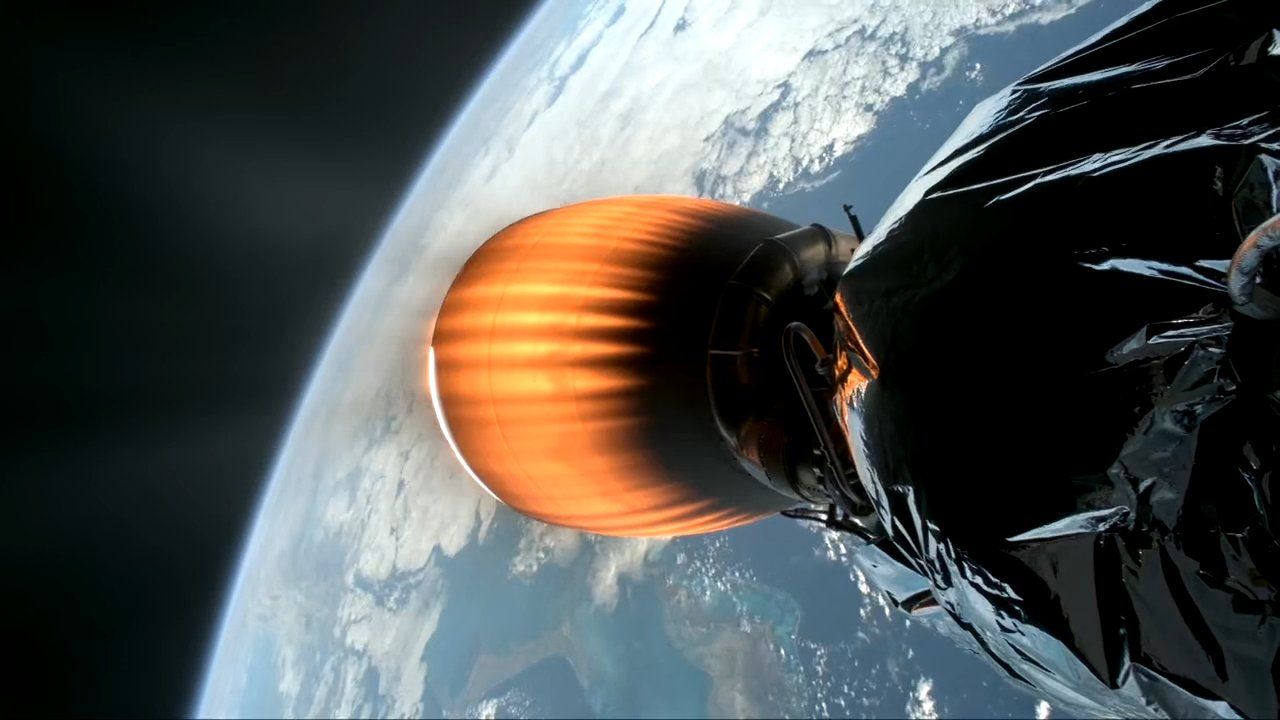
Surprise, surprise: SpaceX shattered its single-year launch record again in 2025.
Elon Musk’s company has now set a new mark six years in a row, and the numbers are getting pretty silly. The record has risen from 25 orbital liftoffs in 2020 to 31 (2021) to 61 (2022) to 96 (2023) to 134 (2024) and, now, to a whopping 167.
That’s a launch almost every other day, a staggering cadence that leaves other companies — and entire nations — in the dust. Indeed, SpaceX launched nearly twice as many orbital missions as China did this year, and the company’s 2025 output represented about 85% of the United States’ total tally.
You may like
All 167 of those launches were conducted by SpaceX’s workhorse Falcon 9, which features a reusable first stage. (There were no liftoffs by the powerful Falcon Heavy, which hasn’t flown since October 2024.) And those Falcon 9 boosters came back to Earth for a safe landing on all but three occasions.
Two of the exceptions were launches in January and October that sent massive Spainsat NG communications satellites to geostationary transfer orbit. These were heavy lifts for the Falcon 9 first stage, which didn’t have enough fuel left over for a return to Earth.
The other non-landing was a failed attempt, suffered during the launch of a batch of Starlink internet satellites on March 3. The booster actually touched down successfully on a drone ship in the Atlantic Ocean as planned that day, but it tipped over after a fire broke out near its base and damaged a landing leg.
Speaking of Starlink missions: They dominated SpaceX’s manifest this year, making up 123 of the 167 Falcon 9 launches. Together, those missions lofted more than 3,000 satellites for the Starlink megaconstellation, which currently consists of more than 9,300 active spacecraft.
SpaceX notched a number of other milestones during this very busy year. For example, the company pulled off its 500th rocket landing and 500th launch of a used rocket in 2025. And it repeatedly extended the record for most launches by a single Falcon 9 booster, which currently stands at 32.
The 167 Falcon 9 missions weren’t SpaceX’s only liftoffs this year, though. The company also launched five suborbital test flights of Starship, a fully reusable vehicle that’s the biggest and most powerful rocket ever built. SpaceX lost at least one of the megarocket’s two stages during the first three Starship flights of the year, but the most recent two, in August and October, were unalloyed successes.
We should see a lot more Starship action in 2026, including the stainless-steel vehicle’s first orbital flight — and maybe, if things go exceedingly well, an uncrewed trip to Mars.
SCIENCE
Centuries-old ‘trophy head’ from Peru reveals individual survived to adulthood despite disabling birth defect


Centuries ago in Peru, a decapitated individual’s head was turned into a “trophy.” Now, a careful look at this trophy head reveals that despite a potentially problematic birth defect, the individual survived into early adulthood.
Based on several photos of the head, a researcher spotted that the individual was born with a cleft lip, Beth Scaffidi, an assistant professor of anthropology and heritage studies at the University of California, Merced, wrote in a new study.
You may like
The latest study, published Nov. 3 in the journal Ñawpa Pacha, is the first time an orofacial cleft has been documented in an Andean trophy head, offering a “unique opportunity” to explore how ancient peoples of the region viewed such conditions, Scaffidi wrote in the paper.
“This finding is important because it shows that people survived, and even thrived, with this condition in the ancient Andes,” Scaffidi told Live Science in an email. “It helps show that what we define as a disability and how we respond to it is culturally, rather than biologically, determined.”
Trophy heads
For millenia, ancient peoples in parts of the Andes mountains in South America, as well as the surrounding regions, collected severed heads as trophies, processing them for preservation and display purposes, Scaffidi said. Most known examples date to between roughly 300 B.C. and A.D. 800, often originating from around modern-day Nazca in coastal Peru’s Ica department (Peru has 24 departments, or regions). Trophy heads were likely passed down as heirlooms through generations, Scaffidi said.
“Most trophies were mummified naturally in the arid desert environment, and many preserve hair and flesh,” Scaffidi said. “We still debate whether these heads were lovingly curated remains of beloved ancestors or souvenirs of violent conquest of enemies, but many do also display violent injuries received before and around the time of death.”
An illustration of the newly analyzed Andean trophy head, which an artist drew based on catalog photos. (Image credit: Grace D. Eriksen; CC BY-NC-ND 4.0)
During a research project, Scaffidi came across an intriguing example in the catalog of the Museum of Modern and Contemporary Art in Saint-Etienne, France, purportedly originating from the Ica department.
Scaffidi examined photographs of the mummified head and determined that the individual was probably male and a young adult at the time of death. Based on the visible facial structures, she diagnosed the individual with a cleft lip.
Perhaps the most serious complication of orofacial clefts is difficulty latching during breastfeeding, but these conditions can also cause respiratory, hearing and speech issues, she wrote in the study. Today, these birth defects are typically treated with surgery in the first few months of life, but in the ancient Andean world they would have presented a significant challenge to mothers and caregivers during the baby’s infancy. The individual Scaffidi studied, for example, would likely have required specialized care to receive nourishment as an infant.
You may like
A special status
But not only did this individual survive into early adulthood, it is possible that their condition even granted them special status, Scaffidi said. Cultural responses to orofacial clefts in the ancient Americas varied widely, from shame to veneration. But taking into account what is known about the worldviews of ancient Andean peoples specifically, it is likely this individual was perceived as sacred and afforded a high-status role throughout life and beyond, Scaffidi said.
In the absence of documentary or textual sources, ancient ceramic vessels from the region — particularly those produced by the Moche culture (A.D. 200 to 850) of northern Peru — provide clues as to how congenital conditions might have been understood at the time.
In the study, Scaffidi found 30 ceramic representations of orofacial clefts that had already been documented from the wider Andean region, 20 of which were from Moche areas. These examples mostly depict males adorned in elite jewelry, head wrappings, or performing shamanic or medical activities, suggesting that they were people of importance. Other research suggests that the Moche believed facial markings protected them from supernatural harm, thus, birth defect markings were revered.
Previous research has indicated that Andean trophy heads were often collected from individuals perceived as having supernatural powers, with the belief that the people taking the heads could use this power to benefit their own communities.
The collection of this particular subject as a trophy head, even through potentially violent means, is consistent with the idea that orofacial clefts were celebrated by the takers, Scaffidi said. What may be seen today as a disability was likely considered a “blessing,” according to the study.
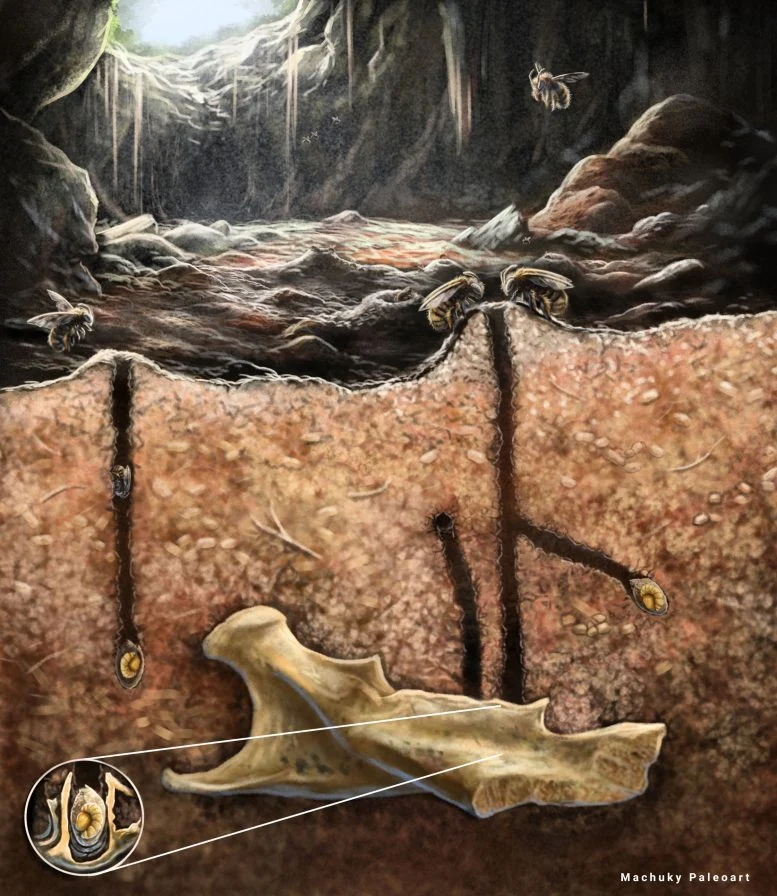
Paleontologists have discovered the first known fossilized bee nests built inside ancient bones, uncovered in a cave that came close to being used as a latrine. A cave on Hispaniola preserves rare evidence that ancient bees nested inside fossil cavities. The find suggests an unusual local environment and a much deeper story about what brought […]
SOURCE PAGE
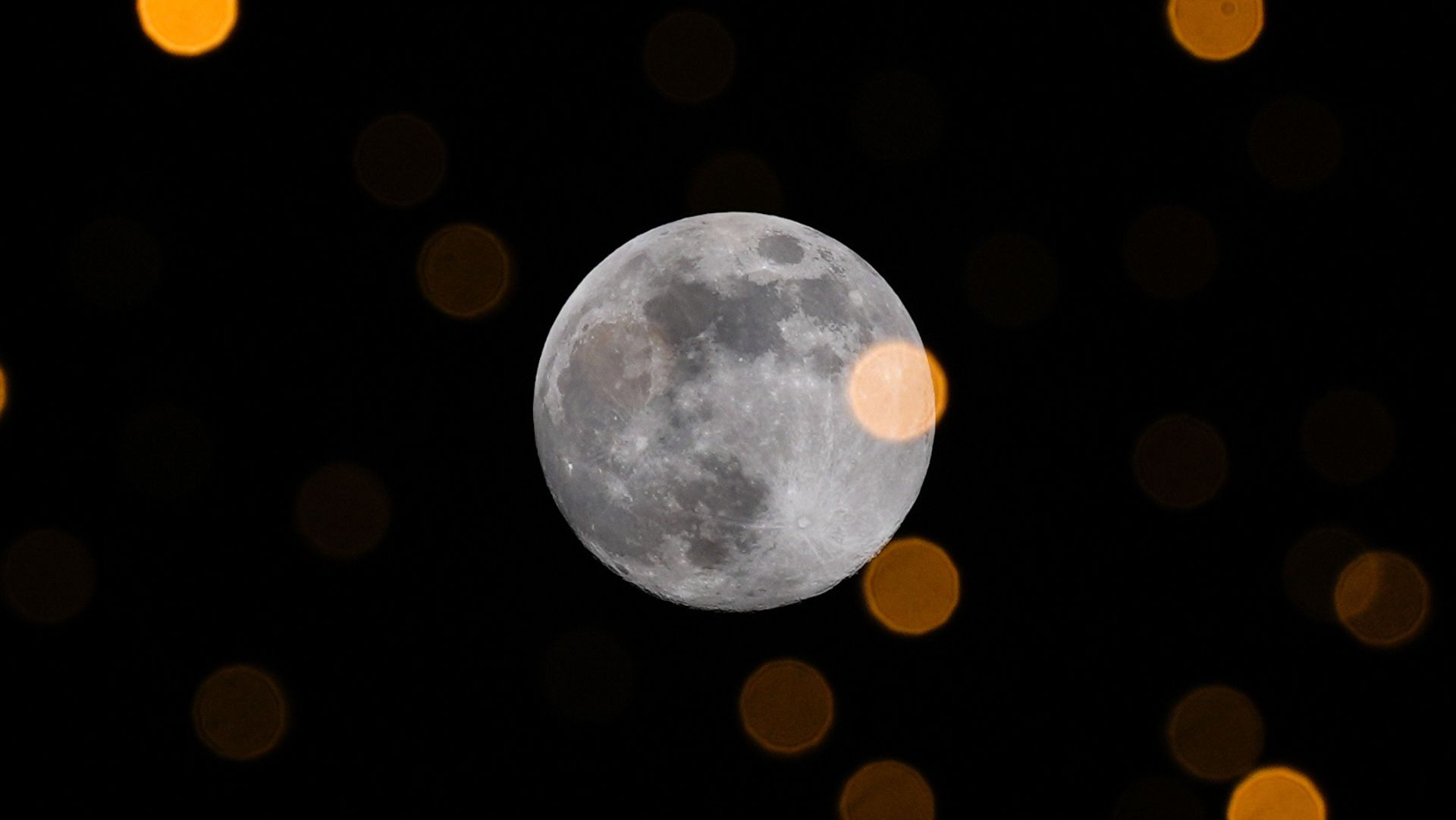
Tear your eyes away from fireworks this New Year’s Eve (Dec. 31) to witness a magnificent natural light show, complete with twinkling constellations and star clusters, the steady light of planets and the awe-inspiring sight of the waxing gibbous moon shining in the constellation Taurus.
The moon will be visible halfway up the eastern horizon in the hours following sunset, with the delicate light of the Pleiades open star cluster vying for attention 5 degrees — roughly the width of your three middle fingers held at arm’s length — to the upper right of the 95%-lit lunar disk.
Look directly below the moon to find the stars of the constellation Orion twinkling close to the eastern horizon. The brightest point of light to Orion’s left is no star at all, but rather the “king of the planets,” Jupiter. On the final night of 2025, Jupiter shines in the constellation Gemini, close to its two brightest stars — Castor and Pollux.
You may like
Saturn’s steady light can also be seen shining halfway up the southern horizon around this time. A telescope with an aperture of around 6 inches will help reveal its famous rings as a thin line bisecting the planet’s cloud tops. The rings are currently oriented edge-on to Earth, but will gradually open up throughout 2026 to reveal their majestic, sweeping structure, including a 2,980-mile (4,800-kilometer) gap known as the Cassini Division.
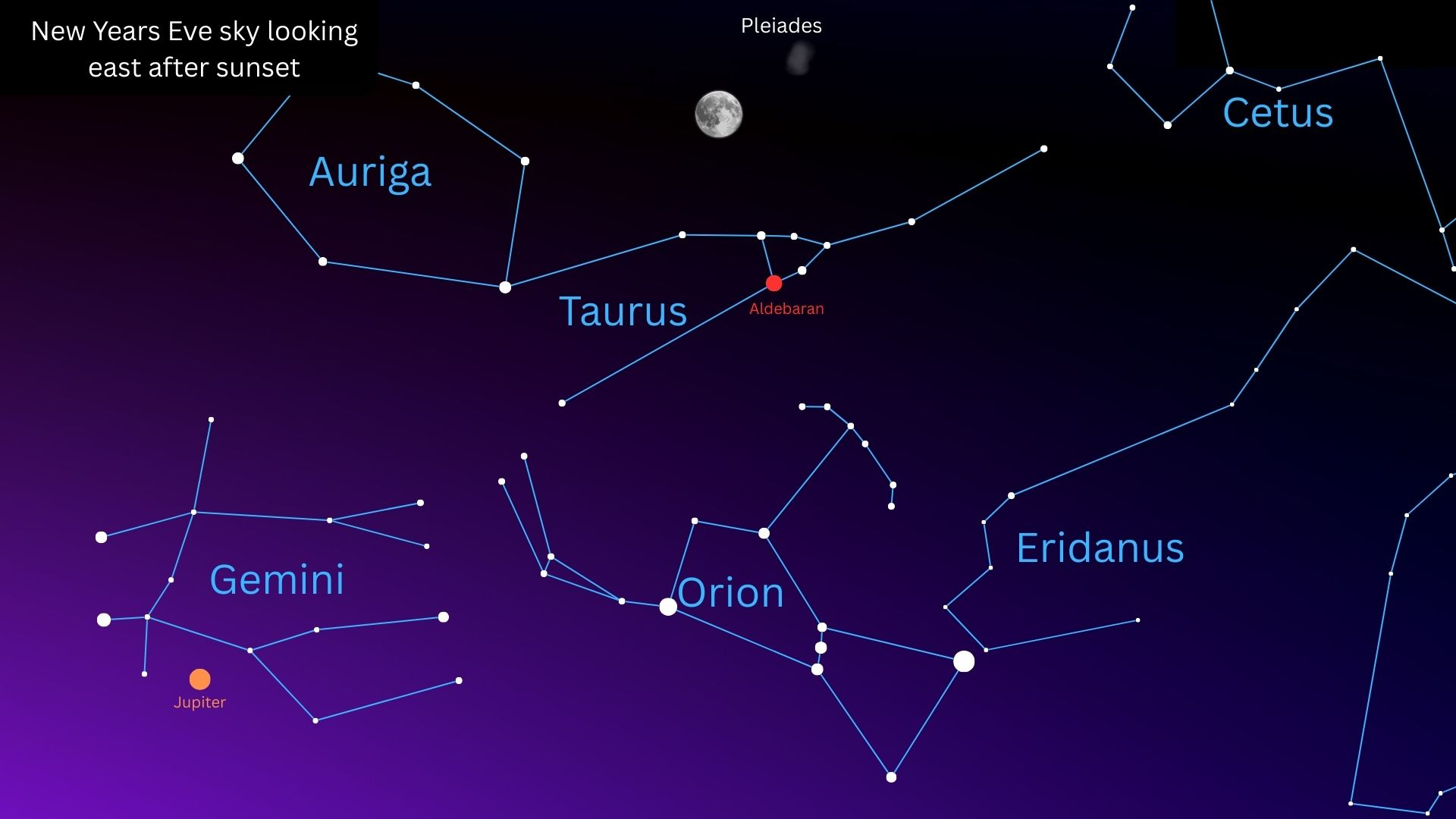
The night sky looking east after sunset on New Years Eve (Image credit: Created by Anthony Wood in Canva)
By midnight, Saturn will have slipped below the horizon, while the moon and Jupiter will stand high overhead. Look roughly 40 degrees above the northern horizon — approximately the width of four clenched fists stacked on top of each other — to find the bright star Polaris, around which the entire sky appears to rotate. To its right you’ll spot the familiar sight of the Big Dipper, tilted so that it appears to be standing on the end of its handle.
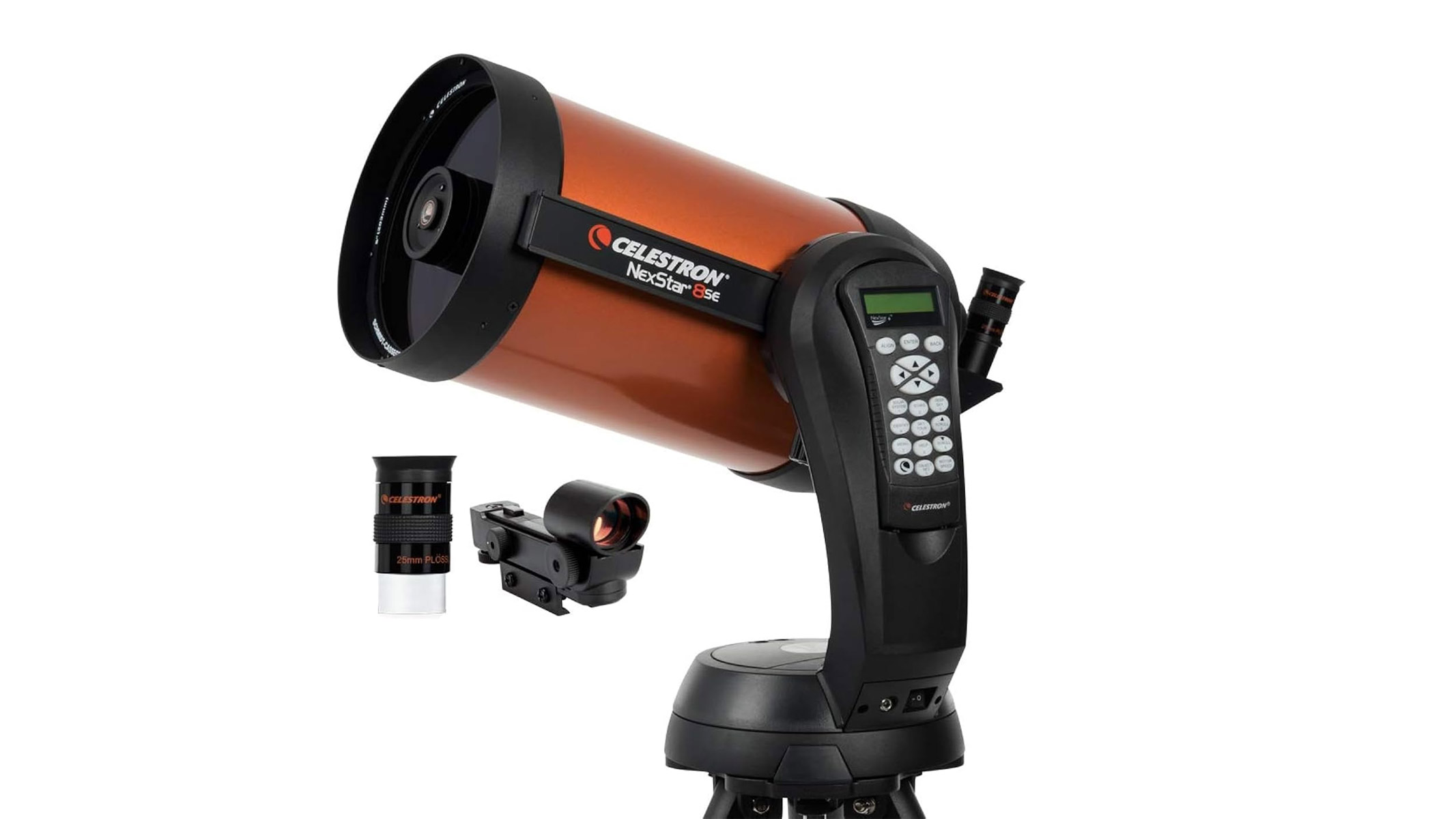
Celestron NexStar 8SE
(Image credit: Amazon)
Looking for a telescope companion to explore the skies with in 2026? We reckon the Celestron NexStar 8SE is the best motorized telescope out there as it’s great for astrophotography, deep-space observing and it offers stunning detailed imagery. It is a little pricey but for what you get, it’s good value. For a more detailed look, you can check out our Celestron NexStar 8SE review.
Those same stars will glide silently through the night as the last moments of 2025 fade and the first of a new year begins, heralding the start of another year of incredible stargazing opportunities.
If you’re new to stargazing, be sure to read our article filled with expert advice on how to begin your amateur astronomy journey. We also have tips on how to observe the moon, along with superb roundups of the best telescope and binocular deals available if you’re looking to upgrade your equipment.
Clear skies and a Happy New Year from everyone here at Space.com!
Editor’s Note: If you would like to share your astrophotography with Space.com’s readers, then please send your photo(s), comments, and your name and location to spacephotos@space.com.
SCIENCE
‘They didn’t de-extinct anything’: can Colossal’s genetically engineered animals ever be the real thing? | Extinct wildlife
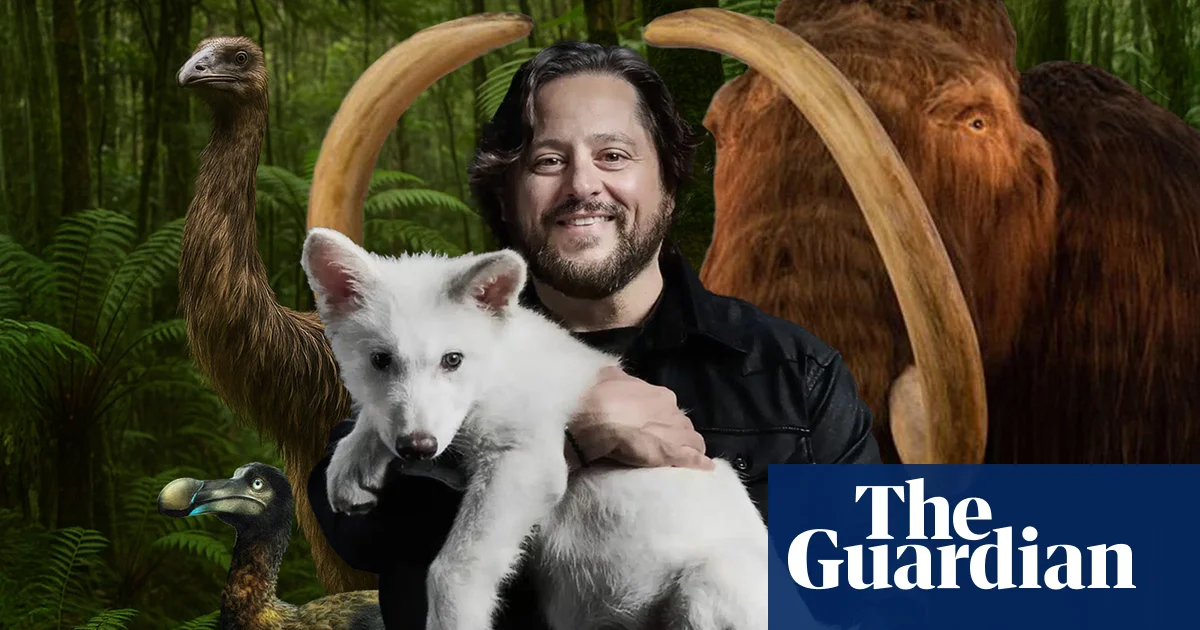
Death and taxes are supposed to be the things we can depend on in this life. But in 2025, the American entrepreneur Ben Lamm sold much of the world on the idea that death did not, after all, need to be for ever.
This was the year the billionaire’s genetics startup, Colossal Biosciences, claimed it had resurrected the dire wolf, an animal that disappeared at the end of the last ice age, by tweaking the DNA of grey wolves. According to the company, it had also edged closer to bringing the woolly mammoth back from the dead, with the creation of genetically engineered “woolly mice”.
In a flurry of high-profile announcements and press releases, it launched projects to revive the Tasmanian tiger (also known as the thylacine), the dodo and the moa, a 3-metre tall bird that has been extinct for 600 years.
“We’ve made a lot of big promises to the world,” Lamm tells the Guardian. “I think that we started to deliver.”
Lamm, a 44-year-old veteran of gaming and AI startups, has brought a brash Silicon Valley showmanship and entrepreneurial drive to the genetic conservation sector – and his approach so far has been extremely lucrative.
A genetically edited mouse with thick hair at a lab in Texas. Colossal created the woolly mouse as part of its plan to recreate mammoths by making an elephant cold-tolerant. Photograph: AP
He quickly realised that de-extinction announcements were a recipe for excitement and publicity. When the company announced its “woolly mouse”, he recalls, “people were losing their minds”.
Watching the response, Lamm says: “I thought: oh my gosh, they’re going to go crazy about the dire wolf stuff.”
He was right. When Colossal unveiled its interpretation of the dire wolf in April, the news made international headlines. Enthusiastic profiles in Time magazine and the New Yorker declared “the dire wolf is back”.
Colossal invited the public to listen to “the first dire wolf howls in over 10,000 years” on YouTube. “Obviously the dire wolves were a massive hit and fan favourite,” Lamm says.
Money poured into Colossal from Hollywood and venture capital firms. The Texas-based start up, co-founded by Lamm and a Harvard geneticist, George Church, was valued at more than $10bn (£7.5bn) at its most recent fundraising round. American socialite and media figure Paris Hilton, filmmaker Peter Jackson, and former American footballer Tom Brady are among the investors, and the company now funds more than 100 scientists working to bring back extinct species from the dead.
Extinction is still for ever. Charles Darwin nicely summed it up: ‘When a group has once wholly disappeared, it does not reappear’Nic Rawlence, University of Otago
Colossal’s approach has also caught the attention of the powerful: the Trump administration cited the “resurrection” of the dire wolf as it made efforts to cut the endangered species list in the US.
“It’s time to fundamentally change how we think about species conservation,” said the US interior secretary, Doug Burgum. “We need to continue improving recovery efforts to make that a reality, and the marvel of ‘de-extinction’ technology can help forge a future where populations are never at risk.”
In the future, he said, “‘de-extinction’ can serve as a bedrock for modern species conservation.”
But the announcements have been met by far less excitement among scientists. Shortly after the dire wolf announcement, and to much less fanfare, a group of the world’s leading experts on canids concluded that the company had not really resurrected the species.
Rather, they had made 20 edits to the DNA of grey wolves, and the resulting animals did not substantially differ from those that now roamed North America, the group said.
Colossal’s ‘dire wolf’ cubs. The species died out 12,000 years ago. Photograph: Colossal/AFP/Getty
Amid the scientific reaction, Colossal’s chief scientist, Beth Shapiro, a leading expert on ancient DNA, acknowledged to New Scientist that: “It’s not possible to bring something back that is identical to a species that used to be alive. Our animals are grey wolves with 20 edits that are cloned.”
Many researchers in the sector who are not employed by Colossal have been far stronger in their criticism of the company’s claims. Nic Rawlence, director of the palaeogenetics laboratory at the University of Otago in New Zealand, is an expert on the moa, which the company is trying to resurrect. Bringing it back from the dead is not possible, Rawlence says.
“Extinction is still for ever. Charles Darwin nicely summed it up when he said, ‘when a group has once wholly disappeared, it does not reappear; for the link of generation has been broken.’
“Rather than true de-extinction, Colossal’s attempts are genetically engineered poor copies at best, passed off as the real deal,” he says. “Colossal are preying on people’s desire to undo the sins of the past. However, to achieve this, Colossal is spreading misinformation and undermining trust in science by attacking critics.”
In a number of academic journals and scientists’ commentaries, the company’s announcements were met with deep scepticism. The geneticist Adam Rutherford called the mammoth announcements “elephantine fantasies” that would only be possible with the invention of time travel.
Others argue that overhyped claims of bringing back lost species weaken trust in science and scientists. “I don’t think they de-extincted anything,” Jeanne Loring, a stem-cell biologist, told Nature.
Those concerns have not slowed the company’s push forward. In the next few years, Colossal’s team of scientists will unveil its interpretation of the woolly mammoth. It will be a genetically modified Asian elephant adapted to live at -40C (-40F), with long hair, small ears and other mammoth characteristics interpreted from frozen DNA, says Lamm, who bristles at the suggestion this creature may not constitute a mammoth.
One of Colossal’s ‘dire wolves’ at the age of one. Critics say the firm merely tweaked grey wolf genes but did not resurrect Aenocyon dirus. Photograph: AP/Colossal
“We believe in free speech so if people want to call our mammoth a mammoth, or a genetically modified, cold-tolerant Asian elephant with lost mammoth alleles [variants of genes] inserted through genetic engineering, we’re cool with that. Whatever,” he says.
“If a child cares more about biodiversity loss and the climate because they saw a Colossal mammoth, who gives a shit?” Lamm adds. “That’s our view.”
Modern conservation doesn’t work at the speed at which we are eradicating species and changing the planetBen Lamm
For a number of scientists, making public criticisms of the company has come at a cost. In July, New Scientist revealed that several scientists who had been critical of Colossal had been the subject of seemingly AI-generated articles in a mystery smear campaign, attacking their credentials and academic records.
Lamm says the company has nothing to do with the stories. “We have a lot of support from different communities publicly, ranging from scientists all the way to crypto; it’s a big spectrum. People argue about things all the time. So, if you are going to be a critic, you should be comfortable that you may also be criticised,” he says.
The criticism has irritated Lamm. He points to Colossal’s efforts to conserve elephants and in trying to save the northern white rhino as evidence that his company can change the way the sector works. The company’s website frames its work as part of efforts to counteract the collapse of biodiversity, which some scientists have called the sixth mass extinction of life on Earth.
An impression of a South Island giant moa, one of two species of the tallest birds that ever existed, with a human drawn to scale. Colossal says it is trying to revive the extinct New Zealand birds. Photograph: Colossal
“The worst part of conservation is conservationists ,” he says. “A lot of models out there are not working and we need new models. The reality is, modern conservation – while it works – doesn’t work at the speed at which we are eradicating species and changing the planet.
“We’ve got to get more of these incredible scientists off the couch and in the field saving animals. They must communicate it in a way that isn’t behind some paywalled scientific paper but in a way that gets a kid, like, ‘Oh, I want to go to Africa and save elephants. Oh my gosh, I have to save the dugong. What do you mean drug cartels are killing the vaquita? How can I help that?’”
Even Colossal’s harshest critics recognise the potential of gene editing to save species caught in genetic bottlenecks. Many wildlife populations have become dangerously inbred as their numbers dwindle, and Colossal is working to reintroduce genetic diversity back into populations, such as the critically endangered red wolf in North America, by reintroducing lost genes from museum specimens.
Despite the excitement and money around Colossal, however, conservationists say its work can never be a substitute for traditional efforts to save species from extinction: the time-consuming work of controlling predators, protecting ecosystems and restoring habitats.
“De-extinction technology could be a useful conservation tool for living species,” says Rawlence, “but it won’t replace unsexy grunt work.”
Find more age of extinction coverage here, and follow the biodiversity reporters Phoebe Weston and Patrick Greenfield in the Guardian app for more nature coverage
Ancient Australian rocks suggest Earth’s continents formed later than expected and share a common origin with the Moon. A study of feldspar crystals preserved in Australia’s oldest magmatic rocks is shedding new light on the early evolution of Earth’s mantle and continents, as well as the origins of the Moon. The research was led by […]
SOURCE PAGE

Earth is surrounded by human-made debris that orbits our planet. The problem is worsening every year, and 2025 was no different.
Space debris experts say nearly 130 million pieces of orbital junk are zipping around our planet: high-speed leftovers from rocket stage explosions, abandoned satellites, as well as bits and pieces of junk from space hardware deployments. Some of this meandering mess is the result of the deliberate demolition of spacecraft by way of anti-satellite weapons testing.
All this space clutter means increased risk of collisions that generate more debris — better known as the Kessler syndrome. That cascading effect was detailed back in 1978 by NASA scientists, Donald Kessler and Burton Cour-Palais in the seminal space physics paper “Collision frequency of artificial satellites: The creation of a debris belt.” 47 years later, the problem has only gotten worse, and as several debris strike incidents this year show, we still have no good way to solve or even slow down the accumulation of orbital debris around our planet.
You may like
Debris strike prompts emergency launch
As China’s Shenzhou-20 astronauts were preparing to undock from the country’s space station on Nov. 5, that crew found that their spacecraft had developed tiny cracks in its viewport window. The cause was tagged to an external impact from space debris, rendering the craft unsuitable for a safe crew return.
This incident called for the first emergency launch mission in China’s human spaceflight program; an uncrewed, cargo-loaded Shenzhou-22 spaceship was launched on Nov. 25.
The Shenzhou saga ended well with the Chinese astronauts safely returning to Earth aboard the Shenzhou-21 spacecraft. It was the first alternative return procedure activated in the history of China’s space station program.

China’s Shenzhou-20 commander Chen Dong salutes a crowd. (Image credit: VCG/Getty Images)
However, the Shenzhou-20 landing delay is not just a procedural footnote. It’s a signal about the state of our orbital commons, said Moriba Jah, a space debris expert and professor at the University of Texas at Austin.
“A crew return was postponed because microscopic debris compromised a spacecraft window,” Jah told Space.com. “That decision, to delay and substitute vehicles, reflects responsible risk management grounded in incomplete knowledge. It also exposes the deeper issue. That is, our collective inability to maintain continuous, verifiable understanding of what moves through orbit,” he said.
Every fragment we leave aloft, said Jah, “adds to a rising tide of uncertainty.”
Wanted: data fidelity and transparency
That uncertainty is not merely statistical, it is epistemic, Jah said. “When the rate at which uncertainty grows exceeds the rate at which knowledge is renewed, safety margins erode,” advocating the designing of missions, governance frameworks, and information systems that “regenerate knowledge faster than it decays,” he said.
You may like
A cracked window of the Shenzhou-20 spacecraft, Jah said, “traces back to gaps in global tracking, attribution, and accountability. Until nations and companies treat data fidelity and transparency as part of safety engineering, similar near-misses will recur.”
China’s decision to delay the Shenzhou-piloted vessel’s re-entry until its engineers were confident in the assessment “was an act of epistemic humility — recognizing what was unknown and adjusting accordingly. Such humility should be codified, not exceptional,” he said.
In practice, Jah said that the Shenzhou-20 episode should push the international community toward auditable stewardship, that is, common baselines for orbital situational awareness, interoperable knowledge graphs, and certification programs that recognize missions restoring order rather than adding risk.
“Only by aligning engineering, policy, and information ethics can we prevent ‘routine’ anomalies from becoming precursors to catastrophe,” Jah said. “If we learn the right lesson, this will not be remembered as a lucky escape but as a turning point,” he said, adding that “evidence that safety in orbit begins with honesty about what we do and do not know, and with the will to regenerate knowledge faster than we lose it.”
Ignoring long-term effects
Darren McKnight is a senior technical fellow of LeoLabs, a group dedicated to space domain awareness.
For McKnight the biggest issues in 2025 were:
- Proliferation of satellite constellations, some responsibly like Starlink, Iridium, and OneWeb and some poorly like China’s “Thousand Sails” megaconstellation and its “Guowang” satellite internet payloads, leaving rocket bodies at a high rate and at high altitudes and not working with other constellations to “show your work, share your work, and understand context.”
- Abandonment of rocket bodies in orbits that will linger for more than 25 years. The good news is there can be a 30% reduction in debris-generating potential in low Earth orbit by removing the top 10 statistically-most-concerning objects. The bad news, however, is that the global community is leaving rocket bodies at an accelerating rate despite the known negative, long-term effects for doing so.
“Some operators in low Earth orbit are ignoring known long-term effects of behavior for short-term gain,” McKnight said, a situation he senses that parallels the early stages of global warming.
“Some will not change behavior until something bad happens.” McKnight concluded.
Risks and responsibilities
Raising another voice of concern is the United Nations Environment Program (UNEP). This month it released “Safeguarding Space: Environmental Issues, Risks and Responsibilities.” That document dubbed a set of space debris woes as “emerging issues.”
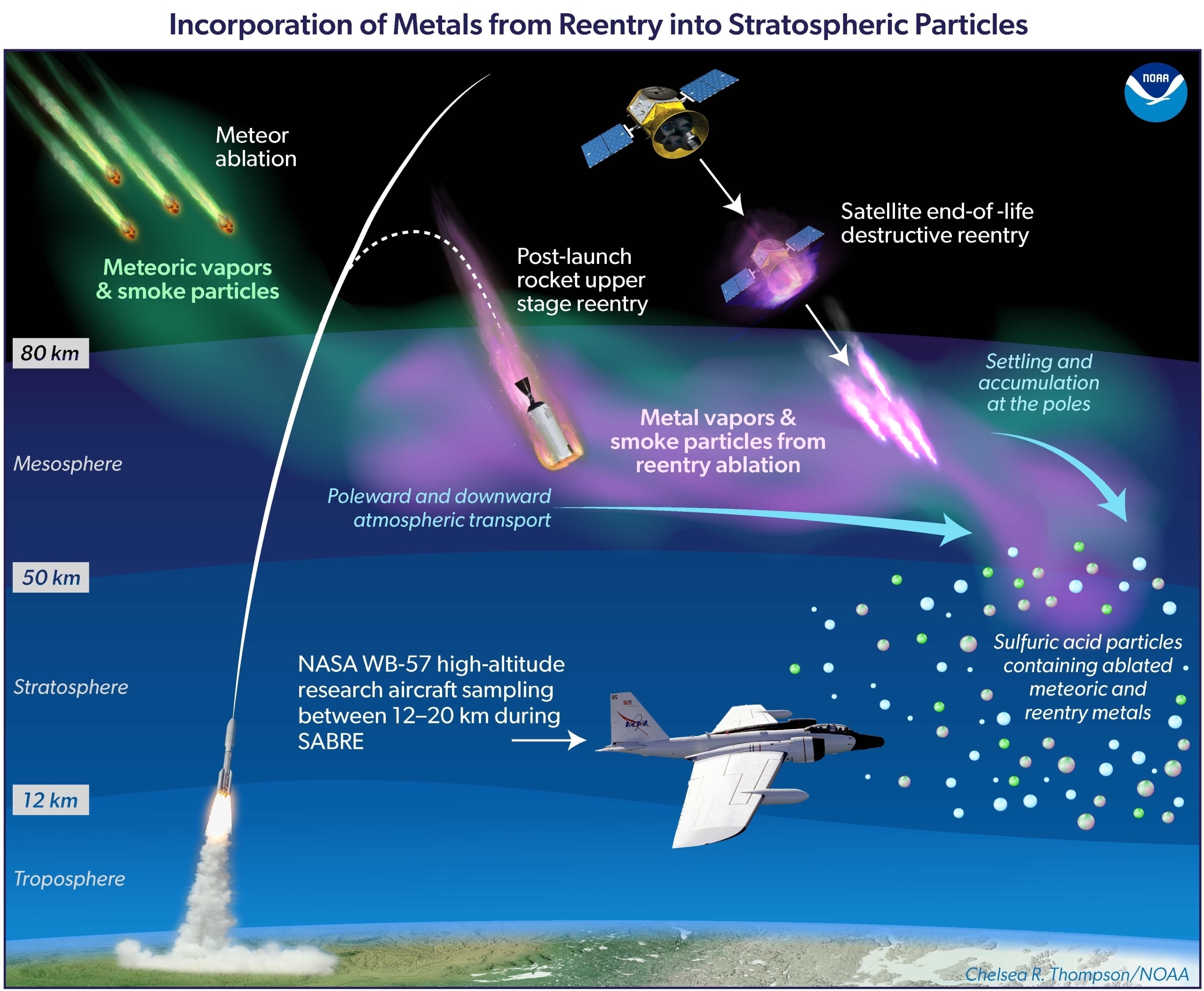
In an era of increasing global launch rates, heightened by the buckshot approach to tossing mega-satellite constellations into Earth orbit, there’s also escalating anxiety about the ramifications from reentry of defunct space hardware. (Image credit: Chelsea Thompson/NOAA)
“The space sector is growing exponentially, with over 12,000 spacecraft deployed in the past decade and many more planned as the world embraces the benefits provided by satellite services. This growth presents significant environmental challenges at all layers of the atmosphere,” the document explains.
Specifically flagged by the UNEP are air pollution from launch emissions, spacecraft emissions in the stratosphere, as well as space debris re-entry and the potential to alter Earth’s atmospheric chemistry and dynamics with implications for climate change and depleting stratospheric ozone.
The UN group’s bottom line?
“A multilateral, interdisciplinary approach is needed to better understand the risks and impacts and how to balance them with the essential daily services and benefits that space activity brings to humanity,” the document states.
SCIENCE
3.7-Billion-Year-Old Rocks Challenge Long-Held Ideas About Earth’s Early Continents || 3.7-Billion-Year-Old Rocks in Australia Are Rewriting the Story of Earth’s First Continents

Ancient Australian rocks suggest Earth’s continents formed later than expected and share a common origin with the Moon. A study of feldspar crystals preserved in Australia’s oldest magmatic rocks is shedding new light on the early evolution of Earth’s mantle and continents, as well as the origins of the Moon. The research was led by […]
SOURCE PAGE
SCIENCE
‘Artificial intelligence’ myths have existed for centuries – from the ancient Greeks to a pope’s chatbot

It seems the AI hype has turned into an AI bubble. There have been many bubbles before, from the Tulip mania of the 17th century to the derivatives bubble of the 21st century. For many commentators, the most relevant precedent today is the dotcom bubble of the 1990s. Back then, a new technology (the World Wide Web) unleashed a wave of “irrational exuberance.” Investors poured billions into any company with “.com” in the name.
Three decades later, another new technology has unleashed another wave of exuberance. Investors are pouring billions into any company with “AI” in its name. But there is a crucial difference between these two bubbles, which isn’t always recognised. The World Wide Web existed. It was real. General Artificial Intelligence does not exist, and no one knows if or when it ever will.
You may like
So why are investors so keen to give money to the people selling AI systems? One reason might be that AI is a mythical technology. I don’t mean it is a lie. I mean it evokes a powerful, foundational story of Western culture about human powers of creation.
Perhaps investors are willing to believe AI is just around the corner because it taps into myths that are deeply ingrained in their imaginations?
The myth of Prometheus
The most relevant myth for AI is the Ancient Greek myth of Prometheus.
There are many versions of this myth, but the most famous are found in Hesiod’spoems Theogony and Works and Days, and in the play Prometheus Bound, traditionally attributed to Aeschylus.
Prometheus was a Titan, a god in the Ancient Greek pantheon. He was also a criminal who stole fire from Hephaestus, the blacksmith god. Hiding the fire in a stalk of fennel, Prometheus came to earth and gave it to humankind. As punishment, he was chained to a mountain, where an eagle visited every day to eat his liver.
Prometheus’ gift was not simply the gift of fire; it was the gift of intelligence. In Prometheus Bound, he declares that before his gift humans saw without seeing and heard without hearing. After his gift, humans could write, build houses, read the stars, perform mathematics, domesticate animals, construct ships, invent medicines, interpret dreams and give proper offerings to the gods.
The myth of Prometheus is a creation story with a difference. In the Hebrew Bible, God does not give Adam the power to create life. But Prometheus gives (some of) the gods’ creative power to humankind.
You may like
Hesiod indicates this aspect of the myth in Theogony. In that poem, Zeus not only punishes Prometheus for the theft of fire; he punishes humankind as well. He orders Hephaestus to fire up his forge and construct the first woman, Pandora, who unleashes evil on the world.
The fire that Hephaestus uses to make Pandora is the same fire that Prometheus has given humankind.
In this 18th-century engraving, Prometheus constructs the first man. (Image credit: AnonymousUnknown author, Public domain, via Wikimedia Commons)
The Greeks proposed the idea that humans are a form of artificial intelligence. Prometheus and Hephaestus use technology to manufacture men and women. As historian Adrienne Mayor reveals in her book Gods and Robots, the ancients often depicted Prometheus as a craftsman, using ordinary tools to create human beings in an ordinary workshop.
If Prometheus gave us the fire of the gods, it would seem to follow that we can use this fire to make our own intelligent beings. Such stories abound in Ancient Greek literature, from the inventor Daedalus, who created statues that came to life, to the witch Medea, who could restore youth and potency with her cunning drugs. Greek inventors also constructed mechanical computers for astronomy and remarkable moving figures powered by gravity, water and air.
The Pope and the chatbot
2,700 years have passed since Hesiod first wrote down the story of Prometheus. In the ensuing centuries, the myth has been endlessly retold, especially since the publication of Mary Shelley’s Frankenstein; or the Modern Prometheus in 1818.
But the myth is not always told as fiction. Here are two historical examples where the myth of Prometheus seemed to come true.
Gerbert of Aurillac was the Prometheus of the 10th century. He was born in the early 940s CE, went to school at Aurillac Abbey, and became a monk himself. He proceeded to master every known branch of learning. In the year 999, he was elected Pope. He died in 1003 under his pontifical name, Sylvester II.
Rumours about Gerbert spread wildly across Europe. Within a century of his death, his life had already become legend. One of the most famous legends, and the most pertinent in our age of AI hype, is that of Gerbert’s “brazen head.” The legend was told in the 1120s by the English historian William of Malmesbury, in his well researched and highly regarded book, Deeds of the English Kings.
Gerbert was deeply learned in astronomy, a science of prediction. Astronomers could use the astrolabe to predict the position of the stars and foresee cosmological events such as eclipses. According to William, Gerbert used his knowledge of astronomy to construct a talking head. After inspecting the movements of the stars and planets, he cast a head in bronze that could answer yes-or-no questions.
First Gerbert asked the head: “Will I become Pope?”
“Yes,” answered the head.
Then Gerbert asked: “Will I die before I sing mass in Jerusalem?”
“No,” the head replied.
In both cases, the head was correct, though not as Gerbert anticipated. He did become Pope, and he sensibly avoided going on pilgrimage to Jerusalem. One day, however, he sang mass at Santa Croce in Gerusalemme in Rome. Unfortunately for Gerbert, Santa Croce in Gerusalemme was known in those days simply as “Jerusalem.”
Gerbert sickened and died. On his deathbed, he asked his attendants to cut up his body and cast away the pieces, so he could go to his true master, Satan. In this way, he was, like Prometheus, punished for his theft of fire.

Pope Sylvester II and the Devil (Image credit: Chronicon pontificum et imperatorum, Public domain, via Wikimedia Commons)
It is a thrilling story. It is not clear whether William of Malmesbury actually believed it. But he does try to persuade his readers that it is plausible. Why did this great historian with a devotion to the truth insert some fanciful legends about a French pope into his history of England? Good question!
Is it so fanciful to believe that an advanced astronomer might build a general-purpose prediction machine? In those days, astronomy was the most powerful science of prediction. The sober and scholarly William was at least willing to entertain the idea that brilliant advances in astronomy might make it possible for a Pope to build an intelligent chatbot.
Today, that same possibility is credited to machine-learning algorithms, which can predict which ad you will click, which movie you will watch, which word you will type next. We can be forgiven for falling under the same spell.
The anatomist and the automaton
The Prometheus of the 18th century was Jacques de Vaucanson, at least according to Voltaire:
Bold Vaucanson, rival of Prometheus,Seems, imitating the springs of nature,To steal the fire of heaven to animate the body.

Jacques de Vaucanson – Joseph Boze (1784) (Image credit: Joseph Boze, Public domain, via Wikimedia Commons)
Vaucanson was a great machinist, famous for his automata. These were clockwork devices that realistically simulated human or animal anatomy. Philosophers of the time believed that the body was a machine — so why couldn’t a machinist build one?
Sometimes Vaucanson’s automata were scientifically significant. He constructed a piper, for example, that had lips and lungs and fingers, and blew the pipe in much the same way a human would. Historian Jessica Riskin explains in her book The Restless Clock that Vaucanson had to make significant discoveries in acoustics in order to make his piper play in tune.
Sometimes his automata were less scientific. His digesting duck was hugely famous, but turned out to be fraudulent. It appeared to eat and digest food, but its poos were in fact prefabricated pellets hidden inside the mechanism.
Vaucanson spent decades working on what he called a “moving anatomy.” In 1741, he presented a plan to the Lyons Academy to build an “imitation of all animal operations.” Twenty years later, he was at it again. He secured support from King Louis XV to build a simulation of the circulatory system. He claimed he could build a complete, living artificial body.

Three of Vaucanson’s famous automata: the Flute Player, the Digesting Duck, and the Provençal Farmer, who played the pipe and tambourine. (Image credit: See page for author, Public domain, via Wikimedia Commons)
There is no evidence that Vaucanson ever completed a whole body. In the end, he couldn’t live up to the hype. But many of his contemporaries believed he could do it. They wanted to believe in his magical mechanisms. They wished he would seize the fire of life.
If Vaucanson could manufacture a new human body, couldn’t he also repair an existing one? This is the promise of some AI companies today. According to Dario Amodei, CEO of Anthropic, AI will soon allow people “to live as long as they want.” Immortality seems like an attractive investment.
Sylvester II and Vaucanson were great technologists, but neither was a Prometheus. They stole no fire from the gods. Will the aspiring Prometheans of Silicon Valley succeed where their predecessors have failed? If only we had Sylvester II’s brazen head, we could ask it.
This edited article is republished from The Conversation under a Creative Commons license. Read the original article.

We continue to review the ever-growing list of the best star projectors that are entering the market, and we get especially excited when brands we rate release new models.
In September, Govee released two new models to its star projector portfolio, joining the now year-old Govee Star Light Projector (Nebula), which we reviewed earlier this year.
Specifications
Size: 9.37 x 6.41 x 5.82 inches
Weight: 4.4 pounds (2.01 kilograms)
Laser: Yes, Class 1
Control: On-body, app, voice
Rotation: Yes
Sleep timer: Yes
Speaker: Yes
Projection surface: 90° wide projection covering 301 sqft
The first, Govee Star Light Projector (Ocean Wave), is only slightly different from the aforementioned model, offering dynamic water-inspired patterns as opposed to Nebula-inspired ones.
The other, which we are reviewing, is the model H609D, a disk-based projector. It projects an 8K ultra-high-definition image from the supplied disks. It still includes a built-in speaker, white noise effects and laser ‘stars’. But does it stand up against the stiff competition in the disk-based star-projector world? Let’s find out.
Govee Star Light Projector review
Govee Galaxy Light Projector 2 Pro: Design
★★★★

The Govee Star Light Projector is fairly large and weighty, but it feels like a premium product. (Image credit: Tantse Walter)
- Nicely designed packaging
- Fairly large footprint
- Quality-looking unit
As with the Govee Star Light Projector (Nebula), the packaging of the Govee is nicely designed and stylish. It is a large rectangular box made from high-quality materials and the unit is packed securely inside with polyethylene foam. It would be wonderful to give or receive as a gift.
Image 1 of 1
 The packaging is lovely and protects the unit well.(Image credit: Tantse Walter)
Unlike some units we’ve reviewed, the spelling and grammar are correct (we often find them as a result of poor translations), which can instantly reduce the perceived integrity of the product.

The on-body buttons control the basic functionality. Unfortunately, they still don’t glow in the dark, making them quite difficult to see in the dark. (Image credit: Tantse Walter)
This relatively large projector comes with a separate rubberized stand. The purpose is not entirely clear, except to give the user the freedom to adjust the projection angle from ceiling to wall, although other models have incorporated this functionality into their main stands. It is not a drawback, just an observation.
The unit adopts a modern capsule-style design, moving away from the American football shape seen in previous Govee models. Its interface is straightforward, with the projector lens and lasers positioned on one side and a disk tray with four control buttons on the top. It is a sleek, unobtrusive device that would blend comfortably into most interiors.
The eight supplied disks are packaged in a compact booklet, which we prefer to the individual plastic cases often used for single disks. The book format is far more practical for storing small, thin slides.
Govee Galaxy Light Projector 2 Pro: Performance
★★★★
- Fast smart home connection using “Matter”
- Bright enough for use in dark rooms and on dark walls
- Noisy motor
As with the previous version of the Govee projector, “Matter” connectivity means we were up and running in seconds, unlocking all functionality in the Govee app and linking it to our Google Home account. You can also integrate it with Alexa, which we expect is just as easy a process.

The projector and stand are two separate objects. We appreciated the rubberized casing around the stand. (Image credit: Tantse Walter)
As this is a disk-based projector, there is limited customization in terms of colors and patterns, as it does not offer this functionality. The stars either ‘diffuse’ or ‘gather’, head from the outside edge in, or the inside edge out. That said, there are still several ‘scene’ modes displayed on the app, that tweak things like the rotation speed, the arrangement and movement style of the lasers and add ‘white noise’.
The Class 1 lasers are very bright, even in a brightly lit room; however, the disk-based projection requires a dark room, even when it’s at full brightness.
The lasers are the most dynamic we have seen. They don’t simply rotate in a circle; the different scene selections activate some lasers, turn others off, make some bright and some dull, and some move quickly, while others move slowly. You get the idea. They are more like dancing fireflies than predictable laser dots. This was our favorite thing about the device.

In a dark room, the projections are bright with vivid colors. (Image credit: Tantse Walter)
The disk-based projections are attractive, but there is no indication of what each disk is meant to depict. Unless you are already familiar with nebulae or space imagery, you are essentially looking at something pretty without knowing what it represents. Disks from previous models are not compatible with this unit; the new disks use a square format, and we have not yet found anywhere to purchase additional ones.
We also noticed that most of the detail in each projection sits around the outer edge of the disk. A more even distribution would have avoided the effect of a colorful ring with a largely empty centre. Naturally, the further the projector is from the wall or ceiling, the larger that circle becomes. It is also worth mentioning that a few Amazon reviewers report that the disk images fade quickly. We have not used the unit long enough to confirm this ourselves, but it is concerning, given that we still do not know where replacement disks can be sourced.
We were hopeful that the motor noise present in the Govee Nebula we reviewed earlier this year would be addressed. The unit is pleasantly quiet at first, at least until the cooling fan activates. The fan is obviously necessary to prevent overheating, but it is fairly loud and typically switches on after 20–30 minutes of use. On several occasions, we used the projector to fall asleep, only to be woken by the fan’s whirr. It is something to keep in mind if you plan to use it as a sleep aid without white noise or music to mask the sound. If you are using the projector while watching a film, gaming or hosting a party, the noise is unlikely to be an issue.
Govee Galaxy Light Projector 2 Pro: Functionality
★★★★

The projector is fairly large compared with other models we’ve tested like the Pococo and Orzorz projectors. (Image credit: Tantse Walter)
- Smart integration is great
- Requires mains power
- Good Bluetooth Speaker
Although you can use the on-body buttons for basic controls, the Govee app unlocks all of the star projector’s advanced features.
Setup through the dedicated Govee app is seamless — no error messages, no frustrating reboots or restarts. It just works.
20 scene modes adjust the speed, brightness, white noise track (if enabled) and laser direction. The variations between modes are subtle, but distinct enough to have standouts — our favorites being Cosmic Waves and Interstellar Travel.
Within the app, you can control the sleep timer and the wake-up timer. The unit is set to turn off automatically after 120 minutes. This is apparently designed to help increase the disks’ lifespans. We’d have preferred it to be a little longer, to account for watching alongside long movies or an evening gaming stint, but it’s easy enough to turn the unit off and on again to restart the timer.
As well as being able to pair the star projector with another Bluetooth device (like your phone) to play music, it also comes with 50 ‘white noise’ sounds — though ‘ambient noise’ would be a better description. There is themed music and sound effects, but funnily enough, no actual ‘white noise’.
The speaker is good enough for a pleasant listening experience. Lacking large amounts of bass, like most Bluetooth speakers do, but good enough for background music, podcasts, audiobooks and spa music.
This is a mains-powered unit and, unfortunately, isn’t rechargeable. In reality, you’re likely to find a good spot for your projector and leave it there rather than moving it around too often, so this isn’t a deal breaker for us.
Should I buy the Govee Galaxy Light Projector 2 Pro?
Buy it if:
✅ You are looking for a disk-based projector that you don’t need to move too often: This is a mains-powered unit, best for keeping in situ.
✅ You like buying from reputable manufacturers: Govee is a trusted manufacturer of ambient lighting solutions, not a distributor of mass-produced ‘cheap’ units.
Don’t buy it if:
❌ You want something with a small footprint: If space is limited, you’ll want something that occupies less of it.
❌ You don’t want a disk-based projector: For that, try the previous model, the Govee Star Light Projector, which allows you to customize a plethora of lights and patterns to your liking.
This isn’t a budget-friendly star projector; in fact, it sits at the pricier end of the spectrum (unless we’re talking about the truly expensive ones). At the time of writing, it’s currently retailing for $149.99, which we do think is pretty steep, especially when much cheaper models are available and probably do just as good a job. For example, the Orzorz Galaxy Lite disk-based projector is one of the best models we have reviewed for image vividness and brightness; however, it lacks a built-in speaker.
For a good ‘lights and patterns’ style projector, the Cadrim, which we reviewed earlier this year, is a very affordable option that operates quietly and only takes up a tiny amount of space. It is controlled by a supplied remote control rather than an app, so it’s great for keeping children off their screens, too. The Cadrim would be a good option to give as a gift, whereas this Govee model would be better as an indulgent ‘me to me’ holiday purchase.
If a disk-based projector without a speaker is definitely what you are after, the Sega Toys Homestar Matataki is our top choice for a plug-in device, and the Pococo Galaxy Star Projector is the best rechargeable option. For a disk-based option with a speaker, this is the best we’ve come across to date.
SCIENCE
Enough fresh water is lost from continents each year to meet the needs of 280 million people. Here’s how we can combat that.

Earth’s continents are drying up at an alarming rate. Now, a new report has painted the most detailed picture yet of where and why fresh water is disappearing — and outlined precisely how countries can address the problem.
Continental drying is a long-term decline in fresh water availability across large land masses. It is caused by accelerated snow and ice melt, permafrost thaw, water evaporation and groundwater extraction. (The report’s definition excludes meltwater from Greenland and Antarctica, the authors noted.)
You may like
Continents have now surpassed ice sheets as the biggest contributor to global sea level rise, because regardless of its origin, the lost fresh water eventually ends up in the ocean. The new report found this contribution is roughly 11.4 trillion cubic feet (324 billion cubic meters) of water each year — enough to meet the annual water needs of 280 million people.
Continental Drying: Charting a Path to Water Security – YouTube
Far-reaching impacts
The report was published Nov. 4 by the World Bank. Its results are based on 22 years of data from NASA’s GRACE mission, which measures small changes in Earth’s gravity resulting from shifting water. The authors also compiled two decades’ worth of economic and land use data, which they fed into a hydrological model and a crop-growth model.
The average amount of fresh water lost from continents each year is equivalent to 3% of the world’s annual net “income” from precipitation, the report found. This loss jumps to 10% in arid and semi-arid regions, meaning that continental drying hits dry areas such as South Asia the hardest, Zhang said.
This is a growing problem. In a study published earlier this year, Zhang, Famiglietti and their colleagues showed that separate dry areas are rapidly merging into “mega-drying” regions.
“The impact is already being felt,” Zhang said. Regions where agriculture is the biggest economic sector and employs the most people, such as sub-Saharan Africa and South Asia, are especially vulnerable. “In sub-Saharan Africa, dry shocks reduce the number of jobs by 600,000 to 900,000 a year. If you look at who are the people being affected, those most hard hit are the most vulnerable groups, like landless farmers.”
Countries that don’t have a large agricultural sector are also indirectly affected, because most of them import food and goods from drying regions.
You may like
The consequences for ecosystems are dramatic, too. Continental drying increases the likelihood and severity of wildfires, and this is especially true in biodiversity hotspots, the report found. At least 17 of the 36 globally recognized biodiversity hotspots — including Madagascar and parts of Southeast Asia and Brazil — show a trend of declining freshwater availability and have a heightened risk of wildfires.
“The implications are so profound,” Famiglietti told Live Science.
The biggest culprit
Currently, the biggest cause of continental drying is groundwater extraction. Groundwater is poorly protected and undermanaged in most parts of the world, meaning the past decades have been a pumping “free-for-all,” Famiglietti said. And the warmer and drier the world gets due to climate change, the more groundwater will likely be extracted, because soil moisture and glacial water sources will start to dwindle.
However, better regulations and incentives could reduce groundwater overpumping. According to the report, agriculture is responsible for 98% of the global water footprint, so “if agriculture water use efficiency is improved to a certain benchmark, the total amount of the water that can be saved is huge,” Zhang said.
Globally, if water use efficiency for 35 key crops, such as wheat and rice, improved to median levels, enough water would be saved to meet the annual needs of 118 million people, the researchers found. There are many ways to improve water use efficiency in agriculture; for example, countries could change where they grow certain crops to match freshwater availability in different regions, or adopt technologies like artificial intelligence to optimize the timing and amount of irrigation.
Countries can also set groundwater extraction limits, incentivize farmers through subsidies and raise the price of water for agriculture. Additionally, the report showed that countries with higher energy prices had slower drying rates because it costs more to pump groundwater, which boosts water use efficiency.
Overall, water management at the national scale works well, according to the report. Countries with good water management plans depleted their freshwater resources two to three times more slowly than countries with poor water management.
Virtual water trade
On the global scale, virtual water trade is one of the best solutions to conserve water if it is done right, Zhang said. Virtual water trade occurs when countries exchange fresh water in the form of agricultural products and other water-intensive goods.
Global water use increased by 25% between 2000 and 2019. One-third of that increase occurred in regions that were already drying out — including Central America, northern China, Eastern Europe and the U.S. Southwest — and a big share of the water was used to irrigate water-intensive crops with inefficient methods, according to the report.
There has also been a global shift toward more water-intensive crops, including wheat, rice, cotton, maize and sugar-cane. Out of 101 drying countries, 37 have increased cultivation of these crops.
Virtual water trade can save huge amounts of water by relocating some of these crops to countries that aren’t drying out. For example, between 1996 and 2005, Jordan saved 250 billion cubic feet (7 billion cubic meters) of water by importing wheat from the U.S. and maize from Argentina, among other products.
Globally, from 2000 to 2019 virtual water trade saved 16.8 trillion cubic feet (475 billion cubic meters) of water each year, or about 9% of the water used to grow the world’s 35 most important crops.
“When water-scarce countries import water-intensive products, they are actually importing water, and that helps them to preserve their own water supply,” Zhang said.
However, virtual water trade isn’t always so straightforward. It might benefit one water-scarce country but severely deplete the resources of another country. One example is the production of alfalfa, a water-intensive legume used in livestock feed, in dry regions of the U.S. for export to Saudi Arabia, Famiglietti said. Saudi Arabia benefits from this exchange because the country isn’t using its water to grow alfalfa, but aquifers in Arizona are being sucked dry, he said.
Reasons for optimism
The solutions identified in the report fall into three broad categories: manage water demand, expand water supply through recycling and desalination, and ensure fair and effective water allocation.
If we can make those changes, sustainable fresh water use is “definitely possible,” Zhang said. “We do have reason to be optimistic.”
Famiglietti agreed that small changes could go a long way.
“It’s complicated, because the population is growing and we’re going to need to grow more food,” he said. “I don’t know that we’re going to ‘tech’ our way out of it, but when we start thinking on decadal time scales, changes in policy, changes in financial innovations, changes in technology — I think there is some reason for optimism. And in those decades we can keep thinking about how to improve our lot.”
Some of the views expressed in this article are not included in the World Bank report. They should not be interpreted as having been endorsed by the World Bank or by its representatives.
SCIENCE
Astronaut Amanda Nguyen says backlash from Blue Origin flight left her depressed | Blue Origin

Amanda Nguyen, the Vietnamese-American astronaut who was part of the all-female Blue Origin spaceflight, has opened up about her depression after she experienced a “tsunami of harassment” after the trip, in which she became the first Vietnamese woman to go to space.
Nguyen, 34, was part of April’s historic 11-minute flight, whose crew included pop star Katy Perry, broadcast journalist Gayle King, and journalist and wife of Blue Origin founder Jeff Bezos, Lauren Sánchez. The flight was heavily criticized for its environmental impact and critics questioned its purpose and use of resources.
For Nguyen, who is a civil rights activist for sexual assault survivors as well as a bioastronautics research scientist, she said the backlash to flight saw her professional achievements and dreams “buried under an avalanche of misogyny”.
In a lengthy statement shared on Instagram on Tuesday, she said that when King called to check on her days after the flight, “I told her my depression might last for years.”
She said the volume of news coverage and social media reaction to the trip was so “unprecedented” that even a “small fraction of negativity becomes staggering”. “It amounted to billions of hostile impressions,” she said, “an onslaught no human brain has evolved to endure”.
“I did not leave Texas for a week, unable to get out of bed. A month later, when a senior staff at Blue [Origin] called me, I had to hang up on him because I could not speak through my tears,” she wrote.
In an interview with the Guardian in March, Nguyen said she had put her lifelong ambition of becoming an astronaut on hold after another student raped her at university and she pursued a years-long fight for justice, which she described as “all-consuming”. In 2019, her activism for sexual assault survivors led to Nguyen being nominated for the Nobel peace prize and in 2022, she was one of Time magazine’s women of the year.
The onslaught after the spaceflight made her feel like “collateral damage”, Nguyen said: “my moment of justice mutilated.”
“In my moments of deep grief this year, I reached back out to a familiar place, to her – my survivor self – who found the strength to fight. How horrible that I needed to deploy that skill once again,” she said.
Now, eight months on from realising her dream of going to space, Nguyen said the “fog of grief has started to lift”, and thanked those who have supported her and sent her well wishes. “Vietnam saved me … You all saved me,” she wrote.
Nguyen, whose parents arrived in the US as refugees after fleeing Vietnam after the fall of Saigon, went on: “When Neil Armstrong stepped on the moon, bombs rained down on Vietnam. This year, when my boat refugee family looked at the sky, instead of bombs they saw the first Vietnamese woman in space.
“We came on boats, and now we’re on spaceships,” she said.
Despite the backlash, she said there had been “overwhelming good that has come out of [the flight],” including the media attention brought to her women’s health research and opportunities to meet world leaders in relation to her advocacy for rape survivors.
“It is the greatest gift this holiday season that I can feel the fog lifting,” Nguyen wrote. “I can tell Gayle it’s not going to take years.”
She ended her post with a photo of herself as a young student at Harvard, captioned: “For her.”

NASA’s first crewed mission toward the moon in more than half a century moved closer to liftoff recently, as the Artemis 2 astronauts completed a full launch day dress rehearsal in Florida.
The four astronauts set to fly around the moon on the Artemis 2 mission participated in the launch day dress rehearsal on Dec. 20 at NASA’s Kennedy Space Center (KSC) in Florida. The test marked a milestone in final preparations for NASA astronauts Victor Glover, Reid Wiseman and Christina Koch and Canadian Space Agency astronaut Jeremy Hansen for their journey around our nearest celestial neighbor in early 2026.
You may like
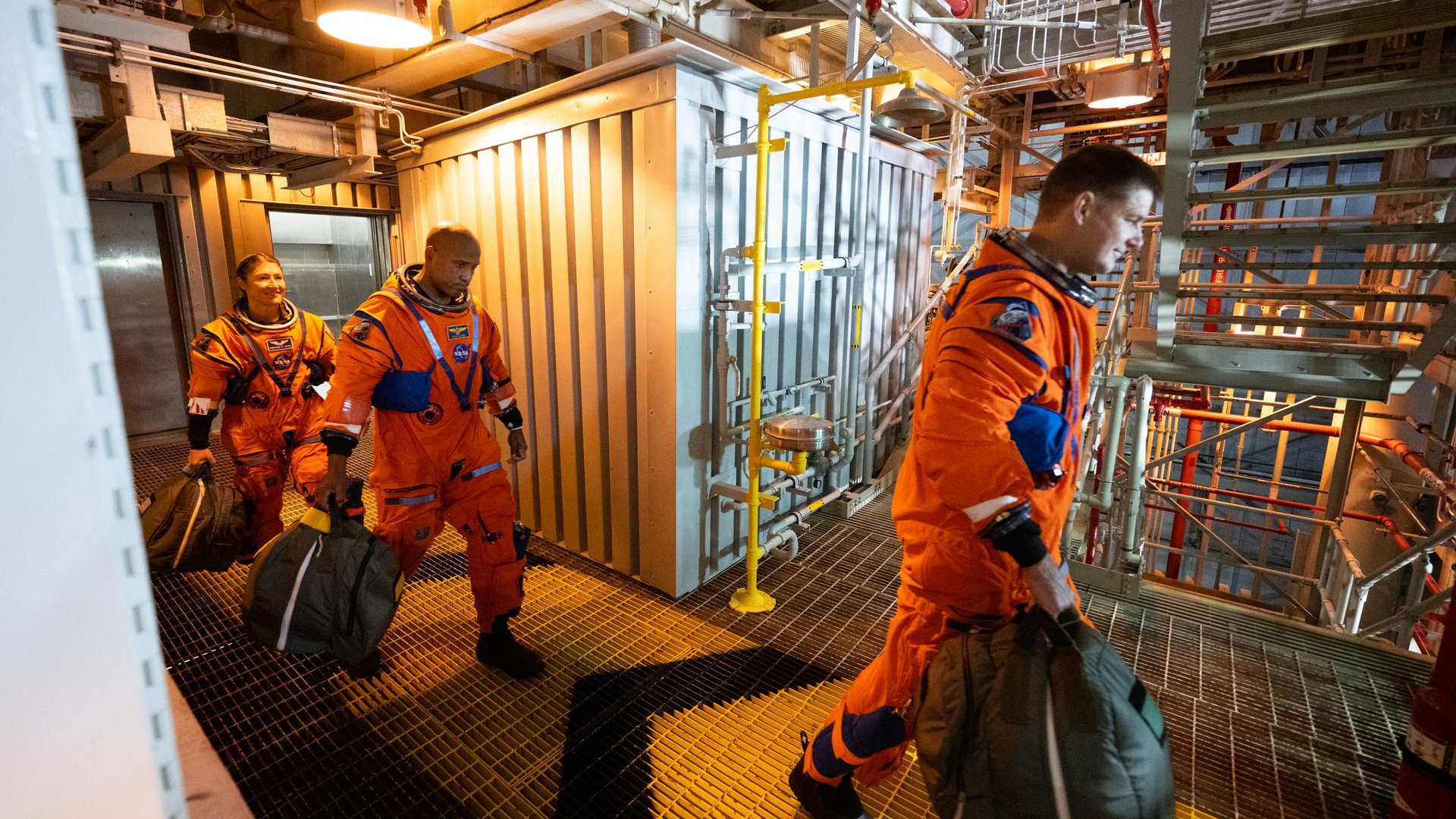
Canadian Space Agency astronaut Jeremy Hansen (right) and NASA’s Victor Glover and Christina Koch exit the elevator at the 275-foot level of the mobile launcher as they walk toward the crew access arm and prepare to board their Orion spacecraft atop NASA’s Space Launch System rocket during the Artemis 2 countdown demonstration test on Dec. 20, 2025, inside the Vehicle Assembly Building at NASA’s Kennedy Space Center in Florida. (Image credit: NASA/Joel Kowsky)
The action took place at the Vehicle Assembly Building (VAB) at KSC, where Orion and its European Service Module and the gigantic Space Launch System (SLS) rocket are being prepared and tested ahead of rollout and launch.
Artemis 2 is currently slated to launch from KSC no earlier than Feb. 5, 2026. The mission will mark the first time astronauts will journey to the vicinity of the moon since Apollo 17 in December 1972.
A day before the rehearsal, newly confirmed NASA Administrator Jared Isaacman posted on the social media platform X that “Artemis 2 is America’s return to the moon, and the start of something much bigger.”
The following mission, Artemis 3, will attempt to land astronauts on the surface of the moon. The mission is officially scheduled for 2027, but reports suggest that it will not launch until 2028 at the earliest.

Over the last three decades, Yellowstone National Park has undergone an ecological cascade. As elk numbers fell, aspen and willow trees thrived. This, in turn, allowed beaver numbers to increase, creating new habitats for fish and birds.
The shift has largely been attributed to the reintroduction of wolves to the park — as predators, they helped control the elk numbers. But their return may not have reshaped the entire ecosystem in the way that scientists thought, and has sparked a fierce debate among scientists over exactly why and how Yellowstone has rebounded.
According to a study published in January, the reintroduction of gray wolves (Canis lupus) in the 1990s created a trophic cascade — a chain reaction in the food web — that benefitted the entire ecosystem. The study linked wolves in the area to a reduction in the elk population, which in turn reduced browsing and allowed willow trees to grow. Between 2001 and 2020, this led to a 1,500% increase in crown volume, the total space filled by upper branches of the willows.
You may like
Large predators were targeted in Yellowstone from the end of the 1800s. By the 1920s, wolves were largely extinct from the park. Their disappearance created an ecological imbalance — the elk population exploded, which decimated plant populations and in turn threatened beavers, among other impacts. This is known as a trophic cascade, where the removal of one species causes ripples throughout the food web.
You may like
The debate about Yellowstone wolves and the impact of their reintroduction goes beyond this study and the latest response. While scientists widely agree that there is a trophic cascade in Yellowstone, its strength — and which predators are most responsible for it — form the center of the disagreement, MacNulty said.
To establish a clear trophic cascade from Yellowstone wolf reintroduction to willows, researchers would need to account for other predators and herbivores, said MacNulty. The ideal study would then analyze how much more total willow biomass there is now compared with before wolf introduction, to identify the strength of the effect; then calculate how much of that increase can be attributed solely to wolves, to identify its cause.
Ripple and his research team are now preparing a detailed reply, which explains that criticisms of the original study come from misunderstandings of what they did, Ripple said. “The basic scientific logic of the paper is solid,” Ripple said.
Conservation priorities might be fueling the controversy over large carnivores’ beneficial effects on ecosystems, said Goheen, adding that even if wolves are not definitively causing a trophic cascade to willows, they are still important to conserve.

Earth’s orbital environment is becoming increasingly crowded. Thousands of satellites—many of them inactive, damaged, or out of fuel—now circle the planet alongside fragments of debris from past collisions.
As more and more satellites enter orbit, one of the biggest questions becomes: how can these satellites approach and maneuver around each other safely? To answer that question, Luxembourg-based companies LMO and ClearSpace carried out a carefully designed simulation using the European Space Agency’s Guidance, Navigation and Control Rendezvous, Approach and Landing Simulator (GRALS).
What is it?
GRALS is part of ESA’s Guidance, Navigation and Control Test Facilities and is built to recreate close-proximity operations in space with remarkable realism. The satellite model shown in this image was developed by ClearSpace to replicate the geometry, materials, and visual complexity of real satellites.
You may like
Its crinkled gold thermal insulation, metallic structures, and the cup-shaped reflective thruster are not just aesthetic details but critical features that influence how light behaves in space and how cameras perceive an object during a rendezvous.
To ensure reliability, engineers combine computer-generated imagery used to train AI systems with physical testing on increasingly realistic models. Smaller models simulate long-range approaches, while larger, high-fidelity replicas like the one shown are used to test the most delicate, close-range phases of a rendezvous.
Where is it?
This photo was taken at the ESA’s technical center, ESTEC, in the Netherlands.
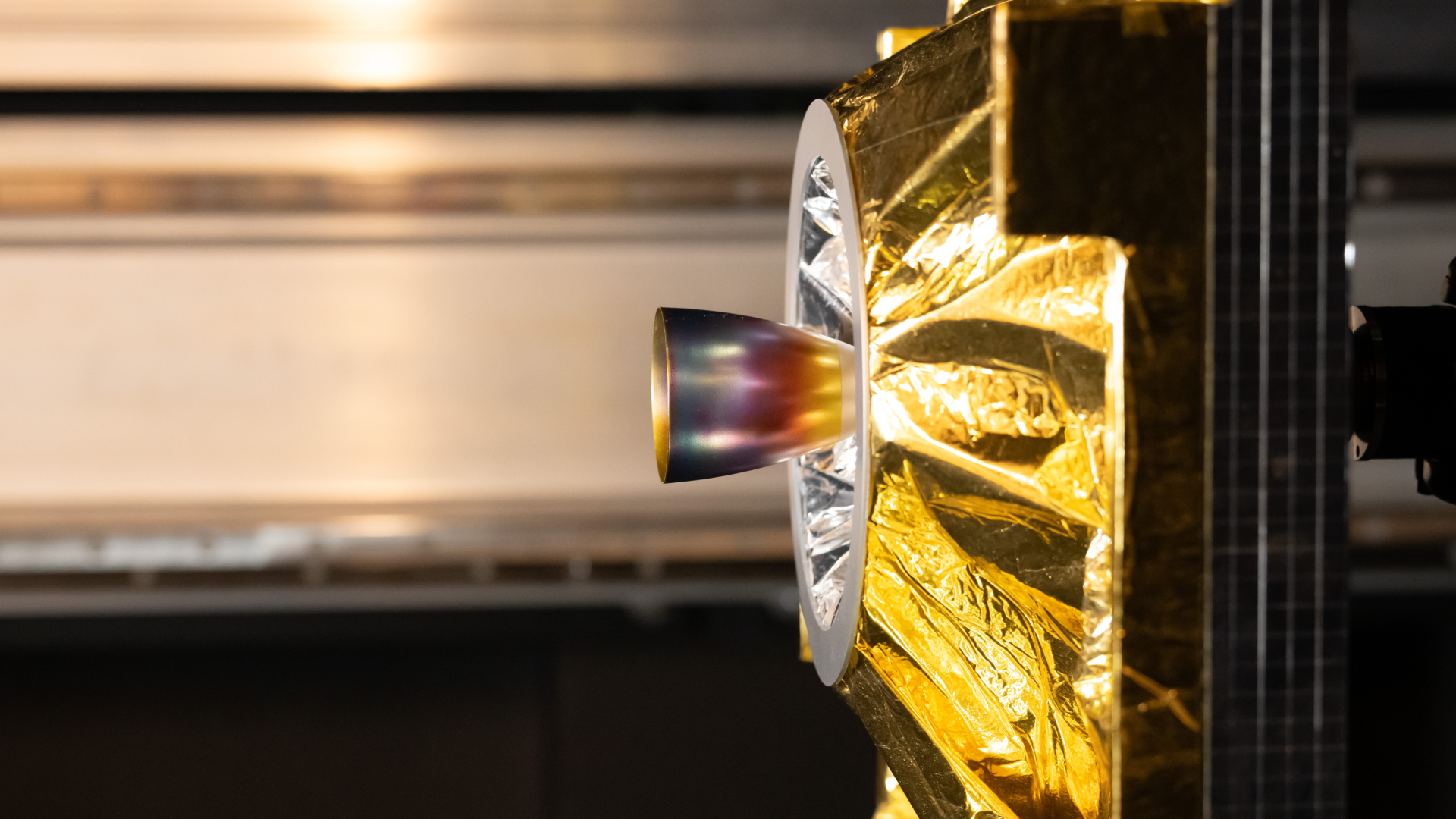
Using both models and AI, engineers can work to maneuver satellites as safely as possible. (Image credit: ESA-SJM Photography)
Why is it amazing?
The thousands of satellites orbiting Earth pose growing risks to operational spacecraft and to the long-term sustainability of space activities. Before a spacecraft can refuel, repair, or safely deorbit another satellite, it must be able to see, identify, and approach its target with exceptional accuracy. Vision-Based Navigation systems are key to making this possible. Much like self-driving cars rely on cameras and AI to interpret their surroundings, VBN-equipped spacecraft must interpret light, shadow, reflections, and rapidly changing viewpoints in the harsh environment of space.
Facilities like GRALS play a critical role in bridging the gap between theory and reality. By testing real hardware against realistic satellite models under space-like lighting conditions, engineers can expose weaknesses, validate AI training, and build confidence that autonomous systems will behave safely once deployed in orbit.
Want to learn more?
You can learn more about satellite crowding and space junk.