
NIGERIA NEWS
Family faults government response as Kwara traditional ruler spends nine days in captivity


The family of the Ojibara of Bayagan-Ile, Kamilu Abdul-Salami, who was abducted on 29 November in Ifelodun Local Government Area of Kwara State, has accused the state government and security agencies of failing to show meaningful engagement since the incident occurred.
In an interview published by SaharaReporters, a senior member of the royal family, Rafiu Lawal, stated that the family had received no official communication from state authorities or the police.
He added that the family had been left to raise funds on its own after kidnappers demanded what he described as an overwhelming ransom.
According to his account, the abductors allow intermittent calls between the monarch and his relatives, during which the traditional ruler appeals for help.
Mr Lawal said the family has sold farmlands and personal belongings in an effort to meet the demand.
He appealed to the Kwara State Government, security agencies and members of the public to intervene, noting that the community lacks the resources to secure the monarch’s freedom.
The incident adds to a series of security breaches affecting rural communities across Patigi, Kaiama, Ekiti, Ifelodun and neighbouring areas in recent weeks.
PREMIUM TIMES has reported multiple cases of abductions targeting farmers, worshippers and road users along forested corridors of the state.
Earlier this month, two Chinese construction workers were seized by armed men along the Bode Saadu–Kaiama road.
In separate operations, security agencies also intercepted an arms courier along the Gbugbu–Patigi road and arrested a medical doctor who, according to the State Security Service, was transporting medical supplies to kidnapping groups operating in parts of the state.
READ ALSO: Police arrest suspected arms courier in Kwara
Residents and community leaders say the pattern of attacks reflects the activities of armed groups moving between forest zones that link several local government areas.
Despite recent recruitment and training of forest guards by the state, many communities have continued to report kidnappings and attempted raids.
PREMIUM TIMES contacted senior government and police officials on Monday for an update on efforts to rescue the abducted monarch. Calls to the Police Public Relations Officer, Adetoun Ejire-Adeyemi, were unanswered.
The state Commissioner for Information, Bola Olukoju, did not respond to multiple attempts for comment. The Chief Press Secretary to the Governor, Rafiu Ajakaye, acknowledged the contact but referred inquiries to the police, stating that they are the appropriate agency to speak on operational matters.
The abducted monarch remains in captivity.


In the Supreme Court of Nigeria
Holden at Abuja
On Friday, the 11th day of April, 2025
Before Their Lordships
Mohammed Lawal Garba
Adamu Jauro
Jummai Hannatu Sankey
Moore Aseimo Abraham Adumein
Abubakar Sadiq Umar
Justices, Supreme Court
SC.370/2010
Between
PRINCEWILL ODIKANWA APPELLANT And
CHIEF JOSEPH DIBIANTA IHEANACHO RESPONDENT
(Lead Judgement delivered by Honourable Adamu Jauro, JSC)
Facts
The Respondent instituted the action at the High Court of Imo State against the Appellant, for slander. He alleged that during a vigil held in honour of the Appellant’s late father, the Appellant made the following defamatory statement against him in Igbo language: “Onye wu ahu kporo ya Dibianta. Awum Dibraukwu, Ganu kpo Dibianta Iheanacho bu a rat nga mno ihe oma eme bun ani igbu madu. Obia ngaa na abiala, o ga eji oso gbalaga” which translates to: “Who is that person that calls himself Dibianta? I am Dibiakwu. Go and call Iheanacho to come here. Dibianta Iheanacho is a rat to me; the only thing he knows how to do is to kill people. If he comes here tonight, he will take to his heels.” The Respondent claimed the defamatory statements made in Igbo Language were understood by those present, and this caused harm to his reputation.
At the trial, the Respondent testified as PW1 and called four additional witnesses. Among them, PW2 and PW3, who also attended the vigil, testified to hearing the slanderous statements, while PW5, a Higher Executive Officer attached to the High Court, Owerri, who was called to testify as a sworn interpreter, interpreted the alleged defamatory words to English language. The Appellant, on his part, denied uttering any defamatory words, asserting that he only preached at the vigil.
After the conclusion of trial, the trial court found that the Respondent proved his claim and awarded him damages in the sum of N500,000.00. Dissatisfied, the Appellant appealed to the Court of Appeal. At the Court of Appeal, the Appellant relied on IBEANU v UBA (1972) 2 ECSLR 194, to argue that the defamatory words must be recorded in the exact language in which they were uttered. In its judgement dismissing the Appeal and affirming the judgement of the trial court, the Court of Appeal held that the uncontroverted testimonies of PW1–PW3, who all heard the said defamatory words and also testified in Igbo language, were sufficient and constituted a valid exception to the rule in IBEANU v UBA (Supra). The Court of Appeal also found that the fact that the Appellant failed to produce the video recording of the vigil despite pleading same, meant that the evidence would have been unfavourable to him, and the Court of Appeal invoked the doctrine of withholding evidence in Section 149(d) [now 167(d)] of the Evidence Act against him.
Displeased, the Appellant appealed to the Supreme Court.
Issues for Determination
The Supreme Court adopted the two issues distilled by Counsel for the Appellant, for the determination of the appeal as follows:
i) Whether the Court of Appeal was right in upholding the finding of the trial court, that the Respondent had proved his case of slander against the Appellant.
ii) Whether the Court of Appeal was right in distinguishing the case of IBEANU v UBA (1972) 2 ECSLR 194 from the present case, on appeal to the Supreme Court.
Arguments
On the 1st issue, Counsel for the Appellant argued that in an action for defamation, it is a requirement of law that the exact words complained of must be proved at trial. Counsel argued that where the defamatory words were not spoken in English, the record of the trial court must record the words used as uttered in their original language during the testimony, and the Plaintiff must prove through a sworn interpreter that the translation pleaded in the Statement of Claim is accurate. Counsel submitted that since the words as pleaded were not in English, the fact that the records of the trial court only contained the English translation of the words meant that the exact defamatory words were not proved at the trial. Counsel also argued that that the Court of Appeal was wrong for invoking Section 167(d) of the Evidence Act against the Appellant, because since the Respondent failed to prove the precise words uttered, there was no need for the Appellant to lead evidence in rebuttal.
On the 2nd issue, Counsel for the Appellant argued that there was no basis for the Court of Appeal to distinguish the facts of the case from the facts in IBEANU v UBA (1972) 2 ECSLR 194. Counsel argued that the only recognised exception to the rule in the IBEANU case is where the Defendant admits the defamatory words, and this is not the case here.
Responding on issue 1, Counsel for the Respondent argued that both the slanderous words and their English translation were specifically pleaded in the Respondent’s Amended Statement of Claim. Counsel argued that the Respondent, and his two witnesses who attended the vigil, gave consistent testimony establishing the defamatory words as pleaded. Counsel submitted that although Igbo Language is not the official language of the court, the trial court understood the language and properly appreciated the evidence given.
Similarly, in response to the Appellant’s arguments on issue 2, the Respondent’s Counsel submitted that the learned Justices of the Court of Appeal were right in distinguishing this case from IBEANU v UBA (SUPRA), since the slanderous words were duly pleaded and the witnesses testified in Igbo language.
Court’s Judgement and Rationale
On the 1st issue, the Supreme Court held that in all cases of defamation, whether libel or slander, the onus is on the Plaintiff to prove the defamatory word, and in an action founded on slander, the defamatory words may be proved by pleading the words in a Statement of Claim and establishing same by oral evidence. The Apex Court held further that where slanderous words were uttered in a language other than English Language, whether vernacular or foreign language, what the law requires is that the persons who heard the words understand the language in which they were uttered or published, that the words both in their original form and English translation be set out in the Statement of Claim, and that the meanings of the words in English be proved by an expert sworn interpreter. The Apex Court relied on its earlier decision in ORUWARI v OSLER (2012) LPELR – 19764 (SC).
The Court held that there was no doubt that PW5 who was called by the Respondent at the trial to interpret the alleged defamatory words to English Language, a civil servant who was a Higher Executive Officer attached to the High Court, Owerri as an interpreter, thus, eminently qualified as an expert witness in the circumstance. The Court held further that his interpretation was also materially and substantially the same as the pleadings as contained in the Amended Statement of Claim, and was thus, sufficient proof of the defamatory words.
The Supreme Court also held that contrary to the argument of the Appellant, there is no requirement that the alleged defamatory words must be written in the foreign language/vernacular in the court’s record, in view of the fact that the official language of Nigerian Courts remains the English Language, and it is expected that the trial Judge would record the proceedings in English Language as translated from the original language. The Court held that all that is necessary, is to show that the words were given in evidence in that original language and in the instant case, the record showed that the Respondent as PW1, as well as PW2 and PW3 testified exclusively in Igbo language, and they gave evidence of the slanderous words. This Court held that their testimonies were not disputed by the Appellant, hence, there was no basis to hold that the slanderous words were not proved.
Furthermore, the Supreme Court held that the lower court rightly relied on the case of TOURNIER v NATIONAL PROVINCIAL AND UNION BANK OF ENGLAND (1924) 1 KB 461, in which the Court of Appeal of England and Wales held that in an action for slander, it is not necessary for the Plaintiff to prove the exact words as pleaded in the statement of claim, and it suffices if he proves the substance of the slanderous words pleaded. The Apex Court held that the crucial requirement is for the pleadings and evidence of the Plaintiff’s witness to support the claim that the defamatory/slanderous words were made, hence, the Plaintiff must discharge the burden placed on him by law of proving that the Defendant made a false defamatory statement about him which was communicated to a third party and caused the Plaintiff harm.
The Supreme Court held that the lower courts were right to have accepted the uncontroverted evidence of the Respondent which showed that, since the publication of the slanderous words, the Respondent no longer commanded the public respect he used to have and that his clientele as a traditional healer had considerably diminished. The Apex Court further held that by virtue of Section 133(1) and (2) of the Evidence Act, the Respondent having successfully discharged the burden of proving his claim on the balance of probabilities, the onus shifted to the Appellant to adduce contrary evidence to rebut the evidence led by the Respondent; however all the Appellant could offer were bare assertions which were not proved by evidence. The Court held that this was more so as the Appellant failed to tender the video recording of the vigil despite asserting in his pleadings that he would tender the same and the Court of Appeal rightly invoked the presumption of withholding evidence as contained in Section 149(d) of the Evidence Act against the Appellant.
On the 2nd issue as to whether the Court of Appeal was right to have distinguished the case of IBEANU v UBA (1972) 2 ECSLR 194 from the present case, the Supreme Court held that the doctrine of stare decisis or judicial precedent which postulates that where the facts in a subsequent case are similar or close to facts in an earlier case that has been decided by the same court or a higher court, judicial pronouncements in the earlier case are utilised to govern and determine the decision in the subsequent case, only mandates lower courts to abide by the decisions of higher courts and not the other way round. The Court held that by the hierarchy of courts created by the Constitution, the East Central State High Court which decided the IBEANU case is lower in hierarchy and subordinate to the Court of Appeal and the Supreme Court. The Court held that thus, the decision in the IBEANU case rendered by the East Central State High Court was not binding on the Court of Appeal or the Supreme Court, and the question whether the Court of Appeal was right to distinguish the facts of this case from the decision in the IBEANU case is of no moment.
Appeal Dismissed.
Representation
A. I. Nwachukwu for the Appellant.
O. D. Atoyebi for the Respondent.
Reported by Optimum Publishers Limited, Publishers of the Nigerian Monthly Law Reports (NMLR)(An affiliate of Babalakin & Co.)

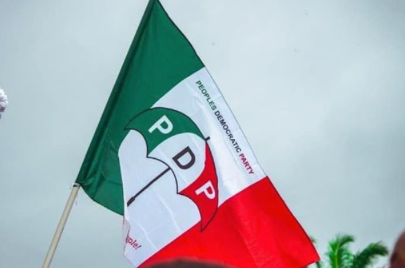
An Oyo State High Court in Ibadan, presided over by Justice Ladiran Akintola, has struck out the Independent National Electoral Commission (INEC) from a suit challenging the eligibility of the Peoples Democratic Party (PDP) to conduct its elective convention in the Oyo State capital.
The decision followed INEC’s objection, in which the Commission argued that the court lacked jurisdiction to hear the case, insisting that as a federal agency, it can only be sued before the Federal High Court.
The Commission subsequently prayed the court to strike out its name from the suit.
Justice Akintola upheld the objection and ruled that INEC be removed from the case on the grounds that it is not subject to the jurisdiction of a state high court.
However, he retained the remaining defendants, including the PDP, a party member, Folahan Malomo, and the chairman of the PDP zonal committee, Governor Ahmadu Fintiri. The acting national chairman of the party, Umar Damagun, also remains a defendant.
The matter has been adjourned to January 26, 2026, for further hearing.
Speaking after the ruling, counsel to the claimant, Musbau Adetunmbi (SAN), said INEC’s objection having been upheld, the case would now proceed against the remaining defendants.
Similarly, the PDP’s Oyo State legal adviser, Dapo Durosharan, confirmed that proceedings will continue on the adjourned date.
At its previous sitting on November 14, the court had reserved ruling on a preliminary objection challenging its jurisdiction in the suit filed by PDP member Folahan Adelabi regarding the party’s national convention held on November 15 and 16, 2025, in Ibadan.
The convention went ahead as directed by the court and produced the Dr. Kabiru Tanimu Turaki-led National Executive Committee.


Manchester United climbed back into the race to qualify for the Champions League as Bruno Fernandes inspired a 4-1 rout of woeful Wolves on Monday.
Ruben Amorim’s side recovered from their disappointing draw with lowly West Ham last week thanks to Fernandes’ double and goals from Bryan Mbeumo and Mason Mount at Molineux.
Jean-Ricner Bellegarde had cancelled out Fernandes’ opener with Wolves’ first goal in six games in all competitions and their first in the top-flight since October 26.
But Mbeumo, Mount and Fernandes netted after the interval to clinch only United’s second win in their last six matches.
United suffered an embarrassing 1-0 home loss to 10-man Everton on November 24 and 10 days later boos greeted the final whistle following a 1-1 draw with West Ham at Old Trafford.
With Amorim growing increasingly tetchy in recent weeks, it was essential that sixth-placed United avoided an embarrassing result against bottom of the table Wolves as they moved within one point of the top four.
Wolves’ eighth successive league defeat equalled their worst top-flight run since 1981-82 and left boss Rob Edwards still waiting for his first victory since arriving from Middlesbrough to replace the sacked Vitor Pereira in November.
Wolves have just two points after 15 games and if they fail to win either of their next two against Arsenal and Brentford they will equal Sheffield United’s longest winless start in the Premier League of 17 matches.
Derby’s Premier League record low of just 11 points in a single season is also under threat from dismal Wolves.
– Perfect response –
Diogo Dalot should have put United ahead in the opening moments when he raced clean through on goal, but the defender’s tame shot was palmed away by Wolves keeper Sam Johnstone.
Hundreds of angry Wolves fans boycotted the opening 15 minutes to protest against owners Fosun and executive chairman Jeff Shi.
When they returned to their seats, the Wolves supporters saw their former forward Matheus Cunha have a shot blocked before United took the lead in the 25th minute.
It was a shambolic goal in keeping with Wolves’ wretched campaign.
Andre’s wayward back-pass was intercepted by Cunha and when he flicked the ball to Fernandes, the Portugal midfielder initially slipped over before recovering to poke a weak shot that somehow evaded Johnstone as it crept over the line.
As boos rained down from furious Wolves supporters, United went for the kill and Cunha’s strike was cleared off the line by Toti.
United’s focus briefly wavered and Wolves snatched their long-awaited goal in first half stoppage-time.
Amorim’s men couldn’t clear a succession of crosses and David Moller Wolfe’s pass was turned in at full-stretch by Bellegarde from 12 yards.
But United provided the perfect response in the 51st minute.
A flowing move cut through the Wolves defence as Mount’s pass found Dalot and his unselfish cutback allowed Mbeumo to slot into the empty net.
In the 62nd minute, Mount timed his run perfectly to meet Fernandes’ cross with an emphatic volley from six yards.
Fernandes’ fourth goal this season put the seal on a one-sided contest as he stroked home an 82nd minute penalty after Yerson Mosquera handled.
The post Man Utd back on track after Fernandes inspires Wolves rout appeared first on Vanguard News.


Former Chief Medical Director (CMD) of University of Ilorin Teaching Hospital (UITH), Professor AbdulWaheed Olatinwo, has described the practice of Obstetrics and Gynaecology in Nigeria as one of the best in the world.
He affirmed this while being conferred with an award of “Excellence in Administration” by the Society of Gynaecology and Obstetrics of Nigeria (SOGON) at the weekend in Ibadan, Oyo State, during its Annual General Meeting and Scientific Conference.
According to Olatinwo, of the Department of Obstetrics and Gynaecology, University of Ilorin, “the commitment of SOGON to excellence in women’s health and the advancement of Obstetrics and Gynaecology in Nigeria is truly inspiring, making it one of the best in the world.”
He acknowledged the efforts of all his colleagues at sustaining the expected standards of women’s health in Nigeria, adding that the award conferred on him was feasible through the support given by his colleagues and their collective efforts.
The award recipient spoke against inhuman treatment of some women in Nigeria, especially pregnant women by their husbands, urging the relevant arm of government to legislate against such vices with stringent penalties.
Besides, he canvassed prompt prosecution of cases of rape against women, noting that apart from the traumatic effects on the victims, it would portray the nation as being insensitive to the vulnerability of women in Nigeria.
According to him, “such cases were on the increase in South Africa, for instance, some years back, but the government of the country rose to the occasion via enactment of relevant laws against rape, especially, and today, the result is there for all to see. Nigeria too can take a clue from this.”
For him, the award would spur him into more responsibilities and expectations in his chosen field, thanking the leadership of the association for their thoughtful choice of him as a recipient.
He expressed his appreciation to the managements of the University of Ilorin and University of Ilorin Teaching Hospital (UITH) for giving him a conducive environment to thrive as both a lecturer and a surgeon.
Born some six decades ago, Olatinwo, a native of Offa in Offa Local Government Area (LGA) of Kwara State, began his education at Adesola Model School, Offa, in 1968. He earned his MBBS degree from the University of Maiduguri and his Fellowship of the West African College of Surgeons (FWACS) in 1995.
He was the Chief Medical Director (CMD) of University of Ilorin Teaching Hospital (UITH) from 2010 to 2018. His contributions, however, extend beyond clinical practice to governance and research.
NIGERIA NEWS
Legal luminaries challenge efficacy of appointment as insecurity worsens – Tribune Online


As Nigeria grapples with escalating security challenges, marked by increased killings and criminal activities, the effectiveness of recent appointments, including that of the new Minister of Defence, has come under scrutiny from legal minds.
The debate centres on Section 14(2)(b) of the 1999 Constitution (as amended), which clearly establishes that “The security and welfare of the people shall be the primary purpose of government.”
With criminal elements continuing their reign of terror across the nation, two senior lawyers offered contrasting but ultimately converging views on how the government, and the new Defence Minister in particular, can fulfil this fundamental constitutional mandate.
A Senior Advocate of Nigeria (SAN), Babajide Koku, voiced deep scepticism regarding the impact of replacing personnel without addressing structural failures. He dismissed the appointment as a cosmetic approach to a problem that demands far-reaching systemic reforms.
“Do you think that the appointment of a new Minister of Defence is the answer to this problem? I don’t think so,” Koku stated, challenging the notion that a change of guard alone could alter Nigeria’s security trajectory.
He pointed out that the newly sworn-in Minister was in the system before and was part of the existing structure. Koku likened the change to a game of musical chairs, arguing that maintaining the same flawed security infrastructure while simply changing its head will yield no tangible difference.
“As far as I’m concerned, it’s just a musical chair. I don’t think it’s going to make any difference,” he maintained. He believes that sustained peace requires the entire security architecture to be fundamentally redeemed, not merely managed by a new appointee.
Corroborating the necessity for deeper reform, another senior lawyer, Bulus Atsen, provided a more detailed analysis, stressing that the current crisis is a symptom of broader governmental decay. Atsen agreed that the security and welfare of citizens represent the fundamental essence of governance.
However, he emphasised that security has metamorphosed into a multifaceted challenge that cannot be solved solely with guns, bullets and bombs. Atsen referenced the philosophy of the former Chief of Defence Staff (General C.G. Musa, Retd.), who consistently advocated for a non-kinetic approach to addressing insecurity.
This multifaceted understanding of security, Atsen argued, involves aspects well beyond the Defence Ministry’s traditional purview, encompassing physical, human, educational, political, economic and cultural security.
“We didn’t get to where we are overnight. It was a degeneration of governance,” Atsen asserted, attributing the degenerative state of national security to the government’s historical failure to address these various threats over the years.
He stressed that while the Minister of Defence is crucial, he is merely one cog in a vast governmental machine. “Resolving the security quagmire requires a collective and harmonious effort across all sectors.
“It’s not something that he can do as an individual. He is just a Minister of Defence. It’s just one aspect of security,” Atsen stated. He insisted that the security mandate can only be guaranteed if all relevant ministries — those designed to address economic, educational and political sectors — work in unison to secure their respective areas of endeavour.
ALSO READ TOP STORIES FROM NIGERIAN TRIBUNE
…Set to constitute monitoring team
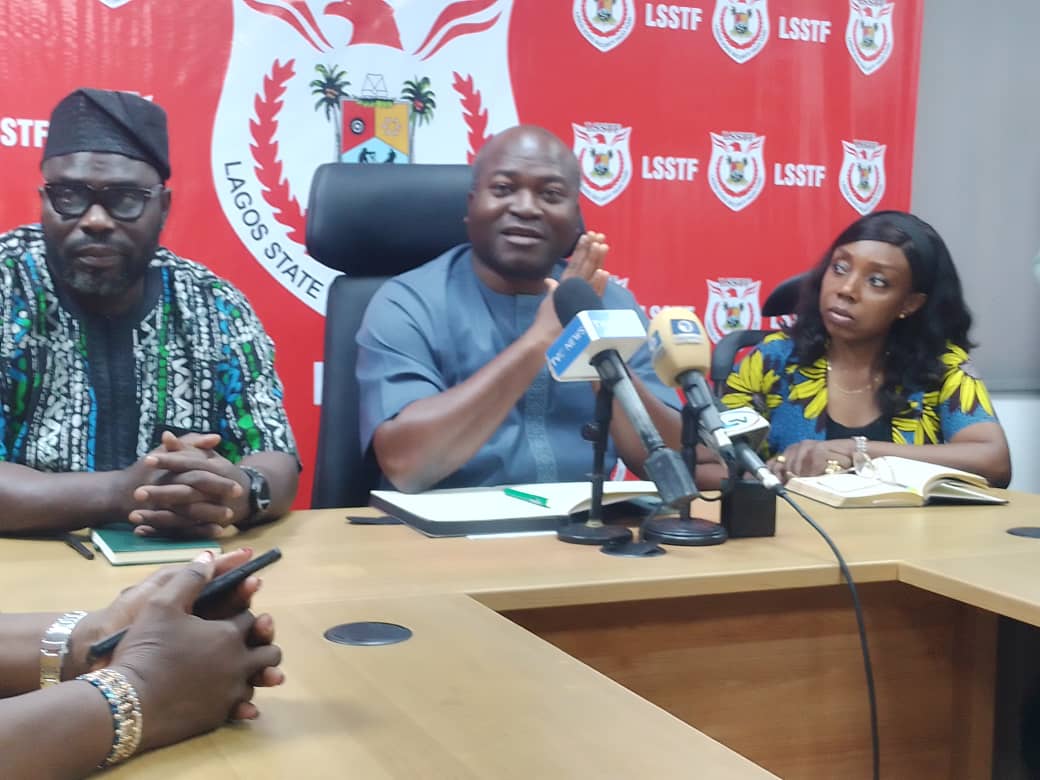
The newly appointed Executive Secretary/CEO of the Lagos State Security Trust Fund (LSSTF), Dr Ayodele Ogunsan, has unveiled a comprehensive agenda aimed at increasing public participation, strengthening accountability, and expanding partnerships to enhance security across Lagos State.
This is coming as the Trust is set to constitute a monitoring team soon.
Speaking to journalists in Lagos, Ogunsan said: “My pledge is to strengthen accountability, expand this network of supporters, and ensure the impact of every contribution is felt on the streets where safety matters most.”
He noted that Lagos, as one of Africa’s fastest-growing megacities, faces increasingly complex security challenges requiring modern, intelligence-driven solutions.
“Traditional methods alone are not enough. We must embrace innovation, strengthen collaboration, and ensure our response to emerging security challenges is swift, modern, and people-centred,” he said.
Ogunsan announced that LSSTF will launch a renewed retail donation campaign designed to give every Lagos resident, regardless of income level, an opportunity to contribute to the State’s security efforts.
The initiative includes public awareness drives, digital donation platforms, youth-focused volunteer programmes, and community-level engagement.
“Whether it is N500 or N50 million, what matters most is participation. Our young people are eager to make a difference; we want to give them a platform to channel that energy into building a safer State,” he stated.
Ogunsan reiterated that security today requires more than financial donations. He invited professionals in technology, cybersecurity, engineering, data science, psychology, criminology, and emergency response to donate expertise and equipment.
“To innovators, researchers, engineers, and specialists, Lagos needs your knowledge,” he said.
Reaffirming his commitment to openness, Ogunsan noted that public confidence is essential for the Fund’s success. “Under my leadership, transparency will be the standard, not the exception.”
The Fund, he added, will strengthen oversight, publish updates, and enhance stakeholders’ communication.
To deepen stakeholders’ engagement, Ogunsan announced that the 19th Town Hall Meeting on Security will be held on December 11, 2025, at Eko Hotel and Suites, Victoria Island.
LSSTF, he said, will present its stewardship report; the Commissioner of Police will give insights on emerging trends; and Governor Sanwo-Olu will unveil strategic security priorities.
“When security grows, prosperity grows. When safety strengthens, confidence returns. When we work together, Lagos rises,” Ogunsan said.
He reaffirmed the Fund’s commitment to building a Lagos where businesses, families, and communities operate with confidence and peace.
“Our goal is a State where children can go to school without fear, businesses can operate day and night, and every resident lives with peace of mind,” he said.
During the briefing, journalists urged LSSTF to prioritise the persistent electricity challenges in police stations, recommending solar-powered alternatives through partnerships with solar energy companies.
They also advised the Fund to collaborate with landlords to encourage the installation of CCTV cameras in front of residential properties to improve neighbourhood surveillance.
In addition, the media called for the reactivation of police station phone lines, noting that reliable communication channels are essential for timely responses to emergencies.
Responding to the concerns, Administration Director, LSSTF, Adegbola Lewis provided clarity on the Fund’s mandate and operational process. He stressed that LSSTF serves as a strategic intervention body for the State.
“We’re at interventionist stages. Our intention is not to take care of all the funding for these types of security measures. We’re not the federal government,” he said.
He explained that the Fund focuses on identifying gaps in the security architecture and addressing them where necessary.
His words: “We are looking at the gaps and trying to fill the gaps. We’re poised towards providing general security. We’re not focusing on VIP security; it’s general security to ensure that anybody in this room can move around Lagos without problems.”
Please follow and like us:


At least 11 Nigerian soldiers are currently being held by the military regime in Bobo-Dioulasso in the South West of Burkina Faso.
They were captured after their aircraft conducted an emergency landing while “violating AES airspace.”.
This was confirmed by AES in a statement shared on X by security analyst, Brant Grant, on Monday night.
The AES claims a Nigerian Air Force C-130 aircraft violated Burkinabe airspace and conducted an emergency landing in Bobo-Dioulasso.
The statement also warned that any unauthorized aircraft violating AES airspace will be neutralized.
This comes after the Nigerian government deployed its military aircraft into Benin Republic on Sunday, following an attempted coup in the neighbouring country.


The Government of the Republic of Benin has confirmed multiple deaths following a failed coup attempt over the weekend, including the wife of a top military official and the fatal wounding of the president’s military chief of staff.
Details of the attempted power grab emerged on Monday after an emergency cabinet meeting chaired by President Patrice Talon in the capital, Cotonou.
According to the government, violent clashes broke out early Sunday at President Talon’s Cotonou residence between members of the Republican Guard and a faction of mutinous soldiers.
“Casualties were recorded on both sides,” said government secretary general Edouard Ouin-Ouro, citing official cabinet meeting minutes.
Among the fatalities was the wife of General Bertin Bada, the president’s military chief of staff, who was also critically injured in a separate attack before succumbing to the wounds.
Ouin-Ouro revealed that the plotters initially sought to “neutralise or kidnap certain generals and senior army officers” as part of a broader plan to “remove the president of the republic from office, subjugate the Republic’s institutions, and challenge the established order.”
The mutiny began at the Togbin military base in Cotonou and was spearheaded by a small faction of soldiers, according to the government.
On Sunday night, the plotters abducted the chief of staff of the National Guard, Faizou Gomina, and General Abou Issa, the army chief of staff. Both men were later released in the central city of Tchaourou, approximately 350 kilometres from the capital.
In response, the Beninese army launched a swift counter-offensive, surrounding the Togbin base and carrying out “targeted, surgical airstrikes” to retake control. The government stressed that the strikes were conducted “without exposing surrounding neighbourhoods” to harm.
Military support for the operation came from the Nigerian Armed Forces and the Economic Community of West African States (ECOWAS), which deployed troops from four countries in the region.
“The Togbin base has been retaken. The operation was carried out successfully, without loss of life during the recapture,” Ouin-Ouro confirmed.
He added that the remaining mutineers had fled the area and that several others, estimated at a dozen, had already been arrested.
© 2025 Naija News, a division of Polance Media Inc. Contact us via [email protected]
NIGERIA NEWS
Benin Coup: Nigeria Needs Such Swift Intervention In Internal Security, ADC Tells Tinubu


The African Democratic Congress (ADC) wants President Bola Tinubu to swiftly tackle the nation’s security challenges the same way he intervened in Sunday’s coup attempt in the Benin Republic.
ADC, in a statement on Monday by the National Publicity Secretary, Mallam Bolaji Abdullahi, urged the president to apply similar decisiveness in combating insurgency and banditry in the country.
“If Nigeria could respond decisively to threats across our borders, why has our government demonstrated such outrageous incompetence in dealing with domestic insecurity?
“Why has the government failed to respond with similar urgency and decisiveness even as banditry, terrorism, and violent crime still hold many of our communities hostage, displace families, abduct children, and parade themselves openly?” the party asked.
According to the ADC, a government that could act swiftly abroad should also act decisively at home, adding, “the defence of democracy does not begin in neighbouring countries; it begins in the protection of Nigerian lives, the restoration of security, and the rebuilding of trust between citizens and the state.”
The party, however, expressed concern at growing democratic reversal in the West African sub-region, and said the best safeguard for democracy is good governance anchored on improved livelihood for the majority and tolerance for opposition.
It called on elected governments in the region to make democracy meaningful to the people by improving their lives and allowing opposition to thrive and alternative voices to be heard.
The party also wondered why the Nigerian government has not acted swiftly in a similar crisis in Guinea-Bissau, even when a former Nigerian President, Goodluck Jonathan, was trapped there during a period of instability.
“That hesitation stands in sharp contrast to (last Sunday’s) urgency. What changed? What determines when Nigeria acts firmly and when it delays?” ADC asked.
The party called for consistency in the country’s mode of operations, especially when it comes to its foreign interventions.
According to the ADC, such a selective reaction “gives credence to the allegation that what played out in Benin was at the behest of another, more powerful country.”
ADC, however, noted that President Tinubu’s unilateral action in the Benin Republic might have been based on expediency, but said it is still subject to the ratification of the National Assembly as required by the relevant sections of the Nigerian Constitution requiring military or security deployment outside Nigeria’s borders.
Please follow and like us:
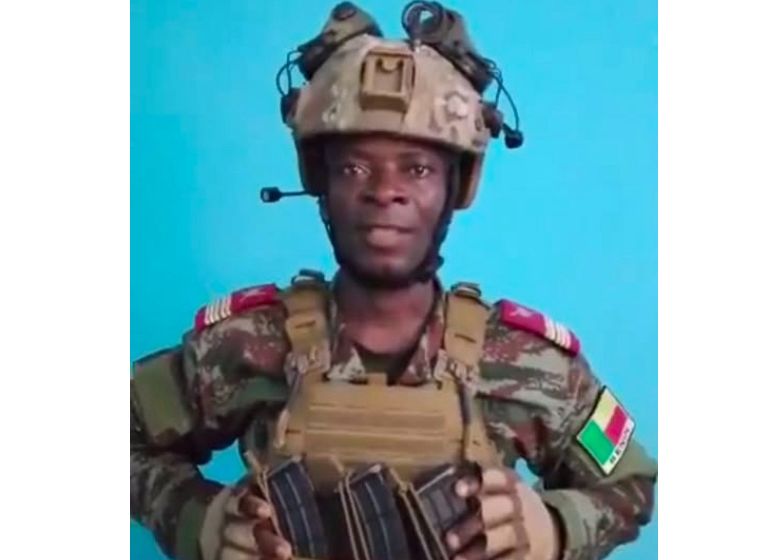
As the manhunt for the military officials responsible for the coup in Benin on Sunday continues, Tigri Pascal, the leader of the coup, has been declared wanted.
The special adviser on information and strategy to President Bola Tinubu, Bayo Onanuga, disclosed this in a post on X.
Mr Pascal, a lieutenant colonel, was declared wanted alongside two other soldiers, Ousmane Samary and Sambieni Castro.
“Lt Col. Pascal Tigri: The real face of the Benin failed coup leader. Pascal and two other soldiers have been declared wanted by the country’s constitutional authorities,” Mr Onanuga wrote, attaching the pictures of the soldiers.
PREMIUM TIMES earlier reported that a group of soldiers, who called themselves the “Military Committee for Refoundation” (CMR), appeared on the state television to declare a takeover of government.
The soldiers were led by Mr Tigri, who was also appointed president of the military committee.
They claimed to have met and decided that President Patrice Talon “is removed from office as president of the republic”.
The French Embassy in the country also disclosed that “gunfire was reported at Camp Guezo” near the president’s official residence.
However, shortly afterwards, the country’s interior Minister, Alassane Seidou, announced that the country’s armed forces had foiled the coup.
“A small group of soldiers launched a mutiny with the aim of destabilising the country and its institutions.
“Faced with this situation, the Beninese Armed Forces and their leadership maintained control of the situation and foiled the attempt,” he said
Meanwhile, according to Al Jazeera, a government spokesperson, Wilfried Houngbedji, mentioned that about 14 people had been arrested in connection with the coup attempt.
She, however, did not provide any details.
President Talon’s reaction to coup
The coup in Benin occurred about two weeks after a coup in Guinea-Bissau.
Both countries are located in West Africa, a region that has experienced numerous coups in recent years, including those in Mali, Niger, and Burkina Faso.
While Benin is considered one of Africa’s more stable democracies, in the past, President Patrice Talon has been accused of suppressing criticism of his policies.
However, in his address on the coup, Mr Talon said that the coup had been thwarted by loyal military troops in the country.
Mr Talon, who appeared on TV on Sunday, assured Beninese citizens that the situation was now “totally under control.”
“I would like to commend the sense of duty demonstrated by our army and its leaders, who have remained… loyal to the nation,” Mr Talon said.
“This commitment and mobilisation enabled us to defeat these opportunists and avert disaster for our country. This treachery will not go unpunished.”
Speaking of the development, the US Embassy in the country also confirmed on Monday that normalcy has been restored.
READ ALSO: Benin coup has been foiled Interior Minister
In a post on X, it said, “The situation in Cotonou is calm and has returned to normal.”
Also, the United Nations Secretary General, Antonio Guterres, condemned the “attempt to undermine democratic governance in Benin.
He noted that this could further threaten the region’s stability.
Meanwhile, two high-ranking military officials taken hostage during the coup have been freed.