
TECHNOLOGY
In conversation with Joshua Nwogodo on how ZuniQ is rebuilding cross-border payments for the overlooked mid-sized businesses powering emerging market trade


ZuniQ, a Nigerian fintech company providing instant, borderless access for businesses to transact globally, was born from a simple but uncomfortable truth: the businesses that keep trade moving across Africa are the ones most punished by the financial system built to serve them.
The company was founded by Joshua Nwogodo in early 2025 and in his conversation with Technext, he does not dress the challenge up. The ZuniQ founder returns to the same point throughout our conversation: mid-sized African businesses moving goods across borders wait too long, pay too much, and get ignored too often. His thesis is blunt. The big players built payment rails that work for themselves. The real economy was left to fend for itself.
Ask Nwogodo what pushed him to build ZuniQ, and he leans into his experience advising fintech and digital asset companies. He had seen the failures of traditional cross-border rails close-up. He had also seen entrepreneurs and importers trying to operate in markets where dollars were scarce, compliance rules shifted by geography, and payments routinely vanished into banking limbo.
He describes the current system with the tone of someone who has grown tired of polite euphemisms. “Swift is slow because your money has to pass through many hands,” Nwogodo says. “We remove those middle steps.” The point is not speed for its own sake. It is about operational survival. For a logistics company, a three-day delay can mean goods stuck at the port with charges piling up.
 ZuniQ
ZuniQ
The pain is structural. African payments are routed through correspondent banks in the United States before moving on to Asia or other African markets. A payment from Lagos to Guangzhou often takes a detour through New York. That detour adds days. It also adds risk.
ZuniQ’s pitch is not flashy but logistical. Cut out the detour. Build direct corridors. Pre-fund float where it matters. Work with institutions willing to touch markets others avoid. And create enough liquidity pathways that no single bottleneck can block a transaction.
The liquidity question everyone pretends is away
Every fintech selling cross-border dreams eventually collides with the same wall: dollar scarcity. Nigeria, Ghana, Kenya, and others have lived through cycles of FX droughts that cripple importers. Nwogodo refuses to soften the language. “FX scarcity is a real-life problem. Every operator knows it. Every importer feels it,” he says.
ZuniQ relies on a blend of its treasury positions and institutional liquidity partners across Africa, Europe, and Asia. The model is not glamorous. It is a network of pre-funded accounts, local partners, and balance sheets positioned where trade actually flows. If one corridor tightens, another picks up the slack.
The point is flexibility. ZuniQ does not depend on a single rail, a single partner, or a single currency. It routes payments through whatever corridor is open at that moment. That redundancy is what banks, by design, do not build for mid-sized firms.
This is where Nwogodo’s frustration becomes more personal. “We are built for businesses the system ignores,” he says. “The mid-sized importer in Malawi or Alaba. They carry the continent’s trade on their back, but they get ignored.”
ZuniQ is building for the missing middle
‘The missing middle’ is his favourite phrase. These are firms too big for retail fintech apps but too small to get the attention of global banks. They deal in real volume, hire real workers, and keep supply chains alive. Yet they operate in the dead zones of financial infrastructure where speed, transparency, and service break down most.
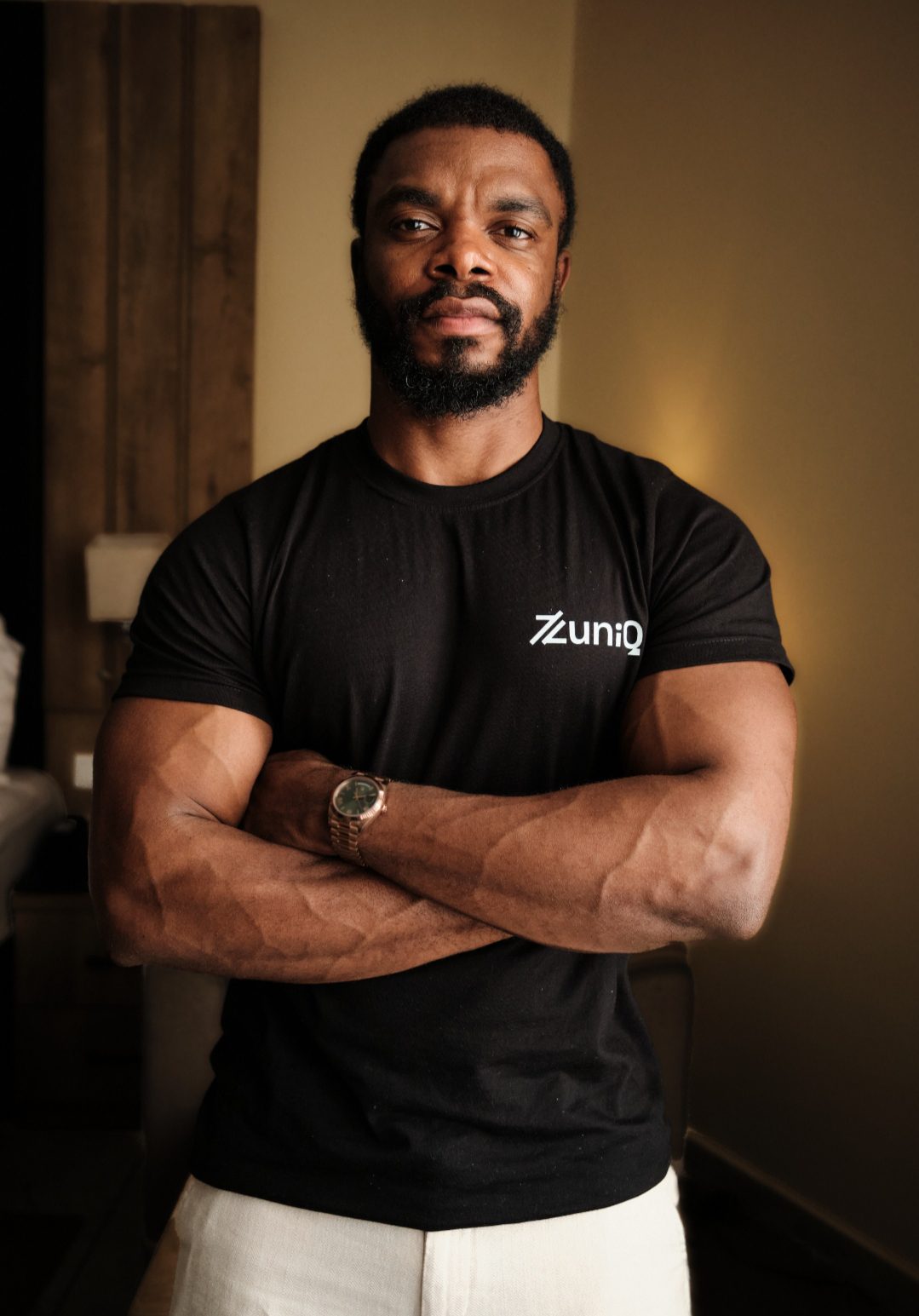 Joshua Nwogodo, founder and CEO of ZuniQ
For this segment, ZuniQ says the non-negotiable is visibility and control. Instant settlement. Multi-currency wallets. Real-time tracking. A support team that does not vanish once the onboarding is done.
Nwogodo does not frame this as innovation. He frames it as overdue fairness. “If you’re moving money globally, you don’t have to beg a traditional bank to confirm if your payment got to your supplier,” he says. “That era is getting over.”
The subtext is clear. If banks were going to fix it, they would have done so already.
Compliance as a local craft
Any company promising instant settlement in emerging markets faces a harsh reality because speed without compliance is suicide in cross-border payments. The scrutiny on African flows is heavier than ever, and regulators move at their own pace. The compliance burden is not just heavy. It varies dramatically across regions. KYC in Nigeria is nothing like AML in the UK. Kenya’s monitoring requirements bear little resemblance to those of the UAE.
ZuniQ’s answer is granular rather than centralised. Each market gets its own compliance stack, built with local rules and local partners. “We build our compliance layer country by country,” Nwogodo says. Local KYC partners handle automated checks. Real-time monitoring tools detect anomalies before regulators do. Where ZuniQ lacks a licence, it works through licensed local partners.
This approach slows expansion but prevents the blowback that has killed many early-stage payment firms. “Instant payment, but the right controls behind the scenes,” Nwogodo says. It is one of his most measured statements, and it highlights how thin the line is between ambition and regulatory disaster.
 ZuniQ
ZuniQ
The longer we speak, the clearer it becomes that ZuniQ is not trying to rebuild SWIFT. It is trying to bypass it.
The company is already processing millions monthly across Nigeria, Ghana, the US dollar and British pound corridors. The next phase is Asia. Not as a secondary hub, but as a peer. Direct Nigeria–Vietnam flows. Direct Kenya–Brazil. Direct Africa–UAE. All without touching the dollar.
“Not everything has to pass through USD,” Nwogodo says. For him, the future is a mesh of direct corridors linking emerging markets to each other. The big banks never prioritised this because the commercial incentives were weak. For ZuniQ, that gap is the business model.
On the quiet role of blockchain in cross-border payments, Nwogodo might not pass for a regular crypto evangelist, but he is pragmatic about where the industry is heading. He notes that stablecoins already power parts of ZuniQ’s settlement layers. Not as a marketing stunt, but as a practical way to gain speed, transparency, and traceability.
He points to JP Morgan Coin, Citi’s experiments, Stripe’s acquisition of Bridge, and SWIFT’s own blockchain pilots. The incumbents are not resisting the shift; they are preparing for it. ZuniQ is positioning itself in that same direction.
For him, blockchain is simply a more efficient ledger. “All the old wait time and lack of transparency will go away,” he says. Real-time, trackable settlement is the promised benefit, not the slogan.
 ZuniQ
ZuniQ
Although ZuniQ is just under a year old, it moves millions monthly across multiple currencies. Yet the company keeps a low public profile. Nwogodo prefers to grow quietly rather than trumpet milestones.
The focus for the coming months: broader liquidity access, smarter automation, and smoothing the fragmented rails within Africa. New products are scheduled before year-end. New markets will follow, with licensing pursued where required.
He returns, one last time, to reaffirm his company’s core mission: “We are here to make cross-border payments simple, fast and fair for businesses that have been struggling in silence for too long.”
If ZuniQ succeeds, it will not be because it reinvented payments. It will be because it paid attention to the companies no one else bothered to build for.


On Monday, the Central Bank of Nigeria (CBN) issued licences to 82 new Bureaux De Change (BDC) operators, allowing them to operate under the revised Regulatory and Supervisory Guidelines for BDC Operations (2024).
The licences, effective from November 27, were granted across Tier 1 and Tier 2 categories, with the CBN stating that only BDCs listed on its website are authorised to operate going forward. The CBN advises the public to only initiate transactions with authorised BCDs, as more licenced operators are updated on its website. Here is a list of the newly approved BDCs:
Tier 1 BCD operators
Operators in this category can operate and set up branches in any state within the country, including the Federal Capital Territory (FCT). Of the 82 newly licenced operators, only two have a Tier 1 licence, and they are:
- DULA GLOBAL BDC LTD
- TRURATE GLOBAL BDC LTD
Get The Best African Tech Newsletters In Your Inbox
Tier 2 BCD operators
Operators in this category are permitted to operate only in one state within the country, but can establish up to five branches, subject to approval of the CBN. The newly approved Tier 2 BCD operators include:
- ABBUFX BDC LTD
- ACHA GLOBAL BDC LTD
- ARCTANGENT SWIFT BDC LTD
- ASCENDANT BDC LTD
- BARACAI BDC LTD
- BERGPOINT BDC LTD
- BRAVO MODEL BDC LTD
- BRIMESTONE BDC LTD
- BROWNSTON BDC LTD
- BUZZWALLET BDC LTD
- CASHCODE BDC LTD
- CHATTERED BDC LTD
- CHRONICLES BDC LTD
- COOL FOREX BDC LTD
- CORPORATE EXCHANGE BDC LTD
- COURTESY CURRENCY BDC LTD
- DANYARO BDC LTD
- DASHAD BDC LTD
- DEVAL BDC LTD
- DFS BDC LTD
- EASY CASH BDC LTD
- ELELEM BDC LTD
- E-LIOYDS BDC LTD
- ELOGOZ BDC LTD
- ENOUF BDC LTD
- EVER JOJ GOLD BDC LTD
- EXCEL RIJIYA FOREX BDC LTD
- FABFOREX BDC LTD
- FELLOM BDC LTD
- FINE BDC LTD
- FOMAT BDC LTD
- GENELO BDC LTD
- GENTLE BREEZE BDC LTD
- GRACEFUL GLORY AND HUMILITY BDC LTD
- GREENGATE BDC LTD
- GREENVAULT BDC LTD
- HAZON CAPITAL BDC LTD
- HIGH-POINT BDC LTD
- I & I EXCHANGE BDC LTD
- IBN MARYAM BDC LTD
- JOURNEY WELL BDC LTD
- KEEPERS BDC LTD
- KHADHOUSE SOLUTIONS BDC LTD
- KIMMELFX BDC LTD
- KINGSOFT ATLANTIC BDC LTD
- M.S. ALHERI BDC LTD
- MASTERS BDC LTD
- MCMENA BDC LTD
- MKOO BDC LTD
- MKS BDC LTD
- MR J GOLF BDC LTD
- MUSDIQ BDC LTD
- MZ FOREX BDC LTD
- NEJJ BDC LTD LTD
- NETVALUE BDC LTD
- NEW WAVE BDC LTD
- NOTABLE AND KINGSTON BDC LTD
- PILCROW BDC LTD
- RAPID BDC LTD
- RIGHTWAY BDC LTD
- RWANDA BDC LTD
- SABLES BDC LTD
- SAFETRANZ BDC LTD
- SAMFIK BDC LTD
- SEVENLOCKS BDC LTD
- SHAPEARL BDC LTD
- SIMTEX BDC LTD
- SOLID WHITE BDC LTD
- ST. NICHOLAS GLOBAL BDC LTD
- TOPFIRST UNIQUE MULTICHOICE BDC LTD
- TOPGATE BDC LTD
- TRAVELLER’S CHOICE BDC LTD
- TUCA GLOBAL BDC LTD
- TURBOVA BDC LTD
- TURN-UP BDC LTD
- UNIGO BDC LTD
- VICTORY AHEAD BDC LTD
- WHITEWAY WWW BDC LTD
- YUND GLOBAL LINK BDC LTD
- ZAMAD FOREX BDC LTD


Six months ago, Waymo disclosed it was providing 250,000 robotaxi rides a week across its service areas, an ever-growing list that includes Atlanta, Austin, Los Angeles, Phoenix, and the San Francisco Bay Area.
The Alphabet-owned self-driving company has been coy ever since, simply stating it is many hundreds of thousands of weekly rides. Now, we have a firmer grasp on those weekly ride numbers, thanks to a leaked letter from Tiger Global Management to it investors that was first reported by CNBC.
The letter was an appeal for investment into Tiger Global’s next venture capital fund and called out the gains, so far, of its current fund. Those gains rested largely on its investments in hot companies like OpenAI, Databricks and Waymo. In the letter, Tiger disclosed that Waymo is now providing 450,000 robotaxi rides per week — nearly double the amount it disclosed this spring.
That number will rise as the company continues its aggressive rollout strategy, too. Waymo, which provides commercial robotaxi service in five cities, has announced plans to launch in 12 additional cities in 2026, including Dallas, Denver, Houston, Nashville, and San Diego.
A Waymo spokesperson declined to comment.

The Central Bank of Nigeria (CBN) has issued the first batch of final licences to 82 Bureau De Change operators under its 2024 Regulatory and Supervisory Guidelines, part of its move for a tighter FX market, aimed at shrinking the space for unregulated operators and restoring confidence after years of parallel-market distortions.
It is also part of the CBN’s push for a tighter, compliance-heavy FX framework aimed at shrinking the space for street trading, sanitising the supply chain, and restoring confidence across the market.
Under the revamped regime introduced in 2024, the CBN created two licence classes — Tier 1 and Tier 2 — with significantly higher entry thresholds. Tier 1 operators must maintain a minimum capital base of ₦2 billion ($1.38 million), while Tier 2 operators require ₦500 million ($344,385.82). The rules also shut out commercial banks, payment service banks, fintechs, IMTOs, and other regulated financial institutions from obtaining BDC licences.
Of the newly licensed BCD operators, only two operate as Tier 1 BCDs, while the other 80 remain Tier 2 BCDs and must therefore be operational only in one state. This directive aims to clean up Nigeria’s informal foreign exchange (FX) market by reducing illegal operations and restoring confidence in retail FX transactions.
In a statement signed by Hakama Ali, Acting Director of Corporate Communications, the CBN said the new licences became effective on November 27, 2025, issued pursuant to the Bank and Other Financial Institutions Act (BOFIA) 2020.
“By this notice, only Bureaux De Change listed on the Bank’s website are authorised to operate from the effective date,” Ali said. “While the CBN will continue to update the list of Bureaux De Change with valid operating licences for public verification on our website (www.cbn.gov.ng), the Bank advises the general public to avoid dealing with unlicensed Foreign Exchange Operators.”
Operating a BDC without a valid licence now attracts sanctions under Section 57(1) of BOFIA 2020, meaning that they are liable to a fine of up to ₦10,000,000 ($6,887.72) and an additional ₦200,000 ($137.75) for each day the infraction continues.
The cleanup follows a turbulent period for the FX market. In 2024, the CBN revoked the licences of over 4,000 BDCs for failures ranging from non-payment of regulatory fees to non-compliance with AML/CFT reporting obligations. It was also the year the regulator deployed the EFCC to clear FX street traders, a practice the new guidelines have now expressly prohibited.
“What we’re hoping to accomplish by this, frankly, is to bring some sanity to an industry that arguably no longer serves the interests of those whom it was meant to protect,” CBN governor Olayemi Cardoso said in 2024.
The reforms come as the naira’s official and parallel rates converge at a little less than ₦1,500, an outcome the CBN hopes to solidify by tightening control over one of the most porous segments of the FX market.
As the regulator continues to update the list of valid BCD operators on its website, the public is urged to verify the status of any BDC before initiating a transaction to ensure compliance with the new financial order.

Anthropic is launching Claude Code in Slack, allowing developers to delegate coding tasks directly from chat threads. The beta feature, available Monday as a research preview, builds on Anthropic’s existing Slack integration by adding full workflow automation. The rollout signals the next frontier in coding assistants isn’t the model; it’s the workflow.
Previously, developers could only get lightweight coding help via Claude in Slack – like writing snippets, debugging, and explanations. Now they can tag @Claude to spin up a complete coding session using Slack context like bug reports or feature requests. Claude analyzes recent messages to determine the right repository, posts progress updates in threads, and shares links to review work and open pull requests.
The move reflects a broader industry shift: AI coding assistants are migrating from IDEs (Integrated Development Environment AKA where software development happens) into collaboration tools where teams already work.
Cursor offers Slack integration for drafting and debugging code in threads, while GitHub Copilot recently added features to generate pull requests from chat. OpenAI’s Codex is accessible via custom Slack bots.
For Slack, positioning itself as an “agentic hub” where AI meets workplace context creates a strategic advantage: whichever AI tool dominates Slack – the center of engineering communication – could shape how software teams work.
By letting developers move seamlessly from conversation to code without switching apps, Claude Code and similar tools represent a shift toward AI-embedded collaboration that could fundamentally change developer workflows.
While Anthropic has not yet confirmed when it would make a broader rollout available, the timing is strategic. The AI coding market is getting more competitive, and differentiation is starting to depend more on integration depth and distribution than model capability alone.
Techcrunch event
San Francisco
|
October 13-15, 2026
That said, the integration raises questions about code security and IP protection, as it adds another platform through which sensitive repository access must be managed and audited – while also introducing new dependencies where outages or rate limits in either Slack or Claude’s API could disrupt development workflows that teams previously controlled locally.
TechCrunch has reached out to Anthropic and Slack for more information.
TECHNOLOGY
Why Africa’s Next Wave of Tech Brands Will Win with AR, VR, and Storytelling — A Conversation with Solomon Akinsanya

Solomon Akinsanya has spent the last five years helping some of Africa’s fastest-growing tech companies reshape how digital brands connect with customers.
From leading the marketing and CX engine that drove Taeillo’s 510% revenue growth, to building RedCloud’s content strategy across Nigeria and South Africa with over 2,800% increases in reach, his work sits at the intersection of cultural storytelling, digital innovation, and community-led brand building.
In this conversation with Raphael Fabunmi, Solomon breaks down why AR, VR, and narrative-driven experiences will define the next chapter of Africa’s tech ecosystem, and what brands must do today to stay relevant tomorrow.
Q: Solomon, you’ve worked across some of Africa’s fastest-growing digital brands, Taeillo, RedCloud, BuyPower, CareerBuddy. When you look at the next wave of African tech companies, what do you think will separate the winners from everyone else?
Honestly? The brands that will win are the ones that can make people feel something, even inside a digital experience. Africa’s consumers are evolving fast; they want technology, yes, but they also want connection. They want to see themselves inside the products they use.
That’s where AR, VR, and storytelling come together. The companies that understand how to merge these three will build deeper trust, deeper loyalty, and much faster adoption than those who rely on traditional marketing.
A lot of people still see AR and VR as “future tech” fancy, expensive, or unnecessary. From your experience, are they really practical for African brands?
Absolutely, if you understand what they’re meant to do.
AR and VR aren’t toys. They’re clarity machines.
At Taeillo, for example, one of the biggest barriers was simple:
“What will this furniture look like in my space?”
AR solved that. Suddenly, a customer in Lagos, Nairobi, or Accra didn’t have to imagine. They could see it. In their room. In real time.
And when you remove imagination friction, you remove buying fear. That’s why you see global commerce shifting toward immersive experiences, and it’s why Africa’s tech brands can’t afford to sit this wave out.
The technology isn’t the blocker anymore. The mindset is.
You talk a lot about storytelling as a growth engine. How does storytelling tie into immersive tech?
Think of storytelling as the heart, and AR/VR as the stage.
One gives emotion, the other gives experience.
When a customer tries a product in AR, they’ve already stepped into the story, your story.
When they explore a VR environment that shows your product’s journey, your mission, or your community impact, they’re not just buying a product… they’re buying meaning.
At Taeillo, that mix helped drive 510% revenue growth and community expansion from 21K to 75K, because people didn’t just see furniture. They saw culture. Identity. Innovation. Possibility.
Storytelling made AR not just “cool,” but commercially powerful.
From your time managing digital strategy at RedCloud across Nigeria and South Africa, what are you seeing on the ground that proves AR/VR is becoming more relevant?
The biggest indicator is how brands now measure success.
It’s shifting from “reach and impressions” to engagement, trial, and emotional connection.
We ran campaigns that had a 2,800% increase in reach and a 932% surge in content interaction, and it showed one thing clearly: people stay longer when the content feels alive. They click more. They explore more. They try more.
AR/VR gives brands that “stay longer” effect by default.
And in markets like Nigeria and South Africa, where competition is brutal, and customers make fast decisions, anything that buys you more time inside the customer’s mind is a growth advantage.
What do you think African brands get wrong when approaching AR and VR?
They treat it like a feature instead of a philosophy.
AR/VR shouldn’t just sit in an app somewhere, waiting for someone to tap it. It should be part of how the brand communicates, educates, and builds desire.
Most brands launch AR the same way they launch brochure PDFs: quietly and without a story.
But when you use AR with human narrative, showing users, communities, behind-the-scenes, real stories, it becomes sticky. It becomes memorable.
The biggest mistake is thinking immersive tech is about visuals alone.
It’s actually about emotion.
You’ve also worked with partnerships like the AR/VR Association, Social Media Week Lagos, Ingressive4Good, and AltSchool Africa. What did those experiences teach you?
Africa is ready. The creative ecosystem is hungry.
Students, designers, product teams, influencers, they’re all looking for ways to create deeper, more interactive experiences.
These partnerships showed me that we’re entering a phase where brand experience will matter more than brand messaging. If your experience isn’t memorable, someone else’s will be.
And immersive tech doesn’t remove the human element; it actually amplifies it, if you use it right.
So, what’s your prediction? What’s the “big shift” coming?
The next decade in African tech will be won by brands that do three things exceptionally well:
- Use AR/VR to remove friction from the buying journey
(no more guessing, no more uncertainty).
- Tell human, relatable stories around their products
(not generic marketing language, actual stories).
- Build community experiences, not just customer bases
(Community is the new distribution).
If a brand can combine all three, it will grow faster, spend less on ads, and build loyalty that can’t be copied.
If you had to give one final piece of advice to African founders or marketing leaders reading this, what would it be?
Don’t wait until AR and VR become mainstream before you adopt them.
The brands people call “innovative” tomorrow are the ones experimenting today.
And don’t think of immersive tech as technology.
Think of it as a new way to tell your story.
Because at the end of the day, people don’t remember products, they remember the experiences that made them feel seen.
Solomon Akinsanya is a content marketing and digital strategy professional with a track record of driving rapid growth across African tech brands. He led Taeillo’s 510% revenue surge and has driven digital strategy at RedCloud, BuyPower, and CareerBuddy.

At the African Prosperity Summit 2025, held from November 12 to 14, 2025, founders, fund managers, policymakers, and investors gathered to discuss the state of capital in the continent’s technology system
The main event, held on November 13, 2025, featured a plethora of conversations with key players in the African business ecosystem and African private capital leaders.
Setting the tone of the event, Kola Aina, founding partner of Ventures Platform, highlighted that there is a significant gap between capital raised and exits achieved in the tech ecosystem.
Kola Aina – Founding Partner of Ventures Platform, during his opening speech at the African Prosperity Summit 2025
In his opening speech, Aina shared that since 2020, African startups have raised a total of $18 billion, and fund managers with dedicated African strategies have raised an additional $2.3 billion. Using a Venture Capital (VC) return on investment projection, Aina estimated that in total, “If you piece that together, we’re talking about something in the region of $20 billion [range] dedicated to African VC strategies.”
In VC economics, a 3x return (DPI—Distributed to Paid-In capital) is generally considered the benchmark for a successful fund. With a 2x to 3x return, Aina shared that the DPI expectation by 2035 is $40 to $60 billion for the VC market to be regarded as a sustainable market that makes an impact and delivers returns on investment.
The deadline for these returns is “by about 2035” based on the standard 10-year lifecycle of a venture capital fund. If capital is raised between 2020 to 2025, the fund must liquidate (exit) its assets between 2030 to 2035.
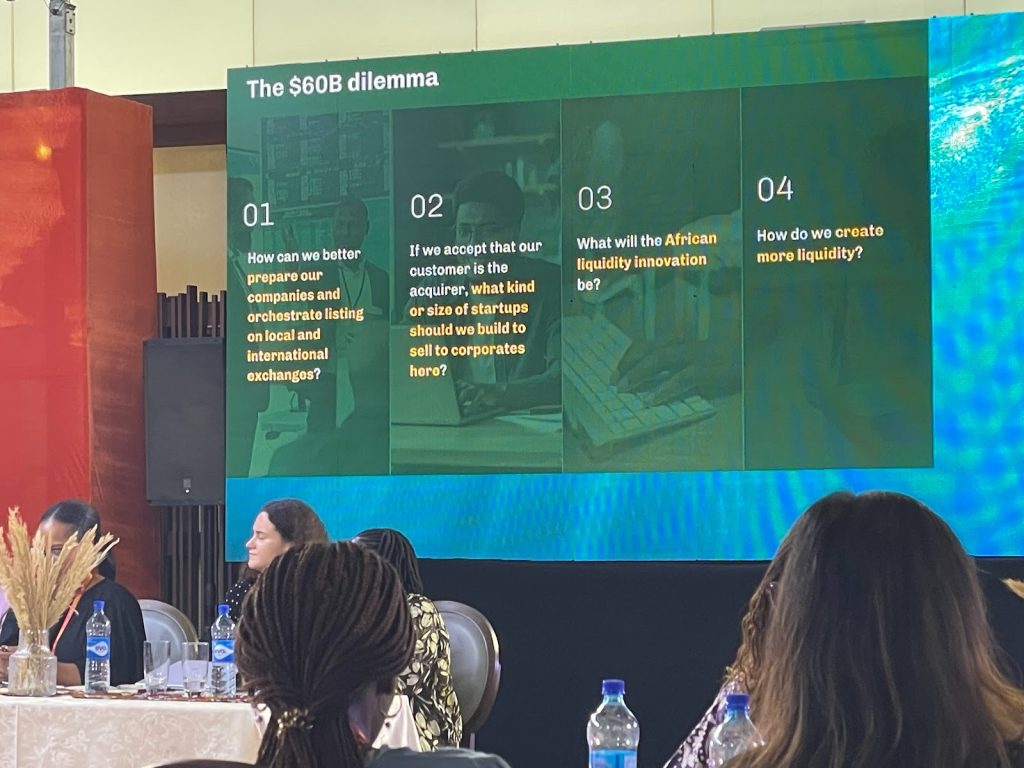 Image source: TechCabal
Aina urged VCs to engage in the conversation: “There is a direct correlation between liquidity and participation.” It is clear, and he emphasised, there is a $60 billion to contend for, and this dilemma is what the summit set out to answer, especially as this number is growing with capital pouring every day from the venture ecosystem.
The strategic pivot: Unicorns vs. SMEs
The first step to returning this capital would seem to be an operational reality check. During the Liquidity as Leverage panel, industry leaders argued that the “growth at all costs” model often creates companies that are too expensive to be bought.
Bunmi Akinyemiju, CEO of Venture Garden Group, argued that founders must be clear on whether they are building a venture company or an SME (small to medium-sized enterprise).
Akinyemiju said, “If you’re building an SME, you price the SME…and you sell it to somebody that buys an SME,” or simply generate dividends. The disconnect arises when founders build SMEs but price them like Unicorns, making exits impossible.
On the same panel, discussing catalysing exits to sustain the cycle, Ross Strike, SVP, Investor Relations at Moniepoint, added that exit readiness isn’t just about sales; it’s about building a “business machine” with strong governance and financial controls from day one.
However, Daniel Adeoye of Verod Capital warned founders of a “strategic debt,” noting that the market can sometimes penalise companies for becoming too big, limiting the pool of potential acquirers to international giants. He said, “Usually ticket sizes in this market [in this continent] are $50 to $100 million. So there’s such a thing as being a strategic fit.” By this, Adeoye implied, there is a sweet spot where local banks, telcos, and conglomerates can comfortably acquire a company in Africa.
The ‘strategic debt’ growth trap he warns of can happen when a startup becomes too expensive for local acquirers, yet too risky or complex for global ones. As companies are defining their operational landscape, they should be wary of this. By raising at a high valuation today, founders are “borrowing” the expectation of a massive exit tomorrow, and if companies cannot repay the debt by securing one of the few global buyers available, they default on their liquidity promise to investors. It is often better to sell earlier to a local strategic buyer for a modest, guaranteed return than to hold out for a massive global unicorn exit that might never happen.
The capital shift: Patience and alternatives
If the operational model must change, so must the capital timeline. Chirantan Patnaik, Director at Ventures Platform, noted in his presentation, ‘A View from the Capital Stack’, that for a $5 billion fund to succeed, the ecosystem requires a $160 billion exit value. He questioned whether the standard 10-year fund lifecycle is realistic for the African context.
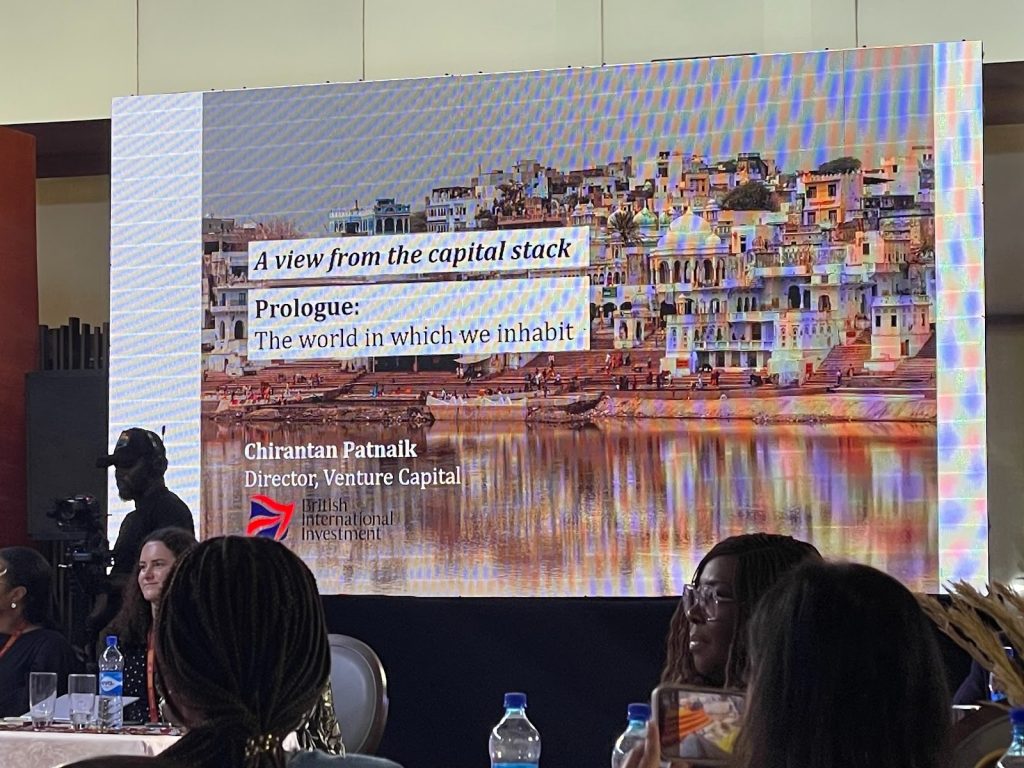 Image source: TechCabal
This sentiment was echoed by Bolaji Balogun, CEO of Chapel Hill Denham, during the panel session on ‘Policy and markets: building for the long term.’ Balogun argued that the traditional private equity model of a three-to-five-year exit horizon has “failed in Africa”. The traditional Private Equity (PE) model is time-bound. A PE firm raises a fund with a mandate to return the money in roughly 10 years. This forces them to invest, grow the company, and exit (sell) within a three-to-five-year window
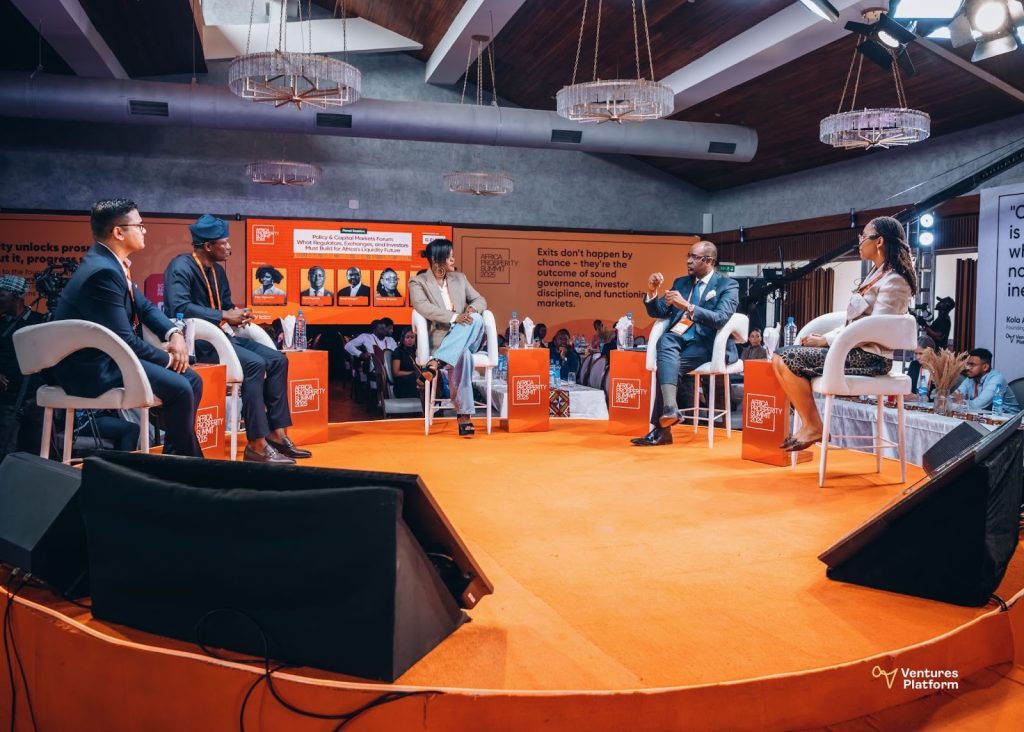 L_R – Chirantan Patnaik (Director, VC – BII), Temi Popoola (GCEO, NGX Group), Fatu Ogwuche (Founder, Big Tech Week), Bolaji Balogun (Chapel Hill Denham), and Michelle Chikezie (Partner, G.Elias)
“Create long-duration funds,” Balogun advised. ”There’s a world-class model that works [and can be] found in the UK market. 103 of the 350 companies in the FTSE 350 are listed investment trusts. And what listed Investment Trusts allow you to do is basically to bring liquidity to an inadequate asset class.”
Unlike a standard VC fund that must liquidate after 10 years, a Listed Investment Trust is a company listed on a stock exchange (like the London Stock Exchange or NGX). This way, the fund is permanent. The fund can hold the company for 10, 15, or 20 years without being forced to sell. If an investor wants their money back, they don’t force the fund to sell the startup. Instead, they simply sell their shares in the Trust to another investor on the stock market.
Hayo Afman, Regional Director Africa for Alder Tree Investments, offered a solution from the family office perspective. Speaking on the panel on ‘Betting on Africa: The Global Investor Perspective,’ he noted that family offices, which manage generational wealth, do not have the same aggressive liquidity timelines as VCs.
“We don’t need to see liquidity for the next [couple of] years,” Afman stated, emphasising that patient capital allows assets to mature properly.
Also, equity is not the only route, and this concept was elaborated in the panel session about structuring alternative capital pathways.
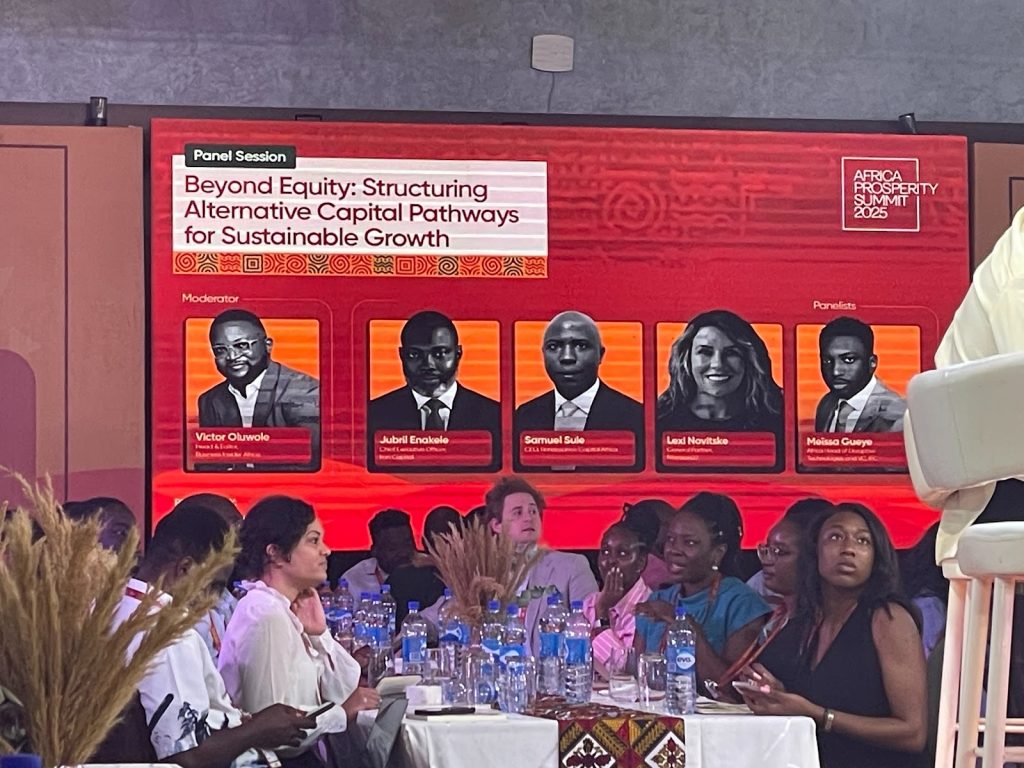 Image source: TechCabal
Lexi Novitske, General Partner at Norrsken22, noted that debt financing is an effective alternative for asset-heavy models, predicting a rise in “consumer-backed financing” where customers essentially fund the product they use.
“What’s going to come longer-term in some African markets is more consumer-backed financing, [by] consumers [who] want to have an [earned] product,” Novitske said. “ I think Piggyvest already does this for several of its customers. But it could be anything from owning a share of property to having a portfolio of maybe super credits.”
The market unlock: Domestic liquidity
Returning $60 billion requires a marketplace that can absorb it. Patnaik used India as a case study, noting that its ecosystem matured because domestic institutional investors eventually outpaced foreign ones. This means seeking participation from non-traditional investors, such as financial institutions and corporate venture capital (CVCs), and building for the continent’s near-term evolution rather than its current state.
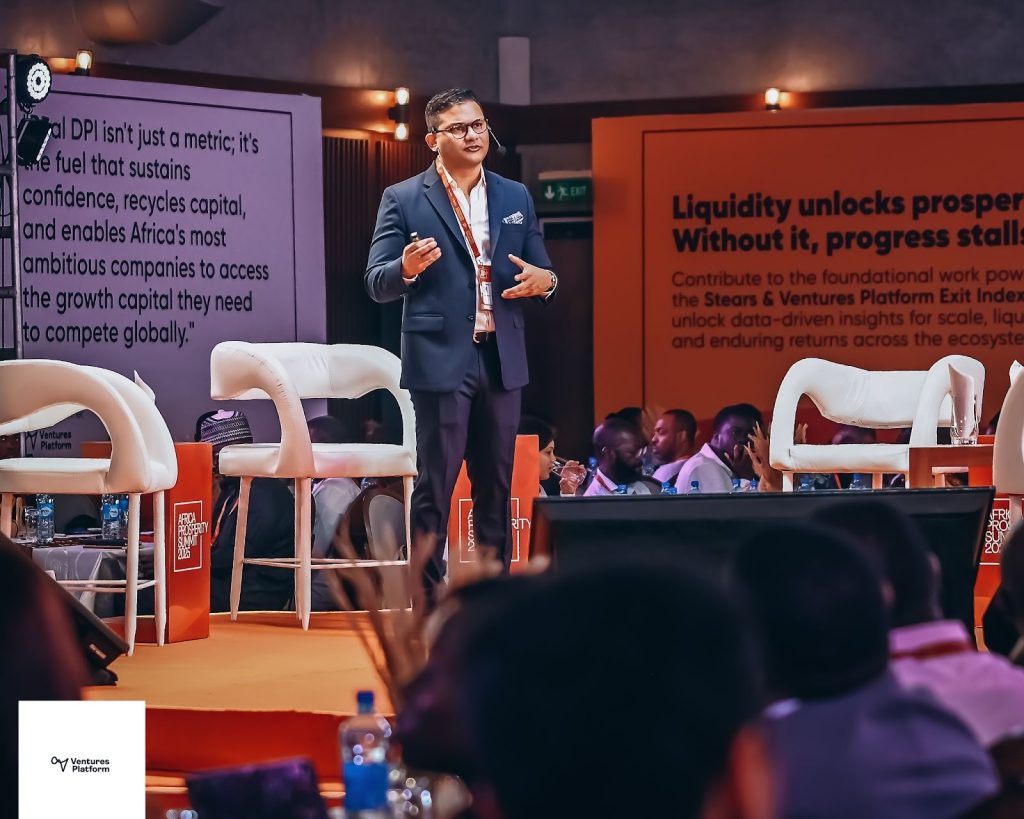 Chirantan Patnaik – Director, Venture Capital – BII
With India, he showed:
- Domestic capital is key: India’s ecosystem matured not just because of foreign VC, but because domestic institutional investors eventually outpaced foreign ones.
- Retail participation: He highlighted the role of “Systematic Investment Plans” (SIPs), where ordinary citizens invest small amounts (e.g., $3/month), creating a massive pool of domestic capital.
To put Patnaik’s thoughts simply, startups earn in local currency (Naira, Cedi, Shilling) but raise in Dollars, and domestic capital can speed up returns by aligning the currency of investment with the currency of revenue.
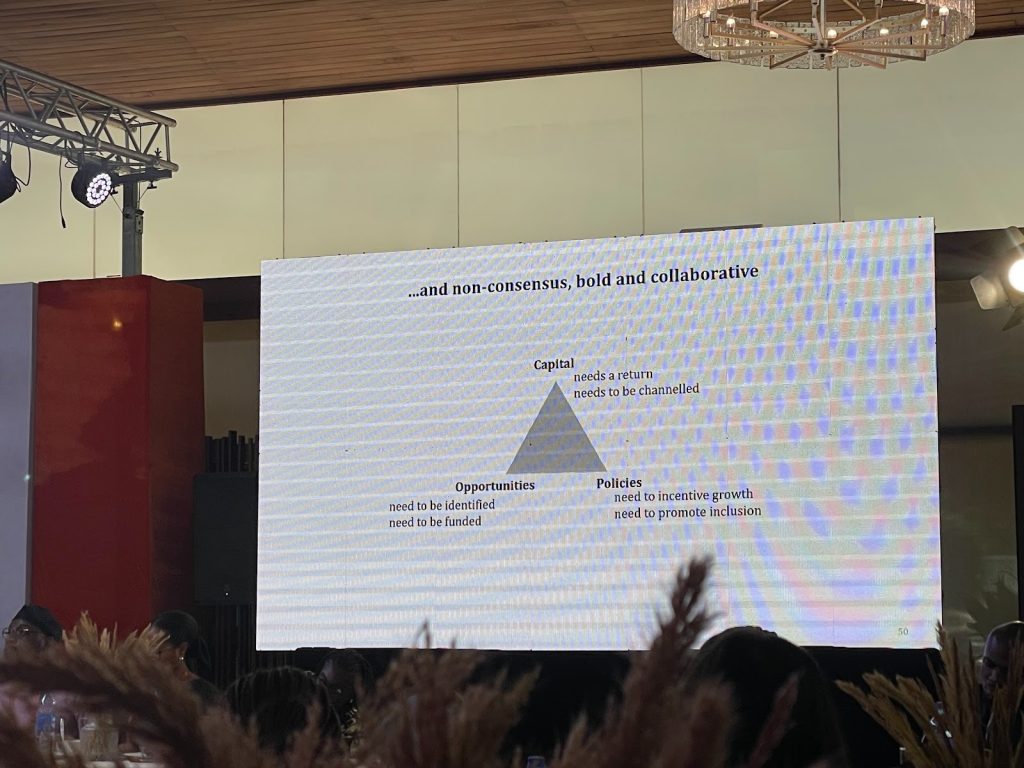 Image source: TechCabal
Ultimately, the path to returning $60 billion involves a shift from relying solely on foreign acquisitions to engineering local exits, embracing patient capital, and building businesses priced correctly for the market they serve.

TikTok is launching “Shared Collections,” a new way for users to share and organize TikTok content in one place with friends or family. The company also teased the upcoming launch of “Shared Feeds,” which will let users watch TikTok content together through a shared interest-based feed.
TikTok rolled out individual Collections earlier this year to let users save content in custom folders. With Shared Collections, users can now do things like create a space to share cookie-swap plans and holiday-dinner ideas with their family. Or, they can create Shared Collections to organize decor inspo or secret Santa ideas.
“Whether it’s content from their favorite creators, inspiration for a home design project, or a new skill they’re learning together, Shared Collection makes it easy for people to stay organized as they discover and save on TikTok,” the company explained in a blog post.
Image Credits:TikTok
You can only create a Shared Collection with someone if you’re both following each other. Collections can stay just between friends and family, or they can be made public.
Shared Collections are available globally to accounts over age 16.
As for Shared Feeds, which are launching in the coming months, TikTok sees them as a way for users to discover content together. Users can generate Shared Feeds in one-on-one direct messages.
Shared Feeds will surface new content tailored to both users’ tastes, such as sports, winter activities, and their favorite creators. The feeds are generated based on users’ TikTok activity, such as what they like, watch, and comment on.
Techcrunch event
San Francisco
|
October 13-15, 2026
It’s worth noting that the feeds aren’t continuous, as users will find a selection of 15 videos in their Shared Feed each day.
 Image Credits:TikTok
The feature is similar to Instagram Reels’ Blend feature that lets you create a custom, personalized reels feed for you and your friends.
Users will be able to create a Shared Feed by sending an invite to another user. Once the invitation is accepted, they can create a feed and chat about it in DMs. After both people have watched all the videos, they can view metrics, including which videos they both liked, in their “Shared Likes” history.
TikTok also announced that it’s launching greeting cards that users can send each other. Users will be able to select a greeting card inside their chats, write a message, and send it. The receiver will get a festive animation alongside the message.


Photo by Cemrecan Yurtman / Unsplash
If you’ve ever taken a portrait of someone in a dim restaurant or at a concert, you know how iPhones usually handle it. Recent Pro models could brighten the shot with Night Mode and still keep the soft background blur that Portrait mode adds. It was one of those features people relied on without thinking about how it worked.
This week, though, iPhone 17 Pro and 17 Pro Max owners noticed that the option has quietly disappeared. Switch to Portrait in low light, and the Night Mode icon no longer appears. The phone also stops saving the depth data needed to add blur later. Users flagged the change on Reddit and Apple’s forums, and Apple’s documentation confirms that the 17 Pro series simply no longer supports the combo.
Night Mode Portraits used to work because the camera captured depth information even in very low light. On the iPhone 17 Pro lineup, that depth data simply isn’t saved in those conditions, which means the blur effect can’t be applied. The practical impact translates to low-light portraits that now require choosing between brightness and background separation. Moments that depend on fast, flattering low-light shots, birthday dinners, concerts, and late-night events lose a feature many people never realized they depended on.
Apple Reportedly Delays Next iPhone Air as Ultra-Slim Design Struggles to Catch On
The company will now focus on its traditional lineup while taking a more cautious approach to this experimental design.

Apple hasn’t explained the decision, but there are technical factors that make the change plausible. Combining Night Mode’s long exposures with Portrait’s depth mapping can introduce motion blur, increase noise, or force the camera to drop resolution.
Older Night Portraits often landed at 12MP, while the iPhone 17 Pro shoots at higher native resolutions. Maintaining image quality at those levels may have required Apple to remove the combined mode entirely. Multiple outlets have pointed to these trade-offs as the most likely reason.
For now, iPhone 17 Pro users have to pick between a bright Night Mode shot or a blurred-background Portrait. Third-party apps can simulate depth or background blur after the fact, but results vary. Unless Apple reverses the decision in a software update, Night Mode Portraits are effectively gone from the newest Pro models, and low-light portraits will require a bit more planning.
iPhone 17 vs. Google Pixel 10
Which flagship should you buy?

On Saturday, December 6th, 2025, top Nigerian creators asserted their dominance at the 2025 TikTok Awards in Sub-Saharan Africa by securing six awards out of ten categories.
The annual Award night themed “New Era, New Icons” took place in Johannesburg, South Africa.
According to TikTok, this year’s event celebrated the most impactful and inspiring creators across Sub-Saharan Africa. It also highlighted the extraordinary ways creators have engaged, inspired, and connected communities on and off TikTok.
 Boniswa Sidwaba, TikTok’s Head of Content Operations for Sub-Saharan Africa
“With Nigerian creators securing six of the ten awards, we are honoured to celebrate their impact, especially as these victories were voted for by the TikTok community, who continue to champion the stories shaping culture”, Boniswa Sidwaba, TikTok’s Head of Content Operations for Sub-Saharan Africa, said.
She added that the annual ceremony was a gathering of the trailblazers who have redefined what it means to be a creator in Africa.
“This year, we are honoured to see West African creators who turned short video clips into cultural movements be recognised,” she said.
Read also: Full list: Nigerian creators dominate 2025 TikTok SSA nominations

Here is the full list of Nigerian winners from TikTok’s 2025 Sub-Saharan Awards
Creator of the Year (Sponsored by NIVEA)
Winner: Raja’atu Muhammed Ibrahim @diaryofanortherncook (Nigeria)
Raja’atu is a food content creator based in Sokoto, Nigeria. She was recognised for her mastery of visual storytelling through food with the rich sounds of northern music and Nigerian cuisines.
Storyteller of the Year (Sponsored by inDrive)
Winner: Brian Nwana @briannwana (Nigeria)
On the second of the list is Brian Nwana, an Abuja-based food content creator who claimed the Storyteller of the Year award through his food content. From street interviews to compelling personal narratives woven into his food adventures, Brian has a rare gift for capturing the human experience bite by bite.
Education Creator of the Year
Winner: Izzi Boye @izziboye (Nigeria)
Making tech accessible to the masses, Izzi Boye is the go-to guy for gadget reviews, hacks, and digital tips. He won the education creator award, which proves that TikTok is a powerful classroom for the digital age.
His runner-up was Michelle (@michelle_expert) from South Africa. She empowers her audience with expert advice and actionable insights from career development and financial literacy to personal growth and everyday decision-making.
 Belove Olocha, Entertainment Creator of the Year
Entertainment Creator of the Year (Sponsored by PEP)
Winner: Belove Olocha @beloveolocha (Nigeria)
Fourth on the list is Belove Olocha, a Lagos-based content creator who was awarded for her consistent ability to entertain and engage audiences with relatable movie content. She also stands out for incorporating her love for movies, sharing film moments and recommendations that resonate with her community.
Her runner-up was Jabulani Macdonald @jabu_macdonald from South Africa. He is a staple of South Africa’s entertainment scene, known for his quick wit and engaging presence.
Social Impact Creator of the Year (Sponsored by Dis-chem)
Winner: Dejoke Ogunbiyi @noositiwantiwa_ (Nigeria)
The Social Impact Creator of the Year was awarded to Dejoke Ogunbiyi, also known as Noosi Tiwantiwa. Using the platform for good, she is driving conversations that matter. From Ibadan, she tackles social issues with grace and impact, mobilising her community for positive change.
Her runner-up was Sinethemba Masinga (@ufarm_julia) from South Africa – A champion for agriculture and sustainability, proving that farming is the future.
 Crown Uzama, Artist of the year
Artist of the Year
Winner: Crown Uzama @theycallmeshallipopipp (Nigeria)
The biggest moment came when the artist Shallipopi, nicknamed “Pluto Presido,” won the Artist of the Year Award. This superstar, who is from Benin City, has been extremely popular throughout 2025.
His huge hit song, “Laho,” was a massive success. It went to the top of the music charts and became a viral trend that everyone saw on their TikTok feeds. The song mixes his unique street language from the Edo area with a catchy Afrobeats rhythm.
The track became hugely popular everywhere, showing that when Nigerian artists make something new, it influences the world.
Read also: Why TikTok banned late-night live streams for Nigerian creators


Increased use of social media by children damages their concentration levels and may be contributing to an increase in cases of attention deficit hyperactivity disorder, according to a study.
The peer-reviewed report monitored the development of more than 8,300 US-based children from the age of 10 to 14 and linked social media use to “increased inattention symptoms”.
Reseachers at the Karolinska Institute in Sweden and the Oregon Health & Science University in the US found that children spent an average of 2.3 hours a day watching television or online videos, 1.4 hours on social media and 1.5 hours playing video games.
No link was found between ADHD-related symptoms – such as being easily distracted – and playing video games or watching TV and YouTube. However, the study found that social media use over a period of time was associated with an increase in inattention symptoms in children. ADHD is a neurodevelopmental disorder with symptoms including impulsiveness, forgetting everyday tasks and difficulty focusing.
“We identified an association between social media use and increased inattention symptoms, interpreted here as a likely causal effect,” said the study. “Although the effect size is small at individual level, it could have significant consequences if behaviour changes across population level. These findings suggest that social media use may contribute to rising incidence of ADHD diagnoses.”
Torkel Klingberg, a professor of cognitive neuroscience at the Karolinska Institute, said: “Our study suggests that it is specifically social media that affects children’s ability to concentrate.
“Social media entails constant distractions in the form of messages and notifications, and the mere thought of whether a message has arrived can act as a mental distraction. This affects the ability to stay focused and could explain the association.”
The study found the ADHD link was not affected by socioeconomic background or a genetic predisposition towards the condition. Klingberg added that increased use of social media may explain part of the increase in ADHD diagnoses. Its prevalence among children has risen from 9.5% in 2003-07 to 11.3% in 2020-22, according to the US national survey of children’s health.
The researchers stressed the results did not imply all children who used social media developed concentration problems. But they pointed to increased use of social media by children as they got older and to children using social media well before they turned 13, the minimum age for apps such as TikTok and Instagram.
The report said: “This early and increasing social media use underscores the need for stricter age verification and clearer guidelines for tech companies.”
The study found a steady increase in social media use from about 30 minutes a day at age nine to two and a half hours a day by age 13. The children were enrolled for the study at the ages of nine and 10 between 2016 and 2018. The study will be published in the Pediatrics Open Science journal.
“We hope that our findings will help parents and policymakers make well-informed decisions on healthy digital consumption that support children’s cognitive development,” said Samson Nivins, one of the study’s authors and a postdoctoral researcher at the Karolinska Institute.