
NIGERIA NEWS
Christmas Season: Nigerian Baptist Convention distributes free food, empowerment items to widows

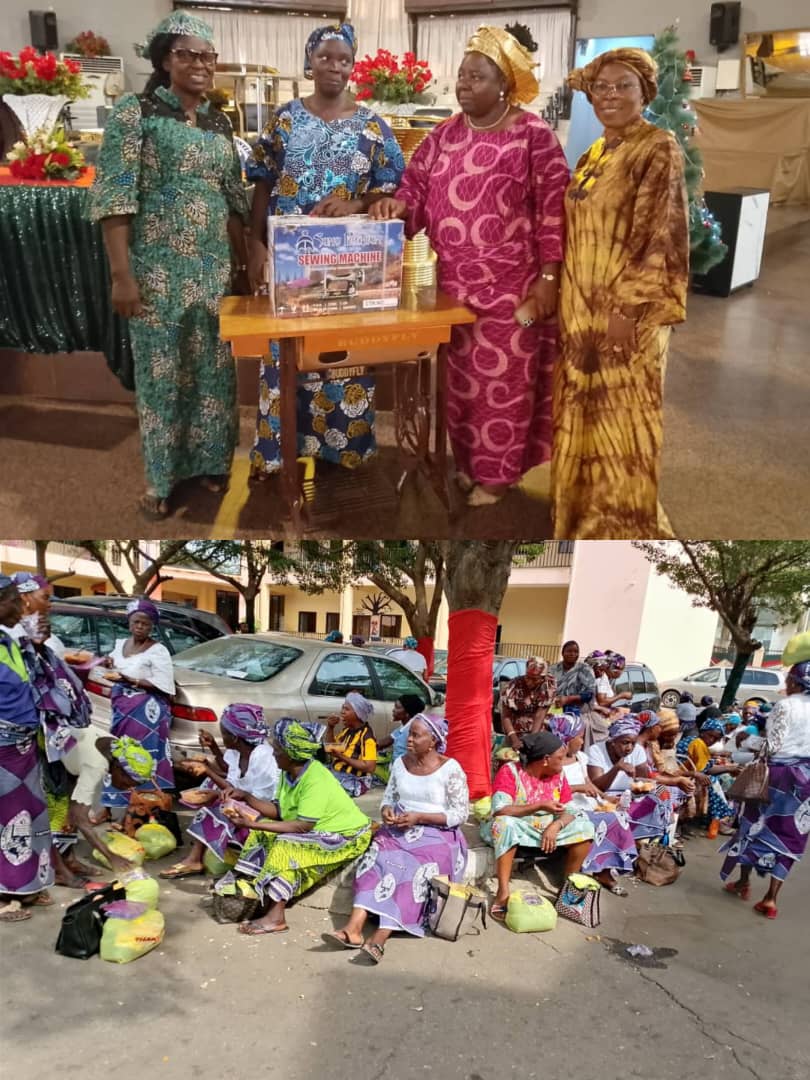
In the spirit of the festive season, over one hundred widows from the Northern Region have benefited from the free distribution of food and empowerment items as well as from the Social Ministries Department of the Nigerian Baptist Convention.
On the occasion held at First Baptist Church, Garki Abuja, the Minister in charge of Unity Baptist Church, Utako Abuja, Reverend Linus Thomas described the gesture as a welcomed development and stressed the need for religious groups to always put smiles on the faces of vulnerable and less privileged ones in the society.
Reverend Linus Thomas who was the Guest Speaker expressed concern over the challenges confronting some widows and advised Government at all levels to be committed to their yearnings and aspirations.
He also admonished them to always put their trust in God and shun acts that could tarnish their image and deny them eternal life.
In their goodwill messages, D’Anna Shotts and Angel Oswood from International Mission Board also commended the Social Ministries Department of the Nigerian Baptist Convention for its annual end of the year party across the country noting that the yearly event has gone a long way in giving widows and widowers à sense of belonging in christiandom.
They promised the Board’s continuous support to the Department towards improving the wellbeing of the needy and vulnerable Nigerians.
Earlier, the Director, Social Ministries Department of the Nigerian Baptist Convention, Rev. Dr Elizabeth Aderounmu who said the gesture was to alleviate the plights of widows during Christmas celebration advised them to always pray for a better and prosperous Nigeria.
Rev. Dr Elizabeth Aderounmu stated that similar programme would be organize for widows in the Western Zone at Hebron Baptist Centre, Lasokun, Idi Isin, Ibadan, Oyo State on Thursday , December 11th 2025 by 10am prompt while that of the Eastern Zone will take place at First Baptist Church, Boji – Boji, Agbor , Delta State on Saturday , December 13th 2025 also by 10am prompt.
According to her, the essence of event is to put smiles on their faces and give them a sense of belonging this festive season.
While wishing them a. Merry Christmas in advance, Rev. Dr Elizabeth Aderounmu said Social Ministries Department would continue to embark on programmes that would make widows and the vulnerable ones self reliant in accordance to the doctrine of the Nigerian Baptist Convention
Some of the widows who benefitted from the free food and empowerment items thanked the Nigerian Baptist Convention for always remembering them in times of needs and challenges.
They called on other religious groups to emulate the Social Ministries Department of the Nigerian Baptist Convention towards empowering widows and reduce their challenges in the country.
Highpoints of the event were free medical checks, health talks, testimonies and prayers for Nigerian Baptist Convention, the Nation and its leadership among others.


President Bola Ahmed Tinubu will embark on a three-state visit this weekend, traveling from Abuja to Borno, Bauchi, and Lagos States.
This was disclosed in a statement issued on Friday by the Special Adviser to the President on Information and Strategy, Bayo Onanuga.
In Borno, the President is scheduled to commission several federal and state projects alongside Governor Babagana Zulum.
He will also attend the wedding of Sadeeq Sheriff, son of former Borno Governor Senator Ali Modu Sheriff, to Hadiza Kam Salem.
From Maiduguri, President Tinubu will proceed to Bauchi to offer condolences to the family of Sheikh Dahiru Bauchi, the late prominent Muslim cleric and leader of the Tijjaniyya Muslim Brotherhood, who passed away on November 27.
After completing the Bauchi visit, the President will head to Lagos to spend the end-of-year holidays. While in the city, he is expected to be the guest of honour at the Eyo Festival on December 27 at Tafawa Balewa Square.
The festival will celebrate notable figures, including President Tinubu’s mother, Alhaja Abibatu Mogaji, and former Lagos Governors Alhaji Lateef Jakande and Chief Michael Otedola.


The Police Command in Delta State has arrested a female suspect over the alleged sale of her two-month-old baby in the state.
Bright Edafe, the police spokesperson in Delta, disclosed this to reporters on Friday in Warri, Delta State.
Mr Edafe, a superintendent of police, said that the suspect, who was the mother of the infant, allegedly staged the abduction of the baby.
He said that the incident occurred on Monday within the Ekpan Link Road in Uvwie Local Government Area of the state.
Mr Edafe explained that shortly after the incident, the suspect reported the matter at the Ekpan Police Division.
“The suspect, Rita Ughale, reported at the Ekpan Police Division that her two-month-old baby was snatched from her during a robbery incident while transiting in a tricycle.
“Upon receipt of the report, the Divisional Police Officer, Ekpan Division, CSP Labe Joseph, immediately mobilised operatives of the division and coordinated a swift search and rescue operation,” he said.
Mr Edafe said that the inconsistencies and suspicious conduct observed about the woman during the investigation prompted further interrogation.
According to Edafe, upon further interrogation, the suspect subsequently confessed that the incident was stage-managed.
The police spokesperson said that the suspect disclosed that she sold her baby to a couple for N1.5 million.
He said that the buyers were arrested and the infant rescued.
Mr Edafe added that the suspects were currently in the police custody while the investigation continues. He also said that the command had intensified efforts to arrest other accomplices for prosecution.
In May, the police busted a 16-year-old SS2 student at a private secondary school in Abakaliki, Ebonyi State, who faked her own kidnapping.
The girl allegedly contacted a family member claiming she had been kidnapped and demanded a ransom of N2 million for her release.
READ ALSO: 24 women graduate from Women in Global Health Nigeria fellowship
In August, the police arrested Moses Amarks, an 18-year-old student at the College of Health in Kwamba, Suleja, Niger State, for allegedly faking his own kidnapping to extort money from his parents.
Mr Amarks and his accomplices reportedly used a hidden number to call his mother, demanding a ransom of N50 million for his release.
(NAN)
NIGERIA NEWS
As Trial of Suspected Deeper Life Church Attackers Speed Up, Victims, Survivors Laud DSS

*Believe justice will be served
Following the recent arraignment by the Department of State Security (DSS) of Abdulmalik Abdulazeez Obadaki, the suspected mastermind of the 2012 gun attack on a Deeper Life Bible Church, Otite, near Okene, in Kogi State, which killed over 19 worshippers, families of victims and survivors have thanked the secret police for re-arresting and speeding up Obadaki’s trial.
The victims, their families, survivors, as well as residents of the town, expressed satisfaction with they described as the speed and vigour with which the new DSS leadership is prosecuting Obadaki, even as they affirmed their faith in the ability of the court to dispense justice.
On the morning of 7 August 2012, three men armed with AK-47 assault rifles opened fire on a Bible study session of the Deeper Life Bible Church, Otite. At the end of the attack, fifteen worshippers lay dead. Four others later died from injuries they sustained during the attack. Several dozens more were injured during the attack believed to be the handiwork of Ansaru terrorist group.
After the Okene church attack, Obadaki reportedly led a gang that raided five commercial banks in Uromi, Edo State, killed several persons, and carted away huge sums of cash.
He, however, was trailed and arrested by security forces and remanded at the Kuje Prison but escaped shortly during the July 2022 jailbreak at the Kuje Custodial Centre.
On November 15, 2025, the DSS announced that it had recaptured the fugitive Ansaru leader.
Six days later, the secret police arraigned Obadaki before Justice Joyce Abdulmalik of the federal high court, Abuja, on a six-count charge bordering on terrorism, conspiracy, aiding attacks, concealment of information, and escape from lawful custody. When the charges were read, Obadaki pleaded guilty only to count six, which relates to escaping from lawful custody.
Justice Abdulmalik adjourned the case to January 26, 2026, but added that the defendant should remain in the custody of the DSS pending the next hearing.
Residents of Otite said they were happy with the DSS for re-arresting the Ansaru leader, and for the swiftness with which the secret police arraigned him, saying the moves showed that “the DSS has indeed changed.”
Said one of the community leaders, “In fact, before now, we had given up on ever getting justice. And you won’t blame us. After attacking the Deeper Life Church in out town, they moved to attack banks in Uromi. We, therefore, were happy to hear that he was arrested.
“The long years this Obadaki spent without trial began to sow seeds of doubt in our hearts. If you Google Otite today, what you’ll see is that terrorists attacked our Deeper Life Bible Church. We still live with the scars of that attack.
The next thing we heard in 2022 was that he escaped during the Kuje jail break,” continued the community leader.
“Suddenly, like a bolt from the blues, we heard in mid -November that the DSS recaptured him.
Given all that we have heard concerning the new DSS leadership, and the way the new leadership quickly arraigned him, out cautious optimism has since given way to rekindled faith and hope that true change has come.
Somehow, we believe that things will be different this time around, and we would get justice from our courts,” he affirmed.

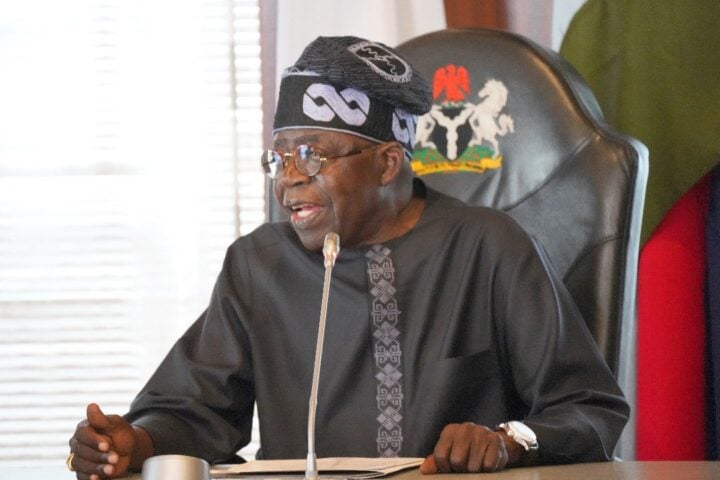
Otega Ogra
Let me begin with a simple truth. Power does not live in Abuja. Power does not live on Twitter. Power does not live on television. Power lives where people gather.
At the junction, at the market, at the motor park and at the bus stop. In the WhatsApp group that decides what people believe before any headline reaches them.
Let me hear you say it with me. Power lives where people gather. Let me hear it again. Louder. I’ll repeat it… Power lives where people gather. And that is why you are here.
I did not come to speak at you. I came to speak with you because every reform we push, every policy we explain, every hope we are trying to protect.
Will either live or die in your hands. I am Otega Ogra.
I serve as Senior Special Assistant to the President on Digital and New Media. But more importantly, I am a student of leadership. And I am a disciple of a man who taught me something that has shaped my entire public life.
President Bola Ahmed Tinubu, taught us that politics is not noise. Politics is structure. Politics is patience.
Politics is presence. You do not win a country by shouting louder. You win a country by showing up consistently.
Let me tell you a personal story. Years ago, long before government, I worked in the private sector. I sat in boardrooms where Nigeria was not discussed as a people or a possibility. Nigeria was mostly discussed as a risk.
Every time our country came up, you could sense the fear in the room. Fear of insecurity. Fear of inconsistency. Fear of leadership failure. And I realised something that day.
Nigeria was being analysed by people who had never waited at our bus stops, never bargained in our markets, never seen how our people adapt, survive and rebuild after every setback. That moment taught me a lesson I carried into government.
A nation loses its future the moment it allows others to define its meaning. That gap between perception and reality is where you come in. Grassroots media is not about trends. It is about trust.
Now let us talk about leadership. President Bola Tinubu did not arrive at this moment by accident. He spent decades building ideas, institutions, people and political structure.
He taught us that leadership is not about avoiding pain.
It is about choosing the right pain. That is what this administration represents. The Renewed Hope Agenda is not a slogan. It is a governing framework.
Eight priorities that guide every decision.
Economic reform and growth.
Food security and agriculture.
Energy security.
Infrastructure and transport.
Human capital development.
Social investment and poverty reduction.
Security and national cohesion.
Governance reform and institutional strength.
These are not promises for applause.
They are priorities for work.
Let us start with insecurity.
Foryears, Nigerians felt the state had stepped back.
Bandits became bold. Criminals felt untouchable.
This administration took a clear position. The state must return.
And it must return firmly. Security coordination has improved. Tens of Thousands of terrorists have been eliminated or captured. Many of our fellow citizens who were kidnapped have been freed. Over 24 terrorists have been convicted or undergoing trial in the last one year.
Intelligence sharing is tighter. Air surveillance has expanded.
Forests are being flushed. Kidnapping networks are being dismantled. Is the work finished. No. But the direction is no longer confused. Your role as grassroots media champions is not to deny pain. Your role is to explain progress without arrogance.
Let me ask you something.
When change is easy, does it change anything? no
When change is hard, does it matter? Yes
Exactly.
Now, on the economy. Let us be honest with ourselves.
Subsidy removal was painful. Foreign exchange reform was uncomfortable. But what was the alternative.
Borrow endlessly. Lie consistently.
Push the burden to our children.
President Tinubu chose truth over convenience. Today, states are receiving more revenue. Investors are returning. Confidence is rising in manufacturing and energy. The economy is being reset on realistic foundations. Regulators have been given more independence to work without executive overreach. Pain without direction is failure. Pain with purpose is reform. On youth employment.
Government cannot hire every young Nigerian.
But government can create the environment where work is possible.
Roads create jobs. Ports create jobs. Power creates jobs.
Digital infrastructure creates jobs.
Youth employment is not one programme. It is an ecosystem.
That is why this administration is investing heavily in infrastructure, energy transition, digital skills and enterprise. The renewed Hope ward programme will provide opportunities for millions of youth to be part of governance while also being accountability partners to us as a government. We are here because you are.
On human capital.
A nation that ignores education and skills is digging its own grave. This government understands that Nigeria’s greatest resource is not oil. It is people.
That is why education reform, skills training, digital inclusion and healthcare are not side conversations.
They are central to the Tinubu adminstration.
Now listen to me carefully.
You are not cheerleaders – and are not expected to be.
You are translators. Your job is to take policy and turn it into meaning. To take reform and turn it into understanding.
Do not insult the intelligence of your community. Respect them. Explain to them. Walk with them.
Credibility is your currency.
Once you lose it, you lose everything.
This movement is not about defending government blindly.
It is about defending truth bravely.
And let me say this clearly. I stand here because I believe in the direction of this government. I believe in the vision and work of President Bola Tinubu. I believe in its courage.
I believe in its long game. President Bola Ahmed Tinubu is not governing for applause. He is governing for impact.
We must never forget the History is never kind to cowards.
But it always makes room for courage.
Before I leave you, we should remind ourselves of who we are.
Repeat after me…
Nigeria is not finished.
Nigeria is not broken.
Hope is not noise.
Truth is not convenient.
And the future of this country does not belong to the loudest voices.
That commitment is why you are here.
That responsibility is why you were chosen.
That future is why we will not fail.
Go back to your communities.
Carry the message.
Carry the truth.
Carry our dear country, Nigeria.
Nigeria will succeed
Ogra, President Bola Tinubu’s Senior Special Assistant on Digital & New Media/Engagement delivered the keynote address at the National Grassroots Media Summit NGMS 1.0 in Abuja
*FG allocates N3.56trn to infrastructure, N3.5trn for education, N2.48trn for health
*President talks tough on budget implementation, vows to enforce fiscal discipline
*PDP, CUPP slam 2026 proposed spending plan*Analysts express mixed reaction, warn against fiscal stress
Deji Elumoye, Chuks Okocha, James Emejo, Adedayo Akinwale, Sunday Aborisade, Juliet Akoje In Abuja and Nume Ekeghe in Lagos.
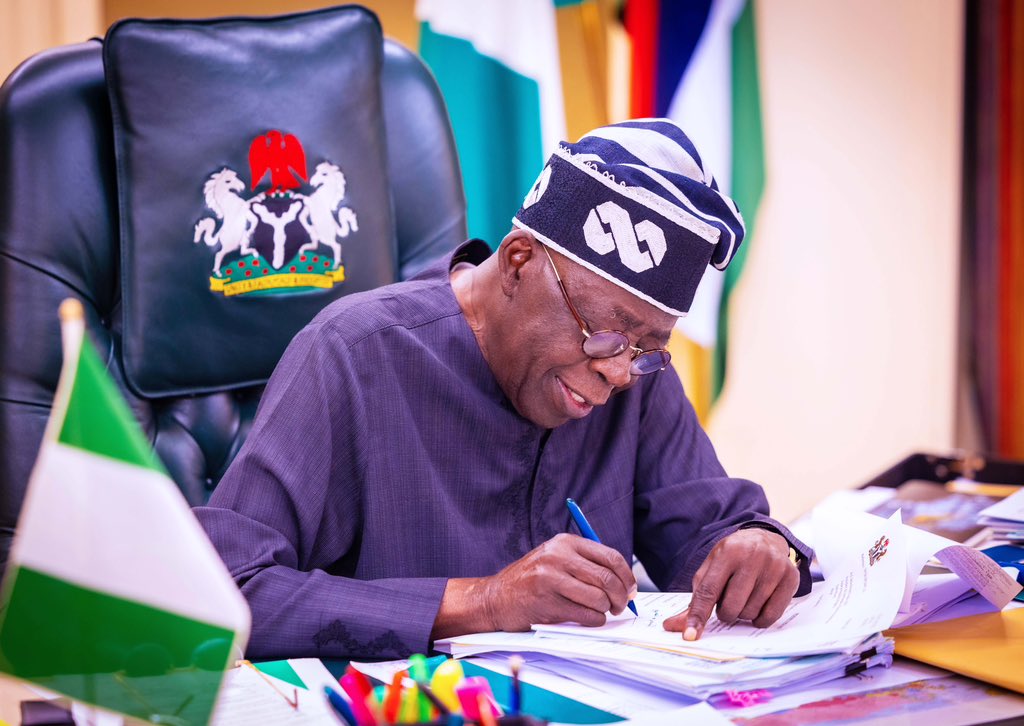
President Bola Tinubu yesterday presented a 2026 Appropriation Bill of N58.18 trillion to the National Assembly, prioritising security with a N5.41 trillion allocation to the defence and security sector in a renewed drive against rising insecurity.
This comes as the federal government steps up efforts to stabilise the economy, consolidate reforms and decisively confront insecurity across the country.
The proposed budget, tagged, “Budget of Consolidation, Renewed Resilience and Shared Prosperity,” projected total revenue of N34.33 trillion and total expenditure of N58.18 trillion, including N15.52 trillion for debt service.
But the opposition parties led by the Peoples Democratic Party (PDP), described the 2026 appropriation bill as budget of renewed sufferings to Nigerians.
Equally, the Coalition of United Opposition Political Parties (CUPP), said many Nigerians view the proposed budget presentation with profound skepticism.
However, the proposed budget puts recurrent (non-debt) expenditure at N15.25 trillion, capital expenditure at N26.08 trillion, and a fiscal deficit of N23.85 trillion, representing 4.28 per cent of Gross Domestic Product.
Presenting the estimates, Tinubu said the figures were not mere accounting lines but a clear statement of national priorities, stressing that his administration remained committed to fiscal sustainability, debt transparency and value-for-money spending.
He explained that the budget assumptions were anchored on a conservative crude oil benchmark of $64.85 per barrel, oil production of 1.84 million barrels per day, and an exchange rate of N1,400 to the US dollar for the 2026 fiscal year.
Unveiling the sectoral allocations, the President said beyond defence and security, infrastructure would receive N3.56 trillion, education N3.52 trillion, and health N2.48 trillion, underscoring the administration’s focus on security, people and productivity.
According to him, the sectors were deliberately prioritised because they were mutually reinforcing.
“Without security, investment will not thrive. Without educated and healthy citizens, productivity will not rise. Without infrastructure, jobs and enterprise will not scale,” he said.
On national security, Tinubu announced a major policy shift, declaring that henceforth, any armed group or gun-wielding non-state actor operating outside state authority would be regarded and treated as terrorists.
He said the government was resetting the national security architecture and introducing a new national counterterrorism doctrine anchored on unified command, intelligence-driven operations, community stability and counter-insurgency.
The President listed bandits, militias, armed gangs, criminal networks, violent cult groups, forest-based armed collectives and foreign-linked mercenaries as falling under the new classification, alongside their financiers, arms suppliers, informants, ransom negotiators, and political protectors.
He added that politicians, traditional rulers, community and religious leaders who facilitate or encourage violent acts would equally be treated as terrorists. The objective, he said, was to dismantle terror networks comprehensively and restore public confidence in national security.
He explained that the N5.41 trillion earmarked for defence and security would strengthen modernisation of the Armed Forces, intelligence-driven policing, border security, technology-enabled surveillance and community-based peacebuilding.
He stressed that security spending would henceforth be tied to clear accountability and measurable outcomes.
On the economy, Tinubu acknowledged that the reform path pursued by his administration over the past two and a half years had not been painless.
Tinubu said, “Families and businesses have faced pressure; established systems have been disrupted; and budget execution has been tested.”
The President assured Nigerians that the sacrifices were not in vain and would yield lasting stability and shared prosperity.
He said the 2026 budget was designed to consolidate gains already recorded and turn recovery into improved living standards for households across the federation.
Citing recent economic indicators, the President said the economy grew by 3.98 per cent in the third quarter of 2025, inflation moderated for eight consecutive months to 14.45 per cent in November 2025, oil production improved, non-oil revenues expanded through better tax administration, and external reserves rose to about $47 billion, a seven-year high.
Reviewing the performance of the 2025 budget, Tinubu said as at the third quarter, the government recorded N18.6 trillion in revenue, representing 61 per cent of the target, and N24.66 trillion in expenditure, representing 60 per cent of the target.
He declared that 2026 would be a year of stronger discipline in budget execution, directing the Minister of Finance, the Minister of Budget and Economic Planning, the Accountant-General of the Federation and the Director-General of the Budget Office to ensure strict adherence to appropriated details and timelines.
The President also warned government-owned enterprises to meet their revenue targets, announcing plans to deploy end-to-end digitisation of revenue mobilisation, including standardised e-collections, interoperable payment platforms and real-time performance dashboards to block leakages and improve accountability.
Earlier, Senate President Godswill Akpabio described the budget presentation as a defining national conversation, stressing that nations make progress when the Executive and Legislature work in partnership rather than in conflict.
He said budgets reveal a nation’s true priorities and praised the Tinubu administration for taking tough but necessary reform decisions that were already yielding measurable gains in revenue mobilisation, fiscal discipline and investor confidence.
Akpabio assured the President of the full support of the National Assembly, saying lawmakers would continue to strengthen legal and budgetary frameworks for security, economic reform, governance and social protection in the national interest.
In his remarks, Speaker of the House of Representatives, Tajudeen Abbas, said the presentation symbolised democracy at its strongest and marked Nigeria’s transition from fiscal turbulence to a phase of stability, discipline and reform-driven growth.
He noted that although 2025 tested the economy, the lessons learned had reinforced the need for realism, discipline and diversification in budgeting.
Abbas assured Nigerians that the legislature would scrutinise the 2026 Appropriation Bill with urgency and diligence to ensure accountability and value for money, adding that with restored stability and renewed confidence, the foundations for shared prosperity were firmly in place.
The event was attended by the Vice President, Kashim Shettima; the Secretary to Government of the Federation, Senator George Akume; the Chief of Staff to the President, Rt. Hon. Femi Gbajabiamila; members of the Federal Executive Council; other top government functionaries; leadership of the ruling APC led by the National Chairman, Prof. Nentawe Yilwatda, and state governors, among others.
Meanwhile, speaking after the budget presentation, key members of the Federal Executive Council and the legislature described the estimates as a decisive attempt to reset national planning, prioritise security and enforce fiscal discipline.
Speaking shortly after the presentation, the Minister of Information and National Orientation, Mohammed Idris, said the president’s proposal, christened the 2026 Budget of Consolidation, Resilience and Shared Prosperity, was designed to move beyond promises to practical implementation.
According to him, unlike previous budgets that often remained aspirational, the 2026 document directly addresses the major concerns of Nigerians, particularly insecurity, welfare and economic stability.
Idris noted that security remained the government’s foremost priority, reflected in what he described as a “significant allocation” to the sector.
He recalled President Tinubu’s firm declaration of “no mercy” for banditry, terrorism and violent crime, stressing that the administration was determined to confront criminal networks and those who aid and abet them.
He said the president had issued clear directives to security agencies to ensure Nigerians and residents alike could “sleep with their eyes closed” once again.
Beyond security, the minister said the president was equally focused on fiscal and budgetary discipline, with a clear intention to end the practice of running multiple budgets simultaneously.
Deputy Senate Leader, Senator Ashiru, described the interaction with the president as “exciting” and reassuring, noting Tinubu’s determination to keep Nigeria on track.
PDP: This is Budget of Renewed Suffering
The PDP described the 2026 appropriation bill as budget of renewed sufferings to Nigerians
Reacting to the budget bill, the PDP in a statement by the National Publicity Secretary, Ini Ememobong, stated: ”In response, we see it rather as a budget of consolidated renewed sufferings, because what Nigerians have witnessed since the birth of this administration is nothing but unmitigated hardship on the people, while the governing class relishes in affluence.”
Ememobong, also said that Nigerians have suffered greatly from many economic woes under the Tinubu’s administration.
According to the PDP spokesman, ”President Tinubu cited a 3.98 percent GDP growth rate as evidence of economic stabilisation under his administration.
”However, it is well established that economic growth alone does not and cannot guarantee improved living standards for citizens.
”According to the 2025 World Bank Poverty & Equity Brief, more than 30.9 percent of Nigerians live below the international extreme poverty line. “This shows that there is growth without prosperity for our citizens, meaning that despite GDP growth, poverty remains endemic.
”This clearly indicates that whatever economic gains exist are not reaching the majority of Nigerians.”
Furthermore, the PDP spokesman stated: ”Today, the President celebrates a 3.98 percent growth rate, whereas a reality check reveals excruciating hunger, a high cost of living, and other indices of economic hardship, which Nigerians are currently facing.
”While we acknowledge the security allocation in the 2026 budget, we must remind the government and Nigerians that allocation alone is insufficient.
”We therefore demand effective and transparent execution to ensure that security funding translates into tangible improvements -modern equipment, adequate ammunition, improved intelligence capabilities, and better welfare for security personnel who are currently engaged in different theatres of armed conflict, where criminal non-state actors are alleged to possess superior arms compared to our security forces.”
He noted that overall, the PDP was “deeply concerned about the unapologetic admission by the President that the execution of the 2024 capital budget had been extended to December 2025, while the 2025 budget is still in force.
”This confirms the long-standing rumours of the concurrent operation of multiple budgets.
This cannot be described as best practice, as every budget has a defined period of operation and no two budgets should operate concurrently.
“The operation of different budgets at the same time undermines fiscal discipline, transparency, and accountability. These multiple budgetary regimes show yet another unprecedented negative feat by this APC Bola Tinubu-led administration.”
CUPP: It is a Budget Without Compliance, Scrutiny
The Coalition of United Opposition Political Parties (CUPP) in its reaction to the Appropriation Bill, said many Nigerians viewed the budget presentation with profound skepticism.
In a statement by the National Secretary, CUPP, Peter Ameh, the group argued that the distrust stemmed from a pattern of poor budget implementation, lack of transparency, and unfulfilled promises under the current administration.
He further stated that, ”despite the hasty reforms like subsidy removal which should have ordinarily free up money for investment by reducing pressure on national revenue, what we are witnessing is increased borrowing and poor spending culture by the government, the government has failed to deliver tangible improvements in infrastructure, security, or economic relief, leaving citizens to bear the brunt of hardship.”
According to the CUPP scribe, ”A major source of frustration is the absence of accountability and lack of transparency for prior budgets.
“No comprehensive budget implementation report for 2025 has been published by the Budget Office of the Federation, marking the first time in 15 years that quarterly performance reports have been withheld.
“This opacity violates fiscal responsibility laws and fuels suspicions of mismanagement.
”As Nigerians, we rightly ask: How can a new budget be proposed when the performance of the current one remains unknown? The administration’s concurrent operation of overlapping budget cycles—extending 2024 capital spending into 2025 while introducing new plans—exacerbates this chaos, leading to poor execution and carryover of unexecuted capital projects whose survival is dependent on more borrowing to bridge the deficit.”
Analysts Express Mixed Reactions over 2026 Appropriation Bill
Analysts yesterday, expressed mixed reactions to the 2026 Appropriation Bill, highlighting both optimism over its priorities and concerns over fiscal sustainability.
Some analysts raised concerns over the realism of the federal government’s targets, warning that widening deficits, weak revenue performance and repeated capital expenditure rollovers signal growing fiscal stress that could undermine recent reform gains.
The Chief Executive Officer of CFG Advisory, Tilewa Adebajo, said the government must urgently rein in its budget size, noting that Nigeria has consistently failed to meet its fiscal targets in recent years.
Speaking to THISDAY, he said: “I think we really need to start cutting down on the budget because we have not been able to meet those targets. We need to start looking at the fiscal side of things now because the fiscal space is the biggest threat to our economic recovery right now.
“All the gains we have made from the reforms could be lost if we don’t manage the fiscal space. I think it’s now time for us to review the Fiscal Responsibility Act and update it in line with the medium-term debt strategy that we’ve just concluded with the World Bank and IMF.
“You know, it’s not about budgeting because we cannot have a N23 trillion deficit, that’s not sustainable. The deficits have doubled, gone from N11 trillion to N12 trillion to N23 trillion, so the deficits are getting higher, and we cannot continue to fund them.
“Our borrowing is not in a good space. And if you take a look at the numbers, a lot of them are contradictory. We have a lot of contradictory numbers and a lot of issues.”
Beyond the deficits, Adebajo pointed to persistent challenges with capital spending, noting that unimplemented portions of previous budgets have been repeatedly rolled forward.
He said the 2024 budget was rolled into 2025, while capital expenditure targets could not be met and were again deferred.
Also, reacting, Managing Director/Chief Executive, SD&D Capital Management Limited, Mr. Idakolo Gbolade, described the proposed appropriation as a “bold step by the federal government to consolidate on its achievements in the last budget cycle although over 70 per cent of capital expenditure would be carried over to 2026 according to Minister of Finance Mr. Wale Edun.”
However, he pointed out that budgetary allocations to defence, infrastructure, education and health were the highest, demonstrating the government’s determination to create a stable environment for growth.
He urged the National Assembly to look critically into all the budgetary projections and allocations to ensure that the budgetary framework remained realistic.
Gbolade said, “Security is very critical to investment growth and investors’ confidence and the present insecurity being experienced in the country is a great disservice to economic growth and prosperity.
“Allocating the highest percentage of the budget and implementing the budgetary allocation can help to steady our growth trajectory. Infrastructure received the second highest budgetary allocation which also shows the seriousness of the government to deepen growth because with infrastructure comes development and job creation which will effectively oil the economy.”
Continuing, Gbolade said, “The education and health sector also received corresponding high budgetary allocations and if properly implemented will help us strengthen our human resources which is our most valuable asset as a country.
“The 2026 budget will greatly help to stabilise and grow our economy if it can be effectively implemented by releasing corresponding funding for these critical sectors of the economy.”
In his contribution, the Head of Financial Institutions Ratings at Agusto & Co., Ayokunle Olubunmi, expressed doubts about the credibility of the budget projections, especially in light of weak performance in recent fiscal years.
“I’m not sure this projection is realistic, particularly given the performance of the 2024 and 2025 budgets, although the implementation reports have not been made public,” Olubunmi said.
“We are still looking for the implementation report of the 2025 budget. From the snippets we are hearing, there was gross underperformance.”
He added: “I’m not sure this projection is realistic, particularly given the performance of the 2024 and 2025 budgets, although the implementation reports have not been made public.
“We don’t even know how many budgets we are implementing now.”


Wema Bank has announced a N120m prize pool for the Hackaholics 6.0 grand finale following the emergence of 35 teams from regional pitch sessions that recorded 1,460 participants across seven cities in Nigeria.
Its Managing Director/Chief Executive Officer, Moruf Oseni, disclosed that the N120m would be awarded across several winning categories at the finale.
The Ideathon prizes include N25m for first place, N20m for the first runner-up and N15m for the second runner-up. In the Hackathon category, the first to fourth-place teams will receive N20m, N15m, N10m and N5m respectively.
In addition, two women-led innovations, one from each vertical, will receive ₦5m each in recognition of Wema Bank’s commitment to advancing female participation in technology and innovation.
Oseni said: “Hackaholics continues to demonstrate the power of young people to shape the future of technology and nation-building. We believe strongly in the ideas, resilience, and ingenuity of the youths, and our investment in this initiative is a clear testament of our commitment to giving them the resources, mentorship, and platform. ‘’
“As these finalists head to Lagos, we are confident that their innovations will create meaningful impact across industries and communities, and we are proud to be a champion for that transformation.”
The 35 finalist teams emerged from a regional pitch cycle that received over a thousand applications across eight pitch centres: Ahmadu Bello University (ABU Zaria), Federal University of Technology Akure (FUTA), Lagos State University (LASU), University of Uyo (UniUyo), Babcock University, University of Ibadan (UI), Veritas University Abuja and Purple Academy Lagos.
Each centre provided students with access to industry-led masterclasses, hands-on mentorship and structured pitch development sessions, culminating in highly competitive presentations before expert judges.
The finalists include 17 Ideathon teams, 12 Hackathon teams and six women-led teams, each tackling challenges across fraud detection, customer experience, on boarding, acquisition, credit management and other social impact areas.
All teams will participate in a three-day pre-finale mentorship and shortlisting programme ahead of the Grand Finale in Lagos.Finalists expressed excitement about advancing to the Lagos finale and the opportunities ahead. The team leader of Veritas’ Hackathon winner, Tensor, Medugu Wali, shared the reason they are participating in the competition.
“We built ‘Wallet Padi’ because we believe it can genuinely improve how Nigerians manage their money. Advancing to the pre finale leg of Wema Bank Hackaholics is a big step toward bringing that vision to life, and we appreciate Wema Bank for creating this platform.”
Babcock’s Ideathon winner, Akobundu Gift, a participant who had earlier attempted the Hackaholics challenge in 2023 but didn’t win, expressed great enthusiasm at the prospect of moving on to the next stage.
Extending his gratitude to Wema Bank, he reminisced on the journey of his Startup, ‘Chao’. According to him, “Chao started as a small campus food-delivery idea in 2023, and it has grown far beyond what we imagined. Reaching the Hackaholics finals again reflects how much we’ve evolved. We’re grateful to Wema Bank for the opportunity and excited to compete at the next stage.”
Ogunlana Tosin, founder of Eutopia.ai, the women-led project winner at Veritas University, also shared her joy after being announced winner at her Pitch Centre, adding “Not making it at Babcock was honestly painful, but we were determined to win so we took the feedback, refined our solution and returned to try again.
Advancing beyond the preliminaries this time showed me what’s possible when we don’t give up. I’m truly grateful to Wema Bank for this opportunity and for continuing to champion women empowerment, helping women-led innovation to thrive, and supporting women through initiatives like SARA,” she said.
Since its inception in 2019, Hackaholics has grown into one of Nigeria’s most influential youth innovation platforms, attracting more than 12,000 applicants across 15 schools and disbursing over $300,000 in funding and support. Between 2023 and 2024 alone, ₦75 million was awarded to women-led teams.
With the launch of the Hackaholics Accelerator and Collective Program earlier this year, Wema Bank now provides ongoing support to early-stage founders beyond the competition cycle.
The Hackaholics 6.0 Grand Finale will bring together industry leaders, policymakers, investors and technology experts in Lagos for live pitches, product showcases and the unveiling of Nigeria’s next generation of transformative founders.

…as President threatens to deduct LG funds if govs fail to obey A’Court ruling on council’s autonomy
…declares state police a must, defeat of terrorists not negotiable
…says democracy must not fail, urges party leaders to be tolerant, accommodating
…APC lucky Tinubu not on opposition-Shettima
The All Progressives Congress (APC) Governors’ Forum, chaired by Imo State Governor Hope Uzodinma, on Friday, passed a vote of confidence in President Bola Tinubu,
The motion for the confidence vote raised at the APC National Executive Council (NEC) meeting of the party held at the Conference Centre of the Presidential Villa was seconded by the Kaduna state governor, Uba Sani.
This came as the President threatened to deduct and transfer funds accruing to local governments directly from the source and send them directly to the local councils if the state governors refused to implement the Supreme Court ruling on the council autonomy.
Tinubu also declared that the establishment of state police was a must, even as he stressed that the war against terrorism and banditry must be won
The President said democracy must be protected by all means, urging that the party leadership must be tolerant and accommodating.
On local government autonomy, he said, “Like I said yesterday, know that you have your elections at the local government level. You are the supervisors, the vigilants, the INEC and everything of the local governments you elected them.
“Nobody helped you, the governors. Since you elected them, it means you know them, you are responsible for their survival, but the Supreme Court has curbed it for you again, saying, give them their money directly. So if you wait for my Executive Order because I have the knife, I have the yam, I will cut it before.
“If we do the arithmetic, we know the percentage, and I’ve said it to the RMAFC, I’m just being very respectful and understanding with my governors. Otherwise, if you don’t start to implement it, FAAC after FAAC, you will see.
The ultimate no is our Supreme Court. We have to comply. We have to respect the judgment.”
On the establishment of state police, he told the governors: “Please summon the IG and start looking at the ramifications and which way to institute controls and prevent abuses.
“We are going to the state police. I would do the forest rangers. We will have them. We will defeat those terrorists and bandits.”
The President, in his comments on the party, said the leadership should be accommodating, urging them not to joke with its e-registration exercise.
He urged never to discountenance the God factor in the leadership selection process, describing his emergence as the President despite all the hurdles placed on his way ahead of the 2023 elections as the work of God.
He said, “God got us here. I am a symbol of that God, because without him, I won’t be here.”
“We must continue to be resolute that this democracy that we take in our hands must not fail. To me, we say we are bigger. Yes, we are larger, and we are taller, but it is in our hands now to be accommodating. That’s the only way we can be resilient, be tolerant,
move a little bit.
“I listened to the chairman on the e-registration. Allow it. No elbow. Don’t shut the door against the people you are in charge of. Now, if you fail to do so, we’ll take it away. We know how to do it.
“We’ll do it on your behalf. When we do it on your behalf, that’s leadership failure on your own part if you abuse the trust.
So please don’t let us joke with it. We have a need for that E registration.”
The President also warned the National Assembly to steer clear of making laws outside the exclusive warning that, where they detailed, he would, with old assent, to whatever law so passed.
He specifically warned the lawmakers against passing any law on lotto or lottery, warning that he would never sign such a law.
Please follow and like us:


Many model schools in Ogun State have become hideouts for miscreants, writes KAYODE AWOJOBI
Quality education is the foundation of a quality future. This must have been the guiding vision of Senator Ibikunle Amosun, the former Governor of Ogun State, when he initiated the Ogun Model School project in 2012 during his first tenure under the defunct Action Congress of Nigeria. The initiative, which was greeted with widespread excitement and hope by citizens, promised a new era of educational excellence in the state. Sadly, more than a decade later, that promise has failed to materialize, and what remains is a painful reminder of abandoned ambition and wasted public resources.
At inception, the cost of each model school was reportedly pegged at ₦750 million by the Amosun administration, while the then Commissioner for Education, Late Mr. John Odubela, stated that the fully completed and equipped cost of each school stood at ₦1.3 billion. These figures reflected the seriousness of the project and the magnitude of public investment involved. Yet, despite the enormous sums expended, the schools have never lived up to their purpose. Instead of becoming models of excellence, they have become monuments of neglect.
Since their completion, most of the model schools either completed or not spread across the state has not functioned as intended. They have neither served students nor inspired educational reform. Rather, they have remained largely unused, abandoned, and left to decay. This neglect represents not just infrastructural failure but a profound disservice to the people whose taxes funded these projects.
One of the 26 model schools, named after a distinguished son of Ago-Iwoye and renowned biologist, Professor Sanya Onabamiro, exemplifies this tragedy. Located near the Ago-Iwoye Stadium and facilitated by Hon Adekoya Adesegun, the multi million-naira facility now lies deserted. What was once envisioned as a center of academic excellence has been overtaken by weeds, reptiles, and decay. Equipment that was once installed has either been vandalized or completely carted away, further underscoring the waste of public funds.
Ironically, Senator Amosun had assured citizens that these schools would boast exceptional facilities in science, technical education, agriculture, humanities, enterprise, and sports, complete with full boarding facilities to serve students from across the state. Today, those promises ring hollow when weighed against the reality on ground.
Although the Ago-Iwoye model school was reportedly completed in record time, years of abandonment have stripped it of its beauty and purpose. From a distance, the structure still hints at the thoughtful planning and substantial investment that went into its construction. Inside, however, chairs and desks are scattered haphazardly, while two adjoining structures believed to be hostels remain unused. The entire environment has been reclaimed by thick vegetation, making access difficult and turning the premises into a haven for criminals and miscreants. This situation now poses a serious security threat to residents living in the surrounding community.
What was once a symbol of hope has become an eyesore. Paint has peeled off the walls, original colors have faded, and visible cracks now threaten the structural integrity of the buildings. The glory of the model school has been lost to neglect, and its continued abandonment sends a troubling message about governance, accountability, and priorities.
While it is unfortunate that the administration of Senator Ibikunle Amosun failed to operationalize the model schools, it is even more disheartening that the current administration under Prince Dapo Abiodun has openly stated that the project is not a priority even though attention was given to a few of them. Regardless of political differences, it must be remembered that public funds were used to execute these projects. Allowing them to rot away is an affront to the citizens of Ogun State and a stain on successive administrations.
The present government still has an opportunity to right the wrongs of the past. These model schools can be revived and repurposed into functional educational institutions or transformed into vocational and technical centers that equip young people with practical skills. At a time when unemployment and youth restiveness are major challenges, such facilities could provide meaningful solutions and restore hope to countless families.
Beyond utility, there is also a moral obligation to honour the legacies of eminent Ogun indigenes like Professor Onabamiro and others after whom these schools were named. These individuals brought honour and global recognition to the state through their intellectual and professional contributions. Allowing institutions bearing their names to decay is a disservice to their memories and to the values they stood for.
This is a call to action to the Ogun State government, the Ministry of Education, and all relevant stakeholders. The time has come to move beyond excuses and political blame games. These abandoned structures must either be rehabilitated, repurposed, or responsibly managed. Ogun State cannot continue to afford the luxury of wasted investments while its citizens struggle for access to quality education and skills.
Model schools should not be monuments of failure or hideouts for miscreants. They should be centers of learning, innovation, and hope. The authorities must act now, not only to reclaim these facilities but to restore public confidence and reaffirm their commitment to the future of education in Ogun State.
Awojobi, a multiple award-winning Broadcast Journalist, Social and Political Commentator, writes from Ago-Iwoye, Ogun State


As Party Leaders Call for Unity
By Henry Umoru
ABUJA — Ahead of the 2027 general elections, the 2023 presidential candidate of the New Nigeria Peoples Party (NNPP), Senator Rabiu Kwankwaso, has expressed confidence that the party will make a strong showing at the polls.
Kwankwaso, who is the National Leader of the NNPP and a former governor of Kano State, spoke on Thursday in Abuja at the party’s National Executive Committee (NEC) meeting. He commended the party’s organisation and performance, describing the NNPP as one of the most dynamic and performing political parties in the country.
He congratulated the newly appointed Chairman of the Independent National Electoral Commission (INEC), Prof. Joash Amupetan, and expressed optimism that he would succeed in his role. Kwankwaso also praised party members for conducting congresses across the country with discipline and decorum, saying the NNPP is well prepared for the 2027 elections.
The former governor thanked Kano State Governor, Abba Kabir Yusuf, for his support and performance in office, while urging party members to remain committed and united. He stressed that solidarity, understanding and dedication remain critical to the party’s success.
Earlier, the NNPP National Chairman, Dr. Ajuji Ahmed, also applauded the party’s unity and resilience, noting that it has remained steadfast despite attempts to destabilise its operations.
He highlighted the party’s achievements, citing strong leadership, cohesion among members and commitment to its core values. Ahmed specifically commended Governor Yusuf for his achievements in education, healthcare, infrastructure and human development, saying the Kano governor has upheld the party’s ideals.
Paying tribute to Kwankwaso, Ahmed described him as the “unquestioned and unquestionable father of modern Kano” and a colossus of Nigerian politics. He urged party members to remain focused, stressing that the NNPP is firmly united behind its national leader and governor and is well positioned for victory in 2027.
Ahmed also warned against attempts to impose a one-party system in the country, cautioning that such efforts could lead to political instability and self-implosion.
In his remarks, the NNPP National Secretary, Oladipo Olayuku, praised the party’s leadership, particularly Senator Kwankwaso and Governor Yusuf, for transforming the NNPP into a national political force.
Olayuku noted that when the current leadership assumed office in 2022, the party was relatively unknown, but has since become a household name nationwide. He commended the party’s performance in the 2023 general elections despite internal challenges, and praised the Kano governor and other elected officials for their performance in office.
He also expressed appreciation to the judiciary for resisting attempts to interfere in party administration, and to INEC for upholding the rule of law. Olayuku disclosed that the party has reviewed its constitution, changed its logo, slogan and flag, and is intensifying preparations for the 2027 elections.
He urged party members to close ranks, set aside differences and support the new leadership that will emerge at the forthcoming national convention.
If you want this trimmed for tighter column space or aligned to a specific newspaper house style, just let me know.
The post NNPP poised for strong showing in 2027 elections – Kwankwaso appeared first on Vanguard News.
Nigeria must urgently reform its governance structures, political culture and legal institutions to confront the deep-rooted causes of insecurity threatening national stability, experts have warned.
They cited inadequate government investment in education, healthcare and social protection as evidence of structural neglect that fuels grievances and violent mobilisation. They said the modern Nigerian state has struggled to maintain legitimate authority since Independence, with violence becoming an outlet for citizens and groups who feel excluded or unprotected.
Delivering a paper entitled “Nigeria’s Security Challenges and the Way Forward” at the First Anniversary Lecture of the Apex Club House in Lagos, a Non-Resident Senior Fellow at the Centre for Democracy & Development, Prof. Adele Jinadu, said “insecurity in Nigeria cannot be tackled by military responses alone, because its roots lie in a long-standing crisis of human security and fragile state capacity.”
He argued that Nigeria’s insecurity is closely tied to historical failures in nation-building, elite fragmentation, and a political economy that has widened inequality between a wealthy minority and a vast poor majority.
According to him, insecurity in Nigeria must be understood beyond the absence of war, to incorporate the concept of human security, the social and economic protection of citizens, particularly the most vulnerable.
He noted that episodes of banditry, insurgency, kidnappings, political killings and communal clashes reflect a deeper breakdown of social trust and a widening disconnect between citizens and the political class.
The tendency to deploy ethnicity, religion and patronage for political competition, he said, has intensified conflicts rather than eased them.
Jinadu blamed recurrent instability on Nigeria’s fragile state capacity, weakened by decades of zero-sum politics, elitist legal practices and public institutions captured by partisan interests.
He argued that the nation’s security breakdown is inseparable from a crisis of legitimacy, in which citizens increasingly question whom the state exists to serve.
“The political class has taken morality out of governance,” he said, warning that widespread impunity and procedural technicalities in the courts undermine justice and public confidence.
The professor proposed a public policy reform agenda that prioritises accountability and citizen welfare, which include: “making the constitutional principles on social and economic rights enforceable, restructuring political parties to ensure internal democracy, granting genuine autonomy and financial independence to local governments, and strengthening oversight institutions such as INEC, anti-corruption agencies and human-rights bodies to operate without political interference.”
He further emphasised the need to democratise access to political information and empower civic and professional organisations to hold leaders accountable. The middle class, he said, must reclaim its role as the ethical watchdog of democracy rather than colluding in governance failures.
“Our professionals must stand up against creeping authoritarian rule in the deceptive garb of democratic politics,” he declared, urging organised public engagement to rescue the federation from further decline.
Jinadu maintained that rebuilding Nigeria’s security architecture requires a reinvention of politics as a public trust and a recommitment to development anchored on human dignity, solidarity and justice.
Chairman of the Apex Club House, Felix Alao, said the organisation chose to mark its first anniversary by addressing an urgent national issue rather than holding a purely celebratory event.
“We see the challenges facing us in insecurity, we see how our people are being mowed down by bandits and by Boko Haram,” he said, noting that the gathering aimed to contribute to national solutions.
Alao added that the club hopes to support the government with strategic ideas aligned with its Chatham House-style model of public policy engagement.
“Most Nigerians are in pain; everybody is living with only one eye closed. We cannot let this continue forever. As a responsible organisation, we put this together.”