
WORLD NEWS
Ukraine ‘ready for elections’ if partners guarantee security, Zelensky says


Ukraine is “ready for elections”, President Volodymyr Zelensky has said, after US President Donald Trump repeated claims Kyiv was “using war” to avoid holding them.
Zelensky’s five-year term as president was due to end in May 2024, but elections have been suspended in Ukraine since martial law was declared after Russia’s invasion.
Speaking to reporters following Trump’s comments in a wide-raging Politico interview, Zelensky said he would ask for proposals to be drawn up which could change the law.
Elections could be held in the next 60 to 90 days if security for the vote was guaranteed with the help of the US and other allies, he said.
“I’m asking now, and I’m stating this openly, for the US to help me, perhaps together with our European colleagues, to ensure security for the elections,” he told reporters.
“The issue of elections in Ukraine, I believe, depends first and foremost on our people, and this is a question for the people of Ukraine, not the people of other countries. With all due respect to our partners,” Zelensky said.
“I’ve heard hints that we’re clinging to power, or that I personally am clinging to the presidency” and “that’s why the war isn’t ending”, which he called “frankly, a completely unreasonable narrative”.
Zelensky won election in 2019 with more than 73% of the vote.
Russia has consistently claimed Zelensky is an illegitimate leader and demanded new elections as a condition of a ceasefire deal – a talking point which has been repeated by Trump.
“They talk about a democracy, but it gets to a point where it’s not a democracy anymore,” the US president told Politico.
There are significant practical obstacles to a wartime election.
Soldiers serving on the front lines could be either unable to vote or require leave to do so. According to the UN, there are about 5.7 million Ukrainians living abroad because of the conflict. And any ballot would require complex, additional security measures.
Such a vote would only be fair if all Ukrainians could participate, including soldiers fighting on the front line, a Ukrainian opposition MP told the BBC.
Lesia Vasylenko of Golos also told the BBC World Service’s Newsday programme that “elections are never possible in wartime”, alluding to the suspension of elections in the UK during World War Two.
Oleksiy Goncharenko, an opposition MP from the European Solidarity party, said: “I am completely against the idea, I can’t even understand why Zelensky would say it.”
“It is completely impossible. Elections are not just putting a tick in on a piece of paper – it is debates, it is a campaign, an entire process. Maybe Zelensky sees it as an opportunity to hold quasi-elections that will be favourable to him, while he controls the media and his opponents are likely not ready.”
Discussions around holding elections have made headlines since Russia’s full-scale invasion of Ukraine in 2022.
There is little domestic political pressure on Zelensky to call elections while the conflict is ongoing, said Oleksandr Merezhko, the chairman of the foreign policy committee in Ukraine’s parliament.
There was “strong consensus” among politicians and civil organisations that elections would not be held under martial law, the MP from the Servant of the People – Zelensky’s party – told the BBC.
“Even the opposition, which is against Zelensky and would like to see him removed are against elections, because they understand the danger of attempting to hold elections during the war,” he said.
The idea was “exactly what Putin would want”, Merezhko added. “An election campaign would be divisive. Having failed to destroy us from outside, Putin wants to destroy us from within, using elections as another tool to do so.”
A poll by the Kyiv International Institute of Sociology (KIIS) in March found about 78% of people opposed holding elections after a ceasefire with security guarantees, and were of the opinion that they could only be held after a complete settlement.
The share fell to 63% in a September poll, while 22% said elections could be held after a ceasefire with security guarantees – a jump from 9% in March.
“Even a year ago, Zelensky said that he was ready for elections as soon as the conditions allow” in the face of previous pressure, Hanna Shelest, a foreign policy analyst with the think tank Ukrainian Prism, told the BBC.
The question was, however, how to create the conditions Zelensky outlined, Shelest told the Newsroom programme on the BBC World Service, given soldiers and refugees who would be voting as well as unsecured areas in the country and ongoing strikes.
“You cannot guarantee the security of the polling stations,” she said.
Zelensky is also facing continued and increasing pressure from Trump to agree to a peace deal to end the war, with the US leader urging Zelensky to “play ball” by ceding territory to Moscow.
He has suggested without evidence that Zelensky is the main obstacle to peace as US-led efforts to broker a deal continue.
The Kremlin said Trump’s “very important” statements on Ukraine, including saying Moscow would win the war and that Kyiv would need to hand over land, fall in line with Russia’s view.
“In many ways, on the subject of Nato membership, on the subject of territories, on the subjects of how Ukraine is losing land, it is in tune with our understanding,” Kremlin spokesman Dmitry Peskov said.


“We are not at war, but we are no longer at peace either,” is how German Chancellor Friedrich Merz from the conservative Christian Democratic Union (CDU) party sumarized the mood in Germany back in late September.
Ever since Russia’s attack on Ukraine in February 2022, there has been talk of hybrid warfareamong German security and politcal experts. Germany is being hit hard by a mix of military and intelligence operations, often accompanied by misleading propaganda. Classic methods include sabotage, espionage, and disinformation to fuel uncertainty among the general population.
More powers are urgently needed, says Sinan Selen, Director General of Germany’s domestic intelligence serviceImage: Bernd von Jutrczenka/dpa/picture alliance
What is wrong with Germany’s early warning system?
The core task of the German domestic intelligence services, or Bundesamt für Verfassungsschutz (BfV), is to identify threats early enough to prevent attacks. Given the current level of threats, Director General of the BfV Sinan Selen says his agency needs more powers.
“We have forms of communication that we are no longer able to decrypt in parts. We have actors who operate under pseudonyms,” Selen said at the annual Constitution Protection Symposium in Berlin. “As an intelligence service, I must be able to penetrate these areas.”
BfV chief Selen is counting on changes to security laws to achieve this. The German Interior Minister Alexander Dobrindt (CSU) has already announced reforms, while support has also been voiced from the chancellor’s office, where Philipp Wolff coordinates the country’s three central intelligence agencies: the Federal Office for the Protection of the Constitution, the Federal Intelligence Service (BND), and the Military Counter-Intelligence Service (MAD).
Wolff insists that increased online surveillance and the storage of IP addresses are necessary. He also wants security agencies to be able to exchange personal data more easily.
However, whether this will be possible remains uncertain. Opposition parties and civil society organizations have almost always challenged stricter security laws in Germany’s Federal Constitutional Court — and often successfully.
The use of controversial US software Palantir has stirred debate, also in GermanyImage: NurPhoto/IMAGO
France and the Netherlands as role models?
But Selen remains confident. Other European Union countries like France and the Netherlands are significantly further ahead, he said at the Berlin conference, refering to two countries with fewer legal restrictions on the surveillance of suspects and less stringent data protection laws.
Following President Donald Trump’s recent National Security Strategy, it is hard to tell how the BfV’s future intelligence links with the US will develop. However, Selen signaled a business-as-usual approach. “I would not draw the conclusion from such a strategy that we are breaking with America,” he said. “I also do not believe that our partners are breaking with us.”
At the same time, he emphasized the importance of continuously reviewing and developing alliances. In his view, Europe must become more independent from the US.
Selen is also considering developing the domestic intelligence services’ own IT programs for monitoring and analyzing digital communications.
Many countries use the controversial US software “Palantir” for this purpose, but German security authorities have been debating its use for some time. Selen voiced support for a national alternative. “We have industries, we have companies that can do this,” he said, adding that perhaps they need more support.
Russia’s hybrid warfare: the real threat to the West?
To view this video please enable JavaScript, and consider upgrading to a web browser that supports HTML5 video
Critical infrastructure at risk
For his part, intelligence coordinator Wolff says that the BfV and the other German security agencies are already effective. “The Russians know that too; they already take us seriously,” he said, adding that the national debate on how to tackle hybrid threats is being closely followed in Moscow.
His chief concern remains how to deal with a country that does not abide by any rules. Hybrid threats are playing an increasingly important role in this context, he said, adding that at the symposium had not outlined a definitive answer to this form of attempted influence and destabilization.
Carlo Masala, a military specialist at the Bundeswehr University in Munich, described Russia’s strategy toward the member states of the North Atlantic Treaty Organization (NATO) as “increasingly bold.”
Viewed from a Russian perspective, Germany, in particular, was a target, he said. “We are the hub,” Masala said, referring to Germany’s central location in Europe and its strategic importance within NATO.
Experts such as Masala suspect that Russia is behind a rising number of acts of sabotage on railways, airports, and water and electricity supplies. However, critical infrastructure can also be paralyzed indirectly, Masala warned at the Constitution Protection Symposium. “There is a substation in Austria, and if it is knocked out, large parts of Germany will lose power,” he explained.
In early October, drones flying near Munich Airport in Bavaria also made headlines when they disrupted operations for an extended period of time. According to Masala, the objective was to cause fear and panic among the public. However, he suggested another possible motive was to demonstrate that the Bavarian state government is unable to take action against such attacks. The intelligence service can warn of such scenarios, he said, “but it cannot prevent them.”
Is Europe ready for a hybrid war? — To the Point
To view this video please enable JavaScript, and consider upgrading to a web browser that supports HTML5 video
This article was originally written in German.
While you’re here: Every Tuesday, DW editors round up what is happening in German politics and society. You can sign up here for the weekly email newsletter, Berlin Briefing.

Sign up for our free Health Check email to receive exclusive analysis on the week in health
Get our free Health Check email
Get our free Health Check email

Scientists excavating the ancient Roman city of Pompeii have unearthed a construction site preserved exactly as it was when Mount Vesuvius erupted in 79 AD, offering unprecedented insight into the durable, self-healing concrete that revolutionised Roman architecture.
The remarkable discovery reveals a building project abruptly halted by the volcanic catastrophe.
Researchers found rooms with unfinished walls, alongside piles of premixed dry materials and tools for weighing and measuring, all laid out for concrete preparation.
“Studying it truly felt as if I had traveled back in time and was standing beside the workers as they mixed and placed their concrete,” remarked Admir Masic, a Massachusetts Institute of Technology professor of civil and environmental engineering and lead author of the study published in Nature Communications.
Roman concrete was an indispensable material, enabling the construction of monumental structures such as the Colosseum, the Pantheon, public baths, aqueducts, and bridges – feats of engineering unparalleled at the time.
Its unique ability to harden underwater also made it crucial for building harbours and breakwaters.
The precise methods employed by the Romans have long been a subject of academic debate, with recent archaeological findings often challenging accounts from the 1st-century BC treatise by architect Vitruvius.

open image in gallery
(Getty/iStock)
The Pompeii discovery showed the Romans used a technique called “hot mixing” in which a material called quicklime – dry limestone that was previously heated – is combined directly with water and a blend of volcanic rock and ash, producing a chemical reaction that naturally heats the mixture.
That differs from the method described by Vitruvius, who wrote about a century earlier.
“Pompeii preserves buildings, materials and even work in progress in the precise state they were in when the eruption occurred. Unlike finished structures that have undergone centuries of repair or weathering, this site captures construction processes as they happened,” Masic said.
“For studying ancient technologies, there is simply no parallel,” Masic said. “Its exceptional preservation offers a true ‘snapshot’ of Roman building practice in action.”
The building under construction combined domestic rooms with a working bakery with ovens, grain-washing basins and storage. The evidence there indicated that the technique outlined by Vitruvius, known as slaked lime, was not used for building walls.
That method may have been outdated by the time of the project in Pompeii.
“Imagine what 100 years of difference could mean for the building technology. A good analogy could be the early telephones. In the 1920s-30s: rotary dialing, long-distance copper lines. In the 2020s: smartphones using packet-switched digital signals and wireless networks,” Masic said.

open image in gallery
(Getty/iStock)
The hot-mixing technique contributed to the self-healing properties of the concrete, chemically repairing cracks. The concrete contains white remnants of the lime used to make it, called “lime clasts,” which can dissolve and recrystallise, healing cracks that may form with the infiltration of water.
The Romans industrialised concrete, beginning in the 1st centuries BC and AD.
“This allowed builders to construct massive monolithic structures, complex vaults and domes, and harbors with concrete that cured underwater. Concrete fundamentally expanded what could be built and how cities and infrastructures were conceived,” Masic said.
The new understanding of Roman concrete may have relevance for modern architects.
“Modern concretes generally lack intrinsic self-healing capability, which is increasingly important as we seek longer-lasting, lower-maintenance infrastructure,” Masic said.
“So while the ancient process itself is not a direct replacement for modern standards, the principles revealed can inform the design of next-generation durable, low-carbon concretes.”


NEED TO KNOW
- Hadi Ahmadi, 55, was kayaking with his 7-year-old son in California’s Lake Perris when the vessel capsized on Dec. 6
- Ahmadi, who kept his son afloat during the ordeal, was later pronounced dead
- “He was always my hero,” said Mojgan Manafi, Ahmadi’s wife
A California woman is mourning the loss of her husband, who drowned over the weekend while saving his 7-year-old son’s life after their kayak capsized.
“He was a very loving person,” Mojgan Manafi said of her spouse Hadi Ahmadi, 55, according to The Press Enterprise. “If he didn’t have anything, he was still willing to help people. He was such a great dad. He was such a great husband.”
According to a news release from California State Parks, tragedy struck on Saturday, Dec. 6, at Lake Perris State Recreation Area in Riverside County.
Authorities responded to reports of screaming and people in distress in the water near Moreno Beach, the department said, sharing that a father and son were kayaking when their vessel capsized.
Neither individual was wearing a life jacket at the time, though there was a vest in the kayak, according to the department.
“State Park peace officers quickly arrived on scene via patrol vessel and immediately recovered the man, who was unconscious and partially submerged,” police wrote. “The 7-year-old boy was in distress but conscious and holding his father.”
“Investigators noted that the father heroically kept his son afloat throughout the ordeal, supporting him until rescue personnel arrived,” officials added.
First responders pulled both father and son out of the lake and administered CPR on the man, who was later pronounced dead at a local hospital.
Manafi, of Corona, told NBC affiliate KNBC that Ahmadi was excited about going kayaking with their son Arti that day.
“They loved it. They were laughing so loud,” Manafi said. “Arti was waving and yelling, ‘Mommy we are having so much fun.’ ”
Based on cellphone footage, while kayaking earlier in the day, Ahmadi was wearing a life jacket, KNBC reported. However, when they returned to the water again, neither father nor son had their life jackets on.
Ahmadi was born in Iran and had been married to Manfai for 10 years, according toThe Press Enterprise.
Manfai, who told the outlet that her husband “was a very good swimmer” who regularly worked out, said that doctors believe he had a heart attack and drowned.
“He was always my hero, but now he showed more than being a hero because he saved my son,” an emotional Manafi told KNBC.
Never miss a story — sign up for PEOPLE’s free daily newsletter to stay up-to-date on the best of what PEOPLE has to offer, from celebrity news to compelling human interest stories.
In its press statement, California State Parks said the incident is under investigation. The department also advised visitors recreating near or on the water to wear a Coast Guard-approved life jacket at all times.
“California State Parks extends its deepest condolences to the family and loved ones affected by this tragedy,” the department stated.
WORLD NEWS
Virginia Giuffre’s estate battle: Sons, lawyer and carer face off amid disputed will and unfinished divorce with millions at stake from Jeffrey Epstein and Prince Andrew settlements

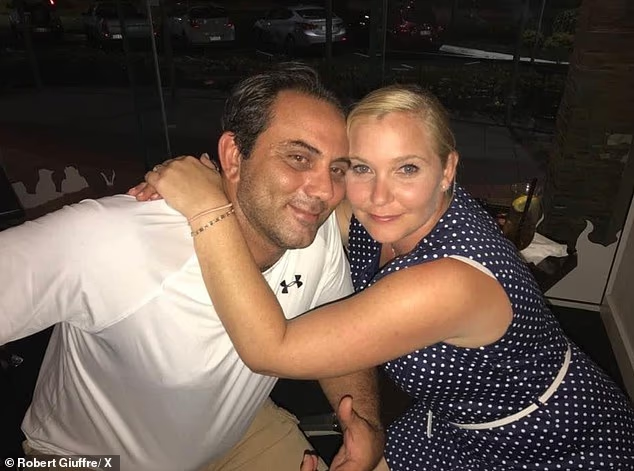
The ugly row over Virginia Giuffre’s multimillion-dollar fortune has erupted into a bitter legal battle, pitting her sons against the lawyer and carer who claim she entrusted them with her last wishes.
But the Daily Mail can reveal the increasingly personal fight is not about carving up her millions – but who should be cut off entirely.
Ms Giuffre, who was trafficked as a teenager by Jeffrey Epstein, took her own life at her Western Australia farmhouse in Neergabby, 20km north of Perth, on April 25.
Since 2009, she had received more than $25million in settlements from former prince Andrew, who she was famously photographed with as a teenager, Epstein, and his sidekick Ghislaine Maxwell.
In the months before her death, she reportedly drafted a will but did not formally complete it, triggering the legal battle over control of her estate.
At the time of her death, she was separated from her husband of 23 years, Robert Giuffre, and estranged from her three children.
The couple were in the midst of finalising a messy divorce and Ms Giuffre’s closest confidantes are adamant she did not want her ex-husband to get a cent.
‘They were not on good terms and he had a restraining order out on her which prevented her from making contact with her children,’ said a close friend.
‘There is no way she would want him to have any money at all.’
At the time of her death Ms Giuffre was separated from Robert, her husband of 23 years, (pictured together)

The couple were in the midst of a messy divorce, the close friend revealed. Robert Giuffre is pictured

The couple’s son, Christian Giuffre (pictured), is named in court papers as a defendant
In the current complex legal war over her estate, her sons, Christian, 19, and Noah, 18, are facing her former lawyer Karrie Louden and long-time carer, Cheryl Myers.
The teenagers are listed as first plaintiffs in the main case and defendants in the counterclaim, while Ms Louden and Ms Myers are named as defendants and subsequently as plaintiffs in the counterclaim.
Ms Giuffre’s sons claim their mother died without a will and they are entitled to inherit and administer her estate, with the consent of their father.
Ms Louden and Ms Myers insist they do not seek anything for themselves but want to ensure Mr Giuffre is specifically excluded from inheriting anything.
Their counterclaim, supported by Ms Giuffre’s US-based brothers, aims to see them appointed as joint executors of Ms Giuffre’s informal will instead.
In reply, Ms Giuffre’s sons have claimed the lawyer and carer should have known their mother’s mental state meant she was incapable of making a valid will in the months leading up to her death.
They also claim the counterclaim would allow Ms Louden and Ms Myers to benefit financially from the informal will after assisting Ms Giuffre to create it while she was not mentally fit.
But Ms Myers insists Ms Giuffre had finally found peace in the rural life at her farmhouse after years of intense public scrutiny.

Virginia Giuffre (pictured) had finally found peace in rural life after years of public scrutiny

Her carer Cheryl Myers (pictured) considered herself a ‘mother figure,’ to Ms Giuffre
She previously told the Daily Mail that Ms Giuffre treated her like a mother figure, and the troubled Epstein victim dreamed of turning the farm into a sanctuary.
She paid tribute to Ms Giuffre’s ‘kindness and generosity’ and added: ‘She was happy on the farm.
‘It was her lifelong dream that abused women and animals would have somewhere to feel safe like she did.
‘It is what she would have wanted – there is absolutely no doubt in my mind about that.’
Ms Myers revealed the family rift triggered by the divorce proceedings had taken a heavy toll on Ms Giuffre in her final months.
Her children were unable to visit during her last hospital stay, and she was prohibited from even texting them because of court orders restricting contact.
It meant she had not seen or heard from them for months before her death, Ms Myers said.
‘She was a really good mother – she was an exceptional mother and she loved her children,’ Ms Myers said. ‘Of course she found that separation so hard to deal with.’

Robert Giuffre had taken a restraining order out on his wife (pictured together in Cairns in 2019)
Joining Ms Myers in the legal challenge against Ms Giuffre’s sons is Ms Louden, a criminal barrister who first met Ms Giuffre as a client while representing her in a restraining order dispute with her husband.
She and Ms Giuffre quickly became close friends, and Ms Louden echoed the claim that Ms Giuffre’s final wish was to launch a survivors’ refuge in Australia.
‘This has been a complete shock to all of us,’ she said outside the farmhouse in the days after Ms Giuffre’s sudden death.
‘She wanted to renovate this place and she had plans for the future.’
Ms Louden said she had spoken to Ms Giuffre just days earlier and was due to meet her shortly after.
‘Physically, she has been very unwell for a long time, but she is a very strong person. She has obviously been through hell.’
She added that Ms Giuffre ‘was in a lot of pain’ but was still looking forward to what was ahead.
It was Ms Louden and Ms Myers who rehomed Ms Giuffre’s horses and packed up the farm in the wake of her death.
Court documents reveal they claim Ms Giuffre ‘created an informal will in writing’ on February 27, and followed up with verbal instructions on April 2 to Ms Louden, witnessed by Ms Myers, to prepare a formal will.
However her sons reject claims that these documents represent their mother’s final intentions.
‘Such instructions were preliminary instructions in contemplation of preparing a will, which was not prepared,’ one of the court documents states.
‘The deceased did not intend for such instructions to constitute her will.’

Ms Louden echoed Ms Giuffre’s final wishes of launching a refuge in Australia
In June, the sons applied to become administrators of her estate, along with their father and their 15-year-old sister, who cannot be named for legal reasons.
Ms Giuffre’s family in the US fear Mr Giuffre, who had begun separation proceedings, could inherit a third of her estate, with the remainder shared between her children.
‘Virginia absolutely wanted to provide for her children, but also she wanted them to go to university and have careers, not just handouts,’ one friend told the Daily Mail.
‘Young people being handed millions of dollars doesn’t often end well and she would have wanted trusts with rules set up.’
Exactly how much remains of Ms Giuffre’s fortune is unclear, with some estimates placing the value of the estate at just $500,000.
Former prince Andrew, now Andrew Mountbatten-Windsor, paid her a reported $24.5million without any admission of liability in 2022.
He has consistently denied all of the allegations she made about being sex trafficked to the royal when she was 17.
Giuffre had previously received $770,000 in 2009 from Epstein, who killed himself in jail in 2019 while awaiting trial on sex trafficking and conspiracy charges.
She also received an undisclosed sum from jailed sex trafficker and Epstein accomplice Ghislaine Maxwell in 2017 following a defamation suit.

Andrew Mounbatten-Windsor has denied all of the allegations she made about being sex trafficked to the royal when she was 17 years old
Profits from Giuffre’s memoir ‘Nobody’s Girl’ are included in the estate.
WA Supreme Court Registrar Danielle Davies last month recommended that Robert Giuffre join his sons in civil proceedings to administer his late wife’s estate.
‘My understanding is that Robert’s consent was attached to an application for a non-contentious grant (from the will),’ Ms Davies told the court.
‘He would consent to the grant being made to his sons, but now there’s defence and counterclaims, which would remove his entitlement.’

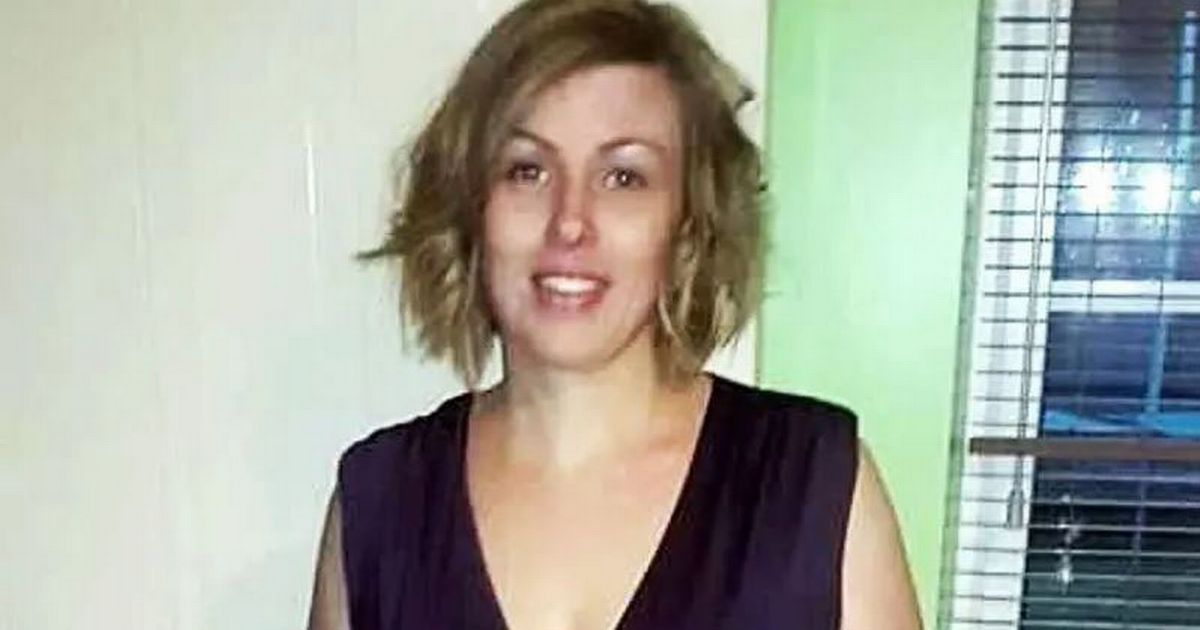
Mum-of-five Celia Marsh, 42, collapsed in the street half an hour after eating what was supposed to be a ‘dairy free’ Pret a Manger sandwich – her family have now been given a £1.25million payout
Benedict Tetzlaff-Deas News Reporter and Nev Ayling
09:49, 10 Dec 2025
Milk allergy sufferer Celia Marsh, 42, died after eating a Pret wrap that was labelled ‘dairy free’(Image: Supplied by Champion News)
The family of a mum who was killed by a “dairy-free” Pret a Manger sandwich have been handed £1.25m payout.
Dental nurse Celia Marsh, 42, collapsed and died after eating a Pret “vegan rainbow” flatbread sandwich while walking around Bath on a post-Christmas shopping trip with her husband and three of her daughters in December 2017. Mrs Marsh, who was allergic to milk, thought the sandwich contained a safe coconut yoghurt alternative – but was unaware that it was contaminated with milk protein.
She began to feel unwell shortly after eating the sandwich, and collapsed in the street. Despite the help of a passing first aider, the mother-of-five died in hospital shortly after being rushed there in an ambulance.
 Pret A Manger settled for £1.25million with Mrs Marsh’s family out of court(Image: SOPA Images/LightRocket via Getty Images)
Following an inquest into her death in 2022, the senior coroner for Avon, Maria Voisin, put the blame for her death on the contaminated sandwich, writing in her report: “A product which is marked ‘dairy-free’ should be free from dairy.”
Mrs Marsh’s husband, Andy, who described her as his “best friend,” then launched a High Court compensation claim on behalf of his family against the high street cafe chain and the product’s manufacturer, Planet Coconut Ltd. And this week, following out of court negotiations, Mr Marsh has now agreed to settle the claim, with lawyers yesterday revealing in the High Court that the family will receive a total of £1.25million.
Having been asked to approve one part of the settlement, the judge, Master Mark Gidden, was told that Pret will be responsible for 25% of the payout, with Planet Coconut’s insurers liable for the rest. In her report following the inquest, the coroner revealed that an investigation by the Bath and North East Somerset Trading Standards and others traced the dairy to a product in the wrap, which was “made by Planet Coconut and marketed as a dairy free coconut yoghurt alternative”.
 The Pret super-veg rainbow flat bread was contaminated with traces of milk protein(Image: Pret)
She added: “The wrap contained a product which was marked as ‘dairy free coconut yoghurt alternative,’ but despite this it contained milk protein, which was the cause of Celia’s anaphylaxis. “The contamination arose because an ingredient in the yoghurt called HG1 had become cross-contaminated with milk protein during its manufacture. The manufacturer of the dairy free yoghurt had in its possession documents which flagged this risk but this risk was not passed on to its customers.”
Within 15 minutes of eating the sandwich, she had been hit with an acute allergic reaction, and within half an hour she had collapsed, the inquest heard. Mrs Marsh gave herself an adrenaline shot with the EpiPen she always carried and a passing first aider tried to help. An ambulance rushed her to hospital, but she was pronounced dead by 4pm the same day.
Following the inquest, her eldest daughter, Ashleigh Grice, said her mum had lived in “constant fear” and religiously checked all food labelling, often “triple checking” what she ate. Mr Marsh sued Pret and Planet Coconut over his wife’s death and after negotiations outside court, the parties yesterday had a settlement of the claim approved by the judge.
Family barrister, Hannah Noyce, told the judge that Pret and Planet Coconut had agreed a split of the liability for the payment, which she said totals £1.25million.
“Both defendants initially agreed apportionment of liability on the basis of 75/25 in favour of Pret, but Pret wasn’t prepared to agree terms that would make all defendants jointly and severally liable,” she said. They wanted specific sums to be agreed. It was agreed that Planet Coconut’s insurers be made party to the agreement and that they should be jointly and severally liable for Planet Coconut’s share.” The hearing, conducted via a video link at the High Court in London, was in order for Master Gidden to approve one specific part of the settlement, which he said he was “content” to do.
Following Mrs Marsh’s death, the coroner published a special “prevention of future deaths” report, calling for the establishment of a system of recording cases of severe allergic reactions to provide an “early warning” of “products with undeclared allergen content”. The report also recommended a system of checks to ensure food is correctly labelled “free from” and “vegan,” leading to the Food Standards Agency updating its labelling guidance.
The Mirror has approached Pret A Manger for comment.


Australia’s prime minister has warned that implementing the country’s new social media ban for children under 16 – which came into force on Wednesday – will be difficult.
Parents across Australia are reported to have found their children distraught after discovering they had been shut out of online platforms.
Some children are said to be fooling age estimation technology by drawing on fake facial hair or using parents and older siblings to dodge the implementation of the ban.
From Wednesday, a host of social media sites face fines of up to $49.5m (£25m) if they fail to take reasonable steps to remove the accounts of the banned teenagers.
While Australian Prime Minister Anthony Albanese described the move as “the day when Australian families are taking back power from these big tech companies”, many young people used their last few hours to criticise the government.
Australian PM hails social media ban
The prime minister, who has lost over 6,000 followers across TikTok and Instagram since Tuesday, has borne the brunt of anger about the ban’s introduction, which he warned “won’t be perfect”.
One comment on his TikTok account read “just wait until we’re able to vote”, another said, “still here mate”.
Parents whose children have large social media followings and use online platforms as part of their businesses raised alarm over the financial impact of the ban.
Simone Clements said the social media ban would come at a financial cost to her 15-year-old twins Carlee and Hayden Clements. Carlee is an actor, model, dancer, singer and influencer, while her brother is an actor and model.
Both have used social media to grow their following online and income stream.
Two teenagers have even launched a legal bid to try and challenge the ban.
However, despite the criticism, the ban has been widely welcomed by many.
Wayne Holdsworth, whose son took his own life after being targeted in an online sextortion scam, described the law as a start.
Holdsworth, who became an age restriction advocate following his son’s death, said: “Our kids that we’ve lost haven’t died in vain because today they’ll be looking down very proud of the work that we’ve all done.”

Australia’s new social media ban for under-16s came into effect on Wednesday. Pic: Reuters
Read more:
One big problem with Australia’s social media ban
X handed €120m fine for breaking social media rules by EU
Flossie Brodribb, a 12-year-old advocate for a social media ban for young children, described the plan as bold and brave.
She added: “It will help kids like me to grow up healthier, safer, kinder and more connected to the real world.”
The government has said it will report by Christmas if the under-16 social media ban is working.
Communications minister Anika Wells warned children who had managed to evade the start of the ban that they would eventually be caught.
“Just because they might have avoided it [detection] today doesn’t mean they will be able to avoid it in a week’s time or a month’s time because social media platforms have to go back and routinely check under-16 accounts,” she said.
Ms Wells added that more than 200,000 TikTok accounts in Australia had already been deactivated.
New Ofcom data raises UK concerns
Countries around the world are watching Australia’s new ban closely due to concerns social media use among young people could be causing harm.
New Ofcom figures show children in the UK between eight and 14 are spending an average of nearly three hours online each day – often late at night.
According to the data, almost a quarter of time spent by that age group on their four main social media services happened between 9pm and 5am.

Australia bans under-16s from social media: Could UK be next?
While Ofcom found about 91% of those aged eight to 17 in the UK were happy with their online activity, 70% of 11 to 17-year-olds saw or heard harmful content online over a four-week period.
The data also raises concerns over children spending money online on social media sites, video-sharing platforms or while gaming – with more than half of children aged eight to 17 having done so in the past month.
Around a third of children regretted their in-game purchases and 43% regretted those made on social media.
Alarmingly, some 42% were unclear on what they even were buying in-game.
Former UK education secretary Lord Nash highlighted earlier this month how social media use seems to often start at an even younger age.
He warned that new analysis by the Centre for Social Justice suggested more than 800,000 UK children aged between three and five were already engaging with social media.
Anyone feeling emotionally distressed or suicidal can call Samaritans for help on 116 123 or email jo@samaritans.org in the UK. In the US, call the Samaritans branch in your area or 1 (800) 273-TALK.


Mulanje and Lilongwe, Malawi — Ireen Makata sits in her white nursing uniform on a weathered bench at a health post in Malawi’s southern Mulanje district.
The facility is one of 13 in the district, located within a seminomadic, predominantly agricultural community 65km (40 miles) east of Blantyre, Malawi’s commercial capital, near the Mulanje mountain range.
Recommended Stories
list of 3 itemsend of list
The beige-painted facility stands out from the dozens of huts around it made of red bricks, with straw roofs. To the right of the main entrance is a supply room with diminishing medical supplies. On the other side is an ambulance that Makata says is now rarely used.
Health posts like this were set up to serve remote communities and alleviate pressure on district hospitals. They were crucial in providing communities with basic healthcare, antenatal care, family planning and vaccines.
The clinic in Mulanje used to see dozens of women a day, providing maternal care, including helping women give birth, dispensing medicines and, when needed, transport to the hospital. But now, since funds were cut, it is open only around once every two weeks, stretching its supplies for as long as it can and unable to regularly transport visiting healthcare workers.
Health posts like this are facing closure – 20 have already shuttered in the country – due to the Trump administration cutting United States Agency for International Development (USAID) funding in February. This is forcing the country’s health system to withdraw critical services, placing further stress on hospitals, and leaving thousands of women and children without needed care in a region burdened by poverty and long distances to hospitals.
Makata, a nursing officer specialising in maternal and newborn care, usually based at the district hospital, says she used to visit the post two or three times a week. Now she rarely comes and no longer sees most of the patients she used to care for.
“Most of the women who relied on this post now find the distance to access a district hospital too far,” she tells Al Jazeera.
It would take a large chunk of a day, travelling on the bumpy dirt roads of Mulanje district, to reach one. That long visit “takes them away from their day-to-day activities, which bring income or food to their table,” she explains.
Many cannot afford to do that and now go without care.
“They are failing to get the ideal treatment for antenatal care services, especially during the first trimester of pregnancy,” Makata says.
Ireen Makata, a nursing officer and safe motherhood coordinator at Musa Community Health Post in Mulanje [Imran-Ullah Khan/Al Jazeera]
‘Baby and mother in jeopardy’
USAID funding was all-encompassing. It funded remote medical outposts, covering everything from the training of new staff and the provision of drugs and supplies for pregnant women to petrol for ambulances.
The US government provided close to 32 percent of Malawi’s total health budget before the cuts.
USAID funded the health posts through a programme called MOMENTUM in 14 of Malawi’s 28 districts, starting in 2022, helping strengthen existing clinics and set up new ones. As of 2024, there were 249 posts. The programme also provided medical outreach to communities and equipment. About $80m was being invested in the programme by Washington.
Early this year, US President Donald Trump issued stop-work orders on USAID-funded programmes as part of an executive order to pause and re-evaluate foreign aid.
With that move, MOMENTUM was shelved, and the two dozen mobile posts were shuttered as a result. Medical trainees were left in limbo, and life-saving equipment was sold off in fire sales by Washington.
The United Nations Population Fund (UNFPA) still provides technical and financial support to several remote districts for maternal and newborn health, but the available resources are not enough to cover the sites funded by MOMENTUM. There are fears that the UNFPA sites will run out of resources and supplies in the coming months.
In the wake of Trump’s funding cuts, health experts in Malawi have raised urgent concerns that new mothers and children will face the greatest impact, with many lives potentially lost as a result.
Makata has set up a WhatsApp group for women to contact her with concerns and questions, but she is frustrated that she cannot work as she used to.
“We would go to where people resided and give them permanent and long-term care,” she says, referring to the posts. “It’s not easy for me to see this. We can’t help those who need the services the most.”
Massitive Matekenya, a community leader for the Musa community in Mulanje district, dressed in a black blazer and oversized chequered-green tie, is at the vacant Mulanje health post.
These days, he says, it is hard to put on a brave face for the people he represents.
“Women in our community are now giving birth on the way to the district hospital since it’s such a long distance away,” says Matekenya. “That puts baby and mother in jeopardy with the potential of the mother bleeding out.”
Matekenya struggles to boost morale as he is constantly faced with community anger over the fact that medical outreach has ended.
He says a 40-year-old woman from his community recently died from malaria. “She had no quick referral to the nearest health facility due to issues of transport,” Matekenya says, noting that the community reached out to a politician but that his assistance came too late.
“I’m worried,” he says. “With family planning services not being offered any more, we are expecting to see a spike in pregnancies, and we are anticipating a possible rise in maternal deaths.”
 Female patients recovering or awaiting treatment for obstetric fistula at the Bwaila Fistula Centre in Lilongwe [Imran-Ullah Khan/Al Jazeera]
Impact on fistula care
In a health clinic in Malawi’s capital, Lilongwe, a woman dressed in black with a golden brooch shuffles from hall to hall. Margaret Moyo is tending to her daily responsibilities as head coordinator at the Bwaila Fistula Centre.
Obstetric fistula occurs when a hole between the birth canal and bladder or rectum is formed during an obstructed and extended labour. Women who do not receive medical treatment can be left incontinent.
Beyond the physical pain, women suffering from obstetric fistula also face social stigma due to the constant leaking and are often ostracised from their communities.
The Bwaila Fistula Centre receives more than 400 patients a year from all over the country, as well as from districts in neighbouring Mozambique. It has 45 beds, one doctor and 14 specialised nurses, and some 30 patients were at the centre when Al Jazeera visited in August.
With fewer resources, individuals will not be seen as often during pregnancy, which could lead to undetected maternal health issues, including more cases of fistula, Moyo argues. She is also concerned that conversations around prevention and education will take a backseat.
“The focus should be on training midwives, access to care and education to delay pregnancy in younger women since they are often most at risk of fistula,” says Moyo.
Before the USAID cuts, Malawi’s government had already forecast a $23m shortfall for reproductive, maternal, and newborn health funding for 2025 owing to drops in foreign aid.
 Margaret Moyo, head coordinator at the Bwaila Fistula Centre in Lilongwe [Imran-Ullah Khan/Al Jazeera]
‘I am able to help them’
For the past five years, Moyo has been running what she calls an “ambassador” programme at her facility. Patients who undergo successful fistula repair and are reintegrated into their communities are trained and sent out into their communities.
So far, 120 fistula survivors have become patient ambassadors who educate through community outreach to bring in new patients for treatment.
One such ambassador is Alefa Jeffrey. Wearing a grey “Freedom from Fistula Foundation” T-shirt, the 36-year-old mother of four crosses her arms and gazes towards the floor as she talks about being ostracised after she gave birth and developed a fistula.
“I wasn’t allowed to go to church because the other girls made fun of me and said I smelled bad because I was leaking urine and stool,” she says. “My family told me to go to a traditional healer, but he wasn’t able to help.”
Jeffrey could deal with the physical pain, but she was tormented by the negative interactions with friends and family.
“I got used to dealing with fistula, but it was what people were saying that was giving me the most pain,” recounts Jeffrey, who says she even contemplated suicide.
But she also started looking for answers, asking the traditional healer and then eventually meeting an ambassador who came to her community to speak to women.
Having successfully undergone treatment, involving surgery and follow-up patient and educational care, Jeffrey now advocates for fistula education.
She has set up a WhatsApp group for people to chat with her for information about the condition. She has also brought in 39 mothers from her community to the clinic.
“I’m an expert now. I’m able to convince people to come, which isn’t easy,” says Jeffrey. “Some women have lived with a fistula for so long they don’t believe they can be repaired, and they have already given up, but I am able to help them.”
 Patients await treatment for various ailments at the Nsanje District Hospital [Imran-Ullah Khan/Al Jazeera]
Lessons from the past: ‘We didn’t panic’
Although health experts are worried about the future of a system without USAID in a country where more than 70 percent of the population lives below the poverty line, government leaders say they have been there before.
Back in 2017, during his first presidency, Trump halted funding for the UNFPA and several groups that provided family planning. Malawi’s government approached NGOs and other countries to alleviate the gaps in funding.
Through community and grassroots innovations, they believe they can weather the storm again.
“We didn’t panic when we heard about the USAID cuts,” says Dr Samson Mndolo, Malawi’s secretary of health. “Instead, we looked at how to be more efficient and get more services for our money.
“We looked at areas where we could maximise resources, so for example if an officer goes to a community to do immunisations, they can now provide family planning services in the same trip too.”
Sitting in his office in the Lilongwe City Council building behind an organised desk, Mndolo discusses the challenges.
“As soon as the stop-work orders came out, we lost close to 5,000 health workers. The majority of these are what we call HIV diagnostic assistants,” he says, referring to the fallout from the USAID cuts. “We are looking now to push towards a health system that is more community-based and not necessarily hospital-based.” In such a system, doctors and health workers from central hospitals would be dispatched more to remote communities, and regular community outreach would become part of their remit, requiring them to perform a wider array of services.
Mndolo and his colleagues are setting up online initiatives and WhatsApp chat groups to field questions from remote patients. He remains optimistic about Malawi’s health system and says the worst thing the country can do now is to lose hope.
“Each crisis is an opportunity. This gives us a chance to strengthen the system and retrain our workforce and digital health systems,” he says.
“We are not naive. This will take some time, but once we get a hold of that as a nation, we can be better with time; that is the opportunity that is there for us.”
Despite such reassurance, those in remote communities say they feel isolated.
Tendai Kausi, a 22-year-old mother from the Musa community in the Mulanje district, still goes to the remote health post for help with her four-year-old son, Saxton. But because of the cuts and closures, many women from her community do not, and she has seen new mothers carry pregnancies in their isolated villages – far from healthcare and without routine checks.
“This is not good for the development of our country,” she says.
“My child will be affected because the services here will not get better,” Kausi says. “I feel very sad for my community.”
 Patients at the Bwaila Fistula Centre [Imran-Ullah Khan/Al Jazeera]
SOURCE PAGE
WORLD NEWS
Reeves faces Treasury committee before Tory censure motion in Commons saying she misled voters about budget – UK politics live | Politics


Key events
Show key events only
Please turn on JavaScript to use this feature
Rachel Reeves, the chancellor, will start giving evidence to the Treasury committee at 10am. She will appear alongside James Bowler, permanent secretary at the Treasury, and Dharmesh Nayee, its director of strategy, planning and budget.
This is what the Treasury committee said in a news release about the topics it wants to cover.
Members are likely to examine the significant changes to the Treasury’s tax and spending plans, and potential implications for the economy, public services and government debt.
The chancellor is also expected to answer questions on topical issues, such as how her department handled the months leading up to the budget and the recently announced leak inquiry.
Share
Starmer says £500m boost to youth services will give every child ‘chance to thrive’
Keir Starmer has been tweeting this morning about the national youth strategy.
It’s our generation’s responsibility to break down barriers to opportunity for young people.
We’re investing in youth services so every child has the chance to thrive and we’re boosting apprenticeships so young people can see their talents take them as far as they can.
At the heart of the strategy is a plan to spend £500m boosting youth services. This is how the Department for Culture, Media and Sport summarises it.
-Build or refurbish up to 250 youth facilities over the next four years, as well as providing equipment for activities to around 2,500 youth organisations, through a new £350m ‘Better Youth Spaces’ programme. It will provide safe and welcoming spaces, offering young people somewhere to go, something meaningful to do, and someone who cares about their wellbeing.
-Launch a network of 50 Young Futures Hubs by March 2029 as part of a local transformation programme of £70m, providing access to youth workers and other professionals, supporting their wellbeing and career development and preventing them from harm.
-The first eight hubs to be operational by March 2026 are in Birmingham, Leeds, Manchester, County Durham, Nottingham, Bristol, Tower Hamlets, and Brighton and Hove.
-Support organisations in underserved areas to deliver high-quality youth work and activities through a ‘Richer Young Lives Fund’ worth over £60m.
-Boost young people’s wellbeing, personal development, and essential life skills through a new £22.5m programme of support around the school day in up to 400 schools.
-Recruit and train youth workers, volunteers and other trusted adults with £15 million of investment.
-Strengthen youth services through £5 million to improve local partnerships, better information sharing, and digital infrastructure, ensuring young people receive high-quality, safe, and effective support in their communities.
Share
Nandy says she does not think Australian-style social media ban for teenagers could be enforced in UK
Lisa Nandy, the culture secretary, was on the media round for the government this morning. She was there to talk about the new national youth strategy being published today. There is a news release about it here, the actual strategy is available here, and here is Pippa Crerar’s story about it, based on an interview with Nandy.
In the interview Nandy expressed scepticism about the UK followng Australia and banining under-16s from having social media accounts.
She has spoken more about that in her interviews this morning. She said the government is not totally ruling out doing something similar. Asked if the UK would follow Australia if the Australian ban is deemed a success, she told BBC Breakfast:
Yes, we certainly would consider it, not only if it worked, but if young people … believed that it was working and trusted that that was a solution.
But she also stressed that at this point the government is not minded to introduce a similar social media ban for teenagers. She told Times Radio:
We don’t think [this will be a good idea]. We asked young people what they thought about it, and the overwhelming response was concerns about enforceability.
Are we seriously saying that we’re going to start prosecuting young people for going on social media?
There’s also a real concern particularly amongst girls that if people can’t see the problem with behaviour online, they won’t be able to see the problem with behaviour in the real world.
What they really wanted was more education, more advice, and particularly someone who cared about them, who they could talk to, an adult who they could trust … to be able to navigate some of this.
Lisa Nandy (centre) posing for a selfie during the National Youth Strategy launch event at Peckham Levels, London, yesterday. Photograph: Gareth Fuller/PAShare
Updated at 10.30 CET
Asylum overhaul in UK could lead to rise in homelessness and backlogs, says report
Shabana Mahmood’s radical plans to overhaul the asylum system could cause “unintended consequences” such as increased homelessness among people seeking refuge and growing case backlogs, Whitehall’s spending watchdog, the National Audit Office, has concluded. Rajeev Syal has the story.
Here is the NAO’s report. And here is its eight-page summary.
Share
Rachel Reeves faces Treasury committee before Tory censure motion in Commons saying she misled voters about budget
Good morning. It is PMQs today, but Rachel Reeves, the chancellor, is also facing intense scrutiny in the Commons today. She is giving evidence to the Treasury committee at 10am and then, from about 4pm, she will face a rare censure motion in the Commons.
Anyone who listens to Commons debates regularly will have heard an MP accuse another member of “misleading” people, only for the speaker to intervene to say they must have meant “unintentionally misleading”. Under rules intended to maintain decorum in debates, MPs are not allowed to accuse each other of lying, or anything similar. But there is an exception if whether or not a particular MP has lied is the actual subject of the debate.
And that is what is happening today. It is an opposition day, meaning the Conservative party can decide the motions to be debated, and it has tabled a censure motion urging Reeves “to apologise for misleading the country about the state of the public finances, rolling the pitch for raising taxes, breaking her promises and increasing welfare spending”. There is no chance of the motion passing, but it does mean that for about three hours in the Commons in it will be open season on the chancellor.
Commenting on the motion, Mel Stride, the shadow chancellor, said:
Rachel Reeves has repeatedly misled the British public. She promised she wouldn’t raise taxes on working people – and then she did. She insisted there was a black hole in the public finances – and there wasn’t.
Rachel Reeves has put party before country, so today the Conservatives are giving MPs the chance to formally censure the Chancellor and call on her to apologise to families across the country.
Here is the agenda for the day.
9.30am: The ONS publishes annual life expectancy figures.
Morning: David Lammy, the deputy PM and justice secretary, and Lord Hermer, the attorney general, attend a Council of Europe summit in Strasbourg to discuss migration and the European convention on human rights.
10am: Rachel Reeves, the chancellor, gives evidence to the Commons Treasury committee about the budget.
Noon: Keir Starmer faces Kemi Badenoch at PMQs.
After 12.30pm: MPs debate two Tory opposition days motions: first, one criticising the employment rights bill, and accusing the government of “making seasonal, flexible and part-time work more difficult”; and then another urging Reeves “to apologise for misleading the country about the state of the public finances, rolling the pitch for raising taxes, breaking her promises and increasing welfare spending”.
If you want to contact me, please post a message below the line when comments are open (normally between 10am and 3pm at the moment), or message me on social media. I can’t read all the messages BTL, but if you put “Andrew” in a message aimed at me, I am more likely to see it because I search for posts containing that word.
If you want to flag something up urgently, it is best to use social media. You can reach me on Bluesky at @andrewsparrowgdn.bsky.social. The Guardian has given up posting from its official accounts on X, but individual Guardian journalists are there, I still have my account, and if you message me there at @AndrewSparrow, I will see it and respond if necessary.
I find it very helpful when readers point out mistakes, even minor typos. No error is too small to correct. And I find your questions very interesting too. I can’t promise to reply to them all, but I will try to reply to as many as I can, either BTL or sometimes in the blog.
Share
Updated at 10.38 CET

The UN’s educational, scientific and cultural agency,UNESCO. announced on Wednesday that Diwali, the Hindu festival of lights, have been added to its Intangible Cultural Heritage list.
“People in India and around the world are thrilled,” Indian Prime Minister Narendra Modi posted on X after the announcement.
He called Diwali “the soul of our civilization,” adding that the move “will contribute to the festival’s global popularity even further.”
What is Diwali, India’s festival of lights?
Diwali, also known as Deepavali, is one of Hinduism’s most significant and widely observed festivals.
Millions of faithfull, including those from the Sikh and Jain religious communities, celebrate the five-day festival.
Diwali, which occurs on the new moon day in either late October or November, symbolizes the triumph of good over evil.
It is the 16th Indian tradition to be inscribed on UNESCO’s Intangible Cultural Heritage list, joining yoga, the Hindu pilgrimage Kumbh Mela and Durga Puja Festival of Kolkata.
Can ‘green’ firecrackers cut Dehli’s Diwali pollution?
To view this video please enable JavaScript, and consider upgrading to a web browser that supports HTML5 video
What are other new additions to UNESCO’s Intangible Cultural Heritage list?
Unesco members are meeting in New Delhi this week to review dozens of nominations submitted by 78 countries.
The new additions will join the cultural heritage list, created to “raise awareness of the diversity” of the traditions passed from one generation to another and ensure their protection for the future.
Here are some new traditions added to the list this year:
- Koshary, Egypt’s street food staple
- Al-Muhaibis, a game typically played during the month of Ramadan in Iraq
- Gifaataa, Wolaita people’s New Year festival in Ethiopia
- Commandaria from Cyprus, one of the oldest wines
- Ghana’s highlife music and dance
- Chile’s circus traditions
Iceland’s swimming pool culture also added to UNESCO’s cultural heritage list
Swimming pools are a big part of Iceland’s culture.
“Swimming pool culture holds a special and important place in the daily life of Icelanders,” said Lilja Alfredsdottir, Iceland’s former Minister of Culture and Trade, in 2024, when it was confirmed that this Icelandic culture was nominated for a UNESCO status.
Icelanders love to frequent the countless geothermal pools in the country.Image: Eric Baccega/imageBROKER/picture alliance
“Meeting in the hot tub or taking the family swimming is a social connection which is invaluable and makes its mark, not only physically, but spiritually as well,” she added.
Edited by: Louis Oelofse
WORLD NEWS
Trump suffers yet another election defeat after Miami elects first Democratic mayor in nearly 30 years: Live updates


Donald Trump suffers another defeat as Miami elects first Democrat mayor in 30 years
President Donald Trump has suffered another election blow, this time in his own backyard of Florida after Miami elected Democrat Eileen Higgins to be its new mayor, ending a three decade losing streak for her party in the city.
Higgins, 61, will become the first woman to lead Miami, a Hispanic-majority city that was swayed by her attacks on the president’s crackdown on undocumented migrants and mass deportation push, issues that threaten family members of many residents originating from Central America.
Despite the race officially being nonpartisan, she campaigned openly as a proud Democrat, ultimately defeating Trump-backed candidate Emilio Gonzalez, a former city manager, who has since called Higgins to offer his congratulations.
Here’s more on the latest ill omen for Republicans ahead of next year’s midterms.
Joe Sommerlad10 December 2025 09:25
Good morning
Hello and welcome to The Independent’s live coverage of the Donald Trump administration as the president suffers another election defeat and raises eyebrows with his latest rally remarks.
Joe Sommerlad10 December 2025 09:05