
TECHNOLOGY
Figma launches new AI-powered object removal and image extension


Design tool Figma launched new AI-powered image editing features today, including the ability to remove and isolate objects and expand images.
The company said that these features will save the hassle of exporting images to other tools for editing and importing them back. It added that generation models like Nano Banana are good for creating images, but users often need granular tools for editing that work without any text prompts.
Figma has improved its lasso tool for selection. Now you can use it to select an object, remove it, or isolate it to move it around. When you move around the object, the image still retains other characteristics, such as background and color. Users can also select an object to adjust factors like lighting, shadow, color, or focus.
The company is also bringing an image expansion feature to its design suite. This feature is handy when you are adjusting a creative for a particular format and need to fill in the background or other details. For instance, creating a web banner or mobile banner from a 1×1 image. It essentially saves you from constantly cropping an image and adjusting elements within it.
Image Credits: Figma
Besides adding these features, Figma is collating all its image editing tools in one toolbar for easier access. You can select objects or parts of images, change background color, and add annotations or text using this toolbar. The company said removing background is one of the most common actions on the platform, and that is why it is getting a prominent spot on the new toolbar.
Rivals like Adobe and Canva have had object removal for a few years now. Figma is finally catching up to offer these features.
The company said the new image editing features are available on Figma Design and Draw, with plans to make them available across Figma tools next year.
Figma’s launch comes on the same day as Adobe making some of these features available to users within ChatGPT. Figma was one of the launch partners of the app, calling on ChatGPT in October. It is not clear if these new functions will be available to users using Figma within OpenAI’s tool.

Whether or not Netflix’s $82.6 billion acquisition of Warner Bros. goes through, the deal encapsulates a fraught moment for Hollywood, as the entertainment business is increasingly overshadowed by tech giants.
On the latest episode of the Equity podcast, Kirsten Korosec and I discussed the deal’s implications, both for Netflix and the larger Hollywood ecosystem. Kirsten noted that it’s just the latest move bringing more consolidation to the media business, and she wondered whether it’s “too big a risk” for Netflix.
Meanwhile, I discussed a call with Netflix executives where Wall Street analysts also seemed to be struggling to wrap their heads around the deal. And then of course there’s Paramount’s competing hostile bid — whatever happens, Warner Bros.’ days as a standalone company seem to be numbered.
You can read an edited preview of our conversation below.
Kirsten: I remember when Netflix was just a little baby startup and I got their [DVDs] in the mail. Here they are, all grown up, bidding for a legacy company. Did that run through your head when you saw the news?
Anthony: Certainly symbolically, it’s this moment where the upstart has eaten Hollywood. There’ve been all these articles, even before this deal, saying, “Netflix is eating Hollywood, Netflix is transforming Hollywood.” Regardless of whether or not this deal ends up going through, Netflix will have transformed Hollywood, but this seems like the biggest — both symbolically but also substantively — one of the most dramatic things that can happen.
Then there are all these other questions about: Will Netflix get regulatory approval? Will Paramount’s hostile bid succeed?
Techcrunch event
San Francisco
|
October 13-15, 2026
What jumped out to you is you were catching up on it, Kirsten?
Kirsten: Well, the first thing was I was like, can there be any more consolidation in this market? I mean, that was the big one for me, because if memory serves, Warner Bros. already went through like this consolidation with Discovery, right? So here we are again. There’s been so much consolidation that I have lost track of all of that.
But the second thought was what I immediately thought, what I kicked [off our discussion] with, which is really thinking about how Netflix [has grown], and there have been these dips in the road along its way, where the headlines have been about how it’s struggling, and will it remain relevant, and how can it do that? If they’re successful in the actual deal, [it would] potentially reflect [that] they have made it.
But then again, they have to execute on [running] an even bigger company than ever before. And so I guess my third thought on this is: Should they be buying this? Is this what it takes for them to expand? Is it a risk for them to take on so much? Why not just stay as they are? And I don’t know if you agree with me on that one. Is it too big of a risk?
Anthony: I can see how it makes sense for Netflix. It’s a way to take a [content] library that is already quite large, and they’ve obviously had some very successful TV shows — less so on the movie side — [but] potentially, they just become so much stronger on the content side.
[And] they’re suddenly now involved in all these other businesses, although the question is to what extent are they going to invest in things like the theatrical business, theme parks, making TV shows for other streaming services and networks, which are all businesses that Warner Bros is in, and Netflix says it will continue to support. But we’ll see to what extent that’s true.
So it seems like something that can really benefit Netflix in some ways, but, at the same time, it does seem like this is a huge risk. If you go and look at the analyst call that Netflix’s executives did after announcing the deal, you can see that the analysts are wrestling with it and wondering “Okay, I can see that this grows your business, but does it grow your business [so much that it’s] worth an $82 billion deal?”
And then of course, beyond the Netflix perspective, you have everybody else in Hollywood. There are all these maybe accurately hyperbolic headlines about: Is this the end of Hollywood? Is this the end of the movie theater business? All the unions are basically saying either, “This deal should be blocked” or “We’re very, very, very worried about this deal.” The theater owners are saying that
And so I think there’s A) Is this a good deal for Netflix? And B) is this a good deal for the entertainment business? I don’t have a good answer for either, [but] I think it’s more likely to be a good deal for Netflix than it is to be a good deal for the entertainment business.
Though again, part of what to keep in mind as people weigh those options or think about possible outcomes here, is that because of the way that Paramount has forced Warner Bros. to consider these acquisition offers, it seems unlikely that Warner Bros. is going to be able to continue as an independent company — which, if you’re not a fan of media consolidation, that is disappointing.
TECHNOLOGY
Are YOU a ‘T-Rex sleeper’? Expert reveals the worst sleep positions for you – and why you should NEVER snooze with your arms tucked up to your chest


An expert reveals the worst (and best) sleeping positions – and how to avoid walking around with aches and pains during the day.
Dr Deborah Lee, health specialist and sleep expert at Dr Fox Online Pharmacy, said there are several popular positions, from ‘solider’ to ‘pencil’ and ‘foetal’.
Sleeping on one’s side with bent arms curled close to your chest has been recently dubbed the ‘T-Rex position’ on social media.
The various names depend on the alignment of the back, legs and arms – but some are better for your posture than others.
‘As a rule, sleeping on your back or side are preferable to sleeping on your front,’ Dr Lee told the Daily Mail. ‘These positions are the best to allow your muscles to relax and undergo repair overnight.
‘We should also sleep without putting undue pressure on our joints and muscles.
‘Your sleeping position can also affect medical conditions such as acid reflux/indigestion, sleep apnoea and pain.’
So which one is your preferred sleeping method?
SIDE-SLEEP – T-REX
The T-Rex – also known as ‘sleeping with dinosaur hands’ – is sleeping on your side with your arms and wrists curled up to your chest.
According to Dr Lee, side-sleeping is not a problem – and it is generally recommended – but the T-Rex position specifically should be avoided.
‘Sleep specialists have suggested this is a natural tendency to curl up on our side in a ball and bunch up our fists to our chests, when we feel anxious or under threat,’ she told the Daily Mail.
The T-Rex ‘gives us a sense of comfort and security’, but it has been proven to cause night-time paraesthesias – a tingling or prickling sensation.
Dr Raj Dasgupta, a sleep medicine specialist and chief medical adviser for Sleepopolis, says the T-Rex position can cause lasting nerve damage.
‘When you sleep with your arms bent and tucked in, you can press on the nerves in your elbows or wrists,’ he told HuffPost.
‘This can slow blood flow and make your arms feel numb or tingly. If you do it often, it can also strain your shoulders and make them stiff or sore.’

Sleeping on one’s side with bent arms curled close to your chest has been recently dubbed the ‘T-Rex position’ on social media (file photo)
SIDE-SLEEP – PENCIL
The ‘pencil’ version of the side-sleep – with the arms down by the sides instead of curled inwards – is a ‘natural sleeping position with much to commend it’, Dr Lee said.
‘The arms are alongside the body and not bent at the elbow or wrist,’ she told the Daily Mail.
‘A side sleeper pillow can help this be more comfortable.’
Sleeping on your side is generally recommended by experts as long as the body and the head are both facing sideways, as it helps to keep pressure of joints, maintain proper spinal alignment and prevent pain.
Sleeping on your side also keeps pressure off internal organs and promotes healthy blood flow, according to the respected Mayo Clinic in Minnesota.
SIDE-SLEEP – FOETAL
Another side-sleep variation is the foetal position – with the knees curled up towards the chest.

In most cases, the body will move around during the night which helps to avoid any pain sensations – but staying in one position too long can lead to pain for days after (file photo)
According to the Sleep Foundation, it is one of the most common sleep postures among adults and can be a healthy and comfortable way to sleep.
It can promote spinal alignment, reduce snoring, and provide comfort for pregnant people and those with back pain – but curling too tightly may cause joint stiffness or restrict deep breathing.
BACK-SLEEP – SOLDIER OR COFFIN?
Sleeping on your back, facing the ceiling, is also usually recommended to stave off joint pain, but it can sometimes make neck pain worse, not to mention exacerbate other issues.
Mayo Clinic experts say sleeping on your back is actually the worst sleeping position if you have sleep apnea – which is when your breathing stops and starts while you sleep.
There are two main variations – ‘solider’ (sleeping on the back with arms by the sides) and the ‘coffin’ (where the arms are rested on the chest either crisscrossed or one on top of the other). According to Dr Lee, soldier is probably the preferable of the two.
‘There is correct spinal alignment and straight arms and wrists with the solider, but you may need a pillow under both the knees to soften the lumbar curve,’ she said. ‘It can cause shoulder discomfort in which case extending the arms like a starfish can help.
‘It’s preferable to try and sleep without the arms bent or crossed to avoid any nerve compression.’
FRONTAL
Lastly, sleeping on your front is generally considered the most unhealthy because it can inhibit breathing and cause irregular curvature of the spine.
So it is the worst position you can sleep in, especially if you suffer from lower back pain.
‘Front sleeping with the head twisted to one side is not recommended as the spine is compressed all night and the cervical spine is also not in correct alignment which can lead to neck, arm and shoulder pain the next day,’ said Dr Lee.
Another bad variation is the half-stomach sleeper, in which you lie on your front but with one leg curled up higher than the other, and one arm bent often under the pillow.
‘Again, this means sleeping with a twisted spine,’ the expert said.
Christian Moro, professor of science and medicine at Bond University in Queensland, Australia, said letting the body move around during the night is ‘a good idea’.
‘In most cases, the body will move around during the night which helps to avoid any pain sensations or uncomfortable sleeping positions,’ he told the Daily Mail.
‘As such, how you fall to sleep does not necessarily indicate the position you will remain in for most of the night.
‘If you regularly wake with pins and needles, or a dead-arm, then it’s time to reconsider your sleep position, as this is a sign that blood flow is being restricted.
‘Ideally, you will be able to find a position, mattress and pillow that helps provide a good night’s sleep that avoids waking up in any pain.’
Four ways to optimise your sleep position
- Train yourself to side-sleep gradually: If you’re a habitual back or stomach sleeper, don’t expect to change overnight. Start by placing a pillow behind your back when lying on your side to prevent rolling. After a week or two, your body will begin to adapt to the new position naturally.
- Use proper pillow support: Side-sleeping requires the right pillow height to maintain spinal alignment. Your pillow should fill the space between your shoulder and neck without tilting your head too far up or down. A pillow that’s too high or too low can strain your neck and disrupt sleep quality.
- Add a knee pillow: Placing a small pillow between your knees while side-sleeping helps maintain proper hip and spine alignment. This simple adjustment can prevent the lower back strain that often causes people to abandon side-sleeping attempts.
- Choose the right mattress firmness: Side-sleepers need a mattress that contours to their body while providing adequate support. A mattress that’s too firm can create pressure points at the hips and shoulders, while one that’s too soft won’t provide enough spinal support. ‘The goal is to wake up feeling rested, not stiff or sore,’ said Lev Fomchenkov, CEO of online supplement reseller Cosmic Nootropic. ‘If your sleep position is causing discomfort, your brain won’t get the deep, restorative sleep it needs for optimal detoxification.’
TECHNOLOGY
Bluey’s Quest for the Gold Pen: after some misfires we finally have the first good Bluey video game | Games


Bluey embodies the talent, heart and character of Australia’s creative industries. But unfortunately, until now, the beloved franchise’s video games had a track record spottier than her friend Chloe the dalmatian.
Some parents treated Budge Studios’ 2023 mobile game Bluey: Let’s Play! with caution, with its $9.99 monthly subscription and persistent adverts for Budge’s other licensed games. Later that same year, Artax Games’ Bluey: The Videogame was widely criticised on release for its barely two-hour run time, technical problems and $60 price tag. In his review, Australian game critic Luke Plunkett called it: “a slapdash cash grab that does the bare minimum.”
And released in August this year, StoryToys’s mobile game Lego Bluey offers block-building, minigames and another subscription – this one cheaper and less aggressively advertised. All three games were commissioned by BBC Studios, which co-commissions the show with ABC and handles all of Bluey’s international merchandising and licensing.
But Bluey’s Quest for the Gold Pen is the first to live up to the standards that made Bluey one of the most-watched shows in the world. Also commissioned by BBC Studios, it was made in Brisbane by Bluey creator Joe Brumm and Halfbrick Studios of Fruit Ninja fame, making it the first Bluey game made in Australia, the first to involve Bluey’s creator, and the last original Bluey story we’re likely to get from Brumm until the 2027 movie.
After playing the opening levels of Halfbrick’s take on Bluey, I can say it feels like an actual game; the studio has said it should take about 10 hours to complete, which feels accurate. It is essentially a classic adventure game in which Bluey and Bingo chase their impish dad Bandit through a series of magical artworks after he pinches their pen. The game’s design rewards curiosity, exploration and the liberal use of Bluey’s magic wand. Meanwhile, Brumm’s script gets Chilli and Bandit debating how to avoid lawnmower parenting while they concoct the game’s next level.
Bluey is so daggy; it’s very Brisbane … you can only truly replicate and extend into the games world if you really understand those nuances.Joey Egger, head of games at Screen Australia
Halfbrick Studio’s CEO, Shainiel Deo, was always a strong contender to win Bluey’s video game rights. Hundreds of millions around the world have played Halfbrick games, and he and Brumm have been friends since they worked on the game for Brumm’s Dan the Man series in 2016.
When Brumm suggested Deo should pitch BBC Studios, other Bluey games were already under way. “It definitely should have gone to an Australian developer first,” says Deo; still, he understands why the BBC went with developers they had worked with before.
From the start, doing Bluey proud was Halfbrick’s primary concern. “This game will be ready when it’s ready,” Deo remembers telling BBC decision makers. “We took on all the risks in terms of funding it, that was on our coin, but I wanted to make a great experience.”
In the game, Bluey and Bingo chase their impish dad Bandit through a series of magical artworks after he pinches their pen. Photograph: Halfbrick Studios
Deo insisted on an uncertain timeline to allow for exploration and prototyping. Despite footing the bill for delays, Deo feels the process worked thanks to a team driven by passion for their homegrown hero Bluey, and a deep connection to the Heelers’ contemporary Brisbane lifestyle. “They take a lot of pride in being the first Australian team to work on a Bluey game,” he says.
It is another win for the Australian games industry after Adelaide-made Hollow Knight: Silksong’s immense popularity crashed global storefronts in September. Aussie developers, still suffering layoffs, have deserved better when it comes to landing their biggest homegrown licences. To date, no Australian developer has released a Mad Max game; even a frankly inexplicable Neighbours racing game was made in the UK.
Fellow Australian developer Jason Imms says while the BBC owed nothing to Australia, taking advantage of the local talent that birthed Bluey was “a no-brainer”.
Imms, the head of quality assurance at Keywords Studios, says he’s pleased a respected Queensland developer like Halfbrick got a go. “We have so few homegrown franchises, and we have so few opportunities to play with Australian IP in games. Bluey is such a special thing, with such broad reach. It speaks to an Australiana that other Australian media really hasn’t been able to deliver to the rest of the world.”
Joey Egger, head of games at Screen Australia, which co-funds Bluey the show but not the games, is delighted Halfbrick got to showcase Bluey’s “unique Australian-ness”. “It’s so daggy. It’s got all the nuances; it’s very Brisbane,” says Egger of the show. “It’s something you can only truly replicate and extend into the games world if you really understand those nuances.”
Working on beloved homegrown franchises is an “immense source of pride” for developers, says Egger, who previously produced Wiggles games. “Today’s youth don’t think just TV, just movies, just games,” she adds. “They find an IP that they love and adore, and they will consume it on any platform.”
The quality of a Bluey game isn’t just a matter of national pride. Children can be treated as easily fooled customers who will play anything or as gullible marks for manipulative, lucrative business models.
Halfbrick Studios has made both “freemium” games (free with ads, with a one-time payment for an ad-free version) and subscription games. Neither model seemed appropriate for Bluey’s young audiences, so Deo returned to the one-time-purchase “premium” model the studio used in the 2000s, before mobile games exploded. “We don’t want to put people on a treadmill where they have to keep grinding to get stuff or pay,” he says. “Ethics is important for me.”
Imms, who says his kids quickly tired of Bluey: The Videogame, feels developers owe kids more, not less, than adult gamers. “Do kids deserve better? Of course they do. You could argue they need it more than we do because they’re still growing; they’re still shaping their understanding of the world. Stories that teach them about kindness and care, love and hardship – all those good things that Bluey teaches – are going to be beneficial for them.”
-
Bluey’s Quest for the Gold Pen is out now on iOS, Android on 10 January 2026, and PC and consoles later in 2026.


Nigeria’s Minister of Communications, Innovation and Digital Economy, Bosun Tijani, has issued a clarification following public criticism of comments he made during a December 12, 2025, interview on Channels Television’s Politics Today programme.
During the interview, which primarily focused on the government’s 3 Million Technical Talent (3MTT) programme, Tijani addressed questions about why security agencies face challenges tracking criminals who use mobile phones to coordinate kidnappings and negotiate ransoms, despite the mandatory National Identification Number-SIM linkage policy introduced in 2020.
“There was an exercise that was conducted by the telcos to clean out all SIMs. The reason the President pushed us to invest in towers in those areas was the fact that we realised there was a special type of technology they [criminals] were using to call,” Tijani explained during the interview.
“They were not using the normal towers; they bounce calls off multiple towers,” he added. The statement has attracted harsh criticisms by Nigerians on X.
 Bosun Tijani
The minister’s comments come two years after a former communications minister, Isa Pantami, explained why the government cannot track terrorists.
“Cybercrime is under the office of the national security advisor and other security institutions.
“Our role in cybersecurity is to ensure we minimise the possibility of a criminal deploying technology to commit a crime. So our work is proactive. At the same time, if the crime is committed and our intervention is required officially, then we will intervene.
“So, here, we need to reintroduce the national NIN and civil registrations when it comes to minimising the probability of criminals committing a crime. Two, we enforce the NIN registration. NIN registration is by law in Nigeria; NIN is mandatory for all citizens,” Pantami said at the 19th edition of the President Muhammadu Buhari (PMB) Administration Scorecard Series (2015-2023) held in January 2023.
Bosun Tijani clarifies comments on terrorists tracking
In a statement released over the weekend titled “Clarification on Channels Interview,” Tijani sought to reframe his comments within the broader context of Nigeria’s digital infrastructure development.
“Over the past two days, there has been significant public discussion around a comment I made during an interview on Channels Television. I would like to clarify the intention behind that part of the conversation and encourage everyone to watch the full interview,” Tijani stated, providing a link to the complete programme.
The minister explained that his objective was to highlight how gaps in digital infrastructure and connectivity represent both development and security vulnerabilities.
 Fibre cut repairs: Image Copyright: James Arthur Photography
These gaps limit economic opportunity, restrict access to services, and weaken coordination and inclusion. This is precisely why the administration of President Bola Ahmed Tinubu is making historic investments in digital infrastructure to ensure no part of Nigeria is left behind, he said.
Tijani outlined three major initiatives the federal government is implementing to address connectivity gaps across Nigeria:
Project Bridge, a 90,000-kilometre national fibre-optic backbone designed to connect every geopolitical zone, state, and local government area, providing the foundation for ubiquitous connectivity.
The deployment of 3,700 new telecom towers to unserved and underserved communities, which will enable over 23 million Nigerians who are currently unconnected to access reliable communication services.
The strengthening of NIGCOMSAT, including the replacement of its current satellite and the launch of two new communication satellites, is to further enhance national coverage and resilience.
“Together, these investments will deepen connectivity across the country, strengthen Nigeria’s digital economy, and ensure that digital infrastructure contributes meaningfully to economic prosperity, inclusion, and national development,” Tijani stated.
The minister emphasised that his comments were made in this context, noting: “My comments were made in this context, to highlight why closing connectivity gaps matters, and how this administration is deliberately working to address them.”

Context of security concerns
The interview came amid heightened public concern over persistent insecurity across Nigeria, particularly in northern states. Recent weeks have seen schoolchildren abducted by bandits in Niger and Kebbi states, and attacks on churches in Kogi and Kwara states. The surge in kidnappings and attacks prompted the Nigeria Labour Congress to schedule a nationwide protest for December 17.
During the interview, Tijani also addressed network issues affecting users in Abuja, explaining that a dispute between a major tower management company and its diesel supplier had triggered widespread call disruptions. “The company that supplies the telecommunication companies with diesel had issues with the companies and started locking up their stations; it affected service,” he said.
The minister further noted that Nigeria’s telecommunications infrastructure has not been significantly upgraded in the past decade, while user numbers have increased sevenfold during the same period.
He called for massive investment in the telecommunications sector, noting that when tariffs increased in January, telecommunications companies were able to invest one billion naira in equipment.
Watch the interview below:

TECHNOLOGY
The biggest meteor shower of the YEAR peaks this evening with up to 150 shooting stars every hour – here’s the best time to see it

The biggest meteor shower of the year is almost here – and you won’t want to miss it.
The Geminid Meteor Shower will reach its dazzling peak tonight, with up to 150 shooting stars visible every hour.
This celestial display is famous for its bright, multi–coloured meteors that light up the sky in yellow, red, green, and blue.
The shower is active until December 20, but will be at its most spectacular this evening.
The best times to watch this incredible show will be between midnight and 02:00 am local time, but they will start to appear any time after dark.
And with the crescent moon at just 26 per cent of its normal brightness, keen stargazers should be in for a great view of the approaching meteors.
All you need to see tonight’s show will be your own eyes, a warm coat, and a bit of patience – with no need for specialist binoculars or telescopes.
So, here’s everything you need to know to watch the Geminid Meteor Shower tonight.

The best meteor display of the year is not far away as the Geminids reach their dazzling peak tonight. Here’s everything you need to know to see them. Pictured: The Geminids over Broadway Tower, Worcestershire
What are the Geminids?
Dr Greg Brown, astronomer at the Royal Observatory Greenwich, told Daily Mail: ‘Space is not quite as empty as we might think. As objects like asteroids and comets roam through our solar system, they leave behind trails of dust and gas.
‘The Earth regularly passes through these trails, sweeping up vast numbers of bits of debris like bugs on the windscreen of a car.’
As our planet crashes through this minefield, chunks of rock and dust crash down into our atmosphere, where they burn up with a bright flash.
During the Geminids, particles as small as a grain of sand race through the upper atmosphere at speeds up to 43 miles per second (70 km/s).
Since this cloud of debris is always in the same location, the meteor shower always occurs at the same time of year.
However, the Geminids are unique in that they come from the rocky asteroid 3200 Phaethon, rather than an icy comet like most other meteor showers.
Since this asteroid is rich in metals, the resulting meteors can flare in a stunning array of colours as they burn up in the atmosphere.

The Geminids are unique in that they are the debris from a rocky asteroid called 3200 Phaethon (artist’s impression), rather than an icy comet

Due to the metals from 3200 Phaethon, the Geminids have a distinctive coloured glow and can flash yellow, green, or blue. Pictured: A Geminid meteor over Arizona, USA
What are meteors?
A meteor is not technically a type of space rock, but rather the bright flash of light produced by falling space debris.
When a small space rock, known as a meteoroid, hits our atmosphere, friction and air pressure create an enormous amount of heat.
Eventually, this heat becomes so powerful that the rock is vaporised in a flash of glowing light.
When the number of meteors dramatically increases for a short period, scientists call this a meteor shower.
‘Like burning chemicals in your secondary school science lab, the colour of the flame is dependent on the chemicals that burn,’ says Dr Brown.
‘While many of the meteors will still be white, if elements like sodium and calcium are present, then coloured displays of yellow and violet can occur.’
How to see the Geminid Meteor Shower this evening
The best thing about meteor showers like the Geminids is that the best way to see them is without any special equipment.
Using anything like binoculars or a telescope will only restrict your field of view, so all you need is your own eyes and a bit of patience.
The Geminids appear to emerge from a single point, known as the radiant, located in the constellation Gemini from which they get their name.
You can find Gemini by looking up and left over the ‘shoulder’ of Orion and searching for the bright star Castor.
However, for the best view, you should focus your eyes a little to the side of the constellation so that the meteors appear in your more light–sensitive peripheral vision.

The Geminids will appear to emerge from the constellation Gemini, near the bright star Castor. To get the best view, wait until 2:00 am local time when this constellation is highest in the sky
Upcoming Meteor showers
Geminids: 14 December, 2026
Ursids: 22 December, 2025
Quadrantids: 4 January, 2026
Lyrids: 22 April, 2026
Eta Aquariids: 6 May, 2026
Alpha Capricornids: 30 July, 2026
Dr Shyam Balaji, of King’s College London, told Daily Mail: The best time to view the Geminid meteor shower is around 2 am local time when the radiant point is highest in the sky.
‘However, you can start watching from mid–evening onward.’
In good conditions, viewers can expect to see upwards of 100 shooting stars an hour, or one or two every minute.
When viewing conditions are poor, you will be able to see fewer stars in the sky, so it’s important to make sure you find the right stargazing location.
Dr Robert Massey, Deputy Executive Director at the Royal Astronomical Society: ‘With a meteor shower what you want is the widest possible view – you want to be lying down, looking up at the broad panoply of stars, and watching for meteors.
‘The best view is if you’re away from sources of light pollution, so try and get away from at least direct lights in towns and cities, ideally out in the countryside.
‘Obviously you also need a clear sky – if it’s cloudy you’re not going to see anything.’
You should soon start to see short streaks of light that last for a second or two.

Under optimal conditions, you may see as many as 150 shooting stars per hour. To get the best view, make sure to find a place with a clear view of the sky and limited light pollution. Pictured: The Geminid Meteor shower seen from Virginia, USA


After a week of stormy weather, the Met Office is forecasting light cloud cover and only sporadic rain for Sunday night
Meteors usually aren’t visible for long enough for you to point them out to someone else, so you will need to keep your eyes peeled.
Luckily, after a week of storms, the weather conditions for Sunday night are looking better for sky watching.
The Met Office forecasts largely clear skies over the East of England and Scotland, with some patches of cloud over the South West and Wales.
Thanks to the waning crescent moon, the sky should also be dark enough for some excellent views of the Geminid Meteor Shower.
However, if you do miss out on the shower’s spectacular peak, there will be opportunities to see the Geminids until December 20, albeit at a reduced rate.
Following that, keen fireball hunters will be able to catch the weaker but reliable Ursid Meteor Shower, peaking on December 22.
Explained: The difference between an asteroid, meteorite and other space rocks
An asteroid is a large chunk of rock left over from collisions or the early solar system. Most are located between Mars and Jupiter in the Main Belt.
A comet is a rock covered in ice, methane and other compounds. Their orbits take them much further out of the solar system.
A meteor is what astronomers call a flash of light in the atmosphere when debris burns up.
This debris itself is known as a meteoroid. Most are so small they are vapourised in the atmosphere.
If any of this meteoroid makes it to Earth, it is called a meteorite.
Meteors, meteoroids and meteorites normally originate from asteroids and comets.
For example, if Earth passes through the tail of a comet, much of the debris burns up in the atmosphere, forming a meteor shower.

The Nigerian Communications Commission (NCC) has announced that the ongoing epileptic network service in Abuja, which is majorly affecting MTN and Airtel subscribers is caused by fuel supply problems. This is contained in a press statement issued on Friday and signed by Mrs. Nnenna Ukoha, NCC’s Head of Public Affairs.
According to the communications regulator, the Quality of Service (QoS) challenge is primarily caused by a disruption in diesel supply affecting activities of IHS Nigeria Limited, the telecom infrastructure provider that manages MTN and Airtel’s base stations.
Further explanation shows that the disruption was fueled by an unexplained activity by the National Oil and Gas Suppliers Association (NOGASA), which interrupted diesel supply to telecoms towers. The issue has since made subscribers in Abuja experience a drop in network quality, preventing the smooth running of essential services on the mobile network lines.

In its move to address the situation, the regulation noted that there are ongoing efforts to engage with oil suppliers and other relevant stakeholders to restore normalcy in the states’ network service.
“The NCC is actively engaging with relevant stakeholders to address the diesel supply issues and explore sustainable solutions. The Commission urges all parties to work together to collaboratively resolve these challenges swiftly by removing the diesel supply bottlenecks affecting critical telecommunications infrastructure, arising from NOGASA’s actions,” part of the statement reads.
NCC reiterated its commitment to safeguarding the internet of Nigerians in terms of enjoying a reliable network service, often affected by vandalism and cut in diesel supply. It added that the ongoing issues in Abuja will be resolved soon, and the public will be abreast of the progress made to restore quality service in Abuja.
“In the face of these challenges, we reiterate our commitment to fostering a conducive environment for the growth and sustainability of telecommunications services in Nigeria,” it said.
The recent disconnection between oil suppliers and IHS Towers has posed a direct implication to millions of Nigerians and the stability of the digital economy. It comes at a time when quality service is increasingly proving vital to daily business activities for subscribers.

Also Read: NCC among top 5 best-performing government agencies in 2025.
NCC and issues with oil suppliers
In addition to telecoms infrastructure vandalism and fibre cuts that have majorly affected the industry in 2025, the hitch in diesel supply by NOGASA to telecoms tower managers is another leading cause.
While telecoms towers remain a critical national information infrastructure, threats and strike actions by oil suppliers have negatively impacted connectivity for Nigerians, the economy and undermines national security.
In August, there was an oil supply blockage, owing to industrial action, which threatened to disrupt Nigeria’s data and voice service. Interventions by the NCC and Office of the National Security Adviser (ONSA), under the leadership of the National Security Adviser (NSA), Mallam Nuhu Ribadu, restored order.
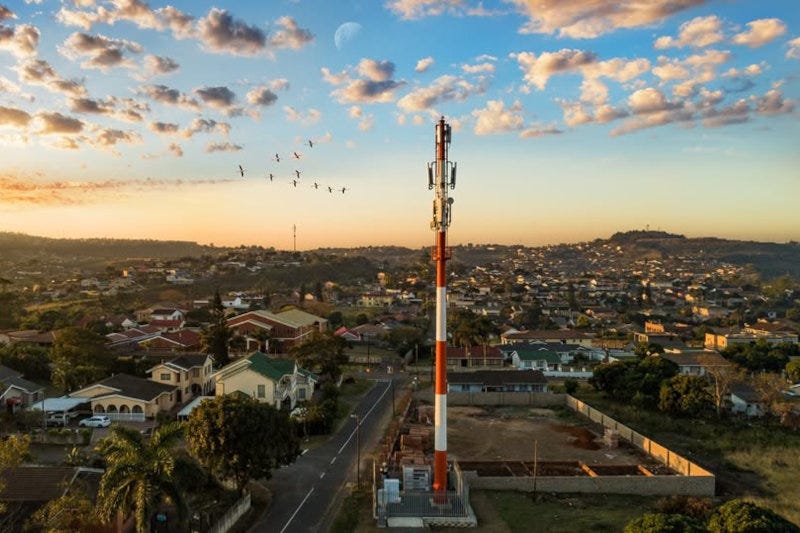
Aside from a drop in quality network service, disruption in oil supply to base stations also undermines Nigeria’s broadband expansion targets and digital inclusion goals, especially in rural areas.


Acres of sweet, red strawberries are ripening in West Sussex this winter ready to be sold in UK supermarkets.
LED lighting in vast glasshouses is enabling berries to be grown all year on a commercial scale for the first time ever.
It means less reliance on fruit flown in from countries like Egypt.
Bartosz Pinkosz
“The LED lighting is the prime reason for successful growing,” said Bartosz Pinkosz, operations director of The Summer Berry.
“If it was not a sunny day, the LED lighting would create enough energy for leaves to absorb that energy, take it in and deliver the energy to the berries.
“We are able to have the right sweetness in the berries and the right shape, right size.”
There are 36,000 square metres of the greenhouses at the site in Chichester, partially powered by renewable energy and buzzing with bees as pollinators.

Acres of strawberries ripening in West Sussex
And the new strand to the business means year-round work for 50 people.
But while it might cut the food miles dramatically, there’s still an inevitable environmental impact when a colossal space is created warm enough for pickers to wear short sleeves in winter.
Dr Tara Garnett, director of food systems platform TABLE, said: “You’re going to need a lot of heat and you’re going to need a lot of light in order to reproduce those summer growing conditions so everything hinges on the energy source you’re going to be using.
“And when we look at the UK self sufficiency levels in fruit and vegetables they are appalling – 16% of the fruit we consume is UK-grown, so the vast majority is imported, and when it comes to vegetables we’re looking more at 50% or so, so there’s a lot more we can do to build up, and should be doing.”
Around 1.5 million punnets of strawberries are expected to be picked on the site over the full stretch of winter, allowing British strawberries to be eaten this Christmas.
But for some, it’s simple – strawberries should be saved for summer, even if it is a much shorter journey from plant to plate.

Archaeologists have made a discovery among the ruins of Pompeii that reveals how the Romans built their lavish empire.
The team uncovered a construction site, untouched by the eruption of Italy’s Mount Vesuvius volcano in 79 AD, revealing the ingredients and methods behind the durable self-healing that the ancient Romans used to revolutionize architecture.
Scientists have long been baffled by the techniques and materials used by the civilization, which allowed structures like the Pantheon and Colosseum to last over 2,000 years.
Now, the Pompeii discovery showed the Romans used a technique called ‘hot mixing’ in which a material called quicklime, dry limestone that was previously heated, is combined directly with water and a blend of volcanic rock and ash, producing a chemical reaction that naturally heats the mixture.
The ancient construction site featured several rooms, containing building materials and pieces of common ceramics, set aside for reuse in the ongoing restoration work on the walls.
The Romans industrialized concrete, beginning in the first century BC and AD.
Admir Masic, a MIT professor of civil and leader of the study, said: ‘Modern concretes generally lack intrinsic self-healing capability, which is increasingly important as we seek longer-lasting, lower-maintenance infrastructure.

Archaeologists excavating Pompeii uncovered an untouched construction site, revealing how the Romans created concrete that has withstood the sands of time
‘So while the ancient process itself is not a direct replacement for modern standards, the principles revealed can inform the design of next-generation durable, low-carbon concretes.’
An indispensable building material, concrete helped the Romans erect structures including stadiums like the Colosseum, domed temples like the Pantheon, public baths and other big buildings, aqueducts and bridges unlike any fashioned to that point in history.
Because the concrete could harden underwater, it was vital for constructing harbors and breakwaters.
‘Studying it truly felt as if I had traveled back in time and was standing beside the workers as they mixed and placed their concrete,’ Masic said.
Pompeii was covered in ash when Mount Vesuvius erupted in 79 AD, killing everyone in its path and burying the area.
The town was forgotten until its rediscovery in the 1700s when researchers found dozens of bodies that had been preserved from the soot and ash that covered the streets, buildings and people.
Excavations of Pompeii began in 1748, and although Vesuvius’s eruption completely destroyed the city, the pyroclastic deposits preserved the victims, buildings and art.
The victim’s soft tissue had decayed over the millennia, but their outlines remained intact and were recovered by filling the cavities with plaster, thus preserving their DNA.

Pompeii was covered in ash when Mount Vesuvius erupted in 79 AD, killing everyone in its path and burying the area.

The Pompeii discovery showed the Romans used a technique called ‘hot mixing’ in which a material called quicklime, dry limestone that was previously heated, is combined directly with water and a blend of volcanic rock and ash, producing a chemical reaction that naturally heats the mixture
At the site, materials were carefully organized and stored by type.
The atrium probably held pre-mixed dry lime and pozzolanic sand for making mortar, while room 28 stored tiles and stone.
Water for mixing the dry materials was likely added at the fountain pool in room 2.
This organized system allowed workers to access what they needed quickly and keep construction moving efficiently.
Analysis showed that some mortar samples share a similar composition, suggesting they came from the same pre-mixed materials.
Other samples had higher calcium levels, probably because extra lime was added to improve workability or strength for repairs and finishing layers.
Evidence of lime stored in amphorae at the site supports this.

The team uncovered several rooms at the site, containing concrete materials and tiles to mend broken walls
The team determined that materials, pozzolan, lime and aggregates likely came from the nearby Somma-Vesuvius area and were prepared consistently.
Hot mixing left behind lime clasts with cracks and porosity, and was used both for
Quicklime was hot-mixed with pozzolanic materials, while slaked lime was added later for finishing mortars and frescoes.
The structure of the mortar is dense and uniform, showing careful and consistent mixing.
Over time, the lime and volcanic glass continued to react, filling voids and strengthening the concrete. This process even allowed the material to “self-heal,” reducing cracks and improving durability.

The victim’s soft tissue had decayed over the millennia, but their outlines remained intact and were recovered by filling the cavities with plaster, thus preserving their DNA
The excavation of Domus 1 in Pompeii shows that Roman builders had a highly organized approach.
Dry materials were prepared and stored, water was added in controlled steps, and broken amphorae were used to transport mortar. Workers applied it with trowels, checked alignment with plumb lines, and shaped aggregates with axes.
Scientific analyses confirmed that Romans used hot mixing of quicklime for strong, durable mortar, supplemented with slaked lime for repairs and finishing layers.
The pre-mixed dry materials were central to this strategy, allowing construction and repair work to proceed efficiently.
Understanding these methods can help modern restorers replicate original techniques for historically accurate and durable repairs.
The study showed that both original construction and post-earthquake repairs relied on these advanced Roman mortar techniques, highlighting their careful planning and material knowledge.

While the 3 Million Technical Talent (3MTT) programme has been widely heralded as an initiative designed to build tech talent for the Nigerian digital space, the mission seems to have fallen short of expectations.
The project, tailored to equip Nigerian youths with tech skills and fuel Nigeria’s $1 trillion economy ambition, reportedly saw 50% of its first cohort withdraw along the way. According to Alex Onyia, an Educationist and CEO of Educare, who was at the 3MTT National Impact Summit held on Thursday, December 11, he noted that half of the participants (15,000) were displaced in value during the process.
The first cohort of the 3MTT program, launched in December 2023, selected 30,000 fellows from all 36 states and the FCT. In its anatomy, fellows were expected to equip skills that utilise technology to enhance various roles without directly involving tech creation.
However, Alex Onyia expressed disappointment at how the program failed to equip majority of participants with the tools and facilities needed to learn and thrive in their selected skills. In the explanation made on his X account on Friday, he engaged with 50 random people who participated in the program to get their opinions.
“They enrolled 30,000 people in this cohort and only gave laptops to less than 1000 people. How then do they want them to learn? This made more than half of the participants drop out of the first cohort,” he said.
 Alex Onyia, EduCare CEO
As the program largely operated via online platforms, most fellows had no laptops, while some suffered from internet connections, both contributing to their drop out. With little or no resources to facilitate their training, this set of participants lacked practical exercises and got disconnected from the online training.
“The only people who had good things to say were those who had no previous computer knowledge. It lifted them up to a level of literacy, but for people with mid-level knowledge, they said it was of no value to them,’ he added.
Although 1,000 laptops were reportedly distributed at the first cohort, it was short of the 30,000 fellows admitted. In an alarming revelation, the Educare Boss noted that one of the fellow he interviewed was learning coding with his phone.
Also Read: President Tinubu reaffirms digital workforce commitment at 3MTT Summit.
3MTT: a vision with little impact
From its inception, the Federal Ministry of Communications, Innovation and Digital Economy (FMCIDE) had described 3MTT as an initiative that aims to digitally empower Nigerian youths and link them to job opportunities across the country.
However, the initiative, which was practically a flagship project of the ministry, was believed to have made little impact. While it was acknowledged as an initiative with significant vision, the implementation was off plan.
Critics on the social media platform X felt that while the 3MTT vision is ‘strong’, it made little impact. It was described as an initiative that provides no skills to people with mid-level knowledge and offers a level of digital literacy to individuals with no computer knowledge.
In addition, it was tagged as a program focused on doing big numbers in terms of admitted individuals in each cohort, and failed in its implementation plans.
Most critics were in agreement that the ministry needs to focus on investing in infrastructure, including building learning hubs in state and local learning hubs, and providing laptops and reliable internet connection.
“My recommendation as they scale up to 250,000 people is that they invest in large learning hubs across different states and local governments. They should also provide laptops and stable internet for all learners,” Alex Onyia advised.
While there have been success stories from fellows who showcased how the program shaped their careers, critics claimed the impact is low, and the ministry needs to do better going forward.
Current status of 3MTT
The 3 Million Technical Talent (3MTT) program is a critical part of the Renewed Hope agenda of President Bola Tinubu’s administration. It is aimed at building Nigeria’s technical talent backbone to power its digital economy and position the country as a net talent exporter.
The program started with 30,000 Nigerians, representing 1% of the 3 million target, while the 270,000 selected for the second cohort increased the quota to 1%. The 90,000 participants picked for the third cohort brought the number to 13%.
An additional 25,000 were admitted under this Airtel Africa Foundation partnership with the Ministry, bringing the total cohort to 415,000, representing 13.9%.
 Bosun Tijani, George Akume, at 3MTT Summit Abuja on December 11
During the 3MTT National Impact Summit on Thursday, December 11, the ministry unveiled the next phase of the 3MTT Programme, focused on deepening state-level collaboration, expanding training hubs, and accelerating pathways into employment and entrepreneurship.

Spinny, an Indian online marketplace for used cars, is raising around $160 million as it moves to acquire car services startup GoMechanic, TechCrunch has learned.
The Series G round, which includes a mix of primary and secondary transactions, would value the 10-year-old startup at about $1.8 billion post-money, three people familiar with the matter said, broadly in line with its previous valuation.
Nearly $90 million of the round is primary, people said; Existing investor Accel has already wired about $44 million of that amount, with some details of the investment appearing in regulatory filings in India this week, which Indian outlet Entrackr first reported. A new investor is participating in the remaining portion of the primary, but TechCrunch could not confirm its specifics.
WestBridge Capital is doubling down in the new round with a check of a similar size to its previous investment, the people said. The firm invested about $35 million to $40 million in Spinny’s Series F round earlier this year.
Much of the secondary portion of the transaction is being sold by Indian VC firm Fundamentum, according to the people, while Blume Ventures is also expected to pare part of its stake.
Accel, Fundamentum, and Blume Ventures did not respond to requests for comments. WestBridge Capital declined to comment.
In March, Spinny raised $131 million in the first part of its Series F round led by Accel, with participation from Fundamentum, before expanding the raise to about $170 million in June to include WestBridge Capital. Those funds were earmarked to scale Spinny’s core used-car business.
Techcrunch event
San Francisco
|
October 13-15, 2026
However, the new round is being raised specifically to finance the acquisition of GoMechanic and invest in its platform, without drawing on the startup’s existing cash reserves, the people said. Earlier reports suggested Spinny could buy GoMechanic for around ₹4.5 billion (approximately $49.70 million) in a cash-and-stock deal.
A consortium led by Lifelong Group acquired GoMechanic in 2023 after the startup admitted to “grave errors” in its financial reporting. The startup had previously been backed by high-profile investors, including Sequoia Capital, Tiger Global, and SoftBank.
For Spinny, acquiring GoMechanic would deepen its control across the used-car value chain. The Gurugram-based startup has built a large consumer-facing business, selling about 13,000 used cars a month, primarily directly to buyers and, to a lesser extent, to dealers through its auction platform. Spinny operates its own large reconditioning centers to refurbish vehicles before sale and relies on third-party service shops for after-sales servicing of customer cars — a gap GoMechanic could bring in-house.
GoMechanic would also act as a “two-way” funnel for Spinny, a person familiar with the matter said. The platform would service vehicles bought or sold through Spinny, and help attract car owners who may not yet be customers. That could help expand Spinny’s vehicle supply without significantly increasing customer acquisition costs.
The acquisition comes as India’s used-car market is projected to grow at a compound annual growth rate of about 10% to roughly 9.5 million units by 2030, from nearly 6 million units today, per a recent report by Mahindra First Choice and Volkswagen Pre-owned Certified.
The GoMechanic deal would mark Spinny’s latest move to broaden its footprint in India’s automotive market. In recent months, the startup has expanded beyond used-car sales by acquiring auto publications Autocar India, Autocar Professional and What Car? India from London-based media group Haymarket, and by launching a non-banking finance company, Spinny Capital, to offer vehicle loans to customers.
Spinny co-founder and CEO Niraj Singh declined to comment.