
NIGERIA NEWS
From medicines to mentorship: Pharm. Udeh bags YOCEN 2025 Transformative Leadership Award

By Chioma Obinna
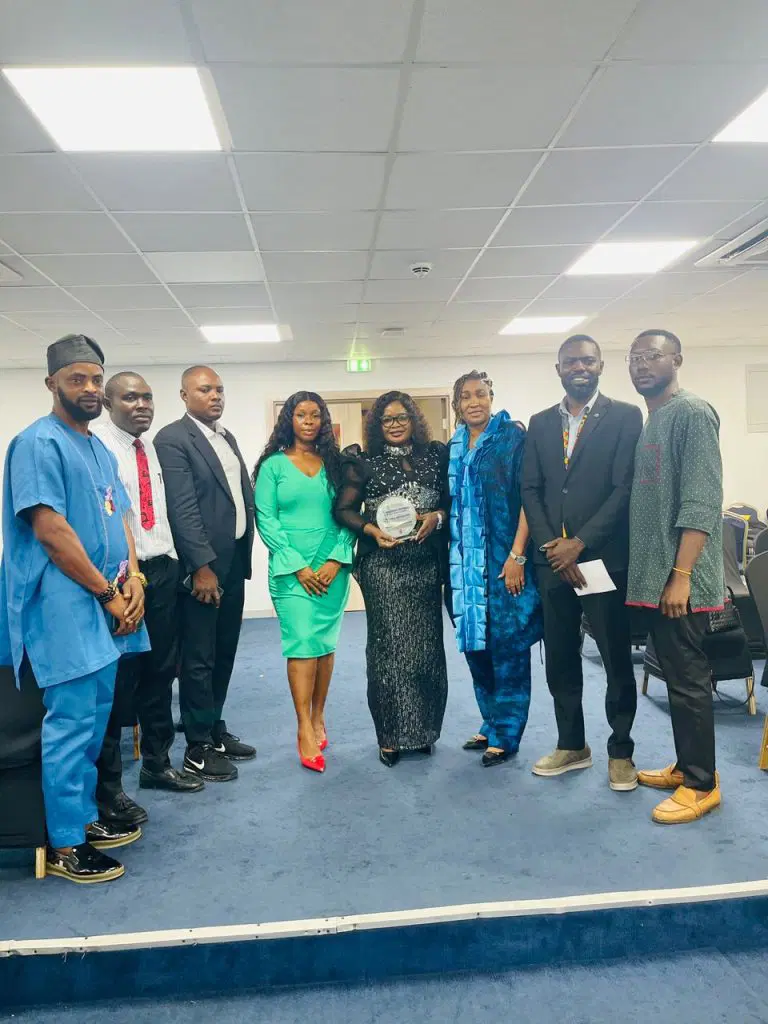
The Youth Coalition for Education in Nigeria, YOCEN, has honoured the Principal Manager of Marketing and the Head of Hospital and Institutional Business at Geneith Pharmaceuticals Limited, Pharm. Judith Ngozi Udeh with the 2025 Transformative Leadership Awar: “Amazon of the Societal Development in Nigeria”.
The award, which recognises her outstanding contributions to nation-building, healthcare education, and youth mentorship was presented at the Landmark Event Centre, Victoria Island, Lagos, during the YOCEN Leadership Conference & Impact Award of Commendation.
The Head of Mission and Secretary-General of YOCEN, Engr. Yakubu Nurudeen Yahaya, described the accolade as a celebration of individuals whose dedication to societal development serves as a model for young Nigerians.
“Pharm. Udeh’s advocacy for empathy among healthcare professionals, innovative teaching methods, and community-driven initiatives exemplifies the transformative leadership we seek to inspire. Her work demonstrates how professional excellence can be a powerful vehicle for societal impact,” he said.
The conference also featured a keynote address delivered on behalf of Dr. Stanley Jacob, President of the Fintech Association of Nigeria (FintechNGR), on the critical role of Artificial Intelligence (AI) and Information and Communication Technology (ICT) in vocational education.
The keynote stressed that Nigeria must integrate emerging technologies into the educational system to prepare its youth for a rapidly evolving global workforce. “Every day that passes without meaningful AI and digital literacy integration is a lost opportunity for our youth to compete and innovate,” the keynote noted.
Responding, Udeh expressed deep appreciation to YOCEN for valuing her contributions to education, mentorship, and nation-building. She encouraged the organization and its volunteers to remain steadfast, noting that while every planting season comes with challenges, the harvest justifies the effort.
She emphasized that today’s initiatives in mentorship, education, and technological advocacy will ultimately produce a generation of Nigerians who are globally competitive, innovative, and transformative.
Udeh called on government and policymakers to prioritize the integration of ICT and AI into the national curriculum, stressing that while Nigerian youths are hardworking, the emerging era demands smart work enhanced by digital literacy and AI proficiency.
She pledged to collaborate with YOCEN to amplify this message, advocating for AI not as a threat but as a tool to strengthen Nigeria’s resilience, creativity, and capacity for nation-building.
The award also acknowledges her long-standing work in advancing access to essential medicines, healthcare education, scholarships, community development, and advocacy for sustainable national development. YOCEN described her achievements as a benchmark for leadership that bridges professional excellence with social responsibility.
The conference brought together educators, youth leaders, industry professionals, and policymakers, highlighting the collective mission of fostering quality education, technological literacy, and youth empowerment across Nigeria. Pharm. Udeh’s recognition underscores the enduring impact of leadership that inspires, equips, and transforms the next generation to build a smarter, more prosperous Nigeria.
The post From medicines to mentorship: Pharm. Udeh bags YOCEN 2025 Transformative Leadership Award appeared first on Vanguard News.

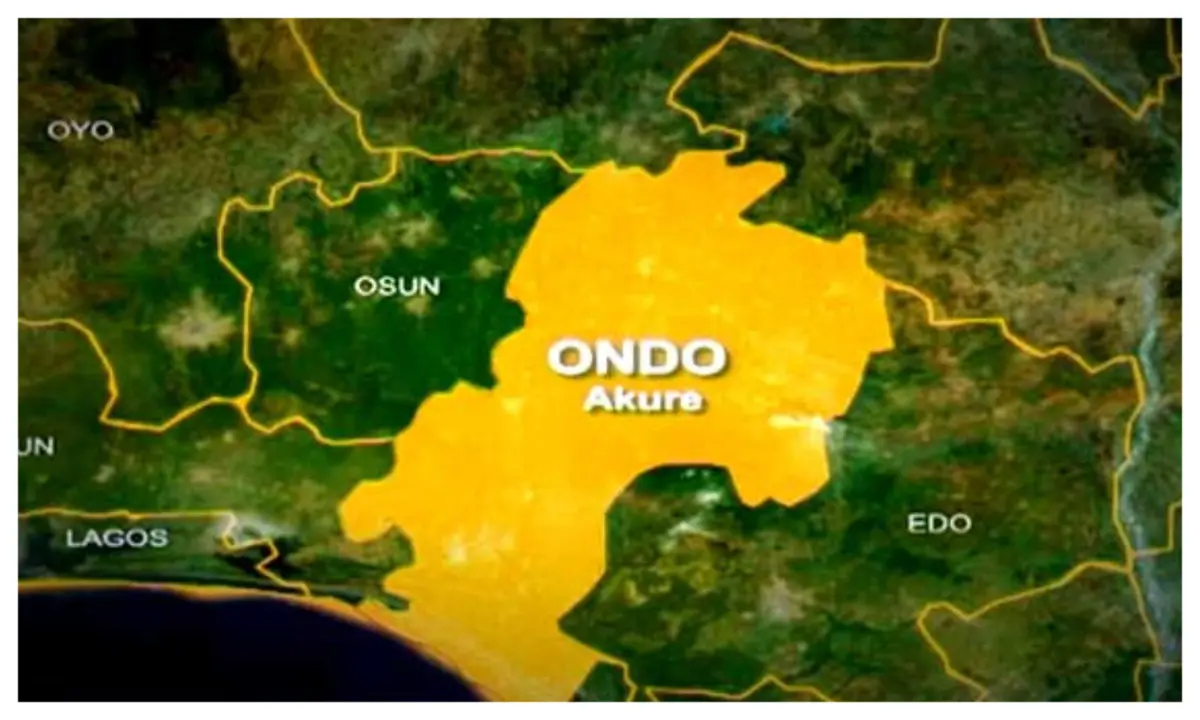
A Catholic priest, on Thursday, gave a chilling testimony before the Federal High Court in Abuja, recounting how terrorists armed with explosives attacked St. Francis Catholic Church in Owo, Ondo State, on June 5, 2022, killing 40 members of his congregation.
Testifying in the trial of five alleged Al Shabab members accused of orchestrating the attack, the priest, whose identity was withheld for security reasons, revealed that the attackers detonated at least three explosives inside the church.
He told the court that the service was nearing its conclusion when gunfire erupted, sending worshippers into panic and chaos.
Speaking from behind a protective shield, the priest said he was assigned to “lead the community in worship, which is known as the holy mass” when the violent outbreak occurred.
The attack coincided with the final moments of the First Pentecost Sunday service, which had attracted a large congregation.
Led in evidence by the prosecution counsel, Mr. Ayodeji Adedipe, SAN, the priest, identified in court as PW-1 and simply referred to as “SSA,” described June 5, 2022, as a day etched in his memory due to the trauma he endured.
He said: “This is so because it was the day when the violent attack was launched on us, myself and all the worshipping community of St Francis Catholic Church, Owo, Ondo State.
“It was an incident which led to the death of over 40 persons among us. While some of us became maimed, some of us, till this point, have permanent physical injuries.
“I recall that the attack was towards the end of the worship that day. I was the priest assigned to lead the community in worship, which is known as Mass.
“Towards the end of the mass, I was performing the last rites, and the people of God had started singing the recessional hymn, the closing hymn.
“Suddenly, I heard a loud sound. I looked into the congregation, facing them. There was already a commotion, which, for me, I thought was somebody who had fallen.
“But I sighted two men from our congregation; these men were members of our community.
“They quickly locked the main entrance door, and another elder in the church came to me in the sanctuary and said to me, ‘Father, we are under attack.’
“From this point, I heard the sporadic shooting of guns. This was still outside the church. This elder told me, ‘Father, you have to leave.’”
The priest explained that he initially hesitated to leave the sanctuary, largely out of concern for the children, who affectionately called him father.
“Taking my leave from the sanctuary, some adults and I moved some of these children into a safe place; this is an attachment to the church.
“When I was in this place (the safe place), I continued to hear the continuous shooting of guns and the use of about three explosives.
“The third explosive landed very close to the safe place, where I was with the children, with the effect of which looked like the opening of the ground.
“The effect was like the ground opening to swallow us immediately. So, the attack continued. After a while, some of our church members came into this place (safe place) and notified us that those who came to attack us had left. Moving out with the children, I saw my choir master shot in the chest.
“He called me to pray for him. I did, but I told him I have to move him to the hospital. When I got out, I saw some already dead on the floor.
“So, I shouted that if there are any of us who could still drive, let us begin to move our brothers and sisters to the hospital.”
When asked if he could determine the exact number of casualties immediately after the attack, the priest explained:
“It was with that violent attack that I understood that proverb that says, ‘The one struck or hit by a vehicle does not wait to take note of the vehicle’s number plate.’ So, I could not immediately count the number of those that were dead.
“Personally, I went two times to the Federal Medical Centre (FMC), Owo, to take the casualties to the hospital.
“By the time I came the second time, there were already ambulances, both from FMC Owo and St Louis Catholic Hospital, Owo, also moving the casualties to these two hospitals.
“The second time I got to FMC, the emergency ward was filled up with these casualties. The casualties were those that were killed and injured.
“With the wailing, weeping and crying from people, I could not even drive again. The care and healing of those injured continued.”
He added that he later provided a statement to the Department of State Service (DSS) in Akure, Ondo State.
During cross-examination by defence lawyer, Abdullahi Mohammad, the priest said he could not determine the number of attackers due to the chaos and his priority to save victims, particularly the children.
“With the commotion in the church and my desire to rescue the victims, especially the children, as quickly as possible, I could not and I did not identify or recognise those who carried out the attack. Therefore, I don’t know their number,” he said.
Trial Justice Emeka Nwite adjourned proceedings to January 13 and 14, 2026, for further hearing.


Barring any untoward development, Munirudeen Bola Oyebamiji is expected to become the All Progressives Congress (APC) flag bearer in Saturday’s primary in Osogbo, Osun State, after several candidates were disqualified. However, the race remains unpredictable as the African Democratic Congress (ADC) revises its strategy and Governor Ademola Adeleke’s latest move. Deputy Political Editor RAYMOND MORDI reports.
Calculated risks and shifting alliances now define Osun State’s political landscape. With the All Progressives Congress (APC) primary narrowed to Munirudeen Bola Oyebamiji and Mulikat Abiola Jimoh, a once crowded contest has taken an unexpected turn.
While the APC has reduced internal disputes, the broader political environment remains unsettled. The ADC is adjusting its approach under Rauf Aregbesola, political blocs are realigning, and Governor Ademola Adeleke is delaying his decision. These developments set the stage for a highly competitive 2026 race with implications beyond the primary.
APC primary
The APC shocked many last week when its seven-member screening committee, led by Chief Obinna Uzoh, disqualified seven out of nine aspirants previously cleared to compete. Only Oyebamiji and Jimoh survived the committee’s scrutiny. Heavyweights like Senator Iyiola Omisore, Benedict Olugboyega Alabi, and Babajide Omoworare were removed because they lacked sufficient backing from financially up-to-date party members across local government areas.
This decision immediately turned a potentially contentious primary into a two-person contest. For party strategists concerned about post-primary disputes, especially after Osun’s tense 2022 experience, the screening outcome appears to be a strategic effort at damage control.
A senior party figure put it succinctly: “Osun doesn’t reward division. The last thing we need is another primary that tears the party apart before we even begin campaigning.”
However, unity achieved through exclusion carries risks. Supporters of disqualified aspirants may view the process as deliberate marginalisation. If grievances persist, this could lead to defections, litigation, or internal sabotage, all of which have previously undermined the party’s success in Osun.
The disqualifications raise questions about party discipline, internal democracy, and whether the APC is strengthening or concealing deeper divisions. The outcome will determine if the party enters the 2026 governorship election with momentum or unresolved discontent.
Oyebamiji’s edge
Among the remaining aspirants, Oyebamiji distinguishes himself through both his qualifications and preparation. From Ikire in Irewole Local Government Area, he has a strong background in finance and administration, developed in banking and at the National Inland Waterways Authority (NIWA). Supporters highlight his financial discipline, organisational skills, and calm, technocratic approach.
Over the past year, he has translated ambition into action by resigning from his federal position, touring Osun, building alliances, developing policy plans, and securing key endorsements. His AMBO Movement, with coordinators in all 332 wards, has mobilised grassroots support ahead of other aspirants.
This disciplined, detailed organisation gives him a distinct advantage. In Osun, where local presence outweighs media visibility, such groundwork can be decisive. Supporters describe the movement as a political “insurance policy” designed to safeguard his candidacy.
He has also positioned himself as the candidate of fiscal discipline and administrative competence. At a rally in Ijesa North, he accused the Adeleke administration of squandering opportunity: “Osun has been enjoying a rainfall of over 300 per cent more revenue under Adeleke in the last 30 months — yet there is nothing to show for it.” It’s a message calibrated to resonate with voters frustrated by perceived stagnation.
However, his path remains challenging. The disqualification of prominent figures such as Senator Iyiola Omisore and former Deputy Governor Gboyega Alabi may cause resentment, affecting turnout or party unity. Osun’s political history shows that federal experience does not always lead to local success. The APC’s 2022 loss, despite holding state and federal power, highlights that Osun voters value authenticity and local ties.
For Oyebamiji, success depends on emotional resonance as much as technical competence. He must demonstrate compassion, communicate policy in relatable terms, and court factions of dissenting parties. Organisation can create momentum — but only a unifying message can transform that momentum into victory.
Quiet contender with limited reach
Mulikat Abiola Jimoh, though less prominent statewide, brings legislative experience from representing the Ifelodun State Constituency from 2018 to 2023. Her candidacy highlights the APC’s effort to promote diversity and broaden its internal field.
However, her political network, endorsements, and influence are limited compared to Oyebamiji’s campaign. Her main challenge is expanding her reach. In a primary where established structures often determine outcomes, her limited statewide presence is a significant obstacle.
Nonetheless, the narrowed contest increases her visibility. While she may not be the frontrunner, she is no longer overshadowed by more prominent candidates. Her candidacy offers the party a symbolic demonstration of inclusiveness during its internal transition.
ADC and the Aregbesola calculation
Outside the APC, the ADC is becoming a significant factor, particularly with former Governor Rauf Aregbesola returning to prominence as the party’s interim national secretary after leaving the APC earlier this year.
For Aregbesola, the ADC is more than a new platform; it is an effort to regain influence. His impact in Osun, established during his tenure as governor, remains significant despite some divisions. The Omoluabi Progressives, though reduced in size, still command strong loyalty in certain areas.
Recent divisions within the party highlight the fragility of its coalition. The departure of former Secretary to the State Government, Moshood Adeoti, previously a close ally of Aregbesola, revealed internal contradictions. His exit followed reports that the 2026 governorship ticket may go to former Speaker Najeem Salaam.
If the ADC can stabilise, choose a unifying candidate, and speak directly to voters disillusioned with both the APC and the current administration, it could evolve into a formidable third force. Many Osun residents still recall the Aregbesola era with nostalgia, citing a sense of purpose and an ambitious infrastructure agenda.
However, unity remains the ADC’s primary challenge. Without a cohesive structure, its influence may diminish.
Adeleke holds the wild card
Governor Ademola Adeleke, a key figure in Osun’s 2026 political landscape, finally joined the Accord Party on Tuesday, after resigning from the People’s Democratic Party (PDP) on December 2. This move marks a decisive shift, breaking a period of indecision during which multiple parties courted him for their governorship ticket.
With the PDP weakened by prolonged disputes, Adeleke had been approached by several parties. According to reports, he had negotiated with Aregbesola’s ADC, but they could not reach an agreement.
Insiders maintain that Adeleke’s initial delay was strategic. “He waited for the right moment — for maximum leverage and clarity,” one senior politician said. “He chose the platform that gives him the cleanest path.”
As the incumbent, he has visibility, statewide networks, and access to resources. Yet, the actual test will be whether the Accord Party can provide a well-organised and functional platform to translate these assets into a successful campaign.
While his switch to the Accord Party sets the stage for next year’s off-cycle election in Osun, the ultimate impact of this new political alignment remains uncertain. Should Adeleke face internal challenges or miscalculate, his bid could be more precarious than anticipated.
The coming months will reveal whether Adeleke’s gamble on the Accord Party would strengthen his position or expose unexpected vulnerabilities as the 2026 governorship contest approaches.
Narrowed path with sharp edges
For the APC, a streamlined primary offers both relief and risk. The party can project unity, discipline, and clarity, but must also address the dissatisfaction of excluded aspirants and their supporters.
The APC’s emerging narrative focuses on competence, fiscal discipline, and alignment with the federal government. But Osun’s political history warns against overconfidence. The state votes with its own logic, often favouring relatable candidates over elaborate structures.
The APC candidate must rebuild relationships, restore trust in overlooked communities, and deliver a message that appeals beyond party loyalists.
The coming months will reveal whether the APC’s strategy is a strength or a liability. The ADC’s ability to unify will determine if it is a spoiler or a contender. Adeleke’s decision will influence whether the race is a direct contest or a fragmented three-way competition.
Currently, the APC is on a narrower but manageable path. However, the broader political environment remains unsettled, with both uncertainty and opportunity present.
Elections in Osun are historically unpredictable. While recent developments have narrowed the APC’s field, the outcome of the 2026 race remains uncertain and may still hold surprises.
Deepening fault lines
Despite the APC’s streamlined two-person race, complex internal dynamics persist. While the public narrative highlights order and unity, insiders note that the disqualification of key figures has revived longstanding rivalries within the party.
Some of these tensions originate from the 2022 conflict between the camps of former governor Gboyega Oyetola and Rauf Aregbesola, a rift that remains unresolved. Although Aregbesola has joined the ADC, his former supporters’ sentiments persist within the APC. The screening outcome has raised new questions about the party’s internal balance, including which interests are prioritised and who feels marginalised.
Several ward-level stakeholders privately described the new primary structure as “too neat to be natural.” They believe the abrupt narrowing raises concerns about behind-the-scenes negotiations and an intent to pre-select a candidate who can unite the Oyetola bloc and attract undecided factions.
This perception, regardless of its accuracy, is significant. Politics in Osun relies on local trust networks, and any sense of elite imposition can trigger backlash, shift alliances, or prompt protest votes.
The APC’s path ahead
Despite internal pressures, the APC remains the best-positioned party organisationally. The streamlined primary provides clarity at a crucial time, but stakeholders should not be mistaken for certainty.
The party must undertake three urgent tasks: Reconcile with sidelined factions. Without sincere bridge building, the party risks internal sabotage. Craft a message that resonates with the broader public. Voters want practical governance, not just political positioning.
The APC should also prepare for a multi-front contest. An Adeleke-led ticket, combined with a resurgent ADC, could result in the most competitive race the party has faced in a decade.
In summary, the party’s internal unity is both its greatest asset and its most vulnerable point.
With the APC’s primary now a simplified contest and the broader political landscape evolving, Osun’s 2026 election is set to be highly unpredictable. The disqualification of seven aspirants has given Oyebamiji a more straightforward path, but has also increased expectations and scrutiny. Meanwhile, the ADC faces a pivotal moment: it could become influential if united or irrelevant if divided. Governor Adeleke’s latest move remains a key factor that could alter the political landscape.
Osun is not approaching a quiet election season. Instead, the state is entering a high-stakes contest in which discipline, timing, messaging, and coalition-building will determine the outcome.
For the APC, this is a bold strategy. Whether it proves successful or not will become clear in the coming months.


•Platform to ensure transparent, competitive market
•Ribadu says illegal refining networks dismantled
•SEC describes event as monumental shift from physical market
Emmanuel Addeh in Abuja
In a landmark step aimed at modernising Nigeria’s gas industry, the Nigerian Midstream and Downstream Petroleum Regulatory Authority (NMDPRA) yesterday launched the country’s first Gas Trading Licence alongside a new Clearing House and Settlement System, an initiative expected to usher in a transparent, competitive and investment-ready gas market for Africa’s biggest energy producer.
Unveiled in Abuja, the platform marked the beginning of formal, regulated gas trading in Nigeria, shifting the sector from opaque bilateral deals to a structured market where prices, transactions and payments are visible, standardised and enforceable.
At the event, the Minister of State for Petroleum Resources (Gas), Ekperikpe Ekpo, described the move as fully aligned with President Bola Tinubu’s energy-security agenda, adding that clear rules and trusted market participants would reduce risk, deepen liquidity and attract capital into the gas value chain.
Ekpo stated that the effort will pave the way for smooth natural gas business, transparent pricing, efficient price determination, and secure payment mechanisms, hallmarks he said aligned seamlessly with national energy policies and global best practices.
The minister noted that the President’s vision requires a regulatory environment that is predictable, trusted, and designed to unlock value, explaining that the inauguration was a demonstration of that commitment.
“Our country is richly endowed with natural gas reserves, among the biggest in the world, but if the underlying market where the gas will flow is not efficient, reliable, and well-regulated, it will not be possible for us to realise the ultimate potential of the resource.
“The Gas Trading Licence introduced today is decisive on this front, paving the way for a new, regulated market where reliable traders will feel safe doing business, where businesses can plan, and where investors can invest, knowing that it will safeguard both their capital and the public interest”, Ekpo added.
According to Ekpo, the Gas Trading Licence is, therefore, the implementation of the provisions of the licensing requirement that make the investment possible, providing the governance framework essential for a modern gas industry.
Explaining the import of the license for the market, Ekpo listed them as: Access, dependability and affordability.
For its part, the NMDPRA, which issued the licences to JEX Markets Limited, said the step unlocked a key provision of the Petroleum Industry Act (PIA) and laid the foundation for Nigeria’s ambition to become a regional gas trading hub.
Authority Chief Executive (ACE), Farouk Ahmed, noted that with over 209 trillion cubic feet of proven reserves, Nigeria’s gas economy has long been constrained by pricing opacity, weak contract performance and low investment, issues he said the new regime seeks to correct through automated trading, transparent price discovery and enforceable settlement.
Ahmed stated that the latest development was in compliance with the provisions of section 159 of the PIA for the trading and settlement of wholesale gas in Nigeria.
He explained that Nigeria’s gas-focused strategic policies, initiatives and fiscal and regulatory frameworks such as the Decade of Gas (DoGas) Initiative, Presidential CNG initiative (PiCNG), Nigerian Gas flare Commercialisation Programme (NGFCP) and executive orders of President Bola Tinubu, on investment promotion and incentives have continued to position Nigerian’s gas sector as an attractive investment environment on the African continent.
The Gas Trading Licence and other relevant regulatory instruments administered by the NMDPRA, he said, have continued to promote the sustainable development of the gas markets through the application of global best practices.
According to him, this is to ensure transparency and efficiency; price discovery and reporting; safe and reliable market trading practices; automated online and real-time market trading; market liquidity and inclusive participation as well as enhanced market access.
As the regulator of Nigeria’s midstream and downstream petroleum sector, the Authority Chief Executive stated that NMDPRA recognises that the true test of licensing JEX markets is not in the ceremony, but in the transformation it must deliver.
“To ensure that JEX succeeds as Nigeria’s pioneering gas trading, clearing and settlement platform, we will provide a firm, transparent and technology enabled regulatory framework under the PIA, giving investors the certainty and confidence required to commit long term capital to the gas value chain.
“We will continue to work closely with our sister regulators, including the Securities and Exchange Commission (SEC) and key financial market institutions, harmonise market rules, standardise transaction contracts, and ensure that clearing and settlement arrangements meet the highest global standards,” he assured.
The National Security Adviser (NSA), Nuhu Ribadu, represented by his Special Adviser on Oil and Gas, Goodluck Ebelo, stressed that the success of the new trading architecture depends on a safe operating environment.
Ribadu stated that coordinated security operations have sharply reduced pipeline vandalism, illegal refining networks and crude theft, restoring confidence to producers and midstream operators. He pledged continued protection of existing and emerging gas corridors, including strategic pipelines critical to power supply, industrial expansion and regional exports.
He noted that the achievement represented much more than regulatory progress, but a decisive step in the federal government’s commitment to actualising the ‘Decade of Gas’ agenda and unlocking the full potential of Nigeria’s vast natural gas resources.
A robust gas economy, especially one anchored on over 200 TCF of reserves, he stressed, can only thrive within a secure and stable operating environment, positing that in the past two years, under the leadership of Tinubu, the federal government has made unprecedented progress in securing oil and gas infrastructure nationwide.
“Through the NSA-led Joint Coordination Platform, the military, police, DSS, NSCDC, NNPC Ltd, NMDPRA, NUPRC, and state governments now operate under a unified, intelligence-driven structure. This has enhanced response time, strengthened operational synergy, and eliminated duplication of efforts.
“We have also deepened engagement with traditional rulers, local leaders, and youth groups—transforming host communities into partners in protecting national energy assets. We also brokered peace on the direct supervision of Mr President in Ogoni land . Efforts are ongoing to conclude negotiations and bring those assets into production for the benefit of the people and country.
“These efforts have yielded measurable gains: Major pipeline breaches have declined significantly; illegal refining networks have been dismantled; notorious oil theft syndicates have been arrested and prosecuted and pipeline integrity and operational consistency have improved,” the NSA pointed out.
The impact, he said, is visible across the industry, with crude oil production rising, shut-in volumes being restored, gas gathering and transmission facing fewer disruptions, and investment confidence rebounding.
“More gas is flowing to power plants, industries, and export systems, contributing to increased national revenue and greater economic stability.As we secure existing infrastructure, the NSA’s office is also prioritising the protection of new and strategic gas pipeline systems vital to Nigeria’s industrial expansion and regional energy leadership,” Ribadu added.
The Securities and Exchange Commission (SEC), which also authorised the Clearing House, described the initiative as a major shift from the physical handling of gas to its emergence as a fully tradable financial asset.
Director General, Emomotimi Agama, said the new framework will create a credible Nigeria Gas Price Index, enable market-making, de-risk infrastructure investment and broaden Nigeria’s capital market with a new asset class.
He urged producers, off-takers and financiers to participate actively, arguing that a deep, transparent market will anchor industrialisation, strengthen energy security and support long-term economic diversification.
The theme: “Gas Trading on Recognised Platform and Economic Diversification,” he said, cuts to the very heart of Nigeria’s national ambition, noting that it declares that the country’s vast hydrocarbon resources, particularly gas, will no longer be just a commodity for export or domestic use, but a financially traded asset on a transparent, efficient, and regulated market platform.
“In short, we are building not just a market, but a credible and resilient market infrastructure. This ‘regulatory readiness’ is what converts potential into lasting investment, “ he stated.

Lagos State Governor Babajide Sanwo-Olu yesterday announced the donation of 100 vehicles and gadgets to boost security in the state.
He disclosed this at the 19th Annual Town Hall Meeting on Security, organised by the Lagos State Security Trust Fund (LSSTF) on Victoria Island, Lagos with the theme: “Building Trust, Enhancing Security: A New Era of Security and Partnerships”, where he advocated greater citizen participation to tackle emerging security challenges.
He said securing lives and property was a shared responsibility, urging Lagosians to own the process.
The governor said investment in security was a non-negotiable priority, adding that Lagos was ready to partner the Federal Government and security agencies to achieve a crime-free state.
“Every investment we make in security is a direct investment in peace, order and prosperity. Security is not a task for government alone. It is a shared duty, and we must continue to work together to build a safer Lagos for all,” he said.
Sanwo-Olu said the founder, Premier Lotto Limited (PLL), a gaming company, had pledged to begin, complete and donate a building to LSSTF within a year.
Giving an account of the year, LSSTF Executive Secretary, Dr. Ayodele Ogunsan, said N1,775,543,613.81 was spent on security interventions between December 19 last year and yesterday.
He said the sum was part of the N1,848,406,100.00 received as cash donations within the same period, adding that 228 security vehicles were also received as donations.
Of the 228 vehicles all fitted with communication and security gadgets, 217 were donated by the state government; two from the SNEPCO/Shell Joint Venture, and nine -seven buses and two 15-ton troop carriers- were bought by LSSTF.
Ogunsan said the vehicles were distributed across security agencies to boost mobility and response time.
The executive secretary said 1,500 pairs of police boots, 100 batteries, 2,000 police uniforms with badges, 100 rechargeable flashlights and eight drums of SAE 40 lubricant were also donated to bridge critical operational gaps confronting security agencies in Lagos, while 220 police personnel were sponsored for training.
He noted that LSSTF approved security requests within 24 hours under a transparent governance structure and maintained liquidity to respond quickly to emerging threats.
Looking ahead, he said the fund was expanding its retail donation drive after receiving N38million from about 240 individual donors in the last four weeks.
Ogunsan said officers who displayed exceptional bravery, including the police team behind the July 4, 2024 Ladipo anti-kidnap operation that neutralised nine suspects, would be honoured.
Lagos State Commissioner of Police (CP) Oluhundare Jimoh said the command arrested 317 armed robbery suspects, foiled 141 robbery attempts and charged 115 suspects to court within the period under review.
He said four kidnap and 23 cultism cases were recorded, with 216 suspects held and 95 charged to court for both offences.
CP Jimoh said the command recorded 76 cases of stolen vehicles and recovered 72, adding that there were 142 murder, 176 rape/defilement reported cases.
“We arrested 222 suspects out of which 200 were charged to court.
‘’The command also arrested 9,275 ‘social migrants’, recovered 518 rounds of ammunition, 25 other weapons, and impounded thousands of vehicles and motorcycles for various infractions,” he added.
The police boss said the state was safe, adding that proactive deployments and intensified surveillance were in place ahead of the festive season.
By Dayo Johnson Akure
Police detectives in Ondo state have arrested a 22 year old truck driver, Tobi Oluwatuyi and two of his friends for allegedly staging his abduction and collected N1.5 m ransom from family members.
Vanguard gathered that two friends are Jubril Abu aged 20, and Segun Oluwatuyi ‘aged 21.
A police source said that a concerned citizen reported at the Special Anti-Kidnapping Squad that some suspected kidnappers had abducted one Tobi Oluwatuyi ‘m’, aged 22, a truck driver, from the Ilu Abo area of Akure.
Acting on the report, police detectives from the Special Anti-Kidnapping Squad, swung into action and later discovered that the supposed victim, Tobi Oluwatuyi, had deliberately staged his own kidnapping in conspiracy with the two other of his friends
The police source said that ” their intention was to extort a ransom of ₦1,500,000, which the victim’s unsuspecting family eventually paid, believing he had been genuinely abducted.
Contacted, the state police image maker Ayanlade Olayinka said that “the entire incident was a calculated attempt by the trio to obtain money fraudulently.
Ayanlade said that ” All suspects have since confessed to their involvement in the crime, reinforcing the effectiveness of the Command’s investigative approach.
“They will be charged to court at the conclusion of the ongoing investigation.
Ayanlade urged members of the public “to promptly report incidents of this magnitude to the Police and allow investigators to professionally handle such situations.
He cautions against yielding to ransom demands in kidnap-related cases, noting that such actions inadvertently encourage criminal enterprises and undermine ongoing security efforts.
The police spokesperson said that the command ” remains fully equipped and committed to deploying every lawful means to ensure victims’ safety and to apprehend perpetrators without exposing families to avoidable financial loss or risk.
Ayanlade who however warned against the rising trend of self-orchestrated kidnappings, said that such deceptive acts constitute serious offences and will always be uncovered through diligent investigation.
He reiterated that individuals engaging in such criminal deceit will face the full weight of the law.
The police spokesperson reassured residents that the State will not serve as a haven for criminals of any kind.
Ayanlade added that the police remained steadfast in safeguarding lives and property.
The post 22 year old arrested with friends for staging self kidnap, collect N1.5m ransom appeared first on Vanguard News.


Tags Nigeria graveyard of human rights
Human Rights Writers Association of Nigeria (HURIWA) has decried human rights abuses in the country, labelling Nigeria as a graveyard of human rights.
During the celebration of World Human Rights Day in Abuja, the National Coordinator of HURIWA, Emmanuel Onwubiko, lamented cases of mass killings, extra-judicial killings by security forces, and actions by armed non-state actors. He criticised the National Human Rights Commission (NHRC) for being inactive.
According to him, the commission is not doing enough to justify its funding to defend human rights. He said, “Those who advocate human rights face threats like disappearances, assassinations, and arbitrary arrests by security forces.
“Citizens are detained for extended periods without trial for posting comments that are critical of the President or governors, and the NHRC does little to speak for these oppressed activists.
According to him, the theme of the 2025 Human Rights Day, selected by the United Nations Human Rights Council, aims to reaffirm the values of human rights and demonstrate that they are crucial for humanity.
“We aim to re-engage people with human rights by showing how they impact our daily lives, often in ways we may not notice.
“Human rights are essentials we rely on every day. By bridging the gap between human rights principles and everyday experiences, we aim to raise awareness, inspire confidence, and encourage collective action,” he added.
Former Sokoto State Governor, Senator Aliyu Magatakarda Wamakko, emphasised that civil society organisations were not enemies of the government but essential partners in building a just society.
He urged individuals and institutions to support HURIWA in its mission to protect human rights. Wamakko expressed gratitude for the human rights award, accepting it on behalf of the people of Sokoto, and encouraged continued excellence in public service.
Represented at the event by Dr Hassan Liman (SAN), the former governor added: “I recognise the indispensable role of this organisation. You are the conscience of our nation.
“I know this is challenging and often underfunded. I urge individuals and institutions to support HURIWA. Civil society is not the enemy of the government; it is an essential partner in building a just society.”
The Nigerian Army, speaking through Major J. R. Mamza at the event, pledged to uphold the human rights of all Nigerians. Mamza said: “Last month, I made a presentation on the activities of the Nigerian Army. The issue of human rights also comes up and I address them squarely.
“Human Rights Seminar was introduced in 2023, a series of events where the Nigerian Army addresses issues of human rights. We also do sensitisation on human rights and the conduct of Nigerian Army troops. This is done from February to November and we have covered over 20 states in 2025. The aim is to make sure that troops are acquainted with the provisions of the law as they relate to Chapter Four of the 1999 Constitution.”


Sir Azuka Okwuosa, KSC, has extended warm felicitations to the Governor of Imo State, His Excellency Senator Hope Uzodimma, on the occasion of his 67th birthday.
In a heartfelt message issued on Thursday, Okwuosa described Governor Uzodimma as a “Renewed Hope Ambassador” whose life and leadership continue to inspire confidence and admiration across political and social spheres.
He noted that the governor’s over four decades of service in politics and business have been marked by conviction, compassion, and tangible achievements that resonate across the nation.
“Today, we celebrate more than a birthday. We celebrate a lifetime of service, a mind shaped by vision, and a heart committed to progressive leadership,” Okwuosa said.
He praised the Imo State governor for providing direction and hope through his leadership, urging him to remain focused on the victories ahead and continue to inspire through unwavering dedication.
“May this new age usher in greater accomplishments, a brighter vision, and impactful change that further cements your legacy,” he added.
Sir Azuka Okwuosa wished Governor Uzodimma a fulfilling and memorable birthday celebration, praying that he be surrounded by the same support and admiration he extends to others.
Related

There are moments in Lagos’ social calendar when everything seems to shimmer with a kind of predictable glamour: the same familiar faces, curated opulence, and December rituals that have become as iconic as the city itself. And then, without warning, something happens that disrupts the rhythm. Something sobering. Something that forces the glitterati to pause and confront the fragility behind their glitter. This week, that disruption came from an unexpected place: the home of Tony Elumelu.
Yes, that Tony Elumelu—banking titan, Africa’s entrepreneurship patron saint, consummate host, and the unofficial mayor of December festivities. His TOE All-White Christmas Party is not merely an event; it is an institution, a social pilgrimage for those who float through Lagos’ upper crust. You haven’t “done December” if you haven’t done TOE. It is the night of immaculate linen, curated glamour, imported performers, and a gathering of the city’s most admired, envied, whispered-about, and photographed personalities.
And this year, for the first time in recent memory, the gates will not open. The music will not start. The cameras will not flash. The immaculate lawns of the Elumelu residence will not witness the parade of Lagos’ most extravagant fashion instincts.
The party is cancelled.
Not postponed. Not downsized. Not “reimagined.” Cancelled.
And in the billionaire class, where parties are rarely inconvenienced by things as mundane as human grief, this decision felt almost radical.
Elumelu’s announcement was delivered in the most understated of formats, an Instagram story, with a tone as gentle as it was devastating. He acknowledged the tradition, the expectation, the genuine excitement that people hold for his annual gathering. Then he said something Lagos society is not used to hearing from its billionaires: “However, due to the recent tragic fire incident that claimed precious lives, Awele and I have made the decision to cancel the party this year.”
For a city that sometimes struggles to slow down long enough to mourn, this felt like a whisper that carried the weight of a sermon.
Because behind this decision lies a story more sombre than the cancellation itself—the Afriland Towers fire, a tragedy that claimed the lives of staff members from UBA, Heirs Holdings, and the Federal Inland Revenue Service. A fire that began in the basement inverter room and quickly transformed an ordinary Tuesday into a nightmare. Many escaped; some were rescued; a few were revived. But several did not return to their families.
It is easy, especially in corporate Nigeria, for tragedies to be wrapped in polite silence. Press releases are drafted, condolences are issued, and the wheels of business grind on. But this fire shook something much deeper. The victims were not faceless. They were colleagues, friends, and parents. Human beings whose mornings began like any other, and who had no idea that it would be their last.
Tony Elumelu was not in Lagos when the fire happened. He was in the United States, preparing to participate in the United Nations General Assembly, a space where he often champions African entrepreneurship and thought leadership. But the moment the news reached him, he abandoned the UNGA stage and returned home. Not symbolically, physically. He didn’t delegate the grief. He didn’t send a polished statement through a corporate communications officer. He showed up.
And when he spoke, he did not sound like a billionaire addressing an unfortunate corporate incident; he sounded like a man in mourning. “I am shattered,” he wrote to his staff. “No words can capture this loss. Yesterday was a stark reminder of what truly matters: our irreplaceable people.”
How often do we hear billionaires speak like that in this country?
How often do we see them prioritize sorrow over spectacle? How often do they allow the death of staff—not executives, not directors, not the famous, but everyday people—to interrupt their global engagements, their leisurely rituals, and their seasonal traditions?
This is why Elumelu’s cancellation of the All-White Party is far deeper than a calendar adjustment. It is an act of uncommon emotional intelligence. A reminder that leadership, at its core, is not defined by what one builds but by what one values.
Lagos’ elite understand the power of a party. December is their annual theatre of self-expression, their runway of dominance, their festive parliament. It is the one time when social hierarchy is both displayed and negotiated. And in this arena, the TOE party holds a place of pride. It is an honour to be invited. It is a privilege to attend. It is a badge of relevance.
To cancel it is to puncture the December ego of the city. Yet Elumelu cancelled it with a simplicity that felt almost disarming. In doing so, he told the world that mourning should not be rushed; that celebration should not be loud when hearts are broken; that empathy is not a performance but a responsibility.
What struck me most was the sincerity. He did not attempt to convert the tragedy into a branding moment. He did not use the language of corporate distancing. He said the names of no departments. He offered no cold, bureaucratic phrase like “unfortunate incident.” Instead, he and his wife chose a different vocabulary: one of honour, remembrance, and emotional presence.
That is not how many in his class behave. And this is where the real lesson begins.
Because Tony Elumelu, intentionally or not, has delivered a sobering masterclass to Nigeria’s billionaire elite, a class that often floats several feet above the real world, insulated by its own mythology.
His behaviour in this moment highlights a counter-culture in leadership that desperately needs amplification. At its essence, it challenges the performative empathy many corporate titans deploy when tragedy strikes. In too many boardrooms, grief is acknowledged only long enough for the headlines to settle. Staff are remembered only in abbreviations. The machinery of power rarely pauses.
But Elumelu paused. And by doing so, he disrupts the culture of emotional impunity that has long plagued Nigeria’s corporate aristocracy. He reminds his peers that employees are not expendable units of production; they are people with names, children, ambitions, and dreams. He reinforces the idea that leadership must be felt, not simply declared.
Some might dismiss the cancellation as symbolic. But symbols matter, especially in a city that watches the behaviour of its wealthy with the curiosity of anthropologists and the precision of critics. And this symbol carries a layered significance.
It signals that no amount of champagne is worth uncorking when your people are mourning. It signals that humanity must never be subordinated to spectacle, that grief is not an inconvenience, and compassion is not a disruption. It signals that wealth does not absolve one of duty.
In a quieter, more reflective sense, the cancellation redefines what it means to be a modern African business leader. It suggests that power must be accompanied by empathy, success must be grounded in conscience, and influence must be exercised with humility.
Imagine, for a moment, if more billionaires behaved this way. Imagine if more CEOs cut short international trips to mourn staff rather than delegating condolences to mid-level managers. Imagine if more tycoons cancelled private jets and lavish celebrations to stand beside grieving families. Imagine if our corporate leaders acknowledged tragedies with the full weight of their presence instead of perfumed statements.
Nigeria would feel different. Corporate culture would feel more human. Workplaces would feel safer and the gap between those who have and those who serve would feel less brutal.
And yet, perhaps the most moving aspect of Elumelu’s gesture is that it does not seek applause. It is not a public relations exercise. It is a private family decision that became public only because the event itself is public. It is a quiet kind of leadership, the kind that speaks through action rather than advertorials.
It is also, in its own subtle way, a recognition that even the powerful are not immune to sorrow. Elumelu’s message reveals a man who understands that success does not insulate one from tragedy, nor does wealth diminish the responsibility to feel deeply when others hurt.
In cancelling the All-White Party, he made space for grief in a city that often rushes past it. He allowed the memory of the deceased to be dignified rather than overshadowed. Elumelu aligned his personal choices with his corporate values, and modelled a kind of leadership that is both rare and necessary.
For those who have ever walked through the illuminated gates of the Elumelu residence in December, the significance of this year’s silence becomes even more profound. Because Tony Elumelu does not merely host a party; he orchestrates a carnival. His affluence is wielded with the finesse of a maestro: every detail measured, every moment well sculpted, and every guest fully immersed into the night’s rhythm. His annual All-White Party is a cultural ritual, a concerto of class and charisma that no other magnate in Nigeria, old money or nouveau riche, has managed to replicate.
Where others throw parties, Elumelu curates experiences. Lagos’ high society may flutter from one December event to another, but they arrive at the Elumelu party. It is the one night where everyone, from titans of industry to political heavyweights, from entertainment royalty to fashion’s most flamboyant divas, answers his summons without hesitation.
In a jungle of competing egos and noisy displays of wealth, Elumelu is the lion who does not need to roar. His invitation alone shifts the city’s centre of gravity. Last year’s Yuletide White Party stands as testament. The 2024 edition was carved in splendour so elegant it felt almost unreal: glowing lawns, translucent décor, a crisp palette of immaculate white eased into golden warmth.
His home, expansive and breathlessly tasteful, became a sanctuary of style rather than a billboard of wealth. It is this understatement, this measured grace, that differentiates him from the gauche carnival of Lagos opulence. With Elumelu, wealth is worn lightly, like an expensive fragrance that whispers rather than suffocates.
And the crowd responded. The guest list was a constellation: corporate titans, media barons, senators, governors, fashion sirens, music gods. Then the performances began—Wizkid, Davido, Burna Boy, a trifecta of global Afrobeats royalty—each taking the stage as though the night itself were a crown to be adorned. The atmosphere rose and swelled, a river of sound and champagne and shared delight. Elumelu and his wife, Dr. Awele, danced through it all, embodying the soft-life sophistication that even rapper M.I Abaga once immortalized in “Soft Life Tony.”
By dawn, the party had entered social legend, its images ricocheting across timelines as the final shimmering chapter of the year. It is precisely this memory—of beauty, joy, communion—that makes this year’s cancellation deeply symbolic. The louder the revelry once was, the more powerful the silence now feels.
When the TOE All-White Party returns in 2026, as he promised, it will most likely feel different. Not because the music will change or the décor will transform, but because this moment will linger as part of its legacy, an unspoken reminder of the year the lights were dimmed in honour of lost lives.
And perhaps, in that pause, Lagos will remember that humanity is the true luxury, empathy the true elegance, and compassion the true measure of power.
This Christmas, Tony Elumelu chose silence over spectacle. Not because he lacked the resources to celebrate, but because he had the heart not to.
And that, in a city obsessed with noise, may be the most powerful statement of all.
If it seems like only yesterday when the founder of LEADERSHIP, Sam Nda-Isaiah, passed away, it’s because he is still here in the present tense. Yet you might disagree if you are looking for him in the wrong place. Let me lessen your confusion.
If, for example, you still hope he’d call at 2.30 am to wake you up and ask why you’re asleep at that time, which he did without a hint of irony, and such calls have stopped since, then you may consider him part of the past.
There are other footprints. His hearty laughter, or the echo of his stuttering voice as he marshalled facts in a heated argument. These idiosyncrasies, now silenced since that December 11 Friday night five years ago, may also seem like a distant part of the past.
Yet, these recollections, like memories from the Magdalenean scene at the Talpiot tomb in Jerusalem centuries ago, are mistaken because they imagine Sam outside the realm where he made his most significant impact.
He’s not in his study at his house or on his way back from Hawaii, Beijing, Singapore, or any of those exotic destinations he loved to visit. Nor is he sitting in the corner of his favourite brown leather chair in his office, passionately debating the trouble with Nigeria with his friends.
Another realm
Sam lives on in another realm, the realm of words, where he made his most tremendous impact. And in that realm, there is no past tense, only a constant, unrelenting conversation with the present in the hope that if we heed, we might yet have a better future. Sam’s platform was his weekly Monday column, “The Last Word.”
I’ve been reading many of them recently, and you might be forgiven for thinking they were written yesterday. I’m not talking about the collection of articles he wrote and published under the title ‘Nigeria: Full Disclosure’, as a columnist with Daily TRUST before founding LEADERSHIP in 2004. That was quite something.
Yet, between the publication of ‘Full Disclosure’ and 10 years later, when, literally speaking, Sam suspended his column at gunpoint to contest the presidential primaries of the All Progressives Congress, APC, he wrote many more thrilling pieces about many things, from politics to governance, and from corruption to the judiciary and international affairs.
Bosom of his words
Many of the articles are fresh and poignant. Take the one entitled, “The PDP Civil War,” for example. Sam, being Sam, he believed former President Olusegun Obasanjo was perhaps Nigeria’s biggest problem and hardly spared him. On the eve of that party’s presidential primaries in 2010, Sam examined the various forces at play, tracing the absence of internal democracy in the PDP to its militaristic roots and the hijack of the party by Obasanjo.
The PDP primary of that year was like no other. It featured the party’s biggest heavyweights from military president General Ibrahim Babangida to General Aliyu Gusau and, of course, former Vice President Atiku Abubakar. The line-up was the surest sign that the Northern political establishment had parted ways with former President Goodluck Jonathan and would give him a fight to the finish for “betraying” a gentleman’s agreement to do only one term after completing the late President Umaru Yar’Adua’s term.
The coming war
For personal and political reasons, Sam, a founding member of Muhammadu Buhari’s Congress for Progressive Change, CPC, disliked the PDP. He said it was a criminal organisation, with only a few good people. His article, published before the party’s 2010 primary, was fascinating.
“I think the coming war in PDP,” he wrote, “will not be fought with machetes, cutlasses and guns. It’s going to be fought with weapons of mass destruction, WMD. And, ultimately, it is in the interest of the nation that the party breaks. In its present form, it is an ogre that does no one any good.”
If Sam exaggerated the death of the PDP, perhaps he was more mistaken about its speed than about whether it would happen at all. A number of the actors have changed, but the party, still desperate to commit suicide, now hangs by a thread.
Meanwhile, the ruling All Progressives Congress, APC, of which Sam was a founding member, has grown so large and prosperous that it would be fortunate to escape the disease that infected and killed the PDP.
Reality of terror
Then there was another piece he wrote in December 2010, entitled “The Reality of Terrorism in Nigeria.” That was when Boko Haram, though still in its infancy, showed that it was only a matter of time before it would progress into unimaginable, deadly mutations.
Around this time in 2009, Umar Farouk Abdulmutallab, the 23-year-old Nigerian, tried to blow up a plane heading to Detroit, US. A year later, bombs were detonating in Jos, Plateau State, and elsewhere in Nigeria, killing many people – something which, in Sam’s words, evoked the spectre of places like Iraq, Afghanistan and Pakistan.
“If after all the killings of the past several years in Jos,” he wrote, “the October 1 mass murder in Abuja and the several Boko Haram murders in Maiduguri, not a single criminal has been sentenced to death and executed, I wonder…they will happen again and again until we start punishing those who commit crimes.”
Sadly, 14 years on, with thousands dead, millions wounded or displaced, and many more living in fear, some still believe that negotiating and paying ransom to criminal gangs is the best form of punishment.
Worth dying for?
Sam hated injustice, a situation often worsened by impunity and corruption. After months of writing in vain to get President Yar’Adua’s government to do something about it, Sam wrote an article in 2008 calling on the government to declare a “National Rogues Week.”
The point of the article, entitled “Is Nigeria Worth Dying For?”, was what Sam considered a grave injustice that had been done to Nuhu Ribadu, who was not only removed as the Chairman of the EFCC at the time but also demoted in his police rank.
Ribadu had trampled so many big toes in the fight against corruption that corruption was not just fighting back; it was fighting big, led by forces that had taken Yar’Adua hostage.
Since Ribadu’s crime was tackling the sacred cows, for which he was fired instead of promoted, Sam suggested that the government should designate a week when rogues could receive their flowers and even be inducted into a hall of fame. “Crooks have benefitted more (from the system) than honest men,” he wrote.
The situation has changed for Ribadu today, and he might in fact argue that Nigeria is worth risking one’s life for. However, Ribadu’s story hardly reflects the suffering of millions of citizens, terrified by fear and poverty and denied the sense that honest, hard work means anything.
Finished or not?
Looking back, it appears that Sam wrote “Political Decline of the North,” or “Atiku is Finished,” in a glorious era. Of course, there are great Northern minds terrified by poor, crooked leadership that has wrecked the region. Yet, Northerners who helped to hasten the decline Sam wrote about now have children and grandchildren who have joined the business of not only killing the North, but also doing so quickly.
As for Atiku being finished, his philandering is legendary, with his wild oats scattered across the major political parties, except those that have yet to be formed. Perhaps Atiku still has something left in the tank?
I can hear Sam saying, “Dam’bura…!” as he rocks with laughter. And then, pausing: “You’re very stupid, Azu!” as he explodes again in laughter that even Atiku can’t resist joining!
The post Sam after five, by Azu Ishiekwene appeared first on Vanguard News.

Protesters stormed the Lagos House Assembly to demand the reinstatement of five lecturers at the Lagos State University (LASU) who were allegedly wrongly dismissed from service.
The protest began on Wednesday at Ikeja Under Bridge and proceeded to the Lagos House Assembly to submit their petition for the reinstatement of the five lecturers.
The demonstrators called on Governor Babajide Sanwo-Olu to reinstate the lecturers and put an end to their suffering. They carried placards with the inscriptions such as “The unjust dismissal of ASUU-LASU 5 is academic terrorism. Let scholars breathe!!!”, “We say no to academic terrorism at LASU,” “Union’s rights are human rights”, and “Sanwo-Olu — Intimidation is not Leadership. Recall LASU 5 now.”
The dismissed lecturers are executives of LASU’s chapter of the Academic Staff Union of Universities (ASUU), and were sacked between 2017 and 2019.
They are Akinloye Isaac Oyewumi (ASUU-LASU chairman), Adebowale Adeyemi-Suenu (vice-chairman), Anthony Dansu (secretary), Adeolu Oluwaseyi Oyekan (assistant secretary), and Oluwakemi Aboderin-Shonibare (treasurer).
An activist, Abudu Akinlola Olumayowa, told newsmen during the protest that the Lagos State Government must respect human rights by reinstating the dismissed lecturers. According to him, the dismissed lecturers are scholars who have valuable knowledge to offer and positively impact members of the society.
“We are joining others today to demand protection of human rights,” he said.
“Violations of fundamental human rights must stop. We are here for one of our agitations since 2019. We are calling for the reinstatement of LASU Five.”
It would be recalled the management of LASU sanctioned the lecturers for “unauthorised removal, retention, dissemination, or publication of official documents.”
In February 2022, the David Sunmoni-led Governing Council of Lagos State University reinstated the sacked lecturers. The reinstatement came after an appeal committee headed by Adenike Boyo, then deputy vice-chancellor, cleared the lecturers of all offences and recommended their reinstatement.
However, 48 hours later, the same governing council reversed itself and put the lecturers’ recall on hold, leaving the affected staff still pursuing justice.