
SCIENCE
Winter solstice 2025: Your ultimate guide to the shortest day of the year


When is winter? Weather forecasters in the Northern Hemisphere will tell you Dec. 1 through the end of February, which is known as meteorological winter. But based on Earth’s tilt and orbit around the sun, it’s Dec. 21, 2025, through March 20, 2026.
This is astronomical winter, which begins on the winter solstice with the shortest day of the year north of the equator and ends with the equinox (or “equal night”) signifying the beginning of spring.
You may like
Sun stands still
Stonehenge was built to align with the sun at the solstice. (Image credit: paul mansfield photography via Getty Images)
The solstice marks the point at which the sun appears to stop its southward movement and begins moving northward again in the sky. The solstice — Latin for “sun still,” — is the moment when the sun rises and sets at its most southerly points on the horizon as seen from the Northern Hemisphere.
At noon on Dec. 21, the sun will be above the Tropic of Capricorn, a line of latitude approximately 23.5 degrees south of the equator that runs through Argentina, Australia, Botswana, Brazil, Chile, Madagascar, Mozambique, Namibia, Paraguay and South Africa.
Everything is reversed for the Southern Hemisphere, where it’s the summer solstice south of the equator. Earth’s southern axis is tipped toward the sun, causing the most hours of daylight and the shortest night of the year in the Southern Hemisphere.
These extremes are felt most of all at the planet’s poles; the sun does not rise at the North Pole and does not set at the South Pole on the solstice. (Hence, “sun still.”)
The winter solstice has long been celebrated as the rebirth of the sun in the Northern Hemisphere because it is when the sun is at its lowest in the sky, and in its wake, the days begin to get longer. The most famous celebration is at Stonehenge, a 5,000-year-old structure in England built to align with the sun at the solstice, according to English Heritage.












With the holidays upon us, a great space board game makes for great entertainment and a terrific gift for the family, or just for you.
Games are classified as heavy, medium or lightweight, depending on their complexity and the amount of time required to play. All of the games in this article were either self-purchased or played with friends who own them; none were given to me for review, but we have reviewed a few of the entries below. You’ll find some of the best space board games ever made here, and if you’re stuck for gift ideas, why not check out the best star projectors or the best holiday gifts under $100?
Best space board games this holiday season
Why you can trust Space.com
Our expert reviewers spend hours testing and comparing products and services so you can choose the best for you. Find out more about how we test and review products.
Best heavyweight board games
Image 1 of 1
 (Image credit: Amazon)
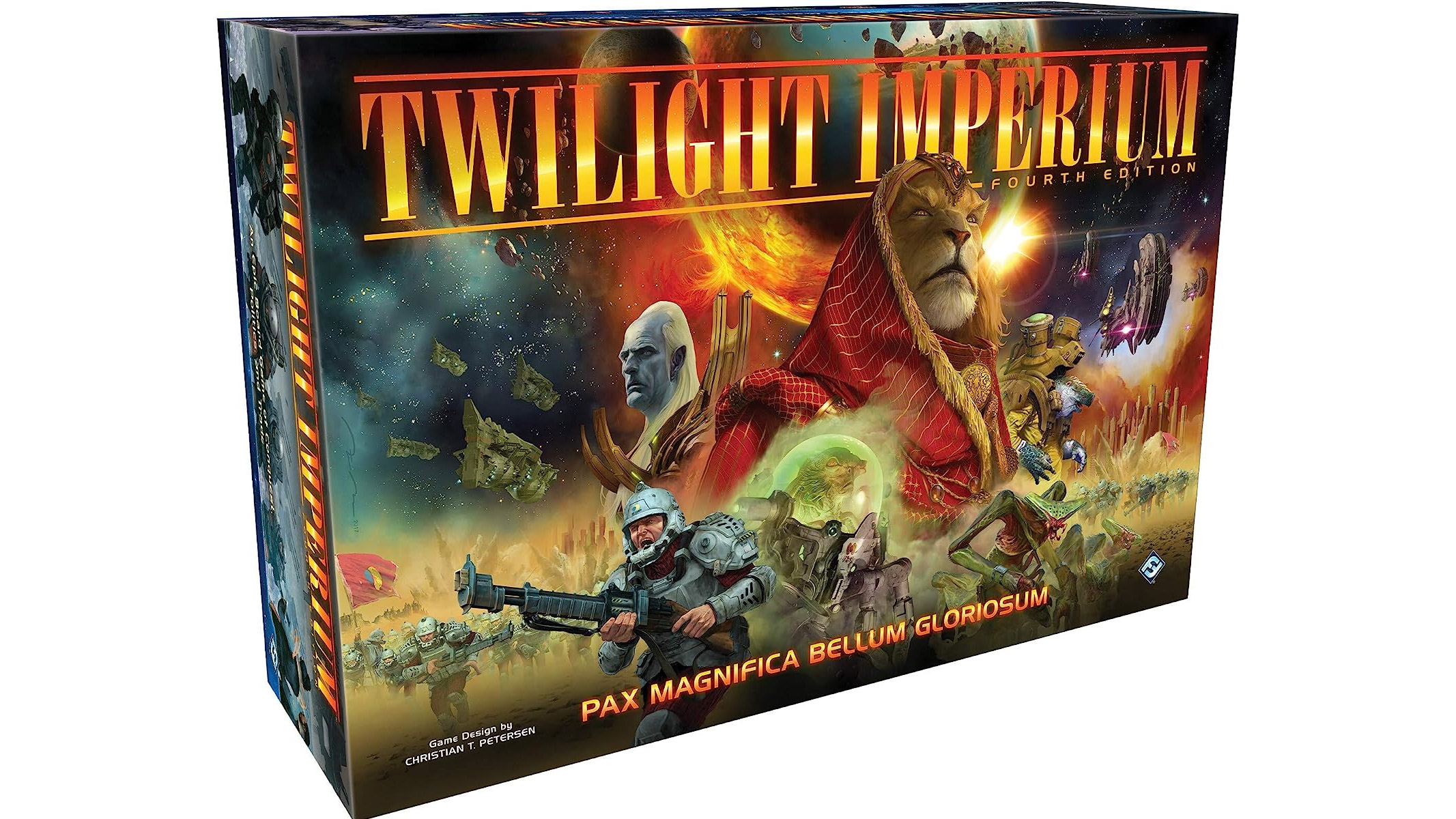
Twilight Imperium: Fourth Edition
A competitive diplomacy and war game.
Specifications
Number of players: 4-8 (more with expansions)
MSRP: $130
Age rating: 14+
Publisher: Fantasy Flight Games
Reasons to buy
+
Great mix of action and diplomacy
+
Engaging for several players
Reasons to avoid
–
Takes a lot of time to complete
–
It’s complex, so not the easiest to pick up immediately
Twilight Imperium is the quintessential game for hard-core gamers. The game starts out with exploration and resource building, but can quickly skew towards battles, depending on how aggressively it is played. In the base version, players select one of 17 factions; with both expansions, that number grows to 30 options.
Negotiations and diplomacy are essential. Immediate deals are binding, but the rules actually state that ‘future’ promises are not. Players tend to carve out chunks of space around their home planets, using those resources to expand their fleet. Attacks are common, particularly along borders.
In addition to resources, your planets also have influence, which helps during the diplomacy phase of the game. Players vote on council issues that affect the rules, players or individual planets, and influence is vital. So is convincing others to vote your way.
Twilight Imperium is one of the most complex and longest games in the boardgaming community, but it provides sufficient variety to keep players returning for more. But it’s not for the faint of heart. It’s also worth noting that two expansions, Prophecy of Kings and Thunder’s Edge, add additional elements to the game, as well as expanding faction options. Including them will increase game time.
Today’s best Twilight Imperium 4th Edition deals

Gaia Project
In this Eurogame, players use different factions to terraform and colonize planets before their opponents.
Specifications
Number of players: 1-4
MSRP: $100
Age rating: 14+
Publisher: Captstone Games
Reasons to buy
+
Great strategy-based game
+
Requires forward thinking and is engaging for players
+
Plenty of replayability
Reasons to avoid
–
Not as immersive as other games
–
Can be a headache for those who don’t want to think ahead
Gaia Project is one of my top game choices at the moment. It features several improvements over its predecessor, Terra Mystica, including a variable game board. Gaia Project’s changing, rotating hexes mix can be combined to create a wealth of different playing spaces, making the game infinitely replayable.
Players have an option to select one of fourteen factions in the base game; the expansion provides four additional options. Because each faction board is double-sided, that reduces the choices during the game but also prevents two players of the same planet type, which is a small price to pay. Each round scores differently, and the scoring options are mixed up for each play. The tech board options also change, along with the map, again, making the game infinitely replayable.
I also own the expansion, Lost Fleet, and found that while the base game is excellent, the expansion makes it better. It introduces an additional mechanic (ships that grant access to new action spaces) and smaller, new map tiles, which, combined with the larger board, enhance the game’s playability. I still love the base game but definitely prefer the expansion!
Today’s best Capstone Games Gaia Project deals


(Image credit: Ian Stokes)
A somewhat cooperative, risk-management survival game that pits your crew against the aliens.
Specifications
Number of players: 1-5
MSRP: $120
Age rating: 14+
Publisher: Rebel Studio
Reasons to buy
+
Beautiful miniatures and game board
+
Deep and strategic gameplay
+
Co-op with potential for traitors adds a unique dynamic
Reasons to avoid
–
Intimidating for new players
–
Expensive
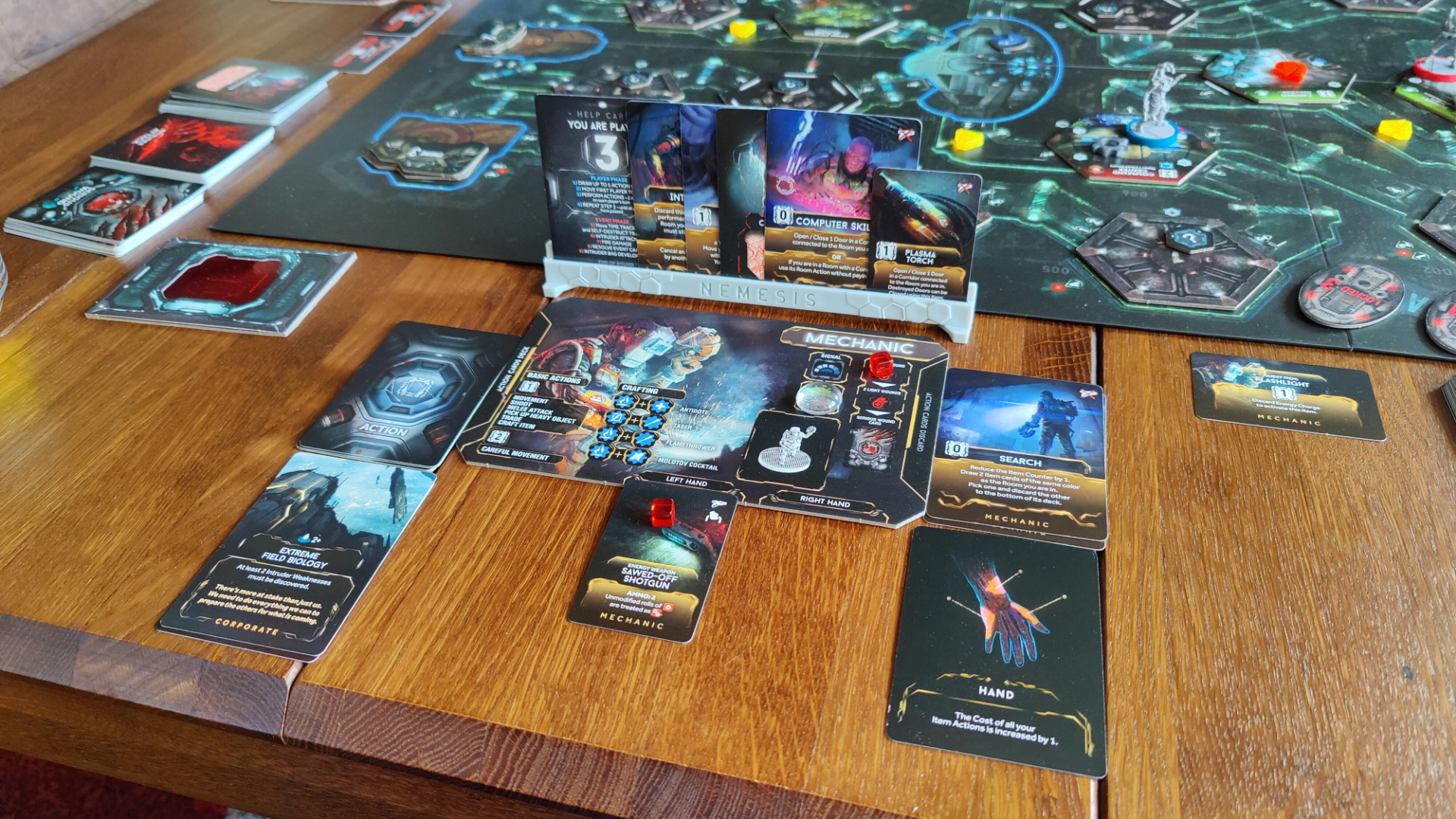
Nemesis is an alien-themed board game that I heard best described as “inspired by but legally different from” the Alien franchise. It’s also complex and time-consuming.
Setting up a four-player game took us roughly half an hour, although I suspect most of it was because only one of the four of us knew how to set it up. All three of our new players watched a 23-minute teaching video beforehand, so we got the speed-teach in person.
The game itself was a lot of fun. Players wake up from hypersleep after an alien lifeform has been detected on the ship. With no memory of the ship layout, we scurry around trying to accomplish individual goals. Xenomorphs of all sizes randomly pop up and must be fought off or escaped. And of course, one of your party members may be working against you — after all, the crew may well be expendable.
Nemesis has a solo mode, which I’ve not played. It’s ranked 23rd on BoardGameGeek.com. There are several expansions, none of which I have played (yet). They include Nemesis: Aftermath, Nemesis: Carnomorphs, Nemesis: Void Seeders and several promo decks and dice.
Today’s best Nemesis deals
Best mediumweight board games
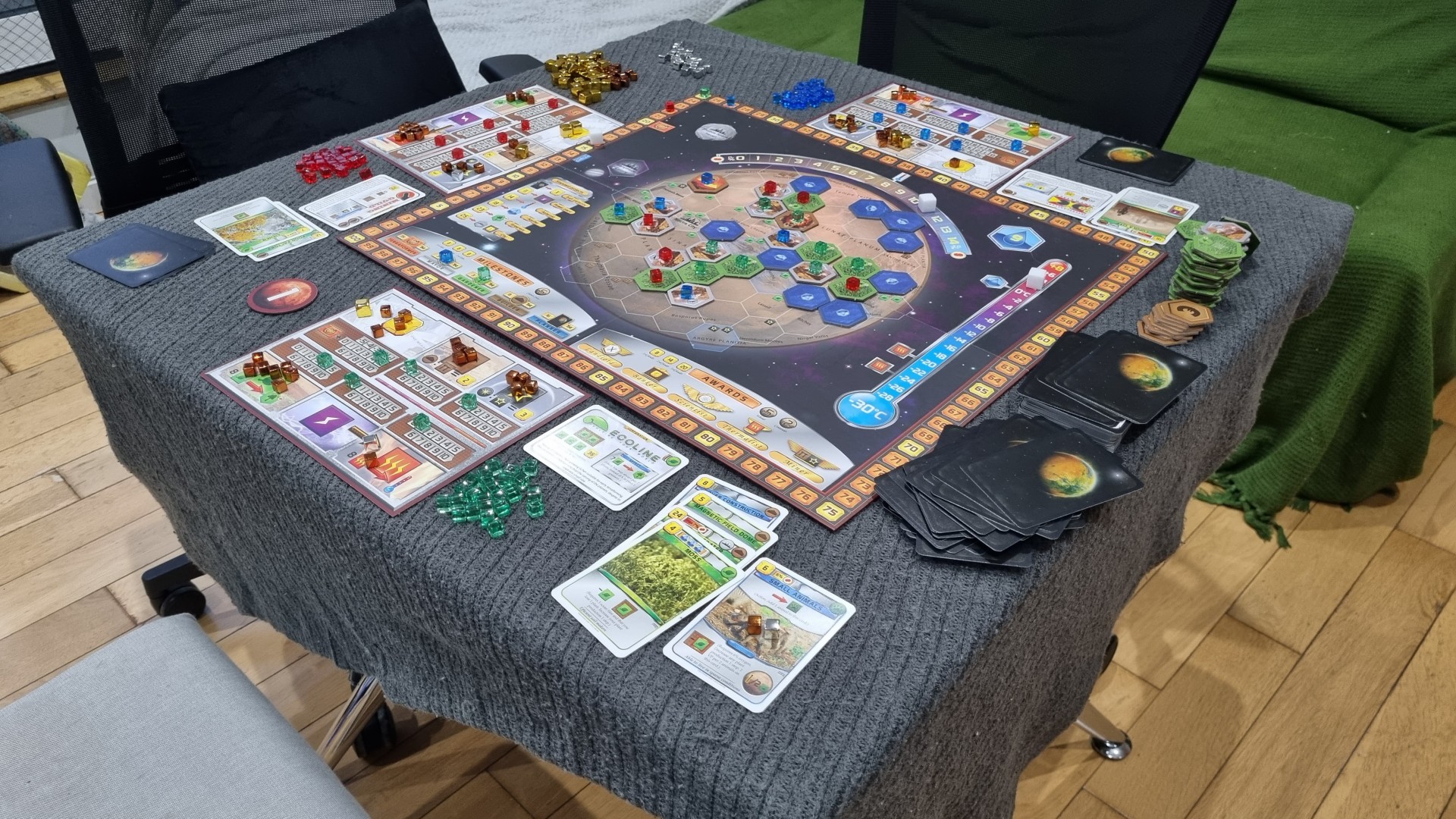
(Image credit: Future)
A competitive board game that transforms the red planet into a human-habitable world.
Specifications
Number of players: $68
MSRP: $130
Recommended Age: 3+
Publisher: Stronghold Games
Reasons to buy
+
Expansive card deck
+
Clever mix of gameplay elements
+
Minimal player conflict
Reasons to avoid
–
Lackluster art
–
Slow-style endgame
Terraforming Mars (TM) looks complex, but is relatively easy to pick up. Its popularity suggests that many have used it as a first step into heavier board games. The efforts of all of the players contribute to the terraforming action, even though you aren’t all working together.
Each player represents a corporation, striving to make money by converting Mars into a human-habitable planet. Players can place ocean or forest tiles, use heat resources to raise the temperature and build cities to colonize. There are myriad options to succeed, and you have to keep an eye on other players to make sure they don’t beat you in the goal you’re working towards. You can read more in our full Terraforming Mars review.
There are a LOT of expansions, including TM: Prelude, TM: Hellas & ELysium, TM: Colonies, TM: Venus and TM: Turmoil. You can get these five combined in TM: Big Box, which also includes a set of 3D terrain tiles and some additional goodies. There is also TM: Prelude 2, TM: Automa (for solo players), TM: Utopia & Cimmeria and TM: Amazonis & Vastitas.
Today’s best Terraforming Mars Board Game deals

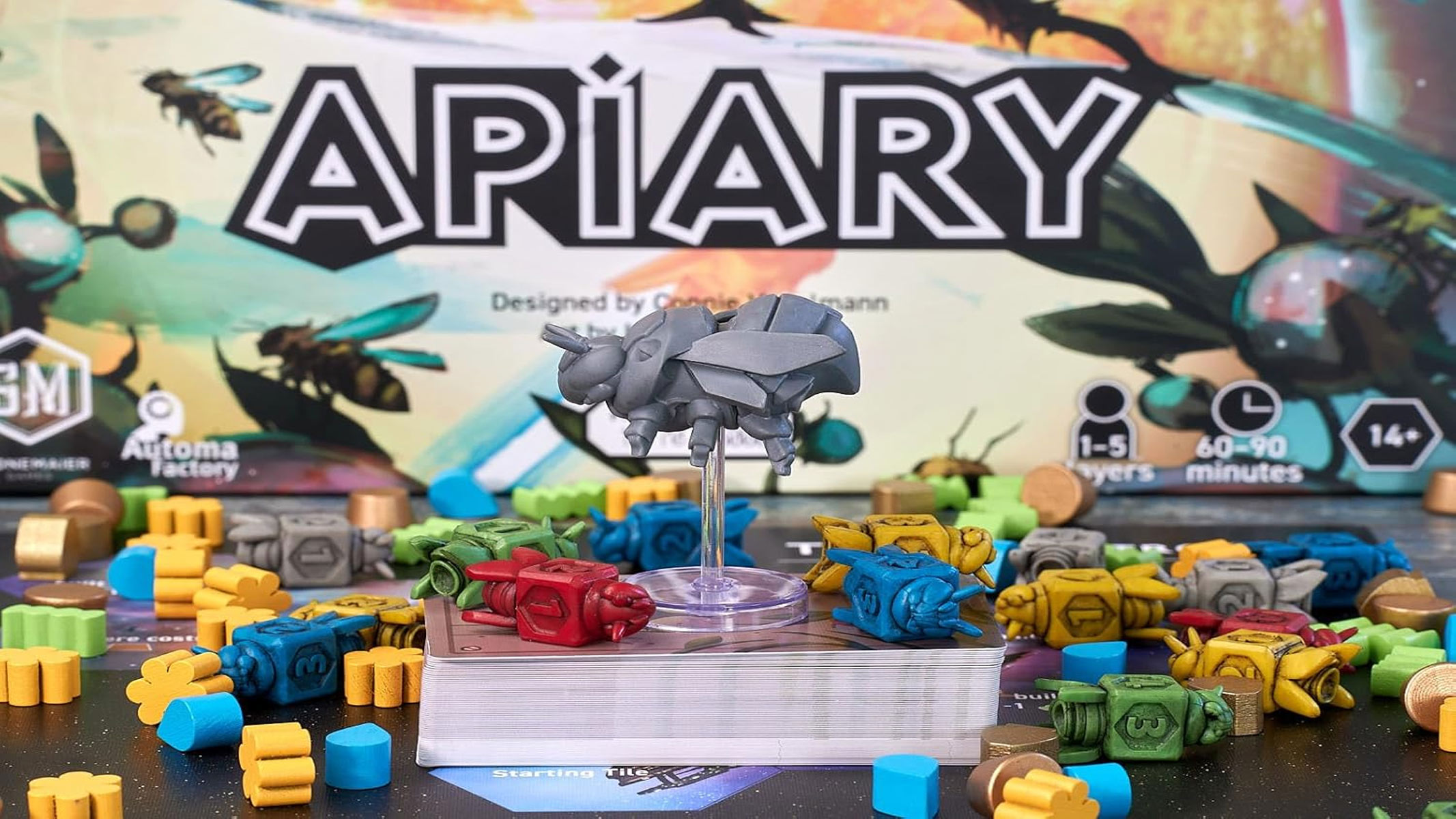
(Image credit: Amazon)
Apiary
Space bees! A worker placement game where bees manage resources to explore the galaxy.
Specifications
Number of players: 1-5
MSRP: $75
Recommended age: 14+
Publisher: Stonemaier Games
Reasons to buy
+
Great artwork and premium pieces
+
Great flow to the game
+
Fast-paced
Reasons to avoid
–
Progress can seem tricky if you don’t think ahead
–
The endgame can approach suddenly
All they had to say was ‘space bees’, and I was hooked. In Apiary, humanity has died off, and bees dominate the Earth. Now those bees have gone to space, and it’s your job to grow their crew and their ship.
Apiary is a medium-weight, engine-building worker placement game that has a few unique twists. Unlike most worker placement games, you’ll never find someone else blocking your spot; you can easily bump them, though you may not always want to. The game is relatively fast-paced, which means the end can come up suddenly. But it’s an interesting theme, and a lot of fun.
The original game offers a solo mode via an automata, which I have not yet played. The expansion of Apiary, Expanding the Hive, adds additional ships, factions, frames and dances to the base game. I found the frames the most valuable, along with the new rules regarding exploration tokens, and thought it was worth the cost.
Today’s best Apiary deals
(Image credit: Amazon)
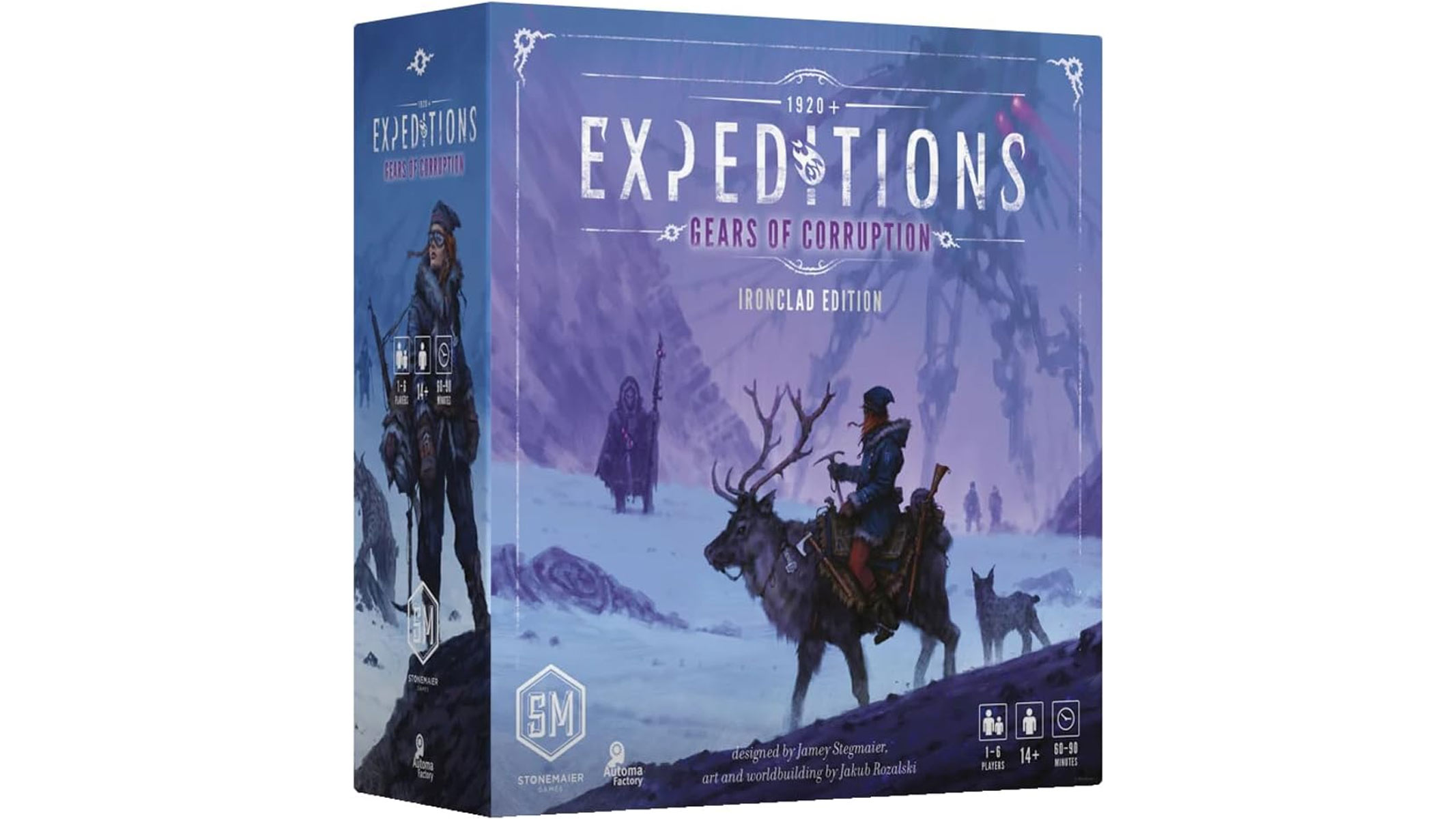
Expeditions
A card-driven engine game of exploration, Expeditions follows Siberian scientists exploring a Tunguska-like meteor fall.
Specifications
Number of players: 1-6
MSRP: $42
Recommended age: 14+
Publisher: Stonemaier Games
Reasons to buy
+
Doesn’t need intensive forward-thinking
+
Incredible artwork
Reasons to avoid
–
Not much interaction required
–
Earth-based, not space-based
Expeditions is a card-engine worker-placement game that casts the Tunguska meteor explosion in a completely different light. Instead of a warning event, Expeditions imagines the historical fall that corrupts the Earth. Scientists travel to Siberia to hunt for related meteorites and cleanse the Earth of the meteorites’ spreading corruption.
The mechs, the workers and the board are familiar, but Expeditions utilizes cards and workers to expand the gameplay. Essentially, players build a hand with cards that can be amplified by workers of the same color/type. The game offers a variety of paths to earning points, one being the collection of meteorites, creating the tenuous space connection.
Expeditions is another game where the expansion, Gears of Corruption, only makes it better. Surprisingly, the biggest differences are minor: The addition of resources and a wild worker at the start, along with map tokens with rewards, brings far more value than the additional player and mech types. I prefer the expansion’s upgraded player boards, which offer two recessed tracks for tracking resources, but that is one of the perks rather than a drawback.
I have to say, the artwork is some of the most stunning of any board game I have seen. The cards are gorgeous, and there are times when I have been tempted to take a face-up card not for what it could do but just because I loved the art.
Today’s best Stonemaier Games Expeditions deals
(Image credit: CGE)
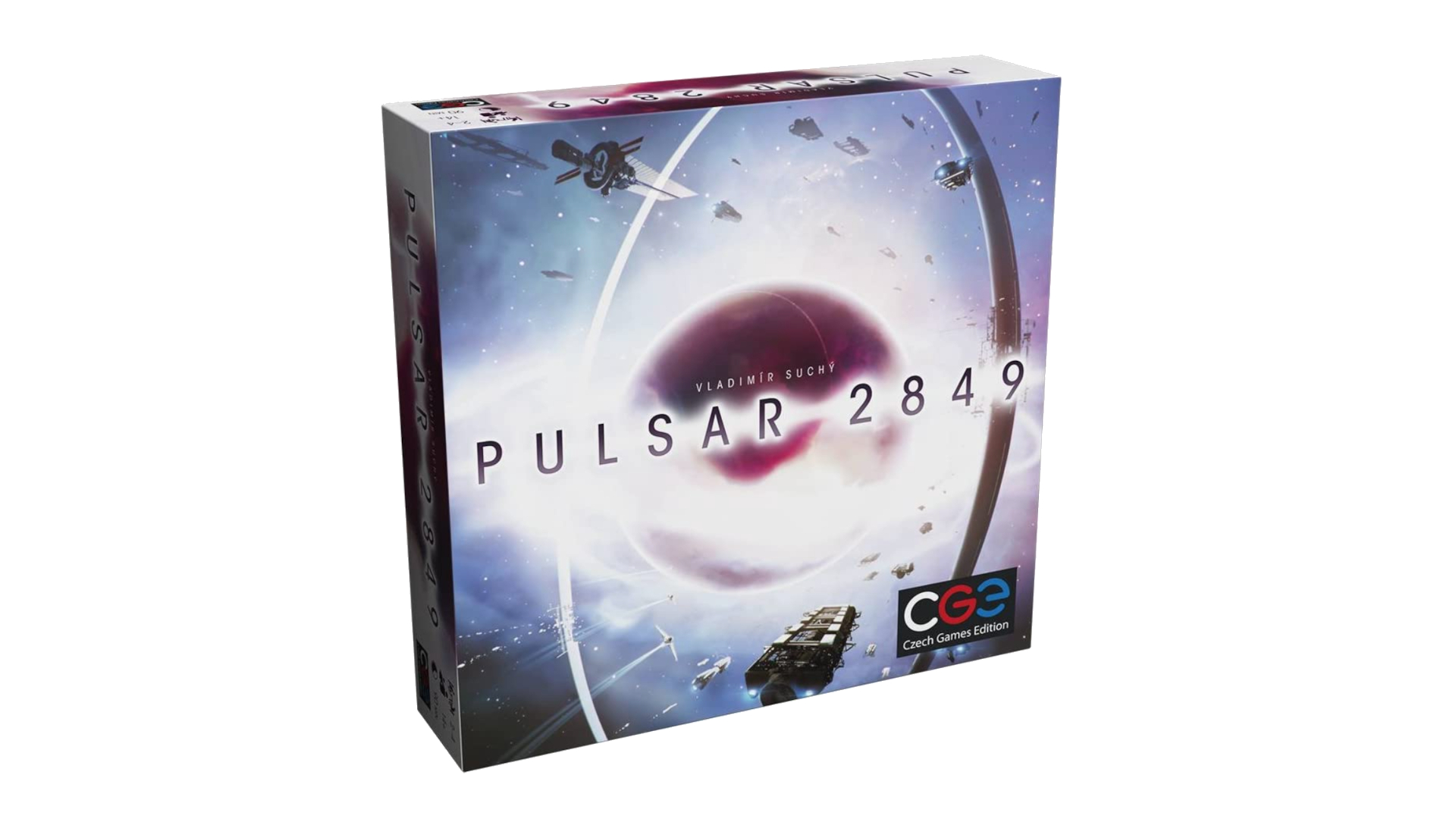
Pulsar 2849
A dice-drafting game that harnesses the power of pulsars to explore the galaxy.
Specifications
Number of players: 2-4
MSRP: $45
Recommended age: 14+
Publisher: Czech Games Edition
Reasons to buy
+
Competitive over cooperative
+
Plenty of replayability
+
Multiple ways to reach your goal
Reasons to avoid
–
Can be tricky to follow at times
Pulsar 2849 intrigued me with its neutron star premise. Players move through the galaxy, exploring systems and claiming colonies or pulsars, as well as ‘spinning up’ Pulsars they already have in play. Discovering tech that will help build on a cosmic scale is also an option.
Although the game is heavily reliant on dice, the randomness is fairly well mitigated because players can pick one of several dice rolls to apply. The game has several paths to winning, although players will self-eliminate options as they move through the rounds.
Today’s best Pulsar 2849 deals
(Image credit: Amazon)
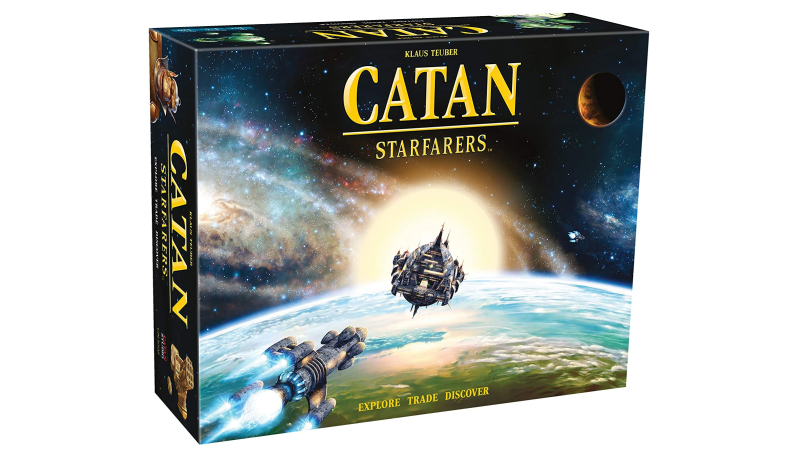
Catan: Starfarers
Based on the original Catan, this is a low-to-medium-weight game that will appeal to kids as well as adults.
Specifications
Number of players: 2-4
MSRP: $90
Recommended age: 14+
Publisher: Catan
Reasons to buy
+
It’s Catan in space!
+
Simple to follow and get the hang of
Reasons to avoid
–
Rules aren’t well written
For more than 25 years, Catan has been the default board game for gamers who want to explore outside the standard mass market games. For many, myself included, it was the first exposure to the slightly more complex world of board games, one that was introduced by my then-elementary/middle school kids. Over the years, Catan has had a wealth of expansions, but all of them exist on a relatively Terran-like planet.
No more. Catan: Starfarers finally opens the universe up to settlers. Whole planets make up the previously established land types, producing food, fuel and other goods that drive your development. Players familiar with the Catan universe will recognize that many of the elements of ocean travel have been reapplied to space, though movement has been upgraded to cover the vast distances required.
Encounter cards offer a new experience (though I’ll admit I haven’t played all of the terrestrial expansions). Things that have caused struggles, like never getting the dice to roll your way, have been remedied by allowing players to draw on their turn, based on their score, making it easier to start when colonies are scarce.
Every player gets a rocket. Not a small, movable piece on the board. I mean, you get that too, but a rocket roughly half as tall as my forearm, used to establish movement and track upgrades. I’m still deciding how I feel about it, but it seems like something kids would love. As you cannot blockade other players, and things like ‘longest road’ and ‘largest army’ are gone, the game is overall less complicated than regular Catan. It’s up to you to decide if that’s better or worse.
Today’s best Catan Starfarers deals
Best lightweight board games
(Image credit: Thames & Kosmos)
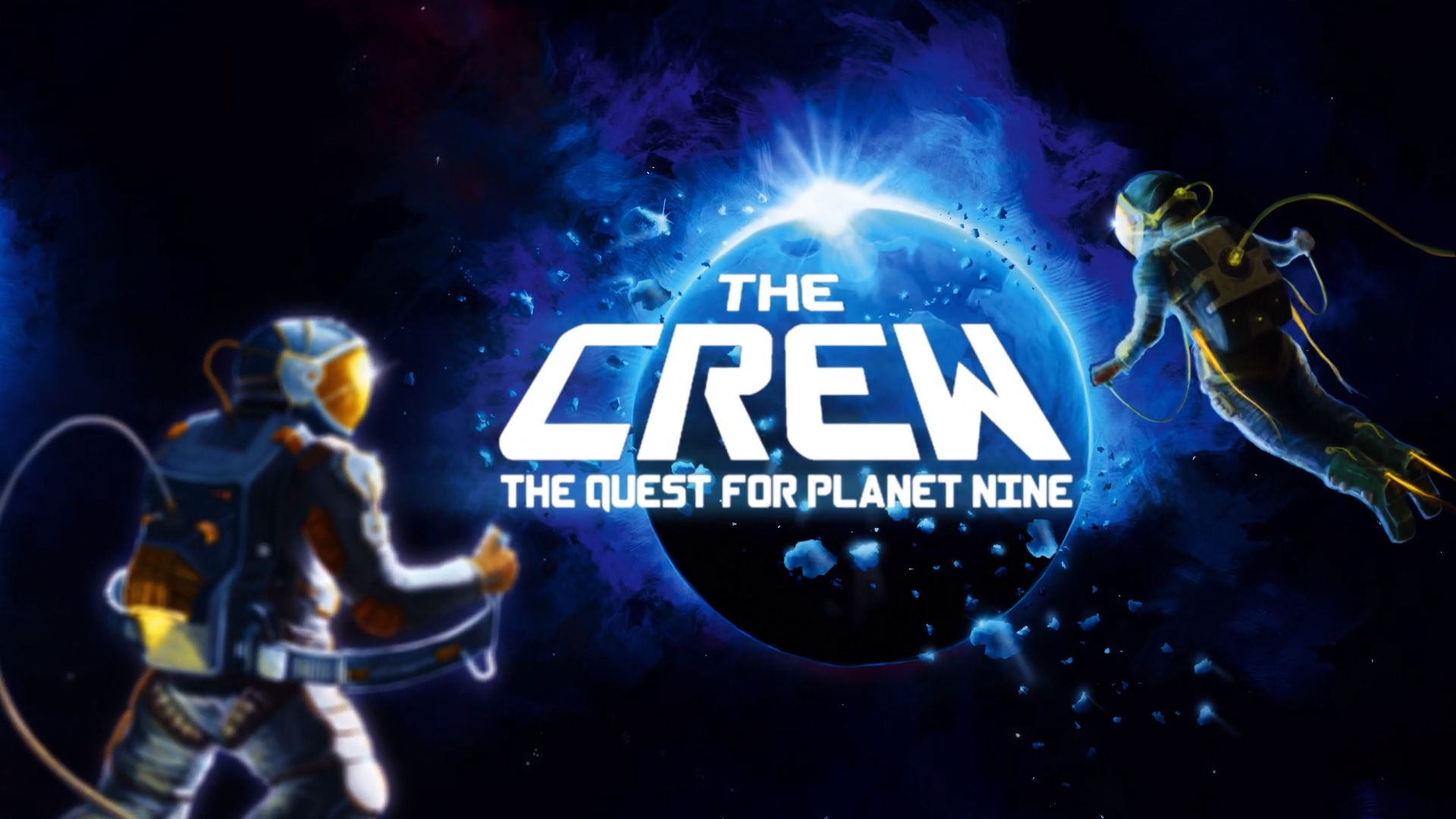
The Crew: Quest For Planet Nine
A lightweight cooperative trick-taking card game, Planet Nine has players working together to meet a variety of goals.
Specifications
Number of players: 3-5
MSRP: $15
Recommended age: 10+
Publisher: Thames & Kosmos
Reasons to buy
+
Easy to pick up and learn
+
Interesting co-op play
Reasons to avoid
–
Randomness can either make the game super enjoyable or tricky to play
The Crew: The Quest for Planet Nine is a group trick-taking game where players work together to complete two randomly selected missions. Players are dealt their hands, and the first player, the commander, is selected and leads accordingly. Unlike a standard 52-card deck, there is only a single trump suit, which makes it a bit easier to follow. While direct communication is not allowed, players can use their token once per game to provide hints about their hand.
This is a great, quick game, with each hand taking only five to ten minutes to play. The variety of missions lends itself to replayability, and the ease fits nicely for more casual gamers.
The company also produced The Crew: Deep Sea Mission, and there may not be enough of a difference to warrant purchasing both. While Planet Nine has more straightforward missions, Deep Sea has potentially more interesting combinations. Some players prefer Planet Nine for more casual players and Deep Space for slightly more seasoned ones, but both work for light gaming.
Today’s best The Crew: The Quest for Planet Nine deals
(Image credit: Amazon)
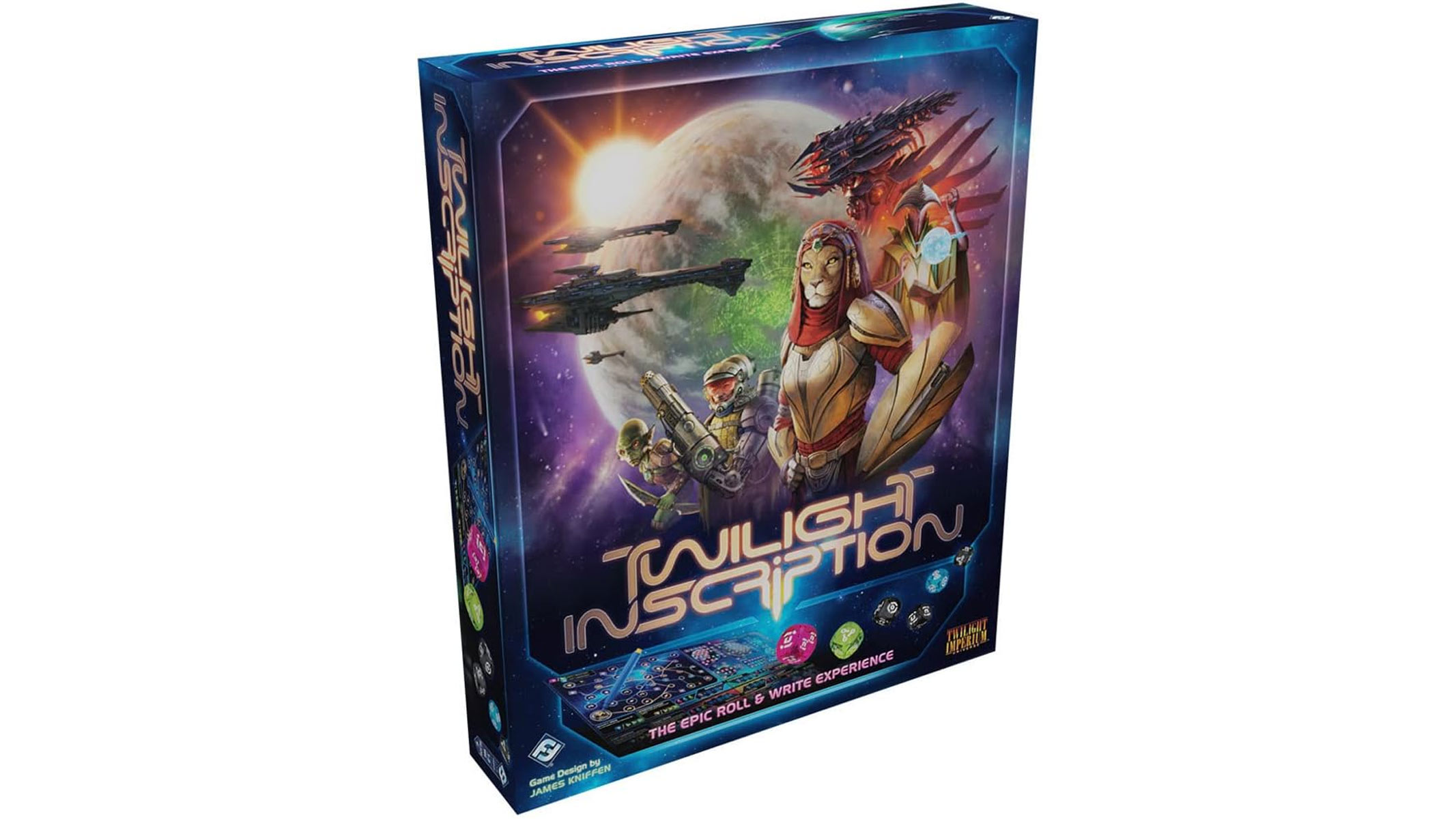
Twilight: Inscription
If you don’t have two days free for Twilight Imperium, try this lightweight dice-rolling version that provides a similar flavor.
Specifications
Number of players : 1-8
MSRP: $48
Recommended age: 14+
Publisher: Fantasy Flight Games
Reasons to buy
+
Smaller, quicker version of Twilight: Imperium
+
A great dice-based game
Reasons to avoid
–
In the shadow of Twilight: Imperium
Twilight Imperium is my husband’s favorite game that he never gets to play, so when I learned Twilight Inscription was a lighter version that didn’t require coordinating a crowd, of course, we had to buy it.
The game provides 25 different factions from the original game, and you get four sheets rather than a giant planet-spreading board. You’ll track your progress using dry-erase markers on your board, including building up a fleet similar to the good old days of pencil-and-paper Battleship. I don’t have any previous experience with roll and write games, so this was a good introduction.
If you expect this to be a streamlined version of Twilight Imperium, you’ll be disappointed, but it still does a decent job of capturing the flavor. You’ll still build dreadnoughts and war suns, research techs to gain points and you’ll be making your drive for Mecatol Rex. If you’ve never played, this can be a great way to catch (or share) the flavor of the game in a shorter form.
Today’s best Fantasy Flight Games Twilight Inscription deals
Round up of today’s best deals
SCIENCE
One in eight of 14- to 17-year-olds in Great Britain say they have used nicotine pouches | Health


One in eight teenagers aged 14 to 17 have used nicotine pouches, a survey has found, adding to health experts’ concern about their growing popularity.
Users hold the small sachets, which look like mini-teabags and are often flavoured, in their mouths to enjoy the release of the nicotine they contain. They are also known as “snus”.
Unlike smoking the pouches do not raise the risk of cancer, but they have caused alarm because of the fear that users could become addicted to nicotine and suffer mouth and dental problems.
A survey of 500 teenagers aged 14 to 17 in England, Scotland and Wales found that 13% have used a nicotine pouch, of whom 30% said they did so at least once a week. Most get them from friends or buy them in shops, which are not subject to any age restrictions as to who they can sell them to.
The same survey, by Deltapoll for the Future Health consultancy, found that seven in 10 respondents backed the UK government’s planned crackdown on them. The tobacco and vapes bill will outlaw selling pouches to under-18s, as well as changing the packaging and limiting the use of flavours and the amount of nicotine to make them less appealing to children and young people.
Steve Brine, a former public health minister, wrote in a foreword to a new report by Future Health on the pouches: “These unregulated products are being heavily pushed at young people, whether it be through shop displays, social media or in partnerships with UK music festivals.”
Referencing that most of the main brands were made by cigarette companies, Brine added: “The tobacco industry is constantly looking for the next business opportunity with which to addict a new generation to nicotine.”
Almost half (46%) of the teenagers surveyed had seen nicotine pouches advertised, mainly in shops and on social media. Three-quarters (73%) want to see restrictions on their promotion, sale and use, while a majority want it made illegal for under-18s to buy them (63%) and back health warnings (59%).
The survey was undertaken for Kenvue, which makes Nicorette, the over the counter nicotine replacement therapy that some smokers use to try to quit. Future Health is run by Richard Sloggett, a former special adviser at the Department of Health and Social Care (DHSC).
The report says: “Health concerns have to date focused on oral health issues such as a dry mouth, gum lesions or blisters, unusual jaw sensations and receding gums.
“[But] studies have also raised concerns that 30mg nicotine pouches have led to a higher nicotine uptake compared with cigarettes and increased arterial stiffness.”
Sales of brands such as Velo, Nordic Spirit and Zyn are growing fast.
A group of international health experts warned in the European Heart Journal this week that “nicotine is toxic to the heart and blood vessels, regardless of whether it is consumed via a vape, a pouch, a shisha or a cigarette”. They voiced concern about the recent dramatic rise in use of vapes, heated tobacco and nicotine pouches, especially among adolescents and young adults.
Separate research published this week in the journal Lancet Public Health found that more than 500,000 people in Britain now use nicotine, with the boom driven by members of gen Z, especially young men. The proportion of 16- to 24-year-olds doing so has jumped from 0.7% in 2022 to 4% this year, according to the study led by Dr Harry Tattan-Birch of University College London.
“Pouches have a substantially lower risk to health than cigarettes and are likely less harmful than e-cigarettes. However, they are not harmless,” he said.
A spokesperson for Zyn, which is made by the tobacco firm Philip Morris International, said: “The reality is smoke-free products such as nicotine pouches have successfully supported millions of adults to leave cigarettes behind. Public health policymakers should be encouraged that, according to Ash, 96% of teenagers have never tried nicotine pouches.”
Asli Ertonguc, the head of British American Tobacco in the UK and western Europe, highlighted that last week’s Lancet study also found that more and more smokers are using pouches to help them give up. A ban on advertising snus could put that press at risk, she added.
A spokesperson for Japan Tobacco International, which makes Nordic Spirit, said: “We welcome regulation that prohibits sale of nicotine products to minors but have concerns about some aspects of the [tobacco and vapes] legislation that could needlessly damage an emerging category and risk undermining the UK’s success in promoting smoking alternatives if passed.”
A DHSC spokesperson said: “We’re acting to protect people’s health and stop young people getting hooked on nicotine. Right now, nicotine pouches are far less regulated than nicotine vapes. This will change. The tobacco and vapes bill will make it illegal to sell nicotine pouches and other nicotine products to anyone aged under 18 to keep young people safe.”


Scientists have identified a previously unknown natural compound produced by heat-loving cyanobacteria that helps protect against ultraviolet radiation. Natural sunscreen ingredients can protect the skin from damaging radiation while reducing the risk of allergic reactions. In a recent study, scientists identified a previously unknown compound called β-glucose-bound hydroxy mycosporine-sarcosine that is produced by heat-loving cyanobacteria […]
SOURCE PAGE

This article was originally published at Eos. The publication contributed the article to Space.com’s Expert Voices: Op-Ed & Insights.
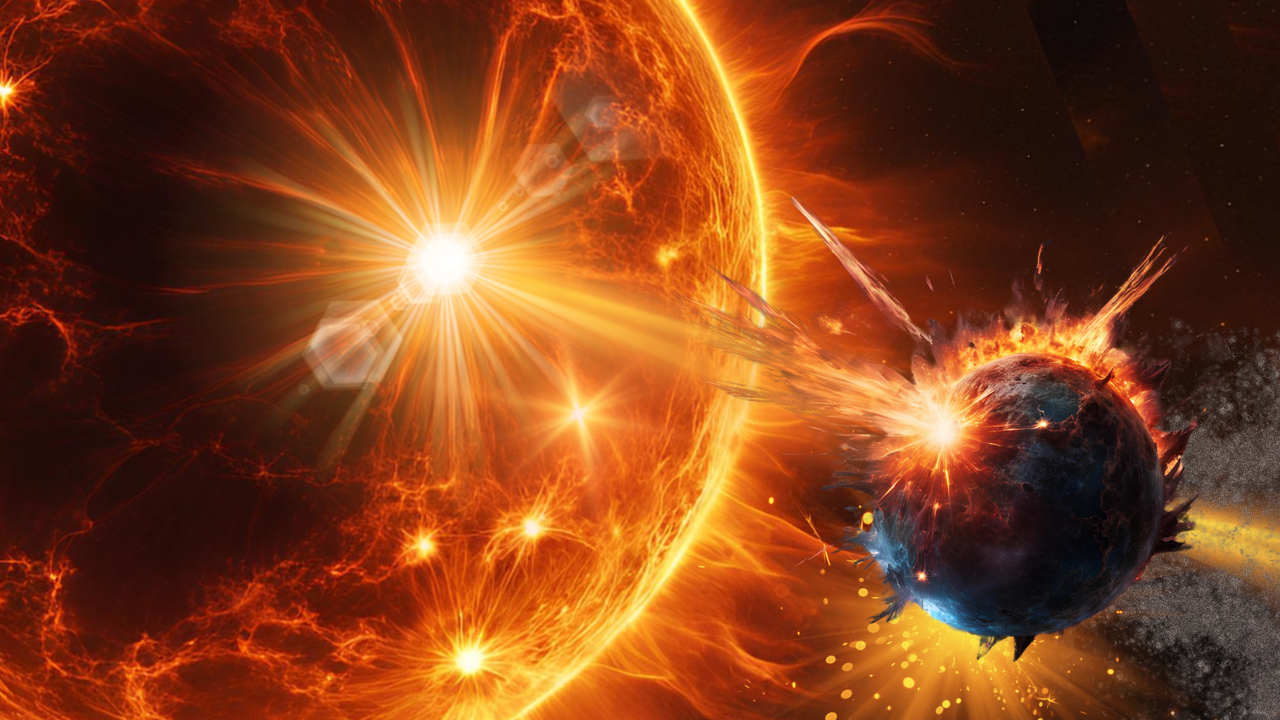
Our sun is about halfway through its life, which means Earth is as well. After a star exhausts its hydrogen nuclear fuel, its diameter expands more than a hundredfold, engulfing any unlucky planets in close orbits. That day is at least 5 billion years off for our solar system, but scientists have spotted a possible preview of our world’s fate.
Using data from the TESS (Transiting Exoplanet Survey Satellite) observatory, astronomers Edward Bryant of the University of Warwick and Vincent Van Eylen of University College London compared systems with stars in the main sequence of their lifetimes—fusing hydrogen, like the sun—with post–main sequence stars closer to the end of their lifetimes, both with and without planets.
You may like
“We saw that these planets are getting rarer [as stars age],” Bryant said. In other words, planets are disappearing as their host stars grow old. The comparison between planetary systems with younger and older stars makes it clear that the discrepancy does not stem from the fact that the planets weren’t there in the first place: Elderly stars just get hungry.
“We’re fairly confident that it’s not due to a formation effect,” Bryant explained, “because we don’t see large differences in the mass and [chemical composition] of these stars versus the main sequence star populations.”
Complete engulfment isn’t the only way giant stars can obliterate planets. As they grow, giant stars also exert increasingly larger tidal forces on their satellites that make their orbits decay, strip them of their atmospheres, and can even tear them apart completely. The orbital decay aspect is potentially measurable, and this is the effect Bryant and Van Eylen considered in their model for how planets die.
“We’re looking at how common planets are around different types of stars, with number of planets per star,” Bryant said. Bryant and Van Eylen identified 456,941 post–main sequence stars in TESS data and, from those, found 130 planets and planet candidates with close-in orbits. “The fraction [of stars with planets] gets significantly lower for all stars and shorter-period planets, which is very much in line with the predictions from the theory that tidal decay becomes very strong as these stars evolved.”
Astronomers use TESS to find exoplanets by looking for the diminishment in light as they pass in front of their host stars, a miniature eclipse known as a transit. As with any exoplanet detection method, transits are best suited to large, Jupiter-sized planets in relatively small orbits lasting less than half of an Earth year, sometimes much less. So these solar systems aren’t much like ours in that respect. Studying planets orbiting post–main sequence stars poses additional challenges.
“If you have the same size planet but a larger star, you have a smaller transit,” Bryant said. “That makes it harder to find these systems because the signals are much shallower.”
However, though the stars in the sample data have a much greater surface area, they are comparable in mass to the sun, and that’s what matters most, the researchers said. A star with the same mass as the sun will go through the same life stages and die the same way, and that similarity is what helps reveal our solar system’s future.
You may like
“The processes that take place once the star evolves [past main sequence] can tell us about the interaction between planets and host star,” said Sabine Reffert, an astronomer at Universität Heidelberg who was not involved in the study. “We had never seen this kind of difference in planet occurrence rates between [main sequence] and giants before because we did not have enough planets to statistically see this difference before. It’s a very promising approach.”
Planets: Part of a balanced stellar breakfast
Exoplanet science is one of astronomy’s biggest successes in the modern era: Since the first exoplanet discovery 30 years ago, astronomers have confirmed more than 6,000 planets and identified many more candidates for follow-up observations. At the same time, the work can be challenging when it comes to planets orbiting post–main sequence stars.
One tricky aspect of this work is related to the age of the stars, which formed billions of years before our sun. Older stars have a lower abundance of chemical elements heavier than helium, a measure astronomers call “metallicity.” Observations have found a correlation between high metallicity and exoplanet abundance.
“A small difference in metallicity…could potentially double the occurrence rate,” Reffert said, stressing that the general conclusions from the article would hold but the details would need to be refined with better metallicity data.
Future observations to measure metallicity using spectra, along with star and planet mass, would improve the model. In addition, the European Space Agency’s Plato Mission, slated to launch in December 2026, will add more sensitive data to the TESS observations.
Earth’s fiery fate is a long way in the future, but researchers have made a big step toward understanding how dying stars might eat their planets. With more TESS and Plato data, we might even glimpse the minute orbital changes that indicate a planet spiraling to its doom—a grim end for that world but a wonderful discovery for our understanding of the coevolution of planets and their host stars.

Here at Live Science, we have created a guide to 22 gifts for nature lovers to give you some ideas of what to buy other people, but what about you?
Items like cameras, binoculars, and telescopes aren’t impulse buys, and certainly not stocking fillers. They are also very personal purchases, and often expensive. Trusting someone else to make the right choice on your behalf is a gamble, and frankly, we wouldn’t always recommend it.
We do, of course, have individual guides to the best cameras, best binoculars, and best telescopes, but this guide has been curated based on what our editors would buy for themselves — and have, in some cases — in each of the categories below.
Binoculars
We don’t expect there are many people with friends who would buy them the premium Noctivid 10×42 binoculars. (Image credit: Jase Parnell-Brookes)
This first section is for skywatchers who don’t want a telescope, as well as wildlife watchers and birders. Other people might think they know what you want, but it really pays to do the research for yourself. Binoculars aren’t just about how powerful they are.
Binoculars vary depending on their purpose. Stargazing, birding, wildlife spotting and sports viewing will all require different objective lens sizes, have more suitable fields of view, and require different quality glass and coatings. For example, a pair that is ideal for astronomy might be too heavy and impractical for long walks, while compact travel binoculars might fall short under dark skies.
Comfort is also a crucial consideration. Weight, balance, eyecup design, interpupillary distance (will you use them whilst wearing spectacles?) and grip all affect how long you can comfortably use a pair of binoculars for. These are things only you can judge.
Comfort aside, optical preferences are personal, too. Some people might prioritize brightness, whereas others prefer edge-to-edge sharpness or excellent colour accuracy.
Binoculars are typically a long-term investment. A well-chosen pair can last decades. It’s worth making sure they suit your needs now and into the future. Here is a list of binoculars that we believe strike the perfect balance between performance, versatility, and ease of use. Each one is a standout choice in its category.
Telescopes
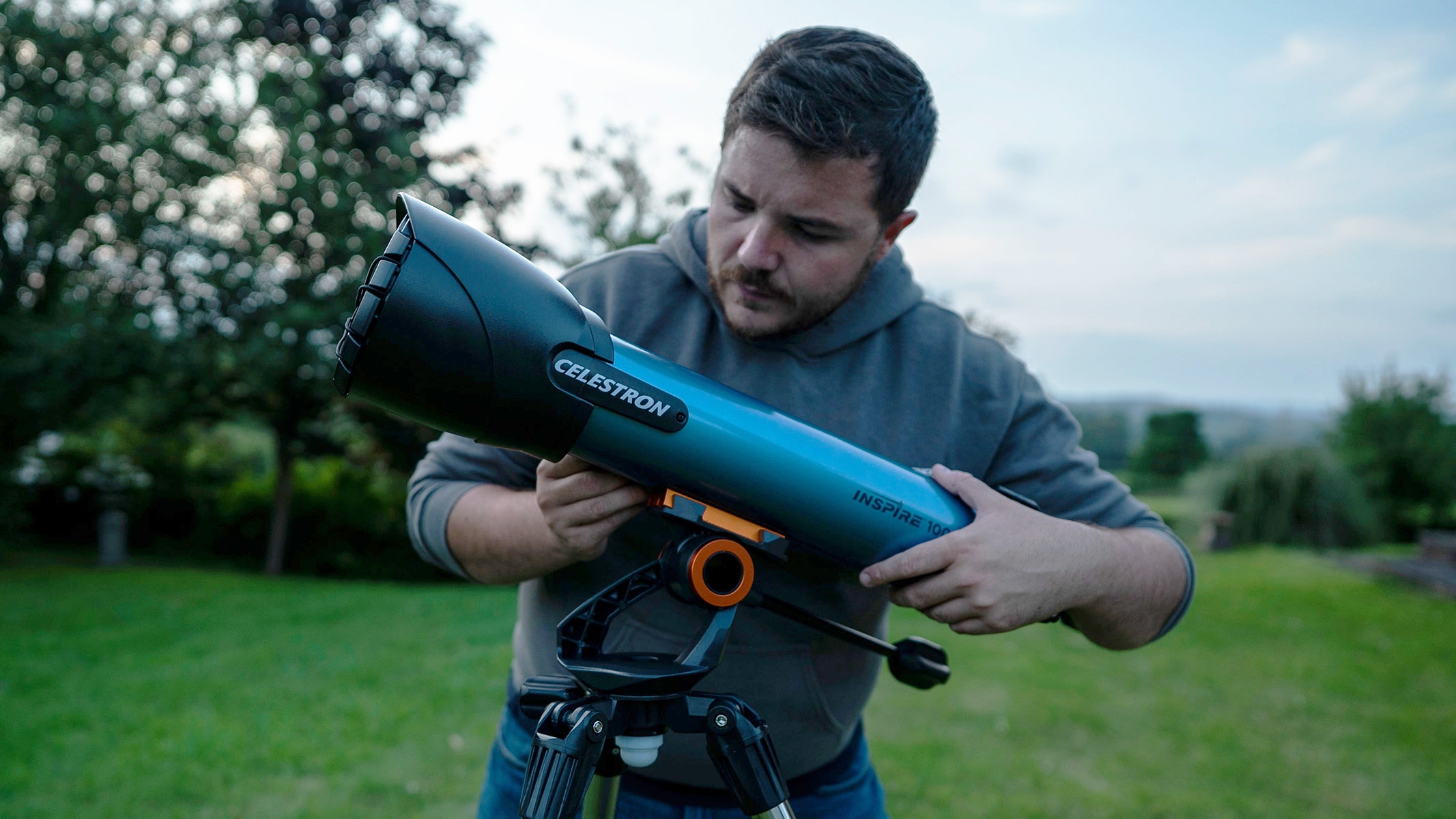
Award-winning astrophotographer Josh Dury recommends the Celestron Inspire 100AZ for beginner astronomers. (Image credit: Josh Dury)
Next up, we have telescopes — and as previously touched on, which is the right telescope for you depends on exactly what you want to observe.
Do you want to see local planets and the moon, or deep-sky objects? Do you want to use it for astrophotography? Do you need to move it from A to B often? Do you have space to store it in your house, assembled or not? There are lots of things to consider. Things which others might not think of.
Telescopes also have different experience requirements. Some are usable right out of the box, whereas others are reserved for advanced users. A well-meaning gift can be too complex, causing the recipient frustration, or too basic, making it difficult for a budding astronomer to advance. Only you know your experience and/or patience level.
When so much money is being spent on telescopes, whether it is your own or not, there should be no compromises. You want something that will provide enjoyment on every clear night you can be outside. Here are some of our recommendations.
Cameras
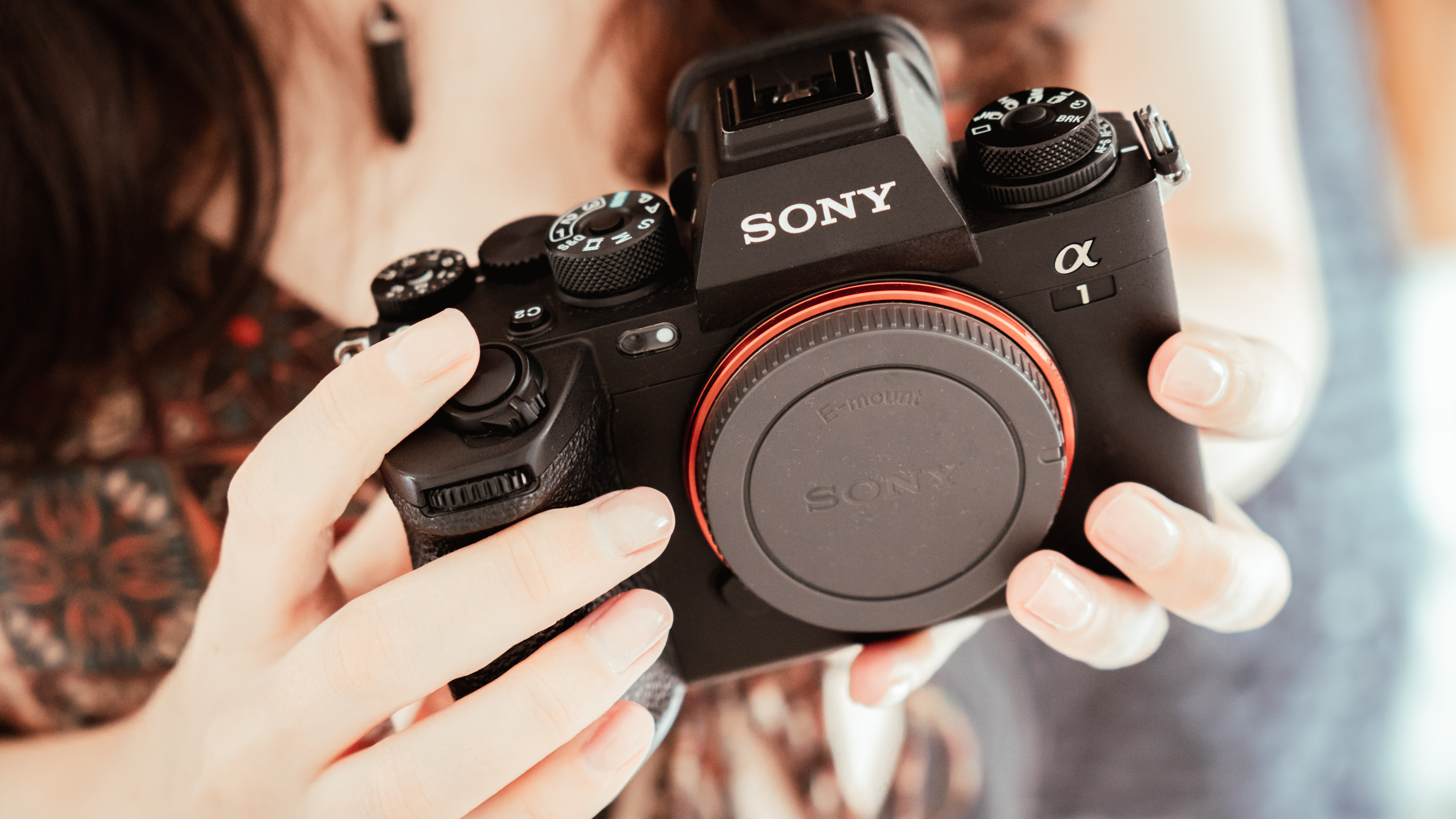
Treat yourself to your dream camera this Christmas. (Image credit: Kimberley Lane)
A camera is another (and probably the most important) purchase in this guide that is best made by you, rather than guessed at by someone else. You want something that matches your skill level and ambition. Plus, photography is intensely personal, and it is difficult to buy a camera for someone else.
Each style of camera, and even each manufacturer, will have its own particular strengths. Ergonomics also matter. Button layouts and menu styles are a matter of personal preference. Specs like autofocus systems, number of megapixels and ISO handling will depend on the style of shooting. Even questions like how your computer handles image files are things only you will know the answer to (and the frustration of your computer not being able to cope!). If you’re already a photographer with an ecosystem of lenses and accessories, you don’t want to have to change that because someone thought they were doing the right thing by getting you an “upgrade”.
Finally, it goes without saying that cameras are expensive. Buying your own camera gives you the exact tool to suit your vision as a photographer. Here are some of our recommendations for self-gifting.

If there is one thing we can rely on in this world, it is human hubris, and space and astronomy are no exception.
The ancients believed that everything revolved around Earth. In the 16th century, Copernicus and his peers overturned that view with the heliocentric model. Since then, telescopes and spacecraft have revealed just how insignificant we are. There are hundreds of billions of stars in our galaxy, the Milky Way, each star a sun like ours, many with planets orbiting them. In 1995, the Hubble space telescope captured its first deep-field image: this showed us that there are hundreds of billions of galaxies in our known universe, huge wheeling collections of stars dispersed through space.
Let’s take the International Astronomical Union’s definition of space as everything in the universe apart from our planet and atmosphere. Asking the question “who owns space?” seems laughable. Hubris at a whole new level. The idea that we could lay claim to the rest of the universe is beyond conceit. It’s like a group of atoms in my little toe becoming sentient and declaring that they now own my whole body.
A few years ago, I postulated that space exploration could be divided into three distinct eras. The first was confrontation. It was the second world war that fuelled our first forays into the abyss, as this proved to be an effective way of lobbing munitions further. The space race was born from military competition – in a bid to establish superiority. The second era brought collaboration. The formation of the European Space Agency in 1975 and that symbolic docking between Soviet and American space vehicles symbolised what humanity could achieve collectively. But now we’re on the verge of a third era: commercialisation. Space exploration is no longer just the domain of nations, but of billionaires, private companies and start-ups promising holidays in orbit.
Space should be regarded as a shared domain, similar to the high seas or Antarctica
Of course, the space industry has been commercial for decades – many communications satellites, Earth-observation systems and some launch vehicles are privately funded and operated. But what’s changing is that humans themselves are now part of the business plan, as we move from exploration to possible exploitation. Private space stations, space tourism, lunar and asteroid mining – this is the new frontier. So the question of ownership suddenly has legal, ethical and economic urgency.
Legally speaking, the groundwork for managing space was laid long ago. In the late 1950s and early 60s, as rockets first breached Earth’s atmosphere, the United Nations drafted agreements to govern activities beyond our planet. The Outer Space Treaty of 1967 set out some remarkably idealistic principles: “The exploration and use of outer space, including the moon and other celestial bodies, shall be carried out for the benefit and in the interests of all countries, irrespective of their degree of economic or scientific development, and shall be the province of all mankind.” I would reword it to humankind, but I do like the sentiment.
It’s a beautiful vision, but potentially an increasingly fragile one. As technology advances, these noble principles will come face to face with economic reality. When a commercial company finds a valuable mineral deposit on the moon or an asteroid, who gets to profit?
I would argue that commercialisation is necessary – space needs to pay for itself, because without profit, humanity will stay “terra-bound” for centuries. Exploration is expensive, and governments alone can’t afford to foot the bill. If mining helium-3 or capturing asteroids helps fund missions that expand our knowledge, capabilities and improve our husbandry of our planet, that could be a good thing. But commercialisation must come with equity and transparency. Otherwise, we risk repeating the mistakes of our past, but on a truly cosmic scale.
The comparison I often like to make is with the East India Company: a private British enterprise that became so powerful it could shape the politics of nations and at times had an army twice the size of Britain’s. It began as trade; it ended in domination. Could a similar dynamic unfold locally in our solar system, where a handful of today’s tech giants and billionaires control access to orbit, communications, and eventually, extraterrestrial resources? A monopoly in space would be dangerous for humanity. The challenge is to encourage innovation and investment without ceding ownership of the cosmos to a few individuals or organisations.
The moon is a fascinating case study. For scientists, it serves as a natural laboratory – a place to study planetary history and test new technologies. But it’s also an appealing commercial target. There’s water ice at its poles, which can be split into hydrogen and oxygen to make rocket fuel. Its gravity is only one-sixth of Earth’s, making it a sound launch base for deeper space exploration. And some have suggested mining the lunar surface for helium-3, a potential fuel for future fusion reactors. The possibilities are tantalising. But who decides how the moon’s resources should be used, and by whom?
The Outer Space Treaty forbids national appropriation, but it doesn’t explicitly prohibit private companies from extracting resources. That ambiguity has prompted countries such as the United States and Luxembourg to pass their own space-mining laws, granting rights to their domestic firms. Yet if each nation makes its own rules, could the result be chaos like the early wild west – or even conflict? Space, by its nature, demands global regulation.
That’s why I believe we need to revive the spirit of the early treaties, not just in words but through action. Space should be regarded as a shared domain, similar to the high seas or, perhaps more fittingly, Antarctica. No one owns Antarctica. It is protected for peaceful research under an international agreement. That hasn’t stopped some countries from eyeing its minerals, but the principle remains: collective stewardship. Space warrants the same approach. The way we behave in the third era of space will define not just the future of exploration, but the kind of species we are. Do we carry our old rivalries and greed into the stars, or do we finally learn to act as one planet, united by curiosity and care?
As always, I’m hopeful. I trust the new generation to do a better job, and space has a way of putting things into perspective. When astronauts look down at Earth from orbit, they describe a sense of awe, known as the “overview effect”. They see our planet as it really is, fragile and shared. Perhaps if we can hold on to that view, even as we venture further out, we might be able to reach for the stars in a way that benefits everyone.
Dame Dr Maggie Aderin-Pocock will deliver the 2025 Christmas Lectures from the Royal Institution.
Further reading
Orbital by Samantha Harvey (Jonathan Cape, £9.99)
Who Owns the Moon? by AC Grayling (Oneworld, £10.99)
A City on Mars by Dr Kelly Weinersmith and Zach Weinersmith (Penguin, £11.69)


The winter solstice is here today (Dec. 21), marking the shortest day and longest night of the year for the Northern Hemisphere.
As the astronomical start of winter, today is the moment the sun reaches its lowest point in the sky as seen from Earth. At noon, it appears directly over the Tropic of Capricorn, a latitude of 23.5 degrees south, creating the least daylight of the year for the Northern Hemisphere, which is tilted as far from the sun as it gets.
You may like
With the sun tracking low across the horizon, its rays arrive at a shallow angle, spreading light over a larger area and reducing heating. It’s this lower solar angle, not our distance from the sun, that drives the coldest months of the year. But from this point forward, daylight will slowly begin to increase as we begin the slow march toward spring.
Earth’s seasons exist because our planet is tilted by 23.5 degrees on its axis. As Earth orbits the sun, different hemispheres lean toward or away from it, changing the intensity and duration of sunlight. When the Northern Hemisphere tilts toward the sun, we get summer; when it tilts away — as it does now — we have winter.
Meanwhile, the Southern Hemisphere is experiencing its summer solstice today, enjoying the longest day of the year.
Although many assume winter corresponds to Earth being farther from the sun, the opposite is true. Earth actually reaches perihelion, its closest point to the sun, early next month on Jan. 3, 2026. At that moment, our planet will sit about 91.4 million miles (147.1 million kilometers) from the sun, slightly closer than its average distance of 93 million miles (149.6 million km).
Many cultures mark the winter solstice as a moment of renewal and the symbolic return of light. Starting tomorrow, daylight begins to grow again, a reminder that brighter, warmer days are on the way.
SCIENCE
Glittering new James Webb telescope image shows an ‘intricate web of chaos’ — Space photo of the week
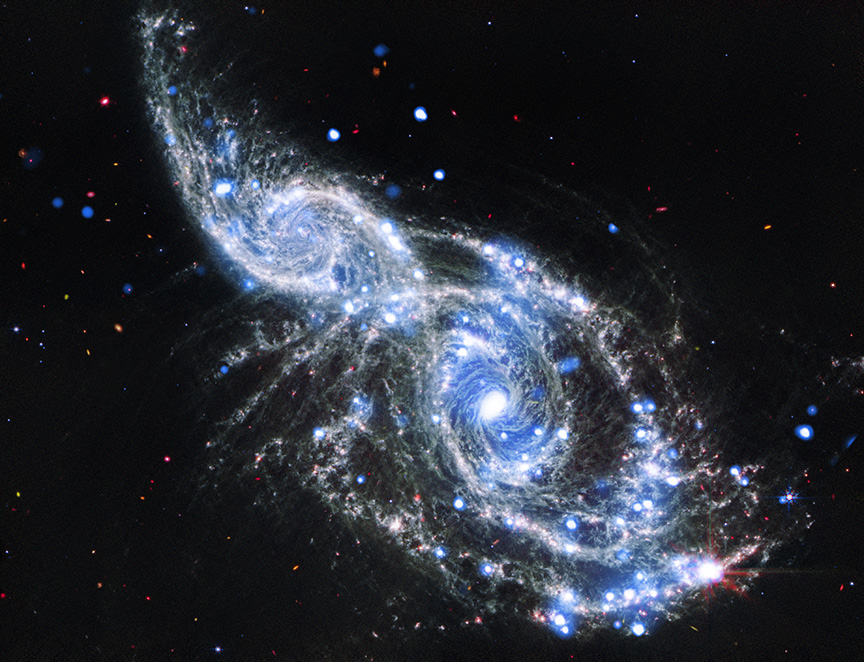
Webb and Chandra spot a cosmic car crash (Image credit: Credit: X-ray: NASA/CXC/SAO; Infrared: NASA/ESA/CSA/STScI/Webb; Image Processing: NASA/CXC/SAO/L. Frattare)
QUICK FACTS
What it is: The spiral galaxies NGC 2207 and IC 2163
Where it is: 120 million light-years away, in the constellation Canis Major
When it was shared: Dec. 1, 2025
One of JWST’s core tasks, according to NASA, is to provide scientists with a clear view of the centers of merging galaxies and thereby inform a new generation of models that will describe how galaxies interact and merge. NGC 2207 and IC 2163 are the perfect targets.
You may like
In the image, JWST’s midinfrared data appear in white, gray and red, primarily showing the dust and cooler material within the galaxies’ cores and spiral arms. Chandra’s X-ray data are shown in blue, highlighting high-energy regions of the two galaxies — binary stars, the remnants of dead stars, and regions where supernovas have occurred.
The spectacular layered image of NGC 2207 and IC 2163 is one of four Chandra-based composites that were published at the same time. The other three include NGC 6334, a star-forming region known for its arcs of glowing gas and dust; supernova remnant G272.2-0.3, where hot X-ray-emitting gas fills an expanding shell; and a star system called R Aquarii, where a white dwarf star sucks material from a red giant star.
Each image merges Chandra’s view of the high-energy universe with data from JWST (launched in 2021), the Hubble Space Telescope (launched in 1990) and the Spitzer Space Telescope (active between 2003 and 2020), as well as from ground-based telescopes.
For more sublime space images, check out our Space Photo of the Week archives.
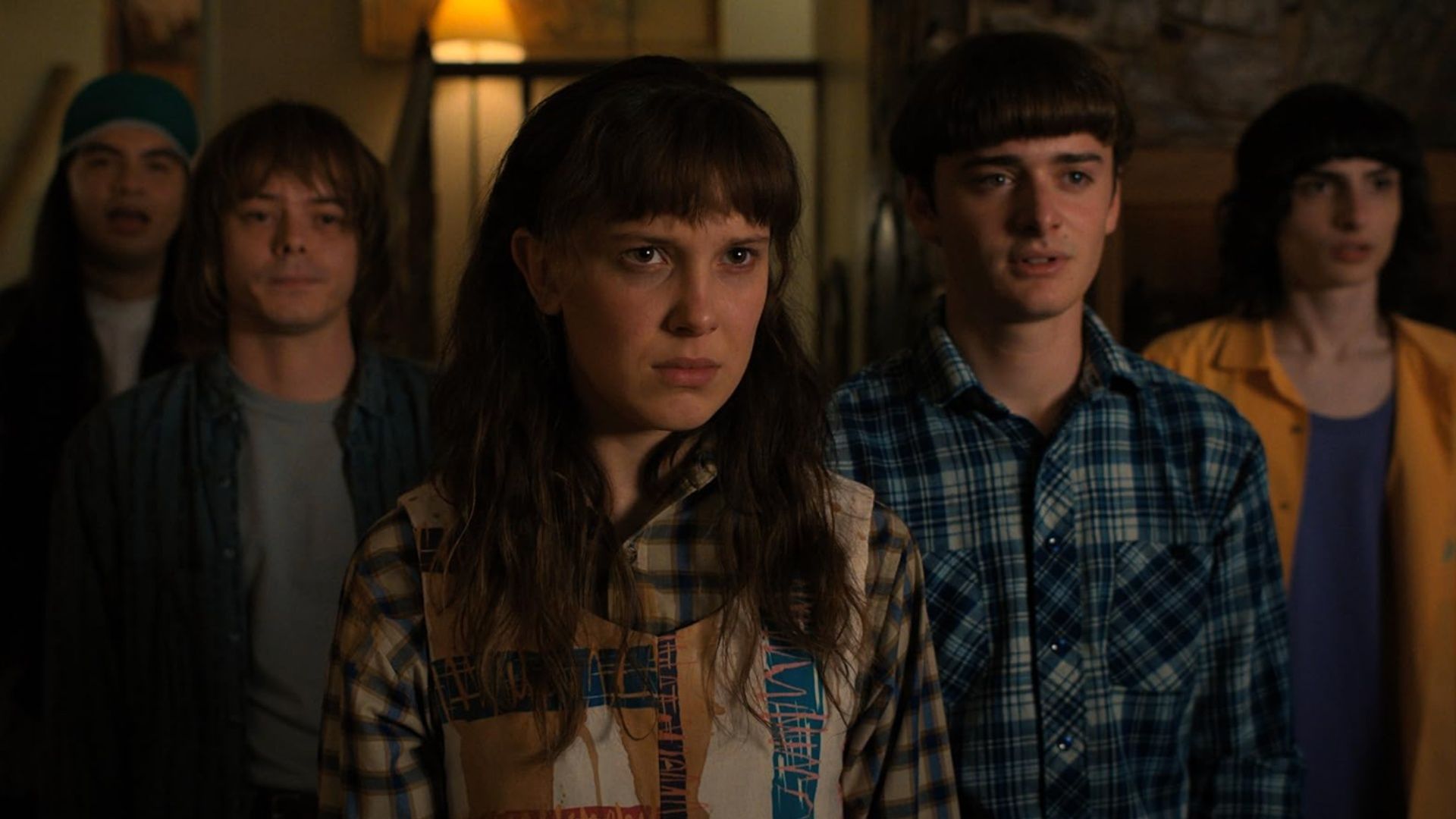
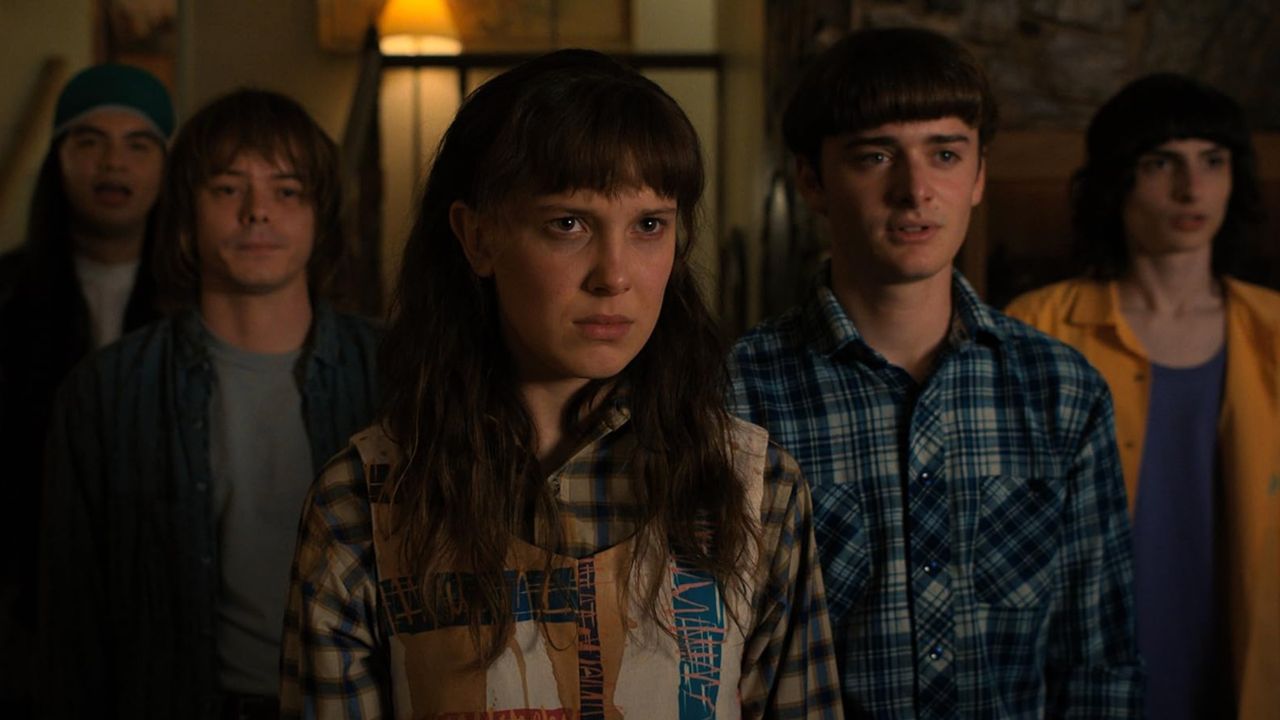
Netflix is one of the best streaming services available and Stranger Things is one of its flagship shows. So, to celebrate the final season coming to the small screen, and the holiday season too, we’ve rounded up the best Stranger Things gifts on the market.
Here, you’ll find a range of gifts from clothes to collectibles to trinkets, replicas and more. The holiday season is here and the final episodes of Stranger Things will air on Christmas Day and New Year’s Eve, so there’s never been a better time to search for the best Stranger Things gifts out there. While we haven’t reviewed any of the items we’ve highlighted, we wouldn’t include them if we didn’t recommend having them.
Best Stranger Things Gifts We Recommend
Why you can trust Space.com
Our expert reviewers spend hours testing and comparing products and services so you can choose the best for you. Find out more about how we test and review products.
Best Stranger Things merch
Best Stranger Things apparel
Best Stranger Things replicas

A paraplegic engineer from Germany blasted off on a dream-come-true rocket ride with five other passengers on Saturday, leaving her wheelchair behind to float in space while beholding Earth from on high.
Severely injured in a mountain bike accident seven years ago, Michaela Benthaus became the first wheelchair user in space, launching from west Texas with Jeff Bezos’s company Blue Origin. She was accompanied by a retired SpaceX executive also born in Germany, Hans Koenigsmann, who helped organize and, along with Blue Origin, sponsored her trip. Their ticket prices were not divulged.
An ecstatic Benthaus said she laughed all the way up – the capsule soared more than 65 miles (105km) – and tried to turn upside down once in space.
“It was the coolest experience,” she said shortly after landing.
The 10-minute space-skimming flight required only minor adjustments to accommodate Benthaus, according to the company. That’s because the autonomous New Shepard capsule was designed with accessibility in mind, “making it more accessible to a wider range of people than traditional spaceflight”, said Blue Origin’s Jake Mills, an engineer who trained the crew and assisted them on launch day.
Among Blue Origin’s previous space tourists: those with limited mobility and impaired sight or hearing, and a pair of 90-year-olds.
For Benthaus, Blue Origin added a patient transfer board so she could scoot between the capsule’s hatch and her seat. The recovery team also unrolled a carpet on the desert floor after touchdown, providing immediate access to her wheelchair, which she left behind at liftoff. She practiced in advance, with Koenigsmann taking part with the design and testing. An elevator was already in place at the launch pad to ascend the seven stories to the capsule perched atop the rocket.
Benthaus, 33, part of the European Space Agency’s graduate trainee program in the Netherlands, experienced snippets of weightlessness during a parabolic airplane flight out of Houston in 2022. Less than two years later, she took part in a two-week simulated space mission in Poland.
“I never really thought that going on a spaceflight would be a real option for me because even as like a super healthy person, it’s like so competitive, right?” she told the Associated Press ahead of the flight.
Her accident dashed whatever hope she had. “There is like no history of people with disabilities flying to space,” she said.
When Koenigsmann approached her last year about the possibility of flying on Blue Origin and experiencing more than three minutes of weightlessness on a space hop, Benthaus thought there might be a misunderstanding. But there wasn’t, and she immediately signed on.
It’s a private mission for Benthaus with no involvement by the European Space Agency (ESA), which this year cleared reserve astronaut John McFall, an amputee, for a future flight to the International Space Station. The former British Paralympian lost his right leg in a motorcycle accident when he was a teenager.
An injured spinal cord means Benthaus can’t walk at all, unlike McFall, who uses a prosthetic leg and could evacuate a space capsule in an emergency at touchdown by himself. Koenigsmann was designated before flight as her emergency helper; he and Mills lifted her out of the capsule and down the short flight of steps at flight’s end.
“You should never give up on your dreams, right?” Benthaus urged after touchdown.
Benthaus was adamant about doing as much as she could by herself. Her goal is to make not only space accessible to disabled people, but to improve accessibility on Earth too.
While getting lots of positive feedback within “my space bubble”, she said outsiders aren’t always as inclusive.
“I really hope it’s opening up for people like me, like I hope I’m only the start,” she said.
Besides Koenigsmann, Benthaus shared the ride with business executives and investors, and a computer scientist. They raised Blue Origin’s list of space travelers to 86.
Bezos, the billionaire founder of Amazon, created Blue Origin in 2000 and launched its first passenger spaceflight in 2021. The company has since delivered spacecraft to orbit from Cape Canaveral, Florida, using the bigger and more powerful New Glenn rocket, and is working to send landers to the moon.