
NIGERIA NEWS
Jega, Olorunyomi, Pate propose reforms to strengthen elections, governance in Nigeria

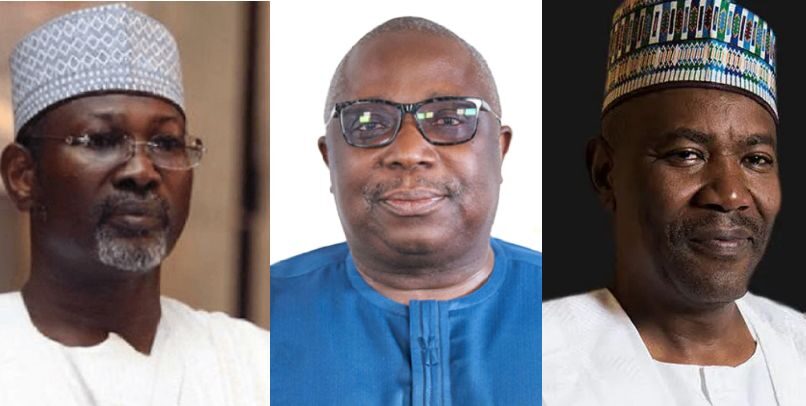
Democracy and governance experts recently convened in Gombe, northeast Nigeria, to examine the country’s electoral system and propose reforms aimed at strengthening democratic development.
The dialogue, hosted on 4 December by the Vice Chancellor of Federal University Kashere, Umaru Pate, featured PREMIUM TIMES publisher, Dapo Olorunyomi, as the chairman of the occasion, with former INEC Chairman Attahiru Jega serving as the guest lecturer.
In their respective speeches, Messrs Jega and Olorunyomi emphasised that Nigeria, along with other democratic nations, must continually enhance the integrity of its elections to make them more credible and more influential on democratic governance and socioeconomic development.
Mr Jega argued that strengthening electoral integrity remains one of the most critical pathways to securing “good democratic governance.”
Also, Mr Olorunyomi contended that credible elections can serve as the foundation for competent leadership, effective governance, and a renewed national purpose.
In his opening remarks, the vice-chancellor said the gathering came at a crucial moment for a country still searching for democratic renewal and institutional trust.
“As a public university, we bear a responsibility not only to train skilled graduates, but also to contribute meaningfully to national dialogue, democratic awareness, and responsible leadership,” Mr Pate, a professor of media and society, said.
He noted that Nigeria faces a crisis of public trust, declining civic engagement, rising misinformation and persistent governance failures, but added that citizens’ resilience and ongoing reform efforts offer hope.
Mr Olorunyomi, who also serves as the CEO of the Centre for Journalism Innovation and Development (CJID), stated that Nigeria’s elections have not yielded good governance, partly due to weaknesses in the architecture of electoral institutions.
He acknowledged reforms introduced by the Independent National Electoral Commission (INEC) over the years, including the BVAS and IReV systems. Yet, he said that gains remain fragile due to political interference, logistical problems and the growing judicialisation of elections.
“Increasingly, courts—not voters—determine winners, eroding trust in the sanctity of the ballot,” he said.
Mr Olorunyomi also faulted the state of political parties, describing many as hollow structures undermined by monetised primaries, godfatherism and imposed candidacies.
“When parties elevate poorly prepared or unqualified candidates, poor governance becomes not an aberration but an inevitability.
“Beyond institutions lies our political culture: the normalisation of vote buying, the persistent shadow of violence, and a growing cynicism that pushes many citizens toward disengagement. The consequence is a legitimacy deficit—leaders elected by a fraction of eligible voters are often unable to command the moral authority required for difficult reforms,” he said.
Despite these challenges, the veteran journalist said signs of democratic renewal are visible in expanding civic activism, rising youth participation, a more engaged diaspora, stronger independent media, and digital-driven public oversight.
He called for deeper reforms, including reinforcing INEC’s autonomy, democratising political parties, enforcing campaign finance transparency, and strengthening public institutions to prioritise merit over patronage.
Mr Olorunyomi emphasised the growing importance of accountability journalism and ethical artificial intelligence in defending electoral integrity and strengthening public scrutiny.
“In this rapidly changing landscape, accountability journalism and ethical AI are now indispensable. Nigeria’s media ecosystem demonstrates that investigative reporting, real-time fact-checking, and forensic electoral monitoring can counteract the distortions of digital platforms and opaque algorithms. At the same time, emerging ethical standards in AI—anchored in transparency, fairness, and protection from exploitative data practices—provide new guardrails for how political actors, platforms, and regulators deploy automated systems.
“Together, these forces form a counter-Leviathan: a democratic infrastructure of truth, scrutiny, and principled technological governance. They expand civic agency, protect electoral integrity, and reaffirm the principle that political choice must rest on fact, fairness, and a trusted public sphere.”
He added that Nigeria’s democratic performance carries continental significance, warning that failures embolden anti-democratic forces across Africa. He said the 2027 elections must serve as a watershed moment for rebuilding trust and signalling Nigeria’s commitment to democratic renewal.
“As Africa’s largest democracy, most populous country, and a cultural powerhouse, Nigeria sets precedents that reverberate across the continent. When our elections are credible, and our institutions work, we strengthen democratic norms in a region where they are fragile. When they falter, we unwittingly embolden anti-democratic forces elsewhere.
“This is why the 2027 elections must be a watershed moment—a chance to learn from past failures, repair broken bridges of trust, and signal to Africa and the world that Nigeria remains committed to the hard, necessary work of democratic renewal. If we rise to this historic responsibility, we will not only stabilise our own republic but also offer a model of hope and possibility for the developing world.”
The former INEC Chairman, Attahiru Jega, in his lecture, argued that periodic elections alone do not guarantee that citizens’ votes are unshackled or meaningful. He said only elections conducted professionally, efficiently and transparently and in which citizens vote with conscience, free of fraud, irregularities and inducement, can truly reflect the will of the electorate.
Mr Jega lamented that Nigeria has spent 26 years “muddling through” democratic development, constrained by poor electoral integrity, inadequate representation and a governance model that fails to address citizens’ basic needs for security, dignity and a decent quality of life.
“Free and fair elections, on which the political system and its governance model are predicated, have been essentially constrained, and their integrity undermined. This raises significant questions, especially about how Nigerians practice electoral democracy, and about the fate of Nigeria’s democratic development.”
The former INEC chairman said weak governance structures and institutions have contributed to a crisis of legitimacy, as citizens increasingly lose faith in the state’s capacity to protect their rights or address their needs.
“In present-day Nigeria, given what can aptly be termed as a crisis of governance at all levels, the processes, structures and institutions of governance are essentially weak, or have virtually collapsed, with regrettable consequences on desirable economic growth and socioeconomic development.”
This drift, he warned, has led to citizens becoming indifferent to political participation and constructive engagement in the governance processes, even losing hope in democratisation and governance processes, which is even more worrisome.
To reverse this, Mr Jega called for sustained reforms to strengthen electoral preparation and administration, insisting that integrity in elections has a direct correlation with quality representation and good democratic governance, which are primary requirements for democratic development and consolidation.
“One of the most important efforts to strengthen good democratic governance in Nigeria is to uplift the integrity of elections. This can and should be done by increasing the capacity, competence, and professionalism of INEC.”
He urged INEC to learn from global best practices, enforce sanctions against electoral offenders, deploy adaptable technology, expand voter education, and deepen partnerships with stakeholders on electoral integrity, nationally and internationally.
“It is also necessary to do whatever it takes to continue to enhance active citizen participation in political and electoral processes.”
The professor said these measures are essential in an era marked globally by democratic backsliding and autocratisation.
READ ALSO: Defections: ADC says 2027 elections will be between APC and Nigerians
Mr Jega concluded that elections with integrity remain the kernel of democratic consolidation. Free, fair and credible elections, he said, give citizens hope and confidence in governance and help mobilise active participation, an indispensable requirement for Nigeria’s democratic development.
“No doubt, Nigeria and Nigerians are desirous of entrenching good democratic governance. Therefore, serious attention needs to be focused on making Nigerian elections among the best, as soon as possible, in terms of integrity,” he said.
“In countries like Nigeria, which are currently in the sphere of, and practising, liberal, representative, or electoral democracy, there is a need for constant vigilance and effort to prevent democratic regression or backsliding and ensure electoral integrity to nurture, sustain, and consolidate good democratic governance.”

The Supreme Court has confirmed that the President has constitutional authority to declare a state of emergency in any state to prevent lawlessness or a breakdown of order.
In a six-to-one ruling, the apex court held that the President may suspend elected officials during such periods, provided the suspension is temporary.
Justice Mohammed Idris, delivering the majority judgment, explained that Section 305 of the 1999 Constitution empowers the President to take extraordinary measures to restore normalcy, leaving the specific actions at the President’s discretion.
The case arose after several PDP-governed states challenged the declaration of a state of emergency in Rivers State, where state officials were suspended for six months.
Court dismisses suit on jurisdiction and merits
The plaintiffs, including Attorneys-General from multiple states, sought to determine if the President could legally suspend governors, deputy governors, and state assemblies under emergency powers.
Justice Idris upheld preliminary objections from the Federal Government and National Assembly, ruling that the plaintiffs failed to establish a case that warranted the Supreme Court’s original jurisdiction.
Nevertheless, the court also considered the substantive arguments and dismissed the case on merit, affirming the President’s power under the Constitution.
Dissenting opinion warns against abuse
Justice Obande Ogbuinya dissented, agreeing that the President may declare an emergency but “Such power cannot be extended to suspending elected officials, including governors, deputy governors, and members of state legislatures.”
He explained that doing so undermines the democratic mandate and the balance of power intended by the Constitution.


Kuni Tyessi in Abuja
The Federal Government, through the Nigerian Consumer Credit Corporation (CREDICORP), has formally rolled out the 10,000 Women in Mobility programme.
The scheme is designed to empower 10,000 women across the 36 states and the Federal Capital Territory (FCT) by granting them access to vehicles, tricycles (popularly known as Keke), and motorcycles.
Speaking while launching and handing over the vehicles to the beneficiaries, Minister of Women Affairs, Imaan Sulaiman-Ibrahim, underscored the importance of activating economic spaces for women to ensure their credit worthiness and financial success.
She disclosed that the Abuja pilot phase saw mobility assets handed over to 1,000 women, noting that the programme will be expanded nationwide to reach 10,000 beneficiaries.
According to her, the programme reflects the Federal Government’s resolve to remove structural barriers that limit women’s participation in key sectors of the economy.
Her words: “It’s an economic empowerment. It’s how much they drive it and how many hours they put into it. There’s no economic effort that is a chicken feed. Mr. President has a goal of a $1 trillion economy, and we have all come together across sectors to ensure that we activate economic spaces and also carry women along.
“Because women are over 50 per cent of the population of this country, and they participate across sectors, so we will like to strengthen their participation so that it translates into value, not just for them and their families, but for the country at large”.
Earlier, MD of CREDICORP, Engr. Uzoma Nwagba, described the programme as a practical step towards expanding financial inclusion and deepening Nigeria’s consumer credit ecosystem.
Nwagba explained that CREDICORP is working with key partners to integrate financing, asset supply, training, and business support, ensuring that beneficiaries go beyond accessing credit to achieving success in their mobility businesses.
He assured that the agency would continue to collaborate with relevant stakeholders to ensure the success, transparency, and sustainability of the programme nationwide.
Some of the beneficiaries who spoke to reporters said the initiative would enable them to become financially independent, support their families, and contribute meaningfully to the economy, while pledging to make judicious use of the mobility assets and comply fully with the repayment terms.
In their separate goodwill messages, Minister of State for Labour and Employment, Nkeiruka Onyejeocha; Director General, National Automotive Design and Development Council (NADDC), Oluwemimo Osanipin as well as the National President, National Council for Women Society (NCWS), Princess Edna Azura, commended the Federal Government and CREDICORP for the initiative, describing it as a timely intervention that would expand women’s participation in the mobility and transport sector.
NIGERIA NEWS
Tennis, Betting Markets, and Cross-Regional Parallels Between Canada and African Jurisdictions


Tennis occupies a distinctive position within global sport due to its standardized rules, international tournament calendar, and individual competitive format. These characteristics make tennis comparable across regions with different economic and regulatory conditions. Alongside professional competition, betting markets connected to tennis have developed in parallel, shaped by legal frameworks, digital access, and consumer behavior.
The relationship between professional tennis and betting activity can be observed in both mature and developing markets. Individuals often referred to as a sport gambler typically base their engagement on publicly available information, including player rankings, match statistics, surface preferences, and tournament formats. This pattern illustrates how sport, data analysis, and digital platforms increasingly intersect across regions such as Canada and parts of Africa, including through regulated environments associated with top canadian sportsbooks.
Tennis Landscape in South Africa and Betting Trends
Tennis in South Africa operates within a mixed structure of private clubs, regional associations, and national governance. While the country does not host a top-tier ATP or WTA event, local players regularly participate in international circuits. Tennis betting South Africa primarily focuses on global tournaments rather than domestic competitions, reflecting the international nature of the sport.
Betting activity tends to increase during Grand Slam events and major ATP and WTA tournaments. Markets often emphasize match outcomes, set betting, and player performance metrics. Access to mobile platforms has contributed to wider participation, although regulatory frameworks differ across African jurisdictions.
Responsible gambling is a key consideration in this environment. Regulators and licensed operators typically promote tools such as spending limits, self-exclusion options, and access to educational materials. These measures are intended to ensure that betting remains a controlled activity rather than a financial strategy.
Betting Africa: Regional Characteristics and Market Structure
The term betting Africa encompasses a diverse range of regulatory environments and market conditions. Some jurisdictions operate under centralized licensing systems, while others allow private operators under national oversight. Despite these differences, common characteristics include high mobile penetration and strong interest in international sports.
Tennis betting across African markets often mirrors global trends, with bettors focusing on well-documented tournaments and players. The availability of real-time data and live streaming has increased engagement, but regulatory emphasis remains on consumer protection and responsible participation.
While economic conditions vary, similarities with Canada can be observed in how betting markets rely on international sporting events rather than purely domestic competitions. This shared reliance underscores tennis’s role as a globally standardized sport.
Tennis Canada: Organizational Structure and Development
Tennis Canada functions as the national governing body responsible for player development, competition organization, and international representation. Its structure includes youth development programs, national training centers, and partnerships with provincial associations. These systems aim to create clear pathways from junior participation to professional competition.
The organization also plays a role in hosting and managing international tournaments, contributing to Canada’s visibility on the global tennis calendar. Governance standards emphasize transparency, athlete welfare, and alignment with international federations. Similar governance principles can be observed in well-established African tennis federations, although resource availability may differ.
Canadian Tennis Players on the International Stage
A Canada tennis player typically progresses through structured junior programs, national competitions, and international tours. Participation in ATP and WTA events requires consistent performance, access to coaching, and financial support. Canadian players have increasingly appeared in top-tier tournaments, contributing to domestic interest in the sport.
This progression model shares similarities with pathways in several African countries, where players often combine national federation support with international training opportunities. In both regions, success at the professional level influences media coverage, sponsorship interest, and public engagement with tennis.
Canadian Open Tennis: Tournament Overview
Canada Open Tennis Men
The men’s competition of the Canada Open tennis men forms part of the ATP Masters calendar. It attracts top-ranked players and contributes significant ranking points. The tournament’s structure, surface consistency, and timing within the season make it a key preparatory event ahead of major championships.
Canada Open Women’s Tennis
Canada Open women’s tennis operates under the WTA framework and mirrors the men’s event in organizational standards. It provides high-level competition and international visibility for women’s tennis. Both tournaments rotate host cities, ensuring national reach and shared economic impact.
Canadian Open Tennis in the Global Calendar
Collectively referred to as Canadian Open tennis, the event occupies a stable position within the professional tour. Its standardized format allows bettors and analysts worldwide to apply consistent evaluation criteria. This predictability is one reason why international betting markets show sustained interest during the tournament period.
Sports Betting Platforms and Digital Access
Digital platforms have transformed access to sports betting in both Canada and African jurisdictions. Mobile applications, online interfaces, and integrated data feeds allow users to follow tennis matches in real time. Discussions around best sports betting apps Canada typically focus on usability, regulatory compliance, and access to information rather than guaranteed outcomes.
In both regions, licensed platforms are required to provide clear terms, transparent odds, and responsible gambling tools. These requirements reflect broader regulatory objectives aimed at minimizing harm while allowing legal participation.
Sports Betting Academy: Education and Analytical Approach
A sports betting academy generally refers to educational initiatives focused on statistical literacy, probability understanding, and risk management. These programs do not promise success but aim to improve comprehension of betting mechanics.
Educational approaches emphasize that betting outcomes are uncertain and that disciplined behavior is essential. Similar educational efforts are observed in both Canada and African markets, often supported by regulators or independent organizations. Responsible gambling principles are integral to such initiatives.
The Sport Gambler: Behavior, Data, and Decision-Making
The modern sport gambler typically relies on data rather than intuition alone. In tennis, this includes surface performance, head-to-head records, injury reports, and scheduling factors. Both Canadian and African bettors operate within globally shared information environments, accessing the same match statistics and analytical tools.
Regulatory frameworks encourage bettors to approach wagering as a form of entertainment. Setting financial limits, understanding odds, and recognizing warning signs of problematic behavior are core elements of responsible participation.
Interconnection Between Tennis Events and Betting Markets
Large tennis events influence betting markets through increased liquidity and public interest. Men’s and women’s competitions generate distinct market dynamics due to differences in match formats and tour structures. However, the underlying analytical principles remain consistent across regions.
The international nature of tennis ensures that betting patterns in Canada and Africa often align around the same tournaments. This convergence highlights tennis’s role as a unifying sport within global betting ecosystems.
Future Outlook: Tennis and Betting Across Regions
Future developments in tennis and betting will likely depend on regulatory clarity, technological innovation, and continued emphasis on responsible gambling. Digital tools may improve data accessibility and consumer protection, while educational initiatives could expand analytical understanding.
Canada and African jurisdictions share similarities in their reliance on international tennis events, digital platforms, and regulatory oversight. These parallels suggest that despite differing economic contexts, tennis and its associated betting markets operate within a shared global framework.

The post Tennis, Betting Markets, and Cross-Regional Parallels Between Canada and African Jurisdictions appeared first on Vanguard News.


Gunmen have continued their onslaught on vulnerable Kogi communities with the killings of four persons and the abduction of 20 worshipers at the first ECWA church.
The last Sunday attack at the First ECWA Church in Ayetoro-Kiri, Kabba/Bunu Local Government Area of Kogi State, added to the number of attacks on Churches in Okunland in the last three weeks.
In the latest attack, one person was killed while at least 20 worshipers were abducted.
The Guardian learnt that on the same Sunday, gunmen in the Oke-Agi and Ilai communities in the Mopamuro local government councils of Kogi State killed three persons and abducted many.
“The victims at ECWA church in Aiyetoro-Kiri left one worshipper, identified as Jayjay, dead during the attack. Local authorities and security operatives said they will continue to assess the situation, as the number of abducted persons may even be more than 20.
The chairman of the council area, Zaccheus Dare Micheal, in his reaction blamed the church for opening service in a tense area. He further shut down all markets in the area.
In the Mopamuro council area of the state, the attack on the Oke-Agi and Ilai communities was said to have occurred simultaneously around 4:00 a.m. on Sunday, leaving many dead, others injured, and some residents abducted.
In the first community, Jamroro settlement, located between Oke-agi and Takete Isao and largely inhabited by Tiv people, was attacked. Two persons were confirmed killed, while three others sustained injuries and are currently receiving treatment at an undisclosed hospital.
The Ilai attack was on a Bassa community close to the Community Grammar School; one person was reportedly killed during the raid, while three others were kidnapped by the attackers.
The incidents in the two communities were confirmed by the Chairman of Mopamuro Local Government Area, Hon. Ademola Bello, alongside traditional authorities and community leaders.
It will be recalled that on November 30, gunmen attacked the Cherubim and Seraphim church in Ejiba, where scores of people were whisked into the bush.
The renewed violence has heightened fear across the area, with residents calling on security agencies and government authorities to urgently deploy decisive measures to curb the rising wave of coordinated bandit attacks in Yagba Federal Constituency.
“The attack started in neighbouring communities bordering Kwara State but has now graduated downward. No local government areas in Yagbaland are safe, from Ejiba in Yagba West to Orunda-Ile in Yagba East, and now the communities of Mopamuro,” said Mr Ope Owoyemi.
NIGERIA NEWS
Lekki shooting claims fake news, soldiers carried blank bullets — Lai Mohammed insists – Tribune Online


Former Minister of Information, Lai Mohammed, has again dismissed claims that protesters were killed during the October 20, 2020 #EndSARS protest at the Lekki Toll Gate, insisting that soldiers deployed to the area carried blank bullets.
Mohammed made the assertion on Monday while speaking on Sunrise Daily, a programme on Channels Television.
According to him, the Federal Government had access to security information that was not available to the general public at the time of the incident.
“We at the Federal Government level had access to information no one else had. I know this for a fact because I was continuously in touch with the Chief of Army Staff and the Chief of Defence Staff throughout those operations,” he said.
ALSO READ: Rising cost of fertiliser, farm inputs pushing Nigerians into hardship — Senator Adamu
The former minister maintained that troops deployed to the Lekki Toll Gate did not use live ammunition.
“I know for a fact that soldiers were issued blank bullets when they went to Lekki Toll Gate. The actors are still alive today,” Mohammed stated.
He said he was not aware of the military firing live bullets at protesters and insisted that no massacre occurred at the protest ground.
“Honestly, I am not aware that the military used live bullets on protesters, but I know that there was no massacre at the Lekki Toll Gate. There was a lot of fake news and misinformation,” he said.
Mohammed challenged claims of deaths at the scene, asking those making the allegations to produce verifiable victims.
“Very simply, tell me one person who can say my daughter, my son or my ward was at the Lekki Toll Gate and was shot and killed there,” he added.
NIGERIAN TRIBUNE


Nigeria’s Supreme Court has confirmed the President’s constitutional power to declare a state of emergency in any state facing a potential breakdown of law and order or descent into anarchy.
The decision, delivered in a 6-1 split judgment, arose from a legal challenge brought by Adamawa State and 10 other states governed by the Peoples Democratic Party (PDP). The plaintiffs contested President Bola Tinubu’s declaration of emergency rule in Rivers State, which included the six-month suspension of elected state officials.
The court dismissed the suit after upholding preliminary objections on jurisdictional grounds but proceeded to address the merits, ultimately ruling in favor of the executive’s actions.
Key highlights from the majority opinion, led by Justice Mohammed Idris:
– Section 305 of the 1999 Constitution grants the President broad discretion to take “extraordinary measures” to restore normalcy during an emergency.
– While the section does not explicitly detail these measures, it allows for actions such as temporarily suspending elected officials, provided they are limited in duration.
In the lone dissenting voice, Justice Obande Ogbuinya argued that although the President may declare an emergency, this power cannot extend to suspending democratically elected officials, including governors, deputy governors, and lawmakers.
Related

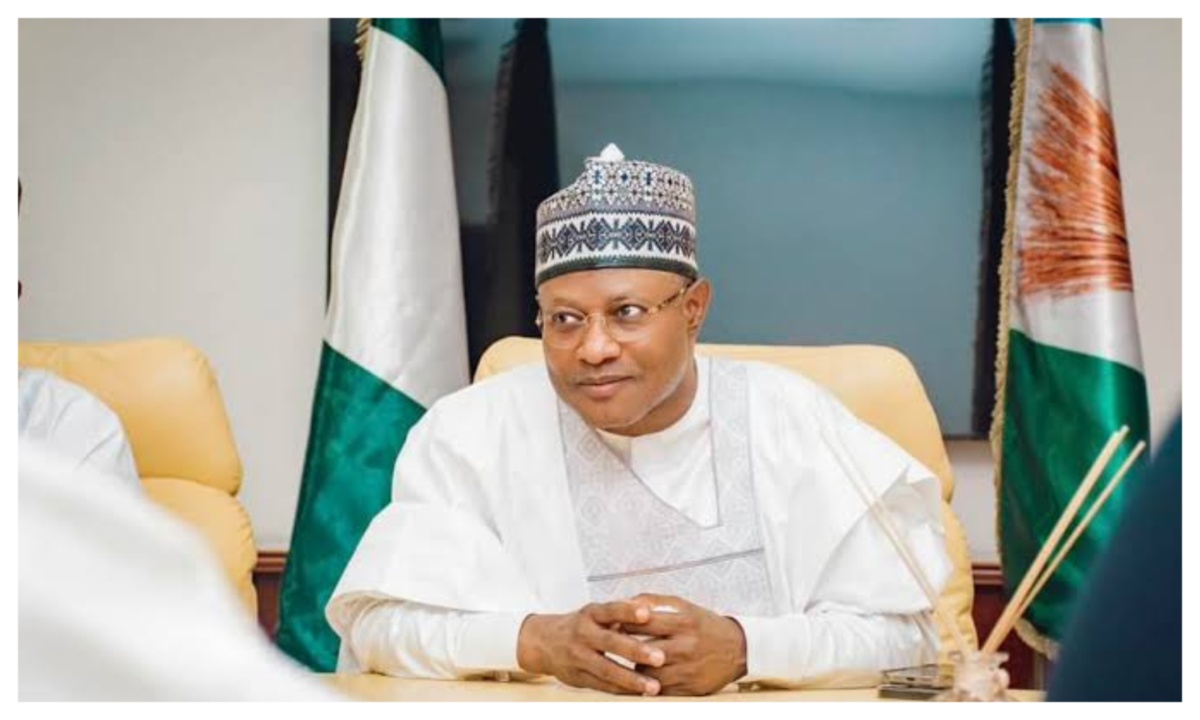
Governor Uba Sani of Kaduna State has promised to set up a Foundation to commemorate the late Sheikh Dahiru Usman Bauchi, that will continue to preach the inter-religious harmony which the learned Islamic scholar was known for in his lifetime.
The Governor made the commitment on Sunday, when he led a 30-member delegation on a condolence visit to the family of the late Tijjaniyya leader who died on November 27, at his family home in Bauchi.
Speaking during the visit, he said that Kaduna State Government will set up a committee comprising the late Sheikh’s family members, his students and various stakeholders, to work out details of the Foundation.
The Governor pointed out that although the late Sheikh was from Bauchi State, Kaduna State will immortalize him more than anyone because of his invaluable contributions to Islam, good governance and peaceful coexistence.
According to him, the Foundation will not only continue with the good works of the late Islamic cleric, it will also implement what he had planned to accomplish.
“I used to consult our late leader and whatever advice he gave me, had positive outcomes. I am part and parcel of the late Sheikh’s family and we have a cordial relationship with members of his household.’’
Governor Uba Sani promised that ‘’we will continue with his efforts at uniting Muslims and ensuring unity amongst adherents of different religions, not only in Kaduna State but the country at large.’’
In his remarks, the Deputy Governor of Kaduna State, Alhaji Mohammed Auwal Jatau, recalled that Governor Uba Sani was in faraway China on an official assignment when Sheikh Dahiru Bauchi died.
He said that the Kaduna State Governor had phoned his Bauchi State counterpart, Senator Bala Mohammed, from China and offered his condolences.
‘’I want to disclose that, Governor Uba Sani also constituted a special committee in Kaduna to receive condolences from students and well wishers of the late Sheikh Dahiru Bauchi,’’ he added.
Responding on behalf of the family, the son of the late Islamic cleric, Khalifa Sayyid Ibrahim Dahiru Bauchi, reiterated that the Governor has always been close to the deceased, even before he became the number one citizen of Kaduna State.
‘’This is your home. Immediately the death was announced, we spoke on phone. You also sent representatives that attended the funeral prayer and afterwards, you sent a delegation of Malams to condole us.
‘’Today, you have come to pay us a condolence visit. This shows the high esteem with which you held the late Sheikh. May Allah(SWT) bless you. May He also grant you your heart’s desires,’’ he added.
Khalifa Sayyid Ibrahim also thanked Governor Uba Sani, on behalf of the deceased’s 82 children, for promising to rebuild the residence of their grand father, where the late Sheikh Dahiru Bauchi grew up.
Those on Governor Uba Sani’s delegation include the Speaker, Kaduna State House of Assembly, Rt. Hon. Yusuf Dahiru Liman; the National President of Fityanul Islam of Nigeria (FIN), Sheikh Dr. Muhammad Arabi Abul Fath and Dr. Musa Muhammad from Borno (Deputy National Chairman, Fityanul Islam).
Others are Engr. Mansur Nakande from Plateau State (Secretary-General, Fityanul Islam); Sheikh Salaudeen Inyas; Saiyyida Fatima from Niger State (National Women Leader, Fityanul Islam); Hajia Hadiza Muhammad (National Women Secretary, Fityanul Islam) and the Kaduna State Chairman of Fityanul Islam, Sheikh Rabiu Abdullahi.
Sheikh Abdulkarim Hashim (Chief Imam, Sheikh Dahiru Bauchi Mosque, Kaduna); Sheikh Sharu Danlami (National Chairman, Quddamun Nabiyyu); Sheikh Salisu Maibarota; Sheikh Aminu Kasim Kafanchan; Sheikh Ibrahim Mahe and Sheikh Nasiru G. Shehu Dahiru were also on the delegation.
The rest are Kaduna State Chairman, First Aid; and State Chairmen of Fityanul Islam from various states, including Kano, Borno, Adamawa, Sokoto, Katsina, Zamfara, Jigawa, Niger, and Bauchi, as well as other senior officials of the Kaduna State Government.


Africa’s richest man and president of the Dangote Group, Aliko Dangote, has declared that the business environment in Nigeria is not conducive for any investor to be interested in buying the refineries operated by the Nigerian National Petroleum Corporation (NNPC) Limited.
Naija News reports that Dangote made the bold statement during a press briefing on Sunday in Lagos, noting that even if the government puts up the refineries for sale, buyers would not turn up.
According to him, the operating and regulatory environment makes it difficult for any investor to want to come into the nation’s refinery sub-sector.
“The higher price is that nobody will come and invest in this sort of thing. Even if the NNPC today wants to sell the refineries, there can never be a buyer. Why? Because the environment is not conducive for anybody to come and put their money and set up a refinery,” he stated.
Dangote also blamed the administration of former President Muhammadu Buhari for making a mistake in the oil sector by putting a trader as a regulator, leading to a case of regulatory mismanagement.
“During the last administration of President [Muhammadu] Buhari, there was a big mistake that was made by putting a trader as a regulator. A trader can never be a regulator, and I think that was a mismatch,” Dangote added.
He submitted that the situation has created a difficult investment climate, discouraging both local and foreign investors.
“The crisis that we’re facing is actually due to this, and what is actually paining me is that the country is paying a bigger price,” he said.
Nigeria has its refineries located in Port Harcourt, Warri, and Kaduna, with a total capacity of 445,000 bpd.
NIGERIA NEWS
“Stop the Segregation”: Lady Cries out, Shares Her Terrible Shiloh 2025 Experience, Nigerians React


- A lady who was invited to Shiloh 2025 has claimed there is a high level of misogyny and segregation against women in the Bishop David Oyedepo-led church
- She sought an explanation for why the front seats are always reserved for men, while women who came early and sat down before the service are chased to the back like second-class worshippers
- She recounted her humiliating experience at Winners Chapel during the just-concluded Shiloh and called on the church leadership to end the segregation, misogyny, and sexist protocols
Chukwuma Elizabeth Onyinye, an entrepreneur, has recounted her unpleasant experience at the just-concluded Shiloh 2025 program at the headquarters of Winners Chapel.
Onyinye claimed that there is a high level of misogyny in the church and wondered why women were treated like second-class worshippers by not being permitted to sit in front, despite arriving early because they are only reserved for men.

Read also
“3 of them tried to beat me up”: Man narrates his bad Shiloh experience, cancels Winners Chapel
 A lady cries out, saying there is misogyny and segregation against women in Winners Chapel.
Photo Credit: Chukwuma Elizabeth Onyinye, Bishop David Olaniyi Oyedepo
Source: Facebook
Onyinye’s humiliating Shiloh 2025 experience
In a Facebook post, Onyinye narrated that in the middle of a service, a man ordered her to leave the front seat where she sat, saying they were only reserved for men.
This remark displeased Onyinye, who had arrived for the program on time. She quizzed why she should accept such humiliation in the house of God, who created male and female.
Onyinye decried how women give, pray, fast and clean the church only to be deemed unqualified when it comes to sitting at the front.
She also frowned at the double standard in the church’s policy on the matter, which allowed the wife of Oyedepo to sit at the front. Onyinye’s experience partly read:
“The level of misogyny in Living Faith Church is actually wild.”Explain to me why all the front seats are reserved for men, while women, who came early, who sat down before service even started, are chased to the back like second-class worshippers.
Read also
Former Man United striker speaks 8 years after establishing £1m Orphanage Home in Nigeria
“I was invited for Shiloh, we arrived on time. I took my seat at the front.”In the middle of service, with the place already packed, one man walked up to me and said,“Front seat is for men only, you need to move.””I genuinely looked at him like, What exactly do you expect me to do with that information?”Because why should I move?”Why should I accept humiliation in the same house of God that created male and female?”The audacity.”The entitlement.”The shameless policing of women in the name of “protocol.””Women pray. Women fast. Women give. Women attend faithfully, women partake in cleaning the church , yet when it’s time to sit at the front, suddenly women become “unqualified.””And the funniest part?”Their overall Mama Oyedekpo is literally the ONLY woman allowed to sit in the front, because she’s sitting beside her husband And me that came with my own man earlier and sat at the front they want me to move to the back and sit seperately from my ODOGWU!”
Read also
Shiloh 2025: Oyedepo drops the unthinkable, “it’s off my course”
Out of anger and in protest about the sitting arrangement issue, Onyinye said she gave an offering of N200, as against the N5k her man gave her for offering.
She called on the church authority to address the issue and fix it.
 A lady shares her unpleasant experience at Shiloh 2025.
Photo Credit: Chukwuma Elizabeth Onyinye, Bishop David Olaniyi Oyedepo
Source: Facebook
View her Facebook post below:
Shiloh 2025: Lady’s experience stirs reactions
Legit.ng has compiled some reactions to the lady’s experience below:
Chisom Obiesili said:
“If that dress you are wearing in the picture is what you wore to church I don’t see the reason why you will be asked to move back.”But slim fitting the money sounds funny tho.”If you decide to sit and analyze church you will loose faith. Churches are managed by humans and understanding that we are not perfect will help you understand better.”
Eke Mercy Gift said:
“I think they started it because of women that wear short skirts, in general short wears, so that u won’t seduce pastor.”
Dah Niel said:
“Na Why Catholic church and Anglican remains the best, them no send your mama.”
Darlington Chinazam Kamsy said:

Read also
Aerial view of Bishop Oyedepo’s 100,000 seater church elicits uproar: “Money dey where e dey”
“Some ladies sat there and start opening their legs to distract the pastors. I’m not a member of the church but that was what I heard and I have also confirmed it to be true when I watched a video of when a pastor was telling a member to pls cover her legs. You are decent but some ladies wore half na’ked dresses and would want to distract the pastors.”
In a related story, Legit.ng reported that mixed reactions have trailed a video of Delta State Governor, Sheriff Oborevwori, doing ushering work at Shiloh 2025.
Ex-soldier recounts terrible Shiloh 2012 experience
Meanwhile, Legit.ng previously reported that an ex-soldier who cancelled Winners Chapel had recounted his terrible experience at Shiloh 2012, which made him take such a decision.
In a Facebook post, he said one of the church’s protocols insulted his father because of the route he took to access the church, leading to a physical exchange.
He claimed three protocol workers tried to beat him up, but failed, and that the matter ended up in the police station inside the church premises.
Source: Legit.ng
NIGERIA NEWS
“This is a different breed” — Pastor Tobi Adegboyega says as he unwraps his new Lamborghini Urus


Pastor Tobi Adegboyega, the founder of SPAC Nation, has once again captured hearts by showcasing his new Lamborghini Urus, which reports claims is fitted with a “2026 plate.”
The “2026 Plate”
In a video shared across social media platforms, Adegboyega says “There are many uruses and then there is this urus. This is a different breed”.
The “2026 plate” designation is notable given that, under UK registration systems, such plates are typically issued months from now.
This acquisition adds to the pastor’s substantial collection of high-end vehicles, which already includes multiple Lamborghinis, Ferraris, and a Rolls-Royce Cullinan.
Adegboyega has consistently faced scrutiny over his lavish lifestyle, which he has previously justified as a means to inspire young people toward wealth generation.
His ostentatious displays of wealth often spark debate within religious and public spheres.
Unapologetic in the face of criticism, Adegboyega maintains that his lifestyle is funded by his wife’s income, as he reportedly works for the church without a salary.
Social media reactions
@vickAlmondo: “Once again, this man is not a pastor. Stop it! Content Creator Tobi. The tag pastor is just his brand. Nothing more.”
@BlarkDemi_01: “Once, where is this pastor seeing money”
@Fillipo_Saga: “Something is not adding up”
@bretmetax: “That’s one way to make an entrance definitely got people talking”
Watch the video below…
Pastor Tobi Adegboyega unwraps his 2026 plate Lamborghini Urus🔥😱 pic.twitter.com/xbGRZYjRhx
— Sunkant Entertainment. (@sunkantent) December 15, 2025