
NIGERIA NEWS
PDP’s soul is gone – Keyamo welcomes Fubara to APC, praises Tinubu’s influence


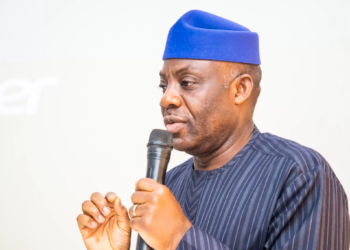
The Minister of Aviation, Festus Keyamo, says President Bola Tinubu has delivered significantly for Rivers State and the South-South region.
Keyamo on Friday spoke during the flag-off of the 7km Ipo Town–Airport Bypass and the commissioning of the Ikwerre Road–Igwuruta–Airport Road Corridor reconstructed by the Rivers State Government.
Flagging off the bypass, the minister thanked President Tinubu for what he described as the President’s numerous contributions to the people of Rivers State, adding that Tinubu has made it possible for all South-South states to align with the ruling All Progressives Congress, APC.
He noted that Rivers State, traditionally, has never been in opposition.
Keyamo also formally welcomed Governor Siminalayi Fubara into the APC.
He said, “We set a trap to catch a frog, we caught an elephant in the person of Sir Siminalayi Fubara, welcome to the fold of the progressives sir, welcome to the big family, welcome to the largest party in Africa.”
The Minister of Aviation added that Fubara’s defection from the Peoples Democratic Party, PDP, signals the death of the soul of the opposition party.
He said Fubara’s entry into the APC means “the souls of the PDP has left the party.”
Keyamo was at the Government House in Port Harcourt, where he witnessed Governor Fubara receiving his APC membership card from the Tony Okocha-led leadership of the party.
DAILY POST reports that Governor Fubara had earlier announced his intention to join the APC on Tuesday.
He explained that his defection from the Peoples Democratic Party, PDP, to the APC is in the interest of the people of Rivers State and also a gesture of appreciation to President Bola Tinubu, whom he credited as the reason he remains the Governor of Rivers State.

By Felix Khanoba
The Federal Government, through the Federal Ministry of Education, has announced a nationwide ban on the admission and transfer of students into Senior Secondary School Three (SS3) in all public and private secondary schools.
A statement signed by Director, Press and Public Relations at the ministry, Boriowo Folasade, on Sunday, said the directive follows growing concerns over the increasing incidence of examination malpractice.
The statement also cited in the use of so-called special centres during external examinations, which undermine the integrity and credibility of Nigeria’s education system as reason for the ban.
According to the Ministry, the policy will take effect from the next academic calendar 2026/27 with admissions and transfers now restricted strictly to Senior Secondary School One (SS1) and Senior Secondary School Two (SS2).
” Admission or transfer into SS 3 will no longer be permitted under any circumstance,” it said.
The ministry explained that the measure is aimed at discouraging last-minute movement of students for examination-related advantages, ensuring proper academic monitoring, and promoting continuity in teaching and learning.
“School proprietors, principals, and administrators nationwide have been directed to comply fully with the policy, as any violation will attract appropriate sanctions in line with existing education regulations and guidelines,” the statement added.
NIGERIA NEWS
Opposition Leaders Raise the Alarm, Accuse FG of Plotting One-party State – THISDAYLIVE

*Presidency: You are failed politicians in empty search for scapegoats
*Parties demand independent review of public accounts since 2015
*Want anti-graft operatives embedded into govt payment at all levels
*EFCC: No political motives in our operations
*APC registers Taraba governor amid concerns over decimation of opposition
Emmanuel Addeh in Abuja and Wole Ayodele in Jalingo
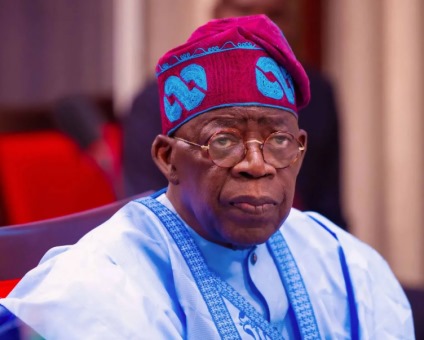
Opposition leaders yesterday raised fresh alarm over what they described as a coordinated assault on Nigeria’s multiparty democracy, accusing the President Bola Tinubu administration of using anti-graft and security institutions to intimidate political rivals and forcing opposition governors into the ruling All Progressives Congress (APC).
In a strong riposte, the presidency described the opposition political parties as failed politicians, accusing them of singing a familiar tune, hoping their cheerleaders would see their action as a blistering attack from a seemingly virile opposition group.
A statement by the president’s spokesman, Bayo Onanuga, late last night maintained that Nigeria’s constitution guarantees freedom of association and affords the people the right to change their political leanings at any time of their choosing.
“None of the people who joined the governing APC was pressured to do so. They all did so of their own free will. They are being motivated by the noticeable gains of President Bola Tinubu’s reform programme,” the presidency insisted.
But amid the allegations of pressure on opposition figures, the APC has formally registered Taraba State Governor, Agbu Kefas, ahead of his anticipated defection to the ruling party, a move that further reshapes the political landscape in the North-east.
The registration, carried out by the state leadership of the APC led by its Deputy Chairman, James Ahmadu, took place at the Government House in Jalingo, with the governor issued membership card number 001. The latest defection takes the number of governors leaving their party for the APC in recent times to six.
However, amid the back and forth over imputations that the Economic and Financial Crimes Commission (EFCC) has become a political tool in the hands of the current government, the anti-graft agency said yesterday that it remains neutral in its operations, urging politically exposed persons in its net to cooperate fully.
In a joint statement signed by former Vice President Atiku Abubakar, former Senate President David Mark, former presidential candidate of the Labour Party (LP) Peter Obi and other senior figures, the opposition alleged that agencies such as the EFCC were being weaponised to weaken opposition parties ahead of the 2027 general election.
Aside from being the longest serving Senate President in Nigeria, Mark, a retired military general and former military governor of Niger State is the current Chairman of the African Democratic Party (ADC), the party eyeing the takeover of government in 2027.
The opposition warned that Nigeria was drifting towards a de facto one-party state through coercion rather than electoral competition.
Beyond immediate incidents, the opposition leaders demanded sweeping reforms, including the depoliticisation of the EFCC, the embedding of anti-graft operatives in government payment processes at all levels, and the creation of an independent review body to examine public accounts from 2015 to 2025, warning that continued selective enforcement of the law posed a grave threat to Nigeria’s democratic stability.
Besides, Atiku, Mark and Obi, other signatories to the statement by the opposition included: A former Governor of Edo State and ex-national Chairman of the APC, Chief John Odigie-Oyegun; a chieftain of the Peoples Democratic Party (PDP), Chief Bode George; and former Federal Minister, Lawal Batagarawa.
“We are compelled by duty to nation and conscience to issue this statement to alert our compatriots and the international community to the unfortunate and gradual slide of our country into a state where key national institutions – particularly the Economic and Financial Crimes Commission (EFCC); the Nigeria Police; the Independent Corrupt Practices and Other Related Offences Commission (ICPC) are increasingly perceived as tools of political intimidation, selective justice and systematic persecution of opposition leaders.
“Across our nation, there are mounting concerns that state power is being deployed not for prevention of economic crimes, but for persecution of perceived political adversaries, with the ultimate aim of weakening opposition voices and dismantling Nigeria’s multiparty democracy,” the opposition leaders stated.
More than ever before in Nigeria’s democratic experience, the opposition coalition stated that Nigerians have witnessed what many now describe as a covert, undemocratic agenda to ensure that all state governments fall under the control of the president’s party.
The plan, it said, was not being carried through transparent electoral contests, but by secretly intimidating opposition governors via the anti-corruption apparatus until they succumb and defect.
According to the opposition, recent defections of opposition governors into the ruling party have reinforced public suspicion that political pressure, not ideological or personal persuasion, is driving this realignment.
This pattern, according to the key opposition parties, forms part of a broader project that targets not only elected leaders but also key opposition figures perceived as architects of emerging coalitions ahead of the 2027 general election.
“We must warn that this project, if allowed to continue unchecked, poses a grave danger to Nigeria’s democratic future,” the group maintained.
Warning against the weaponisation of the EFCC, the opposition stated that there is a discernible pattern of persecution of the opposition by the anti-graft agency with the sole objective of weakening the same for the benefit of the ruling APC.
The coalition said: “This disturbing pattern mirrors a long-standing sentiment openly expressed years ago by a former National Chairman of the ruling APC, Adams Oshiomhole, who declared when receiving defectors from the PDP: ‘Once you have joined APC, all your sins are forgiven.’
“ Whether intended as political rhetoric or not, this statement has come to symbolise a troubling reality: allegations against members of the ruling party are routinely perceived to be overlooked, while even unsubstantiated accusations against opposition figures are vigorously pursued and subjected to media trial.
“A few recent examples reinforce this perception. Months ago, a minister was implicated in a financial scandal so blatant that only sustained public outrage forced her resignation. Yet, long after stepping down, she has neither been charged nor arraigned by the EFCC and is now actively involved in the President’s re-election campaign.
“Similarly, another minister remained in office despite the university he claimed to have attended publicly denying his academic certificate. He, too, resigned only after intense public pressure. Months later, no charges have been filed.
“Such selective enforcement undermines the legitimacy of anticorruption efforts and erodes public trust. Furthermore, Nigerians are not blind to the sudden empowerment of certain political actors, including individuals appointed to federal executive positions after crossing from the opposition but still claim to be members of opposition party – whose unstated mandate, in the public’s eyes, appears to include the systematic destabilisation of opposition parties through the creation of factions, inducement and the exploitation of judicial processes, allegedly funded by state resources.”
Describing the EFCC as a critical national institution, created to safeguard Nigeria’s economic integrity, the opposition stated that yet today, many Nigerians fear that its independence is steadily being eroded.
An agency designed for prevention and accountability, it maintained, risks becoming an instrument of political persecution, undermining both justice and democracy, insisting that the President must recognise that evident social and political injustice could snowball into mayhem as the nation approaches another election cycle.
The group maintained that this trend must be halted immediately if the nation must be spared a major catastrophe, calling for the depolitisation of the EFCC, defence of a multi-party system, among others.
“The operations of the EFCC must be urgently shielded from political interference and must not serve the whims and caprices of any President, party or political faction. The Commission must refocus on genuine detection and prevention of economic crimes across board, not selective prosecution, media trials or intimidation of opposition figures. For the avoidance of doubt, the functions and powers of the commission are expressly provided for under Sections 6 & 7 respectively.
“ Nigerians must remain eternally vigilant to ensure that the President does not transform the country into a de facto one-party state – as witnessed in Lagos over the last 25 years, where opposition leaders were silenced, coerced or induced into irrelevance.
“Relying on the Supreme Court ruling on the powers of the EFCC over all public accounts, for true prevention of financial crimes, anti-graft operatives should be embedded in all the payment processes of governments at all levels to ensure compliance with rules of transparency, accountability and probity in public financial transactions.
“Put differently, the EFCC must recognise and exercise their function as covering both pre and post expenditure. operatives must also be held accountable for any unreported but later detected economic and financial infractions in their respective areas of oversight. To further strengthen the EFCC, we propose that the EFCC Act should be amended for this purpose,” the opposition coalition stated.
Besides, the parties called on the Attorney General, in consultation with the National Assembly, to set up an independent review body which should be granted full access to the public accounts of the federal, all states and all local governments covering 2015 to 2025, with a mandate to conduct a transparent, comprehensive review of financial transactions and publish its findings.
Such a review, it said, will expose the EFCC’s pattern of selective prosecution of opposition figures and reveal that many current officials of the federal government and those of ruling-party-controlled states should have long been prosecuted for economic and financial crimes, but were shielded due to their political affiliation.
Based on its findings, the independent body, it averred, should also propose amendments to EFCC’s enabling law to strengthen the agency for more effective and efficient prevention of financial crimes.
This proposed body, according to the opposition, should be chaired by an eminent judge, and composed of the following: Representatives from civil society organisations; representatives of the Nigerian Bar Association (NBA); representatives of the Institute of Chartered Accountants of Nigeria (ICAN) and representatives of Institute of Chartered Bankers.
Besides, it proposed that the membership should include: The Nigerian Financial Intelligence Unit (NFIU); representatives of anti-graft agencies; representatives of the Police; representatives of the Department of State Services (DSS); representatives of the Armed Forces as well as representatives of all political parties with a seat at the National Assembly.
“We call on all patriotic Nigerians across party lines, professions, regions and faiths to stand firm. Our democracy is under threat through the deliberate and systematic weakening of opposition forces, with the EFCC as the central instrument in this troubling strategy.
“In the coming weeks, we will provide more details, and also engage foreign partners of Nigeria’s anti-graft agencies and diplomatic missions, including United States, UK, Canada, EU, World Bank Office, United Nations, to express our deep concern about the EFCC increasingly becoming a willing tool in a broader scheme to weaken opposition in Nigeria, and also demand a reform of the anti graft agency.
“Nigeria’s democracy demands our vigilance, courage and unity, as Edmund Burke, an Anglo-Irish statesman and philosopher, warned: ‘The only thing necessary for the triumph of evil is for good men to do nothing’.
“We are equally guided by the enduring words of Martin Luther King Jnr: ‘Silence in the face of evil is itself evil ……In the end we shall remember not the words of our enemies, but the silence of our friends.” Now is the time for all of us to rise in defence of our cherished multiparty democracy, and indeed, in defence of the very soul of our nation,” the coalition stated.
But in a response, the presidency described Nigeria’s ‘so-called opposition politicians, ‘comprising some of those left in a dying political party and a sprinkling of some failed political office aspirants’ regrouping in a platform struggling to find its bearings, as amusing lots.
It stated that they blow hot air, seek scapegoats for their failure and move to confuse the polity in a desperate search for cheap political gains.
“On Sunday, a group of opposition figures gathered to sing their familiar tune, hoping their cheerleaders would see their action as a blistering attack from a seemingly virile opposition group.
“They alleged a threat to multi-party democracy because many top politicians are joining the governing All Progressives Congress of their own free will. Our constitution guarantees freedom of association and affords our people the right to change their political leanings at any time of their choosing.
“None of the people who joined the governing APC was pressured to do so. They all did so of their own free will. They are being motivated by the noticeable gains of President Bola Tinubu’s reform programme.
“We may ask: when politicians were moving in droves to the now-dying Peoples Democratic Party between 2000 and 2015, was Nigeria’s democracy imperilled?”, the statement said.
Also, it stated that investigations by the EFCC have begun exposing those with some explanation to give regarding their stewardship in office and management of public funds entrusted to them, stressing that these politicians now accuse Tinubu of weaponising the EFCC for political purposes.
While the Presidency does not speak for the EFCC and believes the agency can speak for itself, Onanuga stated that it must be reiterated that the EFCC is an independent institution established by law and empowered to carry out its statutory responsibilities without interference or favour.
“The agency’s mandate is to investigate and prosecute financial crimes, irrespective of the personalities involved, their political affiliations, or their positions in society. We find it curious that the same people who claimed they want to rescue Nigeria are now the ones waging a war of attrition against accountability and probity. Those who have cases to answer before EFCC should be bold and brave enough to defend themselves if they are clean.
“President Tinubu does not issue directives to any anti-corruption agency on whom to investigate, arrest, or prosecute. President Tinubu has significant state issues to address rather than engage in political targeting.
“The prosecution is conducted by the court, not by any sleight of hand, and those found not guilty will receive a clean bill of health. Allegations of ‘weaponisation’ are distractions from these politicians, who are running short of campaign issues to challenge President Tinubu and the APC’s success in less than three years in office.
“No one is above the law. Everyone must be accountable for their actions, both in and out of the office. Political affiliation should not be a shield against EFCC statutory work, which recently led to Nigeria’s removal from the FATF grey list,” the presidency added.
In the same vein, it stated that it had taken cognisance of the signatories to the statement, explaining that it was instructive that some of them were previously investigated and prosecuted by the EFCC even before Tinubu took office in 2023.
Some of these politicians, it pointed out, have also been indicted in international financial probes for money laundering, with some of their accomplices jailed in foreign lands.
“Are they now signing statements because their chickens are coming home to roost? We advise those politicians not to undermine the integrity of our nation’s institutions and the collective resolve to fight corruption by weaponising politics to escape accountability and encourage impunity.
“The fight against corruption is a collective responsibility and should not be trivialised by baseless allegations, jaundiced or politicised narratives,” the statement by the presidency stated.
For its part, the EFCC, in a statement by its spokesman, Dele Oyewale, noted that though not disposed to joining issues with respect to its operations in the media, it was compelled to respond to the ‘patently false’ claims.
Specifically, it stated that the allegations by a former Attorney-General and Minister of Justice, Abubakar Malami (SAN) about a purported revocation of ‘his bail over attendance at a political gathering in Kebbi’, was untrue.
According to the EFCC, administrative bail is a discretionary temporary reprieve that allows a suspect to be released on stated conditions pending conclusion of investigation and arraignment in court.
To this effect, it stressed that after his brief interrogation on November 28, 2025, Malami was offered provisional bail hinged on five requirements, maintaining that he has neither met any of the requirements nor shown readiness to keep faith with them.
“He was due back for further interrogation on December 1, 2025 , but in a curious twist, the former Minister pleaded with his investigators through a letter written to the Commission on December 4, 2025, to allow him to attend to his ‘ill-health’. The commission compassionately granted his plea even while his bail conditions had not been met.
“He was initially required to commence reporting for further investigations on December 1, 2025 but this had to be deferred to December 4, 2025 largely owing to his ‘Request for an Adjournment on Grounds of Ill- Health’ . He neither provided a medical report nor credible proof of ill-health to the Commission.
“The EFCC cannot allow the latitude granted the former Minister on his health stand in the way of investigations . On this score, he was invited again on December 8, 2025 for further interrogation and detained until the pending bail conditions are met,” the EFCC stated.
Evidently, the EFCC stated that the former minister’s claims of revocation of bail by the EFCC are untenable, pointing out that it was equally ridiculous to insinuate that the commission barred him from granting media interviews and from participating in political activities in Kebbi State.
“ Such bogus claims from a former chief law officer of the nation are strange, as the EFCC has no interest in the political affiliation of its suspects. It bears reiterating that the Commission is apolitical. A former governor and ranking member of the ruling party was recently arraigned for alleged contract fraud.
“The commission wishes to advise Malami to expend his energy on meeting the five bail conditions he acknowledged and signed on November 28, 2025. It would also serve his interest to cooperate with his team of interrogators rather than dissipate energy in whipping up sentiments through false claims in the media,” the EFCC stated.
Meanwhile, ahead of his defection ceremony, the APC on Sunday officially registered the Taraba State Governor, Kefas.
The governor was initially billed to leave for the APC on November 19, but the ceremony had to be postponed indefinitely due to the abduction of school children in Kebbi and other parts of the country.
The leadership of APC in the state led by the Deputy Chairman, James Ahmadu, conducted the registration of the governor at governor’s office in Jalingo, THISDAY learnt.
Kefas was registered in his Hospital Ward in Wukari local government area and was issued with the membership card 001 in the presence of the Speaker of the State House of Assembly, Kizito Bonzena and former Speaker of the House, Abel Peter Diah.
Others present at the event were: The Chief of Staff to the governor, Dr Jeji William, SDP gubernatorial candidate in the 2023 election, Danladi Baido Tijos and Special Adviser to the governor, Prof Josiah Sabo Kente.
Speaking on the occasion, the governor expressed appreciation to the leadership of the party for the gesture and assured of his commitment to take the party to greater heights.
He noted that with his resignation, the APC has officially taken over the leadership of the state and would henceforth win overwhelmingly in subsequent elections in the state.
“I was billed to decamp officially on 19th of November but has to be postponed indefinitely in solidarity with events at the national level, particularly the abduction of school children in Kebbi and other parts of the country.
“Though the ceremony would be done in the near future, the registration had to be done today so that the party can effectively take over the leadership of the state,” he stated.
The Speaker was equally issued his membership card by the leadership of the party at his Zing Ward in Zing local government area.

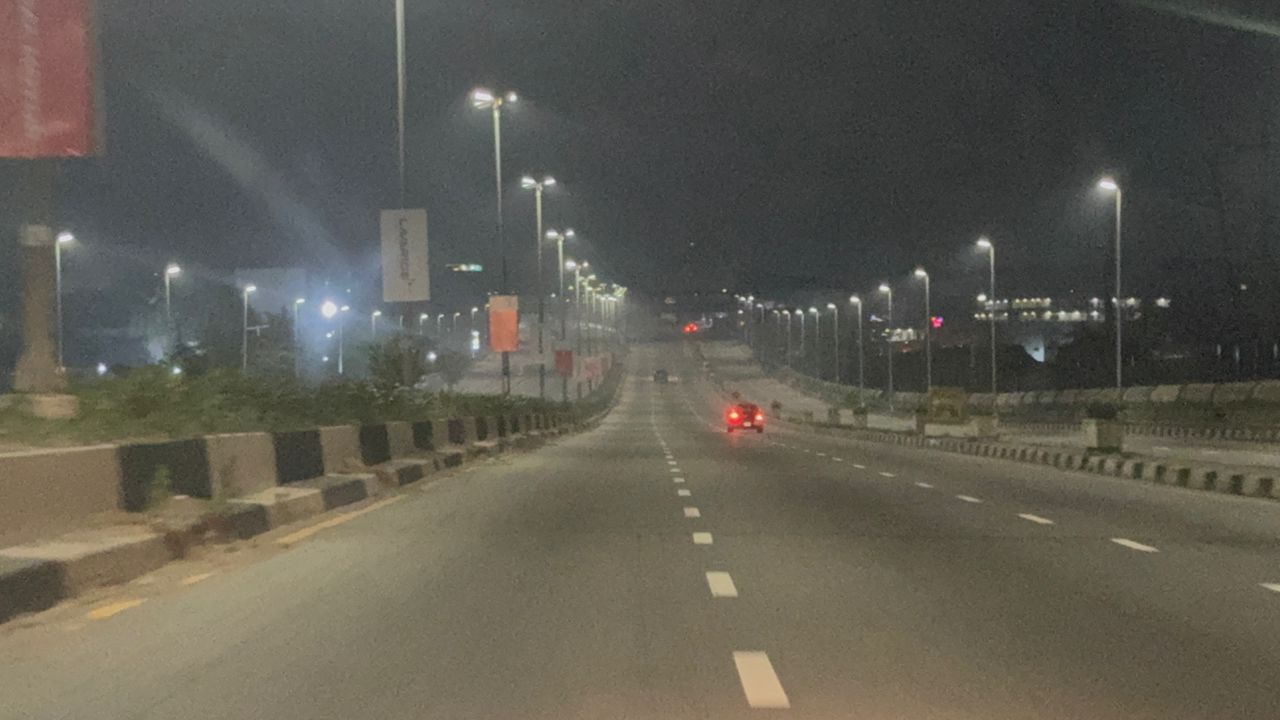
The Lagos State Electrification Agency (LSEA) has installed over 22,000 solar-powered streetlights across the metropolis.
The resurgence of streetlights in the state under the Ministry of Energy and Mineral Resources was evident from Governor’s Road at Alausa Secretariat through Mobolaji Johnson Way, the Accident and Emergency/7-Up Road, Old Toll Gate/Olusosun to Herbert Macaulay Way in Yaba, and Bode Thomas Road in Surulere.
Other corridors, including Muritala Muhammed Way, Ebute-Metta, Jibowu, Market Street Oyingbo, Iddo, Eko Bridge, Marina Bridge, Governor’s Road in Ikotun, and the Lekki–Ikoyi Link Bridge, have been fully illuminated.
Installations are also on going on Ikorodu Road from Anthony through Palm Grove to Fadeyi. Work is also ongoing along Mobolaji Bank Anthony Way, linking the Ikeja GRA axis to Maryland, while the overhead section of the Ikeja Bridge is almost completed.
Work is also ongoing on Western Avenue, the Gbagada–Oshodi Expressway, Mobolaji Bank Anthony Way, Alapere/Ogudu, Agric–Ikorodu, and Ikorodu Road, while the Lekki–Epe Expressway is projected to join the list.
For decades, Lagos relied heavily on grid electricity and diesel-powered lamps to keep its streets bright at night.
LSEA said the system was costly, unreliable, and environmentally harmful. Recognising the need for a cleaner and more sustainable alternative, the Lagos State Government, through the Ministry of Energy and Mineral Resources, began to rethink how the city’s public lighting system could be powered by renewable energy.
That vision gave birth to the ongoing solar streetlight project, a landmark initiative that not only enhances urban safety and visibility but also reflects environmental protection and energy efficiency.
Across highways, bridges, and neighbourhoods, solar-powered streetlights are transforming the nightscape, bringing safety, beauty, and sustainability to Africa’s largest urban centre.
Speaking on the project, Deputy Director of Public Affairs LSEA, Ololade Agboola, said the transformation is a product of visionary leadership and strategic planning by the Lagos State Government under Governor Babajide Olusola Sanwo-Olu, in line with his administration’s THEMES+ agenda. “Through the Light Up Lagos Solar Streetlight Initiative, implemented by LSEA, more than 22,000 solar-powered streetlights are being installed across the state. The initiative represents a model of effective collaboration within government. Under the coordination of the Commissioner for Energy and Mineral Resources, Biodun Ogunleye, and General Manager of the LSEA, Kamaldeen Abiodun Balogun, Lagos is redefining what sustainable urban infrastructure can look like in Nigeria.”
According to Balogun, the project demonstrates the government’s resolve to harness renewable energy as a key driver of sustainable development.
“This project reflects Governor Sanwo-Olu’s commitment to building a cleaner, greener, and safer Lagos. By reducing dependence on fossil fuels and maximise solar energy, we are lighting up the city while preserving the environment for future generations.”
“Each solar streetlight operates as a self-sufficient power unit, converting sunlight during the day into stored energy that illuminates the night. The result is a reliable, maintenance-friendly, and environmentally friendly system that requires no grid connection or fuel to function.
“The success of the Light Up Lagos project is a reflection of our collective commitment to sustainability.
This is not just about lighting our roads; it is about powering progress, improving safety, and promoting a cleaner environment for the people of Lagos.”

SONNY IROCHE argues that the Senate has increasingly resembled a ceremonial appendage of the Executive
In every democracy, there are moments when history pauses, not because of a dramatic rupture, but because institutions quietly surrender their authority. Nigeria may be approaching such a moment. The growing subservience of the National Assembly, symbolised by the now-infamous “take a bow” culture of the Senate, combined with the accelerating cross-carpeting of governors and politicians into the ruling All Progressives Congress (APC), is creating the unsettling silhouette of a one-party polity. The consequences of this drift are neither abstract nor theoretical. They point unmistakably toward weakened checks and balances, creeping authoritarianism, and the ever-present temptation of constitutional manipulation for tenure elongation.
The Nigerian Senate was designed to be a co-equal arm of government, a deliberative chamber meant to restrain executive excess, protect federalism, and represent the sovereign will of the people. Yet in recent years, its posture has increasingly resembled that of a ceremonial appendage of the Executive.
The phrase “take a bow,” once uttered by Senate leaders to wave through ministerial nominees without scrutiny, and the recent confirmation of President Tinubu’s ambassadorial nominees, has become emblematic of legislative abdication. It is not merely about skipping questions at confirmation hearings; it reflects a deeper erosion of constitutional responsibility. When nominees are spared rigorous examination of competence, conflicts of interest, or policy vision, the Senate effectively renounces its oversight role.
This is not a trivial matter. Democracies do not collapse overnight. They erode gradually, through the normalisation of shortcuts, the silencing of dissent, and the replacement of accountability with blind loyalty. A Senate that no longer interrogates power becomes an accomplice to its excesses.
Parallel to legislative docility is the growing wave of political defections to the ruling APC. Governors elected on opposition platforms, federal and state legislators, and influential political figures have been steadily crossing over, often without ideological justification, crises in their parties, or electoral mandate.
In theory, political realignment is part of democratic life. In practice, when defections occur en masse and almost exclusively toward the party in power, they signal something more troubling: the collapse of competitive politics. Opposition parties are hollowed out not through persuasion or superior ideas, but through inducement, coercion, and the promise of protection from past and impending corruption charges.
This phenomenon creates the illusion of national consensus, when in reality it reflects politicians convergence around power rather than popular consent. The electorate is effectively disenfranchised when the platform on which their representatives were elected is casually discarded after the polls.
Nigeria has walked this road before. The Vincent Ogbulafor-led Peoples Democratic Party (PDP) once boasted that it would rule for 60 years. That arrogance of permanence bred complacency, corruption, and ultimately, public backlash. The APC itself emerged as a corrective force to that dominance.
Ironically, today’s political trajectory risks reproducing the very pathology the APC once opposed. A dominant party that absorbs opposition figures, neutralises legislative resistance, and controls most state governments begins to resemble a de facto one-party state, even if elections still hold.
History is unkind to such systems. Without robust opposition, policy stagnates. Without fear of electoral loss, leaders lose the incentive to govern well. Without institutional resistance, power inevitably seeks expansion.
It is within this context that the probability of tenure elongation must be understood, not as paranoia, but as a rational concern grounded in African political history.
Nigeria has already experienced an attempted constitutional subversion. Former President Olusegun Obasanjo’s ill-fated third-term agenda failed not because the Executive lacked ambition, but because institutions, particularly the National Assembly, under the leadership of the courageous Senator Ken Nnamani, which retained enough independence pushed back and resisted it.
Today, the conditions, under the leadership of Senator Godswill Akpabio, are markedly different. A pliant Senate, a weakened opposition, and a political class increasingly dependent on the ruling party for survival collectively lower the barriers to constitutional revision. What once seemed politically impossible becomes merely procedurally inconvenient.
Across Africa, the pattern is familiar. In Uganda, Rwanda, Cameroon, Togo, and elsewhere, constitutional amendments, often framed as “stability,” “continuity,” or “national interest”, have enabled incumbents to extend their rule indefinitely. Each case began not with tanks on the streets, but with legislative compliance and political consensus.
Modern authoritarianism rarely announces itself. It advances incrementally, through legalism rather than illegality, through institutions rather than force.
First, the legislature weakens itself, or it allows itself to be weakened by the executive arm of government.
Next, opposition fragments.
Then, the ruling party becomes indistinguishable from the state.
Finally, constitutional norms are revised in the name of expediency.
At no point does democracy formally end; it simply stops functioning.
Nigeria’s danger is not an imminent dictatorship, but a slow conversion of democratic structures into hollow rituals, elections without choice, legislatures without power, and constitutions without constraint.
The implications extend far beyond politics. Investors, both local and foreign, are acutely sensitive to political concentration. One-party dominance and constitutional uncertainty raise red flags about policy reversals, rule of law, and contract sanctity.
Social cohesion also suffers. When political competition collapses at the political “elite” level, tensions are displaced downward, into ethnic, religious, and regional grievances. Citizens who feel excluded from formal political channels seek alternative, often destabilising, means of expression.
Ironically, the very stability that dominant parties claim to offer is undermined by the suppression of pluralism.
President Bola Ahmed Tinubu is a seasoned political actor with a long history in Nigeria’s democratic struggles. His legacy will be shaped not only by economic reforms or infrastructure projects, but by how he relates to institutions.
There is a profound difference between benefiting from political momentum and exploiting institutional weakness. A statesman strengthens checks on his own power; a ruler quietly welcomes their erosion.
Nigeria does not need a president made powerful by submissive institutions. It needs institutions made strong enough to restrain even the most powerful president.
If Nigeria’s democracy is to endure, the Senate must rediscover its constitutional spine and backbone. Oversight and interrogation must replace “take a bow” and ovation. Debate must replace deference. Senators must remember that they are not emissaries of the Executive, but trustees of the republic.
History remembers legislatures not for how loudly they applauded power, but for when they dared to restrain it.
The convergence of a docile Senate, mass defections to the ruling APC, and Africa’s cautionary examples of tenure elongation should provoke urgent national reflection. Democracies do not defend themselves. They rely on men and women within institutions to do so.
Nigeria stands at a crossroads. One path leads to renewed institutional balance, competitive politics, and democratic resilience. The other leads, slowly but surely, to authoritarian consolidation dressed in constitutional language.
The choice, while not yet made, is being shaped every day, by every “take a bow,” every opportunistic defection, and every silence where scrutiny should speak.
History is watching. And unlike politicians, history does not take a bow.
Iroche was a Senior Academic Fellow at the African Studies Center of the University of Oxford (2022-2023) and a public affairs commentator and publisher.
http://linkedin.com/in/sonnyiroche

…Says we’re on top of situation
By Kingsley Omonobi & Favour Ulebor
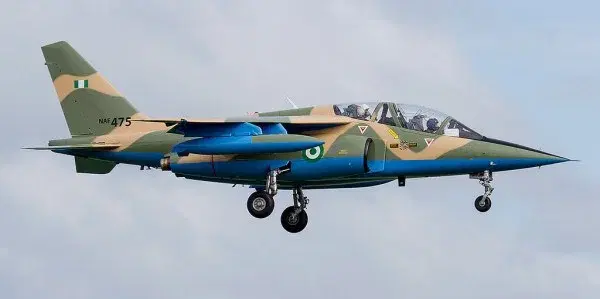
The Federal Government said yesterday discussions were still ongoing over the detention of a Nigerian Air Force C-130 aircraft and 11 soldiers, noting they were yet to be released by the Burkinabe government.
Recall that the aircraft, crew and soldiers onboard the plane were seized on Monday, shortly after the crew made what it described as precautionary landing in Bobo Diulasso, Burkina Faso.
The Nigeria Air Force, NAF, had said the aircraft on its way to Portugal for maintenance made the precautionary landing due to technical faults.
But the government of Burkina Faso and its counterpart in the Confederation of Sahel States, AES, accused the crew of entering into its airspace without clearance, adding that explained the reason the Hercules plane was forced to land.
However, speaking on the development yesterday, spokesperson of the Ministry of Foreign Affairs, Mr Kimiebi Ebienfa, said the federal government was actively engaging the authorities of the country involved to resolve the matter diplomatically.
“We are engaging them, but they are yet to be released,” Ebienfa said.
He added that the ministry of foreign affairs had taken over the discussions to ensure the safe release of both the aircraft and the Nigerian military personnel.
With the take over of negotiation of the aircraft and military personnel, the Nigerian Air Force has chosen to keep mute on the matter.
Though the ministry is handling the matter and not releasing details about talks on the issue, Vanguard made further efforts to contact some retired NAF pilots to comment on the implication of detaining a military aircraft after it encountered an emergency situation.
Those contacted said it would be wrong to speculate or pass judgment on the true situation of things with the aircraft and soldiers, as discussions or negotiations were still ongoing between Nigerian officials and those of Burkina Faso.
“In such situations when the facts of the discussions are not made clear yet, assuming a conclusion may jeopardise the government-to-government discussion and lead to some avoidable risks. So I advise we wait for the outcome of the negotiation,’’ said one of the retired officers on condition of anonymity.
Vanguard, however, gathered that Burkina Faso and other Sahel states, including Mali and Niger, who were members of Economic Community of West African States, ECOWAS, before they were suspended due to violent military overthrow of democratic institutions in their countries, are trying to use the situation as a bargaining chip.
“My observation is that the blockade of trade, movement of goods and services by ECOWAS which these three countries feel is under Nigeria’s control is seriously hurting them and has worsened their economic situation. Don’t forget that France no longer does business with them, so they are in difficulty.
“They feel the way to break out of the difficult situation they find themselves is to use Nigeria to negotiate a way out or secure some economic assistance or relief by bargaining with the military aircraft. But we will see how it goes. That’s my personal opinion,” one retired officer said
The post Seized C-130 aircraft: 11 soldiers yet to be released in Burkina Faso — FG appeared first on Vanguard News.

• Labour tasks Sanwo-Olu on good roads
Stakeholders, including the Nigeria Labour Congress (NLC), Lagos State Council, Lagos State Transport Management Authority (LASTMA) and the Federal Road Safety Corps (FRSC), have charted a path to a sustainable transport sector in the state.
This followed complaints by workers about spending a significant portion of their salaries on daily transportation due to bad roads and inadequate traffic management.
They, however, proposed practical and people-centred interventions for a safer and greener transportation system in Lagos State.
The stakeholders spoke during a transportation summit organised by the NLC Lagos State Council in collaboration with affiliate unions in the transportation and logistics sector, designed to foster partnership among the government, employers, and employees, with a focus on delivering a sustainable transport sector that addresses the challenges and promotes inclusive stakeholders’ engagement in the state’s transport system.
Chairperson of the NLC Lagos State Council, Agnes Sessi, tasked Lagos State Governor, Babajide Sanwo-Olu, on more investment in road management, completion, and optimisation of the rail system, stating that as rail lines expand, the government must prioritise affordability, security, and strict adherence to schedules.
She said that the NLC would not relent until transportation becomes an enabler of development and not a burden on the lives of residents.
According to her, bad roads must be fixed promptly, and traffic officers must be trained and deployed in a way that genuinely eases congestion.
Speaking on the theme “Addressing the Challenges of Transporters and Commuters in Lagos State,” Lagos State Commissioner of Police (CP), Moshood Jimoh, lamented that traffic congestion chokes the roads, leading to lost productivity and heightened stress.
The CP, who was represented by Assistant Commissioner of Police, State Intelligence Department, Lagos State Police Command, Joseph Jaiyeoba, said that safety concerns from reckless driving to criminal activities on the highways threaten lives and livelihoods.
He, therefore, urged transporters to imbibe the characteristics of discipline and responsibility for a better transportation system.
Also, Sector Commandant of the FRSC, Lagos Command, Kehinde Oseni, who was represented by the state’s Chief Road Commandant, Olaseinde Egbontan, said that the country records about 60,000 deaths yearly, even as he stated that work-related crashes account for the highest number of deaths.
He listed the human element as a major factor accountable for the number of deaths recorded yearly.
For a better transportation system in Lagos, Oseni also called for discipline and responsibility on the part of transporters, highlighting why inefficiency persists despite the improvement culture by officials.
Keynote Speaker and Chief Executive Officer of Widescope International Logistics, Dr Olusegun Musa, highlighted challenges of infrastructure deficit, regulatory and enforcement issues, safety and security, among others, denying the state of efficient gains of transportation.
Musa, who was represented by Training Director, Global Transport Policy, Olusegun Awe-Obe, called for more opportunities for a viable state transport sector.


FRESH indications have emerged that one of Nigeria’s oldest banking institutions, which is yet to meet the Central Bank of Nigeria’s (CBN) recapitalisation requirements, is currently attracting strategic investor interest from at least three groups.
Market intelligence suggests that despite an outward appearance of regulatory calm, the CBN has been quietly reviewing competing bids from both local and foreign investors seeking core equity stakes in deposit money banks that have not attained the statutory capital thresholds. Among them is an over 100-year-old bank that has become the focus of intense behind-the-scene negotiations.
Sources familiar with the process disclosed that a consortium from the Arabian Peninsula and another group with strong European banking connections have emerged as frontrunners in the race for a strategic stake in the institution.
However, the process remains fluid, with no final decision taken and negotiations still ongoing.
Analysts say the apex bank may be favourably disposed to a foreign investor acquiring a significant ownership position in the century-old lender, viewing such an outcome as a credibility booster for the ongoing recapitalisation programme.
The programme, which aims to strengthen balance sheets and enhance systemic stability, is scheduled to conclude on March 31, 2026.
According to proshare’s Economic and Market Intelligence Unit (EMIU), the CBN is also not opposed to mergers among relatively weaker banks, particularly those with negative or marginally positive shareholders’ funds. Such consolidation, analysts argue, could lead to the emergence of larger, more resilient institutions with stronger lending capacity.
“The challenge with some of the local interests that have expressed intent is their limited capacity to raise the minimum unencumbered capital required, while also sustaining adequate working capital,” EMIU noted. “This has raised concerns about the viability of purely domestic solutions for some of the weaker banks.”
One proposal under consideration in market circles is a partnership model in which foreign investors with deep capital collaborate with local investors who possess political and market influence.
While this approach appears logical on the surface, industry watchers say it faces significant technical, governance, and regulatory hurdles that may ultimately limit its feasibility.
For banks listed on the Nigerian Exchange, recapitalisation outcomes have so far been mixed. With roughly three months remaining to the deadline, most Tier-1 and Tier-2 banks have successfully raised the capital buffers required under the revised regulatory framework. However, several Tier-3 lenders remain under pressure, scrambling to secure capital injections or strategic partnerships to avoid forced mergers or distressed acquisitions.
CBN governor, Mr. Olayemi Cardoso, acknowledged this uneven progress at the Chartered Institute of Bankers of Nigeria (CIBN) Annual Bankers’ Dinner last month. He said many banks had already met the new capital requirements, while others were making steady progress and were expected to comply comfortably before the deadline.
According to the Governor, twenty-seven banks have raised capital through public offers and rights issues, while sixteen institutions have already met or exceeded the new thresholds. He noted that this performance underscores the depth, resilience, and adaptive capacity of Nigeria’s financial system, even amid prevailing macroeconomic headwinds.
As the recapitalisation deadline approaches, attention is increasingly shifting to weaker lenders and the regulatory decisions that will shape their future—whether through foreign strategic investments, mergers, or acquisitions that could redefine Nigeria’s banking landscape.


The presidency has described some opposition politicians as attempting to revive their failed political careers by calling out the administration of President Bola Tinubu.
The statement from the presidency, issued and signed by Tinubu’s spokesperson, Bayo Onanuga, accused the opposition figures of seeking scapegoats for their failure.
The message comes after a coalition of opposition leaders issued a joint statement raising a major alarm about the alleged politicisation of key anti-corruption and security agencies in Nigeria.
In the statement signed by David Mark, Atiku Abubakar, Mallam Lawal Batagawara, Chief Bode George, Peter Obi, and Chief John Odigie-Oyegun, they accused the All Progressives Congress (APC) of using security and anti-graft agencies as tools for the “systematic persecution of opposition leaders.”
The statement emphasized that state institutions – particularly the EFCC, the Nigeria Police, and the ICPC – are increasingly being deployed for “selective justice” with the ultimate aim of weakening opposition voices and dismantling the nation’s multi-party democracy ahead of the 2027 general elections.
However, the presidency said the opposition coalition would fail just like its members failed in their political careers.
It countered submissions that opposition figures are being forced to join the ruling All Progressives Congress (APC), insisting that those defecting to the APC are doing so of their own free will and because of the good things they have observed in the Tinubu government.
It also denied claims that the government is weaponising state institutions such as the Economic and Financial Crimes Commission (EFCC) against opposition figures in the country.
The full response from the presidency, titled, “A FAILED OPPOSITION ENGAGING IN SUBTERFUGE AND THE EMPTY SEARCH FOR SCAPEGOATS,” reads: “Nigeria’s so-called opposition politicians, comprising some of those left in a dying political party and a sprinkling of some failed political office aspirants regrouping in a platform struggling to find its bearings, are amusing lots.
“They blow hot air, seek scapegoats for their failure and move to confuse the polity in a desperate search for cheap political gains.
“On Sunday, a group of opposition figures gathered to sing their familiar tune, hoping their cheerleaders would see their action as a blistering attack from a seemingly virile opposition group.
“They alleged a threat to multi-party democracy because many top politicians are joining the governing All Progressives Congress of their own free will. Our constitution guarantees freedom of association and affords our people the right to change their political leanings at any time of their choosing.
“None of the people who joined the governing APC was pressured to do so. They all did so of their own free will. They are being motivated by the noticeable gains of President Bola Tinubu’s reform programme.
“We may ask: when politicians were moving in droves to the now-dying Peoples Democratic Party between 2000 and 2015, was Nigeria’s democracy imperilled?
“Also, investigations by the Economic and Financial Crimes Commission (EFCC) have begun exposing those with some explanation to give regarding their stewardship in office and management of public funds entrusted to them. These politicians now accuse President Tinubu of weaponising the EFCC for political purposes.
“While the Presidency does not speak for the EFCC and believes the agency can speak for itself, we must reiterate that the EFCC is an independent institution established by law and empowered to carry out its statutory responsibilities without interference or favour.
“The agency’s mandate is to investigate and prosecute financial crimes, irrespective of the personalities involved, their political affiliations, or their positions in society. We find it curious that the same people who claimed they want to rescue Nigeria are now the ones waging a war of attrition against accountability and probity. Those who have cases to answer before EFCC should be bold and brave enough to defend themselves if they are clean.
“President Tinubu does not issue directives to any anti-corruption agency on whom to investigate, arrest, or prosecute.
“President Tinubu has significant state issues to address rather than engage in political targeting.
“The prosecution is conducted by the court, not by any sleight of hand, and those found not guilty will receive a clean bill of health.
“Allegations of “weaponisation” are distractions from these politicians, who are running short of campaign issues to challenge President Tinubu and the APC’s success in less than three years in office.
“No one is above the law. Everyone must be accountable for their actions, both in and out of the office. Political affiliation should not be a shield against EFCC statutory work, which recently led to Nigeria’s removal from the FATF grey list.
“We have taken cognisance of the signatories to the statement. It is instructive that some of them were previously investigated and prosecuted by the EFCC even before President Tinubu took office in 2023.
“Some of these politicians have also been indicted in international financial probes for money laundering, with some of their accomplices jailed in foreign lands.
“Are they now signing statements because their chickens are coming home to roost?
“We advise those politicians not to undermine the integrity of our nation’s institutions and the collective resolve to fight corruption by weaponising politics to escape accountability and encourage impunity.
“The fight against corruption should not be trivialised by baseless allegations, jaundiced or politicised narratives.”
NIGERIA NEWS
“Please Check on Her”: Lady Raises Alarm Over Doris Ogala’s Current Condition Amid Drama With Pastor


- A Nigerian lady has cried out on social media seeking help on the behalf of popular Nigerian actress Doris Ogala
- In a video, the lady claimed the Doris Ogala has been hospitalised and asked people to check on her before her condition gets worse
- Speaking further, the lady noted that she felt bad for the actress after she exposed her alleged escapades with a pastor
A Nigerian lady has shared a video on TikTok calling attention to the wellbeing of Nollywood actress Doris Ogala.
The video quickly went viral on social media as she lamented about the actress’s emotional state and health.
Lady solicits help for Doris Ogala
In the clip, the lady appealed to people within the actress’s circle to intervene urgently, expressing fear that the situation could worsen if no one stepped in.
She hinted that the actress had been overwhelmed by personal struggles and required immediate support from those close to her.

Read also
“It’s wrong”: Man shares disappointing thing he discovered about Doris Ogala and Pastor Chris Okafor
Identified on TikTok as @mummyuniqueoffrance, she explained why she felt compelled to speak publicly.
She stated that she had followed the recent situation involving the actress and a popular pastor Chris Okafor, and felt pained by what she had observed.
According to her, Ogala had endured emotional pain after an alleged romantic involvement with the pastor.
The lady implied that the experience had taken a heavy toll on the actress, leaving her deeply in pain and vulnerable, especially after hearing that the pastor was getting married to another lady.
In her words:
“Anybody close to Doris Ogala should go and check on her o. This girl is going through a lot o. Depression is real o. She said since the pastor slept with her she hasn’t gotten herself. Now they said the pastor wants to marry. Depression is real. I feel for her o. See the way she dey cry. She don land for hospital.”
Reactions as Doris Ogala is reportedly hospitalised

Read also
“Red flag”: Man openly supports Pastor Chris Okafor amid Doris Ogala controversy, explains why
TikTok users stormed the comments section to react to the heartbreaking post.
@humpherychime said:
“Any man don’t believe in Jesus go and build a criminal pastors your own.”
@Millennium said:
“Please Ma. Me Oluchi from Tiktok is asking God to give you a blessing that will make you forget this my love. I can see your pain. Please ma. Vengeance is too strong it is so strong like the grave. Mummy please. I am begging you. Please allow the universe to handle this please. I don’t know the depth of the hurt you have. Nne biko ghara. God bless you.”
@amypeace said:
“But the woman fine oo y pastor Chris wan leave her.”
@Nda said:
“Ma’am, you don’t have to work yourself out because of a man. Be strong and walk away with your shoulders high up above the mountains.”
@the truth reacted:
“The grass is not always greener outside. You left your marriage for a motivational speaker on tv.”
@Ezestellaoluchi said:

Read also
Natasha Akpoti Breaks Silence After Doris Ogala Vowed to Expose Incriminating Evidence Against Her
“That one vex me abeg, how you go leave your husband cause of another man God forbid.”
@St. Jonathan added:
“So if promise a woman marriage and later her attitude doesn’t go well with me I should not leave her because I have made a promise to her? Promising marriage is not a guarantee of marriage don’t marry out of pity if it doesn’t go well with you leave her/him simple.”
See the post below:
Man supports Pastor Chris Okafor
Meanwhile, Legit.ng previously reported that a Nigerian man spoke out in support of a popular pastor after watching a video that recently surfaced online.
In the video, the pastor spoke about women and explained why some men might not choose certain women as their wives.
Source: Legit.ng


…dismisses claims of EFCC weaponisation, insists agency is independent and accountable only to the law
…says defections to APC are voluntary, driven by Tinubu’s reforms, not coercion
The Presidency has cautioned opposition politicians to desist from actions capable of undermining Nigeria’s democratic and anti-corruption institutions, accusing them of engaging in subterfuge, scapegoating, and politicization of accountability in a bid to escape scrutiny.
In a strongly worded statement issued on Sunday by the Special Adviser to the President on Information and Strategy, Mr Bayo Onanuga, the Presidency cautioned that attempts to discredit national institutions for “cheap political gains” would not distract the administration of President Bola Ahmed Tinubu from enforcing the rule of law.
The statement was a response to claims by a group of opposition figures who alleged that Nigeria’s multi-party democracy was under threat following the defection of prominent politicians to the ruling All Progressives Congress (APC).
Dismissing the allegation, the Presidency said such claims ignored constitutional guarantees, noting that “our constitution guarantees freedom of association and affords our people the right to change their political leanings at any time of their choosing.”
According to the statement, the defectors joined the APC without pressure, stressing that “none of the people who joined the governing APC were pressured to do so. They all did so of their own free will,” and were motivated by “the noticeable gains of President Bola Tinubu’s reform programme.”
The Presidency questioned the selective outrage of the opposition, asking, “When politicians were moving in droves to the now-dying Peoples Democratic Party between 2000 and 2015, was Nigeria’s democracy imperilled?”
On accusations that the Economic and Financial Crimes Commission (EFCC) was being used to target opposition politicians, the Presidency firmly rejected the claim, reiterating the independence of the anti-graft agency.
“While the Presidency does not speak for the EFCC and believes the agency can speak for itself, we must reiterate that the EFCC is an independent institution established by law and empowered to carry out its statutory responsibilities without interference or favour,” the statement said.
It added that the EFCC’s mandate was to investigate and prosecute financial crimes “irrespective of the personalities involved, their political affiliations, or their positions in society,” emphasising that President Tinubu “does not issue directives to any anti-corruption agency on whom to investigate, arrest, or prosecute.”
Describing allegations of “weaponisation” as a diversionary tactic, the Presidency said such narratives were being pushed by politicians “running short of campaign issues to challenge President Tinubu and the APC’s success in less than three years in office.”
“No one is above the law. Everyone must be accountable for their actions, both in and out of the office. Political affiliation should not be a shield against EFCC statutory work,” the statement declared, noting that the agency’s recent efforts contributed to Nigeria’s removal from the Financial Action Task Force (FATF) grey list.
The Presidency also noted that some signatories to the opposition statement had been investigated and prosecuted by the EFCC before President Tinubu assumed office in 2023, while others had been indicted in international money-laundering probes, with accomplices jailed abroad.
“We advise those politicians not to undermine the integrity of our nation’s institutions and the collective resolve to fight corruption by weaponising politics to escape accountability and encourage impunity,” the statement warned.
The Presidency concluded that the fight against corruption remained a collective national responsibility that must not be “trivialised by baseless allegations, jaundiced or politicised narratives.”