
TECHNOLOGY
Ongoing network issues in Abuja caused by fuel supply hitch to telecoms towers


The Nigerian Communications Commission (NCC) has announced that the ongoing epileptic network service in Abuja, which is majorly affecting MTN and Airtel subscribers is caused by fuel supply problems. This is contained in a press statement issued on Friday and signed by Mrs. Nnenna Ukoha, NCC’s Head of Public Affairs.
According to the communications regulator, the Quality of Service (QoS) challenge is primarily caused by a disruption in diesel supply affecting activities of IHS Nigeria Limited, the telecom infrastructure provider that manages MTN and Airtel’s base stations.
Further explanation shows that the disruption was fueled by an unexplained activity by the National Oil and Gas Suppliers Association (NOGASA), which interrupted diesel supply to telecoms towers. The issue has since made subscribers in Abuja experience a drop in network quality, preventing the smooth running of essential services on the mobile network lines.

In its move to address the situation, the regulation noted that there are ongoing efforts to engage with oil suppliers and other relevant stakeholders to restore normalcy in the states’ network service.
“The NCC is actively engaging with relevant stakeholders to address the diesel supply issues and explore sustainable solutions. The Commission urges all parties to work together to collaboratively resolve these challenges swiftly by removing the diesel supply bottlenecks affecting critical telecommunications infrastructure, arising from NOGASA’s actions,” part of the statement reads.
NCC reiterated its commitment to safeguarding the internet of Nigerians in terms of enjoying a reliable network service, often affected by vandalism and cut in diesel supply. It added that the ongoing issues in Abuja will be resolved soon, and the public will be abreast of the progress made to restore quality service in Abuja.
“In the face of these challenges, we reiterate our commitment to fostering a conducive environment for the growth and sustainability of telecommunications services in Nigeria,” it said.
The recent disconnection between oil suppliers and IHS Towers has posed a direct implication to millions of Nigerians and the stability of the digital economy. It comes at a time when quality service is increasingly proving vital to daily business activities for subscribers.

Also Read: NCC among top 5 best-performing government agencies in 2025.
NCC and issues with oil suppliers
In addition to telecoms infrastructure vandalism and fibre cuts that have majorly affected the industry in 2025, the hitch in diesel supply by NOGASA to telecoms tower managers is another leading cause.
While telecoms towers remain a critical national information infrastructure, threats and strike actions by oil suppliers have negatively impacted connectivity for Nigerians, the economy and undermines national security.
In August, there was an oil supply blockage, owing to industrial action, which threatened to disrupt Nigeria’s data and voice service. Interventions by the NCC and Office of the National Security Adviser (ONSA), under the leadership of the National Security Adviser (NSA), Mallam Nuhu Ribadu, restored order.
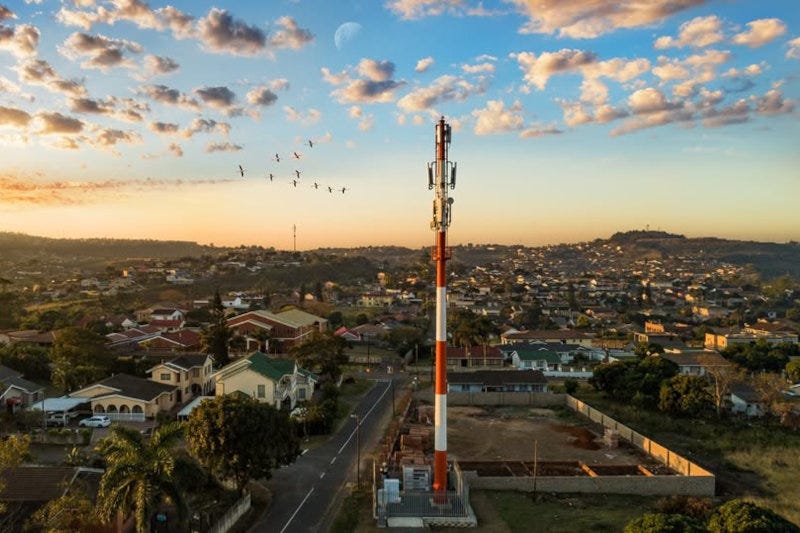
Aside from a drop in quality network service, disruption in oil supply to base stations also undermines Nigeria’s broadband expansion targets and digital inclusion goals, especially in rural areas.


Just about six months after Tesla started testing its fledgling Robotaxi service in Austin, Texas, the company is now letting those cars drive around the city with no safety monitor onboard.
The removal of the human safety monitors brings the company a critical step closer to its goal of launching a real commercial Robotaxi service, and it’s a step that’s been years in the making.
CEO Elon Musk spent a nearly decade promising Tesla’s cars were just a software update away from being fully driverless. Now he is on the precipice of launching a service meant to compete with Waymo, the Alphabet-owned company that he said last week “never really had a chance against Tesla.”
The removal of the safety monitors will most likely ramp up the scrutiny on Tesla’s ongoing testing in Austin, doubly so when the company starts offering rides in the empty cars. Tesla’s small test fleet has been involved in at least seven crashes since June; few details are known about the accidents since the company aggressively redacts its reports to the National Highway Traffic Safety Administration.
Video of a totally empty Tesla Model Y SUV started spreading on social media over the weekend, and on Sunday, Musk confirmed his company was testing “with no occupants.” Neither Musk nor Tesla has shared how quickly it plans to move to offer customer rides with no safety monitor. The company’s own X account provided a hint in a post Sunday evening: “Slowly, then all at once.” Tesla’s head of AI, Ashok Elluswamy, wrote: “And so it begins!”
Tesla started offering rides in Austin to hand-picked influencers and customers in June, with an employee in the passenger seat who could take over if the cars did anything unsafe. Those safety monitors moved to the driver’s seat in September. The company has since ditched the wait list, and gradually expanded its service area to cover a large portion of the greater Austin metropolitan area. But its fleet size never grew to more than about 25 to 30 cars by most fans’ counts.
Musk has claimed Tesla will operate its own fleet of Robotaxis, and said in July he believed this fleet would cover “half of the population of the U.S.” by the end of this year. That outrageous target, like so many Musk has set over the years, has been revised down to him claiming in November that Tesla would roughly double its existing Austin fleet, or around 60 vehicles.
Techcrunch event
San Francisco
|
October 13-15, 2026
Tesla has been testing a ride-hail service in the San Francisco area for the last few months, in which drivers use the company’s advanced driver assistance software. California has regulations in place that mean Tesla will need to combine multiple permits if it wants to offer fully driverless rides in the state. Texas, on the other hand, does not.
Musk has also talked a lot over the years about allowing Tesla owners to add their personal cars to the company’s Robotaxi fleet. In 2016, he even promised that every car Tesla made had all the hardware required to eventually become autonomous. That was wrong, and that blog post has since been removed from Tesla’s website (the company faces a number of legal challenges over it). Tesla has gone through multiple versions of the hardware that powers its driver assistance software, meaning there are millions of cars on the road that, by Musk’s own admission in January, will need to be upgraded.


Photo by Sajad Nori / Unsplash
Africa is one of the fastest-growing regions for crypto, blockchain, and decentralized finance (DeFi). In many countries, traditional banks still don’t reach everyone, particularly people without reliable access to formal banking services. That gap is why DeFi and blockchain projects are gaining traction across the continent.
By offering new ways to send money, borrow, lend, and store value without relying on traditional banks, these platforms are reshaping how financial services work. For millions of people, they promise faster transactions, lower costs, and more inclusive access to finance.
Here are some African DeFi and crypto projects worth watching:
WHAT IS: Decentralized Finance (DeFi)
If traditional banking is a toll road, DeFi is a jetpack of faster, cheaper, and way more control of your money.

/1. Yellow Card
Yellow Card is a crypto platform that helps people buy, sell, and use stablecoins and other digital assets across many African countries. It focuses on making crypto practical, especially in places where local currencies can lose value quickly because of inflation.
By allowing users to convert local money into stablecoins, Yellow Card helps individuals and businesses protect their money and move funds more easily. Its platform supports everyday use cases like payments, savings, and cross-border transfers, often at lower costs than traditional banks. With operations in multiple African markets, Yellow Card plays a key role in helping people access more stable digital money and participate in the global financial system.
/2. VALR
VALR is one of the largest cryptocurrency exchanges in South Africa. It allows users to buy, sell, store, and trade many cryptocurrencies using local currency. This makes crypto easier to access for everyday users and businesses.
Beyond trading, VALR also offers features like staking, which lets users earn rewards by holding certain digital assets. A key reason VALR stands out is its strong focus on transparency and compliance. As crypto rules continue to develop across Africa, platforms that take regulation seriously are more likely to grow and gain trust. VALR helps bridge the gap between traditional finance and crypto in a way that feels safer and more structured.
/3. Zone (formerly Appzone)
Zone is building blockchain payment infrastructure that connects banks, fintech companies, merchants, and payment providers. Instead of focusing on crypto trading, Zone uses blockchain in the background to make payments faster, cheaper, and easier to reconcile.
What makes Zone important is how it works alongside existing financial systems rather than replacing them. Businesses can continue using familiar payment methods while benefiting from blockchain efficiency. This approach helps modernize payment systems in Nigeria and beyond, showing how DeFi ideas can quietly improve everyday transactions.
/4. AZA Finance (formerly BitPesa)
AZA Finance focuses on cross-border payments and foreign exchange, areas where Africa faces major challenges. Sending money across African borders is often slow, expensive, and complex. AZA Finance uses digital assets and smart payment rails to reduce costs and speed up transfers.
The company has been operating for over a decade, giving it deep experience in African markets. Today, it supports businesses and institutions that need reliable ways to move money between Africa and the rest of the world. Its work shows how blockchain can improve trade, remittances, and global financial connections.
/5. Mazzuma
Mazzuma is a Ghana-based fintech company that combines blockchain, mobile payments, and smart technology. It works with mobile networks and merchants to help users send money and make payments without relying on traditional banks.
This is especially important in regions where mobile money is more common than bank accounts. By fitting into existing habits, Mazzuma makes digital finance easier to use and understand. It shows how DeFi can support financial access by meeting people where they already are.
/6. Ubuntu Tribe
Ubuntu Tribe focuses on connecting real-world assets to blockchain technology. It works on tokenizing assets like gold, allowing people to hold digital tokens backed by physical resources.
This approach moves beyond speculation and helps build trust in digital assets. By offering gold-backed tokens that can be owned in small amounts, Ubuntu Tribe opens access to asset-based finance for more people. It also highlights how blockchain can support long-term value storage, not just trading.
DeFi: A New Level of Financial Freedom or Passing Trend?
The technology behind DeFi is a genuine financial innovation. It addresses fundamental inefficiencies in the legacy system.

Conclusion
African DeFi and crypto projects are proving that blockchain can be useful in everyday life. From payments and remittances to asset ownership and financial access, these companies focus on real needs rather than speculation.
As internet access and mobile usage continue to grow, projects like these could shape the future of finance across Africa. Watching how they develop helps explain where DeFi is going next, and how it can create real impact for people and businesses on the continent.
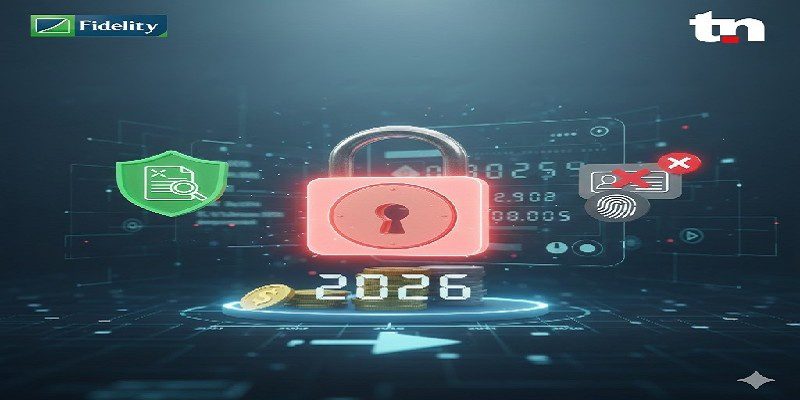
Fidelity Bank has announced that starting January 1, 2026, accounts that are not linked to a Tax Identification Number (TIN) or a National Identity Number (NIN) will be subject to restrictions. This change is in line with the Nigerian Tax Administration Act (NTAA) 2025, which mandates that all bank accounts must be connected to a TIN. For customers without a TIN, a NIN will be required instead.
The bank has sent notifications to customers urging them to promptly update their account details to avoid any disruptions. The notice specifies that “Accounts that do not have a tax ID or NIN may be restricted from transacting starting January 1, 2026.” Customers are advised to link their accounts immediately to ensure uninterrupted access to banking services.
 Mrs Nneka Onyeali-Ikpe, MD, CEO, Fidelity Bank Plc
This directive is a response to the federal government’s initiative for stricter tax compliance, which requires banks to ensure that all taxable Nigerians possess a Tax Identification Number (TIN). Taiwo Oyedele, the Chairman of the Presidential Committee on Fiscal Policy and Tax Reforms, confirmed that the Nigerian Tax Administration Act (NTAA) now provides the legal framework necessary for enforcing comprehensive compliance among all banks, starting next year.
Linking accounts to tax IDs: why it matters for not just Fidelity bank users
The new rule affects millions of Nigerians who have bank accounts but are not registered for tax. By linking Tax Identification Numbers (TINs) and National Identification Numbers (NINs), the government aims to enhance tax collection and ensure that everyone pays their fair share. This also helps banks verify accounts more easily and reduces the chances of unreported income.
Experts say connecting accounts to tax IDs will make financial tracking clearer and more responsible in the economy. “Enforcing this helps both the government and banks track taxable activities effectively,” said a tax compliance analyst. For customers, this means their accounts will remain fully functional and compliant with Nigerian law.
 Mr. Taiwo Oyedele, Chairman of the Presidential Committee on Fiscal Policy and Tax Reforms, Nigeria
This enforcement is expected to improve financial reporting. It will help banks like Fidelity monitor transactions better and reduce the chances of breaching tax laws. The NTAA framework was introduced in the 2020 Finance Act, but it was never fully implemented due to some gaps. The 2025 Act now addresses these gaps.
Also read: How to get a Nigerian Tax ID before Jan. 2026 deadline for bank account holders
Banks will now play a key role in making sure everyone follows the rules. Customers who do not link their accounts may face limits on transactions, like sending money, withdrawing cash, or making payments, as announced by Fidelity.
This will especially affect individuals and small businesses that have not registered a Tax Identification Number (TIN) or linked their National Identification Number (NIN). It is important for Fidelity Bank customers to act quickly before the January deadline.

South Africa’s Standard Bank is currently experiencing a major outage in its online and mobile banking channels. The disruption stems from an issue affecting Sage, the banks’ software provider. The glitch has reportedly resulted in delayed transactions and prevented new customers from opening bank accounts.
Sage disclosed this on its communication platforms, tagging the glitch as a ‘partial outage’.
“We have identified an issue in South Africa with the bank feeds we receive from Standard Bank. As a result, all customers using the Standard Bank will experience delays getting their transactions, and new customers would be unable to onboard Standard Bank,” it said.
It also clarified that the outage is primarily affecting Standard Bank customers, noting that the service is performing as expected for all other customers using different banks.
“The issue with Standard Bank is only on our Yodlee connection. Our Standard Bank (Powered by Sage) connection is still working as expected and therefore those with eligible account types can utilise this connection,” it said at 11:35 am (Nigerian time).
Initially, customers were unable to sign into the bank’s mobile app. However, the app became accessible later on with limited functionality. In addition, the app displays a mismatch in account balance, transaction histories, airtime and top-ups.
Trends on downdetector, a website that tracks real-time problem & outage monitoring, also revealed a spike in complaints for users. Checks show that users started complaining around 11:00 am (Nigerian Time).
Further breakdown of the life report revealed that Sage users indicated issues with the provider’s website and login, while those for the Bank reports disruption with the mobile banking app and online banking services.
 Status on Downdetector
As of reporting time, the Sage status page has yet to confirm normalcy.
Also Read: South Africa’s StandardBank shuts down 1,942 ATMs as cash withdrawals decline.
Standard Bank’s effort towards digital banking
Known as South Africa’s largest Bank, Standard Bank has significant investments in digital platforms and innovations. Its parent company, Standard Bank Group, serves over 19 million clients across 20 African countries.
In its digital reforms, the Bank reduced its ATM network in South Africa by 1,942 between 2020 and mid-2025, a significant decrease from 5,390 to 3,448. The reduction reflects the banks’ adaptation to the increasing shift toward mobile and digital transactions, as well as the corresponding decline in cash withdrawals.
Aside from Standard Bank, other South African banks such as Absa, Nedbank, and First National Bank have also reduced their branch and ATM networks.
Also, online banks such as TymeBank and Bank Zero have expanded without investing in physical infrastructure, signalling the evolution of South African financial service consumers.


Amazon has apologised after an error meant it showed a child a 15-rated film by mistake when they had tried to watch a PG movie.
The child’s parent had paid to rent Diary of a Wimpy Kid from the firm’s Prime Video service, but they soon realised it was incorrectly streaming Love & Other Drugs – which the British Board of Film Classification says contains “strong sex and sex references”.
They complained to the media regulator Ofcom, which found Amazon in breach of its rules.
Amazon has apologised and fixed the issue, which it said was a result of the firm which licensed the films giving both the same code behind-the-scenes, when it is meant to be unique.
The BBC has approached Amazon for comment.
According to Ofcom’s report, the tech giant said the issue was resolved in “less than 48 hours” – but during that time 122 customers had attempted to watch Diary of a Wimpy Kid.
It said it had “updated its existing internal processes” to stop similar mistakes in the future.
Ofcom has not fined Amazon for the error, however it said the firm had breached its rules.
“The complainant said they had rented the film for their young children to watch, but after the selected content began playing, the complainant became aware that the film that had actually played was a different film containing strong sexual content,” the regulator said.
“The complainant said they contacted the service provider by telephone three times but received no call back. The complainant then made their complaint to Ofcom.
“Parents and carers would have accessed Diary of a Wimpy Kid on the basis that it was appropriate for their children to view, potentially unaccompanied by an adult (as had the complainant in this case).”

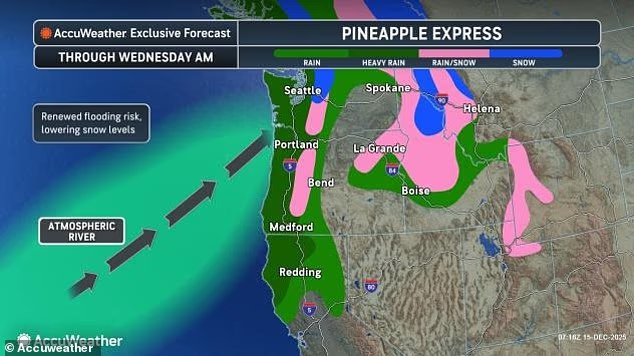
The West Coast is bracing for a powerful Pineapple Express, a storm carrying warm, moisture-filled air from near Hawaii, expected to bring heavy, relentless rain.
Northern California, Oregon and Washington could see up to a foot of rainfall in some areas, raising serious concerns over flooding, landslides, and power outages.
Steady rain will focus on higher terrain, especially the Olympic Mountains, Coastal Range, and Cascades, with two to four inches expected, and an AccuWeather Local StormMax™ of 12 inches on windward slopes.
Additional rain on areas already soaked last week increases the risk of mudslides and worsening runoff through midweek.
Western Washington remains on high alert as multiple rivers are already experiencing minor to moderate flooding, with forecasts indicating further rises due to this week’s rain.
The National Weather Service (NWS) has issued multiple flood warnings, which will remain in effect at least through December 18.
Residents should avoid flooded roads, low-water crossings, and swift water, as most flood-related deaths occur in vehicles.
AccuWeather Meteorologist Alex Duffus said: ‘Several inches of additional rain this week, on top of last week’s totals, can lead to renewed major flooding, including on rivers that recently crested at record levels.’

A Pineapple Express is a storm carrying warm, moisture-filled air from near Hawaii
He added that rivers may take several days to crest even after the rain tapers off.
AccuWeather Senior Meteorologist Alex Sosnowski said: ‘Expect multiple, rapid rounds of moderate to major flooding of the short-run rivers in the higher and intermediate elevations of the Cascades this week.
‘Flooding in the higher elevations can occur in a matter of a few hours. However, where these rivers reach lower, flatter terrain just above sea level, moderate to major flooding can be delayed and longer-lasting and perhaps up to a few days. Multiple crests are likely.’
An atmospheric river is a long, narrow tract of the atmosphere that gathers moisture from the tropics and sweeps it toward the poles.
The Pineapple Express is a well-known example, originating in the tropical Pacific near Hawaii.
Meteorologist Jeff Berardelli of WFLA-TV (Tampa Bay) warned on X that the storm could deliver ‘pockets of 12–18 inches of rain and flash flooding’ across the West Coast over the next two weeks.
Residents should remain vigilant through the week, as saturated ground and rising rivers will prolong the risk of floods and landslides even after the storm moves on.
From Tuesday night into Wednesday morning, a cooler push of air will also increase the chance for widespread accumulating snow across the region, with snow levels dropping as low as 4,000 feet in places such as Stevens Pass, AccuWeather reported.

Meteorologists warned the system is set to slam parts of Northern California, Oregon and Washington (STOCK)

Steady rain will focus on higher terrain, especially the Olympic Mountains, Coastal Range, and Cascades, with two to four inches expected, and an AccuWeather Local StormMax™ of 12 inches on windward slopes
The event will begin Monday and continue through Wednesday morning, with additional rain and high-elevation snow possible later in the week.
Steady, intense winds are expected across the Northwest, with coastal gusts up to 50 mph and even stronger gusts inland through the northern Rockies, affecting Washington, Oregon, Idaho, Montana and Wyoming.
Residents in flood-prone areas should remain alert and prepare for potentially severe flooding, while local authorities continue to monitor rivers and issue evacuation orders.
Washington is still reeling from days of torrential rain that triggered historic floods, forcing thousands from their homes and leaving residents stranded on rooftops.
Flood warnings in western Washington have put 100,000 residents in Skagit and Snohomish counties under Level 3 evacuation orders, meaning they were told to ‘leave now.’
Governor Bob Ferguson announced that President Trump had authorized FEMA emergency aid, saying he was grateful for the federal support during the ongoing crisis.
Ferguson cautioned residents to follow evacuation instructions closely, noting that rivers such as the Skagit are expected to crest at historic levels midweek.
Several bridges and major roads have been washed out, families have been helicopter-rescued from rooftops, and at least two houses have been ripped from their foundations.

Fusion power has the potential to rewrite trillion-dollar energy markets, but first, startups have to prove their designs will work and won’t be too costly. Neither is easy, especially when considering the massive magnets and lasers used in many designs must be installed with millimeter precision or better.
Fusion startup Thea Energy says it’s pixel-inspired reactor and specialized control software should be able to generate power without requiring the same level of perfection.
“It doesn’t have to be as good to begin with,” Brian Berzin, co-founder and CEO of Thea Energy, told TechCrunch. “We have a way to tune out imperfections on the back end.” That margin of error could give Thea a leg up on the competition.
Fusion power plants promise to deliver gigawatts of clean power to the grid, but material and construction costs threaten to make them uncompetitive with cheap solar and wind. By building a power plant first and ironing out the kinks in software, Thea could help bring the cost of fusion power down dramatically.
This animation shows how Helios can be disassembled for maintenance.Image Credits:Thea Energy
But first the company has to build a working prototype. Today, Thea is publishing the details of its design, including the details of the physics that underpin it. The startup shared the paper exclusively with TechCrunch.
Thea is building a unique take on the stellarator, a specific type of reactor that uses magnets to whip the plasma fuel into shape. Magnets are one of the two main ways that fusion scientists keep plasma heat and confine plasma until fusion reactions occur. The other, known as inertial confinement, uses lasers or some other force to squeeze small fuel pellets.
Most stellarators are built with magnets that look at home in a Salvador Dali painting. But Thea’s design uses a dozen larger magnets and hundreds of smaller ones to create what you might call a “virtual” stellarator.
Techcrunch event
San Francisco
|
October 13-15, 2026
In a typical stellarator, the magnets are built to follow the contours of a shape that’s intended to work with the quirks of plasma, helping to confine it for longer using less power than tokamaks, which use a series of identically sized and shaped magnets. Yet stellarators have one major disadvantage: the irregular shape makes mass manufacturing magnets challenging.
So instead, Thea designed its reactor around small, identical superconducting magnets that are arranged in arrays. The startup will use software to control each magnet individually to generate magnetic fields that can replicate a stellarator’s wobbly shape.
 A cutaway view of plasma flowing through Helios’s reactor core.Image Credits:Thea Energy
The approach has several upsides. For one, it has allowed Thea to rapidly iterate on its magnet design. In the last two years, the company has tweaked the design more than 60 times, Berzin said. “Most fusion companies, you’re dealing with magnets that are the size of a car or a laser the size of a car or a wedge the size of car. That unfortunately means one is $20 million and takes two years [to make],” he said.
It has also meant the company can use software controls to overcome any irregularities in the way the magnets were made or installed. To test its original control system, Thea built a three-by-three array of its magnets laced with sensors. The controls, which were derived from the physics of electromagnetism, worked well. But the company also wanted to see how AI might handle the task, so it also trained a new one using reinforced learning.
The team came away surprised at how well it all worked.
“We purposefully threw curveballs at the array,” Berzin said. “We purposefully dismounted a magnet by literally over a centimeter. You could see it was super out of line. It was really hard for us to actually manufacture it so poorly.” The team also tested superconducting material from five different manufacturers along with intentionally defective material. “Every single time we did that, the control system, without us turning knobs and intervening, was able to tune out those defects,” he said.
Thea’s reactor design, Helios, will use two types of magnets. One the outside, 12 large magnets of four different shapes will do the heavy lifting to keep the plasma confined. They’re similar to those found on a tokamak, the type of doughnut-shaped reactor that competitor Commonwealth Fusion Systems is building. Inside the large coils, 324 smaller circular magnets will fine tune the shape of the plasma.
The startup predicts Helios will generate 1.1 gigawatts of heat, which a steam turbine will turn into 390 megawatts of electricity at a cost below $150 per megawatt-hour. The reactor will have to shut down for an 84-day maintenance period once every two years. If all goes well, that means its capacity factor — a measure of how much power it generates over a given period of time — will be 88%. That’s far better than today’s gas-fired power plants and almost as good as today’s nuclear power plants.
Helios is still in the conceptual phase. Thea first has to build Eos, its initial fusion device that’s intended to prove the science behind the concept. Berzin said the company will announce a site for Eos in 2026 with plans to turn it on “around 2030.”
As it builds Eos, Thea plans to start work in parallel on Helios. It’s a similar approach to how Commonwealth Fusion Systems is moving forward with work on Arc, its first commercial power plant, while building Sparc, its demonstration plant.
For now, Berzin is looking forward to hearing what the fusion community thinks. “This is the release of the overview paper. This will be followed up by quite a substantial amount of work that will come out via peer review and publication,” he said. “Now is the moment for us to go and set up the partnerships, collaborations, get the end users engaged to go build the first one.”

Image credit: Jakub Porzycki/NurPhoto via Getty Images
In a blog post, Apple claimed that its Safari browser offers more data protection than Google’s Chrome, warning iPhone users to stay away from the Chrome browser and other Google apps.
iPhone typically comes with Safari as its default browser, but some users download Chrome and make it their default.
Google may sell Chrome in search monopoly crackdown
If this happens, it could open the door for rivals like Bing and Yahoo to compete better.

Citing data-sharing policies, Apple says that its “Safari includes state-of-the-art features that defend you against cross-site tracking, hide your IP address from known trackers, and more. Unlike Chrome, Safari truly helps protect your privacy.”
In response, Google said, “The primary new threat facing all agentic browsers is indirect prompt injection. It can appear in malicious sites, third-party content in iframes, or from user-generated content like user reviews, and can cause the agent to take unwanted actions such as initiating financial transactions or exfiltrating sensitive data.”
It added that “designing safe agentic browsing for Chrome has involved deep collaboration of security experts across Google. We built on Gemini’s existing protections and agent security principles and have implemented several new layers for Chrome.”
But which is more secure and safer?
Intelligent Tracking Prevention
Safari blocks cross-site tracking aggressively by default through its Intelligent Tracking Prevention system, limiting third-party cookies and reducing advertiser tracking without requiring user action. Chrome, by contrast, is more permissive out of the box and often relies on users adjusting settings or installing extensions. Google’s ad-driven business model complicates how far Chrome can go in restricting tracking by default.
Private Browsing
Safari’s Private Browsing mode does not save search history, browsing history, or autofill data, and it applies additional tracker restrictions while active. Chrome’s Incognito Mode similarly avoids saving local history, but activity may still be visible to websites, employers, internet service providers, and Google services. The difference lies less in branding and more in how aggressively tracking is limited during private sessions.
Privacy Report
Safari includes a built-in Privacy Report that gives users a clear snapshot of cross-site trackers that have been blocked, offering visibility into who is trying to track them and how often. Chrome does not provide a comparable native feature, instead leaving users to rely on third-party extensions or external tools for similar insight.
Fingerprinting Defence
Safari actively works to prevent device fingerprinting by masking or simplifying system information so that devices appear more alike to trackers, making it harder to single out individual users. This has become increasingly relevant as fingerprinting, a tracking method that cannot be opted out of, has resurfaced across the web. Chrome allows more identifying signals by default, and Google has recently reversed its earlier stance against fingerprinting, raising fresh concerns about user exposure.
Passkeys (Password Replacement)
Safari supports passkeys through deep integration with iCloud Keychain, offering a simple and secure passwordless login experience across Apple devices. Chrome also supports passkeys via Google Password Manager and works well across platforms. In this area, neither browser has a clear privacy advantage. The experience largely depends on which ecosystem a user is already invested in.
Conclusion
At the end of the day, both Safari and Chrome have their strengths, but the differences come down to privacy options. Safari is built to limit tracking, obscure identifying details, and give users transparency with features like Intelligent Tracking Prevention and Privacy Reports. Chrome, while highly convenient and feature-rich, is tied to Google’s ad ecosystem, meaning tracking protections are often less aggressive and require extra steps.
Your choice of browser is now more than a simple preference; it’s a decision about how visible you want to be online and how much control you retain over your data. For iPhone users prioritising privacy, Safari clearly has the edge, but understanding the trade-offs is key before making the switch.
Google Patches Another Urgent Chrome Security Flaw
Updating Chrome now protects you from a major security flaw already being exploited, keeping your data and devices safe from potential attacks.


December 15, 2025
Link copied!
Copy failed!

As we wrap up 2025 across Africa’s technology and startup ecosystem, one trend stands out clearly. Policy, not price action, did the heavy lifting. Crypto has moved from the fringes into formal policy conversations. Across boardrooms, parliaments and central banks, governments made decisions that reshaped how digital assets are treated on the continent.
For our methodology, we spoke with legal and policy experts working directly at the intersection of regulation and Web3 adoption. They were asked to identify the five policy decisions that, in their view, most significantly reshaped Africa’s crypto map in 2025, and to explain why.
Drawing from those expert insights, this article highlights five policy moves that marked a decisive break from Africa’s earlier era of uncertainty. It focuses on decisions that altered direction, unlocked activity, or forced long-delayed clarity.
Together, they show a continent moving steadily from caution to structure.
 Senator Ihenyen, Lead Partner at Infusion Lawyers and Executive Chair of the Virtual Asset Service Providers Association
According to Senator Ihenyen, Lead Partner at Infusion Lawyers and Executive Chair of the Virtual Asset Service Providers Association, 2025 was a turning point. “In my advocacy work across Africa, I observed that the crypto map changed from fragmentation to formalisation,” he said. “The big economies have aligned on one truth. Crypto is too big to ban. It must be regulated.”
Here are the top five crypto policies in Africa in 2025:
1. Nigeria’s Investments and Securities Act (ISA) 2025
Africa’s largest crypto market finally ended years of ambiguity with the signing of the Investments and Securities Act (ISA) 2025 into law by President Bola Ahmed Tinubu on 28th March 2025. The law formally recognises virtual assets as securities and places them under the regulatory authority of the Securities and Exchange Commission.
Ihenyen describes the move as pivotal. “By moving from a grey market to a fully codified securities framework, this decision has the potential of unlocking institutional capital,” he said. He added that it also improves confidence for banks and financial institutions to support crypto businesses without fear of regulatory backlash.
While the blanket classification of all virtual assets as securities remains contentious, the clarity it introduced was widely welcomed.
Buki Ogunsakin, Web3 Policy and Legal Consultant at Interstellar Inc., agrees. “The ISA has really outlined the involvement of digital assets under the Securities and Exchange Commission. That is significant for the crypto landscape,” she said.
Nigeria doubled down with its updated Tax Act, which explicitly brings digital and virtual assets into the tax net. For the first time, crypto holders and businesses have statutory clarity on how transactions are treated. According to Ogunsakin, this matters because taxation signals permanence. Crypto is no longer a side conversation. It is part of the formal economy.
 Buki Ogunsakin, Web3 Policy and Legal Consultant at Interstellar Inc
“It confirms that digital assets are taxable property or assets under federal law,” she noted.
2. Kenya’s Virtual Asset Service Providers Act 2025
Kenya followed a different but equally important path. In October 2025, the country signed the Virtual Asset Service Providers Act into law. The legislation introduced a comprehensive licensing and compliance regime for crypto operators.
What made Kenya’s approach stand out was institutional coordination. Oversight is shared between the Central Bank of Kenya and the Capital Markets Authority, rather than creating an entirely new regulator.

Ogunsakin described the law as a landmark moment. “Kenya has gone from talking to working,” she said. “They drafted it, passed it and implemented it. That sets a precedent for the digital economy across Africa.” She also pointed to the joint oversight model as one, other countries are already studying closely.
Ihenyen also highlighted the symbolic shift embedded in the law. By introducing crypto taxation alongside licensing, Kenya moved from caution to monetisation. In his words, the country shifted from “warning” to “revenue generation”, sending a strong signal to both local founders and global investors.
3. South Africa’s Crypto Asset Service Providers’ mandatory licence
South Africa’s defining moment came through enforcement rather than new legislation. In June 2025, the Financial Sector Conduct Authority enforced its deadline for all Crypto Asset Service Providers to be licensed or exit the market.

This was the end of South Africa’s transitional phase. “With this move, South Africa moved into a fully regulated enforcement regime,” Ihenyen said. The message was clear. The market was no longer open to opportunistic or poorly governed operators.
The decision also played a role in South Africa’s successful efforts to exit the FATF grey list, reinforcing its credibility as a compliance-driven jurisdiction.
4. Ghana’s Virtual Asset Service Providers Bill, 2025
In West Africa, Ghana chose a more incremental but strategic route. In September 2025, the Bank of Ghana commenced a mandatory registration exercise for crypto exchanges and stablecoin issuers. Rather than rushing into a full regulatory framework, authorities prioritised visibility.
Ghana’s approach stood out for its focus on stablecoins. Ihenyen believes this reflects a deeper shift. “It signals a move where African central banks view crypto as a partner in forex stabilisation rather than a rival,” he said. For a region grappling with currency volatility, this framing could shape future monetary policy debates.
 Ghanaian President, John Mahama
Ogunsakin agreed, pointing to Ghana’s emphasis on stakeholder input and supervisory clarity. “They are creating their own virtual assets regulatory office,” she said. “That coordination is something other African countries can learn from.”
5. Seychelles overhauled its Virtual Asset Act
Seychelles delivered one of the most globally consequential decisions of the year, maybe only second to the Genius Act. The country overhauled its Virtual Asset Act to require real physical presence and substantive management for licensed entities.

Historically known as a paper offshore jurisdiction, Seychelles’ pivot forced major global exchanges to rethink their structures. “This changes the global map by forcing exchanges to either build real teams in Africa or lose their licences,” Ihenyen noted. The decision repositioned Africa not just as a user base, but as a serious compliance jurisdiction.
Overall, these five decisions tell a coherent story. Africa’s crypto ecosystem in 2025 moved decisively from fragmentation to formalisation. As Ihenyen observed, the continent’s biggest economies aligned around a simple truth. Crypto adoption is too large to ban. Regulation is the only viable path.
For founders, investors and policymakers, the implications are lasting. Regulatory clarity is becoming a competitive advantage. Jurisdictions that get it right will attract capital, talent and infrastructure.
Those who delay risk being left behind.

Liv McMahonTechnology reporter
 Getty Images

Ofcom is investigating BT and Three over mobile outages it said had caused “UK-wide disruption”, including to emergency services.
Thousands of Three customers reported they were unable to make calls in June, while BT and EE customers were hit by a similar outage in July.
The regulator said it would examine whether the mobile networks did not do enough to prevent the problems.
Three said in a statement it was engaging with Ofcom. A BT Group spokesperson apologised to customers who had been affected.
“We will co-operate fully with Ofcom throughout the investigation and apologise again for any issues caused by this incident,” they said.
Meanwhile, Three said it had “experienced disruption to voice services following an exceptional spike in network traffic triggered by a third-party software configuration change”.
“Since the outage, we have engaged openly with Ofcom and will continue to cooperate fully with their investigation,” it said.
According to Ofcom, firms must take proper action to identify risks and prepare for “anything that compromises the availability, performance or functionality of their network or service”.
It said providers must also prevent “adverse effects arising from any such compromises” – saying where this happens, they must take steps to mitigate them.
“The importance of connectivity cannot be underestimated,” said telecoms analyst Paolo Pescatore.
“We all demand a robust and reliable connection at home and out and about.”
He said outages can occur despite “significant efforts” to prevent them – but said there must be “a straightforward process to identify the issue and to learn lessons so it does not happen again”.
Previous problems
The incidents at the heart of Ofcom’s investigation saw thousands of customers across BT and Three networks report problems with their mobile service.
At the time, Three told customers complaining of issues making and receiving calls on 25 June it was experiencing “an issue affecting voice services”.
This was not isolated to its own network – it also caused problems for customers on networks that piggyback off of Three, such as ID Mobile.
A month later, EE and BT customers complained of similar issues.
A government spokesperson said at the time “communications providers have statutory obligations to ensure their networks and services are appropriately resilient”.
Operators have previously faced scrutiny over outages or issues affecting peoples’ ability to make calls or contact emergency services.
BT was fined £17.5m in July 2024 for a “catastrophic failure” of its emergency call handling service which led to thousands of 999 calls not being connected.
Three was ordered to pay £1.9m in 2017 after Ofcom found it could have prevented an issue that caused a loss of service for customers a year prior.
It has since merged with Vodafone to form the UK’s biggest mobile network, with 27 million customers.
