
NIGERIA NEWS
Defence Minister Musa Receives Togolese President Ahead of ECOWAS Meeting in Abuja — Akelicious

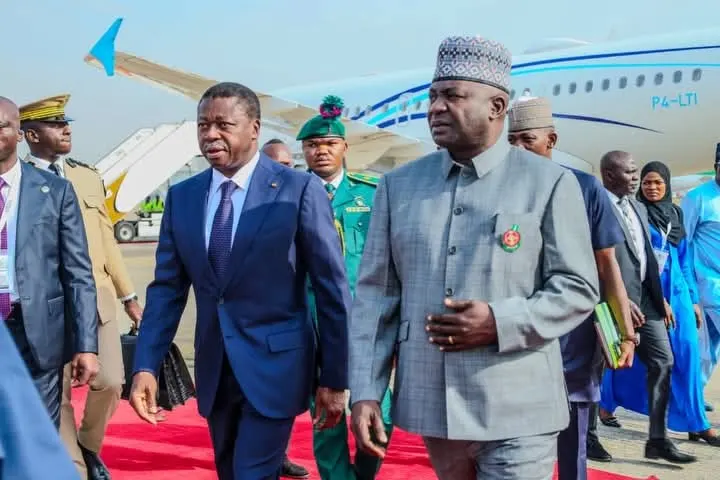
The Minister of Defence (HMOD), General Christopher Musa (Rtd), today, 14 December 2025, received the President of the Republic of Togo, His Excellency Jean-Lucien Savi de Tové, ahead of the ECOWAS meeting scheduled to hold in Abuja.

The engagement focused on addressing prevailing regional security challenges and reinforcing multilateral security cooperation among ECOWAS member states within the subregion.
Related

The A new biography on former President Muhammadu Buhari has revealed why he refused to publicly name a preferred successor ahead of the 2022 All Progressives Congress (APC) presidential primary.
The book, ‘From Soldier to Statesman: The Legacy of Muhammadu Buhari’, explains that Buhari’s decision was driven by security concerns and a desire to preserve unity within the ruling party.
The 600-page book was written by Dr Charles Omole, Director General of the Institute for Police and Security Policy Research (IPSPR), and was presented in Abuja on Monday.
At the event, former Director General of the Department of State Services (DSS), Yusuf Bichi, gave fresh insight into Buhari’s actions during the tense succession period.
According to Bichi, Buhari deliberately avoided endorsing any aspirant because doing so could have put the person’s life at risk and worsened divisions within the APC.
He said Buhari’s silence was often misunderstood as indifference, but it was actually a calculated security decision based on intelligence reports at the time.
“In those months, knives were out; politically and, as security professionals know too well, sometimes literally,” Bichi said.
“To name an anointed heir would be to paint a target on a human being and to foreclose a process that, for all its imperfections, was designed to distribute risk.”
He added: “Buhari chose silence, and in doing so, absorbed the criticism that he was aloof. He was not. He was shielding a life and preserving a fragile equilibrium inside a party whose factions could as easily burn down the house as surrender the nomination they coveted.”
Bichi stressed that Buhari was more concerned about protecting lives and maintaining stability in the party and the country than avoiding criticism.
Bichi explained why Buhari did not reverse the decision taken by then Acting President, Prof. Yemi Osinbajo, to remove Lawal Daura as DSS Director General while Buhari was abroad on medical leave.
According to him, Buhari believed that overturning the decision would undermine the authority of the acting president and damage institutional stability.
“Having lawfully delegated authority to his Vice President, Buhari considered any attempt to countermand that decision as injurious to institutional stability,” Bichi said.
He added that Buhari saw any reversal as “an insult to his vice,” and a threat to the chain of command.
Bichi also disclosed that Buhari resisted political pressure and refused to personalise governance, even when allies were affected.
“One of the earliest tests of Buhari’s restraint came during the removal of Lawal Daura as DG DSS,” he said.
“Pressure followed for a presidential reversal. Buhari refused to interfere.”
The former DSS boss described Buhari as a disciplined leader who valued evidence, professionalism and restraint over political drama.
He said Buhari consistently asked security chiefs, “Where is your proof?” and refused to act on rumours or unverified claims.
According to Bichi, Buhari’s approach allowed security agencies to operate professionally while remaining accountable, and reinforced his belief that public office is a trust, not a personal privilege.
The book presentation at the Presidential Villa was attended by President Tinubu, Gambian President Adama Barrow, governors, ministers, diplomats, traditional rulers, and members of Buhari’s family.


The United States (US) Embassy in Abuja has issued a stern warning to Nigerians regarding the consequences of engaging in visa fraud, stressing that individuals who lie or present fake documents during visa applications risk being permanently barred from entering the US.
In a terse statement on its official 𝕏 handle (formerly Twitter) on Monday, December 15, the embassy didn’t mince words, declaring that fake documents can lead to permanent visa bans under the US immigration law.
It said: “Visa fraud has serious consequences. Lying or providing fake documents can lead to permanent visa bans under US immigration law. This means you will never go.”
Naija News reports that this cautionary message is the latest in a series of public sensitisation efforts aimed at curbing the rising trend of document falsification and misrepresentation in visa applications.
The warning coincided with a high-level diplomatic meeting between the US Ambassador to Nigeria, Richard Mills, and Nigeria’s Minister of Foreign Affairs, Yusuf Tuggar.
The meeting, held in Abuja, focused on strengthening bilateral ties and addressing mutual concerns.
“The United States looks forward to continuing to work together with Nigeria on issues of mutual concern,” the embassy said in a follow-up statement, signalling a continued commitment to collaboration.
The meeting also comes at a time of heightened international attention on Nigeria’s internal security challenges.
Naija News reports that in recent months, several US lawmakers have raised concerns about violent attacks on communities in the North and Middle Belt regions, describing them as violations of religious freedom.
The US Congress has increasingly called for stronger cooperation between the American and Nigerian governments to ensure the protection of vulnerable populations, especially amid rising insecurity, banditry, and religiously motivated violence.


At least four people have been killed and 11 others injured in a road accident along the Lokoja–Ajaokuta highway in Kogi State, the Federal Road Safety Corps (FRSC) has said.
The state sector commander of the FRSC, Tenimu Etuku, disclosed this to journalists on Monday, saying the crash occurred on Sunday at Jimgbe in Ajaokuta Local Government Area.
Mr Etuku said the accident involved an 18-seater Toyota commercial bus travelling from Enugu to Abuja.
According to him, the bus rammed into a faulty truck that had been parked on the road while trying to avoid a head-on collision with another oncoming truck.
“The bus, with Abuja registration number ABC 232 XA, was heading to Abuja from Enugu before the unfortunate incident,” he said.
READ ALSO: Car Crash: FRSC to prosecute Peller
He explained that FRSC personnel rescued the injured victims and rushed them to the Kogi State Specialist Hospital, Lokoja, for treatment, while the bodies of the deceased were deposited at the hospital’s morgue.
Describing the crash as “very unfortunate,” the sector commander cautioned motorists against complacency on highways, noting that a seemingly clear road may still be dangerous.
“There is a big difference between a free motoring environment and a safe motoring environment. Drivers must always remain alert and cautious while driving,” Mr Etuku said.
NIGERIA NEWS
Buhari’s aides forged his directives to impose Ahmed Lawan as APC presidential candidate

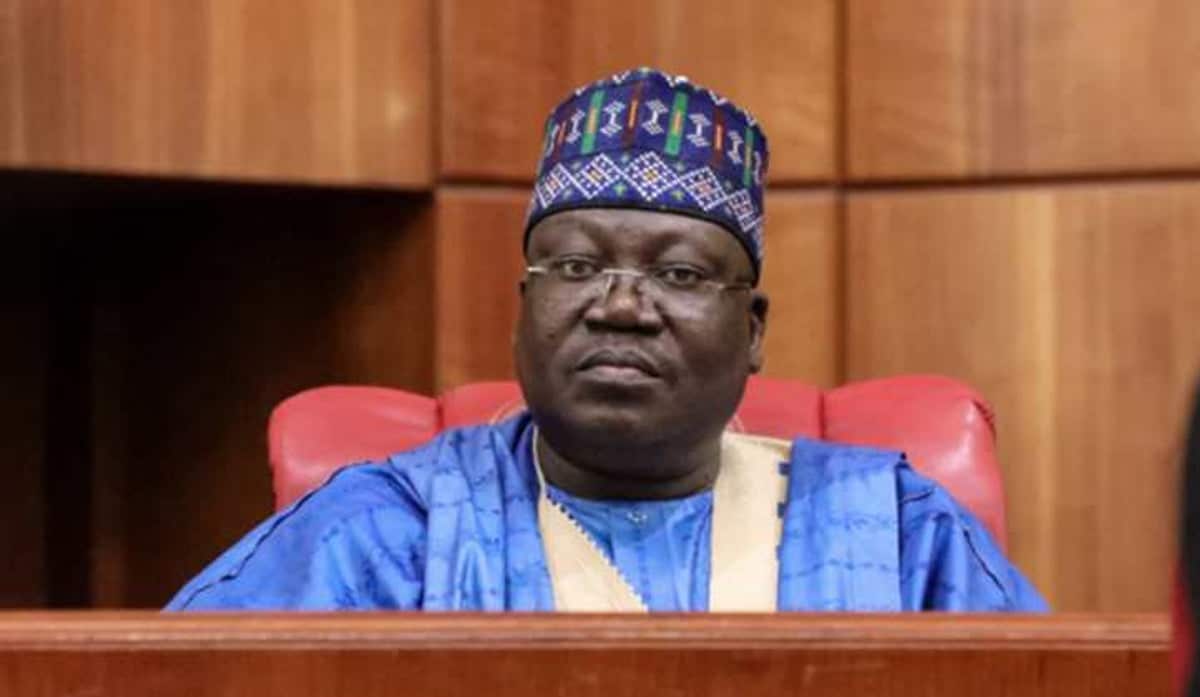
A newly launched biography of the late former President Muhammadu Buhari has exposed a dramatic attempt by influential aides to manipulate the 2022 All Progressives Congress, APC, presidential primaries.
Buhari’s former aides were alleged to have forged presidential directives to install ex-Senate President Ahmad Lawan as the APC’s consensus candidate.
This was disclosed in the book: “From Soldier to Statesman: The Legacy of Muhammadu Buhari,” authored by Dr. Charles Omole and unveiled yesterday at the Presidential Villa.
According to the book, on the eve of the APC primaries, aides close to Buhari allegedly issued “counterfeit orders to top security chiefs, including the Inspector-General of Police (Usman Alkali Baba), the Director-General of the Department of State Services (DSS), and the Director-General of the National Intelligence Agency (NIA).
“The forged directives instructed the deployment of security forces to ensure Lawan’s emergence as the consensus candidate.”
Former IGP Alkali Baba reportedly “rejected the orders outright, consulted his counterparts, and directly verified with Buhari.
It said: “The late president denied issuing any such instructions, stating he had no preferred candidate and emphasizing that Nigerians should freely choose their leader.”
The book said the late former President laughed upon hearing that celebrations had erupted in Lawan’s neighborhood over the supposed endorsement.
“He made it clear: he had not anointed anyone. Nigerians should choose, and the security agencies must not interfere,” the book quoted sources close to the events.


Lagos State chapter of the All Progressives Congress (APC) has said it has observed with a mixture of amusement and concern, the growing desperation within the opposition, as Nigeria steadily counts down to 2027 general election.
Spokesman Seye Oladejo said yesterday in a statesman in Ogba, Lagos: ‘’Stripped of ideas, credibility and public trust, the opposition have now resorted to an audacious and shameful demand for political immunity from scrutiny, accountability and consequence.
‘’Unable to defend their records in office or articulate a coherent alternative vision for Nigeria, opposition figures have chosen to cry persecution each time they are confronted with facts, interrogated by public opinion, or held to the same standards they once weaponised against others. They want power without responsibility, ambition without accountability and relevance without performance. That era is long gone.’’
He said the desperation of the opposition had reached a point where it was evident that they were no longer just afraid of accountability, but also afraid of their own shadow.
‘’Haunted by their past actions and public records, they now seek political cover rather than public validation. This fear-driven posture explains the sustained attempt to blackmail the government into conferring an illegal and immoral immunity that has no place in a constitutional democracy.’’
The statement said: ‘’Let it be clearly stated that the government will neither be blackmailed nor ambushed into granting protection to political actors, who have not earned the trust of Nigerians. Immunity is not a campaign strategy, and persecution narratives will not erase documented failures.
‘’It is indeed ironic that individuals who supervised monumental failures, institutional decay, and the plunder of national assets now seek refuge in manufactured victimhood. The same voices that once applauded investigations, probes and sanctions have suddenly discovered ‘witch-hunts’ the moment the searchlight of accountability beams in their direction. This selective morality exposes not only hypocrisy, but also fear-fear of records, fear of memory and fear of Nigerians.
‘’Nigerians are not oblivious of the track record of those who now pretend to present an ‘alternative.’ The nation remembers where we are coming from and what it costs us to get here. Any so-called alternative that resembles a return to our vomit will be rejected by a discerning voter that has learned, sometimes painfully, from history.’’
Oladejo noted: ‘’As 2027 approaches, Nigerians are no longer interested in emotional blackmail, recycled faces, or political fugitives shopping for platforms that offer protection rather than progress. Democracy does not confer immunity from public interrogation, and opposition status does not translate to sainthood. Those aspiring to lead must first submit themselves to the court of public conscience.
‘’The APC-led government under President Bola Ahmed Tinubu remains focused on the serious business of national renewal-economic stabilisation, security reform, institutional rebuilding, and the repositioning of Nigeria for sustainable growth. While the opposition demands immunity from questions, this administration demands results from itself and accountability from all.
‘’Let it be clearly stated: Nigeria will not mortgage its future to political actors whose primary campaign message is fear of scrutiny. The 2027 elections will be contested on records, ideas, courage and capacity-not on entitlement to immunity.
‘’History is watching. Nigerians are alert. No amount of manufactured outrage will shield failure from judgment.’’

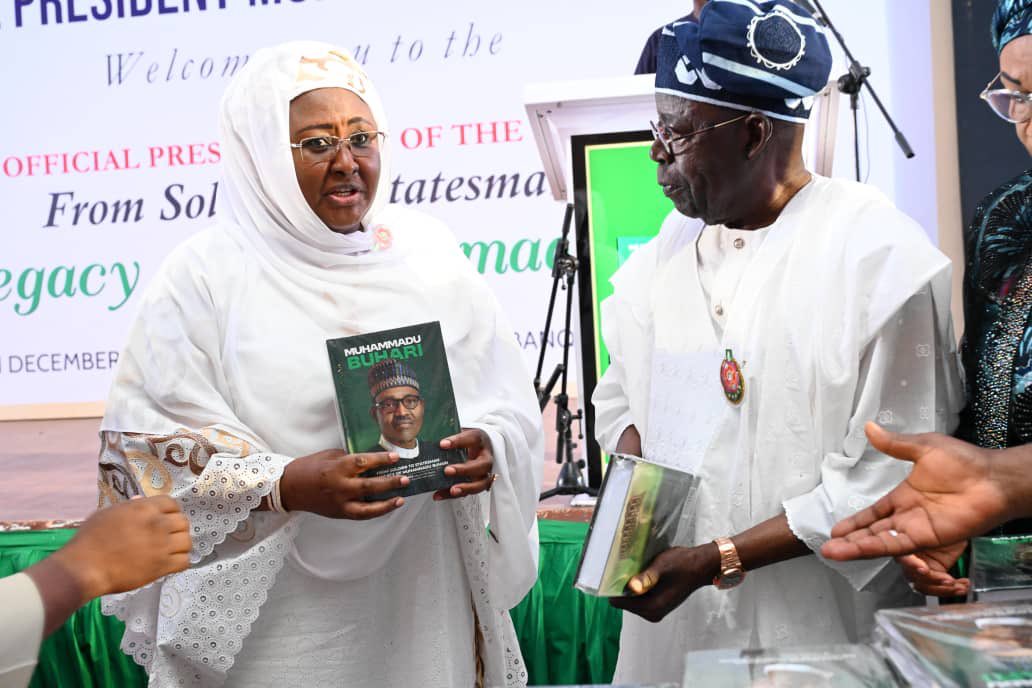
Former First Lady Aisha Buhari, has said her late husband, Muhammadu Buhari, began locking his room after rumours in Aso Rock alleged that she planned to kill him.
She said the gossip disrupted Buhari’s feeding routine and contributed to the health crisis that forced him to take 154 days of medical leave in 2017.
Aisha said Buhari’s illness was neither mysterious nor the result of poisoning.
Her account is contained in a new biography titled From Soldier to Statesman: The Legacy of Muhammadu Buhari, authored by Charles Omole and launched at the State House on Monday.
The 600-page book chronicles Buhari’s life from his early years in Daura, Katsina state, to his final hours in a London hospital in July 2025.
According to the book, Aisha supervised Buhari’s meals and supplements at specific hours, a routine she said helped “a slender man with a long history of malnutrition symptoms” maintain strength.
“Elderly bodies require gentle, consistent support,” she recalled, adding, “He doesn’t have a chronic illness. Keep him on schedule.”
The book said Aisha convened a meeting with close staff, including Buhari’s physician, Suhayb Rafindadi, Bashir Abubakar, chief security officer, the housekeeper and the director-general of the SSS, to outline the feeding plan.
She said the routine involved “daily, at specific hours, cups and bowls with tailored vitamin powders and oils, a touch of protein here, a change to cereals there”.
However, the routine later broke down.
“Then came the gossip and the fearmongering. They said I wanted to kill him,” the book quoted her as saying.
She said Buhari believed the rumours for about a week, began locking his room and changed his habits, leading to missed meals and discontinued supplements.
“For a year, he did not have lunch. They mismanaged his meals,” she said.
The deterioration culminated in Buhari’s two prolonged medical trips to the United Kingdom in 2017, during which he handed over power to Yemi Osinbajo, then vice-president.
Omole wrote that Buhari later admitted he had “never been so ill” and received blood transfusions during the period.
Aisha dismissed claims that her husband was poisoned, insisting that “loss of a routine, ‘my nutrition,’ was the genesis of the crisis”.
She said doctors in London prescribed a stricter nutritional regimen, which Buhari initially resisted, adding that she eventually took charge of administering the supplements, adding them to his meals.
“After just three days, he threw away the stick he was walking with. After a week, he was receiving relatives,” she said.
Omole noted that Buhari’s medical trips sparked rumours and conspiracy theories, including claims that he had a body double known as “Jibril of Sudan”.
Aisha dismissed the claims as absurd, blaming poor strategic communication for allowing “banal developments to metastasise into conspiracies”.
She also alleged that mistrust within the presidency, including claims of surveillance and bugging of Buhari’s office, contributed to fear and pressure during his final years.

The Nigeria Police Force have rescued 11 of the 18 passengers abducted by gunmen on the Benin–Akure highway near Obarenren village in Ovia north-east local government of Edo state.
The passengers were kidnapped on December 12 after the assailants allegedly stopped their vehicle at gunpoint, fired shots and forced the victims into the bush.
Eno Ikoedem, spokesperson of the Edo state police command, confirmed the development on Sunday.
Ikoedem said the command received a distress call shortly after the attack and immediately mobilised security operatives.
She said the police, working with the army, vigilantes and local hunters, launched a bush-combing operation to track the kidnappers.
“On Sunday, 11 of the kidnapped passengers were successfully rescued, while seven others are still in the custody of their abductors,” she said.
Ikoedem assured that efforts were ongoing to secure the release of the remaining victims, even as she urged members of the public to remain calm and cooperate with security agencies, expressing confidence that the remaining passengers would be rescued unhurt.


Nigeria recorded one of the highest volumes of cyberattacks in Africa in November 2025, according to a new Global Threat Intelligence report released by Check Point Research.
The report shows that organisations operating in Nigeria faced an average of 3,374 cyberattacks per week during the month, placing the country second among the four African nations analysed, behind Angola, which recorded 4,251 attacks per organisation weekly.
Kenya followed with 2,384 attacks, while South Africa recorded 1,863.
Rising threats despite Africa-wide decline
While Africa as a region experienced a 13% year-on-year decline in cyberattacks, Nigeria’s figures show the country’s continued exposure to cyber risks, particularly across critical sectors.
- Check Point Research noted that government institutions, financial services firms, and companies in the consumer goods and services sector were the most targeted across the continent in November.
- Globally, organisations faced an average of 2,003 cyberattacks per week, representing a 3% increase from October and a 4% rise compared to the same period last year.
- The sustained increase reflects a broader escalation in cyber threats worldwide, driven largely by the expansion of ransomware operations and emerging risks linked to the rapid adoption of generative artificial intelligence tools.
Education and government institutions under pressure
The report highlighted the education sector as the most attacked globally, with institutions recording an average of 4,656 attacks per organisation per week in November, a 7% increase year-on-year. Government institutions followed with 2,716 weekly attacks, while associations and non-profits experienced a sharp 57% surge to 2,550 attacks per week.
Beyond traditional cyber threats, the report flagged growing risks associated with enterprise use of Generative AI (GenAI) tools.
According to Check Point Research, one in every 35 GenAI prompts submitted from enterprise networks globally in November posed a high risk of sensitive data leakage.
The findings show that 87% of organisations that regularly use GenAI tools were affected by high-risk prompts, indicating how deeply AI tools have become embedded in daily workflows. An additional 22% of prompts contained potentially sensitive information, including internal communications, customer data, proprietary code, or personal identifiers.
Check Point Research noted that organisations now use an average of 11 different GenAI tools each month, many of which operate outside formal security governance frameworks. This trend increases the likelihood of accidental data exposure and creates new entry points for cybercriminals, including ransomware groups and AI-powered attackers.
Ransomware activity accelerates globally
Ransomware remained one of the most damaging cyber threats in November, with 727 publicly reported incidents worldwide, marking a 22% year-on-year increase.
While North America accounted for 55% of reported cases and Europe for 18%, the impact of ransomware continues to be felt across emerging markets, including Africa.
Industrial manufacturing, business services, and consumer goods and services were the most affected industries globally.
- The leading ransomware groups during the month were Qilin, Clop, and Akira, which together accounted for a significant share of victim disclosures.
- Regionally, Latin America recorded the highest attack volumes, averaging 3,048 attacks per organisation per week, up 17% year-on-year.
- Africa saw a decline, Europe experienced a slight 1% decrease, while North America recorded a 9% increase, driven in part by intensified ransomware activity. The Asia-Pacific region remained relatively flat.
Why it matters
The report’s findings come as Nigeria continues to push digital transformation across sectors such as finance, education, telecommunications, and government services.
While these efforts support economic growth and efficiency, they also expand the country’s digital attack surface.
During the last general elections in the country, the government said it was able to block over 200 cyberattacks targeting the Independent National Electoral Commission (INEC) digital infrastructure.
Follow us for Breaking News and Market Intelligence.




SOURCE PAGE
NIGERIA NEWS
Buhari Taught Nigerians That Being in Public Office is Trust, Not Windfall – THISDAYLIVE


Deji Elumoye in Abuja
President Bola Tinubu, yesterday, said his predecessor, the late Muhammadu Buhari, taught Nigerians, particularly politicians, that public office was a sacred trust, not a personal windfall.
Tinubu paid glowing tribute to the life and legacy of Buhari.
He spoke at the official launch of a 606-page biography, “From Soldier to Statesman: The Legacy of Muhammadu Buhari,” held at State House Conference Centre, Abuja.
The president described Buhari as a leader whose reputation for integrity, discipline and modest living endured long after leaving office.
He stressed that the true measure of Buhari’s leadership was not the offices he occupied or the privileges that came with power, but “what persists when the sirens fall silent”.
He stated that the late former president left behind a legacy defined by honesty, restraint and firm belief that leadership was anchored on service.
Tinubu, who described himself as Buhari’s brother, friend and political partner, recalled the political journey they shared together and the coalition-building efforts that culminated in the historic 2015 election victory, which unseated an incumbent government and reshaped Nigeria’s political landscape.
According to him, the alliance forged during that period has since evolved into the fastest-growing political party in Africa.
Tinubu stated, “I stand here not just as president, but as a brother, friend, and political partner who shared a journey with President Buhari through challenging times.
“Together, we built a broad coalition, campaigned across the country, and proved that Nigeria could chart a new course.
“Our movement united diverse interests and achieved a historic victory in 2015 by unseating an incumbent president, thus reshaping Nigeria’s political landscape.
“The coalition we built in 2014 is now the fastest-growing political party in Africa today. Its growth continues.”
The president said the biography served as an honest account of Buhari’s life and leadership, outlining both achievements and shortcomings.
He urged future leaders to draw lessons from history rather than rely on empty slogans.
Tinub identified humility, security, vision and social justice as the enduring pillars of Buhari’s legacy, stating that the late leader preferred simplicity over extravagance, believed in self-discipline as the foundation of governance, and prioritised national security as the bedrock of prosperity.
Tinubu also highlighted Buhari’s long-term vision for infrastructure development, including roads, railways, bridges and airports, as well as his commitment to targeted social investments aimed at protecting the poor and vulnerable.
He said Buhari’s consistent love for Nigeria and faithfulness to his oath of office earned him respect, even among critics, adding that their political experience jointly reinforced the importance of cooperation across differences in the task of nation-building.
Tinubu enumerated the lasting legacies of his predecessor in the areas of security, building of social infrastructure, and entrenching social justice, pledging his commitment to building on them.
Tinubu stated, “This book reinforces the public’s memory. It outlines achievements and flaws, as all honest histories should. It should motivate future leaders to learn lessons rather than repeat slogans.
“In that spirit, let us reflect on the enduring pillars of President Buhari’s legacy: First, humility. President Buhari preferred simplicity over ornamentation. He believed that a leader must first discipline himself before he can discipline a system. He lived modestly, and he carried the dignity of that modesty into power.
“Second, security. President Buhari recognised that security is the foundation of citizenship and prosperity. He invested in platforms and personnel, improved capacities across our armed services, and pushed for reforms that endured beyond the headlines. He understood that safety requires protecting both the state and its citizens.
“Third, vision. He understood the importance of long-term thinking — constructing bridges, restoring railways, building roads, modernising our airports, and renewing critical infrastructure —while prioritising maintenance and sustainability.
“Fourth, social justice. He believed in targeted social investments to ensure that the state did not ignore the poor and vulnerable. These are the pillars of his legacy. But a legacy is given greater meaning when those who follow choose to continue what has been started. That is my duty.”
Tinubu said, “President Buhari loved this country consistently, morning after morning, decision after decision, staying true to the oath he took. That is why even those who disagreed with him often acknowledged his honesty.
“Our political journey together taught me that cooperation across differences is not weakness; it is wisdom. Nation-building demands that we compete passionately and govern responsibly. President Buhari understood that the contest ends when the oath begins. In his memory, let us keep our politics honourable and our governance focused on results.”
Tinubu vowed that his administration would honour and build upon Buhari’s legacy, stressing that remembrance must go beyond rhetoric to the delivery of tangible results with discipline, compassion, and resolve.
He said, “To my dear brother, President Muhammadu Buhari: though you are no longer with us, your impact endures. We will honour and build upon your legacy, not just by invoking your name, but by delivering results with discipline, compassion, and resolve.”
The president commended the author of the book, Dr. Charles Omole, for enriching Nigeria’s collective memory and expressed hope that the biography would inspire young Nigerians as they reflected on leadership and public service.
Earlier, in his welcome address, Katsina State Governor, Dikko Radda, portrayed Buhari as an incorruptible strategist whose leadership was defined by integrity and a deep understanding of national security.
Radda said Buhari’s foresight in security matters and his personal discipline set him apart as a leader committed to the protection of the state and the welfare of its citizens.
He also lauded the collaboration and camaraderie that existed between the late president and his successor, Tinubu, which culminated in the victory that installed the ruling All Progressives Congress (APC) in 2015.
The governor said there could not have been a better successor to Buhari than Tinubu.
In his personal recollection, detailed in the book, on his relationship with Buhari, former Director-General of Department of State Services (DSS), Alhaji Yusuf Bichi, provided broad information on Buhari’s security philosophy.
Bichi described Buhari as a leader, who prioritised evidence, institutional restraint, and professional autonomy over political considerations.
According to him, Buhari avoided micromanaging the country’s security services, granting commanders what he described as “the freedom of the battlefield,” while demanding accountability and results.
He disclosed that Buhari consistently resisted acting on rumours or political pressure, insisting, instead, on verifiable intelligence before approving arrests, sanctions or disruptive operations.
“Where is your proof?” Bichi recalled Buhari repeatedly asking, stating that the former president believed actions not anchored on evidence would ultimately collapse under legal and public scrutiny.
The former DSS boss said that approach shaped intelligence operations during the late ex-president’s tenure, allowing security professionals to make operational decisions without fear of sudden political reversals, while also holding them responsible for outcomes.
He also recalled how Buhari backed decisive security interventions once operational logic was clearly established, including moments when intelligence chiefs acted swiftly to avert potential threats to the president himself.
In such instances, Buhari, Bichi said, validated initiative taken in good faith and urged security agencies to “sustain the pressure” where public safety was at stake.
Bichi also highlighted Buhari’s personal discipline and frugality. He said the late president was wary of converting state privileges into private comforts and often questioned the source of gifts and expenditures around him.
He said Buhari’s restraint extended to politics, where he consistently resisted suggestions to deploy state power against opponents, preferring instead to target enabling networks of violence rather than suppress dissent.
Bichi also explained why Buhari did not reverse
the decision by then Acting President, Professor Yemi Osinbajo, to remove Lawal Daura as DSS boss, and why he refused to publicly anoint a successor ahead of the 2023 polls.
According to him, Buhari’s refusal to overrule Osinbajo in his decision to sack Daura was rooted in his deep respect for institutional order and constitutional authority.
He recounted that when Osinbajo exercised executive powers as Acting President and removed Daura, there were expectations in some quarters that Buhari would overturn the decision upon his return. But Buhari declined to interfere.
Bichi stressed that Buhari believed reversing the action would undermine the legitimacy of the acting presidency and amount to an affront to the chain of command.
Having lawfully delegated authority to his Vice President, Buhari considered any attempt to countermand that decision as injurious to institutional stability, a stance that reinforced discipline within the security architecture and affirmed the principle that executive authority, once properly transferred, must be respected.
Bichi further disclosed that the episode served as an early test of Buhari’s restraint in power and his refusal to personalise governance, even when political pressure mounted.
He explained, “One of the earliest tests of Buhari’s restraint came during the removal of Lawal Daura as DG SSS, an episode that could easily have devolved into a battle of egos. When then-Vice President Yemi Osinbajo was acting president, he decided to remove Daura.
“Pressure followed for a presidential reversal. Buhari refused to interfere. He had handed executive authority to his vice president while away; to countermand Osinbajo would be, in Bichi’s words, an ‘insult to his vice,’ and an injury to institutional order.
“We can also reveal that the First Lady, Aisha Buhari, was a major instigator for the removal of the SSS boss. In a political culture where loyalty is often confused with pliancy, this mattered.
“Buhari’s stance validated the chain of command and the legitimacy of the acting presidency. It signalled to the security services that leadership transitions could be orderly; that the presidency would not bend the law to rescue allies or punish opponents for sport.
“The lesson for the SSS was clear: act within your lawful remit, and the Commander-in-Chief will stand back; step outside it, and he will not rescue you from consequences.”
The ex-DSS chief also addressed the much-debated refusal by Buhari to openly name a preferred successor during the intense intra-party contest preceding the 2023 general election.
He said Buhari’s silence was not a sign of detachment but a deliberate security decision informed by intelligence assessments at the time.
According to Bichi, Buhari privately expressed concern that publicly endorsing a successor could expose the individual to grave danger, including the risk of assassination, given the volatility and high-stakes rivalries within the political environment.
By choosing not to anoint anyone, Buhari, he said, sought to protect lives and prevent further destabilisation within his party and the broader polity, even at the cost of enduring criticism for being aloof.
Bichi said, “In those months, knives were out; politically and, as security professionals know too well, sometimes literally. To name an anointed heir would be to paint a target on a human being and to foreclose a process that, for all its imperfections, was designed to distribute risk.
“Buhari chose silence, and in doing so, absorbed the criticism that he was aloof. He was not. He was shielding a life and preserving a fragile equilibrium inside a party whose factions could as easily burn down the house as surrender the nomination they coveted.”
Earlier, author of the book, Omole, described it as the most comprehensive account of the life and legacy of Buhari, explaining that the book addressed complex questions surrounding his journey, character and leadership.
According to Omole, the book focuses not just on Buhari the public figure, but on the man himself—his guiding principles, values and personal convictions.
He stated that one of Buhari’s enduring legacies was his family, particularly his children, whom he said were raised with forthrightness, balance and strong emotional intelligence.
Speaking on behalf of the family, Buhari’s daughter, Hadiza Nana Buhari, said the biography transcended a mere historical record, capturing, instead, the rhythm of a life lived with restraint, steadiness and an abiding belief that public office is a sacred trust.
She stated that while the story was not presented as flawless, “as no human story ever is”, it challenged the next generation to build institutions strong enough to translate good intentions into lasting outcomes.
Nana Buhari urged young Nigerians to draw lessons from her father’s life by embracing integrity, moderation and patience in their pursuit of success and service to the country.
The event was graced by dignitaries from all walks of life, including President of The Gambia, Adama Barrow; members of the Buhari family, led by former First Lady, Hajiya Aisha Buhari; traditional rulers, including the Sultan of Sokoto, Muhammad Sa’ad Abubakar III, and Olu of Warri, Ogiame Atuwatse III, among others.
Equally at the event were Chairman of National Drug Law Enforcement Agency (NDLEA), Brig.-Gen Buba Marwa (rtd); former Chief of Air Force, Air Marshal Isiaka Amoo (rtd); and former Director-General of DSS, Alhaji Yusuf Bichi.
Present, too, were former Chief of Naval Staff, Vice Admiral Awwal Gambo (rtd), and former Inspector-General of Police, Mohammed Asamu.
They all spoke on their experiences with the former president.

US President Donald Trump on Monday filed a lawsuit seeking at least $10 billion from the BBC over a documentary that edited his 2021 speech to supporters ahead of the US Capitol riot.
Read Also: Osimhen: From Lagos newspaper seller to stardom with Nigeria
The lawsuit, filed in federal court in Miami, seeks “damages in an amount not less than $5,000,000,000” for each of two counts against the British broadcaster, for alleged defamation and violation of the Florida Deceptive and Unfair Trade Practices Act.
Trump, 79, had said earlier on Monday that the lawsuit was imminent, claiming the BBC had “put words in my mouth,” even positing that “they used AI or something.”
The documentary at issue aired last year before the 2024 election, on the BBC’s “Panorama” flagship current affairs program.
The video spliced together two separate sections of Trump’s speech on January 6, 2021 in a way that made it appear he explicitly urged supporters to attack the Capitol, where lawmakers were certifying Joe Biden’s 2020 election win.
“The formerly respected and now disgraced BBC defamed President Trump by intentionally, maliciously, and deceptively doctoring his speech in a brazen attempt to interfere in the 2024 Presidential Election,” a spokesperson for Trump’s legal team said in a statement to AFP.
“The BBC has a long pattern of deceiving its audience in coverage of President Trump, all in service of its own leftist political agenda,” the statement added.
The British Broadcasting Corporation, whose audience extends well beyond the United Kingdom, faced a period of turmoil last month after a media report brought renewed attention to the edited clip.
The scandal led the BBC director-general and the organization’s top news executive to resign.
Trump’s lawsuit accuses the edited speech in the documentary of being “fabricated and aired by the Defendants one week before the 2024 Presidential Election in a brazen attempt to interfere in and influence the Election’s outcome to President Trump’s detriment.”
The BBC has denied Trump’s claims of legal defamation, though BBC chairman Samir Shah has sent Trump a letter of apology.
Shah also told a UK parliamentary committee last month that the broadcaster should have acted sooner to acknowledge its mistake after the error was disclosed in a memo, which was leaked to The Daily Telegraph newspaper.
The BBC lawsuit is the latest in a string of legal action Trump has taken against media companies in recent years, several of which have led to multi-million-dollar settlements.
Vanguard News
The post Trump sues BBC for $10bn over documentary speech edit appeared first on Vanguard News.