
SCIENCE
Watch Rocket Lab launch 4 experimental ‘DiskSats’ for the US military tonight

Rocket Lab – ‘Don’t Be Such A Square’ Launch – YouTube

Watch On
Rocket Lab will launch a new type of satellite for the U.S. Space Force tonight, and you can watch the action live.
You may like
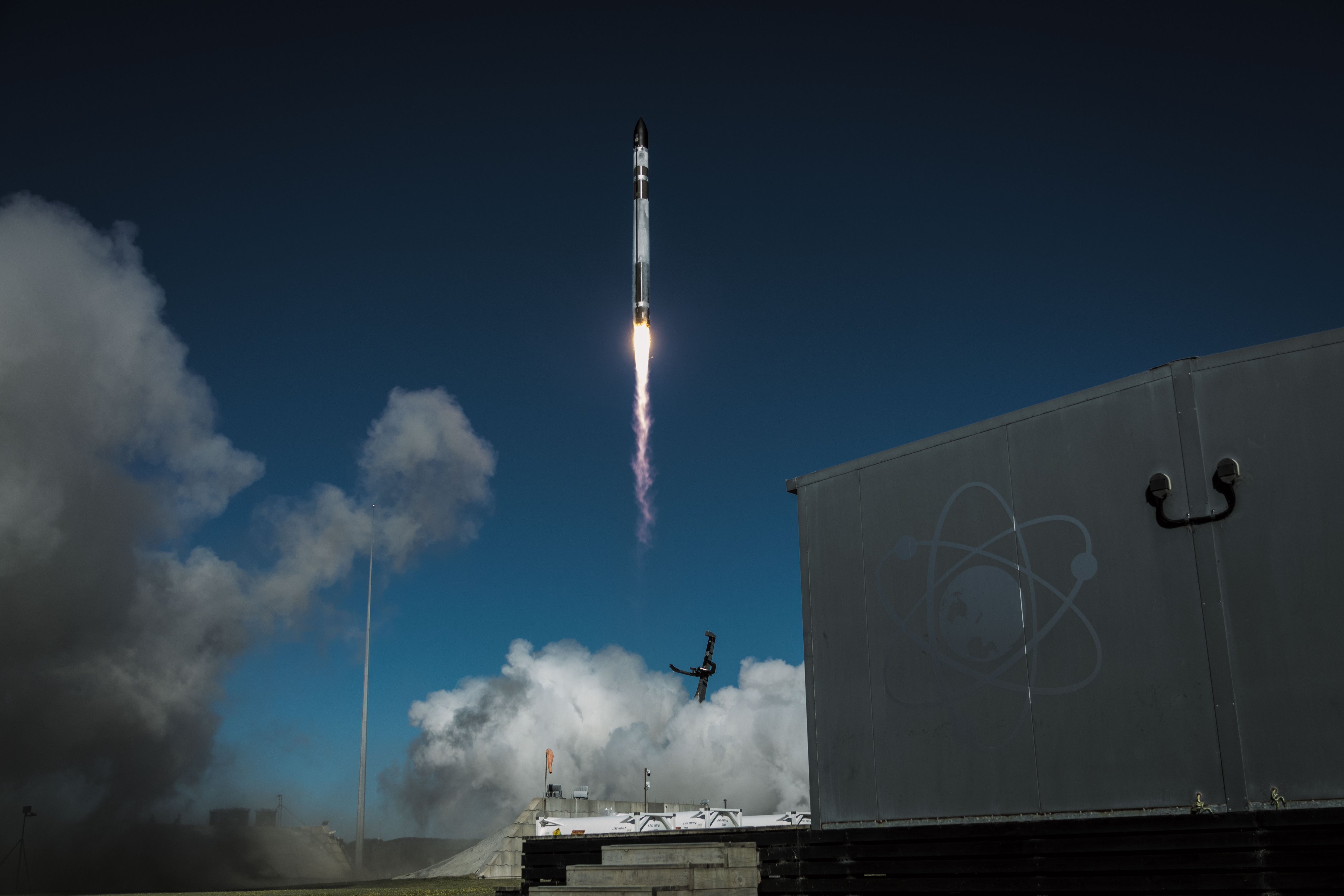
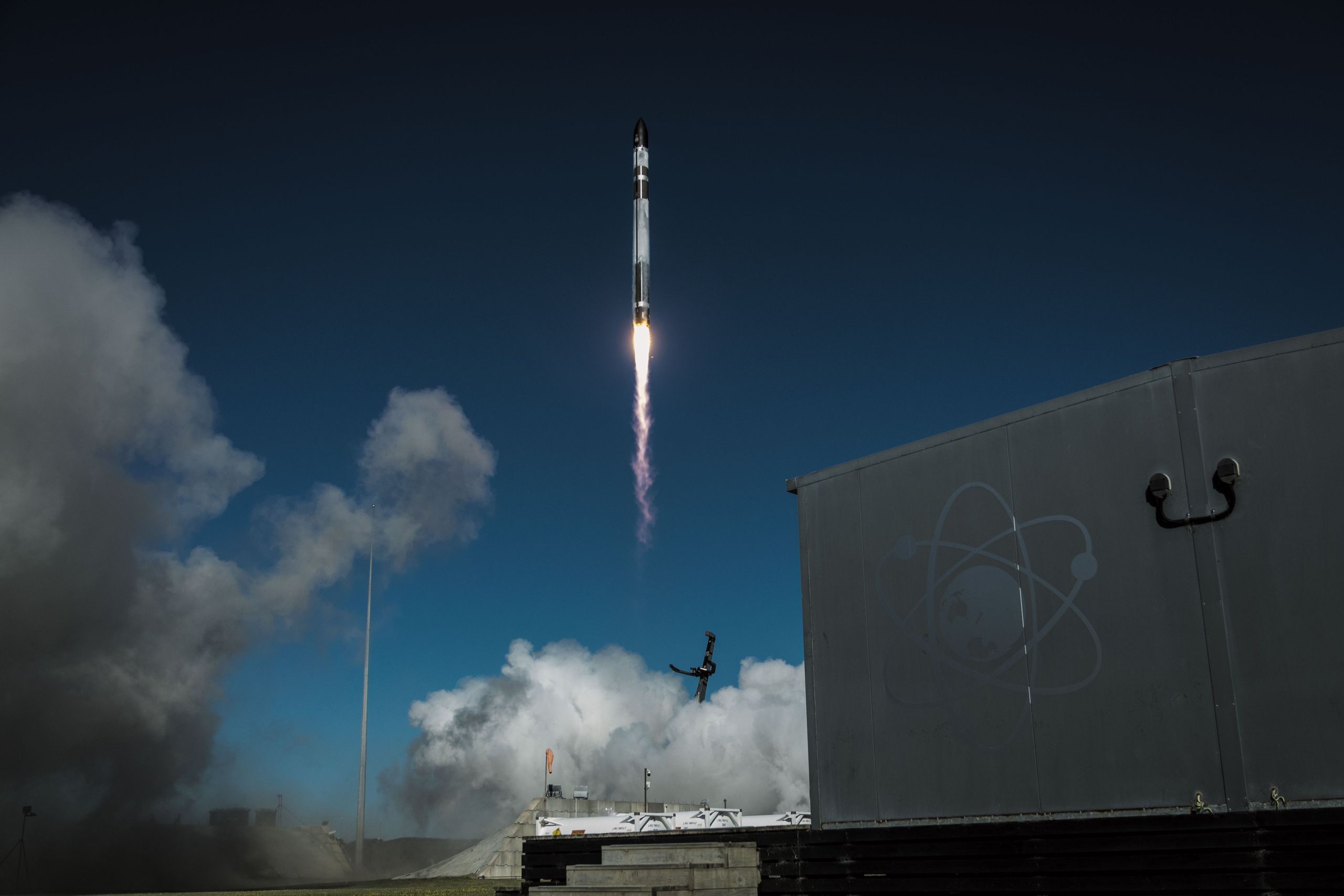
Rocket Lab launches a mission called “The Nation God Navigates” from New Zealand on Nov. 5, 2025. (Image credit: Rocket Lab)
The upcoming launch, which Rocket Lab calls “Don’t Be Such a Square,” will kick off the Space Test Program (STP)-S30 mission for the U.S. Space Force’s Space Systems Command.
STP-30 will deploy and operate the first-ever DiskSats, a new type of spacecraft developed by The Aerospace Corporation with funding help from NASA. At 40 inches wide by just 1 inch thick (102 by 2.5 centimeters), each DiskSat has the approximate dimension of a manhole cover.
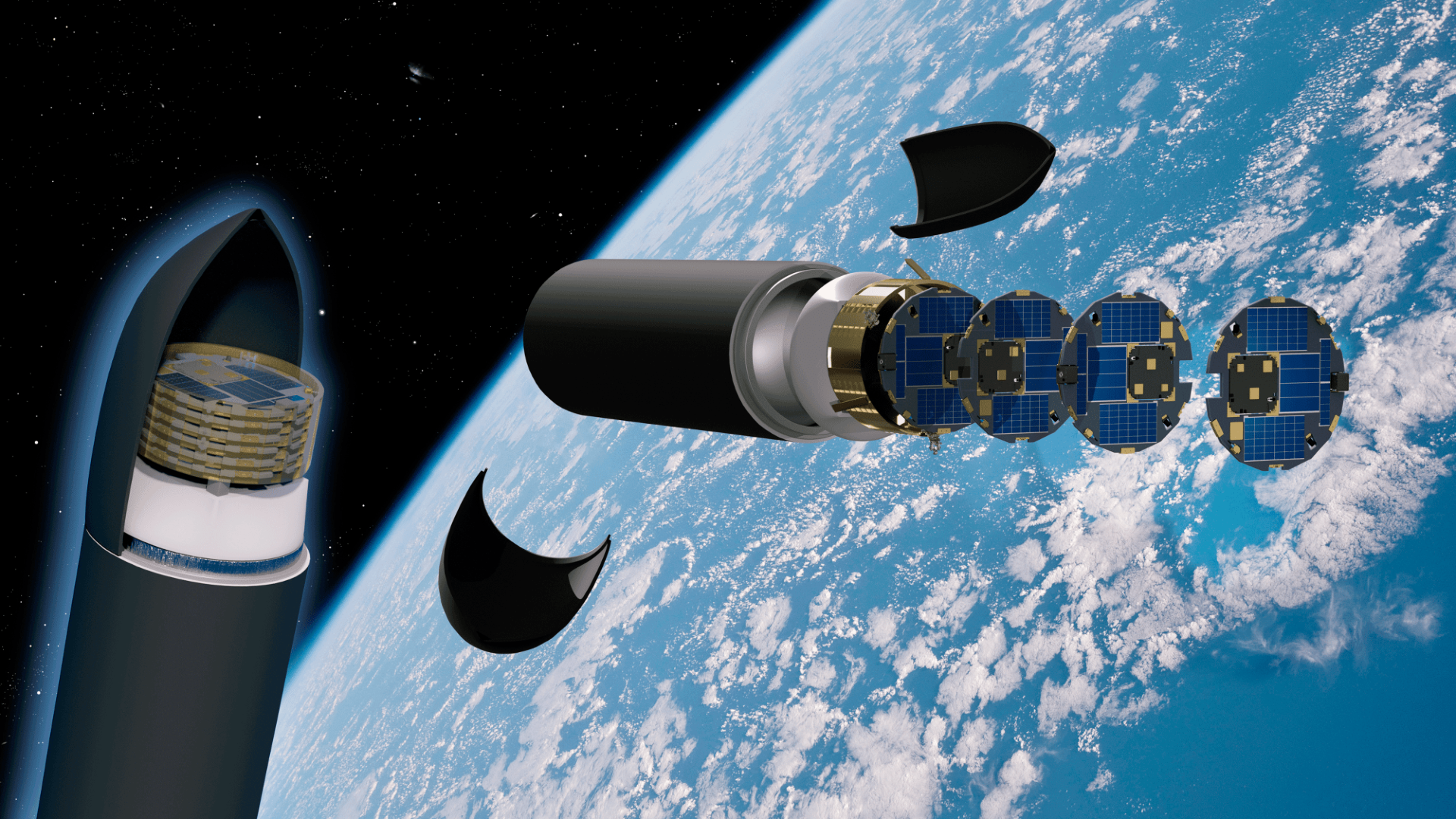
An illustration of DiskSats being deployed from a small launch vehicle fairing. (Image credit: The Aerospace Corporation)
That odd shape could lead to greater performance in the final frontier for small satellites, which have traditionally employed the boxy “cubesat” form factor.
DiskSats “could offer more power and surface area for instruments, providing more opportunities for NASA to expand upon target mission objectives for small spacecraft,” agency officials wrote in a description of the new tech.
“With its ability to fly continuously with one face pointing at the Earth, the DiskSat can also have a very low drag, making them capable of very-low altitude missions (less than 300 kilometers or 185 miles) such as those necessary for some Earth-observation missions,” NASA added.
The DiskSats won’t be flying so low on their inaugural mission, however. If all goes to plan on “Don’t Be Such a Square,” the Electron will deploy the quartet at an altitude of 342 miles (550 km) about 55.5 minutes after launch, according to Rocket Lab’s mission description.
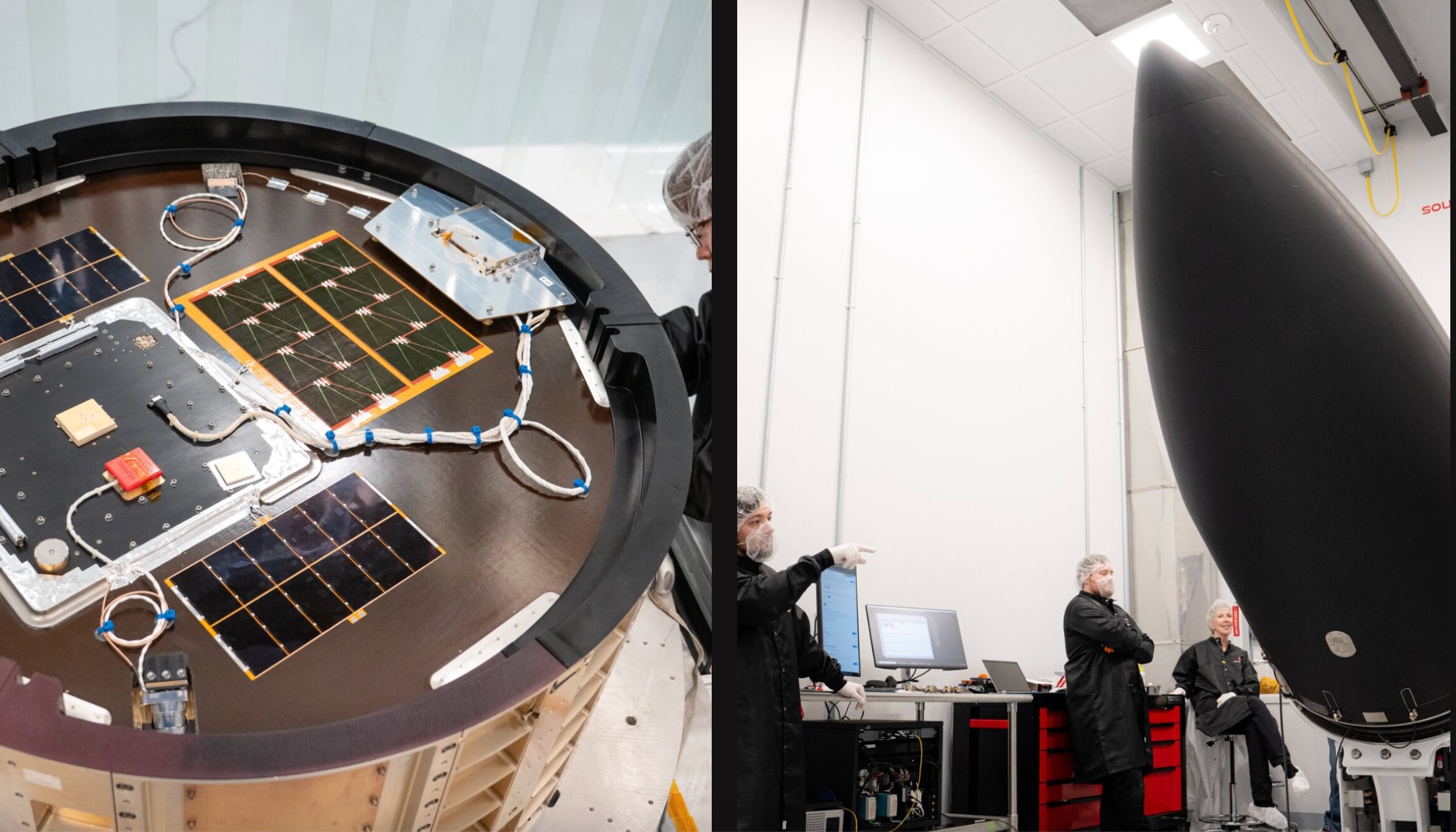
Rocket Lab technicians prep for the “Don’t Be Such a Square” mission, which will launch four “DiskSats” for the U.S. Space Force. (Image credit: Rocket Lab)
Rocket Lab initially planned to launch “Don’t Be Such a Square” in April 2026 but expedited it at the Space Force’s request, the company said in an emailed statement.
The mission will be Rocket Lab’s 20th of 2025, extending the company’s single-year launch record. The previous high was 16, set in 2024. Most of these have been orbital flights of the 59-foot-tall (18 meters) Electron, which gives small satellites dedicated rides to Earth orbit. But three were suborbital missions conducted by HASTE, a modified version of Electron that lets customers test hypersonic technologies in the space environment.

Dame Maggie Aderin-Pocock is a space scientist and science educator who has worked on a number of instruments that are revolutionising our view of the cosmos, including the James Webb Space Telescope. This year she will be giving the Royal Institution Christmas lectures, Britain’s most prestigious public science lectures, in which she will be exploring some of the big questions space science still has to answer.
Nicola Davis sat down with Dame Maggie to discuss the lectures, why she is convinced there is life beyond our planet, and her dream of journeying to a distant exoplanet. Madeleine Finlay hears from them both in this Christmas special edition of Science Weekly.
SCIENCE
James Webb Space Telescope confirms 1st ‘runaway’ supermassive black hole rocketing through ‘Cosmic Owl’ galaxies at 2.2 million mph: ‘It boggles the mind!’

Astronomers have made a truly mind-boggling discovery using the James Webb Space Telescope (JWST): a runaway black hole 10 million times larger than the sun, rocketing through space at a staggering 2.2 million miles per hour (1,000 kilometers per second).
That not only makes this the first confirmed runaway supermassive black hole, but this object is also one of the fastest-moving bodies ever detected, rocketing through its home, a pair of galaxies named the “Cosmic Owl,” at 3,000 times the speed of sound at sea level here on Earth. If that isn’t astounding enough, the black hole is pushing forward a literal galaxy-sized “bow-shock” of matter in front of it, while simultaneously dragging a 200,000 light-year-long tail behind it, within which gas is accumulating and triggering star formation.
You may like
Supermassive black holes, which can reach masses billions of times that of the sun, are usually found at the hearts of their home galaxies, which they dominate with their immense gravity. The incredible speed of this supermassive black hole means it is around 230,000 light-years from its point of origin.
“This is the only black hole that has been found far away from its former home,” van Dokkum said. “That made it the best candidate [for a] runaway supermassive black hole, but what was missing was confirmation. All we really had was a streak that was difficult to explain in any other way. With the JWST, we have now confirmed that there is indeed a black hole at the tip of the streak, and that it is speeding away from its former host.”
How to spot a runaway
This now-confirmed runaway supermassive black hole was first identified by van Dokkum and colleagues back in 2023 using the Hubble Space Telescope, which spotted what appeared to be the wake of a massive body passing through space. Of course, like all black holes, this runaway is bounded by a one-way light-trapping surface called an event horizon, making it difficult to spot.
“The black hole is, well, black – and is very difficult to detect when it is moving through empty space. The reason why we spotted the object is because of the impact that the passage of the black hole has on its surroundings: we now know that it drives a shock wave in the gas that is moving through, and it is this shock wave, and the wake of the shock wave behind the black hole, that we see,” van Dokkum said. “With the JWST, we discovered the huge displacement of the gas at the tip of the wake, where the black hole is pushing against it. The shock signatures are crystal clear, and there is just no doubt about what is happening here.” The gas is pushed sideways away from the supermassive black hole at a velocity of hundreds of thousands of miles per hour (hundreds of km per second), a dynamical signature that the team saw with JWST.
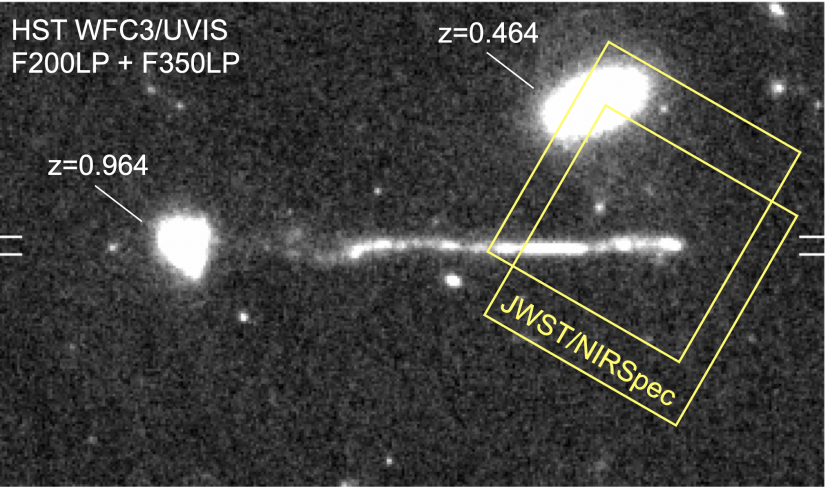
A Hubble image of a now confirmed runaway supermassive black hole with the wake investigated by the JWST (Image credit: van Dokkum et al (2025)/ arXiv)
“The velocity of the displaced gas is directly related to the velocity of the black hole, and this is how we determined the black hole’s velocity from the JWST data,” van Dokkum said. “It is moving at approximately 1000 km per second, faster than just about any other object in the universe. It is this high speed that enabled the black hole to escape the gravitational force of its former home.”
How does a supermassive black hole ‘go rogue?’
van Dokkum explained that two possible mechanisms could lead to a supermassive black hole being ejected from the heart of its own galaxy. Both scenarios begin when two galaxies collide and begin to merge, each bringing to the cosmic smash its own supermassive black hole. Both mechanisms are initiated when the supermassive black holes reach the center of the newly formed galaxy.
“The first mechanism is that the two black holes merge with each other, and that the gravitational radiation [gravitational waves] released in that merger imparts a powerful kick to the newly formed black hole. That kick could impart a speed of 1,000 km/s, enough to eject the black hole,” van Dokkum said. “The second is a three-body interaction. That happens when one of the two galaxies had a pair of binary black holes at its center. When a third black hole enters the binary system, it becomes unstable, and one of the three black holes will get kicked out of the system.”
You may like
The team believes that it is the first scenario that accounts for the runaway supermassive black hole in this instance. That would lead to a galaxy lacking a supermassive black hole at its center, which van Dokkum said is unlikely to impact said galaxy very much. However, this runaway supermassive black hole could have a huge impact on any other galaxy it encounters as it rockets through space.
“An encounter with another galaxy would be quite spectacular, mostly because of the huge, galaxy-sized shock wave that precedes the black hole,” van Dokkum continued. “When this shock wave encounters the dense gas of another galaxy, it would compress and shock that gas and likely form a lot of new stars. It would be quite the show!”
Fortunately, the two-ring galaxies that comprise the Cosmic Owl are located around 9 billion light-years away, meaning even if this runaway cosmic titan were headed our way, we don’t ever need to worry about it reaching us.
Mergers between galaxies are common, occurring multiple times over the lifetime of a single galaxy. That means that ejected supermassive black holes may also be quite common, though population numbers vary based on how these collisions are modelled.
“Mergers happen often in the life of a galaxy; each galaxy with the size and mass of the Milky Way has experienced several during its lifetime. So black hole binaries should form pretty regularly. What we don’t know is how quickly these binaries merge, if at all, and how often the resulting kick removes a black hole,” van Dokkum said. “My view is empirical: now that we know how to look for them, we can find other examples – and then we can answer the question directly from data, by counting the number of escapes. The big thing is that black hole escapes lived purely in the realm of theory until now.”Even though runaway supermassive black holes had been predicted by theory long before this discovery confirmed their existence, that doesn’t mean these findings didn’t deliver some unexpected twists.
“Everything about this research surprised me! I never expected to see such a thing, and confirming it with JWST was just incredible,” van Dokkum said. “What we also had not quite appreciated is how much impact these escaping black holes have on the gas that they are moving through. In the wake, many new stars have formed from the shocked gas, about 100 million times the mass of the sun. This mode of star formation was unknown before, and it leads to a trail of stars far away from the galaxy, seemingly formed in empty space.”
The Yale University researcher explained that the obvious next step for the team will be to search for more examples of runway black holes.
“You need space-based imaging to see them: the wake stood out to us because it is such a thin streak, and in ground-based images, it would be blurred beyond recognition,” van Dokkum explained. “Fortunately, wide-field Hubble-quality imaging is just around the corner, thanks to the Roman Space Telescope, and, slightly blurrier, Euclid. Using machine learning algorithms to find thin streaks in the Roman data will be a cool project!”
The team’s research has been submitted to The Astrophysical Journal Letters and is currently available as a pre-peer-reviewed paper on arXiv.
SCIENCE
US Senate confirms billionaire Musk ally Jared Isaacman as Nasa chief | Trump administration


The US Senate on Wednesday confirmed billionaire private astronaut Jared Isaacman to become Donald Trump’s Nasa administrator. The confirmation makes an advocate of Mars missions and an ally of SpaceX CEO Elon Musk the space agency’s 15th leader.
The vote on Isaacman, who Trump nominated, removed and then renamed for the post of Nasa administrator this year, passed 67-30, two weeks after he told senators in his second hearing that Nasa must pick up the pace in beating China back to the moon this decade.
Acting Nasa chief Sean Duffy, who also leads the US transportation department, congratulated Isaacman on Twitter/X, wishing Isaacman “success as he begins his tenure and leads NASA as we go back to the Moon in 2028 and beat China”. Duffy had been lobbying to move the space agency under the permanent purview of his own bureau, a fight he lost with Isaacman’s confirmation. Duffy’s consolidation efforts sparked conflict with Musk around the same time that the transportation secretary had said that SpaceX had fallen behind on its contracts with Nasa and looked to the private company’s competitors, in particular Jeff Bezos’s Blue Origin, for alternatives.
Isaacman’s nomination for the role was previously pulled back in May during a period when Musk and Trump were in a public feud. Trump posted on his Truth Social platform that Isaacman’s donations to Democratic candidates were the reasons behind the move. Isaacman re-emerged as a candidate in recent months, however, and according to the Wall Street Journal he tapped allies within the administration to promote his cause.
Isaacman’s fortune came from founding a payment processing startup called Shift4, which now handles billions of transactions each year. He has flown on two SpaceX missions, both of which he funded himself and contained all-civilian crews. The most recent was in 2024, a mission that involved the first spacewalk conducted by a private company.
SCIENCE
10 years into the Disney ‘Star Wars’ era: Grading the ups and downs of a galaxy far, far away

December 18, 2015 (December 17 in the UK) will be a day long remembered. It was the day “The Force Awakens” first arrived in theaters, when “Star Wars” icons Han Solo, Leia Organa, and (eventually) Luke Skywalker made their long-awaited return to the big screen, and continued their fight against the dark side.
The Skywalker Saga’s seventh instalment was a critical and commercial success, and made Disney’s $4 billion purchase of Lucasfilm in 2012 look like a very smart piece of business.
Since then, there have been four more movies and the franchise’s first-ever adventures in live-action TV, but — while it’s undoubtedly been a lucrative endeavor — this new “Star Wars” era hasn’t always been plain sailing.
You may like
The Skywalker Saga
(Image credit: Disney)
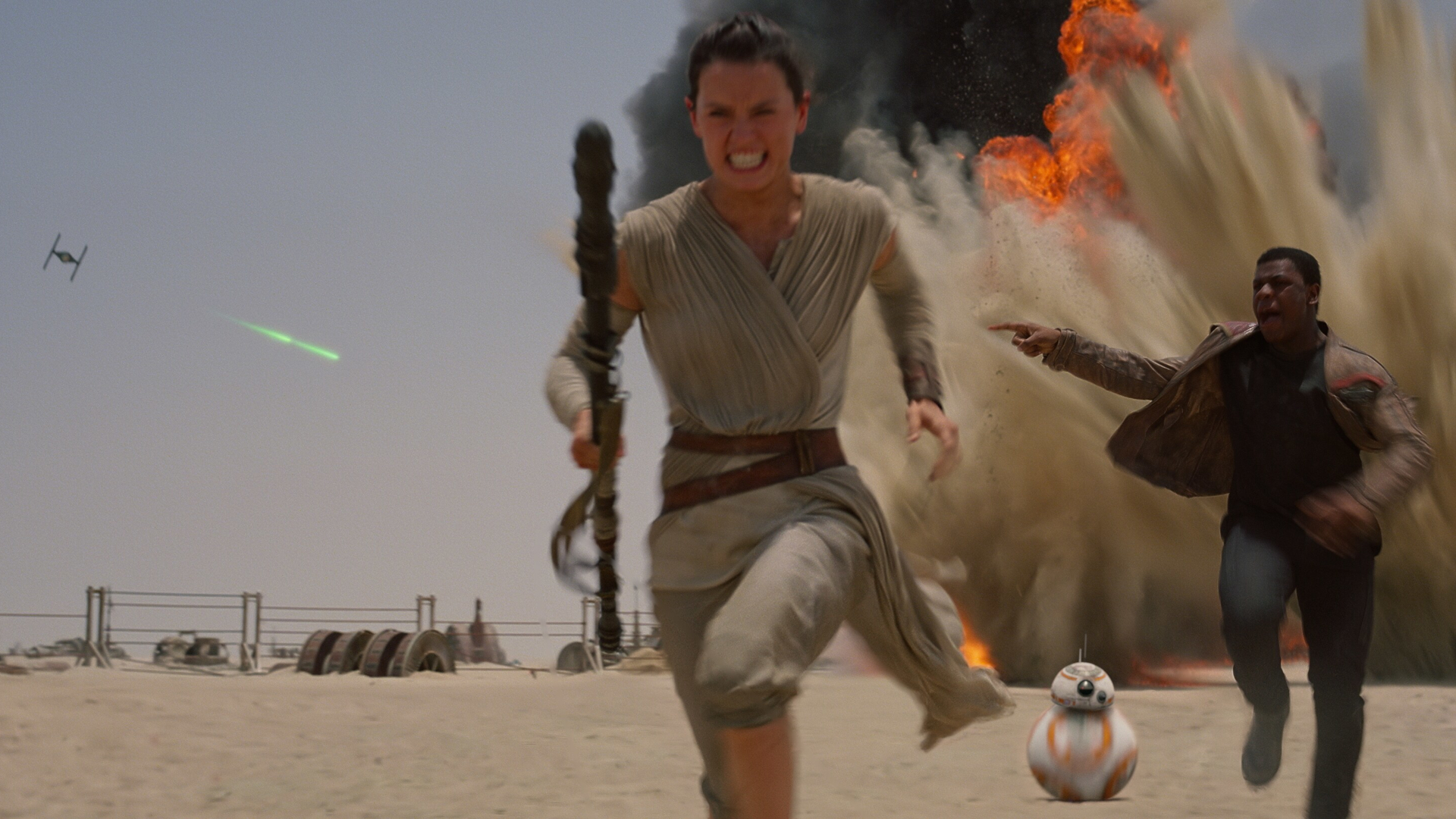
The “Star Wars” sequel trilogy was the holy grail of Disney’s Lucasfilm purchase. Fans — and numerous spin-off novels — had been pondering what happened after “Return of the Jedi” for decades, and now they’d get to see it on the big screen. With Harrison Ford, Mark Hamill, and Carrie Fisher returning as the holy trinity of Han, Luke, and Leia.
Hiring a director who’d recently had success resurrecting the other major “Star” franchise proved a smart move. Lucas’s weird, out-there story treatments (ultimately jettisoned by Disney) would have made for intriguing movies, but JJ Abrams’ crowd-pleasing approach (co-scripted with “The Empire Strikes Back” writer Lawrence Kasdan) was what the franchise needed. Yes, “The Force Awakens“‘ plot was essentially a remix of “A New Hope” but it also told those gen-X fans who’d moaned about the prequels that Disney knew how to make their kind of “Star Wars”. It remains the only film in the franchise to top $2 billion at the global box office.
While “The Force Awakens” played it safe, follow-up “The Last Jedi” (2017) took some big swings. The resulting film became the most divisive in the entire saga.
(Image credit: Disney / Lucasfilm)
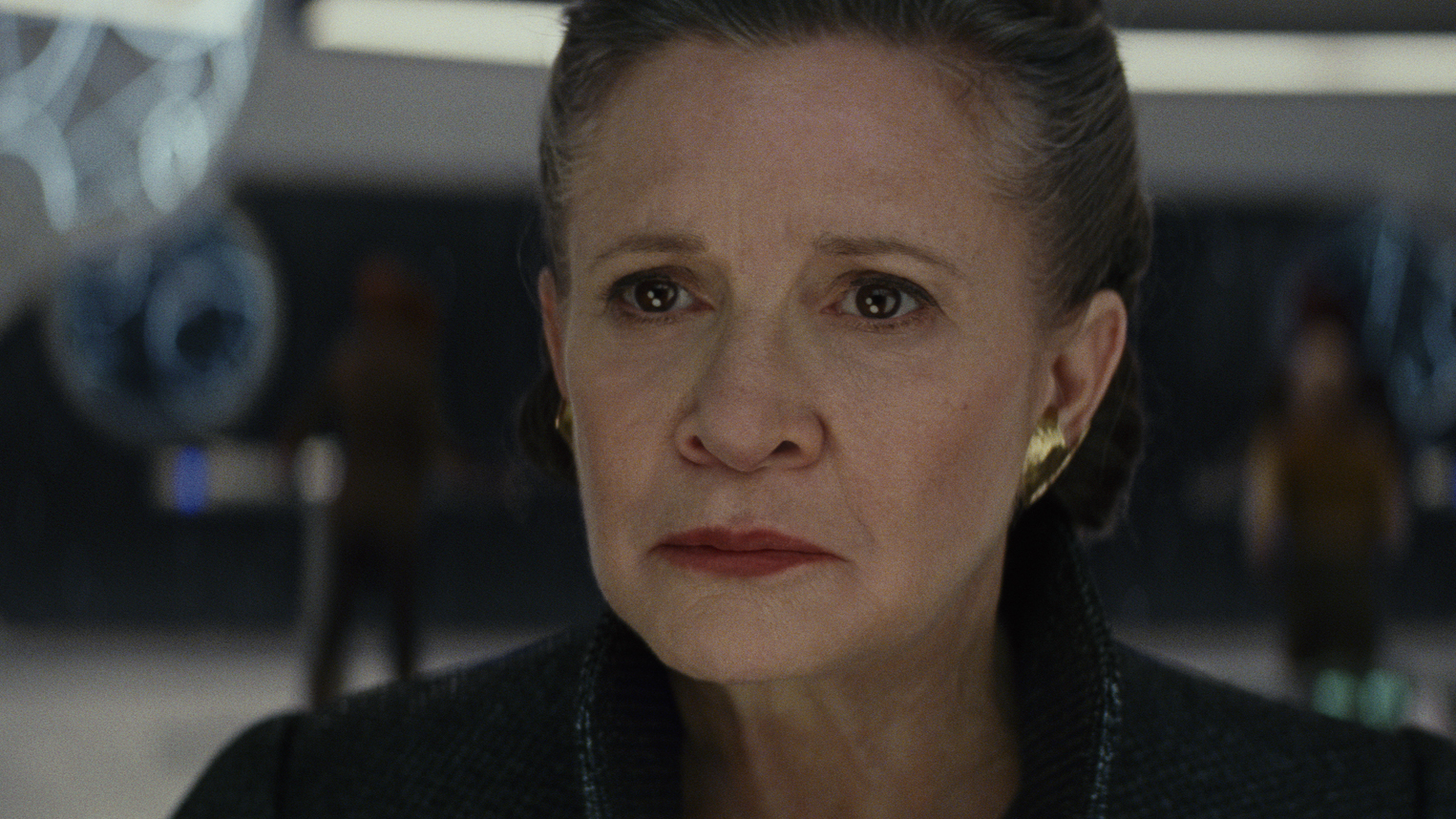
For some — this writer included — writer/director Rian Johnson’s choices were wonderfully bold and unexpected: Luke’s disillusionment with the Jedi, Rey’s “nobody” parentage, and Snoke’s shock death all delivered on the trailer’s promise that “this is not going to go the way you think”. Other sectors of the fanbase, however, saw these as negatives, along with the very slow starship chase, the detour to a gambling planet, and accusations of excessive wokeness. (The deeply unpleasant online abuse directed at members of the cast and crew, particularly Kelly Marie Tran, highlighted the dark side of fandom.)
Then came “The Rise of Skywalker” (2019)…
You may like
Mistakes were undoubtedly made in both “The Force Awakens” and “The Last Jedi” — most notably, passing up the opportunity to reunite Han, Luke and Leia on screen — but “The Rise of Skywalker” was a bona fide catalogue of errors.
With Leia reportedly set to take a leading role in “Episode IX”, the sad passing of Carrie Fisher in December 2016 threw the filmmakers the most tragic of curveballs. But when original writer/director Colin Trevorrow (“Jurassic World”) departed the project less than two years ahead of its planned release— “we have come to the conclusion that our visions for the project differ,” said a Lucasfilm statement — returning director Abrams found himself in a race against time.
(Image credit: Lucasart)
He wasn’t helped by the Skywalker Saga’s ad hoc approach to plotting, strangely reminiscent of Consequences, the old parlour game where players have to continue each other’s unseen stories. It turned out there’d been little overarching grand plan for the new trilogy, as each creative team riffed on their predecessor’s ideas.
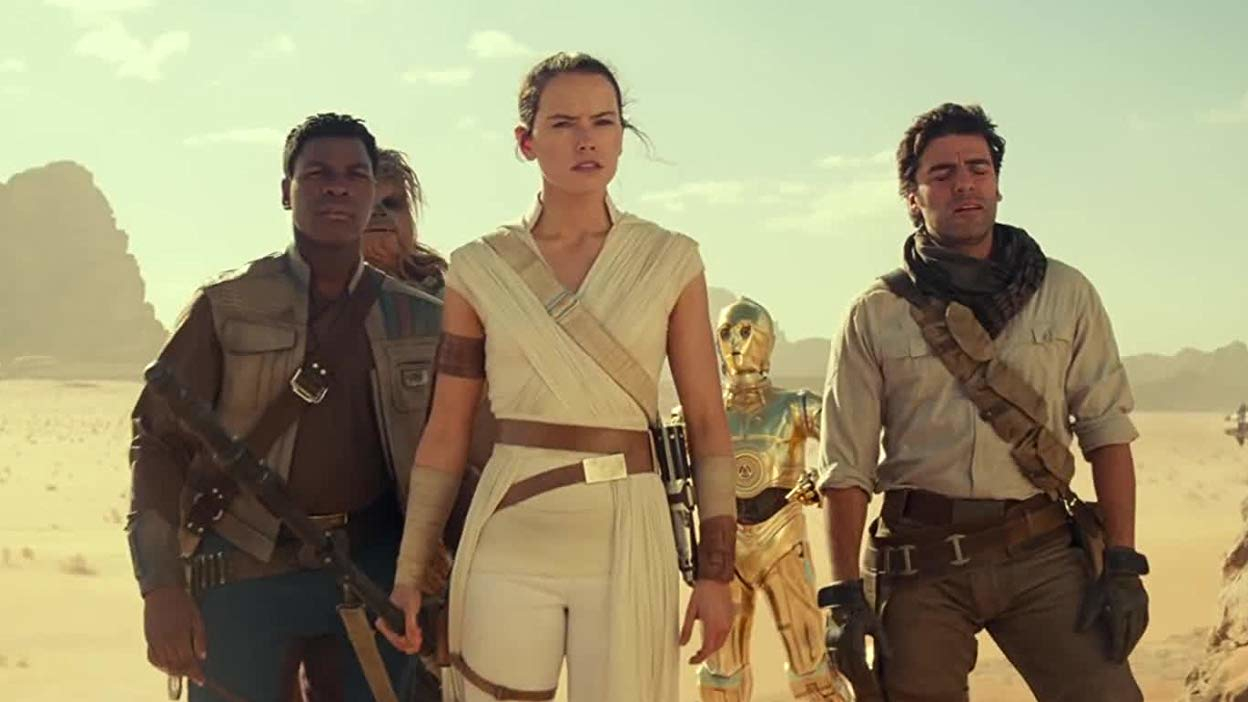
While this narrative flexibility had arguably worked in Johnson’s favor, Abrams and co-writer Chris Terrio made some really odd choices. They didn’t shy away from those aforementioned big swings, but resurrecting the long- (and very) dead Emperor Palpatine — while revealing he’d been pulling the First Order’s strings all along — made the “Star Wars” galaxy feel very, very small, undermining everything that had made “The Last Jedi” memorable.
The retcons — such as Rey being anything but nobody (hey everyone, she’s Palpatine’s granddaughter!) — were utterly nonsensical, as were the cheap, easily undone shock moments like Chewbacca’s “death”. Questions posed in “The Force Awakens” about the origins of the Knights of Ren and how Maz Kanata obtained Luke’s lightsaber remained frustratingly unanswered. And then there was Carrie Fisher’s posthumous appearance as Princess Leia, an unsatisfying blend of unused footage and CG recreation. In hindsight, it would have been better to have this beloved character die off-screen.
“The Rise of Skywalker” remains a very expensive ode to that old proverb that “those who fail to plan, plan to fail”. It’s still, by some distance, the worst film in the franchise, and ended (for now) the Skywalker Saga on a downer. It was also the fifth “Star Wars” movie released in the space of four years — it’s telling there hasn’t been another in the six years since.
Swipe to scroll horizontallyThe Skywalker Saga Report Card
Star Wars Project
Grade
The Force Awakens
A-
The Last Jedi
A
The Rise of Skywalker
D-
Standalone movies
(Image credit: Disney/Lucasfilm)
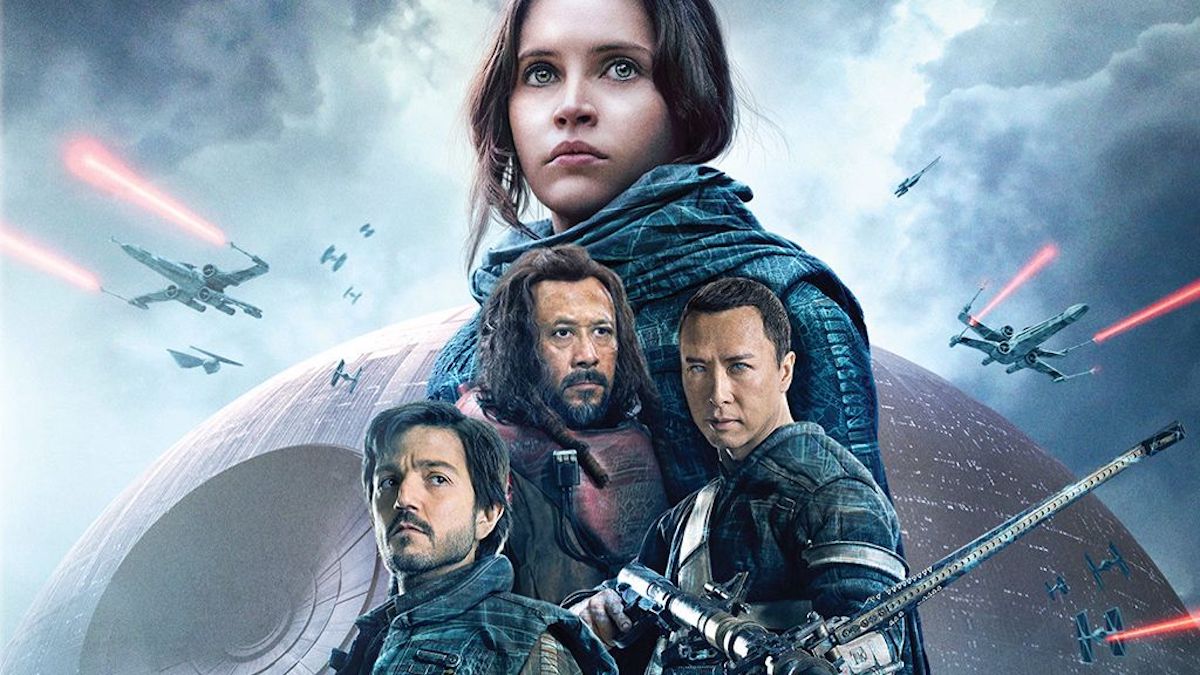
“Rogue One” (2016) shouldn’t have worked. This was a standalone movie inspired by a couple of lines from “A New Hope”‘s opening crawl (about the Rebels stealing some famous Death Star plans), featured an ensemble of unknown characters, and was the result of a famously troubled production, where “Michael Clayton” writer/director Tony Gilroy came on board to oversee extensive reshoots. The full extent of his involvement is still shrouded in secrecy.
And yet the film turned out to be one of the best in the entire franchise. It was a dark, gritty war movie, where themes about sacrifice (everybody dies!) sat side-by-side with the unashamed nostalgia of OG X-Wings and TIE Fighters dogfighting.
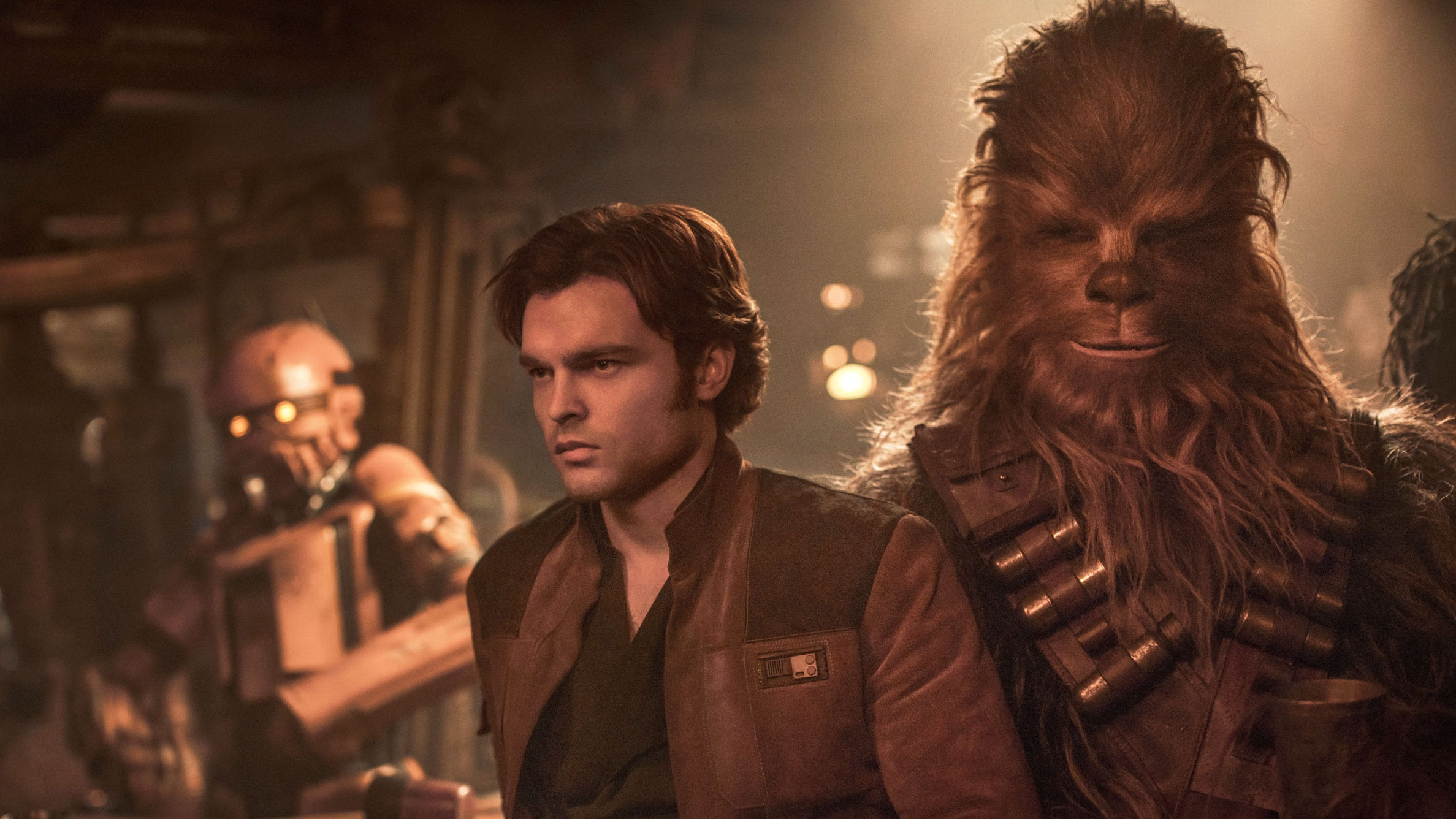
The second “Star Wars Story”, “Solo”, was less successful. Going back to the origins of everyone’s favorite scoundrel, Han Solo, may have felt like a no-brainer — especially with Kasdan on board as co-writer — but the film never felt like an essential addition to the rapidly expanding canon.
(Image credit: Lucasart)
As with “Rogue One” there was trouble behind the scenes, as original directors Phil Lord and Christopher Miller (“The Lego Movie”) left the production — “different creative visions” were blamed for the departure once again. Ron Howard, owner of two of the safest hands in Hollywood, was hired to shepherd the production over the line.
But, whether or not you feel Alden Ehrenreich was up to filling Harrison Ford’s boots, the film’s biggest problem was its concept. “Solo” was less a story than a succession of answers to questions you never needed to ask, from recreating the Kessel Run to confirming the origins of the Solo name — he’s travelling alone, geddit? Little did we know that this “fill in the canonical blanks” approach to storytelling would later become integral to the “Star Wars” galaxy….
Swipe to scroll horizontallyStandalone Star Wars Movies Report Card
Star Wars Project
Grade
Rogue One
A
Solo
C
Television
(Image credit: Disney)
The launch of Disney+ in November 2019 gave “Star Wars” the chance to take its first step into a larger world. Sure, there had been plenty of animated series already (including the brilliant “The Clone Wars”), but nothing live-action, despite Lucas’s best efforts on the abandoned “Star Wars: Underworld“.
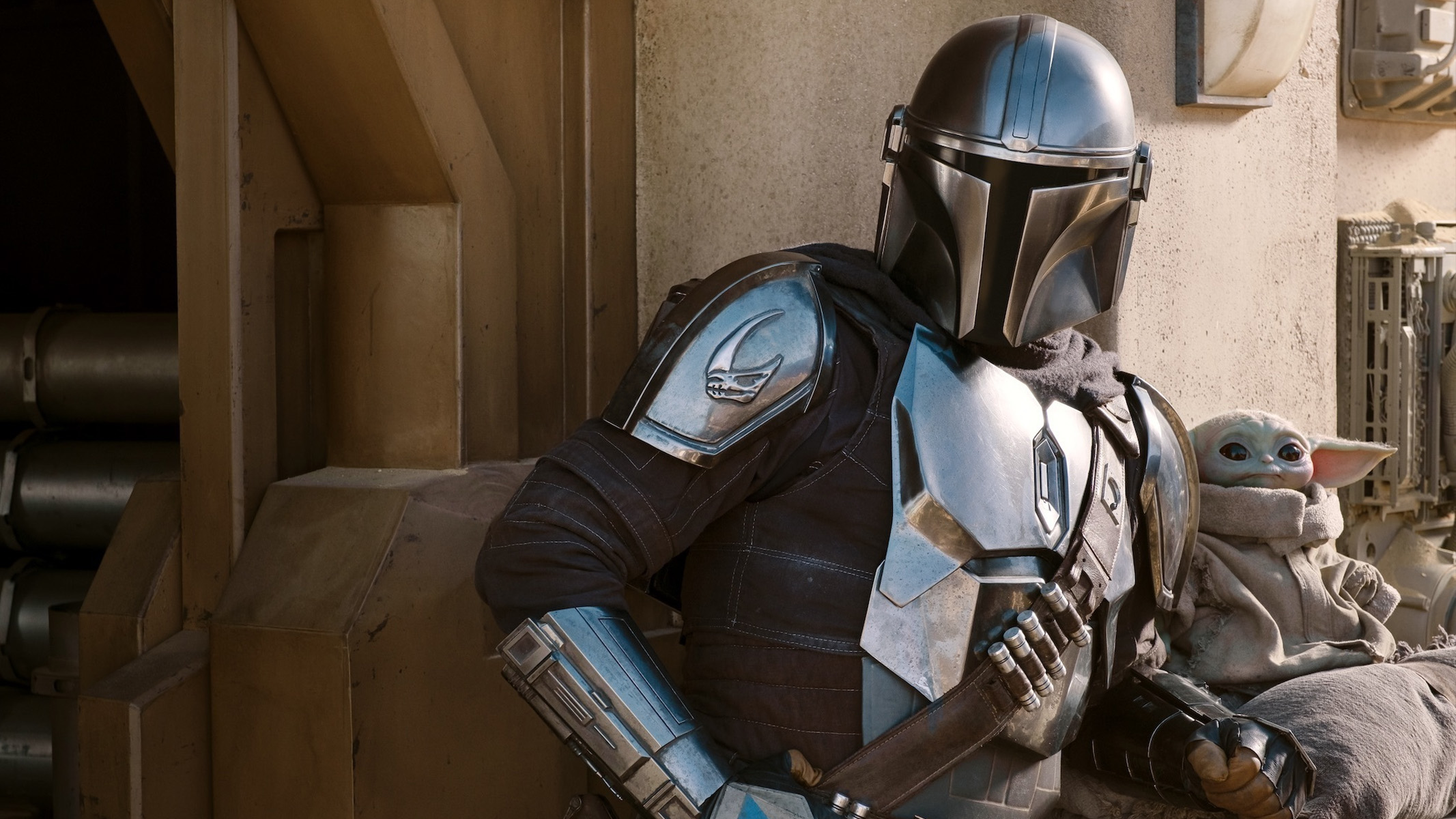
Jon Favreau’s “The Mandalorian” (2019) was the right show at the right time, a welcome nod to the franchise’s space-western roots in which a bounty hunting loner became surrogate dad to the cutest kid in the galaxy. It looked as good as a movie, but also made the most of its episodic structure. For the first time in its history, the most exciting place in the “Star Wars” galaxy could be found on TV.
Subsequent Disney+ shows have been more inconsistent. The galaxy’s most infamous bounty hunter had come close to headlining his own movie in the 2010s, but ultimately became the lead in “The Mandalorian” spin-off, “The Book of Boba Fett” (2021). Fett’s efforts to take control of the late Jabba the Hutt’s crime empire lacked the crucial Grogu factor, however, and — somewhat ironically — the seven-part series’ two best episodes were “The Mandalorian” outings in all but name.
(Image credit: Lucasfilm / Disney)
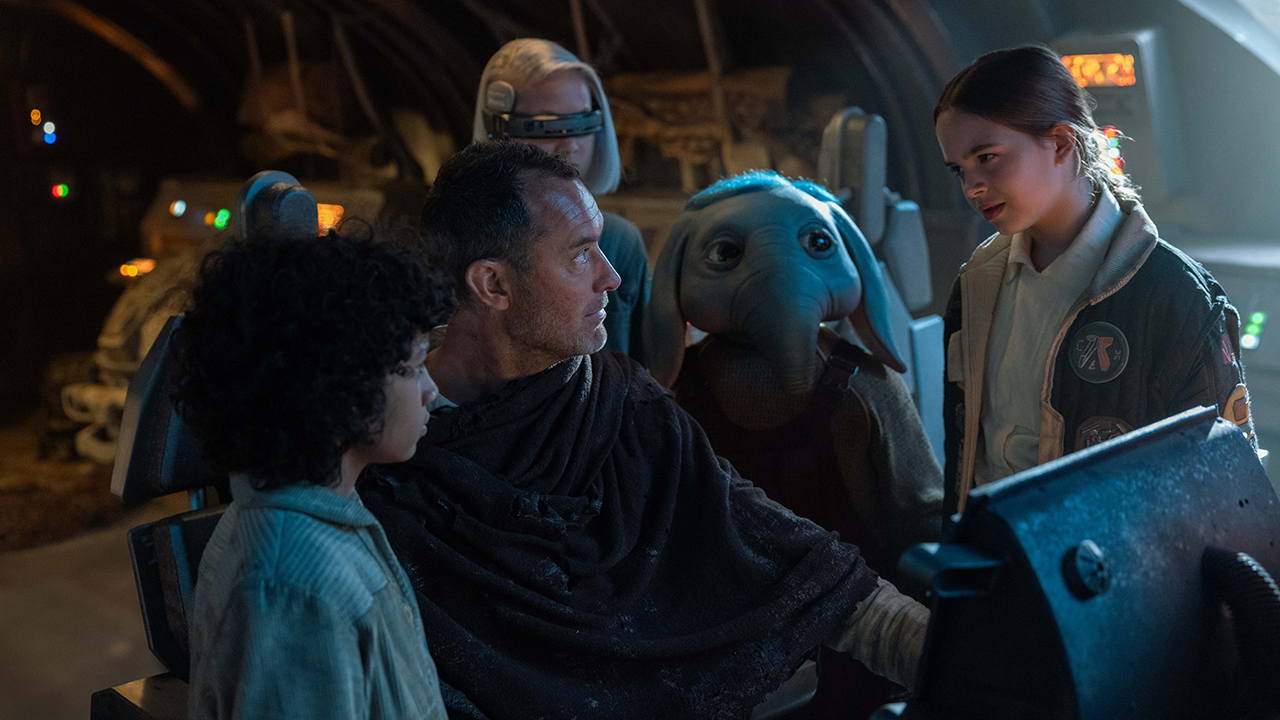
This post-“Return of the Jedi” period in the “Star Wars” timeline has proved particularly fertile ground for the franchise, with “Ahsoka” (2023) (which has been renewed for a second season) and “Skeleton Crew” (2024) (which has not).
Co-created by “Spider-Man: Homecoming” director Jon Watts, “Skeleton Crew” was a fun, refreshing effort to recreate “The Goonies” in outer space. “Ahsoka”, meanwhile”, gave former Lucasfilm animation overlord Dave Filoni (now Lucasfilm’s chief creative officer) the chance to continue the stories of characters and storylines established in “The Clone Wars” and “Star Wars Rebels”. It’s as lore-heavy as anything in “Star Wars” — arguably too much so for casual viewers — and adheres closely to the “plug those gaps” formula established by “Solo”.
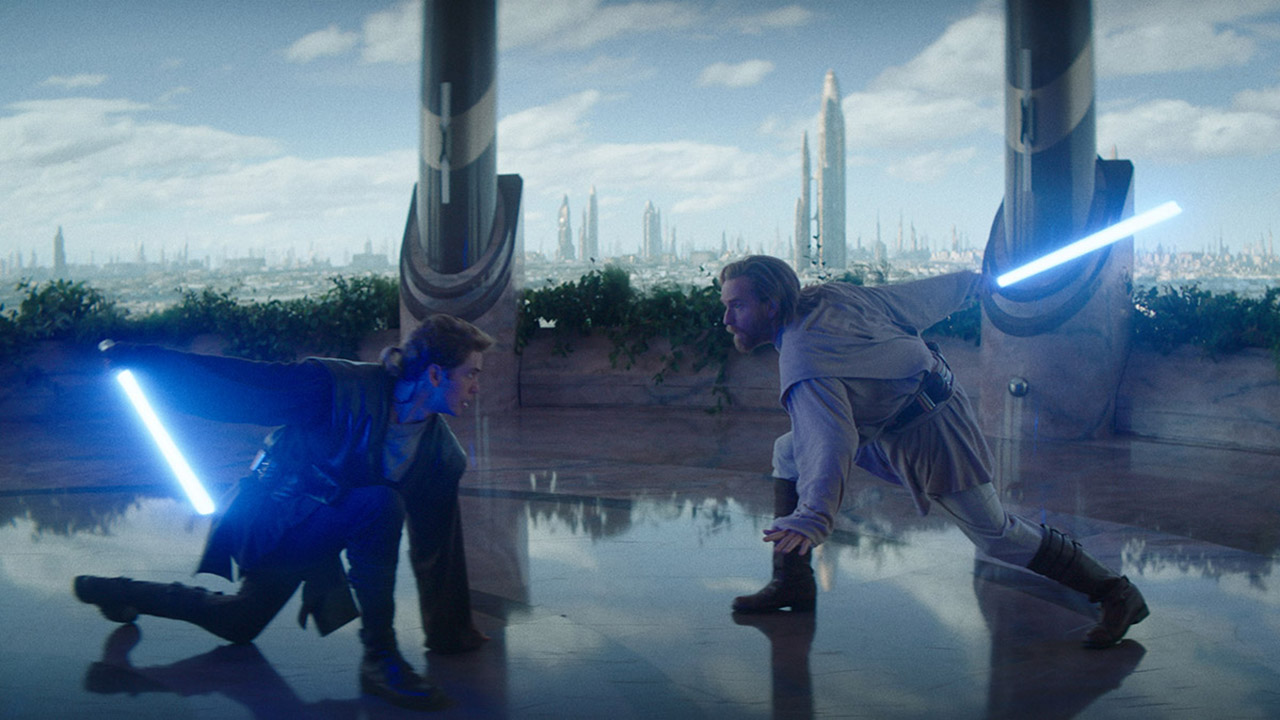
Along with the functionally titled “Obi-Wan Kenobi” miniseries (2022), “Ahsoka” marked an important shift in the franchise’s strategy. While the first batch of Disney-era movies went all-out to push the nostalgia buttons of older fans who’d grown up with Han, Luke, and Leia, Lucasfilm started to acknowledge that the kids who’d grown up on the prequels were now adults buying Disney+ subscriptions of their own. Anakin Skywalker (played by the returning Hayden Christensen) was their hero, while the Ewan McGregor incarnation of Obi-Wan was the Jedi Master they’d always known.
(Image credit: Walt Disney Pictures & Lucasfilm)
“The Acolyte” (2024) (the brainchild of “Russian Doll” creator Leslye Headland) became “Star Wars”‘ first screen outing set outside the Skywalker era. Unfortunately, the Jedi/Sith action of the High Republic era — roughly a century before the events of “The Phantom Menace” — didn’t feel significantly different from what we’d seen before, and the show was axed after a single season.
As on the big screen, it’s Lucasfilm’s biggest TV swings that have been the most successful. From various Lego spin-offs to “The Bad Batch” (2021), there’s been no shortage of “Star Wars” animation over the last decade, but “Star Wars: Visions” (2021) has been the most radical. While it’s undeniably hit and miss, the anthology series has allowed animators around the world to put new and varied spins on a universe that’s nearly half a century old.
(Image credit: Disney Plus)
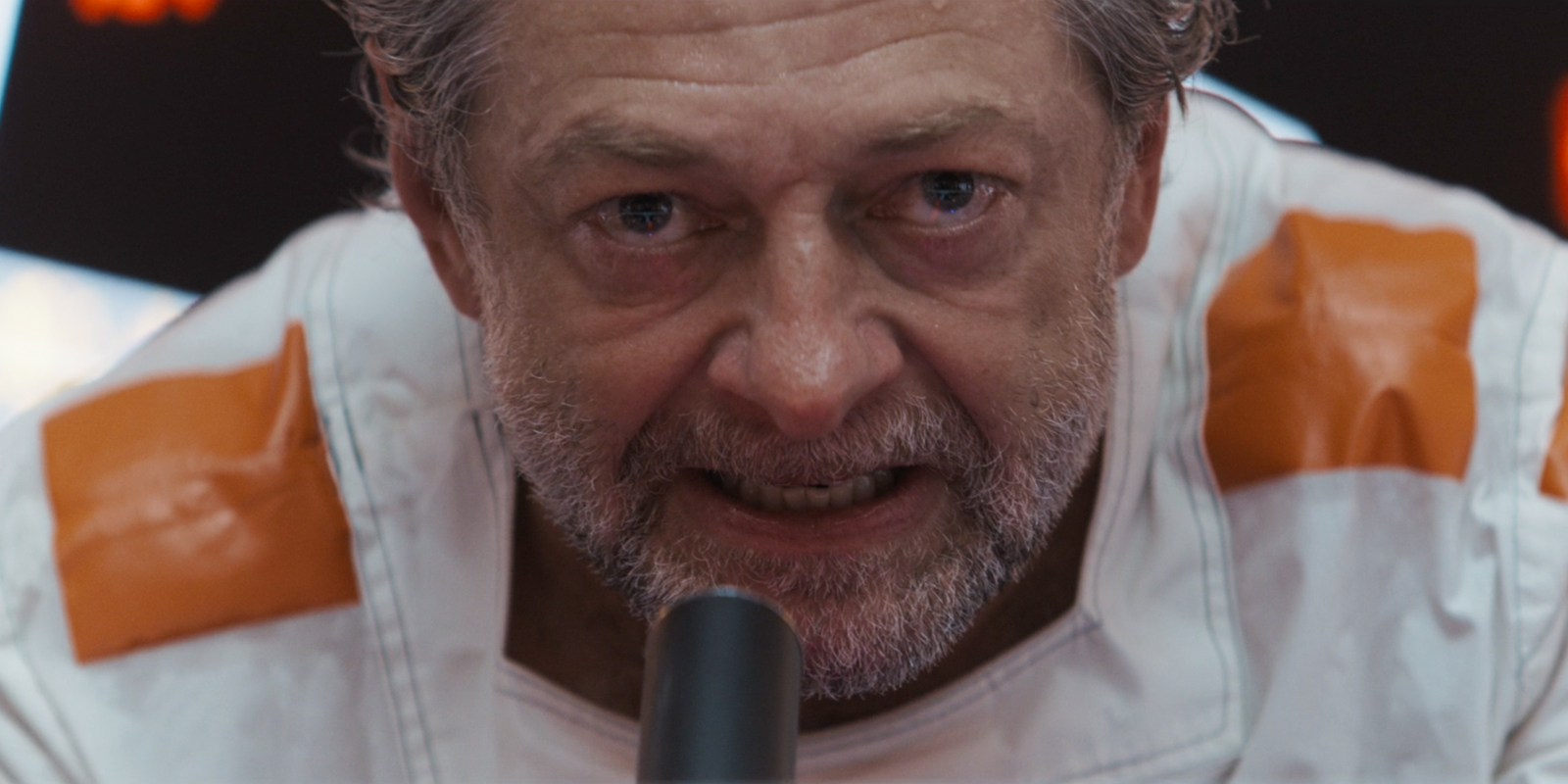
And, of course, there’s “Andor” (2022), the “Rogue One” prequel that redefined what “Star Wars” can be. Without ever forgetting that it’s set in a galaxy far, far away, Tony Gilroy’s complex political thriller felt chillingly relevant, as a small band of Rebels risked everything to mobilize against crushing Imperial brutality. Forget Darth Vader and the Emperor, the Empire has never been scarier than it was here.
“Andor”‘s two seasons are the standout of the Disney era, a reminder of “Star Wars”‘ impressive versatility. Of course, not everything has to be so dark and gritty, but — if the powers-that-be have been paying attention — they’ll realise that any stories they want to tell could and should be on the (Sabacc) table. Even a “Lower Decks”-style comedy.
Swipe to scroll horizontallyStar Wars TV Shows Report Card
Star Wars Project
Grade
The Mandalorian
A
The Book of Boba Fett
C
Obi-Wan Kenobi
B
Ahsoka
C+
Skeleton Crew
B-
The Acolyte
C+
The Bad Batch
B-
Star Wars: Visions
B+
Andor
A+
The future
(Image credit: Disney)
In 2018, following the disappointing box-office performance of “Solo”, Disney CEO Bob Iger issued a mea culpa to the Hollywood Reporter. Referring to the breakneck pace of Disney’s early “Star Wars” release schedule, he admitted, “I think the mistake that I made — I take the blame — was a little too much, too fast.”
And over the last decade, it’s been hard to escape the feeling that — to paraphrase Indiana Jones, Lucasfilm’s other timeless movie icon— they’re making this up as they go. “Star Wars” has certainly suffered in comparison to Disney stablemate Marvel, whose MCU — despite some recent stumbles — remains the gold standard for all shared universes.
Projects come and go at every major studio — and more eyes are on “Star Wars” than most — but the sheer number of movies and TV shows that have fallen by the wayside is mind-boggling.
(Image credit: Disney/Lucasfilm)
Josh Trank’s Boba Fett project, Patty Jenkins’ “Rogue Squadron”, a Lando Calrissian film, and potential big-screen projects from “Thor” director Taika Waititi, Marvel boss Kevin Feige, and “The Last Jedi”‘s Johnson have all been discussed, but — for various reasons — never made it out of the development pipeline. “Rangers of the New Republic”, another proposed “Mandalorian” spin-off, was also spiked. Stories teased by “Solo” (Maul’s new career as a crime lord) and “The Acolyte” (the arrival of Palpatine’s master, Darth Plagueis) were frozen in carbonite, plot threads left hanging by shifting plans and cancellations.
But now, a decade on from “The Force Awakens, Disney may finally be finding some balance in the Force. Dave Filoni (a man steeped in “Star Wars” lore after serving as Lucas’s Padawan on “The Clone Wars”) feels like a wise appointment as chief creative officer, and hopefully, he’ll be able to shape Lucasfilm’s output as Feige has Marvel’s. A much-needed slowdown in output should also give everyone — fans included — a chance to regroup.
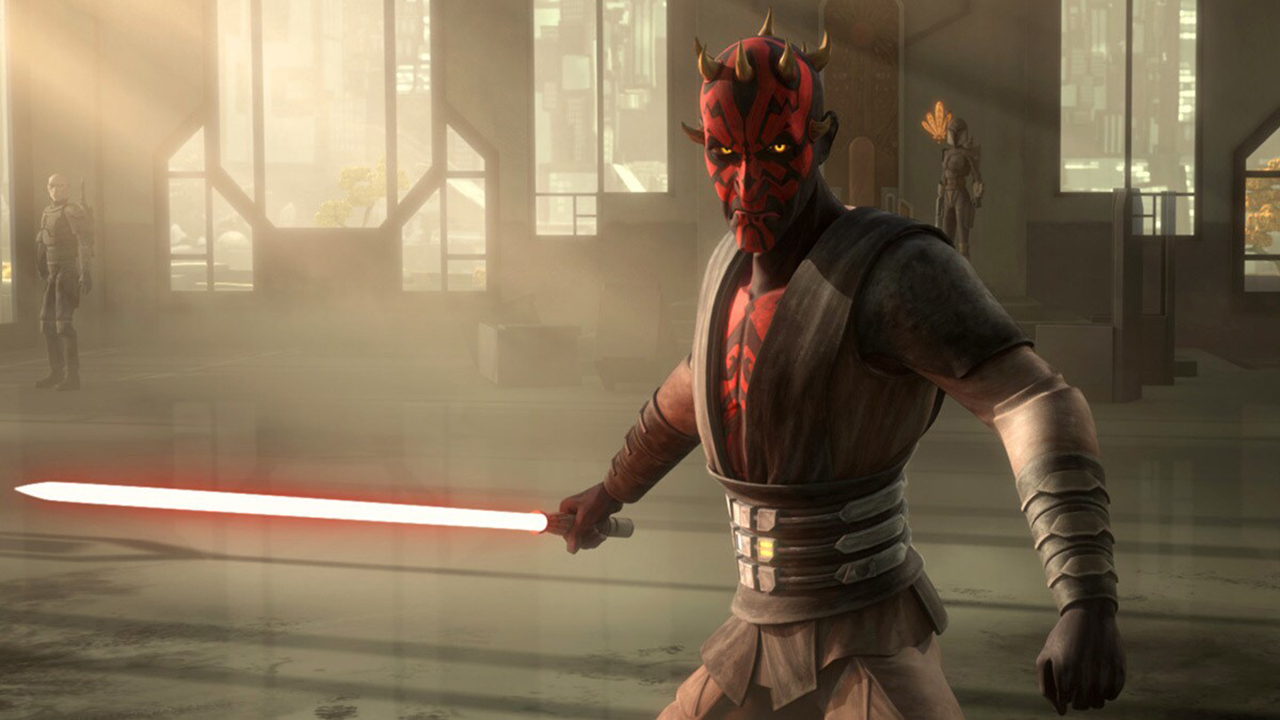
(Image credit: Lucasfilm)
The only major TV releases on the immediate horizon are “Ahsoka”‘s second season (date TBC) and the animated “Maul: Shadow Lord” (2026). And, six years after “Star Wars” last graced movie theaters, the big screen is finally back on the agenda.
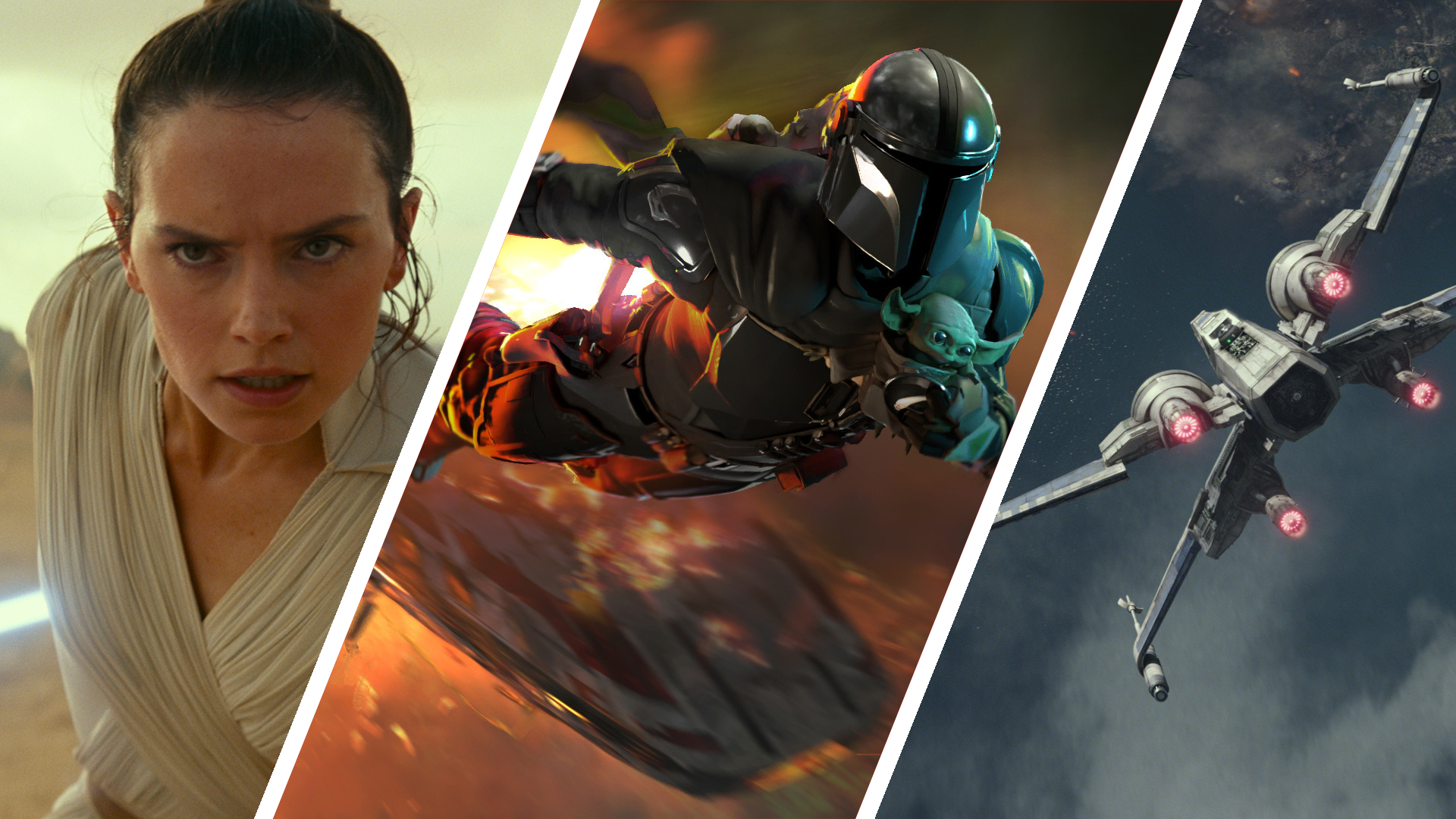
Upcoming Star Wars movie announcements about Rey’s return in a post-“Rise of Skywalker” “New Jedi Order” film, and a Jedi origins tale from “Indiana Jones and the Dial of Destiny” director James Mangold, both got the internet buzzing. But it’s the continuation of a TV show that’ll be first out of the spaceport, as “The Mandalorian and Grogu” get ready to land in multiplexes in May 2026. At some point, we’re also expecting a big-screen finale to the interweaving stories told in “The Mandalorian”, “The Book of Boba Fett” and “Ahsoka”.
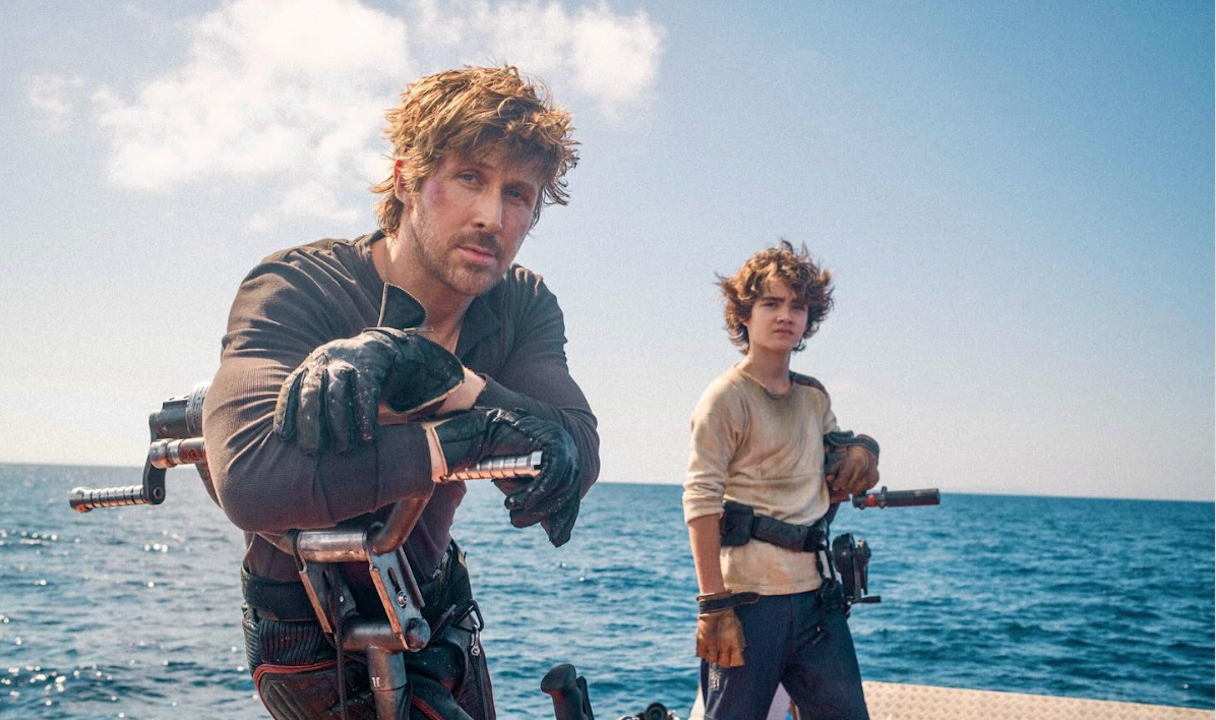
And then there’s “Starfighter” (2027), “Star Wars”‘s first-ever attempt to sell a movie on established A-list talent, as “Deadpool & Wolverine”‘s Shawn Levy directs Ryan Gosling. The Force could be very strong with this one…
You can find a galaxy of “Star Wars” movies and TV shows on Disney+.
SCIENCE
Pumas in Patagonia started feasting on penguins — but now they’re behaving strangely, a new study finds


Pumas in Patagonia are preying on penguins — and it’s changing how the big cats interact with each other.
The pumas in question reestablished themselves in an Argentinian national park that housed a penguin breeding colony — and the cats promptly began eating the birds. Now, it turns out the normally solitary cats that eat the penguins are tolerating each other more often than expected, new research published Wednesday (Dec. 17) in the Proceedings of the Royal Society B reports.
You may like
“Restoring wildlife in today’s changed landscapes doesn’t simply rewind ecosystems to the past,” said study co-author Mitchell Serota, an ecologist at Duke Farms in New Jersey. “It can create entirely new interactions that reshape animal behavior and populations in unexpected ways.”
Sheep ranchers in Patagonia forced pumas out of the region in the 20th century. After Monte Leon National Park was established in 2004, pumas have started making their way back. But in the pumas’ absence, other species had adapted to the reduced hunting pressure. For example, a group of Magellanic penguins (Spheniscus magellanicus), usually confined to offshore islands, established a mainland breeding colony consisting of some 40,000 breeding pairs.
Shortly after the park was established, researchers started noticing penguin remains in puma scat. The pumas were taking advantage of the changed ecosystem.
“We thought it was just a couple individuals that were doing this,” said Serota, who conducted the research while he was a doctoral student at the University of California, Berkeley. “But when we got there … we noticed a ton of puma detections near the penguin colony.”
In the new study, researchers used cameras to estimate how many pumas lived near the penguin breeding colony, a 1.2 mile (2 kilometers) stretch of beach inside the national park. They also tracked 14 individual pumas with GPS collars and investigated penguin kill sites across several field seasons between 2019 and 2023. Nine of the pumas they tracked hunted penguins, while five did not.
Pumas are hunting penguins at Monte León National Park, Argentina. The yellow highlight shows the penguin colony. On the right are several photos of pumas going into the colony. (Image credit: Serota et al. / Proc B)
Pumas that ate penguins had bigger variation in their ranges from season to season, the study found. The penguin-eating cats stuck close to the penguin colony when the birds were in the national park during breeding season. But they ranged about twice as far when the birds migrated offshore during the summer.
Penguin-eating pumas also interacted with each other more often than pumas who relied on other prey. The researchers documented 254 encounters between any two of the pumas who both ate penguins, and just four encounters between pumas where neither ate penguins. Most meetings between pumas occurred within 0.6 miles (1 km) of the penguin colony.
You may like
Because multiple pumas were using the colony as a food source, this disparity suggests that penguin-eating pumas tolerate other pumas better than those that rely on other prey, likely because they don’t have to compete as much for the plentiful food. In fact, the researchers found that the density of pumas within the park was more than twice the highest previously-recorded concentration within Argentina. Usually, adult pumas are solitary and establish large ranges to ensure they have enough prey to feed themselves and their kittens.
Understanding how large carnivores behave when they return to ecosystems impacted by humans “is essential for conservation planning because it allows managers to … design management strategies that are grounded in how ecosystems actually function today, not how we assume they should function based on the past,” Juan Ignacio Zanon Martinez, a population ecologist at Argentina’s National Scientific and Technical Research Council (CONICET) who was not involved in the study, wrote in an email to Live Science.
Knowing how the pumas’ behavior affects both the cats and the penguins could aid future conservation efforts in the park.
For example, puma predation might not have a big effect on large breeding colonies, but it could affect the growth of new, smaller colonies. It’s a “complex situation for the people who do the management of the area, because you have two native [species] interacting,” in a way that’s different from before human activities changed the ecosystem, said Javier Ciancio, a biologist at CONICET who was not involved in the new study.
In future work, Serota says the team will investigate how the relationship between pumas and penguins affects pumas’ other prey, such as the guanaco (Lama guanicoe), a relative of the llama.
SCIENCE
10 years later, ‘The Force Awakens’ stands as the blueprint for a ‘Star Wars’ that never was

There’s a saying: no one hates “Star Wars” more than “Star Wars” fans. While the river of abhorrence flows freely through the deluge of online forums and social media now, it feels like everyone was genuinely excited about the release of “Star Wars: The Force Awakens” in 2015.
There was something in the air during this time. The Force was strong as audiences packed theatres, wearing Jedi robes and raising their lightsabers in unison as the famous opening crawl scrolled across the screen. And why shouldn’t they have been excited? It had been 10 years since “Star Wars: Episode III – Revenge of the Sith” and this marked the beginning of the next chapter in the Skywalker Saga. A new new hope, so to speak, under Disney’s controversial umbrella, but that’s a story for another day.
At the helm was filmmaker J. J. Abrams, who had successfully rebooted the “Star Trek” movie franchise years earlier. Everyone knows Trekkies are just as passionate as “Star Wars” fanatics, so if anyone could carry the space opera into a post-George Lucas future and keep the fans happy – well, for the most part – it was Abrams.
You may like
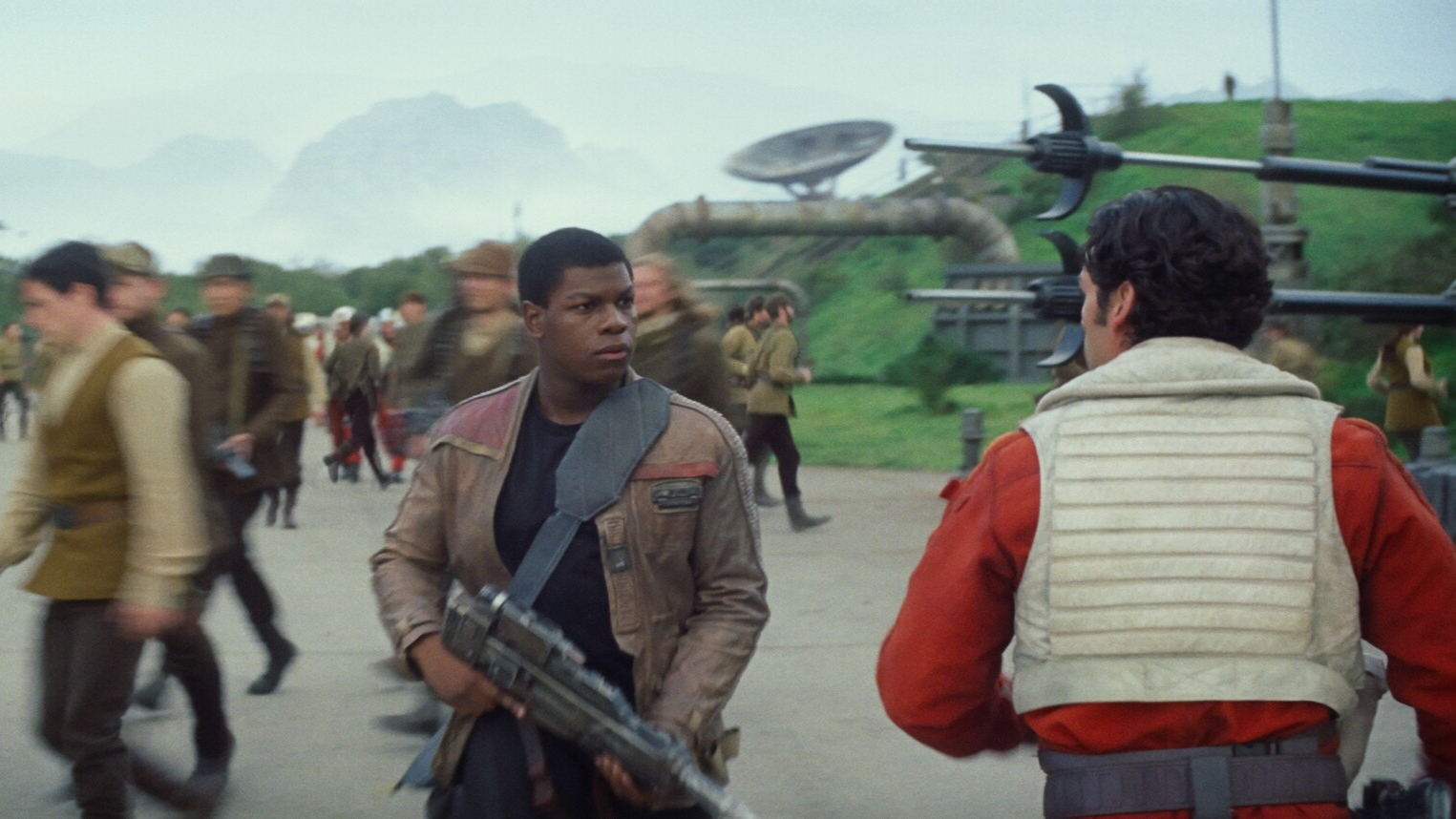
(Image credit: Disney)
Much like how Goldilocks liked her porridge, “Star Wars: The Force Awakens” turned out to be neither too hot nor too cold; it was just right. The film treads safely and reads like a greatest hits of everything “Star Wars,” but it also finds the appropriate balance of leaning on nostalgia and preparing for the future.
It’s something Abrams also confirmed to Wired. “We wanted to tell a story that had its own self-contained beginning, middle, and end, but at the same time, like ‘A New Hope,’ implied a history that preceded it and also hinted at a future to follow,” he said.
The new hero is Rey (Daisy Ridley) – a goodhearted nobody who gets pulled into this seemingly never-ending battle between light and dark. But who is she, really? That promises to be revealed later on. She’s joined by the fresh additions of pilot Poe Dameron (Oscar Isaac), former Stormtrooper Finn (John Boyega), and the cute-as-a-bug droid BB-8. Each of them offers a hint of how they will aid Rey on her journey of discovery, but they also have their own unique backstories that beg to be unravelled and explored further in subsequent movies.
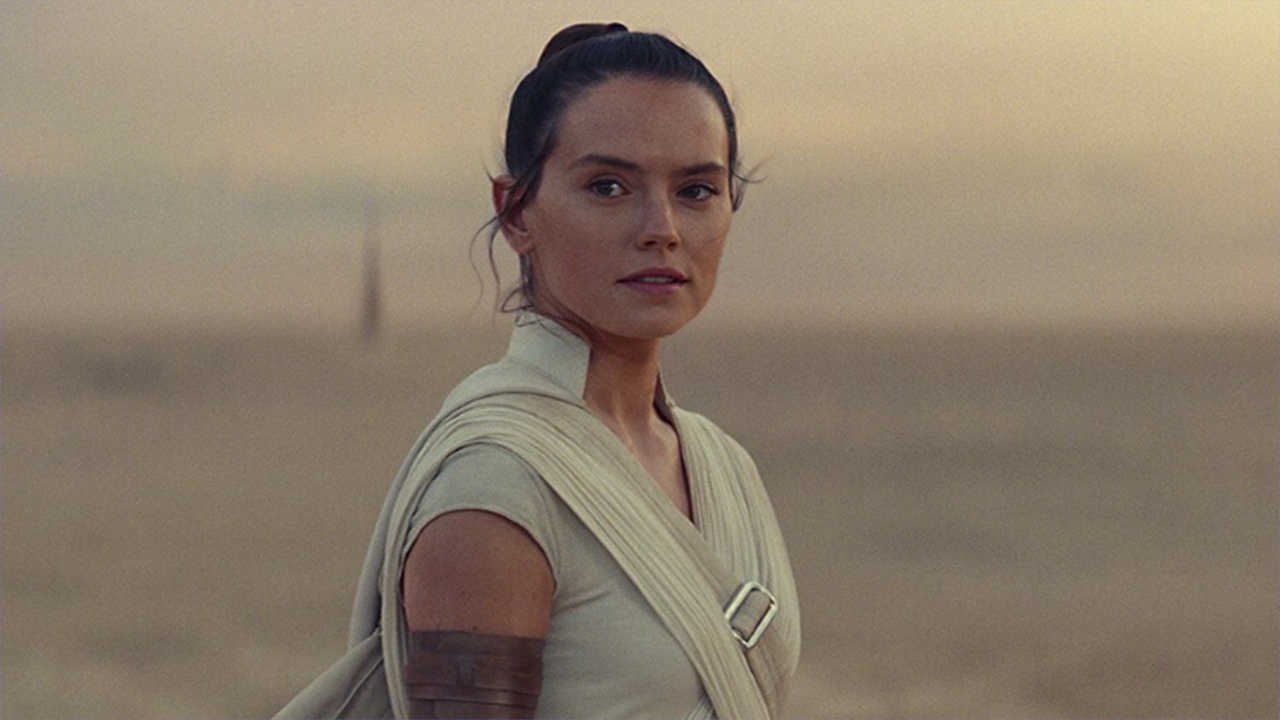
(Image credit: Disney)
That isn’t all, though, as the legacy characters return. Han Solo (Harrison Ford), Leia Organa (Carrie Fisher), Chewbacca (Peter Mayhew), C3-PO (Anthony Daniels), and R2-D2 (Kenny Baker) feature in several ways. Rightfully so, Abrams keeps Luke Skywalker (Mark Hamill) off-screen for most of the film, raising the anticipation for when Luke and Rey finally meet and he assumes the Yoda role.
Then, there are the villains – arguably, one of the most important elements of any “Star Wars” film. Snoke (Andy Serkis) positions himself to be the new Palpatine, manipulating and scheming in the shadows as the leader of the First Order. Serving Snoke is the Darth Vader of “The Force Awakens”, Adam Driver’s Kylo Ren aka Ben Solo. He has the Skywalker bloodline running through his veins, but broke bad at a point in his life. The question is, will he or won’t he turn his back on the dark side like his grandfather did many moons before? Well, that lightsaber through his father Han’s chest suggests not – at least not in this movie.
If one were to dissect “Star Wars: The Force Awakens,” you’d find it tends to follow the formula of the original film, “A New Hope”: A reluctant hero emerges and they’re aided by a motley crew of companions as they embark on a mission of restoring hope to the galaxy. They encounter the Big Bad and quickly discover how ruthless they are, losing a beloved mentor in the process. However, this chosen one finds the inner strength to win the battle – not the war – setting up the stakes for a sequel.
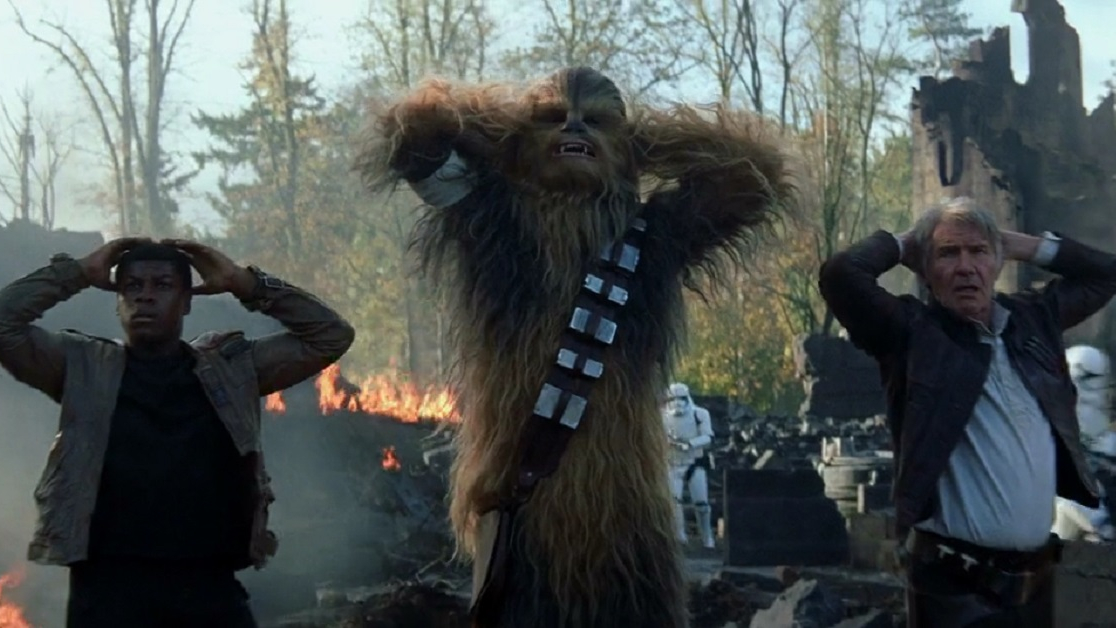
(Image credit: Disney)
As the first entry in the latest trilogy, “Star Wars: The Force Awakens” effectively accomplishes its primary task: it establishes the premise, introduces new characters into the universe, and teases the future storyline. It also received mostly positive reviews from fans and critics, and brought in a mouth-watering $2 billion at the box office.
You may like
Unfortunately, all this good work gets undone by the sequels that lack any creative cohesion or forethought. Legacy characters fall to the wayside. Finn and Poe become insignificant in the story. Snoke dies unceremoniously. Rey is revealed to be nobody significant, only to be retconned and related to Palpatine, who somehow returns.
Oh, and Kylo Ren has a come-to-Jesus moment, turns to the light side of the Force, and falls in love with Rey, because… who knows. Probably not even the filmmakers or actors. If anything, 2019’s “Star Wars: The Rise of Skywalker” proves that everyone is just winging it at this point and hoping for the nightmare to end.
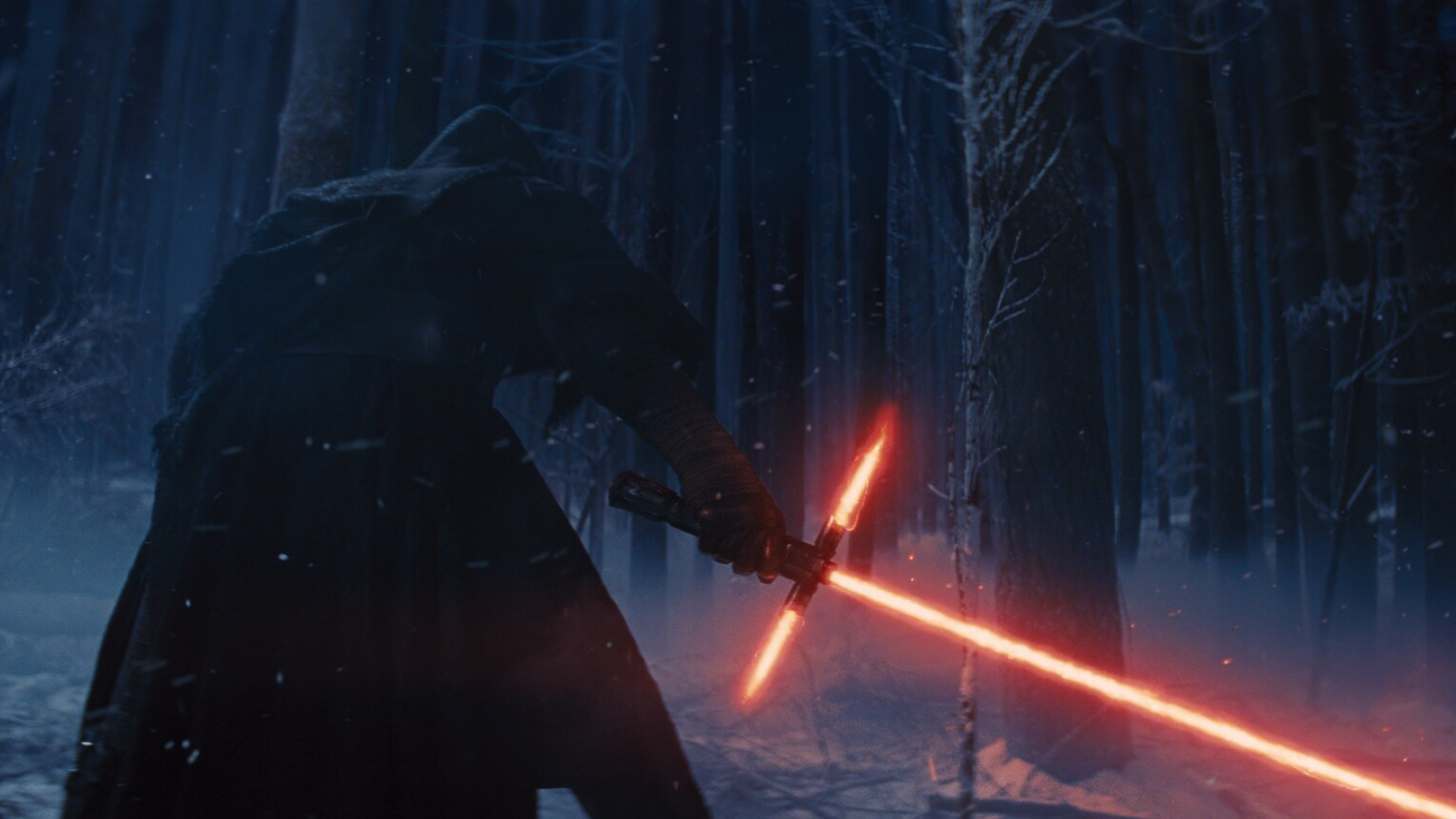
(Image credit: Disney)
So, what went wrong here? The biggest issue is that Lucasfilm hired three filmmakers for the trilogy. The original plan was that Abrams would tackle the first film, Rian Johnson would do the second, and Colin Trevorrow the third. Trevorrow departed after creative differences, ironically. Abrams returned and attempted to pull a rabbit out of a hat, but grabbed a turkey instead.
There was supposed to be some semblance of an outline of where they were going overall, but that’s debatable when you watch the seismic jump from “The Force Awakens” to “The Rise of Skywalker.”
It’s to be expected, though. When you throw three different filmmakers into a universe, they will each have their own visions of what they want to do. It’s like asking three chefs to make potato salad. One might make it the traditional way with boiled potatoes and mayonnaise, while the other chucks ghastly boiled eggs into the mix, and the final person decides it needs sausages too. At some point, this potato salad turns into a stew that no one asked for.
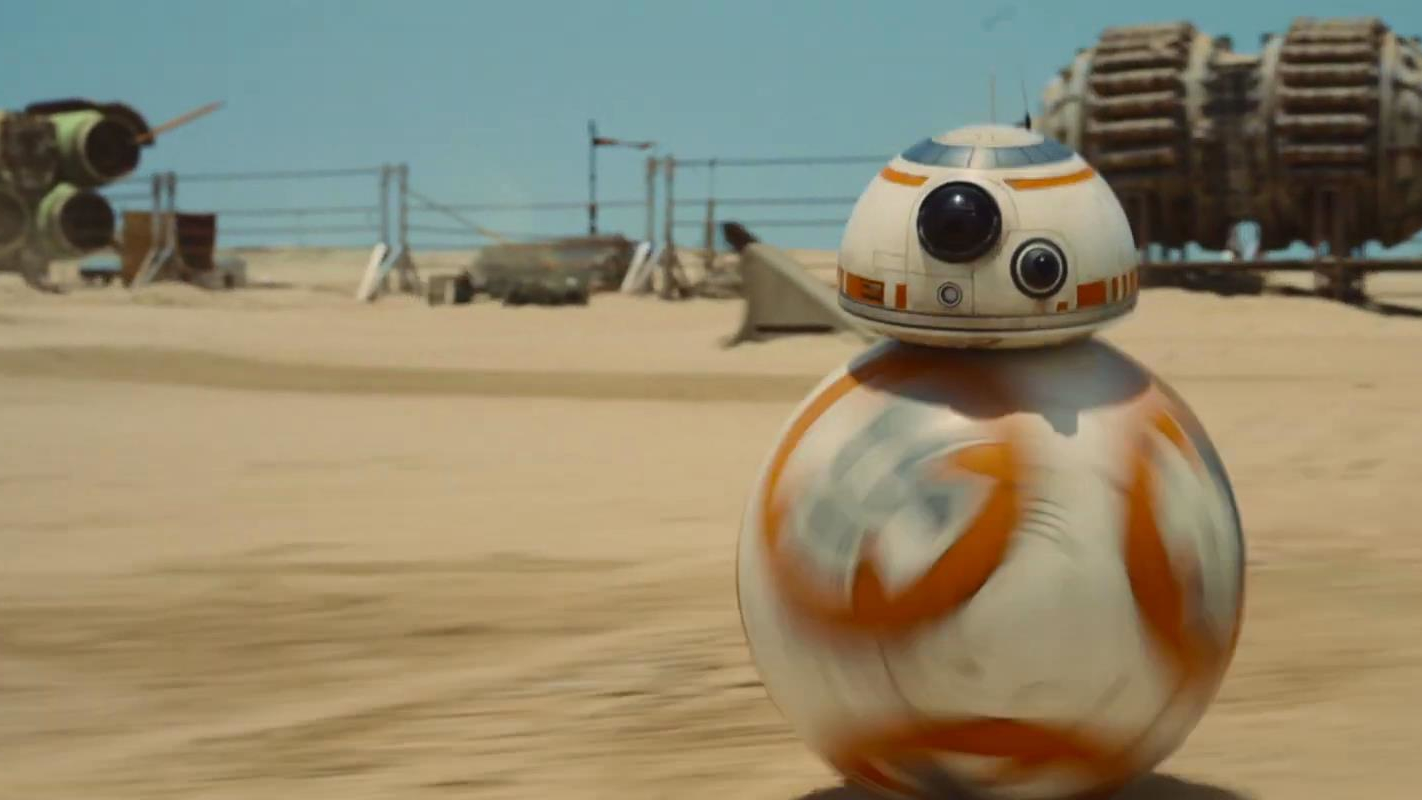
(Image credit: Disney)
What’s frustrating about “Star Wars: The Force Awakens” is how it’s an easy-to-follow blueprint, but it gets wiped out in “The Last Jedi” like it’s the second coming of Jar Jar Binks. Johnson turns everything on its head, cutting the story threads introduced by Abrams and heading off in his own unexpected direction. Now — even though this upset the fans at the time — it would be okay if there were a final pay-off in “The Rise of Skywalker,” but there wasn’t. It’s a perfect example of what happens when films are made by committee and by people who don’t understand “Star Wars,” something that George Lucas has said about Disney’s handling of the trilogy.
While “Star Wars: The Force Awakens” doesn’t compare to the best Star Wars movies, it’s certainly the best of the sequel trilogy and glimmers with potential. The only problem is when Han says, “I got a bad feeling about this,” he was not only predicting his own fate but also that of the future films. Maybe they needed more sand here… or just better creative leadership.
“Star Wars: The Force Awakens” is available to stream on Disney+.
SCIENCE
Spiders on Jupiter? Scientists uncover secret origins of arachnid-like ‘demon’ lurking on gas giant’s moon.
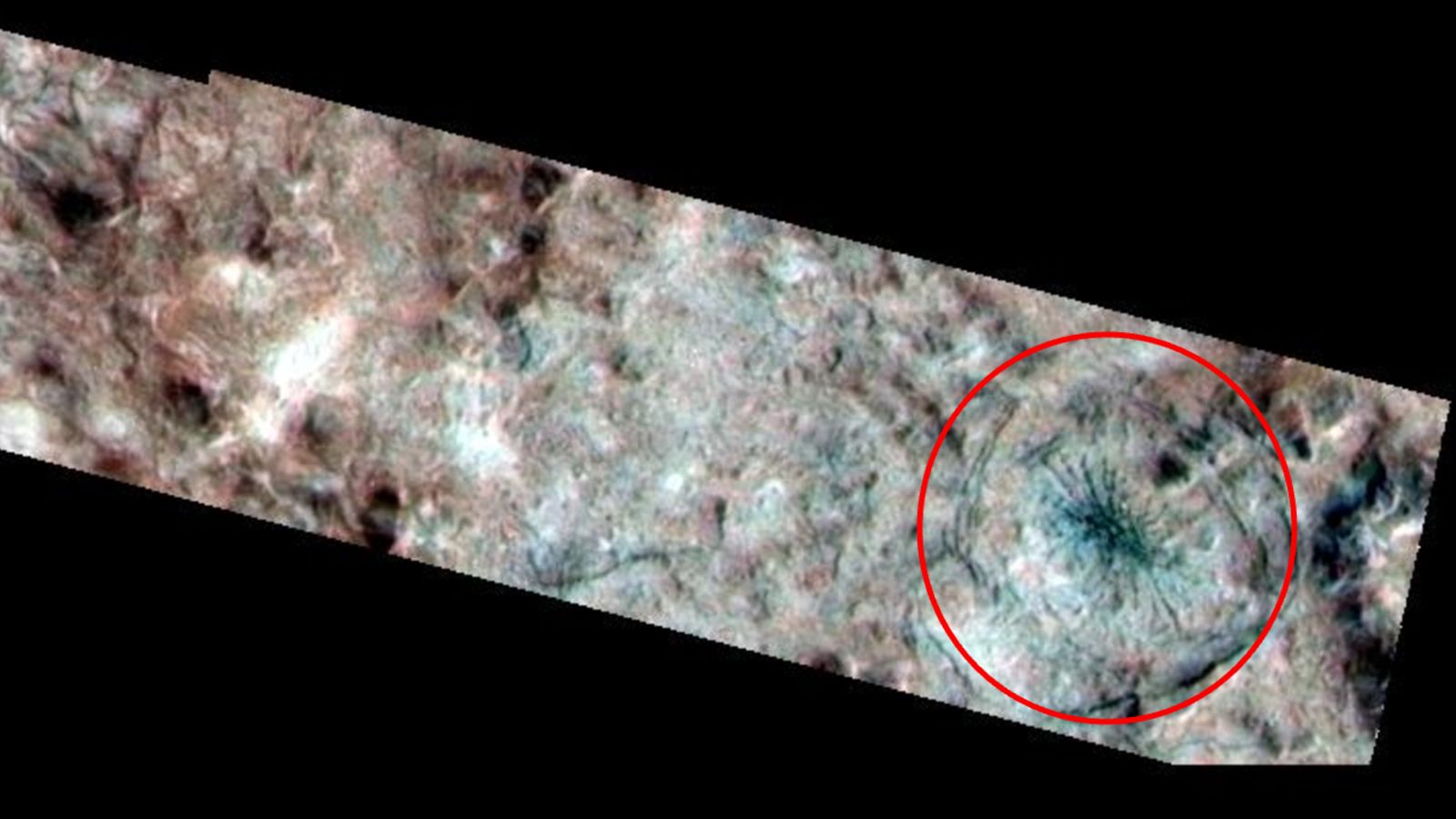
A mysterious, spider-like structure lurking on Jupiter’s fourth-largest moon, Europa, may finally have a proper explanation nearly 30 years after it was discovered. The arachnid imposter has also been given a demonic new name.
In March 1998, NASA’s Galileo spacecraft — which studied Jupiter and its major moons between 1995 and 2003 — made a close flyby of Europa, a frozen ocean moon often considered one of the most likely places for extraterrestrial life to exist in the solar system. During this flyby, the probe mapped out a roughly 13.7-mile-wide (22 kilometers) impact structure, dubbed Manannán Crater, on the moon’s icy surface, and found something strange lurking within it.
You may like
But in a new study, published Dec. 2 in The Planetary Science Journal, researchers proposed an alternative explanation: that the Jovian spider formed in a similar way to how dark dendritic patterns on Earth, known as “lake stars,” typically do. These features form when snow falls on frozen lakes and water seeps up through tiny holes in the ice.
With this in mind, the researchers used a similar technique to partially recreate the Manannán Crater’s mysterious shape in the lab. The study team also finally named Europa’s arachnid-like asterisk Damhán Alla, meaning “spider” or “wall demon” in Irish. (Manannán is a Celtic god from Irish mythology, which partly inspired the new name.)
Researchers partially recreated the spider-like pattern in the lab, using a technique that mimics how lake stars form on Earth. (Image credit: Prof. Lauren Mc Keown)
“Lake stars are really beautiful, and they are pretty common on snow or slush-covered frozen lakes and ponds,” study lead-author Laura Mc Keown, a planetary scientist at the University of Central Florida, said in a statement. “It is wonderful to think that they may give us a glimpse into processes occurring on Europa and maybe even other icy ocean worlds in our solar system.”
However, rather than water rising through tiny holes, as happens when lake stars form on Earth, Damhán Alla was likely birthed by an asteroid impact — which created a small crack in Europa’s icy shell that enabled salty water to seep upward and paint the spider-like pattern on the surface. (This asteroid impact likely happened after the Manannán Crater was already formed.)
The researchers also noted similarities between Damhán Alla and the infamous “spiders on Mars,” which are dusty deposits on the Martian surface that look like swarming spiders when viewed from above. These fake arachnids, known as araneiform terrain, form when submerged carbon dioxide ice sublimates, or turns directly into a gas. Mc Keown’s team has previously recreated these features on Earth too.
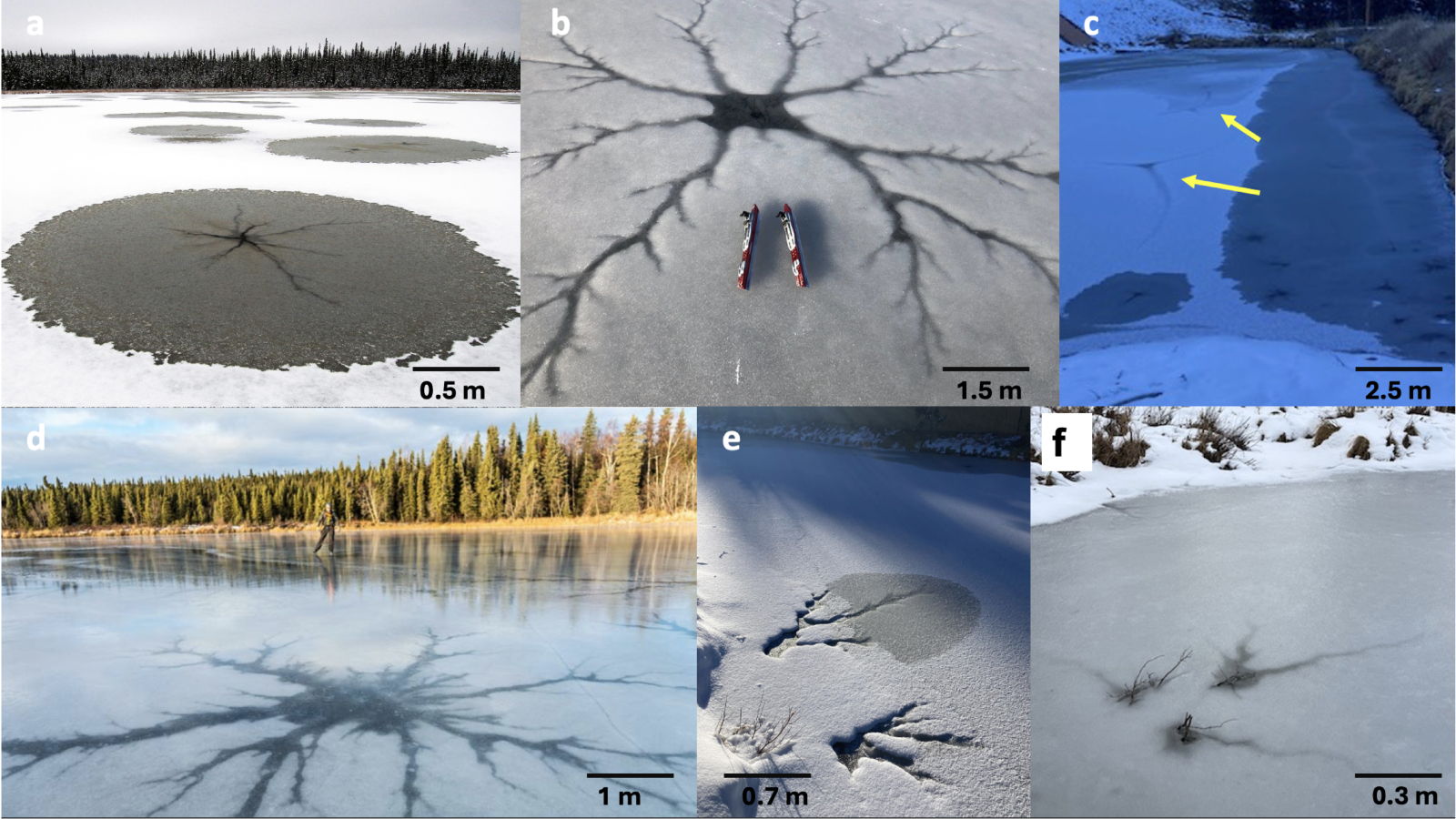
“Lake stars” form when water seeps up through small holes in lakes and spreads through a layer of snow or slush at the surface. Similar processes could be happening on icy water worlds throughout the solar system. (Image credit: Mc Keown et al. 2025)
The similarities in shape between Damhán Alla and the spiders on Mars are due to how “fluid flows through porous surfaces,” Mc Keown said. In theory, similar spider features could also form on other frozen ocean worlds, such as Saturn’s moon Enceladus, Jupiter’s other moon Ganymede and the dwarf planet Ceres, which resides in the asteroid belt beyond Mars.
Mc Keown is now setting up a new laboratory, which will focus on studying how these various spider-like features may form on different solar system moons. She hopes to be able to provide valuable insight that could help inform NASA’s Europa Clipper mission, which launched in October 2024 and will arrive to extensively study Jupiter’s watery moon in 2030.
“The significance of our research is really exciting,” Mc Keown said. “Surface features like these can tell us a lot about what’s happening beneath the ice. If we see more of them with Europa Clipper, they could point to local brine pools below the surface,” she added.
And these pools could be a good place to start looking for signs of extraterrestrial life.
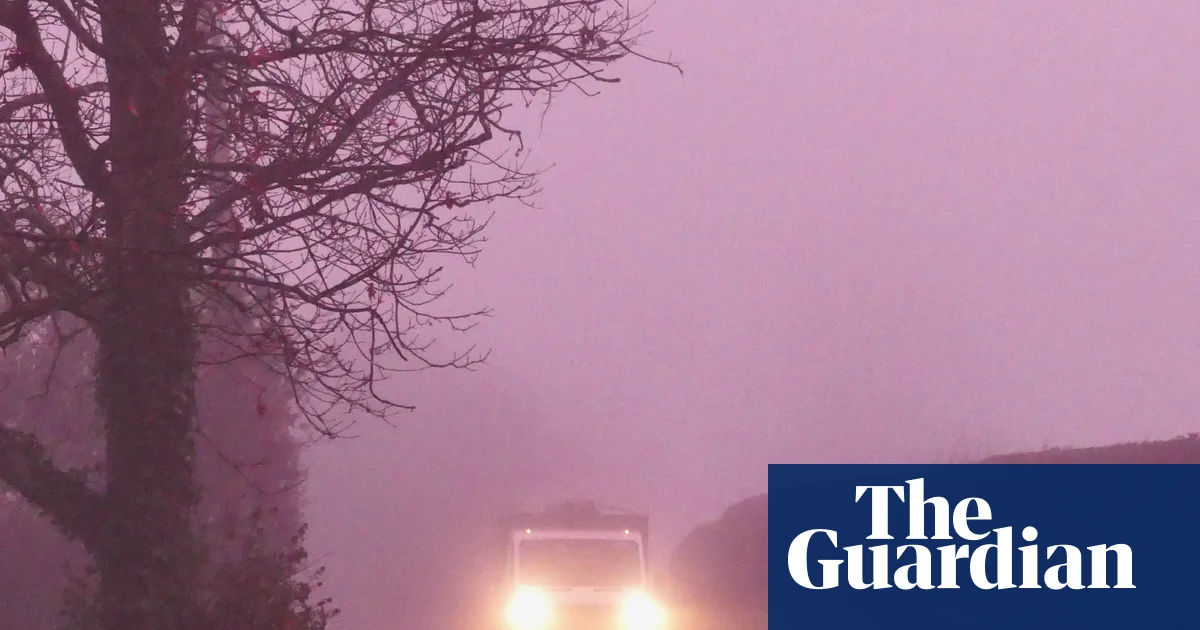
The skies over parts of Britain turned a soft shade of pink on Wednesday morning as the low sun shone through layers of widespread fog to produce the rare atmospheric treat.
Meteorologists at the Met Office said the fog formed when temperatures dropped overnight and issued a yellow warning across a large area of central and northern England where the fog would be slow to clear. The warning remained in effect until 10am.
Patches of particularly dense fog formed across the East Midlands and Cambridgeshire where poor visibility was expected to lead to difficult travel conditions.
Like clouds, fog is caused by tiny water droplets suspended in the air. It can appear pink because the water droplets scatter short wavelengths of sunlight – the blues and greens – more than the longer red wavelengths, allowing the red to dominate.
The pink colour is usually seen at the start and end of the day when the sun is low on the horizon and sunlight passes through more atmosphere than when it is higher in the sky.
A Met Office spokesperson said: “Fog is essentially a cloud at ground level made up of tiny water droplets. When the sun is low on the horizon, its light travels through more of the atmosphere. Shorter wavelengths are scattered out, leaving the longer red wavelengths to dominate. When this filtered light shines through fog, it gives the fog a pink or rosy hue.”
-
Cobwebs covered with dewdrops as a pink fog enveloped the countryside at sunrise, Dunsden, Oxfordshire.
Despite the surreal appearance, it is nothing more than the physics of light playing out at sunrise and sunset.
“It’s important to note that pink fog is purely an optical effect,” the spokesperson said. “It does not indicate any unusual weather hazard beyond normal fog risks, such as reduced visibility.”
The phenomenon has been spotted in the UK before. In 2019, the early morning sky turned pink as fog formed across parts of south west England.
But Dr Claire Ryder, an associate professor at the University of Reading, said the effect was rare because multiple conditions had to be perfect for the pink colour to arise.
“This effect is caused by a reddish sunrise being ‘filtered’ by the fog. The sunrise produces the red light, by removing the bluer colours, and then the small fog droplets scatter the light more, dimming the effect, giving it a muted pink glow,” she said.
“It’s quite interesting and rare: you need the fog to occur at the exact sunrise or sunset time, and also for the fog to consist of a perfect thickness, or droplet concentration and droplet size, to get the right effect. Too thick a fog would block out all the light, and too thin a fog wouldn’t mute the sunrise colours very much.”
SCIENCE
Watch interstellar comet 3I/ATLAS make its closest approach to Earth in free livestream on Dec. 18

Interstellar comet 3I/ATLAS, closest approach to the Earth: online observation – 19 Dec. 2025. – YouTube
Watch On
Eager skywatchers will soon have front-row seats to a rare cosmic encounter as interstellar comet 3I/ATLAS makes its closest approach to Earth, and you can watch it happen live online.
Comet 3I/ATLAS will make its closest approach to Earth at 1 a.m. EST (0600 GMT) on Dec. 19. At that time, it will be about 1.8 astronomical units away — roughly 168 million miles (270 million kilometers), nearly twice the average distance between Earth and the sun.
You may like
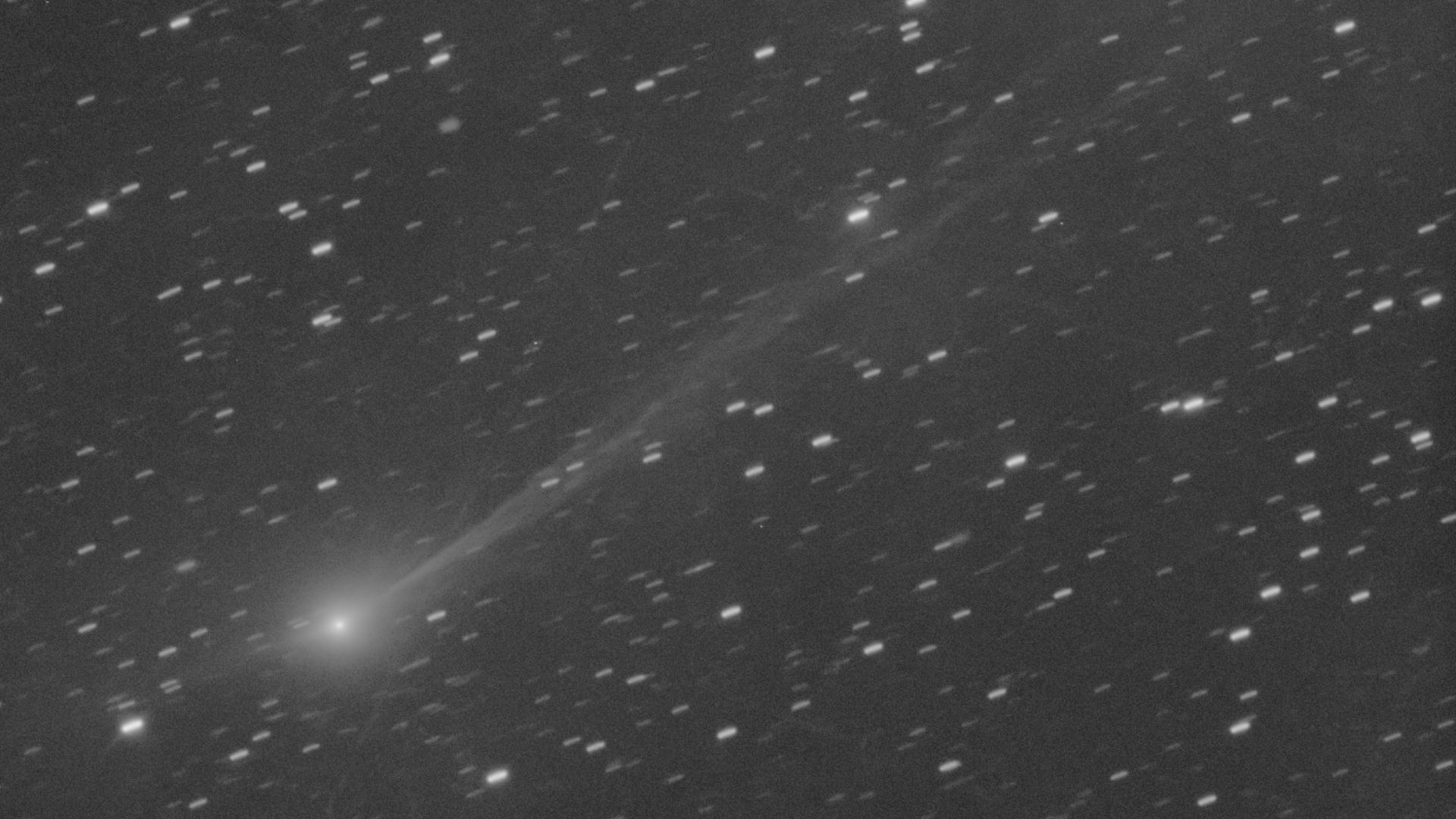
Interstellar comet 3I/ATLAS captured by astronomer Gianluca Masi of the Virtual Telescope Project on Nov. 19. (Image credit: Gianluca Masi, Virtual Telescope Project)
Discovered in July 2025 by the ATLAS (Asteroid Terrestrial-impact Last Alert System) survey, 3I/ATLAS quickly captured the attention of both scientists and the public. It is only the third confirmed interstellar object ever detected passing through our solar system, following 1I/’Oumuamua in 2017 and 2I/Borisov in 2019. Researchers are especially interested in its composition and behavior, which could offer rare clues about how planetary systems form around other stars.
The comet is too faint to be seen with the naked eye and will be challenging even for small backyard telescopes. Under dark skies, observers with a telescope of 8 inches or larger may be able to spot it as a faint, fuzzy patch of light. If you’re unable to look for the comet in person, you can sit back, relax and enjoy the view from the comfort of your own home via the livestream.

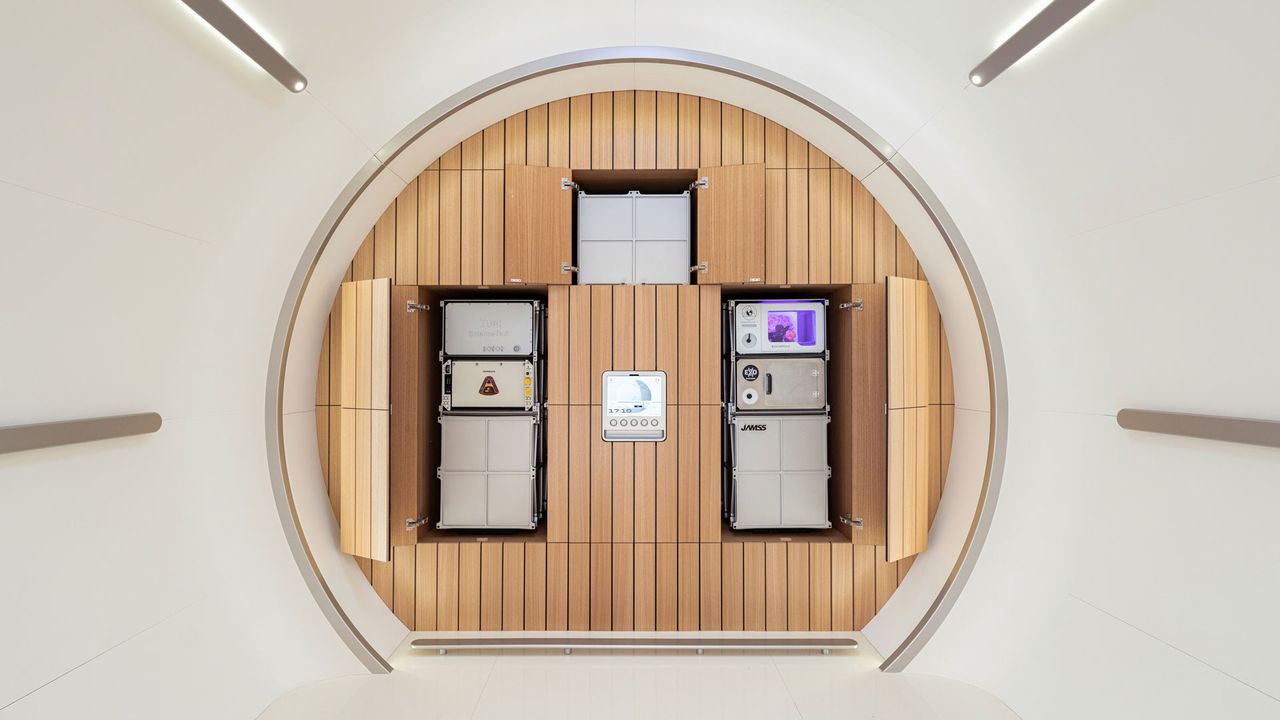
Vast has opened a call for scientific research aboard its Haven-1 private space station, which is set to launch next year.
The California-based startup is soliciting proposals for ground-based and space-based experiments to fly aboard Haven-1 as well as for potential private crewed missions to the International Space Station (ISS), although the latter are contingent on awards by NASA.
You may like
The company, which has moved fast since its founding in 2021, says Haven-1 is well kitted out to host experiments in a diverse range of areas, including on-orbit pharmaceutical development, stem cell research, plant growth and human research and tech demos.
“The opportunity to expand access to microgravity research upon the world’s first commercial space station is historic,” Vast Principal Scientist Meghan Everett said in a statement. “We need to build on the heritage of the ISS National Lab and help scientists and industry continue world-changing research breakthroughs that are only possible in the novel environment of microgravity.”
Vast adds that it is keen on research that could assist human exploration of the moon and Mars and breakthroughs that can benefit humans on Earth, such as studies of bone, muscle and cardiac health, medical tech and stem cell research and regenerative medicine. Vast has already secured partners for Haven-1 including Redwire, Yuri, Japan Manned Space Systems Corporation (JAMSS), Interstellar Lab and Exobiosphere.
In early November, Vast’s Haven Demo launched on a Falcon 9 aiming to test critical systems for Haven-1 in orbit. Haven-1 itself is planned to be a stepping stone to a larger and more permanent presence in space, according to Vast, with the company aiming to secure support for the planned Haven-2 habitat through NASA’s Commercial LEO Destinations program.