
NIGERIA NEWS
PRALARG Int’l To Launch Non-Interest Loan Cooperative For Members, Inmates, Ex-Convicts

The welfare of inmates and ex-convicts in Nigeria is set to receive a significant boost as the Prison Rehabilitation and Law Abiding Organisation (PRALARG) International plans to establish a multipurpose cooperative society offering non-interest loans.
The Chief Executive Officer of PRALARG, Comrade Pralagian Olayemi Akinwunmi, disclosed this in a press statement, noting that the cooperative will operate a non-interest loan scheme aimed at supporting small-scale businesses, vocational ventures, and other income-generating activities.
According to the organisation, the initiative is designed to assist individuals transitioning from correctional facilities back into society and aligns with PRALARG’s core mandate of promoting human dignity, law-abiding conduct, and sustainable rehabilitation.
“These programmes will be rolled out progressively as part of our holistic approach to uplifting the downtrodden and promoting self-reliance,” the statement said.
PRALARG noted that limited access to finance remains a major challenge for ex-inmates seeking to rebuild their lives, often exposing them to stigma, unemployment, and the risk of reoffending. The cooperative, it explained, is intended to bridge this gap by providing structured financial support tied to accountability and productivity.
“This cooperative is a practical rehabilitation tool. It goes beyond welfare by equipping beneficiaries, especially reformed inmates, with the means to become economically independent and socially responsible citizens,” the organisation stated.
PRALARG International further disclosed plans to expand its empowerment programmes within correctional centres, focusing on skills acquisition, entrepreneurship training, and post-release support as part of a comprehensive rehabilitation and reintegration framework.
Details regarding membership registration, operational guidelines, and the official launch date will be communicated through appropriate channels in due course.
Interested persons are advised to contact PRALARG International through its official communication platforms for further inquiries.
Please follow and like us:


NOG Energy Week, the preeminent meeting place for the global oil, gas, LNG, and energy sector in Nigeria, will celebrate its milestone 25th edition from July 5 – 9, 2026 at the Bola Ahmed Tinubu International Conference Centre, Abuja.
As a regional powerhouse in energy production, Nigeria continues to shape the future of the global energy landscape.
The 2026 NOG Energy Week will host its sixth Technical Seminar, which will feature multiple sessions across 14 categories over two days, offering speakers a platform to share their expertise, insights, and innovative solutions with industry leaders, technical experts, and policymakers driving energy transformation.
The Call for Papers for the CPD-accredited Technical Seminar is now open and welcomes industry professionals to submit entries.
The Nigerian National Petroleum Company Limited (NNPC Ltd), in partnership with the TotalEnergies–Sapetro Consortium, executed a landmark Production Sharing Contract (PSC) for Petroleum Prospecting Licences (PPLs) 2000 and 2001.
Designed to engage both academics and industry practitioners, the Seminar creates space for robust dialogue tailored to the Nigerian operating environment. Through a rigorous peer-review selection process, only the most impactful entries are chosen for presentation at NOG Energy Week, contributing meaningfully to the collective pursuit of innovation and both crude oil and natural gas exploration for the first time. This milestone reinforces Nigeria’s commitment to energy security, economic growth, and transparent investment.
The agreement strongly aligns with key themes of the NOG Energy Week Technical Seminar, particularly in geoscience, and gas and LNG projects, technologies and developments, reflecting the Seminar’s dedication to advancing energy innovation and progress across sustainable solutions in the energy sector.
The seminar spans the fullstream value chain and features 14 categories including geoscience, resource and field development, drilling, midstream infrastructure development and facilities management, gas and LNG projects, technologies and developments, downstream fuels and infrastructure development, utilities, power generation and end use, new energies, decarbonisation and sustainability, operational excellence, HSSE and project management, people development, digital transformation, manufacturing and industrialisation, shipping and marine, as well as energy markets and finance.
The NOG Energy Week Technical Seminar is designed to cater for job functions that include senior, mid-level and junior roles across technical, engineering and scientific disciplines to deliver sessions on advanced technologies, breakthrough research, and industry best practices. Delegates will enhance their expertise, expand practical capabilities, and build intellectual capital through knowledge exchange and practical learning, positioning themselves at the forefront of energy innovation and project development across the value chain.
NIGERIA NEWS
We ’ll drive digitisation, enforce contracts, restore investor confidence — Tinubu’s new NUPRC, NMDPRA CEOs


…Nigeria losing huge value to manual processes — Eyesan
…I will restore discipline to gas and petroleum supply systems — Mohammed
By Henry Umoru
ABUJA — The Senate on Wednesday screened nominees for the positions of Chief Executive Officers of Nigeria’s key oil and gas regulatory agencies, the Nigerian Upstream Petroleum Regulatory Commission (NUPRC) and the Nigerian Midstream and Downstream Petroleum Regulatory Authority (NMDPRA).
The screening followed a letter from President Bola Tinubu, read at plenary by the President of the Senate, Senator Godswill Akpabio, seeking the confirmation of Mrs. Oritsemeyiwa Amanorisewo Eyesan as Chief Executive of NUPRC and Engineer Saidu Mohammed as Chief Executive of NMDPRA.
Eyesan was nominated to head the upstream regulator, while Mohammed was nominated for the midstream and downstream authority, following recent changes in the leadership of both agencies.
Barely 24 hours after the changes, President Tinubu forwarded the names of the nominees to the Senate for legislative approval.
During the screening, conducted by the Senate Committees on Petroleum Resources (Upstream), Petroleum Resources (Downstream) and Gas, the nominees pledged to implement far-reaching reforms anchored on digitisation, strict enforcement of contracts, restoration of investor confidence and accelerated gas development under the Petroleum Industry Act (PIA).
The screening was jointly handled by the Committee on Petroleum Resources (Downstream), chaired by Senator Kawu Sumaila Abdulrahman (APC, Kano South); Petroleum Resources (Upstream), chaired by Senator Eteng Jonah Williams (APC, Cross River Central); and the Committee on Gas, chaired by Senator Jarigbe Agom Jarigbe (PDP, Cross River North).
Speaking during the interactive session, Eyesan said Nigeria was losing enormous value due to manual processes and poor integration of systems in an industry that is rapidly becoming digital globally.
“We are still largely manual, while the world is moving at jet speed. Without digitisation and real-time data, you cannot truly understand what you are regulating, and you will continue to lose money,” she said.
According to her, effective regulation depends on accurate data, asset integrity monitoring and transparent systems. She stressed the need for close collaboration among regulators, operators and policymakers to address operational bottlenecks.
“We must collaborate with stakeholders, identify our pain points and address them collectively. That is how we move the needle forward,” Eyesan added.
She assured the Senate that she would fully deploy the PIA to reposition the upstream sector, attract new investments and ensure Nigeria remains competitive in the evolving global energy landscape. She described the PIA as a valuable framework capable of unlocking vast oil and gas opportunities if properly implemented.
Eyesan highlighted her experience in resolving disputes with international partners, stabilising the sector during periods of uncertainty and facilitating multi-billion-dollar deep offshore investments.
A graduate of Economics from the University of Benin, Eyesan spent nearly 33 years at the Nigerian National Petroleum Company Limited (NNPC) and its subsidiaries, retiring as Executive Vice President, Upstream. She also noted that she signed Nigeria’s first non-associated gas development contract and contributed to an increase in crude oil production during her tenure.
“Having worked as an operator and participated in resource development, I believe I have the competence to regulate the industry and ensure we maximise the enormous opportunities before us,” she said.
On his part, Mohammed pledged to restore discipline in Nigeria’s gas and petroleum supply systems through strict enforcement of contracts and quality standards.
“Gas is not a favour; it is a commodity. It must be sold on the basis of enforceable contracts from the producer to the transporter and the end-user,” he said.
He noted that weak contractual frameworks had contributed to persistent gas supply challenges, particularly in the power sector, stressing that enforcing the Gas Network Code would help restore order and investor confidence.
Mohammed also emphasised the need to protect local refining and processing capacity, warning that neglect could have long-term consequences for the sector. While supporting exports, he stressed that domestic energy needs must be prioritised to ensure national energy security.
He pledged to revive pipeline transportation of petroleum products, attract investments into gas processing infrastructure and strengthen quality assurance through in-house laboratory facilities.
“You cannot enforce quality if you do not have the capacity to test and certify products yourself,” he said.
Born in Gombe State in 1957, Mohammed is a chemical engineering graduate of Ahmadu Bello University, Zaria, with decades of experience across the oil and gas value chain. He has served as Managing Director of the Nigerian Gas Company and Kaduna Refining and Petrochemical Company, as well as Group Executive Director/Chief Operating Officer, Gas and Power at NNPC. He also played key roles in projects such as the Escravos–Lagos Pipeline Expansion and the Ajaokuta–Kaduna–Kano Gas Pipeline.
In his remarks, Chairman of the Senate Committee on Petroleum Resources (Downstream), Senator Kawu Sumaila, said the screening was taking place at a critical moment for Nigeria, noting that boosting energy production and efficiency was central to economic recovery.
He disclosed that further engagements with the nominees would continue into January to deepen collaboration between the legislature and the regulatory agencies.
The committees are expected to submit their reports to the Senate for consideration at plenary, after which the nominees may be confirmed.
Meanwhile, President Bola Tinubu is expected to present the 2026 budget proposal to a joint sitting of the National Assembly, while the 2025 budget proposal of the Niger Delta Development Commission (NDDC), recently forwarded to the Senate, is also awaiting legislative consideration.
The post We ’ll drive digitisation, enforce contracts, restore investor confidence — Tinubu’s new NUPRC, NMDPRA CEOs appeared first on Vanguard News.

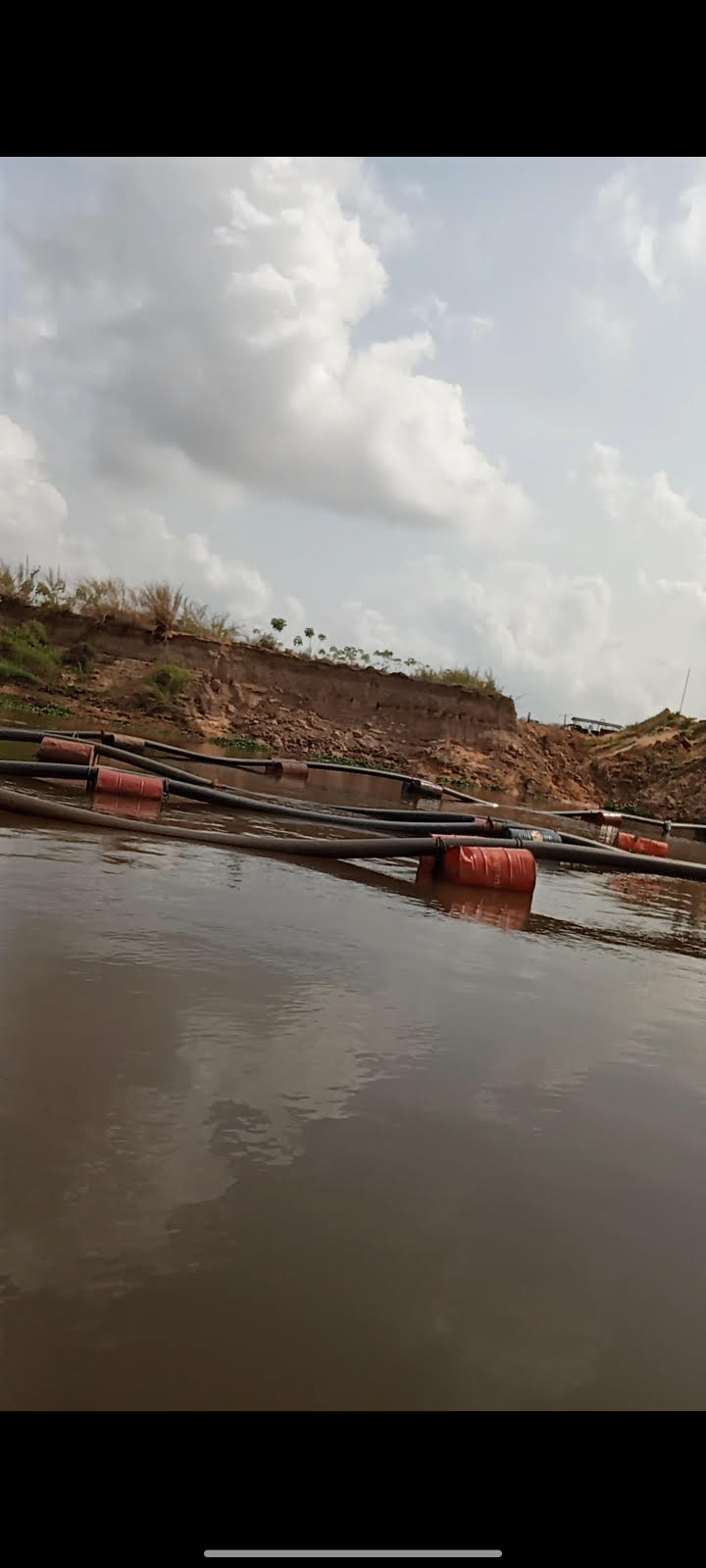
Members of Aguleri Otu, Enugu Otu, Ezi-Agulu Otu and Mkpunando Otu Aguleri communities in Anambra East Local Council of Anambra State have decried the activities of sand dredgers near the bank of Agbanabo Ezu na Omambala.
The Guardian gathered that the Anambra East Sand Miners Association is responsible for the unwholesome activities.
Traditional Ruler of Mkpunando Otu Aguleri community, Igwe Johnson Mbanefo, disclosed this to newsmen after a tour of the site at the banks of the river along Odene Aguleri -Enugu Otu road.
He lamented the absence of Environmental Impact Assessment (EIA), before the sand miners embarked on their activities, which is not a welcome development.
According to him, the erosion and destructive dredging of sand at the bank of the river is being done by settlers and indigenes, which is condemnable.
The monarch observed that the destructive sand mining along the bank of the river was encroaching on the nearby road and farmlands, noting that the threatened road leads to oil-producing communities where the oil well of Orient Petroleum Resources Refinery are sited.
Mbanefo, who is the Deputy Chairman of Anambra North Traditional Rulers Council, noted: “The road side is collapsing, and the edge is shrinking. It was former Governor Willie Obiano who constructed the road for the first time. Governor Chukwuma Soludo is investing heavily in road infrastructure.”
He recalled that members of the affected communities had protested against activities of the dredgers which he disclosed were encroaching on the road infrastructure, destroying farmlands, and soil.
Three years ago, he revealed, a committee was set up to look into the complaints, after which it issued guidelines, including the provision of a 100-metre distance between the road and the river bank.
Igwe Mbanefo described the guidelines as deceitful to the members of the public because an EIA was supposed to have been done before.


THE Federal Government has been commended for its policy actions aimed at protecting local industries, with particular reference to the Dangote Petroleum Refinery.
National Association of Nigerian Students (NANS) gave the commendation in a statement signed by its presidential spokesperson, Comrade John Alao, and made available to journalists on Thursday.
NANS noted that for decades, Nigeria has paradoxically remained dependent on the importation of refined petroleum products despite being a major crude oil-producing nation.
The statement read in parts: “This structural contradiction has led to massive foreign exchange outflows, heightened exposure to international market volatility, persistent fuel scarcity, and the gradual weakening of domestic industrial capacity.
“Against this backdrop, the emergence of large-scale indigenous investments such as the Dangote Petroleum Refinery presents a historic opportunity to reverse Nigeria’s import-dependent economic model and firmly entrench value addition within the country.
“The Dangote Group, through its substantial investments in refining, fertiliser, cement, and other critical sectors, has demonstrated strong confidence in Nigeria’s economic future. Such indigenous investments deserve protection and encouragement rather than hostility or regulatory uncertainty. When local investors are supported, they generate employment, facilitate skills transfer, stabilise markets, and reduce capital flight. Conversely, when they are undermined, the economy suffers and foreign dependence deepens.
“NANS firmly aligns itself with the position that Nigeria’s crude oil resources should primarily serve domestic value addition before export. Selling crude oil cheaply to foreign refiners while importing refined products at significantly higher costs is economically irrational and detrimental to national development. As widely acknowledged by economic analysts and youth leaders, no nation can sustainably develop by exporting raw materials while importing finished goods.”
The body commended the Federal Government for the recent steps taken to protect local refineries from unfair competition, economic sabotage, and policy inconsistency.
The introduction of import duties on refined petroleum products, alongside a clear policy direction prioritising domestic refining capacity, represents deliberate and necessary interventions aimed at correcting long-standing distortions in the Nigerian economy.

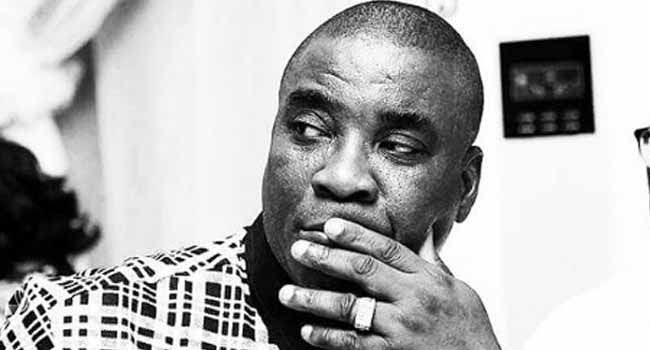
Popular Fuji musician, Wasiu Ayinde Marshal, also known as KWAM 1, has approached the Ogun State High Court sitting in Ijebu-Ode, challenging Governor Dapo Abiodun, the Ijebu-Ode Local Government and the Awujale Interregnum Administrative Council, among others, over a lineage claim to the Awujale of Ijebuland stool.
The suit is contained in a court document seeking an interim injunction, which was filed on Tuesday at the court registry and seen by SaharaReporters on Thursday.
The document, dated December 16, 2025, is titled “In the High Court of Ogun State in the Ijebu-Ode Judicial Division Holden at Ijebu-Ode.” The case is listed as Suit No: C3/238/2025.
In the suit, the claimant identified himself as Otunba Wasiu Olasunkanmi Ayinde Adesanya Marshal.
Those listed as respondents include Governor of Ogun State, Prince Dapo Abiodun; the Executive Chairman of Ijebu-Ode Local Government; the Commissioner for Local Government and Chieftaincy Affairs; the Attorney General and Commissioner for Justice, Ogun State; the Secretary of Ijebu-Ode Local Government; the Chairman of the Awujale Interregnum Administrative Council; and the Chairman of Fusengbuwa Ruling House, Otunba Lateef Owoyemi.
The application before the court is a Motion Ex Parte brought pursuant to Order 38 Rule 4 and Order 39 Rule 1 of the High Court of Ogun State (Civil Procedure) Rules 2024, Section 36 of the 1999 Constitution (as amended) and the inherent jurisdiction of the court.
KWAM 1 is asking the court for “an order of interim injunction restraining the respondents, either by themselves, privies, assigns, agents or anyone acting on their behalf, from taking any steps in the installation process of the next Awujale of Ijebuland pending the hearing and determination of the substantive suit.”
He also prayed the court for “such further order(s) as the court may deem fit to make in the circumstances of this case.”
Explaining the grounds for the application, the document cited Sections 36 and 6(6)(c) of the 1999 Constitution and stated that “the applicant is an aspirant to the stool of the Awujale of Ijebu land in Ogun State.”
It further argued that there was a need for the court to invoke its powers of interim injunction to “secure the interest of the applicant and preserve the res from being dissipated or interfered with by the respondents.”
The suit introduces a fresh legal dimension to the succession process of the Awujale of Ijebuland, as the court is now expected to determine whether the installation process should be halted pending the determination of the substantive case.
Recall that the Fusengbuwa Ruling House in Ijebu-Ode had earlier rejected the lineage claim submitted by KWAM 1, declaring his completed linkage form invalid.
The Fuji musician had announced his intention to become the Awujale of Ijebuland, hinging his claim on alleged lineage ties to the Fusengbuwa Ruling House, a claim that has since been disputed.
However, in an official letter dated December 11, 2025, and signed by key officers of the ruling house, the family acknowledged receipt of the completed particulars and linkage form submitted by Otunba Adesanya.
NIGERIA NEWS
At APC Caucus Meeting, Tinubu Assures Nigerians State Police Will Become Reality – THISDAYLIVE

Deji Elumoye in Abuja
President Bola Tinubu, last night, assured Nigerians that the much talked about multi-level police will become a reality before long.
Tinubu spoke at the national caucus meeting of the ruling All Progressives Congress (APC) ahead of the National Executive Committee (NEC) meeting billed for today, Friday, at the Conference Centre of State House, Abuja.
He stressed that all hands must be on deck to guarantee improved security situation across the country by ensuring that the state police bill was passed and became law.
The president said he held meetings recently with the European Union and United States teams, and assured them that the state police bill would be passed by the National Assembly with the support of his party, APC.
Tinubu emphasised that everything would be done to ensure that the project did not fail.
He stated, “I had a very long discussion with the US and Europeans. I was bragging to them that definitely we will pass the state police bill to improve security.
“They asked me if I’m confident and I said, yes. I have a party to depend on. I have a party that will make it happen and if at this level we fail, God forbid, we will not fail.”
The president also told the party leaders, including governors, the leadership of the National Assembly, and former governors, that the autonomy granted the local government councils via a recent Supreme Court judgement must be followed to the letter by empowering the councils financially.
Tinubu stated, “Let us equally look at the recent Supreme Court judgement. What can we do with it, and how well we can position our country and our party. To me, the local government autonomy is, and must be, effective.
“Let us give them. There is no autonomy without funded mandate, we’ll give them their money directly. That’s the truth. That’s compliance to the Supreme Court. Take leadership seriously.”
Vice President Kashim Shettima, who was earlier asked by Tinubu to speak on his behalf, welcomed all the new members to the party, especially the seven former governors of Peoples Democratic Party (PDP), who recently defected to APC
Shettima said most states in all the six geo-political zones were under the control of APC, with the party boasting 28 state governors.
He stated, “I want to assure our governors, this is your home. Kefas Agbu is a very gentleman. We can rest assured that 2027 is there for us. A lot of opposition members are itching to join us.”
President of the Senate, Senator Godswill Akpabio, said the National Assembly had confidence in the leadership of Tinubu, that of the party’s National Working Committee (NWC), led by the chairman, Professor Nentawe Yilwatda, and in the progressive governors led by Senator Hope Uzodimma.
Alleging that insecurity had been orchestrated by opposition party members, Akpabio prayed God to give Tinubu the strength to ensure release of the remaining kidnapped students of a Catholic school in Niger State.
Speaker of the House of Representatives, Hon. Tajudeen Abbas, called for clear approach that would reward loyalty.
Abbas stated, “2026 must be about delivery and meeting the needs of Nigerians. Nigerians must continue to understand what the government is doing and why it is doing it. APC must seek cohesion.”
He called for full support for Tinubu and the ideals of the party, saying, “Together, we will continue to steer Nigeria towards unity, inclusive growth.”
Uzodimma commended Tinubu for a sterling performance since he assumed office in 2023, saying, “His bold economic policies have enabled us recover lost grounds in the economy.”
He commended the president for the emergency on national security, while also lauding him for the cordial and smooth working relationships between the federal government and the sub-nationals.
In his remarks, Yilwatda showcased the personalities of politicians, who had defected from PDP as a significant breakthrough ahead of 2027 general election.
The erstwhile PDP governors, who made their first appearances at the APC caucus meeting, were Duoye Diri (Bayelsa), Peter Mbah (Enugu), Siminalayi Fubara (Rivers), Umo Eno (Akwa Ibom), Sheriff Oborehwori (Delta), and Kefas Agbu (Taraba).
Yilwatda thanked Tinubu, Shettima, the leadership of the National Assembly, and APC governors for the support since he took over.
He declared that the party was supporting Tinubu with robust membership drive and significant defections from the opposition party to the ruling party.
He also thanked the president for his leadership that had brought cohesion.
The APC chairman emphasised the promotion of internal democracy and appealed to party stakeholders to support the nationwide membership registration.
Party chieftains who attended the meeting included former Vice President Yemi Osinbajo; pioneer chairman of APC, Chief Bisi Akande; former Governor of Ogun State, Aremo Olusegun Osoba; and former Governor of Osun State, Adegboyega Oyetola.
There were also former Governor of Cross River State, Professor Ben Ayade; former Governor of Taraba State, Jolly Nyame; former Governor of Delta State, Ifeanyi Okowa; and former Senate President, Ken Nnamani.
Others were former Senate President, Anyim Pius Anyim; former Deputy Senate President, Ovie Omo-Agege; Chairman, National Drug Law Enforcement Agency, Brigadier-General Buba Marwa (rtd); former Governor of Bauchi State, Isa Yuguda; former Governor of Kogi State, Yahaya Bello; and Senator Adams Oshiomole. Also present at the meeting were Senate Leader, Senator Opeyemi Bamidele; Senators Gbenga Daniel, Aliyu Wammako, Adamu Aliero, Ahmad Lawan, and Simon Lalong; House of Representatives leader, Professor Julius Ihonvbere, and former Deputy Speaker of the House of Representatives, Hon Idris Wase.

•Okays Yakubu, Fani-Kayode, Dambazzau, Ibas, Omokri
•Subjects Tinubu’s oil regulators, Mohammed, Eyesan to rigorous screening
•Nominees promise digitisation, gas discipline, investor confidence
Sunday Aborisade in Abuja
In a sweeping diplomatic move with far-reaching implications for Nigeria’s foreign relations, Senate on Thursday confirmed 64 nominees as career and non-career ambassadors of the Federal Republic of Nigeria, approving a list featuring prominent political figures, former governors, ex-ministers, and seasoned diplomats.
Relatedly, the joint Senate Committee on Petroleum Resources (Upstream, Downstream and Gas) yesterday subjected President Bola Tinubu’s nominees for the leadership of Nigeria’s oil and gas regulatory agencies to rigorous screening.
The candidates unveiled ambitious plans centred on digitisation, strict contract enforcement, stakeholder collaboration, and accelerated gas development to unlock value in the sector.
Among the ambassadorial nominees cleared by the upper chamber were the immediate past chairman of Independent National Electoral Commission (INEC), Professor Mahmood Yakubu; former Minister of Aviation, Chief Olufemi Fani-Kayode; former Minister of Interior, Lt. Gen. Abdulrahman Dambazzau (rtd); former sole administrator of Rivers State, Vice Admiral Ibok-Ete Ekwe Ibas (rtd); and former presidential aide, Mr. Reno Omokri.
The confirmation followed the presentation and adoption of the report of Senate Committee on Foreign Affairs, chaired by Senator Sani Bello (APC, Niger North), after weeks of screening of the nominees forwarded by the presidency.
Presenting the report, Bello told the senate that all the nominees were thoroughly vetted and found suitable for their proposed diplomatic assignments.
He added that no petition or adverse security report was received against any of the nominees during the screening process.
“The committee carefully examined the credentials, experience and competence of all nominees and is satisfied that they are qualified to represent Nigeria in their respective postings,” Bello said.
The confirmed list comprises 34 career ambassadors and high commissioners and 30 non-career ambassadors and high commissioners, bringing the total number to 64.
The nominee from Yobe State, who did not appear before the Committee on Foreign Affairs for screening was not included in the list.
Following the adoption of the report, Senate President Godswill Akpabio formally declared the nominees confirmed and urged them to see their appointments as a call to national service.
Akpabio congratulated the new ambassadors and charged them to project Nigeria’s image positively, deepen bilateral ties, and protect the country’s interests in their host nations.
“You are going out there to represent Nigeria. Wherever you are posted, remember that you carry the image, values and aspirations of over 200 million Nigerians,” the senate president said.
The non-career ambassadors’ list reflected a blend of political experience, technocratic background, and public service experience.
In addition to Yakubu, Fani-Kayode, Omokri, Dambazzau and Ibas, those confirmed included the senator for Ondo South, Jimoh Ibrahim; former governors Ifeanyi Ugwuanyi (Enugu) and Okezie Ikpeazu (Abia); former Deputy Governor of Lagos State, Chief Femi Pedro; former Akwa Ibom senator, Ita Enang; and former Adamawa senator, Grace Bent.
Equally confirmed were Florence Ajimobi, widow of the late former Governor of Oyo State; former Ekiti State First Lady, Erelu Angela Adebayo; former Minister of Health, Professor Isaac Adewole; and Senior Advocate of Nigeria (SAN), Onueze Okocha.
The career ambassadors approved by the senate included Ambassador Nwaobiala Chukwuemeka (Abia); Betso Maimunah Ibrahim (Adamawa); Monica Enebechi (Anambra); Ambassador Mohammed Lele (Bauchi); Syndoph Endoni (Bayelsa); Ambassador Ahmed Monguno (Borno); Ambassador Adams Bassey (Cross River); Ambassador Clark-Omeru Efe (Delta); and Geoffrey David (Ebonyi).
Others were Odumah Ehinosen and Ambassador Wasa Ige (Edo); Ambassador Adeyemi Emmanuel (Ekiti); Ambassador Okechukwu Onaga (Enugu); Ambassador Magaji Umar (Jigawa); Ambassador Muhammad Dahiru (Kaduna); Ambassador Abdussalam Zayyad (Kano); Ambassador Shehu Barde; Ambassador Aminu Nasir (Katsina); Abubakar Musa; Amb. Haidara Mohammed Idris (Kebbi); Amb. Bako Adamu Umar (Kogi); and Amb. Sulu-Gambari Olatunji Ahmed (Kwara).
Also on the career list were Amb. Ramat Mohammed Omobolanle (Lagos); Amb. Shaga John Shamah (Nasarawa); Hamza Mohammed Sallau and Amb. Ibrahim Danlami (Niger); Adeola-Ibrahim Mopelola (Ogun); Reuben Abimbola Samuel (Ondo); Amb. Akande Wahab Adekola (Osun); Amb. Arewa Esther (Oyo); Amb. Gergadi Joseph John (Plateau); Amb. Luther Ogbomode Ayo-Kalata (Rivers); Danladi Yakubu Nyaku (Taraba); and Bello Dogon-Daji Haliru (Sokoto).
The confirmation effectively clears the way for the deployment of the ambassadors to Nigeria’s missions abroad, filling long-standing vacancies and strengthening the country’s diplomatic presence across key global capitals.
Observers said the mix of career diplomats and high-profile political appointees signalled a deliberate attempt by the federal government to recalibrate Nigeria’s foreign policy engagement, leverage political networks and restore momentum to its diplomatic corps.
Meanwhile, the joint Senate Committee on Petroleum Resources (Upstream, Downstream and Gas) yesterday, in a rigorous exercise held at the National Assembly, screened Oritsemeyiwa Eyesan, nominated by Tinubu as Chief Executive Officer of Nigerian Upstream Petroleum Regulatory Commission (NUPRC), and Engineer Saidu Mohammed, nominated as CEO of NMDPRA.
Eyesan and Mohammed assured senators that they would leverage the Petroleum Industry Act (PIA) to reposition the industry, boost production, attract investments and translate Nigeria’s vast hydrocarbon resources into tangible economic value.
Tinubu had forwarded their names to the senate following the resignation of the pioneer chief executives of the two agencies, Gbenga Komolafe (NUPRC) and Farouk Ahmed (NMDPRA), both appointed in 2021 after the enactment of the PIA.
Addressing the committee, Eyesan emphasised collaboration, technology and data-driven regulation as the pillars of her proposed stewardship of the upstream regulator.
She said, “One of the core pillars for me is collaboration, not just with science, but effective stakeholder collaboration.”
She stated that progress in her previous roles was achieved by identifying key stakeholders, confronting shared pain points and jointly developing solutions.
Eyesan lamented Nigeria’s continued reliance on manual systems in a rapidly evolving global energy industry, warning that the country is “leaving value on the table” by failing to fully digitise operations.
She said, “Without real numbers, you don’t know what you are dealing with. If you don’t have a digitised system in today’s operation, you are losing money.”
Eyesan told senators that asset integrity and robust regulatory frameworks would also be prioritised.
The NUPRC nominee stressed that regulators must work closely with industry players to develop enabling laws, regulations and policies, pledging to partner the senate to channel the sector in the “right direction”.
Eyesan described the PIA as “a valuable document” that must be fully leveraged to meet national objectives, especially as the world transitions at “jet-speed rates”.
Eyesan, a University of Benin economics graduate, brings nearly 33 years of experience from the Nigerian National Petroleum Company Limited (NNPC) and its subsidiaries.
She recounted her role in restoring investor confidence during periods of divestment threats, resolving multi-billion-dollar disputes with partners, advancing deep offshore investments and signing Nigeria’s first non-associated gas development contract.
Eyesan also highlighted her contribution to increasing crude oil production from about 1.3 million barrels per day to 1.8 million barrels per day during her tenure as Executive Vice President, Upstream.
“Having participated as an operator and in developing resources, I believe I have gathered enough experience to regulate the industry and ensure that we maximise the huge opportunities in oil and gas,” she said.
In his presentation, Mohammed focused on restoring discipline to Nigeria’s midstream and downstream gas and petroleum value chains, particularly through strict enforcement of contracts and quality standards.
He said, “Gas is a commodity that is sold before you even start producing it. There must be contracts, from the producer to the transporter to the eventual user.”
He said the absence of enforceable agreements had undermined gas-to-power supply and infrastructure development.
Drawing from his experience as Managing Director of the Nigerian Gas Company and Kaduna Refining and Petrochemical Company, Mohammed warned against neglecting local capacity.
He said, “We must protect our local interests; otherwise, they will go the way of the textile industry.”
He also acknowledged the importance of meeting domestic demand before exporting surplus products.
Mohammed pledged to operationalise the Gas Network Code to impose discipline across the system, revive pipeline transportation of petroleum products, and attract billions of dollars in investment for gas processing plants and infrastructure.
Mohammed also underscored the importance of quality assurance, promising to strengthen in-house laboratory capacity at the NMDPRA to ensure product standards.
Born in Gombe in 1957, Mohammed, a chemical engineering graduate of Ahmadu Bello University, Zaria, served across the oil and gas value chain, including as Group Executive Director/Chief Operating Officer, Gas & Power Directorate at NNPC, and as chairman of several energy sector boards.
He played key roles in landmark projects, such as the Escravos–Lagos Pipeline Expansion, the Ajaokuta–Kaduna–Kano Gas Pipeline and Nigeria LNG trains.
Chairman of Senate Committee on Petroleum Resources (Downstream), Senator Sumaila Kawu, said the screening came at a “very critical” time for Nigeria, stressing the urgency of boosting energy production to meet national development goals.
Kawu indicated that further engagements with the nominees would continue into January to deepen collaboration between the legislature and regulators.
Chairman of the Senate Committee on Interior, representing Edo North Senatorial District, Adams Oshiomhole, added humour to the event when he jokingly pledged to drink when he got home to celebrate the exit of the former regulators from the oil and gas sector.
With the screening concluded, the senate is expected to consider the committee’s report and move towards confirming the nominees, setting the stage for a new leadership phase in Nigeria’s oil and gas regulation under the Tinubu administration.

BENIN CITY—Scores of people have been injured and properties worth hundreds of millions of naira destroyed following a fuel tanker explosion in Auchi, headquarters of Etsako West Local Government Area, Edo State.
The petrol-laden tanker reportedly fell along the Auchi–Okene Highway, spilling its contents into drainages across the town, with some flowing into underground tunnels.
Eyewitnesses said the tanker exploded, and the fire spread along the drainage channels, triggering secondary explosions along Igbe Road, Warrake Road Junction near AP, and other areas.
Several residents were injured in the blasts.
Some were rushed to the General Hospital in Auchi, while others received treatment at private hospitals in the vicinity.
Confirming the incident yesterday , Edo State Police Command’s Public Relations Officer, Eno Ikoedem, said the explosion occurred at about 6:30 p.m. following the tanker’s fall.
Officers from Auchi Divisional Police Headquarters and the Area Command were promptly deployed to cordon off the affected areas and prevent further casualties.
“No casualty was recorded. Our men on the ground successfully secured the affected areas,” she said.
Senator representing Edo North, Adams Oshiomhole, expressed concern over the incident, urging residents and motorists to exercise heightened caution and vigilance, particularly during the yuletide season when traffic and commercial activities increase.
In a statement through his Chief of Staff, Victor Oshioke, Oshiomhole described the explosion as deeply distressing, noting that viral images and videos of raging infernos across Auchi were confirmed as authentic through consultations with community leaders.
He also revealed that he is engaging with state and federal authorities, emergency response agencies, and other stakeholders to develop more effective and coordinated strategies.
for handling emergency situations in the future.
The post Scores injured as tanker explosion rocks Auchi appeared first on Vanguard News.
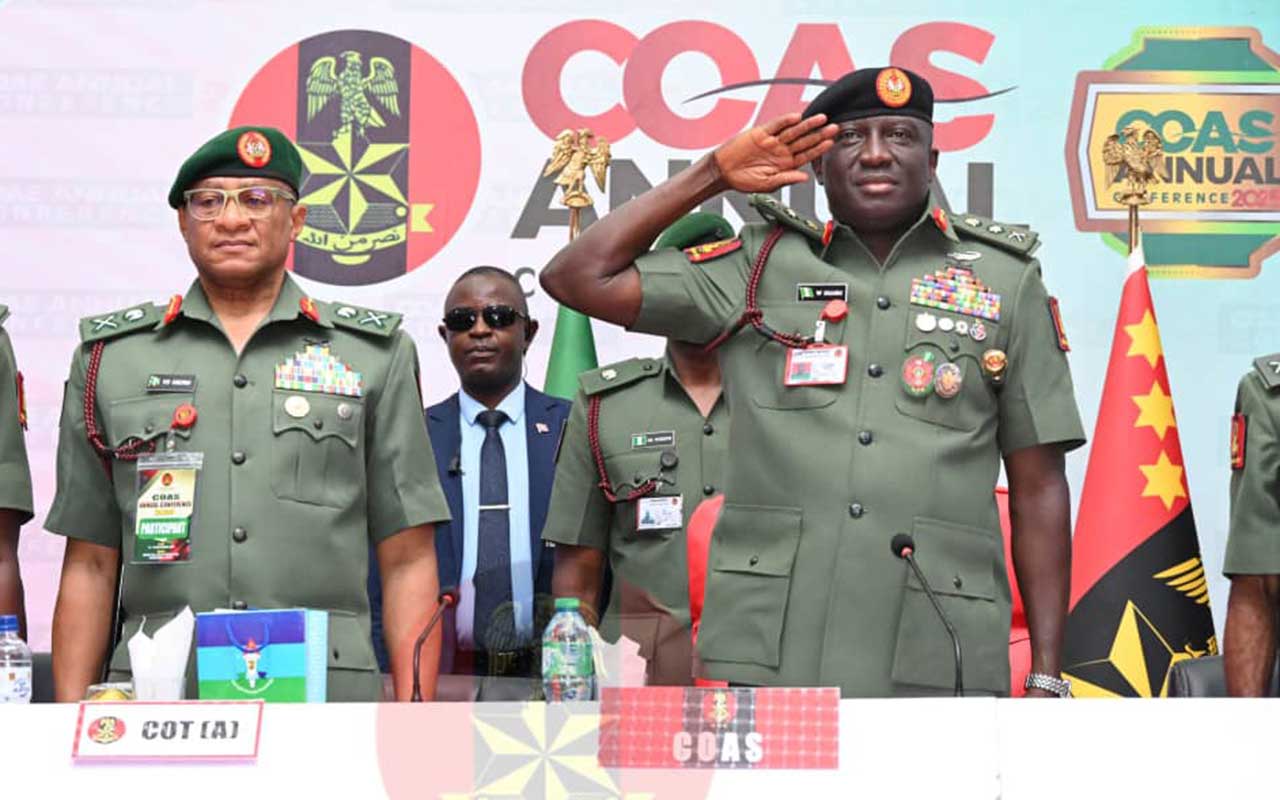
The Chief of Army Staff (COAS), Lt-Gen Waidi Shaibu, has promised to enhance the army’s capabilities in intelligence, surveillance, target acquisition and reconnaissance as well as in cyber operations.
He spoke at the closing ceremony of the 2025 Chief of Army Staff yearly Conference in Lagos.
The COAS said the decision followed the intelligence brief as well as the update received on Nigerian Army operations during the conference, which affirmed that the army’s operating environment is increasingly becoming more complex.
“This evolving threat spectrum necessitates that we enhance our capabilities in intelligence, surveillance,
target acquisition and reconnaissance as well as in cyber operations.
“In addition, our regional dynamics with the attendant instability, coupled with the global shifts in the character of warfare, requires that we continuously learn, adapt and innovate at all levels,” he said.
He also said the Nigerian Army would immediately begin to rejig its training, operations and other administrative and logistics concerns to further align with his command philosophy
This, he said, aims to advance the transformation of the Nigerian Army into a more professional, adaptable, combat-ready and resilient force capable of decisively discharging its constitutional responsibilities within a joint and multi-agency environment.
The COAS also disclosed plans for a total
overhaul of army training school curricula to ensure realistic training that directly influences operational outcomes.
“To this end, Army Headquarters, through its Department of Training, will drive mission-specific and focused training while carrying out a holistic review of the training in all Nigerian Army schools.
More emphasis will also be placed on the training and employment of our Special Forces and Army Aviation among others, to achieve our desired operational outcomes.
“In a nutshell, we shall be making radical but informed changes to our training and operational activities in the coming year with deliberate intervention in the training needs of the Special Forces School to optimally conduct its training,” he said.
He also pledged to leverage the timely interventions of the country’s political leadership for the military’s hardware and software procurement, as well as advance the promotion of a culture of innovation and technological integration at all levels.
On the issue of welfare, the COAS pledged to build on the efforts of past Chiefs of Army Staff in addressing the crisis of accommodation shortages.
Gleaning from the presentation by the Chief of Logistics (Army), he stressed that efforts in this regard should be evident for all to see.
“I have directed that all ongoing residential accommodation projects in the Nigerian Army be completed in good time and allocated to personnel, while new ones are to be initiated across barracks in all the Divisions.
“As a stopgap measure, the Nigerian Army will be investing in a more comprehensive spread of renovation works in all our barracks. With these ongoing efforts aimed at alleviating the existing accommodation shortfalls, we will continue to strike a balance by also securing post-service housing for our soldiers.”
He expressed gratitude of the Nigerian Army to President Bola Tinubu for his sustained support to the Army.
The COAS assured the President and the entire nation of the Army’s commitment to the defence and security of the country, and reaffirmed the unalloyed loyalty of the entire Nigerian Army to him for his unflinching and sustained support to the Nigerian Army.
A Chieftain of the main opposition People’s Democratic Party, Gbenga Olawepo-Hashim, has canvassed against moves to turn the Nigerian nation into a one party state ahead of the 2027 general election.
Former presidential candidate, Gbenga Olawepo-Hashim, has declared that he is not intimidated by either legal or political manoeuvres aimed at weakening the Peoples Democratic Party (PDP), insisting that Nigeria’s multiparty democracy is too deeply rooted to be destroyed.
In a strongly worded statement issued in Abuja, Olawepo-Hashim said he was “not intimidated by the legal and political subterfuges sponsored by the ruling APC”, stressing that no individual or party can monopolise power in Nigeria.
According to him, Nigeria has historically embraced pluralism as a tool for managing its diversity, noting that the nation’s founding fathers deliberately chose a multiparty system at independence.
His words “Nigeria has always been committed to multiparty democracy, Even in the First Republic, political power was never concentrated in the hands of one man or one party.”
He recalled that despite the towering influence of Sir Ahmadu Bello as leader of the Northern People’s Congress, other political forces such as Aminu Kano’s NEPU, J.S. Tarka’s Middle Belt Congress, and Sir Kashim Ibrahim’s Borno People’s Union coexisted with significant influence and representation.
Olawepo-Hashim noted that similar political diversity thrived in the South West, where the Action Group competed with the NCNC, alongside regional parties such as the Ibadan People’s Party.
“Our democracy has never been a democracy of one star flying in its firmament,” he said. “In our sky are thousands of stars.”
Going down memory lane, the PDP presidential aspirant likened the current political climate to the failed self-succession agenda of late military ruler, General Sani Abacha, who attempted to impose himself as the sole presidential candidate of all five registered political parties at the time.
“We are living witnesses to the failure of that plot,” he said, warning that although today’s situation carries “a more sinister twist,” the outcome would be no different.
“While Abacha sought to make himself the sole candidate of all parties, the current agenda is to ensure that no major party is strong enough to field a credible candidate,” Olawepo-Hashim stated.
Expressing confidence that such efforts would collapse, he stressed that, “just as the Abacha plot ended unrealised, this infantile machination will end in disaster for its authors, by the grace of God.”
Olawepo-Hashim also recalled his personal involvement in the struggle against military rule, emphasising that the resistance was led from within Nigeria, not from exile.
“We fought the self-succession plot here at home, not as self-styled exiled democrats sipping cognac in foreign embassies,” he said.
He revealed that he was part of the internal resistance delegation present at Fort IBB on June 8, 1998, during a critical moment in Nigeria’s history, even as heavy military movements threatened the nation’s future.
Olawepo-Hashim expressed firm belief that history would repeat itself saying “the same God who granted us the grace to witness the collapse of the Abacha plot will also help us see the end of the APC-or-no-other-party agenda”.