
SCIENCE
9 best things to see in the night sky with binoculars between November to January


Winter in the Northern Hemisphere is the best season for stargazing with binoculars. The nights are long, the air is cold and the stars seem brighter than in summer.
Naked-eye stargazing in winter is a joy, but lift a pair of binoculars to your eyes and the whole experience changes. The sky stops being a flat backdrop and suddenly has depth. It’s layered with stars, open clusters and nebulas that you never knew were there. Galactic immersion is yours.
That’s the magic of binocular astronomy. Sweeping the sky with both eyes open, holding a pair of binoculars up to the night sky, feels natural and relaxed, yet you’re seeing so much more than with the unaided eye. It’s also easy and affordable to do — all you need is a warm coat, a dark corner and a steady pair of hands.
You may like
Choose a good pair of the best stargazing binoculars — something like 7×50, 8×42 or 10×50 — and you’ll unlock a second layer of the winter night sky with almost no effort. Here’s what to look at in a pair of binoculars from the Northern Hemisphere this season.
1. Sirius, the kaleidoscope star
Sirius displays a rainbow of colors as seen through binoculars. (Image credit: wenbin via Getty Images)
It’s the brightest star in the night sky, but Sirius in the constellation Canis Major also appears to be one of the most colorful. Although it’s a blue-white star, Sirius shows a rainbow of colors as it twinkles.
Its high brightness and the fact that it is low in the sky during the Northern Hemisphere winter make Sirius shimmer in multiple colors as its starlight is refracted by Earth’s atmosphere. Put your binoculars on Sirius and you will see a kaleidoscope of colors.
Get a closer look


2. Jupiter at opposition
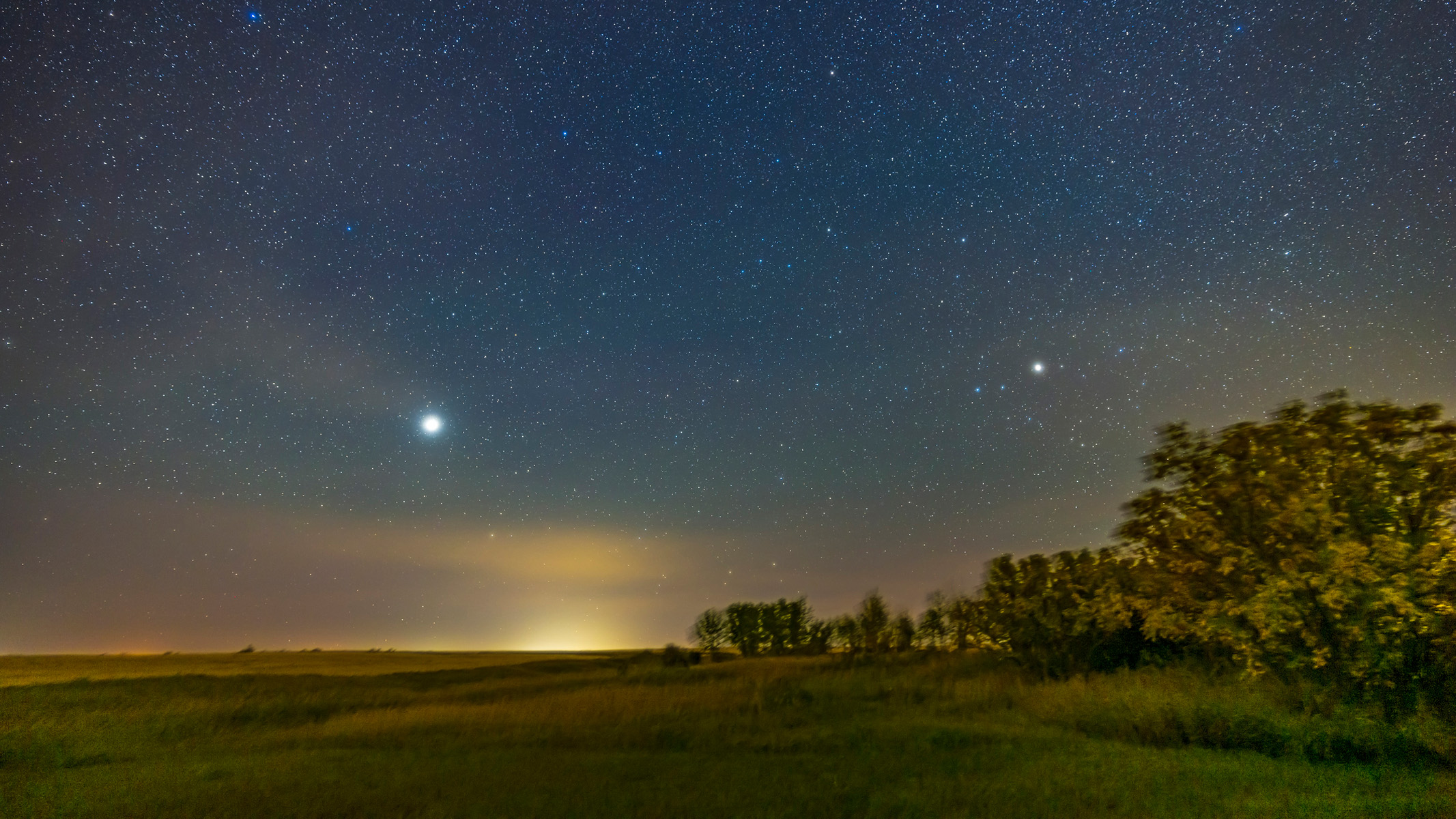
Jupiter looks at its best in binoculars when it is at opposition. (Image credit: Alan Dyer/Stocktrek Images via Getty Images)
The best time to look at an outer planet is when it is at opposition. At that moment, the Earth is between the planet and the sun, making the planet both closest to Earth and fully illuminated by the sun.
On Jan. 10, 2026, Jupiter will come to opposition, something that happens once every 13 months. For a few weeks either side of this date, put a pair of 8×42, 10×42 or 10×50 binoculars on Jupiter and you will see its four Galilean moons — Europa, Callisto, Ganymede and Io — as dots either side of the giant planet.
Get a closer look

3. First quarter moon
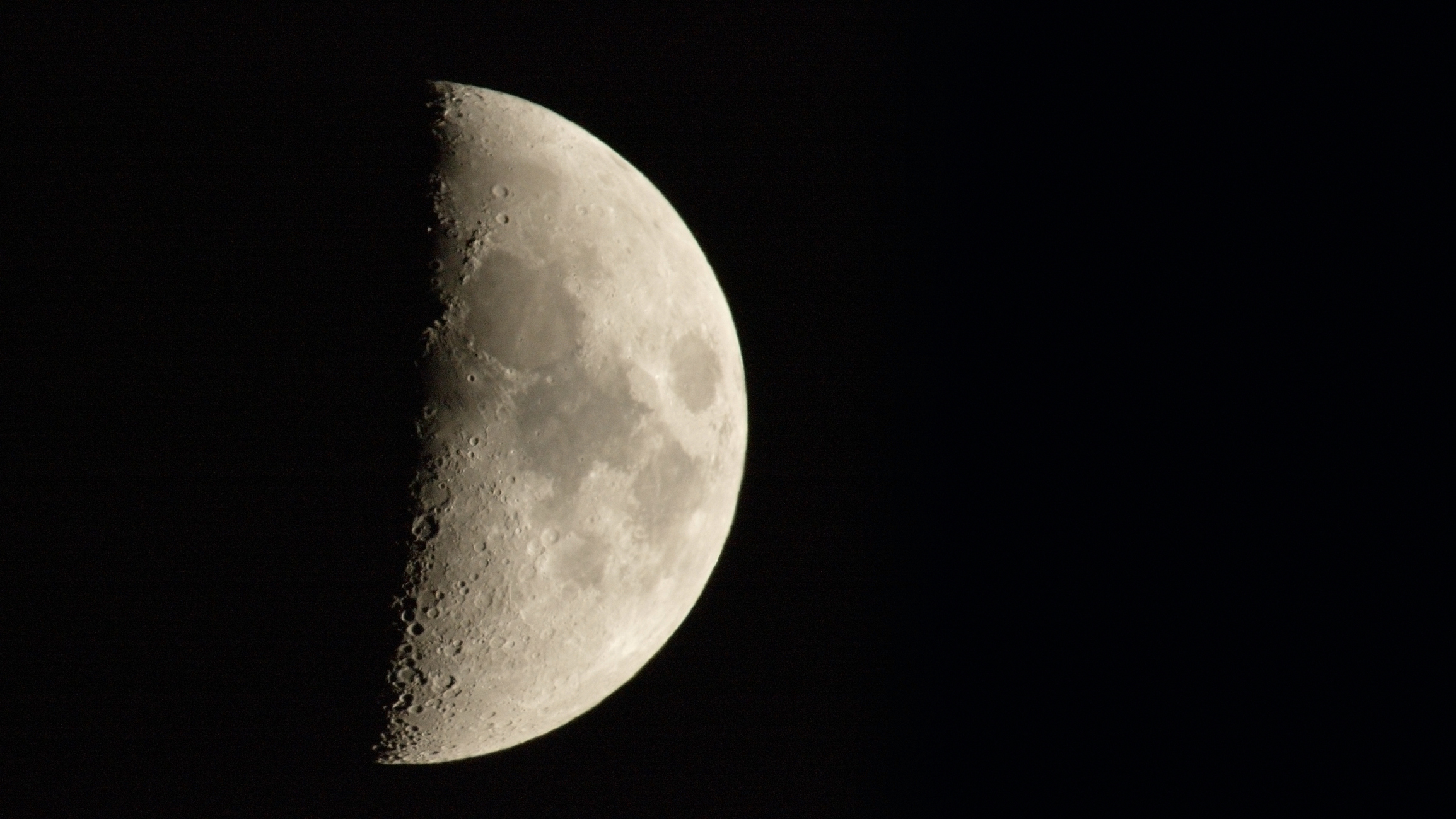
The first quarter moon is when our satellite looks its best through binoculars. (Image credit: ValentynVolkov Via Getty Images)
Ask someone when the best time to look at the moon is, and they will almost always say when it’s a full moon — but that’s bad advice. Through binoculars, the moon looks better at almost any other time of month, with perhaps the most intriguing (and convenient) coming at first quarter moon, when dramatic shadows can be seen along the terminator — the line between lunar night and day.
You may like
Use any pair of 10x binoculars and you’ll get a spectacular close-up of shadows cast by the craters, valleys and mountains on the moon. As a bonus, a first-quarter moon is up from dusk until midnight.
Get a closer look


4. The Owl Cluster
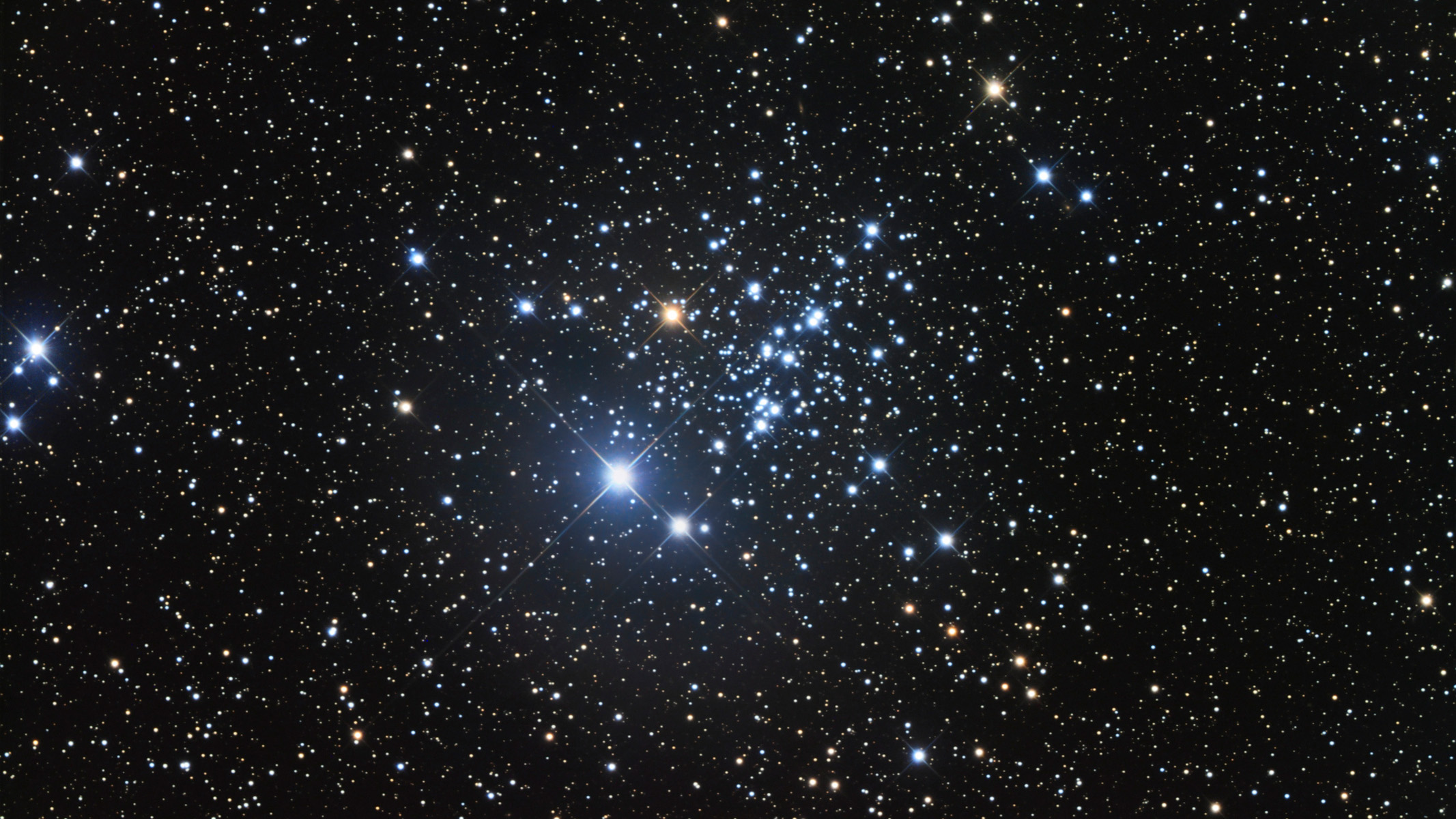
NGC 457. (Image credit: Stocktrek Images via Getty Images)
A particularly bright open star cluster in the constellation Cassiopeia, the Owl Cluster (or NGC 457 , if you prefer) is over 9,000 light-years from the solar system and contains almost 100 stars.
Its name comes from its yellow and blue stars, which are said to resemble the eyes of an owl. If you see Cassiopeia as a ‘W’ shape, NGC 457 is just beneath the first ‘V’.
Get a closer look

5. A supermoon rising
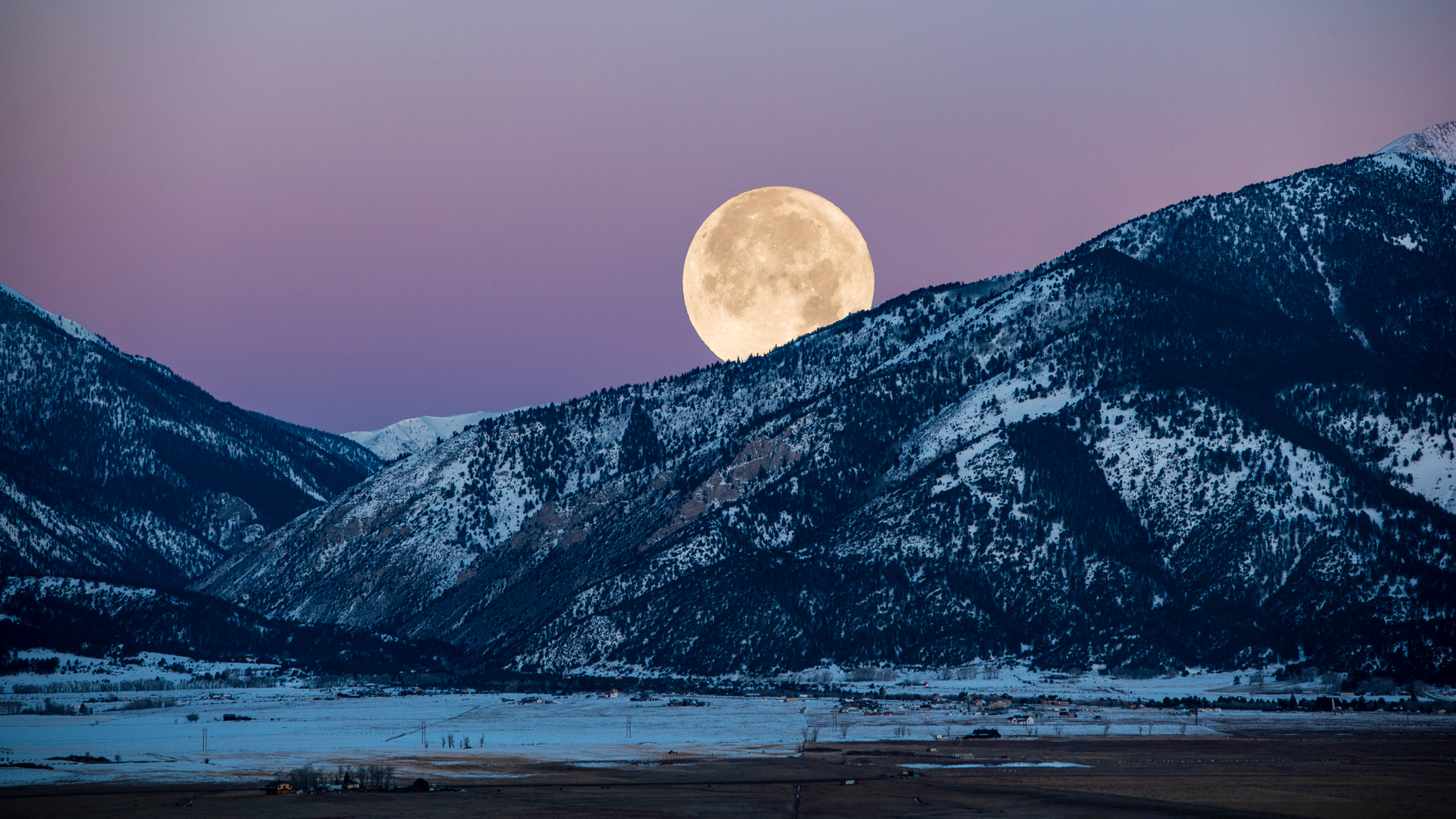
A full moon looks spectacular in binoculars if you catch it as it rises. (Image credit: Brad McGinley Photography via Getty Images)
As we’ve already said, the full moon phase is not the best time to look at the moon through binoculars — with one very specific exception.
If you can catch the full moon as it rises in the east during dusk, there are a few better sights than the lunar surface cast in an orange light. It looks that way because the sunlight being reflected into your eyes is traveling through the thickest part of Earth’s atmosphere, which scatters away short-wavelength blue light, while the longer wavelengths of red and orange light pass through easily.
See the full moon rise on Dec. 4 (Cold Supermoon), Jan. 3 (Wolf Supermoon) and Feb. 1 (Snow Moon), researching the exact time of moonrise for your location and looking east a few minutes after.
Get a closer look

6. Auriga’s star clusters
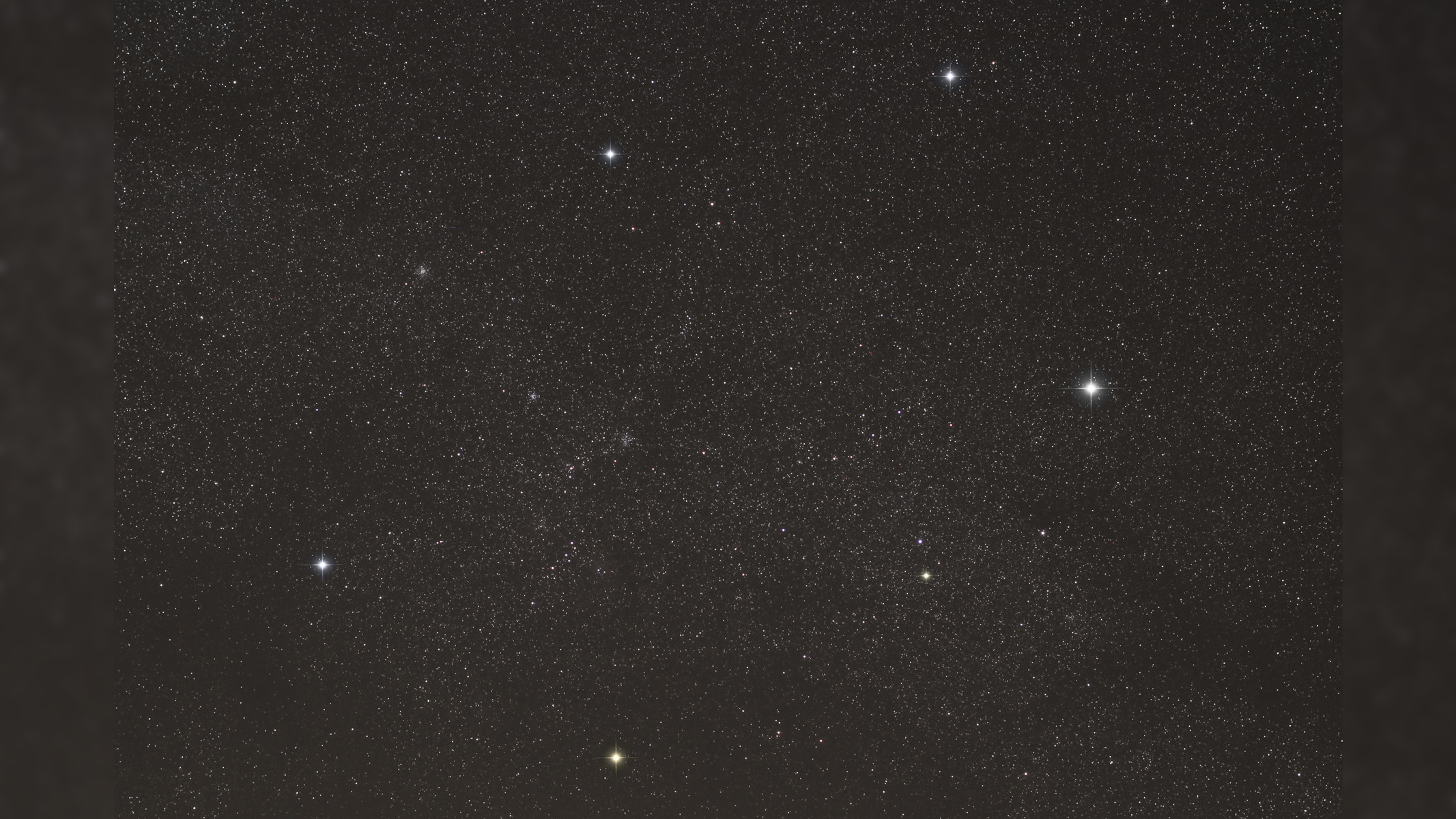
Auriga is home to the star clusters M36, M37 and M38. (Image credit: Christophe Lehenaff via Getty Images)
The constellation of Auriga dominates the autumn and winter sky, but tends to get overshadowed by the rising stars in the constellation Orion below. Auriga’s brightest star is Capella, the goat star — the brightest in a rough pentagon of five stars.
However, within the constellation, there are some deep sky delights in the form of three star clusters — M36, M37 and M38. Find M36, and all three will be in the field of view of a pair of most 10×50 binoculars.
Get a closer look

7. Winter Milky Way
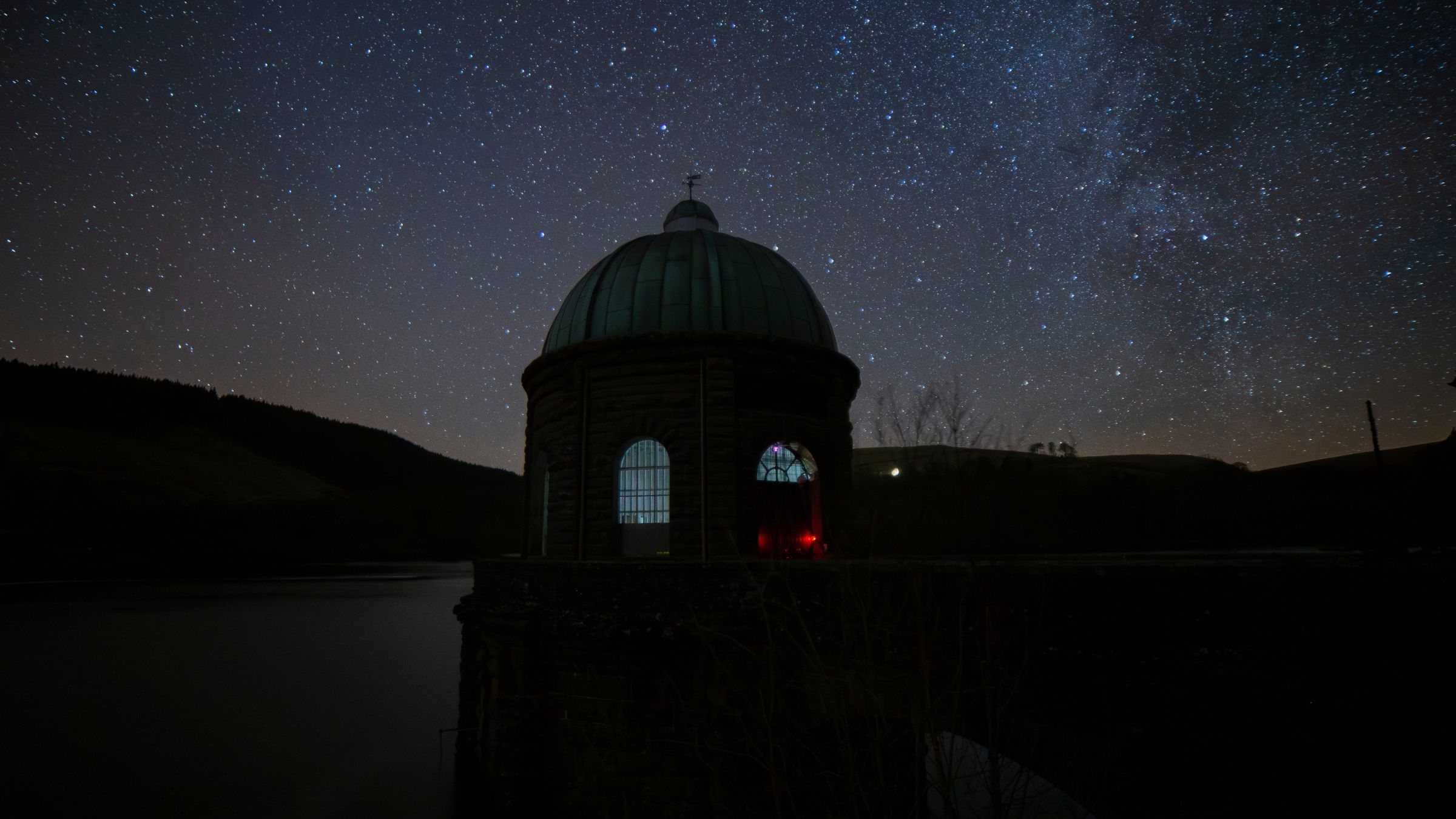
Winter’s Milky Way from Elan Valley Dark Sky Park, Wales. (Image credit: Jamie Carter)
Stargazers and astrophotographers rave about capturing the Milky Way during the Northern Hemisphere summer months, but the dense star fields of our galaxy’s spiral arms can easily be seen in winter. All you need to do is scan your binoculars between the constellations of Orion in the south and Cassiopeia high in the north, and you will see many thousands of bright stars.
Looking its best between December and February, it’s not as bright as the summer Milky Way, but the crisp and cold nights can give it a gorgeous, glittering look.
Get a closer look

8. Caroline’s Rose
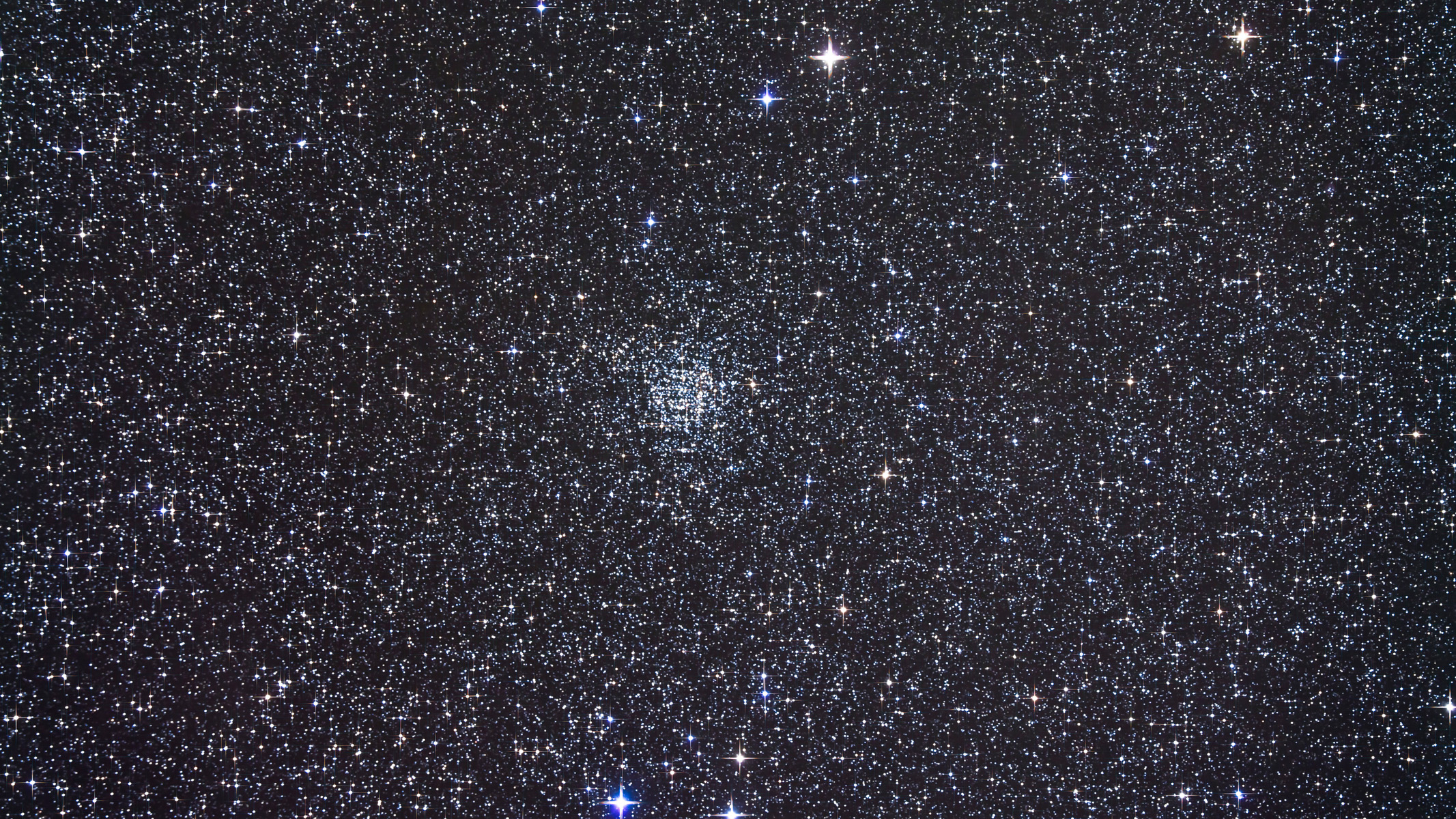
NGC 7789 is a dense open cluster of stars. (Image credit: Alan Dyer/StockTrek Via Getty Images)
In the constellation Cassiopeia there is an open cluster, NGC 7789, whose stars and the dark lanes between them are said to resemble a rose. A great target for binoculars, the name comes from its discoverer in 1783, Caroline Herschel — a noted comet-hunter and the younger sister of astronomer William Herschel, who discovered Uranus.
If you see Cassiopeia as a ‘W’ shape, NGC 7789 is close to the final point, marked by the star Caph.
Get a closer look

9. Earthshine on the moon
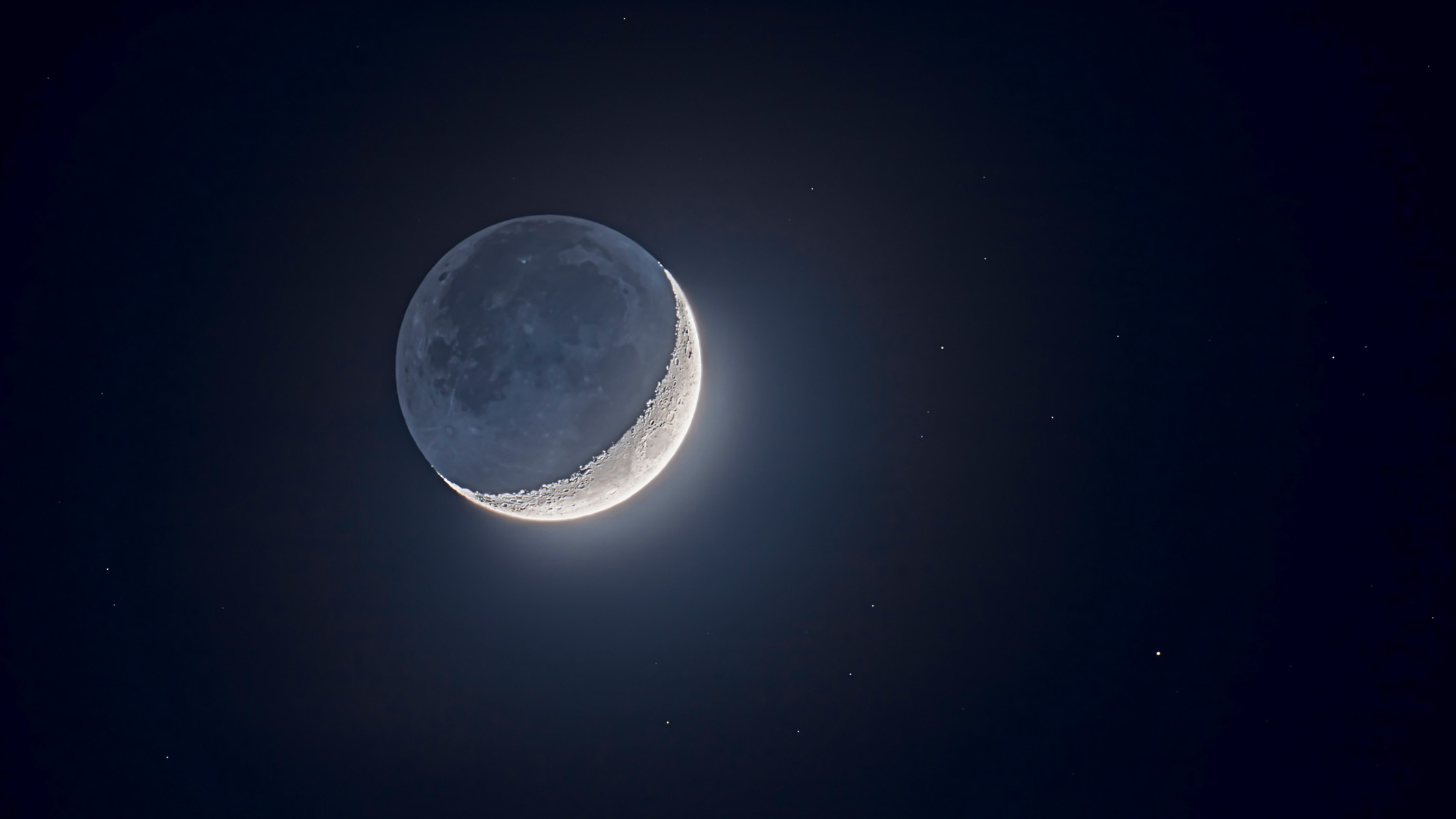
Earthshine occurs for a few nights each month. (Image credit: Alan Dyer/Stocktrek Images via Getty Images)
It is one of the easiest and most spectacular sights of all to see through a pair of binoculars, but Earthshine doesn’t get the attention it deserves. When the moon is a slim crescent, put your binoculars on the night side of the moon, and you will see detail on the lunar surface. This is Earthshine, sunlight reflected from Earth’s icecaps, oceans and clouds, gently illuminating the dark side of the moon.
You’ll see it for two or three nights, either side of the new moon phase, initially during a waning crescent moon visible in the east just before dawn, and later during a waxing crescent moon in the west just after dusk. New moons occur on Dec. 19, 2025, and Jan. 18, 2026.
Get a closer look










Using the Hubble Space Telescope, astronomers have imaged the largest and most chaotic site of planetary birth humanity has ever seen.
Appearing like a stunning cosmic bat, this protoplanetary disk, located around 1,000 light-years away, stretches out for around 400 billion years, around 40 times the size of our solar system, out to the ring of cometary bodies known as the Kuiper belt.
This protoplanetary disk with an infant star at its heart has the official designation IRAS 23077+6707, but also has the incredible nickname “Dracula’s Chivito.” But it isn’t just its staggering size and unique nickname that make IRAS 23077+6707 so remarkable.
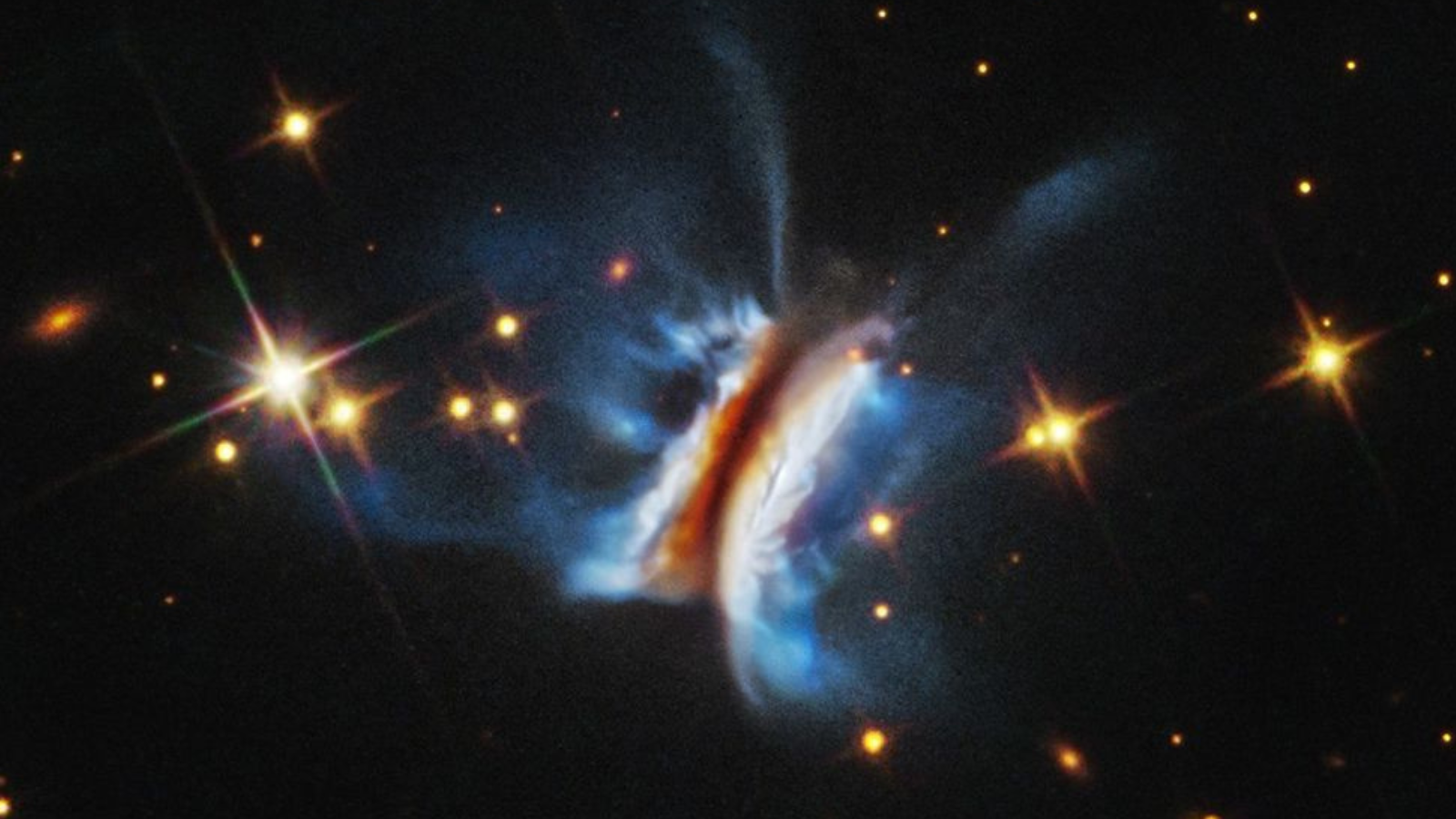
A Hubble image of Dracula’s Chivito, the largest protoplanetary disk ever seen (Image credit: NASA, ESA, STScI, Kristina Monsch (CfA); Image Processing: Joseph DePasquale (STScI))
“The level of detail we’re seeing is rare in protoplanetary disk imaging, and these new Hubble images show that planet nurseries can be much more active and chaotic than we expected,” team leader Kristina Monsch of the Center for Astrophysics | Harvard & Smithsonian (CfA) said in a statement. “We’re seeing this disk nearly edge-on, and its wispy upper layers and asymmetric features are especially striking.”
You may like
Monsch added that both Hubble and the James Webb Space Telescope (JWST) have glimpsed similar structures in other disks, but Dracula’s Chivito provides astronomers with an exceptional perspective that allows them to trace its substructures in visible light at an unprecedented level of detail.
“This makes the system a unique, new laboratory for studying planet formation and the environments where it happens,” Monsch continued.
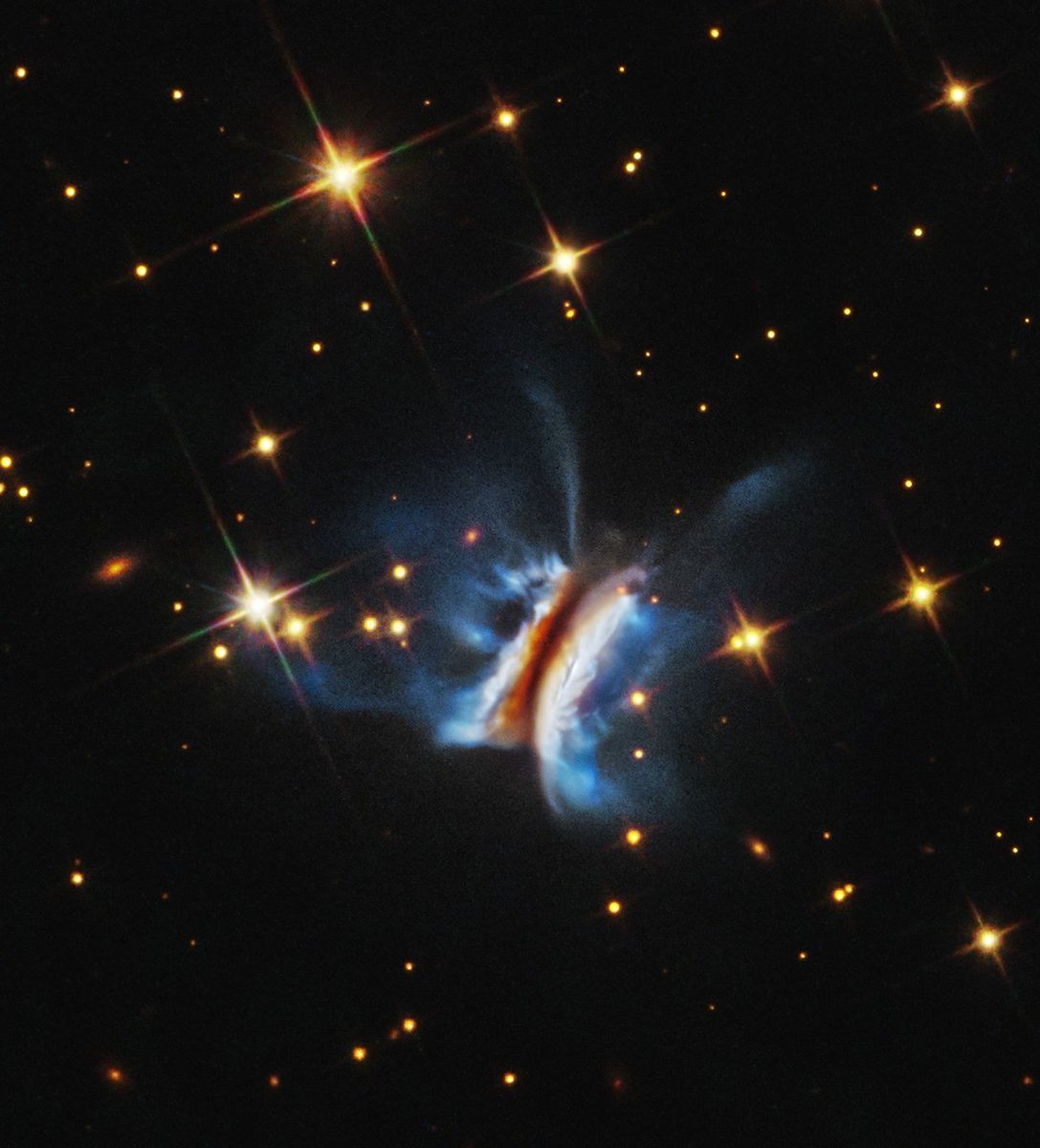
The full Hubble image of IRAS 23077+6707, appearing like a cosmic steak sandwich (Image credit: NASA, ESA, STScI, Kristina Monsch (CfA); Image Processing: Joseph DePasquale (STScI))
The unsymmetrical appearance of the gas and dust lanes in Dracula’s Chivito in this stunning Hubble image indicates that dynamic processes are occurring within the disk as its morphology is gradually shaped by interactions with its surroundings.
“We were stunned to see how asymmetric this disk is,” team member Joshua Bennett Lovell, also an astronomer at the CfA, said. “Hubble has given us a front row seat to the chaotic processes that are shaping disks as they build new planets — processes that we don’t yet fully understand but can now study in a whole new way.”
Not only does this give scientists a better picture of planetary birth, but Dracula’s Chivito also offers a look at what the solar system may have looked like when it was forming planets 4.6 billion years ago, albeit on a much larger scale.
“In theory, IRAS 23077+6707 could host a vast planetary system,” said Monsch. “While planet formation may differ in such massive environments, the underlying processes are likely similar.
“Right now, we have more questions than answers, but these new images are a starting point for understanding how planets form over time and in different environments.”
By the way, in case you are wondering, the “Dracula” element of this protoplanetary disk’s nickname is a playful reference to the Transvaniian heritage of one of the team members behind this research. Meanwhile, a “Chivito” is a massive steak sandwich, an iconic national dish from Uruguay, the homeland of another of the crew of scientists.
Don’t panic, Drac, that’s “steak,” not “stake.”
SCIENCE
Guess the number quiz: Can you work out these scientific numbers and constants and top the leaderboard?

Whether you’re cooking up chemistry, getting physical with physics or bending your mind over mathematics, one thing that remains constant is, well, constants. Some numbers are so fundamental to the way we conduct science that we’d be lost without them, and their discovery has helped us better understand the world around us.
So how many of these key figures do you know? Try our new quiz and find out. We’ll be dropping another number in the mix every day for you to guess, and if you prove yourself to be a numberphile, maybe you’ll make it to the top of our leaderboard. All you need to do is register and your score will be saved, and be sure to leave a comment and share how you got on (but no spoilers please).
—Live Science crossword: Test your knowledge on all things science with our weekly, free puzzle!
You may like
—Periodic table of elements quiz: How many elements can you name in 10 minutes?
—How quickly can you name all 12 Apollo astronauts that walked on the moon?


Social media often feels overwhelmingly toxic, but the reality is more restrained. Research finds that most harmful content comes from a tiny fraction of users who post frequently and loudly. Many Americans believe that hostile behavior dominates online spaces, but research suggests this belief is far off the mark. People often assume that nearly half […]
SOURCE PAGE
SCIENCE
Throwing out flame-retardant furniture can reduce toxic chemicals in blood, study finds | US news


Removing old furniture made with flame retardants from people’s homes can significantly reduce the amount of the toxic chemicals in blood, a new 10-year, peer-reviewed study by California regulators and public health groups has found.
The drop that researchers found was a “super big deal”, said Arlene Blum, the director of the Green Science Policy Institute who has for decades worked to reduce the level of flame retardants in consumer goods.
“To my mind, that’s a pretty dramatic change, and it shows how you can effect change and improve public health with a regulation,” Blum said.
Most furniture made with foam between about 1975 and 2015 contained any of a range of toxic flame retardants that are linked to serious health problems, and especially present a risk for kids.
In 2015, California scrapped requirements for several of the most toxic and common flame retardants used in furniture. The California department of public health and environmental non-profits at the time checked for flame retardants in the blood of dozens of people that had furniture with the chemicals, and monitored levels over the next 10 years.
Flame retardant levels dropped about four times faster in the blood of those that removed furniture with flame retardants compared with those who didn’t. The levels in blood on average were reduced by about half within just 1.4 years.
Flame retardants commonly used in furniture are linked to serious health issues, including cancer, neurotoxicity, thyroid disease, pre-term birth, decreased fertility, deficits in motor skills, and a drop in IQ in children.
During the mid-1970s, state and federal legislators passed laws requiring a range of products to meet flammability standards, including furniture, electronics, car seats and kids’ pyjamas. But the first generation of flame retardants were found to be highly toxic, and Blum led advocacy in 1977 that helped stop the use of the most dangerous in kids’ pyjamas.
Later generations of flame retardants have proven to be nearly as toxic as the first. In 2015, after years of pressure, California updated its flammability standards to eliminate a requirement for chemical flame retardants in furniture.
The retardants often break off from furniture and attach to dust that is inhaled or ingested. Researchers found much lower levels of flame retardants in the dust of homes from which the furniture was removed.
A few years later, the state banned some of the most dangerous flame retardant compounds in furniture and other goods, and Congress adopted a similar measure in 2020. The furniture industry has largely moved away from using any flame retardants, Blum said, meaning the level of the chemicals in Americans’ blood more broadly is probably dropping as the furniture is disposed of.
Blum recommends replacing furniture made between 1975 and 2015 with products made before or after that period. Replacing foam in couch cushions can be a more economical safeguard, she said. If those options are not in the budget, regularly dusting and using a vacuum with a Hepa filter can help reduce the amount of flame retardants in a home.

The Predator | Holiday Special | 20th Century FOX – YouTube

Watch On
The holiday season evokes majestic memories of family, friends, gifts, and… the Predator?! Wait, that last one doesn’t sound right, but it’s true. Everyone’s favorite intergalactic trophy hunting species has a Christmas connection, as he battled Santa Claus’ reindeer in a forgotten animated short titled “The Predator Holiday Special.”
You may like
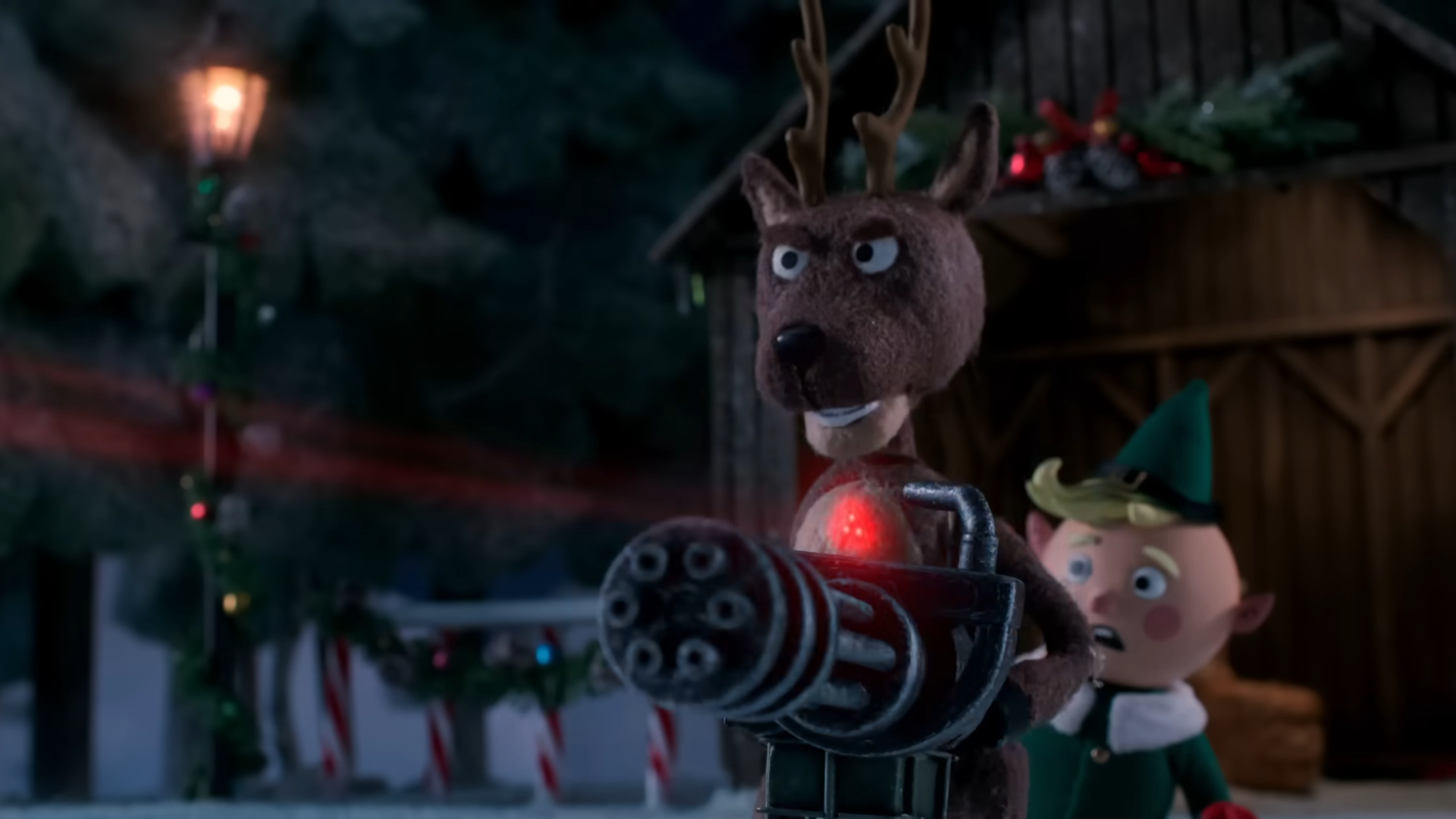
(Image credit: 20th Century Studios)
What follows is a pulsating hunting mission, as Sprinkles runs for the hills but appears to fall victim to the rabid Yautja’s sharp blades. Santa’s trusty reindeer – all kitted out like they have posters of Arnold Schwarzenegger’s Dutch Schaefer above their beds – assemble in a coordinated military fashion, but their efforts prove to be futile, since the Predator savages and makes mincemeat out of them.
It’s glory kills galore, as the hunter recreates some of the franchise’s most brutal moments with the reindeer. All those weapons and training seemed to be lost on them, with the chances of “Reindeer vs. Predator” replacing “Alien vs. Predator” as the mega-money crossover evaporating with each dead reindeer.
Now, the heart-in-throat anxiety pounds faster and harder, as the Yautja approaches Santa’s house. This is it – Christmas is about to be cancelled, folks! The Grinch cheers from his home on Mount Crumpit. Or maybe not. Jolly ol’ Saint Nick (Keith Silverstein) steps out to face the enemy, and he has an ace up his sleeve: Larry the reindeer! Like a force of nature out of every single ’80s action movie and powered by the testosterone of Stallone, Schwarzenegger, and Van Damme, Larry unloads on the Predator, sending him to the great big trophy hunting museum in the sky.
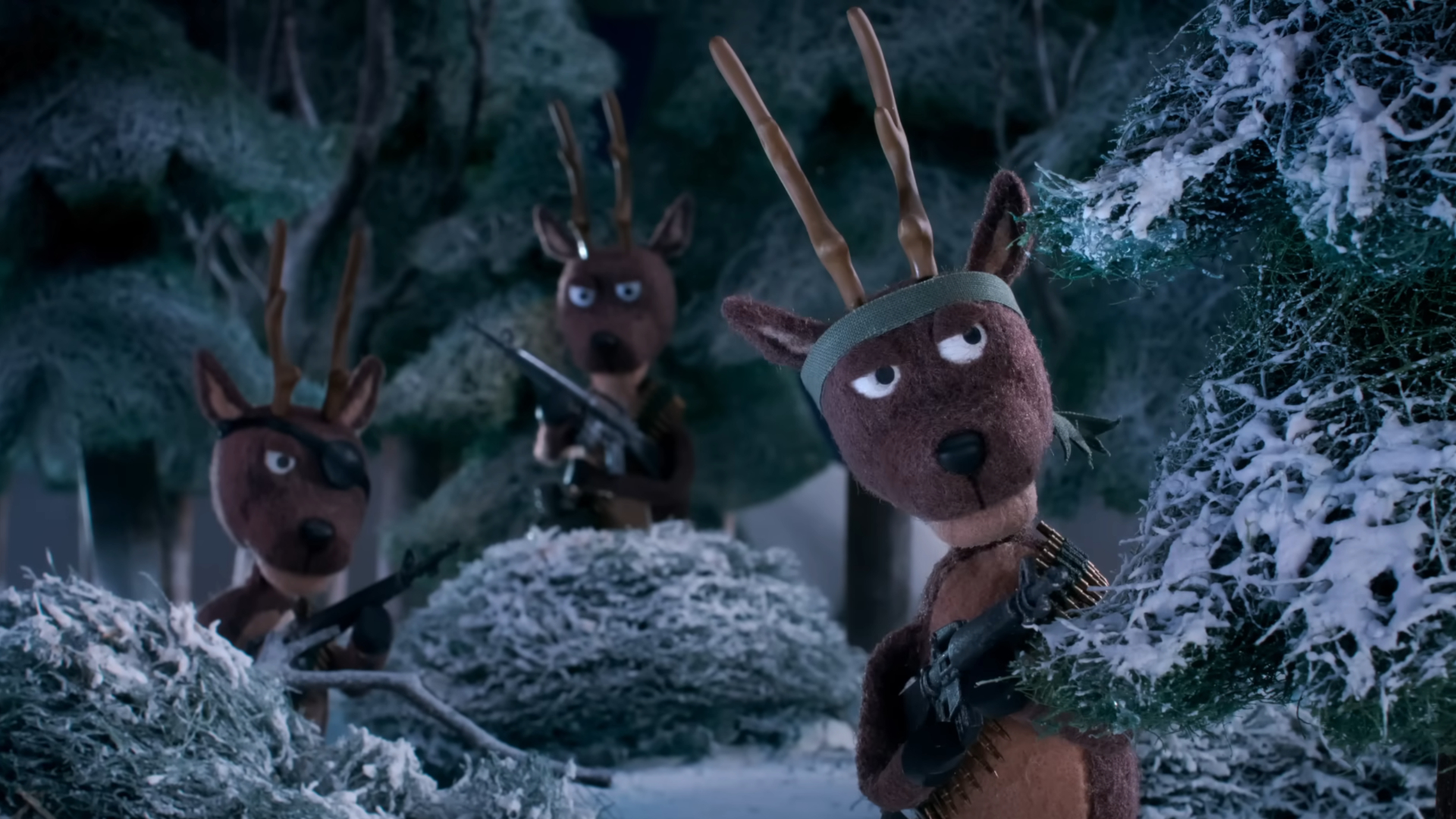
(Image credit: 20th Century Studios)
Of course, Santa and Larry celebrate accordingly by reenacting the iconic handshake between Dutch and Al Dillion (Carl Weathers) from 1987’s “Predator.”
Then more Predators show up. Uh-oh! Actually, scratch that. They’re here to take away their deceased clan member, and one of them even leaves a basket of decorated eggs with Santa. Aw! The kind gesture does nothing to endear the gift givers to the North Pole residents, as Sprinkles returns and unleashes the fury of John Wick on the remaining Predators.
Related: Predator movies ranked, from worst to best

(Image credit: 20th Century Studios)
Despite Santa and his crew having the Yautja’s number here, the creatures have the last laugh, thanks to a carefully placed Trojan horse: The basket of eggs. In the final scene of the film, one of the eggs opens up to reveal it’s an Ovomorph, indicating that a Facehugging Xenomorph is imminent here. Drats! And sadly, in the North Pole, no one can hear you scream…
You may like
Where did this idea even come from? According to Senreich’s comments to Entertainment Weekly, it was born out of “a random hangout moment.” Then, the concept evolved into chucking the Predator into the world of “Rudolph the Red-Nosed Reindeer”-styled animation, because nothing screams Christmas quite like a Yautja hunt in the North Pole.
Ultimately, “The Predator Holiday Special” was created as a neat promo to drum up anticipation for the home release of Shane Black’s “The Predator,” which arrived in December 2018. Who could have guessed that this barely two-minute short was better than all 108 minutes of Black’s baffling blockbuster that almost sent the Yautja into extinction?
The special is still available to watch on YouTube, so make it a holiday tradition like watching the best Christmas movie of all time (Die Hard, obviously) every year. If you’d rather check out some more serious Predator movies, they’re all available to watch on Hulu (US) and Disney+ (UK).
If you’re going to be out of the country this holiday season, you can still watch your streaming service of choice using a VPN. You’ll be able to connect to the service you’ve paid for, no matter where you are (on Earth, it won’t work in space, sorry).
There are loads of great VPN services out there, but if you’re looking for a recommendation, NordVPN is our top pick.
SCIENCE
‘Biological time capsules’: How DNA from cave dirt is revealing clues about early humans and Neanderthals

The last two decades have seen a revolution in scientists’ ability to reconstruct the past. This has been made possible through technological advances in the way DNA is extracted from ancient bones and analyzed.
These advances have revealed that Neanderthals and modern humans interbred — something that wasn’t previously thought to have happened. It has allowed researchers to disentangle the various migrations that shaped modern people. It has also allowed teams to sequence the genomes of extinct animals, such as the mammoth, and extinct agents of disease, such as defunct strains of plague.
You may like
Caves can preserve tens of thousands of years of genetic history, providing ideal archives for studying long-term human–ecosystem interactions. The deposits beneath our feet become biological time capsules.
It is something we are exploring here at the Geogenomic Archaeology Campus Tübingen (GACT) in Germany. Analyzing DNA from cave sediments allows us to reconstruct who lived in ice age Europe, how ecosystems changed and what role humans played. For example, did modern humans and Neanderthals overlap in the same caves? It’s also possible to obtain genetic material from faeces left in caves. At the moment we are analyzing DNA from the droppings of a cave hyena that lived in Europe around 40,000 years ago.
The oldest sediment DNA discovered so far comes from Greenland and is 2 million years old.
Paleogenetics has come a long way since the first genome of an extinct animal, the quagga, a close relative of modern zebras, was sequenced in 1984. Over the past two decades, next-generation genetic sequencing machines, laboratory robotics and bioinformatics (the ability to analyze large, complex biological datasets) have turned ancient DNA from a fragile curiosity into a high-throughput scientific tool.
The sediment samples from Hohle Fels are divided up for different analysis methods. Some go to the clean room, some to the geochemical laboratory. (Image credit: GACT)
Today, sequencing machines can decode up to a hundred million times more DNA than their early predecessors. Where the first human genome took over a decade to complete, modern laboratories can now sequence hundreds of full human genomes in a single day.
GACT is a growing research network based in Tübingen, Germany, where three institutions collaborate across disciplines to establish new methods for finding DNA in sediments. Archaeologists, geoscientists, bioinformaticians, microbiologists and ancient-DNA specialists combine their expertise to uncover insights that no single field could achieve alone —- a collaboration in which the whole genuinely becomes greater than the sum of its parts.
You may like
The network extends well beyond Germany. International partners enable fieldwork in archaeological cave sites and natural caves all over the world. This summer, for example, the team investigated cave sites in Serbia, collecting several hundred sediment samples for ancient DNA and related ecological analyses. Future work is planned in South Africa and the western United States to test the limits of ancient DNA preservation in sediments from different environments and time periods.
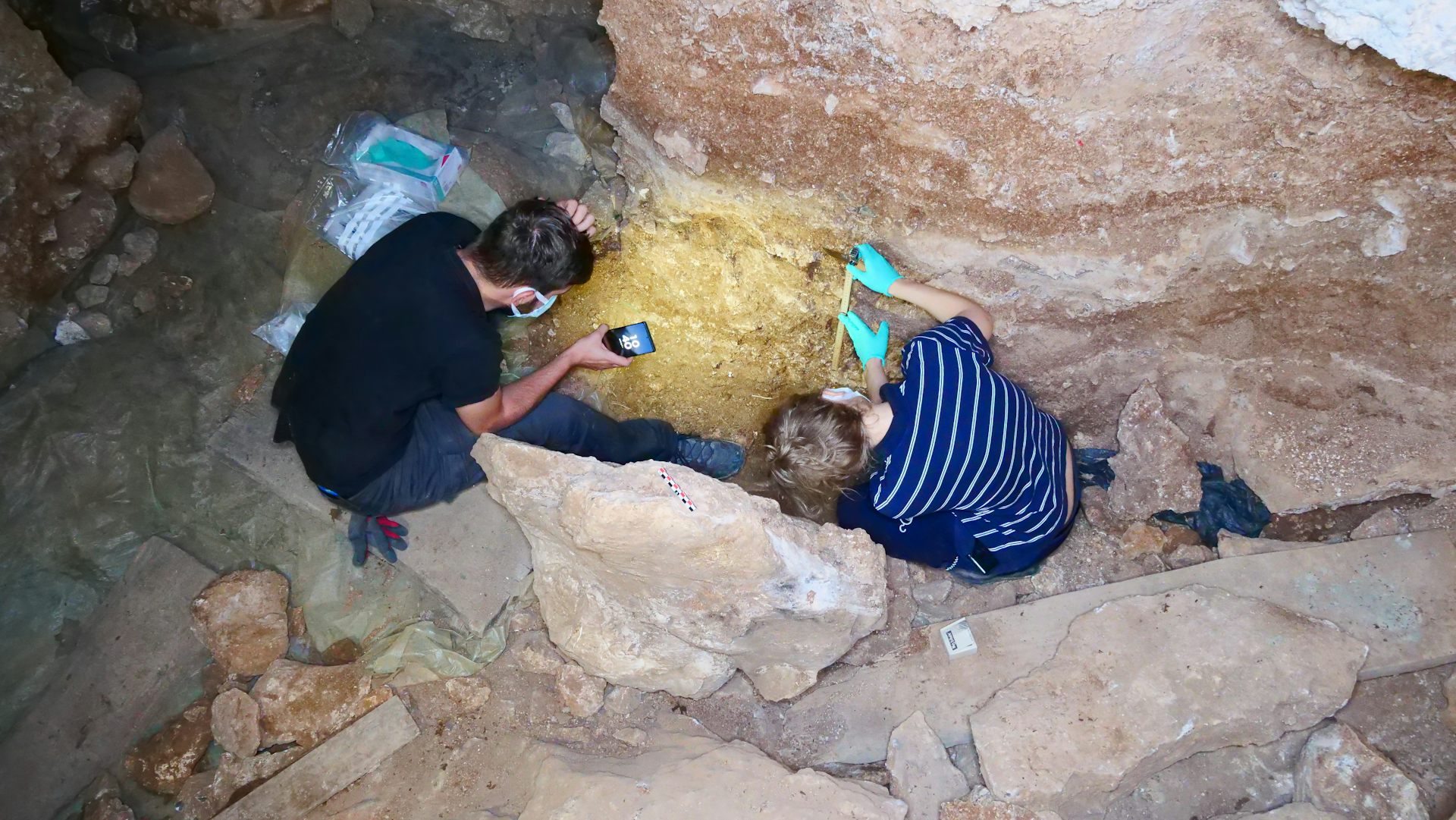
Work underway at a cave site in Serbia. (Image credit: GACT)
A needle in a haystack
Recovering DNA from sediments sounds simple: take a scoop, extract, sequence. In reality, it is far more complex. The molecules are scarce, degraded and fragmented, and mixed with modern contamination from cave visitors and wildlife. Detecting authentic ice age molecules relies on subtle chemical damage patterns to the DNA itself, ultra-clean laboratories, robotic extraction, and specialized bioinformatics. Every positive identification is a small triumph, revealing patterns invisible to conventional archaeology.
Much of GACT’s work takes place in the caves of the Swabian Jura within Unesco World Heritage sites such as Hohle Fels, home to the world’s oldest musical instruments and figurative art. Neanderthals and Homo sapiens left behind stone artifacts, bones, ivory and sediments that accumulated over tens of millennia. Caves are natural DNA archives, where stable conditions preserve fragile biomolecules, enabling researchers to build up a genetic history of ice age Europe.
One of the most exciting aspects of sediment DNA research is its ability to detect species long gone, even when no bones or artifacts remain. A particular focus lies on humans: who lived in the cave, and when? How modern humans and Neanderthals use the caves and, as mentioned, were they there at the same times? Did cave bears and humans compete for shelter and resources? And what might the microbes that lived alongside them reveal about the impact humans had on past ecosystems?
Sediment DNA also traces life outside the cave. Predators dragged prey into sheltered chambers, humans left waste behind. By following changes in human, animal and microbial DNA over time, researchers can examine ancient extinctions and ecosystem shifts, offering insights relevant to today’s biodiversity crisis.
The work is ambitious: using sedimentary DNA to reconstruct ice age ecosystems and to understand the ecological consequences of human presence. Only two years into GACT, every dataset generates new questions. Every cave layer adds another twist to the story.
With hundreds of samples now being processed, major discoveries lie ahead. Researchers expect soon to detect the first cave bear genomes, the earliest human traces, and complex microbial communities that once thrived in darkness. Will the sediments reveal all their secrets? Time will tell — but the prospects are exhilarating.
This edited article is republished from The Conversation under a Creative Commons license. Read the original article.

Black holes are arguably the most fascinating entities in the whole realm of science — these are regions in the fabric of spacetime that surround an infinitely dense, infinitesimally small point of mass and exert a gravitational force so strong that not even light can escape their grips.
It is therefore no surprise that just as black holes grip light (and everything else, for that matter) they grip the attention of scientists and the general public, too. And 2025 has been no exception, with the year bringing forth some intriguing and jaw-dropping scientific breakthroughs regarding these cosmic titans.
You may like
1. James Webb Space Telescope spots rapidly feeding “little red dot”
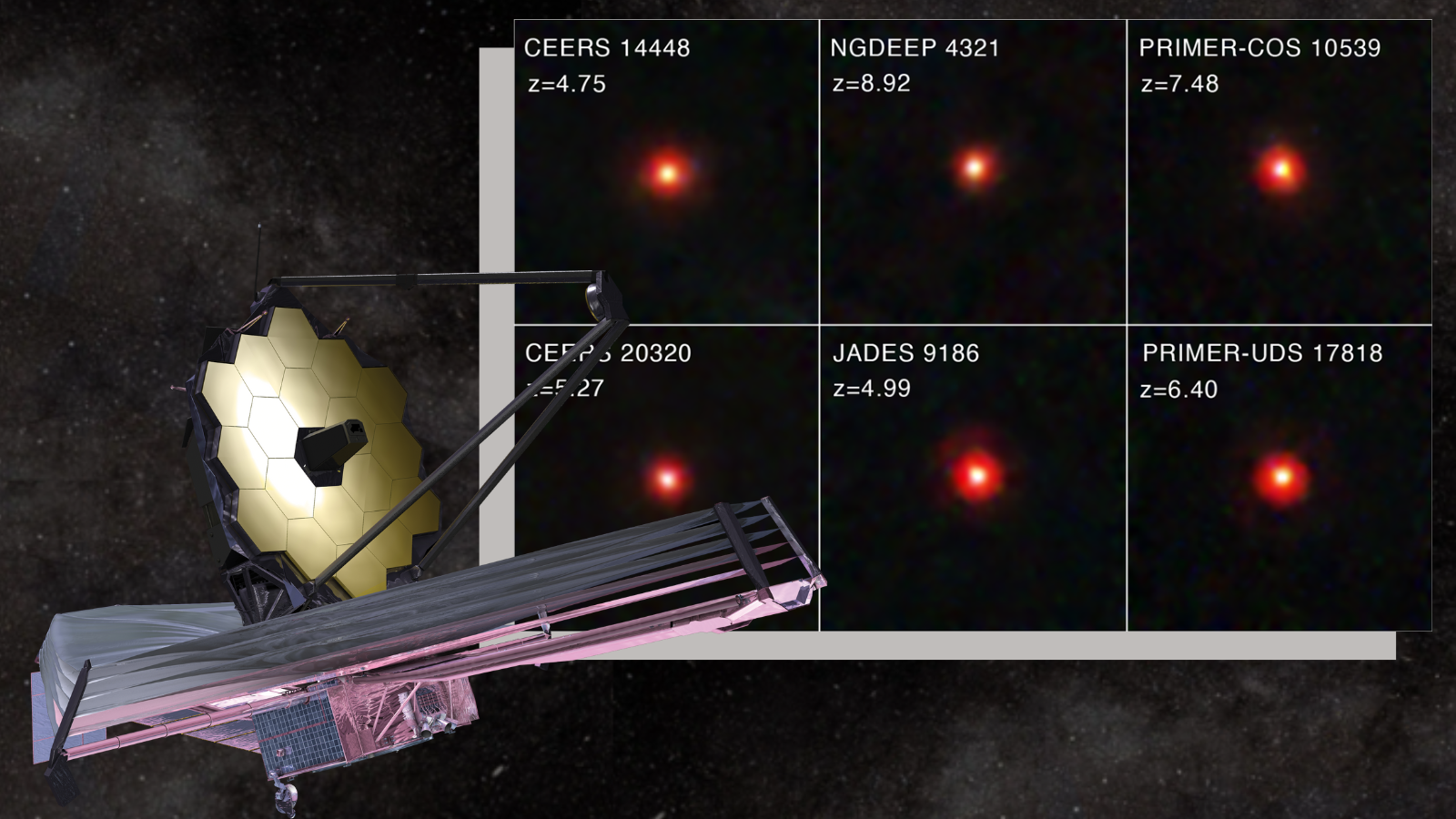
An illustration shows the JWST in space next to its observations of some of the earliest galaxies ever seen, the so-called “little red dots.” (Image credit: NASA, ESA, CSA, STScI, Dale Kocevski (Colby College)/ Robert Lea (created with Canva))
In November, astronomers revealed they used the James Webb Space Telescope (JWST) to discover a voraciously feeding and rapidly growing supermassive black hole in the infant universe. Existing just 570 million years after the Big Bang, this black hole sits at the heart of the galaxy CANUCS-LRD-z8.6, a so-called “little red dot” galaxy, or a class of small, bright and extremely distant objects the JWST has been routinely discovering since it began observations in 2022
“This discovery is truly remarkable. We’ve observed a galaxy from less than 600 million years after the Big Bang, and not only is it hosting a supermassive black hole, but the black hole is growing rapidly — far faster than we would expect in such a galaxy at this early time,” discovery team leader Roberta Tripodi of the University of Ljubljana FMF in Slovenia said in a statement at the time. “This challenges our understanding of black hole and galaxy formation in the early universe and opens up new avenues of research into how these objects came to be.”Read more about CANUCS-LRD-z8.6 and its supermassive black hole inhabitant here.
2. This black hole is a runaway!
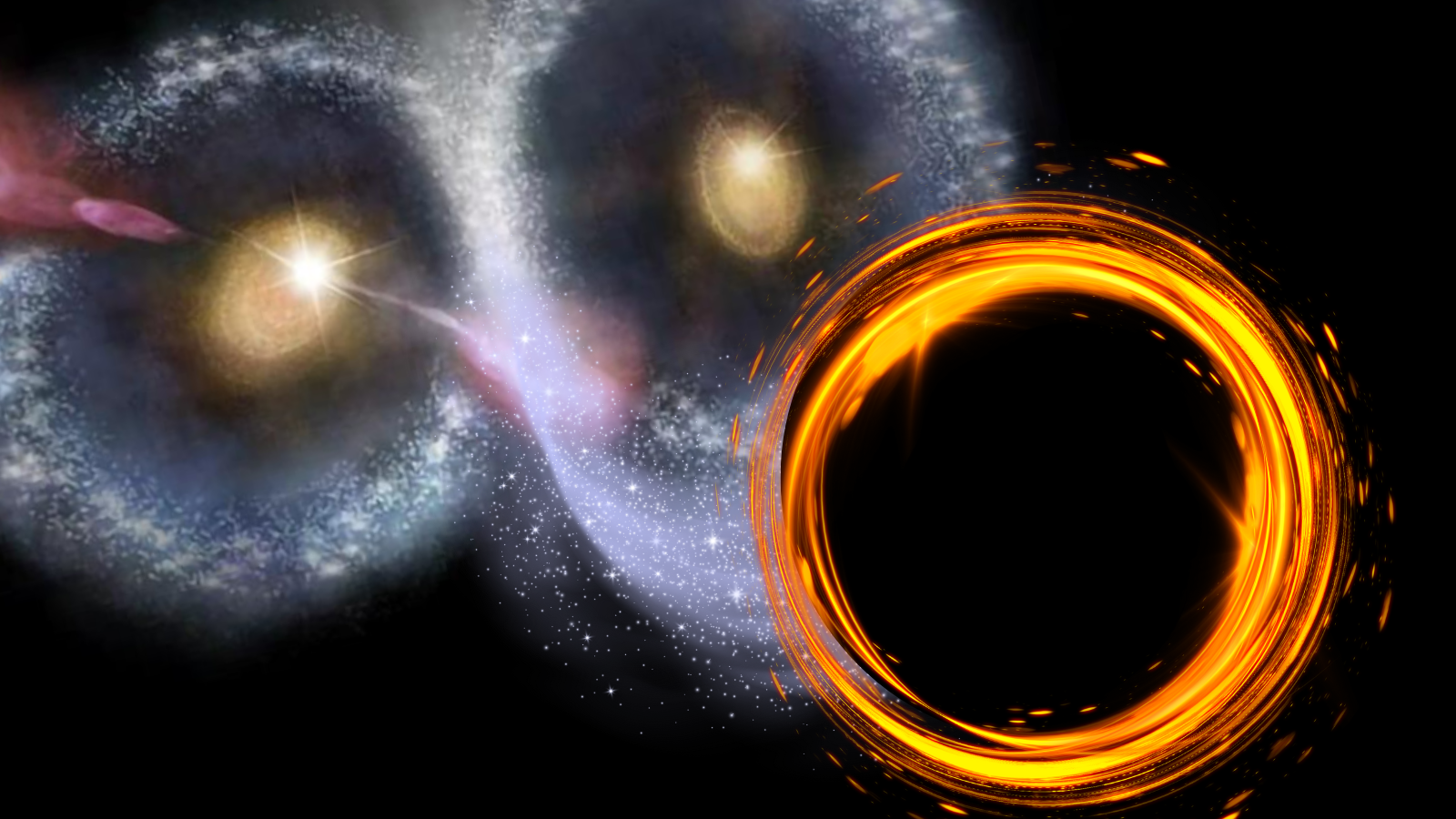
Runaway supermassive black hole flees the Cosmic Owl galaxies leaving a trail of stars (Image credit: Li et al/ Robert Lea (created with Canva))
Sticking with the JWST, in December, astronomers used the $10 billion space telescope to confirm the first sighting of a runaway supermassive black hole. This cosmic titan weighs in at 10 million times the mass of the sun and is rocketing through space at a staggering 2.2 million miles per hour (3.5 million kilometers per hour), which is 3,000 times the speed of sound at sea level here on Earth.
The runaway supermassive black hole is pushing forward a literal galaxy-size “bow-shock” of matter in front of it, as well as dragging a 200,000 light-year-long tail behind it that is gathering gas and actively birthing stars.
“It boggles the mind!” discovery team leader Pieter van Dokkum of Yale University told Space.com. “The forces that are needed to dislodge such a massive black hole from its home are enormous. And yet, it was predicted that such escapes should occur!”
Read more about this cosmic runaway here.
3. Black hole tornadoes at the heart of the Milky Way
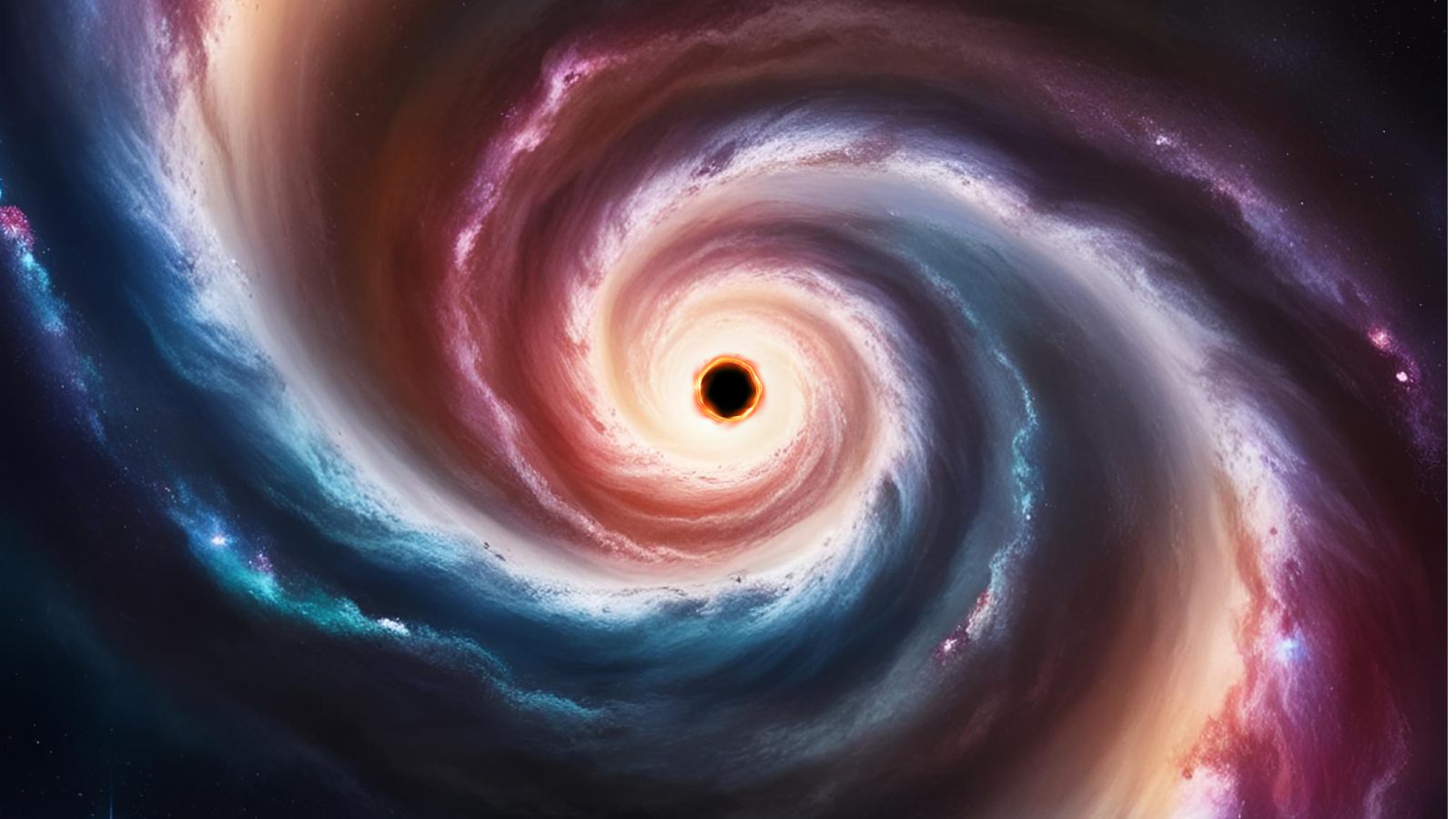
An illustration shows a cosmic tornado flowing around Sgr A* the Milky Way’s central supermassive black hole (Image credit: Robert Lea (created with Canva))
Not all supermassive black holes are associated with violent activity. Take our own supermassive black hole, Sagittarius A* (Sgr A*), which sits at the heart of the Milky Way. Unlike other black holes, Sgr A* isn’t greedily feasting on gas, dust and stars, but rather exists on a diet that scientists have related to a human consuming one grain of rice every million years.However, in March 2025, scientists revealed that it isn’t all quiet at the heart of our galaxy. Using the Atacama Large Millimeter/ submillimeter Array (ALMA), a team of astronomers discovered “space tornadoes” raging around Sgr A*, revolutionizing our view of the Galactic Center and the nature of “quiet” black holes.
You may like
“Our research contributes to the fascinating Galactic Center landscape by uncovering these slim filaments as an important part of material circulation,” team member Xing Lu of the Shanghai Astronomical Observatory said in a statement. “We can envision these as space tornados: they are violent streams of gas, they dissipate shortly and they distribute materials into the environment efficiently.”
Read more about these space tornadoes here.
4.
The Milky Way’s supermassive black hole was noisier than usual back in January 2025, when astronomers used the JWST to observe it throwing out highly energetic flares.
This represented the first time astronomers had seen flares from Sgr A* in the mid-infrared range of the electromagnetic spectrum, with the team behind these observations using them to better model outflows from supermassive black holes in research released in November.
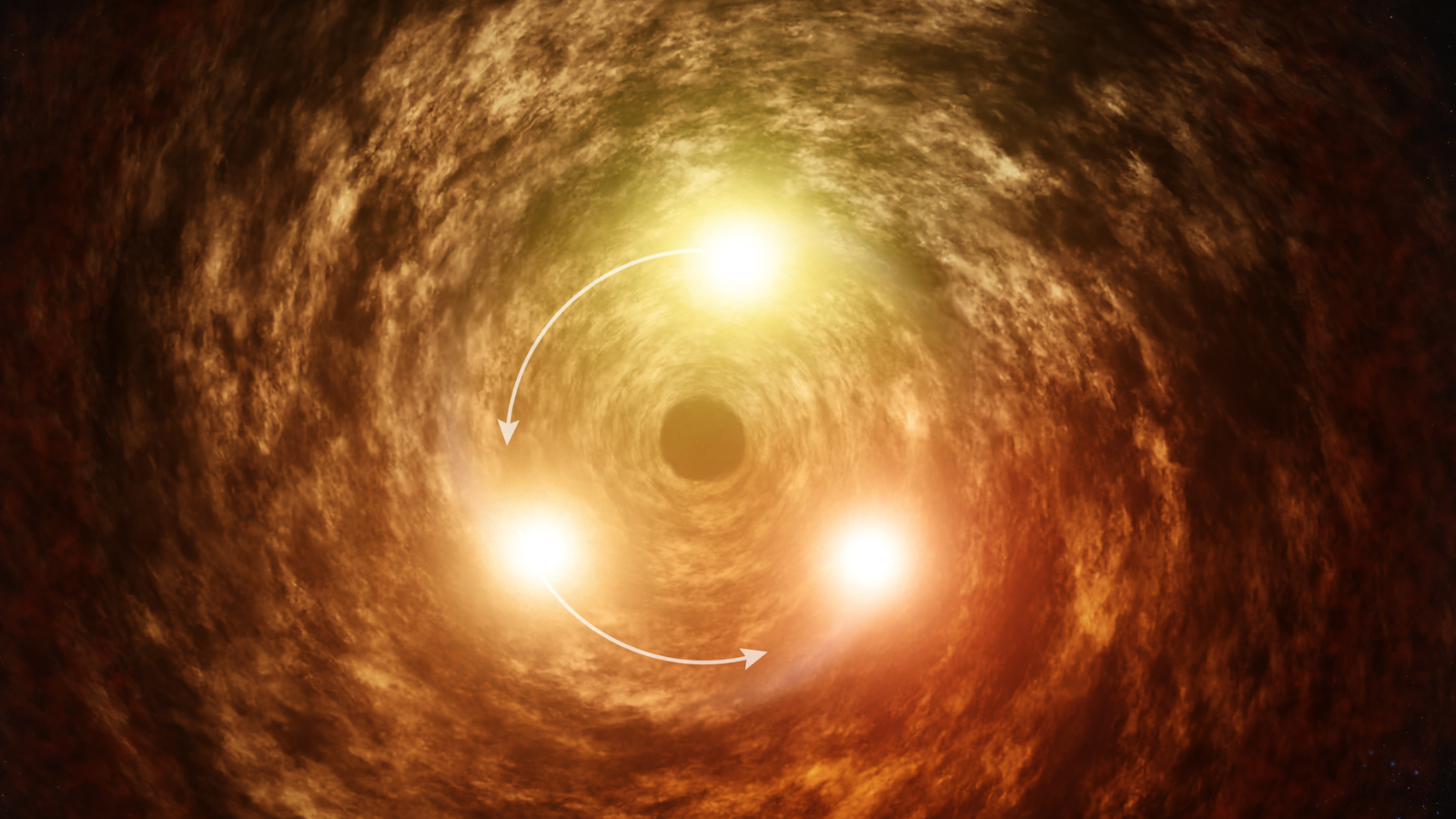
An illustration of the mid-infrared flare moving as electrons spiral around the magnetic fields of Sgr A*. (Image credit: CfA/Mel Weiss)
“The mid-infrared data is exciting because, thanks to the new JWST data, we can close the gap between the radio and near-infrared regimes, which had been a ‘gaping hole’ in the spectrum of Sgr A*,” Sebastiano von Fellenberg of the Max Planck Institute for Radio Astronomy in Bonn, Germany, told Space.com. “On the one hand, our mid-infrared flare looks like a typical near-infrared flare, so we now know flares also occur in the mid-infrared regime — and this isn’t trivial as, for instance, the radio variability looks quite different, and we do not see pronounced flare-like peaks in the light curve.”
Read more about this discovery here.
5. Supermassive black hole experiences 134-million-mph ‘burp.’
If you thought Christmas dinner gave you a massive case of indigestion, spare a thought for the black hole at the heart of spiral galaxy NGC 3783. In December, scientists revealed they had witnessed the supermassive black hole in NGC 3783 burping out a jet of material at a staggering 134 million miles per hour (216 million kilometers per hour), which is about 20% the speed of light.
The eruption of plasma was preceded by a flare of X-rays spotted by European Space Agency (ESA) XRISM X-ray telescope, with follow-up observations performed by NASA’s XMM-Newton spacecraft, helping to measure the scale and structure of this tumultuous cosmic storm.
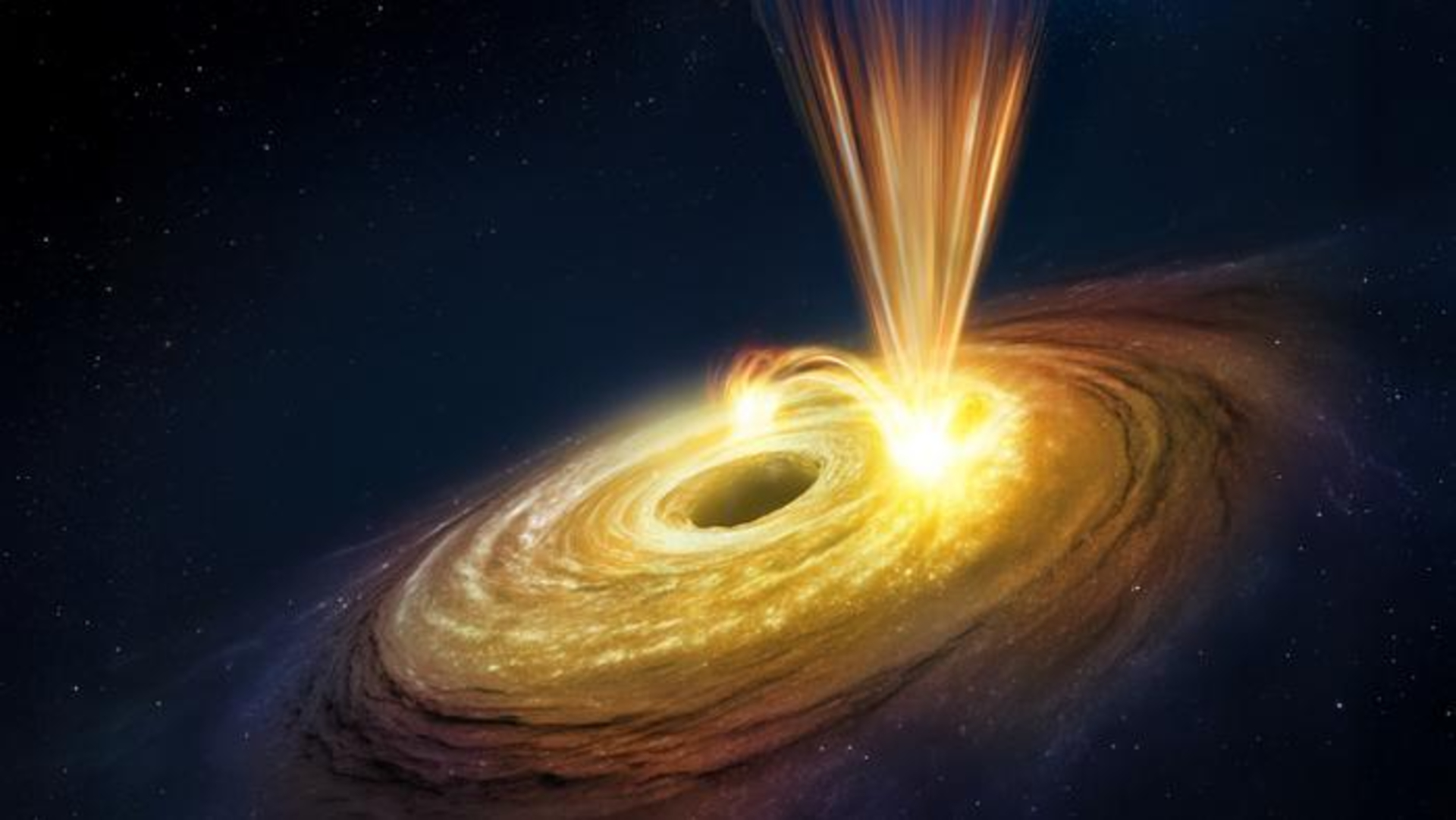
An illustration of a black hole with golden rings of gas and dust around it with a jet of energy shooting upwards on its right side. (Image credit: European Space Agency (ESA))
“Windy active galactic nuclei also play a big role in how their host galaxies evolve over time and how they form new stars,” team member and ESA research fellow Camille Diez, a coauthor of the study, in a recent press release. “Because they’re so influential, knowing more about the magnetism of active galactic nuclei, and how they whip up winds such as these, is key to understanding the history of galaxies throughout the universe.”
Someone pass the Pepto.
Read more here.
6. The power of 10 trillion suns
In any other year, the supermassive black hole mentioned above would probably scoop the award for most striking outburst, but not in 2025. This year, that accolade goes to a flare designated J2245+3743, spotted erupting from a supermassive black hole located in the center of a galaxy 10 billion light-years away from Earth.
What made this flare so amazing isn’t just the fact that it is the most distant black hole flare ever seen, but also that it is pumping out energy equivalent to the output of 10 trillion suns! That is 30 times more energetic than the previous most energetic flare, the wonderfully named “Scary Barbie” spotted back in 2018. The flare is believed to be the result of a star wandering too close to this supermassive black hole, which has the mass of 500 million suns.
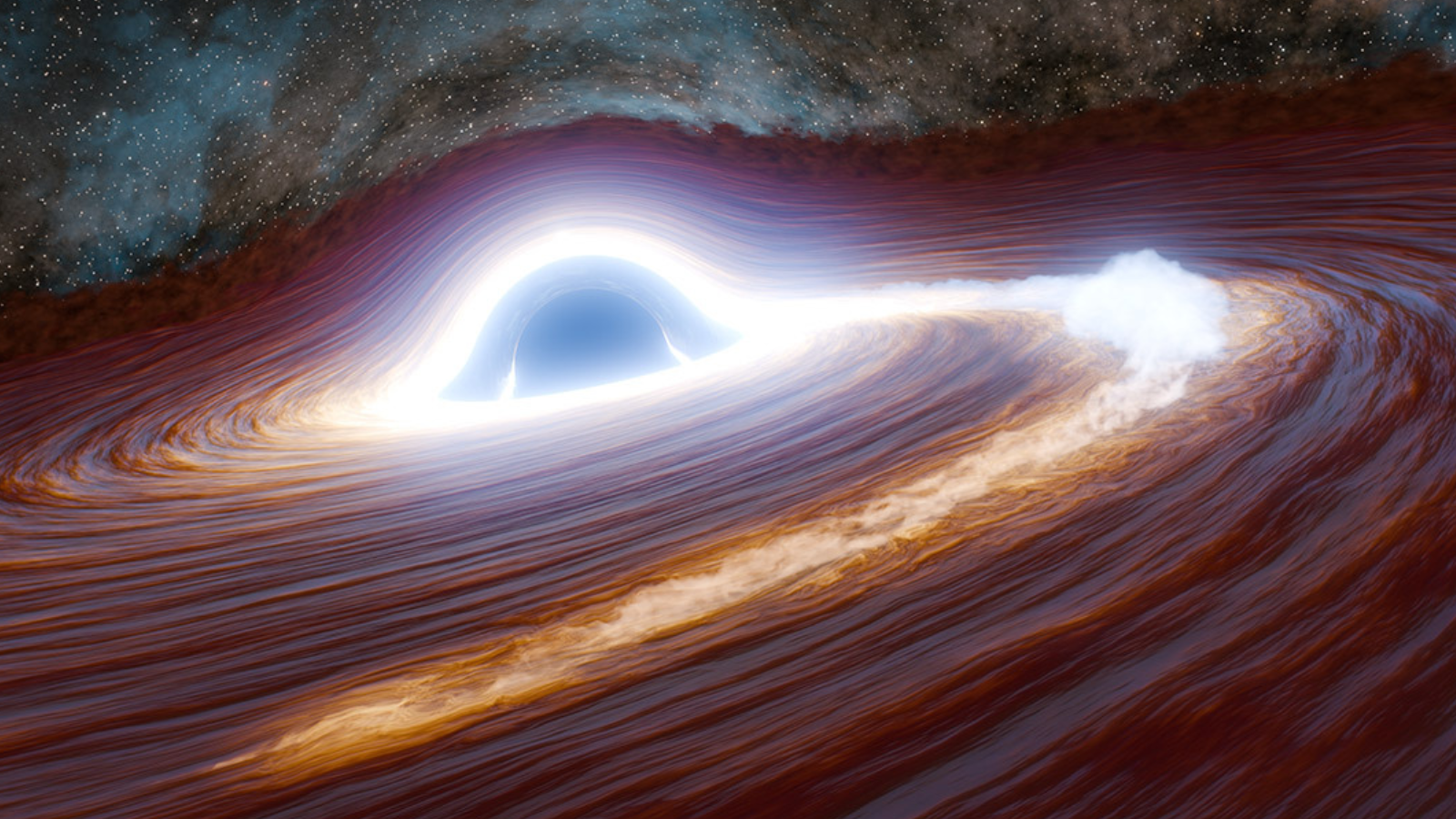
An illustration of the biggest and most distant black hole flare ever seen (Image credit: Caltech/R. Hurt (IPAC) )
The fact that J2245+3743 is ongoing indicates that this black hole is still swallowing this doomed star, with discovery team member Matthew Graham of the California Institute of Technology (Caltech) likening the situation to “a fish only halfway down the whale’s gullet.”
Read more here.
7. Astronomers discover the universe’s oldest and most distant black hole…
In August, scientists revealed they have the most distant and earliest supermassive black hole. Sitting in a galaxy designated CAPERS-LRD-z9, another one of those JWST little red dots, this beast with a mass equivalent to 300 million suns, is seen as it was just 500 million years after
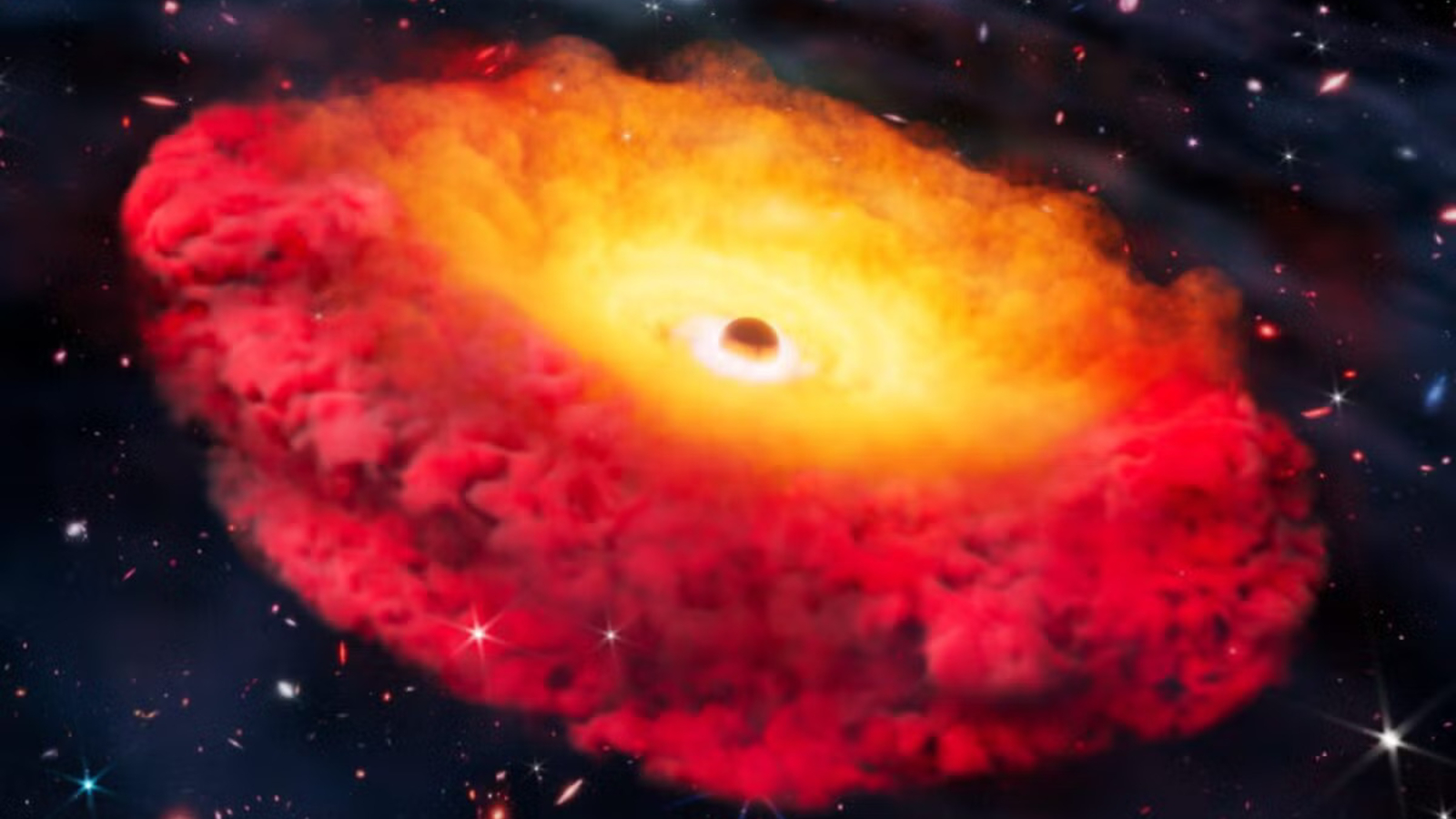
The oldest and most distance black hole has been observed. (Image credit: Erik Zumalt/The University of Texas at Austin)
“When looking for black holes, this is about as far back as you can practically go,” Anthony Taylor, a postdoctoral fellow at the Cosmic Frontier Center at the University of Texas at Austin, who led the discovery, said in a statement. “We’re really pushing the boundaries of what current technology can detect.”
Read more here.
8. …And the biggest black hole (maybe)?
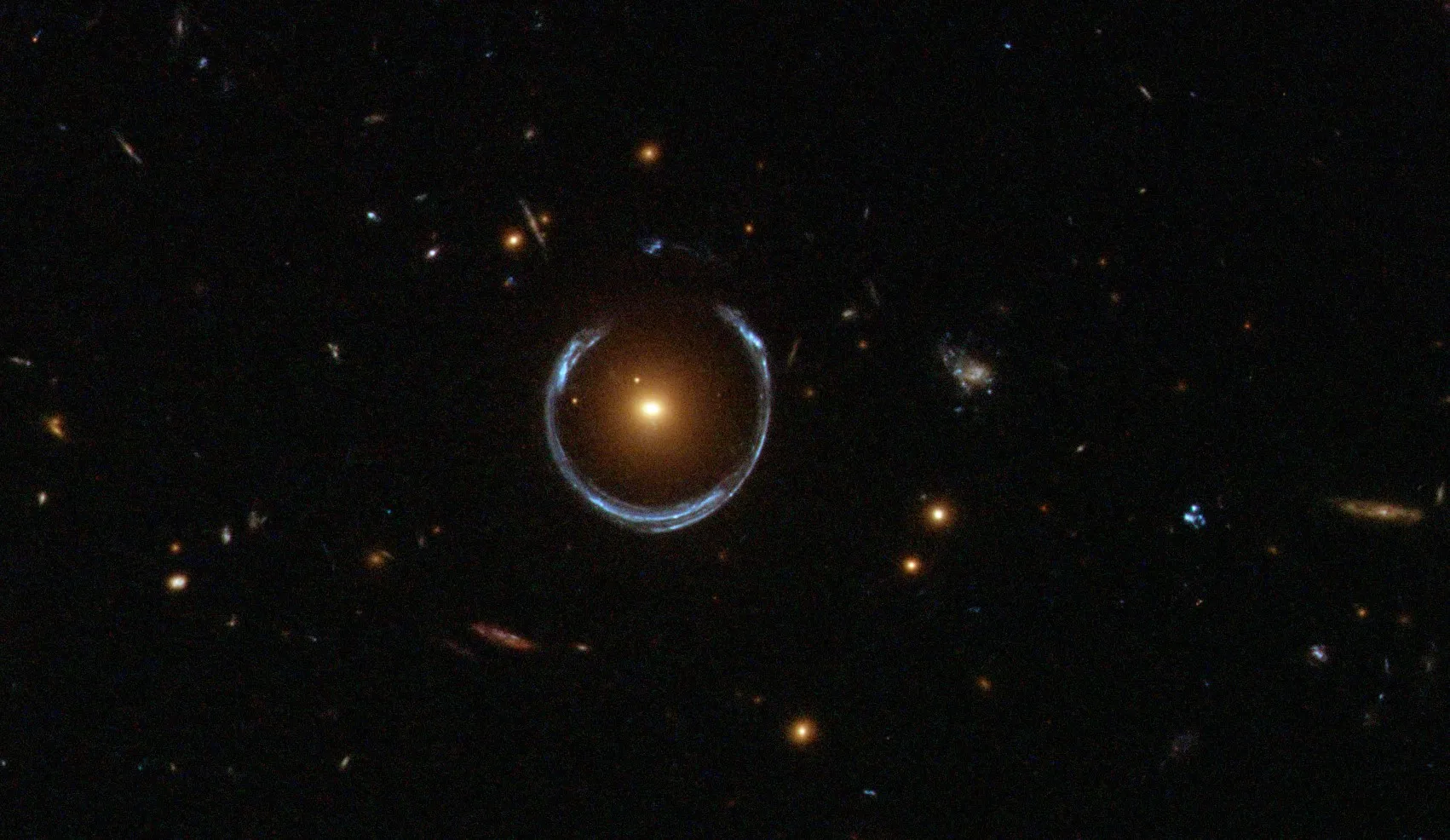
This blue horseshoe is a distant galaxy magnified and distorted by the strong gravitational pull of the massive foreground Luminous Red Galaxy. Together, these galaxies create the Cosmic Horseshoe system. (Image credit: NASA, ESA)
August was a big month for black hole discoveries — not only did astronomers discover the most ancient black hole as mentioned above, but in the same month a separate team of researchers announced they have discovered what may turn out to be the most massive black hole ever seen.
Located in one of the most massive galaxies ever seen and 5 billion light-years from Earth, this black hole seems to have a mass equivalent to 36 billion suns. Measuring the mass of such a massive body at this kind of distance is tough, and this supermassive black hole has tough competition from Phoenix A, the central black hole of the Phoenix cluster, estimated to have a mass somewhere in the region of 100 billion suns.
“This is amongst the top 10 most massive black holes ever discovered, and quite possibly the most massive,” Thomas Collett, study author and a professor at the University of Portsmouth in England, said in a statement.
Read more here.
Who knows, maybe 2026 will deliver an even more massive black hole, or a brighter flare, or something we can’t even currently comprehend. Whatever the case, it is certain that Space.com will be there for every exciting and mind-blowing discovery.

Christmas may seem like a time for switching off and suspending disbelief but there are plenty of ways to introduce a little science into the celebrations.
We asked experts for their top home experiments to challenge friends and family.
Sweet science
Matthew Cobb, a professor of zoology at the University of Manchester, suggests picking a sweet such as a jellybean and, with your eyes shut and holding your nose, putting it in your mouth and chewing, keeping your mouth shut.
“See if you can tell what the sweet tastes of – you will probably just say ‘sweet’ and maybe have a vague idea of something else,” says Cobb. “After five seconds, take your fingers off your nose and you should get a sudden rush of sensation that enables you to correctly identify the flavour.”
A more extreme version of this experiment, he says, involves grating an onion and an apple, separately, then tasting each on a spoon with your eyes shut and your nose firmly held. “They should taste the same – until you take your fingers off your nose.”
Cobb says such experiments show how flavour largely consists of smell, not taste. “When we chew, the volatile smells emitted by the food go up into our nose via the back of our mouth, where they stimulate our olfactory neurons,” he says, adding that it is the combination of taste and smell that produces flavour.
“Without smell, things don’t taste of much. We all discovered this during the first outbreak of Covid, when people temporarily lost their sense of smell.”
Have a laugh
With crackers a staple of Christmas, Sophie Scott, a professor of cognitive neuroscience at University College London suggests experimenting to see what can influence whether or not people laugh at a (terrible) joke.
“First, try reading those jokes to yourself and see if you laugh at any of them,” she says. “Second, read the jokes to someone else – maybe a room full of people.”
Scott says to look and see if anyone laughs – including you – when you get to the punchline, or if they respond in some other way such as groaning. She notes that although we associate laughter with jokes and humour, we laugh mainly for social reasons.
“You are 30 times more likely to laugh if there is someone else with you than if you are on your own,” she says. “What this means for cracker jokes is that a joke read by someone alone is much less likely to make them laugh than the same joke read – or heard – in company. And laughter is amplified by social connection, so the more you know and like the people that you are with, the more laughter there will be.”
Get stuck into the festive fowl
Look at the bones and understand how they fit together and move. Photograph: Jonathan Knowles/Getty Images
If you are having a turkey or another bird for your Christmas meal then take time to explore the carcass.
“We did a Thanksgiving dinner a few weeks ago and I got an enormous turkey, cooked the thing for a few hours, basted it lovingly every 30 minutes or so,” says Steve Brusatte, a professor of palaeontology and evolution at the University of Edinburgh. “Mostly so it would be delicious, but also so the meat would fall off the bone well enough that I could remove the bones and show my wife and my six-year-old boy the shoulder area.”
That allowed Brusatte to demonstrate how the various bones fit together to move the wing up and down, and how the huge springy wishbone stores energy as the wings beat.
“This is a simple thing that you can do with a roast turkey or chicken – actually look at the bones and understand how they fit together and move, and that gives a better understanding of biomechanics and flight motions than I’ve ever seen in any textbook during my many years of study,” he says. “And then you get a delicious meal afterwards.”
Prof Sue Black, a forensic anthropologist, anatomist and academic at the University of Oxford, also recommends dissecting the festive bird to understand the anatomy of motion.
“Boil the carcass so that only the bones are left and you have a 3D jigsaw to reconstruct,” she says.
Chemistry of Christmas
Salt is commonly spread on pavements in the winter and there is a simple experiment that can help to explain why.
“You will need 500ml of full-fat milk or cream, five egg yolks and 125g of sugar. A bit of vanilla never goes amiss,” says Andrea Sella, a professor of inorganic chemistry at UCL.
“Whisk them together and then warm almost to the boil until the mixture starts to thicken. Let it cool to room temperature. Meanwhile, get some ice from the freezer. Either bash it, like an alchemist, with a mortar and pestle, or grind it up in a blender like a modernist.”
Next, he says, take two plastic bags – ideally zippable ones. “Drop some of your crushed ice into one and add generous amount of salt. Into the second, spoon some of your custard mixture, adding sprinkles, nuts or bits of fruit. Seal the [second bag] and put it into the first.
“Now mash the ice and salt together, and the custard in the bag. The temperature will plunge, to -10C or even lower. In seconds you’ll have ice-cream, a soft (and delicious) solid.”
Sella says this happens because the dissolved salt prevents liquid water molecules, produced as the ice melts, from freezing back on to the remaining ice.
“So the ice keeps melting and steals heat from the custard (and your fingers),” he says. “It’s practical magic – also known as science.”
Festive pi(e)
ϖ seems to crop up in really unusual places. Photograph: Anastassiya Bezhekeneva/Getty Images
“One of the most surprising little science experiments you can do at home is called Buffon’s Needle, but for festive purposes let’s call it Buffon’s Pine Needles. It’s a way of approximating the value of ϖ,” says Kit Yates, a professor of mathematical biology and public engagement at the University of Bath.
First off, grab a bunch of pine needles and select as many as you can that are roughly the same length (L). “Let’s say you manage to find a total (T) of similar-sized pine needles. You’re going to also need a piece of paper that has lines ruled on it which are a distance W apart – further apart than the length of your needles,” Yates says.
Scatter the pine needles, without aiming, on top of your piece of ruled paper and then count the number of needles that cross one of the lines. This number is C.
Once you have counted, you can find your approximation of ϖ by plugging your numbers into this formula: ϖ ≈ 2LT/CW
“What I love about this is that it demonstrates how ϖ seems to crop up in really unusual places,” Yates says. “It feels almost like magic, but it’s just probability in action on your living room floor.”

About 800 years ago, Richard Fishacre, a Dominican friar at the University of Oxford, challenged the scientific thinking of the day, using his understanding of the behaviour of light to show that stars and planets are made of the same elements as found on Earth. Though he faced heavy criticism at the time, Fishacre would probably have been delighted to learn that very similar principles are being used to make discoveries today.
During his lifetime it was believed that Earth was made up of four elements – fire, water, earth and air – while the stars and other planets were made from a special transparent and unchanging fifth element.
But Fishacre drew on his understanding of light and colour to argue that if stars and planets were made of a such a substance, they would appear transparent. Instead, the red of Mars, yellow of Venus and blue and white of the moon, he said, were clear evidence that they were made up of multiple elements also found on Earth.
Today, telescopes such as the James Webb detect variations in the brightness and colour of light from distant planets and stars, recently revealing that TOI-421b – an exoplanet about 244 light years away – has an atmosphere rich in water and sulphur dioxide.
SCIENCE
Crayfish, weevils and fungi released in UK to tackle invasive species such as Japanese knotweed | Invasive species

Crayfish, weevils and fungi are being released into the environment in order to tackle invasive species across Britain.
Scientists working for the government have been breeding species in labs to set them loose into the wild to take on Japanese knotweed, signal crayfish and Himalayan balsam, and other species that choke out native plants and wildlife.
They are doing this, in part, to meet tough targets set by the Department for Environment, Food and Rural Affairs in its recently announced environmental improvement plan. Ministers have directed the Animal and Plant Health Agency (Apha) to reduce the establishment of invasive species by 50% by 2030.
Olaf Booy, deputy chief non-native species officer at Apha, said: “The science around biological control is always developing. It really works for those species that were introduced quite a long time ago, that we haven’t been able to prevent getting here or detect early and rapidly respond.”
Scientists have been working out which species would be able to tackle the invasive pests by killing them and reducing their ability to spread, without harming other organisms. Booy said the perk of biological control agents was they reduced the need for human labour.
Japanese knotweed in Taff’s Well, near Cardiff. Photograph: Dimitris Legakis/Athena Pictures
This includes targeting floating pennywort, which spreads and chokes the life from rivers, by releasing the South American weevil Listronotus elongatus. Where weevils have overwintered for several years, floating pennywort biomass appears reduced across a number of release sites.
Defra has also employed specialist scientists at the Centre for Agriculture and Bioscience International (Cabi) to conduct biological control (biocontrol) research into the use of naturally occurring, living organisms to tackle Japanese knotweed. Cabi has targeted this species using the release of the psyllid Aphalara itadori, which feeds on the plant.
Similarly, Cabi has been trialling the release of the rust fungus Puccinia komarovii var. glanduliferae to tackle Himalayan balsam. Defra said the results of the release were encouraging and would continue at compatible sites.
“Once the biocontrol agent is working properly, then it should actually start to spread naturally across the range, where the non-native species is, and it will start to bring that population of the non-native species down,” Booy said. “Hopefully, once it starts to establish in the wild, then it sort of starts taking over itself, and the human effort bit starts to reduce significantly.”
As well as releasing biological control agents into the wild, government scientists have been breeding threatened species to protect their populations from invasion. Britain’s native white-clawed crayfish has disappeared from most of the country since the invasive American signal crayfish was introduced in the 1970s. These non-native creatures outcompete the native crayfish and carry a deadly plague, making eradication or containment virtually impossible.
Himalayan balsam invades the banks of the river Avon. Photograph: Mark Boulton/Alamy
Invasive species experts have created protected “ark sites”: safe habitats where white-clawed crayfish can survive free from threats. A new hatchery has been set up in Yorkshire to release them into the wild in secure locations, and in Devon the Wildwood Trust is expanding its hatchery, building a bespoke ark site pond, and rescuing crayfish from rivers under threat. More than 1,500 breeding-age crayfish so far have been translocated to eight safe sites in Gloucestershire.
The creatures Booy is most concerned about establishing in the wild include raccoons and raccoon dogs, which are kept as pets but are very good at escaping into the wild.
The medium-sized predators could be harmful to the amphibians and small birds they feed on, he said. At the moment, keepers of raccoons and raccoon dogs do not have to register with the government, though breeding and selling them is banned.
Social media trends depicting raccoons as cuddly and desirable pets could be a concern, he said: “You do see things like raccoons and raccoon dogs popping up on social media and stuff. Particularly raccoons, they’re kind of cute and cuddly, and you could imagine that a TikTok trend might encourage people to think about getting a species like that. Obviously years ago we had the interest in terrapins from the Teenage Mutant Ninja Turtles.”
He added: “If you have a raccoon, you really need to know how to keep it securely to avoid it escaping. You don’t really want any predators of that sort of size establishing and spreading in the country, because it will have knock-on impacts for biodiversity. But they are also potentially vectors of disease as well.”
The biosecurity minister and Labour peer Sue Hayman said: “With a changing climate we are constantly assessing for new risks and threats, including from invasive plants and animals, as well as managing the impacts of species already in this country. Invasive non-native species cost Britain’s economy nearly £2bn a year, and our environmental improvement plan sets out plans to reduce their establishment to protect native wildlife and farmers’ livelihoods.”

Russian state-owned Energia rocket company has secured a patent for a novel spacecraft architecture designed to generate artificial gravity, a capability which could provide a huge boost for long-duration crewed missions.
A report from Russian state media outlet TASS, which obtained the patent, states that the rotating system is designed to generate a gravitational force of 0.5g, or 50% of Earth’s gravity. The patent documentation includes illustrations of a notional space station structure with a central axial module with both static and rotating components, with modules and habitats connected by a hermetically sealed, flexible junction.
You may like
The documentation notes the disadvantage of the need for spinning and coordinating the rotation of transport ships to dock with the station, which it notes reduces the safety of using such a station.
Generating artificial gravity could have profound impacts for crews on long-duration space missions, whether in low Earth orbit on interplanetary voyages into deep space. Exposure to microgravity has numerous impacts on astronauts, including muscle atrophy and bone density loss.
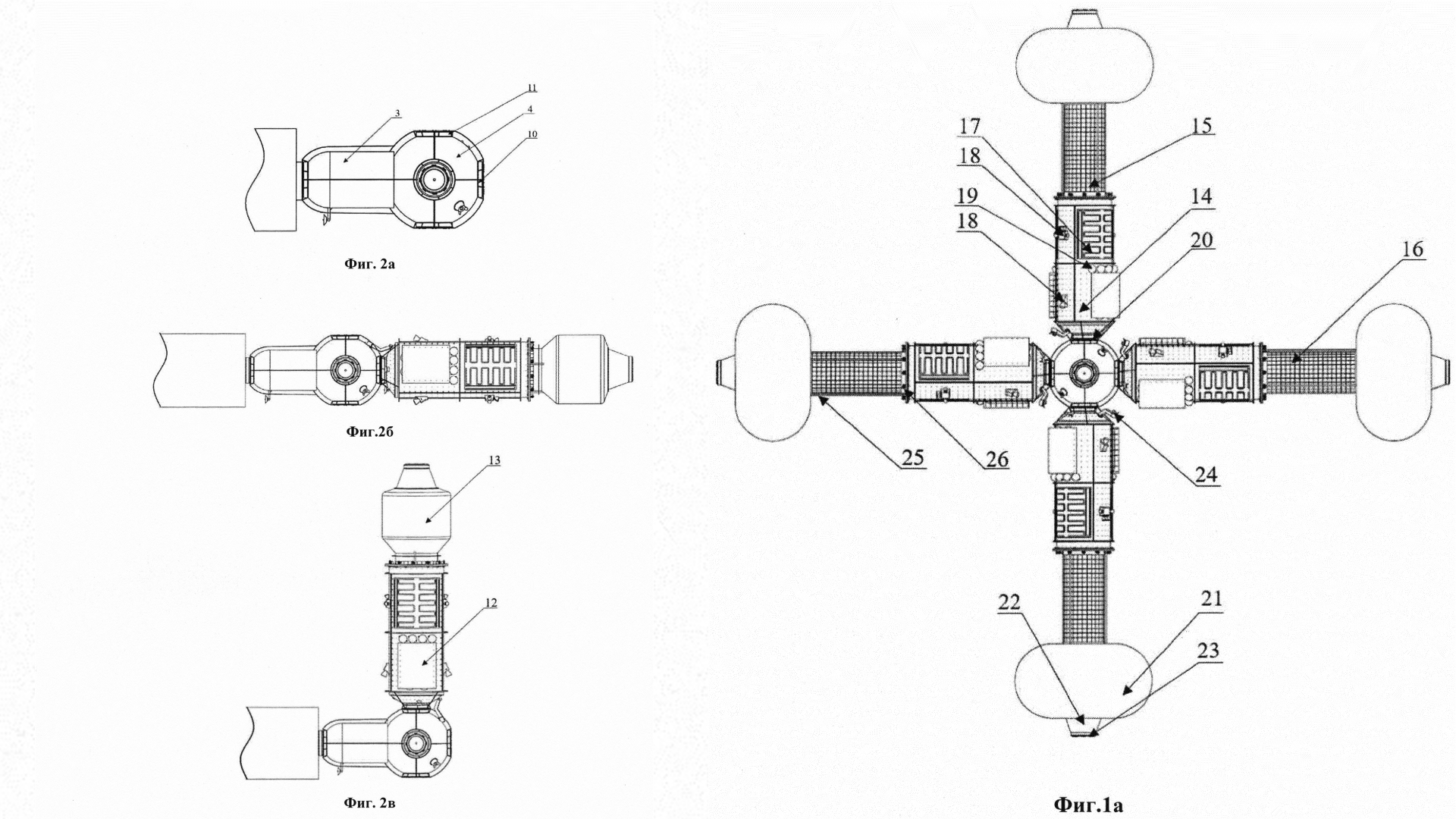
Illustrations accompanying a patent for an artificial gravity space station submitted by Russian state-owned Energia rocket company. (Image credit: RSC Energia)
NASA has produced concepts such as the rotating wheel space station concept Nautilus-X, while, more recently, commercial firm Vast has said it will pursue artificial gravity stations.
Russia did not indicate timelines for such a project nor resources to back its development. The patent does however indicate interest in the concept of artificial gravity at a time when the end of the International Space Station (ISS) is approaching and new national and commercial station plans are moving forward.
Currently, NASA and Roscosmos plan to deorbit the ISS in 2030, using a modified SpaceX Dragon capsule to push the station down into a fiery death over the Pacific Ocean. Russia has committed to stay aboard the ISS until 2028.

Earth’s seasonal cycles can vary dramatically across short distances, even at the same latitudes, a new study suggests.
Researchers have compiled a detailed map of seasonal rhythms around the world, which shows that some physically close regions have dramatically different timing for seasonal variations such as the start and end of the growing season. These differences could contribute to high biodiversity in certain ecosystems, the development of new species and even the different types of coffee harvested in Colombia, the team said.
“Seasonality may often [be] thought of as a simple rhythm — winter, spring, summer, fall — but our work shows that nature’s calendar is far more complex,” study co-author Drew Terasaki Hart, an ecologist and data analyst at the Commonwealth Scientific and Industrial Research Organization (CSIRO) in Australia, said in a statement. “This is especially true in regions where the shape and timing of the typical local seasonal cycle differs dramatically across the landscape. This can have profound implications for ecology and evolution in these regions.”
You may like
The idea of a simple, seasonal growing pattern works well for plants that grow at high latitudes, such as those in much of Europe and North America, researchers wrote in the study, published Aug. 27 in the journal Nature. But it doesn’t work quite as well in arid or tropical ecosystems.
In the study, Terasaki Hart and his colleagues used 20 years’ worth of satellite data that captured how plants reflected infrared light throughout the year to map vegetation’s growth cycles around the world.
Areas on the slopes of mountains in tropical regions or that have a balmy Mediterranean climate frequently exhibited seasonal asynchrony, or differences in their seasonal cycles across short distances, the team found. In these areas, the availability of light and water was more important for the local plants’ growth cycles than the temperature.
“Our map predicts stark geographic differences in flowering timing and genetic relatedness across a wide variety of plant and animal species,” Terasaki Hart said in the statement. “It even explains the complex geography of coffee harvest seasons in Colombia — a nation where coffee farms separated by a day’s drive over the mountains can have reproductive cycles as out of sync as if they were in opposite hemispheres.”
These starkly different niches over short distances could explain why tropical regions have such high biodiversity, the team wrote in the study. Plant and animal species on different seasonal cycles would slowly diverge, reproducing at different times and possibly forming new species after many years.
The results could help explain how species evolve in other ecosystems, such as in river or ocean environments, as well as how environments are adapting to climate change, the researchers wrote in the study.
“We suggest exciting future directions for evolutionary biology, climate change ecology, and biodiversity research, but this way of looking at the world has interesting implications even further afield, such as in agricultural sciences or epidemiology,” Terasaki Hart added.
SCIENCE
Santa’s sleigh or the International Space Station? How to spot a bright Christmas flyby Dec. 24 and 25


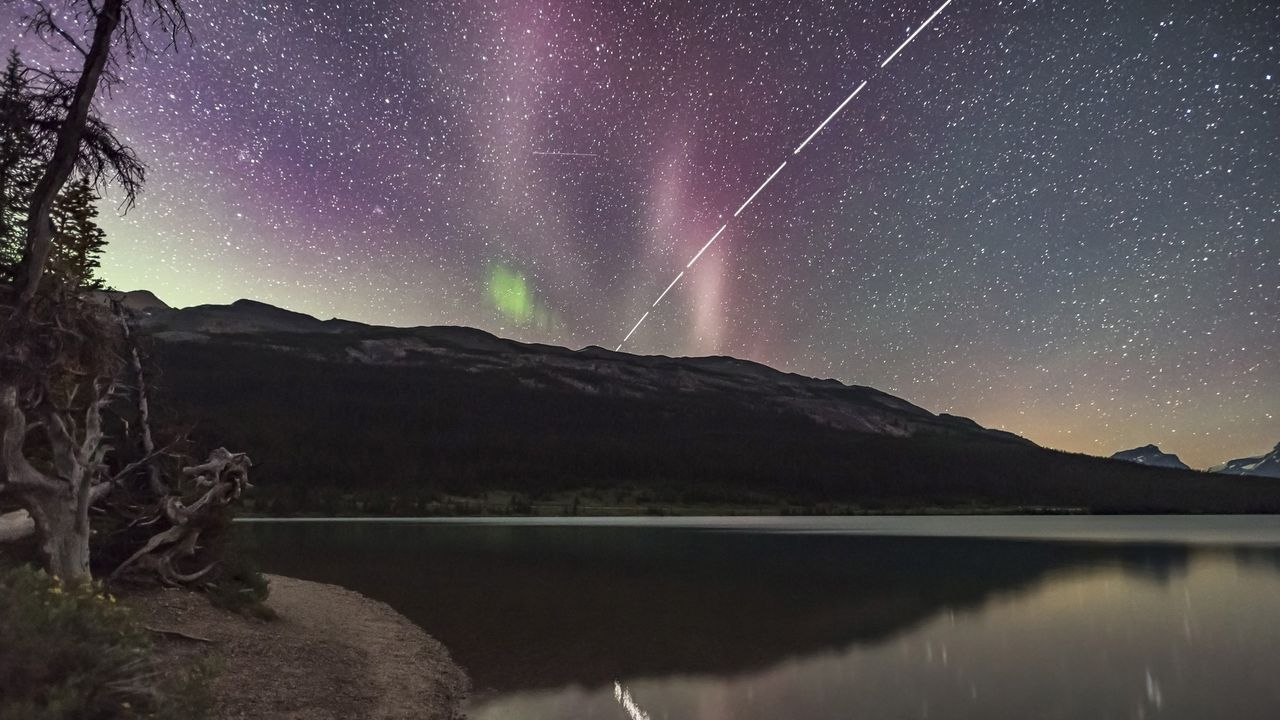
Early risers across North America and Europe may notice something unusual in the skies this Christmas, a bright, silent light, gliding smoothly overhead in the hours before sunrise on Dec. 24 and Dec. 25.
It won’t blink like an airplane and it won’t leave a trail behind. Instead, it will appear suddenly, move steadily across the sky and fade away just minutes later. To young, eager eyes already awake and brimming with excitement, it might look like something (or someone) making a quiet journey through the dawn sky.
You may like
This Christmas, the International Space Station is also perfectly placed to reflect sunlight down to Earth during early-morning passes, making it one of the brightest objects in the sky.
Whether you choose to see it as a seasonal mystery or a space-age marvel, the sight may be brief, but it is beautiful and easy to spot with the naked eye — so long as you are in the right place at the right time.
In the table below, we have listed some of the best times to look up over major cities, weather permitting — information gathered from AstroViewer.net.
Swipe to scroll horizontallyWhen to look for the Christmas sky surprise
City
Date
Local time
Duration
Max altitude
New York
Dec. 24
6:43–6:48 a.m. EST
~5 min
19°
New York
Dec. 25
5:56–5:59 a.m. EST
~3 min
16°
Chicago
Dec. 24
5:42–5:45 a.m. CST
~3 min
16°
Chicago
Dec. 25
6:29–6:35 a.m. CST
~6 min
26°
Toronto
Dec. 24
6:42–6:47 a.m. EST
~5 min
25°
Toronto
Dec. 25
7:30–7:35 a.m. EST
~5 min
56°
London
Dec. 24
7:04–7:10 a.m. GMT
~6 min
55°
London
Dec. 25
6:17–6:22 a.m. GMT
~5 min
70°
Rome
Dec. 25
7:19–7:22 a.m. CET
~3 min
35°
To see the flyby, head outside with a clear view of the sky. You don’t need binoculars or a telescope to spot it, just your eyes and a little patience.
The bright light comes from the International Space Station. It shines when sunlight reflects off the large structure while it orbits Earth every 90 minutes.
For those who want to check future sightings, or quietly confirm what they’ve seen, NASA’s Spot the Station service shows when the space station will pass overhead from any location.

Around 18,000 years ago, ice age people in what is now Ukraine likely weathered the extremely harsh climate by building parts of their shelters out of mammoth bones, a new study finds.
The mammoth dwellings show how communities thrived in extreme environments, turning the remnants of giant animals into protective architecture,” the archaeologists wrote in a statement.
You may like
To investigate these questions, archaeologists re-examined the site to try and get a better idea of when it was built and how long it stayed in use. They dated the remains of about a dozen small animals found near the mammoth dwellings to try and get a more precise chronology.
The largest structure at Mezhyrich dates to 18,323 to 17,839 years ago, the team reported in the study, published on Nov. 21 on the publishing platform Open Research Europe. These dates are just after the Last Glacial Maximum (26,500 to 19,000 years ago), the coldest part of the last ice age. The researchers noted that the dwelling may have been used for up to 429 years. This indicates that the “shelters were practical solutions for survival rather than permanent settlements,” they wrote in the statement.
Mammoth bones were used to help make shelters in Ukraine. They would have protected people during the harshest parts of the last ice age. (Image credit: Pavlo Shydlovskyi)
The foundation of the shelters may have had “mammoth skulls and large long bones, set vertically into the ground [which] formed a kind of plinth or ‘foundation,'” study co-author Pavlo Shydlovskyi, an archaeology professor at the Taras Shevchenko National University of Kyiv, told Live Science in an email.
A wooden framework may have covered parts of the shelter, along with hides from smaller animals or possibly birch bark. In addition, “tusks and large flat bones were placed on the upper part of the structure [the roof] functioning as weights and wind protection,” Shydlovskyi said.
Five to seven people likely lived within each shelter, Shydlovskyi said. A variety of activities such as flint knapping, animal skin processing and small animal butchering were likely done inside.
Francois Djindjian, an honorary professor at the University of Paris 1 Panthéon Sorbonne has done research on other possible mammoth bone shelters but was not involved in the new paper. He was cautious about the team’s dates, and said that he thought that more dates were needed from more of the site. Getting more radiocarbon dates from across the site would give a better idea of when it was used.
Last ice age quiz: How much do you know about Earth’s frosty past?

Ancient wolves found on a human-occupied Baltic island reveal unexpected and complex forms of prehistoric human-animal interaction. Researchers have uncovered wolf remains dating back thousands of years on a small and remote island in the Baltic Sea. Because the island is naturally isolated, the animals could only have arrived there with human involvement. The study, […]
SOURCE PAGE