
NIGERIA NEWS
A Year Like No Other!

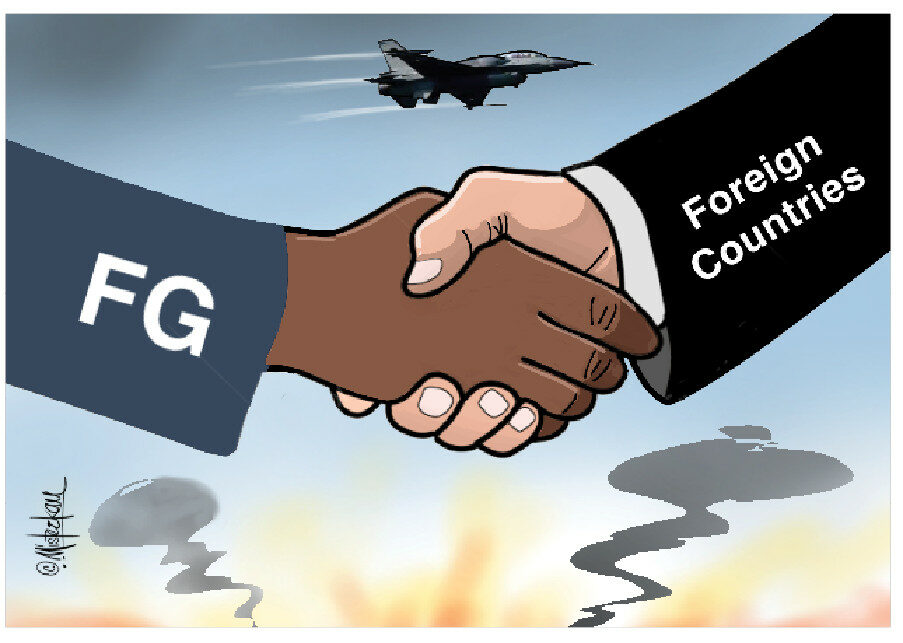
On Christmas Day, the United States launched a fusillade of air strikes on the Islamic State West Africa Province (ISWAP), an affiliate of the Islamic State of Iraq and Syria (ISIS) operating primarily in the North. Announcing the raid, United States President Donald Trump said: “Tonight, at my direction as Commander-in-Chief, the United States launched a powerful and deadly strike against ISIS Terrorist scum in North-west Nigeria, who have been targeting and viciously killing, primarily, innocent Christians, at levels not seen for many years, and even Centuries!”
Before the Thursday strike that was executed at the request of the Nigerian government, the US President had warned that if the killings were not stopped, he would rain down fire on the terror groups to stop what he described as “slaughtering of Christians”. Explaining the basis for the strikes that were executed at the request of the Nigerian authorities, the US Africa Command (AFRICOM) stated in a post on X, “Lethal strikes against ISIS demonstrate the strength of our military and our commitment to eliminating terrorist threats against Americans at home and abroad”.
Now, The Real War
The US strikes on ISWAP terror cells in the North-west remain a defining moment in Nigeria’s war against terror and other forms of insecurity perpetrated by non-state actors that are deliberately engaged in undermining the country. The formation of the US-Nigeria Security working group, which is a fallout of Trump’s tweet that drew attention of the world to the killings of Nigerians, has resulted in the active participation of American forces in decimating the capacity of the terror group to challenge the Nigerian state. The spokesperson of Nigeria’s Ministry of Foreign Affairs, Kimiebi Ebienfa, said the US strikes were in keeping with “structured security cooperation with international partners. Nigerian authorities remain engaged in structured security cooperation with international partners, including the United States of America, in addressing the persistent threat of terrorism and violent extremism.
“This has led to precision hits on terrorist targets in Nigeria by air strikes in the North West. In line with established international practice and bilateral understandings, this cooperation includes the exchange of intelligence, strategic coordination, and other forms of support consistent with international law, mutual respect for sovereignty, and shared commitments to regional and global security”.
By cooperating with the US in carrying the battle to the terrorists that are reported to have several terror cells, President Bola Ahmed Tinubu has made it clear he is willing to seek collaboration with foreign countries to end insecurity ripping across some parts of the country. As ably captured by the Minister of Information and National Orientation, Hon Mohammed Idris, during this Monday’s press conference in Abuja, the presidential declaration of a nationwide security emergency has “translated into massive recruitment into the Armed Forces and Police Force, and the deployment of trained and equipped Forest Guards to secure our forests and other vulnerable locations”. Apart from enacting “a new national counterterrorism doctrine—anchored on four critical pillars: unified command, intelligence, community stability, and counterinsurgency, the Federal Government made it clear that any group that kidnaps children and attacks farmers would henceforth be classified as a terrorist organisation.
Firming Internal Security
The year under review has seen security agencies engaged in synergy to contain the insecurity posed by criminal elements. The performance profile of our security forces in 2025 has clearly left no one in doubt that, with the political will, there is no way for those who are resolute to enthrone insecurity in our country. The inspiring leadership of the current Director General of the Department of State Service (DSS), Mr. Adeola Tosin Ajayi, has not only strengthened the effectiveness of the secret police, but, unlike previous DSS leaderships, has broadened the agency’s operations and subjected its operations within the ambit of the rule of law.
Tinubu is fully aware that if the storm of insecurity is contained, the prosperity of citizens is guaranteed. Therefore, the government is matching its words with actions by approving the setting up of forest guards to man the nation’s ungoverned spaces where these criminals operate without let or hindrance. When fully deployed, it is expected that these guards would collaborate with security agencies in taking over these forests and turning them into commercial ventures for the economic development of communities. There are reports that some of these attacks are direct fallouts of groups that are involved in mining activities, especially in the North. With the setting up of these forest guards, it is hoped that warring criminals would be brought to book and made to face the full wrath of the law. Tinubu is aware that if the storm of insecurity is contained, the prosperity of citizens is guaranteed.
Defining Moments
While Nigerians are set to bid 2025 goodbye in less than a week and welcome 2026, it must be said that the Tinubu-led administration demonstrated a commitment to ending the monster of insecurity by enthroning collaboration with foreign partners to end insecurity. Realising that Nigeria cannot develop amidst insecurity, the recent US strikes have sent a clear signal that the incumbent administration has a zero tolerance for terror elements whose goals are to install a reign of fright and horror and to discourage investments.
The increased security experienced in the country in 2025 has led to increased agricultural productivity as shown in the falling prices of food products. With efforts geared towards providing more boots on the ground, democratising the security architecture by engaging the people at the grassroots should serve as the final option. Amidst the clamour for 2027, it is commendable that the president is not allowing the drumbeats to distract him from ensuring that Nigerians and their property are secured. If the storm of insecurity is contained, the prosperity of citizens is guaranteed.







Two adult males, whose identities are yet to be established, have been found dead amid the debris of the Great Nigeria Insurance House on Lagos Island, following the devastating fire that swept through the high-rise building on Thursday.
The bodies were recovered on Friday during continued search and rescue operations at the Marina axis, where the multi-storey structure was severely damaged by the inferno.
DAILY POST reports that the blaze originated from the fourth floor of the 25-storey building before spreading to the sixth floor and subsequently consuming other levels, as well as nearby structures.
During the incident, a section of the building reportedly collapsed, leaving some traders trapped beneath the rubble.
The fire also extended to surrounding properties, including the Old Lagos Central Mosque.
Efforts to obtain official confirmation from the Permanent Secretary of the Lagos State Emergency Management Agency, LASEMA, Dr Femi Oke-Osanyintolu, were unsuccessful as he had not responded to enquiries as of press time.
However, a LASEMA official, who spoke on condition of anonymity, confirmed that the two bodies were discovered during ongoing operations to locate victims believed to have been trapped.
“Two bodies were recovered today during the search exercise. The first was found at about 11:03 a.m., while the second was recovered around 12:03 p.m.,” the official disclosed.
Search, recovery and safety operations are said to be continuing at the scene as emergency teams work to account for all affected persons and prevent further hazards.
NIGERIA NEWS
“He told his girlfriend I was just the cook” — lady shares awkward encounter with persistent suitor



A lady has recounted an unusual and awkward experience with a man who had been persistently pursuing her for some time.
She revealed that, after repeatedly turning him down, she agreed to get to know him and visited his home one day to spend time together.
Persistent suitor turns awkward as girlfriend shows up unexpectedly
In her own words: “raise your hand if you have ever visited the guy who has been on your neck for the longest. That he likes you and he would love for you both to be in a relationship and you agreed okay.
According to her account, she entered his kitchen to prepare some milk when the man informed her that his girlfriend had arrived unexpectedly.
Experience serves as a reminder to maintain personal boundaries
He allegedly told her that he would present her as the cook, claiming it was her business, and reassured her that he would pay for the meal she had prepared.
The woman described the incident as uncomfortable and confusing but said she tried to handle the situation gracefully.
She noted that the experience served as a reminder of the importance of maintaining personal boundaries when dealing with persistent suitors.
Watch the video below…
— 🌚 (@justrandomvidss) December 22, 2025
The African Democratic Congress, ADC, has described the administration of President Bola Tinubu as historic incompetence over the air strikes carried out by the United States Africa Command, AFRICOM, in Sokoto state on Friday.
The National Publicity Secretary of the party, Bolaji Abdullahi, in a statement on Friday, said the opposition party supports lawful efforts to protect Nigerians but blamed governance failure for the foreign military operations on Nigerian soil.
Abdullahi cautioned that allowing external forces to conduct direct military operations in the country is unsustainable and could undermine Nigeria’s long-term strategic interests.
The ADC’s mouthpiece equally questioned Nigeria’s role in the operation, warning that the country should not be reduced to mere informants in an exercise it ought to be leading.
He asked the Federal Government to provide clarification on operational control, casualties, and specific information on the number and identity of terrorists killed in the airstrikes.
“This a a show of historic incompetence on the part of Tinubu’s administration. The African Democratic Congress, ADC, recognises the serious security challenges confronting Nigeria and affirms that the protection of Nigerian lives and the defeat of terrorism must remain a central national priority.
“We therefore support all lawful and effective measures aimed at saving lives and restoring security,” the statement read.
He reiterated the party’s opposition to the physical operation of foreign military forces on Nigerian soil, warning that desperation should not compromise national sovereignty.
DAILY POST reports that the United States launched a series of air strikes on ISIS terrorists in Sokoto in the early hours of Friday.
Recall that the Minister of Foreign Affairs, Yusuf Tuggar, said the United States carried Nigeria along before conducting the air strikes.


Ayodele Samson Akande (FCA), the Ondo State Commissioner for Water Resources, Public Sanitation and Hygiene, stands out as an unusual politician. He is a Fellow of the Institute of Chartered Accountants of Nigeria (ICAN). He served as the Executive Chairman of Akoko North West Local Government, Ondo State. In this interview with Gbenga Aderanti, he talks about how he tackled initial challenges in his ministry.
How would you describe the Ministry of Water Resources, Public Sanitation, and Hygiene before you assumed office?
Just like every other young ministry, the Ministry of Water Resources, Public Sanitation and Hygiene is equally still facing some teething problems that are not limited to personnel and funding, but policy somersault from the federal level, as an essential ministry, our operations are somehow tied to the apron of the parent Federal Ministry by law.
The extant laws that established the Ondo State Ministry of Water Resources and its affiliate departments and agencies are overdue, as it needs total overhauling. I mean, through a holistic approach, and this is one of the major hindrances. Though the challenges are universal, not peculiar to Ondo State alone. Without prejudice, I must give kudos to my predecessors and all the management for their yeoman’s job in sustaining the ministry.
In Ondo State, water is more than a basic necessity. It is the lifeblood of communities, the foundation of public health, and a key driver of socio-economic development. To what extent has your ministry met the yearning of the people of the state regarding this?
Your assertions are correct, but it is more cumbersome when you inherit a ministry that is expected to function at full capacity under this grizzly economy. What I did when I assumed office as the Commissioner in charge was to go to the drawing board with my Administrative Secretary, (AS) of the Ministry of Water Resources; General Managers (GM) of the Ondo State Water Corporation (ODSWC); and Rural Water, Sanitation Agency (RUWASSA); and Project Coordinator of the Project Implementation Unit (PIU). I made consultations with some critical stakeholders and other top management staff to develop a working plan, and with that, we hit the ground running. Under my watch and the visionary leadership of Mr Governor, Dr Lucky Orimisan Aiyedatiwa, the Ministry of Water Resources, Public Sanitation and Hygiene has undertaken key reforms in line with ‘Our Ease’ Agenda aimed at expanding access to potable water, strengthening water infrastructure, and improving service delivery across urban and rural communities. These are already yielding fruitful results across the entire Local Government in the state.
One would have thought the management of sanitation would have been given to the Ministry of Health, but the governor, in his wisdom, decided to merge this with the Ministry of Water Resources. Why would you think Mr Governor did this?
Ab initio, even before this present government or before the establishment of the Ministry of Water Resources, the Public Sanitation and Hygiene has been an integral department within the water sector. The reason is that water is the most important critical element in public sanitation and hygiene, which is why it was not even merged with the Ministry of Environment. At the Ministry of Water Resources, Public Sanitation and Hygiene, we have professionals who deal with liquid waste, while the Ministry of Environment deals with solid waste.
What have been the challenges of combining water resources with hygiene?
Like I said earlier, our major challenges include scarcity of resources and the laws becoming obsolete, which made it difficult for us to really execute some of our mandates and penalise offenders regarding issues of open defecation, and also to fight poor and substandard pure and bottled water in commercial circulation across the state. The overlapping functions of our adjunct ministries, like the health and environment, created an avenue for criminal elements to hide under this to perpetrate their evils. But soon we will get our legislative backing to arrest and prosecute offenders regarding public water, vandalism, sanitation hygiene and related offences.
Open defecation and water-borne diseases have been a source of worry. To what extent has your ministry managed this?
Let me tell you, the Ondo State Ministry of Water Resources has a long-standing history of accomplishment on sustainability and maintenance of global standard public Sanitation and Hygiene. What I did when I assumed office was to build on that solid foundation through the continuation of all the structures of community and citizens’ engagement. We have undertaken key reforms aimed at expanding access to potable water, strengthening water infrastructure, and improving service delivery across urban and rural communities.
We have also continued to hold public enlightenment to increase awareness to eradicate water-borne disease, and we have increased the provision of more public solar-powered borehole homes across the nooks and crannies of the state.
In tackling some of these challenges, the government cannot do it alone. Have you considered partnering with private bodies and organisations? How receptive are they?
Yes this is one of our major yardstick and we have started to record positive response and success in our networking, collaborations and partnership which is not limited to accessing the long stagnated funds for the Owena Multipurpose Dam Reticulation and Renovation Projects funded through a counterpart funding with international donor agencies development partners ( AFD and AfDB), through the National Urban Water Sector Reform Project (NUWSRP) of the Federal Ministry of Water Resources (FMWR). The Ministry of Water Resources, Public Sanitation and Hygiene is one of the most complex government ministries with professionally-studied MDAs and decisions and policies are carefully packaged to have positive impacts on the people because water is life and producing safe water requires sophistication and a highly hygienic environment.
What are the specific things your ministry is doing with them?
Despite the uphill task faced by various levels of government, which is not peculiar to Ondo State, to access grants and donors from developmental partners and international agencies due to the global standards and procedural limitations,we have continued our engagement with local and international partners through all medium and platforms by cross-pollinating our own ideas of project conceptualisation, implementation, personnel development and scientific advancements with theirs.
Ondo State government and all its MDAs have maintained a high standard of reputation that helped in accelerating access to such reserved funds. And that is what we are leveraging on that resulted in the mothers of all groundbreaking events that was held by our ministry on Tuesday, 9th December 2025 and was officially flagged off by Mr Governor, and currently the largest water sector investment in the entire South West.
While we have not rested on our oars, our ministry has also been contemplating further seeking other available partnerships to equally expand the frontiers of our operational mandates to beat the SDG Open Defecation Free, ODF and other challenges relating to public sanitation and hygiene in due course.
A while ago, you received some decampees into your party, though you were not physically present to receive them. Since then, politicians from other parties have continued to come into your party. What does this portend?
Thank you for that very important question. Yes, our party, the All Progressives Congress (APC) in Ondo State, is lucky to have our very Lucky Governor, Dr Lucky Orimisan Aiyedatiwa, the Executive Governor, as the unarguably and incontrovertibly the apex leader of our party. His leadership has made the party attractive from top to bottom to all the decampees you see trooping into APC. Looking at the calibre of decampees from Akoko North West LG, who recently dumped their various parties for the APC, that includes the former state leaders of SDP, the 2024 deputy governors candidates, senatorial leaders, and even House of Representatives and Assemblies flag bearers, are all testimonies to the fact that our party, the APC is firmly rooted and solid at the grassroots level.
There is this phrase that you have to be mean to be a politician. You seem not to belong to this class. How have you been coping in politics?
You are correct about the public perception of my person. I’m a mature-minded progressive democrat driven by ideology, not what I want to ‘ chop’ or in politics as a vendetta. I’m proud to tell you that I’m a professional in politics, still cordially maintaining my second address in my professional sector. As a Fellow of the Institute of Chartered Accountants of Nigeria(FCA) there is a level of dignity expected from me as a frontline auditor in Nigeria, and I should be a moral compass wherever I find myself. That’s why people of my calibre see politics from a very broader perspective, just as a means to impact humanity and as a clarion call to render services to the community.
Do you sometimes regret joining politics for one reason or another? If yes, what are those reasons?
It is human for me to feel such atimes when I see the level of betrayal, back biting, political animosity, persecution, character assassination and other wars of attrition against fellow politicians. One would naturally feel demoralized as someone coming from the corporate sector with an untainted reputation now ruffling feathers and mingling with some vagabonds, men of questionable characters, highly intolerant and unintelligent sets. I was attracted to join politics in order to add my quota towards the development of my people because through politics, I have been giving back to my community in the form of various empowerment, youth development, poverty alleviation programs, and scholarship sponsors.
Are you likely to contest an elective position in the near future? Which of the offices are you likely to take a shot at?
For now, my answer is a capital NO, because I’m a highly focused person and in the history of Ondo State, I’m the only Executive Chairman with the most torturous, ambitious trajectory that took me almost two decades to achieve.
I was lured by both the leaders of the Peoples Democratic Party (PDP) and the articulate Labour Party (LP), but I resisted their overtures but stood consistently with the Progressives, right from Alliance for Democracy (AD), to the Action Congress (AC) to the Action Congress of Nigeria (ACN), and finally to the All Progressives Congress (APC), that’s why I called myself APC Aborigine. In fact when I concluded my tenure as the Executive Chairman of ANWLG, amongst my colleagues I was the only one who immediately went ahead to hold my thanksgiving ceremony at my church with my people at home, while some of my co- Chairmen were still contemplating of lobbying to return to Council before the demise of our former Governor, Arakunrin Oluwarotimi Odunayo Akeredolu of a blessed memory, and I was officially received and given a civic reception by my colleagues from the corporate world, as the ICAN body sent representatives to welcome me back to duty and this was a highly emotive moment for me.
This little explanation reflects on my person, and you will see that this present political office is a privilege with higher demand and expectations, and I need to deliver on the governor’s mandate to the best of my ability with absolute loyalty.
Since you assumed office, what changes have you made as a commissioner?
I came into the office with high hopes and was highly intentional to succeed and impact on the water sector.
Within my short stay as Commissioner, the management and staff of the Ministry under my watch and by private observation are now more cooperative, friendly and united, and these have catalysed a lot of prosperity in governance, accelerated and qualitative service deliveries, and positively impacted the water sector.
One of my landmark achievements is the Owena Multipurpose Dam Reticulation Project, which has been abandoned for almost two decades, but by the magnanimity of Mr Governor, has gotten a fresh breath into it.
We will not rest until water flows again in Akure and across every community in our beloved state. This marks the rebirth of Renewed Hope in the Ondo State Water Sector, as we lay the foundation for the future, where no child will drink unsafe water, where every household will have access to clean, running water, and where Ondo State will once again be a model of excellence in public utility management. The Rehabilitation of a moribund 60,000 cubic metre capacity dam, Water Treatment Plant, Construction of Transmission Pipelines from the Headwork to Akure, the State capital; Construction of Reservoirs in the city of Akure; Expansion of Reticulation Networks, are designed to address long-standing gaps in water supply.
You were the Executive Chairman of the Akoko North-West Local Government Area of the state. What particular lesson would you say your experience as chairman prepared you for your present job as a commissioner?
Yes, that experience was like an orientation to a much bigger and tedious assignment. Serving as the Executive Chairman of an LG is a public service environment, but an Honourable Commissioner is a civil service atmosphere where you are more under heavy bombardment from various stakeholders.
The duty of a Commissioner, like that of the water sector, is not a tea party but demands full responsibility. For me, I can say equivocally that during my regime as LG Council Chairman, the LG. experienced a level of tranquillity, unity and development.
Like the complexities of Akoko North West LG with over 24 Obas, with various interests, no allying cultural affinity and socio-political interest. But the complexities of the water Ministry is divergent and in torrential that requires intellectual and competent deployments.
Remember, I came into politics with experience and exposure garnered over the years as a globally respected Internal Generated Revenue (IGR) expert, auditor and corporate player with the highest reputation. These formed the basis with which I am approaching my administration at the ministry with a bottom-to-top mantra. Like I did as the Executive Chairman of ANWLG, is to first let everybody at the Ministry see me as a very dedicated, dutiful, determined and disciplined person. I believe in genuine conversation and engagement to drive home my points. As a leader, I believe so much in the theory of servant leadership and collective responsibility. I try to boost the morale of the staff regardless of their class, office or gender without discrimination. I don’t apportion blame, I take responsibility for all the infractions, mistakes and shortcomings of my subordinates and staff. But I make sure we share successful results. I never for once allowed a file to spend more than one day on my table because I know such a singular act of negligence can lead to what is referred to as a bureaucratic bottleneck in governance and administration.
How tough is the job of commissioner in Ondo?
It is very tough at this time that the state is under a governor who is passionate about making life more meaningful to our people. So serving in the cabinet of Mr Governor, who is not only a talk and do governor but a man who walk-work-his-talk to certainty. That’s why you can see from the coinage of ‘OUR EASE’ Agenda, an Initiative of Gov. Aiyedatiwa to transform Ondo State. So by extension, every Commissioner must know their onion and work in tandem towards the actualisation of ‘Our Ease Agenda’. This governor is unusual; in fact, I call him a phenomenon. He’s the best governor any Commissioner can be privileged to serve
.He is passionate and impatient with anything that can cause stagnation or backwardness.
Is your job as a commissioner different from that of a Council Chairman?
The two offices are not comparable, and the major differences between the duties and mandate of a Council Chairman and that of a Commissioner are beyond the mere operating environment. The core mandate areas and exclusive constitutional provisions made these offices different, as well as their scopes of operations.
While the LG Chairman relates to Public Servants, the Commissioners relate to civil servants and beyond. But the experience I gathered from both my past corporate engagement of over three decades and that of the Council all prepared me for the demands of my present office as a Commissioner.
It is said that all work and no play is bad for man. How do you spend your free periods?
Apart from working in the vineyard as an Elder in the Christ Apostolic Church (CAC), I’m also the Baba-Ijo of my Parish at Okeagbe-Akoko. I’m an avid golfer, and it is the only way that I socialise in my free periods, though I still take time to read and study different subjects apart from my core career. I take delight in reflection on politics and socio-economic issues through discourse with other people from diverse professions. I’m a member of a few clubs, like Akure Recreational Club, Ikeja Golf Club, Ibori Golf Club, CrossCreek Golf Club, Ilado-Akure and Mountain Club, Okeagbe-Akoko, as well as my alma mater, Omuo Oke High School, Omuo Ekiti.

*Tinubu: New approaches towards tackling insecurity’ll bring desired results
*Sokoto govt, CAN, Afenifere, security experts back renewed onslaught against terrorists
Chuks Okocha, Deji Elumoye, Olawale Ajimotokan, Linus Aleke in Abuja, Sunday Ehigiator in Lagos, Onuminya Innocent in Sokoto and Fidelis David in Akure
Nigeria’s Minister of Information and National Orientation, Mohammed Idris, revealed yesterday that 16 GPS-guided precision munitions were deployed against Islamic State (ISIS) elements attempting to enter Nigeria from the Sahel corridor. The munitions were launched from MQ-9 Reaper drones operating from maritime platforms in the Gulf of Guinea.
Also yesterday, the Minister of Foreign Affairs, Amb. Yusuf Tuggar, said the security collaboration between Nigeria and the United States that led to airstrikes against ISIS terrorists in Jabo in Tambuwal local government area and Warrayya and Alkasim in Tangeza local government area, both in Sokoto State, in the wee hours of yesterday, was done in line with international law and with full respect for Nigeria’s sovereignty.
These emerged the same day President Bola Tinubu assured Nigerians that the ongoing recalibration of the country’s security architecture would soon begin to yield results that would gladden their hearts.
The Armed Forces of Nigeria yesterday stressed that the operation was executed with the approval of the appropriate federal government authorities, stating that it formed part of ongoing coordinated efforts to rid the country of terrorists and other criminal elements threatening national security.
The Sokoto State Government, the Christian Association of Nigeria (CAN), the Pan-Yoruba socio-political organisation, Afenifere and security experts yesterday threw their weight behind the joint airstrikes.
THISDAY gathered that the airstrikes did not cause any damage to residential buildings, even as authorities continue to monitor the areas to ensure the safety of residents. It was also gathered that the debris of the jettisoned parts of Tomahawk Missile were found in Offa.
In Sokoto, the police and military called for vigilance and compliance with safety guidelines to prevent injuries from bomb fragments or secondary explosions.
But the Peoples Democratic Party (PDP), in its reaction to the development, urged the federal government to ensure effective communication, while the African Democratic Congress (ADC) described the airstrikes as the highlight of President Bola Tinubu’s incompetence
Idris: 16 GPS-guided Precision Munitions Deployed against ISIS Targets in Sokoto
The Minister of Information and National Orientation, Mohammed Idris, in a statement, disclosed that the operation, which was in close coordination with the Government of the United States of America led to the successful neutralisation of many terror elements on Friday, 26 December, 2025, at Bauni forest axis of Tangaza Local Government Area, Sokoto State.
The operation, according to him, was explicitly approved by Tinubu and carried out under established command and control structures, with the full involvement of the Armed Forces of Nigeria and under the supervision of the Ministers of Defence and Foreign Affairs, as well as the Chief of Defence Staff.
He said intelligence confirmed that Bauni forest axis of Tangaza Local Government Area was being used as assembly and staging grounds by foreign ISIS elements infiltrating the country in collaboration with local affiliates, to plan and execute large-scale terrorist attacks within the Nigerian territory.
The federal government stated that the precision strike operations were executed between 00:12 hours and 01:30 hours on December 26.
Idris explained that:” During the course of the operation, debris from expended munitions fell in Jabo, Tambuwal Local Government Area of Sokoto State, and in Offa, Kwara State, near the premises of a hotel. No civilian casualties were recorded in either location, and relevant authorities promptly secured the affected areas.
“The federal government of Nigeria reiterates its unwavering resolve to confront, degrade, and eliminate terrorist threats, particularly those posed by transnational extremist networks seeking to undermine Nigeria’s sovereignty and security. Nigeria remains fully aligned with its strategic partners and Friends of Nigeria in executing coordinated actions aimed at ensuring lasting peace, border security, and regional stability”.
The federal government also assured all Nigerians that it remains firmly in control of the national security architecture and is fully committed to the protection of lives and property.
The minister urged citizens to remain calm and vigilant as decisive actions continue against all terrorist groups threatening the nation.
Also, the Armed Forces of Nigeria, in a statement by the Director of Defence Information, Major General Samaila Uba stated: “The strike followed credible intelligence and careful operational planning aimed at degrading the capability of the targeted elements while minimising collateral damage.
“The operation underscores the resolve of the Federal Government of Nigeria, working with strategic partners, to confront transnational terrorism and prevent foreign fighters from establishing or expanding footholds within Nigeria’s borders.”
Tuggar: Airstrikes Complied with International Laws, Respect for Nigeria’s Sovereignty
Speaking yesterday on ARISE News Channel, Tuggar said the security collaboration between Nigeria and the United States followed due process and was based on intelligence sharing and strategic coordination, aimed solely at combating terrorism and insecurity.
According to him, “the operation has once again demonstrated Nigeria’s resolve to confront terrorism head-on and its readiness to work with international partners where necessary.
“What this shows is what we’ve been saying all along, that Nigeria is dead serious about the fight against terrorism and insecurity, not just in Nigeria but in the region. And for those who doubted Nigeria’s resolve, this clearly shows that we are ready, willing, and able to work with partners with the United States and with other countries, to fight terrorism in our region.”
The minister confirmed that Nigerian authorities were consulted before the operation was carried out, revealing that he had discussions with U.S. Secretary of State Marco Rubio, ahead of the strike.
“We had a conversation before the operation. There was an understanding of what would happen if approval was granted. If there was any difference in the timing of public communication, it was not intentional.”
Tuggar added that Nigeria and the United States had agreed on a coordinated approach, insisting that Nigeria remained fully in charge of decisions affecting its territory.
Responding to public debate over the operation, the foreign affairs minister said the government was more concerned with outcomes than public commentary.
“Every Nigerian’s life should matter. It’s not only Christians that are being killed, by the way. We’re not going to dwell on forensic poring over what was said.
“What is of utmost priority to us are the results. I keep saying this: the difference between ontology and consequentialism. We are focused on the consequentialist aspect, the results.
“We are in a very dire situation. We need results. We are willing to partner with others to achieve those results, and this is an indication of a new phase of an old conflict.”
While declining to provide details on casualties, Tuggar said the operation achieved its objectives, noting that operational agencies would release further information at the appropriate time.
“Yes. It was a successful operation. We collaborated, and that cooperation is what matters. On casualties, that falls under the operational aspect, and those who handled the operation will speak to that.
“My role is foreign affairs, diplomacy. Those responsible for the operational details will provide that information at the appropriate time,” he added.
Tuggar dismissed claims that the operation was motivated by religious considerations, stressing that the fight against terrorism has nothing to do with faith.
“Every Nigerian’s life matters. It is not only Christians who are affected. This is not a religious war. It is about terrorism, banditry and criminality.”
The minister linked Nigeria’s security challenges to wider instability in the Sahel region, particularly the collapse of Libya and military coups in neighbouring countries such as Niger and Mali.
According to him, “The collapse of Libya led to the proliferation of weapons across the region,” he explained. “Those weapons found their way into the hands of terrorist groups operating in Nigeria.”
He added that the breakdown of regional security arrangements, including the Multinational Joint Task Force, had made it easier for terrorists to operate across borders.
“These are interconnected issues. Terror groups move freely across borders, and that makes the situation more complex,” he said.
Tuggar also rejected suggestions that Nigeria had surrendered control of its security to foreign powers, stressing that cooperation does not amount to dependence.
“There was never any discussion about relying solely on foreign forces. This is about partnership, not surrendering sovereignty.”
He noted that Nigeria has long-standing security agreements with several countries and that such collaborations are standard practice in global counterterrorism efforts.
The minister concluded by reaffirming Nigeria’s commitment to working with allies while safeguarding its independence and territorial integrity.
“Terrorism is a global threat. If it is allowed to fester in one region, it will spread. Nigeria will continue to work with its partners to defeat it, but always on our own terms.”
Speaking in a separate video posted on X yesterday, Tuggar disclosed that he held two phone conversations with US Secretary of State Marco Rubio, which included one for 19 minutes before the strike and another five minutes before it was carried out.
“We understand that there was some reconnaissance done before the strikes. Were we also involved in that and how so? It’s Nigeria that provided the intelligence,” Tuggar said.
He explained that Nigeria’s involvement was part of an ongoing strategy of working with international partners committed to combating terrorism, regardless of religion, victims, or ideology.
“Nigeria has remained consistent in its approach, which is, like the statement says, to work with all partners that are committed to the fight against terrorism, irrespective of what religion, who the victims are, whether they are Muslims or Christians,” he said.
Tuggar stressed that the cooperation was focused strictly on stopping terrorism and protecting lives, not religious considerations.
“We have been working closely with the Americans. This is what we’ve always been hoping for, to work with the Americans, work with other countries to combat terrorism, to stop the death of innocent Nigerians,” he said.
Tinubu: New Approaches Towards Tackling Insecurity’ll Bring Desired Results
.
President Bola Tinubu yesterday assured Nigerians that the ongoing recalibration of the country’s security architecture would soon begin to yield results that will gladden their hearts.
Speaking while playing host to a delegation of the Christian Association of Nigeria (CAN) led by its President, Archbishop Daniel Okoh, at his Ikoyi-Lagos residence, the President said his administration was committed to establishing state and community police to change the country’s security narratives.
He called on CAN to work with his administration to achieve the nation’s collective aspirations, stating that some of the measures taken by his administration needed some time to mature.
According to Tinubu: “The mood of the nation is peaceful, although our ungoverned spaces are so large. The challenge is real, but we will surmount it. We are very religious. We are prayer warriors. We need your focus, vigilance, and cooperation.
“Community and State Police will be a reality once the National Assembly completes the required legislative inputs; Military hardware is difficult to replace. It is expensive and not available off the shelf.
“Our orders for four attack helicopters from the United States of America will take some time to arrive. We have approached Turkey for assistance.”
The President, however, said that the delays were affecting public perception of the administration’s commitment to addressing the security challenges.
He said the government was not relenting in its efforts to return the nation to peace and prosperity, despite the guerrilla tactics of the bandits and insurgents.
Commenting on the recent abduction and release of school children in Niger and Kebbi states, Tinubu called for vigilance on the part of all, adding that, “the rhetoric on how the children were released or what happened to the kidnappers is secondary; the end justifies the means.”
Experts Applaud US Military Onslaught Against Terrorists, Bandits in North-West
Security experts have praised the ongoing United States military operations against terrorists and bandits in Nigeria’s North-West, conducted in collaboration with the Armed Forces of Nigeria.
Reacting to the joint operations, security expert Lawrence Alobi said: “A friend in need is a friend indeed. Americans see Nigeria as a friend of their government. They know Nigeria is facing significant, even intercontinental, challenges. If you are a good friend, you ask, ‘How can I assist?’ This is a problem-solving approach. The U.S. military operation is a welcome development.
“At least, it sends a signal to militants that they are not winning the war. It is also an example of international cooperation—bilateral cooperation among nations. America has interests in Nigeria, and they know that if Nigeria is in turmoil, it affects those interests. I believe this is the right direction, and I am happy the Nigerian government is cooperating with the U.S. to bring this issue to an end, so that peace and security can prevail without threat to lives and property.”
Former Director of the Department of State Services (DSS), Mike Ejiofor, also welcomed the strikes, saying: “It is a welcome development. It follows the threat issued by President Trump, who has done exactly what he promised. Many thought it was an empty threat, but I always believed he would act.
“The challenge then was that Trump was not working in conjunction with the Nigerian government. Nigeria is a sovereign state, so I advised that the federal government liaise with the U.S. to work out collaboration. You recall that the government sent a delegation led by the NSA where modalities were agreed.
“Regarding the long-fought terrorism in Nigeria, I believe it will make a difference. Previously, when an American citizen was kidnapped in Niger and brought to Nigeria, U.S. forces collaborated with Nigeria, neutralised the bandits, and rescued the citizen. What is required now is intelligence and precision. Although casualty levels are not yet confirmed, I believe civilians were not harmed. Reports suggest one of the cell leaders may have been neutralised, though this is unconfirmed.”
Reacting to the development, a retired diplomat, Ambassador Ejike Eze, said the success of the operation would depend largely on the sincerity of those implementing the ongoing joint military operation.
According to him, the effort would succeed only if there was genuine commitment on the part of those executing it, but would fail if driven by ulterior motives or if the Nigerian state continued to drift in its response to the insecurity bedevilling the country.
He noted that one immediate and observable implication of the development was a partial loss of sovereignty.
However, he added, “That is the price we have to pay for our inability, incapacity and lack of capability to effectively deal with the situation ourselves.”
In contrast, the former spokesperson of the Ministry of Foreign Affairs, Ambassador Ogbole Amedu Ode, expressed excitement that the Nigerian military carried out the onslaught in cooperation with U.S. forces.
Sokoto State Government Welcomes Intervention
Sokoto State Government yesterday confirmed the airstrikes, saying it welcomed the development.
In a statement issued by the Director-General, Media and Publicity, Government House, Sokoto, Abubakar Bawa, the government noted that the impact could not be immediately determined, as they await assessment of the joint operations.
It stated: “Sokoto State welcomes any collaboration between Nigeria, and all relevant global stakeholders aimed at curbing the menace of terrorism and cross-border crimes in the State.
“The ongoing operations are geared towards securing the State and ensuring the protection of lives and property of the citizenry.”
The statement noted that over the past two years, Sokoto State Government has consistently supported security agencies in the fight against banditry and terrorism by providing necessary equipment to enhance safety across the State.
CAN Lauds Renewed Efforts to Strengthen Security
The Christian Association of Nigeria (CAN) lauded President Bola Tinubu for his renewed efforts to strengthen the security network across the country.
CAN President, Archbishop Daniel Okoh, who spoke with newsmen yesterday, after meeting with Tinubu and his wife, Senator Oluremi Tinubu, at their Ikoyi, Lagos residence, described the absence of attacks as a testimony to renewed efforts to strengthen the country’s security.
His words: “We are seeing the renewed efforts and commitment to strengthen the security architecture and to ensure that Nigerians are going out in peace and coming back in peace.
“Of course there is still a lot to be done but we know that the President has started very well and we hope pray that this will be sustained.and we hope that maybe by next year we will be able to see visible results of what is being done now”.
He declared that this year’s Christmas was the first in many years that Nigerian Christians were not woken up to news of attacks on churches.
According to him: “I can tell you that this Christmas happened to be the first Christmas in many years that we are not woken up with phone call in the midnight to say that a church was attacked and it is a testimony we must share and we hope and pray that this will continue.”
Okoh said while challenges remain, there is hope progress will continue and produce visible results next year.
Afenifere Backs US Airstrikes Against ISIS, Urges National Unity
The Pan-Yoruba socio-political organisation, Afenifere, on Friday threw its weight behind the recent joint airstrikes conducted by the Nigerian and United States military forces against ISIS terrorist elements operating in North-West Nigeria, describing the operation as timely, necessary and decisive.
In a press statement signed by its National Organising Secretary, Abagun Kole Omololu, Afenifere said the operation marked a critical turning point after years of persistent insecurity that had left communities traumatised, lives lost, and livelihoods destroyed.
“Afenifere unequivocally supports this decisive action, which comes after years of relentless insecurity that has held communities hostage and undermined the very fabric of the nation,” the group declared.
The organisation insisted that the involvement of the United States in Nigeria’s counter-terrorism efforts should be acknowledged rather than criticised, noting that prolonged attacks, mass abductions and destruction of property had persisted largely due to ineffective responses in the past.
“For far too long, innocent Nigerians have been subjected to relentless attacks, abductions and wanton destruction of property, while insufficient measures were taken to decisively confront these terrorist enclaves,” Afenifere stated.
According to the group, the failure of governance over the years created a dangerous vacuum that allowed terrorist groups to flourish, thereby necessitating strategic collaboration with capable international partners.
“The vacuum created by decades of ineffective governance has, regrettably, invited the intervention of capable partners who understand the urgency of the situation,” the statement stressed.
Afenifere also addressed concerns raised in some quarters over Nigeria’s sovereignty, arguing that sovereignty should be judged by a government’s ability to protect its people rather than political posturing.
“True sovereignty is measured not by rhetoric but by the capacity to protect citizens, enforce the rule of law and secure the nation’s borders,” the group stressed.
ADC, PDP Tackle Tinubu
The African Democratic Congress (ADC) described the airstrikes in Sokoto State as a highlight of what it called President Tinubu’s incompetence.
While welcoming all lawful efforts to protect the lives of Nigerians, the party questioned Nigeria’s actual role in the collaboration, insisting that Nigeria should not be “mere informants” in an operation that it should be leading.
In a statement by the National Publicity Secretary of ADC, Bolaji Abdullahi, the party cautioned against confusing “collaboration” with what it called “myopic surrender,” and expressed concern over the government’s handling of the information surrounding the operation and the persistent framing of the war against terror in religious terms by the U.S., which it said ultimately endangers Nigeria’s national unity.
ADC said it recognised the serious security challenges confronting Nigeria and affirmed that the protection of Nigerian lives and the defeat of terrorism must remain a central national priority, but added, ”We therefore support all lawful and effective measures aimed at saving lives and restoring security.
”Nevertheless, the ADC reiterates its long-standing opposition to the physical operation of foreign military forces on Nigerian soil. We must not allow our desperation today to compromise the sovereignty of our country in whatever form or guise.
”It is in this context that we accept the U.S. Africa Command (AFRICOM) airstrikes on “terrorist locations” in Sokoto State on Thursday, December 25, 2025, only as a desperate measure that must not be allowed to substitute for a Nigeria-led action against its domestic security challenges.
”As an anomaly, the action can only be justified in the context of the historic incompetence of the current administration under President Bola Ahmed Tinubu in dealing with the nation’s security challenges. This is what happens when a government behaves as though governance is all about revenue collection and all other issues, including national security and diplomacy, could be treated as an afterthought.”
For its part, the PDP in its reaction, urged the federal government to always communicate effectively.
In a statement by its National Publicity Secretary, Ini Ememobong, the opposition party stated:
“Nigerians were notified of the American strike on terrorists’ assets through the verified social media pages of President Trump and other American officials before the spokesperson of the Ministry of Foreign Affairs issued a vague statement many hours later, offering a passive confirmation of the knowledge and cooperation of the Nigerian Government in the operation.
”While international cooperation in the fight against high crimes like terrorism is very much appreciated, the PDP is deeply concerned about a communication structure where foreign powers break the news of security operations in our country before our government does.”
According to the spokesman, ”This inverted communication approach does not help the Federal Government or Nigerians in any way, especially when taken against the background that the US military has been reported to have previously entered and operated in Nigeria successfully without the permission and knowledge of the government.
”The federal government should have been the first to report the news in order to properly sensitize the Nigerian populace, instead of waiting to confirm news already in public circulation, unless they were taken unawares like the rest of the citizens.”

The Nigerian Army says its troops across theatres have neutralised terrorists and arrested suspected gunrunners in coordinated operations nationwide.
A credible Army Headquarters source told the News Agency of Nigeria (NAN) that the troops had sustained offensive operations with remarkable successes.
The source said the troops of 1 Brigade Combat Team 3, under Operation FANSAN YAMMA, engaged terrorists at a crossing point near Magami village on Wednesday, while on a fighting patrol at Magami town, Maru Local Government Area of Zamfara.
It added that two terrorists were neutralised during a firefight as well as recovery of two AK-47 magazines loaded with 39 rounds of 7.62mm special ammunition, one belt of 7.62mm ammunition containing 54 rounds, and other sundry items.
“Similarly, at about 3:30 p.m. the same day, troops engaged terrorists during a fighting patrol around Kangiwa, Arewa Local Government Area of Kebbi State, forcing the criminals to flee.
“Items recovered from the encounter included one AK-47 rifle, one magazine and one motorcycle, while troops continue aggressive patrols to deny terrorists freedom of action.
“In another operation, troops of 17 Brigade, deployed at FOB Malumfashi in Katsina State, foiled a livestock rustling attempt during an ambush between Burdugau and Unguwar Matau villages.
“The terrorists fled after a firefight, abandoning 51 cows, 63 sheep and one donkey, which were later handed over to the Chairman of Malumfashi Local Government Area.”
The source said the troops of 12 Brigade, working with the Department of State Services (DSS), apprehended a suspected gunrunner during a joint operation in Omala Local Government Area of Kogi.
According to him, preliminary investigations revealed that the suspect allegedly supplied an AK-47 rifle obtained from Nasarawa State to a criminal in Loko.
“Items recovered included a mobile phone and keypad, while the suspect is currently in DSS custody.
“In the same operation, troops rescued one kidnap victim at Aiyetoro Kiri in Kabba-Bunu Local Government Area, following the abduction of two civilians in Lokoja Local Government Area on Dec. 19.
“The rescued victim is receiving treatment at a military medical facility.”
The military source revealed that troops of Operation Enduring Peace (OPEP), repelled an attempted armed robbery at Tenti Community in Bokkos area of Plateau.
It added that the suspects fled, but six residents sustained injuries and were evacuated to hospital, while a manhunt for the attackers continues.
According to the source, troops of Operation Whirl Stroke (OPWS) apprehended three suspected gunrunners during a joint operation with the DSS at Igoje in Agatu Local Government Area of Benue.
“The suspects have been handed over to the DSS for further investigation.
“The Nigerian Army remains committed to sustaining offensive operations to protect lives, property and national security across the country.”


It was a day of spreading joy for the pupils and teachers of Oba Yekini Adeniji Elegushi Primary School, Itedo community, Lagos, when the Rotary Club of Lekki Phase 1, Lagos, held their annual Christmas/end of year party.
At about 10.00am, the school premises, the party venue, came alive with various activities. Pupils gathered in their numbers and everyone was in a festive mood. The atmosphere was charged when the pupils dressed in different traditional attires entertained the guests dancing to music from various ethnic groups.
The event was more than just a party for everyone that attended.
It was memorable and fun-filled, too. Teachers and members of the club danced happily embodying the true spirit of love and warmth for the season. The day was spiced up with other interesting activities such as games and some competitions.
Past Assistant Governor, Kayode Adeniriokun and Past President, Mrs. Ifeoma Anieze Corona was on hand to cheer the children up. There was so much to eat and drink. Assorted gift items were presented to the pupils while the teachers all smiled homes with bags of rice and groundnut oil.
Club President, Rotn. Comfort Chinwendu Anorue, expressed satisfaction. She said. “The Itedo end-of-year party for the children is more than just a party. Of course, it is a fun-filled day but it is more of a subtle reminder that they are seen, valued, and loved. It’s a chance to make the pupils experience great joy, happiness, laughter, and kindness from their community, which can have a lasting impact on their self-esteem, confidence, and future aspirations.
“The Itedo end of year party is a testament to our commitment of the Rotary Club of Lekki Phase 1, to make a difference in our community. It is a demonstration of our values of service, fellowship, and kindness in action. Our club has been organizing this end-of-year party for more than 10years and each edition has always been Superb.”
On his part, Abiodun Oweye, Committee Chairman of the party said that the Christmas/ end of the year party are the club’s commitment to giving back to community. “Service to humanity is one of the cardinal duties. And we are happy felicitating with the children and putting smiles on their faces. It is an important event which the children look forward to every year and I am happy that we are creating lasting and memorable experiences. We are not only adding value to the children’s lives but building a happy stronger community where every child thrives.”
NIGERIA NEWS
Secretary To The Govt Of The Federation, George Akume Weds Queen Zaynab, Ex-Wife of the Ooni of Ife — Akelicious


The Dajoh family has officially announced the marriage of the Secretary to the Government of the Federation (SGF), Senator George Akume, to his new wife, Queen Zaynab Ngohemba-George Akume Dajoh.
The announcement was made on Friday via a Facebook post by a family member, Abraham Double-d Dajoh, who described the union as a joyful addition to the Dajoh family. In the statement, the family warmly welcomed Queen Zaynab, referring to her as an “uncommon wife,” and expressed gratitude to supporters of the SGF for their continued goodwill.
The family also extended a symbolic welcome to Queen Zaynab into Benue State, popularly known as the “Food Basket of the Nation,” Mbakor, regarded as the seat of Tiv leadership, and the Dajoh family home. They concluded by wishing Nigerians a happy Christmas celebration and a prosperous New Year.
Several photographs accompanying the post showed Queen Zaynab in the company of members of the Dajoh family, sparking widespread reactions across social media platforms.
Queen Zaynab, formerly known as Zaynab Otiti Obanor, was previously married to the Ooni of Ife, Oba Adeyeye Enitan Ogunwusi. Their traditional marriage took place in March 2016 in Benin City, Edo State, followed by ceremonies in Ile-Ife, Osun State. The union, which attracted significant public attention, ended in 2017 after about 17 months.
At the time, Queen Zaynab publicly confirmed the separation, dismissing rumours surrounding the collapse of the marriage and stating her intention to focus on humanitarian work. She later relocated to Doha, Qatar, and reports in subsequent years linked her to a wealthy Arab prince, with whom she was said to have welcomed a daughter in 2022.
Her marriage to Senator George Akume now marks a new chapter, drawing fresh attention to the personal life of the nation’s top government official.
Related

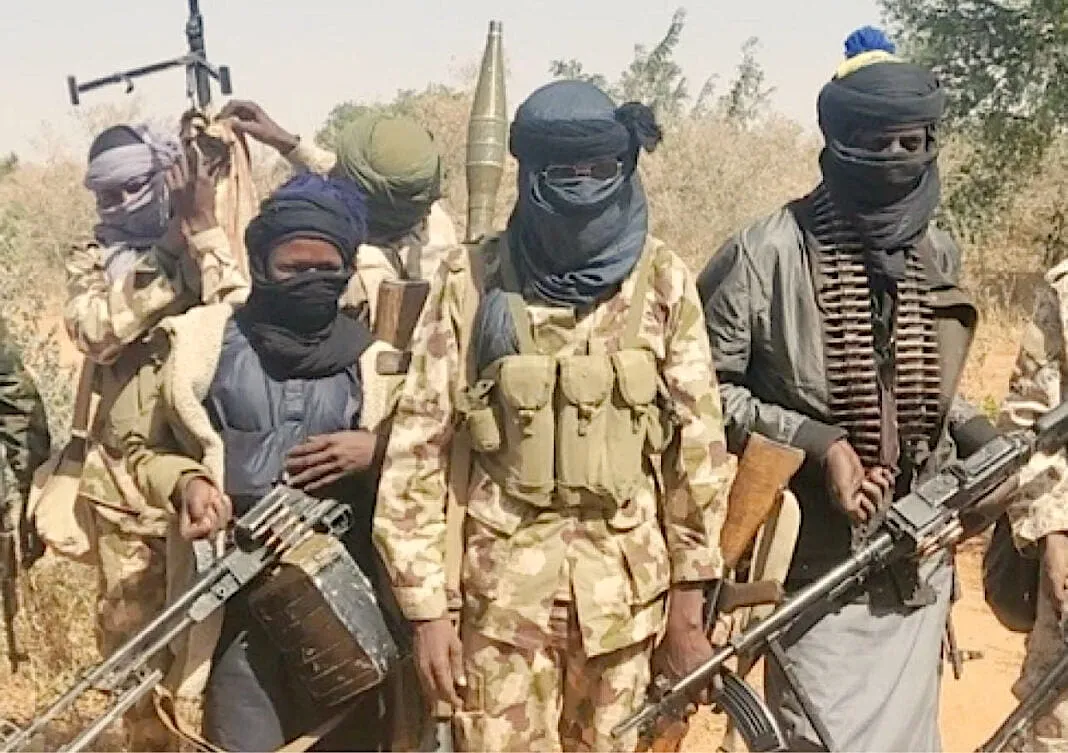
On 25 December, the United States and Nigeria carried out missile strikes against Islamist militants in Sokoto State in north-West Nigeria, marking one of the most significant foreign-enabled military actions on Nigerian soil in recent history.
The strikes, ordered by US President Donald Trump and approved by President Bola Tinubu of Nigeria, targeted Islamic State-linked fighters and were described by US and Nigerian authorities as “precision” attacks against designated terrorist camps.
The Nigerian government clarified that it took part in the operation by providing intelligence to the US. Foreign Minister Yusuf Tuggar also said President Bola Tinubu approved the operation.
According to official statements by the United States Africa Command (AFRICOM), the strikes focused on Islamic State (ISIS) militant positions in Sokoto State. The strikes reportedly hit multiple ISIS targets, intending to degrade their operational capabilities, based on intelligence shared between US and Nigerian security agencies.
Islamic State in Nigeria
The Islamic State suffered a major setback following the killing of its top leader, Abu Bakr al-Baghdadi, in 2019, and the subsequent deaths of successor leaders in later years. These losses weakened the group’s central command, disrupted coordination and accelerated the collapse of its territorial control in Iraq and Syria.
Despite its setbacks, ISIS adapted by expanding through affiliates in other fronts, including Africa, where its franchises, such as Islamic State West Africa Province (ISWAP) and the Islamic State’s Sahel Province, continue to exploit regional conflicts and local grievances to remain relevant.
ISIS has been a central feature in Nigeria’s decade-long Boko Haram insurgency. After the then Boko Haram leader, Abubakar Shekau, pledged allegiance to ISIS in 2015, the group received ideological and propaganda support. Disagreements over leadership and strategy later led ISIS to withdraw support from Mr Shekau, backing the breakaway ISWAP faction instead. This split weakened Boko Haram’s unity but created a more structured ISWAP, now considered one of the most resilient jihadist groups in the Lake Chad region.
However, ISWAP is primarily active in the North-east.
The nature of terrorism in Sokoto
In contrast to the North-east, the terrorism threat in Sokoto and other North-western states is more fragmented, comprising cross-border jihadi-linked militants and radicalised bandit groups.
Militant leaders such as Bello Turji have attacked villages and targeted travellers along major roads. They were later joined by Lakurawa jihadists, whom locals initially invited to help combat banditry.
But the presence of the Islamic State in Sokoto, which the US and Nigeria said they targeted, continued to be debated among jihadi experts.
In a 2022 study conducted by Murtala Rufa’i, James Barnett, and Abdulaziz Abdulaziz, Lakurawa was linked to Jama’at Nusrat al-Islam wal-Muslimin (JNIM), an al-Qaeda franchise in Mali. The JNIM was formed in March 2017 when four Mali-based extremist groups — Ansar al-Din, al-Murabitun, the Macina Liberation Front (MLF), and the Sahara Emirate subgroup of al-Qaeda in the Lands of the Islamic Maghreb (AQIM) — merged forces.
However, Mr Barnett, in his recent research, found that Lakurawa is now linked to ISSP.
“Given the fluidity of jihadi alliances and fracturing in the Sahel, some of the original members of Lakurawa may have been affiliated with JNIM in 2017-2018 but are now affiliated with ISSP,” he argued.
Other experts still believe the group is affiliated with JNIM. Responding to an X post [now deleted], Malik Samuel, a senior researcher at Good Governance Africa (GGA), said Lakurawa is “more al-Qaeda (JNIM).”
“I haven’t seen any evidence suggesting there is a link to ISIS,” he stated.
Lakurawa in the North-west
In 2017, community leaders in Tangaza and Gudu LGAs of Sokoto invited the Lakurawa fighters as mercenaries to suppress bandits infiltrating their communities from neighbouring Zamfara State, Mr Ruf’ai, a historian with expertise in local terrorism, said in one of his studies.
The Lakurawas, according to a traditional ruler in Balle village in Gudu LGA, were from Mali, and they speak Arabic and Fulfude.
“They were invited to provide security to our communities,” the traditional ruler had said in an interview with Mr Ruf’ai in 2021.
“The District Head of Balle in Gudu Local Government together with the District Head of Gongono in Tangaza Local Government met with Alhaji Bello Wamakko, the then Chairman of Miyetti Allah Cattle Breeders Association of Nigeria (MACBAN) and discussed how to tackle Zamfarawa (Bandits),” the traditional ruler continued. “They finally reached the conclusion to hire Lakurawa from Mali in order to deal with Zamfarawa bandits.”
He added that he warned the then-Governor Aliyu Wamakko about the invitation of the Lakurawas.
Community leaders who invited the group also contributed to their growth by soliciting support in cash, cows, logistics and weapons for them.
The first media report about the group was downplayed by the police, saying they were “non-violent herders” who migrated to find water for their animals.
The group became violent when it killed one of the leaders who invited them. The community leader, the district head of Tangwaza, was killed when he denied the terrorists’ claim that his son who died in a fire accident was owing them N63 million.
Prior to that, the group had been preaching radical Islam to locals, taxing herders. They also prohibited alcohol consumption and music.
The group’s growing attacks on military formations in border areas triggered joint border operations by Nigerian and Nigerien military forces in 2018, Messrs Rufa’i, Barnett and Abdulaziz stated in their study.
The Nigerian authorities’ failure to address the Lakurawa threat allowed the group to re-emerge in 2021. This time, it aligned with bandits and Fulani communities against the outlawed Yan Sakai vigilante group.
Also the coup in Niger and the collapsed joint military operations of Nigerian and Nigerien forces appear to have further emboldened the terror group.
The group has now expanded to Kebbi State, where the police said the terrorists killed police officers and Airtel workers. In its main stronghold, a military aerial operation targeting its fighters killed 10 civilians. The families of the victims were recently “compensated” by the Nigerian Air Force (NAF).
Who are the victims of violence in Sokoto?
The violence in Sokoto has taken a heavy toll on civilians of all backgrounds, with farmers, villagers, women, and children among the victims of raids, kidnappings and rampant killings attributed to terror groups operating in the area.
A years-long campaign of terror on communities in Sokoto State has led to the killings of dozens of civilians, forcing many to flee their homes and disrupting local life.
While President Trump justified the missile strikes by stating that the terrorists had targeted Christians, Nigerian officials and independent observers emphasise that insecurity in the region affects people of all faith, and that the insecurity stems from several factors, including criminal banditry, jihadi violence, and weak state protection.
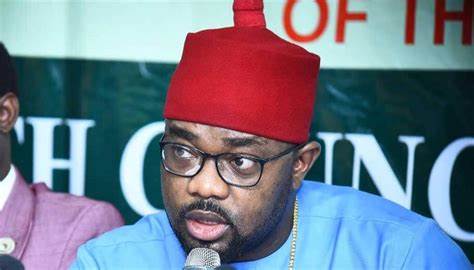
Rep. Ikenga Ugochinyere has condemned the “systematic destruction” of his Christmas billboards across Ideato North and South Federal Constituency of Imo State.
The lawmaker spoke on Friday while addressing hundreds of supporters who paid him a solidarity visit at his Akwokwa country home, Ideato South.
He described the acts as “petty” and a reflection of a “political spirit of intolerance” within the state.
“I paid for these Christmas billboards,” Ugochinyere said, noting that the displays also carried the Action Peoples Party (APP) logo.
He warned that similar hostility in the past had led to the killing of one of his supporters.
The lawmaker questioned why “season greetings billboards” attracted anger from, allegedly, the state government and its agencies.
He urged the Imo State Signage Agency to realise that “provocative actions often carry consequences for political stability”.
Ugochinyere said “intolerance, attacks and unlawful detention” contributed to the collapse of Nigeria’s previous republics.
He called on President Bola Tinubu, security chiefs and the Inspector-General of Police to closely monitor developments in Imo.
“I want the ongoing demolition of my billboards to stop because I paid for them,” he said.
The lawmaker recalled the alleged sealing of a venue chosen for a civic reception in his honour earlier in the week.
He queried the heavy security deployment used to block a “dusty primary school” venue approved for the event.
Ugochinyere warned that “overheating the security situation” could deepen national instability.
“Imo has started locking up public spaces meant for lawful events, despite payments and approvals,” he said.
In spite of the vandalism, the lawmaker said his popularity remained unaffected.
“My people do not love me because of billboards; I am in their hearts and minds,” he said.
Turning to politics, Ugochinyere announced he was concluding consultations to leave the Peoples Democratic Party (PDP).
He cited internal crises, legal disputes, leadership failures and neglect of his contributions as reasons.
“They treat us as if we are not important,” he told supporters.
He confirmed accepting constituents’ resolutions to “sever the relationship with the PDP” for collective interest.
Ugochinyere said Chima Amadi and Mathew Nwogbo would join the APP on Dec. 31.
He promised a “massive rally” to formally unveil his new political platform.
“We are exiting for good,” he said, unless a “magical” change occurs within days.
Ugochinyere stressed that his loyalty lay with constituents, not party logos.
He assured supporters that constituency projects would resume shortly.
The lawmaker said funding challenges had been resolved, ensuring continued development across Ideato communities. (NAN)

Defections, the collapse of the opposition, and a shift toward the centre changed Nigeria’s political landscape in 2025, all without any major public break. Deputy Political Editor RAYMOND MORDI reports:
In 2025, Nigeria’s politics changed quietly, not through big speeches or new laws, but through a slow shift of power to the center. A series of defections, especially around mid-year, helped the ruling All Progressives Congress (APC) bring many political leaders to its side. Governors, lawmakers, and party leaders switched parties mainly to keep their influence before the 2027 elections, not because of shared beliefs. By the end of the year, the opposition still existed in name but had lost its real power.
The mechanics of migration:
The defections in 2025 were notable for how large and organised they were, looking more like a planned effort than random events. The APC did not go out of its way to recruit; instead, it accepted those who decided to join. When governors switched parties, lawmakers and officials soon followed.
These defections happened when states were getting more money, not less. In 2025, states had higher oil revenues, a weaker naira, and more non-oil income. Still, this extra money did not solve politicians’ problems. Inflation, bigger wage bills, subsidy costs, and public demands kept governors under pressure. Joining the ruling party was more about getting political protection and easier access to federal help than about fixing budgets. Even with more resources, patience was running out.
Defections, state by state:
The big shift began in Delta State. In late April, Governor Sheriff Oborevwori left the People’s Democratic Party (PDP) for the APC, saying the state needed to align with the centre. Soon after, his predecessor, Ifeanyi Okowa, members of the State Executive Council, and key party leaders also switched. The State House of Assembly followed when Speaker Emomotimi Guwor led over 20 lawmakers to the APC, leaving the PDP with no real presence. Delta set the pattern: once the governor switched, others quickly followed.
Akwa Ibom was next in June. When Governor Umo Eno switched parties, National Assembly members, state lawmakers, and party officials with government ties also changed sides in an organised way. This was less dramatic than in Delta, but it showed the same thing: the APC was attracting whole groups of leaders, not just a few people.
The trend continued in October when Enugu State Governor Peter Mbah joined the APC. People called this a strategic move, not one based on beliefs, but it was important in a region that usually distrusts the ruling party. As expected, lawmakers loyal to him soon followed, making the opposition even weaker.
By mid-year, the same pattern repeated itself in Bayelsa State. The governor’s defection led National Assembly members and state lawmakers to switch parties as well, showing that staying in the opposition at the state level had become risky.
The wave peaked in Rivers State near the end of the year. The legislature moved first, with Speaker Martin Amaewhule and 16 lawmakers joining the APC. A few days later, Governor Siminalayi Fubara also switched after meeting with President Bola Tinubu and party leaders. That this happened in December showed how 2025 was a year of steady, planned weakening of the opposition.
The governors of Taraba and Plateau States also joined this trend. Agbu Kefas from Taraba said he would join the APC, but his official welcome was postponed till early next year after national outrage and security concerns following the abduction of schoolgirls. In Plateau, after months of rumours and denials, Caleb Mutfwang also announced he would join the APC, and it is expected that all state officials will follow him.
Not all defections started with governors. In May, three senators from Kebbi State—Adamu Aliero, Yahaya Abdullahi, and Garba Maidoki—left the PDP for the APC, giving the ruling party more control in the Senate. In other places, smaller but steady defections in state assemblies and the House of Representatives quietly shifted the balance of power, even if they did not make headlines.
By the end of the year, the APC controlled most state governments and had a strong lead in the National Assembly. The opposition had fewer members and much less influence.
Power without proclamation:
President Bola Tinubu played a key role in bringing power together, but he relied on careful planning rather than issuing direct orders. He rarely made public demands. Instead, his team used good timing, quiet discussions, and steady party organization. Governors and lawmakers were allowed to decide for themselves, knowing the ruling party welcomed them. This was a patient, behind-the-scenes way of doing politics.
Opposition in disarray:
Many politicians moving to the APC both revealed and deepened the opposition’s problems. The PDP spent the year blaming itself, and its internal divisions got worse. When its governors left, it marked the end of a long fight over who should lead the National Working Committee. Rival groups supporting Atiku Abubakar and Minister Nyesom Wike made it hard for the party to decide on anything.
Even after Atiku left for the African Democratic Congress (ADC), the PDP did not recover. Plans for a national convention were postponed from August to November due to disagreements. By year’s end, the PDP seemed less like a party ready to govern and more like a group of unhappy factions.
Court involvement made things worse. Many legal actions and counteractions turned courtrooms into arenas for political fights, prolonging the crises rather than resolving them. Legal tactics replaced real efforts to make peace.
The Labour Party (LP) broke down even more dramatically. The excitement of the 2023 ‘Obidient’ movement was hampered by organizational and funding issues. A strong fight between Peter Obi’s supporters and the national leadership under Julius Abure led to separate conventions, court battles, and even physical fights. By November, the party had split, and many lawmakers had left.
This change affected how people felt. Young supporters became more cynical, and instead of organized activism, many just commented on social media. This raised early worries about possible voter apathy before the 2027 elections.
The ADC, seen as a new ideological option, struggled with too much ambition. Efforts to attract a large assemblage of politicians from other parties are yet to materialise because of personal egos and disagreements over strategy. A public argument between 2023 presidential candidate Dumebi Kachikwu and interim leader David Mark showed how fragile the party was. In July, Kachikwu went to court to challenge INEC’s recognition of Mark and Rauf Aregbesola as national chairman and secretary.
By the end of the year, the ADC was still more of an idea than a real competitor.
A nation under strain:
Besides politics, 2025 was a year of growing national distress. Insecurity got much worse, turning from a constant problem into a real emergency. Banditry in the Northwest became common, with frequent mass school kidnappings. In the North-Central, communal violence became more organized and deadly. The Southeast continued to face attacks by unknown gunmen and damaging sit-at-home orders.
Economic hardship made things even harder. Labour unions often threatened nationwide strikes because of the rising cost of living. For many Nigerians, insecurity and financial stress felt the same, creating a constant sense of vulnerability.
In October, the United States labeled Nigeria a Country of Particular Concern for religious freedom, pointing to issues in the Middle Belt. The Nigerian government called this interference, while critics said it was overdue. Either way, it showed that Nigeria’s confidence on the world stage had weakened.
The pressure peaked in November, when President Tinubu declared a State of National Security Emergency, granting security agencies greater powers. Defence Minister Mohammed Badaru Abubakar resigned soon after and was replaced by former Chief of Defence Staff, General Christopher Musa. Many saw this as a move to take security more seriously.
Legislating through consolidation:
With so many defections, the 10th National Assembly worked more efficiently than usual and faced little resistance. It worked closely with the executive branch. Major laws, like the broad Tax Reform Act signed in September, passed easily. Work also started on constitutional changes for state policing and fiscal federalism, though progress was slow.
Still, controversy continued. In July, Senator Natasha Akpoti-Uduaghan accused Senate President Godswill Akpabio of sexual harassment. Instead of starting an independent investigation, the Senate suspended her for misconduct. This decision was widely criticized and raised concerns about legislative accountability.
Rivers State was the most unstable political scene of the year. A feud between Governor Siminalayi Fubara and his predecessor, Nyesom Wike, brought government to a halt and split the legislature. This conflict even led to physical fights.
In October, the Federal Government declared a State of Emergency in Rivers and appointed an administrator. Supporters said this stopped chaos in an important state, but critics called it too much. Even legal experts who usually support the government questioned if the move met constitutional rules, warning that it showed how flexible center-state relations had become.
Signals toward 2027:
The November Anambra governorship election was a rare bright spot for institutions. Governor Chukwuma Charles Soludo of the All Progressives Grand Alliance (APGA) won by a large margin, in an election widely seen as fair and peaceful.
INEC also changed leaders. In August, Prof. Joash Ojo Amupitan replaced Mahmood Yakubu as chairman and oversaw by-elections in 15 states, which further strengthened the APC’s position.
The passing of an era:
The death of former President Muhammadu Buhari in July, along with the passing of leaders like Ayo Adebanjo, Edwin Clark, and Mohammed Uwais, marked the end of a generation that once shaped Nigeria’s political values. Their absence left a gap in a political culture now more focused on deals and transactions.
Conclusion:
Looking back, 2025 was not a year of sudden change, but of steady consolidation. Power quietly moved to the centre. The opposition got weaker. Institutions adjusted but did not fall apart. The big shift was never officially announced; it just happened. As Nigeria moved toward 2027, the real question was not who held power, but whether there was enough room to challenge it.

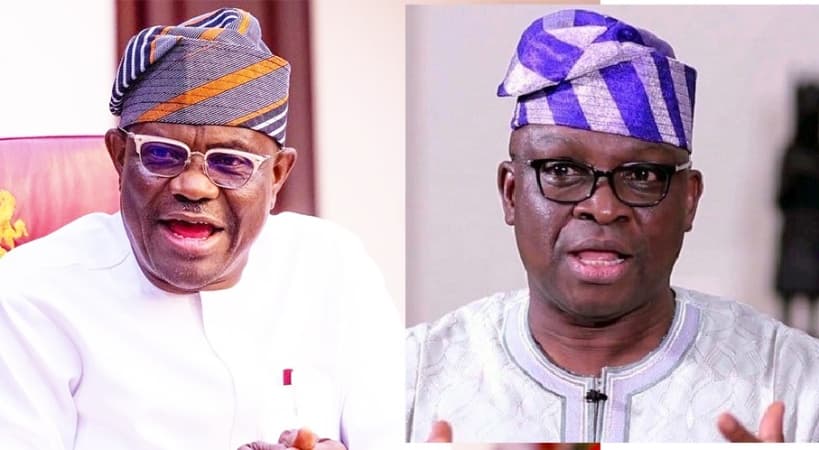
Former Ekiti State Governor, Ayodele Fayose, has spoken openly on his political alignment and the growing crisis within the Peoples Democratic Party (PDP), making it clear that his loyalty remains with Federal Capital Territory Minister, Nyesom Wike.
Fayose also dismissed claims that he is planning to defect to the All Progressives Congress (APC), insisting that despite internal challenges within the PDP, he has no intention of leaving the party.
Speaking during a television interview, Fayose launched a strong attack on Oyo State Governor, Seyi Makinde, accusing him of abusing power and weakening the PDP structure across the South-West region.
He alleged that Makinde has sidelined many party members who played key roles in his political rise, claiming that valuable state assets were taken over under his leadership.
According to Fayose, “almost everybody who worked for his ascension has been driven away.”
The former governor further accused Makinde of dismantling the PDP’s foundation in the South-West, stating clearly that “Makinde has destroyed all PDP structures in the South-West.”
Fayose also raised concerns over the party’s internal processes in Osun State, questioning the transparency of candidate selection.
He alleged that “a candidate who did not even obtain a PDP form eventually became the candidate,” a situation he said undermines internal democracy.
Recounting a personal incident, Fayose claimed he was attacked during a political event in Osun State. He alleged that “Makinde organised an attack on me in Osun,” and described the Oyo State governor as “a small boy” politically.
On his own political journey, Fayose described himself as an elder statesman who rose to power without external influence.
He stressed that he governed Ekiti State independently, saying, “I fought my governorship without a godfather.”
Addressing speculations about his political direction, Fayose openly declared his loyalty to the former Rivers State governor, stating, “I’m a Wike person. Anywhere Wike is, that is where I am.”
Despite his strong criticisms of PDP leadership in the South-West, Fayose maintained that he remains committed to the party. He firmly stated, “I will never join the APC.”
NIGERIA NEWS
Peace Inspired By Love, Requisite Condition for Economic Growth, Effective Governance – THISDAYLIVE


Sunday Aborisade in Abuja
The Leader of the Senate, Senator Opeyemi Bamidele, yesterday urged Nigerians to embrace peace and love as indispensable foundations for economic growth, effective governance and sustainable national development.
He said the Christmas season offers a timely opportunity for deep reflection on the nation’s future.
In his Christmas message to Nigerians which he personally signed, Bamidele said the celebration of the birth of Jesus Christ should go beyond merriment.
He described it as a season that calls for cautious optimism, introspection and renewed commitment to values capable of healing the nation.
He noted that the birth of Jesus Christ being the Redeemer and Saviour of the world, brought an enduring message of love, redemption and salvation, offering hope in times of despair and peace amid global and local turbulence.
According to him, the essence of Christmas lies in the victory Christ’s sacrifice offers humanity and the moral lessons embedded in His life and teachings.
Bamidele said, “As we celebrate the glorious birth of Christ, this anniversary presents us with another season to reflect on the state of our nation and the condition of our compatriots, whether Christians or Muslims,.
“It also gives us a compelling reason to embrace love rather than violence in the pursuit of collective and personal grievances.”
The Senate Leader stressed that Nigerians must not limit the celebration of Christmas to ceremonies and festivities, but should consciously imbibe and practise the love of Christ in their daily lives.
He noted that such commitment remains the surest path to collective peace and national stability.
He said that Christ’s love carries a universal message that transcends religious boundaries, binding broken hearts, soothing deep wounds and reconciling estranged brothers.
According to him, this message remains critical to fostering national cohesion, rebirth and enduring stability in a plural society like Nigeria.
Bamidele further observed that the values exemplified by Christ are relevant in all circumstances, whether in times of peace or conflict, and are applicable to all humanity, Christians and Muslims alike.
He said the rejection of violence and hatred in favour of love and reconciliation would help thaw internal rebellion and prepare the nation for lasting unity.
He charged Nigerians to become purveyors of peace rather than violence, harmony instead of division, and positive engagement in place of hate speech.
The Senate Leader also warned that no society can achieve meaningful progress in an atmosphere of hostility and discord.
He said, “It is only an atmosphere of peace, inspired by love, that can create the conditions necessary for economic growth, effective governance and sustainable development.
“Only within such an ambience can our economy witness exponential growth and our people freely pursue their aspirations without let or hindrance.”
He added that peace remains a critical prerequisite for enviable governance outcomes at both national and sub-national levels, stressing that leaders and citizens alike share the responsibility of nurturing unity and mutual understanding.
Bamidele expressed optimism that with a collective embrace of love-driven peace, Nigeria could overcome its current challenges and chart a path toward stability, prosperity and national renewal.

The Igbo apex socio-cultural organisation, Ohanaeze Ndigbo Worldwide, has announced far-reaching plans aimed at strengthening Igbo cultural preservation, institutional sustainability and economic self-reliance, including the establishment of professorial chairs in Igbo studies and new development vehicles.
The President-General of Ohanaeze Ndigbo Worldwide, Senator John Azuta-Mbata, disclosed this during the organisation’s Imeobi meeting held at the International Conference Centre, Enugu, where he presented a one-year stewardship account.
Azuta-Mbata said plans were underway to establish professorial chairs dedicated to Igbo language, history and culture, backed by N35 million take-off grants.
He further revealed that seven professorial chairs—one each in universities across the seven Ohanaeze states—had already been endowed, with applications from qualified professors currently under review.
“This is not just an academic intervention, but a strategic investment in cultural preservation, intellectual renaissance and the safeguarding of our identity for future generations through rigorous research and scholarship,” he said. “We are ensuring that the Igbo narrative is documented, defended and dignified.”
To ensure sustainable funding and efficient administration of the organisation, the President-General announced the establishment of Alaigbo Development Company and the Ndigbo Development Foundation, noting that both bodies would receive a N50 million take-off grant before the end of 2025.
Reviewing achievements recorded within his first year in office, Azuta-Mbata said construction work on the new Ohanaeze national headquarters in Enugu was nearing completion.
He described the edifice as a monumental step towards providing the organisation with a befitting administrative nerve centre and a lasting institutional legacy.
“It is our plan to incorporate a museum of Igbo music, Igbo art and culture within the premises, making it a centre where Igbo artefacts and cultural items can be found,” he added.
On the broader significance of the Imeobi meeting, the Ohanaeze leader said it symbolised renewal, continuity and the collective resolve of the Igbo people to remain relevant, impactful and generationally significant.
He also presented a reviewed Ohanaeze constitution to the Imeobi for consideration.
Speaking at the meeting, renowned political economist, Pat Utomi, urged Igbos to clearly define their place within the Nigerian project, stressing the need for a level playing field for all citizens.
He called for strict adherence to the rule of law and the protection of property rights as prerequisites for wealth creation and preservation.
“If you don’t have a society that preserves the rights of people to own property, you will always be vulnerable,” Utomi said, adding that Nigeria needed principle-driven political leadership to achieve meaningful progress.
Former Minister of Power, Chinedu Nebo, emphasised the need for Igbo unity and collective action in addressing shared challenges, urging the people to speak with one voice in pursuing their legitimate interests.
Also contributing, Professor of Political Economy at Nasarawa State University, Jideofor Adibe, identified what he described as “Igbo phobia”—a long-standing sense of exclusion dating back to colonial times—as a core challenge confronting the Igbo.
He proposed a new charter for Ohanaeze Ndigbo, stressing that Igbo identity must be a driving force in self-preservation and development.
Adibe further called on Igbo musicians, artists and filmmakers to intensify efforts to project Igbo culture on global platforms such as Netflix, warning that cultural regression would persist if deliberate steps were not taken.
He also urged the Igbo to build alliances with other regions and redirect youth grievances through the development of strong, inclusive economies.
The meeting attracted several prominent Igbo leaders and dignitaries, including former Labour Party presidential candidate Peter Obi, former Secretary to the Government of the Federation Anyim Pius Anyim, and the Obi of Onitsha, Alfred Achebe, among others.

No fewer than 300 members of the Youths of St. Mulumba (YSM) from six sub-councils in Lagos Metropolitan Council, Region 3, converged on Navy Town, Lagos, for the YSM Mega Rally 2025, a programme focused on faith formation, fellowship, and youth empowerment.
The rally attracted participants from Lagos Island, Badagry, Satellite, FESTAC Twn, Ojo, and Amuwo Odofin, and featured a Mass, leadership talks, and interactive sessions aimed at strengthening the spiritual and social development of young Catholics.
The Associate Parish Priest of Our Lady Star of the Sea Catholic Church, Navy Town, Rev. Fr. Philip Stanley Apata, said the event reflected the Knights of St. Mulumba’s long tradition of service, particularly to young people and the less-privileged.
He noted that beyond spiritual activities, the Order supported charitable causes such as assisting the needy and settling hospital bills.
He added that the rally, held during the Christmas season, was an opportunity to share joy and blessings with the wider community’
Metro Grand Knight of Lagos Metropolitan Council, Sir Nosa Ehigiator, explained that the Mega Rally was designed to unite YSM members across different sub-councils and encourage interaction beyond their immediate locations.
“This programme was conceived over four years ago. Our goal is to develop and empower the youths spiritually and socially, and to help them build lasting connections across the region,” he said.
Deputy Supreme Knight, Sir Dan Egwu, who oversees the initiative at the national level, said the programme addressed the gap in youth engagement within the Catholic Church after confirmation.
According to him, the rally helped young people to understand church values, build strong character, and discover their potential to contribute meaningfully to their communities. He urged participants to remain focused on Christ and resist negative societal influences.
Representing the Deputy Metro Grand Knight and YSM coordinator, Sir. Dr. Patrick Adebayo Falola described YSM as an integral arm of the Knights of St. Mulumba, catering to Catholic youths aged 12 to 30.
He disclosed that the Region 3 rally was the first of its kind and expressed hope that it would become an annual event.
Participants praised the program for its impact. Ukaegbu Emmanuel from the Satellite Sub-Council said the leadership session was inspiring and helped him understand the responsibilities of young Catholic leaders.
In her remarks, Vice President of the Badagry Sub-Council, Dennis Emmanuella, said the rally met her expectations and was both impactful and well organized.
In his closing remarks, the Coordinating Deputy Grand Knight of Region 3 and chairman of the organizing committee Vincent Iwueze, thanked participants and organizers, describing the rally as a demonstration of unity among the six sub-councils and a platform for nurturing faith, leadership, and service among the youths, he concluded.