
SCIENCE
ISS astronaut snaps stunning nighttime photo of Florida and Cuba photo of the day for Dec. 29, 2025


At 2:23 am Eastern time on March 19, 2025, an astronaut aboard the International Space station (ISS) captured a striking nighttime view of Earth, where shimmering moonlight dances across dark ocean waters while clusters of city lights outline the Florida Peninsula, the Caribbean, and parts of Central America.
Dense clusters of illumination trace major population centers, including the bright corridor from Miami to Fort Lauderdale along Florida’s southeastern coast, the Tampa–St. Petersburg area on the Gulf Coast, and the Orlando metropolitan region near the center of the peninsula. Smaller but still discernible patterns of light mark the Florida Keys, Nassau in the Bahamas, and Havana and other cities across Cuba.
What is it?
Besides the stunning city lights, what sets this image apart is the presence of moonglint, the nighttime counterpart to sunglint. Much like sunlight reflecting off the ocean’s surface during the day, moonglint occurs when moonlight reflects off water at just the right angle to reach the observer.
You may like
In this case, the observer was a crewmember on the ISS, orbiting hundreds of miles above Earth. At the time, the moon was in a waning phase and about 78% illuminated, bright enough to produce a concentrated reflection across the sea, especially near the Florida Keys and Cuba.
The photograph was taken using a Nikon Z9 digital camera with a 28-millimeter lens, giving a wide field of view similar to that of the human eye. This perspective allows viewers to appreciate the curvature of the planet, accentuated by a thin, faint green layer of airglow along the horizon, a reminder of Earth’s atmosphere glowing softly against the darkness of space.
Where is it?
This photo was taken aboard the ISS, around 248 miles (400 kilometers) above Earth.
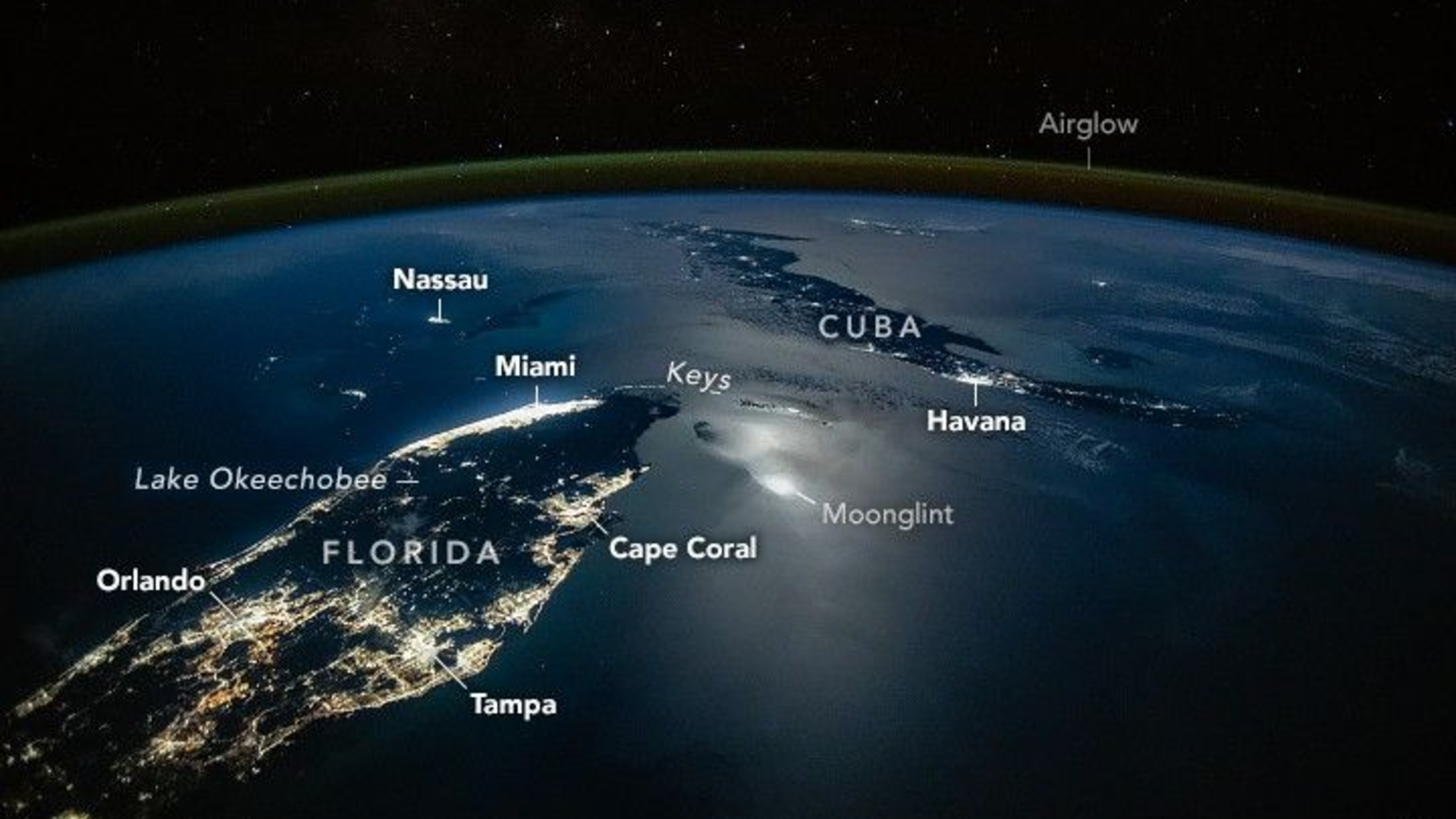
Moonglint and airglow are both phenomena featured in this image. (Image credit: NASA/Expedition 72 crew)
Why is it amazing?
Nighttime images of Earth reveal patterns of human settlement, infrastructure, and land use that are difficult to capture during the day. Scientists use such observations to study urban growth, energy consumption, and light pollution, while also tracking how human activity intersects with natural environments.
The appearance of moonglint is especially valuable for researchers. Reflections of moonlight off the ocean can help scientists study sea-surface conditions, such as roughness and wave patterns, even at night. When combined with other data sources, these observations improve understanding of ocean–atmosphere interactions and refine models used in climate and environmental research.
Want to learn more?
You can learn more about airglow and the International Space Station







2025 was a very busy year for spaceflight, for better and for worse.
We saw quite a few milestones notched in the final frontier this year, including the first-ever fully successful private moon landing and the official arrival of Blue Origin’s New Glenn heavy lifter on the spaceflight scene. But there were a number of failures as well, some of them quite dramatic.
You may like
12. Indian rocket fails during satellite launch

India attempted to launch an Earth-observing radar satellite on May 17, 2025, but a problem with the mission’s rocket resulted in a failure. (Image credit: ISRO)
An Indian PSLV-XL rocket launched from Satish Dhawan Space Centre on May 17, carrying the EOS-09 Earth-observing radar satellite aloft for the Indian Space Research Organisation (ISRO). But EOS-09 didn’t make it to its destination: The PSLV-XL suffered an issue with its third stage about six minutes into flight, and the satellite was lost.
11. Firefly Aerospace suffers a 1-2 punch
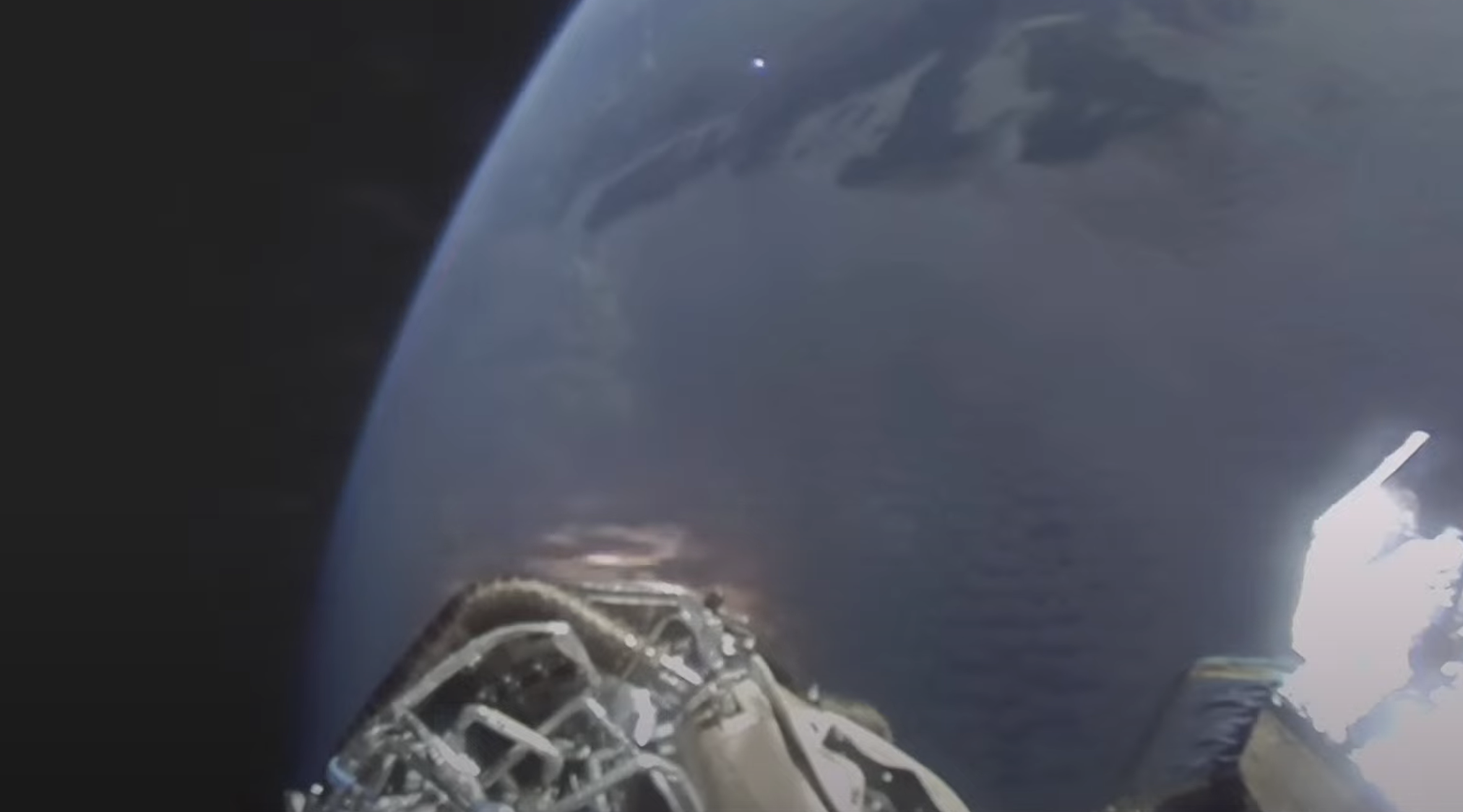
View from the upper stage of Firefly Aerospace’s Alpha rocket during its sixth-ever launch on April 29, 2025, which ended in failure. (Image credit: Firefly Aerospace/NSF via YouTube)
Texas company Firefly Aerospace’s Alpha rocket lifted off from California on April 29 on its sixth-ever mission, hauling a technology demonstration for Lockheed Martin toward low Earth orbit. Alpha’s upper stage got about 200 miles (320 kilometers) up, but it failed to reach orbital velocity due to a problem suffered shortly after stage separation, and the payload was lost.
Firefly diagnosed the problem and began gearing up for Alpha’s return to flight. But the company then suffered another setback on Sept. 29: The Flight 7 first-stage booster exploded on the stand during testing. The company traced the problem to a “process error” during integration and aims to launch Flight 7 (with a different first stage) in early 2026.
10. Landspace’s Zhuque-2 rocket fails
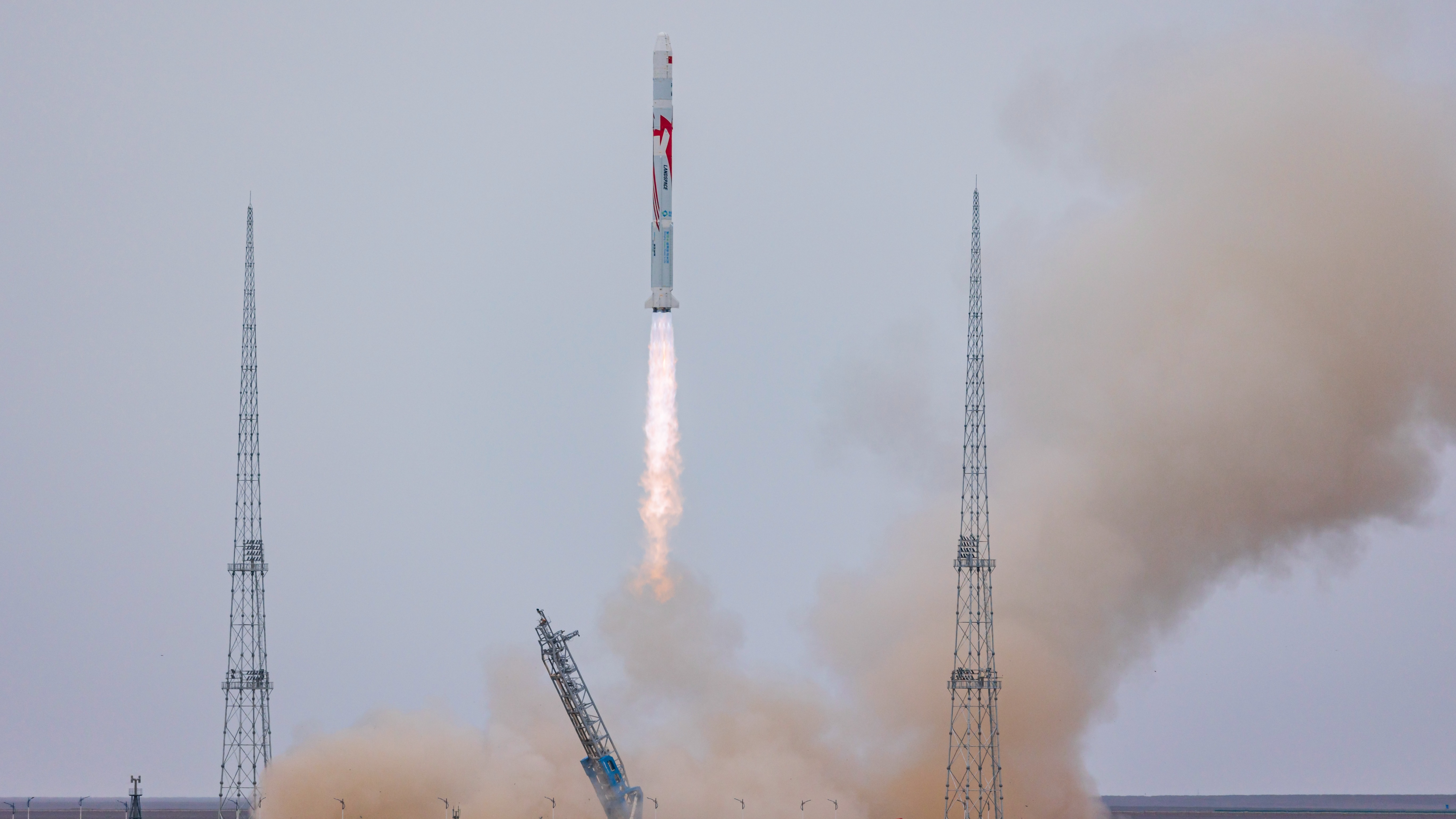
Landscape’s Zhuque-2 rocket launches on its successful debut mission in 2023. The rocket suffered a launch failure on Aug. 14, 2025. (Image credit: VCG via Getty Images))
The Zhuque-2, a two-stage rocket operated by Chinese startup Landspace, failed on its sixth-ever mission, which launched Aug. 14 from Jiuquan Satellite Launch Center in northwest China. The company did not disclose the payloads that were riding on the rocket. It was the second failure for the Zhuque-2, whose engines burn liquid methane and liquid oxygen, like SpaceX’s Raptor, which powers the company’s Starship megarocket.
9. Galactic Energy’s Ceres-1, too

Liftoff of Galactic Energy’s second Ceres-1 solid rocket from the Jiuquan Satellite Launch Center in the Gobi Desert on Dec. 7, 2021. The 22nd launch of the rocket, on Nov. 9, 2025, ended in failure. (Image credit: Galactic Energy)
Nearly three months later, another Chinese rocket went up in flames — a Ceres-1, built by Beijing-based Galactic Energy. The Ceres-1 launched Nov. 9 from Jiuquan, carrying two commercial Earth-observing satellites and a third spacecraft manifested by a Chinese university. The rocket’s first three stages performed well, according to media reports, but its fourth and final stage suffered an anomaly that doomed the mission.
There may have been another Chinese rocket failure this year as well. A Kuaizhou 1A vehicle — built by the company ExPace, a subsidiary of the state-owned China Aerospace Science and Industry Corporation — apparently exploded on a pad at Jiuquan before launch on March 1, though reports of its demise remain unconfirmed.
8. Japan’s H3 rocket fails during launch of navigation satellite
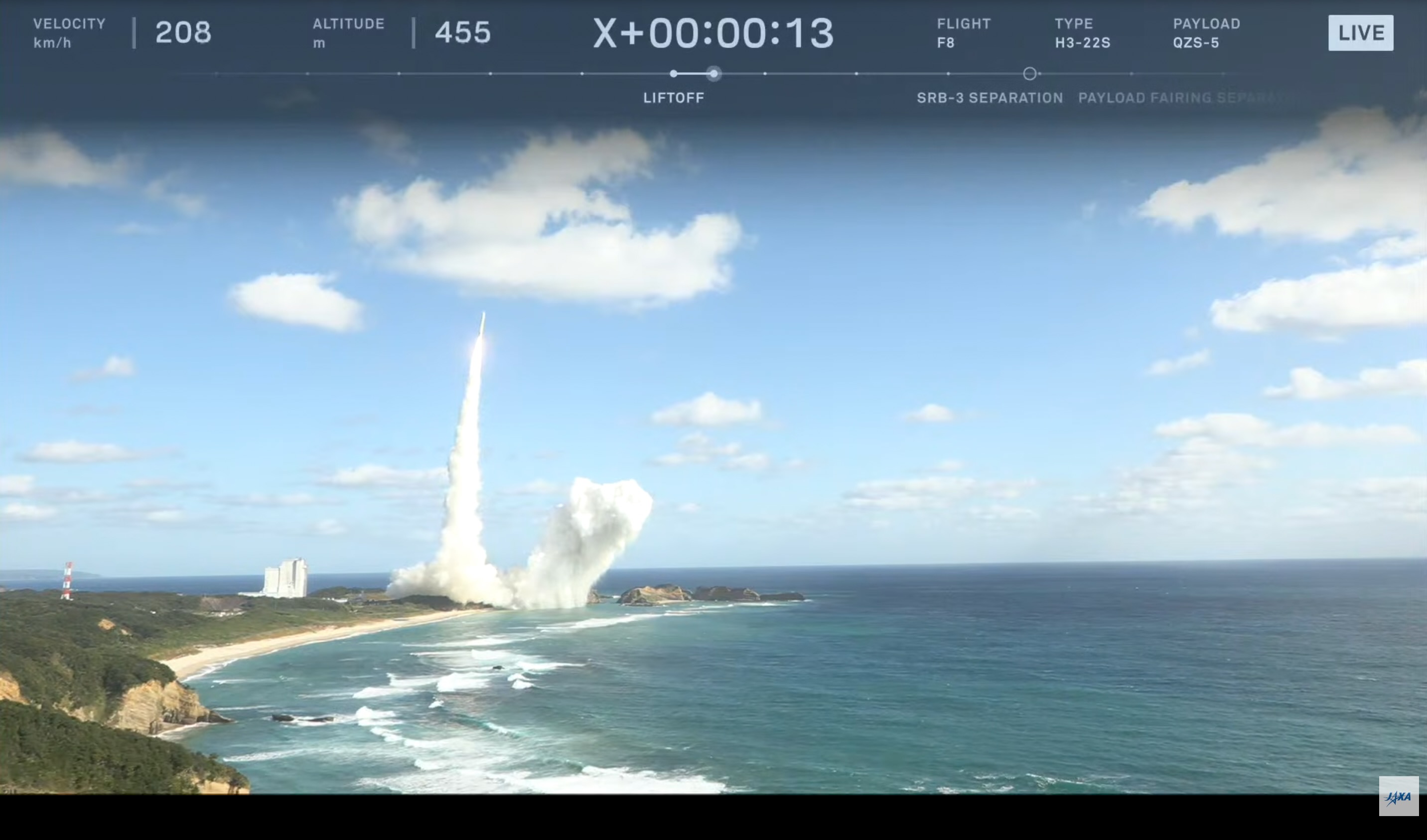
The H3 rises into the sky on Dec. 21, 2025. (Image credit: JAXA)
Japan suffered a failure, too, with just 10 days left in 2025. The country’s H3 rocket experienced a problem with its second stage on Dec. 21, during the launch of the Michibiki 5 navigation satellite. The rocket did not deliver Michibiki 5 to the proper orbit, and officials with the Japan Aerospace Exploration Agency (JAXA) declared the satellite lost.
You may like
7. The 1st orbital launch from European soil crashes and burns
On March 30, the German company Isar Aerospace launched its Spectrum rocket from Andøya Spaceport in Norway. It was the first liftoff for Spectrum and the first-ever orbital flight from European soil, but it didn’t last very long: The rocket suffered an anomaly 18 seconds into flight, crashed back to Earth and exploded, generating a blazing orange fireball in a gorgeous wintry landscape.
Isar is bouncing back, however: It’s currently gearing up for its second-ever launch, which will also take place from Andøya.
6. Australia’s 1st homegrown orbital rocket comes up short
A similar story unfolded a few months later half a world away. On July 29, Australian company Gilmour Space debuted its Eris rocket from the Bowen Orbital Spaceport in coastal Queensland. It was the first-ever orbital launch attempt for a homegrown Australian rocket, but Eris soon came back to Earth: It slid sideways off the pad and fell back to terra firma 14 seconds after liftoff.
5. South Korean’s 1st private orbital rocket, too
South Korean startup Innospace made history this year as well, launching the nation’s first-ever private orbital rocket on Dec. 22. However, that vehicle, the Hanbit-Nano, suffered an anomaly about a minute into flight and came crashing back to Earth.
So it was a tough year for rocket debuts all the way around. But that’s not exactly surprising: It’s always been rare for a new launcher to ace its first-ever liftoff.
4. Returning boosters that didn’t stick the landing
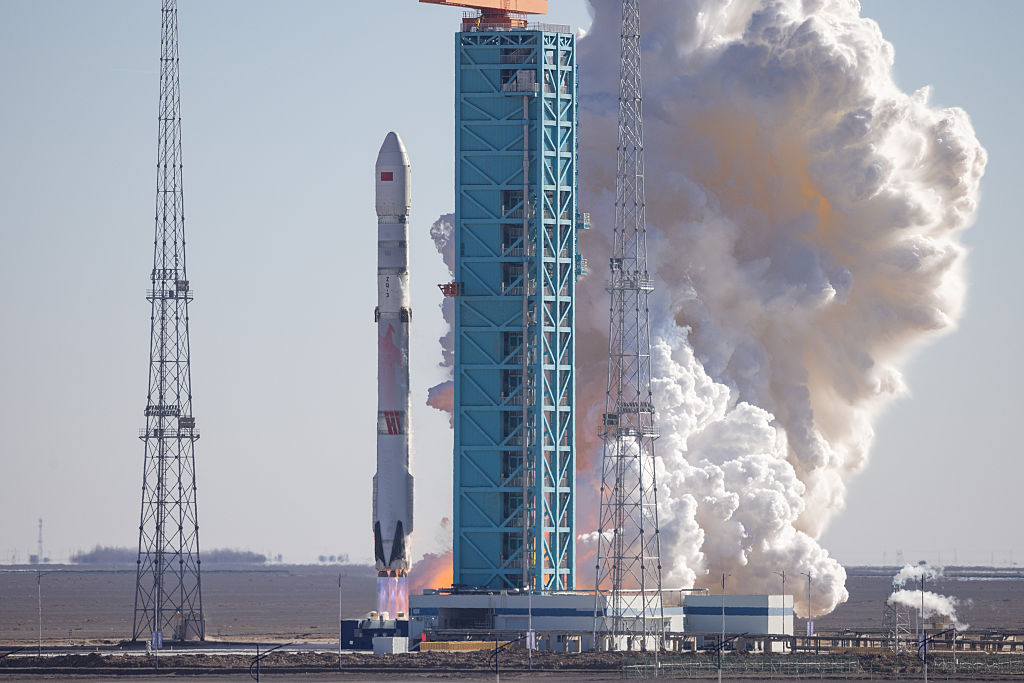
China’s Zhuque-3 blasts off from the Dongfeng commercial space innovation pilot zone on December 3, 2025 (Image credit: VCG / Getty Images)
There were four failed landing attempts during orbital launches this year — one each by the first-stage boosters of Blue Origin’s New Glenn rocket (on Jan. 15), SpaceX’s Falcon 9 (on March 3), Landspace’s Zhuque-3 (on Dec. 3) and the Chinese government’s Long March 12A (on Dec. 22).
It’s not entirely fair to include any of them on this list, as all four rockets reached orbit as planned, and landing the booster was a secondary objective for each of them. Plus, it was the first-ever flight for New Glenn (which stuck the landing on its second launch this past November), Zhuque-3, and the Long March 12A (both of which were attempting China’s first-ever orbital booster touchdown). The loss of the Falcon 9 was the only landing hiccup for SpaceX this year out of more than 160 attempts. Still, they were technically failures, and all were memorable.
3. Private American lander tips over on the moon
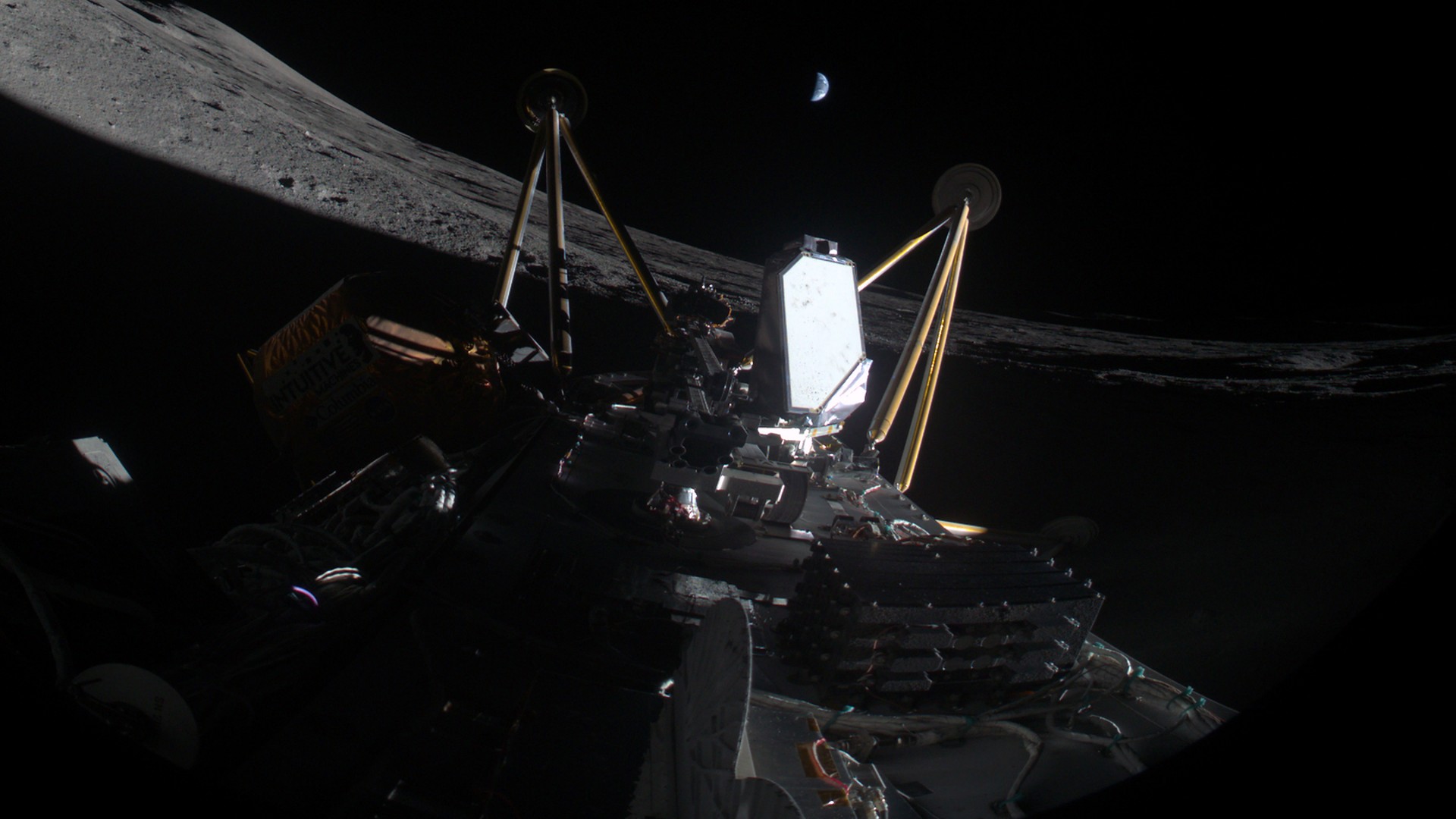
A selfie captured by Intuitive Machines’ Athena lander shortly after it touched down near the moon’s south pole on March 6, 2025. (Image credit: Intuitive Machine)
On March 6, Athena, a robotic lander built by the Houston company Intuitive Machines, landed successfully on the moon with a passel of NASA science payloads. But Athena soon toppled over. Its prone position prevented some payloads from deploying properly, and the lander couldn’t collect enough sunlight to recharge its batteries. Intuitive Machines declared Athena dead a day later.
It was the second such outcome in a little over a year for Intuitive Machines. The company made history in February 2024 with the lunar landing of its Odysseus spacecraft. But Odysseus toppled over as well, apparently after breaking a leg during its touchdown, cutting its mission short.
Intuitive Machines will be back on the moon soon, if all goes to plan: Its third robotic mission for NASA is currently targeted for the first half of 2026.
2. Private Japanese lander crashes into the moon
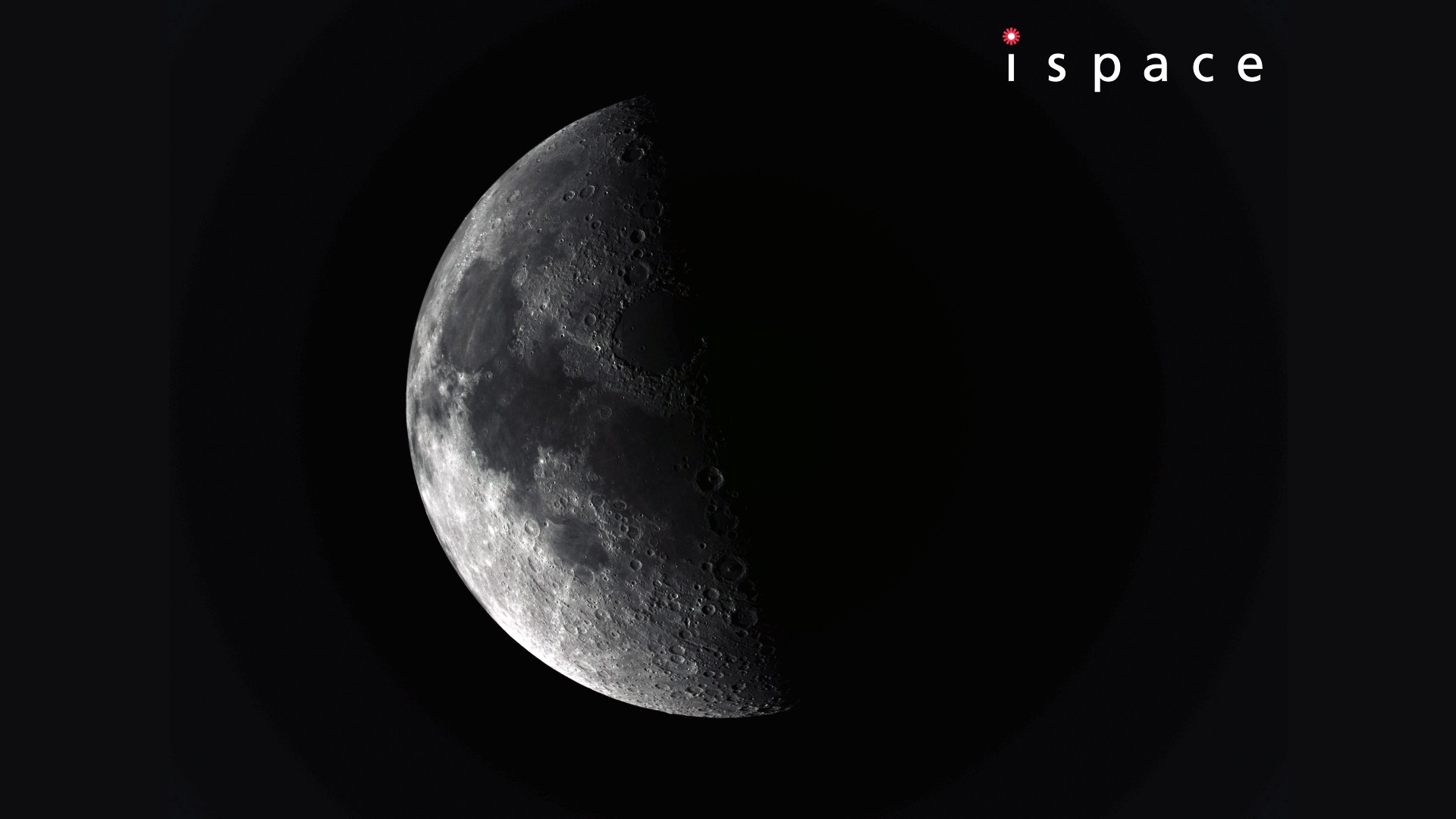
Resilience, a lunar lander built by the Japanese company ispace, snapped this photo of the moon during a close flyby on Feb. 15, 2025. (Image credit: ispace)
The Tokyo-based company ispace tried to put its Resilience lander down on the moon on June 5 but came up short; the vehicle slammed hard into the gray dirt in the Mare Frigoris (“Sea of Cold”). It was the second such setback for ispace, which also failed during a lunar landing try in April 2023.
There were plenty of silver linings on both missions, however; the company’s lander made it to lunar orbit successfully on both occasions, notching a number of milestones but coming up short during the final stages of descent. And ispace plans to try again in 2027.
1. Starship’s test-flight fireworks
SpaceX’s Starship, the biggest and most powerful rocket ever built, launched five times in 2025, on suborbital test flights from the company’s Starbase site in South Texas. The first three did not go entirely according to plan.
On Jan. 16, Starship’s first stage, a huge booster called Super Heavy, successfully came back to Starbase, where it was caught by the launch tower’s “chopstick” arms. But the Ship upper stage exploded less than 10 minutes after liftoff, raining debris down over the Turks and Caicos Islands. A similar outcome occurred on March 6’s test flight, which was the second Starship launch of 2025 and the eighth overall.
Flight 9, which lifted off on May 27, was something of a step backward for Starship, as both stages were lost prematurely (though Ship did fly for quite a bit longer than it managed to do on Flight 7 and Flight 8). A few weeks later, on June 18, the program suffered another setback: The Ship that SpaceX was prepping for Flight 10 exploded on a test stand at Starbase.
But SpaceX, and Starship, bounced back: The vehicle aced Flight 10 and Flight 11, which launched on Aug. 26 and Oct. 13, respectively. The company is now gearing up for the first test flight of Starship Version 3, a bigger and more powerful variant that will be capable of reaching Mars — the destination that SpaceX has long had in mind for the vehicle. Part of that prep featured the buckling of a Super Heavy during testing on Nov. 21, but SpaceX, as usual, is powering through.

In March 2019, researchers off the coast of southwestern Australia witnessed a gruesome scene: a dozen orcas ganging up on one of the biggest creatures on Earth to kill it. The orcas devoured huge chunks of flesh from the flanks of an adult blue whale, which died an hour later. This was the first-ever documented case of orca-on-blue-whale predation, but it wouldn’t be the last.
In recent months, orcas (Orcinus orca) have also been spotted abducting baby pilot whales and tearing open sharks to feast on their livers. And off the coast of Spain and Portugal, a small population of orcas has begun ramming and sinking boats.
You may like
They’ve got parts of their brain that are associated with memory and emotion that are significantly more developed than even in the human brain.
It’s not likely that orcas’ brains are changing on an anatomical level, said Josh McInnes, a marine ecologist who studies orcas at the University of British Columbia. “Behavioral change can influence anatomical change in an animal or a population” — but only over thousands of years of evolution, McInnes told Live Science.
Related: Scientists investigate mysterious case of orca that swallowed 7 sea otters whole
But orcas are fast learners, which means they can and do teach each other some terrifying tricks, and thus become “smarter” as a group. Still, some of these seemingly new tricks may in fact be age-old behaviors that humans are only documenting now. And just like in humans, some of these learned behaviors become trends, ebbing and flowing in social waves.
Frequent interactions with humans through boat traffic and fishing activities may also drive orcas to learn new behaviors. And the more their environment shifts, the faster orcas must respond and rely on social learning to persist.
Teaching hunting strategies
Orcas (Orcinus orca) attacked an adult blue whale off the coast of Australia and inserted their heads inside the whale’s mouth to feed on its tongue. (Image credit: John Totterdell)

Science Spotlight takes a deeper look at emerging science and gives you, our readers, the perspective you need on these advances. Our stories highlight trends in different fields, how new research is changing old ideas, and how the picture of the world we live in is being transformed thanks to science.
There’s no question that orcas learn from each other. Many of the skills these animals teach and share relate to their role as highly evolved apex predators.
You may like
Scientists described orcas killing and eating blue whales (Balaenoptera musculus) for the first time in a study published last year. In the months and years that followed the first attack in March 2019, orcas preyed on a blue whale calf and juvenile in two additional incidents, pushing the young blue whales below the surface to suffocate them.
This newly documented hunting behavior is an example of social learning, with strategies being shared and passed on from adult orcas to their young, Robert Pitman, a marine ecologist at Oregon State University’s Marine Mammal Institute, told Live Science in an email. “Anything the adults learn will be passed along” from the dominant female in a pod to her offspring, he said.
Taking down a blue whale “requires cooperation and coordination,” Pitman said. Orcas may have learned and refined the skills needed to tackle such enormous prey in response to the recovery of whale populations from whaling. This know-how was then passed on, until the orcas became highly skilled at hunting even the largest animal on Earth, Pitman said.
Old tricks, new observations
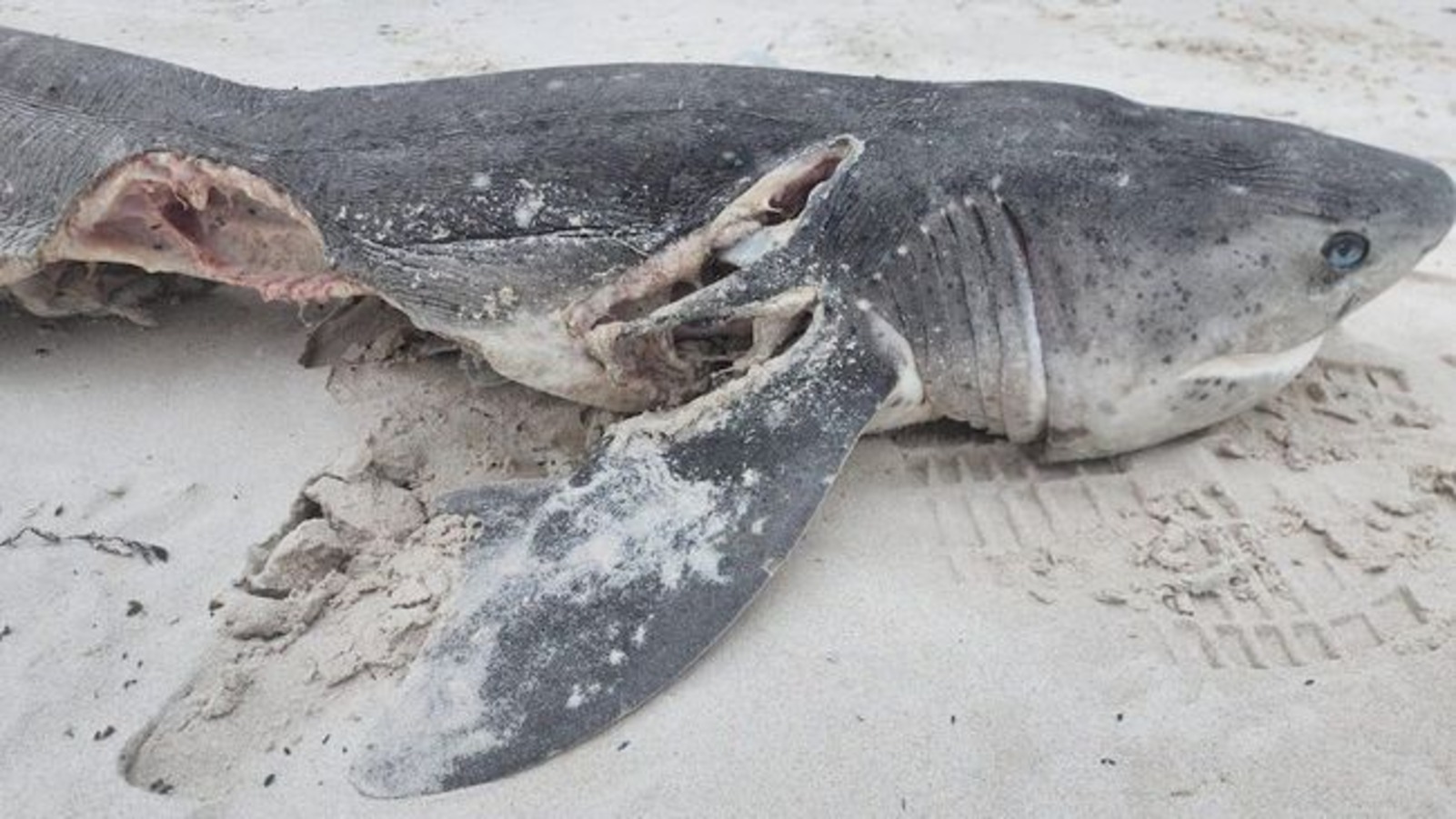
The remains of a shark that was attacked by orcas off the coast of South Africa. (Image credit: Marine Dynamics)
Some of the gory behaviors researchers have observed recently may actually be long-standing habits.
For instance, during the blue whale attacks, observers noted that the orcas inserted their heads inside live whales’ mouths to feed on their tongues. But this is probably not a new behavior — just a case of humans finally seeing it up close.
“Killer whales are like humans in that they have their ‘preferred cuts of meat,'” Pitman said. “When preying on large whales, they almost always take the tongue first, and sometimes that is all they will feed on.”
Tongue is not the only delicacy orcas seek out. Off the coast of South Africa, two males — nicknamed Port and Starboard — have, for several years, been killing sharks to extract their livers.
Killer whales are like humans in that they have their ‘preferred cuts of meat.’
Although the behavior surprised researchers at first, it’s unlikely that orcas picked up liver-eating recently due to social learning, Michael Weiss, a behavioral ecologist and research director at the Center for Whale Research in Washington state, told Live Science.
Related: Orcas attacked a great white shark to gorge on its liver in Australia, shredded carcass suggests
That’s because, this year, scientists also captured footage of orcas slurping down the liver of a whale shark off the coast of Baja California, Mexico. The likelihood that Port and Starboard transferred their know-how across thousands of miles of ocean is vanishingly small, meaning liver-eating is probably a widespread and established behavior.
“Because there are more cameras and more boats, we’re starting to see these behaviors that we hadn’t seen before,” Weiss said.
Sharing scavenging techniques
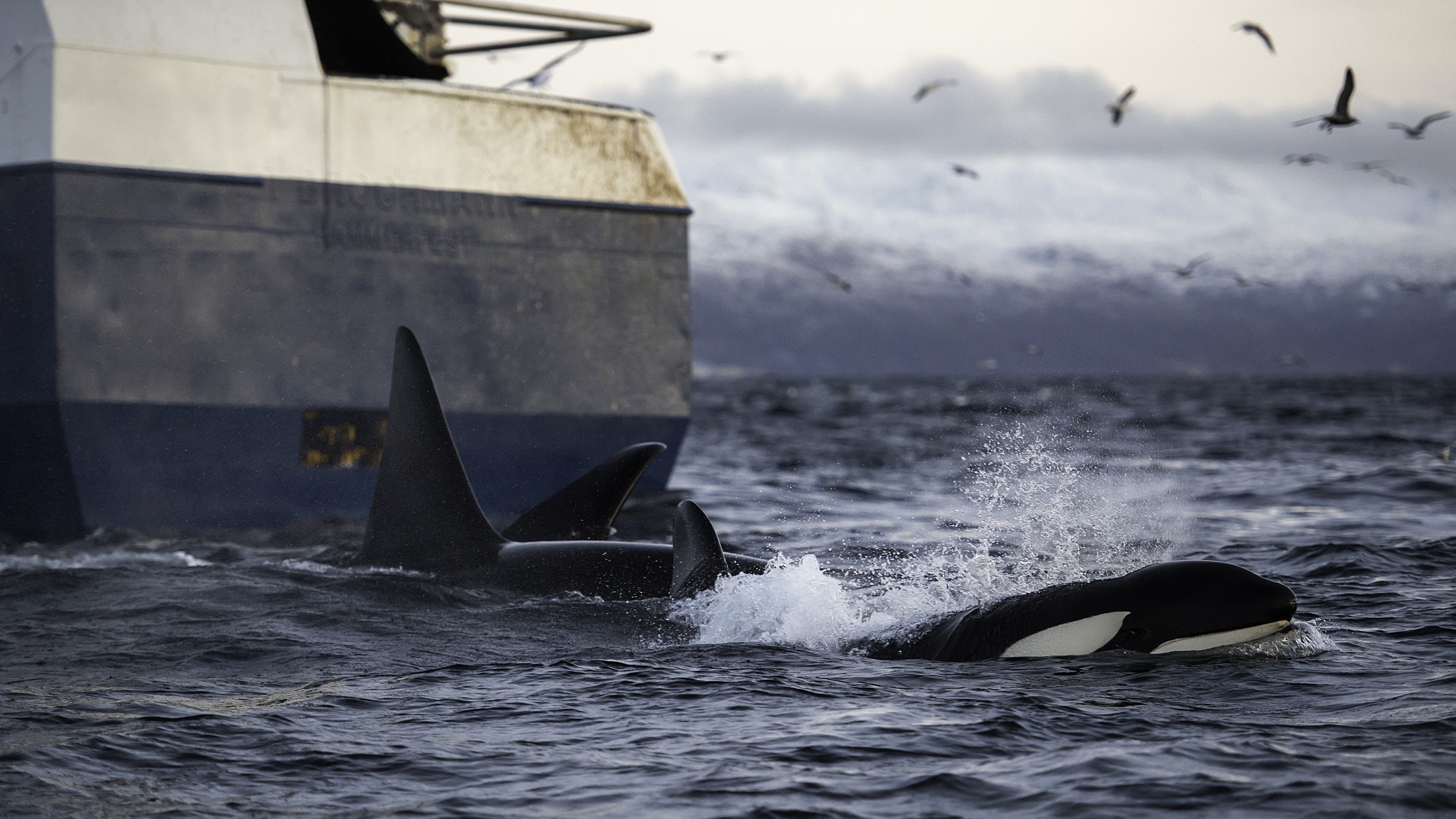
Orcas make an easy meal by following fishing boats and feasting on their catch. (Image credit: wildestanimal via Getty Images)
Orcas master and share more than hunting secrets. Several populations worldwide have learned to poach fish caught for human consumption from the longlines used in commercial fisheries and have passed on this information.
In the southern Indian Ocean, around the Crozet Islands, two orca populations have increasingly scavenged off longlines since fishing in the region expanded in the 1990s. By 2018, the entire population of orcas in these waters had taught one another to feast on longline buffets, with whole groups that previously foraged on seals and penguins developing a taste for human-caught toothfish.
Sometimes, orcas’ ability to quickly learn new behaviors can have fatal consequences. In Alaska, orcas recently started dining on groundfish caught by bottom trawlers, but many end up entangled and dead in fishing gear.
“This behavior may be being shared between individuals, and that’s maybe why we’re seeing an increase in some of these mortality events,” McInnes said.
Playing macabre games
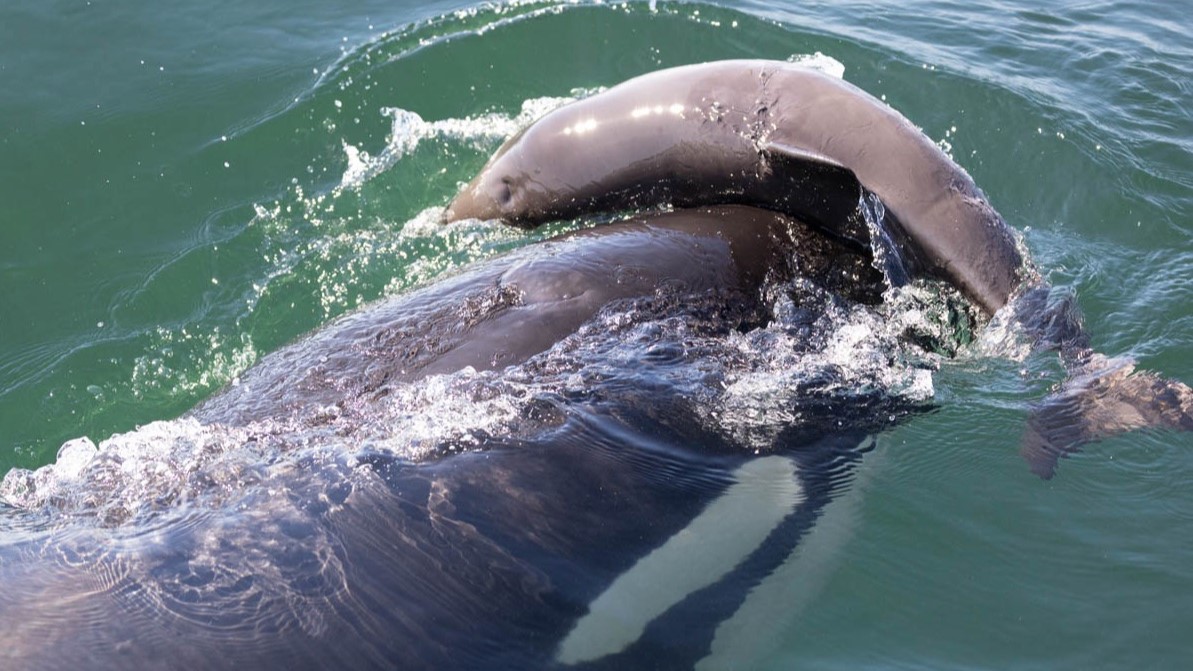
Orcas off the North Pacific coast have been playing with porpoises to death in a game that has lasted 60 years. (Image credit: Wild Orca)
Orcas’ impressive cognitive abilities also extend to playtime.
Related: ‘An enormous mass of flesh armed with teeth’: How orcas gained their ‘killer’ reputation
There are 78 recorded incidents of these orcas tossing porpoises to one another like a ball but not a single documented case of them eating the small mammals, Giles said. “In some cases, you’ll see teeth marks where the [killer] whale was clearly gently holding the animal, but the animal was trying to swim away, so it’s scraping the skin.”
The researchers think these games could be a lesson for young orcas on how to hunt salmon, which are roughly the same size as baby porpoises. “Sometimes they’ll let the porpoise swim off, pause, and then go after it,” Giles said.
Are humans driving orcas to become “smarter”?
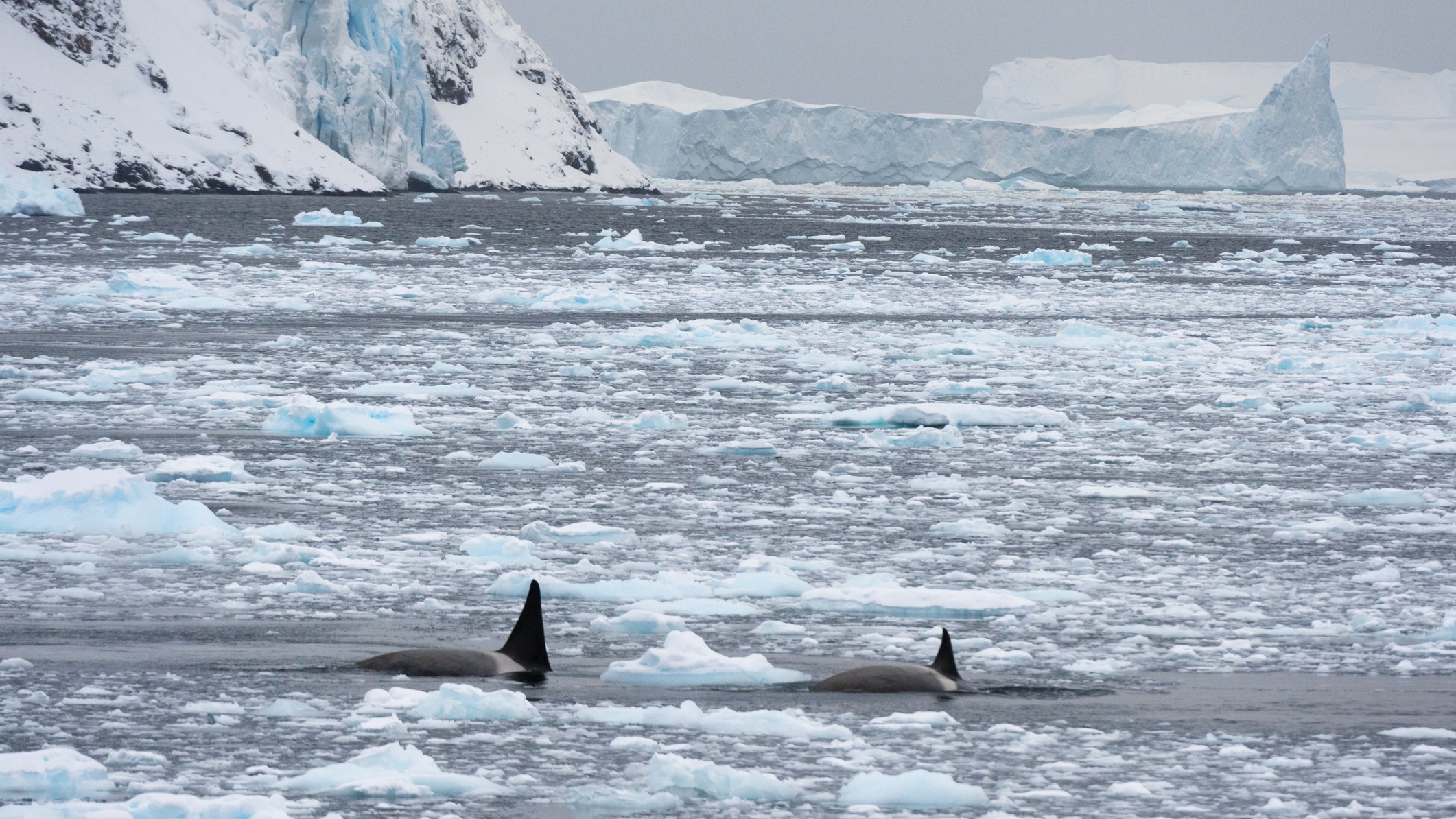
Orcas are adapting their hunting strategies to changing conditions in Antarctica. (Image credit: Delta Images via Getty Images)
Humans may indirectly be driving orcas to become smarter, by changing ocean conditions, McInnes said. Orca raids on longline and trawl fisheries show, for example, that they innovate and learn new tricks in response to human presence in the sea.
Human-caused climate change may also force orcas to rely more heavily on one another for learning.
In Antarctica, for instance, a population of orcas typically preys on Weddell seals (Leptonychotes weddellii) by washing them off ice floes. But as the ice melts, they are adapting their hunting techniques to catch leopard seals (Hydrurga leptonyx) and crabeater seals (Lobodon carcinophaga) — two species that don’t rely on ice floes as much and are “a little bit more feisty,” requiring orcas to develop new skills, McInnes said.
While human behaviors can catalyze new learning in orcas, in some cases we have also damaged the bonds that underpin social learning. Overfishing of salmon off the coast of Washington, for example, has dissolved the social glue that keeps orca populations together.
“Their social bonds get weaker because you can’t be in a big partying killer-whale group if you’re all hungry and trying to search for food,” Weiss said. As orca groups splinter and shrink, so does the chance to learn from one another and adapt to their rapidly changing ecosystem, Weiss said.
And while orcas probably don’t know that humans are to blame for changes in their ocean habitat, they are “acutely aware that humans are there,” McInnes said.
Luckily for us, he added, orcas don’t seem interested in training their deadly skills on us.

A vaccine that blocks the effects of fentanyl — including overdose — will enter human trials in the coming months, perhaps leading the way to the first-ever proactive treatment for opioid use disorder.
The initial trials will focus on assessing the safety of the vaccine, which was initially developed with funding from the U.S. Department of Defense. The shot was previously tested in rats and showed promising results. Now, it’s been licensed by startup ARMR Sciences, which will begin enrolling patients for Phase I clinical trials in the Netherlands in 2026, starting in either January or February.
You may like
How does the vaccine work?
The vaccine works by keeping fentanyl out of the brain, which it does by making the molecule a target of the immune system.
Fentanyl is a synthetic opioid with effects 50 times stronger than heroin. Opioids, also called narcotics, broadly work by binding to opioid receptors in the brain and spinal cord, triggering changes in nerve cell signaling that prevent pain and can create a euphoric high.
But these opioid receptors are also found in the part of the brain that controls breathing, so fentanyl can also reduce respiration to a deadly degree if used in excess. A 2-milligram dose of fentanyl — similar in volume to about a dozen grains of salt — can be fatal, according to the Drug Enforcement Agency (DEA).
If a person overdosing on fentanyl is treated with naloxone (better known by the brand name Narcan), quickly enough, these effects can be reversed. This antidote also binds to opioid receptors, thus blocking the effects of fentanyl.
ARMR’s vaccine takes a different approach: It works in the circulatory system, before the drug can reach the brain.
“This would be the first-ever treatment that does not work on the [opioid] receptor,” Gage told Live Science.
What’s in the vaccine?
To keep fentanyl from reaching the brain, the immune system must first recognize the drug. But fentanyl is a tiny molecule, not a pathogen like a virus, and immune cells don’t naturally react to its presence.
You may like
To spur an immune response to fentanyl, the University of Houston’s Colin Haile, an ARMR co-founder and scientific adviser, and his colleagues had to tie the opioid to something else.
They chose a deactivated diphtheria toxin called CRM197, a compound already used in vaccines on the market; once deactivated, the toxin is no longer toxic and instead helps rouse an immune response. To boost this immune response even further, they also added dmLT, a compound distilled from toxins produced by the Escherichia coli bacterium. This modified compound is not toxic itself, and it has also been tested in humans in trials of other, not-yet-approved, vaccines.
These two components are attached to a synthetic piece of the fentanyl molecule, which in and of itself cannot cause a high or pain relief.
When the immune system meets this combo of fentanyl fragments, CRM197 and dmLT, it builds antibodies that react to real fentanyl. These antibodies bind to the opioid, keeping it from crossing the brain’s protective membrane — the blood-brain barrier — and then clearing it from the body.
In rat studies, the vaccine blocked fentanyl from entering the rodents’ brain and also blocked the drug from depressing respiration and causing overdose.
How is the vaccine being tested?
So far, the studies on the vaccine have been in rodents, though dmLT and CRM197 have respectively been tested to some extent and are already used in other vaccines in humans. The protocol in rats is to give an initial dose of the fentanyl vaccine and then boosters three and six weeks out from the first dose, Haile told Live Science.
“The longest we’ve followed the animals in our studies is about six months and we saw complete blockade of fentanyl effects at six months post the initial vaccination,” Haile said. It remains to be seen how that will translate to “human years,” he noted, but lab rats live a couple of years in total, so the researchers think the vaccine will work for a long time in humans.
The initial human trials that will begin in early 2026 will enroll 40 people and will focus on detecting any safety issues with the vaccines, such as unwanted or dangerous side effects. Researchers will also draw blood samples from participants to make sure that the vaccine is spurring the creation of anti-fentanyl antibodies.
If these Phase I trials are successful, the next step will be Phase II trials to test the vaccine’s efficacy — how well the vaccine blocks fentanyl’s effects. In these trials, not only will antibody levels be tracked over time, but some participants will also be dosed with safe levels of fentanyl used for pain relief in medical procedures. This will be done under close supervision, to check that the vaccine works in the presence of the drug.
The new vaccine is designed to block the effects of fentanyl, including overdose. (Image credit: Getty Images)
Are there potential drawbacks to the vaccine?
Fentanyl has legitimate medical uses as a painkiller, especially in emergency situations. One concern about the vaccine is that people who take it will lose this option for pain relief.
However, the antibodies created by vaccination do not bind to other opioids — such as morphine, oxycodone or methadone — or to other pain-relief options, Haile said. That means there are alternatives if people who get the vaccine need pain relief down the line.
The drug also does not interfere with buprenorphine, a drug used to treat opioid use disorder by reducing withdrawal symptoms and cravings. Haile said he and his team are currently testing the vaccine in combination with naltrexone, a non-opioid medication also used to block the effects of opioids in treatment of substance use.
In theory, it might be possible to take enough fentanyl to override the body’s supply of anti-fentanyl antibodies, Haile said. However, given that the vaccine blocks fentanyl’s euphoric effects, he expects people who want to quit will not be motivated to try to work around it.
“We want people who want to quit, want to not use the drug,” he said. “That will give them a chance to realize that they won’t get high from this drug and there is no use in taking it any longer.”
Who might benefit from the fentanyl vaccine?
Gage suggested that one market for the vaccine could be first responders concerned about accidental fentanyl exposure. (That concern has risen in recent years with the spread of misinformation about fentanyl.)
For clarity: if fentanyl gets on your skin via casual exposure — for example, if you touch an object that’s been exposed to the drug — it will not absorb through the skin. Meaningful absorption through the skin requires direct contact to the drug over hours or days. That said, if an EMT or police officer gets the drug on their hands and then touches their mouth or eyes, they could feel some of the drug’s analgesic, or pain-relieving, effects, Haile said.
The vaccine could also be “an extra tool in the toolset” for people with opioid use disorder, Gage said. Combining the vaccine with “robust” cognitive behavioral therapy, a type of talk therapy, and communal support could be “incredibly beneficial to people who are just looking for another lifeline to help themselves get better,” he said.
Finally, the vaccine could be beneficial for people who use less-deadly drugs — such as cocaine, stimulants or painkillers — that they buy on the black market. That’s because these drugs are increasingly cut with fentanyl, meaning people may overdose without even knowing they are taking the opioid.
“I had two close childhood friends who passed away from fentanyl overdose,” Gage said. “Neither of them were seeking it out.”
Over 48,000 people are estimated to have died of opioid overdoses in 2024 in the U.S., according to provisional data. Perhaps due to this high death toll, early research suggests that people with personal experience with opioid use disorder and the general public alike view a possible anti-fentanyl vaccine positively. Time will tell how the new vaccine will perform in human trials, but if eventually approved, it could be a first-of-its-kind tool against overdose deaths.
This article is for informational purposes only and is not meant to offer medical advice.


Halafian pottery shows that early agricultural societies practiced advanced mathematical thinking through plant-based art long before writing. Researchers report that the Halafian culture of northern Mesopotamia (c. 6200–5500 BCE) created the earliest known systematic plant imagery in prehistoric art. Fine pottery from this period features flowers, shrubs, branches, and trees arranged with careful symmetry and […]
SOURCE PAGE
SCIENCE
UK medical regulator warns against buying weight-loss jabs from social media channels | Obesity


Losing weight may be a common new year resolution but health experts have warned against buying medications for such purposes from social media sellers or other illegitimate channels.
Jabs such as Wegovy and Mounjaro have become hugely popular for weight loss, with trials suggesting the latter can help people lose an average of 20% of their body weight after 72 weeks of treatment.
However, with demand high, access on the NHS limited, a prescription required and a hefty price tag attached, the black market for such medications is booming.
The Medicines and Healthcare products Regulatory Agency (MHRA) has issued a fresh warning to those planning to use weight-loss medications, stressing the importance of only buying them from registered UK pharmacies or legitimate retailers.
“People often look for ways to support their health at this time of year but buying medicines from illegal online sellers can put your health at real risk,” said Jenn Matthissen, of the MHRA’s safety and surveillance team. “Always make sure you are using authorised products from legitimate sources and speak to a healthcare professional for advice on safe, evidence-based options.”
The black market for weight-loss medications is big business: in October the MHRA revealed it had seized more than £250,000 worth of counterfeit weight-loss jab products from a factory in Northampton, including injection pens for retatrutide, an experimental drug that is not licensed in the UK.
A subsequent Guardian investigation found that the company linked to the products, Alluvi Healthcare Ltd, had continued to advertise replicas of retatrutide on multiple Telegram channels.
Banks have warned of scams relating to weight-loss medications, noting that victims lose £120 on average.
The MHRA has previously issued warnings about beauty salons, fake pharmacy websites and social media posts selling prescription weight-loss medications without a prescription – an illegal practice. Key signs to watch out for, the agency notes, are social media posts offering unusually low prices, “miracle results” or “quick fixes”.
Among other concerns, the MHRA says products bought from such sellers could be counterfeit, contaminated or contain the wrong doses, while they may also contain unlisted ingredients that could pose a danger to health.
Experts have also warned that illicit sellers may not store weight-loss medications correctly, noting that the safety and effectiveness of the drugs could be impaired should they be subjected to extremely cold temperatures or freeze.
The health minister Dr Zubir Ahmed said: “As a practising doctor and patient safety minister, I want to be absolutely clear: please do not buy weight loss medications from unregulated sources. These products are made with no regard for safety or quality and pose a major risk to unwitting customers.
“Don’t line the pockets of criminals who don’t care about your health. Safe, appropriate, licensed obesity drugs can greatly benefit those with a clinical need but should be obtained from a registered pharmacy against a valid prescription.”


You are currently making a conscious, willful decision to read this article. But physics says every action has a cause. So did you really make this decision as freely as you thought?
One of the bedrock philosophical concepts under all of physics is something called causal determinism. It says that every effect has a cause, and that if you know the current state of a system, you can use the power of physics to predict how it behaves. If effects happened without causes, then there wouldn’t be much need for physics. And if we couldn’t predict how systems would behave, then we wouldn’t be very good at our jobs.
You may like
So, at first glance, it seems like our understanding of physics forbids free will. We don’t really have a choice, because if we had perfect knowledge of all the molecules and electrical activity in our brains, then we must be able to determine our choices in advance.
But there are three aspects of physics that add some wrinkles to this line of thinking.
The first is chaos theory. Some systems are easy to predict. But others, like double pendulums and weather patterns, are much harder to tackle. In these special kinds of systems, even a minuscule amount of uncertainty in the measurement of the initial state of a system very quickly compounds into complete ignorance about its future behavior. Strangely, these systems are perfectly deterministic; causes always lead smoothly to effects, so there’s no mystery there. But they are impossible to predict well into the future.
The second wrinkle comes from quantum mechanics, which tells us that it’s impossible to predict the outcomes of many kinds of experiments involving subatomic particles. Probabilities rule the day there, and the best we can do is assign chances to certain outcomes. Quantum mechanics is still a deterministic theory of nature — but again, it places a layer of ignorance over our understanding. We can’t say for sure where a particle will go or how it will behave; we can only say what might happen. But it’s not clear if the probabilistic rules of quantum mechanics apply to things like neural connections in the brain and the rise of consciousness, which is an emergent phenomenon.
The last wrinkle is exactly that: emergence. Fundamental descriptions of nature do not automatically guarantee an understanding of more complex systems. For example, we have an incredibly sophisticated theory of particle physics, based on quantum field theory, but that sophisticated theory works only when describing quantum systems. We have no quantum field theory description of how a star forms, or why chocolate tastes so good. We have to adopt other laws and theories to describe the systems as a whole.
None of these wrinkles gives a clear-cut yes-or-no answer to the question of free will. But they do show that our understanding of physics is limited. Most philosophers believe in a class of ideas under the heading of “compatibilism,” which says that free will and physics can live together in harmony. It might be that our understanding of nature is not yet sophisticated enough to explain how free will can work with causal determinism.
In other words, if we work hard enough, we might someday reach a level of understanding that preserves causal determinism and all the usual physics goodness while including things like free will in a framework that makes sense.
Either way, we have no choice but to keep asking.
SCIENCE
‘Stop and re-check everything’: Scientists discover 26 new bacterial species in NASA’s cleanrooms


NASA’s cleanrooms rank among the cleanest spaces on Earth, and for good reason — these sterile spaces are fortified to prevent even the hardiest Earth microbes from hitching a ride to other worlds aboard NASA spacecraft. Yet even in the most sterile places on Earth, life finds a way.
Now, experts plan to test these newfound bugs inside a “planetary simulation chamber” that could reveal whether these microbes, or ones with similar adaptations, could survive a trip through space to Mars, possibly contaminating the alien worlds on arrival.
You may like
“It was a genuine ‘stop and re-check everything’ moment,” study co-author Alexandre Rosado, a professor of Bioscience at King Abdullah University of Science and Technology in Saudi Arabia, told Live Science about the findings, which were described in a paper published in May in the journal Microbiome. While there were relatively few of these microbes, they persisted for a long time and in multiple cleanroom environments, he added.
Identifying these unusually hardy organisms and studying their survival strategies matters, the researchers say, because any microbe capable of slipping through standard cleanroom controls could also evade the planetary-protection safeguards meant to prevent Earth life from contaminating other worlds.
When asked whether any of these microbes might, in theory, tolerate conditions during a journey to Mars’ northern polar cap, where Phoenix landed in 2008, Rosado said several species do carry genes that may help them adapt to the stresses of spaceflight, such as DNA repair and dormancy-related resilience. But he cautioned that their survival would depend on how they handle harsh conditions a microbe would face both during space travel and on Mars — factors the team didn’t test — including exposure to vacuum, intense radiation, deep cold and high levels of UV at the Martian surface.
To explore that question, the researchers are now building a planetary simulation chamber at the King Abdullah University of Science and Technology in Saudi Arabia to expose the bacteria to Mars-like and space-like conditions, Rosado said. The chamber, now in its final assembly phase, with pilot experiments expected to begin in early 2026, is engineered to mimic stresses such as the low, carbon-dioxide-rich air pressure of Mars, high radiation, and the extreme temperature swings the microbes would face during spaceflight. These controlled environments will allow scientists to investigate how hardy microbes adapt and survive under combinations of stresses comparable to those encountered during spaceflight or on the Martian surface, said Rosado.
The planetary simulation chamber at King Abdullah University of Science and Technology in Saudi Arabia. Scientists will soon use it to recreate Mars-like and space-like conditions and test how the newly discovered microbes survive and adapt. (Image credit: Niketan Patel and Alexandre Rosado/King Abdullah University of Science and Technology)
‘Cleanrooms don’t contain ‘no life”
NASA’s spacecraft-assembly cleanrooms are engineered to be hostile to microbes — a cornerstone of the agency’s efforts to prevent Earth organisms from hitchhiking to worlds beyond Earth — through continuously filtered air, strict humidity control and repeated treatments using chemical detergents and UV light, among other measures.
Even so, “cleanrooms don’t contain ‘no life,'” said Rosado. “Our results show these new species are usually rare but can be found, which fits with long-term, low-level persistence in cleanrooms.”
During the Phoenix lander’s assembly at the Kennedy Space Center’s Payload Hazardous Servicing Facility, a team led by study co-author Kasthuri Venkateswaran, who is a senior research scientist at NASA’s Jet Propulsion Laboratory, collected and preserved 215 bacterial strains from the cleanroom floors. Some samples were gathered before the spacecraft arrived in April 2007, again during assembly and testing in June, and once more after the spacecraft moved to the launch pad in August, according to the study.
You may like
At the time, researchers lacked the technology to classify new species precisely or in large numbers. But DNA technology has advanced dramatically in the 17 years since that mission, and today scientists can sequence almost every gene these microbes carry and compare their DNA to broad genetic surveys of microbes collected from cleanrooms in later years. This allows scientists “to study how often and for how long these microbes appear in different places and times, which wasn’t possible in 2007,” said Rosado.
Further analysis revealed a suite of survival strategies. Many of the newly identified species carry genes that help them resist cleaning chemicals, form sticky biofilms that anchor them to surfaces, repair radiation-damaged DNA or produce tough, dormant spores — adaptations that help them survive in tucked-away corners or microscopic cracks, the study reports. This makes the microbes “excellent test organisms” for validating the decontamination protocols and detection systems that space agencies rely on to keep spacecraft sterile, Rosado said.
From a broader research standpoint, Rosado said the next step is coordinated, long-term sampling across multiple cleanrooms using standardized methods, paired with controlled experiments that measure microbes’ survival limits and stress responses, said Rosado.
“This would give us a much clearer picture of which traits truly matter for planetary protection and which might have translational value in biotechnology or astrobiology,” he said.

A bevy of supermoons, a dramatic total solar eclipse and a “blood moon” total lunar eclipse are some of the highlights of the coming lunar year, which will also include plenty of beautiful close conjunctions of the crescent moon and planets.
Here are some dates for this year’s moon-gazing diary.
You may like
1. The year’s first supermoon: Jan. 3, 2026 (dusk)

See a supermoon on Jan. 3, 2026. (Image credit: Hal Bergman via Getty Images)
The first full moon of 2026, January’s Wolf Moon, will be a supermoon, meaning it will appear larger and brighter because it will be at or near its closest point to Earth in its elliptical orbit. Although it’s the first of three supermoons in 2026, it’s the last in a series of four from the back end of 2025.
2. “Ring of fire” annular solar eclipse: Feb. 17, 2026 (daytime)
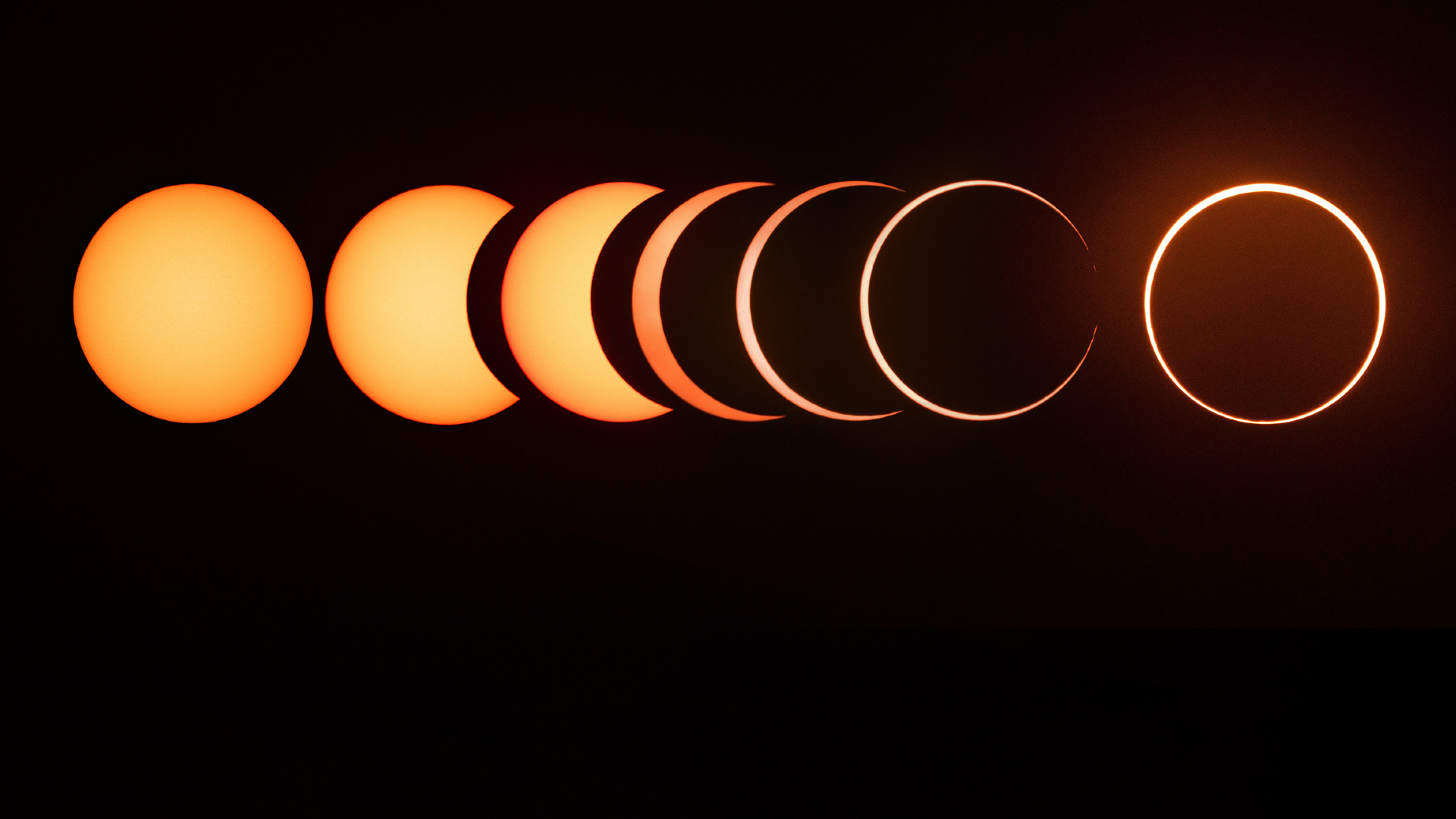
An annular solar eclipse will occur on Feb. 17, 2026. (Image credit: goh keng cheong via Getty Images)
Will anyone be able to see the “ring of fire” annular solar eclipse on Feb. 17, 2026? The moon will eclipse up to 96% of the sun’s center for up to 2 minutes, 20 seconds, but only for scientists at a few research stations — the French-Italian Concordia Station in the interior and the Russian Mirny Station in Queen Mary Land on the Davis Sea coast. A partial solar eclipse will be seen across Antarctica and from parts of southern Africa and Argentina.
Related: Annular solar eclipse 2026: Everything you need to know about the ‘ring of fire’
Crescent moon and Mercury: Feb. 18, 2026 (after sunset)

See a young moon and Mercury on Feb. 18, 2026. (Image credit: Stellarium)
About 45 minutes after sunset on Feb. 18, something relatively rare will be on show: a conjunction between a superslim crescent moon and the elusive planet Mercury. Visible low in the western sky, the moon will be barely 2%-lit, so you’ll likely need binoculars to see it. Below will be Venus, with Saturn above.
4. “Blood moon” total lunar eclipse: March 2-3, 2026 (night to early morning)
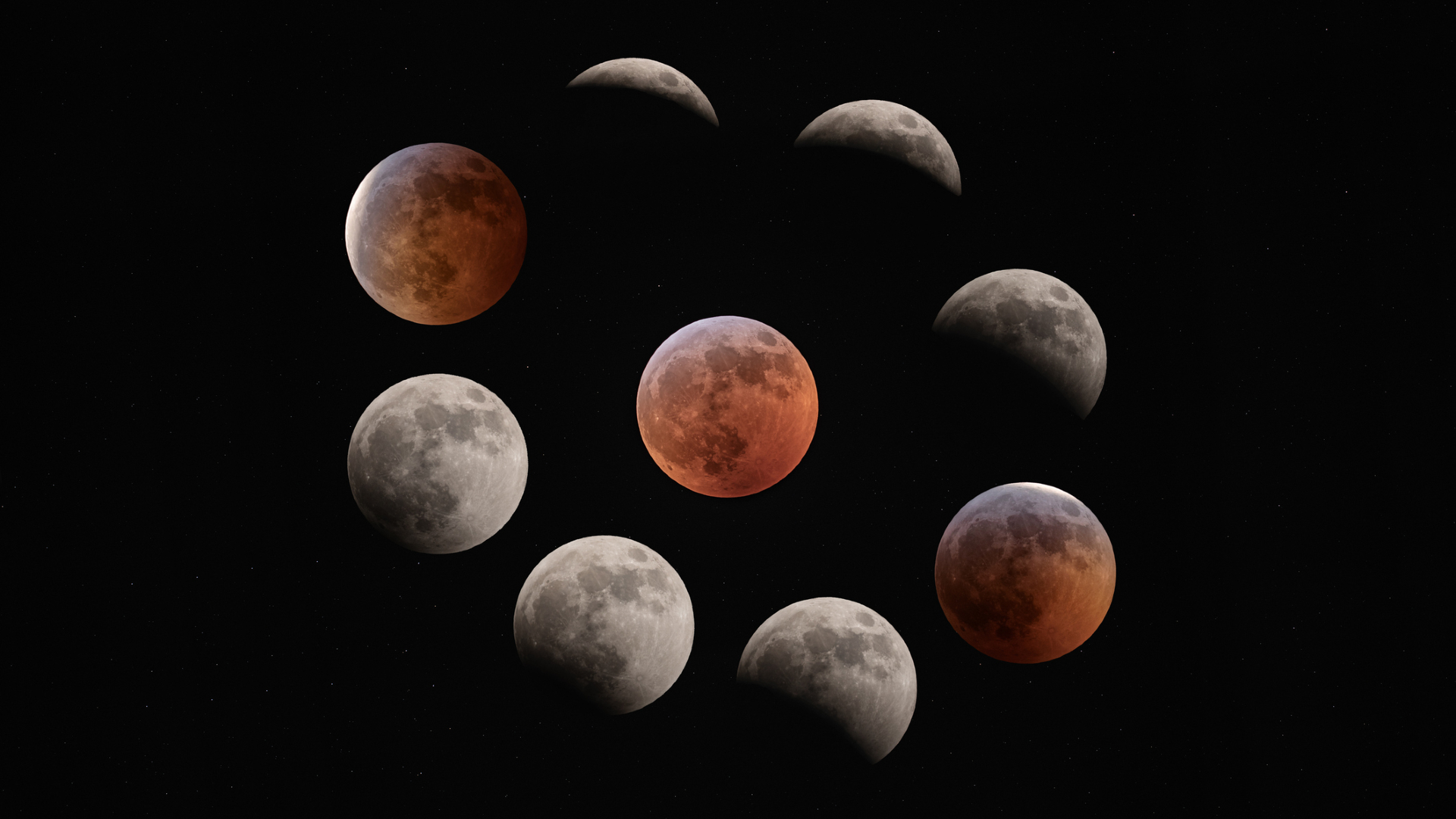
Don’t miss the total lunar eclipse on March 2-3, 2026. (Image credit: Jonkman Photography via Getty Images)
Total lunar eclipses often come in threes. There were two in 2025, one of which wowed skywatchers in North America, and the final in the trio comes in early March 2026 — the last until 2029. During this event, the full Worm Moon will transit Earth’s shadow to become a reddish-orange “blood moon” for 58 minutes as seen from parts of western North America, Australia, New Zealand, East Asia and the Pacific.
5. Crescent moon and Venus: March 20, 2026 (after sunset)

See the crescent moon close to Venus on March 20, 2026. (Image credit: Stellarium)
The sight of a young moon close to a bright planet will be on offer about 45 minutes after sunset on March 20, when a 5%-lit waxing crescent moon will hang above the bright planet Venus. Find an unobstructed western horizon, and take along a pair of binoculars.
6. Crescent moon, Venus and the Pleiades: April 19, 2026 (after sunset)
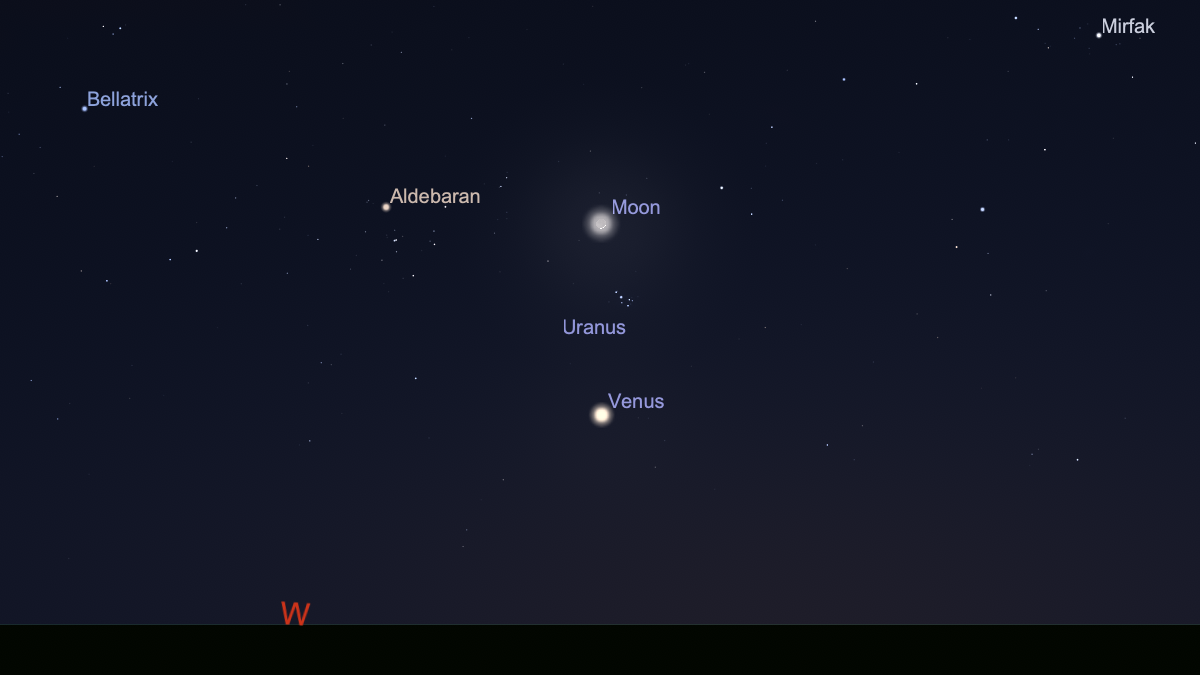
See a crescent moon, Venus and the Pleiades on April 19, 2025. (Image credit: Stellarium)
Look west an hour after sunset on April 19 for a spectacular panorama close to the sinking stars of Orion as a 9%-lit waxing crescent moon gets close to the Pleiades (also known as the “Seven Sisters” star cluster), with bright Venus below.
You may like
7. Total solar eclipse: Aug. 12, 2026 (daytime)
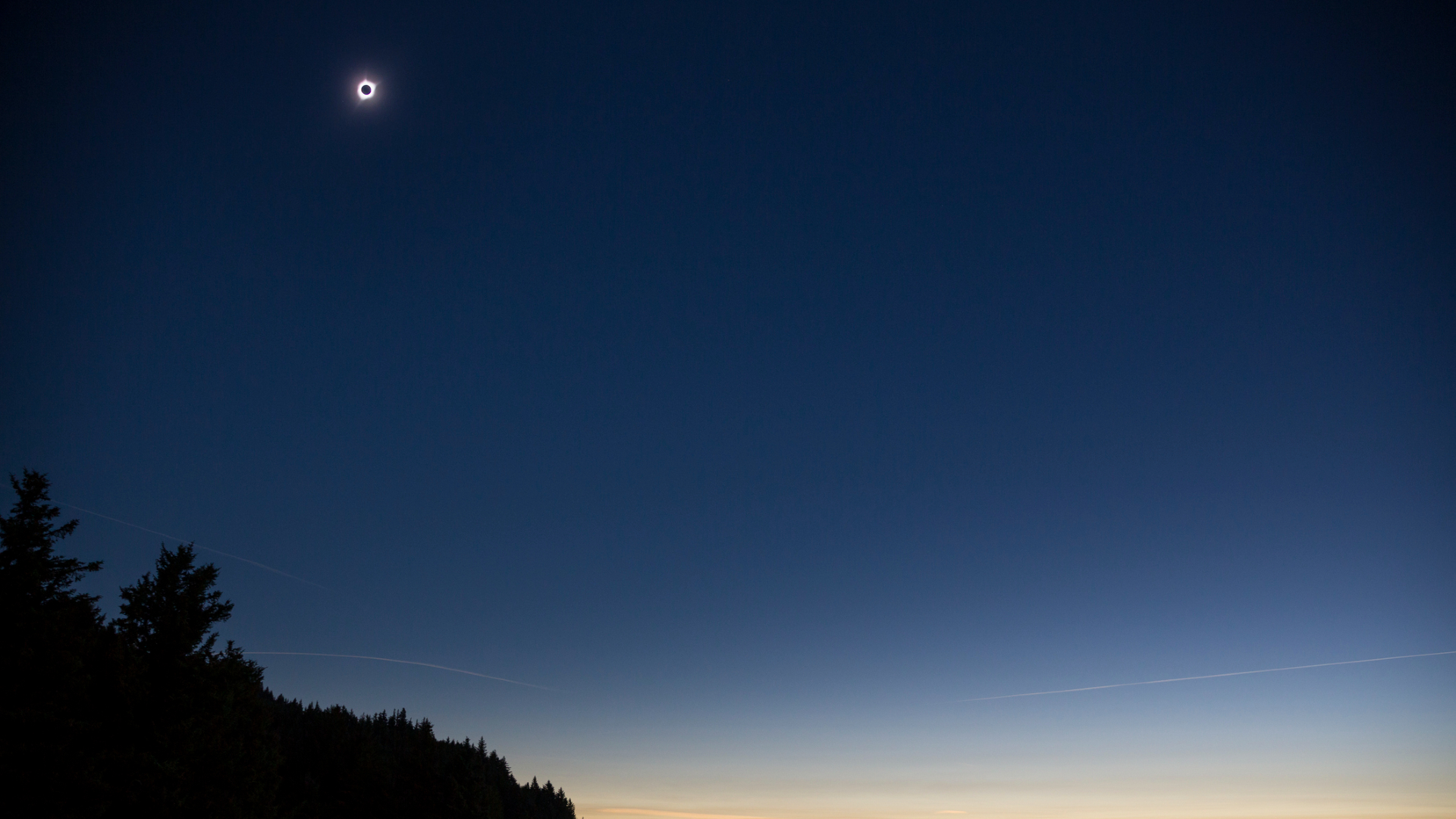
A total solar eclipse will be visible from parts of Europe on Aug. 12, 2026. (Image credit: Tegra Stone Nuess via Getty Images)
Even though it won’t be visible, the moon will arguably perform its greatest trick of all on Aug. 12, 2026, when its silhouette will perfectly block the sun for up to 2 minutes, 18 seconds, as seen from eastern Greenland, western Iceland and northern Spain. All of Europe will experience a deep partial solar eclipse, while North America will see a small partial eclipse.
Related: Total solar eclipse 2026 — Everything you need to know
8. Partial lunar eclipse: Aug. 27-28, 2026 (after dark)
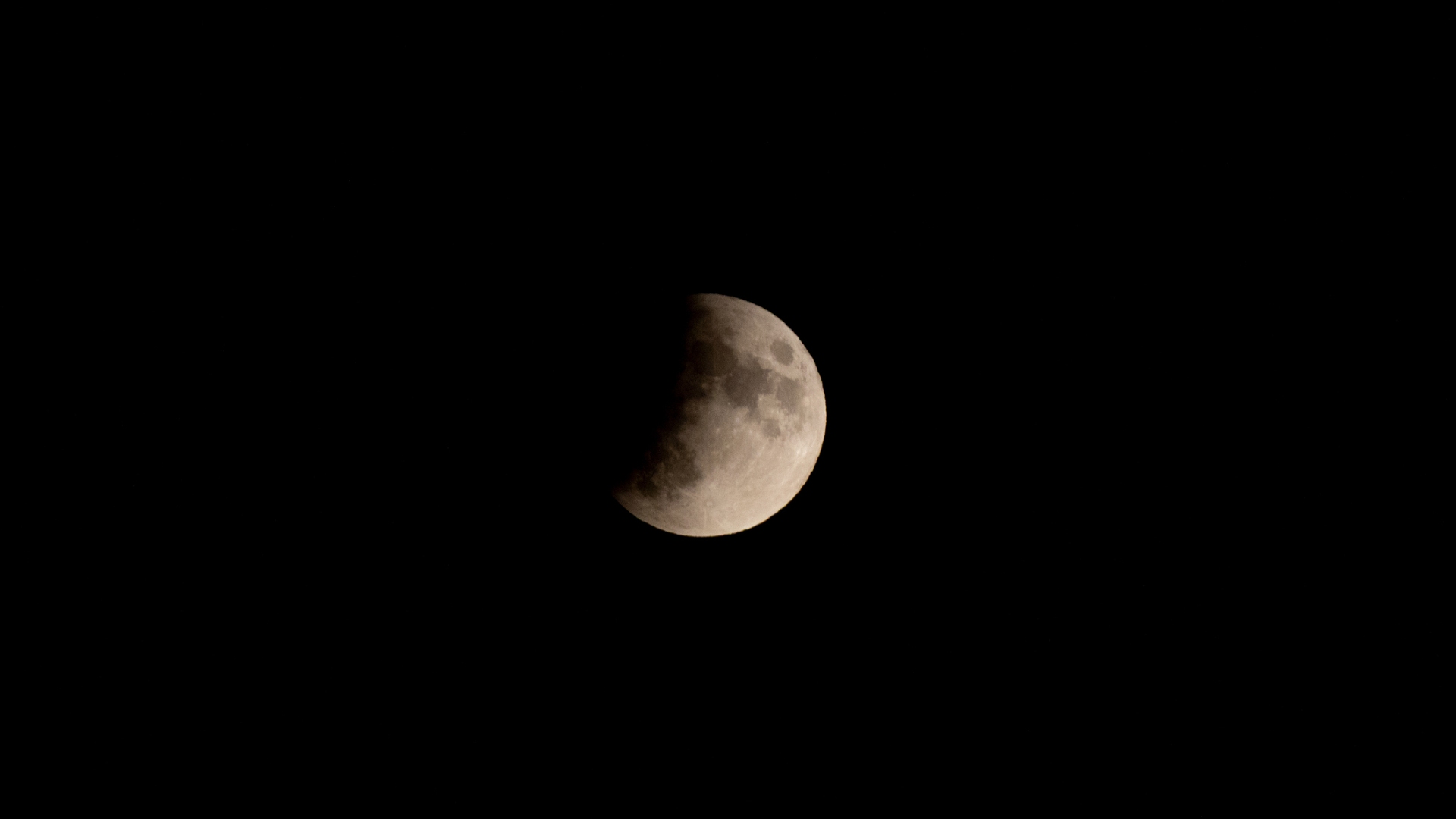
Don’t miss the partial lunar eclipse on Aug. 27-28, 2026. (Image credit: Apostoli Rossella via Getty Images)
The second lunar eclipse of 2026 — which will be visible from North America, South America, Europe and Africa — won’t quite live up to the first in March. Although the moon will enter Earth’s central shadow in space, a 4% sliver of it won’t, causing the lunar surface to turn mostly reddish. Although there will be no totality, the edge of Earth’s shadow will gradually move across the moon and back again, which is always a grand sight.
9. Moon in the Beehive Cluster: Sept. 8, 2026 (before sunrise)

See a crescent moon close to M44 on Sept. 8, 2026. (Image credit: Stellarium)
Look east about 45 minutes before sunrise to see a lovely 9%-lit waning crescent moon just beneath the Beehive Cluster, also known as M44, which contains about 1,000 stars and is located 600 light-years from the solar system. You’ll need binoculars to see M44 properly.
10. Moon in conjunction with Saturn: Sept. 26, 2026 (after sunset)

See the moon close to Saturn on Sept. 26, 2026. (Image credit: Stellarium)
Saturn will be prominent in the night sky in late 2026, but it will become most noticeable when the moon passes close by. That happens in the east on Sept. 26, just before the moon turns full.
11. A crescent moon and Jupiter: Oct. 6. 2026 (before sunrise)

See a crescent moon close to Jupiter on Oct. 6, 2026. (Image credit: Stellarium)
Here comes a rare and special sight: a very close conjunction of the moon and Jupiter, with just 10 arc seconds (three-thousandths of a degree) separating them. Best seen in the east about 90 minutes before sunrise, the moon will be about 20% lit, with “Earthshine” visible on its night side, closest to the giant planet.
12. A crescent moon close to Mars and Jupiter: Nov. 2, 2026 (before sunrise)

The moon and Mars will be in close conjunction on Nov. 2, 2026. (Image credit: Stellarium)
Mars won’t be in the night sky for much of the first half of 2026, but by October, it will be visible in the southeast before sunrise. On Nov. 2, 2026, the Red Planet will be visited by a 43%-lit waning crescent moon, with Jupiter just below.
13. The closest supermoon since 2019: Dec. 23, 2026 (dusk)

Don’t miss the supermoon on Dec. 23. (Image credit: Cavan Images via Getty Images)
In 2026, there will be three supermoons — on Jan. 3, Nov. 24 and Dec. 23 — but one is a standout. The full moon on Dec. 23 will be the closest full moon to Earth since 2019. At just 221,668 miles (356,740 kilometers) from our planet, it will edge out the Feb. 19, 2019, supermoon by about 60 miles (100 km), making it the biggest and brightest full moon in nearly eight years. However, two supermoons will come even closer on Feb. 10, 2028, and March 30, 2029.
Jamie Carter is the author of “Stargazing In 2026: 50 Things To See In The Night Sky From North America.”
SCIENCE
Lchashen wagon: A 3,500-year-old covered wagon that transported a deceased chief to the next world

QUICK FACTS
Name: Lchashen wagon
What it is: An oak wagon
Where it is from: Lchashen village, Armenia
When it was made: Circa 1500 B.C.
Covered wagons are often associated with the Old West. But the best-preserved example of an ancient covered wagon was actually found in a Bronze Age grave in Armenia, where it had been buried for 3,500 years.
On display at the History Museum of Armenia in Yerevan, the Lchashen wagon was made of at least 70 parts joined together by a mortise-and-tenon system involving slotted pieces of wood and bronze fittings. The frame of the canopy required at least 600 mortise holes, archaeologist Stuart Piggott wrote in a 1968 study, indicating the precise workmanship that went into creating the wagon.
You may like
The wagon measures approximately 6.5 feet (2 meters) in length. Each wooden wheel was made of two slabs of wood joined together and measured a whopping 63 inches (160 centimeters) tall, historian Christoph Baumer wrote in “History of the Caucasus” (Bloomsbury, 2021).
The Lchashen wagon was discovered in the 1950s, when construction workers from the Soviet Union drained part of Lake Sevan in Armenia to help irrigate a nearby plain. They found a Late Bronze Age cemetery that contained more than 500 burials, along with hundreds of grave goods. One distinctive feature of the Lchashen necropolis is the presence of two- and four-wheeled wagons, as well as bronze models of war chariots, archaeologist L.A. Petrosyan wrote in a 2016 study.
Although some claim the Lchashen wagon is the “oldest in the world,” there is abundant evidence of both wagon technology and covered wagons that predate this example. The exact invention dates are still being debated, but humans likely first invented the wheel and wheeled vehicles in Mesopotamia in the Copper Age, between about 4500 and 3300 B.C.
MORE ASTONISHING ARTIFACTS
But the Lchashen wagon is a very early — as well as the best-preserved — example of a covered wagon with spoked wheels on axles, demonstrating innovation in early wheeled vehicles. Whether this technology was invented in Armenia or came from Mesopotamia to the south or the Russian steppe to the north is still being investigated.
According to the History Museum of Armenia, burials with wheeled vehicles arose in the Middle Bronze Age (2400 to 1500 B.C.) in Armenia but became most popular in the Late Bronze Age, when they were used as vehicles for physically and metaphorically transporting the remains of a deceased leader into the next life.
For more stunning archaeological discoveries, check out our Astonishing Artifacts archives.
SCIENCE
Science history: Richard Feynman gives a fun little lecture — and dreams up an entirely new field of physics — Dec. 29, 1959

Milestone: Vision of nanotechnology laid out
Date: Dec. 29, 1959
Where: Pasadena, California
Who: Richard Feynman
On a December day, Richard Feynman gave a fun little lecture at Caltech — and dreamed up an entirely new field of physics.
How small? Feynman went on to discount advances of the time, such as writing the Lord’s Prayer on the head of a pin, as trivial.
You may like
“But that’s nothing; that’s the most primitive, halting step in the direction I intend to discuss. It is a staggeringly small world that is below,” Feynman said in his lecture. Rather, he suggested, people could write the entire 24-volume encyclopedia on the head of a pin, and elegantly showed that there’s enough space there to write it legibly and read it out.
He then explored the possibility of a number of then-futuristic ideas: electron microscopes capable of manipulating individual atoms, ultracompact data storage, miniaturized computers, and powerful, ingestible biological machines that travel into organs like the heart, find defects, and repair them with tiny knives. He proposed a number of ways to create these small-scale innovations, including manipulating light and ions.
He ended the lecture by offering a reward of $1,000 to anyone who could miniaturize the text in a book 25,000-fold, such that it could be read using an electron microscope. He offered another $1,000 to anyone who could make a motor no bigger than 1/64th of an inch cubed.
Richard Feynman dreamed up the notion of nanotechnology in 1959, but the word wouldn’t be coined until 1974. Historians debate how much his vision drove innovations in the field. (Image credit: Photo 12 / Contributor/ Getty Images)
The latter of these prizes was scooped up the following year by engineer William McLellan, who created a 250-microgram motor composed of 13 parts. In his award letter, Feynman congratulated McLellan on the feat but joked that he shouldn’t “start writing small,” lest he solve the first challenge, too and expect to receive the other $1,000 prize.
“I don’t intend to make good on the other one. Since writing the article I’ve gotten married and bought a house!” Feynman wrote.The former challenge was eventually solved in 1985, when Stanford graduate Thomas Newman miniaturized the first page of the Dickens classic “A Tale of Two Cities.” Feynman did, ultimately, pay up for the second prize.
Feynman’s Caltech talk is now mythologized as having ushered in the field of nanotechnology. And yet, the term “nanotechnology” itself was not coined until 15 years after his talk, when scientist Norio Taniguchi penned a paper about manipulating material at the atomic scale.
In that 1974 paper, Taniguchi described nanotechnology as “the processing of separation, consolidation, and deformation of materials by one atom or one molecule.” Many science historians now argue that the field was following its own trajectory, and that Feynman’s talk, while prescient, wasn’t the actual driver of future innovations. Prior to 1980, his talk was cited less than 10 times.
Whether it drove innovation or not, since Feynman’s famous lecture, many of his predictions have proven true. The scanning tunneling microscope manipulated individual xenon atoms in 1990. Computers more powerful than he described now sit in our pockets, rather than taking up whole rooms. And indeed, tiny nanobots have been designed that can repair damaged blood vessels.

You can track down one of the zodiac’s fainter constellations this week. Aries, the ram, lies between Taurus to the east and Pisces to the west. In the northern hemisphere, it is situated at its best during the deep winter months.
Aries is an ancient constellation. It was originally designated by the early Babylonians as a hired hand who tended fields, but became recognised as a ram and has remained so in most sky cultures. To the Egyptians, it was Amun-Ra, the ram-headed god of creativity and fertility. In Greek myth, Aries is associated with the golden fleece that Jason and the Argonauts sought.
The constellation contains only two brighter stars, Hamal and Sheratan. They are situated close to one another and so most people’s first recognition of the ram begins with these two stars. Even so, they are dimmer than the most obvious stars in the night sky, and so often some help is needed. This week, the moon provides that assistance.
The chart shows the view looking south from London at 8pm GMT on 29 December. On this night, our natural satellite will be a handy signpost with 72% of its visible surface illuminated. From the southern hemisphere, look towards the north-west as the sun sets.

More than 300 earthquakes have been recorded in the UK this year, according to the British Geological Survey (BGS).
Among the most active regions to experience quakes were Perthshire and the western Highlands in Scotland, southern parts of Wales, and Yorkshire and Lancashire in England, the BGS data shows.
Perth and Kinross experienced the two most powerful onshore earthquakes, which occurred hours apart on 20 October near Loch Lyon: a 3.7-magnitude tremor followed by a 3.6-magnitude event.
One person described it as feeling “like an underground subway under my house”, while another said “the house shook and all the windows rattled”.
After the event, the BGS received 198 “felt reports” from people describing their experience of the quake, some more than 37 miles from the epicentre.
The BGS reported that 34 out of the 309 recorded earthquakes occurred near Loch Lyon between October and December. The third-largest onshore earthquake recorded was a magnitude-3.2 event at Silverdale, Lancashire, on 3 December, with 700 people reporting the tremor.
The Dogger Bank earthquake of 1931 remains the strongest earthquake recorded in the UK since measurements began, with a magnitude of 6.1.
Dr Brian Baptie, a seismologist at the BGS, said: “The data shows that earthquakes occurred in many parts of Great Britain over the past 12 months, with numerous events in Scotland, England and Wales that were each significant enough to be widely felt by many nearby.”
A BGS scientist installs seismic monitoring equipment. Photograph: British Geological Survey/UKRI/PA
Baptie added that while significant quakes are rare, the UK experienced one virtually every day this year. “It is a reminder that small earthquakes happen all the time and it remains of critical importance that they are studied to help us understand the possible impact of the rare large earthquakes on major energy and infrastructure projects around the country,” he said.
The BGS use a network of 80 monitoring stations around the UK to record seismic activity.
Baptie said it was no surprise that Perth and Kinross topped the list. “The west of Scotland is one of the more active parts of the UK. Some of this activity can be attributed to well-known geological faults like the Great Glen fault and the Highland Boundary fault.”
He added: “Earthquakes can happen in other parts of the UK where there are geological faults. The earth under our feet has got lots of what we call geological faults in it, and those are caused by our turbulent geological history, and because there’s still ongoing deformation around the UK.
“Sometimes those faults are activated by present day stresses, and when they are, you get these small earthquakes.”
The BGS has received 1,320 reports from members of the public who felt earthquakes this year. The magnitude of many of these quakes was too low to be felt by humans, but larger seismic tremors, which have occurred in the UK in the past with magnitudes of 5 to 6, can pose safety risks.
A magnitude-4 event in the UK and surrounding areas is typically recorded every three to four years, a magnitude-5 every few decades and a magnitude-6 every few hundred years, the BGS said.

Hospitals in England are using articificial intelligence to help cut waiting times in emergency departments this winter.
The A&E forecasting tool predicts when demand will be highest, allowing trusts to better plan staffing and bed space. The prediction algorithm is trained on historical data including weather trends, school holidays, and rates of flu and Covidto determine how many people are likely to visit A&E.
The government said the technology allowed healthcare staff “to do the things that they’re trained to do, rather than having to be bound down by bureaucratic processes”.
Ian Murray, the minister for digital government and data, said: “The front door of the NHS is the A&E department. You’ve no idea how many people will come through the door, although you can have some analytical evidence that Saturday nights might be busier than a Tuesday night, for example, and the winter might be busier than the summer, unless you have a heatwave, of course.
“It [the forecasting tool] helps us to [predict] how busy their A&E departments are going to be. If you put that into context and see seasonal trends, along with how busy days are going to be, you can then put your resources in the right place.”
Hospitals could deploy more consultants in particular specialities or more nursing staff in the departments predicted to be busiest, Murray added.
“You can maybe then see about freeing up beds further down the pipeline, maybe see how you might need to get more people out of the hospital quicker, and free up those beds,” he said.
The A&E forecasting tool is available to all NHS trusts in England. About 50 NHS organisations are already using it, and, according to Murray, they are “seeing great results”.
“It’s about modernising the NHS, using the tools to allow clinicians and professionals to do the things that they’re trained to do, rather than having to be bound down by bureaucratic processes, allowing resources to be targeted where they need to be targeted,” he said.
The tool forms part of Keir Starmer’s AI Exemplars programme. In January, the prime minister said artificial intelligence would “drive incredible change in our country”.
Prof Julian Redhead, the national clinical director for urgent and emergency care at NHS England, said: “Early and efficient planning is key to managing busy periods like winter, and new tech like the AI tool has the potential to make a real difference to the way we manage care for patients.”

 Star Wars: The Skywalker Saga (4K UHD + Blu-ray)
All the movies, all in one placeRead more▼ Star Trek: The Complete Original Series (Blu-ray)
Similarly priced to one year’s subscription of Paramount PlusRead more▼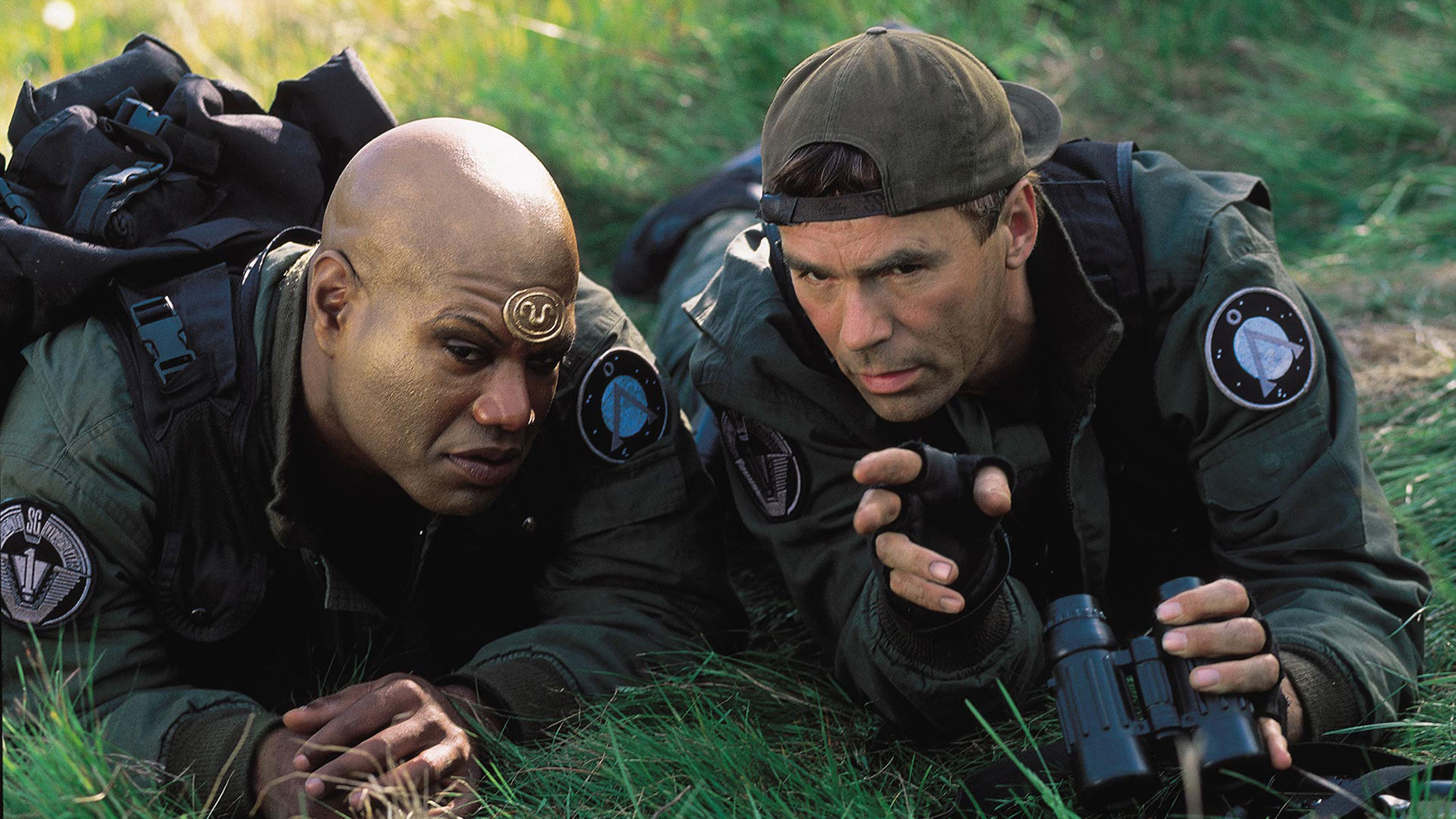 Stargate: The Blu-ray Collection (Blu-ray)
Over 300 hours of run timeRead more▼ Predator 4-Movie Collection (Blu-ray)
Four movies with great upscaling workRead more▼ Avatar – Collector’s Edition (4K UHD + Blu-ray)
Multiple versions of the movieRead more▼
The streaming revolution has its perks, but it’s annoying when you want to watch the best sci-fi movies of all time and none of your subscriptions cover them, which is why Sci-Fi DVDs and Blu-rays are still worth chasing.
Renowned movie franchises like Star Wars are easy to stream on Disney Plus, sure, but the Force isn’t with fans who seek hours of extras, too. If you’re really into a long movie series, standalone classics and/or some of the best sci-fi TV shows ever made, physical media won’t leave you hanging. We’re also using this opportunity to dig up some killer box sets and limited editions you can still grab if you’re fast, so this guide is pretty solid for your Christmas and/or birthday gift needs.
Star Wars: The Skywalker Saga
Image 1 of 2
If you’re a Star Wars fan, you’ll want the Skywalker Saga 4K UHD Blu-rays.(Image credit: LucasFilm)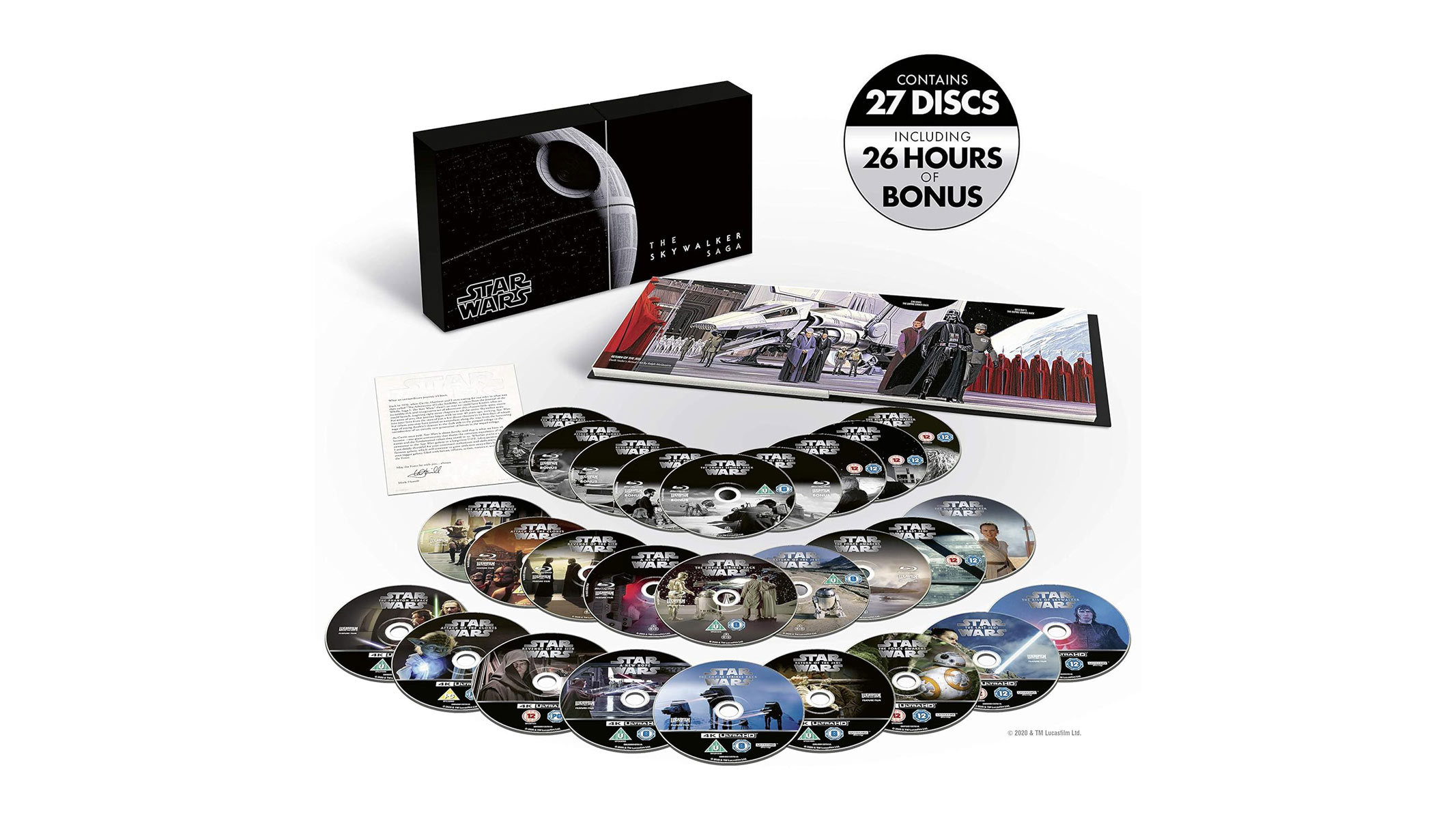 If you’re a Star Wars fan, you’ll want the Skywalker Saga 4K UHD Blu-rays.(Image credit: Amazon)
Star Wars: The Skywalker Saga (4K UHD + Blu-ray)
The most iconic of Sci-Fi franchises. All the movies, all in one place.
Specifications
Cast: Mark Hamill, Hayden Christensen, Daisy Ridley
Run time: 20 hours 38 minutes (movies only)
Number of discs: 27
Reasons to buy
+
All the movies, all in one place
+
Loaded with extras
Whether you loved the entire ride or would rather forget about the sequels, the complete Star Wars movie experience is worth embarking on, especially for newcomers. With the absolutely massive Skywalker Saga 4K UHD box set released in 2020, the path of a Jedi has never been more complete.
The nine-movie ride alone is over 20 hours long, and the incredible offering of extras runs for even longer than that. Disney and Lucasfilm really went all out with this one, and Star Wars fanatics who aren’t strict purists won’t find a better box set right now.
The whole saga and all the extras are spread across 27 discs, including 1080p Blu-rays, with stunning interior art pieces based on each trilogy and concept art, and a ‘digibook’ design which makes it feel extra special. Considering the high price tag on this one (it’s only gone up due to scarcity of stock), it’s only for the biggest collectors around, but we think it’ll be a good while before Disney puts out a Star Wars box set as complete.
Today’s best Star Wars The Skywalker Saga deals


Star Trek: The Complete Original Series (Blu-ray)
Image 1 of 2
 If you’re a Star Trek fan, the complete original series is up there with the best Blu-ray options you can buy.(Image credit: Paramount Pictures)
 If you’re a Star Trek fan, the complete original series is up there with the best Blu-ray options you can buy.(Image credit: Amazon)
Star Trek: The Complete Original Series (Blu-ray)
Owning a physical copy of the original series means your affinity with Star Trek will live long and prosper.
Specifications
Cast: William Shatner, Leonard Nimoy, Nichelle Nichols
Run time: 67 hours 42 minutes
Number of discs: 20
Reasons to buy
+
Similarly priced to one year’s subscription of Paramount Plus
+
Nearly 70 hours of content
Reasons to avoid
–
A little pricey for just one TV show
Much less pricey than the Star Wars entry above is the Blu-ray (1080p) release of the complete Star Trek original series, which runs for over 67 hours and is spread across 20 discs.
Considering it’s still selling at around $70, it’s one hell of a deal, no matter if this is your first attempt to get into Star Trek or you’re a longtime fan looking to secure a clean and straight-to-the-point Blu-ray edition.
This release isn’t just an ‘enhanced for 1080p’ remaster of the show as it was either. It also features ‘enhanced visual effects’ (purists may not enjoy this) and a 7.1 surround sound option on top of the preserved original mono audio tracks. As for special bonus content, the ‘special features’ run for over 9 hours, though the box clearly states that they’re not presented in high definition. It may not be the definitive treatment for the series that started it all, but it’s more than enough to boldly go where no man has gone before.
Today’s best Star Trek The original series (Blu-ray) deals
Stargate: The Blu-ray Collection (Blu-ray)
Image 1 of 2
This Stargate Blu-ray collection has over 300 hours of content, spread across nearly 70 discs.(Image credit: Amazon MGM Studios)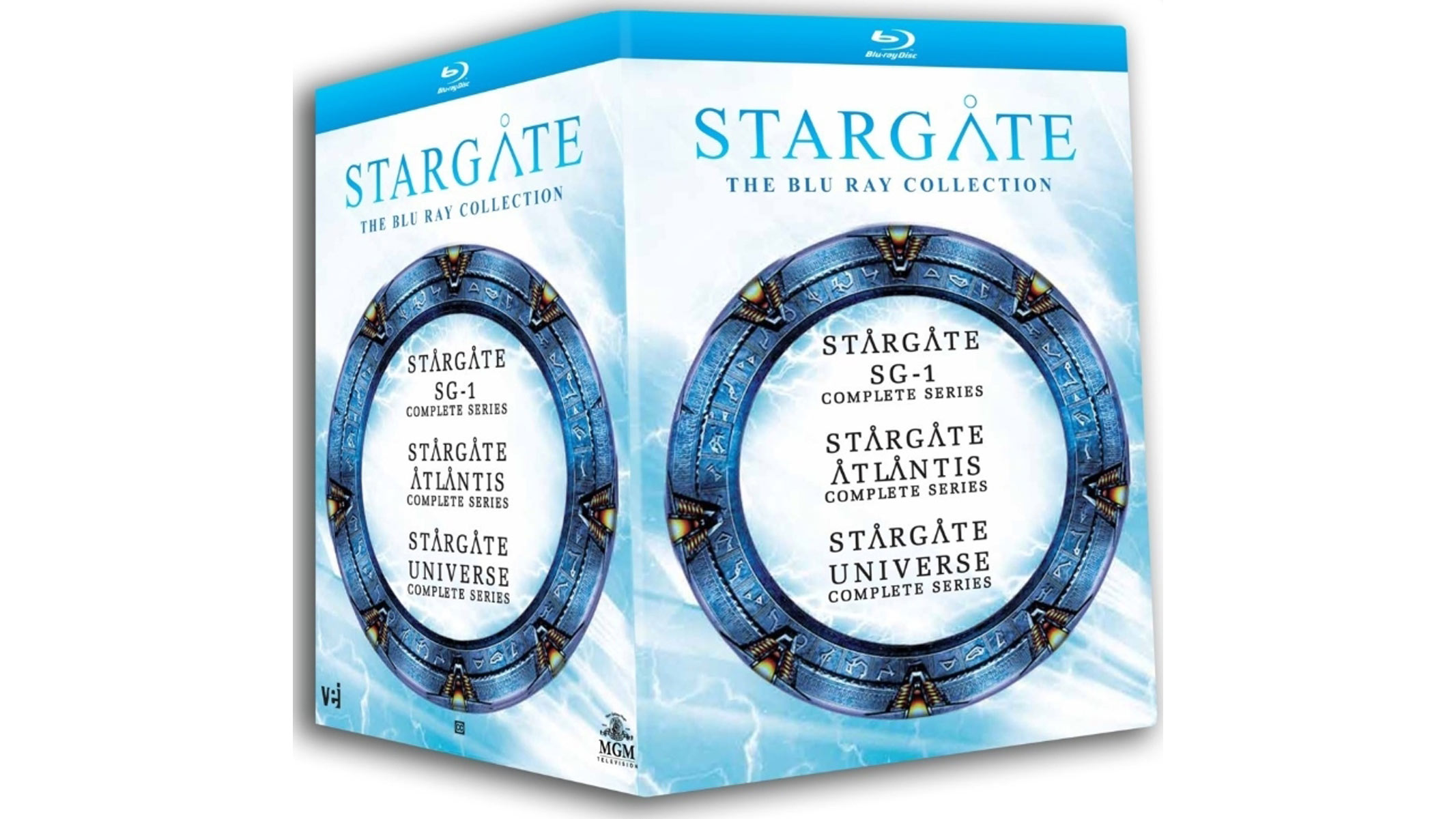 This Stargate Blu-ray collection has over 300 hours of content, spread across nearly 70 disks.(Image credit: Amazon)
Stargate: The Blu-ray Collection (Blu-ray)
Over 300 hours and nearly 70 discs worth of television show makes this a box set worth getting.
Specifications
Cast: Richard Dean Anderson, Amanda Tapping, Christopher Judge
Run time: 309 hours
Number of discs: 69
Reasons to buy
+
Over 300 hours of run time
+
Nearly 70 discs in total
+
You get a lot for your money
The absolute largest (but not priciest) Sci-Fi Blu-ray collection we’ve found so far is the complete Stargate collection, which includes Stargate SG-1, Atlantis and Universe. In total, you’re looking at over 300 hours of old-fashioned TV goodness with this one.
It’s safe to say you won’t be rewatching the whole box set often, but you get a lot of content for your money. Only 1080p and English language in this one, but you’re getting a lot of bang for your buck, especially as bonus features are included.
With Amazon MGM Studios now in ownership of the IP, we’ve been banging the drum of “Stargate should return” for a while now. If you only watched the original movie and would like to learn what the heck all the praise and online noise is all about, buckle up, prepare accordingly and enjoy a lengthy but delightful journey through TV shows that did a lot with minimal budgets. Just make sure to input the right coordinates when you make each space-bending trip…
Predator 4-Movie Collection (Blu-ray)
Image 1 of 2
The Predator 4-movie pack is perfect for fans of the predator franchise. (Image credit: 20th Century Studios)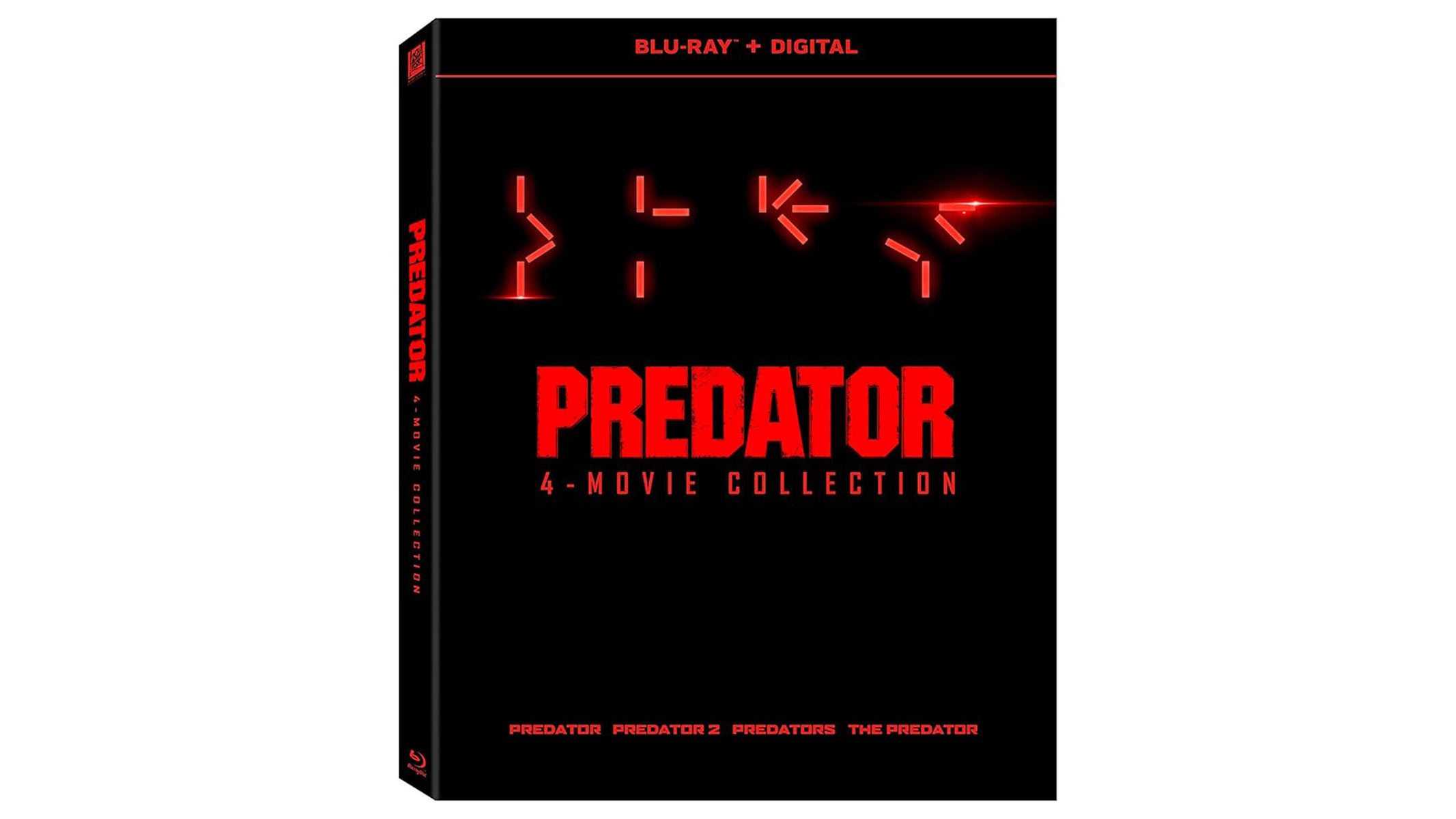 The Predator 4-movie pack is perfect for fans of the predator franchise. (Image credit: Amazon)
Predator 4-Movie Collection (Blu-ray)
Experience the journey that is the first four Predator movies, all in one box set
Specifications
Cast: Arnold Schwarzenegger, Danny Glover, Adrien Brody
Run time: 7 hours 9 minutes
Number of discs: 4
Reasons to buy
+
Four movies with great upscaling work
+
Great to catch up before the more recent releases
+
inexpensive compared to others
Before recent Dan Trachtenberg-directed entries like Prey and Predator: Badlands, the Predator movie series wasn’t in super great shape, but the Predator 4-Movie Collection released in late 2018 packs Predator 1 & 2 (classics), Predators (a fairly underrated one) and The Predator (the one that nearly killed the franchise).
For roughly $30, it’s a pretty great deal if you want to catch up with the series before the more recent installments or want to surprise a hardcore Yautja fanatic.
Of course, not everyone was a fan of the upscaling work done on the two older movies when they first made the jump to 1080p and above, but the following releases improved the image quality without sacrificing most of the original texture. While we believe the 4K UHD version of this 4-disc set is a bit too expensive considering it’s not loaded with extras, the regular Blu-ray version is a fantastic deal. Additionally, you’re also getting a digital copy of each movie.
Today’s best Predator 4-movie collection deals
Avatar – Collector’s Edition (4K UHD + Blu-ray)
Image 1 of 2
This Avatar Blu-ray is the best option for collectors. (Image credit: 20th Century Studios) This Avatar Blu-ray is the best option for collectors. (Image credit: Amazon)
Avatar – Collector’s Edition (4K UHD + Blu-ray)
Return to Pandora with hours and hours of bonus content and different versions of the record-breaking movie.
Specifications
Cast: Sam Worthington, Zoe Saldaña, Stephen Lang
Run time: 3 hours and 15 minutes
Number of discs: 4
Reasons to buy
+
Multiple versions of the movie
+
Over 10 hours of bonus content
+
Most complete version of the movie yet
Avatar: Fire and Ash is upon us, which means both Na’vi diehards and folks planning a more casual trip to Pandora might be looking to grab the first two movies in the sharpest possible quality.
Disney and 20th Century Studios have always been well aware of how much money these movies make in the domestic market, too, so it comes as no surprise we’ve seen countless different editions of the 2009 original released over the years.
At the time of writing, the late-2023 re-release of Avatar, dubbed ‘Collector’s Edition’ is the most complete you can find if you’re really into James Cameron’s industry-shaking phenomenon. The delightful pack includes the movie in 4K UHD, 1080p Blu-ray and digital. It’s also the first time the Special Edition and Collector’s Extended Cut have been available to watch in 4K, plus two entire discs are dedicated to bonus materials. While we’re expecting Disney to milk Eywa until it’s dry in the future, this is the best Avatar Blu-ray deal money can buy at the moment.
Today’s best Avatar Collector’s Edition deals
Alien – 40th Anniversary (4K UHD + Blu-ray)
Image 1 of 2
 This Blu-ray option is the best for fans of the movie, and the franchise, Alien.(Image credit: 20th century studios)
 This Blu-ray option is the best for fans of the movie, and the franchise, Alien.(Image credit: Amazon)
Alien – 40th Anniversary (4K UHD + Blu-ray)
Experience one of the most iconic Sci-Fi movies with upgraded visuals and effects
Specifications
Cast: Sigourney Weaver, Ian Holm, Tom Skerritt
Run time: 1 hour 57 minutes
Number of discs: 2
Reasons to buy
+
Inexpensive compared to the other entries
+
Bonus material
+
Improved visuals and effects
Reasons to avoid
–
Just one movie, not a box set
We’ve had plenty of physical media releases of Alien (1979) worth purchasing over the years, so it was unsurprising to see the 40th Anniversary Edition released in 2019, being a fantastic refresh of both cuts of the movie (theatrical and director’s cut), which remains available due to continued success. That stylish cover is killer, and the no-BS approach to the overall presentation is exactly what you want out of a revisited classic.
At home, everyone can hear you scream, especially if you’re easily startled; the crisp audio (DTS, DTS-HD and Dolby 5.1 options) pops alongside the sharper 4K image quality, and the high dynamic range’s extra sauce (if you have a TV prepared for the full experience) is exactly what the Nostromo needed to come to life like never before. Not as impressive are the special features, but with great audio commentary by Ridley Scott and cast and crew members, plus a bunch of deleted scenes, the basics are covered.
Today’s best Alien 40th Anniversary Edition deals
Dune 2-Film Collection (4K UHD)
Image 1 of 2
 This two-film collection is the best Blu-ray option for Dune fans.(Image credit: Warner Bros. Pictures)
 This two-film collection is the best Blu-ray option for Dune fans.(Image credit: Amazon)
Dune 2-Film Collection (4K UHD)
A must for Dune fans looking to watch the movies with maximum visual effects.
Specifications
Cast: Timothée Chalamet, Zendaya, Oscar Isaac
Run time: 5 hours 21 minutes
Number of discs: 2
Reasons to buy
+
4K UHD
+
Bonus material
+
Great visual output
Reasons to avoid
–
A little light on extra content
Denis Villeneuve’s two-part adaptation of Frank Herbert’s Dune somehow managed to please most fans while also captivating millions of casual moviegoers with no previous knowledge of the (admittedly dense) source material. That’s no small feat, and such a wondrous Sci-Fi epic deserves the biggest 4K screen you can fit inside your house. For now, our favorite domestic release of the two movies is the 2-Film Collection released in 2024.
As usual in Warner Bros. Pictures’ domestic releases, the 4K UHD image and sound (Dolby 5.1, 7.1 and Atmos audio) quality is astonishing, making Arrakis’ sights and sounds pop like in cinemas, which is exactly what you want from a 4K release of big Sci-Fi epics.
Sadly, this pack doesn’t include regular 1080p Blu-ray discs like similar boxes, so it’s a no-no for those still rocking a regular Blu-ray player but looking to future-proof their collection. The bonus features are also on the lighter side, but if you’re looking to catch up ahead of Dune: Messiah while adding fantastic modern Sci-Fi classics to your physical media collection, it’s an easy yes.
Today’s best Dune 2-film collection deals
Blade Runner: The Final Cut (4K UHD + Blu-ray)
Image 1 of 2
 Blade Runner: The final cut is the best Blu-ray option for fans of Blade Runner.(Image credit: Warner Bros. Pictures)
 Blade Runner: The final cut is the best Blu-ray option for fans of Blade Runner.(Image credit: Amazon)
Blade Runner: The Final Cut (4K UHD + Blu-ray)
As well as the original movie, over 7 hours of extra material, across 4 discs, make this a must.
Specifications
Cast: Harrison Ford, Sean Young, Rutger Hauer
Run time: 1 hour 58 minutes
Number of discs: 4
Reasons to buy
+
Great in 4K
+
Lots of bonus material
We thought it’d be weird to write this recap without searching for a great edition of the original Blade Runner, and we quickly came across the 4K UHD re-release of the Final Cut, regular Blu-ray and digital copy included.
It’s yet another ‘lean and mean’ winner re-release from Warner Bros. and with a gorgeous cover to boot. Just make sure to buy it for the 4K UHD disc, as the encoding of the 1080p disc isn’t the greatest, sadly.
When it comes to special features, it packs an introduction by Ridley Scott, three audio filmmaker commentaries, an entire documentary on the making of the movie and other extra bits (over 7 hours in total). Despite releasing in 2017 ahead of Blade Runner 2049, this release also has pretty great HDR support for the 4K disc; there’s a good reason it’s still kicking around. Ahead of the Blade Runner 2099 series, there’s never been a better time to revisit the beginning of it all.
Today’s best Blade Runner [4K UHD] [Blu-ray] [2017] deals
Event Horizon – Limited Edition Steelbook (4K UHD + Blu-ray)
Image 1 of 2
 This Event Horizon Blu-ray option is the best steelbook option out there.(Image credit: Paramount Pictures)
 (Image credit: Amazon)
Event Horizon – Limited Edition Steelbook (4K UHD + Blu-ray)
This stunning remaster offers the best steelbook option out there
Specifications
Cast: Kathleen Quinlan, Laurence Fishburne, Sam Neill
Run time: 1 hour 35 minutes
Number of discs: 2
Reasons to buy
+
Aesthetically great physical copy
+
4K UHD
+
Great for fans of the movie
Reasons to avoid
–
Not great if you’re not a fan of the movie
2024’s Limited Edition reprint of the 4K steelbook release of Event Horizon is amazing. There have been many versions of this space horror cult classic dropping over the years despite the mixed reception it got back in 1997, but its 4K UHD restoration was a huge one for fans, and the 25th Anniversary Edition was a killer package with a disturbing new cover to boot. It vanished quickly, which is why Paramount was pressed to push out a re-release last year. At the time of writing, you can still get it, but don’t wait too long.
What if a spaceship vanished during its maiden voyage because the wormholes it used to cover great distances of space sent it through literal Hell? While all the potential of such an amazing (and horrifying) pitch wasn’t realized in Paul W.S. Anderson’s sci-fi horror flick, it remains a fascinating watch with a unique vibe and some of the gnarliest horror imagery in a wide theatrical science fiction release. We may never see all of the long-lost uncensored footage, but after all these years, this vision of Hell is still worth your time and money. You won’t need eyes to see…
Today’s best Event Horizon Steelbook 4K UHD deals
Star Wars: Andor – Season 1 (4K UHD)
Image 1 of 2
 Andor Season one 4K UHD is the best option for fans of the Star Wars TV Shows.(Image credit: LucasFilm)
 (Image credit: Amazon)
Star Wars: Andor – Season 1 (4K UHD)
This hit Star Wars TV show comes with 3 discs and a bunch of bonus content.
Specifications
Cast: Diego Luna, Kyle Soller, Genevieve O’Reilly
Run time : 9 hours 42 minutes
Number of discs: 3
Reasons to buy
+
Plenty of bonus content
+
Concept art cards
+
4K UHD
Reasons to avoid
–
Very expensive for just one season of a show
Even if you haven’t watched Andor yet, you might’ve heard the Tony Gilroy-created live-action series is among the best Star Wars TV shows. We totally agree; it really feels deep and textured in a way nothing else in the franchise has been.
If you’re planning to grab one of the excellent physical releases of Star Wars series, Andor Season 1 in 4K UHD (no regular Blu-rays included in this one) is the absolute best credits can buy.
We’d read, watched and played through many takes on the Rebel Alliance’s origins, but none captured the Empire’s reign of terror in the way Andor does. The best praise we can give to spinoffs coming out of long-running franchises is that they feel like great original stories that happen to take place in established universes, and Andor is exactly that. Sure, this isn’t exactly kid-friendly Star Wars, but as a more adult take on the IP, which fits in perfectly nonetheless, we couldn’t have asked for anything better. Sadly, Season 2 hasn’t locked a physical media release yet, but we’d be shocked if it didn’t.

Primates — the mammalian group that includes humans — are found pretty much everywhere on Earth, from equatorial rainforests to scientific research stations in Antarctica. This hugely diverse order appeared before the dinosaurs went extinct, with wild populations of non-human primates evolving to live in niches across three continents — Asia, Africa and Central/South America.
Primates don’t just live in lots of places; there are also hundreds of species and subspecies. In fact, the order primates is the fourth most biodiverse mammal order in the animal kingdom — yet the majority (62.6%) of primates are threatened with extinction.
You may like
- Bird quiz: How much do you know about our feathered friends?
- Big cats quiz: Can you get the lion’s share of these questions right?
- Snake quiz: How much do you know about the slithering reptiles?