
NIGERIA NEWS
Anthony Joshua’s promoter reveals identities of road accident victims


The two fatalities in the road accident involving Anthony Joshua in Nigeria on Monday were identified as “two close friends and team members” Sina Ghami and Latif Ayodele by the former world heavyweight champion’s promoter.
“Matchroom Boxing and 258 BXG can confirm that Anthony sustained injuries in the accident and was taken to hospital for checks and treatment. He is in a stable condition and will remain there for observation,” the promoter’s statement added.
“With profound sadness, it has been confirmed that two close friends and team members Sina Ghami and Latif Ayodele have tragically passed away,” Matchroom confirmed.
Police said the tragic accident occurred around 11:00 am local time (1000 GMT), in the town of Makun, along the Lagos–Ibadan Expressway.
Nigeria’s Federal Road Safety Corps (FRSC) said in a statement that the Lexus SUV Joshua was riding in “was suspected to be travelling beyond the legally prescribed speed limit on the corridor, lost control during an overtaking manoeuvre and crashed into a stationary truck… by the side of the road”.
Joshua’s family hails from the southwest Nigerian city and he is known to visit there when he is in the country.
Earlier this month, the former Olympic champion knocked out YouTuber-turned-boxer Jake Paul in a Netflix-backed bout in Miami.
AFP
The post Anthony Joshua’s promoter reveals identities of road accident victims appeared first on Vanguard News.







NIGERIA NEWS
Lady Displays Her Brother’s WhatsApp Chat With Young Girl Who Requested for N1k, People React



Ankrah Shalom (Human-Interest editor)
Shalom Ankrah is a journalist and a Human Interest Editor at Legit.ng with over six years of experience. She has a degree in Mass communication from Alex Ekwueme University. Shalom has worked with reputable news organizations including The Tide and GistReel. Email: ankrah.shalom@corp.legit.ng.
NIGERIA NEWS
When Grievance Touching on Constitution’s Chapter IV Won’t Constitute Breach of Human Rights – THISDAYLIVE


In the Supreme Court of Nigeria
Holden at Abuja
On Wednesday, the 4th day of June, 2025
Before Their Lordships
Uwani Musa Abba Aji
Ibrahim Mohammed Musa Saulawa
Emmanuel Akomaye Agim
Chioma Egondu Nwosu-Iheme
Jamilu Yammama Tukur
Justices, Supreme Court
SC. 196/2005
Between
DR JEREMIAH ABALAKA APPELLANT
And
1. MINISTER OF HEALTH RESPONDENTS
2. MEDICAL & DENTAL COUNCIL OF NIGERIA
3. MEDICAL AND DENTAL PRACTITIONERS
INVESTIGATING PANEL
(Lead Judgement delivered by Honourable Uwani Musa Abba Aji, JSC)
The Appellant, Dr Jeremiah Abalaka, claimed that he had made a therapeutic breakthrough in the treatment of HIV. Following his claim, he was invited by the Medical & Dental Practitioners Investigating Panel (the “3rd Respondent”), on 22nd May, 2022, to appear before the 3rd Respondent for investigation of his HIV treatment claims. To enforce his fundamental rights to fair hearing, the Appellant filed an ex-parte application at the High Court of the Federal Capital Territory, arguing that the 3rd Respondent was acting as the accuser, prosecutor, and judge in its own case.
The court initially granted an interim injunction restraining the Respondents from investigating the Respondents. However, it eventually struck out the motion on jurisdictional grounds. The Appellant filed the same application before the Federal High Court but it was refused on the ground that the reliefs sought by the Appellant fell outside the scope of Chapter IV of the Constitution of the Federal Republic of Nigeria 1999 (as amended). The Appellant appealed to the Court of Appeal, which dismissed the appeal. Dissatisfied, the Appellant appealed to the Supreme Court.
Issue for Determination
On the merits, the Supreme Court considered a sole issue for determination of the appeal, to wit:
i. Whether the lower court was wrong to affirm the judgement of the trial court and to dismiss the claims of the Appellant against the Respondents that they are outside the provisions of Chapter IV of the 1999 Constitution.
Arguments
Counsel for the Appellant argued that the 3rd Respondent manufactured evidence (a letter from Dr. Seyi Roberts) and committed perjury by lying under oath about its existence before 22nd May 2000. He highlighted the impossibility of the Respondents’ explanation as proof of bias. He contended that the trial court failed to resolve five out of nine issues raised, and the Court of Appeal similarly failed to address some, resulting in a miscarriage of justice. He argued further that the 2nd and 3rd Respondents were not properly constituted as statutory bodies due to the Minister of Health’s failure to appoint members under the Medical and Dental Practitioners Act. The Appellant argued that the matter is a fundamental rights enforcement action as it involves bias, fair hearing, and freedom from oppressive government actions. Additionally, the Appellant alleged that the 3rd Respondent acted as accuser, prosecutor, and judge in its own case, in contravention of the principles of natural justice. The Appellant submitted that he should not be bound by traditional medical ethics, as his HIV vaccine work fell outside mainstream practice. He urged the Supreme Court to set aside the decision of the Court of Appeal, and grant his appeal, or remit the suit for retrial.
In response, the 1st Respondent submitted that no issue arose regarding the proper constitution of the 2nd and/or 3rd Respondents due to the alleged default in appointing members, and sought dismissal of the appeal.
The 2nd and 3rd Respondents argued that the Court of Appeal correctly dismissed claims relating to the validity of its constitution. On the allegation of breach of fair hearing via investigation invitation and alleged evidence manufacturing (Dr. Seyi Roberts’ letter), the 2nd and 3rd Respondents offered explanations for the delay in the production of the letter and noted the failure of the Appellant to establish forgery/perjury beyond reasonable doubt. They submitted that the 3rd Respondent’s role was purely investigatory, not adjudicatory, and as such, it did not act as accuser, prosecutor, and judge. Further, that the reliefs of the Appellant fell outside Chapter IV of the 1999 Constitution, as held by the trial court and affirmed by the Court of Appeal, with no miscarriage of justice. Citing TUKUR v GOVERNMENT OF TARABA STATE (1997) 6 NWLR (PT. 510) 569 SC, they emphasized that main reliefs determine the jurisdiction of the court to entertain the Appellant’s fundamental rights action, which the Appellant’s claims lacked. They urge the Supreme Court to uphold the decision of the lower court and dismiss the appeal.
Court’s Judgement and Rationale
Before resolving the issue for determination, the Supreme Court noted that the trial and Court of Appeal, despite holding the Appellant’s claims fell outside Chapter IV of the 1999 Constitution, proceeded to address the merits of the claim. The Supreme Court held that, upon finding that they lacked jurisdiction, they ought to have struck out the suit rather than bearing the burden of deciding the issues presented by the Appellant. The Court proceeded by stating that “what determines jurisdiction of Court to entertain a cause/matter, is the Plaintiff’s claims. It is the claim before the Court that has to be looked at to ascertain whether it comes within the jurisdiction conferred on it.”
Addressing the Appellant’s claims, the Supreme Court held that upon a careful examination of the claims of the Appellant together with the reliefs sought in his application for enforcement of fundamental rights before the trial court, the Appellant’s main claims and reliefs cannot be sheltered under the provisions of Chapter IV of the 1999 Constitution. Their Lordships held further that “It is not every grievance that perches or touches on the provisions of Chapter IV of the 1999 Constitution that constitutes a breach to or calls for enforcement of fundamental rights. They must be the main and predicate claims, and not the ancillary or remote to it.”
The apex court held that the subject matter of the Appellant’s suit against the Respondents, which pertains to alleged professional misconduct and disciplinary action against the Appellant, the alleged vituperation by the 1st Respondent against the Appellant on media and the subsequent invitation of the Appellant by the Respondents, “cannot transubstantiate and transmute into an attempted or perceived or likely breach of the Appellant’s right under the provisions of Chapter IV of the 1999 Constitution.” It is the position of the Appellant that the assessment and investigation of his claims of medical cure for HIV, and lack of fair chance to prove his claims before the Respondents, coupled with their hostile reactions, violate his right to fair hearing under Section 36(1) of the 1999 Constitution. While complaint about proceedings violating the rules of natural justice and right to fair hearing is proper and recognizable complaint in law, the Respondents not being courts or tribunals established as such by law, their said violation or likely violation of the rules of natural justice cannot be a violation of the Appellant’s fundamental right to fair hearing guaranteed under Section 36(1) of the 1999 Constitution. Breach of fundamental right to fair hearing under Section 36(1) of the Constitution only applies to proceedings before judicial bodies acting judicially and quasi-judicially. Therefore, the complaint that the proceedings and decisions of the Respondents violate or are likely to violate the rules of natural justice against the Appellant and his general legal right to fair hearing is not a complaint that any of the provisions of Chapter IV has been, is being or likely to be contravened and cannot be brought to the High Court by way of an application to remedy the same under Section 46(1) of the 1999 Constitution.
The Court reiterated that having established and ascertained that the main claims and reliefs of the Appellant did not fall under the provisions of Chapter IV of the 1999 Constitution, the trial and lower courts ought to have struck out the Appellant’s suit. The Court relied on the decision in NWANCHUKWU v NWANCHUKWU & ANOR. (2018) LPELR-44696 (SC) (PP. 29-30 PARAS. B).
Further to the above, the Supreme Court affirmed the decision of the Court of Appeal, which upheld the decision of the trial court.
Appeal Dismissed.
Representation
I.G Abah with C.S Achebe for the Appellant
Martin Atojoko with C.M. Odanwu for the 1st Respondent.
Hassan T. Fajimite for the 2nd and 3rd Respondent.
Reported by Optimum Publishers Limited, Publishers of the Nigerian Monthly Law Reports (NMLR)(An affiliate of Babalakin & Co.)
NIGERIA NEWS
What do we Igbos really want from Nigeria, what conversations should we be having among ourselves? – Adibe

Professor Jideofor Adibe, PhD, LLM
Presented at a Meeting of the Imeobi, Ohanaeze Ndigbo Worldwide, which held at Enugu on December 23, 2025
Mr. President and the entire leadership of Ohanaeze Ndigbo Worldwide, kindly permit me to stand on existing protocols.
I was initially asked to speak on the topic of ‘what the Igbos want from Nigeria’. The topic was later modified to ‘Igbo Charter of Demands from Nigeria’, which I believe, was meant to be a set of demands to be tabled as bargaining chips with Presidential candidates in the 2027 election. I have taken the liberty to slightly modify the title to, “What do Igbos really want from Nigeria, and what conversations should we be having among ourselves”? The modified title enables me to go beyond just a “charter of demands we want from Nigeria” to address other pertinent issues that relate to what some people, sometimes, crudely, call ‘the Igbo problem’. For instance, how are we really sure that the Presidential candidates we will present the charter of demands TO will honour their promise if they get to power? And how are we sure they have no vested interest in the perpetuation of the current condition of the Igbos in the country? I believe that the people best positioned to solve the ‘Igbo problem’ are Igbos themselves, not other Nigerians, no matter how powerful, or well-meaning they may be. I also believe that it is through a robust and honest conversations among ourselves that we will be in a better position to articulate what we want from Nigeria.
What is the ‘Igbo problem’?
The question of ‘what do the Igbos want from Nigeria’, is sometimes used interchangeably with the so-called ‘Igbo problem’ On the notion of ‘the Igbo problem’, there is no consensus. From the perspective of most Igbo people, ‘the Igbo problem’ is a feeling of being unwanted (or ‘marginalized’ in political parlance) in the Nigerian federation. The extreme manifestation of this sense of being unwanted is ‘Igbophobia’, which is the weaponisation and institutionalization of this sense of being unwanted.
For other Nigerians, what constitutes ‘the Igbo problem’ could range from earnest conversations about the Igbo feelings of exclusion to the use of such conversations as opportunities to have a dig on the Igbo race, or to perpetuate the same Igbophobia they purport to want to find solutions for. Let me mention immediately that every culture, including the Igbo culture, has something ennobling about it, and something that people would recoil from. For this, the theory of hierarchy of cultures popular with colonial anthropologists have since been discredited in favour of cultural relativity – each culture is judged only to the extent to which it serves its people.
Where did the rain start to beat us?
Igbophobia did not start today. It was there even during the colonial times. It is a range of negative attitudes and feelings towards the Igbos who make up a majority of the people in the country’s South-East, and a sizeable part of the populations of the South-South and the Middle Belt zones.
Its origin can be traced in part to the Igbo socio-political system. Most parts of Igboland did not pass through the feudal epoch with its centralized structures and obsequious attitude to authority. The people were essentially republicans, with an achievement-oriented culture, where age is respected but achievement is revered. This has both positive and negative consequences. On the positive side, it engendered a spirit of competitiveness, ingenuity and resilience. For instance, during the colonial times, while the Igbos were not the first ethnic group to accept western education, once they saw the opportunities in it, they embraced it with uncommon zeal such that within a short space of time, their education, coupled with their diasporic orientation, led to their high visibility (or even dominance) in critical sectors of public service, including the military and the civil service. Of course, dominance by its nature breeds resentment – something lost on some political leaders these days who think they are doing their ethnic, religious or regional in-groups a favour by clannishly making ‘their people’ to dominate choice public positions when they are in power.
Anti-Igbo sentiments arising from the Igbo domination of the public space in the First Republic were exacerbated by the January 1966 coup d’état, the July 1966 counter-coup, the pogroms in different parts of the country, the Civil War, the War propaganda on both sides of the conflict, and the vested interest of some groups in using Igbophobia to gain advantage for their in-groups in the competition for power and scare socioeconomic resources in the country.
One of the negative aspects of the Igbo achievement-oriented culture is that since failure is strongly frowned upon, some Igbo youths not only want to ‘make it’, they also want loudly to be seen to have ‘made it’. This pushes many into looking for shortcuts to ‘make it’, and to be celebrated as having made it. I will propose that some of the unintended consequences of our achievement- oriented culture should form part of the conversations we should be having among ourselves.
Igbo and the search for group identity
It is natural for groups in a multi-ethnic country like ours to have conversations over their future. Several parts of the country hold similar conversations – the core Middle Belt states of Benue and Plateau for instance continue to discuss on whether they should anchor their identity on Middle Belt or accept the current arrangement which lumps them as part of the North; the search for identity among the Yoruba span the spectrum of those who want ‘true federalism’ to those who want outright secession as Oduduwa Republic; many people from the North and South-South are not left out in such conversations, sometimes openly, at other times in hush-hush tones.
In Igboland, we find several groups also embracing different options on where the Igbo should anchor their identity – from whether to be part of the Nigerian federation, and if so, in what form to those who want outright secession. In essence, the conversations in Igboland about the group’s identity is not manifestly different from what is happening in other parts of the country or even across the world.
The secessionist option
The peaceful quest for self-determinations is a worldwide phenomenon from the United Kingdom, through Italy, Spain, Canada and even the United States. In the USA for instance, there are at least ten active separatist movements including in California, the country’s third largest state, where the ‘Yes California Independence Campaign’, was formed in August 2015 by Louis J. Marinelli. There is also The League of the South, an active organization established in 1994 by Michael Hill, Jack Kershaw, and other members and which campaigns for the former Confederacy states (South Carolina, Mississippi, Florida, Alabama, Georgia, Louisiana, Texas, Virginia, Arkansas, North Carolina, and Tennessee) to secede from the US. As we all know, the attempt by the Confederate States to secede from the US led to the US Civil war that lasted from April 12, 1861 until April 9, 1865. In essence, no one should be made to feel ashamed that there are separatist movements in Igboland.
However, it is important for the various hues of the separatist movements to have a balanced view of their agitation, namely, the idea that independence may not necessarily bring peace or prosperity (as the case of South Sudan demonstrates) and that having the same language and religion are not sufficient conditions for the success of any new nation (as the case of Somalia demonstrates). Militarized quests for separation or the use of acerbic language in such campaigns usually prove counter-productive, and very few of such approaches have succeeded in modern times.
President of Igbo extraction option
There are those who believe that having a President of Igbo extraction is all that is needed to solve the Igbo feeling of exclusion. While I support the idea of a competent and ethically driven President of Igbo extraction (at least for the momentary hurrah effect it could generate among the Igbos), I have my doubts that it will be a sufficient antidote to ‘the Igbo problem’. This is because historically, when a President of a particular ethnic extraction is in power, and is being robustly criticized (something that comes with the job), criticisms by non-members of the President’s ethnic group will often lead to members of the President’s in-group rallying together to defend their own, exacerbating in the process tensions between the President’s ethnic group and others.
Similarly, it may be tempting to pose the question of whether Obasanjo’s tenure as Military Head of State (1976-1979) and civilian President (1999-2007) as well as Tinubu’s current presidency, have assuaged separatist quests among the Yoruba. We can also ask whether Obama’s eight-year presidency in the USA led to African Americans being better accepted in the US or whether his presidency paradoxically led to the weaponization of right-wing politics in the USA which paved the way for the emergence of Donald Trump.
A New Charter of Conversation for the Ohanaeze Ndigbo
I am happy to hear about some of the achievements of the current Ohanaeze leadership, under Senator John Azuta-Mbata, including the desire to promote the Igbo language. The recorded achievements of Ohanaeze Ndigbo are very encouraging but more needs to be done. For this, rather than a ‘Charter of Demands from Nigeria’, I would propose a charter of conversations we Igbos should be having among ourselves, led by the Ohanaeze Ndigbo Worldwide:
Igbo Identity should be a Core Driver: Experiences from the separatist movements in Spain, Italy, Canada and elsewhere show that regional identity, language, and culture were central to their pursuit of self-determination. We need to do more to strengthen the Igbo identity, including promoting and taking pride in the various Igbo dialects, and respecting the peculiarity of each Igbo group. The distinction between core or non-core Igbos is divisive. Ohaneze should develop a deliberate policy of cultural cooperation, including the use of sports among the Igbos who are located not just in different parts of the country but also beyond. Ohanaeze must find a way of helping several Igbos afflicted with ‘bleaching complex’ – a belief that denying or hiding their Igbo identity will make them more acceptable in the wider Nigerian society. Others demur from showing pride in their ethnic identity for fear of being labelled ‘tribalist’ or an ethnic chauvinist. It must be carefully explained to such people that demonstrating love for one’s ethnic group is not ethnicity or what some call ‘tribalism’ and that it becomes so only when the demonstration of pride in one’s ethnic in-group is framed in conflictual terms.
Economic development of Igboland should be a priority
The Igbo culture seems to revere individuals who do not live within the homeland, often the farther away from one’s village or town, the more the respect. The Igbo adulation of the Diaspora (broadly defined), and its achievement oriented culture, have led to many Igbos investing in other parts of the country to the neglect of their own Igbo enclaves. Though there is evidence that this is changing gradually, more needs to be done. Igbophobia will be less if the region is seen to be economically thriving and a home for both Igbos, and non-Igbos who can add value to the area.
Ingenuity has both time and space dimensions
Igbos are widely respected, even if grudgingly, for their ingenuity and resilience, especially in commerce. I need to mention that various ethnic groups in the country also have their unique abilities and areas they should work on. Many of our people take pride in being good traders. However, we should be conscious of the fact that ingenuity has time and space dimensions. Some 10-20 years ago, going to China to buy goods to resell may make someone a smart trader. These days anyone with android phone could do the same buying and selling from the comfort of his or her home. This means that we cannot sustain what some call Igbo ingenuity in commerce if we remain fixated on what gave us advantage in the olden days when the world around us is changing very fast. We are gradually losing out even in areas where our people were very visible. For instance, though modern Nollywood arguably started in Onitsha, how many films on Igbos or by Igbo producers are today on Netflix?
The get-rich quick syndrome
While this is not specific to the Igbo, this is probably one of the unintended consequences of our achievement- oriented culture. It needs to be an urgent area the Ohanaeze should focus on because it has misled many of our youths into looking for short-cuts with the attendant crimes it brings. We must stop giving the impression that a person’s sources of income do not matter provided the person does charitable work in the community.
Countries that fought the bitterest civil wars could also become closest allies
The United States fought a bitter War of Independence with the United Kingdom from April 19, 1775 to October 19, 1781. Today, they are about the closest allies. Similarly, Japan, where the US dropped the Atom bomb that killed some 200,000 to 300,000 Japanese by the end of 1945, (in addition to other humiliations after the war), is today an ally of the US. The country forms the cornerstone of American security in Asia, with a strong military and political partnership formalized by the U.S.-Japan Security Treaty since the 1950s. In the same vein, Germany fought and lost two World Wars, each with humiliating consequences. For instance, the Treaty of Versailles which ended the First World War in 1919 contained the War Guilt Clause (Article 231) which forced Germany to accept sole responsibility for the war and was ordered to pay 132 billion gold marks (roughly $33 billion at the time), a sum, economists like John Maynard Keynes warned could collapse the European economy. After the country was again defeated during the Second World War, Germany became divided into four occupation zones (US, UK, France, USSR) and consequently became the first modern state to be ruled by foreign powers. Millions of Germans were used as forced labour for years after the war to rebuild Allied nations. For instance, in France alone, an estimated 2,000 German prisoners died monthly while clearing minefields. There was also a massive industrial dismantling of the country, with the former Soviet Union stripping East Germany of factories and skilled personnel as reparations. Today, Germany is not only an ally of the USA, it is a key member of Europe and therefore part of the West.
The above instances suggest that grievances by our youth, while legitimate in many instances, need to be creatively channelled and should not be turned into an ideology.
Unity among the Igbo political class
Most members of the Igbo political class appear self-serving, only to turn around and cry ‘marginalization’ when it suits them. Most seem driven by the doctrine of the ‘goat follows the man with the palm frond’ and for this, are either unable, or too lily-livered to fight for Igbo interest. For example, in the wake of the rampant herdsmen attacks, the South-west Governors united across party lines, and despite opposition from the federal government, set up the Amotekun to protect the region. The South-East governors dilly-dallied, and as often happens in such situations, non-state actors which are not really equipped for the job, (in this case IPOB), tried to fill the lacuna by promising the people protection from the herdsmen through the establishment of the Eastern Security Network. Today, we are seeing the consequences of such state failure and a non-state actor promising to offer what the state could not deliver.
Similarly, when Reno Omokri, who has probably done more than most people in recent times to openly abuse and ridicule the Igbo, was nominated as an Ambassador designate, one would expect a sense of outrage from the Igbo political class, including law makers. Would such a nomination have been confirmed if Omokri was unleashing the same vitriol he has been pouring on the Igbos on the North or the Yoruba? The failure of the Igbo political class is therefore also one of the reasons some Igbo youths move to feel in the lacuna, often compounding the problem in the process.
Moderate the grievances of some Igbo youths by letting them know they are not completely innocent of what they are accusing others of doing to them
Yes, Igbophobia is real, but we are also not altogether innocent of profiling others. Knowing that we are not altogether innocent of what we are accusing others of doing to us, or in fact that virtually every part of the country has its own story of institutionalized memory of hurt, will help to give us a balanced perspective in articulating what we want from Nigeria.
Is Igbophobia fated to be with us forever?
History does not suggest that. I have already mentioned the experiences of Japan and Germany after the First and Second World Wars. Similarly, in the mid-19th to the early 20th century, Italian and Irish migrants to the US were very harshly treated, with some being lynched due to their Catholicism, poverty, and perceived threats to the American Protestant culture. However, by the mid-20th century both the Italian and Irish migrants have effectively become integrated into the American culture as their home countries prospered.
I believe that one of the surest ways to resolve ‘the Igbo problem’ is by having conversations with ourselves, knowing our strengths, weaknesses, and what we can realistically achieve.
Thanks for listening.
The post What do we Igbos really want from Nigeria, what conversations should we be having among ourselves? – Adibe appeared first on Vanguard News.


The National Drug Law Enforcement Agency, NDLEA, in Ogun State has uncovered a warehouse used for the storage of illicit substances, along with a haul of Cannabis Sativa concealed inside a Honda Ridgeline pickup vehicle in the Rounder area of Abeokuta.
The command’s Public Relations Officer, Haris Musa, said in a statement obtained by DAILY POST on Monday that the discovery was made at about 10:00 pm on Sunday.
Musa revealed that the operation also led to the arrest of a 49-year-old man, identified as Fatokun Rahmon, with a total of 347 kilograms of Cannabis Sativa recovered.
He said, “Acting on actionable intelligence, operatives of the Command, on December 28, 2025, at about 10 pm, conducted a targeted operation at the Rounder, Abeokuta, Ogun State, where a warehouse used for the storage of illicit substances was uncovered.
“During the operation, operatives discovered a haul of Cannabis Sativa concealed inside a Honda Ridgeline pickup vehicle.
“The operation culminated in the arrest of one Fatokun Rahmon, 49 years of age, while a total of 347 kilograms of Cannabis Sativa were recovered.”


While reiterating the command’s unwavering commitment to suppressing illicit drug trafficking within the state, Musa noted that the interception highlights the operational alertness, intelligence-driven strategy, and relentless enforcement posture of the command, even as the year drew to a close.
Musa asserted that the command remains steadfast in sustaining this tempo as part of its mandate to curb the menace of drug abuse and illicit trafficking.

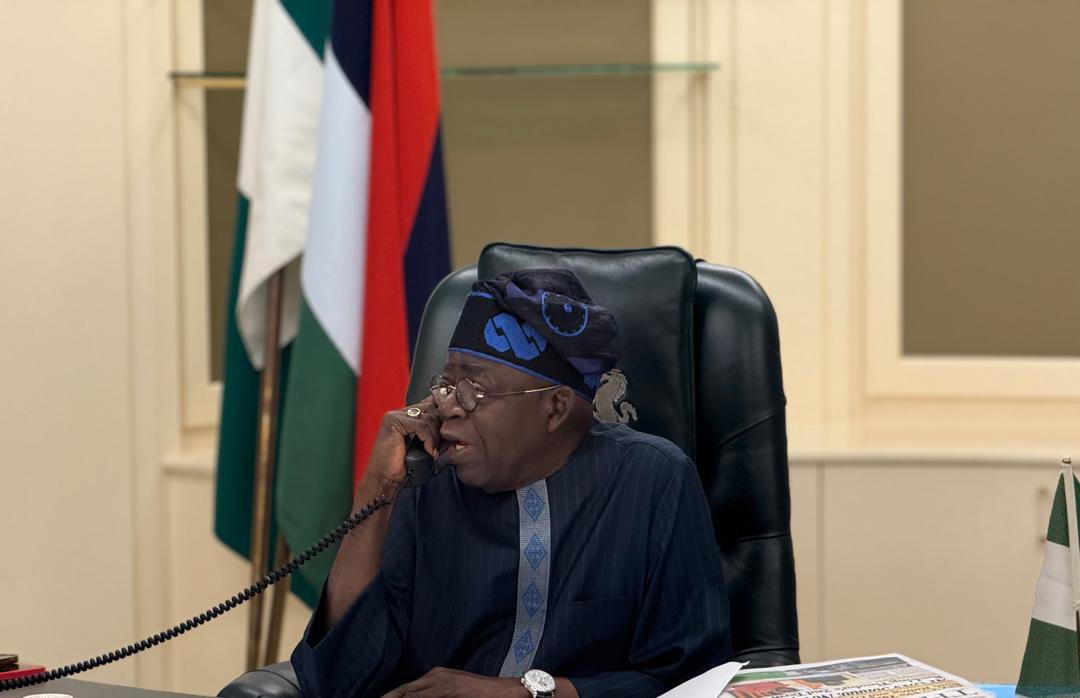
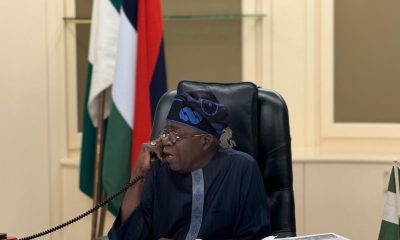
President Bola Ahmed Tinubu has spoken on phone with Anthony Joshua, the Nigerian-British former heavyweight boxing champion, and his mother.
Naija News reports that this is following the tragic accident in Ogun State in which Joshua was injured and lost two of his associates.
In a statement by Tinubu’s Special Adviser on Information and Strategy, Bayo Onanuga, the President disclosed his also spoke to the Governor of Ogun State, Prince Dapo Abiodun.
He said: “I spoke with AJ on the phone to personally convey my condolences over the death of his two associates. I wished him well and prayed for him. He assured me that he is receiving the best care in the hospital.
“I also spoke with AJ’s mother and prayed for her. She was very appreciative of my call.
“Additionally, I spoke to Governor Dapo Abiodun, who was in the hospital with them. The Governor assured me that he will do everything possible to ensure AJ receives the best possible attention.”
In a statement posted on his X handle earlier on Monday, President Tinubu, who is currently abroad, expressed profound sympathy for the boxer over the accident on the Lagos–Ibadan Expressway.
He said: “I sympathise with you and your family as you bear the emotional weight of this unfortunate incident. As a sportsman, you have always shown courage, discipline, and unwavering love for our country. These are qualities that have made you a source of national pride.
“In moments like this, we must encourage one another as brothers and sisters with a shared destiny.
“I pray for strength, wisdom, and grace for you during this painful period. May God grant you a speedy recovery and repose to the souls of the departed.”


Former Plateau State Governor and founding member of the People’s Democratic Party (PDP), Sen. Jonah David Jang has dismissed reports circulating on social media alleging that he has defected from the PDP to either the African Democratic Congress (ADC) or the Social Democratic Party (SDP).
Jang in a press statement issued in Jos by his Media Consultant Mr Clinton Garuba described the report as fake and misleading, attributing it to the handiwork of mischief-makers bent on causing confusion within the polity.
The statement clarified that, although the former governor would ordinarily have ignored such claims, it became necessary to respond in order to set the records straight and reassure party members and the general public.
Jang, also a former senator who represented Plateau North in the 8th Assembly reaffirmed that he remains a committed and founding member of the PDP, which he described as the party of pride of the Nigerian people, stressing that he has no intention of leaving the party.
He acknowledged that the PDP is currently facing internal challenges and turbulent times, but expressed confidence that the various court cases arising from the crises would eventually resolve the issues.
The former governor believes that these legal processes will restore order, unity and stability within the party and reposition it for future political relevance.
The clarification comes against the backdrop of recent political realignments in Plateau State, particularly the defection of governor Caleb Mutfwang, who emerged as governor with the political backing and influence of Jonah Jang.
While Mutfwang’s defection has fueled public debate, it remains unclear whether the governor will continue to recognise Jang as his political godfather despite now belonging to different political parties.
“The attention of Senator Dr. Jonah David Jang has been drawn to a fake report circulating on social media about his purported defection from the Peoples Democratic Party to the ADC and, in some quarters, to the SDP.
“As a founding member of the PDP, Senator Jang remains firmly in the party of pride of the Nigerian people.
“Even though the PDP is going through turbulent times, it is the firm belief of Distinguished Senator Jang that the numerous ongoing court cases will bring an end to the various crises and return the party to the pinnacle of Nigerian politics, where it rightfully belongs,” the statement added.
Please follow and like us:


President Bola Tinubu on Monday spoke on telephone with Anthony Joshua, the Nigerian-British former heavyweight boxing champion, following the tragic accident in Ogun State in which Joshua was injured and lost two of his associates.
This was revealed in a press statement issued by his spokesman, Bayo Onanuga on Monday, December 29, in Abuja.
“I spoke with AJ on the phone to personally convey my condolences over the death of his two associates. I wished him well and prayed for him.
“He assured me that he is receiving the best care in the hospital.
“I also spoke with AJ’s mother and prayed for her. She was very appreciative of my call.
“Additionally, I spoke to Governor Dapo Abiodun, who was in the hospital with them. The Governor assured me that he will do everything possible to ensure AJ receives the best possible attention,” Tinubu said.
Earlier, in a statement issued on X, the President, who is currently abroad expressed profound sympathy for the boxer over the accident on the Lagos–Ibadan Expressway.
“I sympathise with you and your family as you bear the emotional weight of this unfortunate incident.
“As a sportsman, you have always shown courage, discipline, and unwavering love for our country. These are qualities that have made you a source of national pride.
“In moments like this, we must encourage one another as brothers and sisters with a shared destiny.
“I pray for strength, wisdom, and grace for you during this painful period. May God grant you a speedy recovery and repose to the souls of the departed.”
Please follow and like us:
NIGERIA NEWS
Check out last post of Anthony Joshua's fitness trainer who reportedly died in car crash


The last post of Latz, a trainer who died in accident involving Anthony Joshua has gone viral online following the sad incident. Netizens mourned his demise.
SOURCE PAGE

By Jideofor Adibe
I was initially asked to speak on the topic of ‘what the Igbos want from Nigeria’. The topic was later modified to ‘Igbo Charter of Demands from Nigeria’, which I believe, was meant to be a set of demands to be tabled as bargaining chips with Presidential candidates in the 2027 election. I have taken the liberty to slightly modify the title to, “What do Igbos really want from Nigeria, and what conversations should we be having among ourselves”? The modified title enables me to go beyond just a “charter of demands we want from Nigeria” to address other pertinent issues that relate to what some people, sometimes, crudely, call ‘the Igbo problem’. For instance, how are we really sure that the Presidential candidates we will present the charter of demands TO will honour their promise if they get to power? And how are we sure they have no vested interest in the perpetuation of the current condition of the Igbos in the country? I believe that the people best positioned to solve the ‘Igbo problem’ are Igbos themselves, not other Nigerians, no matter how powerful, or well-meaning they may be. I also believe that it is through a robust and honest conversations among ourselves that we will be in a better position to articulate what we want from Nigeria.
What is the ‘Igbo problem’?
The question of ‘what do the Igbos want from Nigeria’, is sometimes used interchangeably with the so-called ‘Igbo problem’ On the notion of ‘the Igbo problem’, there is no consensus. From the perspective of most Igbo people, ‘the Igbo problem’ is a feeling of being unwanted (or ‘marginalized’ in political parlance) in the Nigerian federation. The extreme manifestation of this sense of being unwanted is ‘Igbophobia’, which is the weaponisation and institutionalization of this sense of being unwanted.
For other Nigerians, what constitutes ‘the Igbo problem’ could range from earnest conversations about the Igbo feelings of exclusion to the use of such conversations as opportunities to have a dig on the Igbo race, or to perpetuate the same Igbophobia they purport to want to find solutions for. Let me mention immediately that every culture, including the Igbo culture, has something ennobling about it, and something that people would recoil from. For this, the theory of hierarchy of cultures popular with colonial anthropologists have since been discredited in favour of cultural relativity – each culture is judged only to the extent to which it serves its people.
Where did the rain start to beat us?
Igbophobia did not start today. It was there even during the colonial times. It is a range of negative attitudes and feelings towards the Igbos who make up a majority of the people in the country’s South-East, and a sizeable part of the populations of the South-South and the Middle Belt zones.
Its origin can be traced in part to the Igbo socio-political system. Most parts of Igboland did not pass through the feudal epoch with its centralized structures and obsequious attitude to authority. The people were essentially republicans, with an achievement-oriented culture, where age is respected but achievement is revered. This has both positive and negative consequences. On the positive side, it engendered a spirit of competitiveness, ingenuity and resilience. For instance, during the colonial times, while the Igbos were not the first ethnic group to accept western education, once they saw the opportunities in it, they embraced it with uncommon zeal such that within a short space of time, their education, coupled with their diasporic orientation, led to their high visibility (or even dominance) in critical sectors of public service, including the military and the civil service. Of course, dominance by its nature breeds resentment – something lost on some political leaders these days who think they are doing their ethnic, religious or regional in-groups a favour by clannishly making ‘their people’ to dominate choice public positions when they are in power.
Anti-Igbo sentiments arising from the Igbo domination of the public space in the First Republic were exacerbated by the January 1966 coup d’état, the July 1966 counter-coup, the pogroms in different parts of the country, the Civil War, the War propaganda on both sides of the conflict, and the vested interest of some groups in using Igbophobia to gain advantage for their in-groups in the competition for power and scare socioeconomic resources in the country.
One of the negative aspects of the Igbo achievement-oriented culture is that since failure is strongly frowned upon, some Igbo youths not only want to ‘make it’, they also want loudly to be seen to have ‘made it’. This pushes many into looking for shortcuts to ‘make it’, and to be celebrated as having made it. I will propose that some of the unintended consequences of our achievement- oriented culture should form part of the conversations we should be having among ourselves.
Igbo and the search for group identity
It is natural for groups in a multi-ethnic country like ours to have conversations over their future. Several parts of the country hold similar conversations – the core Middle Belt states of Benue and Plateau for instance continue to discuss on whether they should anchor their identity on Middle Belt or accept the current arrangement which lumps them as part of the North; the search for identity among the Yoruba span the spectrum of those who want ‘true federalism’ to those who want outright secession as Oduduwa Republic; many people from the North and South-South are not left out in such conversations, sometimes openly, at other times in hush-hush tones.
In Igboland, we find several groups also embracing different options on where the Igbo should anchor their identity – from whether to be part of the Nigerian federation, and if so, in what form to those who want outright secession. In essence, the conversations in Igboland about the group’s identity is not manifestly different from what is happening in other parts of the country or even across the world.
The secessionist option
The peaceful quest for self-determinations is a worldwide phenomenon from the United Kingdom, through Italy, Spain, Canada and even the United States. In the USA for instance, there are at least ten active separatist movements including in California, the country’s third largest state, where the ‘Yes California Independence Campaign’, was formed in August 2015 by Louis J. Marinelli. There is also The League of the South, an active organization established in 1994 by Michael Hill, Jack Kershaw, and other members and which campaigns for the former Confederacy states (South Carolina, Mississippi, Florida, Alabama, Georgia, Louisiana, Texas, Virginia, Arkansas, North Carolina, and Tennessee) to secede from the US. As we all know, the attempt by the Confederate States to secede from the US led to the US Civil war that lasted from April 12, 1861 until April 9, 1865. In essence, no one should be made to feel ashamed that there are separatist movements in Igboland.
However, it is important for the various hues of the separatist movements to have a balanced view of their agitation, namely, the idea that independence may not necessarily bring peace or prosperity (as the case of South Sudan demonstrates) and that having the same language and religion are not sufficient conditions for the success of any new nation (as the case of Somalia demonstrates). Militarized quests for separation or the use of acerbic language in such campaigns usually prove counter-productive, and very few of such approaches have succeeded in modern times.
President of Igbo extraction option
There are those who believe that having a President of Igbo extraction is all that is needed to solve the Igbo feeling of exclusion. While I support the idea of a competent and ethically driven President of Igbo extraction (at least for the momentary hurrah effect it could generate among the Igbos), I have my doubts that it will be a sufficient antidote to ‘the Igbo problem’. This is because historically, when a President of a particular ethnic extraction is in power, and is being robustly criticized (something that comes with the job), criticisms by non-members of the President’s ethnic group will often lead to members of the President’s in-group rallying together to defend their own, exacerbating in the process tensions between the President’s ethnic group and others.
Similarly, it may be tempting to pose the question of whether Obasanjo’s tenure as Military Head of State (1976-1979) and civilian President (1999-2007) as well as Tinubu’s current presidency, have assuaged separatist quests among the Yoruba. We can also ask whether Obama’s eight-year presidency in the USA led to African Americans being better accepted in the US or whether his presidency paradoxically led to the weaponization of right-wing politics in the USA which paved the way for the emergence of Donald Trump.
A New Charter of Conversation for the Ohanaeze Ndigbo
I am happy to hear about some of the achievements of the current Ohanaeze leadership, under Senator John Azuta-Mbata, including the desire to promote the Igbo language. The recorded achievements of Ohanaeze Ndigbo are very encouraging but more needs to be done. For this, rather than a ‘Charter of Demands from Nigeria’, I would propose a charter of conversations we Igbos should be having among ourselves, led by the Ohanaeze Ndigbo Worldwide:
Igbo Identity should be a Core Driver: Experiences from the separatist movements in Spain, Italy, Canada and elsewhere show that regional identity, language, and culture were central to their pursuit of self-determination. We need to do more to strengthen the Igbo identity, including promoting and taking pride in the various Igbo dialects, and respecting the peculiarity of each Igbo group. The distinction between core or non-core Igbos is divisive. Ohaneze should develop a deliberate policy of cultural cooperation, including the use of sports among the Igbos who are located not just in different parts of the country but also beyond. Ohanaeze must find a way of helping several Igbos afflicted with ‘bleaching complex’ – a belief that denying or hiding their Igbo identity will make them more acceptable in the wider Nigerian society. Others demur from showing pride in their ethnic identity for fear of being labelled ‘tribalist’ or an ethnic chauvinist. It must be carefully explained to such people that demonstrating love for one’s ethnic group is not ethnicity or what some call ‘tribalism’ and that it becomes so only when the demonstration of pride in one’s ethnic in-group is framed in conflictual terms.
Economic development of Igboland should be a priority
The Igbo culture seems to revere individuals who do not live within the homeland, often the farther away from one’s village or town, the more the respect. The Igbo adulation of the Diaspora (broadly defined), and its achievement oriented culture, have led to many Igbos investing in other parts of the country to the neglect of their own Igbo enclaves. Though there is evidence that this is changing gradually, more needs to be done. Igbophobia will be less if the region is seen to be economically thriving and a home for both Igbos, and non-Igbos who can add value to the area.
Ingenuity has both time and space dimensions
Igbos are widely respected, even if grudgingly, for their ingenuity and resilience, especially in commerce. I need to mention that various ethnic groups in the country also have their unique abilities and areas they should work on. Many of our people take pride in being good traders. However, we should be conscious of the fact that ingenuity has time and space dimensions. Some 10-20 years ago, going to China to buy goods to resell may make someone a smart trader. These days anyone with android phone could do the same buying and selling from the comfort of his or her home. This means that we cannot sustain what some call Igbo ingenuity in commerce if we remain fixated on what gave us advantage in the olden days when the world around us is changing very fast. We are gradually losing out even in areas where our people were very visible. For instance, though modern Nollywood arguably started in Onitsha, how many films on Igbos or by Igbo producers are today on Netflix?
The get-rich quick syndrome
While this is not specific to the Igbo, this is probably one of the unintended consequences of our achievement- oriented culture. It needs to be an urgent area the Ohanaeze should focus on because it has misled many of our youths into looking for short-cuts with the attendant crimes it brings. We must stop giving the impression that a person’s sources of income do not matter provided the person does charitable work in the community.
Countries that fought the bitterest civil wars could also become closest allies
The United States fought a bitter War of Independence with the United Kingdom from April 19, 1775 to October 19, 1781. Today, they are about the closest allies. Similarly, Japan, where the US dropped the Atom bomb that killed some 200,000 to 300,000 Japanese by the end of 1945, (in addition to other humiliations after the war), is today an ally of the US. The country forms the cornerstone of American security in Asia, with a strong military and political partnership formalized by the U.S.-Japan Security Treaty since the 1950s. In the same vein, Germany fought and lost two World Wars, each with humiliating consequences. For instance, the Treaty of Versailles which ended the First World War in 1919 contained the War Guilt Clause (Article 231) which forced Germany to accept sole responsibility for the war and was ordered to pay 132 billion gold marks (roughly $33 billion at the time), a sum, economists like John Maynard Keynes warned could collapse the European economy. After the country was again defeated during the Second World War, Germany became divided into four occupation zones (US, UK, France, USSR) and consequently became the first modern state to be ruled by foreign powers. Millions of Germans were used as forced labour for years after the war to rebuild Allied nations. For instance, in France alone, an estimated 2,000 German prisoners died monthly while clearing minefields. There was also a massive industrial dismantling of the country, with the former Soviet Union stripping East Germany of factories and skilled personnel as reparations. Today, Germany is not only an ally of the USA, it is a key member of Europe and therefore part of the West.
The above instances suggest that grievances by our youth, while legitimate in many instances, need to be creatively channelled and should not be turned into an ideology.
Unity among the Igbo political class
Most members of the Igbo political class appear self-serving, only to turn around and cry ‘marginalization’ when it suits them. Most seem driven by the doctrine of the ‘goat follows the man with the palm frond’ and for this, are either unable, or too lily-livered to fight for Igbo interest. For example, in the wake of the rampant herdsmen attacks, the South-west Governors united across party lines, and despite opposition from the federal government, set up the Amotekun to protect the region. The South-East governors dilly-dallied, and as often happens in such situations, non-state actors which are not really equipped for the job, (in this case IPOB), tried to fill the lacuna by promising the people protection from the herdsmen through the establishment of the Eastern Security Network. Today, we are seeing the consequences of such state failure and a non-state actor promising to offer what the state could not deliver.
Similarly, when Reno Omokri, who has probably done more than most people in recent times to openly abuse and ridicule the Igbo, was nominated as an Ambassador designate, one would expect a sense of outrage from the Igbo political class, including law makers. Would such a nomination have been confirmed if Omokri was unleashing the same vitriol he has been pouring on the Igbos on the North or the Yoruba? The failure of the Igbo political class is therefore also one of the reasons some Igbo youths move to feel in the lacuna, often compounding the problem in the process.
Moderate the grievances of some Igbo youths by letting them know they are not completely innocent of what they are accusing others of doing to them
Yes, Igbophobia is real, but we are also not altogether innocent of profiling others. Knowing that we are not altogether innocent of what we are accusing others of doing to us, or in fact that virtually every part of the country has its own story of institutionalized memory of hurt, will help to give us a balanced perspective in articulating what we want from Nigeria.
Is Igbophobia fated to be with us forever?
History does not suggest that. I have already mentioned the experiences of Japan and Germany after the First and Second World Wars. Similarly, in the mid-19th to the early 20th century, Italian and Irish migrants to the US were very harshly treated, with some being lynched due to their Catholicism, poverty, and perceived threats to the American Protestant culture. However, by the mid-20th century both the Italian and Irish migrants have effectively become integrated into the American culture as their home countries prospered.
I believe that one of the surest ways to resolve ‘the Igbo problem’ is by having conversations with ourselves, knowing our strengths, weaknesses, and what we can realistically achieve.
*Excerpts from a paper presented by Prof. Adibe at a Meeting of the Imeobi, Ohanaeze Ndigbo Worldwide, which held at Enugu on December 23, 2025.
NIGERIA NEWS
Kano NNPP Urges Gov Yusuf to Stay in Party, Describes Planned Defection to APC as Betrayal – THISDAYLIVE
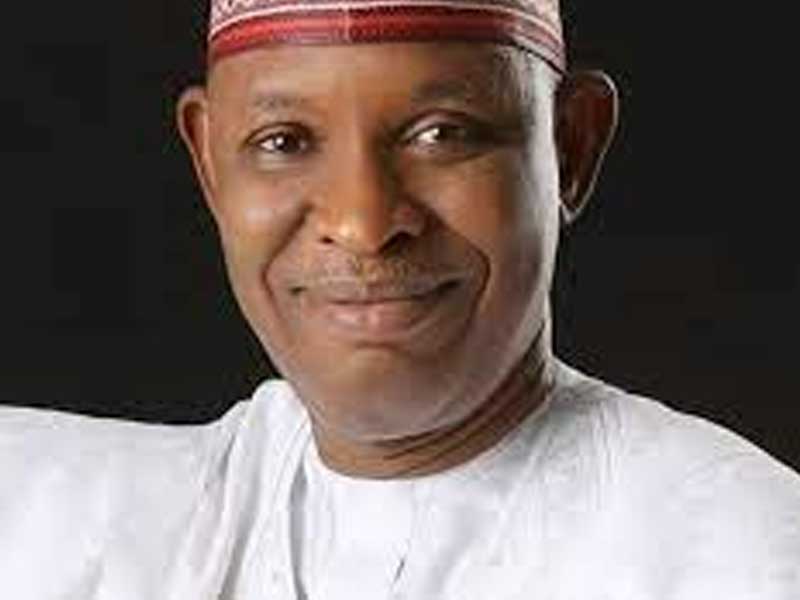
- Gov meets with APC chieftains
Ahmad Sorondinki in Kano.
The New Nigeria Peoples Party (NNPP) in Kano has appealed to Governor Abba Kabir Yusuf to stay with the party, warning that defecting to the All Progressives Congress (APC) would betray the mandate given to him by the people who voted him into office on the party’s ticket.
Speaking with newsmen in Kano on Monday, the party chairman Hashimu Dungurawa warned that any move to defect to the APC would not have their support, and should be resisted by all the party faithful in the state.
He said the party structure had exhausted all avenues to ensure its togetherness, but to no avail, and was still using all available channels to reach out to them and appeal to them not to leave the NNPP.
He added, “Information reaching us indicated certain elements in NNPP are hell-bent on leaving our party, but I would like to make it categorically clear that our party and our national leader, Dr. Rabiu Musa Kwankwaso, have no hand in what’s going on.”
“We’ve convinced them not to decamp to APC, and we’re still convincing them to stay with us and carry on with the good work of helping the people, especially in the areas of agriculture and small businesses, as stipulated in our constitution.”
“I want to issue a stern warning to those creating a rift between the governor and his political mentor, Dr. Rabiu Musa Kwankwaso, Senator Rufai Hanga, Sanusi Surajo Kwankwaso, and myself, Hashimu Dungurawa to desist from it.”
“It’s unfortunate that some people are pointing accusing fingers at us regarding the current happenings, citing our close relationship with Kwankwaso. But I want to make it clear to all that on no occasion have we ever participated in any evil doing against anyone.”
The NNPP’s declaration came on the heels of an emergency meeting between the governor and two APC chieftains from Kano: Alhaji Kabir Alhassan Rurum, a member representing Rano, Kibiya, and Bunkure Federal Constituency, and the Director-General of the National Productivity Centre, Dr. Baffa Babba Dan’agundi, from Kano Municipal local government.
According to sources, the late-night meeting may not be unconnected to Governor Yusuf’s planned defection from the party and the selection of a Deputy Governor from Kano South Senatorial District, a zone that has never produced a Deputy Governor in the state’s history.


The Minister of the Federal Capital Territory, Nyesom Wike, has said the removal of fuel subsidy by President Bola Tinubu has significantly increased the funds available to state governments.
Wike made the remark on Monday during his end-of-the-year live broadcast, monitored in Port Harcourt. He described the subsidy removal as a bold and courageous decision, noting that it has enabled several states to prepare annual budgets exceeding N1 trillion.
According to him, the increased flow of funds has also attracted the attention of “smart Nigerians” who are seeking ways to access their share of the “national cake” through various means.
Wike noted that with more resources now available to state governments, the quality of life of citizens should improve, urging residents to demand accountability from their governors.
He added that during his eight years as governor of Rivers State, he never had access to the level of funds currently available to state governments, stressing that his administration never received more than N200 billion in any single year.
“In all my life, as governor for eight years in Rivers, I never received from the Federation Account more than N200 billion in a year. The records are there.
“States are now making a budget of over a trillion because the removal of fuel subsidy has now made money available to the states and so most of them are blindfolded,” he said.
The minister said that he would do wonders if he had N500 billion in FCT account, stressing that FCT gets only one per cent of the share of the Federal Government (FG) from the federation account.
“Take for example, if FG gets N1 trillion, 1 percent is N10 million and that is not enough to pay salary. I will have to go back to Internally Generated Revenue, but look at what is happening in Abuja?
“With the little we have got, we have been able to do the best that we can for the residents of FCT,” he said.
He, however, cautioned that money has its own limitations, adding that there were areas where money could go but goodwill would take someone there.
He expressed confidence that the candidates of the All Progressive Congress (APC) would win the FCT Area Councils’ election, scheduled for February due to Tinubu’s goodwill.
He added that no President had done what Tinubu did in the FCT Area Councils, which he said will give the APC candidates an upper hand.
The minister equally added that beyond infrastructure, the FCT Administration had intervened in education, health, and the agricultural sectors.
“This, in the long run, will improve the standard of living of the people,” he said.

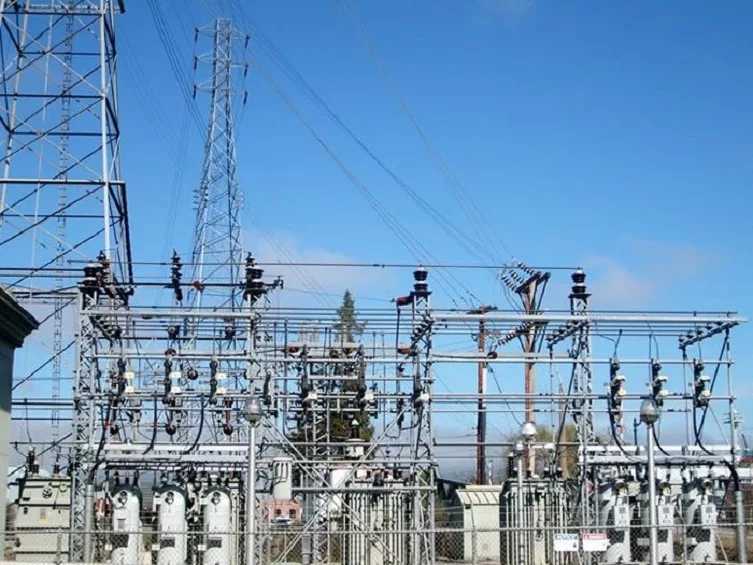
The Nigerian Independent System Operator (NISO) has confirmed that the national grid suffered partial disturbances on Monday, following lingering effects from the vandalism of the Lagos–Escravos-Lagos gas pipeline on December 10.
According to NISO, this incident tripped several generating units and critical 330kV transmission lines, causing widespread power disruptions across parts of the country.
The system operator noted that the Delta generation complex isolated successfully in island mode, sustaining 114 megawatts to key substations, including Oghara, Amukpe, Benin, and Efunrun.
It also said swift action from the National Control Centre in Osogbo, Osun State, restored full supply nationwide, with investigations ongoing to prevent future occurrences.
NISO said investigations into the cause and sequence of events leading to the system disturbance are currently ongoing, adding that appropriate measures shall be put in place to forestall future reoccurrence of such major system incidents.
It also reassured Nigerians of its continued commitment to proactive grid management and the application of best operational practices to ensure the stability and reliability of the National Grid
“The Nigerian Independent System Operator (NISO) wishes to inform the general public and relevant stakeholders that the National Grid experienced a system disturbance at 14:01 hours on Monday, 29 December 2025 that led to a partial collapse.
“It would be recalled that the Lagos–Escravos-Lagos gas pipeline was vandalized on 10 December 2025 which led to the shortage in power generation in the country. This has further led to the fragility and weakness of the national grid.
“Preliminary reports indicate that the disturbance involved the tripping of several generating units and critical 330kV transmission lines, resulting in a widespread impact on electricity supply across parts of the country.
“However, the Delta generation complex successfully operated on island mode at the 132kV sub-transmission voltage level. This enabled the continued supply of electricity to Oghara, Amukpe, Benin, and Efunrun 132kV substations, with a total generation of 114 megawatts from four units at the Delta Thermal Power Station.
“In line with established Operational Procedures, NISO promptly initiated system response measures using its dispatch and monitoring tools at the National Control Centre (NCC), Osogbo.
“Supply has been fully restored to all parts of the country and the system stability normalised,” NISO stated.
President Bola Tinubu has said that Nigerian-British heavyweight boxing champion Anthony Joshua is receiving the best treatment in Nigeria following an accident on the Lagos–Ibadan Expressway on Monday.
President Tinubu disclosed this in a statement issued by his spokesperson, Bayo Onanuga, on Monday.
The statement said the president had a telephone conversation with AJ and his mother.
“I spoke with AJ on the phone to personally convey my condolences over the death of his two associates. I wished him well and prayed for him. He assured me that he is receiving the best care in the hospital.
“I also spoke with AJ’s mother and prayed for her. She was very appreciative of my call.
“Additionally, I spoke to Governor Dapo Abiodun, who was in the hospital with them. The governor assured me that he will do everything possible to ensure AJ receives the best possible attention,” the President said.
Earlier, in a statement on X, President Tinubu—who is currently abroad—expressed profound sympathy for the boxer over the accident on the Lagos–Ibadan Expressway.
The statement read: “I sympathise with you and your family as you bear the emotional weight of this unfortunate incident. As a sportsman, you have always shown courage, discipline, and unwavering love for our country. These are qualities that have made you a source of national pride.
“In moments like this, we must encourage one another as brothers and sisters with a shared destiny.
“I pray for strength, wisdom, and grace for you during this painful period. May God grant you a speedy recovery and repose to the souls of the departed.”
DAILY POST reports that AJ was involved in an accident in Nigeria which claimed two lives.
The Federal Road Safety Corps blamed overspeeding for the accident.
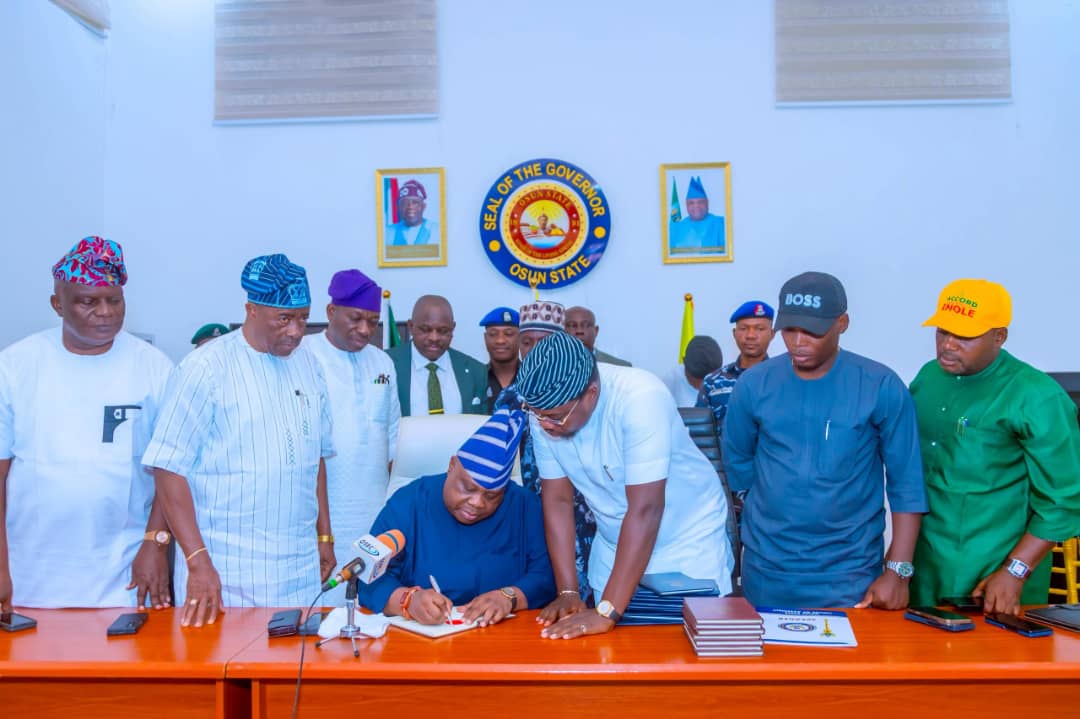
Governor Ademola Adeleke of Osun State has signed the 2026 appropriation bill into law with a vow to ensure full implementation and with highlights of the deliveries of the last three years budgets.
Accompanied by the Deputy Governor, Prince Kola Adewusi; House Speaker, Adewale Egbedun; the Chief of Staff, Hon Kazeem Akinleye; the Head of Service, Elder Ayanleye Aina and members of the cabinet, Governor Adeleke said he signed into law the 2026 Appropriation bill to consolidate and expand governance and service deliveries in line with the five point agenda of our administration.
Speaking after the signing ceremony, the governor, according to his spokesperson in a statement, said the occasion launched into “The final year of our first term with expanded ambitions to complete ongoing projects and launch new initiatives for the good of our people”, reaffirming that his administration has delivered to the admiration of the public.
“Our administration has in the last three budget years laid solid foundation for the sustainable development of our dear state. We completed many abandoned projects and launched new ones.
“We paid billions of naira in pension and salary debt. We targeted workers welfare and approved and implemented payments of promotions arrears and paid many allowances which the previous government neglected.
“Our government touched previously neglected sectors, pouring funding into agricultural mechanisation, health and school rehabilitation, new five star stadium at Osogbo, over 250 kilometers of roads across the state, six different road dualisation in five major towns, three major flyover bridges to ease traffic congestion, innovations in energy, science and climate change among others.
“We ensure value for money in project selection and execution; we moderate the cost of project implementation and reform the procurement process in line with global best practices.
“We implemented local content policy. We stop capital flight which ensures Osun money service Osun people.
“We approved close to Four Billion Naira for disbursement into the cooperative movement. This is deepening the grassroots economy and fostering inclusive financing.
“We boost the domestic economy through an improved business environment. Ease of doing business was enhanced through tax harmonization to avoid multiple taxation, through a 45 days window for acquisition of Certificate of Occupancy.
“Our moribund free trade zones were reactivated and investment inflow has tripled from almost zero in 2022 to almost 40 percent increase under three years. Osun is today attracting multiple business delegations from all over the world.
“The outcome and outputs of our three years appropriation processes have been very positive. Our state came first in the South West on Primary Health care access for both 2024 and 2025.
“Osun performance in national examinations has improved from number 33 in 2022 to number seven for both 2024 and 2025.
“Osun debt profile has reduced by over 40 percent according to the federal Debt Management Office.
“Osun infrastructure deficit which was almost 80 percent as of 2022 is now reduced by 45 percent. Osun economy is under a responsible, transparent and accountable leadership.
“We have garnered several unsolicited local and international awards in recognition of our performance in office.
“Our good work is an open book which many observers acknowledge. We thank the public for their praises and acknowledgement of our contributions for state development”, the governor told the audience.
Speaking on the importance of Budget 2026, the governor said his team has resolved to consolidate our achievements across the sectors”, adding that “the year 2026 is a dual year of renewal of mandate and rolling out of a new agenda for the next four years.
“The consolidation for 2026 is a year of continuation, of further good governance and of continuity for sustainable governance.
“2026 is a loaded era as an election year when by God and people, our mandate will be renewed. But we should not allow governance to suffer. We must multi-task.
We promise Osun people full implementation of the new appropriation act. I charge each ministries and agencies to follow the established timelines for the budget execution.
“We will continue to focus on people’s welfare and complete all ongoing projects and programmes” , the governor posited.
He expressed profound gratitude to Osun people and residents for their unshaken faith in our leadership, declaring “I am personally overwhelmed by the deep love prayers and support from all segments of our society.
“This strong goodwill strengthens our resolve to work only for public interest and public good.
“I won’t disappoint the mass of our people, the artisans, the workers, the labour movement, the youth, the students, the women, our royal fathers and opinion leaders.
I remain faithful in service of the people, for the people and by the people”, the governor was quoted as saying in the press statement.
Please follow and like us:

At least seven journalists have died, while four others sustained injuries in a single fatal road accident involving a Nigeria Union of Journalists, NUJ bus in Gombe State.
The incident reportedly occurred on Monday evening as the journalists were returning from a wedding ceremony in Gombe South senatorial district.
The victims were part of a delegation that had travelled to honour a colleague, an employee of the Nigerian Television Authority, who was getting married.
Confirming the incident, the Gombe State Sector Commander of the Federal Road Safety Corps l, Samson Kaura, said, “From the information available to us, 11 people were involved in the crash. Sadly, seven of them died on the spot, while four others sustained varying degrees of injuries.”
According to him, preliminary findings indicate that the accident was a lone crash, likely caused by a tyre burst.