
NIGERIA NEWS
Check out last post of Anthony Joshua's fitness trainer who reportedly died in car crash



The last post of Latz, a trainer who died in accident involving Anthony Joshua has gone viral online following the sad incident. Netizens mourned his demise.
SOURCE PAGE








NIGERIA NEWS
Fubara Not Rivers APC Leader, He Decided Late, Re-election Not Guaranteed – THISDAYLIVE


•Claims his supporters control the grassroots
•Criticises Makinde’s approach to politics
•Declares he’s decided to quit PDP, ADC not a threat to Tinubu in 2027
•You’ve exposed your anti-party activities, PDP tells Wike, vows to field presidential candidate
• You’re frustrated, party’s professionals knock FCT minister
Chuks Okocha, Olawale Ajimotokan in Abuja and Blessing Ibunge in Port Harcourt
Minister of the Federal Capital Territory (FCT), Nyesom Wike, during a long-winded media chat, yester-day, insisted that in spite of the defection of Rivers State Governor, Siminalayi Fubara, from Peoples Democratic Party (PDP) to All Progressives Congress (APC), he was not the APC leader in the state.
Wike, while mocking Fubara, said he took the decision late and his defection to APC did not guarantee his re-election in 2027.
The former Rivers State governor boasted that he remained the leader of politics in the state, claiming that his supporters control the local governments and ward structures across the state.
Wike, who further dismissed insinuations in some quarters that Fubara’s defection to APC automatically made him the party’s leader in the state, said the governor did not have structure that would guarantee him leadership of the party.
He said before the governor resigned from PDP, 22 local government chairmen in the state and more than half of the House of Assembly members had left PDP and joined APC.
Wike stated, “Defecting to another party does not make you the leader. When you said you are joining the party, you must have something to offer. There’s nothing like 001. There’s nothing like, ‘I have registered in the state as 001.’
“He (Fubara) decamped to APC with who? What is ‘001’? Let me tell you, there’s nothing like 001 in the state. You register in your ward and local government. So, if you are 001, it’s in your ward.
“Everybody registered in their own ward. You could be the first person to register, but that’s not your position.
“See, leadership is not because I’m a governor. Leadership is not because I’m a minister. You must have something that makes you a leader. Who is the leader of APC in Lagos State? There are exceptions to rules.”
The former Rivers governor boasted that he had made up his mind to leave PDP, and those loyal to him, even in other states of the federation, will join him in leaving the party.
Responding to Fubara’s earlier statement that anyone who wanted to support President Bola Tinubu should “not follow corner, corner”, Wike reiterated that he had been the most abused minister in the present administration because of his support for the president.
He stated, “Nigerians know that in 2023, I supported the president. I didn’t hide that.
“If I am doing corner corner, Assembly people will not go, the National Assembly members will not go. That is leadership. I support President Tinubu. With what the president is doing in Abuja, there is no way PDP will win the FCT in the next election.”
On the alleged breakdown of the peace agreement brokered by the president in Rivers, Wike claimed that it was due to the inability of Fubara to keep to his part of the deal, adding that the governor is being economical with the truth in his working relationship with the leadership of the Assembly.
Addressing claims by Oyo State Governor, Seyi Makinde, that the FCT minister promised to weaken PDP in favour of Tinubu ahead of the 2027 general election, Wike dismissed the assertion as untrue.
He described the allegation as “blatant lie,” and stressed that no such meeting ever took place.
“That is a blatant lie. That is why you see Seyi Makinde has never called me Wike again. That was the last time he did,” the minister stated.
Wike revealed that he played a prominent role in making Makinde governor in 2019, and said Makinde became governor after he and some party leaders handed him with the PDP structure in Oyo State.
Reacting to Makinde’s claim of making $1 million when he was in law school, Wike said, “I ran for the presidential primary of the PDP. I didn’t see Seyi use N1,000 in my primaries. I did not see it even once.
“Secondly, it’s only in Nigeria that I’ve seen someone awarded a job worth $1 million, and nobody is talking about it. But he came to the man who didn’t have $1 million to help him get structure. We said no, we will not give it to you. We gave it to Teslim. He went to SDP to run as governor and failed with his $1 million.
“Then, before 2019, he came back. We said, we are ready to give you structure. I was very grounded in politics, but I had no $1 million with me. But the man who made $1 million is going around looking for people to help him build a structure. It was when we gave him that structure that Seyi became governor in 2019.”
Asked why he failed to brief PDP leadership on the supposed agreement, he replied, “What was the purpose of that meeting? Why did Makinde not come out to tell the party that this is what Wike said? There was no such meeting.”
Wike clarified that the only meeting involving Makinde and some PDP governors after the 2023 general election was a courtesy visit to Tinubu, not a political negotiation.
“Myself, former Benue State governor, Samuel Ortom; former Abia State governor, Okezie Ikpeazu; former Enugu State governor, Ifeanyi Ugwuanyi; and Seyi Makinde went to see the president after the elections. And, of course, the Chief of Staff was there,” he said.
Describing Makinde’s declarations as misleading and unfair, Wike said it was wrong to attribute statements to him that he never made, adding that Makinde is “frustrated”.
The FCT minister said, “Seyi said I told Tinubu that I will hold PDP for him. Nothing like that happened. Everyone knows my stand on Tinubu, I don’t need a meeting to tell him that. As a minister, I have a duty to ensure that members of the G-5 benefitted from the Tinubu administration in one way or the other.”
Wike also challenged Makinde to explain to the people of Oyo State how the N50 billion grant for the January 2024 explosion victims in Bodija, Ibadan, by President Bola Tinubu was appropriated.
He held the view that such hefty grant ought to have been appropriated before spending, adding that even as FCT minister, has not received such largesse as Makinde got from the president.
Wike dismissed Makinde’s accusations as mere sour grapes, stating that his former confidant is only embittered because Tinubu overlooked his preferred candidate for ministerial nomination.
He added that it was improper for the governor to lie against people on national television simply because he did not get the ministerial slot he wanted from the president.
Wike also downplayed the question of African Democratic Congress (ADC) being a potential threat to the re-election of Tinubu in 2027, saying, “Let me tell you something, it’s really unfortunate. I said it clearly. I don’t know if anybody wants to believe it or not.
“If there should be any opposition that will give fight to the APC, it should have been PDP. I don’t know where you are saying that ADC is rising. I don’t know where they are rising. Mention the state where they are rising. Mention. You see, I don’t like this newspaper politics. Every politics is local.”
He said the fact that the chances of PDP winning the presidential election was slim did not mean the party would not win in states.
At another function, Wike also declared that members of APC and PDP in Rivers State had effectively put aside partisan differences to embrace Tinubu’s Renewed Hope Agenda.
He made the declaration during a visit to Etche and Omuma local government areas, where he addressed youth and women leaders from the two councils.
“In Rivers State, APC and PDP have already collapsed into one family, the Renewed Hope family,” Wike said.
He explained that the collaboration across party lines was driven by shared values, mutual respect, and the desire to deliver dividends of democracy to the people.
“I don’t want to hear again, ‘I am PDP’ or ‘I am APC.’ What I want to hear is that you are working together. All of us are members of the Renewed Hope Agenda. It is one family,” he added.
Wike said his visit to Etche and Omuma councils was not for political campaign but to appreciate the people for their longstanding support.
He also urged party leaders and elected officials to honour commitments made, in the interest of peace and development, saying, “Agreement is agreement. When you agree with people, you must keep it.”
The FCT minister stressed that unity remained the key to political and economic progress at the grassroots.
PDP: Media Chat Has Exposed Wike’s Anti-party Activities, His Expulsion is Justified
The PDP leadership, yesterday, said through his media chat, Wike had justified the charges of anti-party activities against him and his expulsion from the party.
In a statement by PDP National Publicity Secretary, Ini Ememobong, the party said, “By his end-of-year Media Chat, Minister Nyesom Wike has reiterated his support for, and in fact declared that he is the ‘Number one supporter’ of the presumptive candidate of the All Progressives Congress in the 2027 presidential election, while remaining a member of the Peoples Democratic Party, confirming the basis of his expulsion from the PDP, for anti-party activities.
“This fact, which he has unashamedly reiterated in several places, is nothing less than a locus classicus of anti-democratic adventurism.”
The PDP spokesman, however, said, “This attitude of Nyesom Wike is not new, as he has been a constant agent provocateur in the political space, creating trouble to mask his selfish intentions.
“Since he assumed power as governor in Rivers State in 2015, Wike has been a recurrent troublemaker in the leadership of the PDP. From the Sheriff era, where he was a forerunner in the Sheriff-for-National Chairman movement and later turned to fight and remove Sheriff.
“Later, he championed the Uche Secondus-for-National Chairman movement (in fact, he granted a very combustible interview that polarised the party just before the convention) and then was the same person fighting to remove Secondus.
“The same Wike led the movement to produce Dr. Iyorchia Ayu as National Chairman against the advice of many party leaders, and so soon thereafter, it was Wike again who led the Ayu-must-go struggle. Beyond the national leadership crises, his actions within Rivers State further illustrate this pattern.
“The imposition of candidates, internal exclusionary practices, and the unprecedented prevention of a duly nominated PDP presidential candidate from campaigning in a PDP-controlled state remain troubling departures from democratic norms.”
PDP stated, “Wike’s politics thrives on perpetual conflict, feeding on attention and seeking relevance through calculated disruption and when starved of attention, seeks to destroy everything.
“All through the interview, Minister Wike showed obvious signs of fear of losing the attention of the president, his slipping grip of Rivers State, and his frustration with the unbending nature of the true leadership of the PDP at the national level.
“The cumulative effect of these actions is a deliberate creation of tension and division, often deployed as leverage to advance narrow political objectives. Recent public statements and alignments now make clear that Wike and his group of friends have openly chosen to work against the PDP’s collective interest in favour of an opposing political platform.
“Now that the mask of his pretence is off and he has stated that he and his group of friends (Sam Anyanwu and co.) will support the president and the APC in the presidential elections, Nigerians are now clearly aware of their disposition to destroy the PDP as a part of their bargain to support the president-a clandestine agreement reached for their selfish reasons.
“We remind Wike that as a lawyer, he knows that agreements made to achieve an illegal purpose are not enforceable and should not be encouraged.”
Ememobong said, “We assure Nigerians that the PDP will field a credible presidential candidate who will receive the massive support of Nigerians and will go on to win the presidential elections in 2027. Our party is the Peoples Democratic Party, and no one person has the capacity to personalise the party.
“The Kabiru Turaki-led National Working Committee is working around the clock to rebuild the party, clear the issues in court, and prepare the party for electoral success come 2027.”
PDP Professionals Say Wike’s Comments Show His Frustrations ahead of the 2027 Election
PDP Professionals said Wike’s media chat had exposed his frustration over his failure to secure the support of credible Nigerians for Tinubu’s re-election bid in 2027.
The professionals, therefore, invited Nigerians to note the minister’s resort to hubristic invective, diversionary falsehoods, and baseless allegations against Makinde and other credible leaders.
They said the outburst stemmed from their refusal to support the Tinubu administration, which had brought untold hardship and escalated insecurity across the country over the last two years.
In a statement by its Protem National Coordinator, Obinna Nwachukwu, the group said, “From Chief Wike’s confessionary responses during the media chat—including his failed attempts to engineer a parallel leadership for the PDP—it is now clear that the travails facing the PDP are contrived to cripple the opposition.
“This is part of a sinister plot to enable President Tinubu to establish a one-party state ahead of the 2027 general election; a plot the PDP has firmly resisted.
“Through Chief Wike’s media chat, Nigerians can now clearly identify the individuals and motivations behind the subversive court actions against the PDP, the violent attacks on the new National Working Committee duly elected at the party’s National Convention, the sealing of the PDP National Secretariat, and the attempts to compromise certain INEC officials against the party.
“Our response to Minister Wike is that the PDP is too big and too deeply entrenched to be captured or derailed. His resort to personal attacks and bogus allegations against our leaders, such as Governor Makinde, will not yield the results he desires.”
PDP Professionals added, “In any case, the CP-PDP holds no sympathy for Minister Wike, who has become an expired, ‘homeless’, and pathetically isolated politician lacking a genuine base or followership.
“Having been expelled from the PDP, rejected by the All Progressives Congress (APC), and side-lined in the politics of Rivers State, Minister Wike is now clutching at straws.
“He is jittery, forlorn, and in mortal fear of imminent political oblivion—a desperation that has driven him to attack credible leaders in a futile attempt to retain his nuisance value.”


Inclusive banking is one concept that financial sector leaders are never tired of discussing. But in practice, not much is being done to advance the practice and improve the banking experience of customers, especially the blind and visually impaired customers of banks. The Central Bank of Nigeria (CBN’s) exclusion of braille feature in naira banknotes design and failure of banks to include Braille and Interactive Voice Response (IVR) features in internet/mobile banking applications and Automated Teller Machine (ATM) for visually impaired are pain-points that erode confidence in the financial system. Assistant Editor COLLINS NWEZE captures blind customers’ pains in accessing financial services and stakeholders’ inability to meet their demands.
Olurotimi Olubodede, a Ph.D. student at Nasarawa State University, Keffi, Nasarawa State, is not interested in any of the N5.01 trillion naira notes circulating in Nigeria. To him, they are merely pieces of paper—unidentifiable and unusable for meeting the banking needs of the visually impaired.
Olubodede, who is blind, is frustrated that the interests of approximately 1.2 million Nigerians, born blind or who became blind over the course of their lives, are overlooked in key financial sector policies, including the design of the naira. He lamented that current banknotes lack tactile or other features that would make them accessible to the blind. This omission adds to the numerous barriers that make it difficult for visually impaired individuals in Nigeria to access financial services.
A Lecturer in the Mass Communication Department at Adekunle Ajasin University, Ondo State, Olubodede said he intends to sustain the fight against the restriction or outright denial of banking services for the blind through advocacy and dialogue with banks and regulatory institutions. “Being born blind yet educated, I have experienced almost everything life could offer—the good, the bad, and the ugly,” he said. “I will continue to speak for visually impaired customers who are often neglected and unheard in this country.”
Olubodede argued that discrimination based on visual impairment—including denial of equal access to financial services—not only violates universal human rights but also undermines business performance and economic growth. He emphasised that blind individuals are integral to building stronger economies, and there is a clear business case for their inclusion. “With the advent of technology, everyone else is enjoying seamless banking services except the blind. We have repeatedly urged banks, including the major ones, to invest in technology that protects our accounts and enables independent transactions, but to no avail,” he lamented.
Although he cannot see, Olubodede is acutely aware of the emergence of fast, secure, and seamless digital banking services. He recounted an incident at the Ikare, Akoko branch of a new-generation bank in Ondo State, where he was initially denied a replacement ATM card because he could not produce a work ID. The branch manager eventually issued the card but noted, “I am issuing this card because of your working place.” Olubodede concluded that the visually impaired are routinely denied access to quality, technology-driven services, and in the rare cases when such services are provided, the conditions often compromise their safety and the security of their funds.
State of the industry
The CBN Governor, Olayemi Cardoso, announced that Nigeria has extended its Payment System Vision roadmap from 2020 to 2028, reflecting an ambitious commitment to modernize the country’s payments infrastructure and strengthen cybersecurity. He noted that more than 12 million contactless payment cards are now in circulation. Additionally, the regulatory sandbox has expanded to include over 40 fintech innovators, providing a platform for safe experimentation and the responsible scaling of new digital finance solutions. “Revised agent banking guidelines have tightened anti money laundering controls, including geo fencing of high risk areas, while improving consumer protection at the last mile. Integration across switching companies has improved, bringing Nigeria closer to seamless domestic interoperability,” he said.
According to Cardoso, Nigeria, supported by these measures, currently stands among Africa’s most advanced digital payments markets, with a dynamic fintech ecosystem that has produced eight of the continent’s nine unicorns. He added that by mid-2025, leading fintech apps had surpassed 10 million downloads each, with one surpassing 50 million downloads, reflecting deep consumer adoption
Despite these milestones, findings showed that the visually impaired customers of Wema Bank, Access Bank, Ecobank Nigeria, Fidelity Bank, Unity Bank, Union Bank, Keystone Bank, among others have continued to complain about the quality of services they receive from the banks. Many of these banks have stopped Interactive Voice Response (IVR) otherwise known as telephone banking for the blind to save cost. They also deny blind customers opportunity to have access to ATM cards. Aside from technology deprivation, many banks prevent them from entering their banking halls with guide-cane or white-cane meant for them to navigate their ways. The banks are also denying visually impaired customers access to loans, even when they have collaterals.
More victims narrate their experiences
National President, Nigeria Association of the Blind (NAB), Stanley Onyebuchi, agrees with Olubodede. For him, banks have failed to ensure the services they provide align with the lifestyle of all categories of customers. Onyebuchi listed the inability of visually impaired customers to access ATM cards, banks’ apps not developed with features that support their use by visually impaired customers and outright denial of banking services to his members. “We have written twice to the CBN itemising these complaints but got no rely. It is unfortunate that the apex bank is not doing enough to ensure that banks provide the right services to the visually impaired customers.
“Our members have continued to complain about banks refusing to issue them ATM cards. In the United States, and United Kingdom, and other advanced countries, the story is different. In those countries, a visually impaired cardholder will just insert his/her headphone, and the ATM will be telling him/her what to do until the transaction is completed,” he said.
According to him, “the visually impaired also have challenge using writing pen and the Nigerian banks are not accepting thumb printing. Many of us have irregular signature, unless we use stamp, which also carries its own risks of being used by third parties. Many of us cannot afford android phones to be able to read bank alerts on our phones. For the visually impaired, banking has become a nightmare,” he said.
David Okon, a visually impaired customer and Executive Member, NAB, said it is unfortunate that some banks are asking visually impaired customers to complete an indemnity form, that is stamped in the court before an account can be opened for them. He said: “Why will banks impose such huge cost on their visually impaired customers? Something they cannot do to other customers who have no such disabilities. We are working to ensure that such practice stops to allow everyone easy access to financial services.”
Okon, a staff of one of the Tier-1 banks in Nigeria, also narrated how some banks deny visually impaired customers access to internet banking and ATM services. He said: “The challenge is that the banking system does not have uniform policy on how to serve visually impaired customers. The services we get depend on which bank branch one visits, who the customer service person is and his/her dispositions. There is no binding policy that guides financial services provision to the visually impaired.”
Mrs. Patience Okafor, a member NAB, narrated her experiences with her banks. “If I don’t fill my pay slip before I walk into the banking hall, getting someone to do it for me is going to be a challenge. Another problem is access to the bank. Some of us move with the guide canes which cannot pass the electric doors installed at the entrance of the banking halls,” she said. Continuing, Mrs. Okafor said sometimes, she had to drop her cane behind, or talk to the security personnel to disable the entrance door before she can go in with the cane.
A visually impaired customer of Access Bank and Convener, Hope and Life for Disabled Persons Foundation (HALFDIPEF), Abiodun Erugbaju, spoke on horrendous experience he had during one of his visits to the bank. “How would you feel when you discover that there are no voice guidance and tactile keyboards on the ATMs your bank expects you to use. Or there is no screen reading software in terms of online banking that enables the computer to speak everything that appears on the screen. Or hearing a customer service officer ask a colleague, who will be operating the bank account for him?” These, he said, were some of his experiences in banks, almost on daily basis.
He went further: “Sadly though, the customer service officer was not even asking me directly, she was asking a colleague. When I heard it, I felt bad, and quickly told her that the question was ridiculous. If you want to ask this type of question, you should ask me. Not a third party that does not know about me. She is not my brother or someone that knows me. “Asking a stranger who will be operating my account for me is derogatory. Which means I can’t do that even as a master’s degree holder? I brought out four different ATM cards and told the customer service officer that the card she has just given me will make it the fifth that I have at the moment. Then, I told her that she had just insulted me by that question,” Erugbaju narrated.
Erugbaju said although the CBN has consistently advised banks and financial institutions to provide ATMs that are accessible to and independently useable by individuals who are blind, the banks have largely ignored the directive. “There should be more sensitization of the visually impaired and other members of the society on the workings of digital payment. I have not seen that level of seriousness on the part of the CBN educating people with sight, left alone the visually impaired,” he said.
Also speaking, a visually civil servant based in Lagos, Mrs. Zaria Abdul, said there are so many things she wanted the financial sector to improve on. She said she cannot use the ATMs because of difficulties in accessing the keys, adding that banks should put some signs on the ATM that identify the numbers on the keypad and well as the notes. “I was at Wema Bank the other time, and I had to call the security man to assist me with my account number. And you know the account number is supposed to be private, but I have to disclose it just to get the transaction done,” she said.
According to her, adding Interactive Voice Response will make it easier for visually impaired customers to listen and follow instructions in carrying out their transactions, instead of relying on third parties. Mrs. Abdul said although she has not been a victim of ATM fraud, many of her friends have been defrauded by the very people they trusted with their ATM cards and PINs.
A member of the Disability Policy and Advocacy Initiative (DPAI), Moses Adigun, who is also blind, supported Erugbayi’s argument saying the banks need to provide software tools that would enable them use internet banking facilities. He said the ATMs are not well equipped for the blind. He said that the banking halls not accessible, with many of them with inadequately measured ramps, and greater number without any.
“The ATMs are not equipped to give me my account balances, buy air airtime, pay utility bills among other services,” he said. For him such inadequacies have discouraged him from using the banks adding that bank notes are not recognisable to the blind.
“Look at the polymer notes we are using now. I don’t know how to differentiate between N5, N10, N20 and N50. They all have same texture and feature. As far as I am concerned, they are all the same. If the CBN wants to create the needed features, it can do it. But the bitter truth is that they do not even think that some people are disabled. We are the ones affected, but some of them may be disabled one day. Challenges can visit anybody just like rain can fall at any time without announcements,” he said.
Michael Kamya, Executive Director of the Union for the Blind, which operates in Lagos and Nairobi, Kenya, also recounted his experience with Barclays Bank Uganda, where his request for a $10,000 salary advance loan was declined. He said: “I applied for a loan and they said your organisation did not qualify when we did the qualification sampling. Then I said no problem, I am not qualified, but one of my staff who is not disabled applied for the loan and got it. I am the chief executive officer of the organisation where she works, how come I was not qualified? What is the problem so that I rectify it so that other staff will not be denied when they apply?
“They said I was just not qualified. Then I said, can you put what you are telling me in writing? The bank said no. Then, I contacted my lawyer who wrote them. They sensed there was big trouble when I kept writing them, up to three times. They gave me the loan. I was contemplating dragging them to court before they responded. They just sensed I was on the move.”
Kamya, who spoke while attending a conference in Ikeja, Lagos, called for continuous advocacy to draw the attention of the authorities to the various challenges faced by Persons with Disability, especially the blind. He said challenges faced by the blind differ from bank to bank, but the issues have to do with discrimination, poor customer services and outright denial of banking services. “Some banks don’t think that I am eligible to have a bank account. Some banks do not accept thumb prints thereby excluding the blind that may not be able to sign with a pen. Sometimes, it may have to do with ignorance by the staff of the banking institution. Some banks even think that as a visually impaired person, one is not entitled to a loan. There are also issues around bank notes not being accessible to blind users who will not be able to differentiate one currency from another. I have seen these practices in Lagos, Kenya and Uganda,” Kamya stated.
Views from other stakeholders
President of the Bank Customers Association of Nigeria, Dr. Uju Ogubunka, said banks are not doing enough to ensure that visually impaired persons are financially included. He said banks should make messages about their products and services available to the blind in a manner they can understand them. He called on stakeholders to work towards ensuring the effective inclusion of the blind in empowerment programmes that would have positive behavioural change on their relationship with banks.
Ogubunka, who was also former Registrar, Chartered Institute of Bankers of Nigeria (CIBN), said the exclusion of the visually impaired from the design, planning, implementation, monitoring and evaluation of government policies on key issues that affect their lives is highly disturbing. He said there is also need to include the visually impaired persons in national and state strategic plans and other relevant policy documents on banking operations, telecom and reproductive health, which he said, constitute major concern to stakeholders. For him, Nigeria banks can develop homegrown solution to provide quality services to their visually impaired customers. The banks, he added, can also borrow ideas from advanced countries on how they are meeting the banking needs of their blind customers.
A source in Ecobank Nigeria who asked not to be named because he was not authorised to speak on the matter said the bank’s ATMs have voice prompt that enables visually impaired customers to carry out their transactions seamlessly. “Our online plan is to accommodate people with disabilities and ensure they have the best of services. All the Ecobank ATMs nationwide will have voice prompt,” the source said.
For Erugbaju, what is needed is stakeholders’ dialogue, adding that sitting back and making policies without talking to those directly affected by it, will not produce the desired results. According to Kamya, governments at all levels need to be consulting with disabled persons when making policies that affect their lives and finances. “We have a slogan that says ‘Nothing for Us Without Us’ meaning that we are the better advocates for ourselves. So, we need to be part of whatever policies that are designed for us. There is also need for more sensitisation in the banking sector so that their staff look at us as human beings,” he advised.
Other stakeholders advocated for the inclusivity and accessibility of blind people’s needs, not just to banking services but also to information, safe use of public infrastructure, public transport system, access to qualitative and functional inclusive education, attainment of fully independent living, inclusion into political and socio-economic activities among others to promote equitable and sustainable society.
By Peter Duru
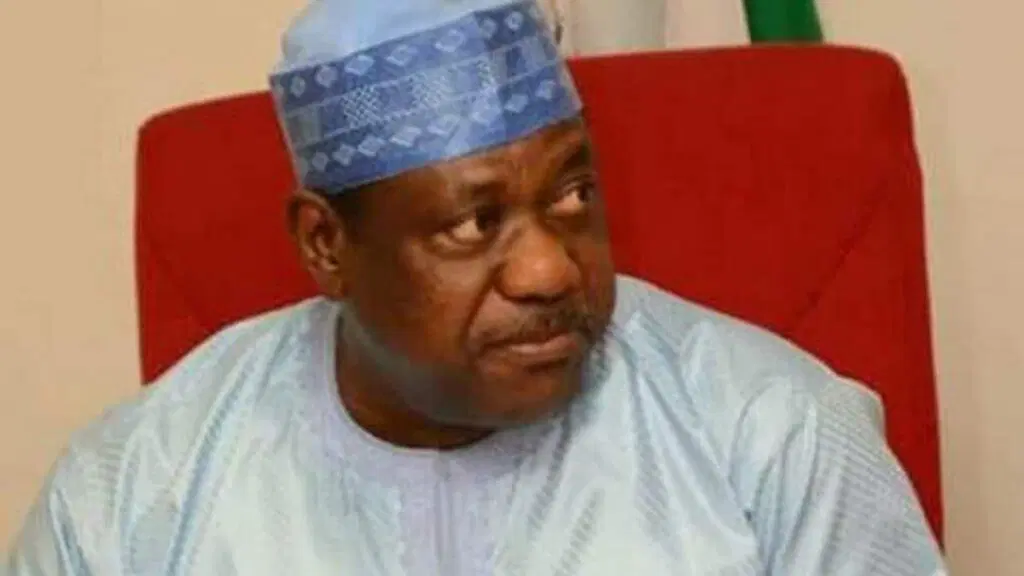
Makurdi— The lawmaker representing Gboko/Tarka federal constituency in the National Assembly, Mrs. Regina Akume, has urged her husband, the Secretary to the Government of the Federation (SGF), Senator George Akume, to fully return to Christianity, stressing that his achievements in life were rooted in his Christian faith.
Mrs. Akume made the appeal in a viral video recorded during the wedding reception of the SGF’s son, held on Sunday in Makurdi, Benue State. Senator Akume celebrated his 72nd birthday anniversary last weekend.
In a birthday prayer for her husband, the lawmaker asked God to grant him long life, sound health, and wisdom, while calling on him to remember his Christian foundation.
“I pray that the Lord will increase his years, grant him good health of mind and body, and give him clarity in thinking and doing things rightly,” she said.
Mrs. Akume further emphasized that Christianity played a central role in her husband’s rise to prominence, cautioning against abandoning the faith.
“And he should remember that he is a Christian, and it is Christianity that brought him this far. To abandon Christianity now and pursue anything else, he will not be successful,” she stated.
She advised him directly: “So my advice to him is to come back to Christianity and follow the line of Christ.”
We came all the way to SGF not through any other means but through Jesus Christ. And Jesus Christ is still alive and still working, doing things for us. So I wish that he will come back to Christianity,” Mrs. Akume said.
Her comments come amid widespread discussions on social and conventional media regarding Senator Akume’s reported marriage to another wife. Reports claimed that the former governor of Benue State recently married a prominent figure within Nigeria’s royal and elite social circles, introduced as Her Highness, Queen Zaynab Ngohemba-George Akume Dajoh.
The post Don’t abandon your Christian faith, Mrs Akume begs husband appeared first on Vanguard News.

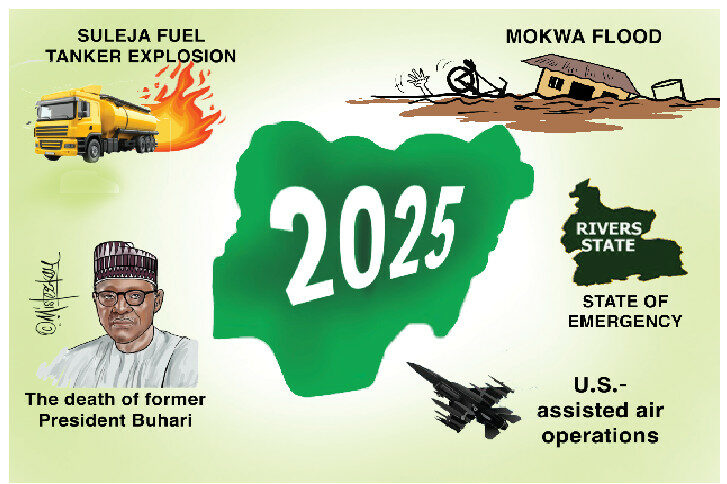
As 2025 comes to a close, it is appropriate to pause and reflect on a year that laid bare both the strengths and the vulnerabilities of the Nigerian state. It was a year marked by tragedy and debate, reform and resistance, grief and guarded optimism. From governance controversies to security anxieties, from economic reforms to social reckoning, Nigeria spent much of the year in conversation with itself. This reflection highlights only a few of the events that defined the year, fully aware that they represent just a fraction of the many stories that shaped our national experience in 2025.
Tragedy, Poverty, and State Responsibility
The year opened on a grim note in Suleja, Niger State, where a fuel tanker accident turned fatal after residents, driven by economic desperation, rushed to scoop petrol. The resulting explosion claimed scores of lives and shocked the nation. Beyond the immediate horror, the tragedy forced an uncomfortable reckoning with poverty, regulatory failure, and infrastructure decay. Many of those who died were not reckless thrill seekers, but citizens navigating hardship with limited choices in a fragile economy.
Soon after, floods submerged communities in Mokwa and nearby areas, displacing families and destroying farmlands. Farmers watched months of labour vanish overnight, while local authorities struggled to respond with urgency. For affected communities, the flood was not simply an environmental event, but another chapter in a long story of neglect. These disasters reignited public debate about climate resilience, emergency preparedness, and the uneven burden of governance failure. Once again, it was the most vulnerable Nigerians who paid the highest price.
Politics, Power, and Unsettled Alignments
Politically, 2025 was a year defined more by uncertainty than consolidation. The Peoples Democratic Party continued to grapple with internal divisions that weakened its coherence and credibility. Leadership disputes, legal battles, and defections reinforced the perception of a party struggling to redefine itself after electoral defeat. Among its traditional supporters, frustration grew that introspection had not yet translated into renewal or a compelling alternative vision.
The African Democratic Congress featured prominently in political conversations, though largely as a subject of speculation rather than as an established force. Its media presence and rhetorical positioning as a possible alternative opposition drew attention, but tangible evidence of nationwide organizational strength remained limited. For many observers, the ADC represents potential rather than proof. Whether it can mature into a credible, structured opposition capable of sustained engagement remains a question deferred to 2026.
Across the country, citizens expressed cautious realism. There is a clear appetite for alternatives to the dominant political order, but there is also skepticism born of repeated disappointments. Increasingly, Nigerians judge political parties not by slogans or alliances, but by organization, internal democracy, and the ability to remain relevant beyond election cycles.
The federal government’s declaration of a state of emergency in Rivers State further intensified political tension. The suspension of elected officials drew strong reactions across the political spectrum. Supporters argued that decisive intervention was necessary to resolve prolonged paralysis and protect public assets. Critics warned that such actions, if normalized, could weaken constitutional safeguards. The episode once again highlighted a recurring dilemma in Nigerian governance: how to balance firm leadership with democratic restraint.
Insecurity and the Weight of Fear
Security challenges continued to shape daily life in profound and unsettling ways. Communities across parts of the northwest and northeast endured attacks, kidnappings, and displacement. In Niger and Kebbi State, the abduction of schoolchildren reopened old wounds and revived national anxiety. When the children were eventually released, relief was widespread, but it was accompanied by exhaustion and unresolved trauma. Parents spoke quietly of fear that lingered long after the headlines faded.
International cooperation against terrorism also attracted attention. U.S.-assisted air operations targeting extremist groups in Sokoto State disrupted militant activity but reignited debate about sovereignty and long-term strategy. While many Nigerians welcomed any reduction in violence, others questioned whether military action alone could address the deeper drivers of insecurity, including unemployment, porous borders, and weak intelligence coordination.
In many affected communities, informal security networks and vigilante groups continued to fill gaps left by the state. Their efforts underscored both the resilience of local communities and the limitations of formal institutions. In 2025, insecurity was not merely a policy challenge discussed in Abuja; it was a lived reality shaping how Nigerians travelled, farmed, schooled their children, and imagined their future.
Economy, Reform, and Public Scrutiny
Economic pressure deepened public frustration throughout the year. Floods, insecurity, inflation, and high energy costs combined to strain household budgets. In markets from Lagos to Kano, traders complained of dwindling profits as consumers struggled with rising prices. Salaries stretched thin, savings evaporated, and patience wore down.
Against this backdrop, the federal government introduced new tax laws aimed at expanding revenue and funding development. Officials defended the reforms as necessary steps toward fiscal sustainability. Many small business owners, professionals, and informal sector workers, however, worried about the cumulative burden on an already strained economy. The debate reflected a broader national concern: how to pursue reform without deepening inequality or eroding public trust.
Business-government relations also came under intense scrutiny. The face-off between Dangote-owned companies and regulatory agencies became a national talking point. Beyond the specifics of the dispute, the episode raised larger questions about accountability, regulation, and the relationship between state power and private capital. For many Nigerians, the issue was more about whether rules apply evenly, regardless of influence or scale.
Social debates ran parallel to economic anxiety. Youth unemployment, women’s participation in leadership, and climate vulnerability dominated radio discussions, opinion pages, and public forums. Civil society groups intensified advocacy, while journalists amplified grassroots voices. These conversations reflected a society increasingly unwilling to accept policy without explanation or reform without inclusion.
Memory, Accountability, and the Road Ahead
The death of former President Muhammadu Buhari in London marked a moment of national reflection. Tributes acknowledged his personal discipline and reputation for integrity, while critics revisited unresolved questions about economic management and security during his tenure. Dr. Charles Omole’s controversial biography added depth and tension to the debate, reminding Nigerians that leadership legacies are rarely settled and often contested.
Equally divisive was the presidential pardon granted to Maryam Sanda, which reopened debates about justice, discretion, and equality before the law. Supporters framed the decision as an act of compassion, while critics worried about its implications for public confidence in the judicial system. The episode reinforced a defining theme of 2025: the growing demand for transparency, consistency, and fairness in governance decisions.
As 2025 draws to a close, it is clear that the year was not defined by a single crisis or reform. It was shaped by sustained debate, contested authority, and the everyday courage of citizens navigating uncertainty. The issues highlighted here are only a few among many, yet they capture the tensions, contradictions, and aspirations that defined the national mood.
As we look toward 2026, the task before Nigeria remains clear: to strengthen institutions, secure communities, manage the economy with fairness, and sustain open civic dialogue. To all our readers, I wish peace, progress, and renewed hope in the coming year. Happy New Year, and may 2026 bring a stronger, more stable, and more united Nigeria.


Despite efforts by emergency responders to contain the inferno, the blaze yesterday continued to ravage what remains of the 25-storey Great Nigeria Insurance Plc building on Martins Street, Lagos Island, with more bodies recovered from the rubble.
The Lagos State Emergency Management Agency (LASEMA) had earlier confirmed the death of three people in the fire, which broke out at about 6:00 p.m. on Christmas Eve, December 24, 2024. However, officials at the scene said five bodies have so far been recovered.
At least 12 people were injured, goods worth millions of naira were destroyed, and 13 others were rescued alive. The first three bodies were recovered from the rubble on the fourth day after the incident. They included one adult female and two adult males; the woman’s body was handed over to her husband.
The fire also affected several neighbouring structures, including a seven-storey building to the right, a three-storey building behind it, a two-storey building to the left, a three-storey building opposite the site, a mosque, two additional three-storey buildings behind the complex and other properties.
A trader, Kafayat Adesina, said: “I am a trader in one of the affected buildings, and I was lucky to leave on time. We initially thought the fire was minor, but in under five minutes it spread wildly. We were happy when the Lagos State Fire Service arrived, but they could do little. The fire outbreak in Lagos State calls for major attention, and I think the government should establish more fire posts to control fires more easily.”
Another trader, Abimbola Adeosun, said: “My daughter has a shop in the affected building, and my son-in-law also has one. I have been crying; there is nothing left. That is where they get money to feed me. We are calling for government intervention. Days later, the fire is still raging, and the fire service has been unable to put it out.”
A trader, Musiliu Kaleed, said: “The number of shops being consumed by fire in Lagos is alarming; billions are lost yearly. The government should do something to help us. Some traders took loans to start their businesses, so they should be given relief.”
Meanwhile, Great Nigeria Insurance Plc lamented what it described as the attitude of the lessor’s family towards the property. Referring to the fire incident at No. 47/57 Martins Street during the Christmas break as unfortunate, the company, in a statement, sympathised with all those affected.
It stated: “For the record, Great Nigeria Insurance Plc (GNI) was granted a long lease of bare land at No. 47/57 Martins Street, Lagos Island, by the Shitta-Bey Family, which is due to expire on December 31, 2036. GNI erected a 25-storey building on the land for strategic investment purposes.
“It is noteworthy that GNI has been in court with the Shitta-Bey family over the property, as the family instituted three separate suits against GNI at both the Lagos State High Court and the Federal High Court. All the suits were decided in favour of GNI. Thereafter, the family filed appeals at the Lagos Judicial Division of the Court of Appeal.
“In 2020, during the pendency of these appeals, the Shitta-Bey family, in disregard of court orders and during the subsistence of GNI’s unexpired leasehold, resorted to self-help, forcefully entered and took over possession of the property.
“The family also proceeded to lease out the property to tenants without recourse to GNI.
“As a responsible corporate organisation, GNI approached the High Court of Lagos State through a trespass action. The court ordered the family to vacate the property and restrained it from further acts of trespass. Dissatisfied, the family appealed against the ruling. Meanwhile, the substantive suit challenging the family for trespass remains pending at the Lagos Judicial Division of the High Court of Lagos State.”
“Consequently, GNI has for over five years been denied physical possession of the property. Our company has had no dealings whatsoever with the management or tenants occupying the property during this period.
“We thank the general public and our stakeholders, especially our customers, for their concern and wish to reassure them that the fire incident has not affected our operations in any way. GNI does not maintain any office or conduct any operations in the burnt building. Our head office remains at No. 8 Omo Osagie Street, off Awolowo Road, Ikoyi, Lagos, and we continue to operate from there and our other branches nationwide.”
NIGERIA NEWS
Post-airstrike Assessment Confirms Extensive Damage in Tangaza as Military Recover Missile Boosters in Sokoto, Kebbi and Offa – THISDAYLIVE

…Terrorists decimated by US air strike
Chiemelie Ezeobi
Post-airstrike assessments has shown extensive destruction within a forest enclave in Tangaza Local Government Area of Sokoto State following joint air operations by the United States forces, which also lead to the recovery of missile-related debris across multiple locations, THISDAY can exclusively report.
THISDAY gathered that the joint post-strike exploitation was carried out by troops of 8 Division, Sector 2 of Operation Fasan Yamma, and Combat Intelligence Brigade (CIB) VII at first light on December 26, 2025 in Bauni Forest, around Waria and Alkassim villages in Tangaza LGA.
Military sources said the post-airstrike exploitation revealed that the forested areas around the points of impact were completely burnt and destroyed with the target persons completely decimated.
The assessment also confirmed the effectiveness of the strikes, with no reports of civilian casualties recorded during or after the operation.
In a related post-operation incident, troops of 1 Brigade, Counter Terrorism Battalion 12, deployed at Forward Operating Base Jabo in Kebbi State, reportedly heard the sound of an aircraft overhead, followed shortly by an explosion approximately one kilometre away.
Acting immediately, the troops conducted a patrol to Kajiji town in Tambuwal Local Government Area of Sokoto State.
At the location, soldiers recovered items described by military sources as suspected drone-like engine parts and other debris at what was believed to be a crash site.
The sources confirmed that no human casualties were recorded in connection with the incident.
Further post-strike patrols on December 26 led to the discovery of another object in Kajiji village where military sources identified the object as a canister suspected to have been dropped along the flight path of the missiles used during the Tangaza airstrike.
The area was immediately cordoned off to prevent access, pending a detailed assessment by an Explosive Ordnance Disposal (EOD) team.
With technical clarification from military engineers, THISDAY gathered that preliminary findings by the Equipment and Mechanical Engineers (EME) team established that the canisters recovered were fuel boosters from Tomahawk missiles used during the airstrikes.
According to the sources, these boosters are designed to be jettisoned automatically after take-off.
The sources explained that analysis showed the boosters should normally fall off several kilometres after launch. They added that a total of 16 missiles were fired during the operation, meaning that 16 fuel boosters would have been discharged.
However, as of the latest assessment, only three boosters have been reported recovered, two in Sokoto State and one in Offa.
Military sources further noted that the projected landing areas of such boosters are usually calculated before take-off.
They said it had been suggested that the appropriate authorities interface with partner forces to obtain the projected drop-off coordinates of the jettisoned boosters to enable timely recovery.
The sources warned that each booster weighs approximately 300 kilograms and is capable of penetrating soft ground to a depth of up to two metres.
While the risk is considered limited, they noted that uncontrolled landings could cause collateral damage, as reportedly observed in Offa.
Military authorities who further spoke under anonymity said investigations are ongoing and findings from the post-airstrike assessments would be used to enhance coordination, safety measures and operational synergy in future joint operations.
By Dan Abia & Davies Iheamnachor
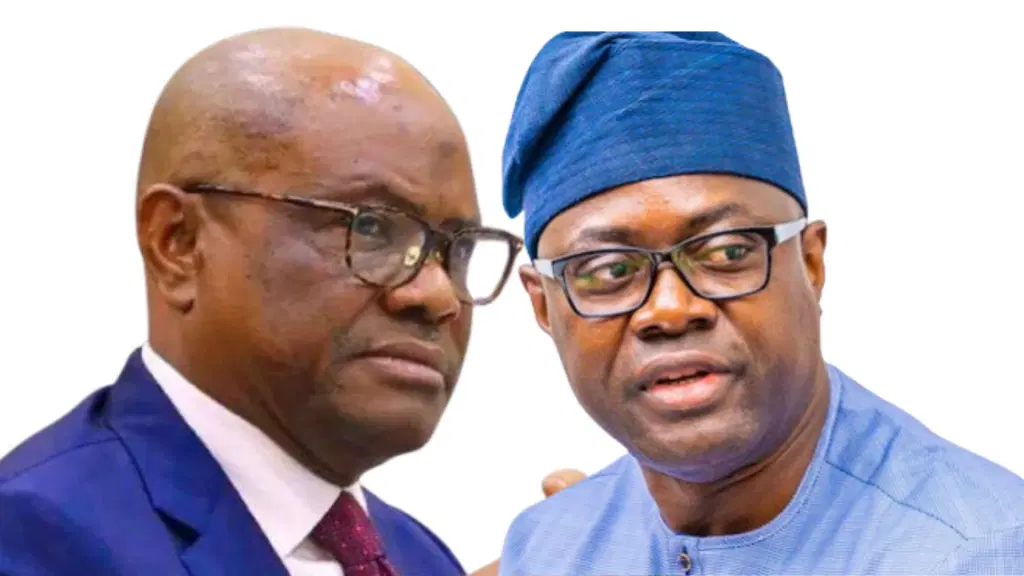
PORT HARCOURT — Minister of the Federal Capital Territory, FCT, Mr. Nyesom Wike, has attacked Governor Seyi Makinde of Oyo State for saying that he (Wike) promised to “hold” the Peoples Democratic Party, PDP, for President Bola Tinubu.
Wike, who denied the allegation, also took on his successor, Governor Siminalayi Fubara of Rivers State, noting that his defection from the PDP to the All Progressives Congress (APC) came late without any established political structure to support his new party.
At a media interaction in Ibadan, last Tuesday, Makinde said his relationship with Wike collapsed after the former Rivers State governor made what he described as an unsolicited declaration during a meeting with President Tinubu.
“I was in a meeting with the President, Wike, the President’s Chief of Staff and two others. Wike said to the President, “I will hold the PDP for you against 2027,” Makinde had said, adding that the statement left him stunned.
But Wike who spoke, yesterday, during his end-of-year media chat in Port Harcourt, noted that the meeting had nothing to do with the PDP but was meant to show support for Tinubu’s leadership and assure him of continued support.
According to him, his support for Tinubu had never been hidden and did not require any special meeting to affirm.
“Seyi said I told Tinubu that I would hold PDP for him. Nothing like that happened. Everyone knows my position on Tinubu. I don’t need a meeting to tell him that,” Wike said.
He added that as a minister, he has a responsibility to ensure that members of the G-5 group benefitted from the Tinubu administration in one way or the other.
Wike also alleged that Makinde was displeased because Tinubu did not approve his nominee for a ministerial appointment.
He further claimed that he had not received the level of support Makinde allegedly got from Tinubu, including the reported N50 billion grant for victims of the Bodija explosion in Ibadan, the Oyo State capital.
However, Makinde’s Special Adviser on Media, Dr. Suleimon Olanrewaju, said only N30 billion was released, explaining that part of the funds was paid directly to victims as immediate support, while the balance was used for rebuilding and restoration.
Nonetheless, Wike maintained that the Oyo governor owed Oyo people a duty to account for how the funds were spent, adding that such expenditure should have been properly appropriated before disbursement.
Fubara has no political structure going to APC — Wike
Wike who mocked Fubara, said before the governor resigned from the PDP, about 22 chairmen of the local government areas in the state and half of the House of Assembly members had left the PDP and joined the APC and that the governor took that late decision to follow suit.
“As a governor, he has the state Assembly to move with, he has the council chairmen to move with, he has the party chairmen and members of the National Assembly to move with, but in this case, who did he move with? These people decided to move on their own.”
Wike reiterated that singing the Tinubu support slogan is not a guarantee for a re-election. “Shouting on your mandate we shall stand does not imply automatic ticket. It doesn’t mean that.”
He denied any form of fanfare on the day Fubara defected to the APC in Government House, Port Harcourt, adding “There is nothing like 001 in Rivers State. When you defect, you go to your ward and register for a new party.”
By this assertion, the minister attempted to deny that Fubara is the political leader in the state contrary to the position in the statement of the state chairman, Chief Tony Okocha on the day he issued the governor his APC membership registration number, 0001.
Wike stated that any day he decides to leave the PDP, those who are loyal to him, even in other states of the federation, will join him in leaving the PDP.
Responding to Fubara’s earlier statement that anybody who wants to support Tinubu should “not follow corner, corner,” the Minister reiterated that he has been the most abused minister in the present administration because of his support for President Tinubu.
“Nigerians know that in 2023, I supported the President. I didn’t hide that. If I am doing corner corner, Assembly people will not go, the National Assembly members will not go. That is leadership. I support President Tinubu. With what the President is doing in Abuja, there is no way PDP will win the FCT in the next election.”
On the alleged breakdown of the peace agreement brokered by the President in Rivers State, Wike admitted that it was due to inability of Fubara to keep to his part of that truce, adding that the governor was being economical with the truth in his working relationship with the leadership of the Assembly.
PDP fires back over claims of non-existence of party in Rivers
Meanwhile, the PDP has dismissed claims by Wike, that the party no longer exists in Rivers State.
Acting chairman of PDP in Rivers State, Nname Ewor, said the PDP fully exists in the state despite the defection of Fubara, the 16 members of the state Assembly and those of the National Assembly.
He said: “The APC in Rivers State is led by Fubara while the PDP in Rivers State is led by my humble self.
“I also listened to him when he said people should keep to agreement. I don’t know what he is referring to. To the best of my knowledge, what I know is that the people of Rivers State entered a social contract with the governor in 2023.
“They gave him mandate for a period of four years. It is for the people of Rivers State to renew that mandate in 2027. If there is any agreement between him (Wike) and the governor, it is personal.
“It has nothing to do with the people of Rivers State, who are in the position to renew or not to renew the mandate. I am sure that with the way the governor is performing, the people will renew that mandate.
“The FCT Minister as we speak does not belong to any political party. The PDP has expelled him and he is not in APC. So, he can afford to say that. But every Rivers man knows that the governor is leading the APC in Rivers State and that I am leading the PDP.”
Ewor said the wave of defections that hit PDP in the state is for personal interest and not people-oriented, stating that their defection does not significantly affect neither the party nor people of the state.
Also, acting Secretary of PDP in the state, Chief Ojima Ochima, cautioned the FCT Minister against instigating tribal or ethnic war in the state in pursuit of political supremacy.
Ochima said the FCT minister’s speech about supremacy of the Ikwerre in political hierarchy of the state was unfounded, stressing that all tribes in the state are important.
Vanguard News Nigeria
The post PDP crisis: Wike attacks Makinde, Fubara appeared first on Vanguard News.

Minister of the Federal Capital Territory (FCT), Nyesom Wike, has faulted Governor Seyi Makinde of Oyo State’s allegation that, in a meeting with President Bola Tinubu, he offered to hold down the Peoples Democratic Party (PDP) for the President.
He said that everyone knew his stand on the President’s re-election.
Wike made the rebuttal during his end-of-year media chat in Port Harcourt on Monday.
Governor Makinde had recently told journalists that Wike had, during a visit to the State House in 2024, promised to ‘hold PDP’ for President Tinubu.
But Wike refuted Makinde’s claim, wondering why the Oyo State governor could lie so brazenly.
He said that the meeting they held with the President had nothing to do with the PDP but was to show support for his leadership.
According to him, his position in supporting Tinubu had never been hidden and did not require a meeting to confirm it.
“Seyi said I told Tinubu that I will hold PDP for him. Nothing like that happened. Everyone knows my stand on Tinubu; I don’t need a meeting to tell him that.
“As a minister, I have a duty to ensure that members of the G-5 benefited from the Tinubu administration in one way or the other,” he said.
Wike said Governor Makinde was only angry because President Tinubu did not approve his candidate for a ministerial appointment.
The minister added that it was wrong for the governor to go on national television to lie against people simply because he did not get the ministerial slot he wanted from the President.
He, however, stated that he had not received the kind of support Makinde got from President Tinubu, including a N50 billion grant for victims of the January 2024 explosion in Bodija, Ibadan, the Oyo State capital.
Wike maintained that the Oyo governor owed his people a duty to tell them how the money was spent, adding that such funds should have been appropriated before spending.
My Grouse With Wike – Makinde
Oyo State governor, Seyi Makinde, has insisted that the rift between him and the Minister of the Federal Capital Territory (FCT), Nyesom Wike, was because the latter was trying to make the country a one-party state.
Speaking through his Special Adviser on Media, Dr Sulaimon Olanrewaju, the governor maintained that the minister planned to hold the Peoples Democratic Party (PDP) down for President Bola Tinubu in 2027.
According to him, making the country a one-party state would destroy the hard-earned democracy.
While noting that Governor Makinde had spoken on issues regarding the rift, Olanrewaju said, “It behoves on anyone the people would want to believe.”
Makinde had, during a media chat, said: “I was in a meeting with President Tinubu, Nyesom Wike and others when Wike volunteered to hold down the PDP for Tinubu against the 2027 election.
“I was in shock. Wike can support the President in 2027, but I will not,” he said.
However, Wike has denied saying this at a meeting with the President.
Wike Addresses Fubara Feud, Says All Can Never Be Well In Politics
Minister of the Federal Capital Territory (FCT), Nyesom Wike, has declared the political rift with Rivers State Governor, Siminalayi Fubara, far from resolved, bluntly stating that all can never be well in politics.
Speaking during his monthly media parley in Port Harcourt on Monday, the minister directly addressed recent comments by Governor Fubara, who, while defecting to the All Progressives Congress (APC), suggested some individuals were covertly supporting President Bola Tinubu while operating from the shadows.
Wike challenged the insinuation, widely interpreted as targeting him, given his position as a Peoples Democratic Party (PDP) member serving in an APC-led administration.
“I don’t know who is following Tinubu and doing ‘corner, corner.’ How could that be when the whole of Nigeria knows that I have stated openly that this is what I will do? Everybody knows that my position is not hidden,” he said.
The minister argued that his support for President Tinubu was decisive and public, crediting it for influencing wider support during the elections.
“If I were doing ‘corner, corner,’ so many people would not have supported Tinubu. The council chairmen wouldn’t have gone,” he said.
He framed the dispute as a matter of political integrity, contrasting himself with unreliable actors.
Wike Blasts Makinde Over Alleged Secret Deal With Tinubu, Denies Plot To Undermine PDP
Minister of the Federal Capital Territory (FCT), Nyesom Wike, has launched an attack on Oyo State Governor, Seyi Makinde, labelling him frustrated and dismissing as fiction the claim that he promised President Bola Tinubu he would undermine the opposition Peoples Democratic Party (PDP).
Wike made this known on Monday during his media chat with selected journalists in Port Harcourt, Rivers State.
The verbal assault comes amid deepening internal strife within the PDP, with the minister challenging the motive and timing of the allegation that he held a private meeting with the President to plot against his own party.
“First of all, you ask yourself, what was that meeting for? What was the purpose of that meeting – that would have led me to say, ‘Mr President, I will hold PDP down for you?’” Wike asked.
He questioned why Governor Makinde, who was allegedly present, had kept silent for so long if the claim were true.
“Why did Seyi Makinde not come up all this while to tell the party, ‘See what Wike is doing’? I was in a meeting. I saw what Wike said. It’s not correct,” Wike added.
Setting the record straight, the former Rivers State governor clarified that the visit in question was not a clandestine one-on-one meeting, but a group visit involving several PDP leaders after the general elections.
“There was no such [private] meeting. Rather, my humble self, the former governor of Benue State, Samuel Ortom, the former governor of Abia State, Okezie Ikpeazu, the former governor of Enugu State, Ifeanyi Ugwuanyi, and Seyi Makinde, went to see the President.
“We went to see the President after the elections were over to discuss certain things.”
He further explained that he invited the President’s Chief of Staff to join them to help reiterate their points, dismissing any notion of a pre-arranged, strategic political deal.
“I was the one who said, ‘Look, Chief of Staff, come and sit down, so we can remind the President of what we have discussed.’ There was nothing like a meeting we booked to go and see Mr President,” he said.
The minister insisted it was completely out of place to suggest he pledged to weaken the PDP, calling the allegation very unfair and attributing Makinde’s actions to sheer frustration.
Resolve Crisis Or Lose 2027, Wike Warns PDP
Wike also warned the leadership of the Peoples Democratic Party (PDP) to resolve the party’s internal wrangling ahead of the 2027 general elections or risk losing elections into major offices.
Wike gave the warning on Monday during a media chat in Port Harcourt, the Rivers State capital, where he said that if the party does not resolve its lingering crisis, the PDP’s chances of bouncing back to power in the next electoral cycle would be jeopardised.
“We have a leadership that is not focused; we have a leadership that does not know what to do or take any suggestions. If the leadership is committed and comes back to say, ‘We have made a mistake. Why are things happening this way, and what do we do to make corrections?’
“It is not just to take over the government; you have to position yourself. If the leadership is like that, you say, ‘Look, by 2027, it is likely that we may not make it, but are we going to allow the party to die?’
“Can’t we start to build up and make the right decisions against 2027? It is all dependent on the leadership; that is what I will say,” Wike said.
The PDP has struggled with internal crises since the 2023 elections and has lost several members, including serving governors, to the All Progressives Congress (APC).
During the media chat, the former Rivers State governor also mocked the November 15 PDP National Convention held in Ibadan, the Oyo State capital.
He accused Governor Seyi Makinde of being desperate to have total control of the party and of obtaining an ex parte order from an Ibadan court for the exercise to hold.
LEADERSHIP reports that Wike and Makinde, who had been close allies, have been at loggerheads recently.
On December 23, Makinde accused Wike of attempting to weaken the PDP in support of President Bola Tinubu’s second-term ambition.
Makinde made the statement while recounting discussions he said he had with President Tinubu, Wike and others, arguing that such political manoeuvres threaten Nigeria’s multiparty democracy.
Speaking during a media briefing at the Government House in Ibadan, the Oyo State capital, the governor disclosed that President Tinubu had once asked him to assist in organising the All Progressives Congress (APC) in the state, a request he said he turned down because of his membership of the PDP.
The Oyo governor further alleged that during a meeting attended by President Tinubu, Wike, the President’s Chief of Staff and other officials, the FCT minister openly offered to hold down the PDP for the President ahead of the 2027 general election.
Makinde said the comment came as a shock to him and raised concerns about efforts to erode the opposition and push the country towards a one-party system.
2027: PDP, APC Already Collapsed Into Renewed Hope Family In Rivers – Wike
Minister of the Federal Capital Territory (FCT), Nyesom Wike, has said that in Rivers State, all members of the All Progressives Congress (APC) and the Peoples Democratic Party (PDP) have effectively put aside partisan differences to embrace President Bola Tinubu’s Renewed Hope Agenda.
Wike made this known on Monday while addressing leaders, youths and women from Etche and Omuma local government areas of Rivers State during his visit to the two councils.
According to the former Rivers State governor, political labels now matter less than unity and collective commitment to development.
“In Rivers State, APC and PDP have already collapsed into one family, the Renewed Hope family,” Wike said.
He explained that the collaboration across party lines was driven by shared values, mutual respect and the desire to deliver dividends of democracy to the people.
“I don’t want to hear again, ‘I am PDP’ or ‘I am APC.’ What I want to hear is that you are working together. All of us are members of the Renewed Hope agenda. It is one family,” he added.
Wike said his visit to Etche and Omuma was not for political campaigning but to appreciate the people for their longstanding support.
“We didn’t come for any rally. I came to say thank you for the support you have given to us over the years. We are not ungrateful people,” he stated.
The minister commended the leadership of the local council chairman, describing him as central to sustaining unity and political stability in the area.
Urging party leaders and elected officials to honour commitments made in the interest of peace and development, he insisted:“Agreement is agreement. When you agree with people, you must keep it,” He stressed that unity remains the key to political and economic progress at the grassroots.
“When you are united, you get results. When you are divided, you lose,” he warned.
Wike expressed appreciation to women, youths and community leaders for their cooperation and support, noting that the peaceful atmosphere during the visit reflected growing political maturity in the state.
“This is not a rally; it is simply to say thank you,” he said.
PDP Vows To Vie For President In 2027
Meanwhile, the Peoples Democratic Party (PDP) has said it will field a credible presidential candidate and go on to win in 2027, contrary to Wike’s claims.
The national publicity secretary of PDP, Comrade Ini Ememobong, in a statement reacting to Wike’s comments during his end of year media chat, said the FCT minister is the “number one supporter” of the presumptive candidate of the All Progressives Congress in the 2027 presidential election.
Noting that Wike is engaged in anti-party activities to the benefit of APC, he described the FCT as “ a constant agent provocateur in the political space, creating trouble to mask his selfish intentions.”
The party said since Wike assumed power as Governor in Rivers State in 2015, he has been a recurrent troublemaker in the leadership of the PDP, adding that his “politics thrives on perpetual conflict, feeding on attention and seeking relevance through calculated disruption and when starved of attention, seeks to destroy everything.”
The party spokesman added that Wike’s declaration to support the APC candidate in 2027 has taken off the mask of pretence of his group.
“Nigerians are now clearly aware of their disposition to destroy the PDP as a part of their bargain to support the President, a clandestine agreement reached for their selfish reasons. We remind Wike that as a lawyer, he knows that agreements made to achieve an illegal purpose are not enforceable and should not be encouraged.
“We assure Nigerians that the PDP will field a credible presidential candidate who will receive the massive support of Nigerians and will go on to win the presidential elections in 2027.
“Our party is the Peoples Democratic Party, and no one person has the capacity to personalise the party,” the party said.
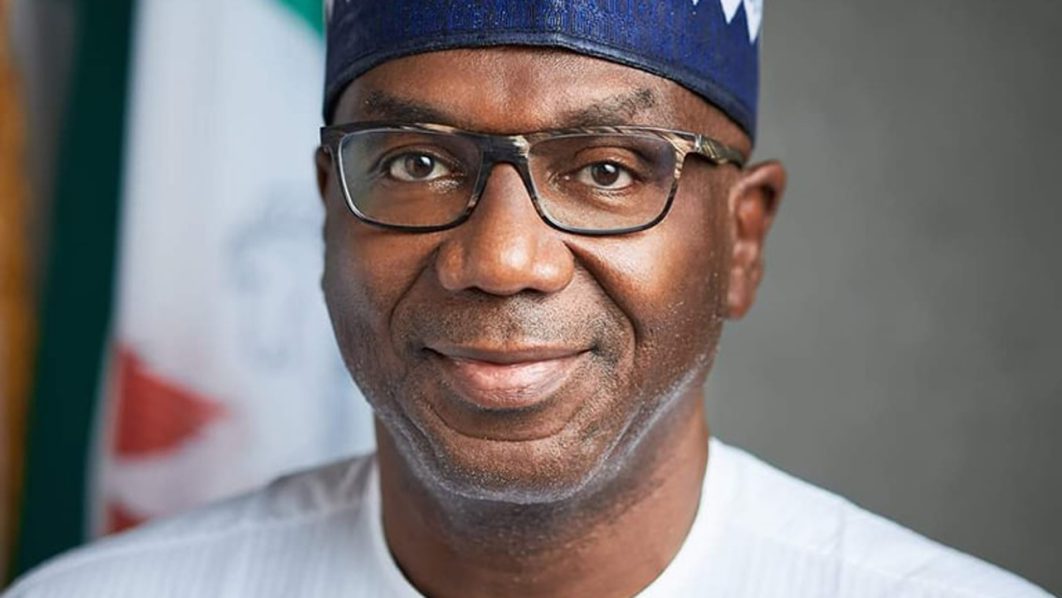
Kwara State Governor, AbdulRahman-AbdulRazaq
Men suspected to be political thugs yesterday stormed the Kwara State Government House to disperse women protesting peacefully over the spate of kidnappings in Ifelodun Local Council of the state.
The women, armed with placards, had arrived at the seat of power on Ahmadu Bello Way, Ilorin, to plead with the governor, AbdulRahman AbdulRazaq, to do more to save the Oke-Ode community from the clutches of bandits who, according to them, have turned the area into a desolate place.
A viral video of the incident showed more than 30 men, armed with horse whips, canes, rubber, wire and other weapons, suddenly alighting from an unmarked vehicle and unleashing beatings that sent some of the women protesters reeling into the gutters.
On arrival, the thugs were seen forcefully collecting the women’s placards and assaulting them with apparent determination.It was gathered that while the attack was ongoing, the governor was attending the passing-out parade of the state’s forest guards.
Meanwhile, the Peoples Democratic Party (PDP) in the state has condemned what it described as “the brutal, inhumane, and utterly disgraceful” assault unleashed on helpless women and children at the peaceful protest.
“These women—mostly aged mothers, wives of kidnapped victims, and their children from Oke Ode, Agbeku, Babanla, Adanla and other communities in Ifelodun Local Council—came to Kwara State Government House as a last resort.
They came crying, pleading, and begging the government to intervene in securing the release of their loved ones who have been held hostage by bandits for weeks, with outrageous ransom demands running into tens of millions of naira.
“The Kwara PDP considers videos circulating in the public space, which show these women lamenting in Yoruba how their husbands were kidnapped over a month ago, how entire communities have been deserted, and how families have sold all they own and exhausted all options.”
The party’s state publicity secretary, Olusegun Olusola Adewara, lamented that “instead of compassion, reassurance, or even basic engagement, these traumatised citizens were met with violence.
“It is unacceptable that thugs mercilessly descended on these peaceful protesters with canes and other weapons, beating, stripping, and forcefully dispersing them in full public view.”
The party also charged the Inspector-General of Police, Kayode Egbetokun, to immediately identify, investigate and prosecute all police officers who supervised or allowed the assault to take place, stressing that “justice must not only be done but must be seen to be done”.
“We also demand the immediate arrest and prosecution of all government-linked thugs who carried out this attack on peaceful protesters. No society that claims to be civilised should tolerate such lawlessness under the guise of governance.
“Furthermore, the Kwara PDP calls on President Bola Ahmed Tinubu, relevant national authorities and international human rights institutions to urgently look into this disturbing incident and the broader failure of the AbdulRahman-led Kwara State Government to protect its citizens from banditry, kidnapping and state-sponsored intimidation,” it concluded.
NIGERIA NEWS
Lady Displays Her Brother’s WhatsApp Chat With Young Girl Who Requested for N1k, People React


Ankrah Shalom (Human-Interest editor)
Shalom Ankrah is a journalist and a Human Interest Editor at Legit.ng with over six years of experience. She has a degree in Mass communication from Alex Ekwueme University. Shalom has worked with reputable news organizations including The Tide and GistReel. Email: ankrah.shalom@corp.legit.ng.
NIGERIA NEWS
When Grievance Touching on Constitution’s Chapter IV Won’t Constitute Breach of Human Rights – THISDAYLIVE

In the Supreme Court of Nigeria
Holden at Abuja
On Wednesday, the 4th day of June, 2025
Before Their Lordships
Uwani Musa Abba Aji
Ibrahim Mohammed Musa Saulawa
Emmanuel Akomaye Agim
Chioma Egondu Nwosu-Iheme
Jamilu Yammama Tukur
Justices, Supreme Court
SC. 196/2005
Between
DR JEREMIAH ABALAKA APPELLANT
And
1. MINISTER OF HEALTH RESPONDENTS
2. MEDICAL & DENTAL COUNCIL OF NIGERIA
3. MEDICAL AND DENTAL PRACTITIONERS
INVESTIGATING PANEL
(Lead Judgement delivered by Honourable Uwani Musa Abba Aji, JSC)
The Appellant, Dr Jeremiah Abalaka, claimed that he had made a therapeutic breakthrough in the treatment of HIV. Following his claim, he was invited by the Medical & Dental Practitioners Investigating Panel (the “3rd Respondent”), on 22nd May, 2022, to appear before the 3rd Respondent for investigation of his HIV treatment claims. To enforce his fundamental rights to fair hearing, the Appellant filed an ex-parte application at the High Court of the Federal Capital Territory, arguing that the 3rd Respondent was acting as the accuser, prosecutor, and judge in its own case.
The court initially granted an interim injunction restraining the Respondents from investigating the Respondents. However, it eventually struck out the motion on jurisdictional grounds. The Appellant filed the same application before the Federal High Court but it was refused on the ground that the reliefs sought by the Appellant fell outside the scope of Chapter IV of the Constitution of the Federal Republic of Nigeria 1999 (as amended). The Appellant appealed to the Court of Appeal, which dismissed the appeal. Dissatisfied, the Appellant appealed to the Supreme Court.
Issue for Determination
On the merits, the Supreme Court considered a sole issue for determination of the appeal, to wit:
i. Whether the lower court was wrong to affirm the judgement of the trial court and to dismiss the claims of the Appellant against the Respondents that they are outside the provisions of Chapter IV of the 1999 Constitution.
Arguments
Counsel for the Appellant argued that the 3rd Respondent manufactured evidence (a letter from Dr. Seyi Roberts) and committed perjury by lying under oath about its existence before 22nd May 2000. He highlighted the impossibility of the Respondents’ explanation as proof of bias. He contended that the trial court failed to resolve five out of nine issues raised, and the Court of Appeal similarly failed to address some, resulting in a miscarriage of justice. He argued further that the 2nd and 3rd Respondents were not properly constituted as statutory bodies due to the Minister of Health’s failure to appoint members under the Medical and Dental Practitioners Act. The Appellant argued that the matter is a fundamental rights enforcement action as it involves bias, fair hearing, and freedom from oppressive government actions. Additionally, the Appellant alleged that the 3rd Respondent acted as accuser, prosecutor, and judge in its own case, in contravention of the principles of natural justice. The Appellant submitted that he should not be bound by traditional medical ethics, as his HIV vaccine work fell outside mainstream practice. He urged the Supreme Court to set aside the decision of the Court of Appeal, and grant his appeal, or remit the suit for retrial.
In response, the 1st Respondent submitted that no issue arose regarding the proper constitution of the 2nd and/or 3rd Respondents due to the alleged default in appointing members, and sought dismissal of the appeal.
The 2nd and 3rd Respondents argued that the Court of Appeal correctly dismissed claims relating to the validity of its constitution. On the allegation of breach of fair hearing via investigation invitation and alleged evidence manufacturing (Dr. Seyi Roberts’ letter), the 2nd and 3rd Respondents offered explanations for the delay in the production of the letter and noted the failure of the Appellant to establish forgery/perjury beyond reasonable doubt. They submitted that the 3rd Respondent’s role was purely investigatory, not adjudicatory, and as such, it did not act as accuser, prosecutor, and judge. Further, that the reliefs of the Appellant fell outside Chapter IV of the 1999 Constitution, as held by the trial court and affirmed by the Court of Appeal, with no miscarriage of justice. Citing TUKUR v GOVERNMENT OF TARABA STATE (1997) 6 NWLR (PT. 510) 569 SC, they emphasized that main reliefs determine the jurisdiction of the court to entertain the Appellant’s fundamental rights action, which the Appellant’s claims lacked. They urge the Supreme Court to uphold the decision of the lower court and dismiss the appeal.
Court’s Judgement and Rationale
Before resolving the issue for determination, the Supreme Court noted that the trial and Court of Appeal, despite holding the Appellant’s claims fell outside Chapter IV of the 1999 Constitution, proceeded to address the merits of the claim. The Supreme Court held that, upon finding that they lacked jurisdiction, they ought to have struck out the suit rather than bearing the burden of deciding the issues presented by the Appellant. The Court proceeded by stating that “what determines jurisdiction of Court to entertain a cause/matter, is the Plaintiff’s claims. It is the claim before the Court that has to be looked at to ascertain whether it comes within the jurisdiction conferred on it.”
Addressing the Appellant’s claims, the Supreme Court held that upon a careful examination of the claims of the Appellant together with the reliefs sought in his application for enforcement of fundamental rights before the trial court, the Appellant’s main claims and reliefs cannot be sheltered under the provisions of Chapter IV of the 1999 Constitution. Their Lordships held further that “It is not every grievance that perches or touches on the provisions of Chapter IV of the 1999 Constitution that constitutes a breach to or calls for enforcement of fundamental rights. They must be the main and predicate claims, and not the ancillary or remote to it.”
The apex court held that the subject matter of the Appellant’s suit against the Respondents, which pertains to alleged professional misconduct and disciplinary action against the Appellant, the alleged vituperation by the 1st Respondent against the Appellant on media and the subsequent invitation of the Appellant by the Respondents, “cannot transubstantiate and transmute into an attempted or perceived or likely breach of the Appellant’s right under the provisions of Chapter IV of the 1999 Constitution.” It is the position of the Appellant that the assessment and investigation of his claims of medical cure for HIV, and lack of fair chance to prove his claims before the Respondents, coupled with their hostile reactions, violate his right to fair hearing under Section 36(1) of the 1999 Constitution. While complaint about proceedings violating the rules of natural justice and right to fair hearing is proper and recognizable complaint in law, the Respondents not being courts or tribunals established as such by law, their said violation or likely violation of the rules of natural justice cannot be a violation of the Appellant’s fundamental right to fair hearing guaranteed under Section 36(1) of the 1999 Constitution. Breach of fundamental right to fair hearing under Section 36(1) of the Constitution only applies to proceedings before judicial bodies acting judicially and quasi-judicially. Therefore, the complaint that the proceedings and decisions of the Respondents violate or are likely to violate the rules of natural justice against the Appellant and his general legal right to fair hearing is not a complaint that any of the provisions of Chapter IV has been, is being or likely to be contravened and cannot be brought to the High Court by way of an application to remedy the same under Section 46(1) of the 1999 Constitution.
The Court reiterated that having established and ascertained that the main claims and reliefs of the Appellant did not fall under the provisions of Chapter IV of the 1999 Constitution, the trial and lower courts ought to have struck out the Appellant’s suit. The Court relied on the decision in NWANCHUKWU v NWANCHUKWU & ANOR. (2018) LPELR-44696 (SC) (PP. 29-30 PARAS. B).
Further to the above, the Supreme Court affirmed the decision of the Court of Appeal, which upheld the decision of the trial court.
Appeal Dismissed.
Representation
I.G Abah with C.S Achebe for the Appellant
Martin Atojoko with C.M. Odanwu for the 1st Respondent.
Hassan T. Fajimite for the 2nd and 3rd Respondent.
Reported by Optimum Publishers Limited, Publishers of the Nigerian Monthly Law Reports (NMLR)(An affiliate of Babalakin & Co.)
NIGERIA NEWS
What do we Igbos really want from Nigeria, what conversations should we be having among ourselves? – Adibe


Professor Jideofor Adibe, PhD, LLM
Presented at a Meeting of the Imeobi, Ohanaeze Ndigbo Worldwide, which held at Enugu on December 23, 2025
Mr. President and the entire leadership of Ohanaeze Ndigbo Worldwide, kindly permit me to stand on existing protocols.
I was initially asked to speak on the topic of ‘what the Igbos want from Nigeria’. The topic was later modified to ‘Igbo Charter of Demands from Nigeria’, which I believe, was meant to be a set of demands to be tabled as bargaining chips with Presidential candidates in the 2027 election. I have taken the liberty to slightly modify the title to, “What do Igbos really want from Nigeria, and what conversations should we be having among ourselves”? The modified title enables me to go beyond just a “charter of demands we want from Nigeria” to address other pertinent issues that relate to what some people, sometimes, crudely, call ‘the Igbo problem’. For instance, how are we really sure that the Presidential candidates we will present the charter of demands TO will honour their promise if they get to power? And how are we sure they have no vested interest in the perpetuation of the current condition of the Igbos in the country? I believe that the people best positioned to solve the ‘Igbo problem’ are Igbos themselves, not other Nigerians, no matter how powerful, or well-meaning they may be. I also believe that it is through a robust and honest conversations among ourselves that we will be in a better position to articulate what we want from Nigeria.
What is the ‘Igbo problem’?
The question of ‘what do the Igbos want from Nigeria’, is sometimes used interchangeably with the so-called ‘Igbo problem’ On the notion of ‘the Igbo problem’, there is no consensus. From the perspective of most Igbo people, ‘the Igbo problem’ is a feeling of being unwanted (or ‘marginalized’ in political parlance) in the Nigerian federation. The extreme manifestation of this sense of being unwanted is ‘Igbophobia’, which is the weaponisation and institutionalization of this sense of being unwanted.
For other Nigerians, what constitutes ‘the Igbo problem’ could range from earnest conversations about the Igbo feelings of exclusion to the use of such conversations as opportunities to have a dig on the Igbo race, or to perpetuate the same Igbophobia they purport to want to find solutions for. Let me mention immediately that every culture, including the Igbo culture, has something ennobling about it, and something that people would recoil from. For this, the theory of hierarchy of cultures popular with colonial anthropologists have since been discredited in favour of cultural relativity – each culture is judged only to the extent to which it serves its people.
Where did the rain start to beat us?
Igbophobia did not start today. It was there even during the colonial times. It is a range of negative attitudes and feelings towards the Igbos who make up a majority of the people in the country’s South-East, and a sizeable part of the populations of the South-South and the Middle Belt zones.
Its origin can be traced in part to the Igbo socio-political system. Most parts of Igboland did not pass through the feudal epoch with its centralized structures and obsequious attitude to authority. The people were essentially republicans, with an achievement-oriented culture, where age is respected but achievement is revered. This has both positive and negative consequences. On the positive side, it engendered a spirit of competitiveness, ingenuity and resilience. For instance, during the colonial times, while the Igbos were not the first ethnic group to accept western education, once they saw the opportunities in it, they embraced it with uncommon zeal such that within a short space of time, their education, coupled with their diasporic orientation, led to their high visibility (or even dominance) in critical sectors of public service, including the military and the civil service. Of course, dominance by its nature breeds resentment – something lost on some political leaders these days who think they are doing their ethnic, religious or regional in-groups a favour by clannishly making ‘their people’ to dominate choice public positions when they are in power.
Anti-Igbo sentiments arising from the Igbo domination of the public space in the First Republic were exacerbated by the January 1966 coup d’état, the July 1966 counter-coup, the pogroms in different parts of the country, the Civil War, the War propaganda on both sides of the conflict, and the vested interest of some groups in using Igbophobia to gain advantage for their in-groups in the competition for power and scare socioeconomic resources in the country.
One of the negative aspects of the Igbo achievement-oriented culture is that since failure is strongly frowned upon, some Igbo youths not only want to ‘make it’, they also want loudly to be seen to have ‘made it’. This pushes many into looking for shortcuts to ‘make it’, and to be celebrated as having made it. I will propose that some of the unintended consequences of our achievement- oriented culture should form part of the conversations we should be having among ourselves.
Igbo and the search for group identity
It is natural for groups in a multi-ethnic country like ours to have conversations over their future. Several parts of the country hold similar conversations – the core Middle Belt states of Benue and Plateau for instance continue to discuss on whether they should anchor their identity on Middle Belt or accept the current arrangement which lumps them as part of the North; the search for identity among the Yoruba span the spectrum of those who want ‘true federalism’ to those who want outright secession as Oduduwa Republic; many people from the North and South-South are not left out in such conversations, sometimes openly, at other times in hush-hush tones.
In Igboland, we find several groups also embracing different options on where the Igbo should anchor their identity – from whether to be part of the Nigerian federation, and if so, in what form to those who want outright secession. In essence, the conversations in Igboland about the group’s identity is not manifestly different from what is happening in other parts of the country or even across the world.
The secessionist option
The peaceful quest for self-determinations is a worldwide phenomenon from the United Kingdom, through Italy, Spain, Canada and even the United States. In the USA for instance, there are at least ten active separatist movements including in California, the country’s third largest state, where the ‘Yes California Independence Campaign’, was formed in August 2015 by Louis J. Marinelli. There is also The League of the South, an active organization established in 1994 by Michael Hill, Jack Kershaw, and other members and which campaigns for the former Confederacy states (South Carolina, Mississippi, Florida, Alabama, Georgia, Louisiana, Texas, Virginia, Arkansas, North Carolina, and Tennessee) to secede from the US. As we all know, the attempt by the Confederate States to secede from the US led to the US Civil war that lasted from April 12, 1861 until April 9, 1865. In essence, no one should be made to feel ashamed that there are separatist movements in Igboland.
However, it is important for the various hues of the separatist movements to have a balanced view of their agitation, namely, the idea that independence may not necessarily bring peace or prosperity (as the case of South Sudan demonstrates) and that having the same language and religion are not sufficient conditions for the success of any new nation (as the case of Somalia demonstrates). Militarized quests for separation or the use of acerbic language in such campaigns usually prove counter-productive, and very few of such approaches have succeeded in modern times.
President of Igbo extraction option
There are those who believe that having a President of Igbo extraction is all that is needed to solve the Igbo feeling of exclusion. While I support the idea of a competent and ethically driven President of Igbo extraction (at least for the momentary hurrah effect it could generate among the Igbos), I have my doubts that it will be a sufficient antidote to ‘the Igbo problem’. This is because historically, when a President of a particular ethnic extraction is in power, and is being robustly criticized (something that comes with the job), criticisms by non-members of the President’s ethnic group will often lead to members of the President’s in-group rallying together to defend their own, exacerbating in the process tensions between the President’s ethnic group and others.
Similarly, it may be tempting to pose the question of whether Obasanjo’s tenure as Military Head of State (1976-1979) and civilian President (1999-2007) as well as Tinubu’s current presidency, have assuaged separatist quests among the Yoruba. We can also ask whether Obama’s eight-year presidency in the USA led to African Americans being better accepted in the US or whether his presidency paradoxically led to the weaponization of right-wing politics in the USA which paved the way for the emergence of Donald Trump.
A New Charter of Conversation for the Ohanaeze Ndigbo
I am happy to hear about some of the achievements of the current Ohanaeze leadership, under Senator John Azuta-Mbata, including the desire to promote the Igbo language. The recorded achievements of Ohanaeze Ndigbo are very encouraging but more needs to be done. For this, rather than a ‘Charter of Demands from Nigeria’, I would propose a charter of conversations we Igbos should be having among ourselves, led by the Ohanaeze Ndigbo Worldwide:
Igbo Identity should be a Core Driver: Experiences from the separatist movements in Spain, Italy, Canada and elsewhere show that regional identity, language, and culture were central to their pursuit of self-determination. We need to do more to strengthen the Igbo identity, including promoting and taking pride in the various Igbo dialects, and respecting the peculiarity of each Igbo group. The distinction between core or non-core Igbos is divisive. Ohaneze should develop a deliberate policy of cultural cooperation, including the use of sports among the Igbos who are located not just in different parts of the country but also beyond. Ohanaeze must find a way of helping several Igbos afflicted with ‘bleaching complex’ – a belief that denying or hiding their Igbo identity will make them more acceptable in the wider Nigerian society. Others demur from showing pride in their ethnic identity for fear of being labelled ‘tribalist’ or an ethnic chauvinist. It must be carefully explained to such people that demonstrating love for one’s ethnic group is not ethnicity or what some call ‘tribalism’ and that it becomes so only when the demonstration of pride in one’s ethnic in-group is framed in conflictual terms.
Economic development of Igboland should be a priority
The Igbo culture seems to revere individuals who do not live within the homeland, often the farther away from one’s village or town, the more the respect. The Igbo adulation of the Diaspora (broadly defined), and its achievement oriented culture, have led to many Igbos investing in other parts of the country to the neglect of their own Igbo enclaves. Though there is evidence that this is changing gradually, more needs to be done. Igbophobia will be less if the region is seen to be economically thriving and a home for both Igbos, and non-Igbos who can add value to the area.
Ingenuity has both time and space dimensions
Igbos are widely respected, even if grudgingly, for their ingenuity and resilience, especially in commerce. I need to mention that various ethnic groups in the country also have their unique abilities and areas they should work on. Many of our people take pride in being good traders. However, we should be conscious of the fact that ingenuity has time and space dimensions. Some 10-20 years ago, going to China to buy goods to resell may make someone a smart trader. These days anyone with android phone could do the same buying and selling from the comfort of his or her home. This means that we cannot sustain what some call Igbo ingenuity in commerce if we remain fixated on what gave us advantage in the olden days when the world around us is changing very fast. We are gradually losing out even in areas where our people were very visible. For instance, though modern Nollywood arguably started in Onitsha, how many films on Igbos or by Igbo producers are today on Netflix?
The get-rich quick syndrome
While this is not specific to the Igbo, this is probably one of the unintended consequences of our achievement- oriented culture. It needs to be an urgent area the Ohanaeze should focus on because it has misled many of our youths into looking for short-cuts with the attendant crimes it brings. We must stop giving the impression that a person’s sources of income do not matter provided the person does charitable work in the community.
Countries that fought the bitterest civil wars could also become closest allies
The United States fought a bitter War of Independence with the United Kingdom from April 19, 1775 to October 19, 1781. Today, they are about the closest allies. Similarly, Japan, where the US dropped the Atom bomb that killed some 200,000 to 300,000 Japanese by the end of 1945, (in addition to other humiliations after the war), is today an ally of the US. The country forms the cornerstone of American security in Asia, with a strong military and political partnership formalized by the U.S.-Japan Security Treaty since the 1950s. In the same vein, Germany fought and lost two World Wars, each with humiliating consequences. For instance, the Treaty of Versailles which ended the First World War in 1919 contained the War Guilt Clause (Article 231) which forced Germany to accept sole responsibility for the war and was ordered to pay 132 billion gold marks (roughly $33 billion at the time), a sum, economists like John Maynard Keynes warned could collapse the European economy. After the country was again defeated during the Second World War, Germany became divided into four occupation zones (US, UK, France, USSR) and consequently became the first modern state to be ruled by foreign powers. Millions of Germans were used as forced labour for years after the war to rebuild Allied nations. For instance, in France alone, an estimated 2,000 German prisoners died monthly while clearing minefields. There was also a massive industrial dismantling of the country, with the former Soviet Union stripping East Germany of factories and skilled personnel as reparations. Today, Germany is not only an ally of the USA, it is a key member of Europe and therefore part of the West.
The above instances suggest that grievances by our youth, while legitimate in many instances, need to be creatively channelled and should not be turned into an ideology.
Unity among the Igbo political class
Most members of the Igbo political class appear self-serving, only to turn around and cry ‘marginalization’ when it suits them. Most seem driven by the doctrine of the ‘goat follows the man with the palm frond’ and for this, are either unable, or too lily-livered to fight for Igbo interest. For example, in the wake of the rampant herdsmen attacks, the South-west Governors united across party lines, and despite opposition from the federal government, set up the Amotekun to protect the region. The South-East governors dilly-dallied, and as often happens in such situations, non-state actors which are not really equipped for the job, (in this case IPOB), tried to fill the lacuna by promising the people protection from the herdsmen through the establishment of the Eastern Security Network. Today, we are seeing the consequences of such state failure and a non-state actor promising to offer what the state could not deliver.
Similarly, when Reno Omokri, who has probably done more than most people in recent times to openly abuse and ridicule the Igbo, was nominated as an Ambassador designate, one would expect a sense of outrage from the Igbo political class, including law makers. Would such a nomination have been confirmed if Omokri was unleashing the same vitriol he has been pouring on the Igbos on the North or the Yoruba? The failure of the Igbo political class is therefore also one of the reasons some Igbo youths move to feel in the lacuna, often compounding the problem in the process.
Moderate the grievances of some Igbo youths by letting them know they are not completely innocent of what they are accusing others of doing to them
Yes, Igbophobia is real, but we are also not altogether innocent of profiling others. Knowing that we are not altogether innocent of what we are accusing others of doing to us, or in fact that virtually every part of the country has its own story of institutionalized memory of hurt, will help to give us a balanced perspective in articulating what we want from Nigeria.
Is Igbophobia fated to be with us forever?
History does not suggest that. I have already mentioned the experiences of Japan and Germany after the First and Second World Wars. Similarly, in the mid-19th to the early 20th century, Italian and Irish migrants to the US were very harshly treated, with some being lynched due to their Catholicism, poverty, and perceived threats to the American Protestant culture. However, by the mid-20th century both the Italian and Irish migrants have effectively become integrated into the American culture as their home countries prospered.
I believe that one of the surest ways to resolve ‘the Igbo problem’ is by having conversations with ourselves, knowing our strengths, weaknesses, and what we can realistically achieve.
Thanks for listening.
The post What do we Igbos really want from Nigeria, what conversations should we be having among ourselves? – Adibe appeared first on Vanguard News.


The National Drug Law Enforcement Agency, NDLEA, in Ogun State has uncovered a warehouse used for the storage of illicit substances, along with a haul of Cannabis Sativa concealed inside a Honda Ridgeline pickup vehicle in the Rounder area of Abeokuta.
The command’s Public Relations Officer, Haris Musa, said in a statement obtained by DAILY POST on Monday that the discovery was made at about 10:00 pm on Sunday.
Musa revealed that the operation also led to the arrest of a 49-year-old man, identified as Fatokun Rahmon, with a total of 347 kilograms of Cannabis Sativa recovered.
He said, “Acting on actionable intelligence, operatives of the Command, on December 28, 2025, at about 10 pm, conducted a targeted operation at the Rounder, Abeokuta, Ogun State, where a warehouse used for the storage of illicit substances was uncovered.
“During the operation, operatives discovered a haul of Cannabis Sativa concealed inside a Honda Ridgeline pickup vehicle.
“The operation culminated in the arrest of one Fatokun Rahmon, 49 years of age, while a total of 347 kilograms of Cannabis Sativa were recovered.”


While reiterating the command’s unwavering commitment to suppressing illicit drug trafficking within the state, Musa noted that the interception highlights the operational alertness, intelligence-driven strategy, and relentless enforcement posture of the command, even as the year drew to a close.
Musa asserted that the command remains steadfast in sustaining this tempo as part of its mandate to curb the menace of drug abuse and illicit trafficking.

President Bola Ahmed Tinubu has spoken on phone with Anthony Joshua, the Nigerian-British former heavyweight boxing champion, and his mother.
Naija News reports that this is following the tragic accident in Ogun State in which Joshua was injured and lost two of his associates.
In a statement by Tinubu’s Special Adviser on Information and Strategy, Bayo Onanuga, the President disclosed his also spoke to the Governor of Ogun State, Prince Dapo Abiodun.
He said: “I spoke with AJ on the phone to personally convey my condolences over the death of his two associates. I wished him well and prayed for him. He assured me that he is receiving the best care in the hospital.
“I also spoke with AJ’s mother and prayed for her. She was very appreciative of my call.
“Additionally, I spoke to Governor Dapo Abiodun, who was in the hospital with them. The Governor assured me that he will do everything possible to ensure AJ receives the best possible attention.”
In a statement posted on his X handle earlier on Monday, President Tinubu, who is currently abroad, expressed profound sympathy for the boxer over the accident on the Lagos–Ibadan Expressway.
He said: “I sympathise with you and your family as you bear the emotional weight of this unfortunate incident. As a sportsman, you have always shown courage, discipline, and unwavering love for our country. These are qualities that have made you a source of national pride.
“In moments like this, we must encourage one another as brothers and sisters with a shared destiny.
“I pray for strength, wisdom, and grace for you during this painful period. May God grant you a speedy recovery and repose to the souls of the departed.”


Former Plateau State Governor and founding member of the People’s Democratic Party (PDP), Sen. Jonah David Jang has dismissed reports circulating on social media alleging that he has defected from the PDP to either the African Democratic Congress (ADC) or the Social Democratic Party (SDP).
Jang in a press statement issued in Jos by his Media Consultant Mr Clinton Garuba described the report as fake and misleading, attributing it to the handiwork of mischief-makers bent on causing confusion within the polity.
The statement clarified that, although the former governor would ordinarily have ignored such claims, it became necessary to respond in order to set the records straight and reassure party members and the general public.
Jang, also a former senator who represented Plateau North in the 8th Assembly reaffirmed that he remains a committed and founding member of the PDP, which he described as the party of pride of the Nigerian people, stressing that he has no intention of leaving the party.
He acknowledged that the PDP is currently facing internal challenges and turbulent times, but expressed confidence that the various court cases arising from the crises would eventually resolve the issues.
The former governor believes that these legal processes will restore order, unity and stability within the party and reposition it for future political relevance.
The clarification comes against the backdrop of recent political realignments in Plateau State, particularly the defection of governor Caleb Mutfwang, who emerged as governor with the political backing and influence of Jonah Jang.
While Mutfwang’s defection has fueled public debate, it remains unclear whether the governor will continue to recognise Jang as his political godfather despite now belonging to different political parties.
“The attention of Senator Dr. Jonah David Jang has been drawn to a fake report circulating on social media about his purported defection from the Peoples Democratic Party to the ADC and, in some quarters, to the SDP.
“As a founding member of the PDP, Senator Jang remains firmly in the party of pride of the Nigerian people.
“Even though the PDP is going through turbulent times, it is the firm belief of Distinguished Senator Jang that the numerous ongoing court cases will bring an end to the various crises and return the party to the pinnacle of Nigerian politics, where it rightfully belongs,” the statement added.
Please follow and like us:
