
WORLD NEWS
Iranian protesters attempt to break in to government building | World News


Iranian protesters attempted to storm a local government building on Wednesday, state media reported, as demonstrations over the cost of living reached their fourth day.
In an unusual response to unrest, the Iranian government on Tuesday offered to set up a dialogue with protest leaders.
The first major protests since before June – when US airstrikes prompted an outpouring of patriotism – began on Sunday.
Shopkeepers and traders in the capital, Tehran, angry about spiralling inflation and the Iranian currency plunging to a record low against the dollar, took to the streets on Sunday, and have since been joined by students.
On Wednesday they attempted to break in to the local governor’s office in the southern Fars province, state media confirmed.
Protesters marched in Tehran on Monday. Pic: Fars News Agency/AP
“A few hours ago an organised group tried to get into the governorate building in the city of Fasa, their attack failed with the intervention of security forces,” state media said.
“The leader of these rioters, a 28-year-old woman, was arrested”.
Iran‘s Tasnim news agency cited a local official as saying four “attackers” had been detained and three members of the security forces had been wounded during the clash.
The governor of Fasa told state media that “the protests were caused by inflation and economic conditions. Individuals
influenced by hostile channels and media participated in them… the situation is back to normal”.
Whereas Iranian authorities have responded to previous protests with fierce security measures and arrests, in this instance it offered to set up a “dialogue mechanism” – though the details have not been confirmed.
Monday’s protests were the biggest since 2022, which were prompted by the death of 22-year-old Mahsa Jina Amini in police custody.
She was arrested by the country’s morality police for allegedly wearing her hijab improperly.
The recent protests come after the rial lost nearly half its value against the dollar in 2025, with inflation reaching 42.5% in December.
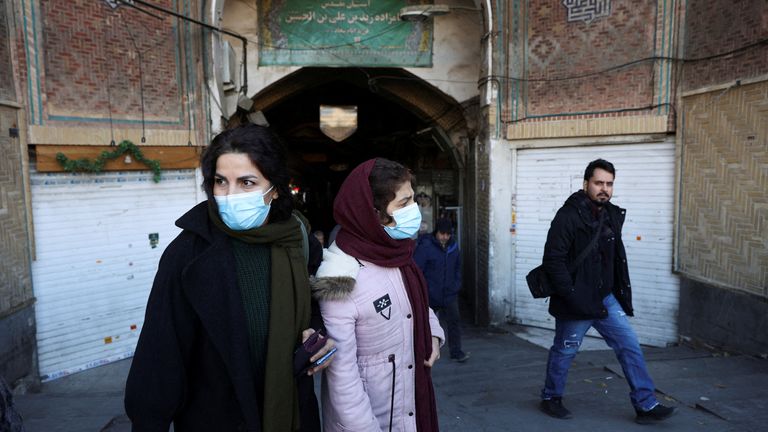
Many traders in Tehran shut up shop this week so they could take to the streets and protest. Pic: WANA/Reuters
On Monday, the governor of Iran’s Central Bank, Mohammad Reza Farzin, resigned, replaced by former economics minister Abdolnasser Hemmati.
Iran’s embattled economy has been navigating US sanctions since 2018, designed to deter its nuclear programme, which it says is peaceful.
These sanctions have hampered the economy and strained household budgets, the impact now exacerbated by the plummeting currency value and inflationary pressure which have pushed up the prices of food and other daily essentials.







WORLD NEWS
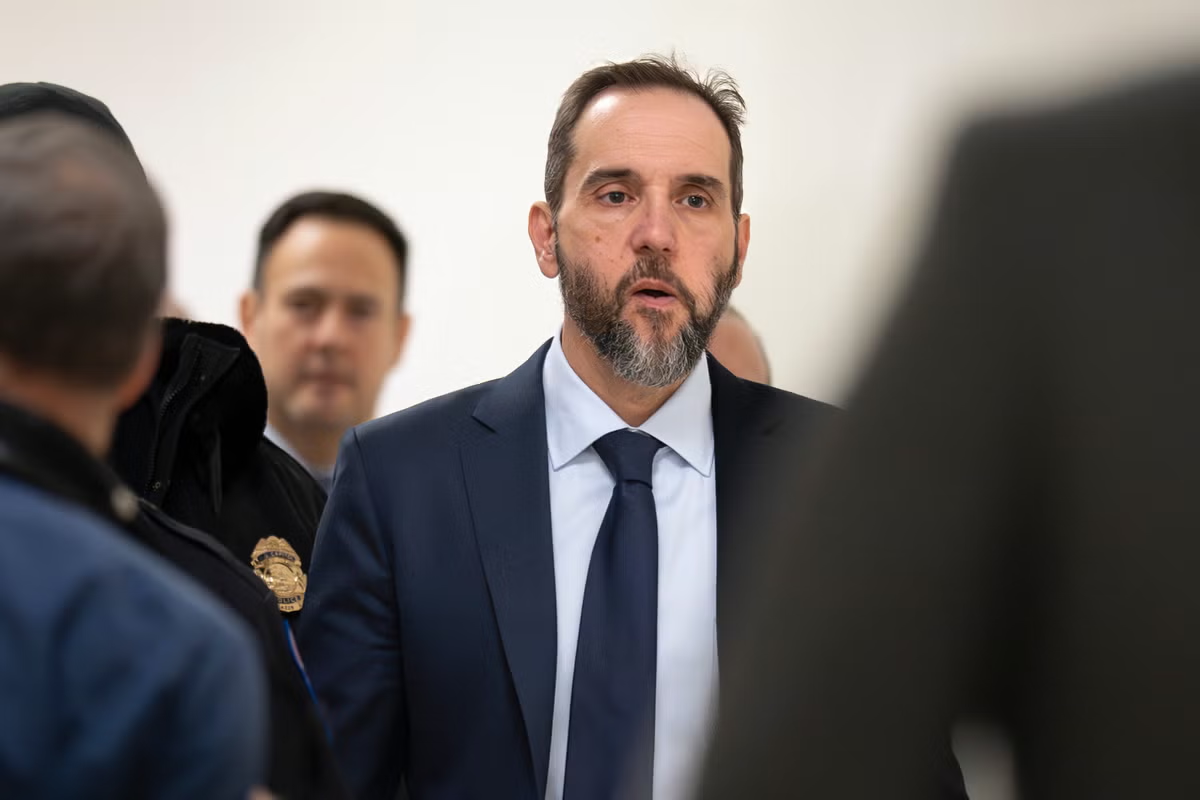
Trump was ‘most culpable’ for Jan 6 riot and would have been convicted in court, Jack Smith told Congress

Sign up for the daily Inside Washington email for exclusive US coverage and analysis sent to your inbox
Get our free Inside Washington email
Get our free Inside Washington email

Donald Trump was “most culpable” for Jan 6 riot and would have been convicted in court, according to the explosive testimony of former special counsel Jack Smith, released Wednesday by the House Judiciary Committee.
Smith led the Justice Department prosecutions into Trump following the January 6, 2021 attack on the U.S. Capitol by his supporters after he lost the 2020 election, and his alleged concealment of classified materials at his Mar-a-Lago residence in Florida.
Trump’s 2024 election victory essentially ended the DOJ effort to hold him criminally liable.
The House Judiciary Committee, led by Republicans, pledged to investigate the Biden administration and Smith in particular over the two criminal prosecutions of Trump that were launched after Trump left office. Throughout his campaign, Trump argued that he’d done nothing illegal and that the prosecutions were political efforts to punish him and prevent his return to the White House.
Trump faced two separate indictments. He was accused of a criminal conspiracy to overturn the 2020 election and prevent Joe Biden from taking the White House despite his own campaign being unable to prove his allegations of election fraud. The president was also accused of taking a trove of documents including some classified materials from the White House upon his departure in January of 2021.
In the 225 pages of testimony released on Wednesday, Jack Smith argued that Trump was criminally liable in both cases.
- Trump’s actions “without question” added to the danger faced by Vice President Mike Pence, who was in the Capitol during the riot and was targeted by Trump’s supporters.
open image in gallery
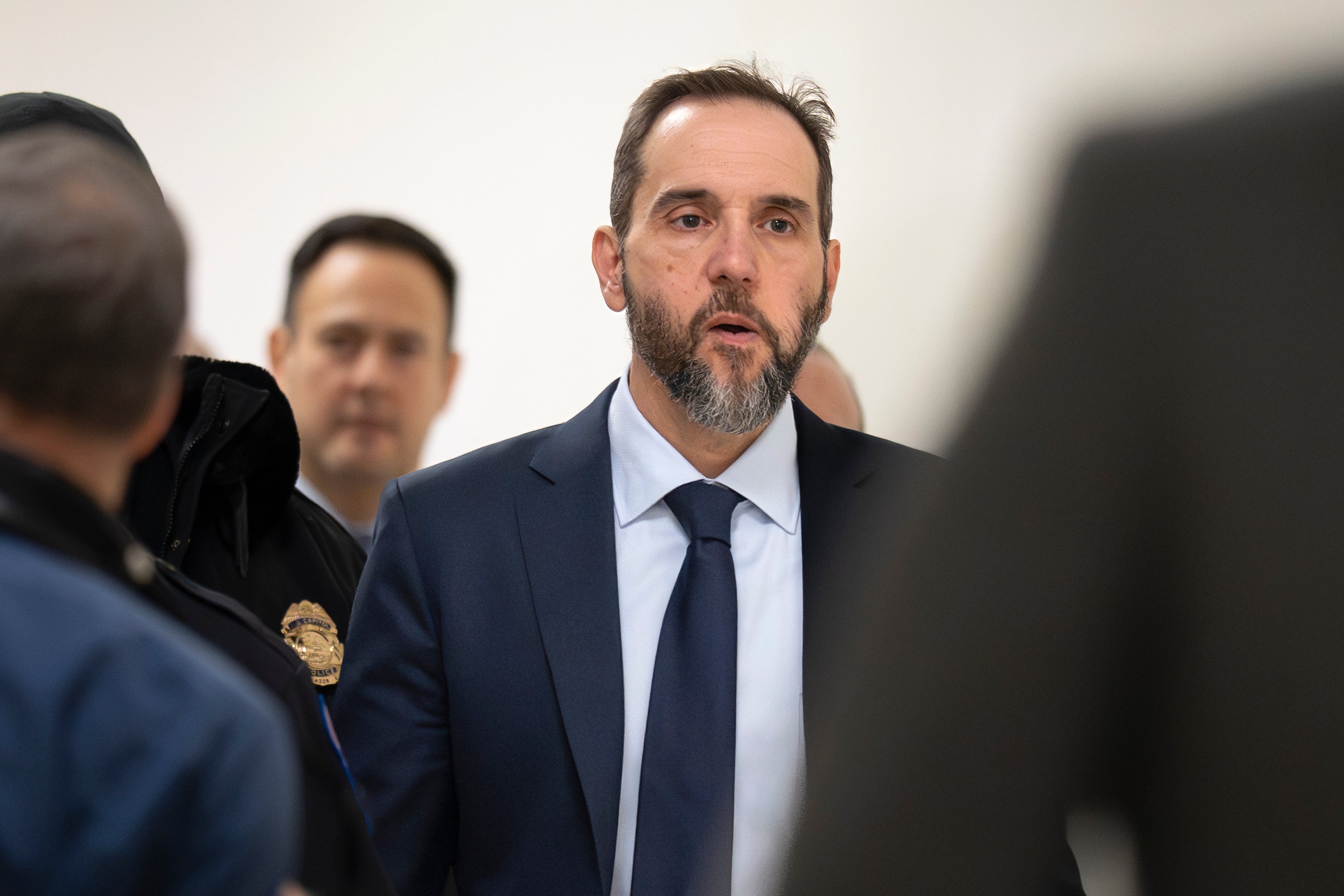
Jack Smith testified before the House Judiciary Committee about the two criminal investigations into Donald Trump led by the Justice Department (AP)
- The Supreme Court’s ruling on executive immunity was not, in his view, an affirmation that the president’s conduct leading up to January 6 was legal.
- His case relied heavily on the testimony of Republicans who “put their allegiance to the country before the party”
- The president’s demand that Georgia officials “find” more than 11,000 votes was seen by Smith as evidence of criminal intention
This is a breaking news report. More to follow…


NEED TO KNOW
- Abby and Matt Howard are opening up about a shocking hospital bill they received
- The mom of two said she received a bill for her hospital stay after experiencing a miscarriage in September that totaled to above $32k
- Abby said the bills are “past due” but explained that she hasn’t been able to mentally deal with the bill yet
TikTokers Abby and Matt Howard are sharing their shocking hospital bill after revealing they’d experienced a miscarriage.
On a Wednesday, Dec. 31 episode of their podcast Unplanned, the couple shared that they are sitting on a large hospital bill after Abby experienced a miscarriage earlier this year. “We’re sitting on a $35,000 bill for the miscarriage right now,” Abby said in the podcast.
She went on to say that the couple had received three bills. One of them totaled to over $32,000, and the other two were over $1,000. Abby said that the bills were “past due” at this point.
Matt and Abby Howard.
Abby Howard/Instagram
Never miss a story — sign up for PEOPLE’s free daily newsletter to stay up-to-date on the best of what PEOPLE has to offer, from celebrity news to compelling human interest stories.
“I can’t even mentally begin to tackle those bills and look through that with everything I’m already dealing with on my end from those days in the hospital and from everything, sorting through that,” Abby said. “I’m like, ‘Wow.’ ”
“Obviously, people need to be compensated for the health care that they did for me that day. I’m not saying that. I’m not mad at the doctors. I’m not mad at the nurses,” continued Abby. “I’m actually so grateful for them. But I also know that this isn’t going in their pockets. So, it’s just so messed up.”
The influencer added that she’ll never forget a text she got only 10 days after experiencing her miscarriage that notified her she owed $35,000.
“I know that I’m not the only person that has received a bill like that after something like that,” Abby said. “The fact of the matter is a lot of people are going to the hospital for reasons that they did not choose, accidents or just really unfortunate health circumstances. This is just the horrible cherry on top of it all is that it financially can be ruined for people.”
Back in September, the couple shared that Abby had a miscarriage at around 17 weeks in her pregnancy. They announced the news in a post on Instagram and shared that they were actively grieving.
“It is with very heavy hearts that we share about the loss of our baby girl born far too soon,” the couple wrote alongside a photo of their hands clasped together in a hospital bed.
“At a routine pregnancy appointment, our doctor could not find a heartbeat. Shortly after they sent us in for an ultrasound where the technician said words we will never forget, ‘I am so sorry I do not have good news,’ ” the post continued. “That is when we got the gender reveal we never hoped for, and also the news that our baby had a genetic condition that took her life around 17 weeks’ gestation.”
“The news felt unimaginable. The grief is absolutely devastating,” Abby and Matt, 27, wrote. “But we feel so much gratitude for the time that we did get to have with her. And we still have hope. Hope has continued to show up for us in so many ways.”
“For now we will grieve and continue to think of ways to honor her life offline. Thoughts and prayers are more than welcome. Thank you everyone for celebrating this precious life with us for the past 17 weeks,” the couple concluded.
WORLD NEWS
Manhunt launched for murder suspect after man, 23, is stabbed to death in New Year’s Eve attack

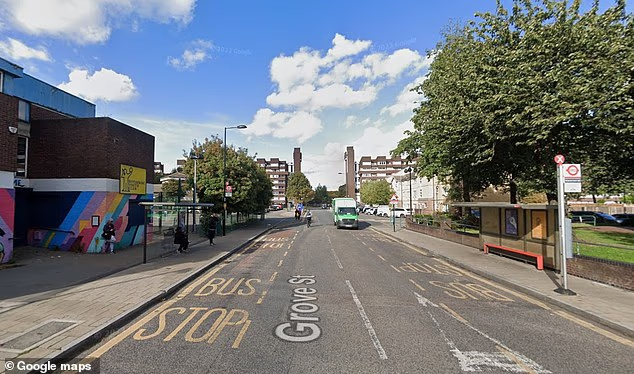
A manhunt has been launched for a murder suspect after a 23-year-old man was stabbed to death in a New Year’s Eve attack in Lewisham.
Police were called to the scene on Grove Street in southeast London to reports of a stabbing at around 12.35pm today.
A man in his 20s was treated by medics from London Ambulance Service and London’s Air Ambulance after being stabbed in the chest.
The young man was pronounced dead at the scene, despite the best efforts of medical staff.
His next of kin have been informed and are currently being supported by specialist officers.
The Metropolitan Police have since launched a murder probe, however no arrests have yet been made in relation to the incident.
A police cordon remains in place at the scene of the crime, the force has confirmed.
Police were called to the scene on Grove Street (pictured) in southeast London to reports of a stabbing at around 12.35pm today
Detective Chief Inspector Sam Townsend, who is leading the investigation said: ‘Our thoughts and deepest sympathies are with the victim’s family and friends during this incredibly difficult time.
‘Our investigation is progressing swiftly as we work to establish the full circumstances surrounding this tragic incident.
‘We understand that this will understandably cause concern within the local community. Please be assured that we have increased patrols in the area, and this investigation remains our highest priority.’
The force have urged anyone with information to contact them by calling 101, quoting CAD2852/31Dec.
Those who wish to stay anonymous can contact the independent charity Crimestoppers by calling 0800 111 555.
Share or comment on this article:
Manhunt launched for murder suspect after man, 23, is stabbed to death in New Year’s Eve attack


Police are ‘increasingly concerned’ about a missing woman who left a hospital in Romford, east London, shortly after giving birth
SOURCE PAGE

NewsFeed
Bulgaria is saying goodbye to the lev and officially adopting the euro, but some citizens worry that shops will round up when changing currencies, making everything more expensive. Al Jazeera’s Aksel Zaimovic explains their concerns.
Published On 31 Dec 2025
Click here to share on social media
share2
WORLD NEWS
‘We want the mullahs gone’: economic crisis sparks biggest protests in Iran since 2022 | Iran


Alborz, a textile merchant in the central Iranian city of Isfahan, decided he could no longer sit on the sidelines. He closed his shop and took to the streets, joining merchants across Iran who shuttered their stores and students who took over their campuses to protest against declining economic conditions.
The sudden loss of purchasing power pushed Alborz and tens of thousands of other Iranians into the streets, where protests are now entering their fourth day. Students have paralysed university campuses, traders have shut down their stores and demonstrators have blocked off streets in defiance of police. Protests have spread from the capital, Tehran, to cities across Iran.
Despite the risk of being jailed for his political activism, the father of four had run out of options. On Sunday, the national currency plunged to a historic low, putting further pressure on Alborz, who was already struggling to provide for his family.
“What will my children eat? Do we have to bring suitcases of cash to simply buy bread? Do you find that normal?” Alborz told the Guardian over the phone, speaking under a pseudonym for fear of security reprisals.
The unprecedented depreciation of the national currency on Sunday – when the Iranian rial dropped to 1.42m to the US dollar, a more than 56% decrease in value in six months – was a breaking point for an already struggling economy and population. The plunging currency has caused soaring inflation, with food prices up by 72% on average compared with the same time last year.
Iranian inflation graphic
Iran is also under some of the world’s most intense sanctions, which have spurred inflation as the country struggles to access frozen funds abroad and foreign exchange, something exacerbated by its growing reliance on imports.
A currency exchange office in Tehran. Photograph: Anadolu/Getty
The protests are the largest in Iran since 2022, when Iranians erupted in anger at the death of 22-year-old Mahsa Amini, who died in police custody after being arrested for not wearing her hijab properly. Those protests were violently quashed and ultimately simmered out.
Social media in Iran has been filled with videos of protesters chanting anti-government slogans and throwing stones at security forces. In one video from Tehran, a lone man sits blocking the way of security services on motorbikes as crowds of protesters flee from teargas.
Video
Though the protests started as demonstrations against deteriorating living conditions, they have widened to express grievances at the way Iran is being governed. Women’s rights activists, shopkeepers and students have begun chanting “death to the dictator” and “woman, life, freedom” – slogans that could put people in prison.
Alborz said: “For years now, we have slowly but surely made significant changes to our lifestyles because of this corrupt government. This was the last nail in the coffin. We wanted this regime gone and now there’s no way this regime will continue.”
The government, still shaken from a brutal 12-day war with Israel in June which rocked the foundations of the Iranian regime, has called for dialogue with protest leaders. Iran’s president, Masoud Pezeshkian, said the government should listen to the “legitimate demands” of protesters.
But they are wary of the offer, believing it to be an attempt to co-opt their demands and kill the momentum of the rare protest movement.
“You must be naive to think Iranians trust this government or the regime,” said Farhad, a 19-year-old university student active in the protest movement who spoke under a pseudonym.
He and other students described how security services had confiscated student IDs and beaten and arrested some protesters. A protester in Tehran sent the Guardian a picture of a metal pellet, which they said was shot at them by security forces. The Guardian could not independently verify the claim of the protester.
Iranian GDP growth graphic
“If the administration wanted to talk, they wouldn’t fire teargas, shoot at protesters and if dialogue is what they wanted, they would not have executed protesters in 2023. There is no willingness from any of us to talk to them, we want the mullahs gone and we want democracy,” Farhad added.
As the Iranian government dealt with protests at home, it was also facing threats from abroad.
On Monday, the US president, Donald Trump, flirted with the idea of striking Iran again, suggesting there could be renewed nuclear activity in Iran – telling reporters if there was, “we’ll knock them down”. Iran has rejected claims it is enriching uranium and has said its nuclear programme is peaceful.
On Monday, the Iranian Revolutionary Guards Corps (IRGC) said in a statement it would confront any “sedition, unrest” or security threats.
The IRGC said: “Enemies are seeking to sow the seeds of sedition within Iranian society through cognitive warfare, psychological operations, falsified narratives, fear-mongering and encouragement of capitulation to them.”
Despite intimidation from authorities, protesters said they were not cowed. They expected trade unions to soon join the merchants in striking.
“Yesterday, we blocked roads and stopped the security forces from advancing. People sat on the roads and chanted that they could kill us, but we wouldn’t let them pass. We are not going to open shops until the regime weakens further,” said Alborz.

Matthew Tuckerand
Lucy Talavera
 AFP via Getty Images
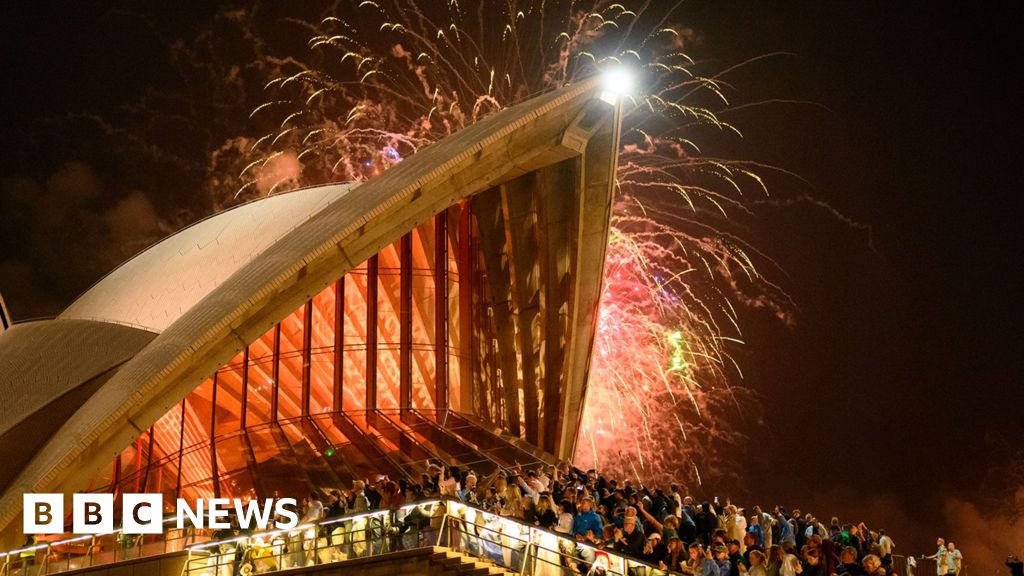
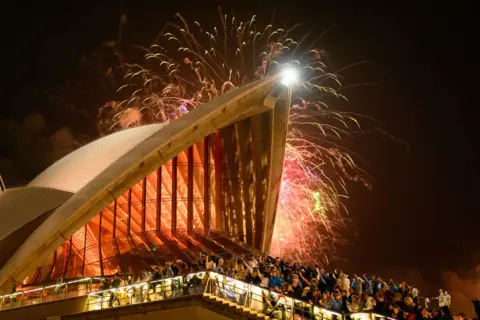
Fireworks lit up the midnight sky over Sydney Harbour Bridge and Sydney Opera House during New Year’s Day celebrations in Australia
Nations around the world are welcoming the New Year as midnight strikes across different time zones.
The island of Kiritimati – an atoll in the remote Pacific nation of Kiribati – became the first place to enter 2026. One tourist there told us he marked it “on a beach with no satellites, no signs of human life, complete darkness and countless crabs”.
New Zealand soon followed by welcoming the New Year with fireworks in Auckland.
 Shutterstock

A firework display from the top of Auckland’s Sky Tower welcomed in the New Year
 Shutterstock
Then Australia lit up the sky over the Sydney Opera House and Sydney Harbour Bridge.
 AFP via Getty Images
 AFP via Getty Images
 Getty Images
In Sydney, celebrations were tempered by sadness as the nation reflected on the Bondi Beach attack on 14 December in which 15 people were killed.
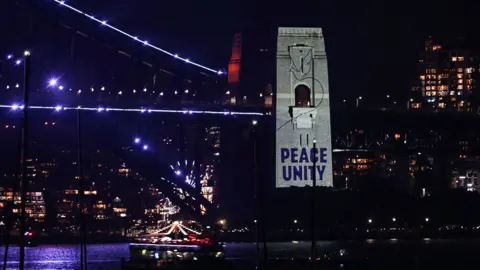
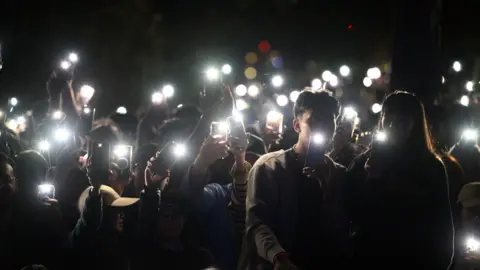
At 23:00 local time, Sydney Harbour fell silent for a minute, with crowds holding lights to remember the victims of Bondi. A Jewish menorah was projected on to the pylons of the Harbour Bridge.
 AFP via Getty Images
A message reading “Peace, Unity” was projected on the pylon of the Sydney Harbour Bridge, as the city waited for the midnight countdown
 EPA
EPA
In Sydney, New Year’s Eve spectators shone the lights from their mobile phones during a tribute to the victims of the Bondi terror attack
 Getty Images
Elsewhere, there were more fireworks at Marina Bay Waterfront in Singapore.
 Getty Images
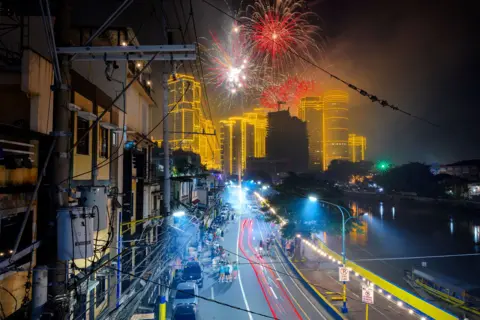
Fireworks matched the brilliance of skyscraper lights in Makati, Metro Manila, Philippines.
 Getty Images
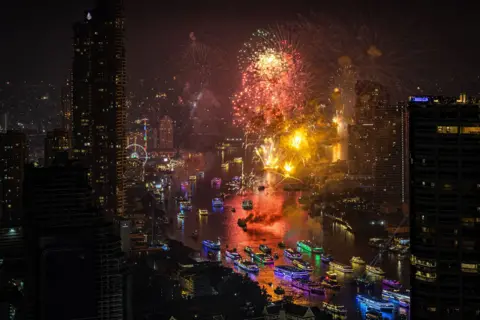
Thousands lined the Chao Phraya river in Bangkok as Thailand welcomed the New Year.
 Getty Images
In Hong Kong, spectators enjoyed live performances with fetching headwear.
 AFP via Getty Images
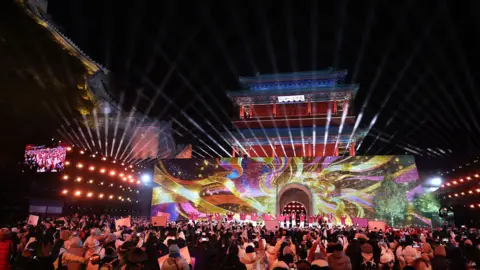
The Juyongguan Great Wall was lit up in Beijing.
 Getty Images
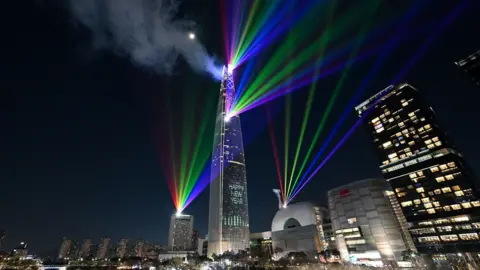
Laser lights dominated the night sky over the Lotte World Tower, South Korea’s tallest building in Seoul.
 AFP via Getty Images
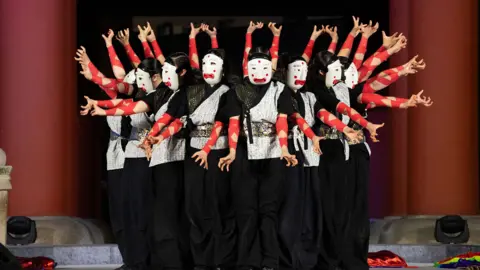
At the Bosingak pavilion in Seoul, artists performed during the New Year countdown.
 EPA
EPA
A street performer showed off her fiery skills as part of the Procession of Light in Dublin before heading to the Matinee Countdown Concert in Dublin Castle.
 PA Media
In other parts of the world, nations marked the coming New Year with their own traditions.
On a nudist beach in Le Cap d’Agde, southern France, clothed and unclothed revellers took part in a traditional sea dip to mark the New Year’s celebrations.
 AFP via Getty Images
Swimmers at Islands Brygge Harbour Bath in Copenhagen, Denmark, also braved the cold waters for a traditional splash, known as Nytaarsbad.
 Getty Images
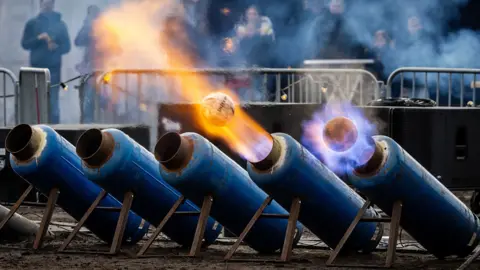
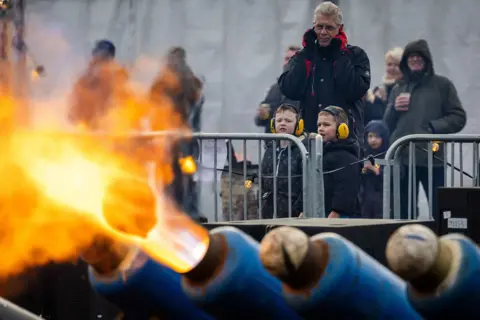
In Ommen, the Netherlands, local residents watched the annual carbide shooting – a New Year’s Eve tradition of turning milk cans into cannons.
 Shutterstock
 Shutterstock
In Osaka, Japan, young women dressed in traditional kimono took part in a Shinto ritual procession to mark the end of the year at Sumiyoshi Taisha, one of Japan’s oldest Shinto shrines.
 AFP via Getty Images
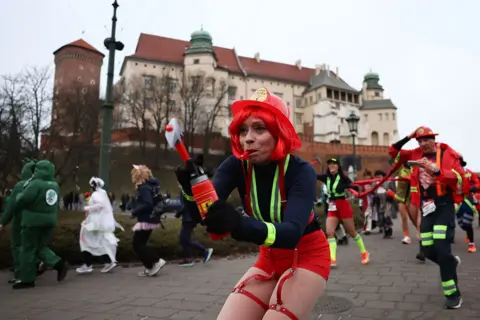
Colourful runners braved the December air in Krakow, Poland, for the traditional Krakow New Year’s Run in the Old Town.
 Getty Images
 Getty Images
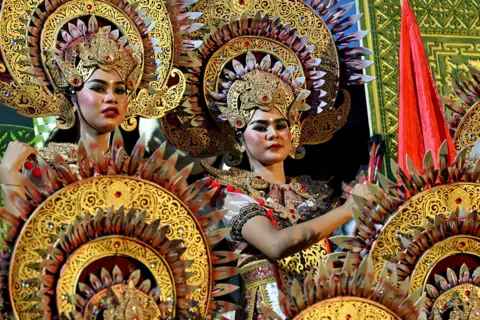
Adults and children performed a traditional dance to release the sun of 2025, and to welcome the sun of 2026, in in Denpasar, Bali, Indonesia.
 AFP via Getty Images
 AFP via Getty Images
SOURCE PAGE


After Australia’s world-first social-media ban for minors, France has drafted a similar law to block under-15s from major platforms, which could take effect from September.
SOURCE PAGE

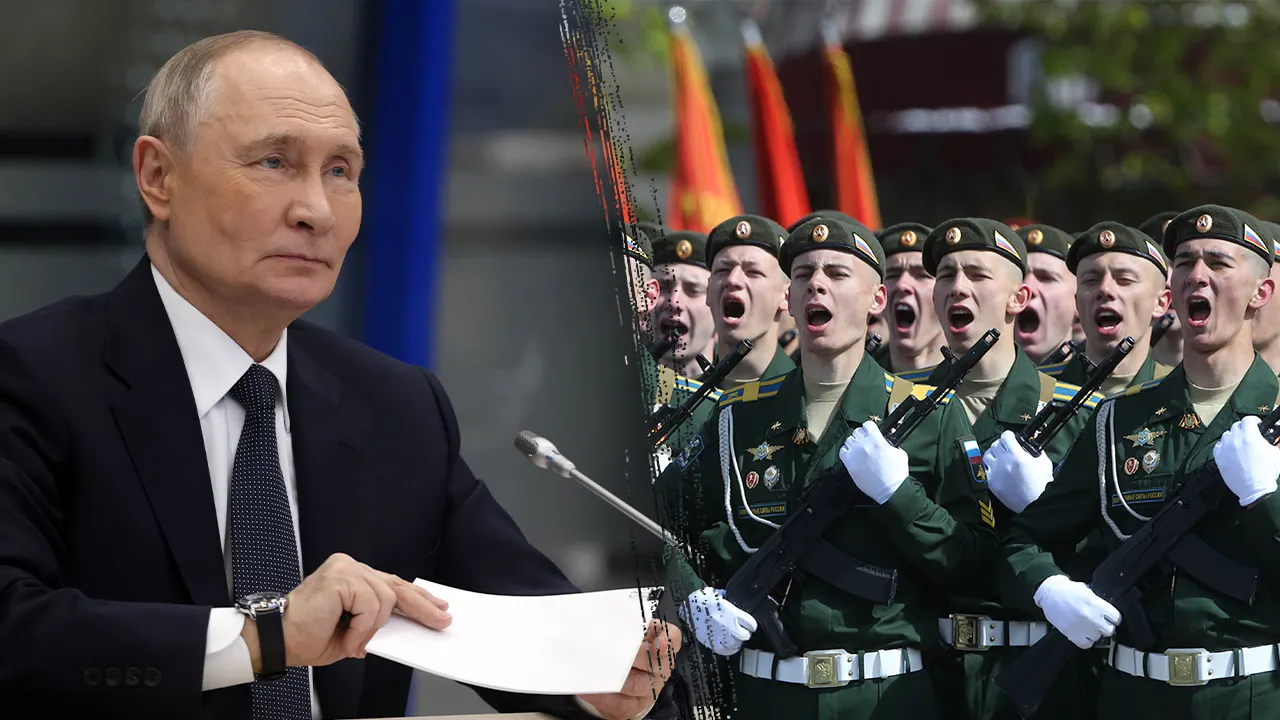
NEWYou can now listen to Fox News articles!
Russian President Vladimir Putin used his New Year’s address to deliver a blunt message to the West and to his own troops: Russia is not backing down in Ukraine.
As 2026 arrived in Russia’s far eastern regions, Putin vowed victory in the nearly four-year war, praising Russian soldiers and framing the conflict as a fight for the nation’s survival — even as the United States ramps up diplomatic efforts aimed at ending the bloodshed.
“We believe in you and our victory,” Putin said in remarks broadcast nationwide and released by the Kremlin on Wednesday. Addressing troops directly, he congratulated “all our soldiers and commanders” and pledged continued support for what Moscow calls its “special military operation.”
TRUMP TOUTS ‘TREMENDOUS PROGRESS’ BUT SAYS HE’LL MEET PUTIN AND ZELENSKYY ‘ONLY WHEN’ PEACE DEAL IS FINAL
Russian President Vladimir Putin delivers his New Year’s address from the Kremlin, vowing victory in the war in Ukraine. (East2West)
Putin cast the war as a struggle for Russia’s homeland, “truth and justice,” signaling determination to press ahead despite mounting losses and international pressure.
In a separate message, ex-President Dmitry Medvedev — Putin’s security council deputy — said of victory in Ukraine: “I sincerely believe that it is near.” Echoing Putin, he spoke of “our great and invincible Russia.”
The defiant tone comes as the war approaches grim milestones. On Jan. 12, Russia’s invasion of Ukraine will surpass the 1,418 days the Soviet Union fought Nazi Germany in Europe during World War II. On Feb. 24, the conflict will enter its fourth year. Western estimates place the number of killed and wounded at more than 1 million — a figure the Kremlin disputes.
TRUMP MEETS WITH ZELENSKYY; TALKS COULD UNLOCK FIRST ZELENSKYY-PUTIN CALL IN FIVE YEARS: SOURCE
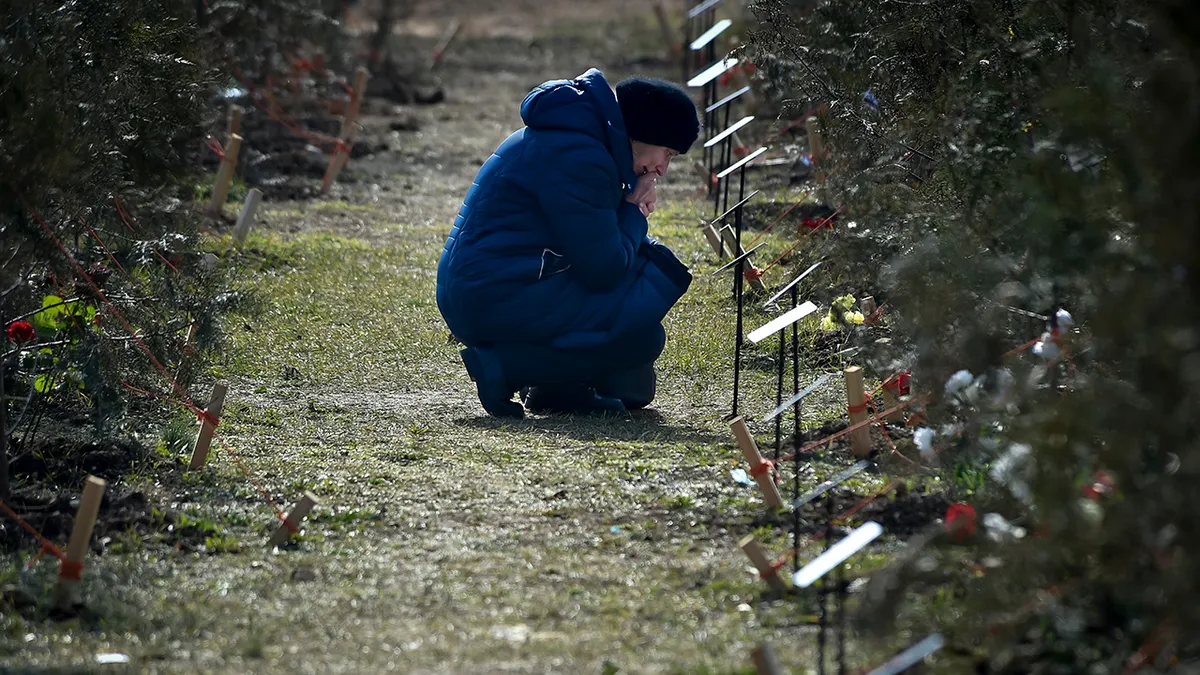
The mother of a Russian soldier who was killed in a military action in Ukraine, kneels near a planted tree in memory of her son at the Alley of Heroes in Sevastopol, Crimea, Saturday, Feb. 25, 2023. (AP Photo)
Putin’s rhetoric stood in sharp contrast to renewed diplomatic activity led by Washington.
Ukrainian President Volodymyr Zelenskyy met with U.S. President Donald Trump at Trump’s Mar-a-Lago resort in Florida on Sunday, as the White House explores possible paths to end Europe’s largest land war since World War II.
CLICK HERE TO DOWNLOAD THE FOX NEWS APP
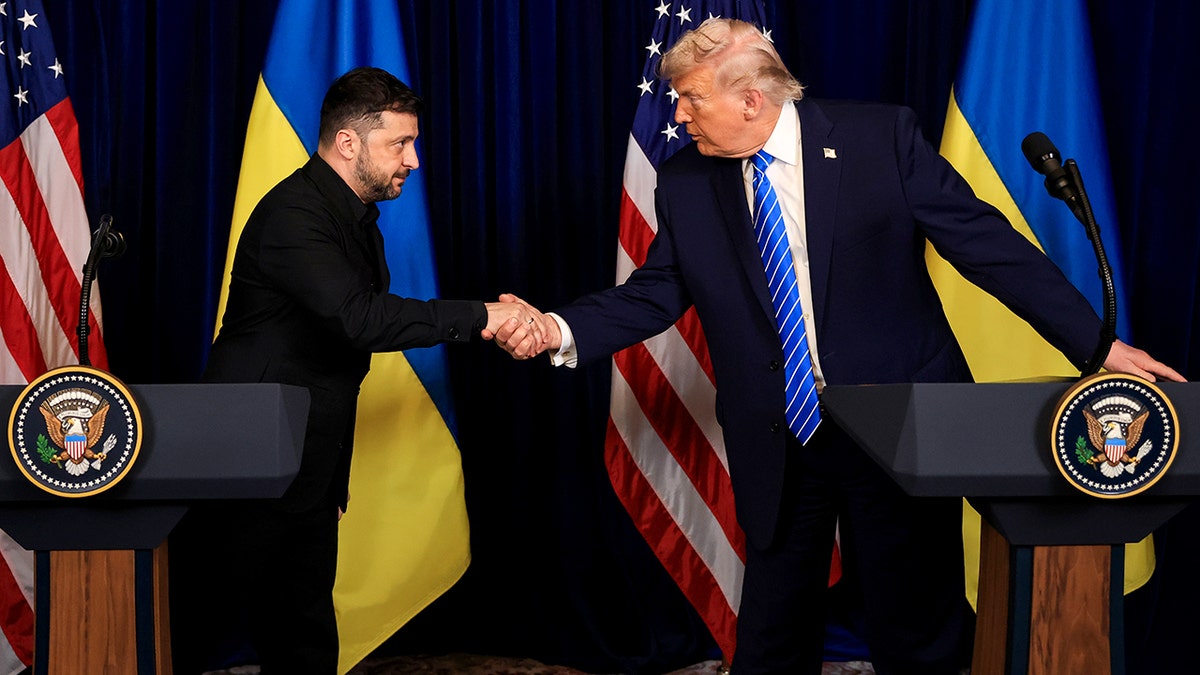
U.S. President Donald Trump and Ukrainian President Volodymyr Zelensky shake hands at a news conference following a meeting at Trump’s Mar-a-Lago club on December 28, 2025 in Palm Beach, Florida. (Joe Raedle/Getty Images)
After the meeting, Trump said Ukraine and Russia were “closer than ever” to peace, while acknowledging that major obstacles — particularly territorial disputes — remain unresolved. Reuters separately reported that Trump and Zelenskyy discussed potential U.S. troop involvement as part of broader security guarantees, though no decisions were announced.
Reuters contributed to this report.
Efrat Lachter is an investigative reporter and war correspondent. Her work has taken her to 40 countries, including Ukraine, Russia, Iraq, Syria, Sudan and Afghanistan. She is a recipient of the 2024 Knight-Wallace Fellowship for Journalism. Lachter can be followed on X @efratlachter.

NEED TO KNOW
- Glenda Akin broke a Guinness World Record after teaching at the same Tennessee school for more than 60 years
- Akin began her tenure at Westmoreland High School in 1963 and retired in September 2024
- Westmoreland said she “left an unforgettable legacy in our school and community”
A Tennessee teacher made history when she set down her chalk and retired after more than six decades in the classroom.
Glenda Akin broke the Guinness World Record for “longest teacher in the same school (female) on Sept. 13, 2024, according to the record-keeping organization. She taught at Westmoreland High School in Westmoreland for 61 years and 43 days before retiring.
Akin began her tenure at the Sumner County school in 1963 and worked as a social studies and library teacher, according to the Guinness World Records.
Westmoreland High School celebrated her achievement in a Facebook post on Dec. 19, sharing photos of Akin being honored at the school while holding her official certificate.
“Historic Achievement at Westmoreland High School!” the school wrote. “We are incredibly proud to announce that Ms. Glenda Akin has officially been awarded a Guinness World Record for the Longest Career as a Female Teacher in the Same School!”
“With an extraordinary 61 years and 43 days of dedicated service at Westmoreland High School, Ms. Akin’s lifelong commitment to education has shaped generations of students and left an unforgettable legacy in our school and community,” the school continued, adding, “Please join us in congratulating Ms. Glenda Akin on this historic and well-deserved honor!”
While Akin will no longer be walking the hallways during the school day, her legacy will live on in a special way.
Never miss a story — sign up for PEOPLE’s free daily newsletter to stay up-to-date on the best of what PEOPLE has to offer, from celebrity news to compelling human interest stories.
Glenda Akin.
Amber Regan
As seen in the photos shared by Westmoreland, the high school dedicated its library to Akin, renaming it the Glenda Akin Library. A plaque adorned with her photo reads, “Her six decades of service to our school and community will remain forever cherished in the lives of her coworkers and students.”
WORLD NEWS
Wetherspoons customer is sexually assaulted before he is repeatedly punched in pub attack

A man was sexually assaulted before being repeatedly punched in an attack at a Wetherspoons pub.
The victim was on the dance floor at the Union Rooms in Plymouth when he was inappropriately touched by a man on September 12.
When he confronted the individual, he was punched several times and sustained a cut to his face, which required medical treatment.
Devon and Cornwall Police have since released an image of a man who they believe will be able to help ongoing enquiries into the incident.
Devon and Cornwall Police have released a CCTV image released an image of a man who they believe will be able to help ongoing enquiries into an incident at The Union Rooms in Plymouth
The force has urged anyone with information to contact them via their website or by calling them on 101, quoting crime reference 50250238198.
Alternatively, information can be shared anonymously to the independent charity Crimestoppers by calling by calling 0800 555111, or via www.crimestoppers-uk.org.
Share or comment on this article:
Wetherspoons customer is sexually assaulted before he is repeatedly punched in pub attack

The final National Lottery Lotto draw of 2025 is nearly here and with a jackpot of £5.3 million up for grabs, someone could be in line for a very happy New Year indeed
SOURCE PAGE
WORLD NEWS
A marriage of three: Will Mali, Niger, Burkina Faso bloc reshape the Sahel? | Politics News


“Bienvenue a Bamako!” The fixer, the minder and the men linked to the Malian government were waiting for us at the airport in Bamako. Polite, smiling – and watchful.
It was late December, and we had just taken an Air Burkina flight from Dakar, Senegal across the Sahel, where a storm of political upheaval and armed violence has unsettled the region in recent years.
Recommended Stories
list of 3 itemsend of list
Mali sits at the centre of a reckoning. After two military coups in 2020 and 2021, the country severed ties with its former colonial ruler, France, expelled French forces, pushed out the United Nations peacekeeping mission, and redrew its alliances
Alongside Burkina Faso and Niger, now also ruled by military governments backed by Russian mercenaries, it formed the Alliance of Sahel States (AES) in September 2023. Together, the regional grouping withdrew from the wider Economic Community of West African States (ECOWAS) bloc, accusing it of serving foreign interests rather than African ones.
This month, leaders from the three countries converged in Bamako for the Confederal Summit of Heads of State of the AES, the second such meeting since the alliance was formed. And we were there to cover it.
The summit was a ribbon-cutting moment. Leaders of the three countries inaugurated a new Sahel Investment and Development Bank meant to finance infrastructure projects without reliance on Western lenders; a new television channel built around a shared narrative and presented as giving voice to the people of the Sahel; and a joint military force intended to operate across borders against armed groups. It was a moment to celebrate achievements more than to sign new agreements.
But the reason behind the urgency of those announcements lay beyond the summit hall.
In this layered terrain of fracture and identity, armed groups have found room not only to manoeuvre, but to grow. Jama’at Nusrat al-Islam wal-Muslimin (JNIM), an al-Qaeda affiliate, has expanded from rural Mali, launching attacks across the region and reaching the coast of Benin, exploiting weak state presence and long-unresolved grievances.
As our plane descended toward Bamako, I looked out at an endless stretch of earth, wondering how much of it was now under the control of al-Qaeda affiliates.
From the airport, our minders drove us fast through the city. Motorbikes swerved around us, street hawkers peddled their wares, and Malian pop blared from speakers. At first, this did not feel like a capital under siege. Yet since September, armed groups have been operating a blockade around Bamako, choking off fuel and goods, the military government said.
We drove past petrol stations where long queues stretched into the night. Life continued even as fuel grew scarce. People sat patiently, waiting their turn. Anger seemed to have given way to indifference, while rumours swirled that the authorities had struck quiet deals with the very fighters they claimed to be fighting, simply to keep the city moving.
Motorcycles line up near a closed petrol station, amid ongoing fuel shortages caused by a blockade imposed by al Qaeda-linked fighters in early September, in Bamako, Mali [Stringer/Reuters]
‘To become one country, to hold each other’s hand’
Our minders drove us on to the Sahel Alliance Square, a newly created public space built to celebrate the union of the three countries and its people.
On the way, Malian forces sped past, perhaps toward a front line that feels ever closer, as gunmen linked to JNIM have set up checkpoints disrupting trade routes to the capital in recent months. In September 2024, they also carried out coordinated attacks inside Bamako, hitting a military police school housing elite units, nearby neighbourhoods, and the military airport on the city’s outskirts. And yet, Bamako carries on, as if the war were taking place in a faraway land.
At Sahel Alliance Square, a few hundred young people gathered and cheered as the Malian forces went by, drawn by loud music, trivia questions on stage and the MC’s promise of small prizes.
The questions were simple: Name the AES countries? Name the leaders?
A microphone was handed to the children. The alliance leaders’ names were drilled in: Abdourahamane Tchiani of Niger. Ibrahim Traore of Burkina Faso. Assimi Goita of Mali. Repeated again and again until they stuck.
Correct answers won a prize: a T-shirt stamped with the faces of the alliance leaders.
Moussa Niare, 12 years old and a resident of Bamako, clutched a shirt bearing the faces of the three military leaders.
“They’ve gathered together to become one country, to hold each other’s hand, and to fight a common enemy,” he told us with buoyant confidence, as the government’s attempt to sell the new alliance to the public appeared to be cultivating loyalty among the young.
France out, Russia in
While Mali, Burkina Faso and Niger went through separate political transitions, the paths that brought them into a shared alliance followed a similar pattern.
Between 2020 and 2023, each country saw its democratically elected leadership removed by the military, the takeovers framed as necessary corrections.
In Mali, Colonel Goita seized power after months of protest and amid claims that President Ibrahim Boubacar Keita had failed to curb corruption or halt the advance of armed groups.
In Burkina Faso, the army ousted President Roch Marc Christian Kabore in early 2022 as insecurity worsened; later that year, Captain Traore emerged from a counter-coup, promising a more decisive response to the rebellion.
In Niger, soldiers led by General Tchiani detained President Mohamed Bazoum in July 2023, accusing his government of failing to safeguard national security and of leaning too heavily on foreign partners.
What began as separate seizures of power have since become a shared political project, now expressed through a formal alliance. The gathering in Bamako was to give shape to their union.
One of the key conclusions of the AES summit was the announced launch of a joint military battalion aimed at fighting armed groups across the Sahel.
This follows months of escalating violence, as regional armies assisted by Russian mercenaries push back against armed groups who have been launching attacks for over a decade.
Under the previous civilian governments, former colonial ruler France had a strong diplomatic and military presence. French troops, whose presence in the region dates back to independence, are now being pushed out, as military rulers recast sovereignty as both a political and security imperative. The last troops left Mali in 2022, but at its peak, France had more than 5,000 soldiers deployed there. When they withdrew, the country became a symbol of strategic failure for France’s Emmanuel Macron.
But even before that, French diplomacy appeared tone deaf, and patronising at best, failing to grasp the aspirations of its former colonies. The common regional currency, the CFA franc, still anchored to the French treasury, has become a powerful symbol of that resentment.
Now, French state television and radio have been banned in Mali. In what was once the heart of Francophone West Africa, French media has become shorthand for interference. What was lost was not only influence, but credibility. France was no longer seen as guaranteeing stability, but as producing instability.
Across the Sahel and beyond, anti-French sentiment is surging, often expressed in French itself – the language of the coloniser is now also the language of resistance.
 Captain Ibrahim Traore of Burkina Faso attends the Alliance of Sahel States (AES) second summit in Bamako, Mali [Mali Government Information Center via AP]
‘Like a marriage of reason’
At the end of the summit, Mali’s Goita was preparing to hand over the AES’s rotating leadership to Traore of Burkina Faso.
Young, charismatic, and the new rock star of Pan-Africanism, Traore, in particular, has captured young audiences with help from a loose ecosystem of pro-Russian messaging and Africanist influencers. Across social media platforms, short videos circulate relentlessly: speeches clipped for virality, images of defiance, and slogans reduced to shareable fragments.
Meanwhile, in Burkina Faso, journalists and civil society actors who have criticised the military rules have been sent to the front line under a conscription policy introduced by Traore. Human rights groups outspoken about alleged extrajudicial killings say they have been silenced or sidelined. But much of it is dismissed as collateral, the price, supporters argue, of sovereignty finally reclaimed.
Before the ceremony, we met Mali’s finance minister. At first, he was confident, rehearsed, assured. But when pressed about financing for the ambitious infrastructure projects the three governments have laid out for the Sahel, his composure faltered and his words stuttered. This was a government official unaccustomed to being questioned. The microphone was removed. Later, away from the camera, he told me, “The IMF won’t release loans until Mali has ironed out its relations with France.”
The spokesperson, irritated by my questions, took me aside. As he adjusted the collar of my suit, slowly and patronisingly, he said he sometimes thought about putting journalists in jail “just for fun”.
He did not question the organisation I worked for. He questioned my French passport; my allegiance. I told him my allegiance was to the truth. He smiled, as if that answer confirmed his suspicions.
In the worldview of Mali’s military government – men shaped by years on the front line, living with a permanent sense of threat – journalists and critics are part of the problem. Creating safety was the challenge. The alliance, the spokesperson explained, was the solution to what they could not find within regional body, ECOWAS.
The half-century-old West African institution is a bloc that the three countries had once helped shape. Now, the AES leaders say its ageing, democratically elected presidents have grown detached, more invested in maintaining one another in office than in confronting the region’s crises. In response, they are promoting the AES as an alternative.
As the Sahel alliance grows, it’s also building new infrastructure.
At its new television channel in Bamako, preparations were under way. The ON AIR sign glowed. State-of-the-art cameras sat on tripods like polished weapons.
The channel’s director, Salif Sanogo, told me it would be “a tool to fight disinformation,” a way to counter Western, and more specifically French, narratives and “give voice to the people of the Sahel, by the people of the Sahel”.
The cameras had been bought abroad. The installation was overseen by a French production company. The irony went unremarked.
To defend the alliance, he offered a metaphor. “It’s like a marriage of reason,” he said. “It’s easier to make decisions when you’re married to three. When you’re married to 15, it’s a mess.” He was referring to the 15 member states of ECOWAS.
‘We will survive this, too’
Two years into the AES alliance, they have moved faster than the legacy regional bloc they left behind. A joint military force now binds their borders together, presented as a matter of survival rather than ambition. A mutual defence pact recasts coups and external pressure as shared threats, not national failures. A common Sahel investment and development bank, meant to finance roads, energy, and mineral extraction without recourse to Western lenders, offers sovereignty, they say, without conditions. A common currency is under discussion.
A shared news channel is intended to project a single narrative outward, even as space for independent media contracts at home. And after withdrawing from the International Criminal Court, they have proposed a Sahel penal court, one that would try serious crimes and human rights violations on their own terms. Justice brought home, or justice brought under control, depending on who you ask.
What is taking shape is not just an alliance, but an alternative architecture, built quickly, deliberately, and in full view of its critics.
Where ECOWAS built norms slowly, through elections, mediation, and consensus, AES is building structure. Where ECOWAS insists on patience, AES insists on speed.
To supporters, this is overdue self-determination, dignity restored after decades of dependency. To critics, it is power concentrated in uniforms, accountability postponed, repression dressed up as emancipation.
From the summit stage as he took over the alliance’s leadership, Traore redrew the enemy: Not al-Qaeda. Not ISIL. Not even France. But their African neighbours, cast as the enemy within. He warned of what he called a “black winter”, a speech that held the room and travelled far beyond it, drawing millions of viewers online.
“Why are we, Black people, trying to cultivate hatred among ourselves,” he asked, “and through hypocrisy calling ourselves brothers? We have only two choices: either we put an end to imperialism once and for all, or we remain slaves until we disappear.”
Away from the summit’s “black winter”, under a sunlit sky in Bamako, life moved on with a quieter rhythm. Music drifted through public squares and streets, carrying a familiarity that cut across the tension of speeches and slogans. It was Amadou and Mariam, Mali’s most internationally known musical duo, whose songs once carried the country’s everyday joys far beyond its borders. Amadou died suddenly this year. But the melody lingers.
Its lyrics hold the secret of the largest alliance of all. Not one forged by treaties or uniforms, but by people, across Mali and the Sahel, in all their diversity.
“Sabali”, Mariam sings.
“Forbearance.
“We have survived worse. We will survive this, too.”
WORLD NEWS
European human rights court questions UK decision to strip Shamima Begum of citizenship | Shamima Begum

The European court of human rights has questioned the UK government over its 2019 decision to remove Shamima Begum’s British citizenship.
Lawyers in Europe have asked how Begum’s treatment complies with the UK’s responsibilities to victims of trafficking.
The intervention has encouraged Begum’s lawyers and fuelled Conservative and Reform accusations of meddling by foreign judges and their calls to leave European human rights treaty.
In 2015, as a 15-year-old schoolgirl, Begum left her east London home and travelled with two friends to live under territory held by Islamic State (IS). She was “married off” to an IS fighter with whom she had three children, all of whom died in infancy.
In 2019, the then home secretary, Sajid Javid, revoked her citizenship on grounds of national security, in a decision upheld in the court of appeal last year and backed by the current government.
Campaigners and Begum’s lawyers argue she was the victim of child trafficking. Begum, now 26, remains stateless in a Syrian refugee camp.
A document published by the European court this month confirms that Begum is challenging Javid’s decision under Article 4 of the European convention on human rights – a prohibition of slavery and forced labour.
The case was lodged in December 2024, after she was denied the chance to challenge the removal of her British citizenship at the UK’s supreme court.
Among four questions posed by judges in Strasbourg to the Home Office, they asked: “Did the secretary of state have a positive obligation, by virtue of Article 4 of the convention, to consider whether the applicant had been a victim of trafficking and whether any duties or obligations to her flowed from that fact, before deciding to deprive her of her citizenship?”
Birnberg Peirce Solicitors, which is representing Begum, said the court’s communication “presents an unprecedented opportunity” for the UK and Begum to “grapple with the significant considerations raised in her case and ignored, sidestepped or violated up to now by previous UK administrations”.
One of the lawyers, Gareth Peirce, said: “It is impossible to dispute that a 15-year-old British child was in 2014-15 lured, encouraged and deceived for the purposes of sexual exploitation to leave home and travel to [IS-controlled] territory for the known purpose of being given, as a child, to an [IS] fighter to propagate children for the Islamic State.”
She added: “It is equally impossible not to acknowledge the catalogue of failures to protect a child known for weeks beforehand to be at high risk when a close friend had disappeared to Syria in an identical way and via an identical route.
“It has already been long conceded that the then home secretary, Sajid Javid, who took the precipitous decision in 2019 very publicly to deprive Ms Begum of citizenship, had failed entirely to consider the issues of grooming and trafficking of a school child in London and of the state’s consequent duties.”
Pierce said the challenge comes as the current government has made protections for victims of grooming and trafficking a national priority.
A Home Office spokesperson said any decision made to protect national security would be robustly defended. They added: “The government will always protect the UK and its citizens. That is why Shamima Begum – who posed a national security threat – had her British citizenship revoked and is unable to return to the UK.”
The shadow home secretary, Chris Philp, said Begum had “no place” in the UK because of her support for violent extremists. In a post on X, he wrote: “It is deeply concerning the European Court of Human Rights is now looking at using the ECHR to make the UK take her back.”
Also on X, Richard Tice, Reform’s deputy leader, wrote: “ECHR can jog on….none of their business …just another reason why we must leave this foreign court.”

Israel is to revoke the licences of 37 international non-governmental organisations (INGOs) working in Gaza and the occupied West Bank, saying they failed to meet requirements under new registration rules.
ActionAid, International Rescue Committee, Médecins Sans Frontières and Norwegian Refugee Council are among the aid agencies which will have their licences suspended on 1 January, with their operations to end within 60 days.
Israel said they had, among other things, failed to hand over “complete” personal details of their staff. The INGOs said that could put them at risk.
The move was condemned by 10 countries, which said the rules would have a severe impact on access to essential services.
In a joint statement, the foreign ministers of the UK, France, Canada, Denmark, Finland, Iceland, Japan, Norway, Sweden and Switzerland said INGOs were integral to the humanitarian response in Gaza and that any attempt to stem their ability to operate was “unacceptable”.
“Without them, it will be impossible to meet all urgent needs at the scale required,” they warned.
The European Union’s humanitarian chief, Hadja Lahbib, said: “Israel’s plans to block INGOs in Gaza means blocking life-saving aid.”
International humanitarian law “leaves no room for doubt: aid must reach those in need,” she added.
UN human rights chief Volker Türk called the INGO suspensions “outrageous” and “arbitrary”, and said they made “an already intolerable situation even worse for the people of Gaza”.
The Humanitarian Country Team of the Occupied Palestinian Territory – a forum that brings together UN agencies and more than 200 local and international NGOs – urged the Israeli authorities to reconsider the registration decisions.
It has said INGOs run or support most of Gaza’s field hospitals and primary healthcare centres, emergency shelter responses, water and sanitation services, nutrition stabilisation centres for children with acute malnutrition, and critical mine action activities.
Israel’s ministry of diaspora affairs, which oversees registration applications, said the new measures would not affect the flow of humanitarian assistance to Gaza.
It said aid continued to be delivered through “approved and vetted channels”, including UN agencies, bilateral partners, and humanitarian organisations.
Israeli military body Cogat, which controls Gaza’s crossings and co-ordinates aid deliveries, meanwhile said the INGOs facing suspension “did not bring aid into Gaza throughout the current ceasefire”, which began 11 weeks ago. It added that “even in the past their combined contribution amounted to only about 1% of the total aid volume”.
The diaspora affairs ministry said the primary reason INGOs had their licences revoked was “the refusal to provide complete and verifiable information regarding their employees,” which it said was critical to preventing “the infiltration of terrorist operatives into humanitarian structures”.
Fewer than 15% of the INGOs providing humanitarian assistance to Gaza were found to be in violation of the new regulatory framework, it added.
That framework includes several grounds for rejection, including:
- Denying the existence of Israel as a Jewish and democratic state
- Denying the Holocaust or the Hamas-led attacks on Israel on 7 October 2023
- Supporting an armed struggle against Israel by an enemy state or terrorist organisation
- Promoting “delegitimisation campaigns” against Israel
- Calling for a boycott of Israel or committing to participate in one
- Supporting the prosecution of Israeli security forces in foreign or international courts
The ministry of diaspora affairs also alleged that Israeli investigations had “determined that individuals affiliated with [Médecins Sans Frontières] were linked to terrorist organisations, including the Palestinian Islamic Jihad and Hamas”, without providing any evidence.
“Despite repeated requests, the organisation failed to provide full disclosure regarding the identities and roles of these individuals,” it said.
MSF said it took such allegations extremely seriously and that it would “never knowingly employ people engaging in military activity”.
“Any employee who engages in military activity would pose a danger to our staff and our patients. Publicly making such claims without substantiated evidence puts humanitarian staff at risk and undermines life-saving medical work,” it added.
MSF also warned that deregistration by Israeli authorities would effectively block it from operating in Gaza, “where we support one in five hospital beds and one in three births, cutting off life-saving medical assistance for hundreds of thousands of people”.
Norwegian Refugee Council spokeswoman Shaina Low told NPR that it would no longer be able to bring foreign aid workers into Gaza if it was deregistered, but that its 200 local staff would continue to support communities as best as they could.
Ms Low said NRC had tried to explain to the Israeli authorities why it could not provide them with lists of their Palestinian staff members.
“We’ve seen that hundreds of aid workers were killed over the last two years. And so, for us, it is a safety concern for our staff. And acknowledging who they are – it puts them at risk. Because we’ve seen that aid workers are just as unprotected, and at times, have been targeted by Israeli authorities,” she said.
She also said that the NRC and other INGOs were prevented by data protection laws from complying with an Israeli demand to share details about the funding they received from the EU and EU member states.
“The number one thing that we’re concerned about is the entry of aid,” she added. “We continue to call for Israel to lift these restrictions, to open all of the crossings to allow much more aid to enter than the current rate.”
Israel says it is meeting its obligations in facilitating an increase in aid deliveries.
On 19 December, UN-backed food security experts said there had been improvements in nutrition and food supplies in Gaza since the ceasefire began, but that 100,000 people still experienced “catastrophic conditions” last month.
Other INGOs to be suspended include CARE, Medico International, and Medical Aid for Palestinians.
International Rescue Committee said it was in touch with relevant authorities and seeking a way to sustain the delivery of life-saving aid.
Bushra Khalidi, Oxfam’s policy lead, meanwhile said Cogat’s figures on aid deliveries by the affected INGOs were misleading because “humanitarian impact is not measured by percentages”.
“We are not simply aid volume contributors; we are core implementers. The UN relies on our staff, our partners, our technical expertise, our logistics, and our community networks to deliver assistance,” she explained.
The Humanitarian Country Team of the Occupied Palestinian Territory – a forum that brings together UN agencies and more than 200 local and international NGOs – urged the Israeli authorities to reconsider the registration decisions.
Earlier this month, it complained that the new registration system relied on “vague, arbitrary, and highly politicised criteria and imposes requirements that humanitarian organisations cannot meet without violating international legal obligations or compromising core humanitarian principles”.
In a statement, Israel’s Minister of Diaspora Affairs and Combating Antisemitism, Amichai Chikli, said: “The message is clear: humanitarian assistance is welcome – the exploitation of humanitarian frameworks for terrorism is not.”
The war in Gaza was triggered by the Hamas-led attack on southern Israel on 7 October 2023, in which about 1,200 people were killed and 251 others were taken hostage.
More than 71,260 people have been killed in Israeli attacks in Gaza since then, according to the territory’s Hamas-run health ministry.